Author: terraviva

  • EPISODE 184 DISAPPEARING FARMS… WITNESS TO HISTORICAL CHANGE IN ONTARIO SOCIETY 1950 TO 2020

    EPISODE 184  DISAPPEARING FARMS


    alan skeoch
    Dec. , 2020

    THIS is a story about the pace of  change in our society between  1950 and  2020.

    Keep this point in mind   as  you peruse and  remember the point for the next episode:  ONLY 12% OF CANADA  IS 
    SUITABLE FOR AGRICULTURE.  ONLY 12%!


    FARM AUCTION ABOUT 1975 OR SO:   Look above the heads the crowd.  That’s Marjorie with the kids
    sitting on  the milk parlour roof with our great Coonhound Tara.  


    AT A  FARM AUCTION…One summer afternoon,  August 24,   our anniversary…I bought marjorie  a coonskin coat and myself a bearskin coat. 
    Granted the coats were out of season.  They were also a little worse for wear…that’s why my bid was the only bid that day.

    ACCELERATING PACE:   FARM AUCTIONS 1950 TO 2020

    As fortune would  have it, we became adults in the 1950’s just when North American agriculture was being revolutionized.  Corporate 
    agriculture grew and grew through the last half of the 20th century.   Small, 100 acre family farms in Ontario began to disappear at
    an accelerating rate.  In the 1960’s, 1970’s, 1980’s there were so  many farm auctions that specialized  newspapers such as
    the Woodbridge Advertiser could make a  living just listing the auction sales.  Impossible to go to all the auctions.  Basically, Ontario’s
    rural heritage was on the auction block booth weekdays and week ends.  One of the sad features of these farm auctions  was the
    fire pits where things considered irrelevant or not saleable or too personal were simply burned.   Things  unsold at auction were 
    dealt with the same way.  One farm auction last year put all the old family pictures on the block.  I bought them all then the
    family asked that I not write about the pictures.  Odd.   How did they know I was a writer?  I never knew the people.  So
    I guess word spread about our rescue efforts.  Why would  people sell  off their family pictures?  “The children are not interested.”
    …an answer we heard all too often.  Children change…they grow up…and then they get interested often too late.  The family farm
    is gone and the records  of the 20th century are ashes  in many cases.


    SOME RANDOM PICTURES THT TELL THE STORY


    I bought six or seven of these threshing machines.  Huge things.  Beautiful things.  We  have  two of them tucked away in our barn.  Others
    we donated to various museums.   We even had  a backyard auction with friends years and years ago . The purpose was to raise e $200
    to buy a machine like the one Marjorie is holding.   We got the money, bought the machine, donated the machine…and the next week
    the storage barn caught fire and all was lost.   It is hard to look after a machine like  this  Raccons like to live in threshing machines.

    These pictures are just a tiny cross section of the auctions we attended in the last 60 years…literally hundreds of  auctions.  There are 52 weeks in a year…about 40 or more
    of those weeks we got up early headed west, north, east to a farm auction.  Our kids, Andrew and Kevin, were with us as were the various dogs we shared our house with
    over the past 60 years.   So what is 40 x 60?  The total is  2,400 auction  sales.   Hard to believe?  Truth! We  witnessed a  revolutionary change in Ontario  society.
    The number of auctions shocks me.  The bigger shock was the change in our society.

    We filled our truck and trailer with things nobody seemed to want.  Jewels to us.

    On one of these farm auctions…the Root Family Farm near Ospringe…I borrowed a new movie camera and documented the day.  i gave the film to my good
    friend Robert Root.  A family record. Bob and  I were both high school teachers at Parkdale Collegiate  Institute…a high school in the  core  of the city  of Toronto.   I made a big
    mistake that day when I did not bid  on one Bob’s family tractors.  The price was reasonable in my mind…unreasonable  to the Root family I imagine…i.e. $600 to $700.
    Note to Bob Root:  That film can  be  converted to digital…costs a bit but you will need it for future generations. 

    Future Episode:  Bob Root and  I were allowed to visit an abandoned farm…people just seemed to have walked away.  Took what they
    could carry and walked away.  We were shocked.  

    alan skeoch
    Dec. 2020


    An Industry Leader

    • Canada is the world’s largest producer and exporter of flaxseed, canola, pulses, durum wheat, peas, lentils, and mustard seeds
    • The meat processing industry is Canada’s third largest manufacturing industry, ranking behind motor vehicles and petroleum products
    • Canada is the world’s 2nd largest exporter of malting barley (used to brew beer)
    • Canada’s is the world’s largest producer of blueberries
    • Canada ranks #1 in the G7 for low food processing cost
    • Canada produces 85% of the world’s maple syrup
    • The US is Canada’s #1 food export destination

    The Environment

    • One tree can remove the same amount of carbon dioxide from the air that is emitted from a car driving 17,700 km
    • 50,000 fewer gallons of water are needed to grow an acre of corn today, compared to 20 years ago
    • Thanks to Canada’s conservation tillage practices, 12 billion kilograms of CO2 were prevented from entering the atmosphere in 2008
    • GHGs from Canada’s dairy cows and manure management decreased 21% from 1990-2009

    Dollars

    • In 2008, Canadian agriculture generated more than $70 billion in economic activity
    • The value of honey bees to Canadian agriculture is over $1 billion
    • The cattle industry contributes approximately $24.6 billion to the Canadian economy
    • Sales of milk and dairy products contribute $10 billion to the Canadian economy
    • In 2011, Canadian dairy genetics exports were valued at $120M
    • Grains create $9B in economic output for Canada
    • In 2009, Canadian farmers exceeded $1B with a total economic impact of over $3B
    • Beef industry contributes almost $25B to the Canadian economy annually

    Growth & Demand

    • Canada is the world’s 5th largest exporter of agricultural products
    • World food demand will increase 70% by 2050
    • Since 2007, China’s import of Canadian vegetable oil has increased by 300%
    • Within the last 6 years, Canada’s exports to Russia alone have increased by 430%
    • A farmer in 1900 produced enough food for 10 people. Today’s farmer feeds over 120 people
    • 3% of Canada’s population is employed in industrial farmer – they are able to feed a population of over 30 million and export to foreign markets
  • EPISODE 175 ‘WOODEN QUILTS’ FOLK ARTWORK – WHAT WAS THE MOTIVATION?

    EPISODE 175   ‘WOODEN QUILTS”  FOLK ART


    alan skeoch
    Dec. 2020

    IN THE BEGINNING

    IN the beginning of my dabbling into folk art I picked up  a piece of weathered snow fence at
    the Norman Skeoch farm near Fergus.  Wind scoured, rain soaked, man handled … each piece of lath
    looked like the sky on stormy days.  Or did it look like a plowed field on a winter morning?
    Whatever!  Those pieces of abused snow fence had a patina and appearance that my mind
    saw  as metaphors of farm life.  Disappearing  farm life.  Family Farms were as fragile as weathered snow fencing.

    Note:  This Episode was triggered  my Marian Kutarna who sent me a very
    flattering request:  “Alan, could you describe the motivation behind your folk art creations?”
    So here you are Marian.


    This log cabin was my first effort at translating old lath pieces  into a piece of folk art.
    Marjorie liked the effort and that flattery launched me into larger and  larger pieces  
    of folk art.  

    “What do  you call them, Alan?”
    “Well, they look a  lot like pioneer patchwork Quilts.”
    “Wood quilts?”
    “Sounds  like a suitable name…Let’s call them WOODEN QUILTS

    “Let’s gather as much old snow fence as we can.”
    “Sometimes rolls of the stuff are auctioned at farm sales.”
    “Most times it is simply burned  in a  field a few days before the auction.”
    “How much do we need?”
    “Not much.  I’ll just make a few pieces of folk art.”

    Well,  the few pieces  multiplied into dozens and dozens.  And  they got larger and  larger.
    Initially I made them just for our house and workshop.   But people wanted to buy them
    so  a small art business was launched.  Dozens  and dozens.   All a bit different.  But
    some kept the rural theme…a red  brick rural gothic farm house.  Our farm house in
    Wellington county.  Patterned after the art image titled ‘American  Gothic’.

    I bought a big band saw and an industrial stationary belt sander.   The bandsaw  could cut
    out the shapes.  The sander could polish  the pieces.  Then I would assemble the pieces
    as my mother did when she made our clothes.   Patchwork quilts. Mine  were made of rescued
    wood from Ontario’s disappearing family farms.


    Large  wooden  quilts  like the ‘village’ above our fireplace were rather interesting to construct because  I made
    many of them on slabs of first cut white pine which had  been save for a century or so in barns or drivesheds.
    Often these slabs were nearly two feet wide so you can  imagine how tall those white pines must have been  when
    the land  was cleared for farming.  The timbers in Ontario barns tell the same story.

    DETAIL OF PICTURE ABOVE FIREPLACE


    Elements in this closeup 
    1)  Apple orchard  made from wooden beads
    2)  Base of house made from age old plank chewed by rodents or chickens.
    3)  Sky from old snow fence
    4)  Field made from old barn siding
    5)  House roof made from farmhouse shutter
    6)  Smoke made from piece of aromatic cedar from chest
    7)  Apple trees made from lath spacers used in lumber aging 
    8)  porch supports and  decorative roof edging made from old picture  frame
    9)  Large backer board was top of large pioneer chest or perhaps a   slab
    door to granary.


    The large home in this picture was made from cast off lath used on our farm
    house walls before the wet plaster was applied around 1870.  Really old lath
    was made of fine pine, knot free.  Later lath was thinner and less interesting.
    Piles of old lath appeared occasionally where farm houses were being wrecked or
    renovated. It was free for the taking usually


    TRADE SECRET:  HUSH…DO NOT TELL ANYONE!

    My apple orchards were made from the little wooden  balls that used to be strung
    together for Christmas garlands.  No need  to paint them.  If you look closely
    you will see three kinds of apples…red, green, white were good…purple had
    to be painted as there are no purple apples.

    OLD MILLS….GRIST, LUMBER, FLOUR MILLS WERE ONCE COMMON ON ONTARIO RIVERS


    BLACK CREEK GRIST MILL

    Just barely visible in the light of the moon is the towering old Black Creek
    grist mill in full operation with the mill pond water rushing through the flume
    to drive the giant overshot mill wheel providing more than enough power
    to grind North Toronto Grain in the late 19th century.

    SOURCE OF PARTS
    1)  Old  shutter provides the mill pond
    2)  Elm shingles found in Ohio are carved  to simulate moving water
    3)  The Iron Mill wheel comes  from a farm corn grinder
    4)  The dark sky is lath from Norman Skeoch’s snow fence
    5)  The Massey Harris curved top board was  once protective
    shield on a corn cutter that made ensilage as cattle fodder.
    6)  The moon is a hardwood disc cut from a roller from an
    old grain binder.
    7)  The red  house was  inspired by the Freeman  farm house of
    which there were once hundreds built on the same model with
    plans purchased from the Timothy Eaton catalogue.

    OTHER WOOD QUILTS


    I made this piece for my brother and sister in law.  The old hotel still exists
    in the village of Flesherton.


    I made a larger version of this one for the MacMorrin family in memory of their grandfather
    who was the Anglican minister of the church in the village of Wales on the St. Lawrence
    Seaway.  The village now lies beneath the rushing waters.  Church and Manse.

    Below are copies of  paintings  done by Kierstead  who had  similar motivation to mine
    only he used oil paints to capture the disappearing rural architecture of Ontario


    MISSISSAUGA LIBRARY SYTEM

    Three of my wooden quilts were bought by the Mississauga Library System. Two  were 
    very large.   One hangs in the South Common Mall  library, now protected by a sheet of solid  plastic
    because children loved to pick the fake maple leaves.  Another hangs in the Frank McKechnie Library featuring
    the rural landscape that once existed there.  The other, a small one, represented the first Port Credit library…
    a small cottage like building in faded yellow.  That wood picture disappeared when the new 
    library was  built a  few years ago.  Maybe Marian Kutarna can find it.

    Two people who influenced me must be mentioned.  Don  Mills, the top man at the Mississauga
    Library and  Aileen Whortley whose enthusiasm led me beyond the Wooden Quilts to the
    writing of  a history of Mississauga titled ‘Where the River Speaks’, a book now out of print
    and offered at high cost through eBay and others.


    HERE ARE A BUNCH OF OTHER WOOD QUILTS


    I Made quite a bunch of these engines.  Why?  Because I had  all these sprocketed gears taken from old farm machines.  The engines  made
    no operational sense which was why so many people wanted them for their children’s bed rooms.  Imagination is something to be encouraged.


    Barn interiors were also very popular.  We did  quite a number of art shows across Ontario.  I  remember one show
    done in the Distillery District of Toronto where I asked

     “Do you have any rats or mice?”
    “None whatsoever. was  the answer

    Well that turned  out  to be a lie.  The real grain in my imaginative granaries
    was gobbled  up in one night.

    \


    Not everybody likes these interpretations.  How do I know that.
    ?  Because I made a large quilt from lumber where cattle had taken their last
    long walk at the Toronto Stock yards.   I liked it but felt the general manager of the yards should have it.  A year later
    I noticed it hanging in the window of a  North Toronto antique shop.  I should have bought it back.

    I really do not give a sweet goddamn whether you like or hate these creations.  What matters  most is that I liked doing them.  Most
    artists must feel that way.   Today we have moved  on.  The movie industry likes our things some movies even rented  some of
    our wooden quilts.  Why?  Because art directors have imagination.


    MY WORKSHOP…WITH PIECES GLEANED  FROM RURAL FARM SALES WITH ‘VISIONS OF SUGAR PLUMS DANCING IN MY HEAD’


    With the money from my first sale I bought this wonderful  band saw which allowed me
    to cut shapes into cows, horses, chickens, ducks, people, fanning mills, steam engines.


    MOTIVATION

    A lot of the motivation came from three sources.  First, there was Marjorie who like the creations and refused to sell some of them
    Second, from my mother who was a seamstress who made our clothes out of scraps and old coats … when we were kids.
    Third, from my grandparents whose farm provide all the imagination I   would ever need  in life.


    alan skeoch
    Dec. 2020


  • EPISODE 181 JOY! WE WON PRIZES AT THE ROYAL WINTER FAIR FOR OUR CHICKENS

    EPISODE 181    WE WON PRIZES AT THE ROYAL WINTER FAIR FOR OUR CHICKENS

                               (I was too dismissive in the earlier story about them.  Joy trumped disgust.)
    alan skeoch
    Dec. 2020

    Thanks for the responses to the chicken story.  I worried that the story was a little too
    dismissive of  our chicken raising days.  Also thought some of you would find it silly.
    Well the  reverse has  happened.   Lots of comments.  Russ Vanstone even sent a note
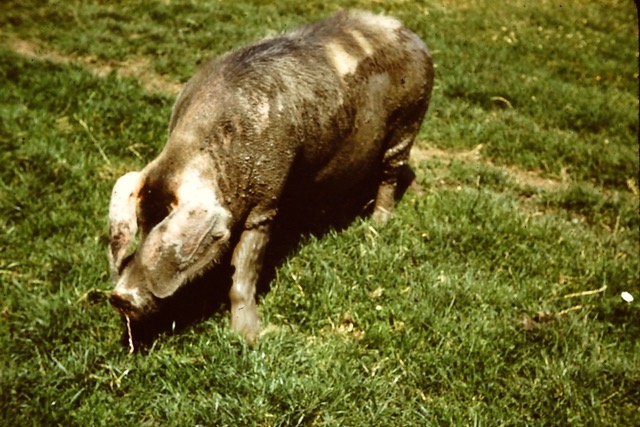
    in praise of  keeping a pet pig…big sow with piglets.  I think he is going to try to raise
    one at his home in Toronto.  

    When I wrote the chicken story I think some of the joy we experienced  raising chickens
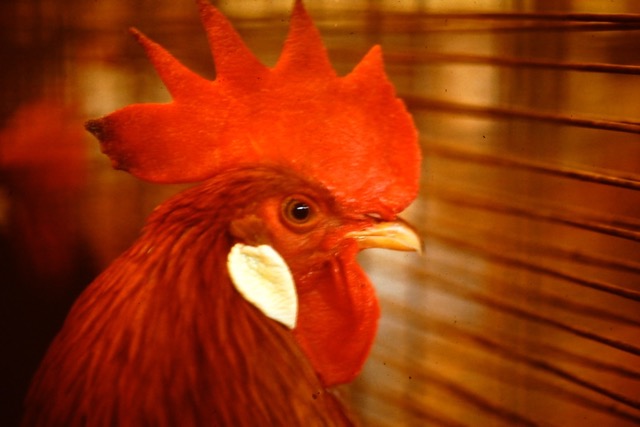
    was  neglected.   To get up in the early morning knowing that Big Red and  his harem
    were waiting for us to lift the trap door was a joy.    Once lifted Big Red came out first
    and moved to the side.  He ‘serviced’ each hen at it popped  out the door.  He paid 
    attention to the whole harem.  None were left out.  And he could crow with joy day
    after day.   He made us all feel good about life.

    Each year we sent some of our hens to the Poultry exhibit at the Royal Winter Fair
    and we won prize ribbons which  Marjorie has  framed.   


    Tinware chickens are nice to look at but they do not lay eggs.


    MARJORIE believed  the children that could love animals would emerge as fine adults.  All kinds of animals…including puppies


    Our back yard  in the chicken keeping days had no room for grass…kids  and  chickens…dogs and cats.


    Remember I said backyard chickens attract kids.  Here is proof of the pudding.


    The day the fire truck was completed it was filled with kids.  That was why it was built.

    Another shot of Big Red. He is letting me know that he is  boss.

    Our ducks, ping and pong are amused to find Andrew in he cage while they peer in.


    Cats,dogs, chickens, ducks, turtles, frogs, …wonderful world.


    Andrew and  the duck called Ping are very alert.  Do they hear a coyote?

    Kevin and  our cat Tarnga are colour co ordinated.   Love the big smile.


    Not every chicken was a pet.

    alan skeoch
    Dec  2020
  • EPISODE 180 WINTER WONDERLAND IN MIDDLE OF COVIDD 19 PANDEMIC

    EPISODE 180    WINTER WONDERLAND IN MIDDLE  OF COVID 19 PANDEMIC


    alan skeoch
    Dec. 1, 2020

    When we awoke this morning our small world had been transformed.   The dark days
    of November were gone and everything was clothed  in snow.

    Even better we had  a visit by a joyful mailman who Woody greeted.  A few  days earlier
    another grouchy mailman refused to deliver the mail because of Woody and  his wagging 
    tail.

    Some years we do not get snow  until Christmas  or later so…at present…this is a joyful
    day.  Shovelling will come later.  Shovelling can be avoided by driving the truck  up and down
    the laneway but that packs  it into ice.  A year or so  ago I went ass over teakettle on the 
    ice and  knocked myself out.  So now I take short steps.

    Our living room seems more welcoming on  days like this.  Sad  to say there will be no visitors
    for we are in isolation.  Scrabble today….we are even at 2 games each.

    No doubt all of you are out taking pictures as well.  Use short steps so there will be no
    need of a 911 call.

    alan skeoch
    DEc. 1, 2020

    P.S.  MARIAN KUTARNA…thanks  for the nice note.  I will send details of the wood quilt now hanging in your library.  So nice
    to know  someone loves these folk art pieces.  

    p.p.w.  To John Ricker…Woody does not normally sit on  cold  snow but when  I said the picture was for you John he sat down.
  • EPISODE 179 KEEPING CHICKENS…THE UPS AND DOWNS.

    EPISODE 179     KEEPING URBAN CHICKENS…UPS AND DOWNS


    alan skeoch
    nov. 29, 2020


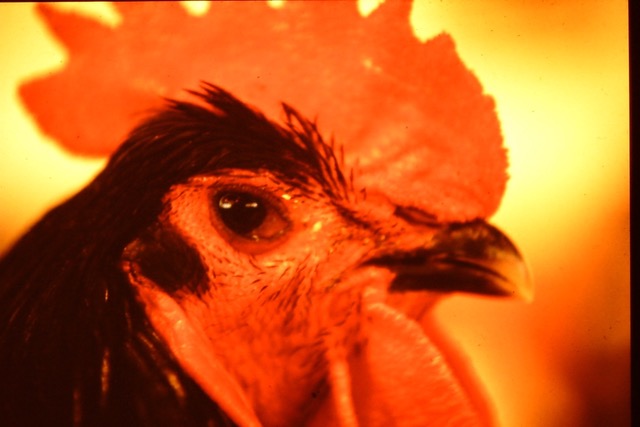
    THIS IS BIG RED…THE KING IN OUR CHICKEN COOP LONG AGO


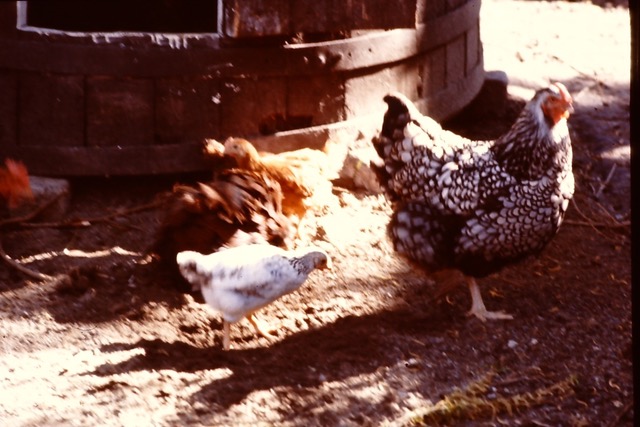
    “Andy bought some chicks for us from the Fabers…mixed  breeds…plymouth rocks, new hampshires, leghorns…
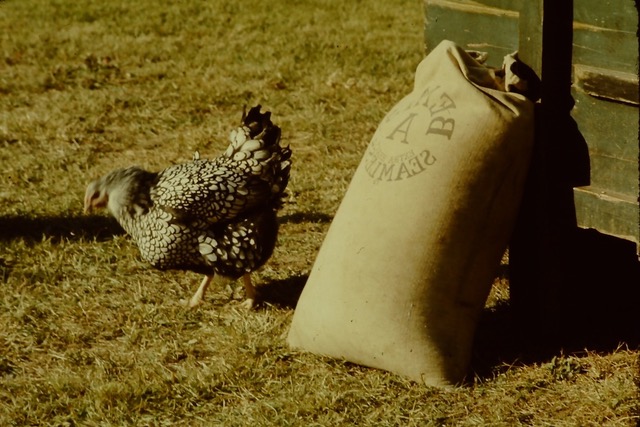
    ”Any Silver Laced Wyandottes?
    “No, weren’t they beautiful when we raised them years ago…regal looking…rare breeds “
    “Neighbours loved seeing them…”

    “Not all the neighbours…someone reported us to the By Law Inspector, Remember?”

    The by law inspector dropped by.  Reacting to 
    a complaint about our chickens.  Marjorie gathered  a bunch of supporting neighbours
    when he arrived.  I met him of the front lawn and asked, “Are you sure you want
    to go in there? MY wife has and army of supporters on the verge  of  war.”
     We were cleared as a non conforming property having chickens before
    the by  law was written.”  HE ESCAPED.

    SILVER LACED WYANDOTTE HEN…REGAL…AND ALONE.


    Points to remember about keeping urban  chickens

    1) Free range chickens lay wonderful eggs.  A thrill to reach
    in the nest and gather fresh eggs.  I am not sure the chickens
    liked that.  Must have damaged the psyche of those hens.

    2)  Backyards chickens attract kids.  If you do not want children
    around  then do  not keep chickens.


    3) Backyard chickens attract practical jokers like Kaye Donovan
    who sneaked into the coop one Easter and painted  all our eggs.

    4) Backyard chickens need lots of  care.  Chicken  dung can
    smell bad if allowed to pile up and get wet.  Believe it or not there
    are people who do not like the smell of  chicken manure.  I know
    that is hard to believe.  Chicken manure…with age…makes things grow.

    5) Backyard chickens get  lice.  Nasty little devils that can
    get out of control.  Control?  Yes, they have to be dusted with
    louse powder.  How?  Pick the chicken up by back legs and 
    dust its bare bum with the delousing stuff.  Not a nice job but
    necessary.   The key was a piece of string.

    6) Predators soon arrive to assess the availability of backyard
    chickens…foxes, coyotes, raccoons.   We  designed an ourdoor
    run with a cement floor and s heavy chain link fence that hung like
    a drawbridge door..   When loose in the backyard  the chickens were
    vulnerable.  One day a huge Osprey swooped down a picked up
    a one eyed hen.   How did the Osprey know that?  The odd skunk
    slipped around looking for the eggs.  Nice animals as long as they did
    not baptist you with fluid.


    7) Backyard chickens attract rats and mice since the chickens  like
    to throw their food around so traps small and  large are necessary.
    Enough  said  about that.
    8) Backyard  chickens  are beautiful to watch as  they wander around
    the yard cleaning up unwanted insects.   Friendly birds is well treated.

    9)  Backyard chickens to be avoided are the so called  ‘meat birds’/
    We accepted  10 or 12 of these from Vic Laing and  For Root and the
    Parkdale C. I. science department.  Dreadfull creatures bred  for fast
    growth in weeks rather than months or years.   They grow immense
    and ours had lots of genetic  defects…crooked  beaks  and feet…some  staggered.
    They ate fast.  They ate lots.  And they dropped turds lots.  When  I got rid
    of them to a farm friend they managed to make our van unlovable.  Chicken
    shit everywhere.

    10) Backyard  chickens are perfect right now as we are in a Covid 19
    Pandemic and urged  to stay home.  IN normal times, however, backyard
    chickens travelled with us in the truck..  We could not leave them alone.
    Farmers must stay close to their farm animals.

    11)  Backyard  chickens and backyard gardens are not harmonious.  Choose
    one or the other.  Or build extra fences.

    12)  Backyard chicken farmers  are credited  with saving some of the 
    breeds on the verge of extinction…such as those Silver Laced Wyandottes that’
    we grew to love.  We were never able to find a rooster of that breed  sadly.


    13)  If you do  not mind  me making a suggestion. Try backyard ducks after
    you tire of the chickens or after the predators have emptied your coop.  Get a couple
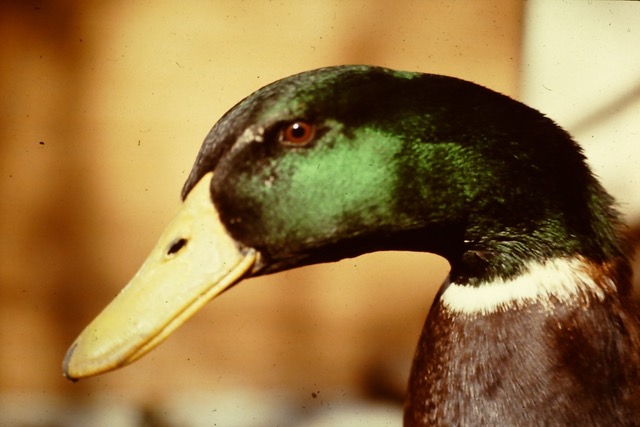
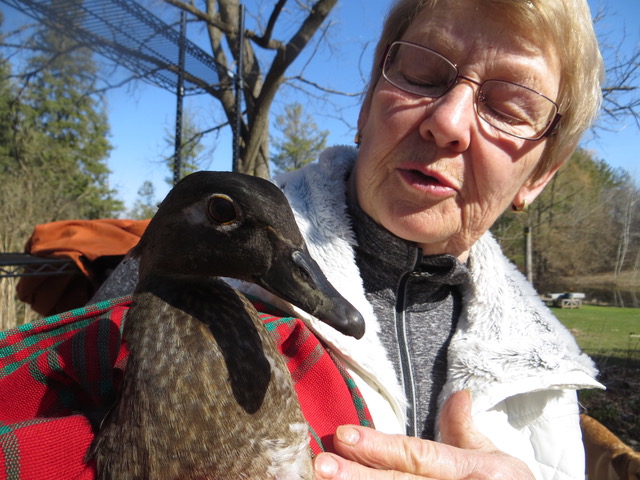
    of ducks.  Get them young.   They IMPRINT a couple of weeks after birth.  Imprint?
    They look around and  consider whoever they see on that particular day as their
    mother or father.  Our backyard pair of  ducks imprinted us as their parents.
    We just had to call them.  They would waddle over and up the ramp into the van
    or into the duck cage.   They got so familiar with human beings that occasionally
    they would go for a  walk around the neighbourhood gabbing away to each other.
    One day I caught them a block away…called them and they came chattering
    in a language  i did not completely understand.  I put one under each arm and
    hot footed home with them.  My camel hair suit coat was never quite the same.
    I went to school with duck shit streaks under each arm.   But we loved  them.
    They would  go  to the farm with us…swim all day in the swamps and ponds…then come
    when called.  What happened to them?  We were never sure but suspected a fox
    or coyote got them.   It was  easier to think they fell in love with wild ducks and
    flew away.  Easier, yes, but the problem was  they were to fat to fly.

    14)  The same applies to a crippled  Canada  Goose we adopted  when it
    was  a gosling.  Imprinted.  Thought it was human.  Then one day it was gone.
    We think it could fly.  Happy ending.


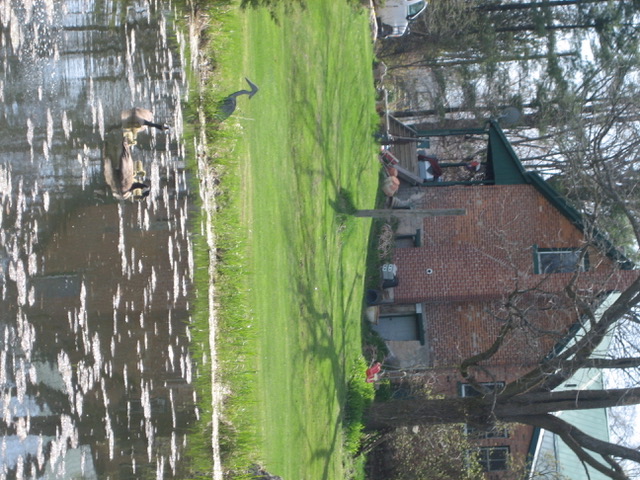
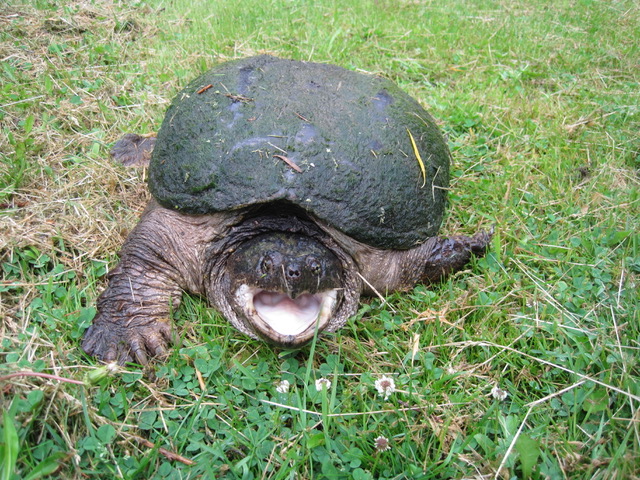
    Baby Canada Geese are hatched and  raised every year on our big pond.  Once
    mobile the parents take them away because  your Big Snapping Turtle is a threat.
    Nature ‘red in tooth and claw’.

    alan  skeoch
    Nov. 29,2020

    Post Script

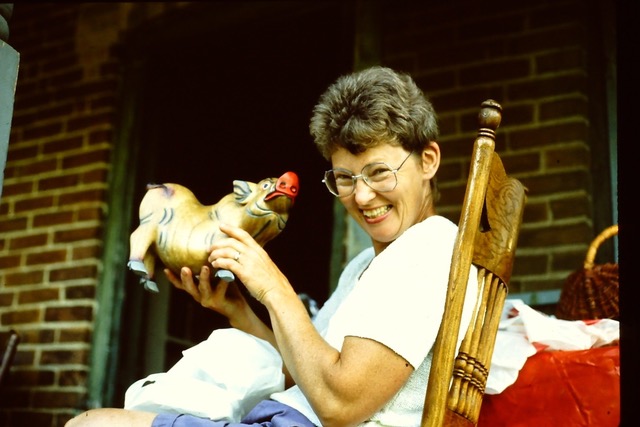
    One day I gave Marjorie a nicely  carved  wooden pig.

    “Does this mean we are going to try to raise a baby pig?”
    “Not a chance.”