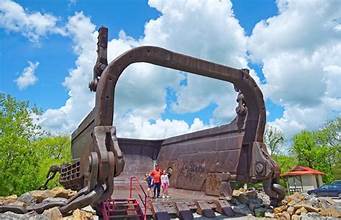
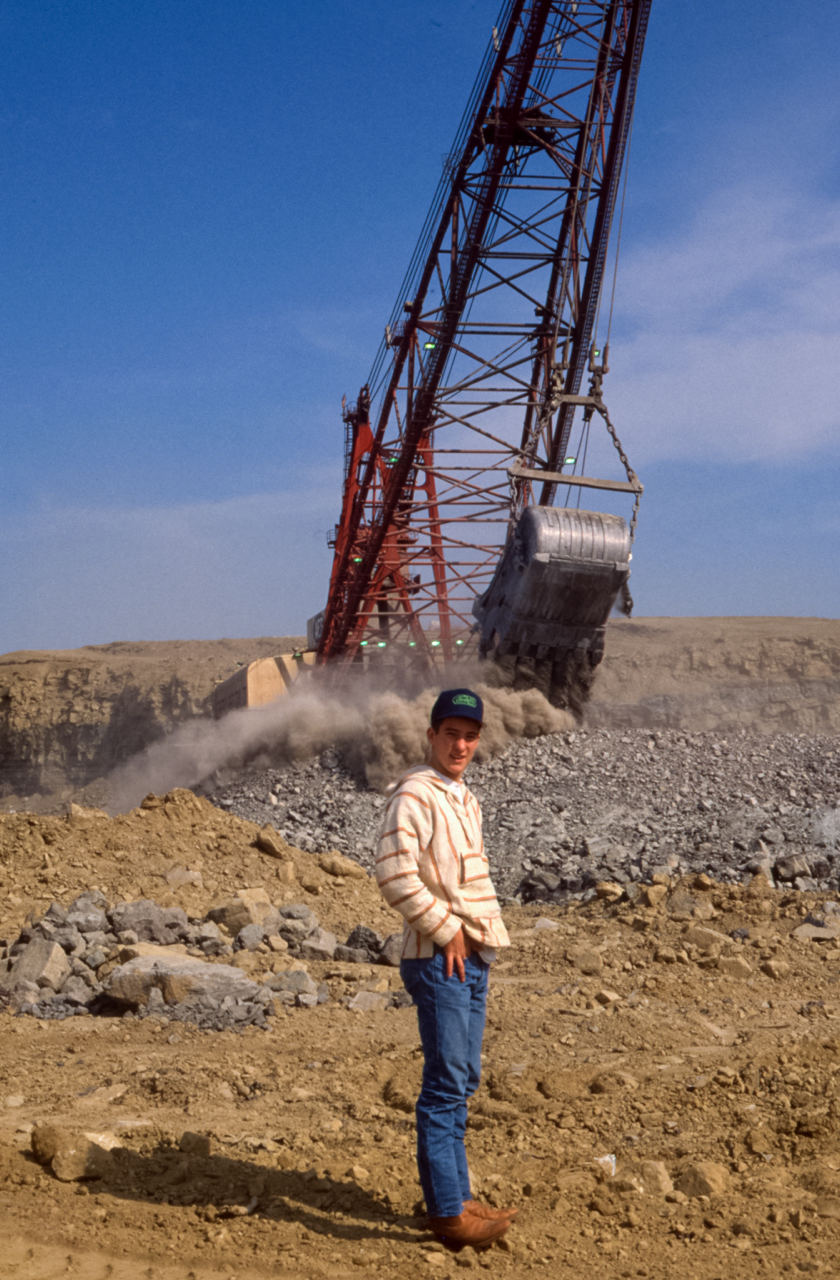
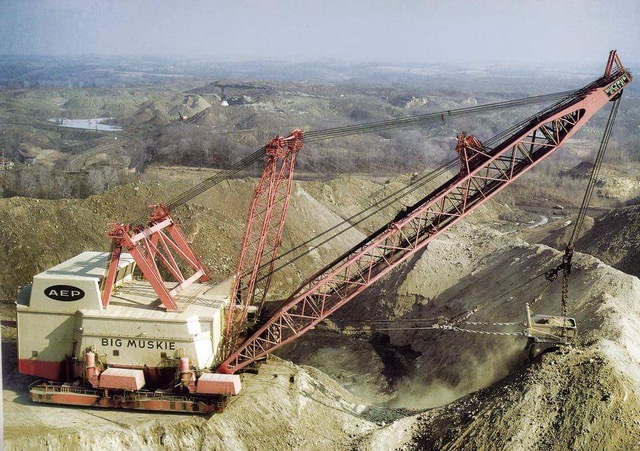
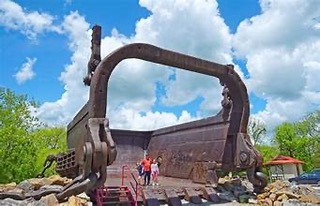
540 feet high, 22 STORIES,…bucket has room for an orchestra…see far left.
When George Richey first suggested we take an hour or two to visit The Big Muskie I thought
he was talking about a giant muskelunge. A fish story in other words.
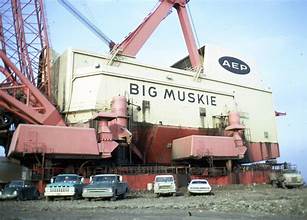
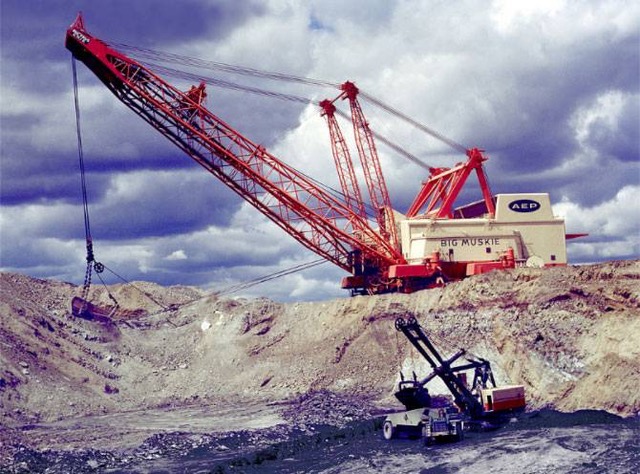
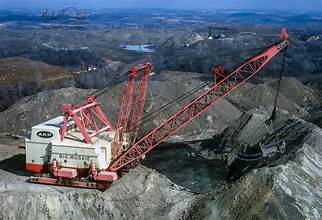
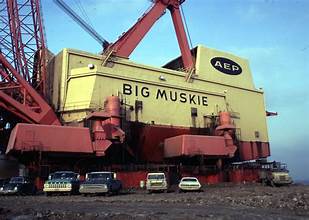
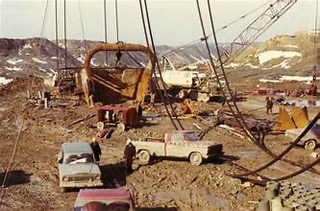
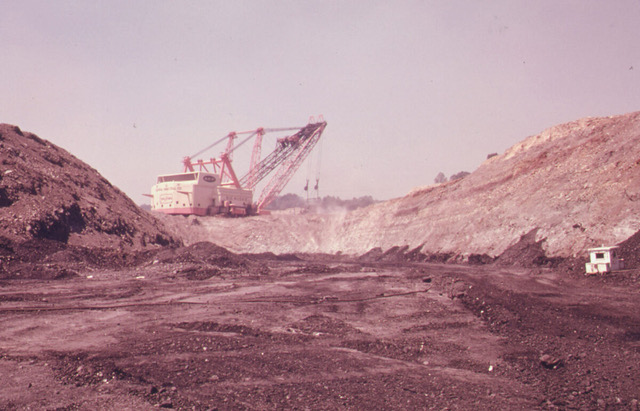
This is not a fish story. The Big Muskie is (was) the biggest drag line ever constructed by Bucyris Erie
for the Central Ohio Coal Company which owned 10,000 acres of hilly land in Eastern Ohio. Strip mining
seemed like profitable way to gain access to the seams of soft brown coal upon which the hills rested.
Cut to the construction of the Big Muskie:
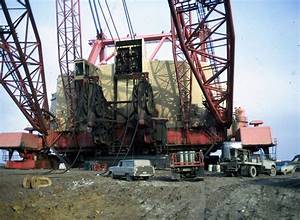
Bucyris Erie Company spent 200,000 man hours planning and constructing The Big Muskie from 1960 to 1969.
It would eventually bankrupt the company but in 1969 that was not known. These were years of glory. Finally
it was ready. It took 340 rail cars and 260 trucks to ship all of the components.
By 1966 the world’s largest drag line earthmoving drag line machine was ready to drag
the tops Off the Hills that were The stubs of mountains
worn down long ago.
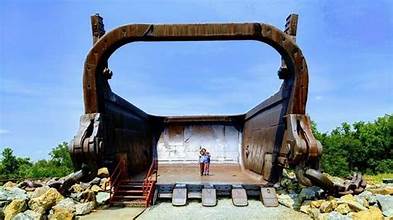
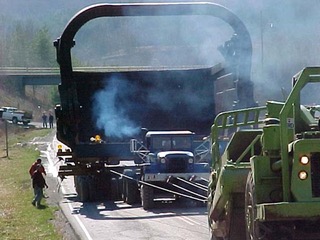
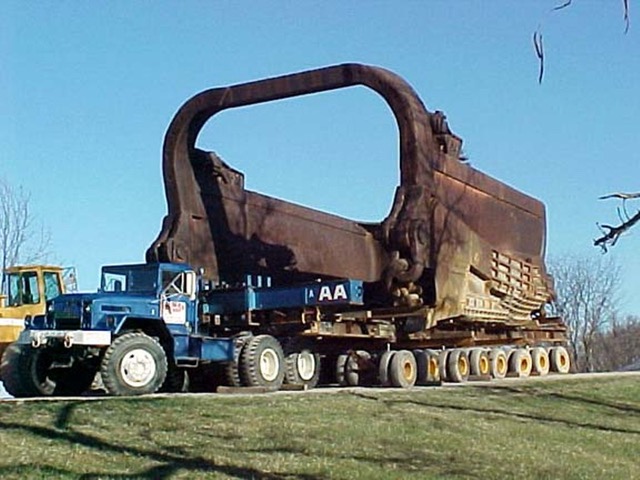
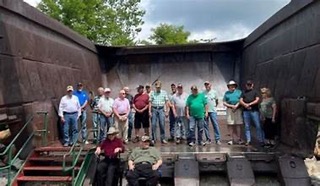
The big Muskie had an immense bucket…so large that two Greyhound Buses could be parked inside
with lots of room left over. (The Bucket is all that remains of the Big Muskie today)
The Big Muskie was 240 feet high…as high as an
11 story sky scraper. It could move slowly…an inch at a time. Once in place it began pulling the tops
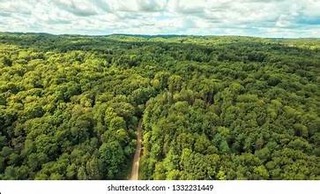
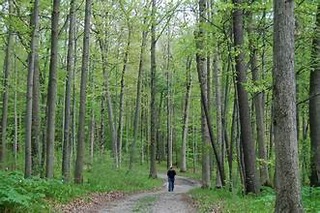
of those ancient mountains. Ripping The Carolinian forest to rubble…shag bark hickory
walnut, Osage Orange…turning 10,000 acres into a moonscape. Not pretty. Ugly and dangerous.
The Big Muskie was powered by huge electric motors that were so expensive to run that the five man crew did much of the
work at night when electric rates were cheapest.
When we first saw the Big Muskie, we marvelled…as did the local population. However opinions changed even
though the coal company reclaimed the land
after the Muskie had chewed it up. 9,000 acres have been reclaimed.
From the creation of the big Muskie in 1960 to its demolition in 1999 there was both wonder and anger.
Efforts to save the huge machine as a museum failed and it was cut up as scrap in 1999. Only the
great bucket remains. The Central Ohio Coal Company owned 110,000 acres. Coal companies around the
world held many thousands of acres of both Lignite (brown coal) and Anthracite (hard coal).
Where does coal originate? How much remains.
Most coal reserves were created in the Carboniferous period when the earth was warm and covered with plants
that lived and died in abundance.
That was some 260 million years ago (round numbers) Some of this dead vegetation got covered with overburden (limestone, clay, etc.. Both pressure and heat
turned it to coal. Brown coal experienced less heat end less pressure than hard coal. Brown coal is closer to the surface. burns dirty.
Will we run out of these resources because they are finite? Perhaps. But the coal reserves took 60 million years to form and
200 million years it lay there, undisturbed. Great swaths of time. Inconceivable. We are recent arrivals that
have only been consuming coal for a few thousand years. Coal will be around when many generations of us will be dead and gone.
The Big Muskie had a short life from the engineering idea 1960 to being cut up into scrap steel in 1999.
We were there in 1970’s when visitors were divided into lovers and haters.
COAL MINING’S LEGACY:
Much of the land disturbed by surface mining for coal prior to 1948 was not reclaimed after mining. While most of Ohio’s surface mining took place after enactment of the state’s first surface mining law in 1948, reclamation requirements were not adequate by today’s standard. Prior to 1972, Ohio’s statutes did not require restoration of desirable environmental conditions to the surface mined areas.
As a result, the state was left with nearly 450,000 acres of land that were surface mined for coal prior to Ohio’s stringent 1972 reclamation law and 6,000 underground coal mines that exist below 600,000 acres of land.
By 1972 the problems included:
1,300 miles of streams polluted by acid mine drainage
500 miles of streams affected by sediment deposition
Nearly 119,000 acres of land in need of major reclamation efforts
Hundreds of acres of land prone to deep mine subsidence
Polluted domestic water supplies
Hundreds of acres of landslides, among other problems
I felt very negative about The Big Muskie before meeting the great machine. Why? We passed
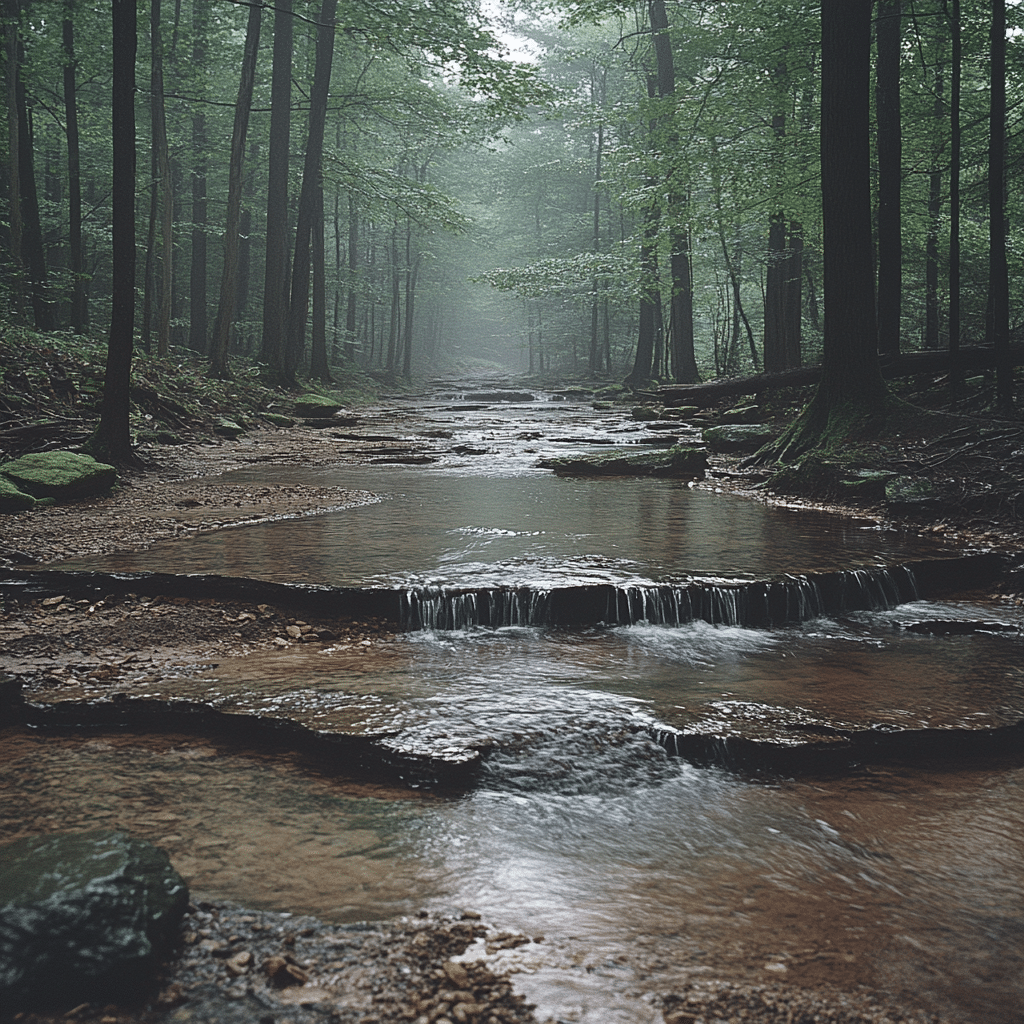
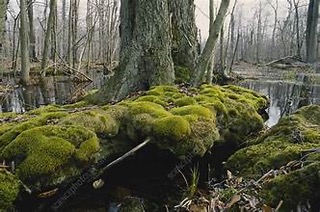
through a beautiful forested valley of shagbark hickory with a stream which we forded.
Beneath these slabs was the Lignite—the soft brown seam.
All would have been destroyed by one drag of the Big Muskie’s bucket.
Of course that was my after thought. Many others felt the same way in the 1970’s but I did not
know that. The coal company that owned 10,000 acres was judged evil and uncaring.
That is far from the truth as you will see in the next episode.
SEE PART TWO OF THE BIG MUSKIE STORY — the RHINOCERAS REFUGE.
alan skeoch
January 6, 2026
Carboniferous Period, fifth interval of the Paleozoic Era, succeeding the Devonian Period and preceding the Permian Period. In terms of absolute time, the Carboniferous Period began approximately 358.9 million years ago and ended 298.9 million years ago. Its duration of approximately 60 million years makes it the longest period of the Paleozoic Era and the second longest period of the Phanerozoic Eon. The rocks that were formed or deposited during the period constitute the Carboniferous System. The name Carboniferous refers to coal-bearing strata that characterize the upper portion of the series throughout the world.
The Story Of “Big Muskie”
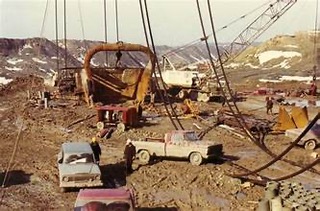
In 1966, an exciting project started at the factories of the Bucyrus Erie Co. – the engineering and building of the components of what would be one of the world’s largest earthmoving machines ever built, “Big Muskie.” Central Ohio Coal Co. had chosen this immense machine because the mine property extended over 110,000 acres of hilly terrain and made the use of a dragline versus a shovel to be more profitable at the levels of earth the coal was located in. It also allowed the coal company to better carryout their reclamation plans.
The machine was so large it was necessary to ship the components to the coal mining customer in Ohio and erect the machine on site. It took 340 rail cars and 260 trucks to ship all of the components and 200,000 man
hours to construct, but the machine finally went into production in 1969.
Ohio’s rich 200-year old mining legacy played a large part in fueling the nation’s industrial development. More than 3.6 billion tons of coal have been extracted from Ohio’s coal-bearing region since 1800. Poorly regulated mining during its first 150 years of existence in Ohio left impacts on the environment and the social fabric of its citizens.
Acid Mine Drainage (AMD)
Rock layers associated with the coal seam sometimes contain iron sulfide minerals, with pyrite the most common. Sulfur-bearing materials exposed to air and water during mining react with oxygen and water to form dilute solutions of sulfuric acid which may also contain a number of other dissolved minerals. This contaminated water, referred to as acid mine drainage (AMD), often seeps from underground mines and sometimes from surface mined areas. AMD is a significant environmental problem associated with abandoned mined lands and is often very difficult to control. Over 1300 miles of Ohio streams are impacted by AMD.
If you’ve ever sp
Mine Openings
On both a state and national scale, mine openings and tunnels are the most frequently encountered AML problems. When many older underground mines were abandoned, the entries into them were not adequately sealed. Unstable or open portals and shafts on the ground surface can be very hazardous. Dangers within the mines include poisonous or explosive gases, oxygen deficiencies, flooded sections, unstable roofs, hard-to-see vertical shafts, venomous insects and snakes, and disorienting mazes of mine workings. These problems are compounded by total darkness within underground mines.
Abandoned mines are nothing like naturally formed caves, which are attractive to recreational and professional explorers. Abandoned mines should never be mistaken for caves! Old mines and shafts conceal a multitude of potentially lethal hazards. Each year, a number of people are killed or injured nationally in abandoned mines. The safest thing to do is to stay completely out of them
ent time in Eastern Ohio, you might have noticed dark, loose gravel-like mounds and sheared-off hillsides. Maybe you’ve spied a stream that appears to glow with a vibrant rusty orange hue. These features are not typical of Ohio’s natural scenery. They’re evidence of Abandoned Mine Lands or AML—mines that were active anywhere from 50 to 150 years ago a abandoned after coal seIf you’ve ever spent time in Eastern Ohio, you might have noticed dark, loose gravel-like mounds and sheared-off hillsides. Maybe you’ve spied a stream that appears to glow with a vibrant rusty orange hueThese features are not typical of Ohio’s natural scenery. They’re evidence of Abandoned Mine Lands or AML—mines that were anywher50 to 150 years ago and were abandoned after coal seams were depleted“And I think it’s going to get worse.”
Toll of abandoned mines
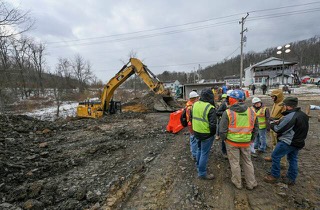
Abandoned mines are a major problem in Pennsylvania, involving a number of players.
Experts say it could cost $5 billion to safeguard Pennsylvanians’ homes and workplaces from mine 11,288
Abandoned mines discovered in Ohio as of 2024
2024 Completed Projects
In 2024, the program’s team completed 33 reclamation projects throughout Ohio, supporting the successful restoration of AML, mitigation of environmental hazards, and improvement of public safety. There were 18 non-emergency and 15 emergency projects.
891.74Government Performance and Results Act (GPRA) Acres of Ohio AML sites reclaimed in 2024
Non-emergency projects took place across the eastern coalfields of Ohio, but Athens and Columbiana counties saw the most reclamation with four and three projects, respectively. These projects addressed subsidence remediation, closing vertical mine openings, highwall remediation, dangerous impoundment/water body reclamation, and spoil projects. The Cadiz CIC project, located in Harrison County, was an AML Economic Revitalization (AMLER) project that supported local investment and rehabilitation efforts within a historical coal town. It rehabilitated a 10,000 square foot area for commercial use. Emergency projects in 2024 were concentrated largely in Stark and Belmont counties, with five and four projects, respectively. These included landslide, subsidence, and vertical opening-based projects.
GPRA Acres are used as a way to convert acre and non-acre measurements into one measurement to monitor program performance.
Explore the interactive map below to see all of the Non-Emergency and Emergency projects that were completed in Ohio in 2024. On the top left, you can see a drop-down to switch between Non-Emergency and Emergency projects.
If on a smaller screen, click the link or the tab to open the interactive web map in a new tab.
subsidence, toxic water discharges and related problems.
DEP said federal funding has enabled it to rehabilitate 91,000 acres of abandoned mine lines. That often involves filling “voids” — the term officials use to describe unknown spaces left behind in abandoned mines — with gravel or cement.
Discharge from these abandoned sites also is a problem, experts told TribLive.
Water traveling through the mines usually is highly acidic and contains heavy metals such as aluminum and iron, which Daymut said can destroy food for fish and, accordingly, warp an ecosystem.
Common ways to fight the toxic discharges affecting an estimated 5,500 miles of streams in Pennsylvania include chemical treatment and water filtration.
Eastern Ohio is home to over 1,000 abandoned underground mines (AUM), mostly from coal production, which began more than 200 years ago. The Mushroom Farm site, located in North Lima, Ohio is plagued with acid mine drainage (AMD) resulting from surface mining conducted in the 1980’s and an AUM from the late 1800’s.
Weighing in at over 27,000,000 pounds, it stood nearly 22 stories high and had a 330-foot twin boom and a 220-cubic yard bucket the size of a 12-car garage.
In 1976, “Big Muskie” removed 8,000 yards of overburden for the coal company per operating hour. In its 22 years of service, it removed twice the amount of earth moved during the original construction of the Panama Canal.
Shut down in 1991, “Big Muskie” was finally dismantled for scrap in 1999. The only component saved was the bucket, which was later incorporated into a display about the machine and surface mining and reclamation in Miners Memorial Park in McConnelsville, Ohio.




 hio, you might have noticed dark, loose gravel-like mounds and sheared-off hillsides. Maybe you’ve spied a stream that appears to glow with a vibrant rusty orange hue. These features are not typical of Ohio’s natural scenery. They’re evidence of Abandoned Mine Lands or AML—mines that were active anywhere from 50 to 150 years ago a abandoned after coal seIf you’ve ever spent time in Eastern Ohio, you might have noticed dark, loose gravel-like mounds and sheared-off hillsides. Maybe you’ve spied a stream that appears to glow with a vibrant rusty orange hueThese features are not typical of Ohio’s natural scenery. They’re evidence of Abandoned Mine Lands or AML—mines that were anywher50 to 150 years ago and were abandoned after coal seams were depleted“And I think it’s going to get worse.”





Leave a Reply