episode 2,229; EDWARD FREEMAN – BOTHYS and HOW TO BECOME A HEAD GARDENER in 1900
alan skeoch
January 28, 2025
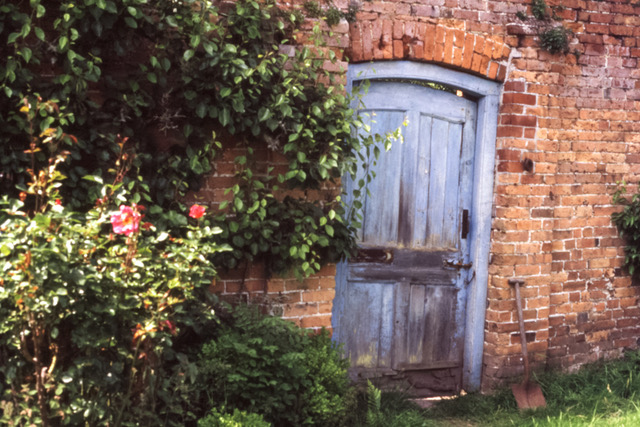
Under gardeners once lived here (see below)
GARDENERS BOTHYS and HOW TO BECOME A HEAD GARDINER
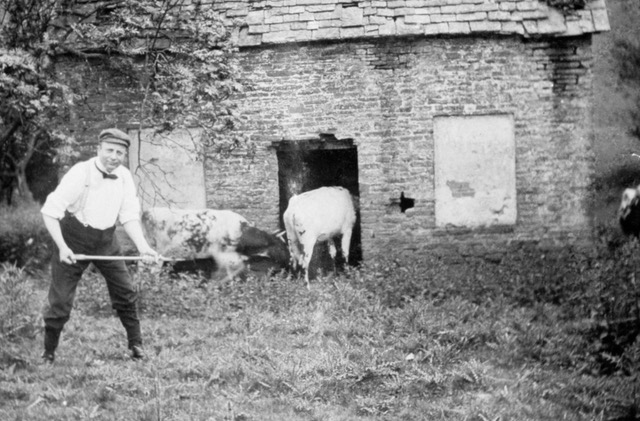
The bothy was barely visible. Looked like a hole in the north side of Eywood Gardens. (above)
Nondescript. Three heifers were wedging their bodies in and out of the hole while a
gardener was forking hay. This had been an active bothy when Edward Freeman
was head gardener at
Eywood. Was the bothy also A source of income. ? Young gardeners were sometimes
exceed to pay for the privilege of being an under gardener. They lived in this bothy. It
was not as rough when used as a home for under gardeners. But it was rough.
Sure could not be much income from 12 year old boys. Hard to believe.
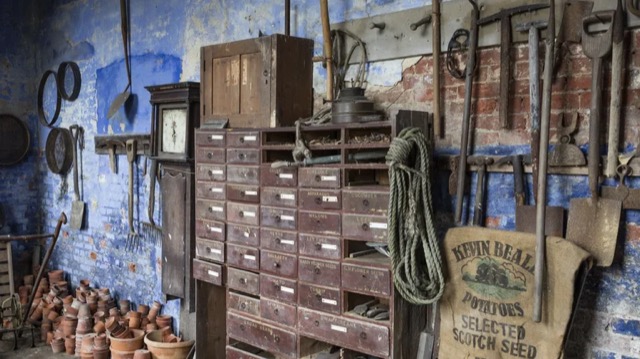
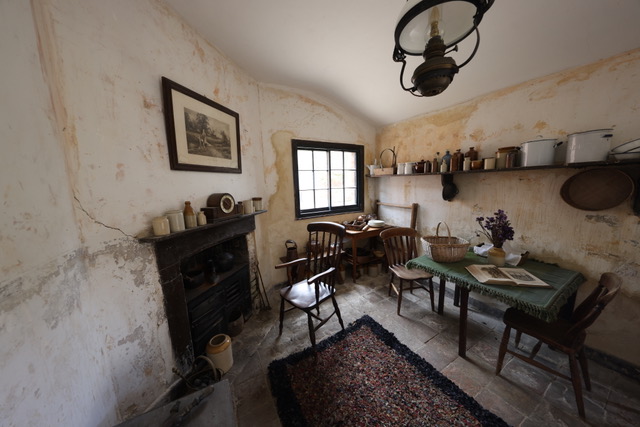
This is a tourist image of a bothy interior. There were many fancy bothys and
I believe a great many that were run down.
The LADDER THAT MUST BE CLIMBED TO BECOME HEAD GARDENER
1) INTELLIGENCE – SHOW APTITUDE WHEN YOU ARE 12 – 14 YEARS OLD
2) Apprentice for up to15 years
3) Gardeners Boy – usually 12 to 14 years old -washes flower pots (piles of them)
-keep fires going in greenhouse, keep paths swept because owners liked to
brag about gardens.-10 hour workday, 6 day week, evening reading horticultural magazines,
-expected to pay head gardener for his instructions
-fined if gardeners boy broke rules
4) Improvers – 17 to 18 years old – lived beside journeymen (in bothy)
5) Journeymen -gardeners who moved around – in their 20’s -slept in bothy -expected to remain single
-expected to study botany, etymology, plant physiology, breeding -expected to show originality by
introducing exotic plants
6) Head Gardener -host of expectations -owners of estates expected head gardeners to make
estates ’show places’ -a lot of pressure- sometimes new estate owners brought new head gardener
-job held at whim of owners who wanted to show innovative gardens to visitors…very competitive
-visitors wanted to see the roadway to estate with curves, plantings and vistas. See previous article
on Capability Brown.
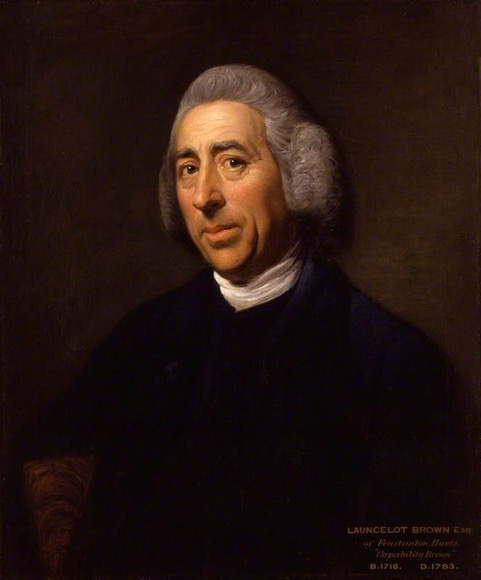
Lancelot “Capability” Brown (born c. 1715–16, baptised 30 August 1716 – 6 February 1783)[1] was an English gardener and landscape architect, a notable figure in the history of the English landscape garden style.
Unlike other architects including William Kent, he was a hands-on gardener and provided his clients with a full turnkey service, designing the gardens and park, and then managing their landscaping and planting. He is most famous for the landscaped parks of English country houses, many of which have survived reasonably intact. However, he also included in his plans “pleasure gardens” with flower gardens and the new shrubberies, usually placed where they would not obstruct the views across the park of and from the main facades of the house. Few of his plantings of “pleasure gardens” have survived later changes. He also submitted plans for much smaller urban projects, for example the college gardens along The Backs at Cambridge.
Criticism of his style, both in his own day and subsequently, mostly centres on the claim that “he created ‘identikit’ landscapes with the main house in a sea of turf, some water, albeit often an impressive feature, and trees in clumps and shelterbelts”, giving “a uniformity equating to authoritarianism” and showing a lack of imagination and even taste on the part of his patrons.[2]
He designed more than 170 parks, many of which survive. He was nicknamed “Capability” because he would tell his clients that their property had “capability” for improvement.[3] His influence was so great that the contributions to the English gardenmade by his predecessors Charles Bridgeman and William Kent are often overlooked; even Kent’s champion Horace Walpole allowed that Kent “was succeeded by a very able master”.[4]
Head Gardener (man): This was a very important role in a big house considering gardens were the first thing visitors saw upon their arrival and therefore impressive. The head gardener was knowledgeable regarding horticulture, water features and knew about gardening trends. He also worked in the kitchen gardens, growing fruits and vegetables and remedies for the household. If a house had an orangery, he would be in charge of that as well. The gardener position was considered “upper management” but considering it was an outdoors role, he was not within the hierarchy of the servants who worked indoors. He and his family often lived in a house on the estate. Oversaw the Gardener/Groundskeepers.
Average £110 pound a year / $536.00 (19th Century)
Chantel Grayson — a good source if you need more
If you’re looking for information on the duties of a head gardener, here are the key responsibilities:
- Plan and design garden layouts and planting schemes.
- Oversee the maintenance of plants, including watering, pruning, and fertilizing.
- Manage a team of gardeners and delegate tasks effectively.
- Monitor plant health and implement pest control measures.
- Maintain garden tools and equipment in good working order.
- Keep records of plant growth, maintenance schedules, and budgets.
- Ensure compliance with health and safety regulations.
- Collaborate with landscape architects and horticulturists for projects.
- Educate staff and visitors about gardening techniques and plant care.
- Organize seasonal planting and harvesting activities.
I was surprised to discover that Edward Freeman did not like his job…too much pressure.
In spite of the huge difficulties he faced in Canada, he considered a life of near
poverty better than a life of near slavery as a head gardener.
THE head gardeners carried a huge load of responsibilities. They could be fired
at the whim of their estate owners…and often were. Some new owners arrived
at the new estate with their own head gardeners. The resident head gardener was
let go…i.e. fired…and had to look for a new estate. Before 1914 there were
lots of opportunities. After World War One owners of large estates declined
and many estates were demolished. Not much is known about the fate of the
4000 head gardeners in England in1914.
Head gardeners seem to have been loyal types… around half of them volunteered
for battle and did not survive the slaughter. Such is true of the under gardeners as well.
Edward Freeman migrated to Canada in 1906. I think he expected a better life
where he did not need to tip his hat to his ‘betters’. The life he faced
after 1906 severely tested his optimism as you will discover.
alan
Below is an interesting article on head gardeners.
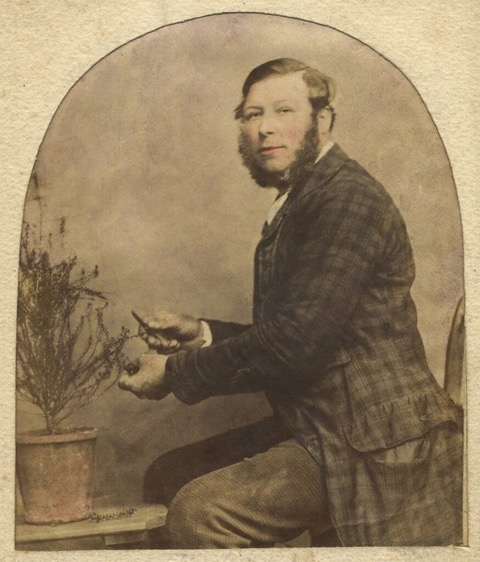
HOME » NEWS » THE MATTHEW BALLS ARCHIVE: THE DISCOVERY OF A VICTORIAN HEAD GARDENER
THE MATTHEW BALLS ARCHIVE: THE DISCOVERY OF A VICTORIAN HEAD GARDENER
Leave a Reply