episode 1’207: EDWARD FREEMAN, HEAD GARDENER at EYWOOD COUNTRY ESTATE, HEREFORDSHIRE, ENGLAND — 1898-1906
alan skeoch
January 25, 2025
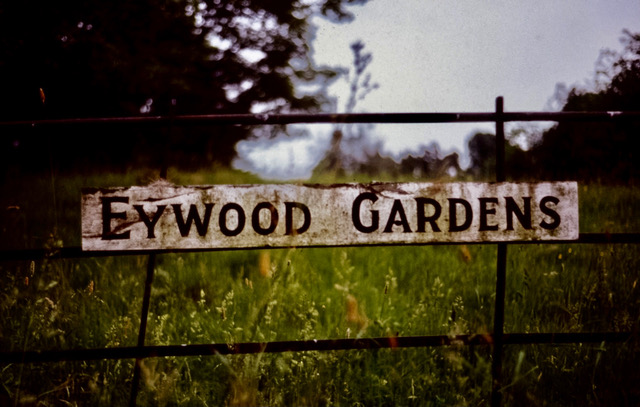
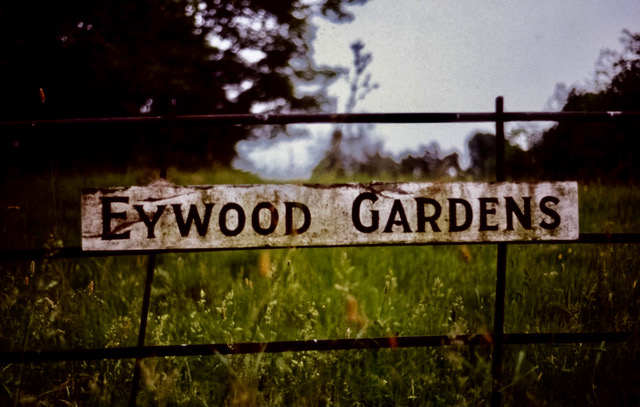
SEARCHING FOR EYWOOD IN 1960
Not much time. Three days to find Eywood in Herefordshire, England. I had just
finished a wonderful job in Ireland. Mining equipment all crated up and sent
by ship back to Canada. I was 22 years old. A history student at the University
of Toronto. I would be a bit late but might never get another chance to find Eywood,
the grand 1500 acre country estate my grandparents had left in 2006 to migrate
to Canada.
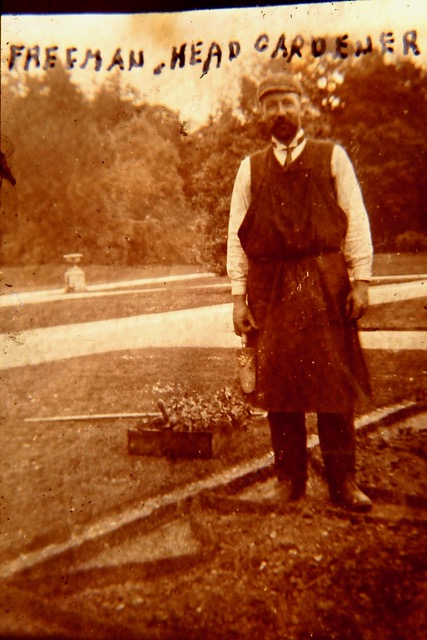
Granddad, Edward Freeman, had been the head gardener at Eywood from 1898 to 1906.
On winter nights grandma and granddad often talked about Eywood. As a teenager the
Ewood estate became a fairyland akin to that found in the Wizard of Oz.
In winter they had only one room that was liveable in their Ontario farmhouse…made so
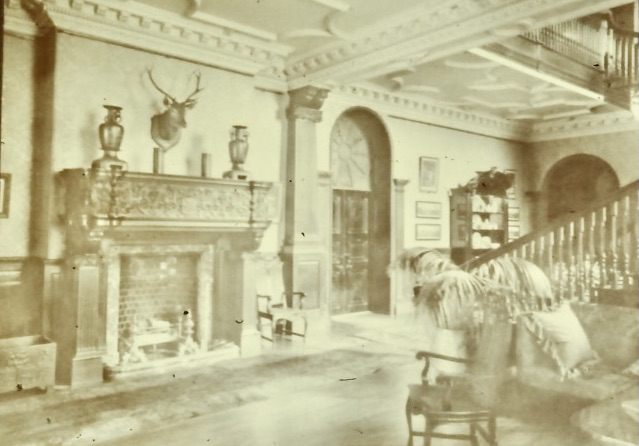
by a large cast iron cook stove. Ancient photographs of Eywood hung here and
there in large hand made black varnished frames. (see episode 1,209) A narrow couch beside the stove,
a small foot pumped organ, a kitchen table, a large sideboard cupboard for anything grandma
thought valuable and four chairs. Wallpaper featured a twisting grape vine.
Two cracked cups and mismatched cutlery and dishes…and a woodbox stuffed
with hand split maple blocks and splintered cedar.
When we were there the room was full and conversation was constant. Letters from
England were read and reread. Eywood letters from Polly Griffiths. Her son
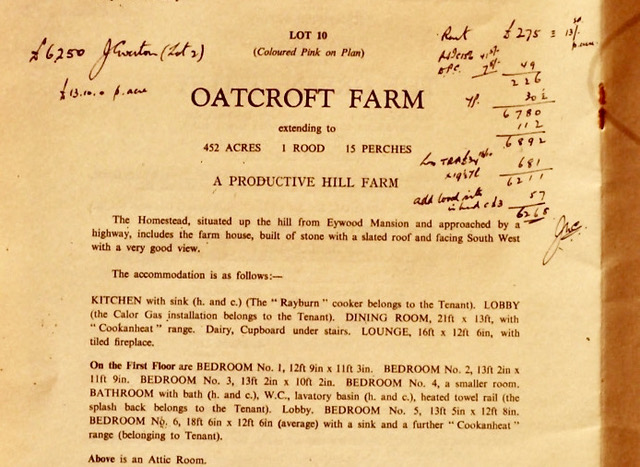
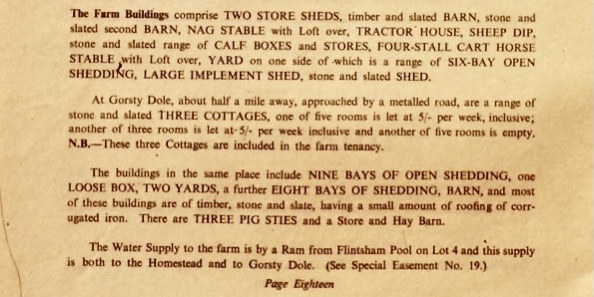
Cyril farmed Oatcroft, a 500 acre farm at Eywood.
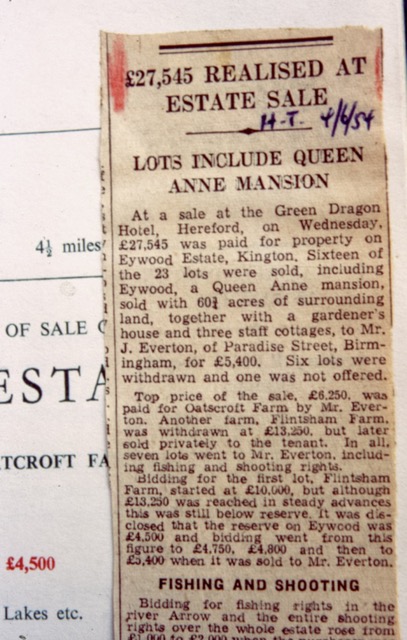
In 1954 word came that Eywood was up for sale. The 1500 acre estate was
broken into pieces..sold to highest bidders. A disaster for the hired help of
Eywood, the servants. No one seemed to want the big house…the heart
of the Eywood estate. The rest had new owners. I was 16 in 1954 and
never expected to ever see Ewood so did not listen closely
Then in 1960 I was sent to Ireland for two months and at the end of the job had three precious days
to find Eywood. Disaster had happened. I should have listened more closely in 1954. The
shock would not have been as bad. Then again If I knew what
had happened to Eywood in 1954 I might have been even more fascinated.
WHAT HAPPENED TO EYWOOD? … THE 1954 FALLOUT
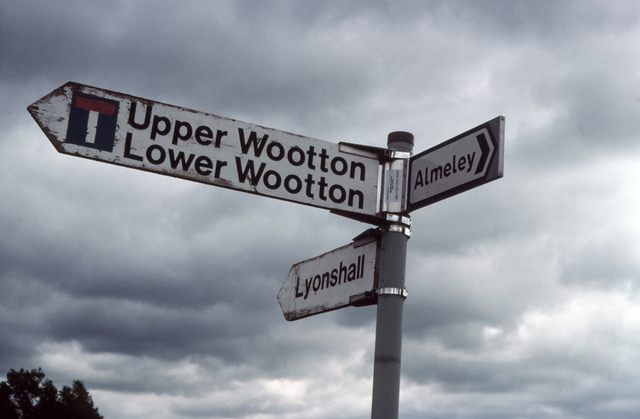
Finding Eywood turned out to be easier than I expected. All I had to find was
Lower Wooton Farm. A banker at the Hereford train station noticed I was lost
and said he would drive me there. Turned out to be Cyril Griffiths’ banker.
When i arrived I was startled to discover they expected me. Mom had sent a
note to Aunt Polly and the whole family were waiting for me to arrive…Cyril, Nancy, Polly
and young David. Supper was ready…a bed was ready.
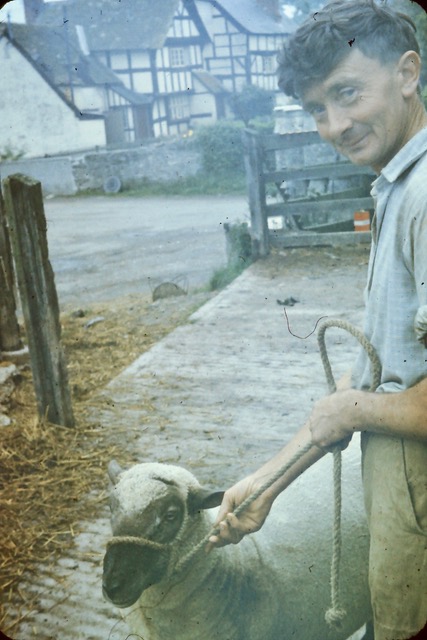
CYRIL Griffiths with the sheep that thinks it
is a cow and arrives at milking time
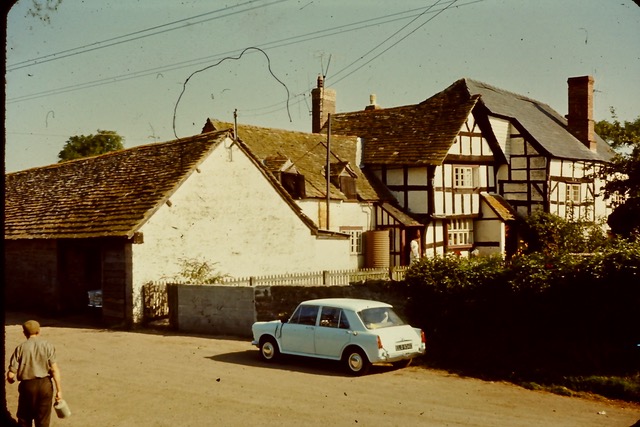
Lower Wooton Farm was an adventure…an historic site
dating back to the 16th century… not be modernized. Cyril Griffiths had farmed Oatcroft,
one of the Eywood farms. Probably it had been sold at the auction and Cyril was
offered Lower Wooton Farm as an alternative.
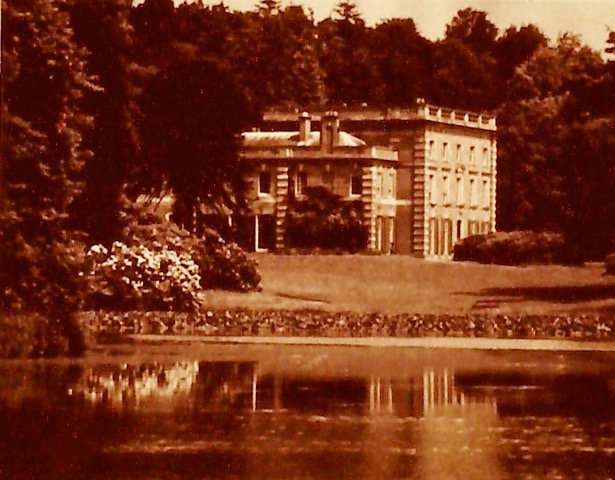
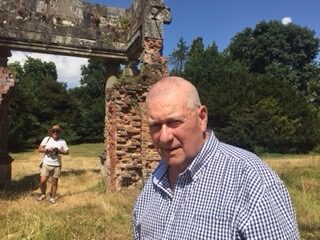
Next morning Cyril drove me to Eywood. Did The estate exist unchanged since my
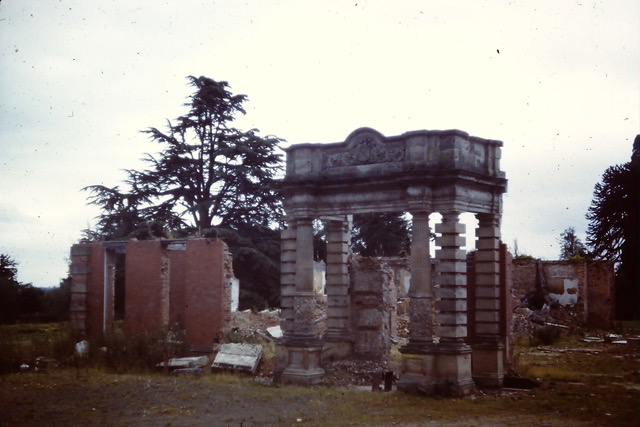
Grandfathers days as Head Gardener 1898 to 1906? Not quite so. The big house
on Eywoood estate was a pile of red bricks and four stone columns where there was
once a grand entrance. All else was intact including the rookery where young pigeons
were captured and eaten on fancy dinners. Disgusting…I believe they were a delicacy
called squabs.
Cyril knew I wanted to see the great walled garden where granddad and his 8 employees
laboured to provide food and flowers for the Gwyer family.
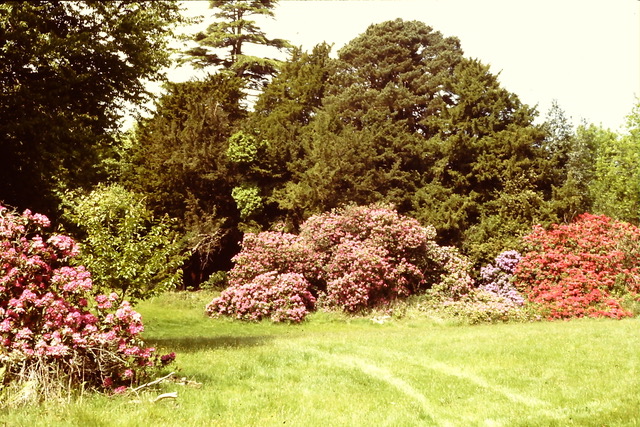
We treaded a grass trail enclosed by rotodendrons in full bloom. Uphill to the head gardeners’
cottage and then into a two acre brick enclosed garden.
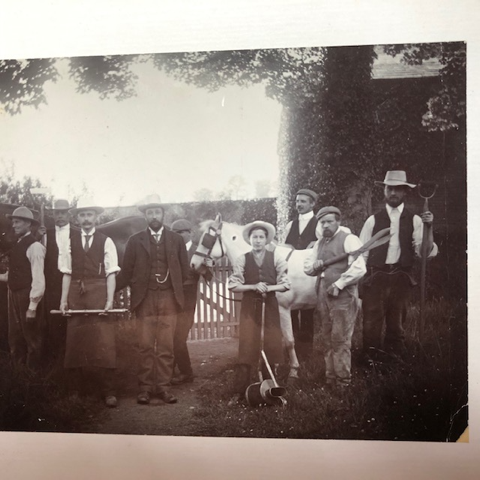
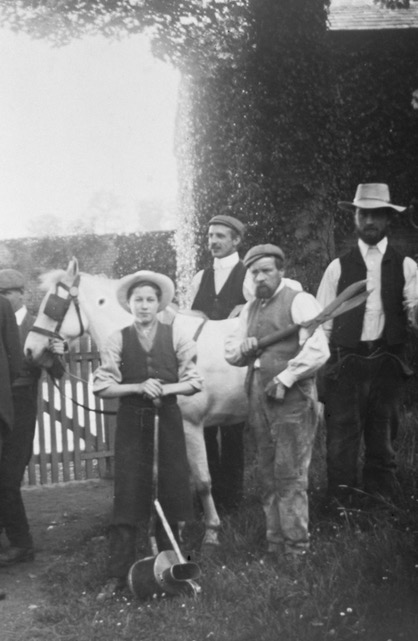
The gardening staff at Eywood circa 1900…all ages…Edward Freeman with his
beard which makes him look older than a young man in his twenties.
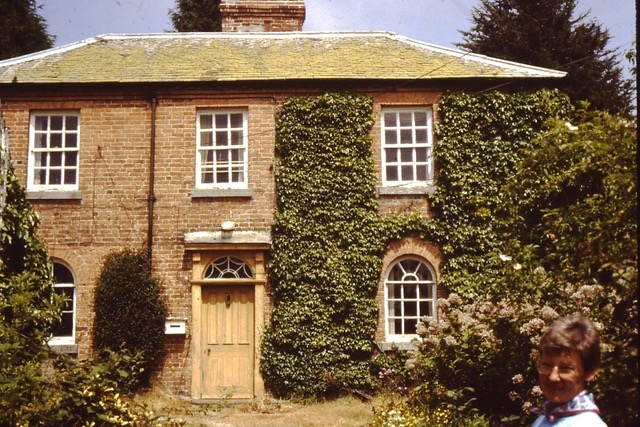
This is the head gardeners’ house at Eywood…where my mother
Elsie Freeman was born in 1901. The house is part of the
walled garden whose purpose was to retain heat and thereby
grow plants normally grown where soil temperatures were
warmer. Such as peaches for example.
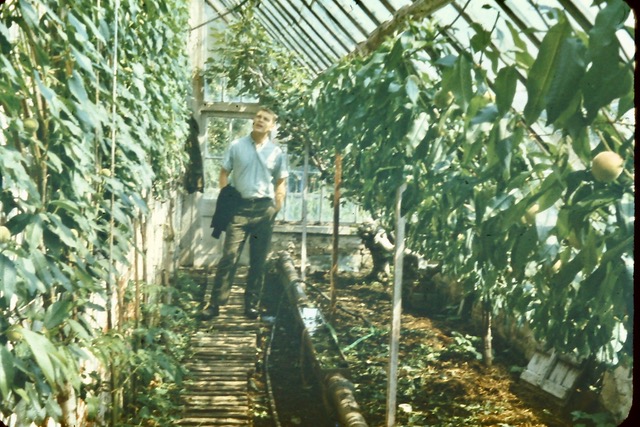
My brother Eric, five years later is standing in an Eywood glass house
where a peach tree is thriving. Attached to the espaliered tree is a wooden
tag marked “E. Freeman” and a date. unfortunately I have misplaced
my picture of the tag. See the peach on the left? Or was it a nectarine? Head gardeners were
expected to grow exotic plants. In the 19th century English plant
hunters searched for new plant species for head gardeners to
plant in these walled gardens. The most famous was the rubber
tree seeds hijacked from the jungles of Brazil and propagated
in London’s Kew garden. Rubber is essential in modern
civilization. Without natural rubber jet planes could not take off or land. Is that true?
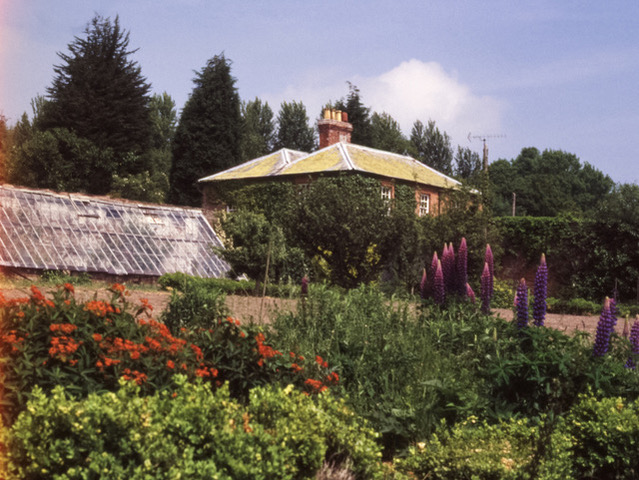
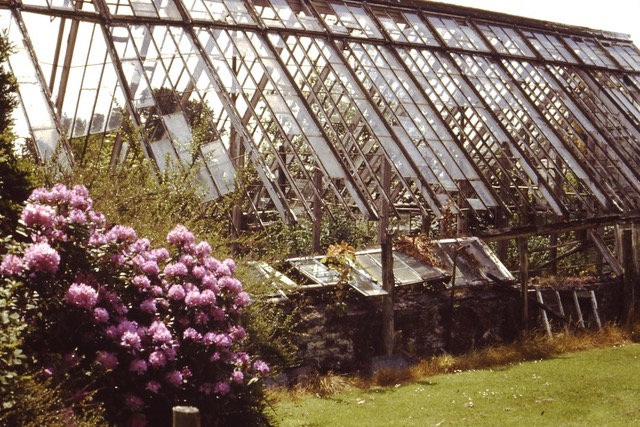
View of Eywood garden from inside the high brick wall. Edward Freeman’s
house in the centre, glass house on left supported by the high brick wall.
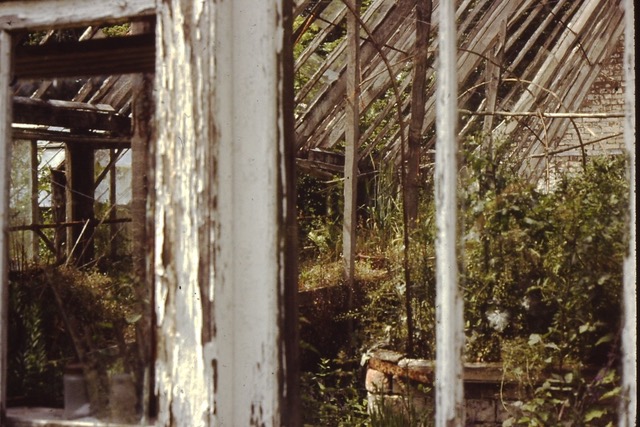
Glass house was not quite so pretty on closer inspection.
Edward Freeman had a gardening staff of 8 men and boys.
In 1960 there was 1 man, Percy (whose name I have lost —
he worked as a gardener for my grandfather and bought
the Eywood gardens at auction in 1954. Nice man. Gave
us one of the large clay flower pots as memento of better days.
NOTE: NEXT EPISODE WILL FEATURE ‘THE BOTHY’ AT EYWOOD
Leave a Reply