EPISODE 133 SKEOCH WOOD, (ISLE of Bute, Scotland)
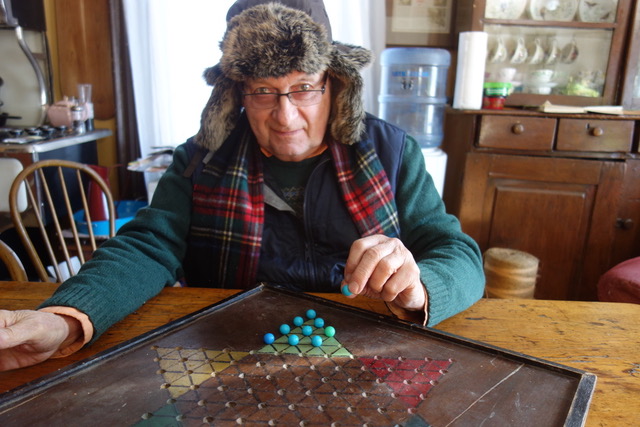

SKEOCH WOOD … north side of ROTHESY, ISLE OF BUTE, SCOTLAND
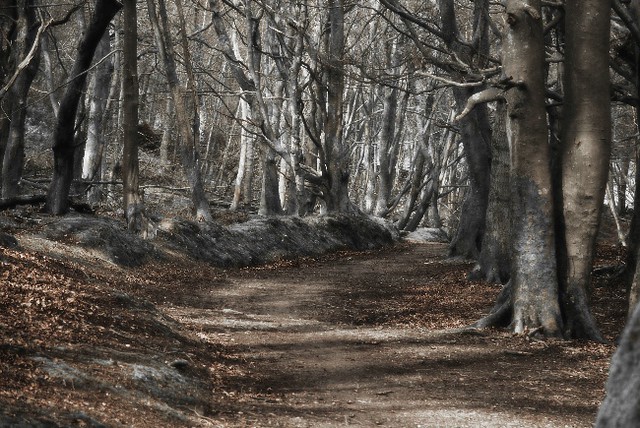
SKEOCH WOOD
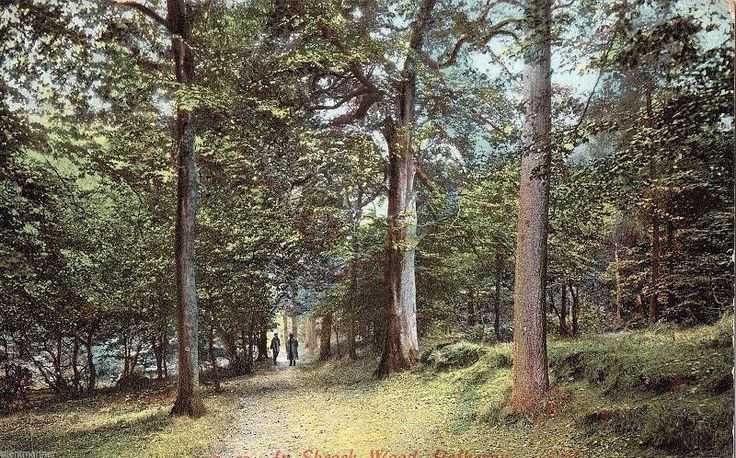
SKEOCH WOOD, CIRCA 1900
alan skeoch
Oct. 2020
“Can I help you, lad?”
“Yes, do you have an empty prison cell?”
“Why, son…looking for a place to sleep?”
“Yes.”
“No need to sleep in jail…let me see what I can find.”
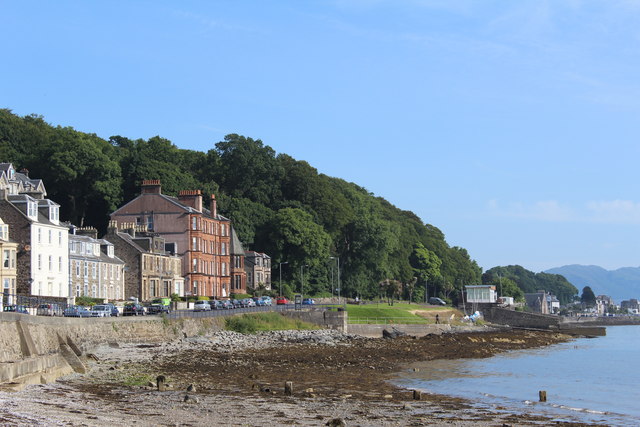
It was early September, 1960, and I had just got off the Scottish ferry to Rothesay on the
Isle of Bute. My money was almost gone but I dearly wanted to see the Skeoch Wood, a
forest on the northern edge of the holiday town of Rothsey. Somewhere I had read
that local police stations could provide emergency shelter.
Just getting to Rothsey was a shot in the dark as the expression goes. My job doing a mining
geophysical survey on the south coast of Ireland was over and I was slowly making my way
to Prestwick Airport for the flight home to Canada. This was a grand adventure for a 22 year
old Canadian so I tried to cram in as much family history as possible. Mom told me she
found the Skeoch Wood on an old post cart.
Was this forest connected in any way with our family name? I thought so. But how do I
interview a tree? Actually I felt lost when I found the Skeoch Wood. It was not the forest
I expected.
“Got a place for you … just down the street, very reasonable
bed and breakfast. Better than a jail cell.”
“Too bad about the forest…One hundred years ago you could get lost…could
hide in there.”
“What happened?”
“Two World Wars and The Great Depression… removed a lot of trees.”
And no one I spoke to Knew anything about the name Skeoch. Someone must know but
I had no luck. Rather a disappointment but the Skeoch Wood was a kind of
namesake. Maybe Skeoch is both a place name…and a family name. The best
meaning I got for the name was Geilic for “Hawthorne” or that a Skeoch was “a hawthorne
branch thrown across a field opening as a gate. Who knows if that is true. Does relate to
trees though. So I left
Rothsay, caught a bus to Prestwick and flew home to Toronto. End of story.
Well not quite. By pure chance in 1998 I came across THE TENTERS OF BUTE, an article
written by Jenny Chaplin in The Scots Magazine (Vol. 148, N.1, January 1998). It was
the subheading that caught my eye:
“SKEOCH WOOD was home to hundreds of men, women and children who, through
no fault of their own, had no roof over their heads.”
Rothesay once had four large cotton mills that employed a lot of workers…perhaps hundreds.
Cotton processing boomed in Rothesay until 1835 when the market collapsed and all the
workers were suddenly unemployed. There was no safety net. The workers could not pay
rent … could barely feed themselves and stooped to stealing turnips and whatever else was
near at hand. So, from 1835 until the 1920’s, nearly a century, these industrial workers
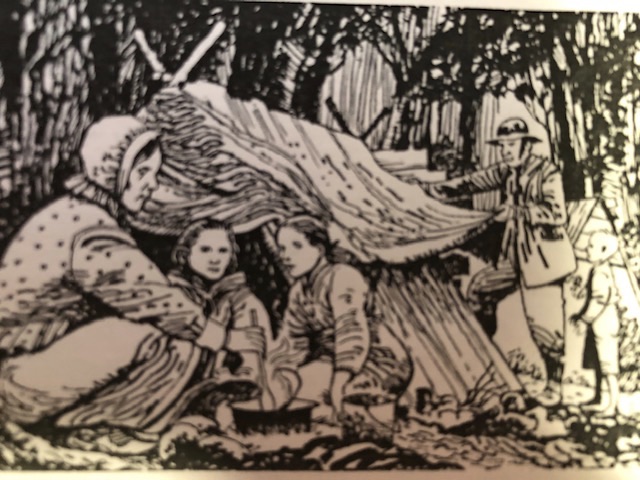
and their children retreated into the Skeoch Wood. Hidden. They became known as
the Tenters of Bute because they lived in makeshift tents and hovels. No running water,
no toilets. The Skeoch Wood became a desperate place.
“The trek to the Skeoch Wood had begun (in 1835). And throughout the 1800’s and
on into the early years of 1900, the Skeoch Wood was home to hundreds of men, women
and children who, through no fault of their own, had no roof over their heads.” (Jenny Chaplin)
It might be expected that the occasional visitor to Rothesay, as I was in 1960, might take
a nap in the Skeoch Wood to save a bit of money. But it must have been startling to stroll
through the Skeoch Wood in 1835 or 1855 or 1895 and find hundreds of poverty stricken
families sleeping … living …deep in the forest.
They were not even allowed to beg unless the had a “Begger’s Badge”…only 26 such
badges were issued.
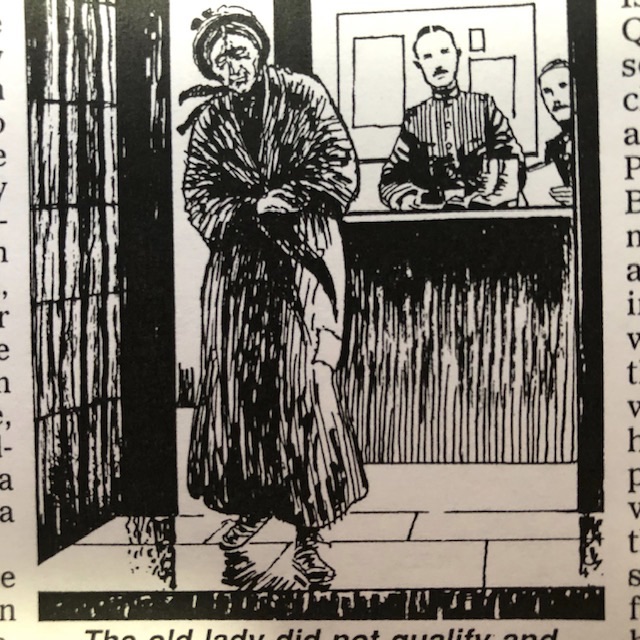
One elderly woman walked barefoot (I assume) to the Rothesay police station in hope
of getting shoes. When she admitted she was 69 rather than 70 she was sent away
“with tears streaming down her face.”
THE police in Rothsey turned this old lady away when she needed shoes badly.
The police in Rothsey, in 1960, found me a plae to sleep other than a jail cell.
These stories just do not fit well.
Selling cockles and whelks earned a little money but when too many tried to sell
this low level food they were rounded up and moved away from town. Rag picking
was another way to try to make a living.
Some Local residents of Rothesay referred to the Tenters as “The dregs of humanity”…and
that was in 1899 when they were offered a trip to the poorhouse in Greenock which
they refused. Better to live in a rag tent in the Skeoch Wood than enter a British
Poor House. Earlier, in 1878, The Society For Assisting Poor Wives in Their Time
of Need …that was the full name, imagine that…the assistance was to “Lend”
a bagful of clothing for one month. Lend. not Give.
Sympathy was felt by some…rejection by others…all focused on the Skeoch Wood.
1885, a Plea for the Poor:
“Hard times are at our door…
We never saw before
Such deep distress through poverty
As many do deplore.”
When did it end? When were the Tenters of Skeoch Wood dispersed? There was
no specific time. They disappeared in dribs and grabs. A goodly number left
in the immigrant boats heading to South Africa, Australia, Canada, etc. How
could they afford to do so? Local people held bazaars, antique and collectable sales
as they do today. It was in the interest of Rothesay to do so. Rothesay had become
a tourists town. Tourists liked to stroll through the Skeoch Wood I imagine.
The police officer that I met in 1960 must have been amused. Maybe, later,
afer he had found me a room rather than a jail cell, he had a pint with
friends in a Rothsey Pub and said.
“Guess who asked to be put in jail today?”
“Who?”
“One of the original Skeoch’s from the Skeoch Wood. A kid.
He did not even have a tent.”
alan skeoch
October 2020
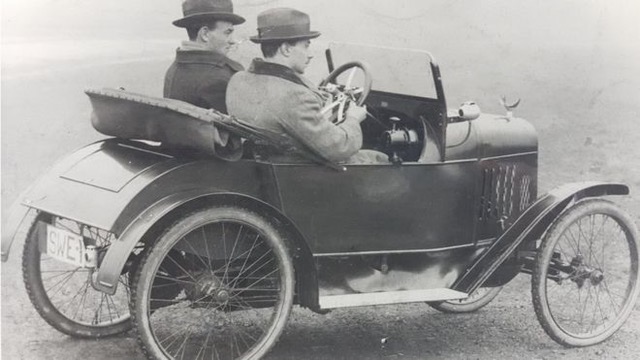
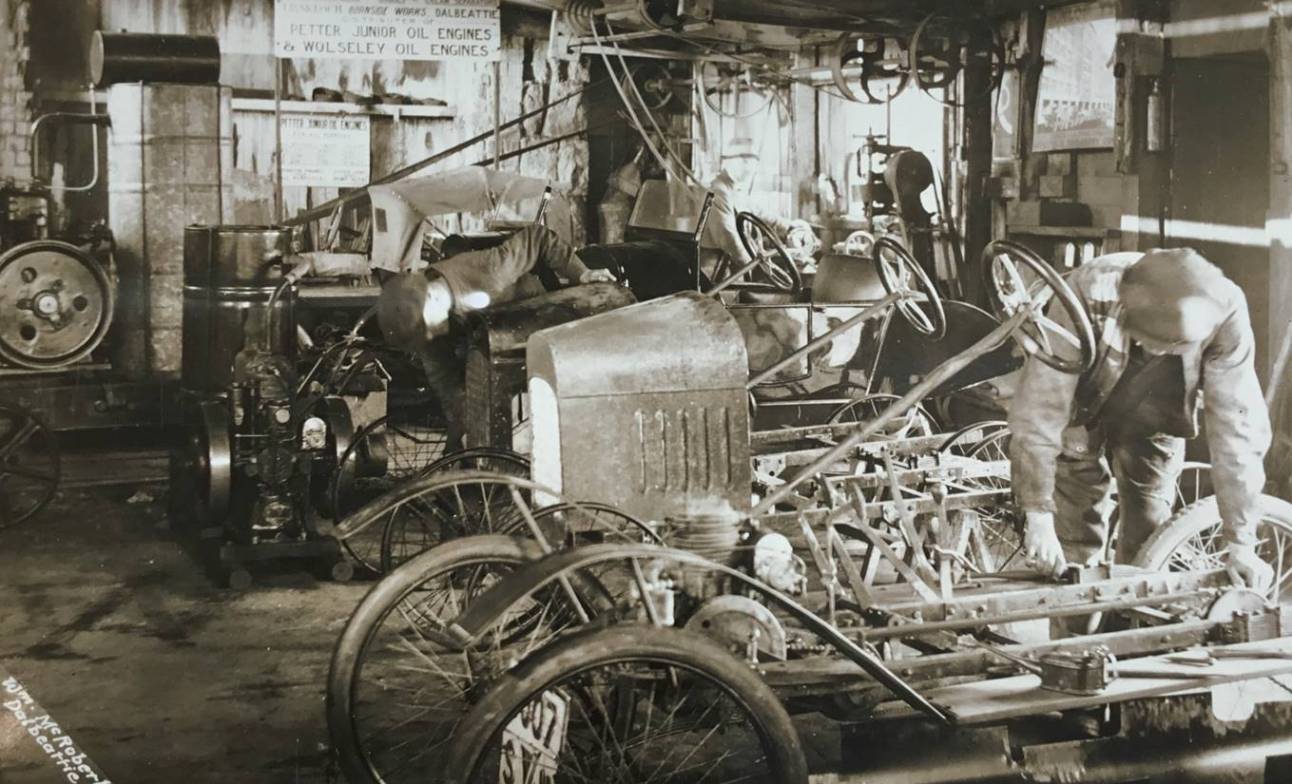
P.S.. In time, Some of the marbles began to fit. Take the LITTLE SKEOCH MOTOR CAR
of which less than five were built before the factory burned to the ground in
the 1920’s. Some car buffs in Scotland are rebuilding that car. Then there
is the question of St. Skeoch. Who was he…she? A mystery that still
remains. How could we be offspring of saints? Wait a second, saints do not
have to be celibate do they?
Skeoch is a rather odd surname. Then again
there are many odd surnames of people around the world.
So , being odd, is noting special today. But back in 1960 when I was much younger I had the chance
to look into ur family name…to maybe confirm or reject the legends that circulated through the family.
THE LAST WORD
Keep this final note secret between you and me. Some veterans of World War II told me
the Skeoch Wood was a great place for lovemaking. I have no idea if that is true.


Leave a Reply to Coral Cancel reply