Month: July 2025

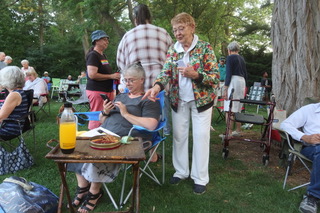
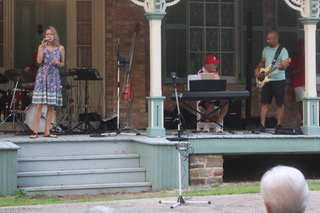
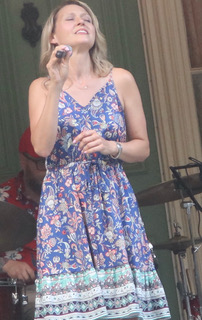
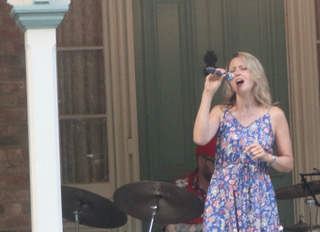
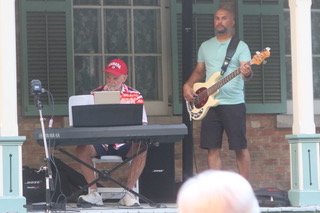
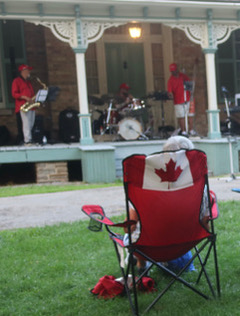
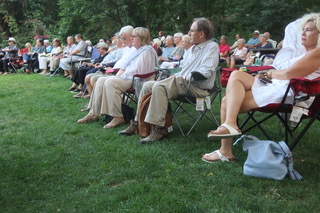
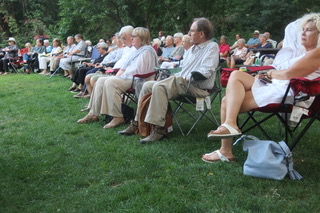
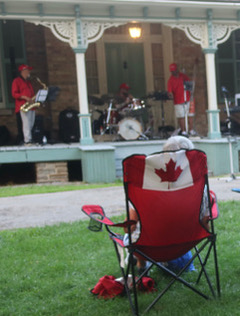
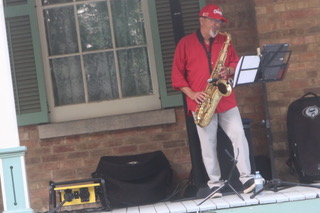
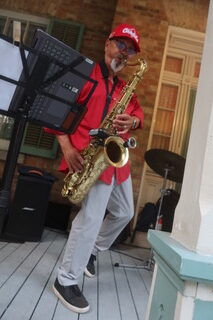
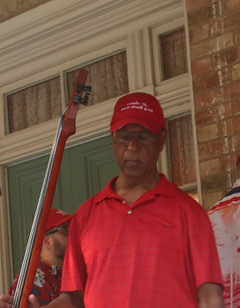
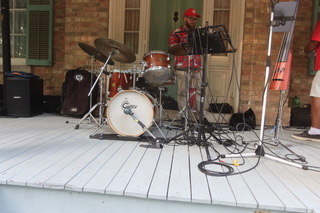
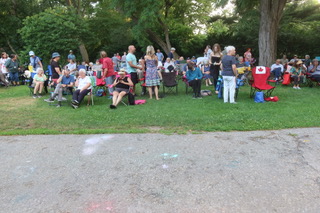
  • open air concerts….start spreading the news…aug,1,8,15,,,benares, mississauga….SHE SANG ‘FEVER’.

    There are three more open air concerts scheduled…august 1,8 and 15, 

    Benares, mississauga starts at 7 pm, donations suggested $20.  “start spreading the news”  bring a chair. (alan skeoch)
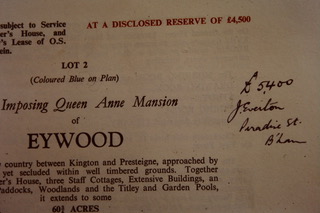
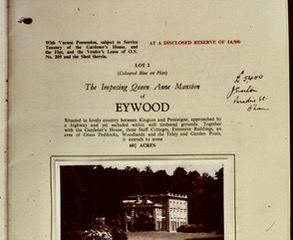
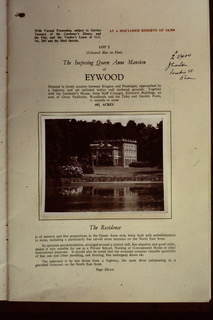
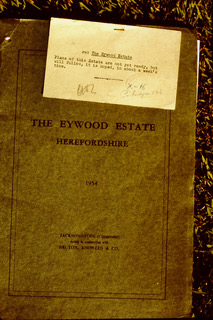
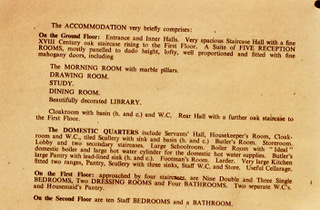
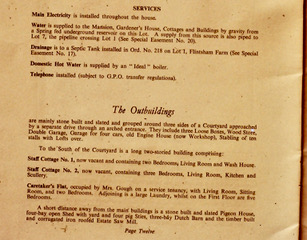
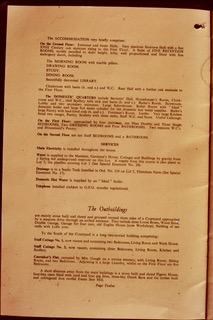
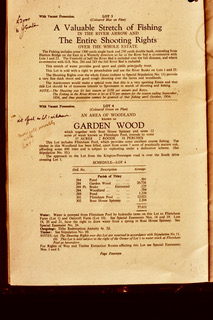
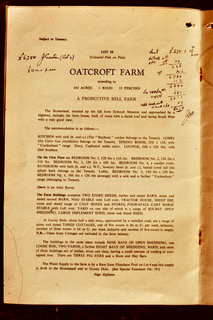
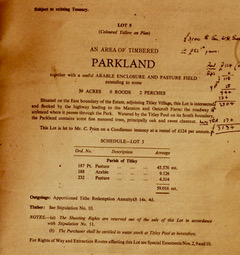
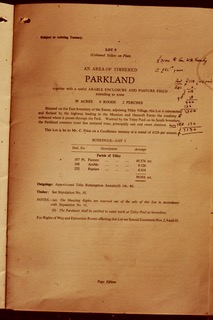
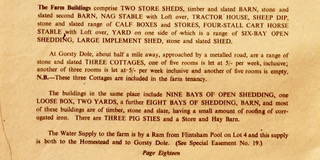
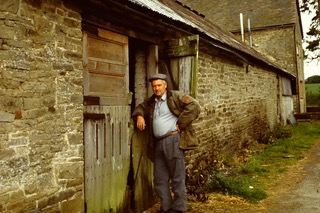
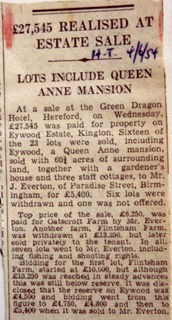
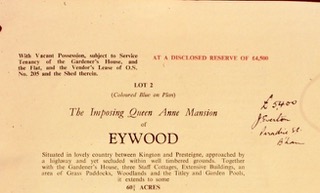
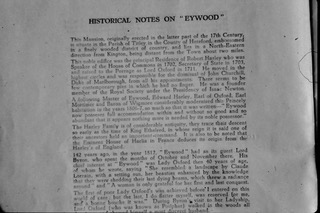
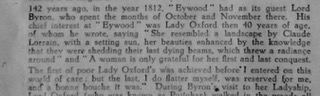
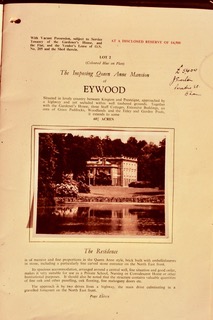
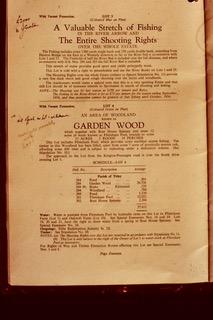
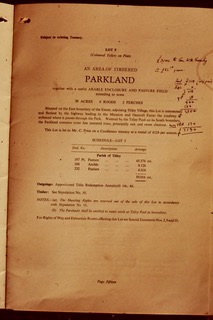
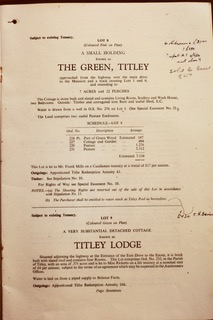
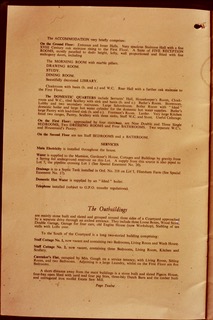
  • EPISODE PART THREE: THE EYWOOD AUCTION…1954

    2.8


    PISODE 3:  THE AUCTION  OF EYWOOD ESTATE,HEREFORDSHIRE, 1954

    alan skeoch
    junky 18, 2025

    I don’t expect many of my readers will take the time peruse this episode.
    Then why did I write it?  Maybe some historian will be be ecstatic to find such detail
     about Eywood. I do to know the writer.  He  or she was there at the auction and made
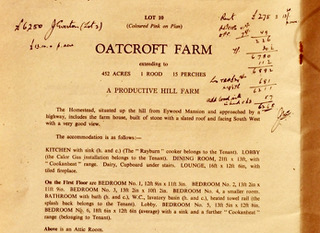
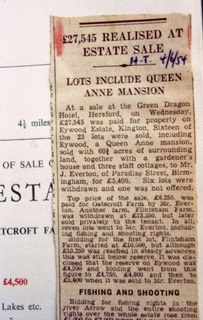
    a detailed notation.. winner  and the high bid of each part of Eywood.  

    i.e.  Eywood sold for 5400 British pounds to a gentleman who lived in Birmingham and likely
    a commoner like most of us. He
    seems to have been interested in the scrap value.

    THE GWYERS 

    Both possible heirs had been killed…One in North Africa in World War One… while the other froze to death in a rubber
    raft when his fighter plane went down in the North Sea in World War Two. 
    Their death notices can be found on the internet.  

    SCANDAL AT EYWOOD

    IT is possible to find the Eywood scandal in the notations below but do not bother.
    I will do that in the next episode. The scandal involves sex and poetry rather
    than real  estate and demolition.  Which do you find more interesting?  


    (In 1954 the pound was worth $2.80…5400 x 280 = less than $300,000
    In1954 bread sold for less than 20 cents loaf.   The Toronto Daily Star cost 3 cents a copy delivered 
    to the door by Eric and Alan Skeoch…we earned half cent a copy.   
    trivia!  What do they cost today..   

    alan

    0


  • WE WERE ROBBED…WHY? SO LITTLE OF VALUE

    I SUPPOSE IT WAS INEVITABLE…ROBBERY


    alan skeoch
    july 21, 2025

    I suppose it was inevitable that we would be robbed. too trusting.
    For the last sixty years we have been collecting things
    of little value to anyone. Things touched by a human hand and
    thereby lost their virginity.   Things bent and broken.  Things that will never run gain
    Things whose  slivers have drawn blood and thereby earned
    character and caution.  things that few people would ever want.

    Things that tell a story .  Things whose value might
    enhanced by a set buyer for a motion picture.  Not grand things like Rosebud
    or a brick from The Yellow Brick Road or snippet of hair in Scarlet Ohara’s locket
    or a sweat drenched collar that was once around the neck of Lassie.

    We collected things that might make movie more real like busted market 
    tables or empty time worn crates for an alley scene in
    On The Waterfront or cages that could hold Marlon Brando’s pigeons
    on a tenement roof of New York City or a farm wagon made useless by 
    wood boring insects but possibly wonderful in a Steinbeck moviesscape.
    (word invented).

    Just things soon becoming dust.  But rentable this moment in time.

    Some set buyers have shared our affectrion for things broken and busted.
    Not enough of them to make big profits.  Some years there are no profits
    at all.  Marjorie and I have spent half century buying these things at
    auction sales.  Friends ask ‘what if you get robbed?’  Unlikely.  Why would
    someone steal something that has no value? Or  small
    value as in round quart milk bottle complete with labelled cap from the 1930’s
    valued at ten or twenty dollars. Or a fanning milll that will never clean grain again.

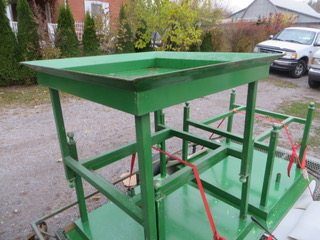
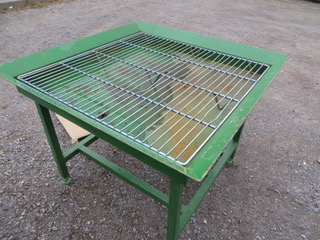
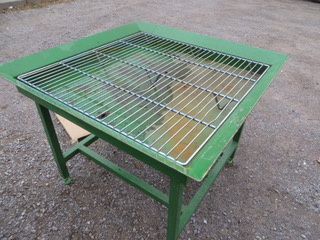
    Market tables stollen a year ago.

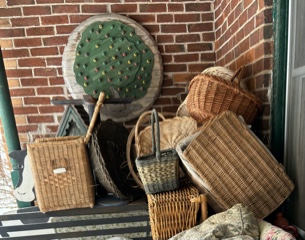
    Baskets stollen july 2025

    Long ago we were robbed big time.  Our house was emptied …value drained. Back then
    I was reminded of a comment made to me by Evan Cruikshank in his Grade 12 history
    class.  “Never be hostage to fortune”.  The message was clear  Never let things own you.
    If you do and lose things the loss becomes anchor round your neck.   No more happy days.

    So should our thief read this note we wish him or her well.

    But, for the life of me, I can’t understand why you would want these things.

    alan skeoch

    postscript:  If someone drops  by and tries to sell you green market tables or Marjorie’s basket
    collection you should note that Marjorie is not as charitable as I am.  
    give her a call.
  • Fwd: THE HISTORY OF EYWOOD ESTATE, TITLEY, HEREFORDSHIRE, DEMOLISHED 1954


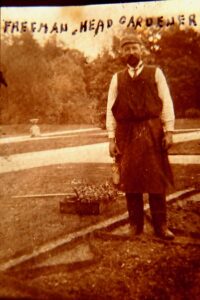
    EPISODE one  :EDWARD FREEMAN, HEAD GARDENER, EYWOOD,
    alan skeoch
    july 12, 2025


    NOTE: WHY SHOULD YOU READ THIS FAMILY HISTORY?

    The story of Edward Freeman parallels the great movements of the 20th century.
    This section gives the full picture of one English country estate minus a piece of
    scandal which will come later…nothing to do with the Freemans just a little sexual exploitation
    featuring the poet Lord Byron and Eywood…a trifle you can skip if you wish.

    So here we go….many episodes from 1954 Eywood auction.. 
    ..to the devastation of the Matheson fire
    in 1916 Northern Ontario with 40 mile front…
    …to riding a work train through the Cochrane fire the same day…
    to burying valuables before the fire reached Krugerdorf where
    the Freemans were trying to homestead
    …to a fragile love affair with Harry Horsman.. to the flight of 
     1916 south to our present site where Edward Freeman created a mini Eywood
    in Erin Township, Wellington County
    …and soothed the resident Scottish anti-English feelings with
    his Stradivarius violin (for sure) while his wife, a Lady, sang.
    It is a story worthy  of your attention.


    EYWOOD COUNTRY ESTATE, titley. herefordshire, england


    I found Eywood in September, 1960 . We had just concluded a mining exploration job on
    the south coast of Ireland…Bunmahon, County Waterford. Our gear was crated and on its
    way back to Canada . I was 22 years sold and decided to try to find Eywood. Three days of company time and a a few dollars of my own.

    Eywood was a mystery place somewhere in England,  Grandma and granddad talked of it often as did 
    my my mom, Elsie Freeman and uncle Frank.
    Mom’s godmother was the cook at Eywood back in 1900.   Grandad was the Head Gardener at Eywood from 1898 too 1906.
    Just a few years but Eywood had burned into their memory  cells as if it were  a branding iron.

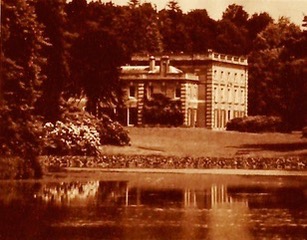
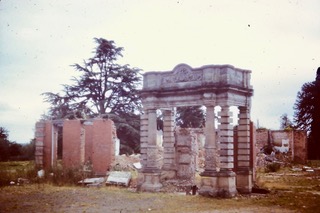
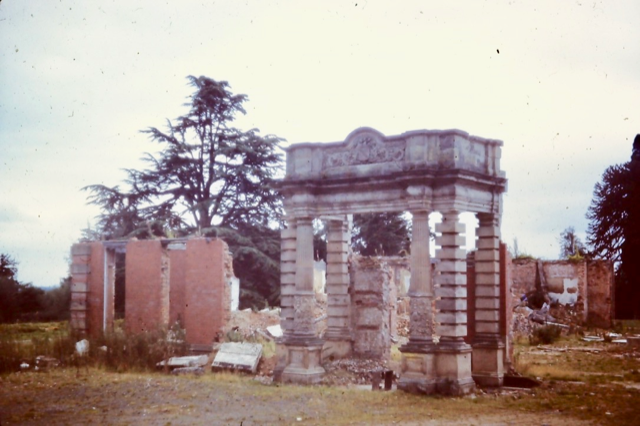
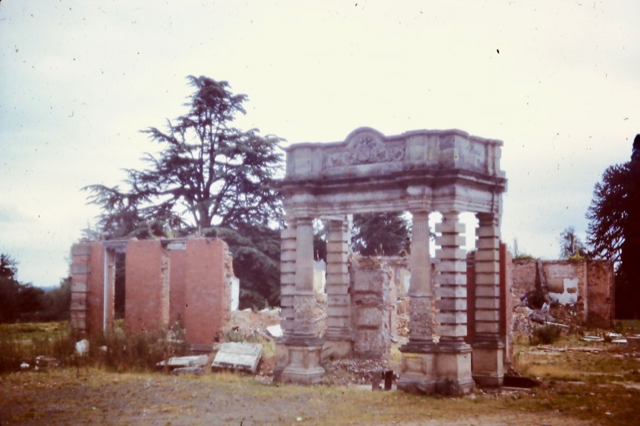
    I found Eywood , That is a  story in itself but the Eywood I found was a bigger shock… Eywood was a wreck.  The grand house had been demolished in1954. 
    all that remained was the fancy stone entrance way and a few stubs of brickwork and a hole
    that I was told that l was told led to the wine cellar.  My escort ,Cyril Griffiths, had been the tenant farmer of Oatcroft…..a 500 acre tenant farm  at Eywood.  
    Did he  say the skeleton of the mansion was blasted with explosives at the last? Not sure of that.


    HISTORY OF EYWOOD ESTATE, TITLEY, HEREFORDSHIRE, ENGLAND

    edward freeman was head gardener of Eywood 1898 – 1906.

    copied by alan skeoch, grandson of edward freeman

    Text written by, and copyright of, Nicholas Kingsley – many thanks  

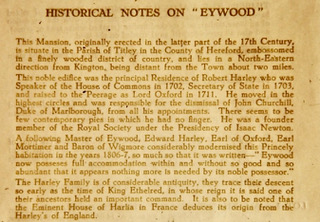
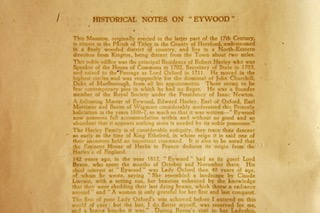
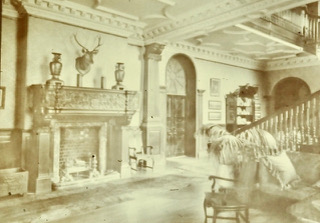
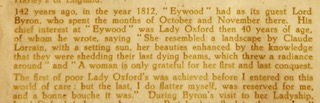
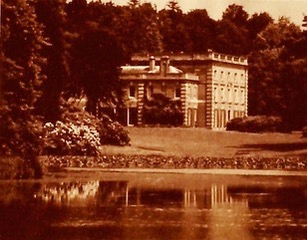
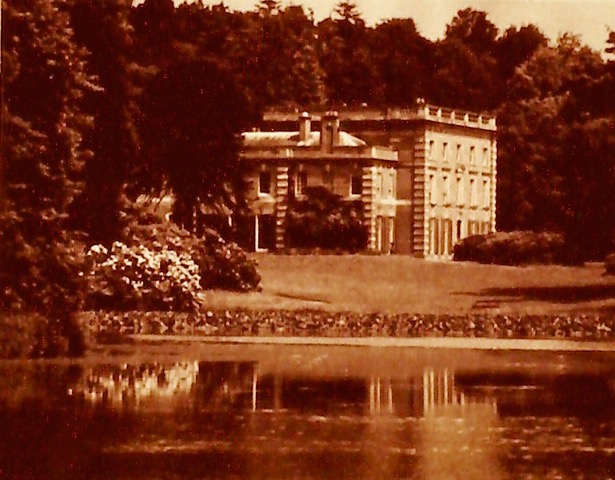
    The Eywood estate at Titley was acquired at the beginning of the 18th century by Edward Harley (1664-1735), the younger brother of Robert Harley, 1st Earl of Oxford, who was Speaker of the House of Commons and later Chancellor of the Exchequer under Queen Anne. Edward was appointed by his brother to the lucrative office of Auditor of the Imprest, and the proceeds of this appointment are said to have funded the building of a new house at Eywood in about 1705. I have not found an 18th century view of the house, although it seems likely that one exists, but it seems probable that the house of this time was a plain five by five bay block of three storeys. The rusticated basement and giant Ionic columns, which decorated the front may also have been original features, or they may have been added later in the 18th century (the house is said to have been ‘much altered’). Inside, there was a fine staircase, with three turned and fluted balusters per step, which survived later alterations to the building. Another fine room was the fully-panelled Oak Room, used latterly as a billiard room, and the house also retained some other plain but handsome fireplaces which were obviously of the 1705 period. 

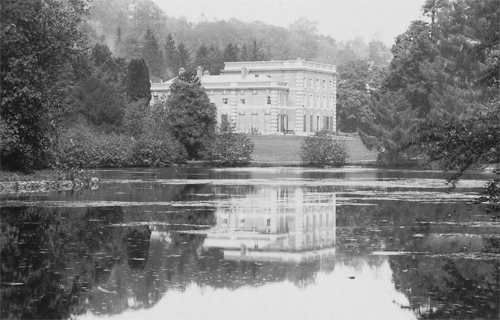
    In 1735 Edward Harley was succeeded by his son, Edward Harley (1699-1755), who succeeded his cousin as 3rd Earl of Oxford in 1741. With the earldom came the Brampton Bryan estate in Herefordshire, the ancient seat of the Harleys, and Eywood seems thereafter to have became a secondary estate of the earls. This did not, however, mean that Eywood was neglected. Either Edward Harley or the 3rd Earl established a landscaped setting for the house, for Bishop Pococke noted on his travels in September 1756 that ‘Lord Oxford has a large house and a fine lawn, with a beautiful piece of water and great woods on the hill over it’, which remained a fair description of the house in later years. Edward Harley (1726-90), 4th Earl of Oxford, brought Capability Brown to Eywood in 1775, but it is far from clear that he made any proposals for the estate, let alone that these were executed. Nonetheless, by 1795 there were three pools at Eywood (two remain) and there are still great stands of woodland in the parkland setting of the house. 
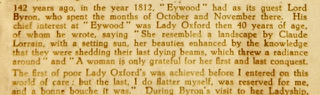
    Edward Harley (1773-1848), 5th Earl of Oxford, came of age in 1794, and in that year married Jane Scott, a Hampshire clergyman’s daughter. She was to be the Countess of Oxford with whom Lord Byron had an affair in 1812 (when she was forty and he was 24 and on the rebound from Lady Caroline Lamb). By the time Byron stayed at Eywood in 1812, however, the house had been greatly altered, for Lord Oxford employed Robert Smirke in 1805-07 to enlarge and modernise it. Smirke seems to have turned the early 18th century square block into a courtyard house by adding much longer, three-storey wings to either side of the original house, and a connecting wing joining the ends of the two wings to the north-west. On the main south front, the new wings were stepped back a little from the original block, which with its tall parapet and giant order continued to dominate the appearance of the house. A new entrance was made into the north-east wing, and the ground floor of the main block and this wing were rusticated. Inside, Smirke created new interiors, including a grand new dining room with a screen of columns across one end, a new drawing room, and several other rooms with fine chimneypieces and simple plasterwork, A new pleasure ground was laid out around the house. 

    In 1848, Eywood and Brampton Bryan passed to Alfred Harley (1809-53), 6th and last Earl of Oxford. When he died, Brampton Bryan passed to his widow (d. 1877) while Eywood passed to his elder daughter, Lady Langdale. She died in 1872 and after some legal wrangling, Eywood passed to her sister, Lady Charlotte Bacon, the widow of Gen. Anthony Bacon, whose career had encompassed being ‘the finest cavalry officer in the army’, two years imprisonment for debt, an abortive attempt to found a colony in south Australia, and military service under Don Pedro, King of Portugal and Emperor of Brazil. At the time of her inheritance, Lady Charlotte was living in Australia with her children, but she came home and died at Eywood in 1880. Her son, Edward Bacon (b. 1842) sold Eywood to Arthur Walsh (1827-1920), 2nd Baron Ormathwaite, who in turn sold it in 1892 to Charles James Paul Gwyer (1854-1940) and his wife Mary (1862-1950). 

    The Gwyers brought in W.O. Milne to remodel the house, which was looking decidedly run-down after half a century of only intermittent occupation. The wings of of the house were reduced from three storeys to two, and the central block was remodelled, removing the giant order and replacing it with bold rustication at the angles of the building and rather chunky window surrounds. The house that resulted was more unified in appearance than before. A large new porch with eclectic detailing was built on the east side, and this is ironically almost the only part of the building to survive today. For after the death of Mrs Gwyer in 1950, the estate was sold to a Mr Vowells, who sold off the farms and demolished the house almost entirely. The house went, it would seem, because it was so large and the owner had no use for it: it appears not to have been in poor condition. The landscaping and the stable block survive, but the porch and some odd stumps of walling are all that remain of the house today. At least one of the chimneypieces from the house was acquired by the Harleys and taken to Brampton Bryan


    CHARLES JAMES PAUL GWYER(1854 – 1940)? WIFE MARY 1862 – 1950)?

    Mr. Gwyer bought Eywood from Baron Oathwaite, last the aristocratic owner.  The Gwyers began to renovate Eywood
    in the 1890,s part of which was the hiring of a head gardener, Edward Freeman. Tragedy struck in World War One
    when the Gwyer and heir son was killed in Tunisia. Then in World  war War Two another potential heir froze to death in a rubber
    raft when his fighter plane crashed into the north sea off the coast of Nazi occupied Norway.  


    Country  homes, many of them 
     castle like were being demolished all over Britain in the 20h century.Owners could not afford to
    maintain them.  There was no alternative other than opening them to the public which was done by a few. 
    Pictures are available on the internet. Eywood was not alone.


    Servants: Their Hierarchy and Duties

    by Michelle Jean Hoppe


    Status was just as important in the servant hierarchy as it was in the aristocratic ranks. Servants were divided into ‘Upper’ and ‘Under’ ranks.  Upper ranks were entitled to respect and deference from the under staff.  Upper rank servants would take the head places at dinner, unless they ate separately in the Steward’s or Housekeeper’s rooms.  Visiting servants were seated according to the ranks of their master or mistress.  Thus, a countess’s lady’s maid would be seated above a baroness’s lady’s maid, but both would be seated above a viscountess’s under servants.  Another class of servant was the ‘senior’ class. These servants were of neither ‘Upper’ or ‘Under’ rank.  They were accorded some of the same privileges as the upper servants, such as being waited upon by the under ranks and eating with the upper servants.  But they rarely had the full privileges of an upper servant, such as the master or mistress’s castoff clothing.


    FEMALE SERVANTS


    UPPER SERVANTS
    Housekeeper
  • Fwd: EDWARS FREEMAN STORY…1871 – 1958 -DID HE HAVE ANY SECOND THOUGHTS?


    Begin forwarded message:


    From: ALAN SKEOCH <alan.skeoch@rogers.com>
    Subject: EDWARS FREEMAN STORY…1871 – 1958 -DID HE HAVE ANY SECOND THOUGHTS?
    Date: July 2, 2025 at 12:32:34 PM EDT
    To: john Wardle <jwardle@rogers.com>


     EDWARS FREEMAN STORY…1871 – 1958 -DID HE HAVE ANY SECOND THOUGHTS?

    alan skeoch
    june
    28, 2025

    If only Edward Freeman was alive today! His story…his history…would be a lot easier to write.
    And  more accurate. But he died in1958 and left me with more questions than answers.

    Why did you leave England for Canada in 1908? 

    You had a good job1898 to 1906 as HEad Gardener of the 1500 acre  Eywood estate.   wage rates for working class
    people were rising. The Corn Laws were repealed in 1846 which greatly reduced the price of food.


    THE BRITISH ARISTOCRACY WAS BEGINNING TO CRUMBLE.

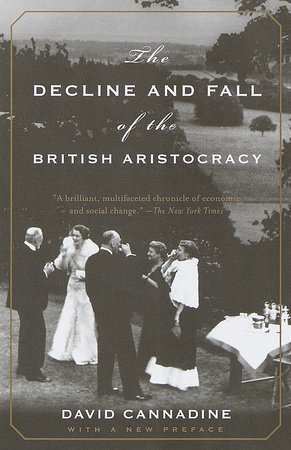
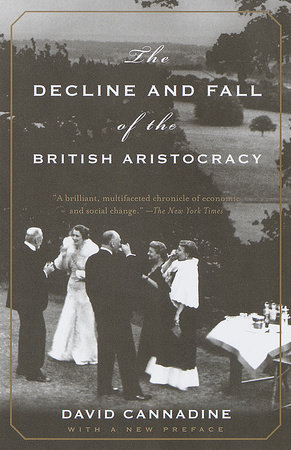
    The Decline and Fall of the British Aristocracy by David Cannadine


    Historian David Cannadine   Decline and Fall of British aristocracy:

    At the outset of the 1870s, the British aristocracy could rightly consider themselves the most fortunate people on earth: they held the lion’s share of land, wealth, and power in the world’s greatest empire. By the end of the 1930s they had lost not only a generation of sons in the First World War, but also much of their prosperity, prestige, and political significance.
    The .landed gentry i.e. the English aristocracy, were losing control of the rural working-class.  One historian , David 
    Cacnnadine, said the aristocracy  had been in a a state of ‘eclipse’ between 1870 and 1939 as land had
     declined in value due to cheap grain from North America and Northern Europe. Tenant farmers just could
    not pay increased rent.   The old landed gentry could
    not get their power back.    Many found their lavish country homes had  to be
    abandoned.  Demolition often was the only answer.  The aristocracy had been
    eclipsed…now lay  in he shadow of the commercial class. Pictures of these country homes are ll that remain.


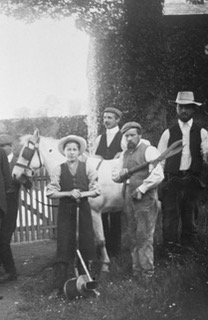
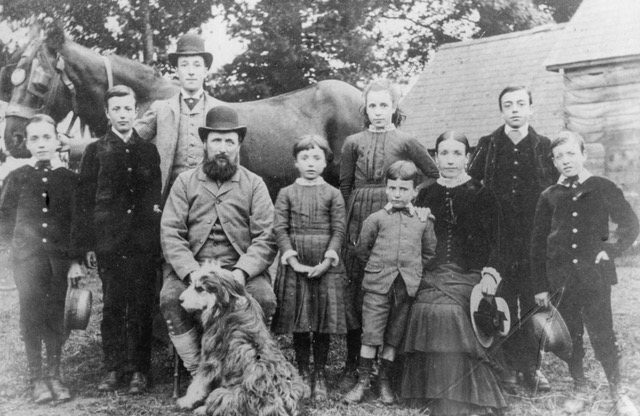
    THE FREEMAN FAMILY CIRCA 1898

    Edward Freeman stands behind the father he hated.


    You grew to adulthood as this change was happenig,Edward.   Much of your life is unknown.  You were educated as
    a carpenter but grabbed the opportunity to be a head gardener at 27 years osage.  Most head gardeners were at
    least 30 and had spent years in training.  You got the job at 27with no extensive training.   How did this  happen?
    I believe you were a quick learner and an ambitious young man. You grew a beard which made you look older
    according to your  daughter Elsie, my mother.  
    she also said you may have spent time learning gardening sklls at Windsor Castle. No proof of that. You
    got the job at Eywood in1898.  The owner was  William Gwyer who bought the estate just six year earlier in 1892.
     No evidence of an aristocratic background. 

    EDWARD FREEMAN MARRIED LOUISA AMELIA BUFTON


    You arrived with your wife the former Louisa Amelia Bufton and son Frank.   Louisa was
    a’lady’, educated as such by the Kington Academy.  She was born in 1868 and sired  by a mysterious Dr. Price.
    who may have paid half her fees at the academy after Louisa was rescued from streets of Birmingham by an aunt Webb.

    “William Price, famous Welsh nationalist fathered a number of children well into his 83rd year. HE WAS 68 IN 1868 when he may have fathered louisa Bufton..” DR Price did not believe in marriage because it enslaved women. He died in January 1893.His last words were ‘give me champagne’.
    It is a stretch to say he was grandma’s father but then again a person named Dr. Price is mentioned often Freeman family history.  THAT is hearsay evidence
    and therefore not worth much.  Bu just maybe…!

    Sot The first 27 years of your life are speculation. 
      How were you able to switch from a carpentry apprenticeship to becoming head gardener?


    Your musical ability is another mystery. No matter where you went you entertained with your Stradivarius violin. Louise sang and you played the violin.  

    Money is the biggest mystery.