Year: 2023

  • EPISODE 795 LOVE AFFAIR

    EPISODE 795    LOVE AFFAIR


    alan skeoch
    April 11 2023

    Sometimes words are not necessary.

  • EPISODE 793 INTERVIEW WITH LORNE JOYCE — COMMERCIAL FISHING AND RUM RUNNING — PORT CREDIT 1920’S (original episode 303)

    EPISODE 793    INTERVIEW WITH LORNE JOYCE — COMMERCIAL FISHING AND RUM RUNNING — PORT CREDIT 1920’S  (original episode 303)


    alan skeoch
    April 8, 2023

    This is a reprint of an earlier episode 303 that many readers may not have seen.

    EPISODE 303 LORNE JOYCE — THE COMMERCIAL FISHERMEN ON LAKE ONARIO – A TOUGH LIFE


    Note:  This  is a personal description of the commercial  fishery on Lake Ontario as seen through the eyes of Lorne Joyce, the
    son of commercial fisherman Bob Joyce.  A few years ago I interviewed  Lorne about his  father.   I made notes then converted
    the notes to dialogue from.  The result is a little choppy because our conversation jumped around.  I do think it give some idea about
    the nature of commercial fishing on Lake Ontario up until 1960 when a ‘perfect storm’ (many many reasons) happened  that ended
    commercial fishing in Port Credit.   Episodes that follow this episode will make the picture clearer.  

    Lorne talked about the rum running years which  were so  dramatic that they obscured  the history of the Port Credit commercial
    fishery.   The rum running years were dangerous times even though today  those years are made into sensational and amusing
    twists of history.   Lorne’s  family and most families in Port Credit were Temperance people.  They did  not drink.   I believe Lorne;s
    father may have dabbled in rum running….beer by what Lorne said…but our conversation skirted  around the facts.  Lorne was
    hard to pin down on the prohibition years.  

    Pictures of the Commercial Fishery are more  difficult to find than pictures of the rum running adventures.   The result distorts
    this episode.


    EPISODE 303   LORNE JOYCE — THE COMMERCIAL FISHERMEN ON LAKE ONTARIO – A TOUGH LIFE.


    heritagemississauga.com/wp-content/uploads/2013/08/Lorne-Joyce-20101-570×428.jpg 570w, heritagemississauga.com/wp-content/uploads/2013/08/Lorne-Joyce-20101-600×450.jpg 600w, heritagemississauga.com/wp-content/uploads/2013/08/Lorne-Joyce-20101.jpg 640w” sizes=”(max-width: 300px) 100vw, 300px”>

    1926 – 2013


    LORNE JOYCE: OPTOMITRIST, FISHERMAN, HISTORIAN…PERHAPS RUM RUNNER


                 “LORNE ALWAYS LAUGHED BEFORE HE SPOKE AND WITH HIS LAUGHTER THERE WAS A TWINKLE IN HIS EYES.  HE WAS A GOOD MAN.  I SPENT A WONDERFUL

                    SUNDAY AFTERNOON TRYING TO DISCOVER WHAT MAKE HIM TICK….ONLY TO DISCOVER HE WAS TRYING TO DISCOVER WHAT MADE ME TICK.  HE WAS THAT
                    KIND OF MAN.  SELF-EFFACING.    ABLE TO DIVERT TALK ABOUT HIS LIFE WITH A  LAUGH AND A STORY.  ONLY TO FIND HE WAS GENTLY DOING THE INTERVIEW. WE ALL MISS HIM.”
                       (Alan Skeoch, 2013)


    Lorne Joyce is a man that is  hard  to forget.  He is gone now but shortly before his death we talked about fishing, rum running and, of  course, stonehookers.
    Let me use his voice…pretend  I am Lorne using the notes I made that day…I remember him so well.

                 
    Picture of a typical fish boat…i.e. shaped  like a jelly bean.


    “My dad and brothers were Port Credit fishermen…commercial kind.  No fishing rods…they were used by the sport fishermen and women.  We had long nets designed to catch adult fish  by their gills.  Our fish boats
    were ugly things.  Fishboats looked like giant jelly beans…long, round on bottom and top, with side opening doors and a low transom so they could see where we
    were going.  We dropped  the nets from the side doors…lead weights on the bottom, bobber floats on the top.  Then we would wait.  Drop other nets  in the mean time.
    After a week or so we would return to the  first nets and pull them up hopefully with fish trapped by their gills.  Those nets were expensive…perhaps $25,000…so a
    lost net was  a disaster.  Buoys were set above the nets so they could  be found.  How  were they found?  “We used a compass and  a  watch.”  Hauled the nets with with 
    a roller winch.  Busy time. Detaching fish, gutting and cleaning them, packing them in ice  in summer time and stowing them in the fish boat.  Where did we get the ice”
    We cut big blocks of ice from the Credit River in January and February, piled the blocks under straw in our ice house which was really just a simple shack. On a good day we could haul in ten tons of fish…whitefish for instance.  Big hauls were exhausting…they had to be cleaned fast, iced, packed in fish boxes on Port Credit dock and then
    shipped  to the big fish markets in Chicago, New  York…even San Francisco.  Winter time fishing was dangerous.  Ice on the  lake could trap a fish boat.  I remember
    Dad talking about one fish boat that got both trapped and  lost out on the lake ice for several days.  When  found the three men on board were alive but in bad shape
    from the cold.

    “Ice was dangerous in another way.   Winter spray would freeze on the fish boat.  Get thicker and thicker until there was real danger the boat would roll 
    over.  We had to crawl  out with axes and try to knock big chunks of that heavy ice off … we could slip off ourselves. 

    “Yes, men did die.  In January 1943, the Thomas brothers never returned.  They were lost somewhere near Port Dalhousie.  We sent the steel hulled Naomi to scour
    the lake for them but all that  was found as a burned coat.  Fire  and  ice, bad combination.  Even  the Naomi got into trouble that year.  The tug was so heavily iced over
    when it lumbered into port that the crew  had crawl out through the wheelhouse window.   Commercial fishing was a 12 month business full of risks.  The price we got
    was the biggest risk of all.  Fish had to be sold fast.  By the 1940’s big catches did  not happen often.  The fishery was  getting fished out…Then  in 1960 our fish shacks
    were sold from under us.  The land on the  east bank of the Credit River was put up for sale by he Federal government.  We were finished.”

    “Our best years were the 1920’s.  But our money was not all  made by fishing.  Some  of the fishermen ran a little rum.  Dad did but he was  not proud of the fact for we are a Temperance family.  None  of us drink.  The lure of fast money trumped moral  principles.  Prohibition in the United States was a godsend
    to a lot of fishermen.  The 13th amendment to the American constitution banned alcohol.  But it did not ban the thirst for whisky and beer.  Some Canadians
    undertook to quench  that thirst.  We had Prohibition in Canada for a while but our distilleries were allowed to continue making the stuff.  Weird, right?
    This is  how it worked shipping liquor from the Main Duck islands.  A large boat loaded with crates and  sacks  of whisky and beer would pick up the stuff  from Canadian
    distillers like Corby’s, Gooderham and Worts, motor to the Main Duck islands and  then transfer the liquor to smaller motor boats that would race
    to secret destinations  on the US shore….used  low sleek  and fast little launches.  Easy money.  Price of a bottle of whisky sky-rocketed  to $40 each. That’s $500 a
    bottle today.  Big time criminal activity…got bigger and bigger…more and more dangerous.  Roots of organized crime.  People got killed.  Boats got burned.  Politicians, police, normally law  
    abiding citizens got corrupted.  Speak easies proliferated.  Gangs got rich.  Al Capone emerged along with other big time criminals. 

    “American coast guard boats were armed with machine guns.  I remember dad saying that one
    rum runner bent over to grab a lunch sandwich and a US machine gun peppered the windscreen just missing him.  For a while rum runners built fast boat
    that could  outrun the Coast Guard boats. We laugh about those days now but rum running was no joke. Lake Ontario was dangerous at night.


    THE


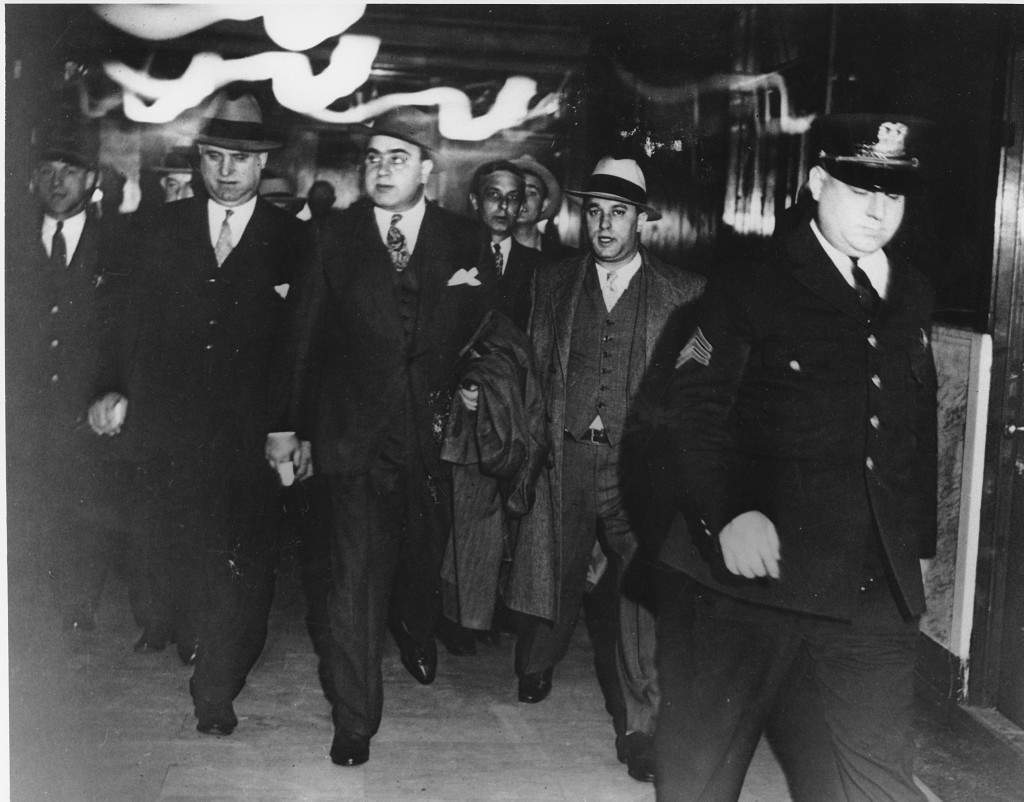
    Chicago crime boss Al Capone, center, in the custody of U.S. marshals, leaves the courtroom of Federal Judge James H. Wilkerson in Chicago. Oct. 24th, 1931. He is facing tax evasion charges. Ref #: PA.2534968 Date: 24/10/1931flashbak.com/wp-content/uploads/2014/11/PA-2534968-300×235.jpg 300w” sizes=”(max-width: 709px) 85vw, (max-width: 909px) 67vw, (max-width: 1362px) 62vw, 840px” apple-inline=”yes” id=”AA3A4A80-7D4D-46BC-8FC8-A7EB5E7C0D29″ src=”https://alanskeoch.ca/wp-content/uploads/2021/04/PA-2534968-1024×802-1.jpeg”>


    “Joe  Burke was the big rum runner in Port Credit…or so I was told.  During the years of  Canadian Prohibition, He  would  buy a lpad of liquor from a Canadian distillery, have it shipped by train to Port Credit, load it on a boat here and assure  Canadian customs people that the liquor was being shipped to St. Pierre and Miquelon, French
    territory off the coast of Newfoundland.  Then peddle the liquor to American criminals.   His rum running boats never had enough gas for the long
    trip up the St. Lawrene.  Only enough to get across the lake and  back.

    “  Sometimes we  failed to sell the beer to the Americans and had to bring it back to Port Credit.   That was why we always had  about 150 feet of good rope
    on board.  To avoid Canadian  customs people we would tie the  sacks beer to the long rope and drop it overboard just outside Port Credit harbour.   Then use
    a drag a  hook to recover the beer when it was safe.   I know you are  wondering if we drank any ourselves.  We  did not but others did.  Opening a sack
    of beer would get the big time bootleggers angry.  Dangerous.  To get around that the sack would be held over awashtubm and then slammed with a  hammer.  Bottles
    would break and beer would leak into the washtub.  Ladle the foamy stuff into tin cups.   Explain to big time bootleggers, “ Sorry, Accidentally broken!  ” 

    “My Dad  died  in 1928,  Shortly before he died he told mom to sell the boats as fast as possible.  Why?  Because they are old, made of wood,
    and will rot fast.  She sold them but got next to nothing for them.  The same was happening to the stonehookers about then.
    Both the fishery and stoehooking were in decline.    Stonehooking  was killed by the cement factories.  Commercial fishing limped along
    until the late 1940’s and1950’s 


    What remains?
     Some stonehookers houses are still in Port Credit.  The Naish house for instance 
    And the Wilcox Hotel  And the blacksmith on Stavebank.  Perhaps most surprising is  the survival
    of one old and decrepit ice  house over by Riverside  School.  


    FISHING  to 1950    Fishboats open and Fishboats covered


    They would motor out into Lake Ontario, often heading for the waters around  Main Duck Island far to the east.   Eight foot nets were strung together and dropped in the lake … corks on one side, weights on the other so the nets would hang vertically.  Buoys were attached to mark the place.  Lots of nets used…if a winter storm destroyed the nets the fishermen could lose as much as $25,000 and this did happen.  Five or ten days later they would return to the nets using a compass and a watch.  Compass and watch…think about that.  Then they would roller-winch in the nets, detach the fish and begin to clean and pack them on the ice that had been stowed in Port Credit ice house from the previous winter.  On a good day a fisherman could get ten tons of fish.  Big hauls like that had to be cleaned and iced fast and then shipped to the big fish markets in Chicago, New York…even San Francisco.
     
    Ten tons!   That was good day.  There were not a lot of good days.  
     
    Up early in the morning and out into the lake.  Fog made things difficult but winter ice was the biggest hazard.  “Ice formed on the water and once in a while the b oats would get trapped.  My Father (Bob Joyce) always managed to get home safely but I remember one time one boat with three men abourd was trapped in the ice for several days and my father and others searched for them, day after day.  It was scary.  The boat was finally found and the men were alive but in very bad shape from the cold because while the boat was covered and had a motor and stove which would normally keep them warm, they ran out fuel after the first few days.”*
     
    (*Grandpa Bob (Joyce) spins a few tales to his grandchildren in the year 1993, P.17, book loaned from Sandra Church)
     
    Men used axes to knocking off  chunks of ice from the sides and deck…trying to lighten the boat lest she capsize.  Those fish boats would never win a beauty contest.  Looked like an odd shaped wooden piano box afloat…or to use another metaphor…a toad sliding across the ice…a giant bobber.  But These covered fishing boats were a great improvement over earlier fishing boats … a covered deck with a side door for hauling in nets was a lot better than an open deck because the fishing fleet was a 12 month operation and protection was a godsend even if the slick lines of the old schooners were jettisoned.   
     
    Some died.  The Thomas brothers were missing in January 1943 somewhere off Port Dalhousie.  The steel hulled Naomi scoured the lake for three days and all they found was a man’s burnt coat.  The Thomas brothers were never found.  Then men on board the NAOMI were at risk themselves for their tug was so heavily iced over when they lumbered into Port Credit the men had to crawl out the after-wheelhouse window.   Winter fishing was not some kind of holiday.
    Naming fish boats was not always flattering.  The Norma Jean was named after Mrs. Bob Joyce .  She was not amused…being named after a schooner or one of the sleek launches in the harbour was OK.  But to be named after a fish boat!  A floating block of wood…a toad in the water.  Forget it. 


    THIS photographer who took this picture was threatened by the men in the skiff.  “You better not be taking a picture”  A rum runners spped launch

    had run aground  on the Detroit River and  the rum runners rushed to transfer the liquor to shore before being spotted by the Coast Guard sometime in the 1920’s

                alan skeoch
                Port Credit, Ontario
                based on a speech given in 2013

                Poor Scripts


    1)   Canada adopted Prohibition in 1916. Repealed it in 1921

    Not to be deterred, Province of Ontario passed its own prohibition. The Ontario Temperance Act (OTA, 1921-1927) outlawed the sale and consumption of any alcoholic beverage in Ontario. OTA did not restrict alcohol manufacture. It did restrict any distiller or brewer from selling their products within the province. Producers moved their sales operations to Province of Quebec.This allowed products made in Ontario to be legitimately sold from Quebec, and then legally shipped to foreign customers from Ontario. 


    2)  The document below was excerpted from the AnnulReport of the Department of Fisheries of the Province of Ontario, 1899-1906

    District Overseer Pratt reports :     That the season has been a profitable one both to the fishermen and the dealers j   that a smaller number than in former years have been engaged in fishing ; that prices   have ruled higher, and that with the exception of a few particular localities in Georgian   Bay, fish are decidedly on the increase. He is of the opinion that the causes of the   non-increase of fish in some localities are : (1) That in former years, saw dust had been   allowed to enter several streams and thereby became deposited over a considerable area   at river mouths ; (2; that the towing of large rafts of logs is detrimental to both fish,   life and fishing operations ; and (3) a fermentation process takes place when fresh bark   is deposited in the water, which causes the fish to avoid such places.     The fishermen, he says, complain that tugmen are not careful to avoid unnecessary   damage to nets, but frequently tow their rafts over net buoys, often getting foul of th   buoy line, dragging and tearing valuable property. He is of the opinion that the preser   vation line, inside of which net fishing is not allowed, is too far from shore from off   Moose Point north, and that there does not appear to be any good reason for shutting oft   so many acres of water. 

      Implements of Capture.     The principal implements of capture authorized in Ontario are the pound set, the   gill net, the hocp or fjke net, and the seine. The pound net preserves the fish alive,   and is set at right angles to the shore, from which runs out a leader until water   sufficiently deep in which to set the pound is found, vaiying from 25 to 40 feet, according   to the length of the stakes used. The fish, in passing up and down the shore, encounter-   ing the leader, are turned in their course and work along the leader until they pass into   the heart and thence into the pound, from which the net derives its name. Not more   than three nets in a string are permitted to be set, and an open or disconnected space   must be left between each net. They are placed at various distances apart, care being   exercised to prevent crowding or oveifishing. On the American side, where the water is   very much shallower, as many as 25 or 30 nets are set in a string, and as closely together   as the fishermen may desire. The fisherman with small capital has, therefore, no chance,   pocketed between long strings of these nets, and is forced out of the business, while on   this side all are put upon an equal footing. ^_^ — \     The hoop or fyke net, though differently constructed, operates similarly to the pound]   net, the fish being found alive in the bag or purse. It is set in marshy inshore waters,/   and is licensed to take coarse fish only. — ^     The gill net bangs like a wall in the water, suspended by buoys and floats, and is   kept taut by sinkers. It may be set in shallow or deep water. The fish are gilled in   attempting to pass through the met he s, and soon die. The occupation of gill net fishing   on the great lakes is attended with many dangers and hardships. The fishermen must   be on the water in all kinds of weather, the best lifts being, it is said, sometimes made   wien the lakes are the roughest.     The seine or sweep net is probably the oldest device for taking fish, and is a most   effective on« ; To it, however, is attributed the depletion of many waters once teeming   with fish, ai d its use, therefore, has been for seme years discouraged. It varies in length   according to the distance to be swept, one end being attached to the shore. All fish,   irrespective of size, within the circle described in its operation are taken.   

      The Commercial Fisheries.     ' As a national possession they are inestimable, aud as a field for industry and en-   terprise they are inexhaustible." They are perhaps unsurpassed in any country on the   giou«, not only in extent, but for their great economic value. Practically no attention   has as yet been directed to our great north west and northern waters, which teem with the   finer qualities of fish. These fisheries are destined in the near future to afford a liveli-   hood for thousands of our population, and become an important and continuous source of   food supply and revenue. In the older portions of the province, under a judicious   licensing system, a vigorous policy of supervision, and the requirement of a strict com-   pliance with the laws and regulations enacted for the protection of the fisheries, there   may soon be expected to be a large increase in the supply of fish and a perceptible im-   provement in the fishing industry, a matter which concerns not the present generation   only but which ia of vital importance to succeeding generations alsa. Any other course   will result in their complete extinction. ' : Propagation may plant and generous nature   may water, but a reasonable protection must be added to give permanent increase " The   fishermen for a consideration, are granted the privilege of netting in the public waters, but   this privilege must not be abused, nor the public's interests in the fisheries prejudiced   thereby. The history of commercial fishing in the great lakes of this province, until   within very recent years, has been one of wholesale destruction. Not many years ago   Lake Ontario teemed with whitefish and there are well authenticated instances of as   many as forty, fifty, and even ninety thousand having been taken in one night at Bur-   lington Beach. No thought was then had of saving the immature and unmarketable por-   tion of the catch, aud no thought was had of the morrow, but they were thrown upon the   beach to die, rot and be carted away as manure, and as a result of this improvidence   there are now but few whitefish in that lake ; aud, as in Lake Ontario, so in most of the   large bodies of fresh water where fishing has been engaged in to excess. The urgent   necessity of some decisive action to prevent the continued destruction of the immature   fish led to the introduction into our licenses, and subsequently into the Fisheries Act, of   the clause prohibiting the taking of any trout or whitefish under two pounds in weight —   in other words, the taking of these fish before they have arrived at the age of reproduc-   tion. It was suggested that the object desired could be accomplished by requiring the   mesh of the pot of the pound net to be sufficiently large to permit the escape of all fish   under that size ; and while this might have been a remedy in some place?,, in others —   such, for instance, as in Lake Erie, where a variety of kinds and sizes of fisll inhabits the   lake, and where the bulk of the catch is of herring and a small kind of pic ":erel — such a   condition would have resulted in the bankrupting of the fishermen, and was therefore   impracticable. Could a size have been stipulated, it would have been admittedly prefer-   
    1899 ] GAME AND FISHERIES. 37         able, but it was found that a length which would in some waters meet the case, in others   would represent a fish of a much greater weight ; so that a weight limit was ultimately   decided upon. It will be satisfactory to know that before the adoption of the condition   the views of as many fishermen and purchasers of fish as possible were ascertained by per-   sonal visits to different points in the Province and otherwise, and that no objection was   made to it, but the contrary, many remarking that if the condition were observed it would   do more to replenish and secure the perpetuation of the trout and whitefish than any other   means that could be adopted, not excepting the strict observance of the close season. To   the credit of the fishermen it may be said that the restriction has been uniformly well   observed during the past season. The significance of this condition will be apparent to   every one when he recognizes that a whitefish or trout does not spawn before she has   attained a weight of two pounds, and that the taking of a fish below that weight means   that there has been eliminated from the supply not only a fish that has not contributed   her quota to the perpetuation of her species, but that one has been placed upon the   market of practically no commercial value. The fishermen cannot be so shortsighted as   not to see that in taking the immature fish they are destroying the "goose that lays the   golden egg." 

  • EPISODE 792 THE LAST ICE HOUSE IN MISSISSAUGA — will soon be a memory

    EPISODE  792    THE LAST ICE HOUSE IN MISSISSAUGA — will soon be a memory


    alan skeoch
    April 8, 2023

    Lorne Joyce, historian, told me this decrepit outbuilding was once an ice storage barn
    at the mouth of the Credit River. locks of ice were  Used by commercial fishermen, like his father, to keep
    fish caught in nets as far away as the Main Duck Islands near eastern end of Lake Ontario.

    The ice was cut by ice saws from the frozen surface of the Credit River just a bit
    north of the current Port Credit bridge.  There are photos of this process held by the Mississauga
    Library archives and by Heritage Mississauga.   

    Perhaps this ancient ice house was caught in the lens long ago…SEE MY NEXT EPISODE 793


    Who would want to save this building?  No one.  No place to put it.  So ugly
    and time damaged that no one cares much about it.  And I recognize that fact.
    So these photos may be the last record.

    How was ice cut in winter saved for the hot days of summer?   I believe the blocks of
    ice were jammed floor to ceiling in ice houses and covered with straw to inhibit melting.

    Then I assume the blocks ice were reduced to a bed of chipped ice on which the
    fish filets were placed  for  market.  If the mark was distant such as New York rhino
    rhe chipped ice was also strewn on top.   That is a guess.

    LORNE JOYCE OBITUARY

    Lorne Speers Joyce O.D.
    11 August 1926 to 24 August 2013
    Optometrist Historian 

    Predeceased by his parents Louis and Edith (Speers) Joyce and his three brothers Samuel, Charles and Edwin. He leaves his wife Mary Elizabeth (Hutchinson) Joyce and three children, Shirley (Ron Lysen) Ottawa, Grant Joyce (Geannerise) Antigua W.I. and Gordon Joyce (Cathie) Port Credit. And 5 grandchildren and 4 great grandchildren.

    Born and raised in the Port Credit and Bronte are Lorne was a navy veteran of WWII, an amateur marine historian and a local optometrist. He was honoured with a lifetime achievement award recently by the Lieutenant Governor. 

  • episode 791 REPLICATING A HOUSE/BARN IN ARISDORF SWITZERLAND (thanks to Martin and Kevin and Gabriela)

    EPISODE  791  REPLICATING A HOUSE/BARN IN ARISDORF SWITZERLAND


    alan skeoch
    pril 7, 2023


    We have been to Arisdorf, Switzerland many many times (14? 15?) and Have marvelled at
    the Swiss houses that are also huge barns.  Stone built with heavy slab roofing and great arched
    doorways….and cattle and horses and chickens.  The whole ball of wax.   Including  a folk art painting 
    of rural life.

    Here are some pics of those buildings.

    I have plans for another.   Much thanks to Martin Leuthi who knew the farmers and therefore got 
    access to a way of life we have lost.

  • EPISODE 790 MOST DANGEROUS SPIDERS IN THE WORLD — JACKSON SKEOCH FACES A STRANGE ENEMY

    EPISODE 790   MOST DANGEROUS SPIDERS IN THE WORLD — JACKSON SKEOCH FACES A STRANGE ENEMY


    alan skeoch
    april 5,  2023


    Private Jackson Skeoch, his Grandma Marjorie Skeoch, and her decorated refrigerator.  Jack traded his PPLCI  shirt for a NZ Kiwi sweatshirt.


    “Grandpa, here are some hat badges I  Bought for you in Australia.”


    JACKSON’S AUSTRALIA ADVENTURE — SPIDERS AND FEMALE MEDICS

    Last year, 2022, Our grandson. Jackson Skeoch, was accepted for Basic Training in the Canadian Army.  Training is no joke.  Physically
    gruelling with sergeants trained to make life as miserable as possible.   Jack thrived.  First achievement we noticed was
    the ability to make his bed with perfect square corners, a skill I have yet to learn.

    Jack arrived home yesterday but the flight was from Australia rather than the home base of the Princess Patricia Light Infantry
    at CFB Shiloh in Manitoba.  What is Jack doing halfway around the world rather than in Canada?    He was chosen as part 
    of a 10 man Recon Team competing for honours with teams from other countrys.   Doing what?  Recon training involves
    living rough.

    “We slept on the ground, Grandpa”
    “With an air mattress no doubt.”
    “Possible but most of us did not want to carry that extra weight across
    an Australian desert.”
    ‘What were you doing?”
    “We had targets — had to find them noiselessly.”
    “Like camping?”
    “A little rougher than that”
    “How?”
    “Spiders.”
    “Spiders?”
    “Australia has the most deadly spiders in the world. We slept
    among some of them…flat on the ground.”
    “Ever see one?”
    “The guy next to me was awakened by one crawling up his arm…big one.”
    “How big?”
    “As big as your hand, Gandpa…really big”
    “Dangerous kind?”
    “If it bites, the venom acts fast…your hands curl up…toes curl…trouble walking…happens
    fast.”
    “Deadly?”
    “Not sure…anti venom needed.”
    “How did he get bitten?”
    “Tried to flick the spider off his shoulder….fangs got him.”
    (Fangs of some Australian spiders can cut through finger and toe nails…)
    “Rare thing though.”
    “Not so rare grandpa,  Two more of these spiders got on his arm.  We must have been
    sleeping near their funnel webs or holes in the ground like the Trap Door spider…that one live
    for 20 years and is bad tempered..’
    ‘Were you scared?”
    “No.  More worried our team would miss our target in the dark.”

    “What were your targets?”
    “We never fully knew but had to find them with map references
    and compass.  Carried a loaded pack.  Sweat poued off….drank more
    water than I ever drank before.  Dangerous  to run out of water.”
    “What would happen if a spider got you?”
    “Do you mean in a real situation?”
    “Yes”
    “I do not know.  Maybe we would have some anti-venom.   We had a 
    course on emergency treatment for gunshot wounds.  Maybe for spider bites too.
    We had a funny thing happen on that course.”
    “Funny?”
    “Yes, we were in town having a beer one week end and noticed two good looking
    girls…on their own…so my buddy and I made a move on them.   Sort of backfired.”
    “How?”
    “Well, we told the girls we were backpackers….campers…kept the army out of the move
    because some people are cautious about meeting soldiers.”
    “Get to kissing?”
    “No…just had a good time talking.  Then went back to camp.   Next morning all he recon crews
    were slated for a lecture from army medics.  We took our seats.. and got a shock…”
    “Shock?”
    “The two girls were army medics. They walked in the door and looked at us
    and we looked at them.”
    “Mutually shocked.”

    “Did you ask them about spider bites?”
    “We just kept our heads down…they were both officers.”


    EPISODE 784    MOST DANGEROUS SPIDERS IN THE WORLD — 

    Sydney Funnel-Web


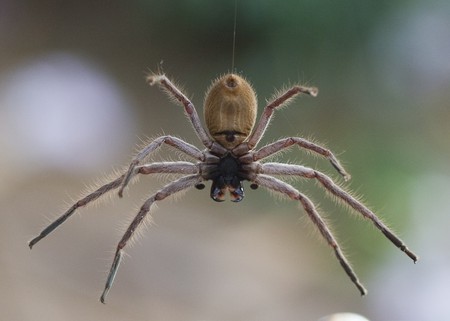
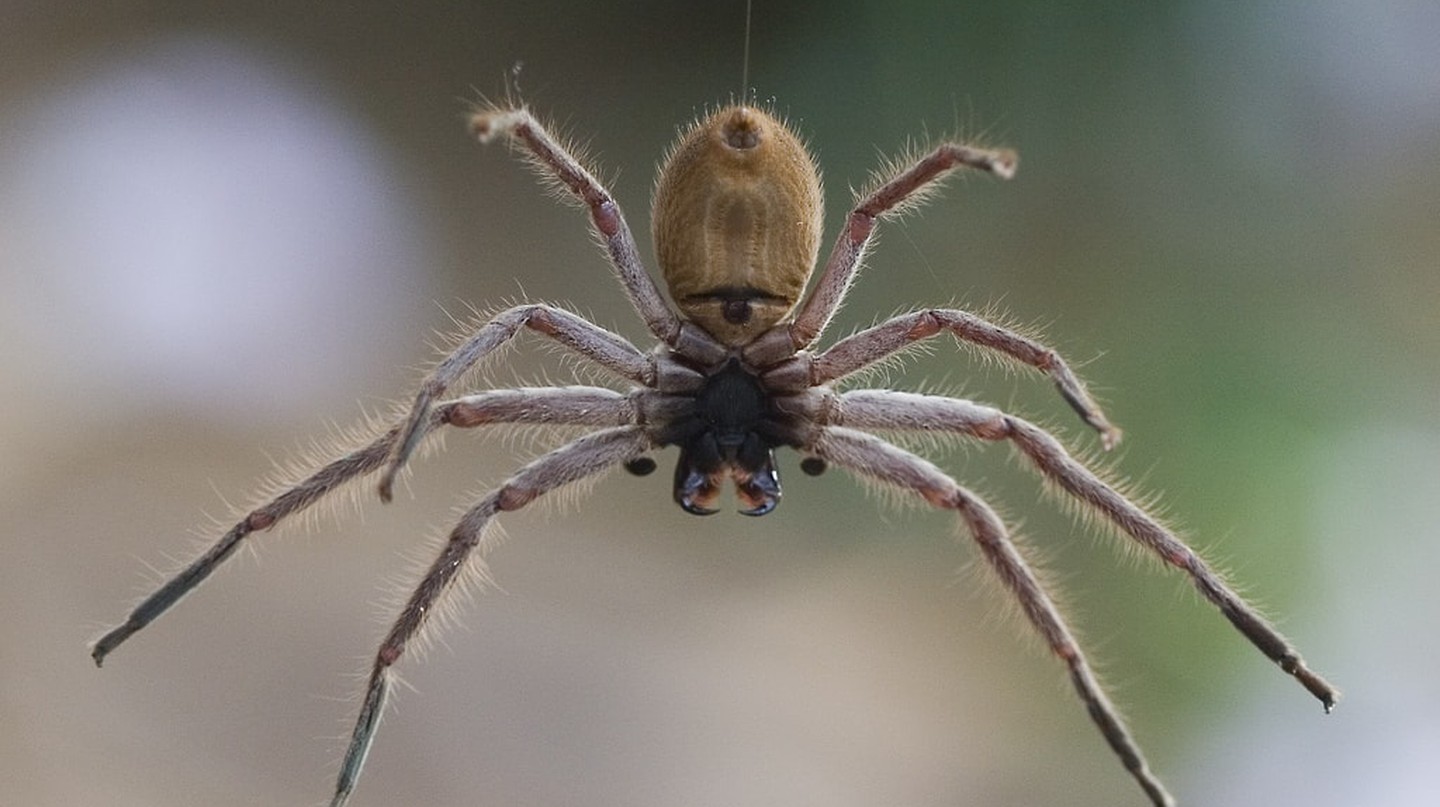
    img.theculturetrip.com/768×431/smart/wp-content/uploads/2017/11/4431263917_20e40101d4_b.jpg 768w, img.theculturetrip.com/1440×807/smart/wp-content/uploads/2017/11/4431263917_20e40101d4_b.jpg 1440w” alt=”Australian Huntsman” data-pin-nopin=”true” class=””>

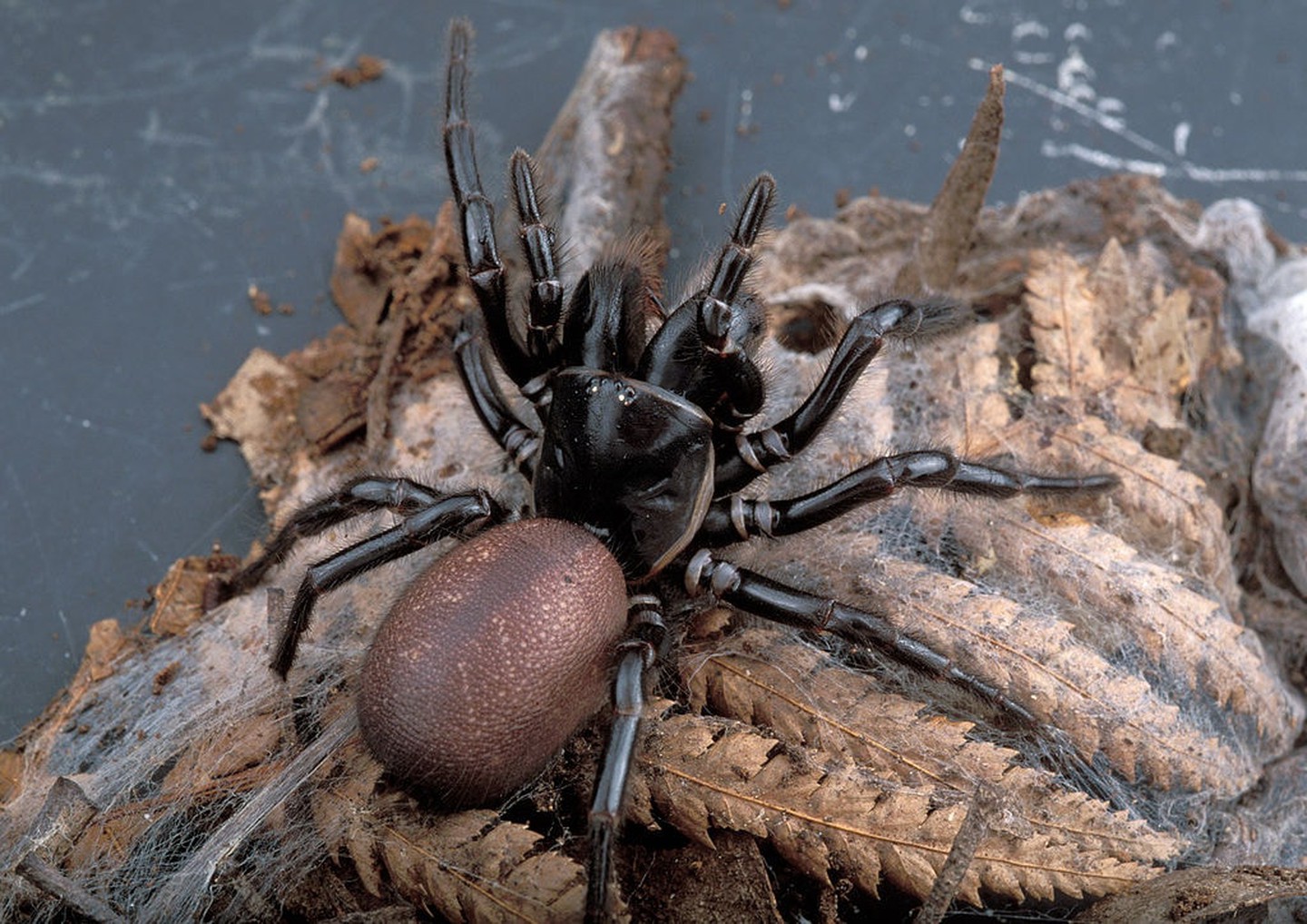
    Allegedly the world’s most dangerous spider, the Sydney Funnel-Web (atrax robustus) is a common feature in New South Wales, residing in both back gardens and bushlands. Known for its foul temper and mighty fangs – which can pierce through finger and toenails alike – this arachnid is not to be messed with.
    img.theculturetrip.com/768x/smart/wp-content/uploads/2017/11/csiro_scienceimage_2226_a_female_funnel_web_spider.jpg 768w, img.theculturetrip.com/1440x/smart/wp-content/uploads/2017/11/csiro_scienceimage_2226_a_female_funnel_web_spider.jpg 1440w” class=”” loading=”lazy” data-pin-nopin=”true” style=”box-sizing: border-box; position: absolute; top: 0px; width: 600px; height: 424.609375px; opacity: 1; object-fit: cover; transition: all 3s ease 0s; will-change: opacity;”>
    Female Sydney Funnel-Web Spider | © Author David McClenaghan/WikiCommons

    Other Funnel-Web Spiders

    There are approximately 40 other funnel-web spiders – none as venomous as the dreaded Sydney funnel-web. In fact, only six have been proven to pose a threat to safety.

    Two of the most dangerous include the northern tree funnel-web spider (hadronyche formidabilis) and the southern tree funnel-web spider (hadronyche cerberea). Although numerous bites are reported each year, with victims generally residing in Southern Queensland or Northern New South Wales, the anti-venom has proven hugely effective.
    alan