Year: 2023

  • EPISODE 825 WHT WE BOUGHT OR BARGAINED..SET SALE MAY 2023 MATTHEW BOLTON, MRTIN BUDD

    EPISODE 825     WHAT WE BOUGHT OR BARGAINED..SET SALE MAY 2023  MATTHEW BOLTON, MRTIN BUDD

    alan skeoch 
    May 26, 2023

    Some Of our friends are ‘downsizing’.   Moving from large homes to smaller condominiums or
    apartments.  We are going in the opposite direction…’upsizing’ for the movie industry.  Doubt
    very much that any reader will feel envious.   Some may even be rather shocked.
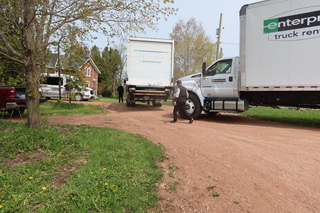
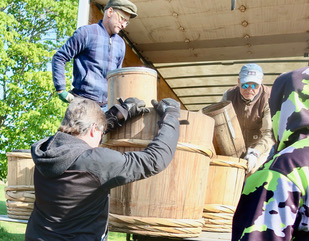
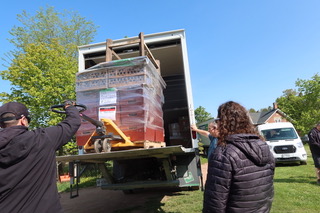
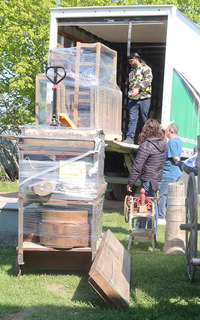
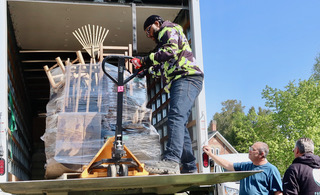
    In order to upsize for these two five ton truckloads my nephew Robert Skeoch and i spent
    a whole day reducing our collection and hauling a lot of things to the dump.  Some had
    to be rescued later when a movie set wanted things we had decreed superfluous.
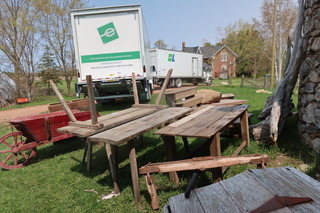

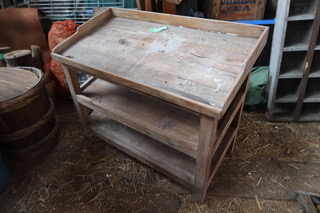
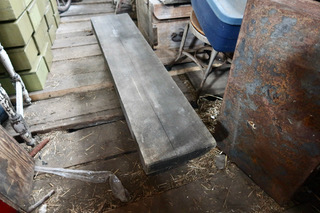
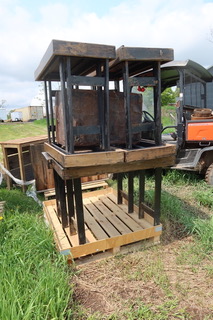
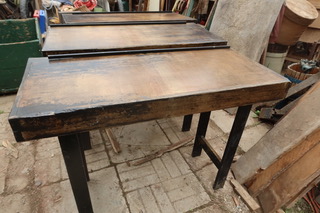
    We have  learned a hard lesson.  We cannot provide al things to all movies.   So our collection comes under the headline of ‘period’ items.  Some
    things are even abused.  No self respecting movie script seems to want brand new set dressing.  A little or a lot of abuse makes a movie seem real.  Life
    is that way.  Imperfect. Abused by the human hand.  Used .. neglected.  Broken and forgotten.  Such things are valued highly by set buyers.  “There
    is no fake aging process that replicates the ravage of time.”  Painters and carpenters can do a good job making a brand new chair and table look old
    and abused. But time and neglect do a better job.

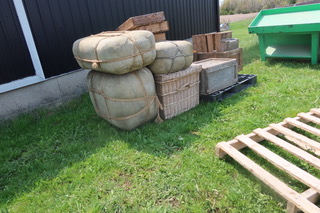
    A n obsolete three furrow plow abandoned in a fence row for half a century cannot look shiny and fit for the showroom floor. A crate which is supposed to
    be weathered and broken cannot show the new heads of Robertson screws.  Get the idea?
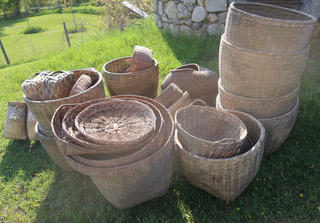


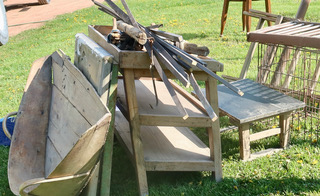
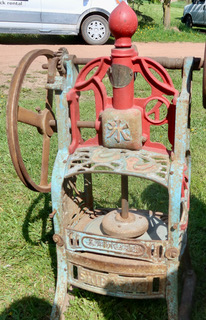
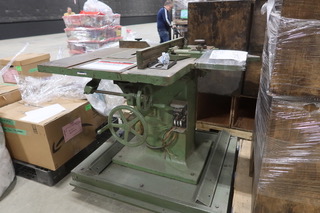
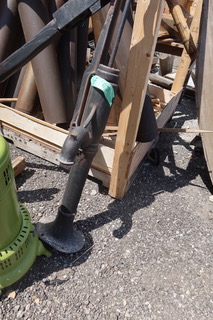
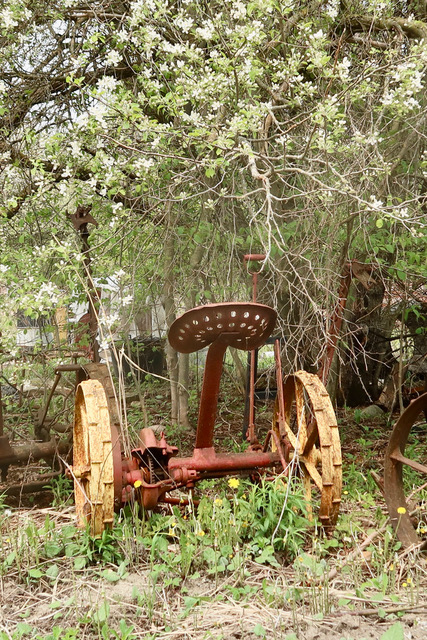
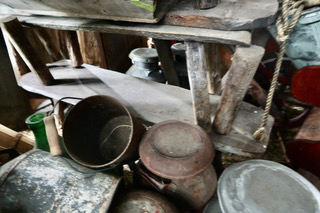
    The cast iron machine on the left looked good to me.  I have no idea of its purpose .  But it looks good…Fading paint make it look  better. If you know the machine then drop a note to me. Cast iron with a pulley that connected to a  motor of some kind.  Pretty.
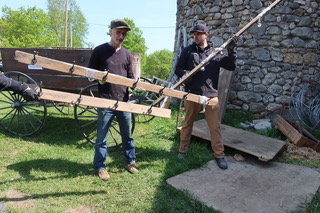

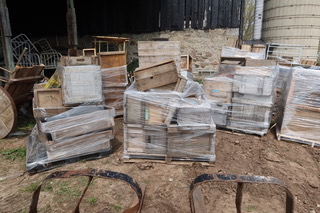
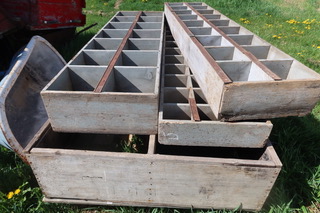
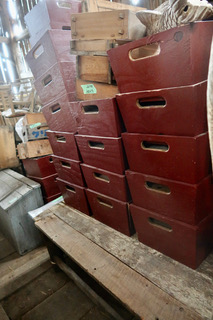
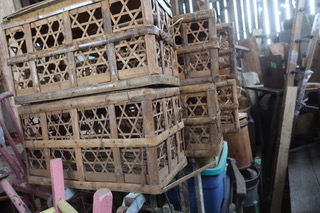
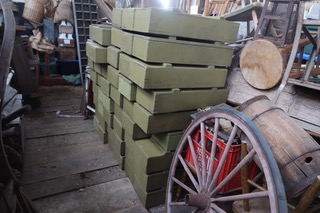
    There is an exception to every rule.  The ammunition crates above , sort of military looking. do look new and should be so if the 40 of them
    are part of a war themed movie.    We bought all 40.  We had a gut feeling they will be wanted.  Of course we could be wrong.  Some of the
    things we hauled to the dump had never been wanted by a set buyer.  

     Even raccoons and Opposums and squirrels had avoided them.  One winter 
    a large grey owl took up residence in our barn.  That discouraged other creatures thankfully.

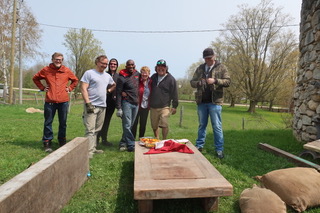
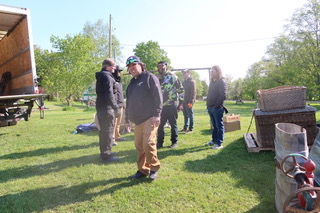
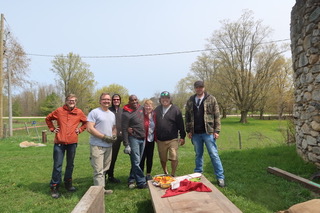
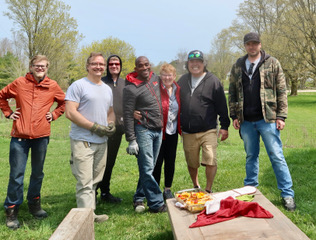
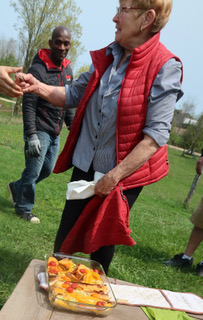
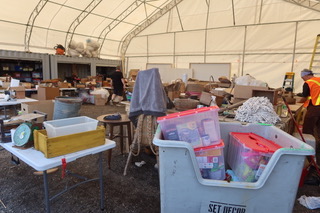
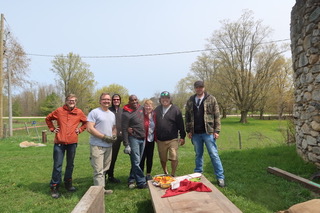
    Marjorie provided home made pizza for the crew.    Now that is unusual … moreso than anything else in these pictures.

  • Fwd: EPISODE 823 ALAN, WE ARE CLEARING THE MOVIE SET”


    Begin forwarded message:


    From: ALAN SKEOCH <alan.skeoch@rogers.com>
    Subject: Fwd: EPISODE 822 ALAN, WE ARE CLEARING THE MOVIE SET”
    Date: May 26, 2023 at 12:13:42 PM EDT
    To: Paul Caron <bumpa36@rogers.com>, Matthew Bolton <matthew.c.bolton@gmail.com>


    I ASSUME THIS STORY IS SAFE TO SEND OUT….AVOIDS PROBLEMS WITH SET….NO NAMES, NO DETAIL PICS OF SET


    I HAVE EVERYTHING STOWED AWAY EXCEPT FOR CRATES…..SEEMS YOU GUYS ARE VER BUSY…NO NEED TO RESPOND

    ALAN.

    Begin forwarded message:


    EPISODE 823   “ALAN, WE ARE CLEARING THE MOVIE SET”


    alan skeoch
    may 21, 2023


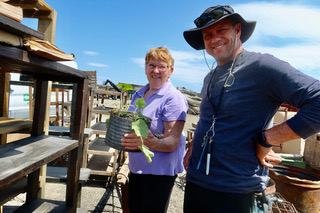
    Marjorie found the only living plant in the whole 5 square km movie set


    WHAT HAPPENS WHEN A MOVIE SHUTS DOWN?  DEMOLITION AND  DISPERSAL

    Martin and Matthew called us one morning a few days ago.

    “Perhaps you and Marjorie might be interested in some of the things we had for the movie.”(name of movie withheld)
    “Sure thing.”
    “We’ll send a limousine around to pick you up.”
    “We can drive “
    “The set is hard to find even though it covered 5 square kilometres of buildings. Best we pick
    you up. The place has security people.  You know what movie  making entails. Secrecy.”

    NOTE:  This story avoids specifics.  All pictures of the movie set … i.e. the village that was constructed
    has been deleted.   So the privacy of movie making has been respected.  There is still
    much to see.  


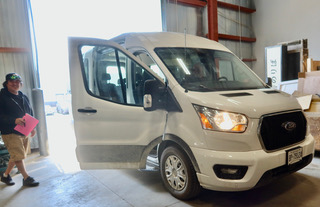
    A stretched limousine picked us up. The driver, John,
    said we had him for the day.  And it took a full day….two huge locations,  a sound stAge and an open air site.

    Why were we treated so well?  Because some of the things we rented to them needed to be eye balled.

    And some tHings were for sale.

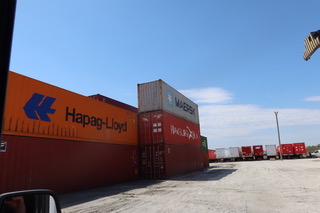
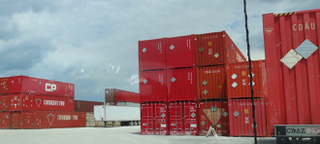
    The site was hidden behind wall after wall of gigantic 53 foot long shipping containers piled on top
    of each other.  There was a gate house and a security guard.  John had clearance.  We felt like royalty.


    Martin Budd made us feel special…as did Matthew Bolton, set director.


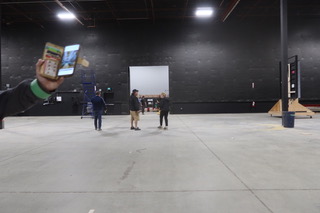
    The studio was bigger than a football field.  Largely empty except for piles of things that caught our eyes. “Al, look what we have saved for you?” 
    Take a guess.


    The crew in the set department…some of them. “Do you want coffee…perhaps some macaroons?”   


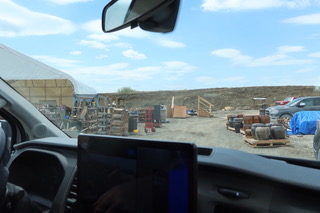
    Hard to believe how  five Km set location could be hidden behind these walls of shipping containers.   
    some machines were already doing the demolition of the set.   


    What did we buy?  Try to guess…the next Episode will tell you. 
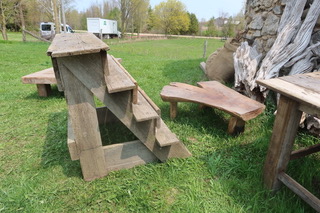
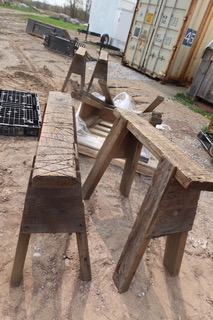
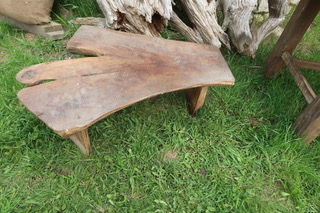
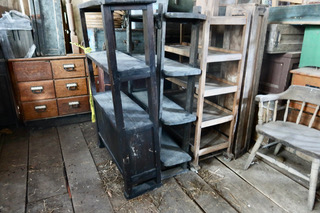
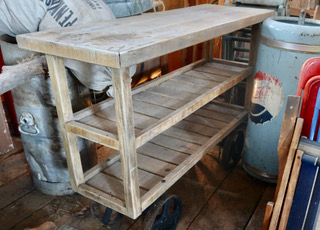
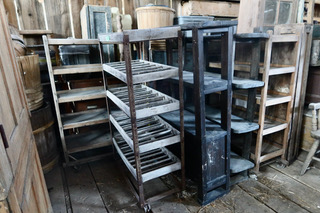
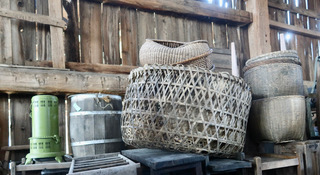
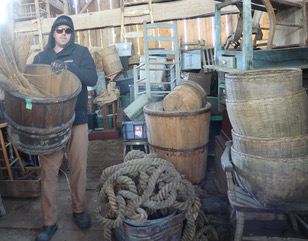
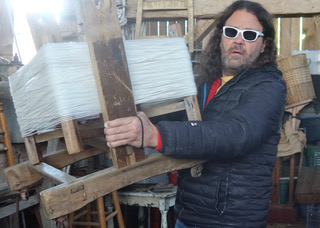
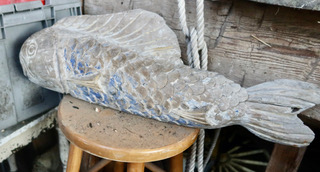
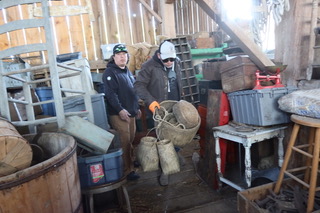
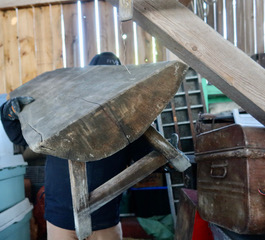
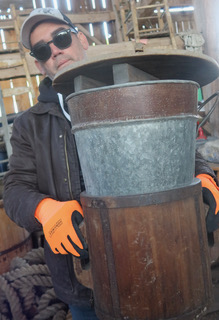
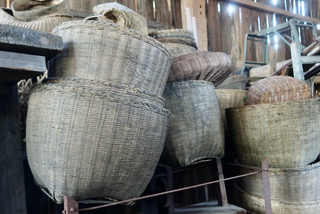
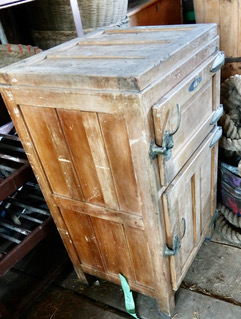
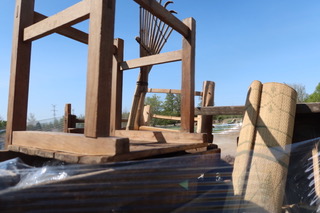
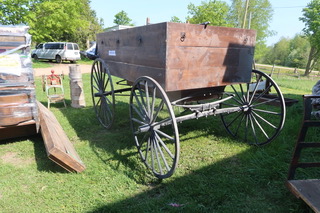
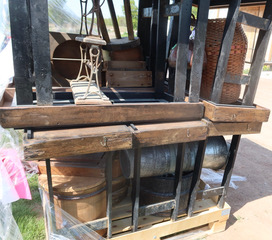
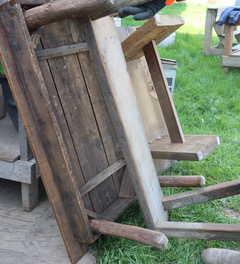
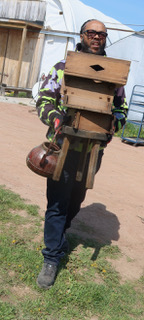
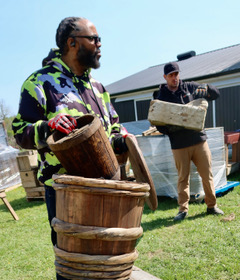
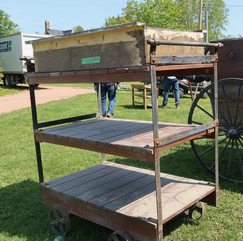
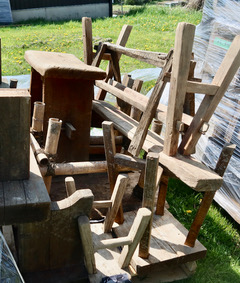
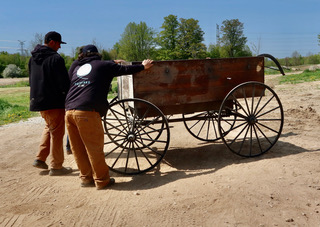
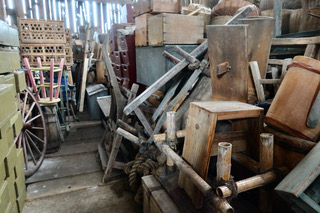
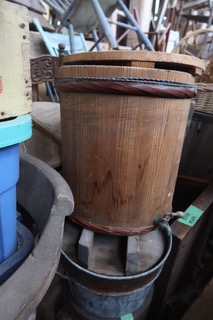
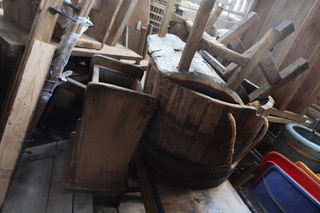
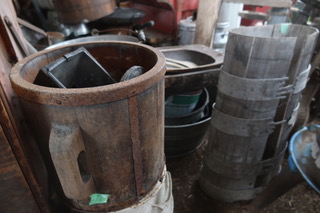
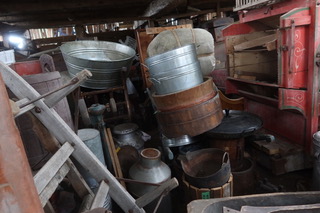
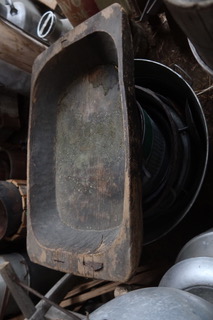
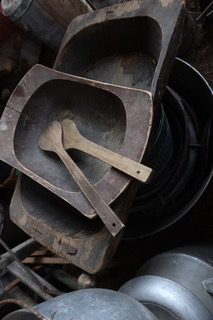
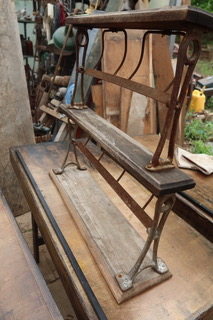
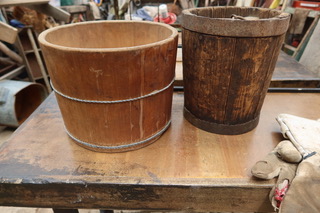
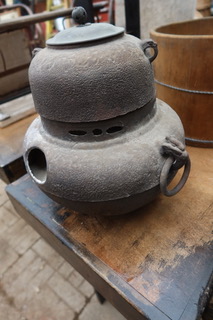
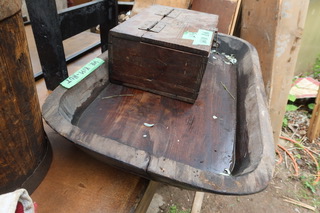
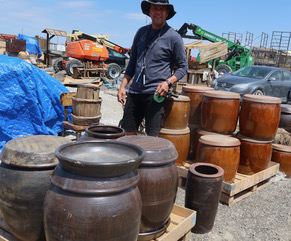
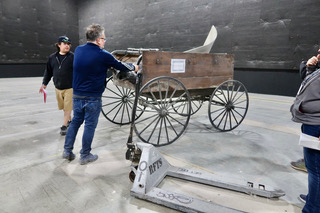
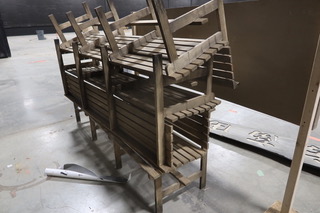
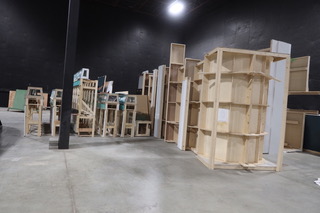
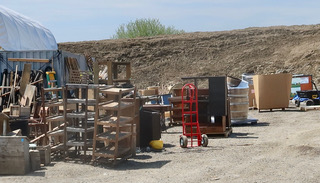
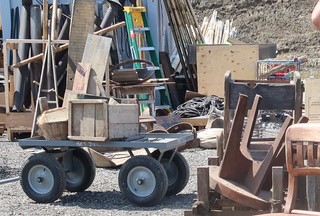
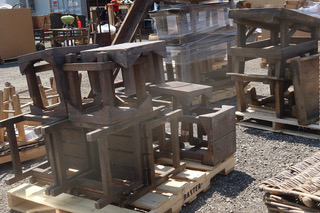
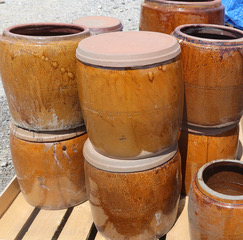
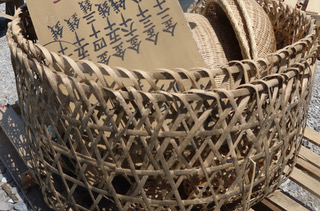
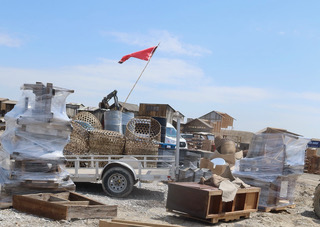
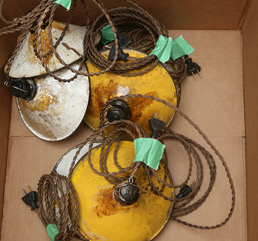
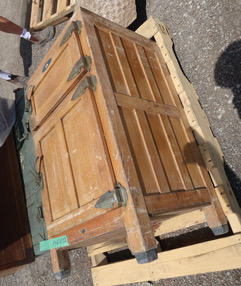
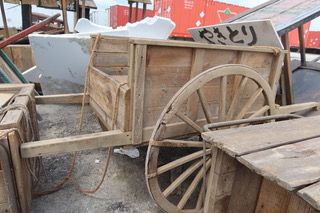
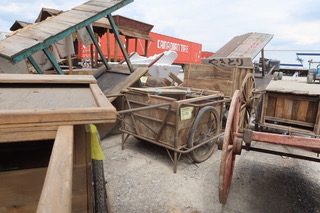
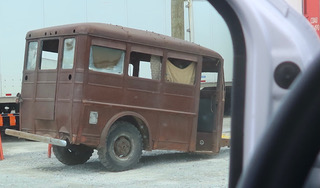
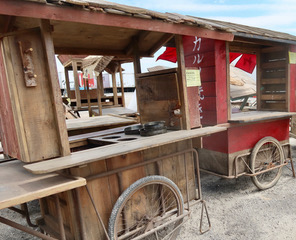
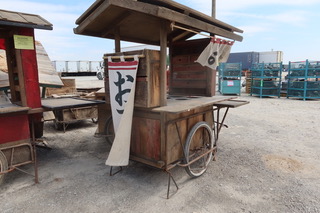
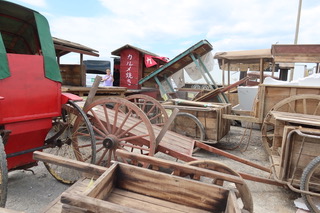
    (EPISODE 825)  Here are some of the piles of set dressing that were up for sale.  Except for the carts which are being saved
    should there  be another  series of episodes.   Movie sites are kept secret until the stories are ready for public viewing so I have been careful to keep the complete set secret.  While we were
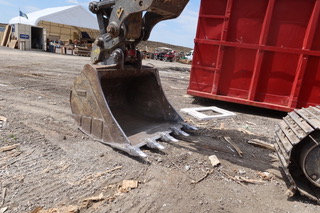
    there  the buildings were being chewed into tiny pieces by a couple of excavators and the rubble hauled away to a dump site.  Here today, gone tomorrow.


  • STUMP FENCES — 25 CENTS PER STUMP…’UGLY AS A STUMP FENCE”


    EPISODE 822    “UGLY AS A STUMP FENCE” 
     
    alan skeoch
    May 23, 2023

    NOTE TO READERS…SORRY FOR DELAY, COMPUTER ROUBLE

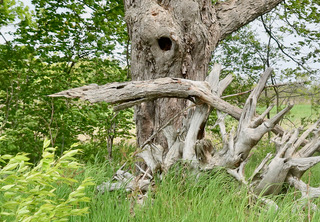
    “UGLY AS A STUMP FENCE”…expression coined in 19th century

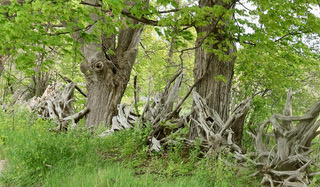
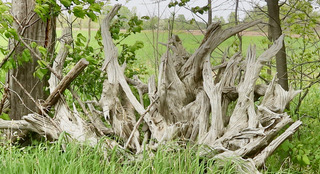
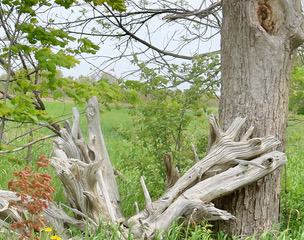
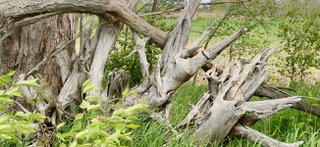
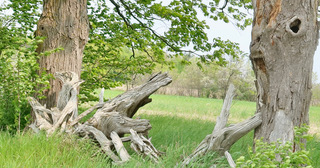
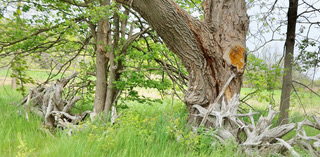
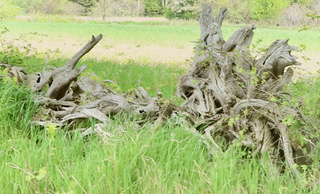
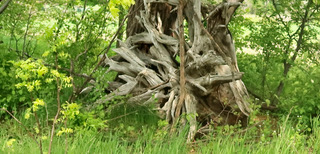
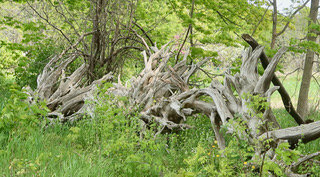
    EUREKA….WE FOUND A STUMP FENCE , MAY 25, 2023….SIXTH LINE

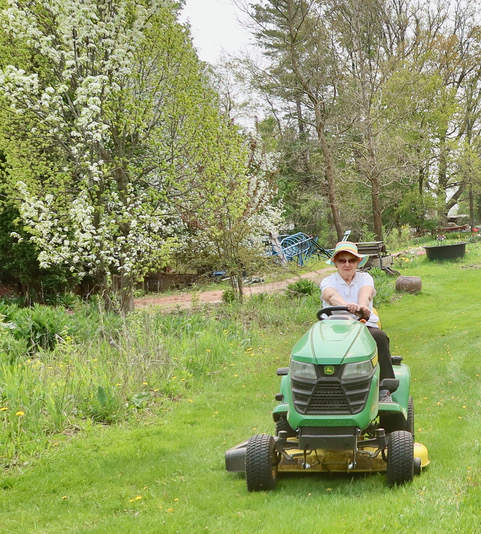
    Marjorie Likes to deviate en route to the farm.  Takes longer.  I prefer the fastest direct route
    and complain when she finds a new road.   But not today.  We cut up the sixth line from Steeles
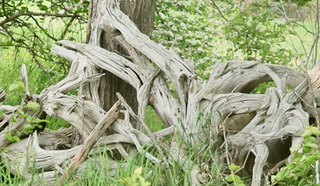
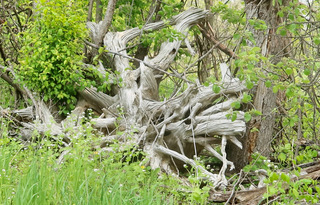
    and lo and behold discovered the remains of a stump fence.  Skeletons from the distant past.
    Deep distant past.  Stump fences were common  a century ago.  Survivors of the onerous
    task of clearing land by new immigrants,  Pioneer farms were not pretty.  Before a crop could be
    grown the old growth forests had to be cleared.  Doing so was simple but ugly.  Farmers 
    with axes cut the living bark from the towering white pine, oaks and maples.  Without bark
    the trees died.  That took time…perhaps a year of two.  So pioneer farms were covered with
    the skeletons of dead trees.   Some were useful and were squared into beams for barns.  Most
    however were not. 

    So they stood like dead soldiers.  Or fell and were butchered trunk from root. 
    Even then they were not moved.  They had imbedded earth and could not be lifted
    easily.  Farmers had to wait years…yes years….until the roots dried out and the imbedded earth
    fell away.  Then they could be hauled to fence rows to form fields.    Mass of roots faced out
    and trunks faced in.   Today there are still survivors of these root fences…some nearly 200
    years old.   And today root fences are considered charming.  When they were constructed by
    farmers with oxen or horses the root fences seem to have been considered ugly, hence
    the expression “ugly as a stump fence” .


    In 1850 stop Clearing was a business.  Huge triangle root lifters were centred over the cropses then oxen or horses were
    used with the help of chin toilet the stumps.  profitable at 25 cents  a root.l  Twenty five cents!  A  dollar in 1850 was worth $39 in our
    terms.  Stop pulling was a good business.   Farmers often had to wait until they could afford to hire
    a stump [uller.

    FAR RIGHT ENGRAVING BY W.J. BENNETT, 1787-1844


    Mrs. Anna Jameson’s described a girdled forest she saw on the main road between Hamilton and Branford. “[For] a space of about three miles, bordered entirely on each side by dead trees, which had been artificially blasted by fire or girdling. It was a ghastly forest of tall white spectres, strangely contrasting with the glowing luxurious foliage all around…Without exactly believing the assertion of the old philosopher, that a tree feels the first stroke of the axe, I know I never witness nor hear that first stroke without a shudder; and as yet I cannot look on with indifference, far less share the Canadian’s exultation, when these huge oaks, these umbrageous elms and stately pines, are lying prostrate, lopped of all their hours, and piled in heaps with the brushwood, to be fired,—or burned down to a charred and blackened fragment,—or standing leafless, sapless, seared, ghastly, having ben ‘girdled’ and left to perish.” (Anna Jameson: Winter Studies and Summer Rambles in Canada, 1838, Vol. II, pp. 102-3)


    File:Photograph of Stump Fence Around Fields on a Farm Near White Cloud, Michigan - NARA - 2129273.jpgupload.wikimedia.org/wikipedia/commons/2/2d/Photograph_of_Stump_Fence_Around_Fields_on_a_Farm_Near_White_Cloud%2C_Michigan_-_NARA_-_2129273.jpg?20121002084120 2x” data-file-width=”1383″ data-file-height=”1077″ class=””>

    AUGUST 1941, 

    The stump or root fences on the Corner road remind me of fossil remains of mastodons, etc., exhumed and bleached in sun and rain.
    — Henry David Thoreau, Journal (July 19, 1851)

    Both photos: “A New England stump fence,” ca. 1890-1901, by Detroit Publishing Co., via Library of Congress Prints and Photographs Division.

    I had heard of  ‘stumperies,’ but not of stump fences (sometimes called root fences), however now I’ve learned that . . .

    [s]tump fences, as their name implies, were made by dragging the stumps of trees to the edge of a field and placing them side by side, with their interlacing roots facing outward and their trunks inward. In the days when “ugly as a stump fence” was a simile in common usage, the stump fence had its critics, but in 1837 one observer called it “a singular fence…needing no mending, and lasting the ‘for ever’ of this world.” “The devil himself couldn’t move a stump fence,” farmers used to say, an opinion borne out by the fact that stump fences well over a hundred years old can still be seen in parts of Canada and in the Midwest.

    Stumps were often the product of the first clearing of the land, but stump fences didn’t appear in the first generation of a settlement’s fences because stumps need to sit in the ground for six to ten years before they are loose enough to be pulled out and hauled away. Extracting even a loosened stump was never easy; it required oxen and strong chains, something that many settlers lacked at first. In the 1800s, stump pulling would become a cash business and one way that a man could make a good living. Twenty-five cents a stump was the standard price in 1850 when men operating such mechanical stump pullers as the “Portable Goliath,” “The Little Giant,” and “Roger’s Patent Extractor” could extract from twenty to fifty stumps a day.

  • EPISODE 821 BREAD BAG HATS AND KATHLEEN SIMPSON

    EPISODE 821  BREAD BAG HAT…COURTESY OF KATHLEEN SIMPSON


    alan skeoch
    may 20, 2023

    “Oh, Alan,I remember that story you did on CBC radio about the Bead Bag hat.” said Nancy Smith last Friday 
    “You have  a good memory…story happened decades ago.”
    “Kathleen Simpson was the hat maker….sold the hats at their farm auction .”
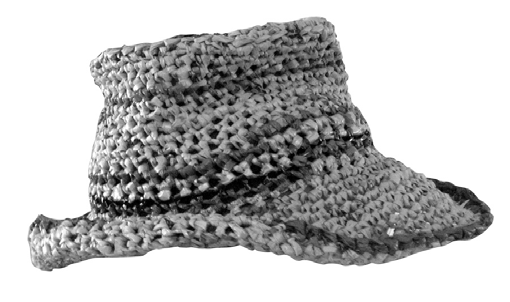
    “The auctioneer took time to explain how Kathleen gathered a pile of bread bags then got her crochet hook working. “
     “About 30 years ago or more bread was packaged in colourful plastic bags.”
    “I think I should do tat story again.”

    I did not need to do the story again.  Instead I punched up “bread bag hats’ on my computer and Presto! There
    was the story and a picture of me with my bread bag hat.

    ALAN WITH THE BREAD BAG HAT

    One  of  my favourite radio  broadcasts…kind I enjoyed  doing…was  the Case of the BREAD  BAG HAT.alanskeoch.ca/wp-content/uploads/2018/02/bread-bag-hat-300×197.jpg 300w, alanskeoch.ca/wp-content/uploads/2018/02/bread-bag-hat-768×503.jpg 768w, alanskeoch.ca/wp-content/uploads/2018/02/bread-bag-hat.jpg 1280w” sizes=”(max-width: 525px) 100vw, 525px” style=”box-sizing: inherit; border-style: none; height: auto; max-width: 100%; display: inline; float: left; margin: 0px 1.5em 0px 0px;”>

    We were at a  farm  auction near Marsville, Ontario, about 20 years ago when the auctioneer casually put up a few odd looking hats.  Hats  like  something I had never seen before.
    “Ladies and gentlemen these  hats have been  made from  bread  bags.”
    “Bread  bags?”
    “Plastic bread bags just like these,” and he  held  up some bread bags some  of which were Wonder Bread  and others.
    “Mrs. Simpson hates to see things wasted so when she saw all these plastic bags  going to land fill sites she used  here  rug making skills and  began  making bread  bag hats.”
    “For auction?”
    “Yes, right now…Do  I have a  bid?”
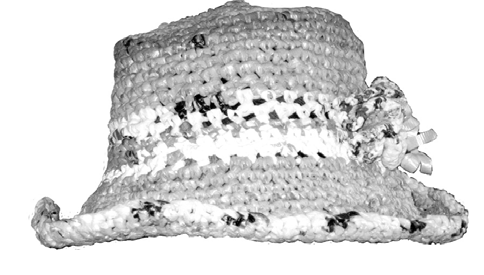
    So Marjorie and I bought  a few bread bag hats  and the following week  I turned  it into a radio program.  People  seemed  interested.  Take a look at the hat.


    Just for fun I tried variations on the expression “bread bag Hat” such as “how to make a bread bag hat”
    “Hats made from bread bags” etc etc.  And each time a picture of Kathleen Simpsons’ hat appears. 
    Guess whose mug appears under the hat?  A moment of unexpected fame.The real fee goes to
    Katleen Simpson and her decsion to keep plastic bags away from landfills.  A leading lady.


    alan skeoch

    HOW TO MAKE A BREAD BAG HAT


    Recycled Plastic Bag Hat

    page1image282196784 page1image282239248

    This hat is made from used plastic grocery bags. The bags are cut into strips and crocheted. The result looks a lot like a straw hat. It can be scrunched, folded, washed and/or stomped on without damage. And best of all, it’s all recycled!

    This was my first project in crochet, and it’s really easy. The most boring (and therefore the hardest) part is cutting the plastic bags into strips.

    Materials:

    20 – 30 plastic grocery bags, cut in strips
    Crochet Hook size J (6mm) or closest size. Use wood or metal hook, plastic hooks stick to

    the plastic bags. *See notes on back about bag choices + methods of cutting into strips.

    There is no gauge since bags come in many weights. The hat is measured in inches as you work. The hat is worked in a spiral, all in single crochet (sc), with increases and decreases determining the shape.

    Top:

    Use your favorite circle method and sc 8 sts into a circle.
    **I use the Magic Adjustable Ring, by Donna Hulka. See ** next page. Since the hat is worked as a spiral this is where you should place a marker to keep track of your rounds (see below).

    Work 2 sc into each stitch (st) until you have 16 sts. After this keep increasing as much as you need to keep the circle flat. You need to increase 6 – 8 times in each full circle, so you

    could place a stitch marker and keep count. Or, like me, you could just guess, and if it starts to curl increase more, or if it looks ruffled stop increasing.

    Side:

    When the circle is around 7 inches in diameter stop increasing. Continue to sc in every st until the hat is the height you want (try it on). 4 inches is a reasonable minimum.

    Brim:

    You now need to start increasing again. (I usually increase every 3rd st for the first row, to give it a definite turn.) Then work as you did on the top until your brim is as wide as you desire. Bind off and wear!

    Optional: Stitch in a sweatband of some stretchy fabric (old t-shirt?) for comfort.
    Add a band and/or decorations. Put a string or shoelace in to tie it under your chin
    .

    Variations:

    To give to top edge of your hat definition, sc into the front loop on the last round before turning. Make your hat have a round top by increasing less often.

    *Notes on bags.
    Bags come in many sizes, colors and weights. It is easiest to use bags of all one weight, but really, anything goes. Cut heavier bags into more narrow strips.
    To make strips:

    method #1: Spiral cut. Trim off the bottom and handles of the bag. Start at one end and cut into a continuous spiral. The width of the strip is your choice, wider strips need bigger crochet hooks. My favorite method is to put the bag over a pole or tube (broomstick or vacuum cleaner tube?) and hold the scissors and pull the bag towards you. You don’t actually need to snip.

    method #2 : Loops. Fold the bag lengthwise into quarters and cut strips across it (more narrow than the spirals)…these make loops. Loop the loops to each other to make a continuous double weight strip, with little lumpies where they are attached.

    I personally don’t like crocheting with those little lumps, so I use the spiral method.
    ** Magic Adjustable Ring (http://www.crochetme.com/Dec_Jan_0405/reads_round.html)

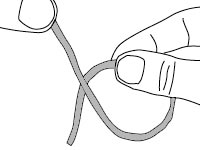
    Make a loop. Hold the “yarn” where it crosses and reach your hook through to grab the “yarn” to make a single crochet. Make 8 scs and pull the tail to tighten the loop.

    Crochet links:
    If you’ve never done crochet you can learn here. If you’re a pro you can get ideas.

    http://learntocrochet.lionbrand.com/ – basic instructions in a pdf. http://www.anniesattic.com/ – Stitch instructions in quicktime videos http://www.crochetme.com/ – Online crochet magazine http://www.turn-of-the-century.com/hooks.htm – Gorgeous hand turned wooden hooks

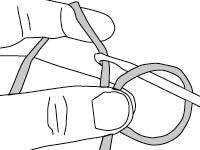
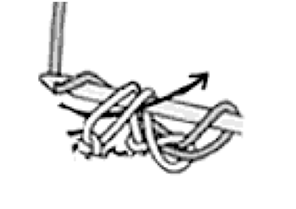
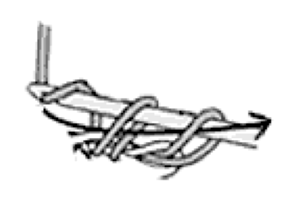
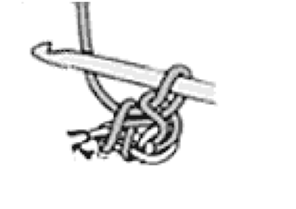
    Basic single crochet stitch (sc). But please, get a basic book or check out the links above.

    page2image283879136 page2image283879504 page2image283879808 page2image283880112 page2image283880480 page2image283880784 page2image283881088 page2image283881520 page2image283881952 page2image283882256 page2image283882560 page2image283882864 page2image283883168 page2image283883696

    Insert hook, put yarn over it and pull through. 2 loops are on hook.

    Loop yarn over hook again and pull through both loops.

    One single crochet complete. On all rows after first circle insert hook through both loops of lower stitch.

    Instructions by Jeanne Borofsky, the Dreaming Printer http://dreamingprinter.com 

  • EPISODE 820 LAST APPLE TREE STANDING…IN FULL BLOSSOM IN SPITE OF AGE

    EPISODE  820     LAST APPLE TREE STANDING…IN FULL BLOSSOM IN SPITE OF AGE

    alan skeoch
    May 19, 2023


    My grandfather, Edward Freeman, was a landscape  gardener born in Herefordshire, England.  Trained on the grounds of Windsor Castle according
    to one source although he never told me that  Eventually he became the head gardener at the 1500 acre Eywood Estate near Kington, Herefordshire..
    That’s apple country where the great cider apple called Red Streak once thrived and perhaps descendants are in blossom there to this day.  There’s
    nothing quite like a cold glass of Bulmer’s cider on a hot day.   Although granddad preferred Rhubarb wine himself.  Made from his own
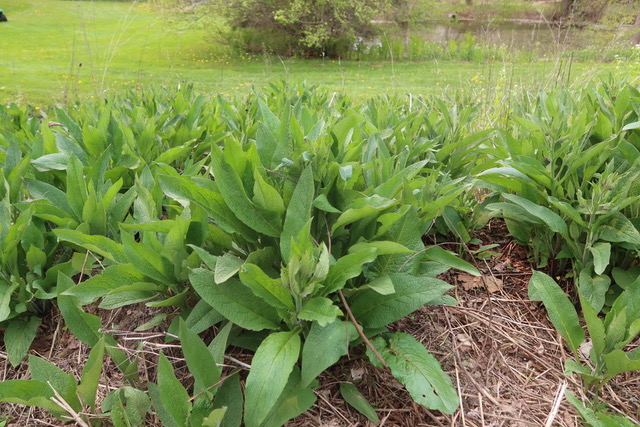
    rhubarb patch that tried alongside the apple orchard.

    Granddad left England as the 20th century dawned.  Perhaps tricked by Canadian advertising brochures that promised free land and freedom
    from the class system.  Tricked is the word because Krugerdorf in the cold clay belt of Northern Ontario was anything but Valhalla.  A rough and ready 
    place where forest fires swept across the boreal forest and piles of immigrant cut slash with the regularity of the rising of the sun,   Edward, Louisa and the
    kids,, Frank and Elsie (my mom) were burned out. Lost much. Saved the old pump organ and some pictures. Fled south to a derelict 25 acre farm
    in Erin Township, Wellington County, Ontario. And stayed there unto death.  We still have that farm although grander farms have disappeared all
    across North America.

    The best crop on that farm is rocks.  Always has been since an ice sheet two kilometres thick dumped a monstrous pile of unsorted rubble there ten
    thousand or so years ago.   But it was here that the Freeman’s took up permanent residence.

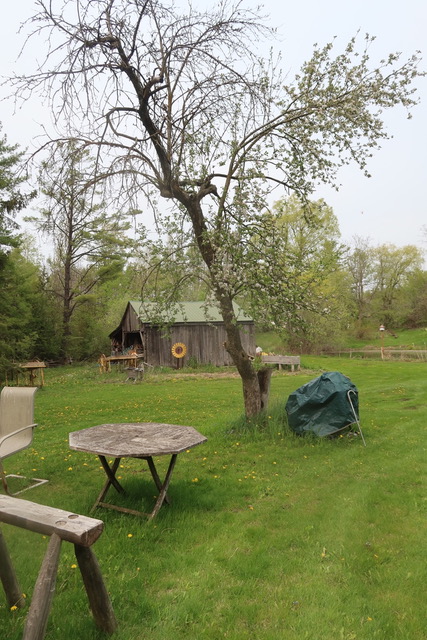
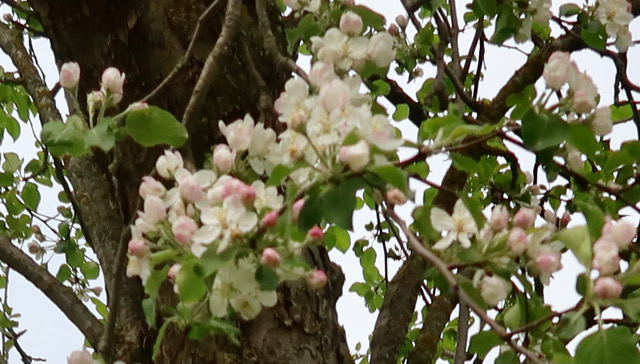
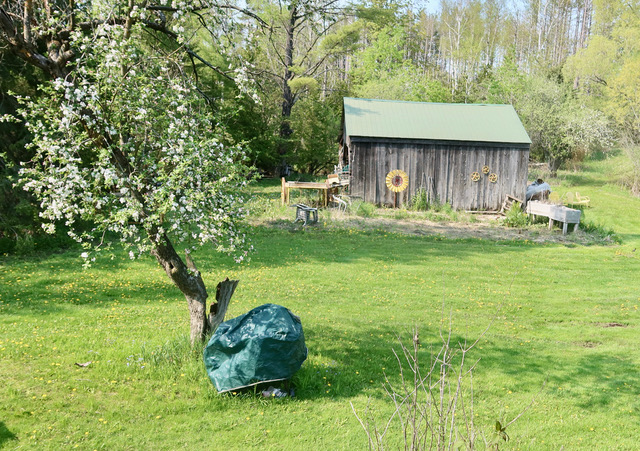
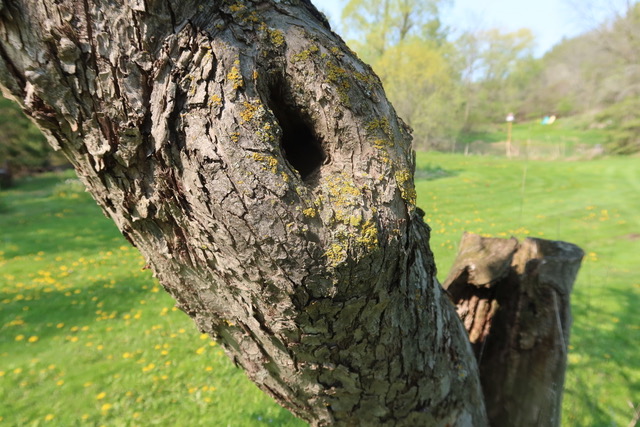
    And here is where the last vestige of Granddad’s gardening skills still lives.   One lone apple tree where once his orchard stood.  What kind? I have
    no idea except my dad said the apples were Red Astrachans.  Unsure of that because dad accused every apple tree as being a Red Astrashan.
    Perhaps he liked the name as much as I like he name Red Streak (see Herefordshire Pomona).  Decades ago I was so enamoured of that
    cider apple that we purchased a page from the old Herefordshire Pomona that was framed and hanging in a ‘book breakers’ shop in Hay of Wye.
    The picture hangs in our living room and visitors must wonder why we have an apple hanging there.

    So that is a bit of apple history.  A tiny bit for the study of apples fills volumes .   I have not time to go into that
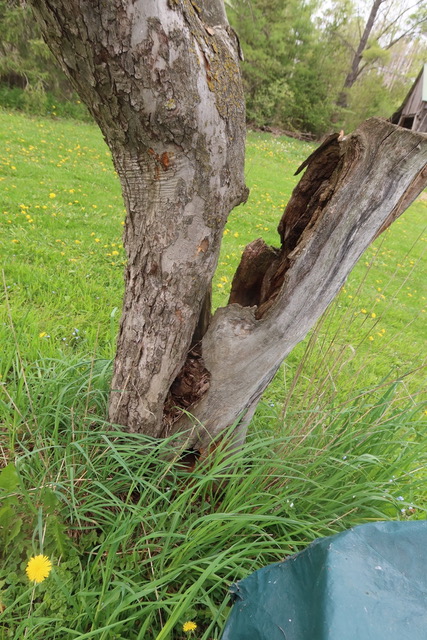
    in depth today.   Today you have a chance to gaze at Granddad’s last apple tree.   It is not a pretty picture.  Apple trees age as humans
    do…as most living things do….as burning balls called suns do.  Apple trees show their age and once they get to look crochetty they are cut down
    and their wood in blocks provided a last bit of joy in the fireplace from of winter time combustion.  Will that be the final resting
    place of granddad’s apple tree?

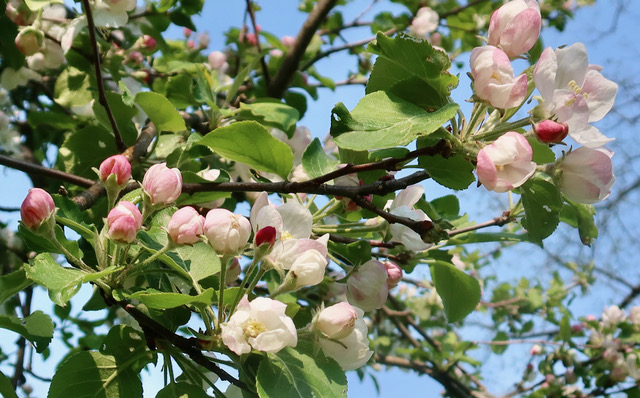
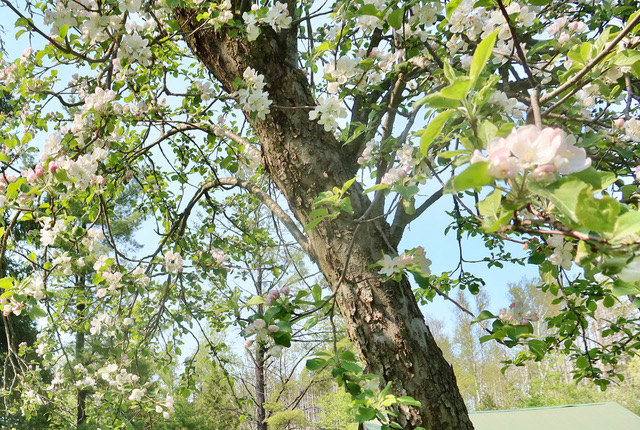
    Maybe.  But not this year.  This year it is in full blossom. Few blossoms last year.  But this year, 2023, a glorious bunch of blossoms
    on the few live branches.  Hopefully our son Andrew’s bees have found those blossoms and will provide a jar of honey when
    Andrew steasl some honey from the bees next fall.

    I think I will call that honey “Red Astrachan RedStreak”, granddad would like that.

    alan