Year: 2022

  • EPISODE 610 JAZZ IN THE SUMMERTIME AT BENARES, FRIDAY JULY 8, 2022…The Octokats

    EPISODE 610     JAZZ IN THE SUMMERTIME AT BENARES, FRIDAY JULY 8, 2022


    alan skeoch
    July 8, 2022

    WHAT A privilege to sit in the front row of a jazz concert like no other.  Feels like we are 
    selected to a private concert.  But it is not private .   Every Friday night
    for the rest of the summer there will be music for anyone who can bring a portable chair
    and find a spot on the front lawn of Benares.  Concerts begin at 7 p.m. and end around 9 p.m.
    while the sun is still shining. Get there early if you can.  Cost?  If you are a little short on cash, the night will be
    free.  But it would be better to fork out $10 per person to help keep these concerts
    rolling.   A t half time volunteer Friends of the Museum with baskets will give you the chance to support 
    professional musicians.    

    A DIFFERENT PERFORMANCE EVERY FRIDAY
    NEXT WEEK, July 15…   LAURA FERNANDEZ…pianist, singer, songwriter.

    sponsored by Friends of the Mississauga Museum


    “Marjorie. the Octokats are almost ready.”
    “You could help drag our lawn chairs across the grass.”
    “I am carrying your purse, “
    “How did I ever marry such a person as you”
    “Just good luck.”
    “Where will we put the lawn chairs?
    “Right up front.”
    “Unfold a chair.”
    “Is unfolding difficult?”
    “Not for me, maybe for you”
    “Best you do the unfolding then.”

    “Too busy taking pictures.”
    “Love conquers all, I read somewhere.”

    Then it all began … with the winning smile of the band leader


    This is Roxy, the best behaved person (dog) at the jazz concert.
    Certainly the biggest.


    HOW TO GET TO BENARES…


    Benares Historic House

    • 1507 Clarkson Road North, Mississauga, ON, L5J 2W8
    • Tel: 905-615-4860 x 2110


    History

    Benares Historic House was built in 1857, although parts of the home and several outbuildings date back to 1837. The house was designated under the Ontario Heritage Act in 1977.

    Benares was home to four generations of the Harris and Sayers families. Today, more than 95% of the artifacts on display are original to the Harris family and the home. These include furniture, dishes, letters and pictures.

    The house and most of its contents were donated by the great-grandchildren of Captain Harris (Geoffrey Harris Sayers, Dora Sayers Caro and Barbara Sayers Larson). It was restored to reflect daily life in the World War One era and opened to the public as a museum in 1995.

    Why Benares

    Varanasi, also known as Benares or Banaras, is a city in northern India on the banks of the Ganges River. It’s the holiest of the seven sacred cities in Hinduism and Jainism and also played an important role in the development of Buddhism.

    The original owner and builder of Benares Historic House in 1835 was Edgar Neave. He named the property “Benares”. At the time, naming a property after a travel destination was common practice.


  • Fwd: EPISODE 608 …HOME CHILDREN..”OUR GUTTER CHILDREN CARTOON

    EPISODE 608      GIN, WHISKY AND CHILD ABUSE  — DARK ENGRAVING

    alan skeoch
    July 2, 2022

    Ron N. asked me to find the articles I wrote about the Home children.  Found on episodes 398 and 399.

    At the same time this engraving popped up but was not printed as an Episode.  Notice the connection between alcohol
    and child abuse.   If you want more graphic material on the Home Child movement then consult
    Dr. Barnardo…the trail you will then follow will be upsetting. Be warned.

    SOME readers will remember this cartoon.  Others will find it new.

    The full story of the abuse and more abuse of the Home Children has yet to be told.  Perhaps I should
    tell all I know and put others on the trail.   It will not be a pleasant unravelling.   One summer I flew to
    Liverpool and was given access to some of the records.   What an eye-opener … I could have spent
    a lifetime there.  But my access was terminated as I have no family root in the Home Child story.

    I did learn more than I wanted to know about Alfred de brissic
     Owen however. (spelling ?)  Strange that his role in the Home Child movement in Canada
    has never been explored.   Nasty.

    alan


    Begin forwarded message:


    From: ALAN SKEOCH <alan.skeoch@rogers.com>
    Subject: EPISODE …HOME CHILDREN..”OUR GUTTER CHILDREN CARTOON
    Date: July 31, 2021 at 12:49:25 PM EDT
    To: John Wardle <jwardle@rogers.com>, Marjorie Skeoch <marjorieskeoch@gmail.com>, Alan Skeoch <alan.skeoch@rogers.com>


  • Fwd: EPISODE 608 …HOME CHILDREN..”OUR GUTTER CHILDREN CARTOON

    EPISODE 608      GIN, WHISKY AND CHILD ABUSE  — DARK ENGRAVING

    alan skeoch
    July 2, 2022

    Ron N. asked me to find the articles I wrote about the Home children.  Found on episodes 398 and 399.

    At the same time this engraving popped up but was not printed as an Episode.  Notice the connection between alcohol
    and child abuse.   If you want more graphic material on the Home Child movement then consult
    Dr. Barnardo…the trail you will then follow will be upsetting. Be warned.

    SOME readers will remember this cartoon.  Others will find it new.

    The full story of the abuse and more abuse of the Home Children has yet to be told.  Perhaps I should
    tell all I know and put others on the trail.   It will not be a pleasant unravelling.   One summer I flew to
    Liverpool and was given access to some of the records.   What an eye-opener … I could have spent
    a lifetime there.  But my access was terminated as I have no family root in the Home Child story.

    I did learn more than I wanted to know about Alfred de brissic
     Owen however. (spelling ?)  Strange that his role in the Home Child movement in Canada
    has never been explored.   Nasty.

    alan


    Begin forwarded message:


    From: ALAN SKEOCH <alan.skeoch@rogers.com>
    Subject: EPISODE …HOME CHILDREN..”OUR GUTTER CHILDREN CARTOON
    Date: July 31, 2021 at 12:49:25 PM EDT
    To: John Wardle <jwardle@rogers.com>, Marjorie Skeoch <marjorieskeoch@gmail.com>, Alan Skeoch <alan.skeoch@rogers.com>


  • EPISODE 607 BUYING TRACTORS — DID I MAKE A MISTAKE?


    EPISODE 607    BUYING TRACTORS — DID I MAKE  A MISTAKE?


    alan skeoch
    July 5, 2-22

    We paid $2100 for a 1946 Case Model D tractor.  That must have made some eyes roll  
    Stupid is as stupid does, as Tom Hanks said in the movie. Keith Seabrook was the last owner
    before us but there were many owners in the past.  Originally this 1946 Case had been
    use to drive the great steel blade of a sawnill distantly north of us.  It was still running smoothly
    and son Andrew put it to work right away setting up his bee yard.

    Who cares?  Well I care.  This Case D cost about $600 in 1946.  Does not sound like much, does it?
    Well in 1946 a good wage was $2,600 per year  Enough money to buy more than 4 tractors if
    a person did not eat, pay a mortgage, dental bills, taxes…the whole ball of wax.


    Case IH Puma 140-175 tractors refined and refreshed for 2022 | LECTURA Press


    case puma specs, big discount UP TO 60% OFF - <a href=www.iraqi-datepalms.net” data-noaft=”1″ style=”margin: 0px;” apple-inline=”yes” id=”884E9883-6348-46CD-84CE-114322338832″ src=”https://alanskeoch.ca/wp-content/uploads/2022/08/4wd-tractors-puma-175-cvx-case-ih2.jpg”>
    Models vary in price

    Then Serendipity happened yesterday.  Tractor seredipity.  An unpredictable coming together of disparate events.

    1 ) I Dropped in to pay a local farmer for a
    sack of red clover seed for andrew’s bees.  $212.  Just to pass the time I mentioned the
    old 1946 Case.

    “Cost us $2,100…USED, really used for …76 years  ”
    Then Bert got really interesting.
    “We just bought a used Case tractor too”
    “How much did you pay?”
    “65,000…one year old”
    “What would a new Case cost?”
    And Bert disappeared for a moment then came back with a FIGURE
    “Brand new, it would cost you $105,000 for the model we bought.
    …other models go up as high as $150,000 I would guess.”

    2 ) Review of Facts
    -Cost of Case D in 1946 – $600
    -Price paid for Case D in 2022  – $2,100
    -Price paid by Bert (farmer) in 2022 for 1 year old 2021 Case Tractor 
    -Price Beret would pay for new Case tractor in 2022    $195,000

    3) How could a farmer afford to buy a new tractor?

    Average annual income in Canada in 2022 is $54,630
    Average FARM income in Canada in 2022 id $38,250 per year
    Value of crops    $3,000 per acre (Optimum)

    4) How does Bert, manage to buy tractors, combines, grain trucks
    …food, electricity, cell pones…the whole ball of wax.?

    “How much land do you harvest each year?
    “About 12,000 acres”
    ‘Wow! How is that possible?
    “We rent land from owners.”
    “Why is so much land available?”

    “No farmer can live on the old 100 acre farm.  Yes there are a few exceptions,  But most  Farm owners  rent the  land to us 
    because they can no longer afford to farm.  Better jobs in the city.””

    THE BIG QUESTION

    Was a Case Tractor cheaper in 1946 ar $600
    than a new Case Tractor today at $105,000 ?

    OF course this is a stupid comparison….the old 
    Case was …. (you finish it)

    The new Case can…(.you finish it)

    alan


  • Fwd: EPISODE 606 THE FERGUSON TRACTOR AND THE SOUT POLE (I.E. ANTARCTICA)


    EPISODE 606   Ferguson tractors Lead the way to the South Pole with Sir Edmund Hillary in 1958


    alan skeoch
    June 2022


    THIS IS A STORY ABOUT A TRACTOR.  Sounds tedious….uninteresting…boring?

    Perhaps some readers might think that way.   But hold your breath.  The story is bigger than 
    you might imagine.

    “Dad, if the price seems right then get the tractor”
    Ring Ring Ring
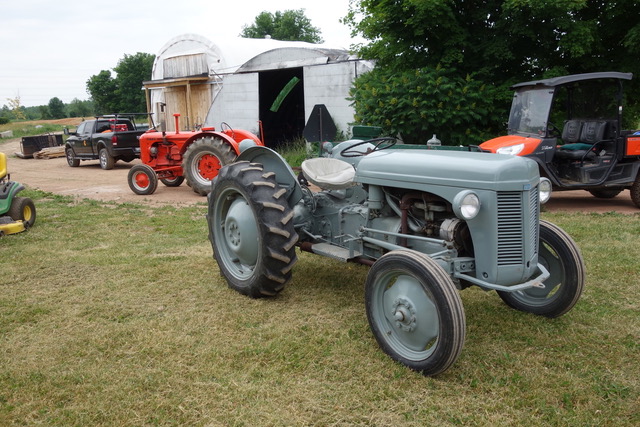
    “Andrew we now own a Harry Fergusson TO20 built in 1946.  It has been cared for…running smoothly…new paint job.”
    “How much did you bid?”
    “Within budget, Andrew….well within budget”

    “WHO WAS HARRY FERGUSON?
    “A British engineer…inventor…mechanical genius….his ‘Little Fergie’ ws designed to make farming less onerous.
    Even in 1946, many farmers were still using horses. After 1946 a lot of those horses were no longer needed.
    Harry Ferguson went around England demonstrating his little tractor.   Cost was around $600, cheap. The little
    Fergie could plow, harrow, cultivate, run milking machines, dig post holes, go to town get the mail I suppose.”
    …but that is not the big story about this tractor,,,more than 500,000 were built.  But the IS NOT THE BIG STORY.”

    “Bigger story?”
    “A lot bigger…The Ferguson caught the eye of Sir Edmund Hillary in  1954”
    “Who was Hillary?”
    “Sir Edmund Hilary was the first man to reach the top of Mount Everest along with his guide.”
    ’Not on a tractor surely?”
    “No…Hillary wanted another adventure though.”


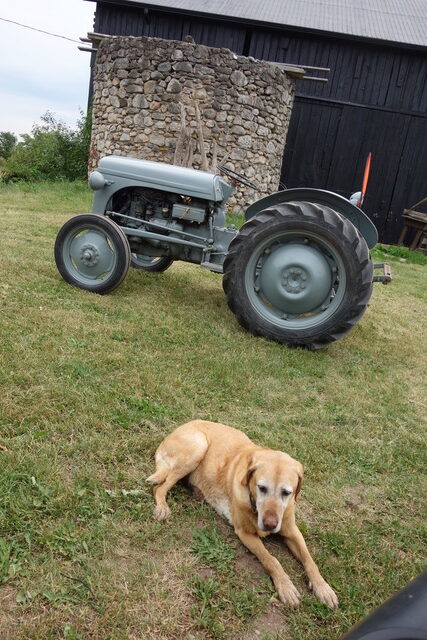
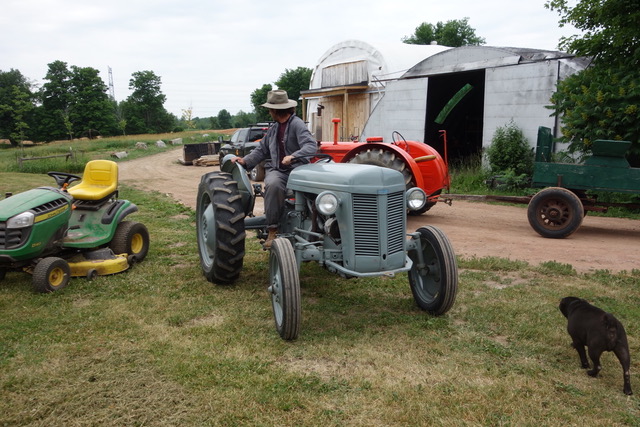
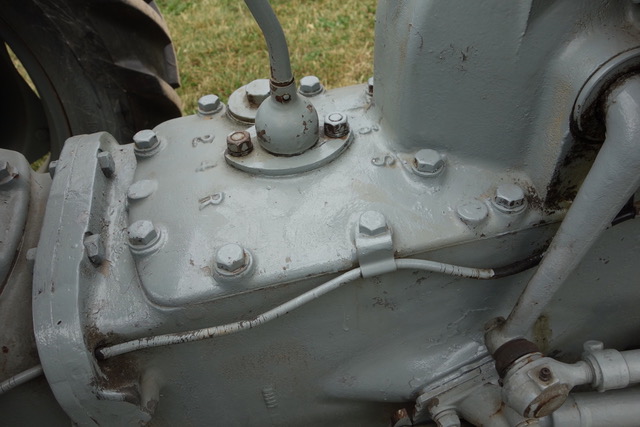
    “Take a look at the Ferguson before I get to the big story…pictures below.”


    Note:  After buying this Ferguson TO20 (1946), my son Andrew could not figure how to get it started.  “I tried everything Dad but just could not get it started.then
    wondered what the letter “S” on the engine meant.  Could it mean ’Start’.  So simple. VAROOM!…  Purred like A kitten.”   The Ferguson was designed to be

    simple, cheap, useful, tough, versatile…”


    WHAT HAS A 1946 FERGUSON FARM TRACTOR TO DO WITH ANTARCTIC SOUTH POLE?

    “After conquering Mount Everest, Sir Edmund Hillary took on a new challenge.  Along with Fuchs, Hillary began planning a mechanized trip 

    cross Antarctigh  to the bottom of the world…the south pole. “
    “Did you say mechanized?”
    “Yes, the New Zealander Hillary planned to drive to the South Pole. He believed it could be done.”
    “Must have been cold.”
    “Cold  is an understatement…the temperature was often 35 below zero. He needed very tough machines….and the Little Fergie was tough.”
    “You mean he drove to the south  pole on a farm tractor?”
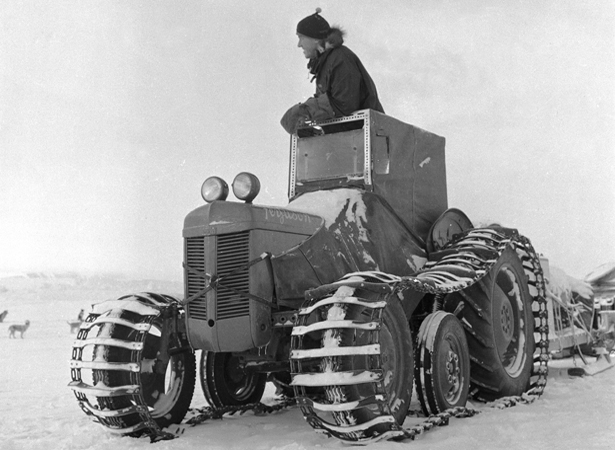
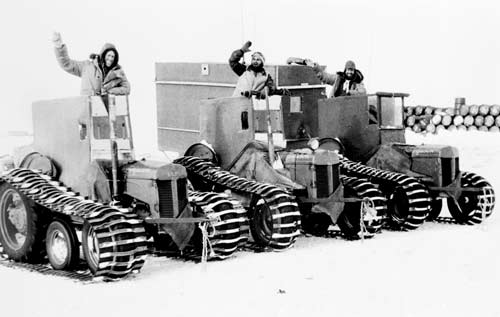
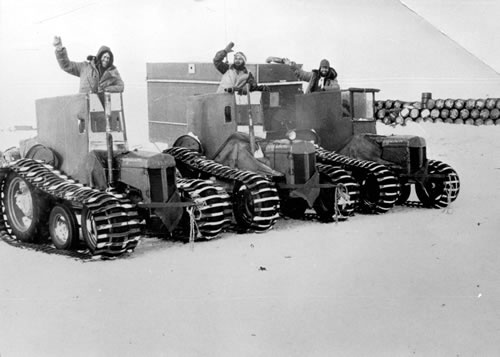
    “Precisely.  He used three of those Fergusons, had them painted red so they could be seen from the air..built a box for the drivers…attached
    some rough caterpillar treads “
    “No problems?”
    “tough sledding for sures , as he said “our Fergussons brought us over 1,250 miles of snow and ice, crevasse…softs snow and blizzard …to the South Pole.” 


    This Man Will Spend 80 Days Walking Antarctica Alone


    Two accounts of the venture are in the postscript below.


    To the Pole . . . by Massey Ferguson Tractor! - AGCO Bloge


    Hillary leads New Zealand party to South Pole | NZHistory, New Zealand  history online


    With tractors at the South Pole – Hillary, Edmund Percival – Te Ara  Encyclopedia of New Zealand

    Massey to the South Pole

    “Despite unsuitable conditions of soft snow and high altitudes our Fergusons performed magnificently and it was their extreme reliability that made our trip to the pole possible.” —Telegram from Sir Edmund Hillary to Massey-Harris-Ferguson Farming Company

    BY LAURA HARDIN | PHOTOS BY AP WORLDWIDE/RENNIE TAYLOR

     Sir Edmund Hillary, right, and Jim Bates, both of New Zealand, stand before their tractors on Jan. 4, 1958, after arrival at the American Scientific Station at the South Pole. The party of five travelled 1,200 miles with this equipment over polar snow and ice. The square box at right was Hillary's quarters and housed the expedition's radio equipment.

    Sir Edmund Hillary, right, and Jim Bates, both of New Zealand, stand before their tractors on Jan. 4, 1958, after arrival at the American Scientific Station at the South Pole. The party of five travelled 1,200 miles with this equipment over polar snow and ice. The square box at right was Hillary’s quarters and housed the expedition’s radio equipment.

    As the coldest, windiest, driest and highest continent,Antarctica is the perfect setting for those looking for a challenge. So, when renowned New Zealand explorer Sir Edmund Hillary, the first man to conquer Mount Everest, was asked to join the Commonwealth Trans-Antarctic Expedition of 1955-58, he saw it as another grand adventure and chose Massey–Harris–Ferguson tractors to help get him there.

    Led by Dr. Vivian Fuchs, the main objective of the British-led expedition was to be the first to travel overland in mechanized vehicles across the entire continent via the South Pole, gathering scientific data along the way. The main group would embark from the Weddell Sea coast of Antarctica (which is closest to South America), while a secondary New Zealand team, led by Hillary, would set out from the Ross Sea on the opposite side, establishing supply bases for the British team, but stopping short of the Pole. The two teams would meet up after the Brits had passed the Pole, with Hillary guiding them back along his path.

    With more than 10 tons of fuel and supplies to carry, Hillary made an unlikely choice for his team’s main transport: farm tractors, specifically three Ferguson TE20s. Given some modifications to better equip them for the extreme conditions, Hillary was confident his tractors were up for the challenge—and then some.

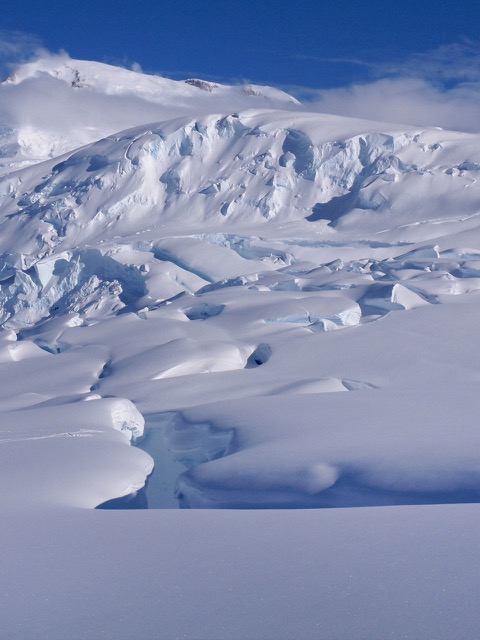
    On October 14, 1957, Hillary’s team cranked up its caravan of Fergusons and a support vehicle, pulling a bunkhouse and several supply sleds. Even though it was the Antarctic summer, conditions were brutal. Over the next 82 days, they faced temperatures below -35º Celsius, winds above 50 knots and altitudes surpassing 10,000 feet.

    Even in such extreme conditions, the Hillary team reached its destination on December 15. Once there, they learned the British team—which, incidentally, was using more high-tech snow vehicles—was significantly behind schedule and would not reach the New Zealanders for about another month. Hillary decided not to wait and continued on to the South Pole to meet the rest of the expedition there.

    To great fanfare, Hillary’s team reached the U.S. Pole Station on January 4, 1958. Before heading into the warmth of the station, he paused and later wrote, “I took a last glance at our tractor train … our Fergusons had brought us over 1,250 miles of snow and ice, crevasse … soft snow and blizzard to be the first vehicles to drive to the South Pole.”


    Arrival at the Pole by tractor

    Arrival at the Pole by tractor

    Sir Edmund Hillary, Derek Wright and Murray Ellis arriving at the South Pole in their Ferguson tractors on 4 January 1958.

    Sir Edmund Hillary leads New Zealand party to the Pole

    On 4 January 1958 Sir Edmund Hillary and his New Zealand party reached the South Pole. They were the first to do so overland since Scott in 1912, and the first to reach it in motor vehicles. The party set out for the Pole after laying food and fuel depots for the British crossing party of the Commonwealth Trans-Antarctic Expedition (TAE). It was an arduous journey – long hours were spent battling through sastrugi (wind-eroded snow ridges), soft snow and dangerous crevasses. But what is often remembered is Hillary’s determination to proceed with the journey without the express permission of the TAE, and against the instructions of the committee coordinating New Zealand’s contribution.

    Discussions with Sir Vivian Fuchs and the Ross Sea Committee

    In July 1955, just a month after being appointed to lead the New Zealand component of the TAE, Hillary raised the idea of carrying on to the Pole with the expedition’s overall commander, British explorer Dr Vivian Fuchs. At this time neither Fuchs nor the Ross Sea Committee, which was coordinating New Zealand’s contribution, raised any objection. But in a series of phone calls and telegrams in early 1957 the Executive of the Ross Sea Committee cautioned Hillary against continuing on to the Pole without Fuchs’ express permission. They also knocked back his ambitious plans for the New Zealand parties over the spring and summer. Hillary was surprised, but had not sought the Committee’s permission for his activities and so did not see their response as an obstacle. In his autobiography, Nothing venture, nothing win, he commented:

    I continued as though the exchange of messages had never occurred … It was becoming clear to me that a supporting role was not my particular strength. Once we had done all that was asked of us – and a good bit more – I could see no reason why we shouldn’t be organising a few interesting challenges for ourselves.

    NZ party sets out to lay food and fuel depots

    The Pole journey was still firmly in Hillary’s mind when the southern party set out from Scott Base on 14 October 1957 to lay food and fuel depots. In November, as the party neared the site of Depot 480, Hillary received another surprising message from the Ross Sea Committee. This time the full Committee had met and indicated that they would give their support to the Pole journey following formal approval from London. Hillary later claimed to have misread the message – taking it that formal approval had already been given.

    Shortly after the party reached Depot 480 Hillary advised the Committee that they intended continuing south towards Fuchs after laying their final depot, Depot 700. If he didn’t require their vehicles, they would continue on to the Pole. The Executive Committee instructed him not to leave the final depot unmanned. The party continued on as planned to Depot 700. Shortly after arriving on 15 December they received a message indicating Fuchs would arrive at the Pole between Christmas and the New Year. As the depot neared completion Hillary advised Fuchs and the Committee that his party intended pressing further south to mark a path through the crevassed areas.

    Dash to the Pole begins

    At 8.30 p.m. on 20 December the party, at this point made up of Hillary, Murray Ellis, Peter Mulgrew, Jim Bates and Derek Wright, began what has been described as the final ‘dash to the pole’. When they stopped at 6 a.m. on 21 December Hillary received yet another message from the Committee insisting they stay at Depot 700. Again he ignored their request. But he did alert Fuchs and noted that his plan to continue to the Pole could be abandoned if Fuchs needed their assistance. On 24 December the party received a reassuring Christmas message from Fuchs in which he approved of them marking the path further south. Hillary responded with further news of their progress, then waited another day before proceeding further south. It wasn’t until 28 December that Fuchs, concerned that his party might run out of fuel, asked Hillary to abandon the bid for the Pole and lay another depot. But by then it was too late. Hillary replied that they had insufficient food or fuel to lay an additional depot or to return to Depot 700 and await his arrival, which had been significantly delayed. Hillary arranged for more fuel to be taken to Depot 700 and then continued the journey south.
    Ferguson tractors

    The party completed their journey to the Pole in three converted Ferguson tractors with ‘windshields but no roofs’. Hillary’s official biographer, Alexa Johnston, has likened the journey to driving ‘across Antarctica in convertibles’. Two sledges and a caboose – essentially a caravan on skis – containing bunks, cooking and radio facilities, also survived the journey to the Pole.

    Arrival at the Pole

    After 14 days battling through sastrugi, soft snow and crevasses, the party finally sighted the South Pole at 8 p.m. on 3 January 1958. They were exhausted, having slept for only a few hours at a time since leaving Scott Base. So after sending off the code word ‘Rhubarb’ to indicate they had the Pole in sight, they went to sleep. They completed the final part of the journey the next morning, arriving at the South Pole station at 12.30 p.m.

    As the party was being congratulated on reaching the Pole, the media abroad began to question whether Hillary’s decision had put the entire expedition at risk. Speculation of a rift between Fuchs and Hillary only increased after news reached the media that Hillary, concerned that Fuchs’ party was running well behind schedule, had suggested he abandon the crossing and return the following year. But when Fuchs met Hillary at the South Pole on 20 January there was no evidence of animosity between the pair – Fuchs’ first words to Hillary were ‘Damned glad to see you, Ed’. In the days that followed Fuchs called on Hillary’s knowledge of the terrain between the Pole and Scott Base to bring the crossing to a safe conclusion. Fuchs’ party arrived at Scott Base on 2 March 1958, having completed the first successful trans-Antarctic crossing.

    In an interview with Time magazine in 2003, Hillary compared his experience in the Antarctic to his experience climbing Everest:

    Oh, no [it wasn’t harder than Everest]. It was different in many different ways. The problems of snow and ice were similar, but on a big mountain like Everest, there were more immediate dangers – the possibility of avalanche or falling off the mountain or going down a crevasse. In the Antarctic, the temperatures on the whole were colder, the distances were vast and it was a much longer sort of business, really. So in our trip to the South Pole, we were under constant tension, for long, long periods. For hours we’d be under great tension. Whereas on a big mountain it would be for short periods.

    Further information

    Books

    • Pat Booth, Edmund Hillary: the life of a legend, Moa Beckett Publishers Limited, Auckland, 1993
    • David L. Harrowfield, Call of the Ice: Fifty years of New Zealand in Antarctica, David Bateman Ltd, Auckland, 2007
    • Alexa Johnston, Sir Edmund Hillary: an extraordinary life, Penguin Books, Auckland, 2006
    • A S Helm and J H Miller, Antarctica, R. E. Owen, Government Printer, Wellington, 1964  
    • Edmund Hillary, Nothing venture, nothing win, Hodder and Stoughton Limited, London, 1975
    • Geoffrey Lee Martin, Hellbent for the Pole, Random House New Zealand, Auckland, 2007
    • L. B. Quartermain, New Zealand and the Antarctic, A R Shearer, Government Printer, Wellington, 1971

    Links