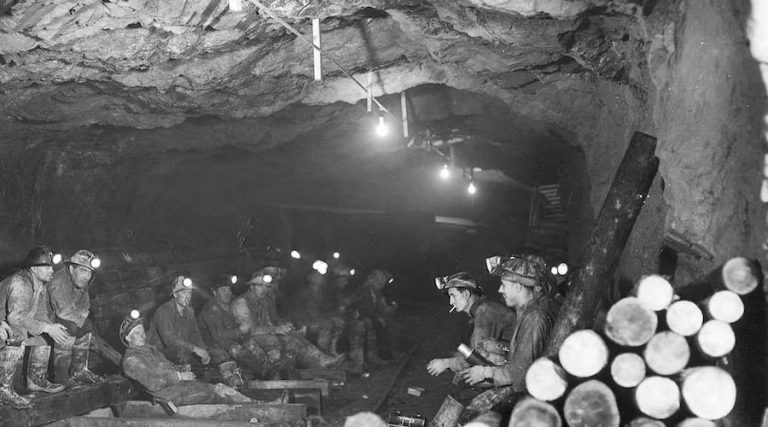
Author: Alan Skeoch

  • Fwd: BLACK CHERRY LOGS TRANSFORMED

    EPISODE 589    BLACK CHERRY LOGS TRANSFORMED


    alan skeoch
    March 2022


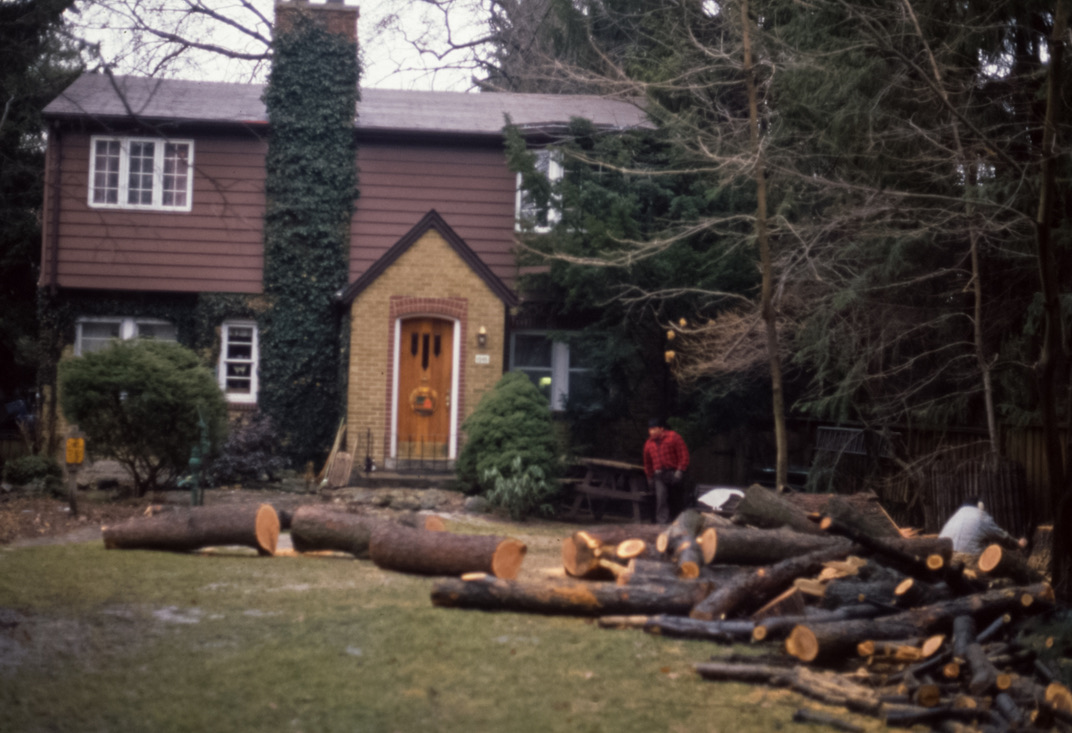
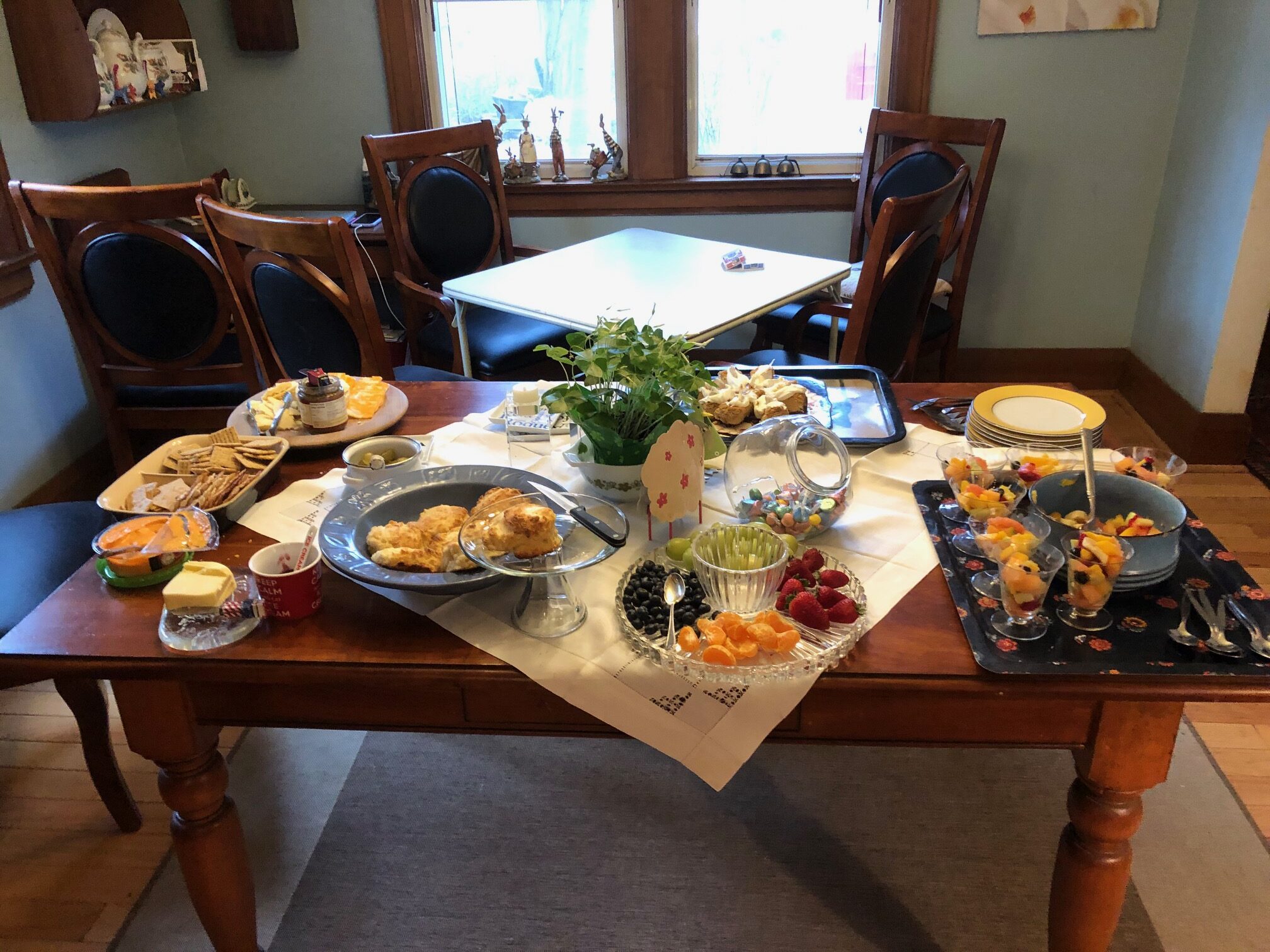
    Once upon a time we had a beautiful black cherry tree living beside our house.  Mature. Reaching
    for the patch of blue sky above our spruce grove. Then we cut it down.   The reason we did this
    is not clear because that happened years ago.

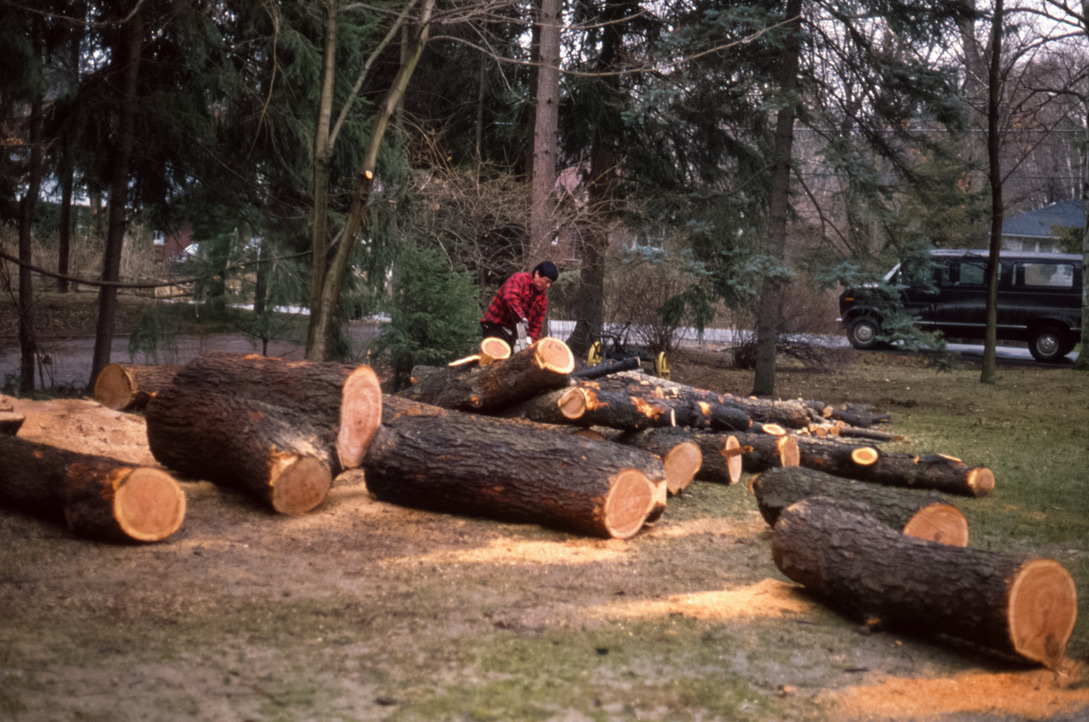
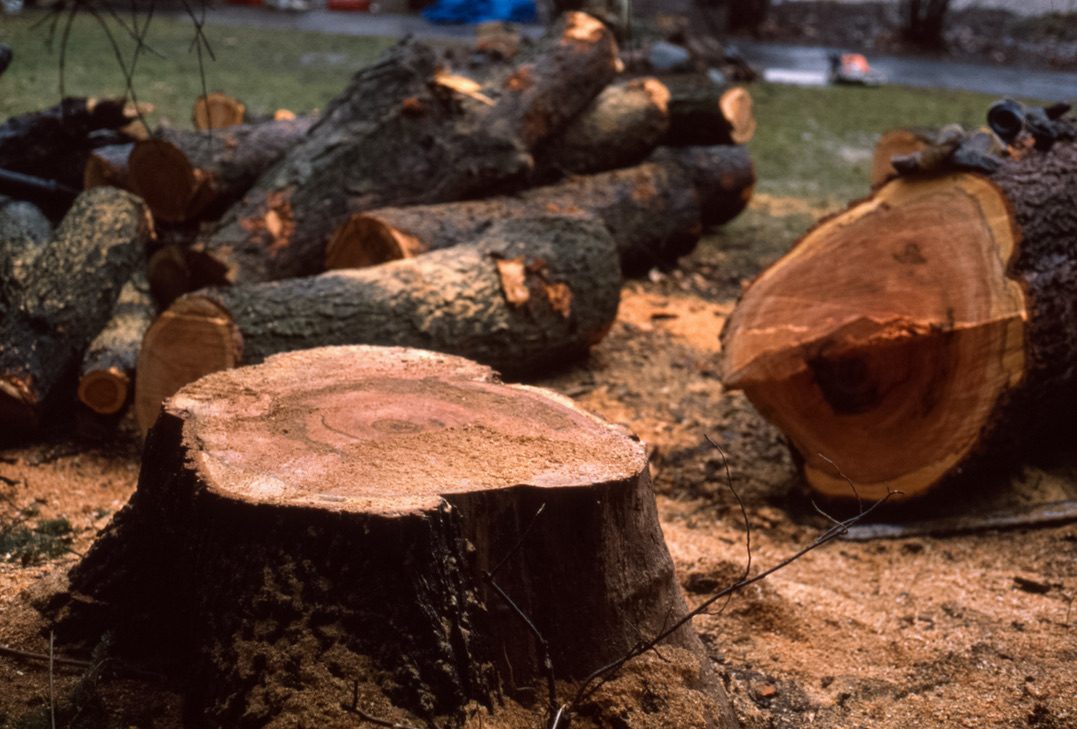
    Waste not want not.  We had the logs cut into lengths for the saw mill and what resulted is in
    the final picture below.  In short, the cherry tree is still with us…used every day.  In this case
    loaded with special entertainment foods as Marjorie has everything set for a game of bridge
    with her friends.


    The Black Cherry tree is gone.  Sort of.  Not really gone. Let’s say transformed.  Look out the window.  That is where the tree once stood.  Now it still
    stands nearby loaded with food.

    alan skeoch
    March 27, 2022

    Black cherry trees make wonderful furniture as the planks age to a deep reddish colour…warm, inviting,  But do not eat the wood or
    chew the sawdust.  Poisonous.   The wild cherries, however, are sort of edible. Birds love them.   As for the logs, it is a shame that so
    many wild cherry trees are cut into firewood.   That should never happen.  The new saw mills, using heavy duty band saw blades can
    convert logs into lumber cheaply.  
  • EPISODE 557 MA[;E SYRUP MAKING IN 1970 ALAN SKEOCH AND FAMILY


    EPISODE 557   MAPLE SYRUP MAKING IN 1970

    alan skeoch
    March 25, 2022

    SOME of our fellow teaching friends drove or flew to exotic places on the March school break
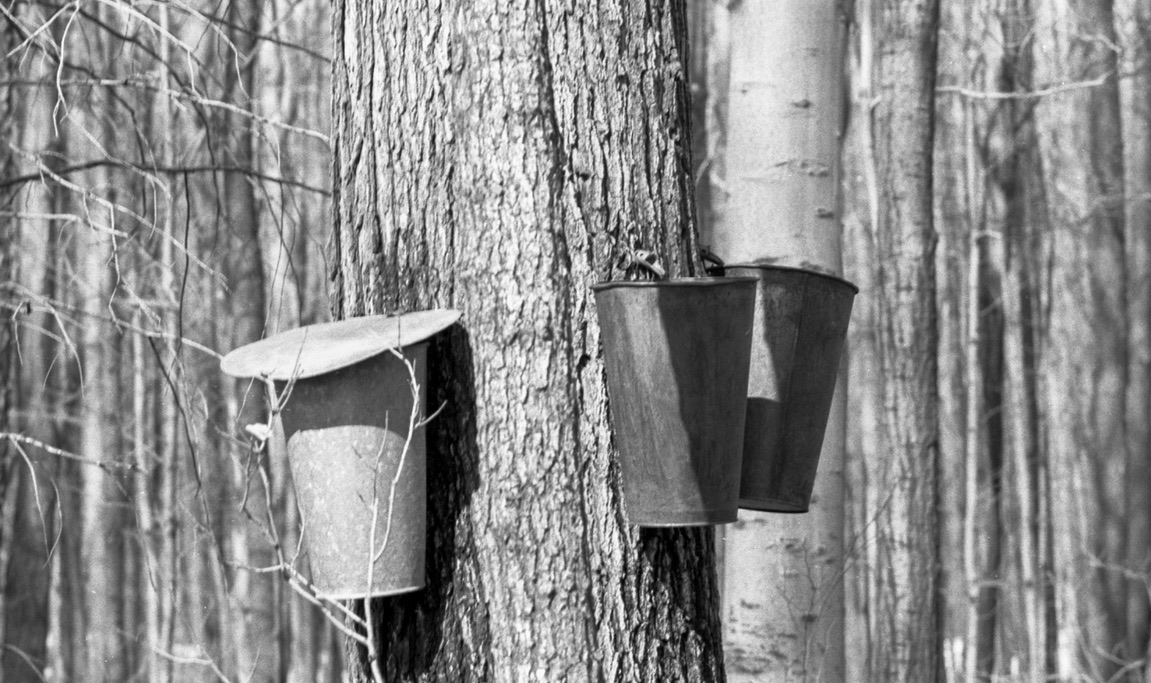
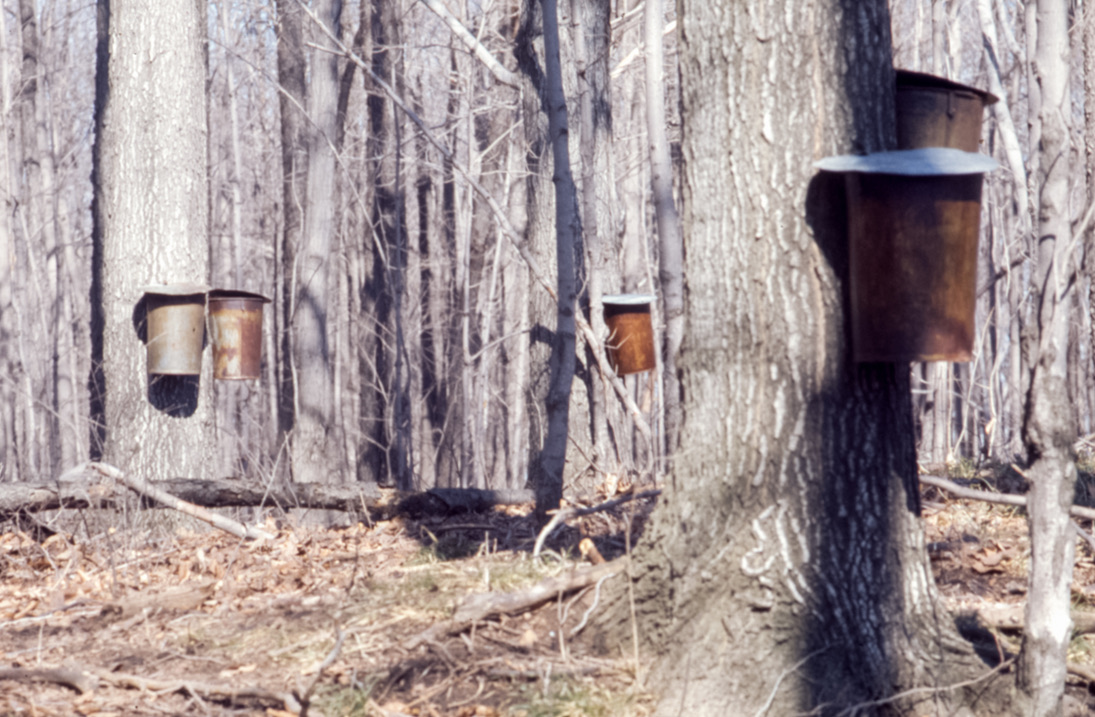
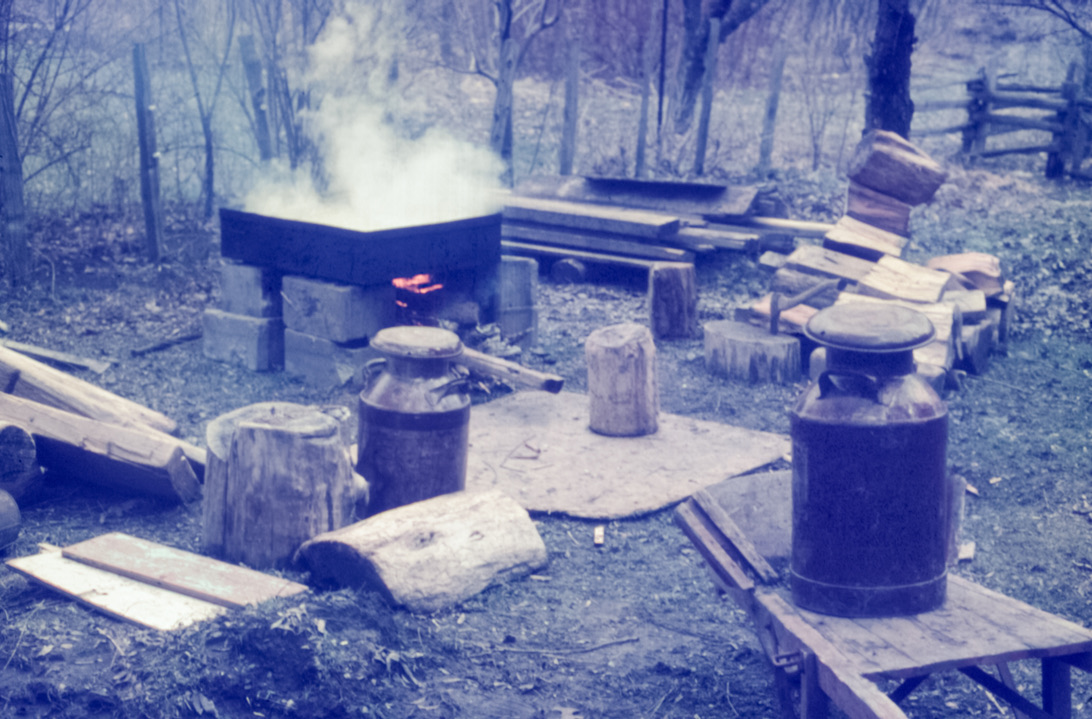
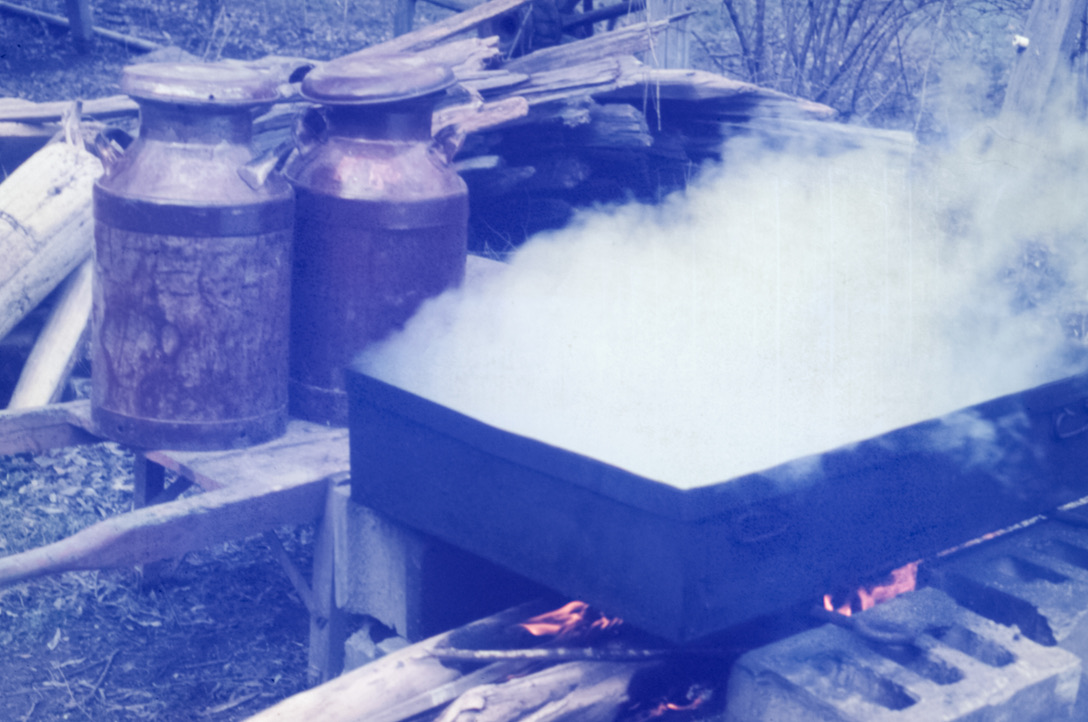
    in the 1970’s.  We had a better plan.  March Break was maple syrup time.  Simple to do.  I had a huge
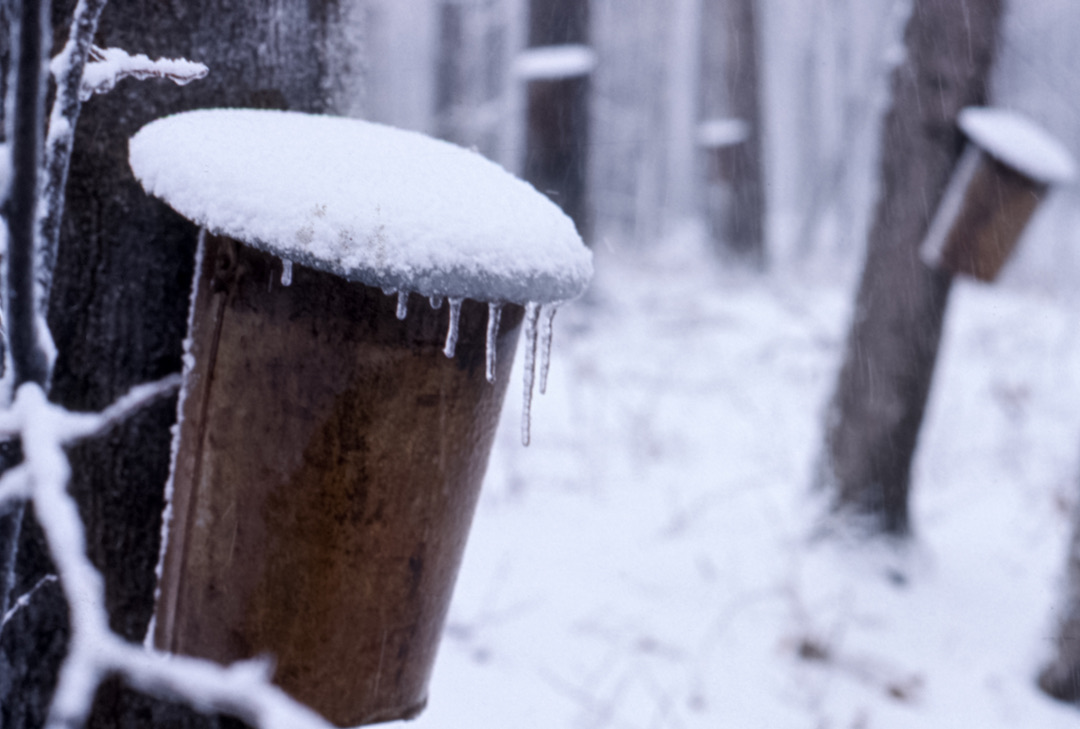
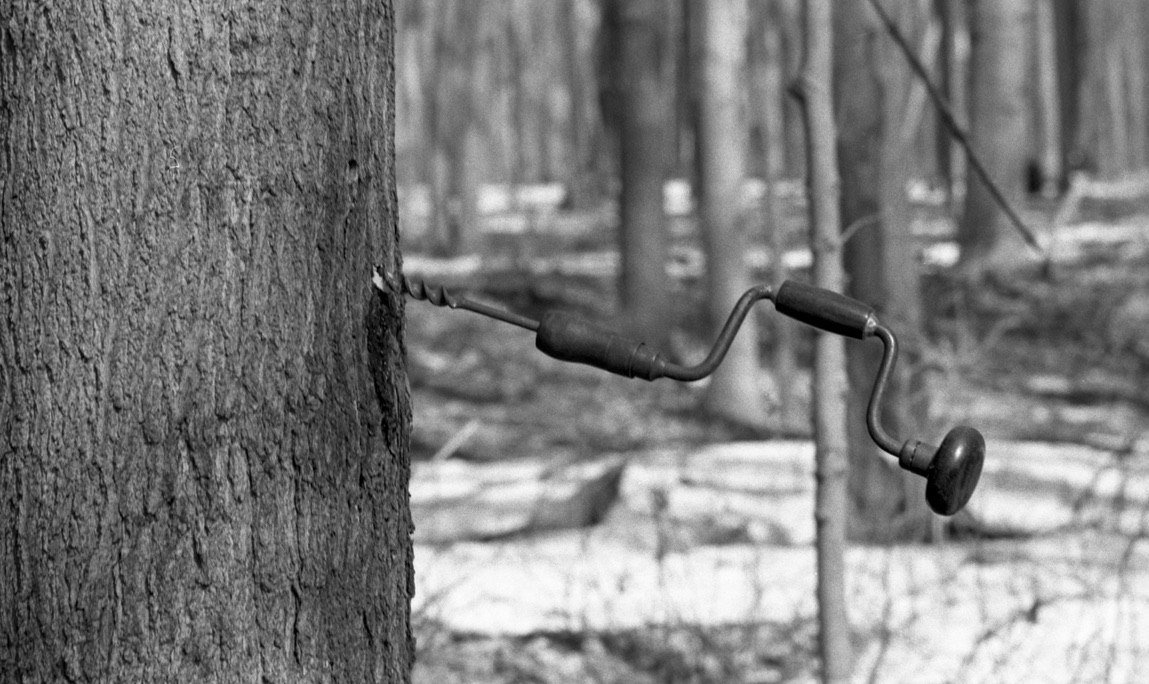
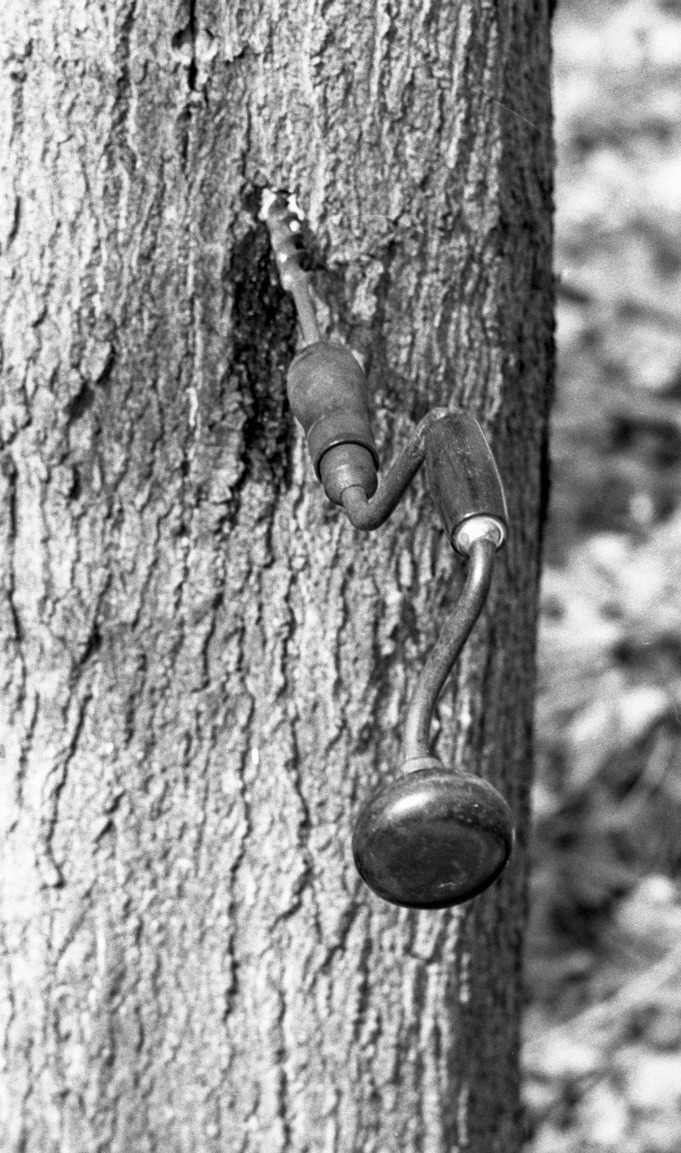
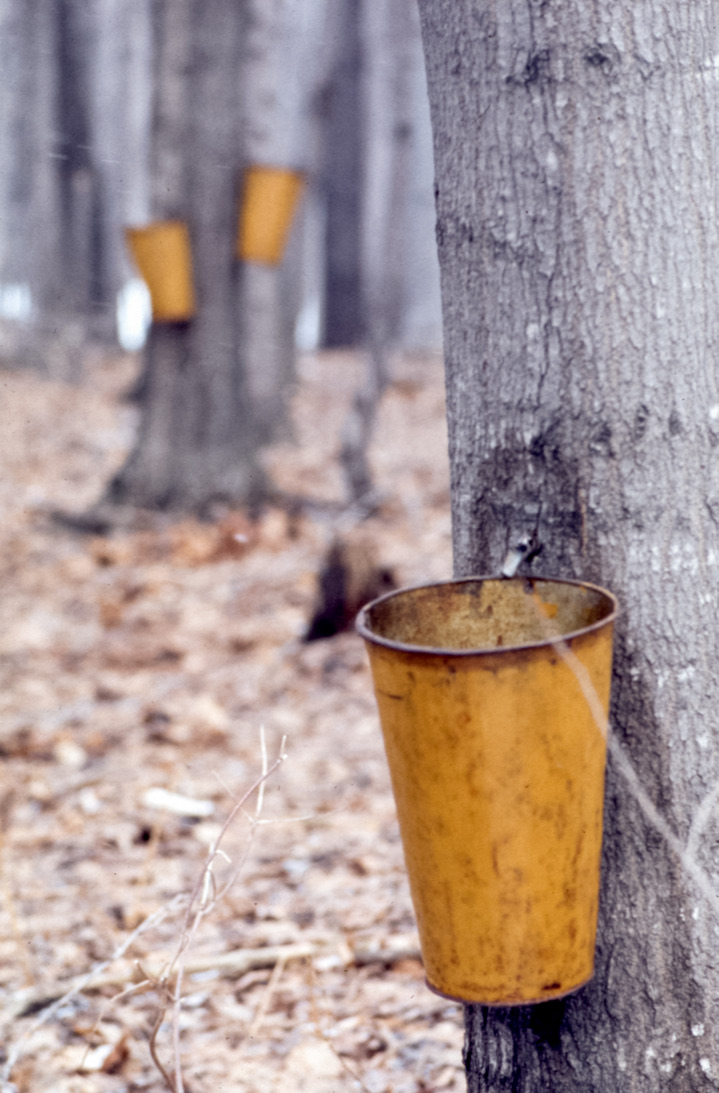
    supply of sap pails and piles bought at farm auctions.  All I needed was a brace and
    bit.   Lorne Saunders said we could use his maple trees over on he Fourth Line
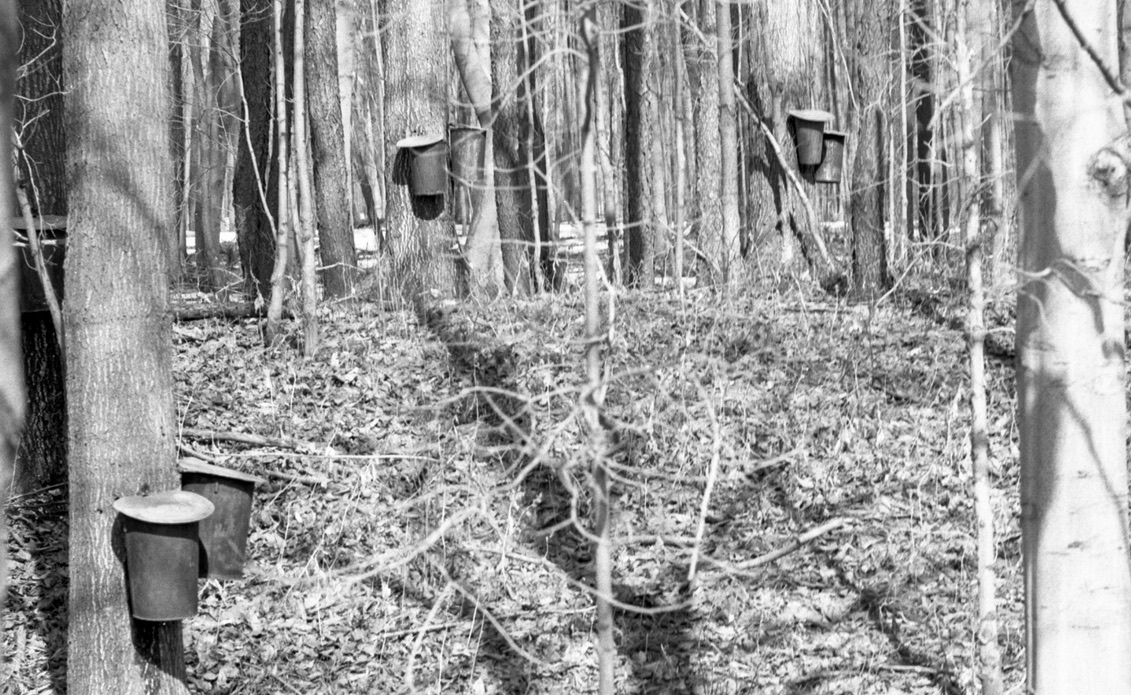
    of Erin Township.  Must be 500 trees available.  We only needed 20 or 30.  But we had to
    get the trees tapped on those special warm days and cold nights of the month of March.


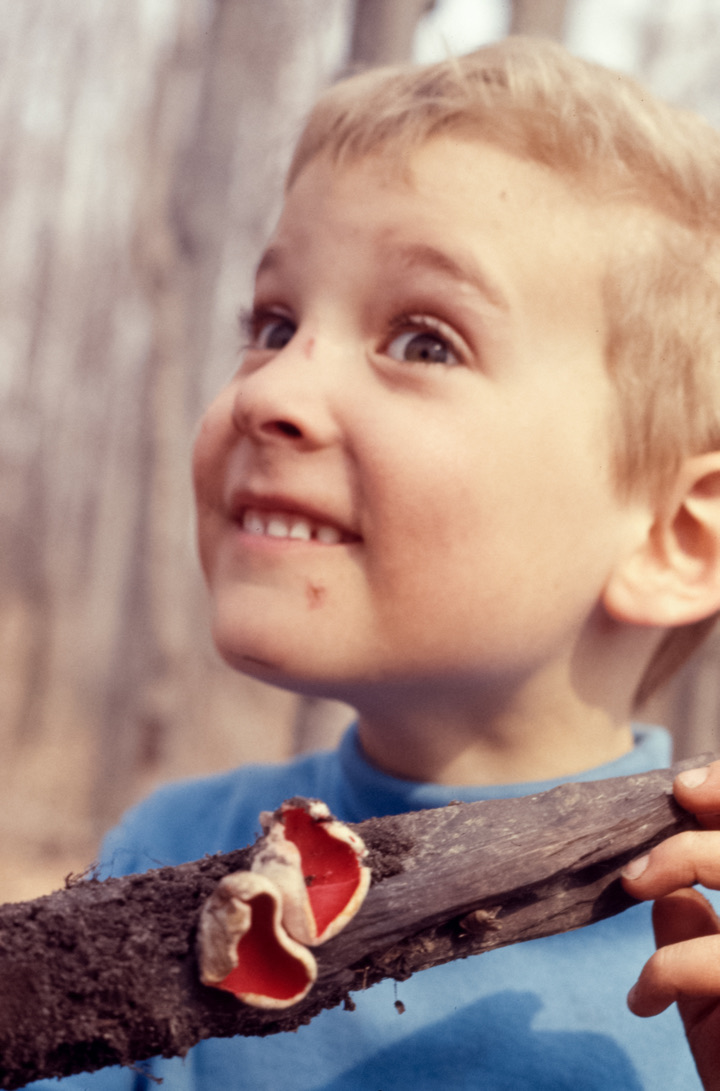
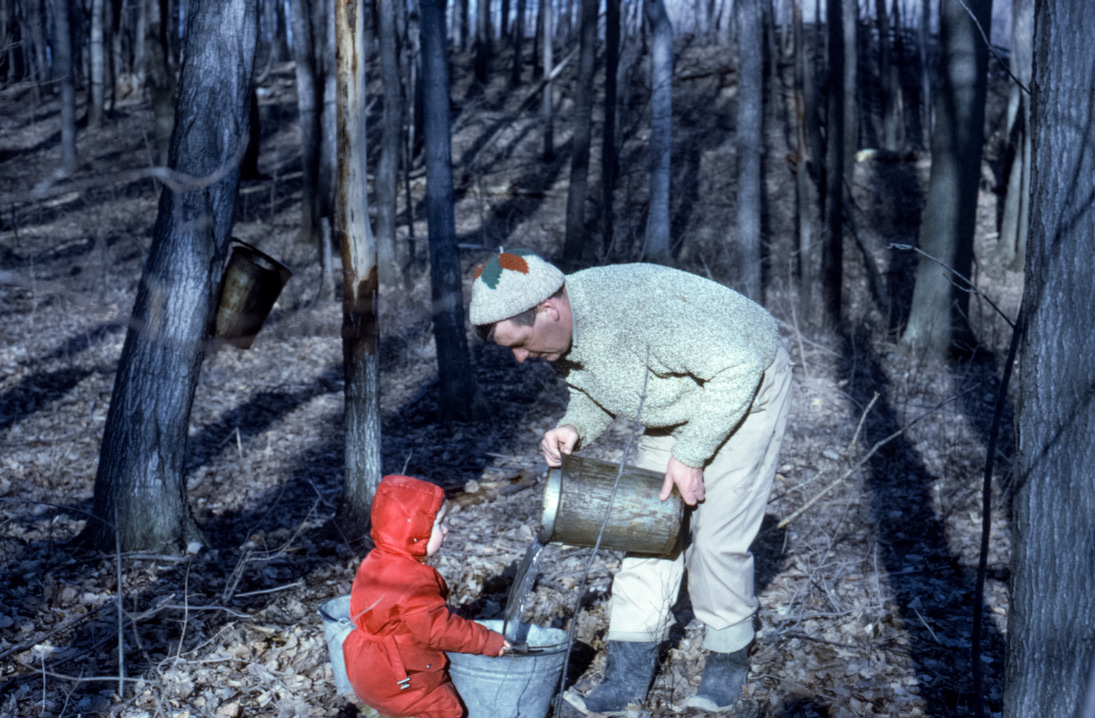
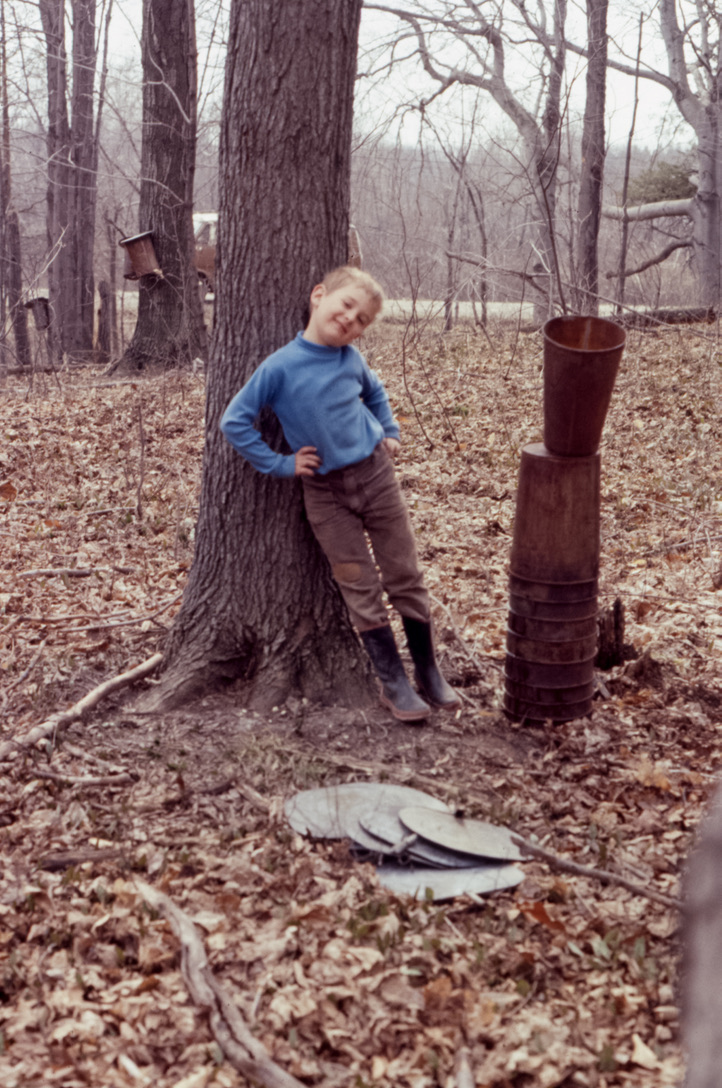
    ‘Our two boys were delighted.  Here Kevin found a weird fungus on one of sap
    running afternoons.  March is a wonderful month where it feels great to be alive
    after being cooped up in the house for winter.


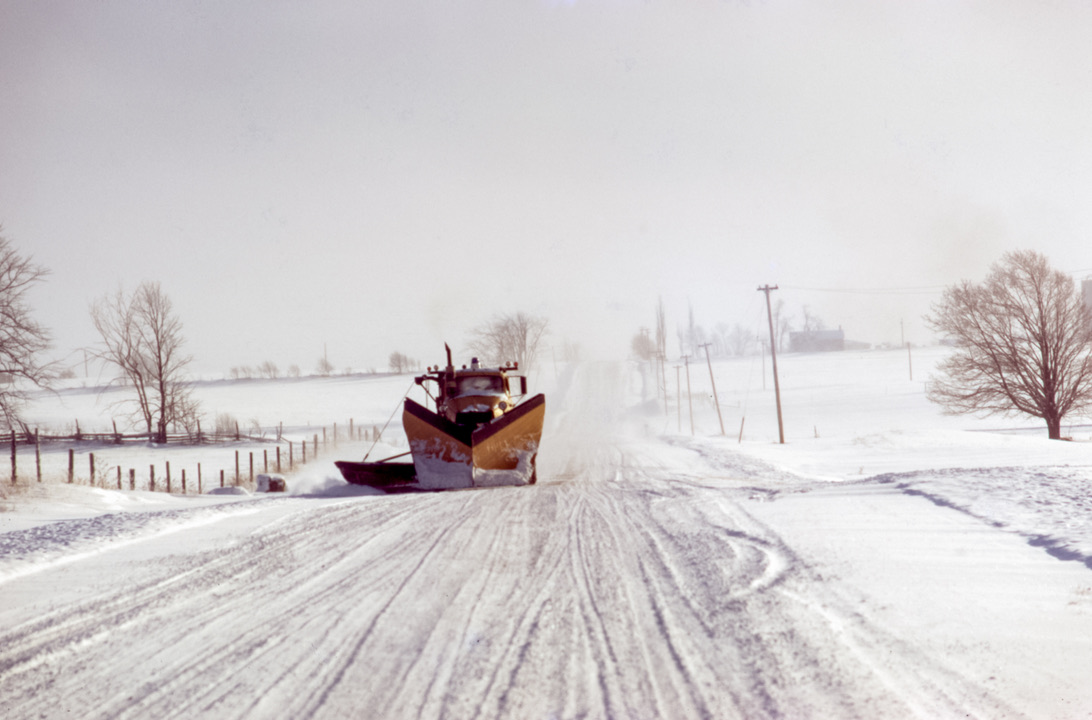
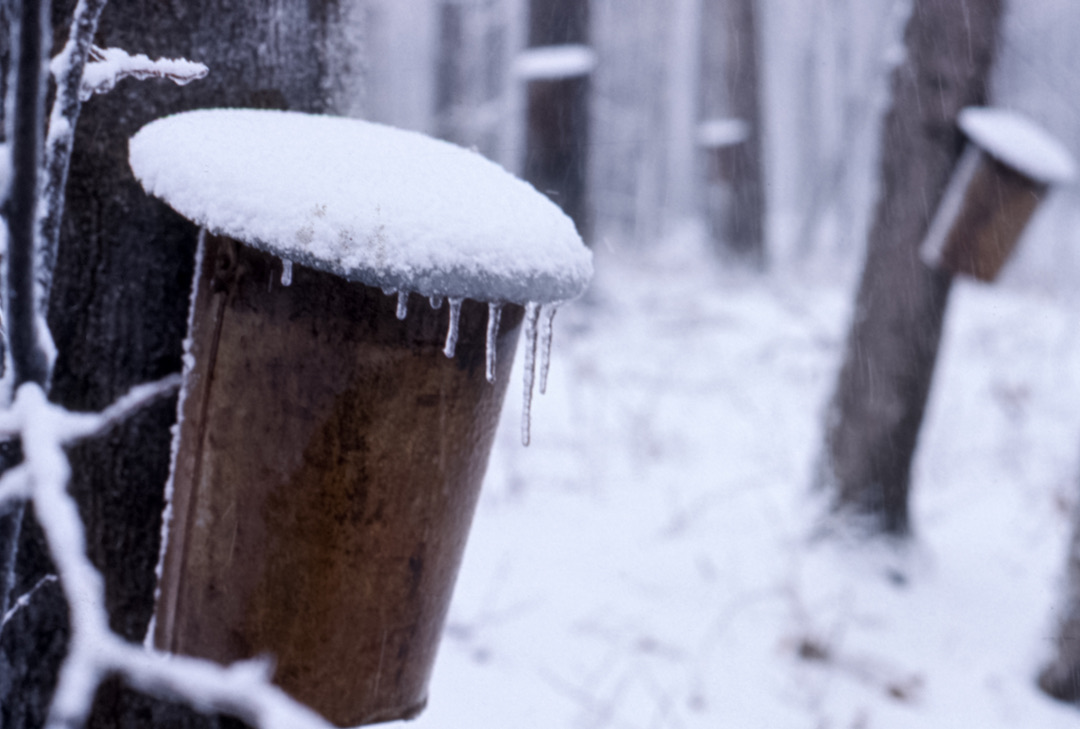
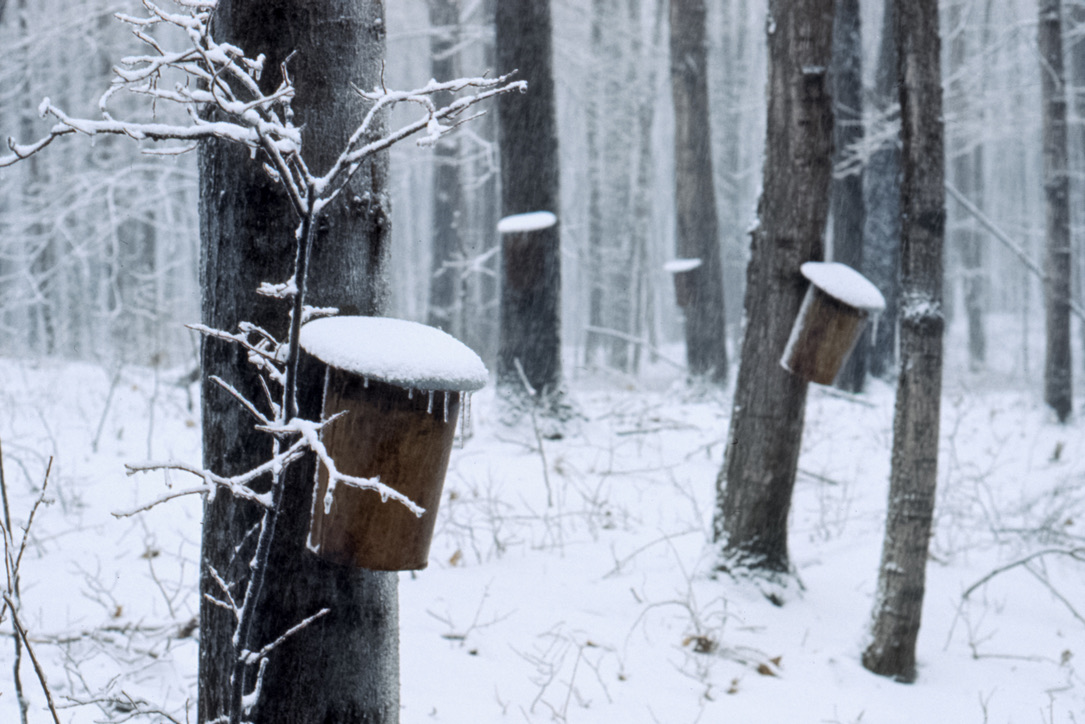
    Don’t get me wrong.  Sap tapping days can have big snowstorms.   Winter is still present.  But weakening.


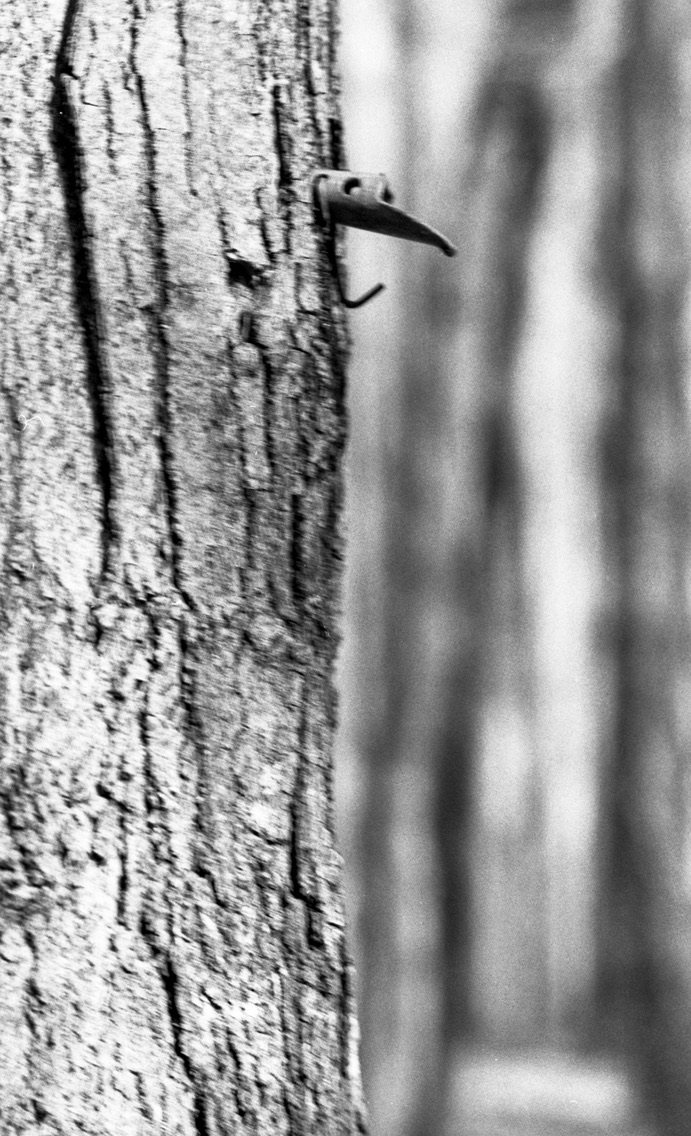
    After drilling a gentle hole and tapping the pile in place, the sap usually begins to run right away.
    Make sure to drill the hole so it  slopes down gently….so sap can run.


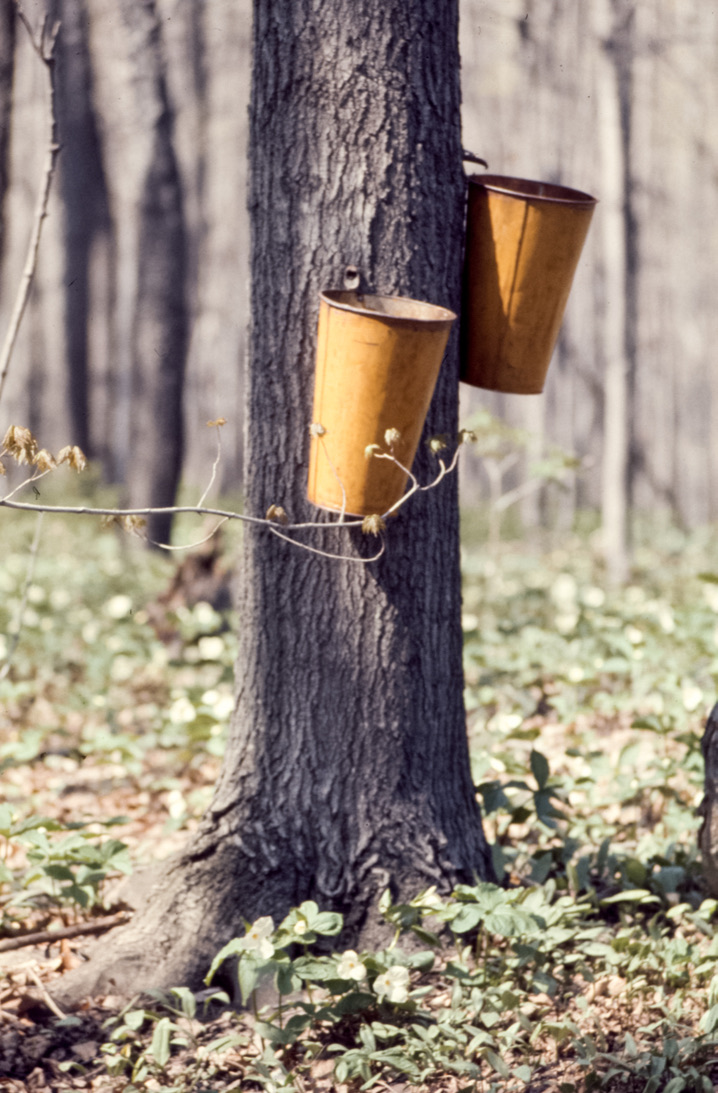
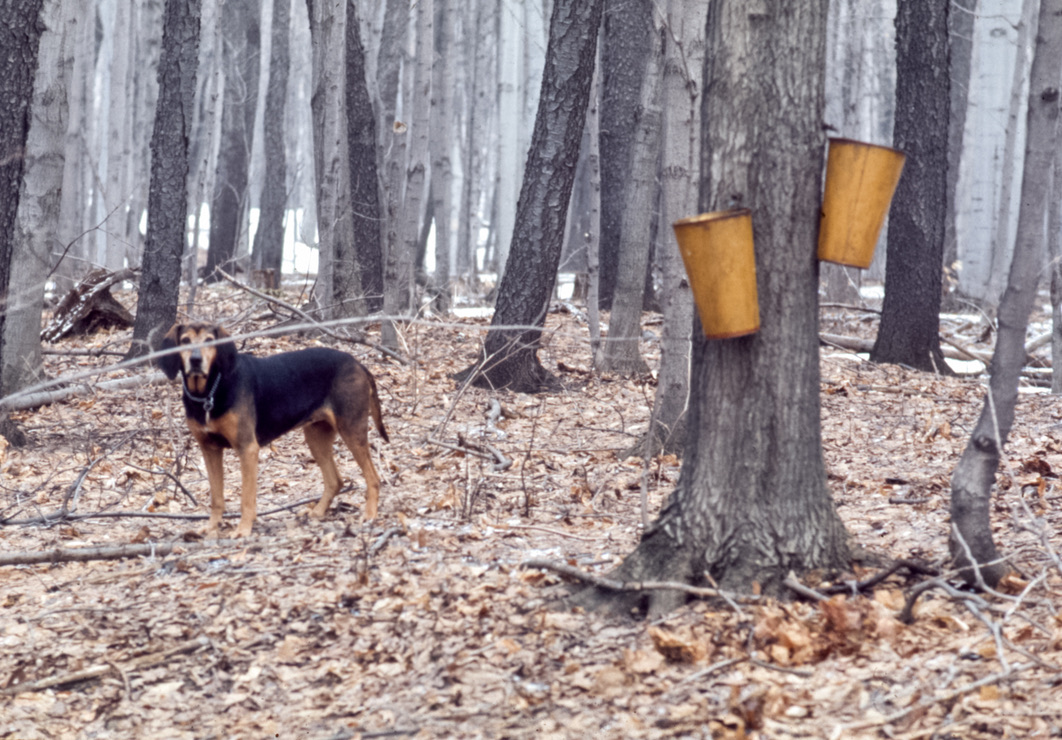
    These old orange pails looked best. Like flowers in the forest.

    Some days no sap would run because the weather was freezing.


    And it was easy to know when the sap gathering days were over.  The spears of wild garlic
    popped up all over the forest floor.  And flies began to cluster around the sap spiles.  The sap
    changed….like milk that has gone sour.


    Our wonderful coonhound Tara enjoyed those sap collecting days as much as we did.  
    She stuck close to us which is strange for  a  coonhound because there were so many
    scents to follow.  I think she liked sap collecting as much as we did.  When the snow was thick on
    the ground I got the idea of harnessing her to the sleigh loaded with old milk cans full of
    sap.  That did not work well.

    The sap collecting was sort of silly really.  We had to drive 45 miles to the farm where the trees were tapped.  
    I assume some of our friends thought we were a little tapped in the head.


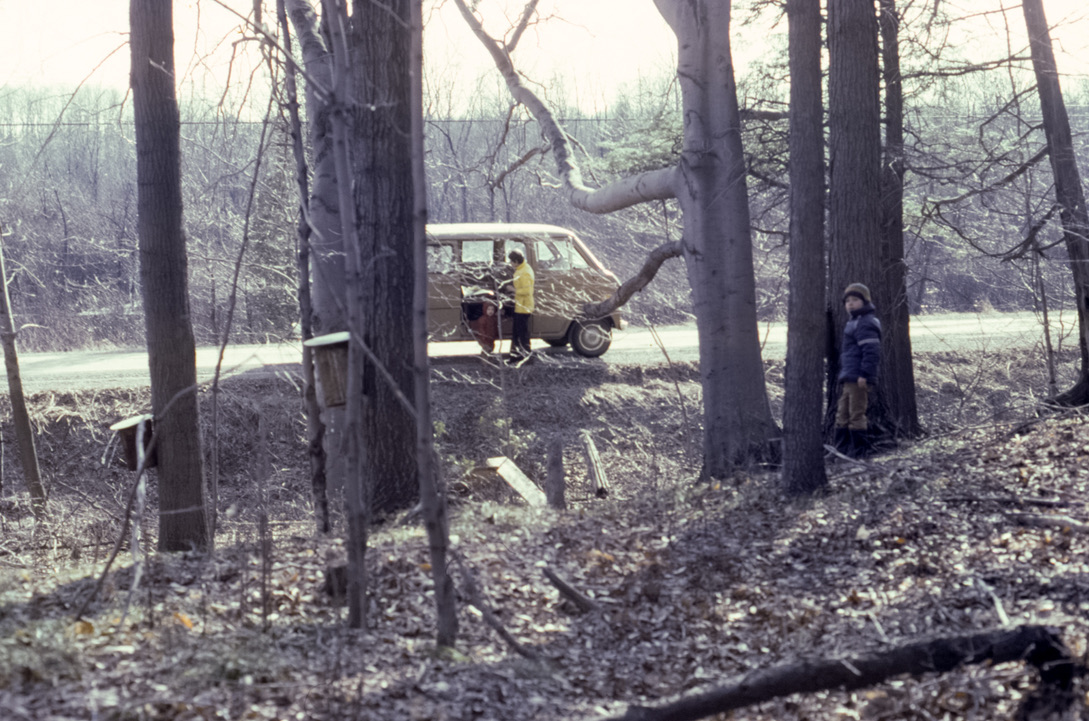
    We parked the truck beside the the forest ,  loaded the sap and then drove all the way
    back to Port Credit for the boiling.  That’s nearly 100 miles just to get 30 gallons of sap on
    good days.  None on bad days.  


    Previously I had gathered a good pile of driftwood from Sunnyside Beach in West Toronto.  My fuel. I needed
    lots because it took 40 gallons of sap to get 1 gallon of syrup.


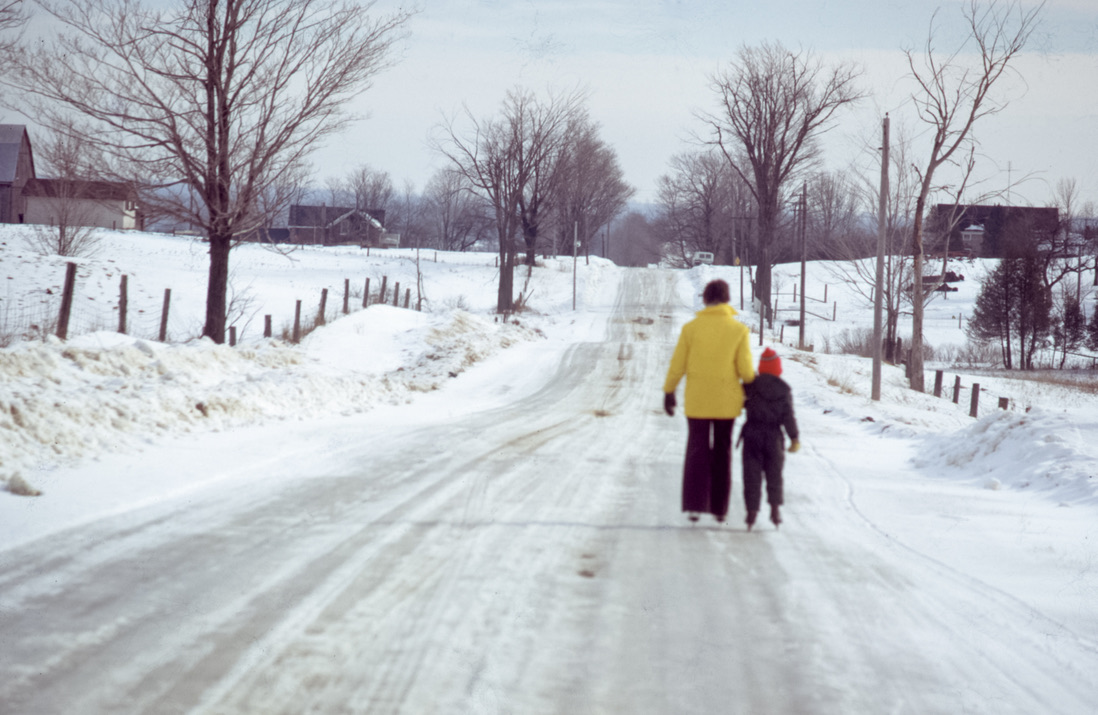
    Sometimes the Fifth line froze solid with ice on those March afternoons.   Enough for Marjorie and Kevin to skate
    down the line.


    Then our sap collecting days ended when some bastar parked beside the maple bush with
    with his 22 calibre rifle and shot holwa in our sap pails.   That was depressing.  Bu we got 
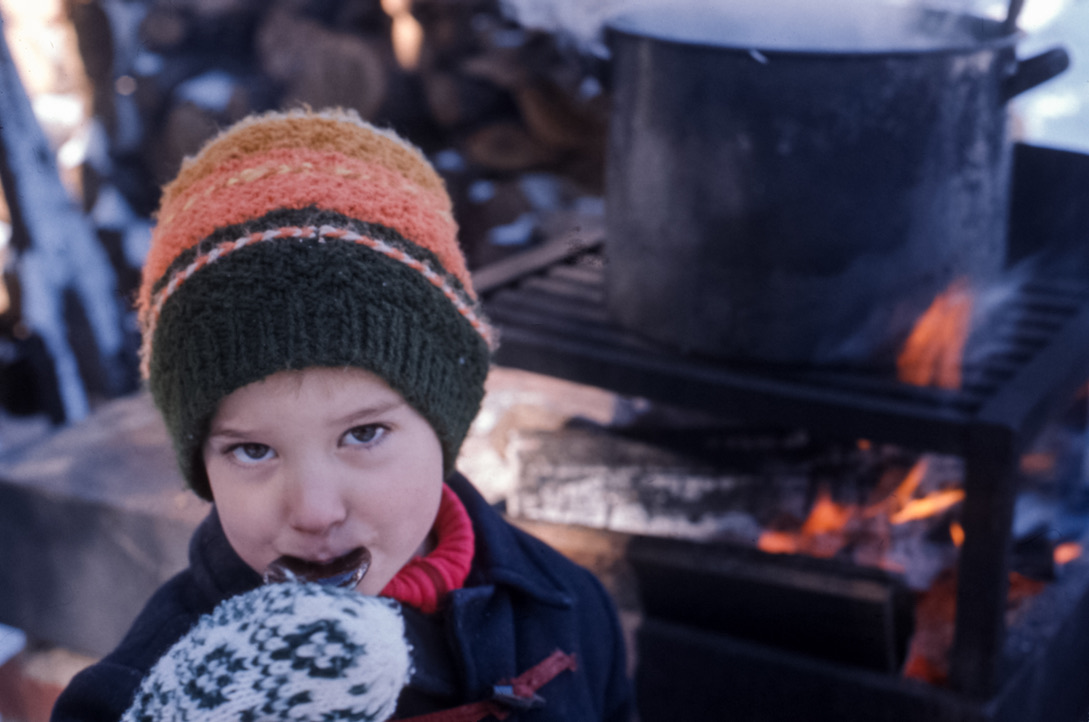
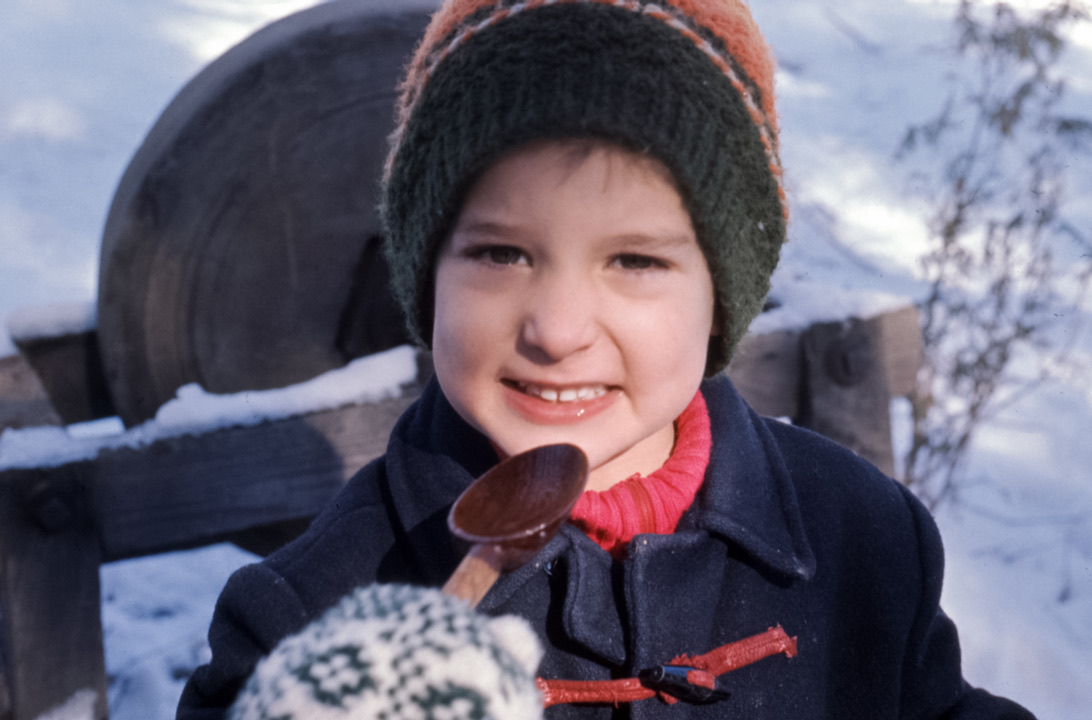
    three good years of syrup making.  Joyful as you can see in Kevin’s face.

    CAUTION:  Later we were told that all our maple syrup pails were dangerous.  Lead soldered
    bottoms.  Lead poisoning.   Never noticed that on those great days earlier.  Our maple
    syrup was black…dark black.   Most good syrup is light brown.  Ours had lots of charcoal
    from the wood smoke and ashes .  No matter. Those were halcyon days.

    I bet dollars to doughnuts most readers wish they had been with us back then.

    Seems our other son, Andrew,  remembers because he is collecting sap as I write.  And
    using modern aluminum pails.   

    alan skeoch
    March 26, 2022
  • EPISODE 556 THE SKEOCH FARM AUCTION…FERGUS FARM OF NORMAN SKEOCH

    EPISODE 556   THE SKEOCH FARM AUCTION…FERGUS “HOME” FARM OF NORMAN SKEOCH…a few memories


    alan skeoch

    March 23, 2022
        

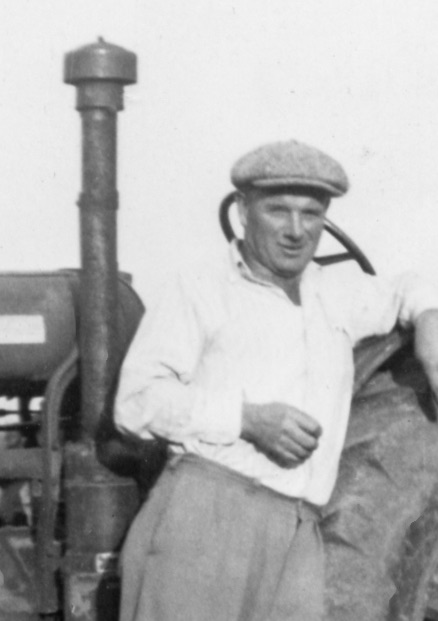
    NORMAN SKEOCH,  youngest of the James Skeoch family , owner of the Home Farm, Nichol
    Township, Wellington County, Ontario, Canada  (circa 1950)


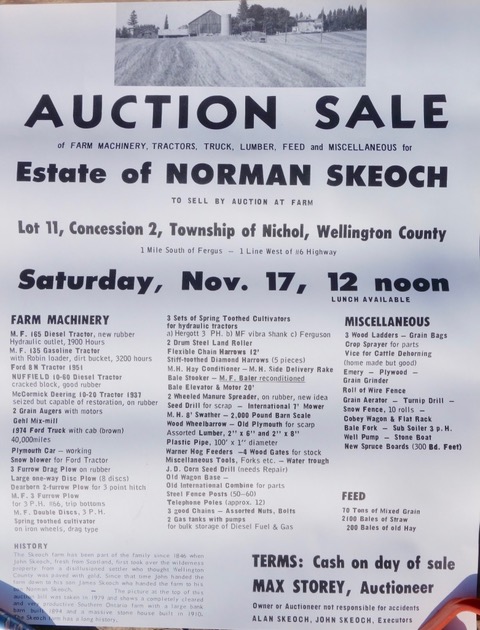
    Selling the home farm of our branch of the Skeoch family was an unpleasant task.  And the first part
    of that task was the auction sale of Uncle Norman’s farm equipment.  Each piece of equipment had
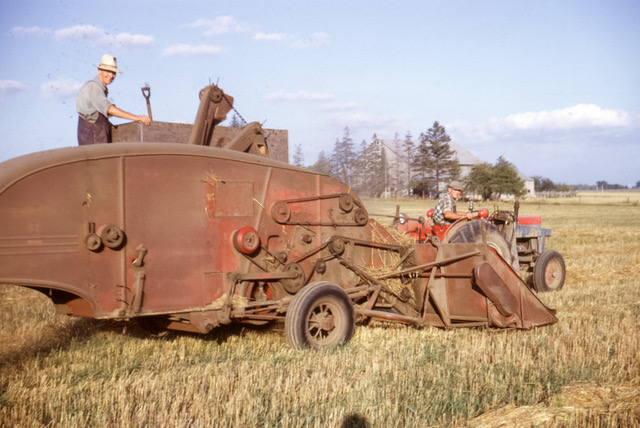
    a personal history.  Particularly the Massey Harris combine harvester (circa 1950).  To get a crowd we
    published a giant poster which was plastered to fence posts and telephone poles and store windows 
    in the vicinity of the Fergus farm (Wellington County).  Somehow my aunt Elizabeth got wind of the poster
    plan and insisted the 1920 family picture be deleted.   Too bad really as I had hoped the poster would
    be a family heirloom some day.   


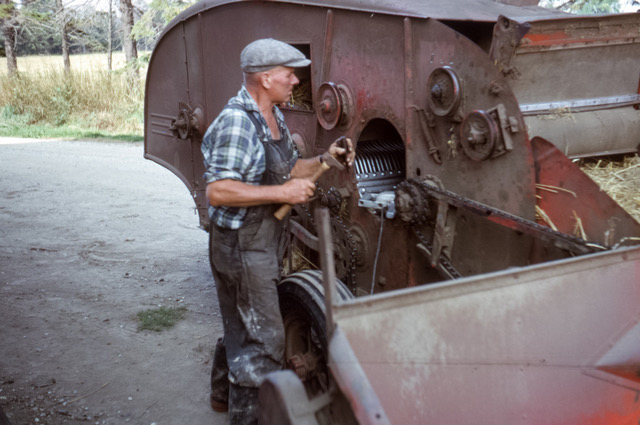
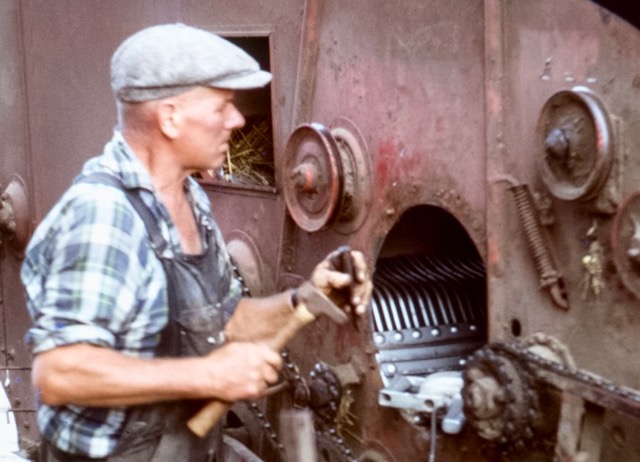
    NORMAN SKEOCH, circa 1975, repairing combine with a hammer.


        MEMORIES OF THE HOME FARM MASSEY HARRIS COMBINE HARVESTER

        DATELINE 1975


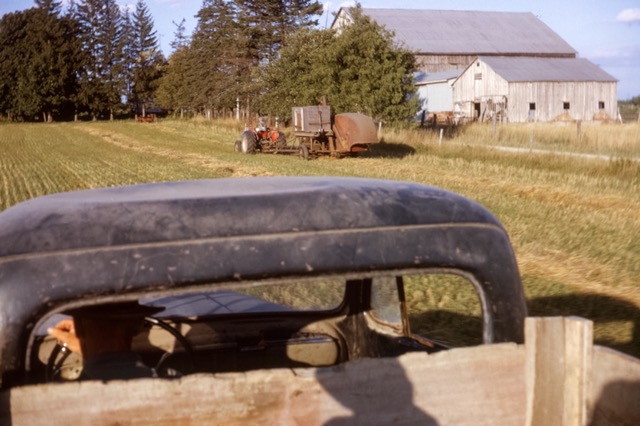
    “ALAN, how would you like to take the Ford tractor and the side delivery rake…turn over the hay in the south field.”
    “Love to…”
    “Hay got a little damp in the rain…too wet to bail.”

    That must have been in the MID 1970’s.  Uncle Norman (Skeoch) was running the Skeoch farm alone by then.  Uncle Archie had
    died in the west.  Choked to death.  Which left Norman alone on the Fergus farm.  It was mid summer, beautiful day, smell of growth in
    the air coupled with the perfume of new mown hay.  A gaggle of guinea hens ran here and there yapping to beat the band.

    Uncle Norman surprised me that  day.  That was the first and only time he ever entrusted me with a farming operation.  Hell, I didn’t
    even know how to start the tractor let alone guide the side delivery rake accurately down the windrowed timothy.   

    “No problem, just
    push the starter and put her in gear.  Do it now.  I’ve got to work on the combine.”

    The combine?  Archie and Norman had pooled their resources back in the early 1950’s to buy what was then a brand new Massey Harris combine harvester.
    By the late 1970’s it was no longer new.  The red paint of its halcyon days had faded to a rusty red hue.   The great hulking machine had lost its
    novelty.  New combines had replaced this one.  Huge, self-propelled machines that could consume wheat, oats or barley fields as if they were morning
    porridge in a lumber camp.

    “Needs some repairs.”

    Seemed odd to me that Uncle Norman was going to repair the machine with a big ball pain hammer.  But what did  I know?
    So he began hammering as I drove down past the barn to the south field. Elated to be trusted.  Determined to ruffle up the wet hay as perfectly as
    possible.  What a grand afternoon?  What a great job?  Could I do the turning twice just for the hell of it?  Best not.  So I returned to
    the barn where Uncle Norman was pounding the Massey Harris combine as if it was some enemy in mortal combat.


    “Job’s done, Uncle Norman.” , I was proud of myself…turned over a field of wet hay successfully,
    “Harrumph1”  
    “What’s up?”  Norman seemed distracted…but still had his good humour.
    “Picked up a son of a bitching rock … bent the goddamn master cylinder.”

             Amazing how the Skeoch brothers could make cursing seems like fine English.

    “Can it be fixed?”
    “Not today and not with this goddamn hammer.”
    “Rock?”
    “Yep, still in  there…”
    “Can it be fixed?”
    “Nope…dead…dead as that guinea hen I hit with the mower…damn,damn, damn!”

    So, while i was enjoying myself, Uncle Norman was trying in vain to attempt to harvest the oats whose golden tassels were waving in the summer breeze.

    “What will you do?”
    “Have to get a custom machine in to harvest the oat field.  Have to pay for that.  Farming can be a losing proposition.”


            DATELINE  1977


    That comment made me think of another visit to the Skeoch farm.  Uncle Norman was in the stable and a big five ton truck
    had backed up close to the stable door.  A boarding ramp had been lowered.  Painted on the side of the truck were
    the words  “dead and disabled animals,  call ….”

    “What’s up Uncle Norman?”
    “Had to call the dead wagon…heifer in the barn got the bloat…blew up like a goddamn dirigible…dead…alfalfa, I think.”
    “Bloat?”
    “Happens once in a while with cattle.  if I had seen her I could have driven-in the bloat knife right into her gut and let the gas out of her.  Happened so goddamn fast
    that I couldn’t reach her in time.  Now she’s wedged in the barn, blown up…take a look if you want….”

    And there she was, Dead as a doornail, lying on her side at the stable door.  Huge.  Seemed too big for the doorway. Wondered if she
    could be deflated somehow but Uncle Norman and the dead wagon man hooked her up with a cable around her back hooves and hauled her
    through the door and up into the back of the truck.

    “What happens  to her now?”
    “Depends  how long she’s been dead,” said the dead wagon man.  Which  was not really a straight answer.
    “Dead  loss to me, for sure,” responded Uncle Norman.

    Farming is a chancy kind of business.  Lots of things can and do go wrong. Often.  I was a teacher…i.e. on salary… and it never occurred to me
    that Uncle Norman’s income from farming must have been a pittance.  So small that the loss of a heifer and the loss of the Massey Harris
    combine might have pushed him over the edge into near bankruptcy.    His expenses  were small.  For most of his life he was a bachelor
    Never travelled much.  Couldn’t really because his truck was so badly battered that it raised  eyebrows on the road.  That condition coupled
    with the fact he had four or five dogs as passengers, their heads jockeying to get in the open air from the passenger window.  There was no back window
    making the truck rather chilly on winter days.  The dogs had torn up the bench seat so badly that there was more stuffing than leather.  Looked like a

            nest.  But he only needed to drive it into Fergus for a few sacks of grain ‘chop’ for the cattle.  And maybe a stopover at the Fergus Legion for

            draught of beer.


    THE ORCHARD…A HIDDEN ARCHEOLOGICAL SITE


    Up in the orchard archaeologists had identified the fragmentary evidence that ancient people…perhaps Neutral aboriginals…had once lived and laboured
    on Skeoch land.  NO. Reverse that comment.  The Skeoch’s laboured on what was once aboriginal ground.


     But that was supposed to be a secret lest souvenir hunters destroy any remaining evidence.


    MANGER … HIDEOUT FOR A CASE OF BEER. MOLSON’S GOLDEN, 1979

           “Would you drink a bottle of beer, buckshot?”

          “I would, yes.”

          And Uncle Norman opened the stable door, slid by a wheelbarrow and rummaged under the hay in the first manger.  Presto.  Two bottle of beer.

    That was the last time I remember seeing him alive.  He died in 1979 and when his Safety Box was opened  and the will read I got a big surprise.  My cousin John Skeoch….’long’ John Skeoch…and I
    were named as executors in the will … not as recipients but executors.  We had to carry out Norman’s wishes.  He left the farm to his  brothers and sisters and their families.  Holy Smoke!
    That meant one unpleasant task was placed in our hands.  We had to sell the farm.  How else could the farm and its contents be divided? It had to be converted to cash and then divided
    equally as possible to the families of Lena,  Elizabeth, Greta, Archie, Arnold, Arthur and John.  And, in the cases where some had pre deceased Norman then that share had to be further
    subdivided.   This was going to be messy.  


            THE MASSEY HARRIS COMBINE 


    Today,  one memory of that ‘executing the will’ ordeal stands out in my mind.   That Massey-Harris combine harvester.

        Who owned it?  Was it Uncle Norman’s?  Or Uncle Archie’s?  Well, it belonged to both of them.  So in order to avoid family squabbles we decided that whatever we got from the machine

        at the auction then that amount would not be divided up but go directly to Uncle Archie’s surviving family members.  Seemed wise at the time.  But wasn’t.  

           Auctioneer Max Storey took charge.   Everything was up for auction which meant bidding competitions that usually arrived at a fair value.  What is the fair value of a Massey Harris combine
          bought in 1950 and sold in 1979 with a rock imbedded in the master cylinder?

    “Next is this Massey Harris combine harvester.  Not running right now
    so you are buying it as is.   Open bid?”

    Silence. No bidding. Eventually the scrap man bid around $40 for the machine…might be worth $100 in the scrap yard but it would cost quite a bit to get it there.
    The $40 satisfied no one.  We would have been wiser to have avoided trying to be nice guys.  Got us only anger. Being executors in a will where there are many
    people to satisfy is not easy.  And sometimes things being sold have higher emotional value than market value.   


        THE CAST IRON PIG SCAULDING POT


        Then there was the question of the huge cast iron pot used for pig slaughtering and/or maple syrup.  Uncle Norman had given me the pot a few years earlier.

    To avoid dispute I did what I thought was an honourable thing.  
    To avoid trouble I returned it to the farm auction and was resolved to buy it back at whatever
    price.  Bidding was spirited  I won.  That honourable effort got me no praise.  Instead a member of the Fergus Legion got really angry with me.

    “Norman brings this cauldron to our corn roasts every year…has done so for decades.  It’s ours”
    “Then why not bid for it?”
    “Who do you think was bidding against you.”
    “Why stop?”
    “Price went too high.  But that is our pot…need it for the corn roast.”

    I said nothing but just loaded it into our truck.  Seemed being honourable was not a good idea.

    THE REAPER WAS NEVER FOUND


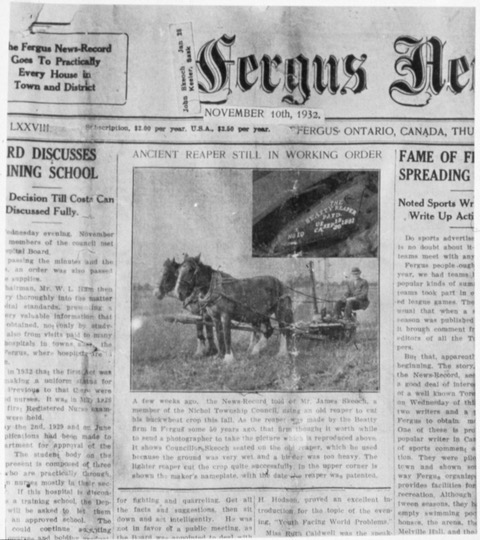
    Somewhere buried in a fence row must be the ruins of the Skeoch Reaper, made famous

    when the Fergus newspaper in 1932 featured a picture of Grandfather James Skeoch reaping
    his grain field with the Skeoch family reaper which, in 1932, was long past its glory days.


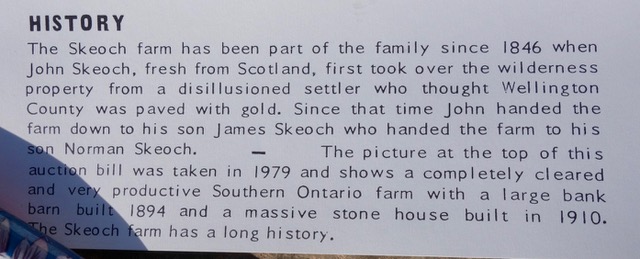
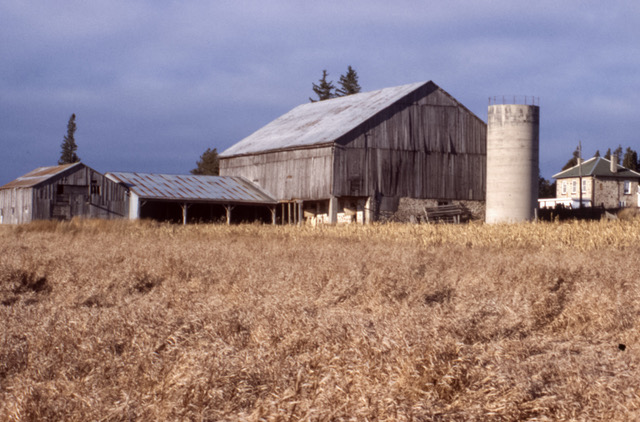
    The Skeoch farm, our ‘home “ farm in Nichol Township, Wellington County, dated back

    to 1846 give or take a year or so.  The stone house was built around the turn of the

    20th century using field stones from the fenceroaw   The barn built earlier using beams
    harvested from the once majestic stands of white pine.  

    Above is a picture of James Skeoch, my grandfather, using an ancient reaping
    machine to cut grain using the power of two horses.    I never knew him.   

    Most of my memories of the home farm are centred around Uncle Norman.
    My cousin John Skeoch and I did the best we could to follow the instructions
    in Uncle Norman’s will.   In the end there were so many people getting shares
    tha the individual amounts were small   Might have been better if Norman had
    willed the farm to one person.  Then it would still be our ‘home’ farm unless
    the town of Fergus grew larger.

    Somewhere I have pictures of the auction day.  The pictures are not stunning
    because the auction day was cold and dark…a November day.    Perhaps coming
    in next Episode…or later.


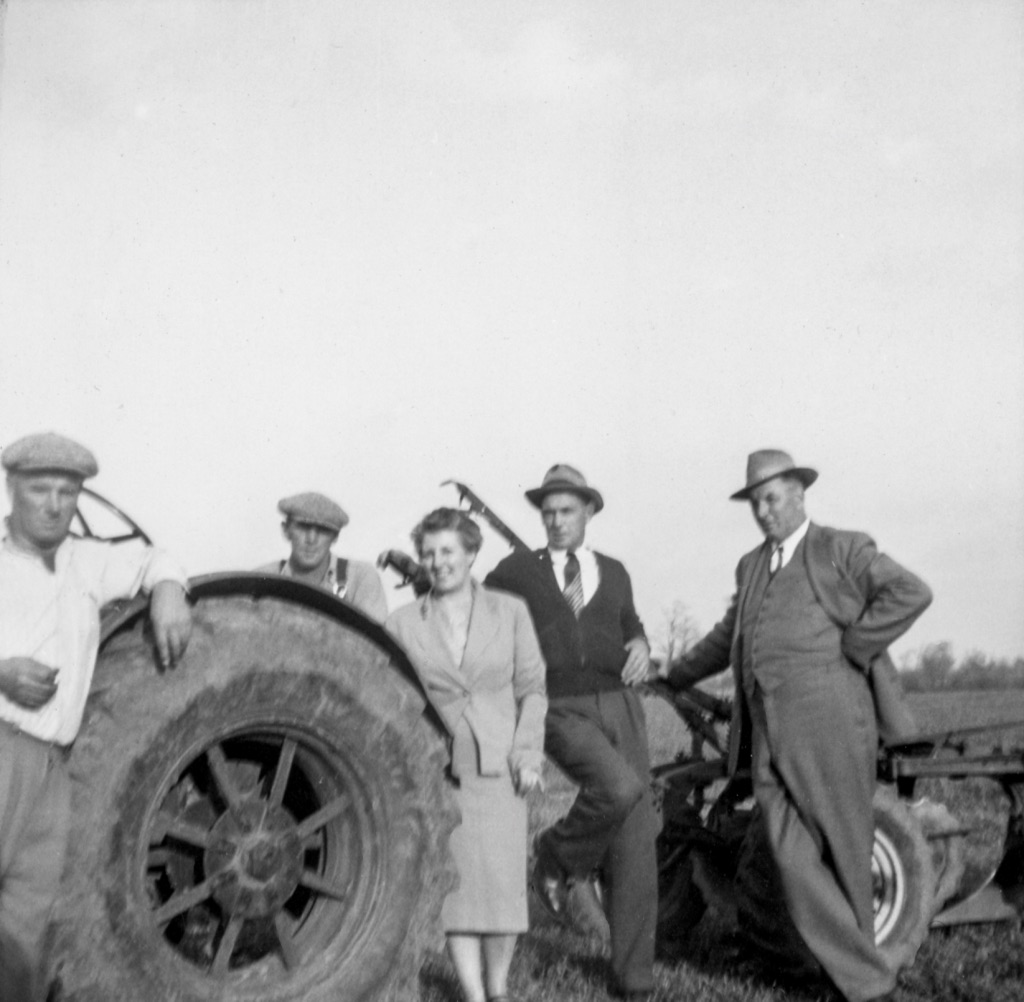
    Left to right….Norman Skeoch, Archie Skeoch, Arthur Skeoch, Arnold (Red) Skeoch
    Front row…Elsie (Freeman ) Skeoch, wife of Arnold, 

    alan skeoch
    March 24, 2022
  • EPISODE 558 PART 67 Set. 7 to sept 10, 1958 TO 1958 WORST JOB I EVER HAD


    Note:  This is the last part (7) of the WORST JOB I EVER HAD.  Sounds rather
    juvenile at times…I was just a kid entering a grown up world.   This would have
    been a better story if I had only interviewed Walter Helstein more.  His accident 
    was the endow the adventure…a sad ending.

    EPISODE 558   PART 7   SEPTEMBER 7 TO SEPT  10, 1958.        WORST JOB I EVER HAD


    September 7, 1958


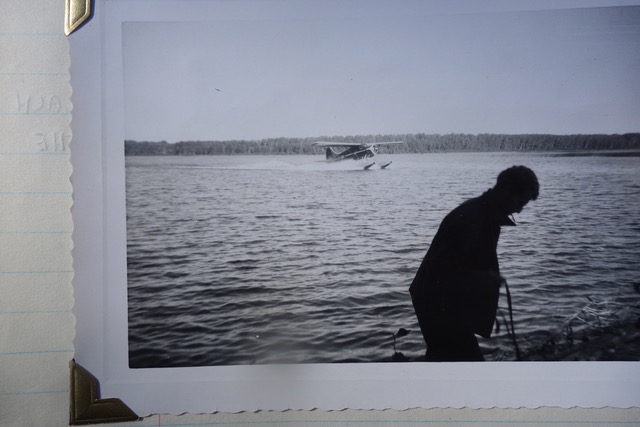
    I suppose a bad ending was predictable for poor Walter Helstein.  In early July. When he crawled out of
    the float plane and beheld his new home, he may have considered  quitting.   His new home
    was an untouched virgin patch of boreal forest on a small precipice overhanging a huge river
    whose waters were rolling north to James Bay..the Hudson’s Bay…then the Arctic.
    Walter said nothing.  He just smiled in his disarming way.  A grin.  And then he got to work
    cutting the clearing and raising the tents.

    Walter was older than all of us.  Three times older.  Perhaps in his 60’s.  He was out of shape
    from lolling around South Porcupine getting bit jobs now and then.  He had no idea he would
    spend the next months sleeping rough…on a wire cot or pine bough bed — both.  He had no
    idea that food would be wormy and in short supply.  He had no idea that he would be expected
    to use a blazing axe to mark over 200 miles of nearly invisible trails through a green wilderness
    of twisted spruce and cedar forest .   He had no idea that much of the summer would be spent
    in a swamp with water percolating through larger and larger holes in his high cut leather boots.
    He had no idea that his trial  would have a tragic ending. 

     He was careful
    most of the time but also tired of stretching his legs of moss covered windfalls.  He was careful
    to avoid the sharpened spikes of tag alders cleared for compass bearings.  

    Walter Helstein nearly made it.  He nearly survived.


    WALTER HELSTEIIN TRAGEDY

    DEAR DIARY

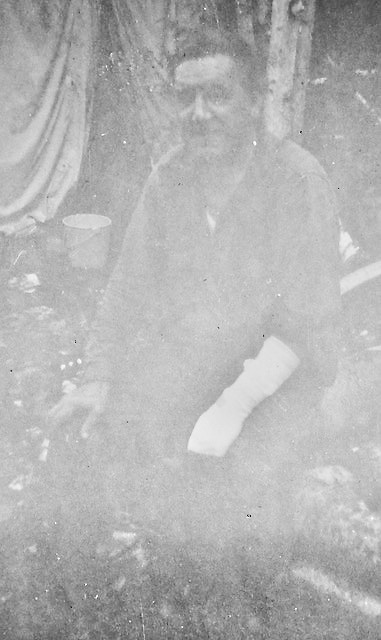
    Tragedy struck today when  we came upon Walter Helstein unconscious  on the trail with an alder spike driven through his hand.   We think he was
    lying there for an hour or two with this very serious wound.  He was much older than the rest of us so followed distantly behind sometimesl

    so his absence was not a problem.  Walt always caught up never failed to do his part of the job.  We were a good team I felt.  To see him lying there

    on the trail was frightening.  Was he dead…heart attack?  No.  He fainted it seemed.

    We revived him and helped him get back to our campsite where the wound was
    washed and bandaged.  Walter took some  sulpha pills to numb the pain.  Not sure if that works.  Pain is severe.  We were afraid this  would happen.
     Walter had  a habit of stepping on moss covered windfalls rather than stepping over them.  Slippery rotten windfalls are dangerous. 

    Walter has  been with us for the whole summer which surprised us all for he seemed  too old and too out of shape for the kind of work we were
    doing.  But Walt persisted and turned out to be a joy to work with.   He is 40 years older than me yet we worked as a team blazing trails that
    criss crossed some very nasty parts  of this wilderness.  


    Walter must get to a hospital before infection sears  ub,. We radioed  an SOS to Austen Airways in South Porcupine.  Contact failed.  Weather is bad with
    heavy cloud cover.  Doubtful if the Beaver could find Kapik Lake so fogged in right nowt…so small…especially when he ceiling is so low.   Nothing we could do as nightfall arrived.

      We made Walter as comfortable as possible and fired up the tinware stove.


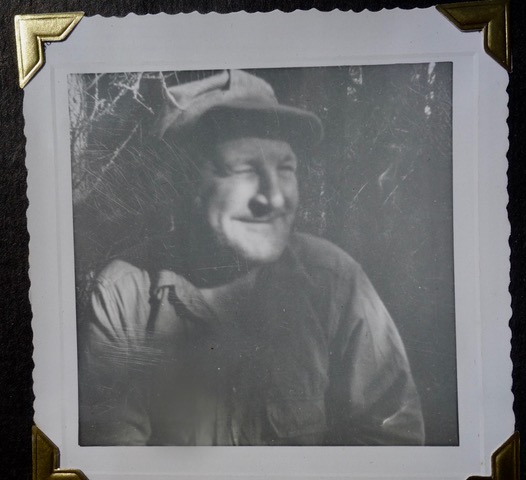
    A terrible picture but maybe that makes it more authentic. Walter was badly  hurt.  Sorry about  the picture. My camera was finished…so I include 

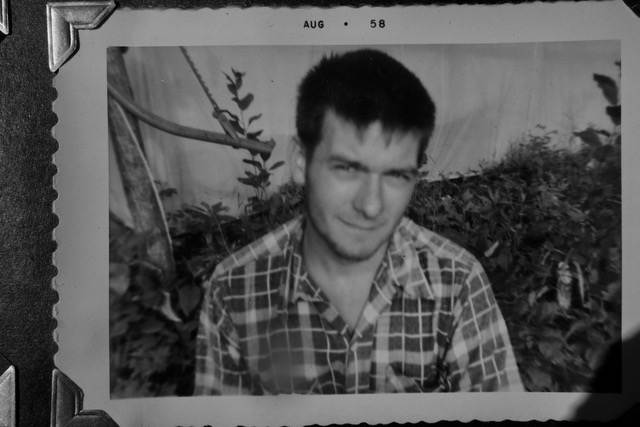
    a better picture of Walter Helstein.   He was a good man who ‘was just getting by’ in a hard world.


    We were helpless.  Hoping that Walter would be rescued. Made radio contact but plane was grounded in fog

    and rain.   

    We  left Walter in the tent for the day  and set out  to find our last underground conductor.  We failed to find it.

    Distance covered   34,000 feet

    September 8, 1958


    Walt was in severe pain all night. Moaning. By morning his hand was swollen and red fingers of  infection were apparent.  Walter’s natural good humour  ended.

    September  8, 1958

    :”THE JOB IS OVER!”


    Everything came to such s brief ending.  “ Al, you fly out with Walter — get an ambulance or a taxi to the Timmins hospital. “

    The drone of the engine was heard then the Beaver popped out of the low ceiling, circled once and set down.

      Walt was stretched out in the back.   Both of us were finished.  As soon as we landed at South Porcupine Walter was taxied to the Timmins hospital.
    Sad.  I would never see Walter again. Never tell him how much I had enjoyed working with him.  There was not time for farewell..
    The taxi was waiting as soon as  we got tied  to the dock.  I  could see the pain in  Walter’s face as he waved good bye.


    There are some people that are unforgettable.  Walter Helstein is one such person.  
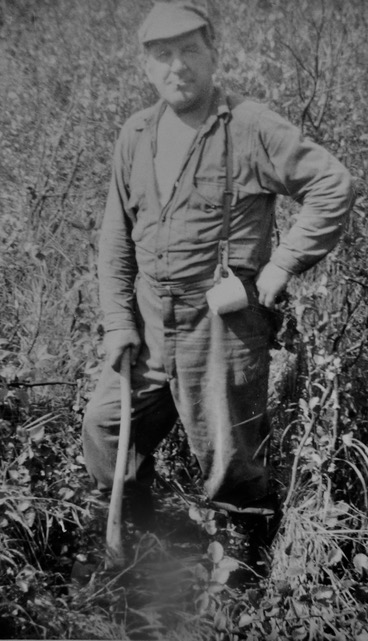
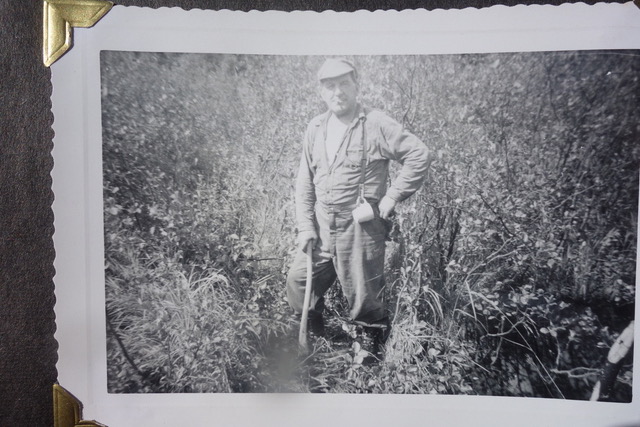
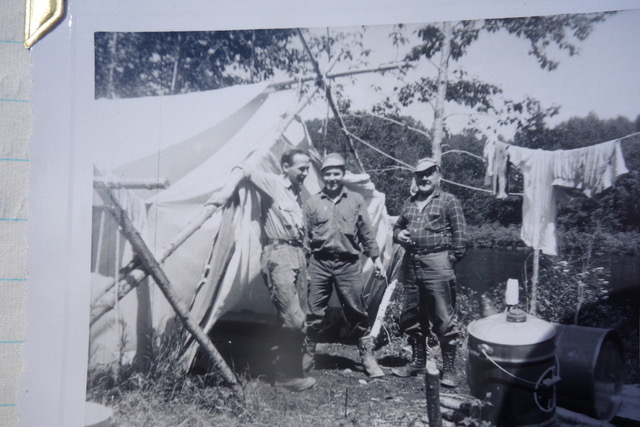
      Look Closely  Walter is standing in water…over his boot tops.  His blazing axe in his hand and  his tea cup  tied to his braces with the stub of  a cigarette in his mouth.   Much of our summer was
    spent in such conditions.   After his tragic accident I never saw him again but heard  that he spent 8 months in the hospital. 


    Although this picture  does  not look like I was enjoying myself.  And  much of the time i was not.  But actually I was quite proud  of myself.
    I had survived  just threw two temper tantrums when the job got unbearable.  Walter never threw a tantrum but
    instead  laughed  at me along with Floyd  and Bob.  Actually I came to love the job…to love the battle with nature…too find I could  survive
    in the worst of conditions.   My success in this job led to another six years working for Hunting Technical and Exploration Services.
    In  retrospect the jobs were a great privilege…something that few human beings will ever experience.  


    By the end of the summer Walter and I had  walked and blazed 206.3 miles on our own
    trails through the bush.   That is almost the distance  from Toronto to North Bay.  Hard  to
    believe?  


    The clerk in the Airport Hotel hesitated  when I  asked for a room for the day only.  Little wonder…two months growth of hair and beard, pants 
    patched with Canvas, Gum rubbers with my socks poking through holes and a  packsack that looked like  I had been living rough for a long time (which’
    is true come to think of it.)  He relented.  I Had my first real bath of he summer and then called  Timmins airport to reserve a flight this evening.

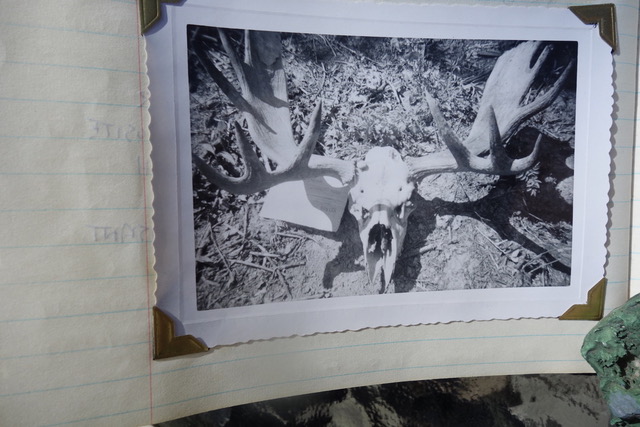
    What was Ito do with the skull and antlers of that bull moose we found earlier in the summer.  Unlikely to be loaded on an Air Canada flight.

    .  I asked CN Express  to ship the skull along with my baggage back  to Toronto.  Tricky kind of baggage.


      Phoned  home…mom and dad surprised.  “Be home tonight.”
    Then got a shave, haircut and  a big ice cream sundae.


    Bob and  Mack arrived shortly after 12 and we loaded our equipment in the Land  Rover. which had  been stripped of all easily detached
    equipment…hub caps and spare tire.   Bob  drove me to Timmins Airport where I got my first restaurant meal since July. 

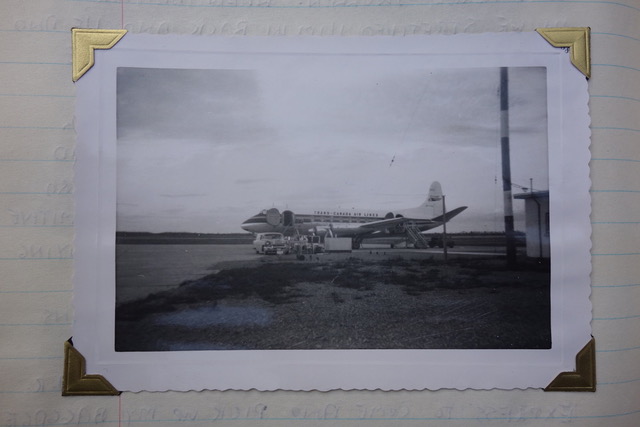
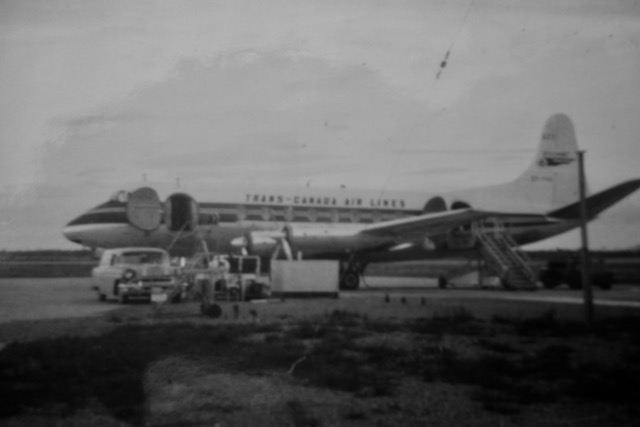
    I boarded the Viscount just as the sun was  beginning to set on the western horizon. “Would you like a Peak  Freen biscuit and glass
    of lemonade, sir?”  Wow!  This was  going to be a great flight.  I nursed the lemonade for a long time and just nibbled  at the shortbread…loving
    them both. 

    We landed at Sudbury, then North Bay and  finally Toronto about mid night.  What a greeting.  Russ Vanstone, Red Stevenson, Jim Romaniuk and
    my brother Eric  along with mom and  dad.  Eric  had a huge hand printed  sign saying “Go back, Al.”  Jim Romaniuk asked about the
    lonely hearts letters.  “Let me have them Al, Might find a girl friend  there.”  “Try the girl from Florida with the pencilled note…she’s ready to
    move up here if you send her the fare.”   Russ drove us all home to our place where mom and  dad 
    had prepared  all  kinds  of food.  After that I fell asleep in a real bed.
     

    September 9, 2019

    Dr Paterson phoned early in the morning.  “Can you come to the office, Alan, maybe help with the results…there are things we need to know urgently.”
    So everyone was gathered around the aerial photos hoping I could remember where the top anomalies were located.  I am not sure how much
    help I could provide.  “McIntyre Mines  want to know right away.”  That comment reminded me that our summer living rough was really a big secret.
    I really could not spot all the anomalies where we got high readings but did the best I could.   Dr. Paterson was very serious and professional…a bit
    intimidating.  I am not sure that he knew my job had been swinging a blazing axe most of the summer.  I certainly did not say that.  I did put a word
    in for Walter Helstein hoping that the company would help  out or totally pay his medical bills.  Not sure what happened to Walter but heard by
    the grapevine that he never fully recovered.  Floyd told me later that Walter spent 8 months in the hospital.  Some danger he would lose his arm.

     That may have been hearsay though since our company had wound up the Groundhog River job  Miners are nomads.  When a mine is closed they

    take off;


     There was one
    nice outcome of that last meeting.  Dr. Paterson looked  me in the eye and said, “How would you like a job next summers an operator-Technician on
    a job we have lined up in Alaska?”  Wow!  Alaska!   “

    my answer was short and simple.  “Count me in.”

    THE BUSHMAN’S THONG


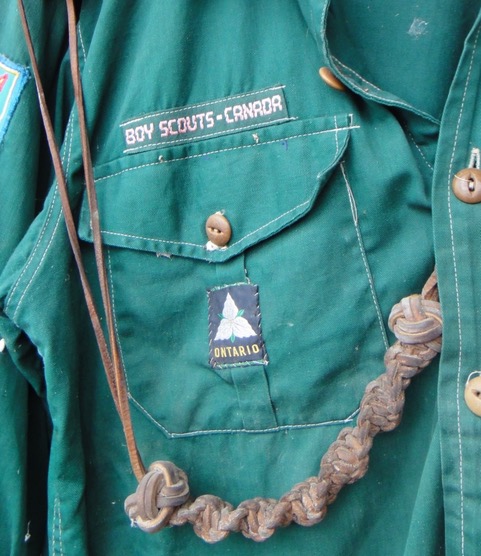
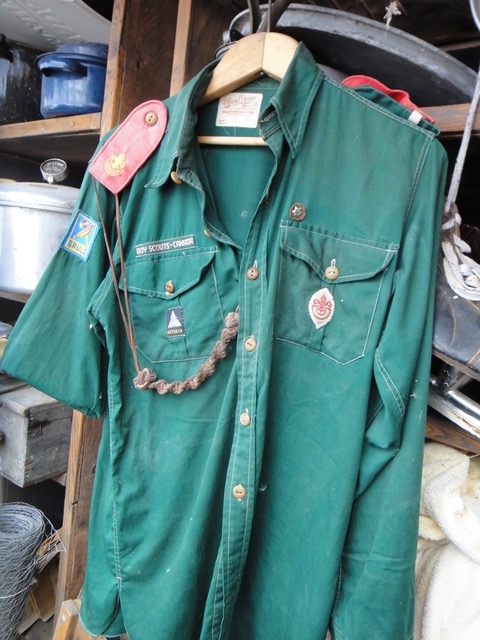
    What about the BUSHMAN’S THONG?  Good question, .   I am  very proud of my Bushman’s thong.  IT still hangs on my Boy Scout shirt

    in the cellar at the farm.  Reminds me of that summer of 1958 every time I see the shirt and Thong.  I know this diary sounds rather juvenile.

    True!  I was just a kid back then.  A Rover Scout.  Fucking Al!


    ALAN  SKEOCH
    MARCH 2019


  • EPISODE 557 PART 6 AUGUST 27 TO SEPT 6, 1958 WORST JOB I EVER HAD

    Note: The end of these “worst job” stories is coming soon…i.e. part 7…wanted to get the
    stories in print even if most readers were not interested.  Provides a distraction from
    the terror of Ukraine and the madman Putin.

    EPISODE 557  PART 6    AUGUST 27  TO SEPT 6,  1958    WORST JOB I EVER HAD

    alan skeoch
    March 18,2022
    DEAR DIARY


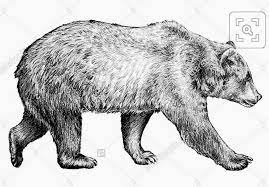
    Black and White Bear | Grizzly bear drawing, Bear drawing, Bear sketch

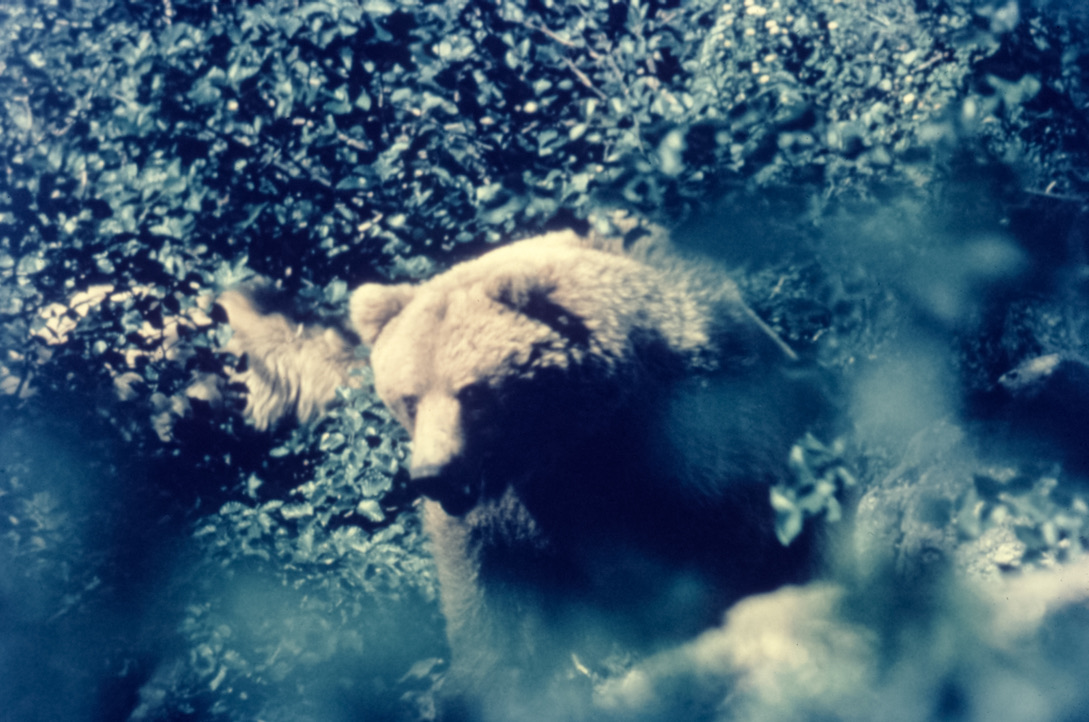
    THIS bear picture was taken on the Yukon or Alaska job.  It highlights how we did not want to meet bears…i.e. close quarters.  If we made lots of
    noise the bears were not a problem.   These are Grizzly bears.  One of which had to be shot by a armed officer.  The bear of the Groundhog river was a Black Bear.  He got too close
    for comfort one evening. (see below)  He was not shot.  We were unarmed on all except for one job in 10 years.


    August 27, 1958

    I woke late tonight with a funny feeling.   Did not know why for a few moments.  Admired how the moon lit up the inside of our tent.  Then a cloud passed  by
    blotting out the moon.  Only it was not a cloud.  it was the bear…he was on the other side of the tent wall…maybe three feet from my body encased
    in my sleeping bag.  His  shadow blotted  out the moonlight.   I held my breath.  Then his  shadow just moved  down the tent wall and out of our
    lives.   He stole no food  that night.  Probably he could smell us and I am told bears  do not like the smell of human beings.  Our smell was particularly
    strong that night.


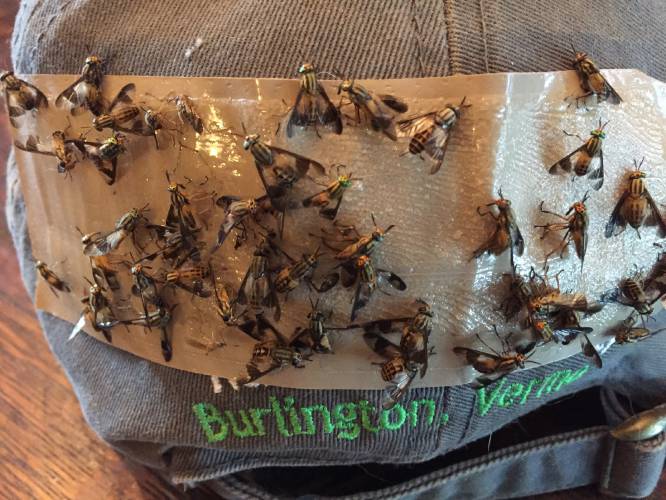
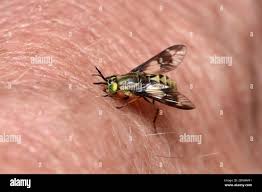
    What you can do to protect yourself from the painful bite of deer fliesDeer Fly High Resolution Stock Photography and Images - Alamy
    This is an example of deer flies in action.  They can be terrible.  Drive animals out of the forest into the lakes.  The phenomena
    I noticed where a thousand (guess) deer flies wedged themselves into a ball under our dock is not mentioned in deer fly
    behaviour.  At least not that I can find.   They all appeared to die in the cluster.  I do not know why.


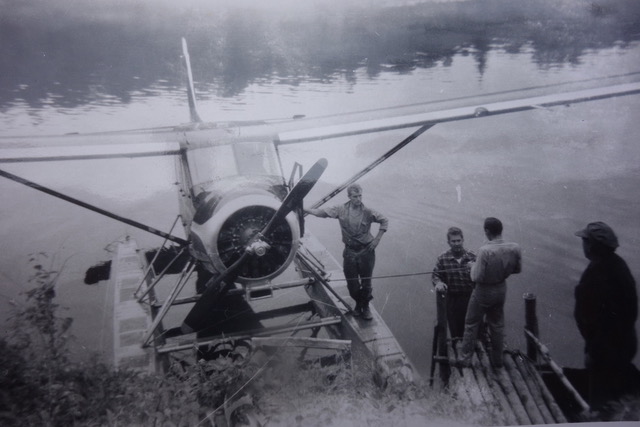
    In the morning we tore apart Base Camp #1 and  packed everything on the dock and  shoreline.  Late in the afternoon the Beaver float plane arrived and was  
    loaded for the short hop to Kapik Lake a  few miles to the west where we set up our new  Base Camp.  What a difference.  The new camp is  nestled in a climax forest 
    of birch  and poplar trees high on a hill where  fresh  wind blows. Not so many flies resulted.  We were out of the swamps.  

    A strange thing happened the day we left Base Camp #1..   Something not really  relevant but strange all the same.  Our makeshift dock began  to attract great clouds of
    deer flies.  Deer flies are nasty creatures that like human  flesh and human blood.  Chevrons on their wings. They had  been torturing us every day since our arrival.  Yet this
    day, August 27, 1958, they were  not biting.  Instead they were clustering in pods under the dock.  Wedging themselves into a great pack of their brethren
    and dying all pressed together.  Hundreds of them, maybe a thousand.  Made no sense but it is a clear unusual  memory.  We did not try to dissuade them  from this  mass suicide.

    MACK DEISERT ARRIVES…ONE TOUGH HOMBRE


    Our new fourth man  was  Mack Deisert standing on  the pontoon while the pilot clears up  a few details, perhaps  related to money.
    Mac was quite an entrepreneur.  No fucking around with him.
    Mac  arrived  just as we were moving to Kapik Lake with all our gear…August 27, 1958


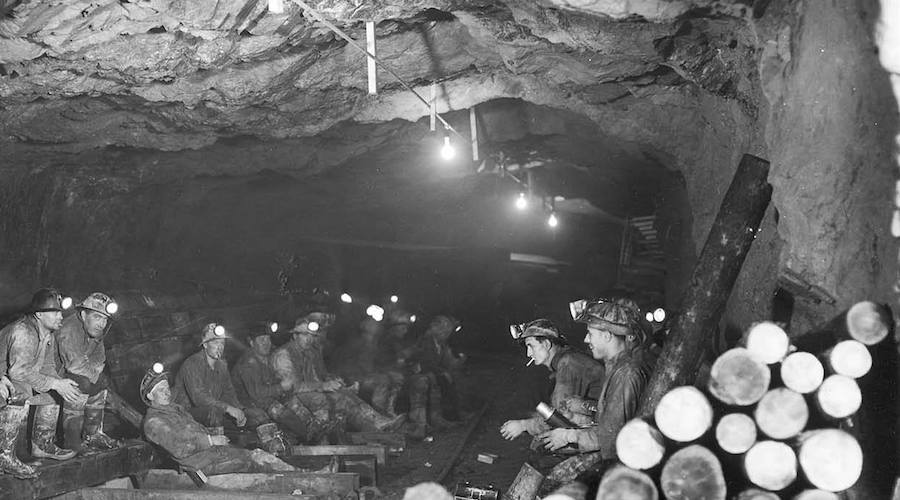
    We had a new employee arrive to replace Robert Hopkins.   Mack Deisert is  a tough man who is familiar with bush life.  Also an expert on heavy mining tools.  For a time he worked  underground
    in the gold  mines of Timmins.  Why he no longer was a full time miner became evident as we talked around the camp fires.  “There were all kinds of  ways to
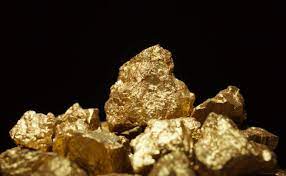
    high grade gold from the  Timmins mines.  Lunch pails worked  for a  while but stealing gold that way was a little too obvious…small amounts  under fingernails or in false  teeth specially
    made by local dentists.  Some gold was smuggled out in shoe  heels…sounds stupid  I know but remember just an ounce of gold  was worth money…high graders  got 50% of the face value of gold.  Lots of buyers in Timmins.  A miner or a shift boss sees a streak of raw gold
    in a hunk of rock…not common but occasionally  appears…he  slips a chunk in his pocket then  gets to a place where he hammers the chunk and get smaller piece with more gold…then has to figure how to
    get it out.  A wink to a foreman might do  it.    Most of the high grade gold is ground down right in the mine.  A miner comes upon a vein with raw gold…  he just chips  out a chunk
    knocks of the crap and keeps a bit of gold for himself. Small pieces are easy to hide.  Think ‘body cavity’. Some say millions worth of high grade gold hidden and  sold in Timmins.  Miners today  are checked by security guys
    every shift.  Big signs in the mine condemn high graders.   Those  signs would  not be up if there was not a problem.  Illegal  gold…common knowledge  about 
    who to contact.”  Mack seemed to know a lot about high grading gold…maybe he got caught and that was why he took a job with us.  Or he was just telling a good
    story around  a campfire.  Whether his stories were true or not , Mac was certainly an  entertaining character.  

    TIMMINS — LOTS OF GOLD HIGH GRADERS WITH INGENUITY


    HighGold Mining Inc releases mineral estimate on Johnson Tract deposit  showing one of the highest-grade undeveloped projects in North AmericaHighGold Mining Inc restarts drilling at Timmins projects following  coronavirus suspension

    www.mining.com/wp-content/uploads/2017/12/19574967_10155257983451578_8225746921495811735_o-1-300×167.jpg 300w, www.mining.com/wp-content/uploads/2017/12/19574967_10155257983451578_8225746921495811735_o-1-768×427.jpg 768w” sizes=”(max-width: 900px) 100vw, 900px” apple-inline=”yes” id=”9F3864C6-6778-414E-AC10-007AAE1F4EB4″ src=”https://alanskeoch.ca/wp-content/uploads/2022/03/19574967_10155257983451578_8225746921495811735_o-1.jpg”>
    These miners celebrated with special cake when Porcupine Gold Mines ‘Dome” mine closed on December 31, 2017, after 107 years.  A nearby
    mine at South Porcupine opened in 1910 and produced an estimated 67 million ounces of gold.  That does not include the
    gold that was ‘high graded’ and sold to criminal buyers for $12.50 an ounce in the 1950’s.  Today, 2022, gold sells for $2,000 
    an ounce.  I wonder what the high graders get today.  Just to test your criminal minds think how you could sneak an
    ounce of raw gold out of a Timmins gold mine.    Not too easy today…body checks.

    MACLEAN’S MAGAZINE, 1950 “FIRE A SHOTGUN DOWN TIMMINS MAIND STREET…YOU WILL HIT HALF A DOZN HIGHGRADERS”


    Ontario mines lose a million dollars a year to high-graders. Quebec and B. C. mines are robbed of another million. (One B. C. high-grader was stopped at the Blaine, Washington, custom station carrying $55,000 in a single shipment.) But police cases in recent years have amounted only to the apprehension of individual miners with small quantities of illegal gold. Yet, as one mining official said recently, “Fire a shotgun down the main street of Timmins or Val d’Or and it’s even odds you’ll hit half a dozen highgraders.”

    Men like these bring gold out of the mines by the use of every stratagem human ingenuity can devise. It is carried in specially built false teeth, in false bottoms of lunch pails, within bars of soap, inside plugs of tobacco and hand-rolled cigarettes and within the body openings. Some simply carry it in their hands, or under their armpits, as they pass through a shower room completely naked, leaving their work clothes on one side and picking up their street clothes on the other. Their lunch pails travel across the change room—commonly called a “dry”—on a conveyor belt subject to police scrutiny.

          MACLEAN’S, How Gold Thieves Get Away With Millions,   Don Delaplante, July 15, 1950

    DEAR DIARY


     To Mack Deisert a blazing Axe was  child’s play.   He was unlikely to hurt himself for he knew
    the consequences  of a wilderness injury.   Mack considered  our job an interesting interlude where he could

    pick up a few bucks in a week or so.  Strong as an ox.  Wish he was with us earlier.s


    Sometimes posture reveals much about a person.  Take a look at Mack leaning against the bush plan.

    “I heard you need a man for a week or so?  I’m available.  If not, I’ll fly back to South Porcupine.”


    DEAR DIARY


    Supper was special.  Fresh food.  We dined on veal cutlets, string beans, potatoes, tea and ‘fresh bread’.   Our bread was soon stale…turned dry  
    or mouldy…good bread got very 
    crusty as time wore on in camp.  Mouldy  bread  was garbage.  Dry bread was usable even if hard as a gold brick. The  way to soften dry bread up
    was a French Toast concoction we made regularly…water, powdered milk, a couple of
    eggs while they lasted, some butter and a hot frying pan.  French  toast could be stretched out and become a bush lunch when lathered with
    peanut butter.   Tasted really good.  We could do the same thing with porridge.  Hot in the morning.  Then a slab of cold porridge oats as a jelly like lunch. How?
    If firm enough the cold  porridge could also be lathered with peanut butter.   All this was  washed down with tea boiled in a
    fruit can tin with a wire looped over so the billy tin and then hung on a stick over an open fire.  When we  ran  out of real tea  we used Labrador tea, a
    local plant whose leaves were fuzzy on the bottom. Easy to  find. Questionable alternative. No alcohol on the job.   Beer would weigh 
    far too much anyway.  Although Floyd did sneak a mickey of Scotch which he shared equally as if it was liquid gold.

    August 28, 1958


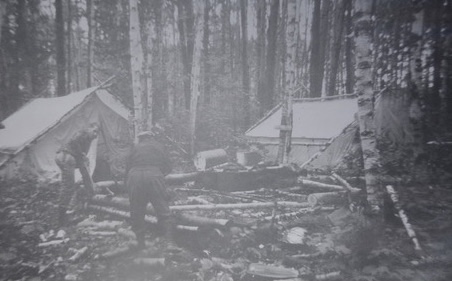
    Rain…wonderful  rain.  So  we got a day of rest…well not quite that for we had to get our new campsite ship shape.  Two tents put up fast

    lest the rain get to our sleeping  bags.  Then a new feature. We had to cut and split birch firewood as summer was over. Frost on the pumpkin as

    they say…frost on the swamp apples is more appropriate.


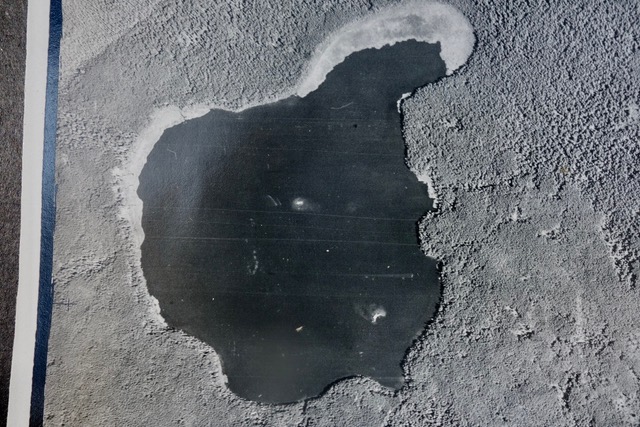
    KAPIK LAKE — Our camp was somewhere here as was the abandoned canoe.
    The pilot from Austen Airways had to be careful landing as the lake was small with
    islands in he middle.


    Kapik Lake is not
    big, just enough room for the Beaver to take off and land.   We were very surprised to discover other humans had preceded us.
    “What’s that over on the other side?” “Looks like a canoe.”  Sure enough, some
    person  had abandoned  a canoe on the lake.  No sign of a cabin or campsite.   We rescued it. complete with
    paddles and had  transportation for leisure evenings to tour the little lake.  Maybe this was here for fly in fishermen.   Maybe Kapik Lake 
    was full of fish.  Little good that would do us for we had no fishing gear.

    Kapik Lake was inhabited by some strange mole like creatures on one of the little islands and a family of Loons
    who serenaded us regularly.


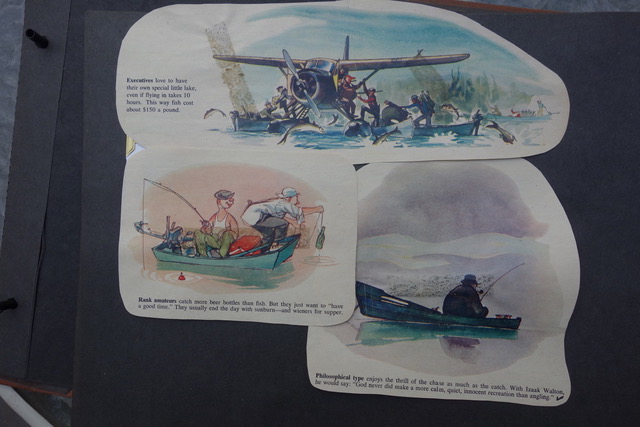
    Maybe Kapik Lake was one of those fly in fishing lakes that rich  people use which came complete with a cook to fry up
    whatever they catch.  Our use of the lake was far less fancy.   Rich fishermen, if hey arrived while we  were there, would have
    been flabbergasted at our basic diet of porridge.  I cut these cartoons our of a local paper after the job  was over.  Made
    me laugh.

    Walt put the tea bags in with our pork and beans tonight which gave us all  a good laugh.   Then Walt asked “Do you want to
    to know how to speak Eskimo (Inuit is term today)?” and proceeded to teach us the language which I think he made up as he went along.  Then again
    he did work as a diamond driller at Rankin Inlet. 

    August 29, 1958

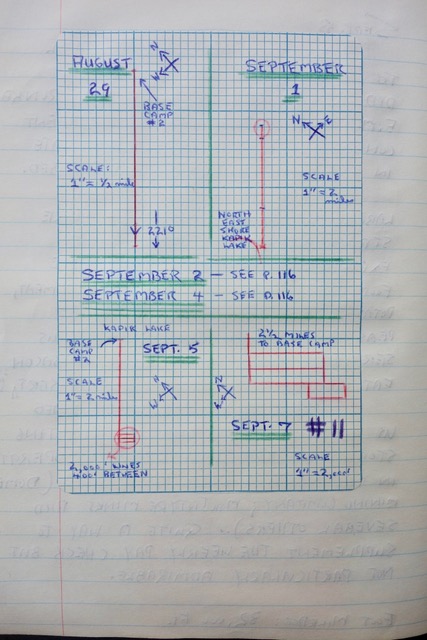
    Walt and I cut line south 221 degrees. Easy work this time because the big trees shaded out the brush.  What a luxury…we could slap our
    axes on one side of a big poplar then the other and move by easy  line of sight.  Summer was over suddenly and the trees were changing colour
    The bush forest was becoming a land of red and gold.  The negative side of this season change was  the arrival of cold  weather.  All summer
    we had been complaining about the hot  sweaty days.  Now we complained about the cold.  Bonus was big time.  Far lfewer flies…none at times.

    Distance covered   12,000 feet (easy day)

    August 30, 1958

    Rain again.  Spent most of the day in our  sleeping bags.  I planned  my short term future.  University bound.  Thoughts of the University of Toronto made 
    me very nervous.  Dad was  a tire builder and mom was a seamstress.  Most my other relatives were farmers.  So the prospect of  a university education
    was novel and made me nervous not that I told anyone.   My good friends Russ and Jim would be doing the same thing and  were probably nervous as  well.
    Money made on this job would pay my first year fees of $400.  Some friends wondered why I took the job.  Two answers.  First, because I loved the job.

    Second, to pay university fees of $400 per year as non resident “city boy”.


    Our radio weather report warned of heavy frost tonight so we started to assemble our new air-tite wood stove.  The hole in the tent left by the bear was the exit 
    point for the stovepipe.   The big birch trees in this  climax forests means we have lots of excellent firewood that splits with ease.   Comfort!  And the smell
    of the wood  stove is like the best perfume imaginable.

    The only bad  news today was that our fresh  meat had already gone bad.  It would not pass the nose test.

    September 1, 1958

    Cold  … really cold all day.  Just above freezing which meant the raindrops on the forest leaves were like little ice daggers penetrating our clothes.We 
    spent the day extending Bob And Mack’s trail to the northern anomaly.

    Distance covered   33,000 feet

    September 2, 1958

    Another long hard  12 hour day.  We finished blazing our trail to where we figured  the anomaly was  located then did the survey with the Ronka and magnetometer.
    My gum rubber boots have holes big enough for my socks to poke through which means I am working every day in wet feet.   Each night we pull off our boots
    and  peel down the wet socks then massage our feet.   Bad feet would mean no work.   

    Distance covered”   37,000 feet  (about 7 miles)

    September 3, 1958

    Another brute of a storm night and day.  The tent is  billowing in the wind like a great hot air balloon.

    September 4, 1958

    Bob and I finished  the north anomaly with both the Ronka EM unit and the magnetometer.

    In the evening Walt and  I stalked  a crane in the shallows of Kapik Lake then stayed  out on the lake to watch  the sun set.  Magnificent.

    Distance covered    33,000 feet


    September 5, 1958

    We finished cutting trail to south anomaly then did reconnaissance survey with the Ronka EM unit and the magnetometer.   No conductor
    was discovered.

    Well, we  are in food trouble.  All our staple foods have  been  consumed…bread, meat, potatoes,  fruit and butter.  So we have to make do with
    what we can concoct which tonight constituted a can of peas and  carrots, big pile of  rice topped with bacon fat gravy and followed by cookies
    for dessert.

    Mack and Walt really entertained us  with fascinating stories of the ‘high graders’ operating in the Timmins gold mines…Dome MinE Company and  MacIntyre Mines, etc.


    Distance covered   32,000 feet

    September 6, 1958

    Stayed awake all night as lightning flashes and  thunder made  sleep difficult.  Very dramatic.  We kept the wood fire burning most of the night and as a result
    felt really cosy in our tent.   In the morning I began packing my rucksack for the job is nearly over.   Trans Canada Airline has Viscount air service to Toronto which
    sounds exciting.   This was my last day as  cook so  I made a large stew of whatever odds and ends  I could find including the bacon rind on our slab of pork
    sowbelly.    Not such a bad  dinner.   To give it a little more body I slipped in a  cupful of rolled oats.  Inventive.

    END EPISODE 556 ..   PART 7     AUGUST 27, TO SEPT. 6, 1958   WORST JOB I EVER HAD 

    NEXT EPISODE  PART 8   TRAGEDY AND ESCAPE FROM WORST JOB I EVER HAD