Author: terraviva

  • EPISODE 104 “WE DO NOT NEED YOU ANYMORE.”

    EPISODE  104    WE DO NOT NEED YOU ANYMORE

    alan skeoch
    August 2020

    John Myers, a friend, has asked me  several times to
    tell him about my radio career …  with CBC radio.  I have not 
    answered because the  story is long with many twists  and
    turns.  You may  not want the full story because there is no
    high drama.  Maybe  I can tell the story in point form best.
    short form.

    1) At the Thompson auction sale near Kitchener, Ontario around 1980, I bid
    and  bought four threshing machines.  Beautiful things as big as
    five ton trucks.  Historic machines  doomed  to be burned by
    scrap dealers seeking  cast iron.  How could I explain this purchase
    to Marjorie?  She is  long suffering and  never crushes  my enthusiasm.
     What could I do with 4 huge dinosaurs  of  the
    harvest fields. ? 


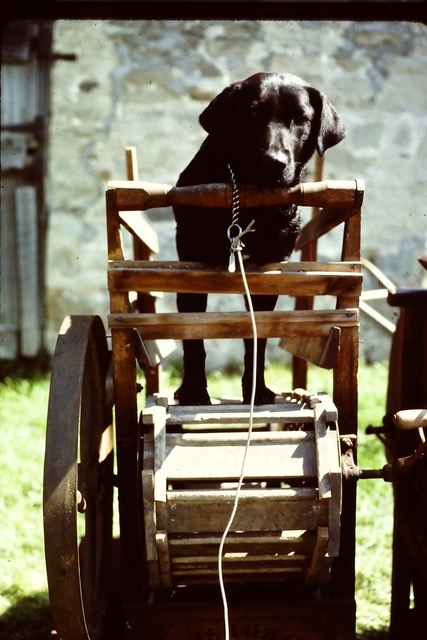
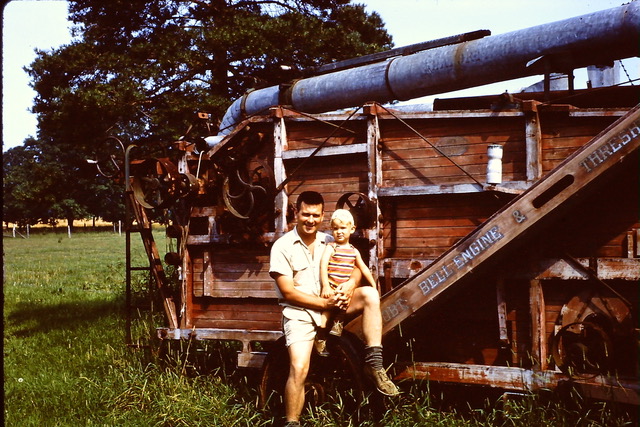
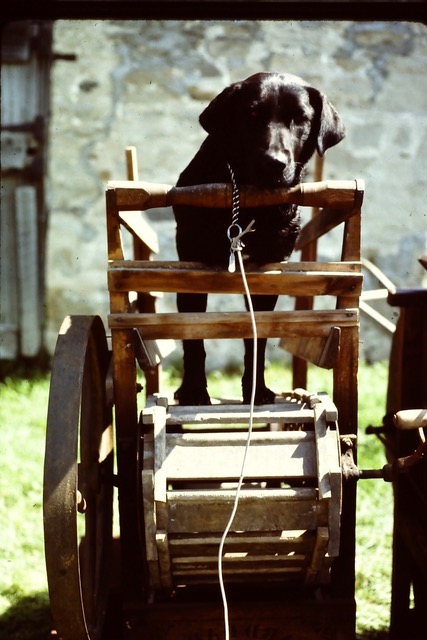
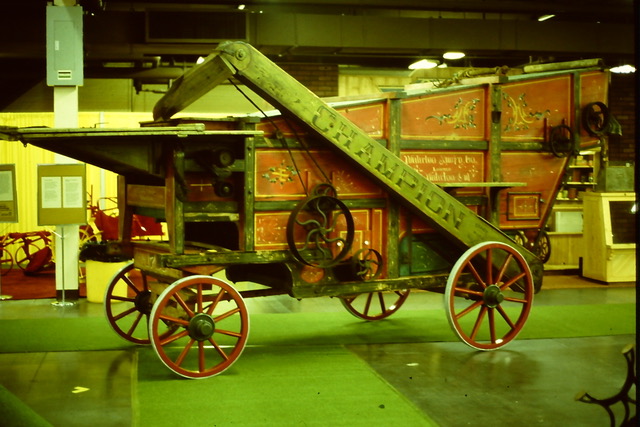
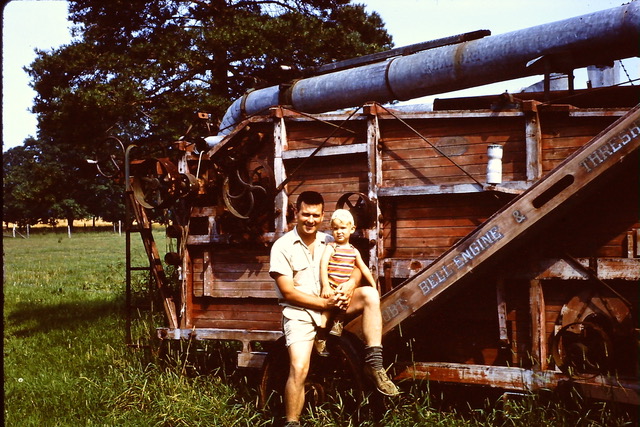
    MY radio career began with this threshing machine …. believe it or not.

    I bought quite a few of them at auction sales…Was I insane?   No,  I managed
    to turn them into an 300 page M.A. thesis  at U. of T.  Three departments…history, engineering 
    and fine arts.  Loved it.  The engineering department shared my enthusiasm the most.
    Where did I keep them?  Gave the best to museums.  Others are still in the barn.

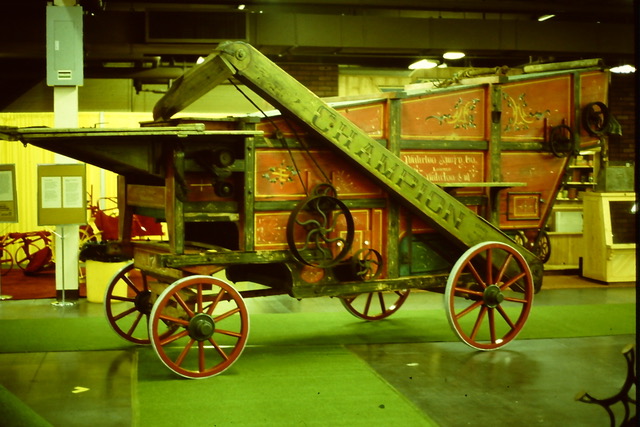
    2) The biggest was made in New Hamberg, Ontario about 1890.
    It was in great shape.   Wooden construction, wood  wheels, lavish
    folk art painting  done by professional stripers.  And  alligator for
    instance was added to accent the sharp teeth of the thresher when
    it tore grain sheaves to bits.

    3)  I donated the machine to Riverdale Farm,  a  kind of 
    salue to Ontario farm history located  in the heart of the
    City of Toronto.  To get the machine to its new barn I
    hired Gordon Hume and his flat bed  truck.  It was quits a sight
    rolling up Parliament Street.  Heart of the largest city in Canada.
    A  nostalgic farm! A  few years later Riverdale Farm
    gave it back to me.  Imagine that. The nerve!  So I regave the machine to
    Doon Pioneer village where it remains.

    4) As chance  would have it a  CBC radio producer was having
    a coffee break as  the thresher came by. Parliament Street studio.
     Or Perhaps  it was  noticed
    by the host of Radio Noon, then David Shatsky.  Someone followed
    the truck to the farm museum and asked “What is it?” “Who donated it?”
    So my name reached decision makers at CBC/

    5) “Would you drop by for an interview?”   I did and that interview
    went so well that I was asked  to be a regular radio journalist with
    a 5 to 10 minjute  slot each  Friday on Radio Noon.

    6) I must have done  about 100 shows.  My 5 minute special reached
    beyond Toronto.  Some covered Ontario.   Some were national. One 
    even reached an  Inuit village in the Northwest Territories.   He was being
    hounded by the local priest.  Scared.  Not much  I could do.
    I know the phone call makes not sense but it was memorable.

    CBC paid
    me eventually.  Around  $100 a show.  Not big.  The cost of parking
    took a big slice of the money.  Then the research and Union  dues took some as well.  I did
    not care.  It was a joy to do the programs.  I learned a lot about 
    communications.

    7)  On my third or fourth show, my produce, Doug Coupar spoke to me
    privately “Alan, your shows are terrific….”
    When someone says that to you be prepared for the follow up word which
    is ‘BUT’.    To repeat   “Alan, our shows are terrific BUT you must remember
    that the  radio audience attention span is  one minute at the most.  Get your
    big idea into that first few seconds  or you will have lost them.”  What
    grest advice.    Cut the bull shit…get to the point right away.  That advice
    changed  my whole approach to teaching.  For the better.  I began each
    lesson with a big question.  Often  a questions to which I did  not know the answer.
    Kids really got involved.  They often took over the discussion.
    (i.e. Why did  John A. Macdonald allow  Louis Riel to be executed?  Why?)

    8)  So I would race down to CBC on my lunch hours every Friday
    to trigger ideas in a public forum.  My personal ego trip some  must 
    have thought.  I loved it. Then race back to class.   On one of these trips I  was
    startled as I opened the truck door. A tall thin man in running shoes had
    jumped  on the back  bumper and then blocked my exit.  “I am going to
    fucking kill you,” he said. Made no sense.  I had not hit him.  What should
    I do.  I looked at my watch hand and said, “Sorry, I don’t have time for that
    …I am late for class.”  to which the deranged mind  said “OK!” and  wandered
    off.  Lakeshore Psychiatric  Hospital  had recently been closed.  I do  not
    have a watch.

    9) My tenure at CBC radio was quite long…maybe 3years or longer.
    That is an eternity for a radio host and also for radio journalists.
    One of the CBC personalities took me  aside  early in my career.
    He gave  me some great advice as well. “Alan, remember this…we
    all have a shelf life.”  WE ALL HAVE A SHELF LIFE.  Just like hamburger
    and  cheese.  Being an on air personality was not a lifetime job.  At some
    point a CBC exec that I would never meet would decide to change the
    format. Get rid of that Skeoch guy…we need a new direction.”

    10)  DAISY

    One of my best stories dealt with our grest dog Daisy.
    She died and I grieved her on the radio. One man phoned to say.
    “I had to put over on 401.  I was crying.”  The studio was  empty
    as I spoke because all involved got emotional.  As  did  I.

    10)  So one New Years Day, I phoned the CBC to outline my special
    program for the new  year.  I had a new  producer by then.
    He was a hatchet man  The conversation was short.
    “Just to let you know my plan for next week. I think…”
    The hatchet man cut in fast.
    “We do not need you any more.”

    That was it.  The kiss off.  The guillotine blade was falling.  My shelf life
    with CBC radio was over.  “Sorry, we  do not need you any more.”

    alan skeoch
    August 2020

    P>S>  Not quite over. I did  occasional programs  when they needed
    someone to cover a dead air space.  My second last program was such a shock
    to CBC decision  makers that they never let it go on air.  So when
    I tell you that story it will be fresh.  First time ever.  Next episode.
  • EPISODE 104 “WE DO NOT NEED YOU ANYMORE.”

    EPISODE  104    WE DO NOT NEED YOU ANYMORE

    alan skeoch
    August 2020

    John Myers, a friend, has asked me  several times to
    tell him about my radio career …  with CBC radio.  I have not 
    answered because the  story is long with many twists  and
    turns.  You may  not want the full story because there is no
    high drama.  Maybe  I can tell the story in point form best.
    short form.

    1) At the Thompson auction sale near Kitchener, Ontario around 1980, I bid
    and  bought four threshing machines.  Beautiful things as big as
    five ton trucks.  Historic machines  doomed  to be burned by
    scrap dealers seeking  cast iron.  How could I explain this purchase
    to Marjorie?  She is  long suffering and  never crushes  my enthusiasm.
     What could I do with 4 huge dinosaurs  of  the
    harvest fields. ? 


    MY radio career began with this threshing machine …. believe it or not.

    I bought quite a few of them at auction sales…Was I insane?   No,  I managed
    to turn them into an 300 page M.A. thesis  at U. of T.  Three departments…history, engineering 
    and fine arts.  Loved it.  The engineering department shared my enthusiasm the most.
    Where did I keep them?  Gave the best to museums.  Others are still in the barn.

    2) The biggest was made in New Hamberg, Ontario about 1890.
    It was in great shape.   Wooden construction, wood  wheels, lavish
    folk art painting  done by professional stripers.  And  alligator for
    instance was added to accent the sharp teeth of the thresher when
    it tore grain sheaves to bits.

    3)  I donated the machine to Riverdale Farm,  a  kind of 
    salue to Ontario farm history located  in the heart of the
    City of Toronto.  To get the machine to its new barn I
    hired Gordon Hume and his flat bed  truck.  It was quits a sight
    rolling up Parliament Street.  Heart of the largest city in Canada.
    A  nostalgic farm! A  few years later Riverdale Farm
    gave it back to me.  Imagine that. The nerve!  So I regave the machine to
    Doon Pioneer village where it remains.

    4) As chance  would have it a  CBC radio producer was having
    a coffee break as  the thresher came by. Parliament Street studio.
     Or Perhaps  it was  noticed
    by the host of Radio Noon, then David Shatsky.  Someone followed
    the truck to the farm museum and asked “What is it?” “Who donated it?”
    So my name reached decision makers at CBC/

    5) “Would you drop by for an interview?”   I did and that interview
    went so well that I was asked  to be a regular radio journalist with
    a 5 to 10 minjute  slot each  Friday on Radio Noon.

    6) I must have done  about 100 shows.  My 5 minute special reached
    beyond Toronto.  Some covered Ontario.   Some were national. One 
    even reached an  Inuit village in the Northwest Territories.   He was being
    hounded by the local priest.  Scared.  Not much  I could do.
    I know the phone call makes not sense but it was memorable.

    CBC paid
    me eventually.  Around  $100 a show.  Not big.  The cost of parking
    took a big slice of the money.  Then the research and Union  dues took some as well.  I did
    not care.  It was a joy to do the programs.  I learned a lot about 
    communications.

    7)  On my third or fourth show, my produce, Doug Coupar spoke to me
    privately “Alan, your shows are terrific….”
    When someone says that to you be prepared for the follow up word which
    is ‘BUT’.    To repeat   “Alan, our shows are terrific BUT you must remember
    that the  radio audience attention span is  one minute at the most.  Get your
    big idea into that first few seconds  or you will have lost them.”  What
    grest advice.    Cut the bull shit…get to the point right away.  That advice
    changed  my whole approach to teaching.  For the better.  I began each
    lesson with a big question.  Often  a questions to which I did  not know the answer.
    Kids really got involved.  They often took over the discussion.
    (i.e. Why did  John A. Macdonald allow  Louis Riel to be executed?  Why?)

    8)  So I would race down to CBC on my lunch hours every Friday
    to trigger ideas in a public forum.  My personal ego trip some  must 
    have thought.  I loved it. Then race back to class.   On one of these trips I  was
    startled as I opened the truck door. A tall thin man in running shoes had
    jumped  on the back  bumper and then blocked my exit.  “I am going to
    fucking kill you,” he said. Made no sense.  I had not hit him.  What should
    I do.  I looked at my watch hand and said, “Sorry, I don’t have time for that
    …I am late for class.”  to which the deranged mind  said “OK!” and  wandered
    off.  Lakeshore Psychiatric  Hospital  had recently been closed.  I do  not
    have a watch.

    9) My tenure at CBC radio was quite long…maybe 3years or longer.
    That is an eternity for a radio host and also for radio journalists.
    One of the CBC personalities took me  aside  early in my career.
    He gave  me some great advice as well. “Alan, remember this…we
    all have a shelf life.”  WE ALL HAVE A SHELF LIFE.  Just like hamburger
    and  cheese.  Being an on air personality was not a lifetime job.  At some
    point a CBC exec that I would never meet would decide to change the
    format. Get rid of that Skeoch guy…we need a new direction.”

    10)  DAISY

    One of my best stories dealt with our grest dog Daisy.
    She died and I grieved her on the radio. One man phoned to say.
    “I had to put over on 401.  I was crying.”  The studio was  empty
    as I spoke because all involved got emotional.  As  did  I.

    10)  So one New Years Day, I phoned the CBC to outline my special
    program for the new  year.  I had a new  producer by then.
    He was a hatchet man  The conversation was short.
    “Just to let you know my plan for next week. I think…”
    The hatchet man cut in fast.
    “We do not need you any more.”

    That was it.  The kiss off.  The guillotine blade was falling.  My shelf life
    with CBC radio was over.  “Sorry, we  do not need you any more.”

    alan skeoch
    August 2020

    P>S>  Not quite over. I did  occasional programs  when they needed
    someone to cover a dead air space.  My second last program was such a shock
    to CBC decision  makers that they never let it go on air.  So when
    I tell you that story it will be fresh.  First time ever.  Next episode.
  • EPISODE 103 MUSKRATS….PEST OR CREATORS OF OUR WORLD

    EPISODE  103    MUSKRATS…PESTS OR CREATORS  OF OUR WORLD


    alan skeoch
    August 2020


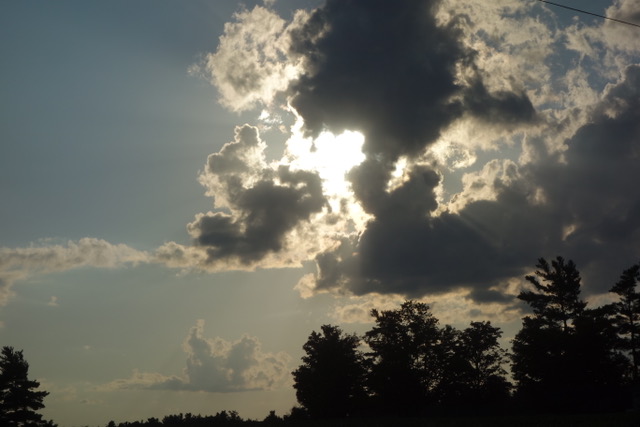
    IN THE BEGINNING THERE WAS  ONLY WATER…THE GODS LIVED ON TOP OF THE CLOUDS


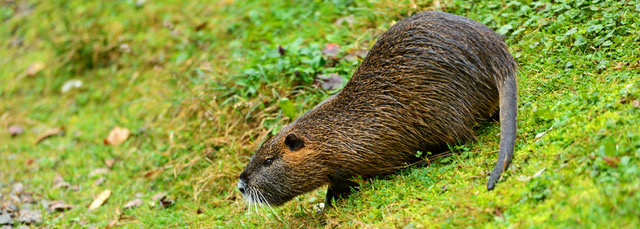
    THERE were four to them cavorting in the swamp.  Young  kits.   Muskrat kits  that
    I had no idea were living and thriving in a hidden swamp  on our farm.  Only  made
    visible because I have been clearing  brush to get a better view  of the glorious
    little swamp.   Once they spotted me they arched their backs and dove down.  
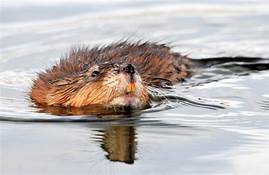
    Muskrats can stay submerged for as long as17 minutes…longer than my patience
    it seems.  I waited and  waited.  Were they some kind of  mirage?   Not so, their
    home is likely under the submerged roots of some cedars and the four ran  home
    to their mommy.

    I was elated.  Our swamps, of  which we have four, seemed sort of  empty of late since
    the frog population has  been  immensely reduced and  even the leeches (bloodsuckers is
    a better word) have disappeared.   A  pair of Canada geese raise a  brood each year
    but once the little ones are big enough, they disappear somewhere.
    So  it was nice know the Muskrats have been thriving all the time.  But unseen.

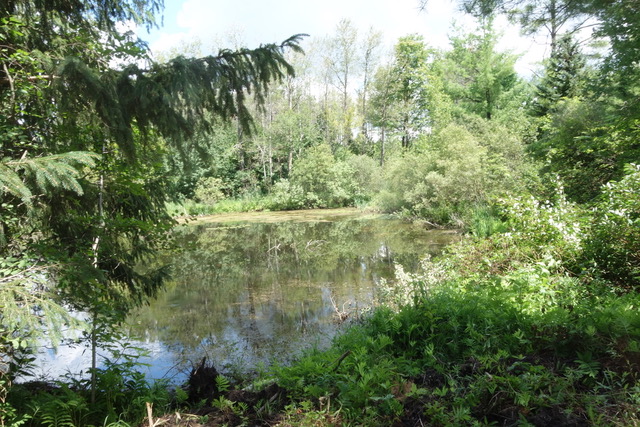
    THE SWAMP…UNSEEN  FOR 20 YEARS…NOW VISIBLE…AND ALIVE.


    I  am partial to muskrats but the internet sure is  not.  The word ‘pest’ is used
    a lot.  Why?  Well they can punch holes  in dams but more serious is the presence
    of rabies and  other diseases.  Scary.  But the  presence of rabies  is  not
    exclusive to muskrats.  So do  not get your underwear in  a twist.  The internet
    goes  on to suggest poisons and  traps  to kill or capture the Muskrats. 

    Largely herbivorous, Muskrats like our human gardens.  They are nocturnal raiders
    whose presence can  be deduced by the tracks … four small feet about size of
    a cat and a long streak of the Muskrat tail in between.   That may account for the 
    anger some of us have towards muskrats.

    SOMETIMES we forget Woody…he waits knowing we will remember him


    Personally I think  these little beavers (related) are rather smart.  One late afternoon
    a few years ago we were driving home and had to turn around  to go  back to
    the farm.  Maybe  we forgot the dog, Woody.  That happens occasionally.  When
    we drove in the farm lane, there was an adult muskrat on the pathway.  He or she
    must have waited  all day for us to leave in order to get from one swamp to another…particularly
    to the hidden swamp.

    (I prefer the  term pond because it sounds  so  attractive.   But, that word,  implies  a wetland
    that has been changed into a place for goldfish.   The word swamp  is  better…allows  for
    wild things that are not controlled by human hands.)

    The muskrat stopped,  looked at us, and then turned around and disappeared into the
    mass of goldenrod that clothes  much of our open  swampland in summer.


    Why  love a  muskrat?

    A few years ago I wrote a  book on our indigenous people.  It was written with good  intentions
    …to highlight their depth of culture and the wrongs that have been committed.  The book was
    a failure.  Publisher went bankrupt the day  the book  came out.  And, worse, I was accused
    of appropriating indigenous voice.   True.  I had not considered there was a danger in my main
    protagonist using first person voice.  Writing exposes a writer to  criticism.  Painful always.

    Which gets me back to the muskrat.

    In  Mohawk legendary tradition the origin of our world is explored in a charming manner.
    Elements of this legend are also found in other First Nations explanations of how
    humans first appeared  on earth.   The Christian Adam and  Eve explanation is most
    common to Canadians.  Would that the Mohawk explanation was equally familiar.

    The legend comes down through the generations in spoken form. Thus  there
    are changes since storytellers  often like to make the story ‘better’.

    Yes, the muskrat will be featured.  Don’t get so anxious.

    This is my interpretation of the Mohawk legend of creation.  The basic elements conform
    to the tradition.   We are not dealing with something absolute.  Not Holy Writ you might say.

    “In the beginning, the planet was  covered in water.  There was no land…no earth. All
    water.  Above the earth was an envelope of clouds where the gods lived.  One day
    there was an opening in  these clouds and a  woman we call  Earth Mother peeked
    through the hole.  In order to get a better view,  she leaned  over too far and fell
    through the hole.  She was  tumbling head  over heals through the sky.   A loon noticed
    her and flew under her thereby cradling Earth Mother.  But the loon could  not hold her
    forever.  The loon called out to the creatures below, particularly to the big snapping
    turtle. “Can I let Earth Mother land on your back?”  The snapping turtle agreed and
    before long Earth Mother found herself  standing on the top of the great snapping turtle.
    Even though the turtle was  large it was not large enough to hold Earth Mother forever
    so the big snapper called all the water creatures together saying “we need some mud
    from the bottom below us.  If  we can get mud we can build a  home for earth mother
    on my back.  

    “So all the creatures  tried to get some mud…some earth.  The beaver dove down
    as deep as it could but never reached the bottom.  Died trying.  So the otter then
    tried but also died trying.  All  the water creatures tried and failed.  Then the big
    snapping turtle turned  to the little muskrat who had been ignored because it was
    so  small  and insignificant.  “Will you try?”  The muskrat agreed and dove down
    deep deep down.  It was down a long time.  Had  it drowned  like the others?

    “Then the little muskrat come to the surface.  Was ti dead or alive?  We do  not
    know but there clutched in a little paw was  a  handful of mud  from deep below
    the water.  When that handfull of mud was  spread on the great snapping turtles’
    back it suddenly began to expand  and expand…got larger and larger until the land
    we know of as our earth was  created.

    “All this happened because of the lowly little muskrat had an ability to live underwater’
    for a long time.  Without the muskrat none of us would be here.”

    NOTE:  Legends  of human origin are common to most cultures.  But the First Nation
    legends, particularly this one have some striking features.  The snapping turtle’s
    back, for instance,  fits the modern scientific of plate tectonics.  The crust of the
    earth is broken into huge plates that float snd clash. Below is a sea  of molten magma.
    To me, the Mohawk creation legend has  another feature.  All the  creatures of
    the world  helped Earth Mother survive.  Among the Mohawk the great Snapping
    Turtle is given much  credit…but most credit goes to the tiny Muskrat. There
    is a recognition that all the creatures have value.

    There are other features to this legend which I will not explore because my
    story is  about the muskrat but it is worth mentioning that Earth Mother was
    pregnant when she fell.  She  bore two sons.  One was a good son, the other
    was  a bad son. They fought. (as dud Cain and  Able in western legend)
    The good  son just barely squeaked victory
    but his victory is never secure.   Rings true to the Adam and Eve legend.  But
    foremost in the legend is the role of Earth Mother.  Among the Mohawk and other
    Iroquois women are given great prominence.  The Society of Matrons have been
    traditional leaders and decision makers.   It took a long time for British and 
    European ‘discoverers’ to understand that.

    Bottom Line…Our family will not be spreading poison  to kill the muskrats nor
    will be hiding leg hold  traps among the goldenrod.


    alan skeoch
    august 2020

    P.S.   Apologies if my interpretation of the Mohawk legend  of  creation differs
    from others.  Legends  come  from spoken traditions.  I am comforted  by the
    fact that our Mississauga First Nations…now living on land given to them by 
    the Mohawk people in the 19th century…that these people invited  me to speak
    at their historical conference a couple of years ago.  They were a most gracious
    and broad minded people.  We had a good  time.


  • EPISODE 102 AN OLD MAN’S WINTER NIGHT … BESIDE THE QUEEN ELIZABETH HIGHWAY

    NOTE:  THIS MAY SEEM A  LITTLE OFF  HE WALL…


    EPISODE 102    AN OLD MAN’S WNER NIGHT…BESIDE  THE QUEEN  ELIZABETH HIGHWAY

    A PLACE WE’VE ALL PASSED…WHAT WAS HERE  40 YEARS  AGO

    alan  skeoch
    august 2020

    It took a long time to  find the picture.  Without the picture this story has
    no meaning. 

    About 40 years ago Was driving  along the North Service road just above the
    big Ford  Assembly  plant.  Right beside the Queen Elizabeth super highway.
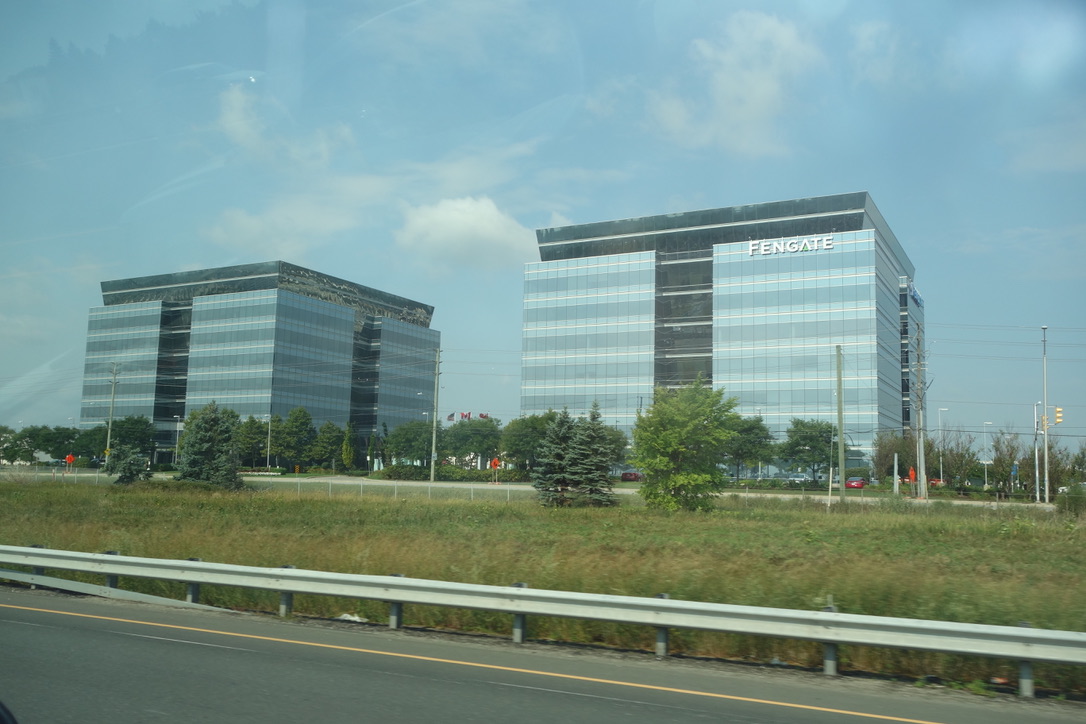
    Winter time but getting close to spring.  A  place you have all seen because today 
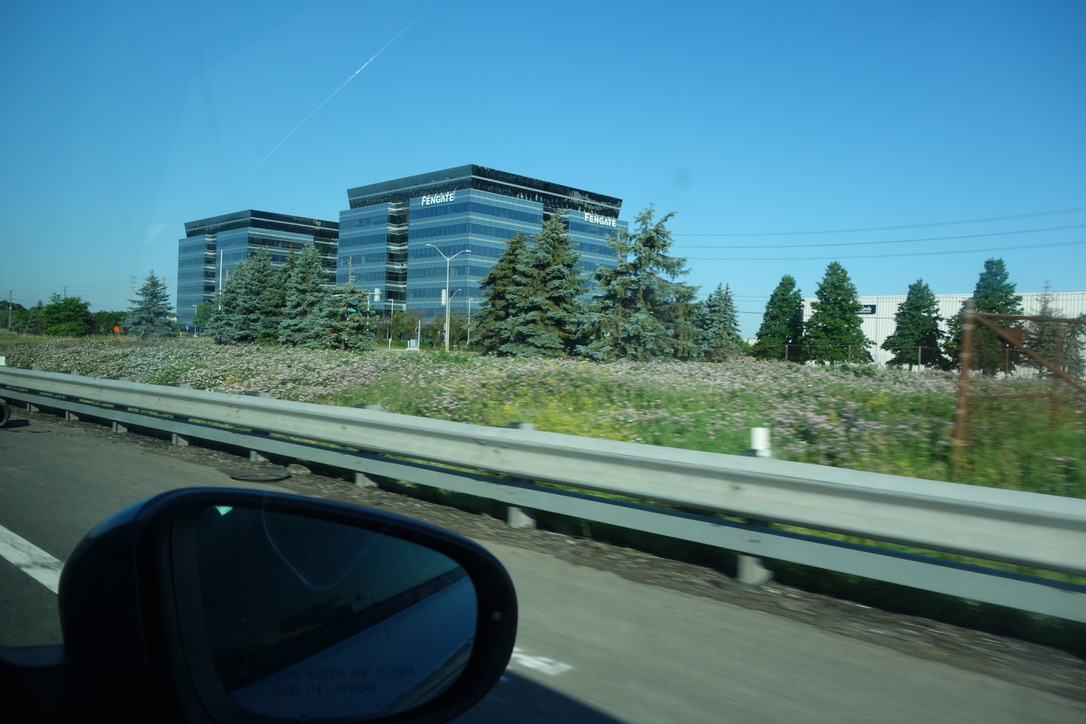
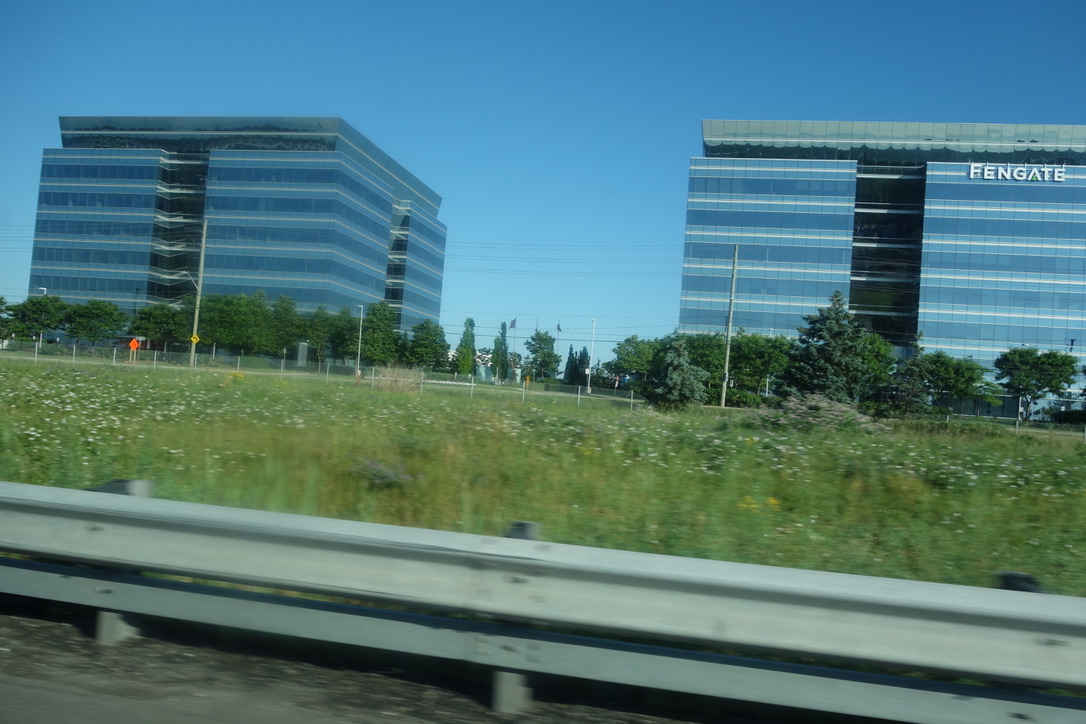
    there  are two glass and aluminum modern office buildings in that place.

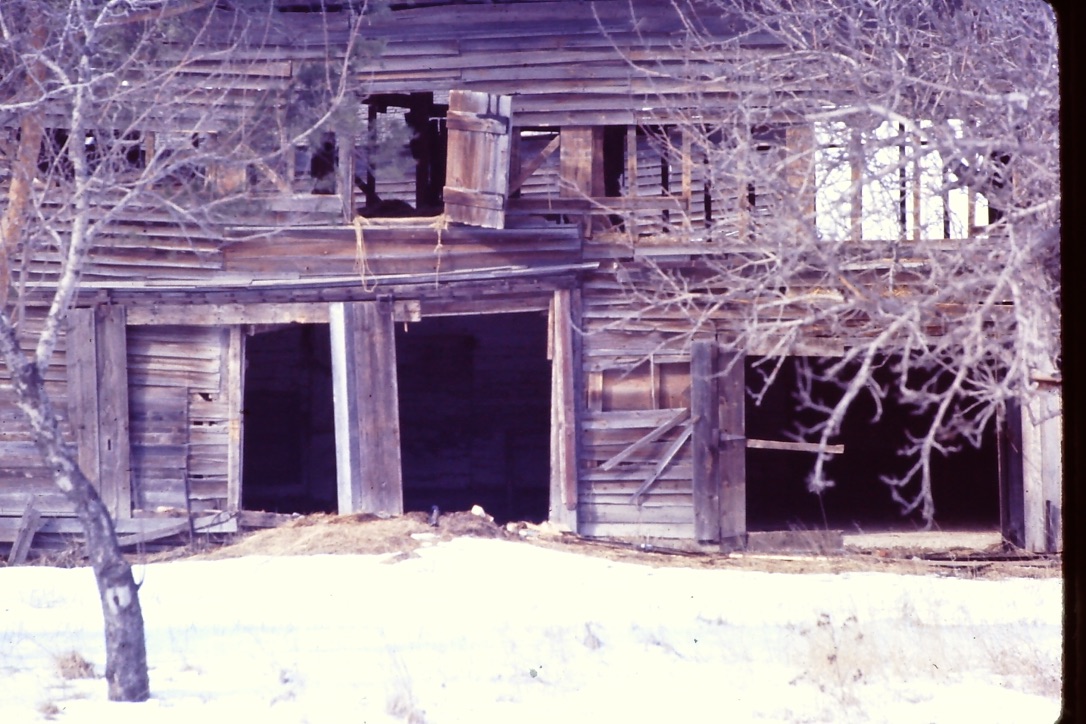
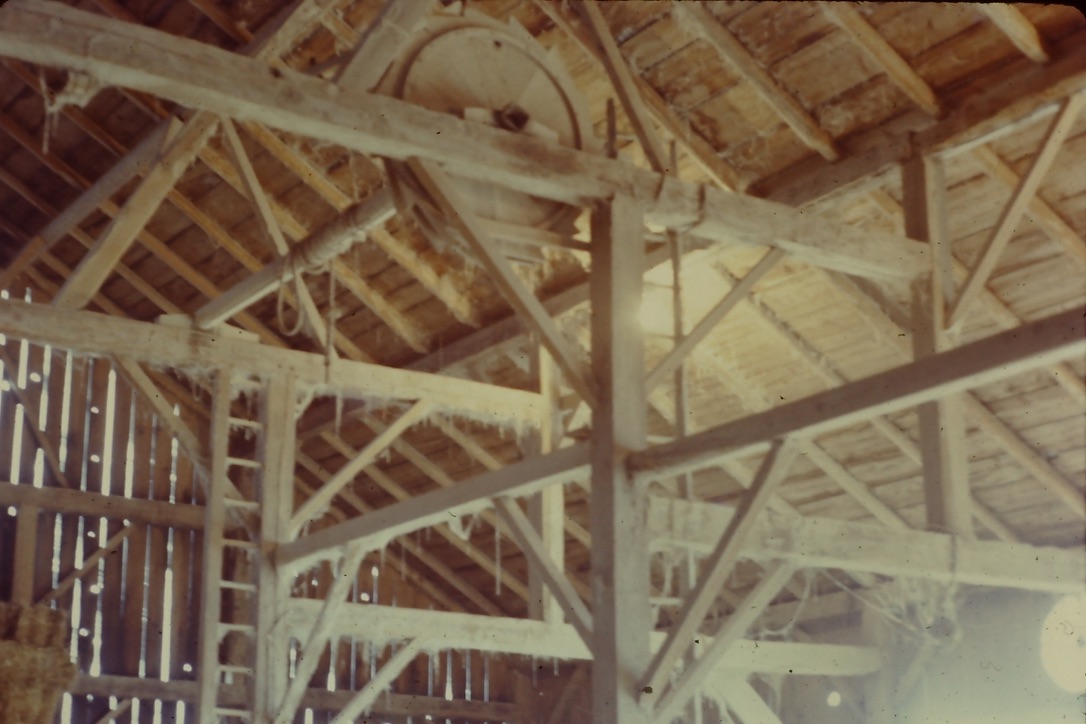
    Bu 40 years ago there was  a  barn.  Old style barn that had  never  been elevated.
    Guessing  a date of  1850 or  earlier.   The barn looked bad.  Defeated.  Empty
    Abandoned.  Doomed. Sad.  All to these.  So I pulled in to get this picture (below)
    Attempting to record something that was about to disappear.

    Just as I held up the camera an elderly man walked  out of the stable.
    Was I trespassing?  No.  I was on the  road shoulder.  But he  walked
    toward me  anyway.

    “This had  been our farm for better part of a century, son.”
    “Mind if  I take  a picture.”
    “Go ahead.”
    “It must be hard to part with .”
    “Very hard.”

    He  looked at me…I think he wanted to see  in my face if I really gave a
    damn about him and  his former farm.  He must have seen something in me.

    “You know son, I got a lot of money for this farm
    but it means noting to me.   I wish I had it back.
    I wish I could still farm.  What am I going to do
    with money?

    That incident has preyed on my mind for the last four  decades.
    Every time I see those  twin  towers of glass and aluminum, I see
    that old man.  And I hear him.

    That, however, is not the end of the story.


    THIS IS THE PICTURE…NOT MUCH, RIGHT?


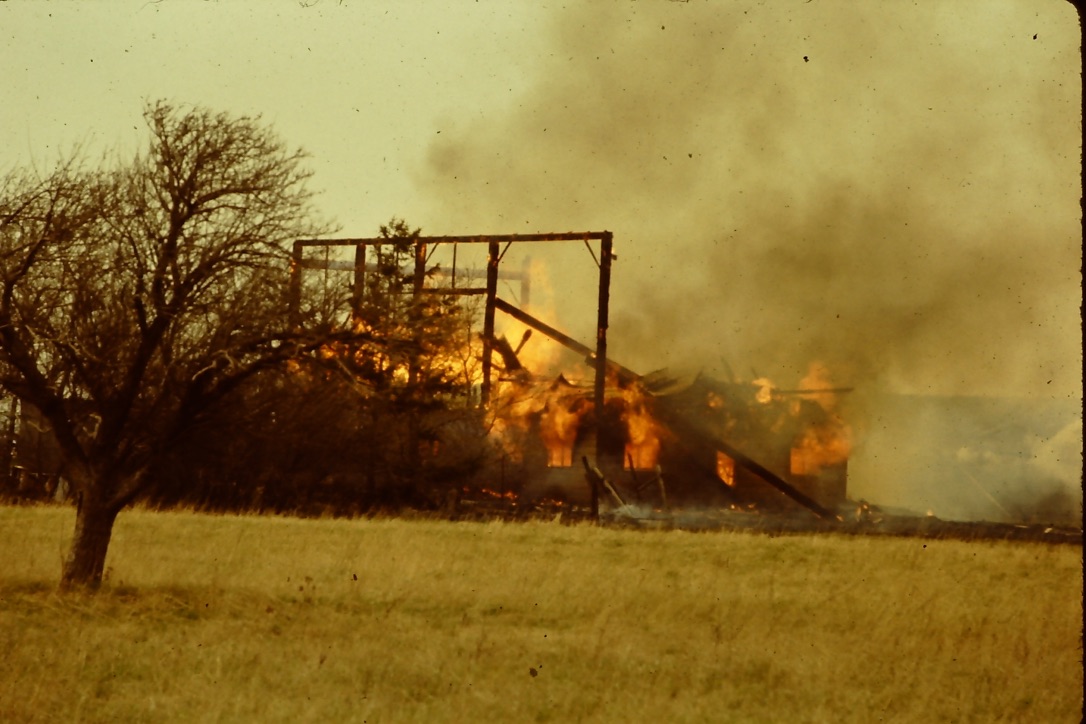
    Many years later we were driving up the access ramp on the other side of
    the QEW.  Exactly across the highway from the old man’s farm.

    “Dad…big fire over there.”
    “Barn  fire.”

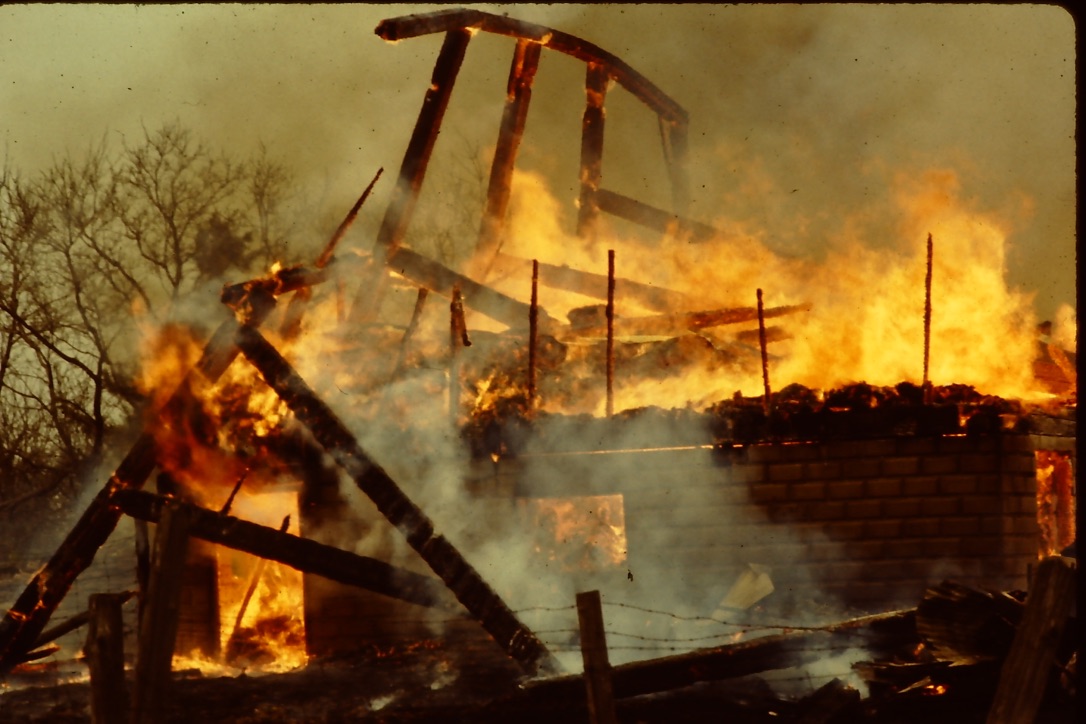
    Sure  enough a large barn was engulfed  in flames.  Not much  anyone
    could do but look.  And there was a crowd gathering   

    Another of our Ontario wooden agricultural  cathedrals 
    was being reduced to ashes.

    Every time we drive along the QEW and  start to enter the curve 
    down  to the Ford  Motor Company plant
    I see both of these barns.

    And  I hear the old man speaking about the meaningless of his
    sudden great wealth.  


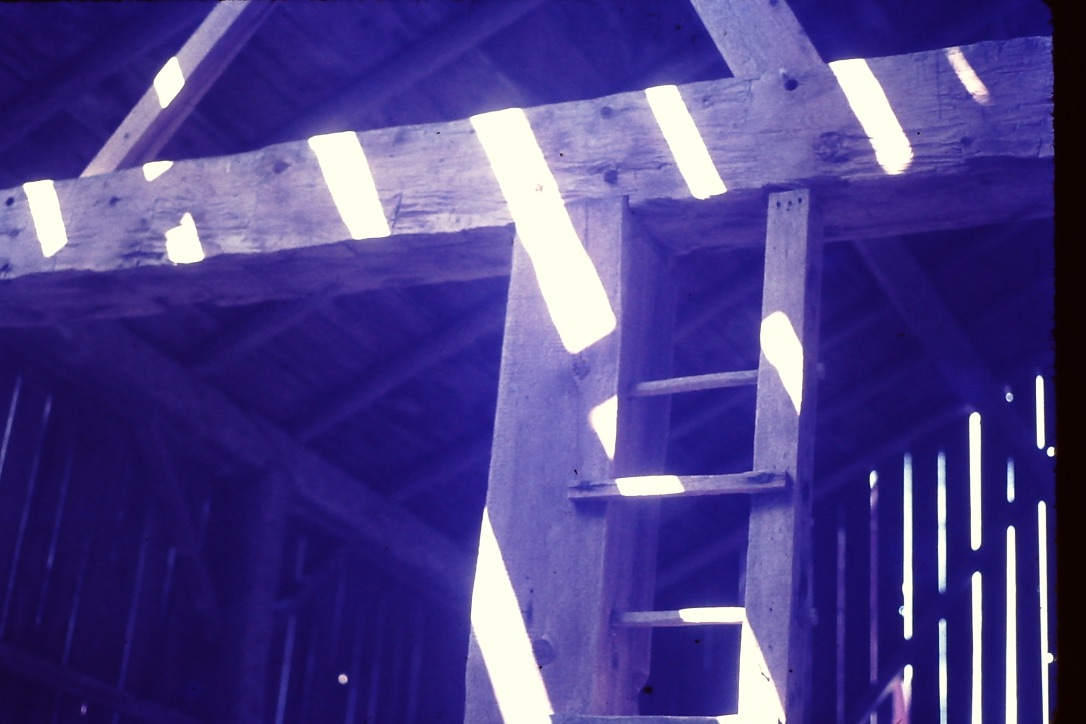
    (This picture above is not the barn that was burning.  But it is similar.  So many are gone.)


    Take another look while you read Robert Frost’s ‘An Old Man’s  Winter Night’


    alan skeoch
    august 2020

    An Old Man’s Winter Night by Robert Frost

    www.robertfrost.org/images/postquote.png); overflow: auto; background-position: left top; background-repeat: no-repeat no-repeat;” class=””>

    All out of doors looked darkly in at him
    Through the thin frost, almost in separate stars,
    That gathers on the pane in empty rooms.
    What kept his eyes from giving back the gaze
    Was the lamp tilted near them in his hand.
    What kept him from remembering what it was
    That brought him to that creaking room was age.
    He stood with barrels round him – at a loss.
    And having scared the cellar under him
    In clomping there, he scared it once again
    In clomping off; – and scared the outer night,
    Which has its sounds, familiar, like the roar
    Of trees and crack of branches, common things,
    But nothing so like beating on a box.
    A light he was to no one but himself
    Where now he sat, concerned with he knew what,
    A quiet light, and then not even that.
    He consigned to the moon, such as she was,
    So late-arising, to the broken moon
    As better than the sun in any case
    For such a charge, his snow upon the roof,
    His icicles along the wall to keep;
    And slept. The log that shifted with a jolt
    Once in the stove, disturbed him and he shifted,
    And eased his heavy breathing, but still slept.
    One aged man – one man – can’t fill a house,
    A farm, a countryside, or if he can,
    It’s thus he does it of a winter night.

    NOW EVERY TIME YOU TAKE THE QEW WESTWARD YOU MAY  SEE THE OLD BARN
    AND  HEAR THE OLD MAN….EVERY TIME YOU SEE THESE BUILDINGS.

    alan skeoch
    august 2020

  • EPISODE 101 THE BEE YARD…TWO MEN IN SPACE SUITS

    EPISODE 101   THE  BEE  YARD…TWO MEN IN SPACE SUITS…A DRONE WITH A CAMERA


    alan skeoch
    august 2020


    Our son Andrew decided to raise  bees.  I do not know where  he got the
    idea since  my experience with bee  keeping was an utter and complete 
    failure for manY reasons.

    My failure as a beekeeper:  About 30 years ago, maybe 40, I decided to become  a  beekeeper after buying a van load of old
    bee hives, etc. at the Parker  Petit auction sale north of Toronto…maybe  near Beeton come to think of it.  All I needed
    was instruction and a load of bees from an American supplier.  Getting the bees was easy.  Understanding  the bees  was
    another matter. First mistake… I put good bees in old hives.  They got diseased and had to be burned.  Awful.  The worst part came
    next.  Ed (deleted last name) was my bee instructor.  Seemed like a  nice fellow until he turned up at our house when
    I was away.  His intentions were sexual and Marjorie was appalled.  She phoned me at PCI and I in turn phoned
    Ed.  The call was  not nice.  I did not care if  his wife was listing.   So ended my beekeeping career.

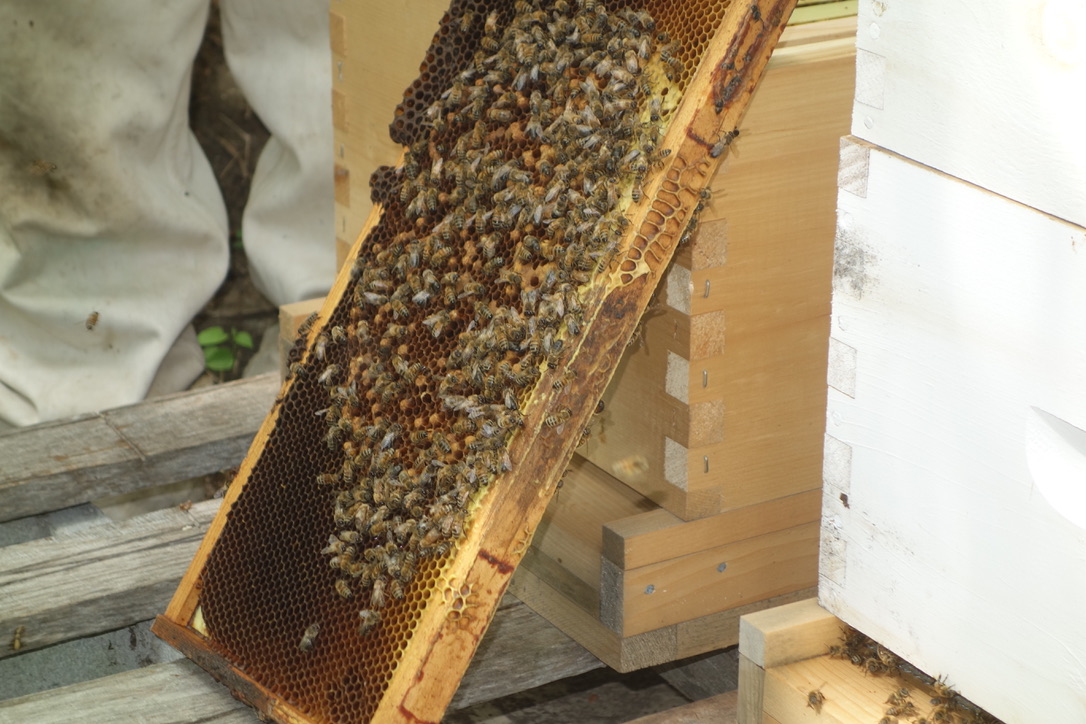
    Andrew, our son, will not make the same mistake.  His instructor is one of my lifelong friends.  He has been
    beekeeper for 50 years.  Loves his bees.  And  loves helping youngsters willing to take up beekeeping.  It cannot
    be a casual  thing.  Bees are one of the most organized living things on this planet.  They do not take well
    to amateurs.

    MARAUDERS ARE OUT THERE

    Russ: “Skunks and bears have killed many
    of my bees.  They  find them tasty.  The Skunks just scratch on he hive..like knocking at your door.  When  the
    bees come out the  skunk eats each bee as you would a nice  sweet chocolate.  A skunk can eat a  lot of  bees.
    The worst raid was  by a bear.   My bee  yard is near Orillia which can be bear country on rare occasions.
    The bear just lifted the supers of the hive one by one.  Ate until his  gut was full then ambled away  leaving
    my bee yard devastated.  I spent a couple of evenings parked near the hives  intending to get that bear.
    The bear outsmarted me…never came back.”


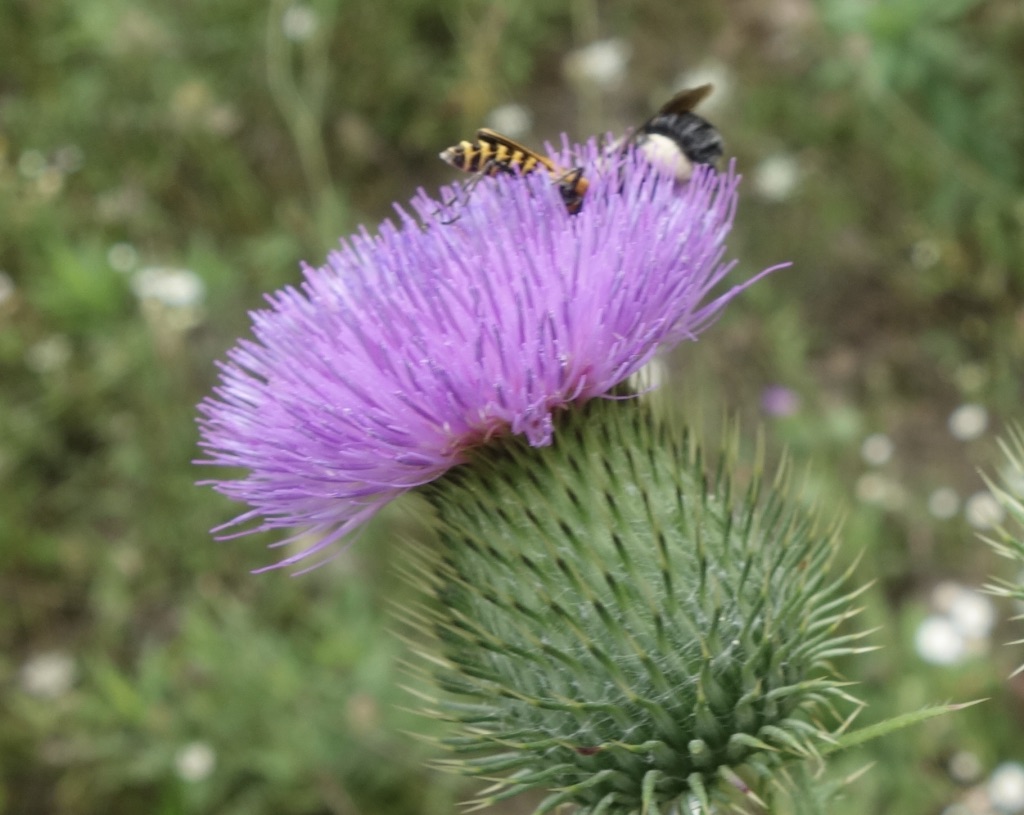
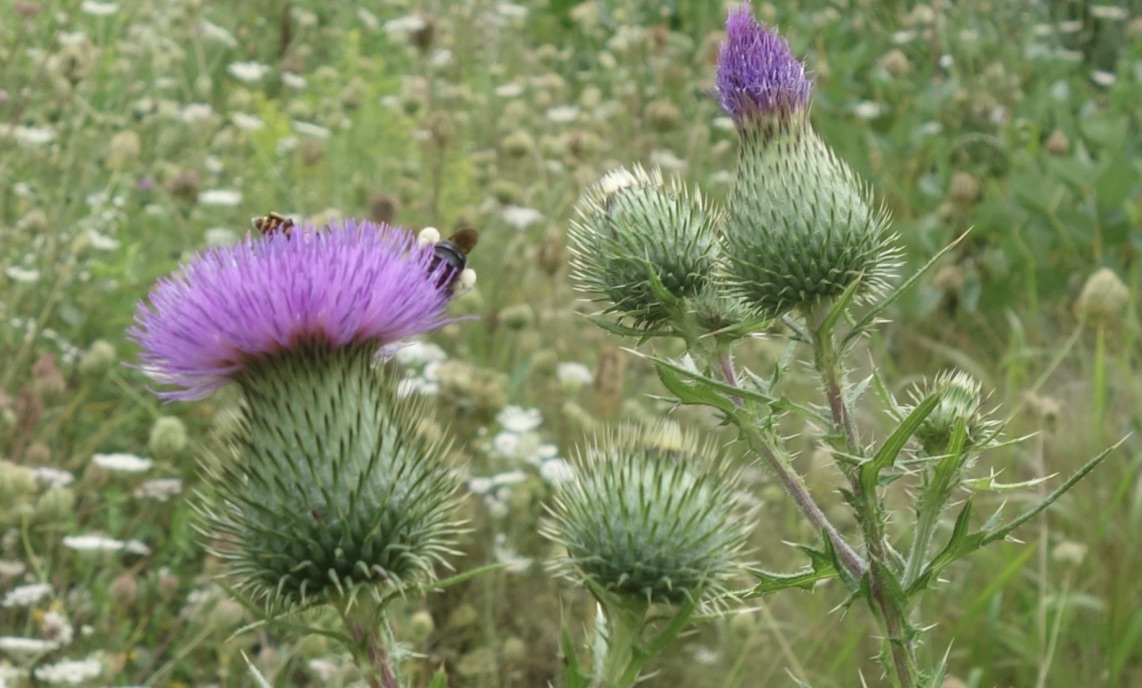
    SEE THE white/yellow pack of pollen attached  to this bumblebees back legs?


    Sunflowers are immense.  But no bees.  No nectar.


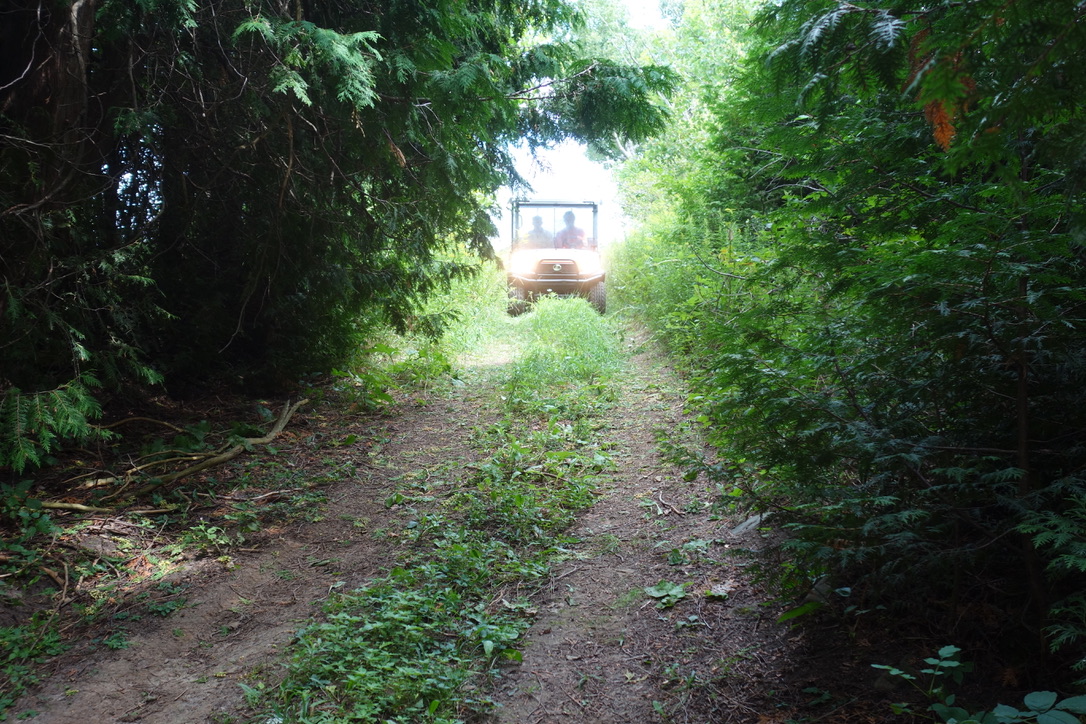
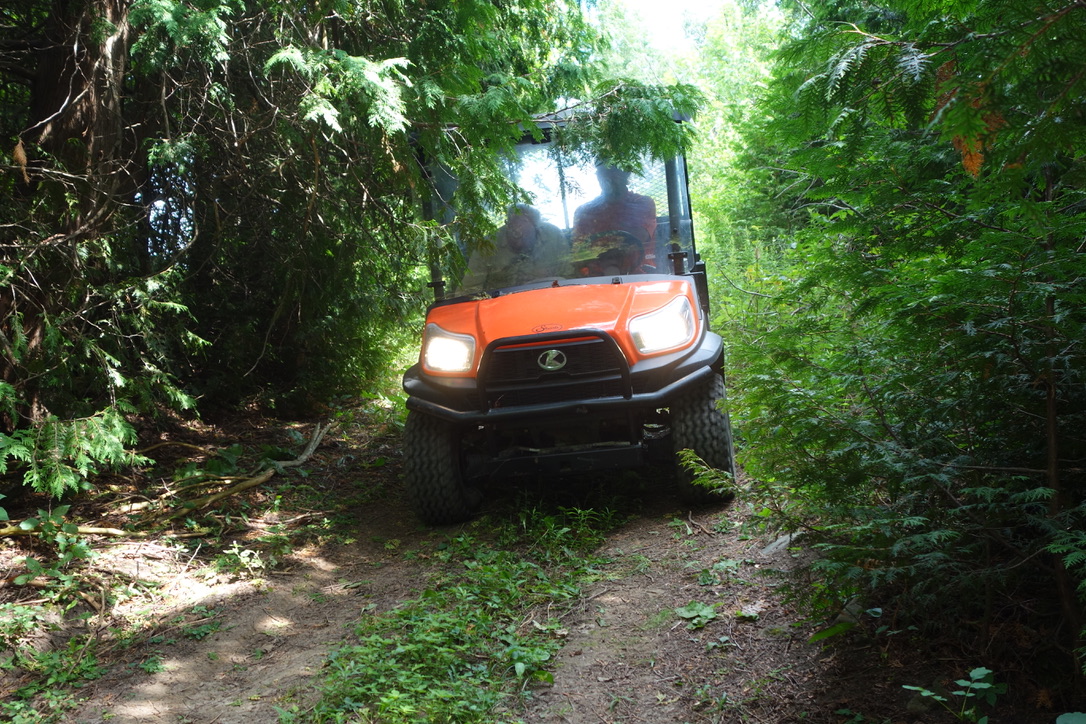
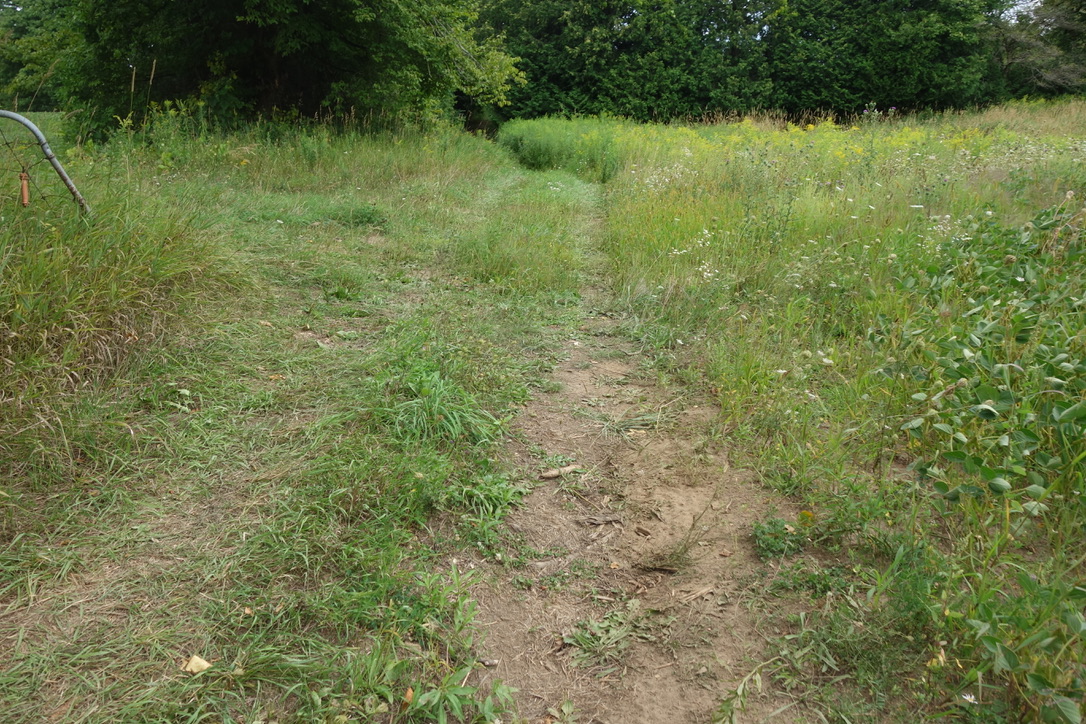
    The secret trial  to the bee yard.  I walked.   Russ and Andy drove.


    Our fields of  goldenrod could be  saviours of Andrew’s bees.   Currently bee yard is located between
    two fields of commercial soybeans.  Long past the flower stage.  

    “How far will a bee go for nectar,  Russ?”
    “Maybe 2 miles although they do not like the long trips.”


    “So what do you think, Russ…good bee yard?”
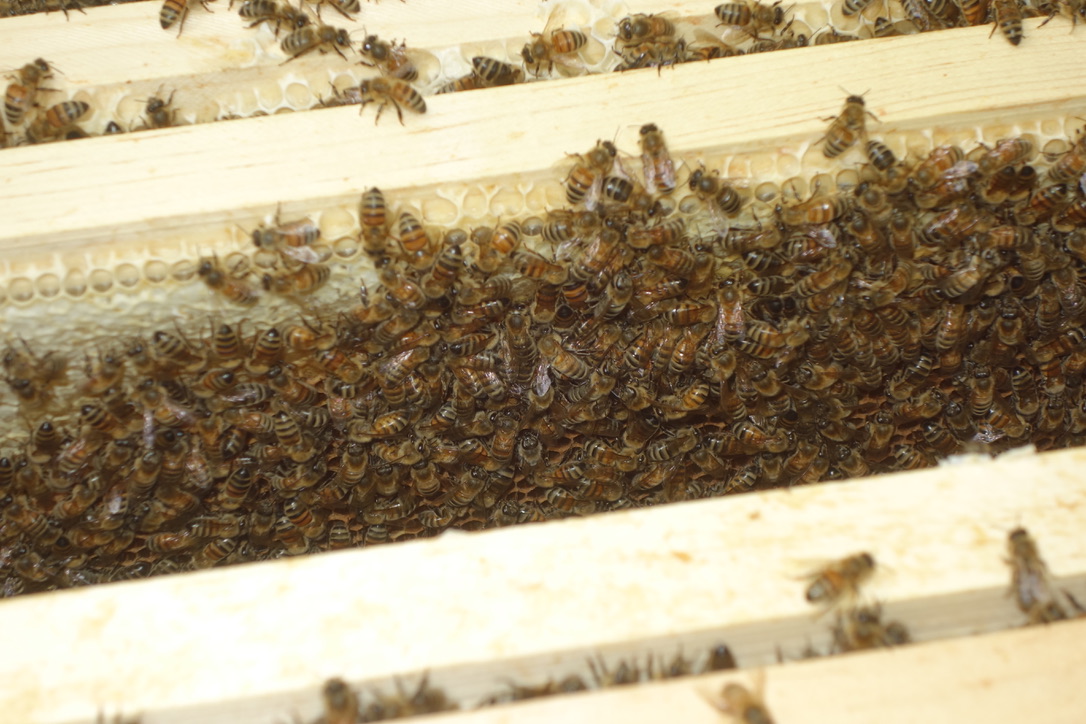
    “The problem is getting these bees  ready for winter.  One hive is OK, the
    other is weak.  We may  have to combine  them if Andrew  is to have bees 
    next spring.”
    “Can Andy  get any honey  this fall?”
    “Maybe, but the bees have to eat as well…I would wait until
    next year when the hive(s) might be stronger”


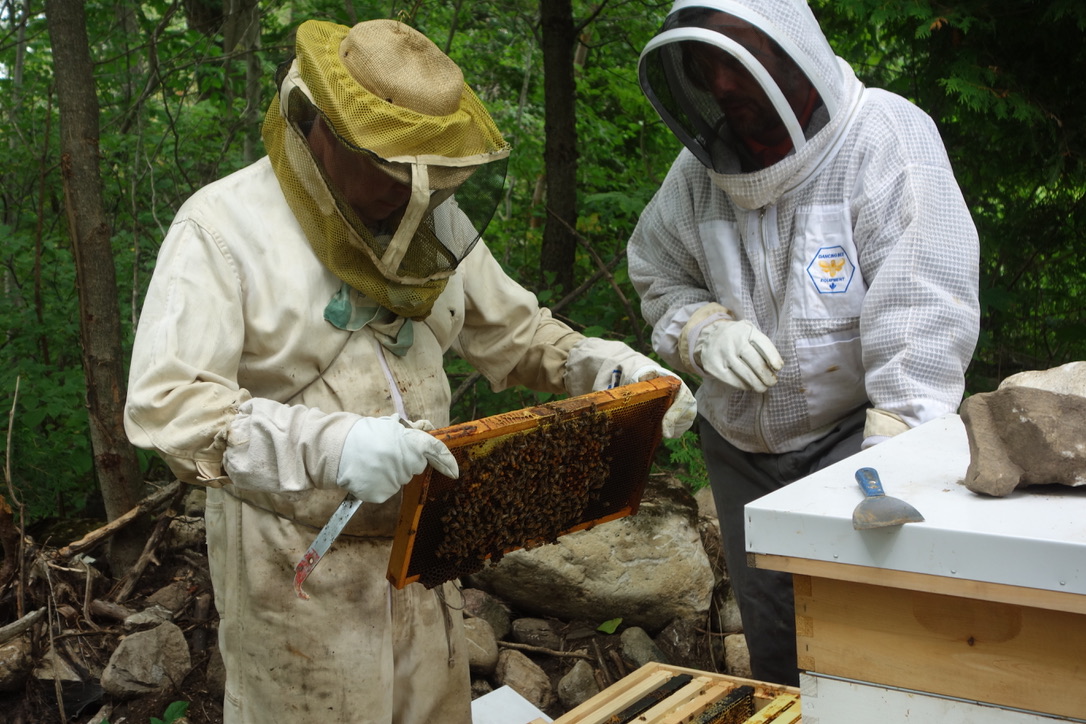
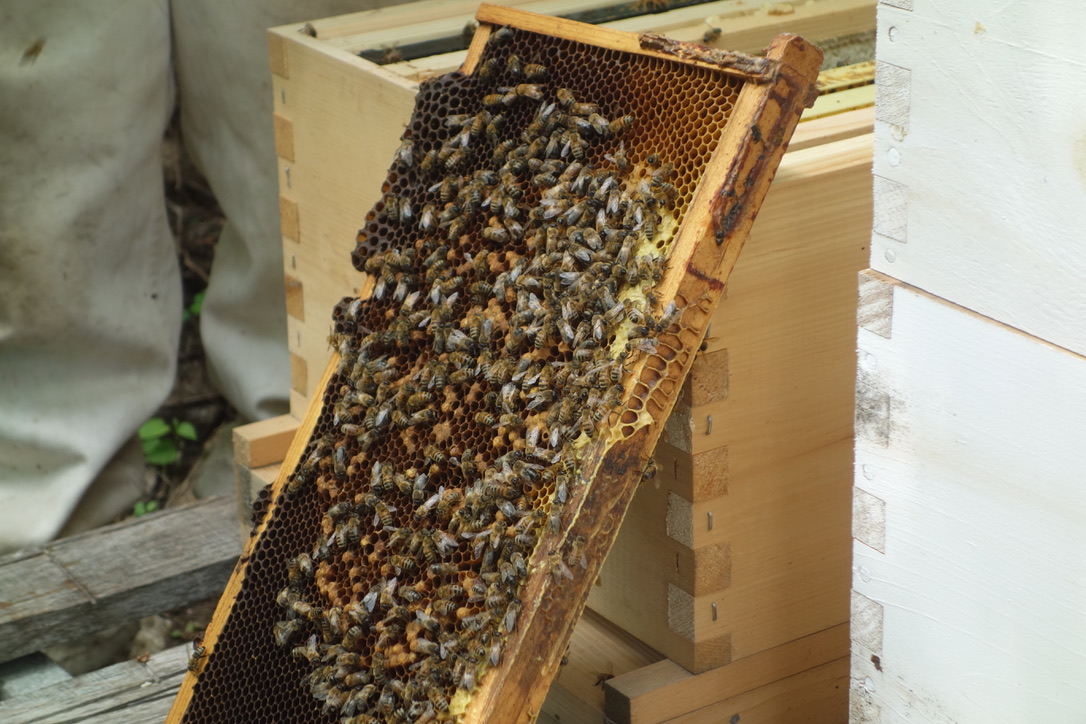
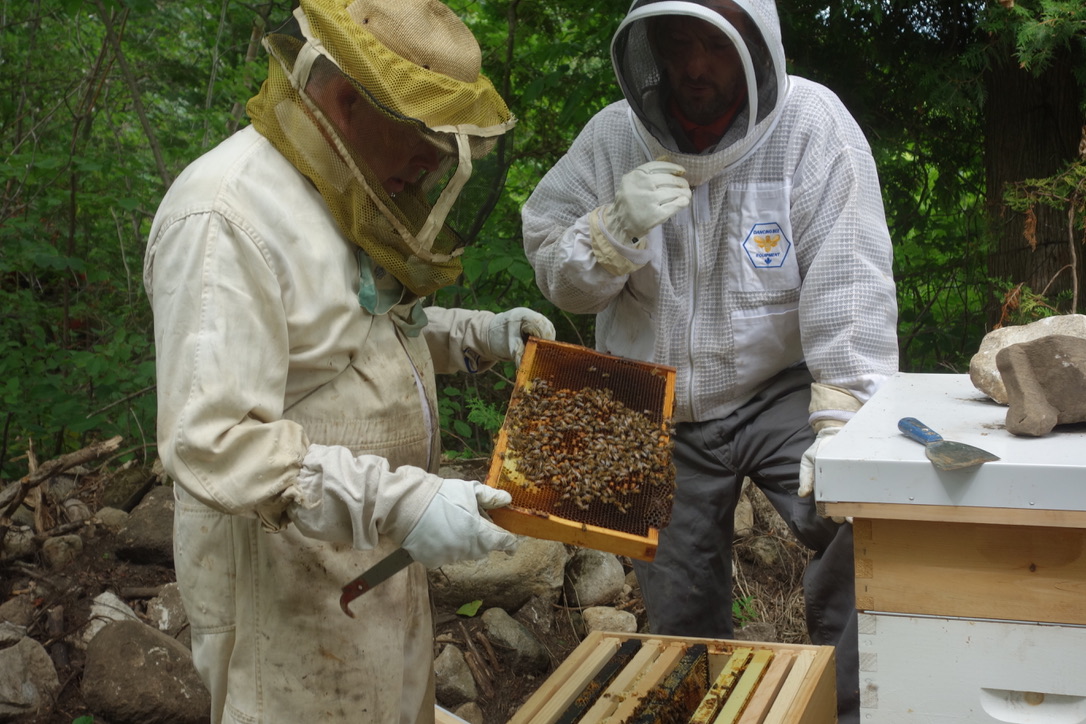
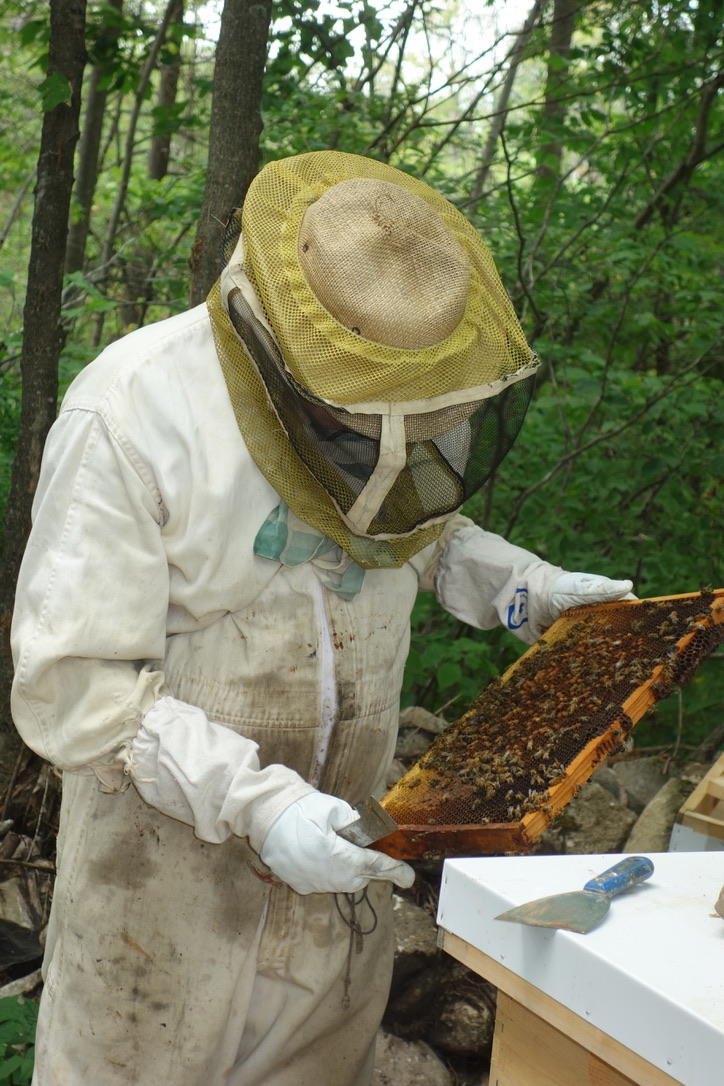
    Russ, the beekeeper in Andy’s bee yard.  “Will the bees live or die?”

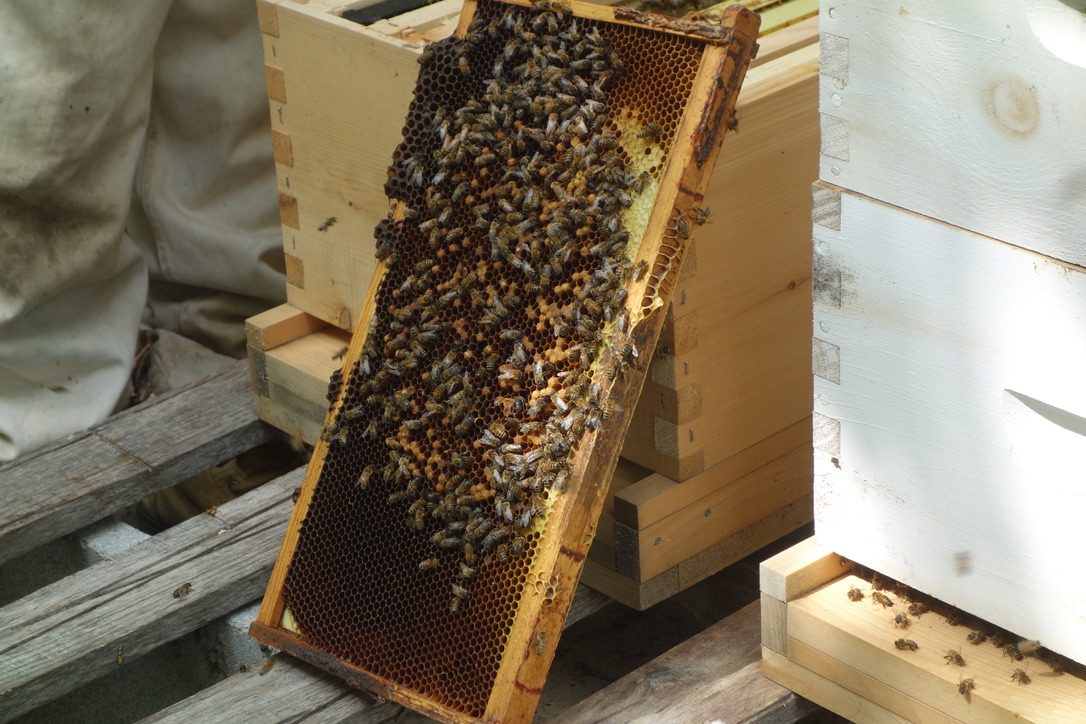
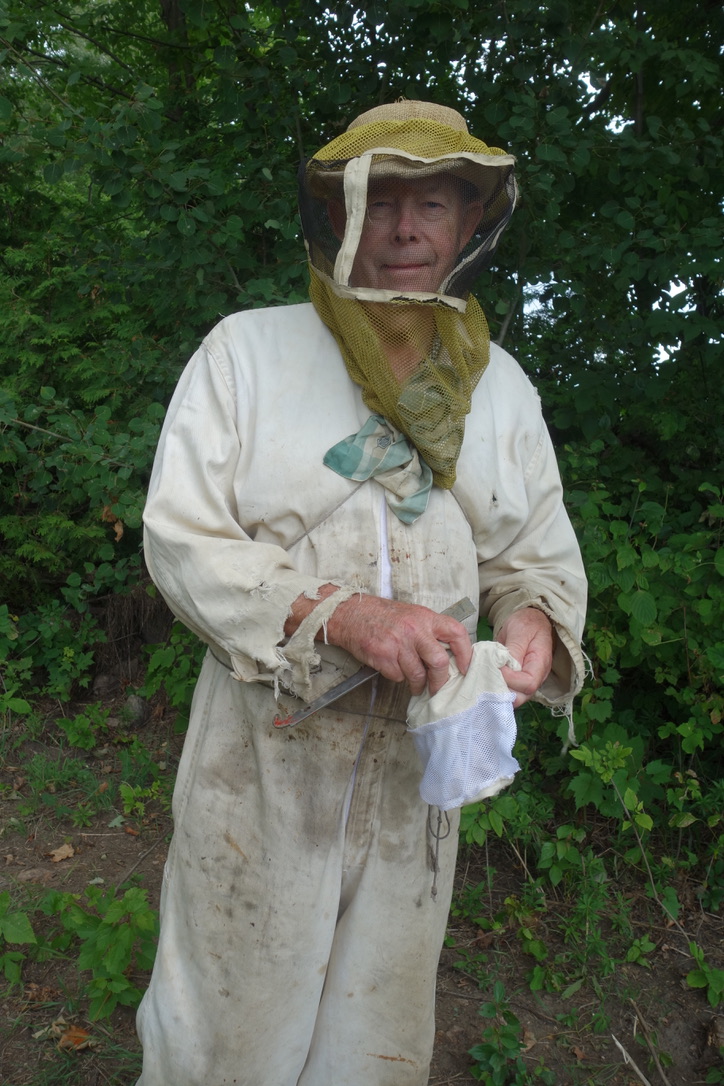
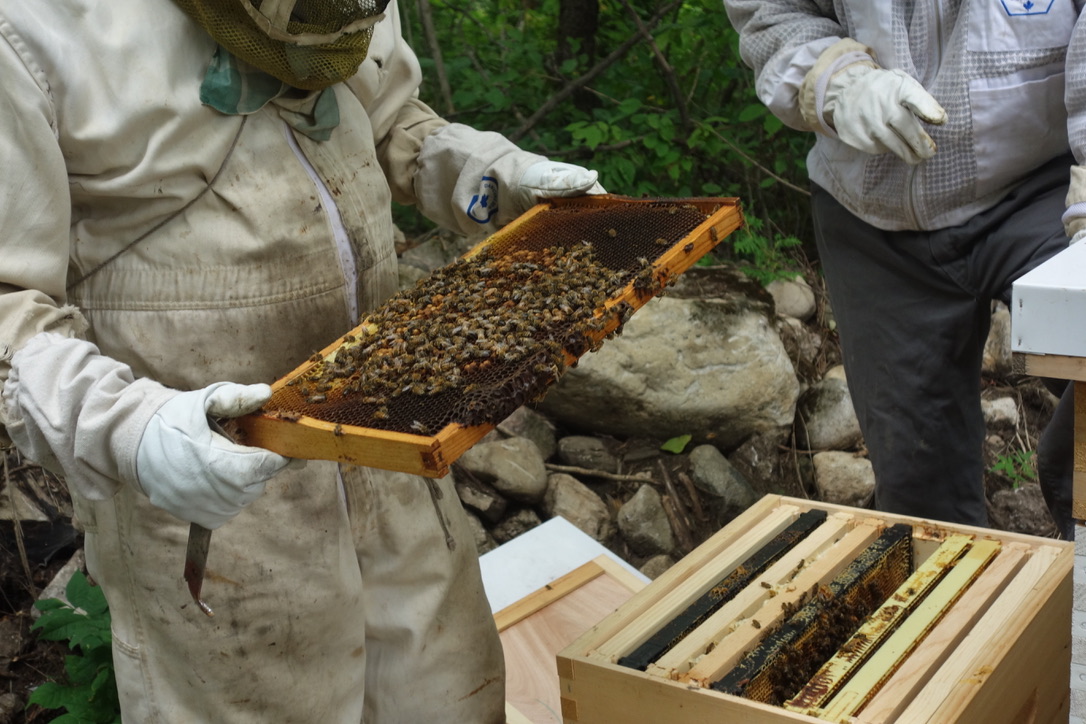
    How  can you tell that Russ has been a beekeeper for a long time?  Look  at his  bee outfit.

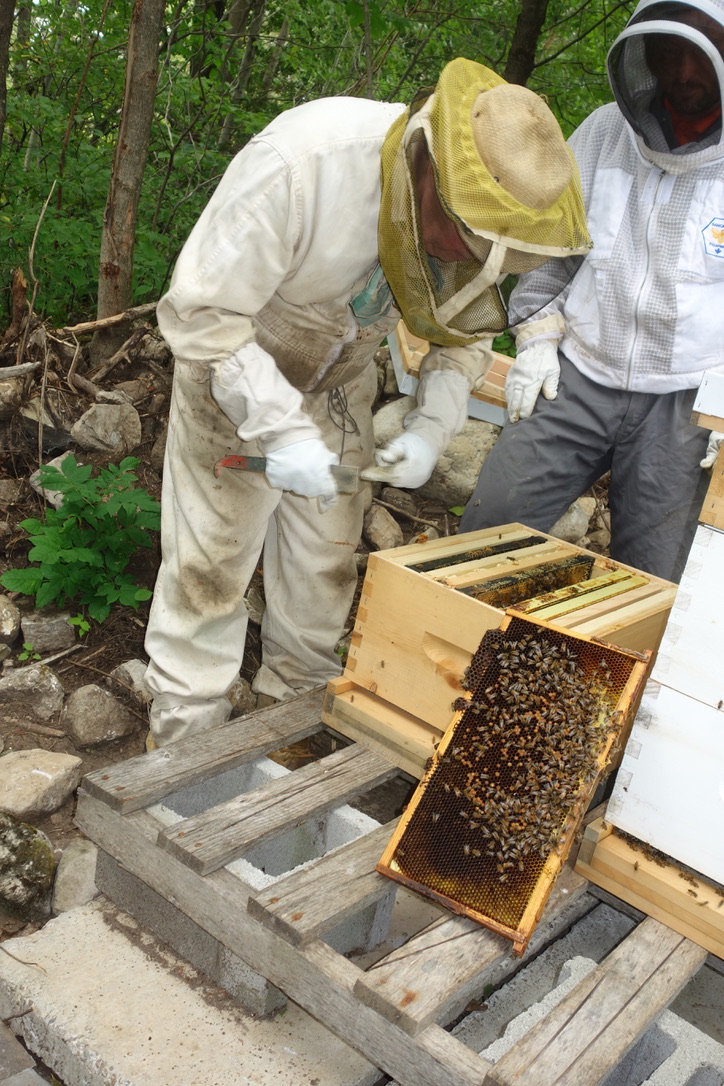
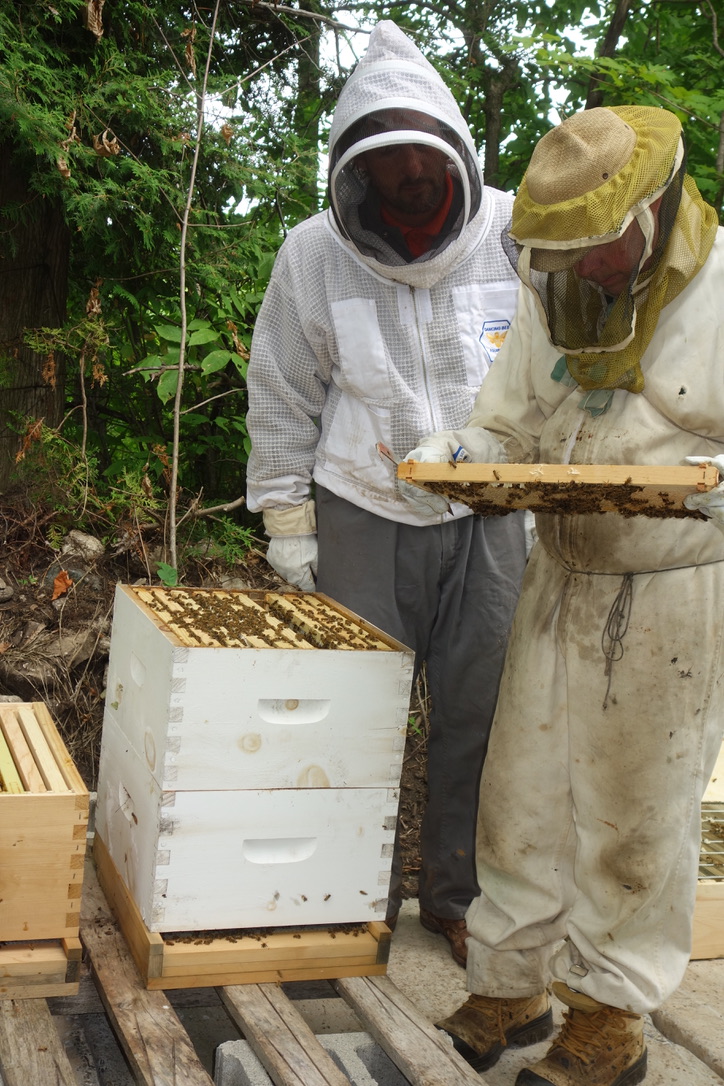
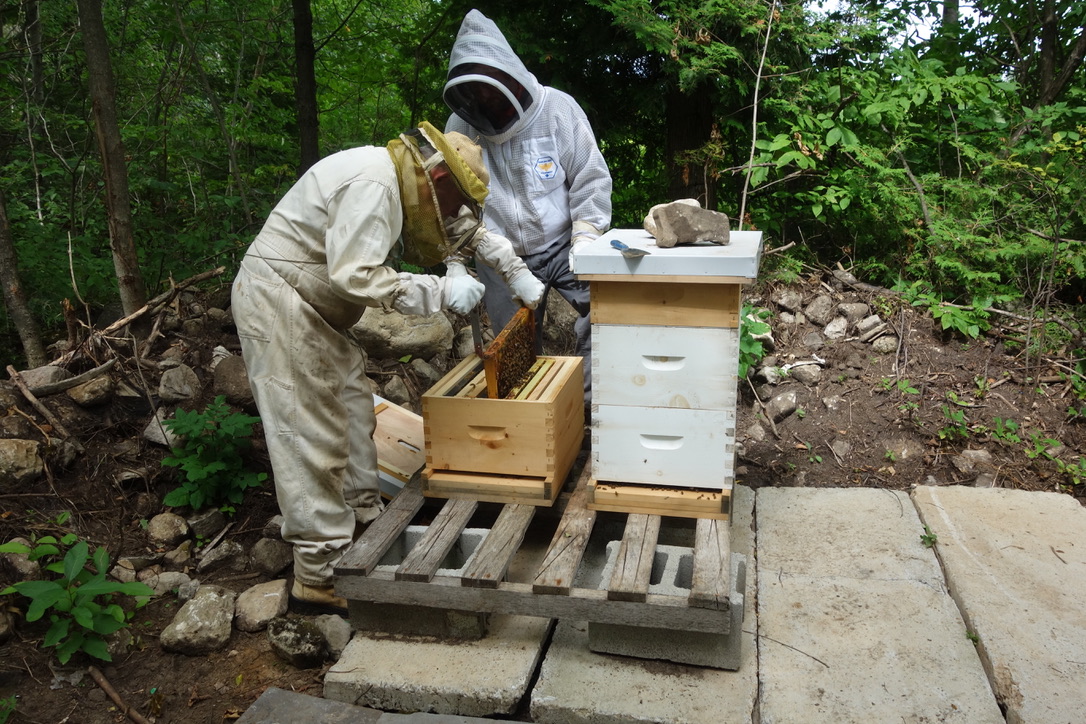
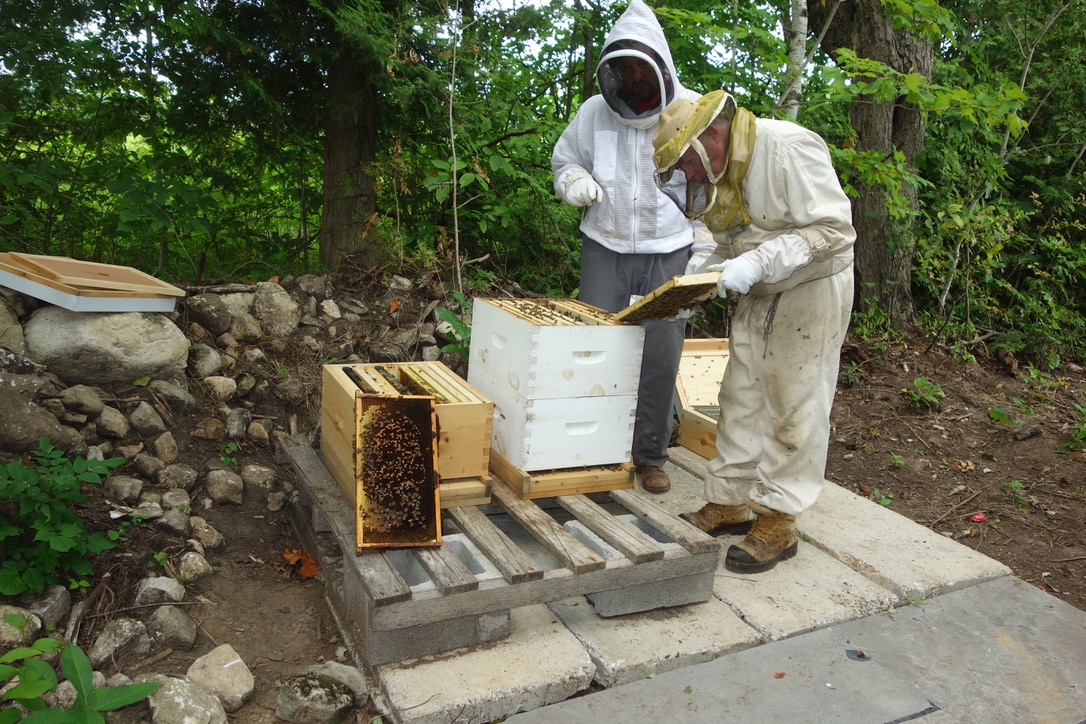
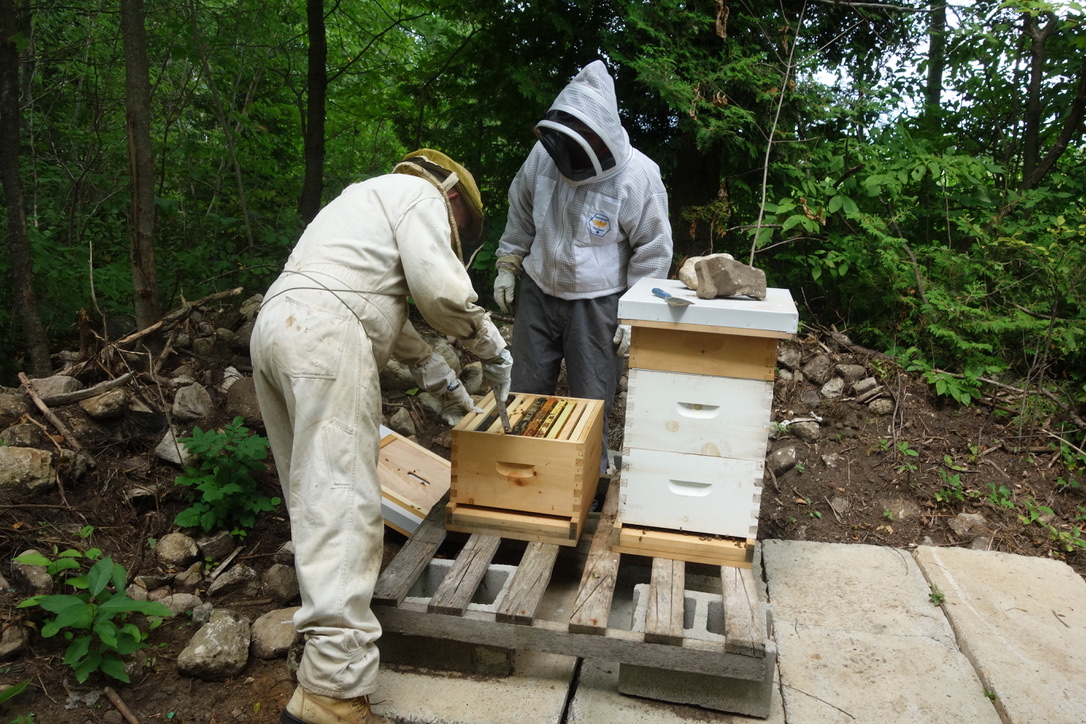
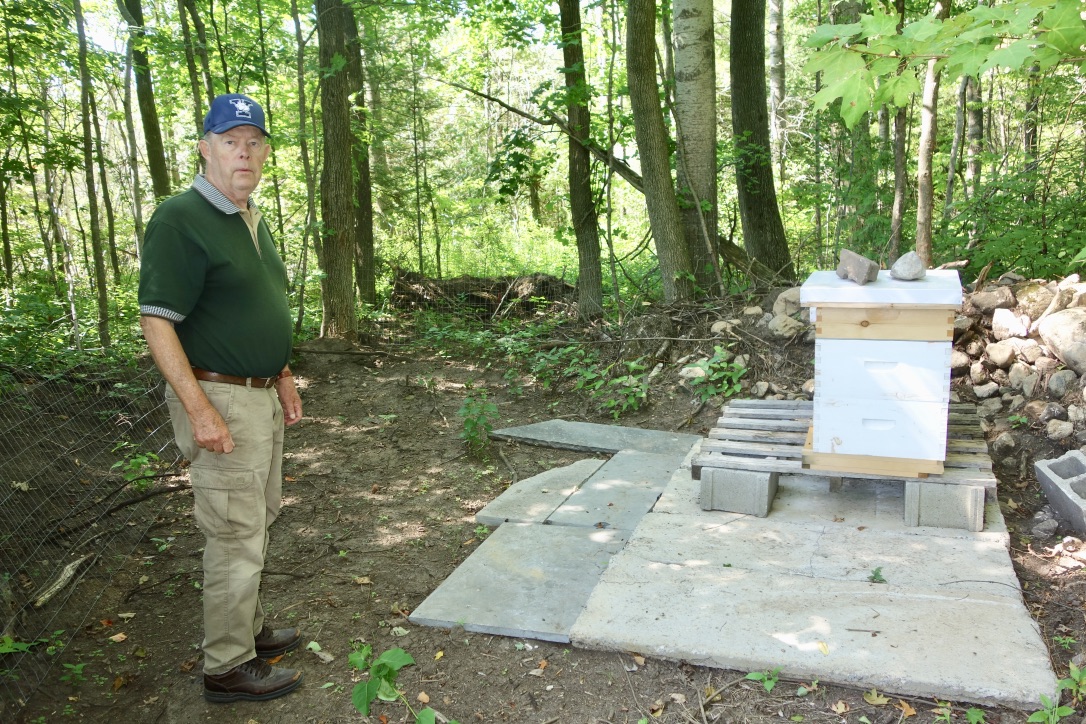
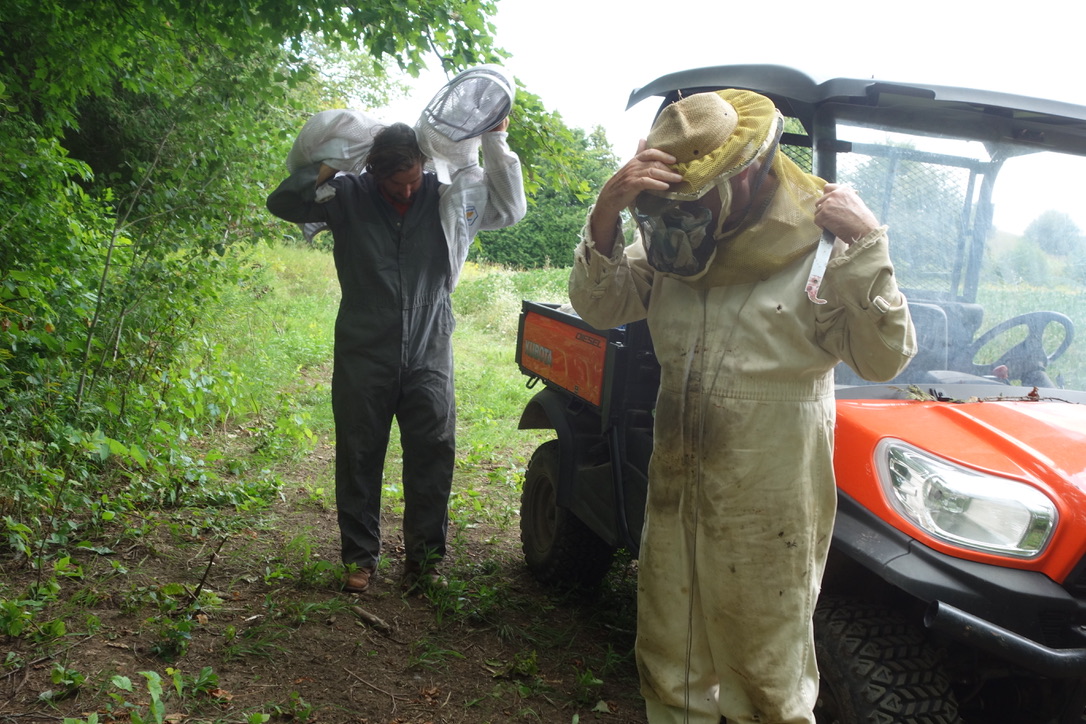
    The weirdest thing about this bee visit was that Andy and Russ dressed up like spacemen while all  I wore
    was short pants and a polo shirt.  I  should  have been scared, I guess.  Neither Andy nor
    Russ paid  any attention to my vulnerability  They talked bees…as  if I was  not there.

    “What if  I get stung, Russ?”
    “Bee stings could do you the world of good…my dad  said
    they were good for arthritis pain…reduced the pain”
    “I do  not have arthritis, Russ?”
    “Well, enjoy the bee stings as if you do.”

    “Alan, would  you pipe down.  Andy and I have serious  work
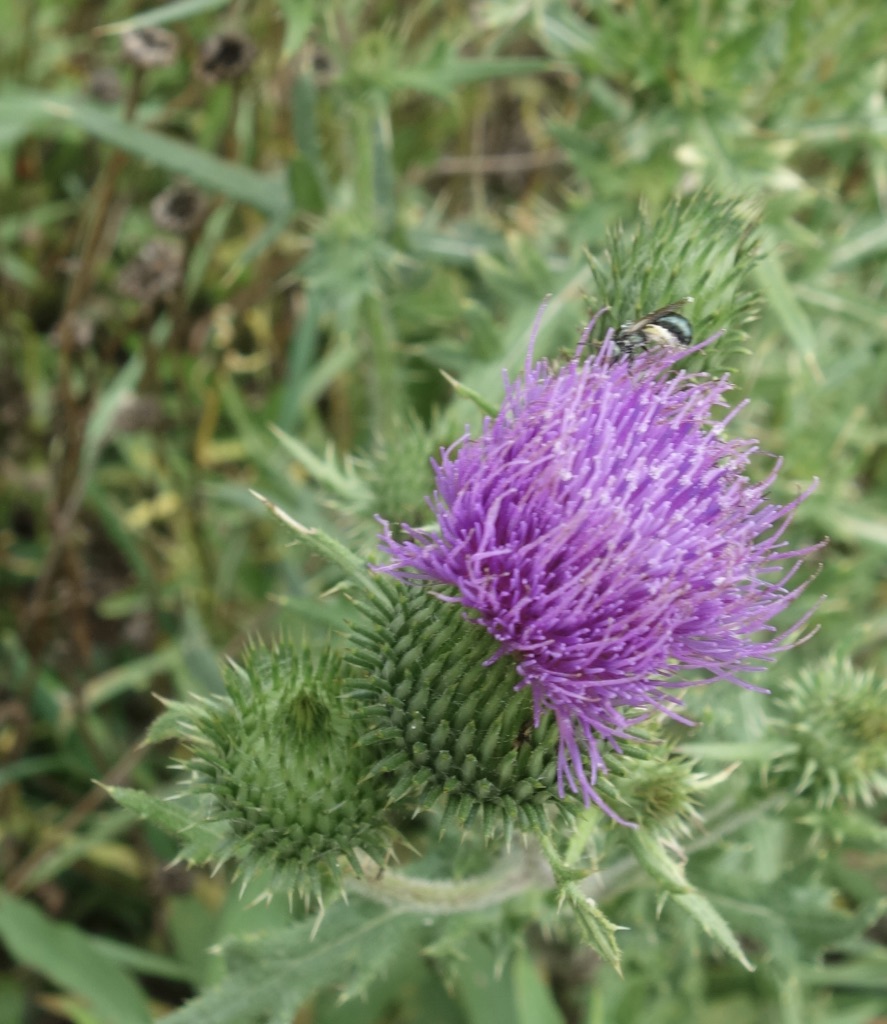
    to do here.  Go out and take pictures of thistles.”


    Thistle honey…a rare sweetness


    “Andy, the success of any bee  colony rests with the female bees.   They do  all the work.
    The male bees do one thing and then they are useless.  Most die.  The females keep a
    few around but must get irritated  for the drones just flop here and there.  They do  nothing
    except do a bit of breeding.”

    “Sounds about right.”

    “Meaning?”

    “Women are multi tankers.  They do  most of the work around  home.  Men just hang around
    and drink a beer or two…now and then.”

    “Where did you get that idea,Andy?”

    “From my dad.  Look at him right now.  He is doing nothing but taking pictures.  We 
    are working.”

    “But we are males too…drones. “

    “Right, maybe we should  consider a  sex change.”


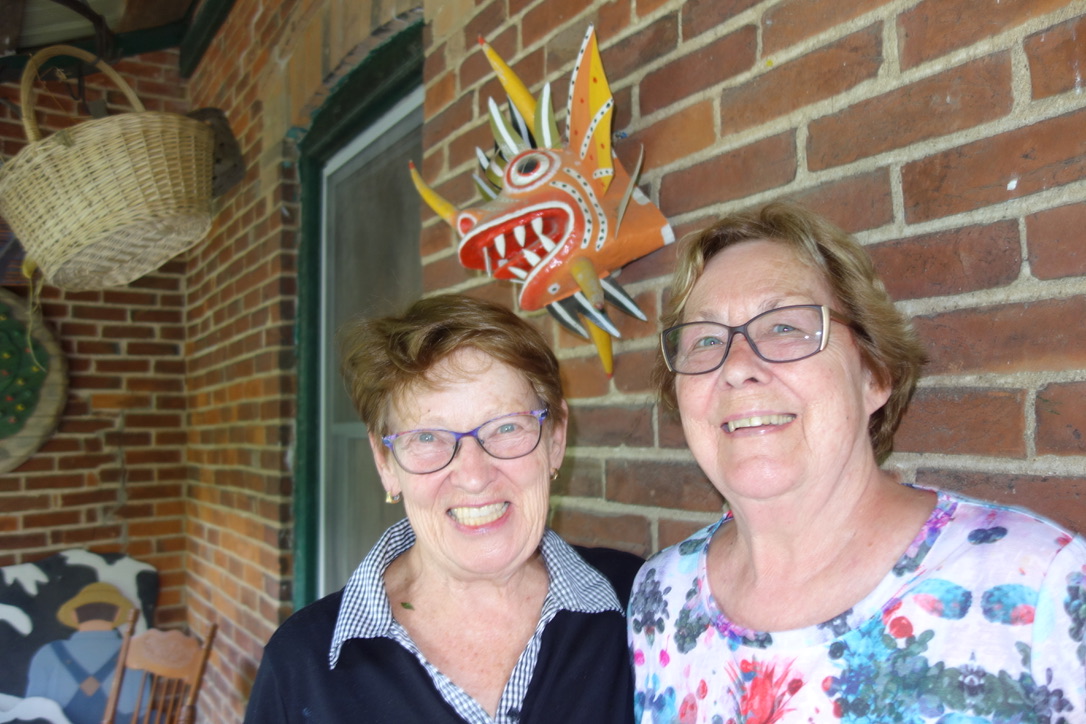
    Marjorie and  the bee keeper’s wife, Anne…plus a friend.

    “Russ, could that mask… above Marjorie and Anne…could the mask scare skunks away from
    the bee hives?”

    “Scares  me.”

    We are awaiting the honey.   Humans  are such insensitive creatures.  Here we are prepared to
    steal honey from bees  who have collected  nectar from millions of tiny flowers.   We are worse 
    than insensitive.  We are greedy.   We give them back sugared water after stealing their honey.

    How did that fox get in the house ?  Marjorie come and  get the fox our of here..


    Russ and  I  have been good  friends ever since high school.  We spent our high school years
    going on camping trips using our thumbs to get rides, then playing football for years in the mistaken
    belief that girls liked the game and would therefore marvel at our skills of knocking  people down.
    We were mistaken.  We did, however, marry roommates at Victoria College, University of Toronto.
    That was one of our great achievements.


    This is our son Andy and his wife Julie.

    Marjorie and  her pet cow named Elsie.


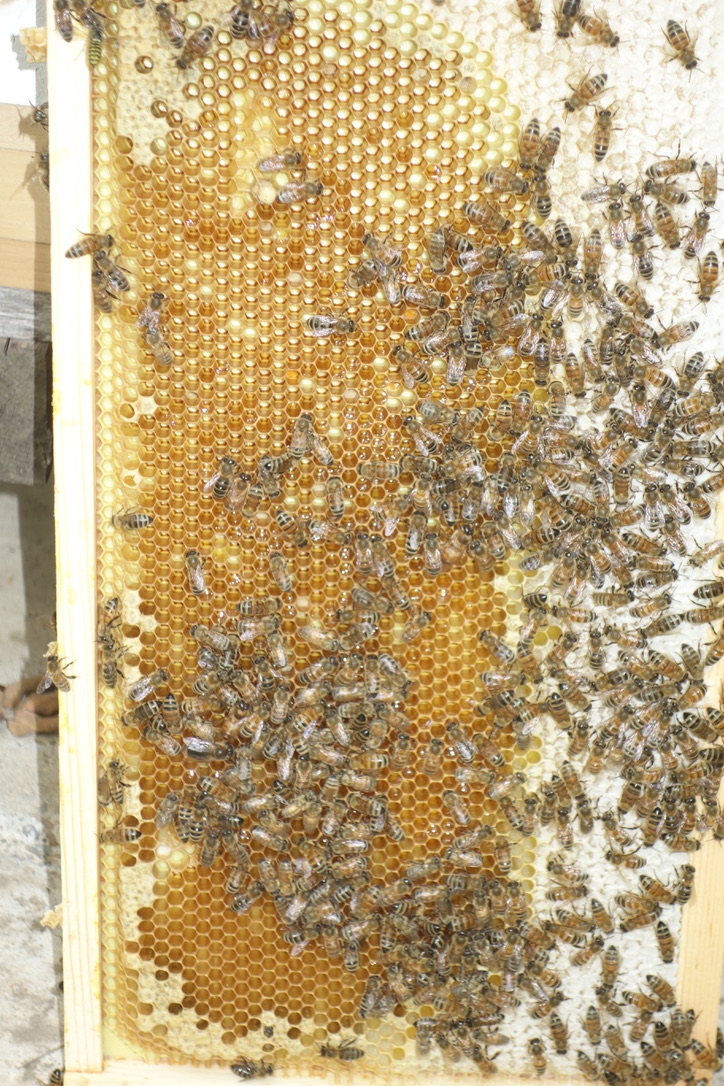
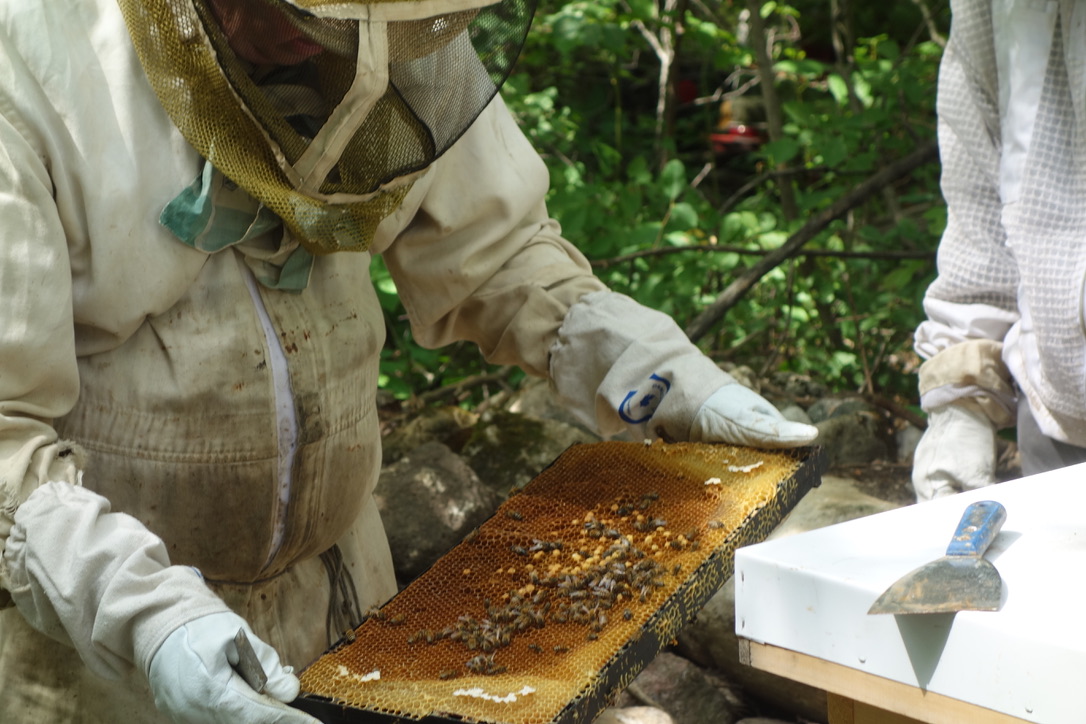
    Two beekeepers.   Andy has kept bees for 1 month.  Russ and his dad have  kept bees for more than 50 years.  “I still do not fully understand my bees even
    after 50 years.  I do my best to keep them healthy.”

    alan skeoch
    August 2020