Author: terraviva

  • EPISODE 175 “GODDAMN ROCK IN THE COMBINE” (BEGINNING OF A SERIES)

    EPISODE  175  “GODDAMN ROCK IN THE COMBINE”  (BEGINNING OF A SERIES)


    alan skeoch 

    nov. 2020


    Begin forwarded message:


    From: Alan Skeoch <alan.skeoch@rogers.com>
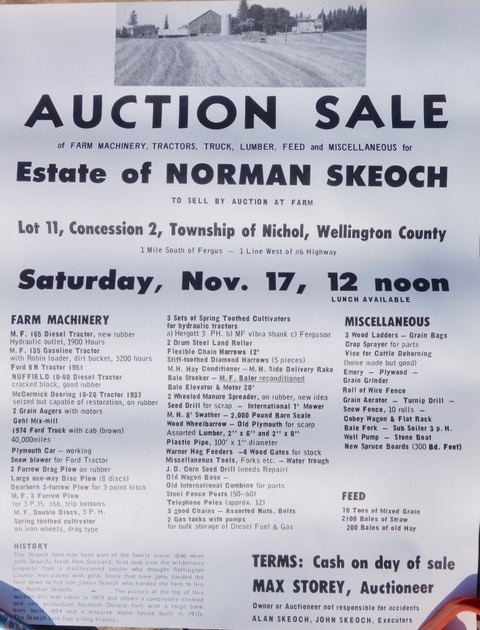
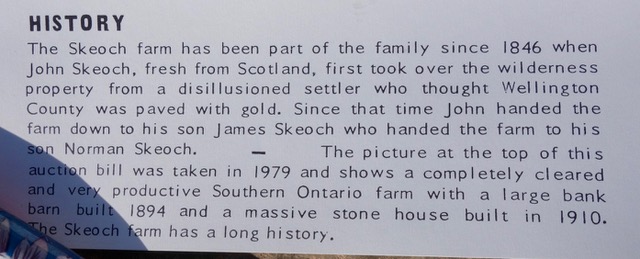
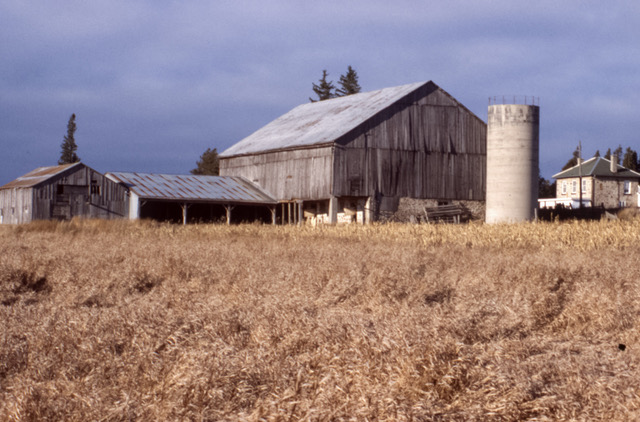
    Subject: Skeoch Family…to complement the Auction poster
    Date: April 13, 2018 at 1:33:04 PM GMT-4
    To: Karen Wagner <karenw@wellington.ca>


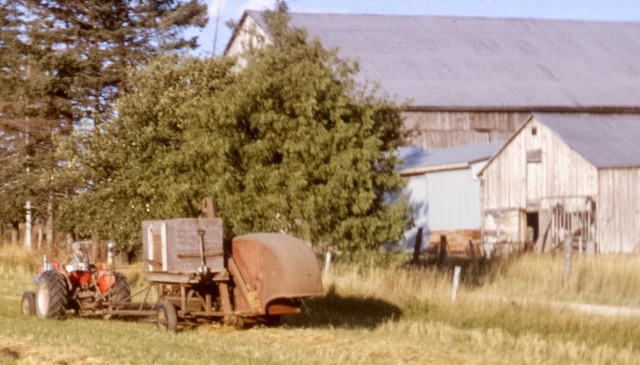
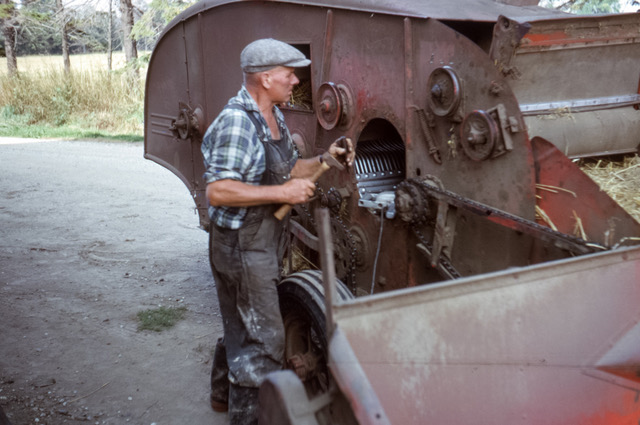
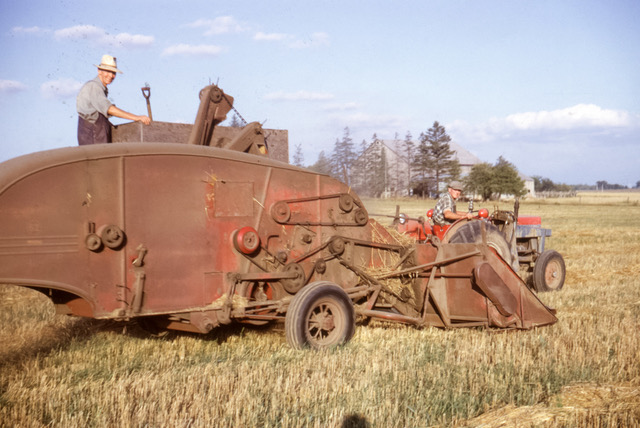
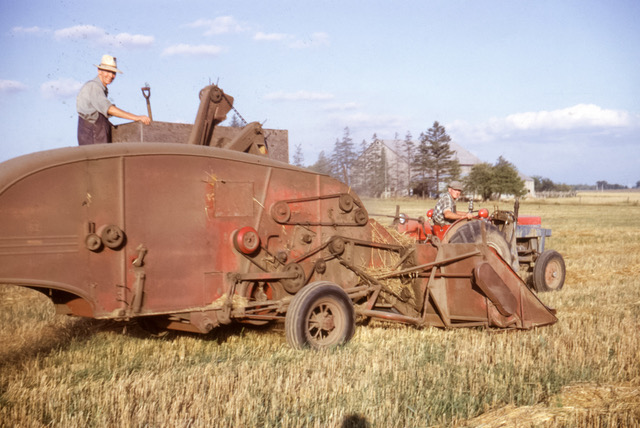
    The MASSEY HARRIS COMBINE HARVESTER…FINAL DAY OF ITS LIFE

    “ALAN, how would you like to take the Ford tractor and the side delivery rake…turn over the hay in the south field.”
    “Love to…”
    “Hay got a little damp in the rain…too wet to bail.”

    That must have been in the late 1970’s.  Uncle Norman (Skeoch) was running the Skeoch farm alone by then.  Uncle Archie had
    died in the west.  Choked to death.  Which left Norman alone on the Fergus farm.  It was mid summer, beautiful day, smell of growth in
    the air coupled with the perfume of new mown hay.  A gaggle of guinea hens ran here and there yapping to beat the band.

    Uncle Norman surprised me that  day.  That was the first and only time he ever entrusted me with a farming operation.  Hell, I didn’t
    even know how to start the tractor let alone guide the side delivery rake accurately down the windowed timothy.   

    “No problem, just
    push the starter and put her in gear.  Do it now.  I’ve got to work on the combine.”

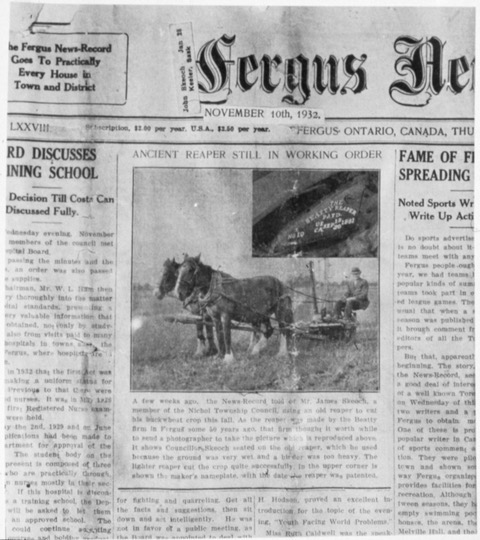
    The combine?  Archie and Norman had pooled their resources back in the early 1950’s to buy what was then a brand new Massey Harris combine harvester.
    By the late 1970’s it was no longer new.  The red paint of its halcyon days had faded to a rusty red hue.   The great hulking machine had lost its
    novelty.  New combines had replaced this one.  Huge, self-propelled machines that could consume wheat, oats or barley fields as if they were morning
    porridge in a lumber camp.

    “Needs some repairs.”

    Seemed off to me that Uncle Norman was going to repair the machine with a big ball pain hammer.  But what did  I know?
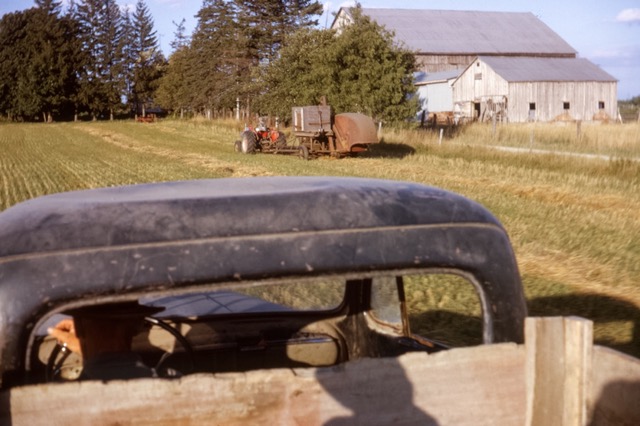
    So he began hammering as I drove down past the barn to the south field. Elated to be trusted.  Determined to ruffle up the wet hay as perfectly as
    possible.  What a grand afternoon?  What a great job?  Could I do the turning twice just for the hell of it?  Best not.  So I returned to
    the barn where Uncle Norman was pounding the Massey Harris combine as if it was some enemy in mortal combat.

    “Job’s done, Uncle Norman.”
    “Harrumph1”
    “What’s up?”
    “Picked up a son of a bitching rock … bent the goddamn master cylinder.”
    “Can it be fixed?”
    “Not today and not with this goddamn hammer.”
    “Rcck?”
    “Yep, still in  there…”
    “Can it be fixed?”
    “Nope…dead…dead as that guinea hen I hit with the mower…damn,damn, damn!”

    So, while i was enjoying myself, Uncle Norman was trying in vain to attempt to harvest the oats whose golden tassels were waving in the summer breeze.

    “What will you do?”
    “Have to get a custom machine in to harvest the oat field.  Have to pay for that.  Farming can be a losing proposition.”

    That comment made me think of another visit to the Skeoch farm.  Uncle Norman was in the stable and a big five ton truck
    had backed up close to the stable door.  A boarding ramp had been lowered.  Painted on the side of the truck were
    the words  “dead and disabled animals,  call ….”

    “What’s up Uncle Norman?”
    “Had to call the dead wagon…heifer in the barn got the bloat…blew up like a goddamn dirigible…dead…alfalfa, I think.”
    “Bloat?”
    “Happens once in a while with cattle.  if I had seen her I could have driven-in the bloat knife right into her gut and let the gas out of her.  Happened so goddamn fast
    that I couldn’t reach her in time.  Now she’s wedged in the barn, blown up…take a look if you want….”

    And there she was, Dead as a doornail, lying on her side at the stable door.  Huge.  Seemed too big for the doorway. Wndered if she
    could be deflated somehow but Uncle Norman and the dead wagon man hooked her up with a cable and winch and hauled her
    through the door and up into hte back of the truck.

    “What happens  to her now?”
    “Depends  how long she’s been dead,” said the dead wagon man.  Which  was not really a straight answer.
    “Dead  loss to me, for sure,” responded Uncle Norman.

    Farming is a chancy kind of business.  Lots of things can and do go wrong. Often.  At the time I was young and it never occurred to me
    that Uncle Norman’s income from farming must have been a pittance.  So small that the loss of a heifer and the loss of the Massey Harris
    combine might have pushed him over the edge into near bankruptcy.    His expenses  were small.  For most of his life he was a bachelor
    Never travelled much.  Couldn’t really because his truck was so badly battered that it raised  eyebrows on the road.  That condition coupled
    with the fact he had four or five dogs as passengers, their heads jockeying to get in the open air from the passenger window.  There was no back window
    making the truck rather chilly on winter days.


    Back to the combine.  “Barring!  Whump…boom.”   Uncle Norman could not dislodge the rock that had been the master cylinder.
    Each time he pounded the combine the closer it got to the scrap heap.    Finally Uncle Norman gave up and hauled the Massey
    to the fencerow of dead machines … a grave yard if you will.  The combine would not be lonely for others were abandoned there long the golden rod… a couple of drag plows, a timeless dump rake
    and various sections of harrows both spring toothed and straight toothed.

    Up a little further in the orchard archaeologists had identified the fragmentary evidence that ancient people…perhaps Neutral aboriginals…had once lived and laboured
    on Skeoch land.   But that was supposed to be a secret lest souvenir hunters destroy any remaining evidence.  Perhaps the Massey Harris combine was about to be discarded
    on top of a long forgotten First Nation fire pit.   No matter.  All dead and forgotten.

    So, on that summer day, I drove down the laneway feeling both exhilaration and depression.   Uncle Norman had tried to cheer me up with his usual offer of a bottle of beer
    from a case hidden in the cattle rubbed manger.   “Thanks anyway, got to head back…thanks for the job turning hay…loved it.”

    Norman’s figure receded as I bumped down the long lane passing the pig barn on the way.  Pigs seemed to pay well and Uncle Norman had several big fat brood sows
    with their tiny piglets rooting around the bedding straw.  I could  see Uncle Norman in the rear view mirror.  He was slaking his thirst with a brown bottle of Molson’s Golden Ale.
    All was not lost obviously.

    That was the last time I remember seeing him alive.  He died in 1979 and when his Safety Box was opened  and the will read I got a big surprise.  My cousin John Skeoch…long John Skeoch…and I
    were named as executors in the will … not as recipients but executors.  We had to carry out Norman’s wishes.  He left the farm to his  brothers and sisters and their families.  Holy Smoke!
    That meant one unpleasant task was placed in our hands.  We had to sell the farm.  How else could the farm and its contents be divided? It had to be converted to cash and then divided
    equally as possible to the families of Lena,  Elizabeth, Greta, Archie, Arnold, Arthur and John.  And, in the cases where some had pre deceased Norman then that share had to be further
    subdivided.   This was going to be messy.  

    To make it simple.  Our job was to convert the farm into cash and then divided the cash among all the surviving relatives.   We did  the best we could.

    Today, in April 2018, one memory of that ‘executing the will’ ordeal stands out in my mind.  Yes, correct. You guessed it.  That Massey-Harris combine harvester.

        Who owned it?  Was it Uncle Norman’s?  Or Uncle Archie’s?  Well, it belonged to both of them.  So in order to avoid family squabbles we decided that whatever we got from the machine

        at the auction then that amount would not be divided up but go directly to Uncle Archies surviving family members.  Seemed wise at the time.  But wasn’t.  

    “Next is this Massey Harris combine harvester.  Not running right now
    so you are buying it as is.   Open bid?”

    Silence. No bidding. Eventually the scrap man bid around $40 for the machine…might be worth $100 in the scrap yard but it would cost quite a bit to get it there.
    The $40 satisfied no one.  We would have been wiser to have avoided trying to be nice guys.  Got us only anger. Being executors in a will where there are many
    people to satisfy is not easy.  And sometimes things being sold have higher emotional value than market value.   Some relatives stopped talking to us after the sale was over.

    To avoid this kind of dispute I did what I thought was an honourable thing.  Uncle Norman had given me the cast iron pot used in pig slaughtering or alternatively used to
    boil maple sap into maple syrup   A huge thing bigger than a bathtub.  To avoid trouble I returned it to the farm auction and was resolved to buy it back at whatever
    price.  Bidding was spirited  I won but nearly damn well broke.  That honourable effort got me no praise.  Instead the men from the Fergus Legion got really angry with me.

    “Norman brings this cauldron to our corn roasts every year…has done so for decades.  It’s ours”
    “Then why not bid for it?”
    “Who do you think was bidding against you…that was our man.”
    “Why did he stop>”
    “Price went too high.  But that is our pot…need it for the corn roast.”

    I said nothing but just loaded it into our truck.  Seemed being honourable was not a good idea.


    WHERE IS THIS STORY GOING?

    Strange thing happened  that day.   Somehow that bashed up and broken Massey Harris combine harvester 
    became lodged in my mind.   Events followed culminating in my M.A, thesis  at the University of Toronto on machine
    design.  Sounds boring!  Right it does sound boring but stick  with me.   The story is goddamn interesting. Have you
    ever heard of Patrick  Bell? Cyrus McCormick? The Massey  Family?  Well, more by fluke than design my life
    changed when  that “goddman rock” bent the master cylinder of Uncle Norman’s 1953 Combine Harvester.  
    After his death, my cousin John and I had the unhappy job of getting the auctioneer Max Storey to sell off
    Norman’s possessions.  The Massey Harris  combine sold  for $40 or so and  went to the local  scrap yard.
    I should have bought the machine.  It became that important to me as you will read shortly.  

    alan skeoch
    Nov.  2020


  • EPISODE 174 the sun is still shining

    EPISODE 174    THE SUN IS STILL SHINING


    alan skeoch
    Nov. 2020

    So here we are.  Going into another lockdown in Peel County, 
    Ontario.  Cold weather on the way and fear of explosive Covid 19
    return.   Now that is a ‘downer’.

    “What we need is an upper.”  that thought I am sure was on the minds
    of many this week.   And lo and behold an upper arrived with the morning
    sunshine as recorded by friend Rick Irving whose apartment looms over
    Lake Ontario and his unit faces east from which arrived a glorious morning
    sunrise.

    The kids gave me an ATV for my 80th birthday two  years ago.   So I went 
    for a drive over the bare fields in search of more uppers.  And I found
    one in the least likely place…an open air swamp that had been clear cut
    by Ontario Hydro so the company could deliver  Nuclear energy
    to our households.

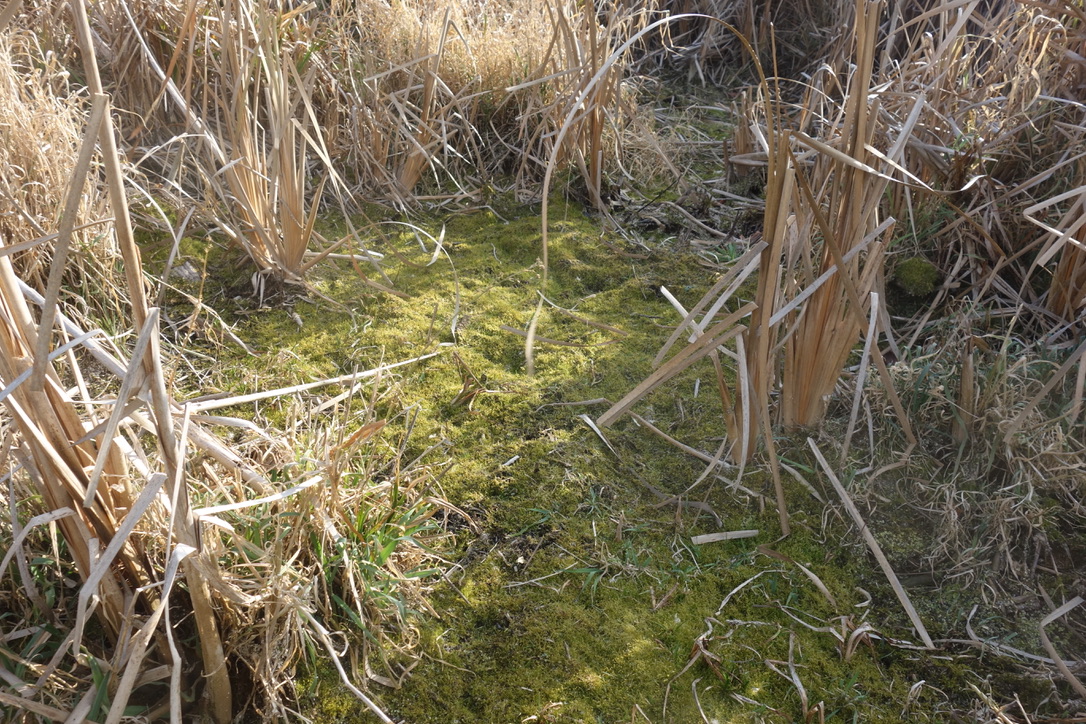
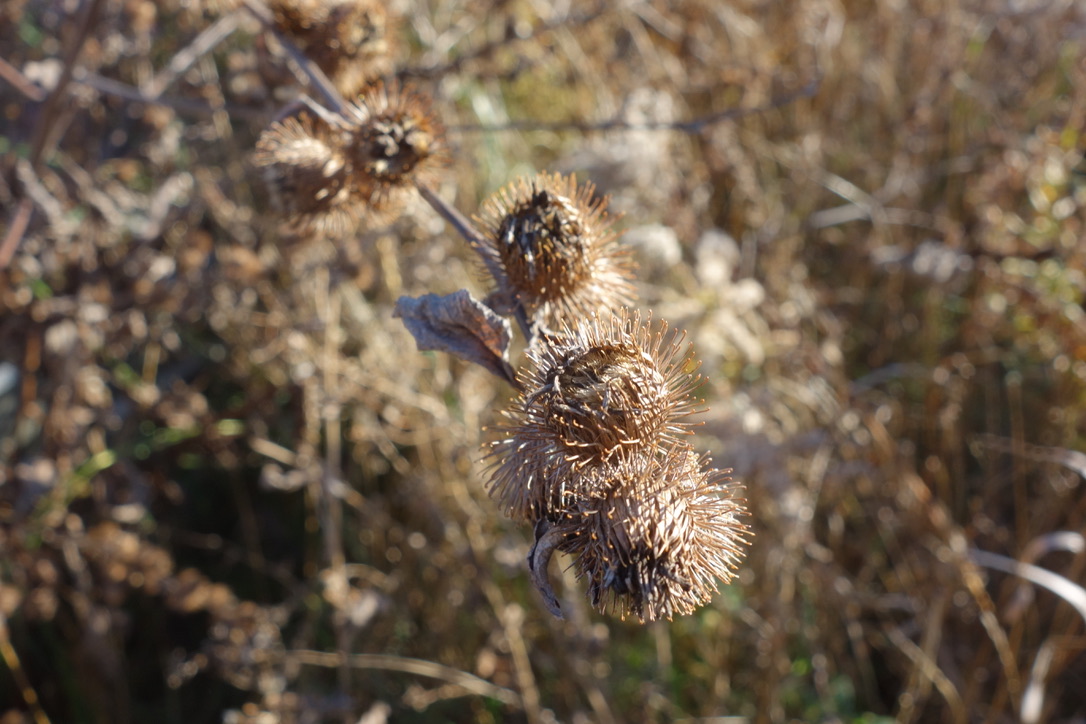
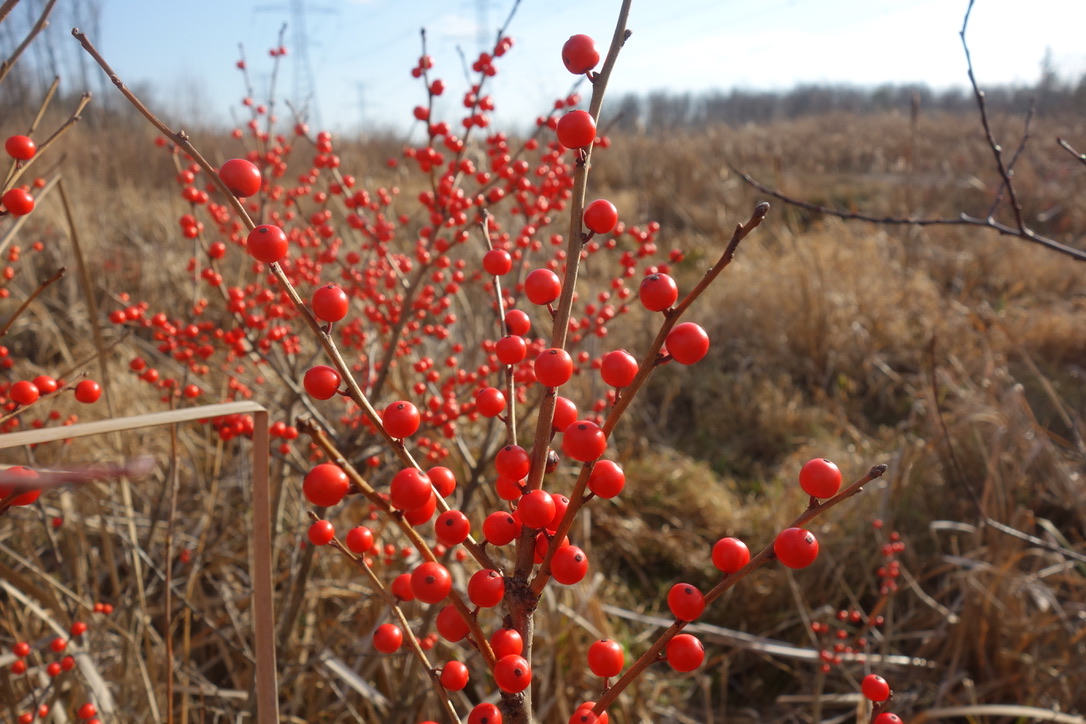
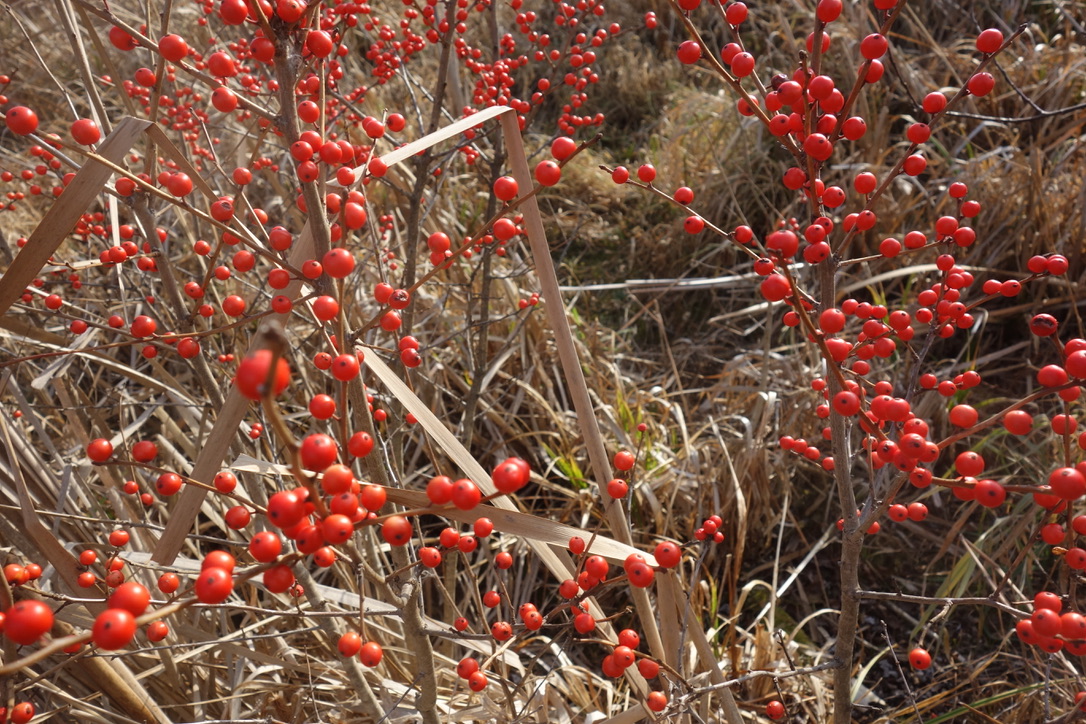
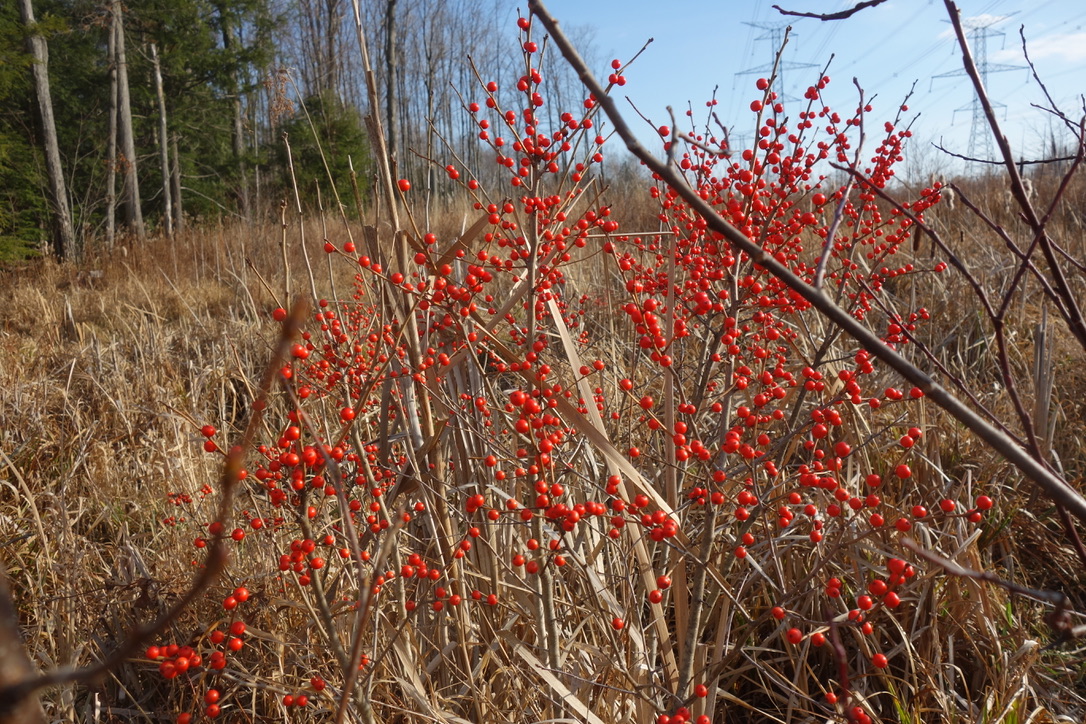
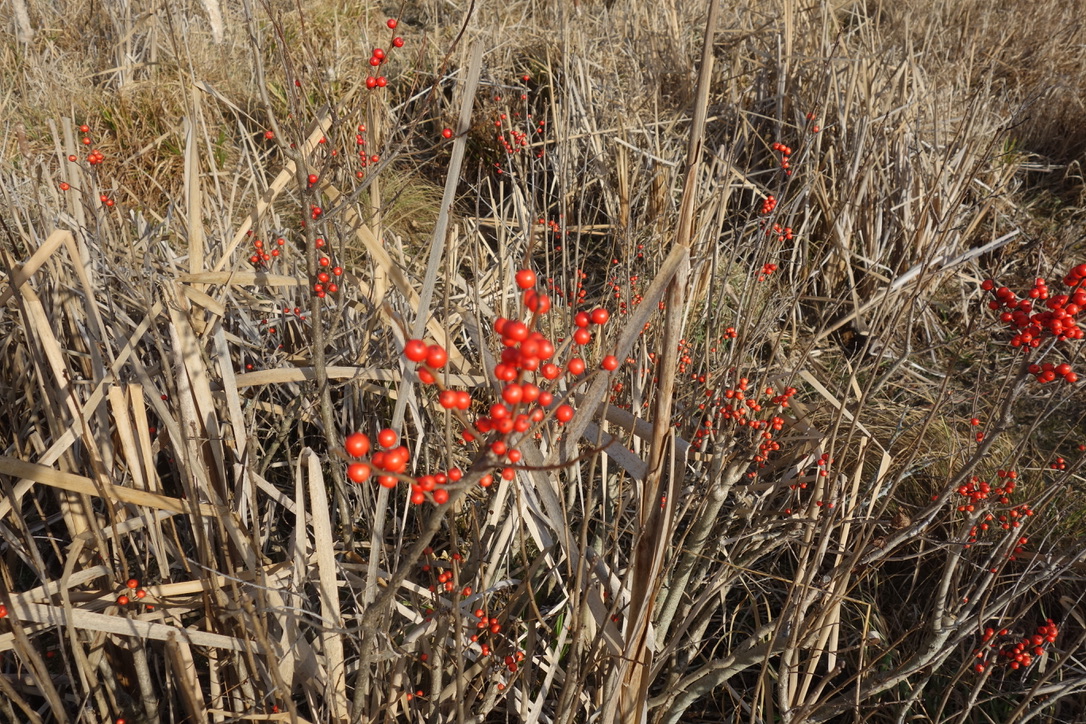
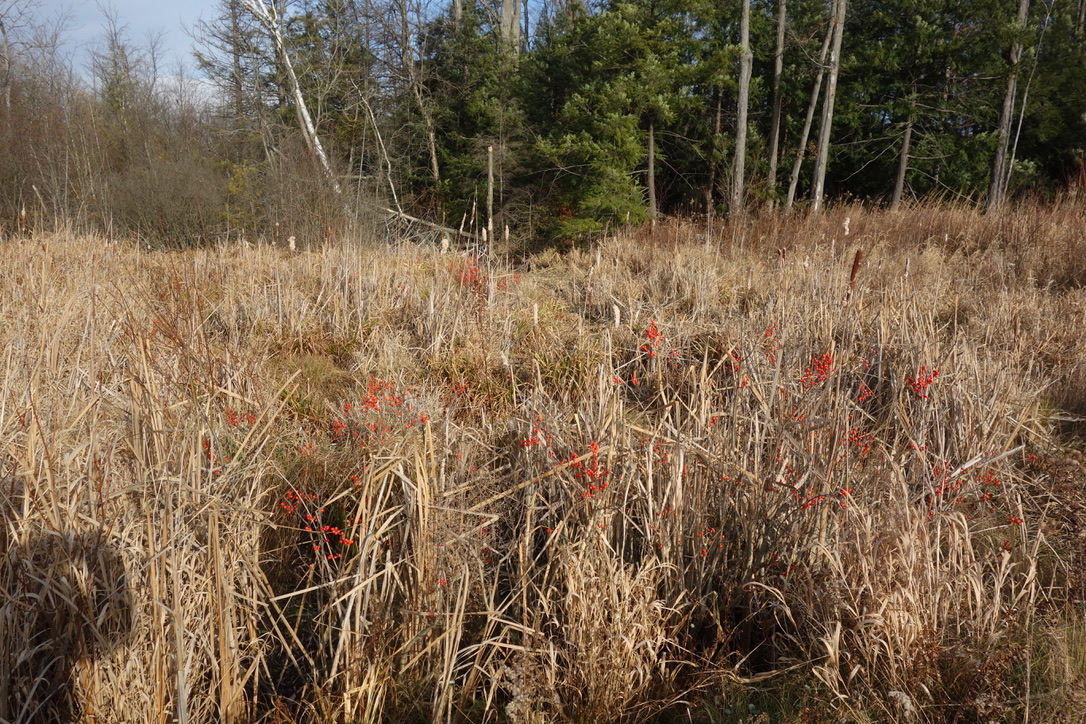
    And there in the midst of the beige and dark brown landscape of November
    a different kind of  sunshine sparkled. Little islands of colour …contrasting bursts
    of colour.   I have no idea what the plant was
    called but it was a pleasant adventure slogging through the near dry swamp
    to get these photographs.   I got the  pictures for you.  To brighten your day and
    my day.


    There is joy in the big  things…such as the sun rising beneath a few clouds…and
    the small things….such as the survival triumph of bushes crowned with orange  red berries.

    While we all wait for the snowflakes 

    alan skeoch
    nov. 2020

  • Fw: EPISODE 173 PROPS AND SETS… MAKING MOVIES DEMANDS PERIOD SETTINGS

    NOTE    MY EMAIL HAS FAILED…I AM USING ANOTHER ROUTE WHICH IS NOT AS  GOOD BECAUSE
    PICTURES ARE GROUPED  AT BOTTOM…MAY NOT MAKE SENSE…NIGHTMARE  TRYING TO FIX COMPUTER.
    NO ONE CAN COME TO HOUSE DUE TO COVID 19.
    ALAN  

    —– Forwarded Message —–
    From: ALAN SKEOCH <alan.skeoch@rogers.com&gt;
    To: Marjorie Skeoch <marjorieskeoch@gmail.com&gt;; Alan Skeoch <alan.skeoch@rogers.com&gt;; John Wardle <john.t.wardle@gmail.com&gt;
    Sent: Thursday, November 19, 2020, 12:27:38 PM EST
    Subject: EPISODE 173 PROPS AND SETS… MAKING MOVIES DEMANDS PERIOD SETTINGS
    EPISODE  173    PROPS  AND SETS…MAKING MOVIES DEMANDS  PERIOD SETTINGS 


    Alan skeoch
    Nov. 2020


    Machines have  always fascinated  me.  Not because I know how to operate them or
    even want to operate them.  The fascination is  historical.  Years ago  a material  historian
    names John Kowenhaven (sp. is incorrect ) wrote that “machines reflect the culture in
    which they were created.”  Not his exact words but the meaning is clear.  Machines are  
    historical objects.  They fit into their historical settings.   

    Half way through my teaching career I applied for a sabbatical leave to study  machine design
    in the 19th century.  The end result was a 300 page tome describing the changes  in machine
    technology in the 19th century.   

    That was when i started to buy old machines.  Dozens of them.  Hundreds  of them.  Initially there
    was no financial reason for doing so other than the encouragement I got from Marjorie.  Grain cleaning
    machines…fanning mills…really fascinated me because by the end of the 19th century these machines
    were made into objects of beauty by the paint ‘stripers’ in the factories.  I think I bought 80 fanning mills.

    Then the movie industry came to Toronto needing authentic sets.  Sets that would transport TV and Movies
    watchers into the past where particular machines were needed as background (sets) or as foreground
    objects actually touched by actors (props)..  They needed our machines.  And suddenly we had a business
    We  were considered a bit eccentric in that Marjorie and I took real interest in each movie that was being made.

    At the same time, quite a few of the students I taught at Parkdale Collegiate found themselves employed
    in the movie industry.  Some  of those students rented machines from us.   We were the bottom of the
    movie pyramid…no one was lower.  A  role reversal that my ex-students  relished.  One movie I remember well.  A village in Ontario was converted
    into a movie set and rented truckloads of our things.  We drove over, asked the art director if we could take pictures
    of our things. 

     “Not supposed to let pictures be  taken,  but what the hell…just get your things and not
    the whole set.”
    “Great.”
    “And move fast while we are on a coffee break.”
    “Right.”

    We  zipped from store to store snapping digital  pictures.  

    THEN  CAME THE  VOICE.

    “What the hell are you doing here, Skeoch?” came a voice from a guy high up on a
    movie ladder.  In the dark.
    “Taking pictures…all cleared.”
    “Skeoch…I heard you were in the business.”
    “Who are you?”
    “I’m the best boy on this set”
    “Who? How do you know me?”

    Then Phil Calambakis came down the ladder.  One of my Parkdale students.   Great kid. Taught his sister Anna as
    well.  His mom and  dad were boosters of our school.  Now he had become and I think remains a pillar of 
    the movie industry.

    “Remember the smelly feet kid, Phil?”
    “God his feet were bad…I had to sleep on the couch. Abandon my own room to his shoes and socks. Rotten.”
    “Your mom and dad were always willing to help music exchange students…”
    “Well, Not that willing, sir,   After the guy with the stinking feet.  I lost my room SIR   (Did Phil say ’Sir’…yes he did) …still blame you for it.”

    I noted  that Phil slipped back into the ‘Sir’ mode…an expression of respect that I always savoured
    when used by my students.   We had a few laughs that day.  Then the actors began to troop
    in and we were politely ushered out.

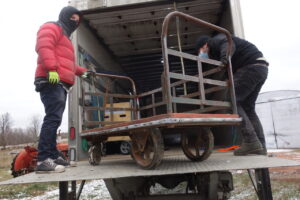
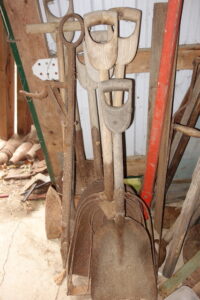
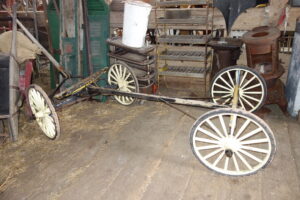
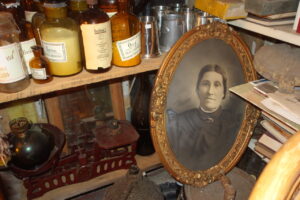
    So here below  are a few of the things we have rented  this  month…November, 2020.


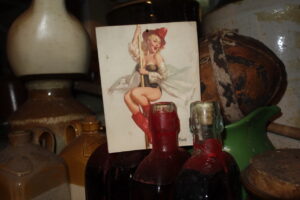
    A  period calendar from 1945 to 1946…interesting.


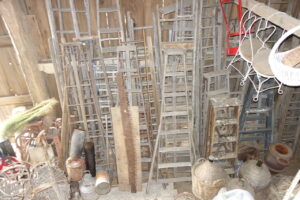
    One ladder is not rentable…movies want multiples…so our collection expands.

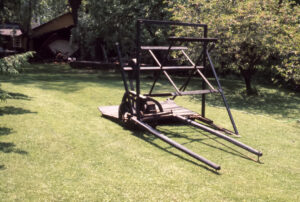
    You will hear about this machine in a story shortly.   Bet you do not know what it is.  It revolutionized agriculture.  Cheap food followed its’
    invention.   We travelled  to England, Ireland, USA…in search of the history of this machine.   Then I rebuilt it in our back yard.;;and  
    shipped it air freight to a museum in Northern  Ireland.   interested?  Are you interested?

    alan skeoch
    Nov. 2020

    Question:  Which object … artifact…do you remember best?


  • EPISODE 173 PROPS AND SETS… MAKING MOVIES DEMANDS PERIOD SETTINGS

    EPISODE  173    PROPS  AND SETS…MAKING MOVIES DEMANDS  PERIOD SETTINGS 


    Alan skeoch
    Nov. 2020


    Machines have  always fascinated  me.  Not because I know how to operate them or
    even want to operate them.  The fascination is  historical.  Years ago  a material  historian
    names John Kowenhaven (sp. is incorrect ) wrote that “machines reflect the culture in
    which they were created.”  Not his exact words but the meaning is clear.  Machines are  
    historical objects.  They fit into their historical settings.   

    Half way through my teaching career I applied for a sabbatical leave to study  machine design
    in the 19th century.  The end result was a 300 page tome describing the changes  in machine
    technology in the 19th century.   

    That was when i started to buy old machines.  Dozens of them.  Hundreds  of them.  Initially there
    was no financial reason for doing so other than the encouragement I got from Marjorie.  Grain cleaning
    machines…fanning mills…really fascinated me because by the end of the 19th century these machines
    were made into objects of beauty by the paint ‘stripers’ in the factories.  I think I bought 80 fanning mills.

    Then the movie industry came to Toronto needing authentic sets.  Sets that would transport TV and Movies
    watchers into the past where particular machines were needed as background (sets) or as foreground
    objects actually touched by actors (props)..  They needed our machines.  And suddenly we had a business
    We  were considered a bit eccentric in that Marjorie and I took real interest in each movie that was being made.

    At the same time, quite a few of the students I taught at Parkdale Collegiate found themselves employed
    in the movie industry.  Some  of those students rented machines from us.   We were the bottom of the
    movie pyramid…no one was lower.  A  role reversal that my ex-students  relished.  One movie I remember well.  A village in Ontario was converted
    into a movie set and rented truckloads of our things.  We drove over, asked the art director if we could take pictures
    of our things. 

     “Not supposed to let pictures be  taken,  but what the hell…just get your things and not
    the whole set.”
    “Great.”
    “And move fast while we are on a coffee break.”
    “Right.”

    We  zipped from store to store snapping digital  pictures.  

    THEN  CAME THE  VOICE.

    “What the hell are you doing here, Skeoch?” came a voice from a guy high up on a
    movie ladder.  In the dark.
    “Taking pictures…all cleared.”
    “Skeoch…I heard you were in the business.”
    “Who are you?”
    “I’m the best boy on this set”
    “Who? How do you know me?”

    Then Phil Calambakis came down the ladder.  One of my Parkdale students.   Great kid. Taught his sister Anna as
    well.  His mom and  dad were boosters of our school.  Now he had become and I think remains a pillar of 
    the movie industry.

    “Remember the smelly feet kid, Phil?”
    “God his feet were bad…I had to sleep on the couch. Abandon my own room to his shoes and socks. Rotten.”
    “Your mom and dad were always willing to help music exchange students…”
    “Well, Not that willing, sir,   After the guy with the stinking feet.  I lost my room SIR   (Did Phil say ’Sir’…yes he did) …still blame you for it.”

    I noted  that Phil slipped back into the ‘Sir’ mode…an expression of respect that I always savoured
    when used by my students.   We had a few laughs that day.  Then the actors began to troop
    in and we were politely ushered out.

    So here below  are a few of the things we have rented  this  month…November, 2020.


    A  period calendar from 1945 to 1946…interesting.


    One ladder is not rentable…movies want multiples…so our collection expands.

    You will hear about this machine in a story shortly.   Bet you do not know what it is.  It revolutionized agriculture.  Cheap food followed its’
    invention.   We travelled  to England, Ireland, USA…in search of the history of this machine.   Then I rebuilt it in our back yard.;;and  
    shipped it air freight to a museum in Northern  Ireland.   interested?  Are you interested?

    alan skeoch
    Nov. 2020

    Question:  Which object … artifact…do you remember best?
  • EPISODE 172 WLAND RECOVERED…AT A COST


    EOPISODE  172      WETLAND ROCOVERED…AT A  COST


    alan skeoch
    Nov. 2020


    Our farm is not a good  farm.   My grandparents managed to make a sketchy
    living on the 25 acre farm.   They had no car…no horse and buggy…no way  to 
    get to town except with their sun, Uncle Frank who owned a  neighbouring farm.
    Both farms are glacial dumps.  Rubble from the Canadian Shield  pushed down
    by ice two kilometres high.  Ice that scoured the bedrock making indentations in
    the flat surface wherever possible.  


    Those indentations filled with water when the ice sheet melted  10,000 years ago.
    Ponds.  Lots  of ponds were scattered across the rock surface of ancient Ontario.
    Plants eventually got a grip on the rocky soil.  The ponds became hubs for 
    vegetation.  

    And eventually over the 10,000 years a great number of those ponds became
    swamps…thick with spongy mosses and other watery plants.  In some cases
    the pond  water totally disappeared and was replaced  by wetlands.

    A third of my grandparents farm was  wetland that drained in two directions.
    Some of the swamps drained into the Credit River drainage basins.  The rest,
    the larger, drained into the the Grand River basin.  Lots of water.

    HERE IS THE STORY…IN OUR FEW  YEARS OF OWNERSHIP

    About 20 years ago Marjorie and  I decided to hire JIM Sanderson’s family to 
    bring their big excavator to open up one of the large swamps.  This was  no small
    task.   Jim had to remove the plant life that had taken 10,000 years to
    pile up…living plants succoured by their dead  predecessors.

    The excalator got caught in quicksand  and  slowly sank into  the swamp.
    So deeply that Jim’s son had to abandon the cab as the huge machine
    slipped deeper and deeper into the pond.   Much excavation had  been done
    successfully and the swamp was  now a pond as it had been long ago.
    A  pond with a huge iron, steel and rubber dinosaur slowly sinking deeper
    and deeper into what had once been a sandy beech.

    “How will you get it out, Jim?”
    “We’ll have to float the machine out?”
    “Float?”
    “Need to bring in truckload or two of giant timbers to encircle
    the excavator then use another excavator to lift it up…a giant raft, if you will.”

    The project took a long time. Days and days.  The fifth line in front of our farm
    was lined with machines and  truckloads of timbers.   Eventually the excavator
    was recovered.   I offered to help with the costs  but Jim would not accept help.

    “We got it into this  mess, so we will get it out.”

    The new pond was a bit of an embarrassment so we sort of forgot about it.
    The pond was surrounded by large ancient white pines and a line of immense
    spruce trees  planted by my grandfather.  The pond was invisible.

    Wild animals knew that.  One summer a  bank beaver moved in and chomped down
    a grove of small poplars.  It was an old beaver.  Almost tame.  But it was really dying
    so we left it alone in its small watery world.  Other creatures  came and  went. A pair
    of muskrats burrowed  into one bank  and have been raising  a whole bunch  of young muskrats
    that we hardly ever saw.  A family of mud hens had lived in the former swamp and
    now lived in the pond.  Deep dear tracks were incised  into the mud now and then.
    Sadly one summer we saw a doe with a crippled fawn emerging from the piece of wetland.
     Shrubs thrived forming a veil of low life that made the pond
    more and more invisible.

    Just one giant spruce…felled by a windstorm…was  enough to reveal the pond  that we had forgotten.   


    Then, last spring, a big windstorm brought about a major change.  The pond suddenly
    become visible.  The tree carcass was down flat…we could now see the pond
    clearly.   Work with the Bobcat and a  brush cutter revealed  a wondrous patch
    of open water surrounded by all kinds of  plant life the had been formerly shielded
    from view by  the giant spruce tree.

    A wetland that we had forgotten for years was  now visible.


    The muskrats were rearing a family of four in the pond.  They did not
    like the improvements one bit.

    alan skeoch
    Nov. 2020
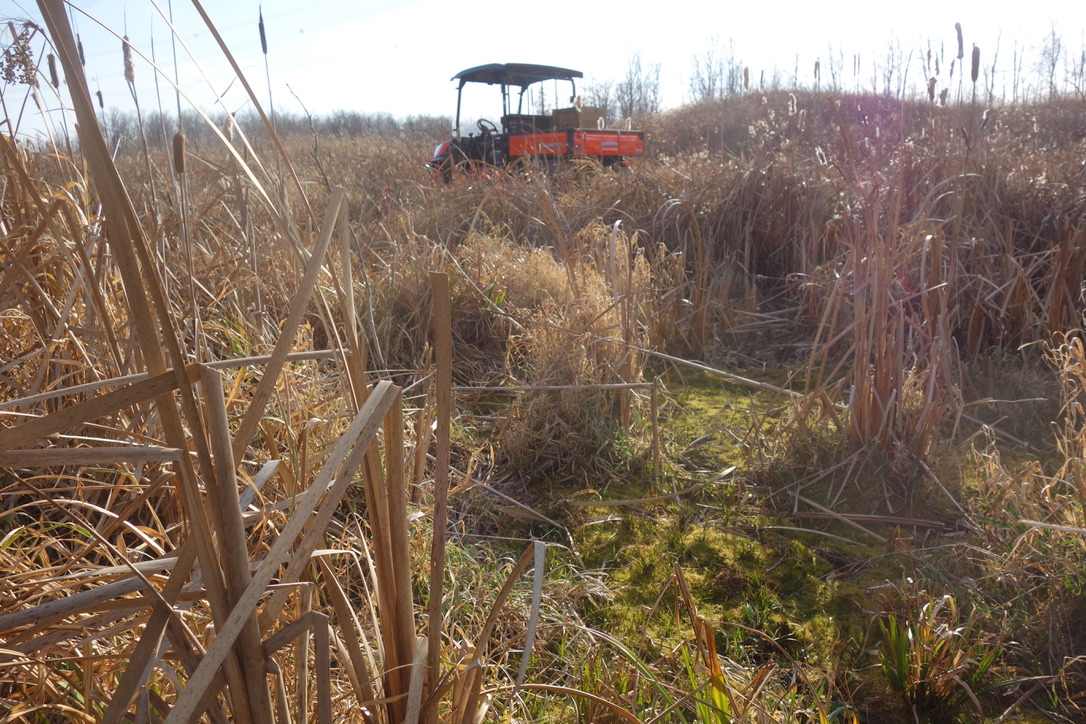


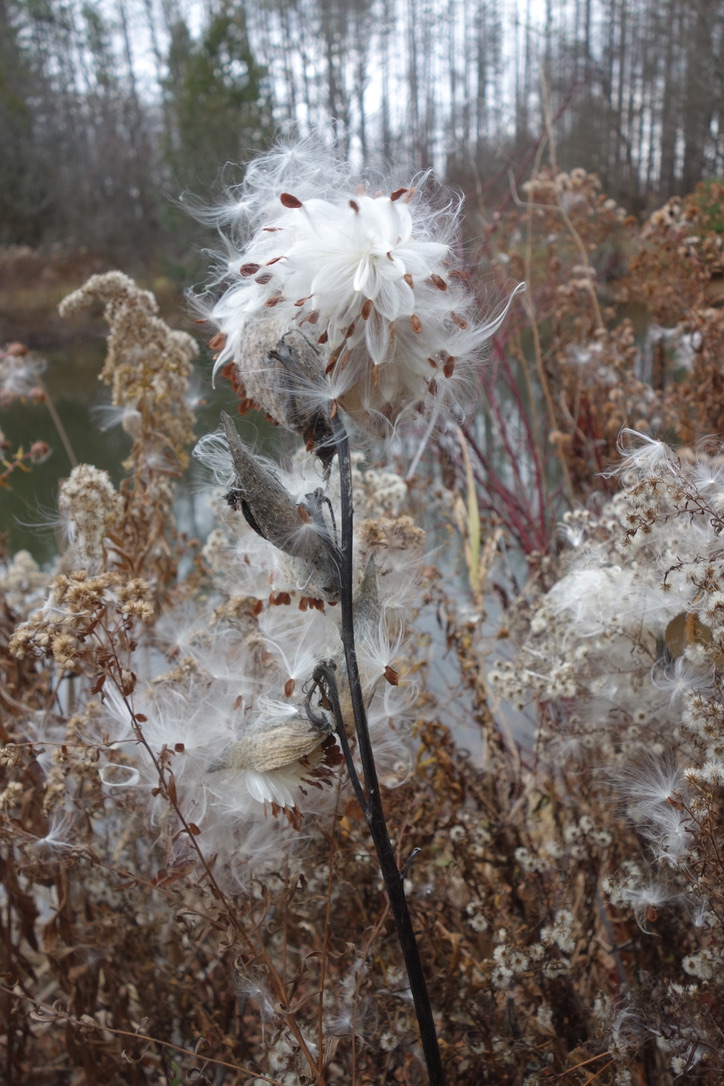
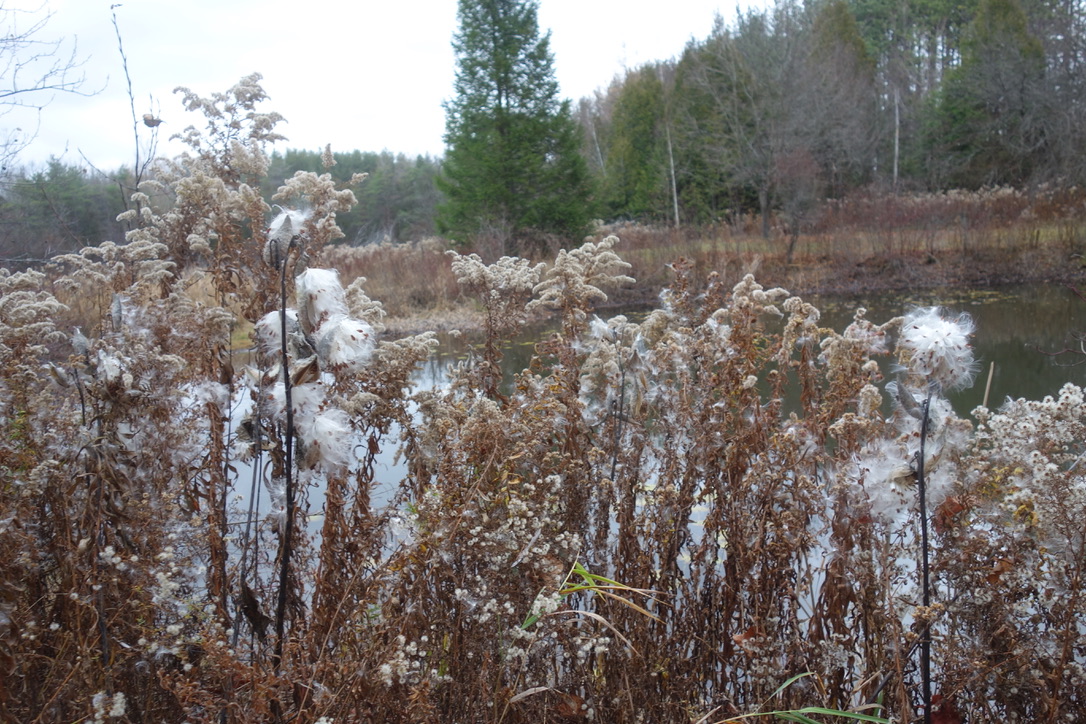
    P.S.  Milkweed plants seem to like the pond margin.  If they have their will they will take over a wide swath and maybe…just maybe…we will get our Monarch butterflies back again.
    Farmers hated  mllkweed.  Poisoned cattle.  So the plant was  condemned for years.  But now, in 2020, there are only a few cattle grazing on the Fifth Line and the milk weed
    has returned.   Not as  much as in the past though.  Why?  Because corporate agriculture has  “improved” Ontario farmland  by removed so many fencerows where wild plants
    and  song birds once thrived.  The same is  happening to wetlands.  They are being drained.  Not on our property though.  We are doing the reverse.

    alan skeoch
    Nov. 2020
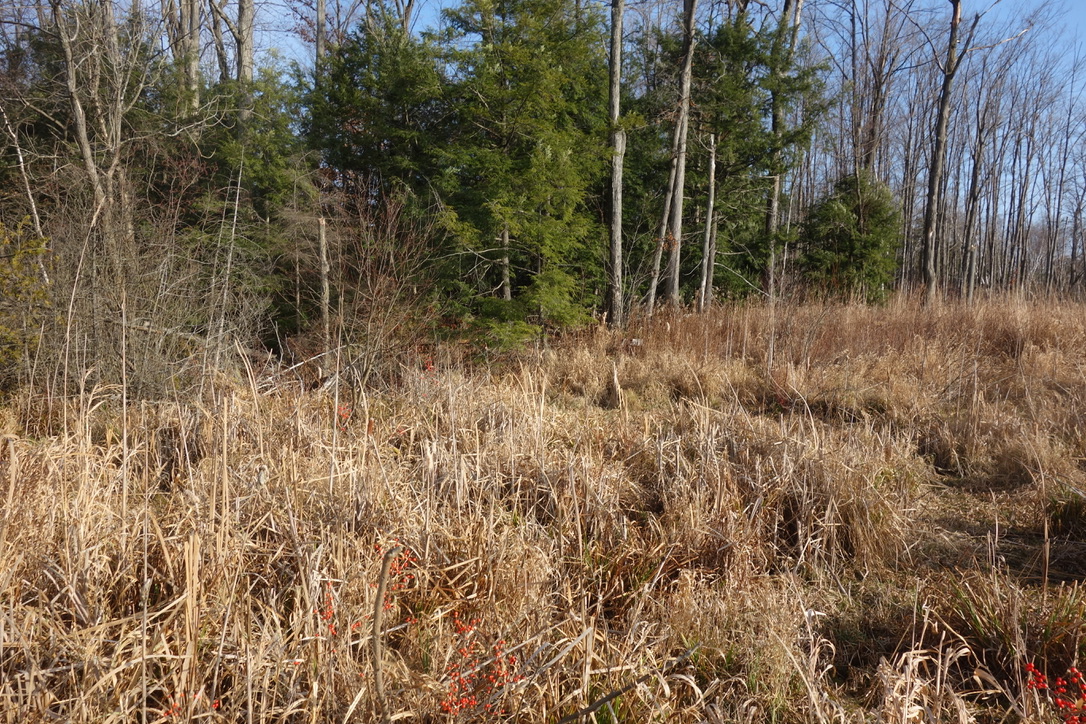

    P>S.  The Excavator looked like this…and  it finally rested
    about deep in the pond.  How would you get it out?