Author: terraviva

  • EPISODE 179 CONCLUSION OF REAPER STORIES: GRANDFATHR SKEOCH ON REAPER N 1932

    EPISODE 179         


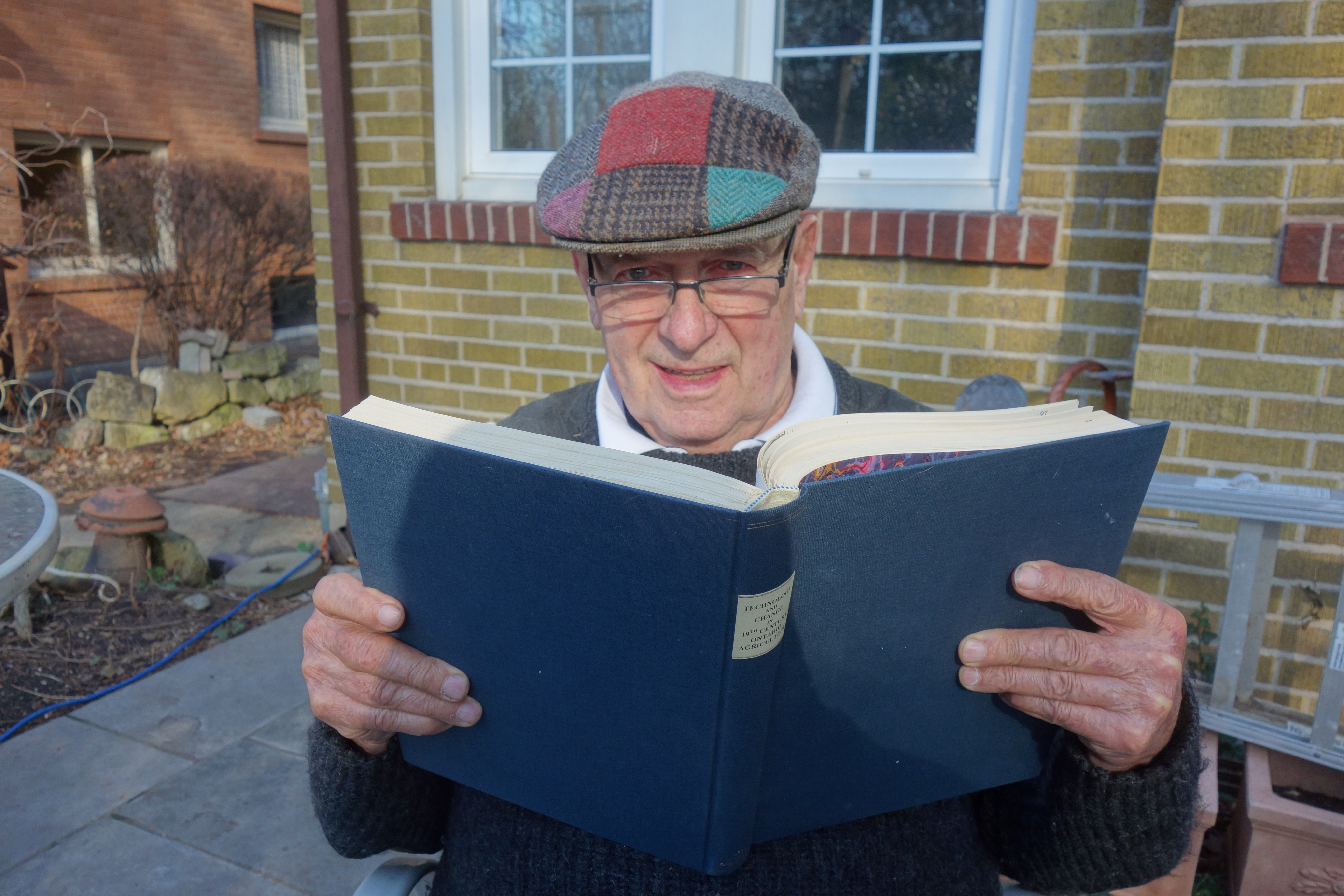
    alan skeoch
    Nov. 2020


    CONCLUSION  OF REAPER STORIES:  JAMES SKEOCH  ON  REAPER IN 1932.


    SERENDIPITY:   SURPRISING WHEN SEEMINGLY RANDOM EVENTS  COME TOGETHER IN A MEANINGFUL WAY

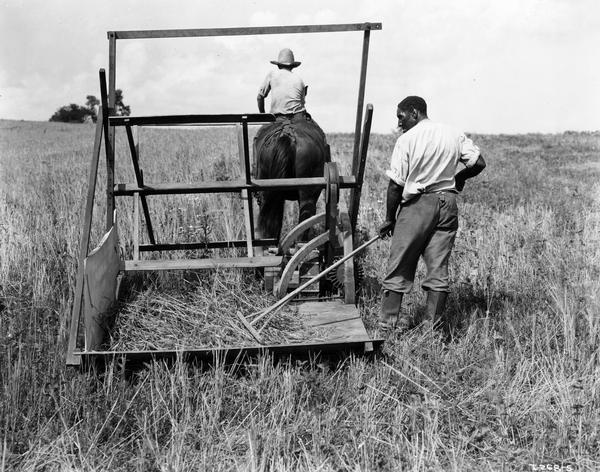
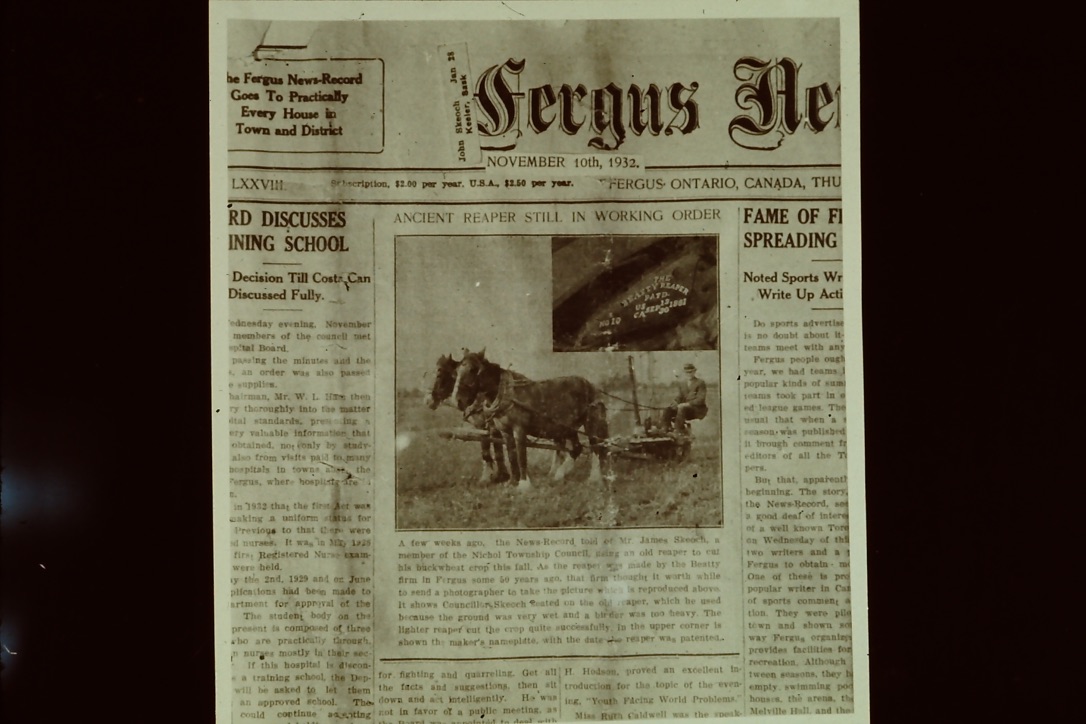
    This final  Episode on the history of  reapers is special to me.  In  1932, the Fergus  News Record published a picture of  my grandfather
    James Skeoch reaping his grain field with an old but still operational reaping machine which owed its existence to the Cyrus MCCormick
    invention a century earlier in 1831.  The copy of the Fergus  News Record is dated  November 10, 1932, and  had  been mailed to his eldest son,
    John Skeoch, who was farming near Keeler, Saskatchewan.  Eventually this  farm covered  3,200 acres.

    W


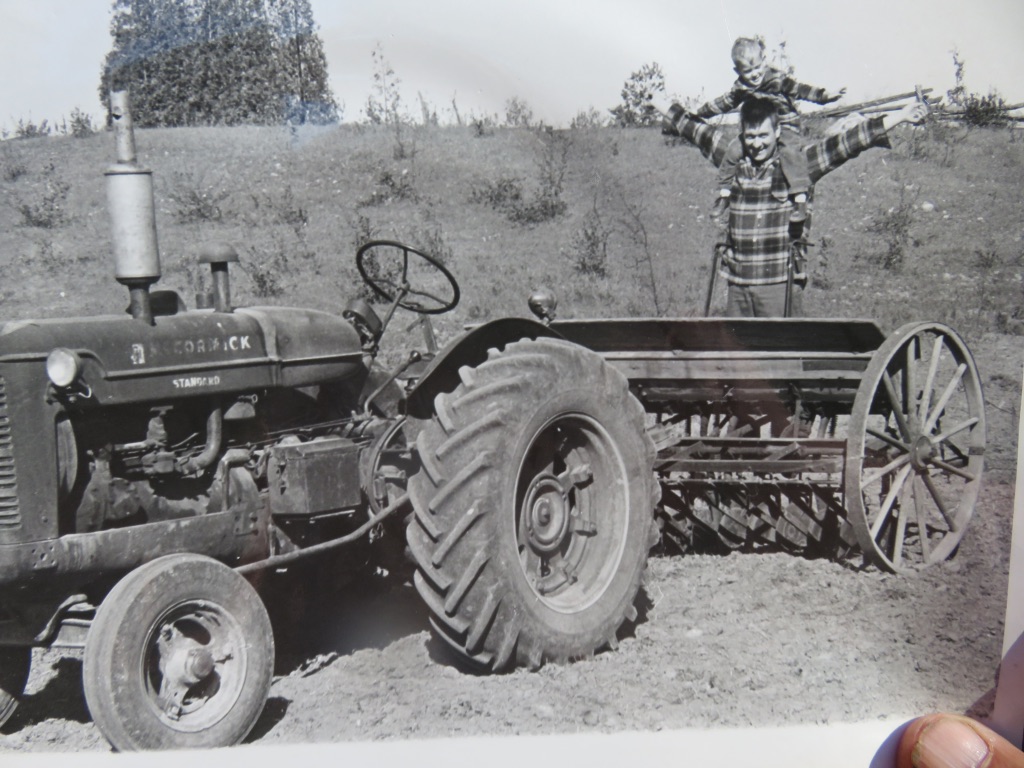
    Can you read the stencilled name on this aged IHC W6  tractor.?” McCormick” !   The International Harvester Company made a large  assortment of machines for
    farming.   That began with the McCormick Reaper but did not stop there.  They eventually made tractors…good tractors… short turning featured for small fields.

     This International Harvester Tractor , IHC W6, was built in 1953.   Cost $400 at Mr. Smith’s auction
    near Guelph and drove it cross country to our Erin township farm.  I will never forget that trip
    on cold November day.   exhilarating.   Proud owner of one of the great machines of agriculture. A McCormick W6 tractor.
    The road trip was  long  and detour laden.  I thought I was absolutely alone.  Then,  En route, I met our horse,
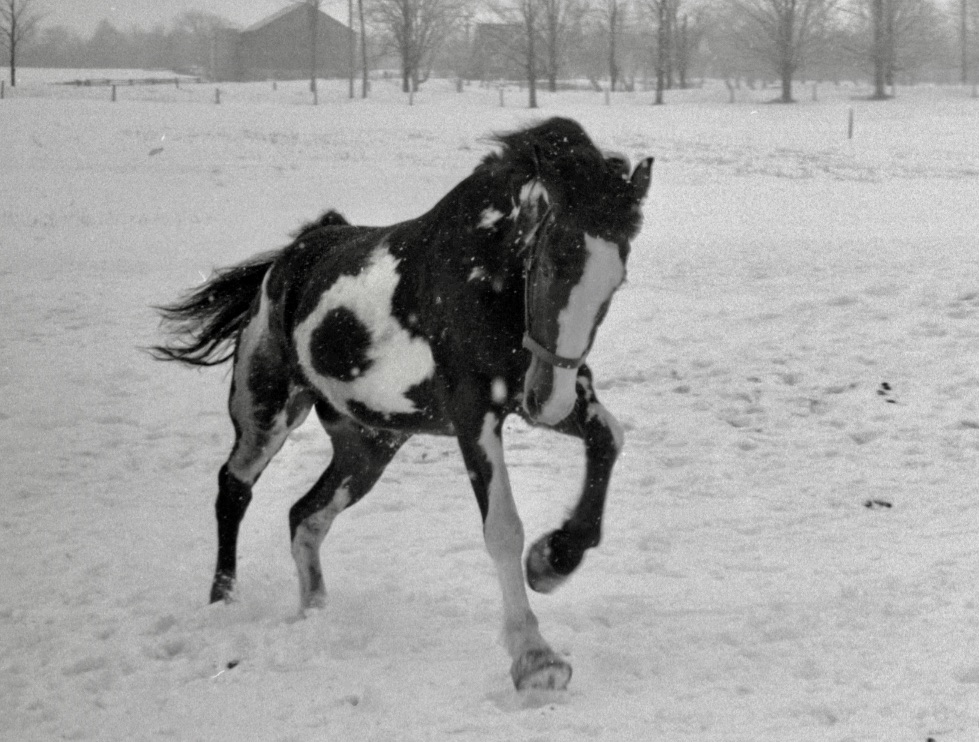
    Spartacus, running towards me hell ben for election…saddled but no rider.  He was heading to his first home
    and away from ours.   He had a length of rusty barbed wire attached to his tail.  Terrified.  What should I do?  I kept 
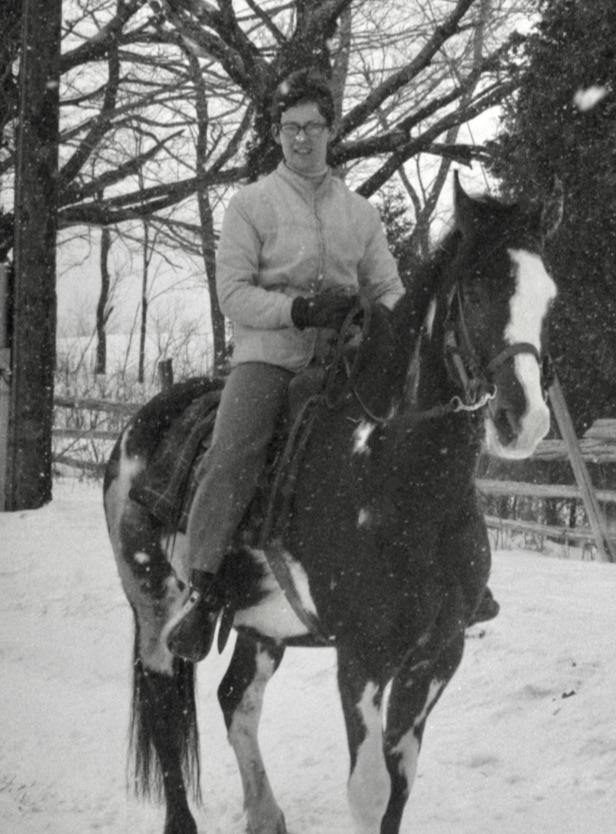
    driving  and eventually met Marjorie who had been thrown. She corralled  Spartacus eventually.   Why tell you this? Because we
    had continuous rural adventures.  (Spartacus was the son of an estrogen mare whose story will eventually
    become an Episode.)


    That’s Kevin on my shoulders.  Marjorie made us duplicate clothes.  Behind the tractor is a
    seed drill which is there jus for show.  Like most of my farm machines, it was no longer functional.

    AN APOLOGY TO CYRUS MCCORMICK:

    Let me start by apologizing to Cryus McCormick and  his corporation.  Remember that lawsuit where Cyrus
    felt he was overcharged  $8.75 for his wife’s baggage on the New York Railroad.   The lawsuit lasted 20
    years.   Made Cyrus look cheap and bull headed.  Perhaps wrongly so.  I did not mention the value
    of $8.75 in today’s cash.  Turns out to be over $300.  Is the collection of that amount worth a  20 year lawsuit?

    IN my presentation of Cyrus McCormick I may  have miscast him.  For 20 years he fought a court battle
    charging the New York Railroad had overcharged his wife by $8.75.  Today,  November 1920, that amount
    of  money will get you a hamburger, chips and a soft drink.  In short it will get very little.  Hardly worth 
    a 20 year court battle.  Right?   Maybe.   But $8.75 in 1850 had over $300 in purchasing power.  ($10 in 1850
    was  worth $333.83 in today’s purchasing power).   I would  still argue the court battle was not worth
    the cost and the energy.

    So this is  a good time to put all these events together.  The result makes the Skeoch connection seem larger 
    than is  warranted.  Way larger.  Keep that in mind.

    1)  The ‘goddamn’ rock ruined  Uncle Norman’s Massey Harris combine harvester.  Combine Harvesters remain the
    pinnacle of  grain harvesting technology.  
    2) I researched and wrote a 300 page manuscript on machine designs in agriculture, particularly from 1850 to 1891.  M.A., U. of T., 1975
    3) phone  call from Mellon Bank of New York asking us to restore a (replica)  1832  McCormick Reaper
    4) Many trips to the Ford  Museum in Dearborn, Michigan, where Peter Cousins  was collections curator
    5) Began to research  Patrick Bell, Scottish  inventor of an earlier grain  reaper that was  never patented
    and remained on the Bell farm until purchased by the Science Museum in London, England.  (In storage
    at present but may  be on display in the future)…visit to London, England, to see the Bell Reaper when  it
    was a feature display.
    6) Restoration of the replica  model of the McCormick Reaper with was crated  and  sent air freight
    to the Ulster Folk Museum in Northern Ireland where McCormick was born.
    7) Along the way, I discovered that Patrick  Bell travelled to Fergus, Upper Canada, in 1851 where
    the two Skeoch boys, James and John, (migrated in 1846) were farm boys. I speculated that they may have seen
    each other in Fergus…but never knew each other.  Patrick Bell, by then, was a Christian minister
    and  also a  teacher of children of Adam Ferguson, founder of Fergus.
    8) The Patrick  Bell diaries and notes exist in Scotland but have not been published to my knowledge.
    9) Copy of Fergus  News Record, Nov. 10,1932, features  James Skeoch (my grandfather) using a reaper
    to cut grain.  The machine was considered obsolete by then which made a  news story.

     Through the years Marjorie and I have purchased and  stored dozens of machines relevant to
    the history of  agriculture.   We developed a  particular interest in fanning mills because those
    machines could easily fit inside our Ford  Van.   Fascinating history of these machines to come in later episode.
    Fascinating to whom?  Good questio.
     Around 1990 the North American movie industry became very active in the Toronto
    and region.  Our collection of 19th and 20th century artifacts  began to be demanded which
    led to the incorporation of Skeoch Enterprises Limited.

    LET US NOT GET SILLY

    But let us not get silly  The connection  between the great inventors of the 19th 
    century like Patrick  Bell and Cyrus McCormick and the Skeoch  farmers is not even
    tenuous.  The connections is as thin as one strand of a spiders web.  
     We were the users of  machines  like the reaper and the combine harvester.
    We were not the makers.   And  there is one hell  of a difference between inventing and 
    making a machine as opposed to buying and using a machine.  Keep that in mind, Alan.


     JUST imagine if  your student turned in a 300 page essay for you to mark?   A  copy of my thesis in hand…as bound via Jim Hunter.

    SOME ILLUSTRATED  COMMENTS 


    THE PATRICK BELL REAPER


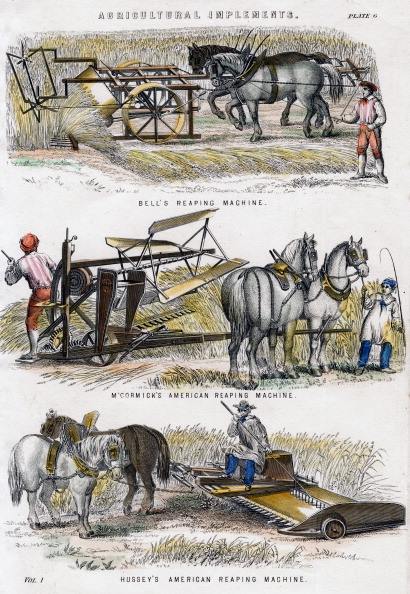
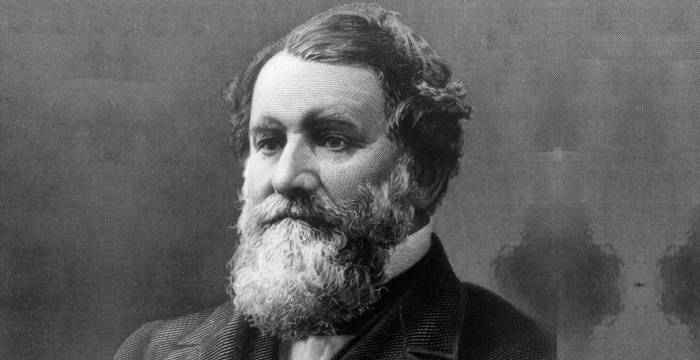
    THE BIG THREE REAPER INVENTORS


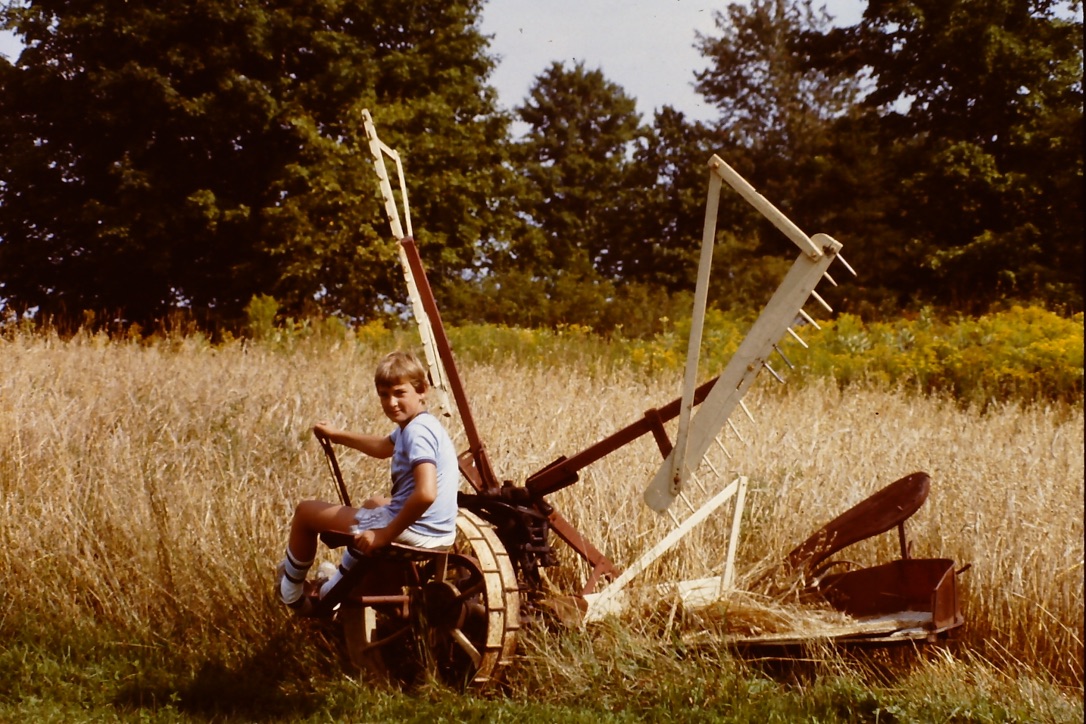
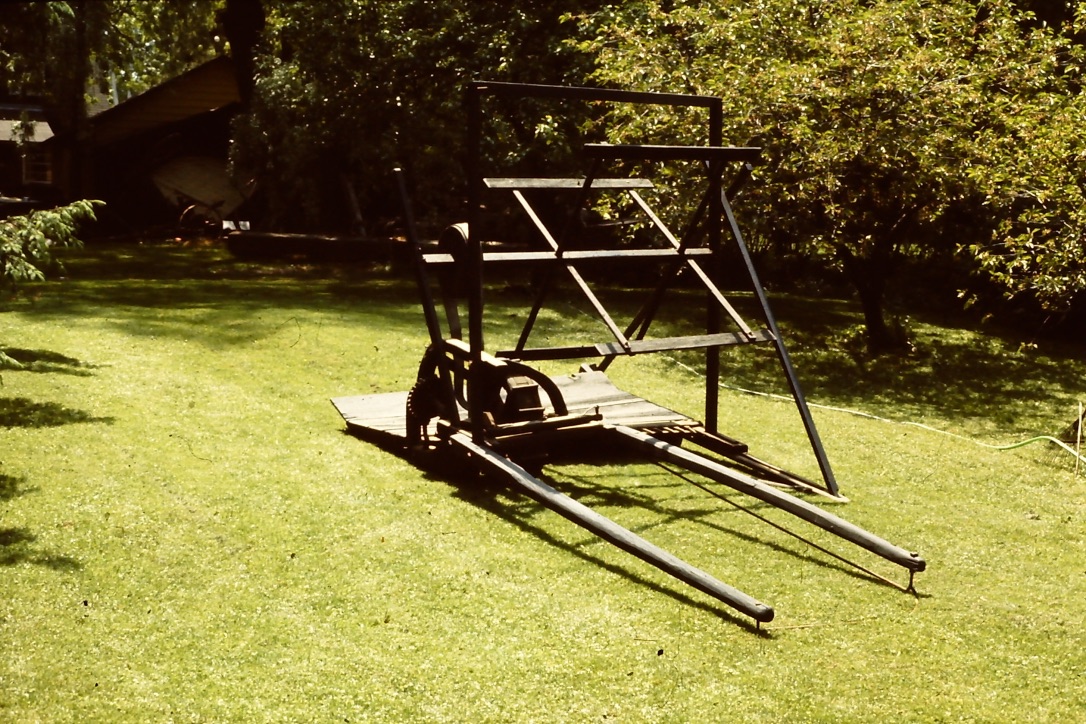
    At a farm sale outside Milton I was able to buy this “SAIL” reaper.  It worked. But is now a pile of scrap iron.

    It looked better with Kevin sitting on the drivers seat.   Adding a seat to the replica reaper was one improvement.
    This was called a ‘sail reaper’ because the reel was removed and a sweeping toothed sail of four wooden rakes added.


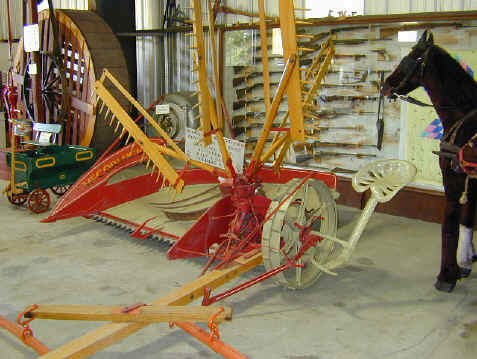
    When Cyus McClintick lost his patent monopoly a great man reaper began to appear.  All of them improved as above


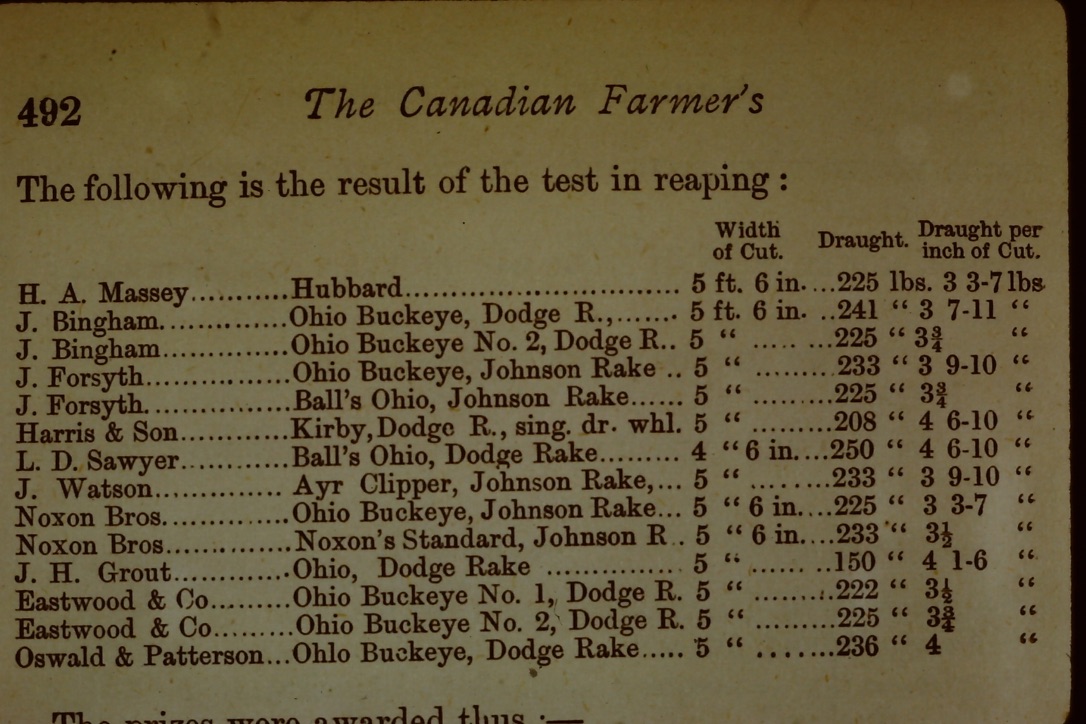
    This will give you some  idea of the variety of reaper manufacturers that appeared in Ontario after the McCormick patent ended.

    alan skeoch
    Nov. 2020
  • Fwd: Canada Letter: Ontario announces more measures to keep schools open during lockdown

    EPISODE 178     WHAT IS HAPPENING AT ONTARIO SCHOOLS DURING COVID  19 LOCKDOWN?


    alan skeoch
    Nov.  28, 2020

    As a former teacher of  history I have wondered how teaching has adjusted to the pandemic.  For a
    while schools were closed across the province.  It took time to adjust to the new reality.  What is  this
    new reality?   Journalist Catherine Porter has written an  excellent ‘Canada  Letter’ published in 
    the New York Times.  She mentions that Toronto and New York City have approached  the Covid  19
    threat differently.  Toronto keeps  schools open while closing bars and restaurants.  New York closes
    schools  while keeping bars  and restaurants  open.   The argument presented by Toronto is the
    kids are safer in schools than roaming the streets  and playgrounds.  Masked  students  in school
    are less likely to spread the virus.  

    That seems to make sense to me.

    What makes me wonder is how teaching can  happen.  Some school boards have students  
    attend three hour classes where the curriculum is compressed  no doubt..   I cannot imagine
    high school students enjoying three hour classes.  Nor can I  imagine teachers enjoying trying
    to prepare three our classes.  At some point the students  will have to read.  That might work.

    A  lot of  parents, 33% or more, have opted for at home teaching.  That is even harder
    for me to understand..   Seems  like boredom will erode any joy in education.  But I  could be
    wrong.  Just a  gut reaction.  When I taught history I tried to make my 40 or 80 minute
    lessons interesting…sometimes funny, sometimes serious, sometimes irrelevant, sometimes
    current.  I cannot imagine doing this for three hours.   Years ago I also did short five to ten
    minute radio stories  on CBC.  After my third  or fourth story, my producer called  me aside 
    and said  “Alan, those stories are great….”  When someone prefaces a remark by flattery
    what do you think the next word would be?   Right the next word is always  ‘BUT’ . I remember
    his comment so well.

    “Alan, those stories  are great BUT remember the radio audience attention span
    is one minute.  If you don’t get them in  the first minute, then they are gone.”
    That comment by  Doug Koupar years  ago  changed my whole approach to teaching.
    I began to cut the lead  in guff and tried to find the urgent question…the reason for the lesson.

    Personally, I cannot imagine doing that in a three hour lesson.
    If  adult attention span is one minute…then how can we expect the poor kids
    to have an 180 minute  or three hour attention span?

    Covid 19 has not made schooling better.  Or,  if I might use a baseball comment…”there is no joy in mudville” classoomsl.
    No doubt I will be  criticized by some educators.  Creative teachers will find  a way.  Of that I have no 
    doubt.  Maybe I should try to prepare a three hour lesson for a class of  15 students.  Talk is  cheap.


    alan skeoch


    Begin forwarded message:


    From: The New York Times <nytdirect@nytimes.com>
    Subject: Canada Letter: Ontario announces more measures to keep schools open during lockdown
    Date: November 28, 2020 at 6:00:02 AM EST


    TORONTO — On Monday, as I was writing a news article about Canada’s enthusiasm for keeping schools open during the second wave of the coronavirus, an email arrived from my daughter’s high school alerting me that a student had tested positive and a grade-12 class had been asked to self-isolate.

    It was the first time this happened since Toronto public schools finally reopened in mid-September.

    A school in Scarborough, an inner suburb of Toronto, in September. Despite Toronto’s new coronavirus restrictions, classes have remained open.Carlos Osorio/Reuters

    I had expected such news much earlier. Like many parents, I had feared schools would be petri dishes of the coronavirus. I predicted they would stay open no later than Canadian Thanksgiving and that my two children would be trapped once again at home with me and my husband — all of us driving one another nuts.

    That, most happily, has not been the case.

    There have been outbreaks in 83 Toronto schools, each with an average of five cases, according to Dr. Vinita Dubey, associate medical officer of health for Toronto. That is out of some 1,200 schools in the city — so about 7 percent.

    But, unlike New York City, which responded to rising rates of community transmission by shutting down schools while keeping bars and restaurants open, the Ontario government has made the opposite decision: It shut down bars and restaurants in Toronto and two of its sprawling suburbs, but kept schools open.

    ADVERTISEMENT

    “Ontario schools remain safe,” said Stephen Lecce, the education minister for the province, at a news conference on Thursday. “They remain safe even while we face increasing rates of community-based transmission.”

    He vowed to “make sure we do whatever it takes to keep schools safe and to keep them open, which I think is an overwhelming societal imperative in this province and in this country.”

    To that end, he announced more funding for school boards in hot spots and a program of testing asymptomatic students and staff in schools in four of the province’s hardest-hit areas — something his government first promised in the summer, and critics have been demanding for months.

    “That’s great news but we heard the same thing in August,” said Ryan Imgrund, a high school science teacher and biostatistician in Newmarket, just north of Toronto. “I’ll believe it when I see it.”

    ADVERTISEMENT

    Toronto is the biggest city in Canada and, in fact, its schools have among the strictest coronavirus safety rules in the country. All children are required to wear masks in school, including the young ones — which is not the case in most Canadian school boards. And class size for high school kids is capped around 15 — which in the case of my daughter means she takes most of her classes online and is in the physical school only a quarter of the time.

    Preparations for students at a school in Scarborough, part of the Toronto District School Board. Toronto’s schools have among the strictest coronavirus safety rules in the country.Pool photo by Nathan Danette

    Each morning that my daughter and my son, who is in Grade 7, do physically go to school, they complete an online Covid-19 screening, verifying that they don’t have any coronavirus symptoms before arriving. If they do have symptoms, they are expected to stay home and, in most cases, get tested. Whenever a student tests positive, the public health unit swoops into the school to both contain the virus and investigate its spread, through testing and contact tracing, according to Dr. Dubey.

    So far, she said, her office’s data shows that most children are infected at home, not at school.

    “Schools are actually still a safer place for children to be,” Dr. Dubey said, noting that the positivity rate among Toronto’s teenagers is 7.5 percent — higher than the rate seen in schools.

    ADVERTISEMENT

    She added: “If kids are not in school, they are going to be in the community more — at play dates, or the like, where Covid spreads. That’s part of the balance. At least in a school setting, they are socializing and getting an education, and it’s ‘controlled.’”

    Many parents are not convinced. In Toronto, the percentage of children opting for online learning jumped to 33 percent in late October from 26 percent at the beginning of the school year, according to figures from the Toronto District School Board. In the suburbs of Mississauga and Brampton, the shift was even more pronounced, with nearly half of public elementary school students now attending classes virtually, according to the Canadian Press wire service.

    “Many, many, many families don’t have confidence in the plan put in place by this government,” said Kelly Iggers, a mother and teacher at an elementary school in Toronto who amassed more than 270,000 signatures on a petitiondemanding that the government reduce class sizes, which did not happen. “At this point, only a very small proportion of children are getting tested. We just don’t know how many cases are out there.”

    She added, “The provincial government is claiming success based on an absence of data.”

    Studies show about 30 percent of children with coronavirus are asymptomatic, said Dr. Dubey. So, the new testing in schools where there are no outbreaks should be revealing. It could confirm what public health officials and politicians have been saying — that schools are relatively safe, compared with Covid-19 spread in the community. But it could also confirm parents’ fears — that the virus is circulating more widely in schools than has been reported.

    Staff at the Ministry of Education said that the information from the new testing would be publicly shared.

    “It’s a promising development, and I am really looking forward to seeing some clearer data to show us what is happening in our schools,” Ms. Iggers said. “But the success of this measure will really depend on whether it is rolled out effectively, results are shared transparently and the government is willing to implement appropriate actions in response to the findings.”

    Meanwhile, I have not heard anything more from my daughter’s school, which I’m assuming is good news. So she left for school again this morning — which made both of us really happy.

    Trans Canada

    A moose licking a visitor’s car last month in Jasper National Park, in Alberta, Canada.Elizabeth Wishart
    • Digital signs set up in Alberta’s Jasper National Park set the internet on fire this week. They instructed drivers, “Do not let moose lick your car.” Yes, that is a thing.
    • The Times’s art critic Jason Farago gives readers an incredible, intimate tour of an iconic painting that hangs in the National Gallery of Canada in Ottawa. Anyone who has studied the Battle of the Plains of Abraham, in Quebec City, will recognize “The Death of General Wolfe,” by Benjamin West. Jason calls the work the “origin story” of “Canadian history and American painting.”

    Catherine Porter is the Canada bureau chief, based in Toronto. Before she joined The Times in 2017, she was a columnist and feature writer for The Toronto Star, Canada’s largest-circulation newspaper. @porterthereport

    How are we doing?

    We’re eager to have your thoughts about this newsletter and events in Canada in general. Please send them to nytcanada@nytimes.com.

    Like this email?

    Forward it to your friends, and let them know they can sign up here

    Need help? Review our newsletter help page or contact us for assistance.

    You received this email because you signed up for Canada Letter from The New York Times.

    To stop receiving these emails, unsubscribe or manage your email preferences.
    Connect with us on:
    facebook twitter instagram
    The New York Times Company. 620 Eighth Avenue New York, NY 10018


  • EPISODE 177 CYRUS MCCORMICK AND HIS REAPER 1831

    EPISODE 178    CYRUS MCCORMICK AND HIS REAPER


    alan  skeoch
    Nov. 2020

    Cyrus McCormick…reserved, determined, inventor, industrialist, 

    Replica  of the first McCormick Reaper (restored  by Alan Skeoch) dated 1931 copy of original 1831 machine.  Shipped to Ulster Folk
    Museum, Northern Ireland, original home of the MCCormick family.

    McCormick reaper
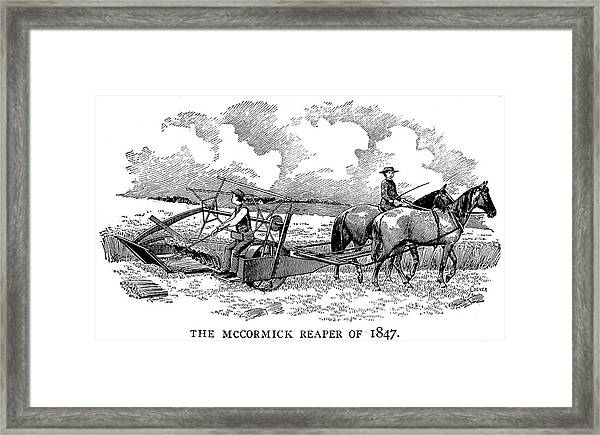
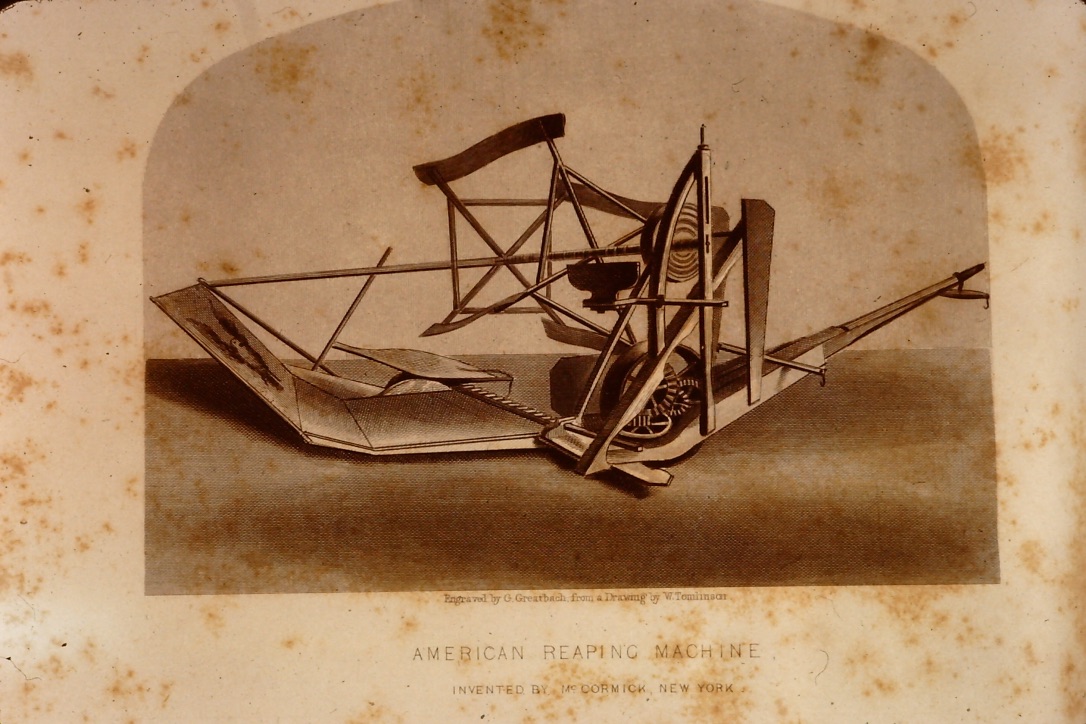
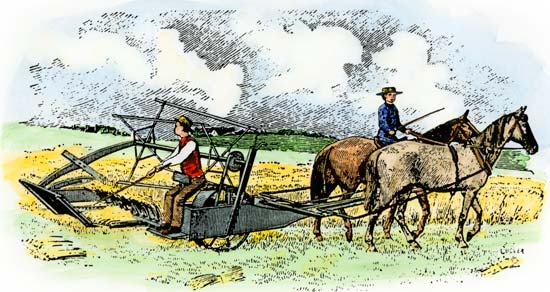
    Artist engraving of early MCCormick Reaper which appears  a  little more sophisitcated
    than the replica model.   The Bull Gear is visible inside the drive wheel if you look hard  enough.

    CYRUS  McCOMICK…INSIGHT

    Cyrus McCormck was a tough nut to crack.   In other words I do not think I would enjoy
    having a draft of  beer with him whereas Patrick Bell would be good  company. Both
    men, along with Obed Hussey, are credited  with inventing the horse driven reaping machine.

    I doubt that McCormick or Bell actually drank beer.  Both were Presbyterians and may
    well have taken the pledge as is said about non drinkers.   Bell seems to have had
    less starch in his britches.

    McCormick on the other hand had lots of starch in his britches.  The best example of this
    has nothing to do with his reaping machine.  Cyrus McCormick, at the mid points of
    his business life initiated a lawsuit against New York Central Railroad.   He sued the railroad
    for $20,000.  Big time money.  What was the issue?  McCormick claimed the railroad overcharged
    his wife $8.75 for her baggage.  He took the lawsuit right to the Supreme Court. Not once, but three
    times over a 20 year period.  Eventually he won.  That case I present as  evidence that Cyrus
    McCormick was a tough nut to crack.

    Imagine sitting with him for  a  quiet conversation.  Perhaps I am  exaggerating but he seems to have had
    the crazy tenacity of Donal Trump.  

    Cyrus Hall McCormick was  born on Ferry 15, 1809 in Rockbrdge county, Virginia where his father was  a farmer and a dabbler in agricultural inventions.  Cyrus died on May 13, 1884.   He was ten years  younger
    than Patrick  Bell.   They were both children and adults  of the 19th century, a century of invention.

    McCORMICK AND HIS REAPER


    Like father – like son.  Cyrus  McCormick’s father also invented labour saving farm machines as was  the rage in the early 19th century but no one built a successful reaping machine except for
    Patrick Bell (1828) whose machine was large and expensive … never put into production anyway.   The McCormick reaper was built in 1831 when Cyrus was only 22 years old.  It was  primitive like
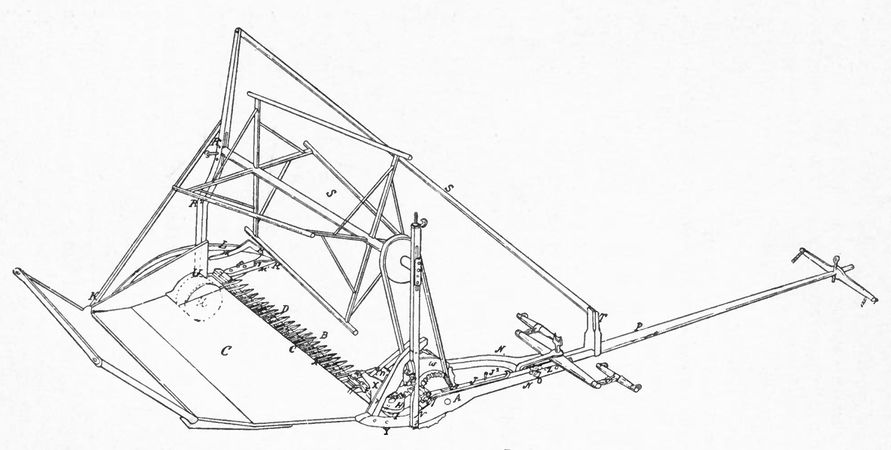
    the replica I restored.   It had  three features of all reapers  though..1)  a  vibrating cutting blade, 2) a reel that swathed  he standing green to the cutter blade and 4) a platform  on which the
    gran could fall and be hand raked  for binding into sheaves.   All subsequent reapers, of which there would be many, shared these features and improvements.

    A  PUZZLE:  Why does the reaper I restored look so primitive when compared to he sleek looking McCormick reaper pictured  above?

    AN ANSWER: The McCormick reapers underwent constant improvements.  The original was built by young 22 year old
    Mccormick in his fathers blacksmith shop.  The later models got better and  better.

    ANOTHER ANSWER:  The reaper pictured above may never have  existed.  It is an advertising image.  Mine is closer
    to being  accurate.

    ANOTHER ANSWER:  IF you look closely both machines are almost identical.  The engraving just made the machine look
    a little more artistic.


    THE  CLATTERING THAT  TERRIFIED  HORSES

    The first McCormick Reaper had problems with the cutter bar which did not work too well.  And the machine made so much clattering 

    noise that men had to walk alongside the frightened horses to keep them from bolting.  The reaper was patented in 1834 but no models
    were sold until it was improved iii 1841 when 2 were sold…then 7 sold in 1842…then 29 in 1843 and 50 sold in 1844. 

    By 1844 the western prairies were open for farming  as both the First Nations people and the buffalo had been violently suppressed.  Strictnine 
    poison planted in  buffalo carcasses  killed most of the 40,000 wolves who had also feasted  on the buffalo herds.  Prairie soil was being plowed and McCormick realized his
    reaper had a great future.   In 1847 he opened a factory in a small lakeside town called Chicago turning out 800 machines in the first year.

    His  main competitive came fro Obed Hussey who also invented an American  reaper.  But it was better as  a mower for hay fields
    than  a reaper for grain fields.   Hussey and McCormick got into a legal tangle when Hussey blocked  the renewal of McCormick’s
    1848 patent.  If he could not beat his opponents by exclusive patent rights then McCormick decided to beat him  in sales.  And
    to do much personal selling.  He went out to the west with his pockets full of order blanks.   In Chicago his factory
    was ready for mass  production.   The Advertising budget was pumped up.  The McCormick  Reaper was demonstrated wherever
    the public gathered.  Credit was advanced.  By  1850 the Mccormick reaper was familiar to most Americans.  When he Crystal
    Palace Exhibition was opened the McCormick Reaper was boosted before European farmers.   Prizes followed  until the reaper
    became familiar to people around the world.   In 1856 sales figures were over 4,000.    McCormick became one of the great
    capitalist captains of industry.  He was also an active Democrat and a devout Presbyterian (established McCormick Theological
    Seminary in Chicago).    When his  factory was gutted in the Great Chicago fire of  1971, he rebuilt it better than ever.


    His company grew and grew long after he died.  In 1902  McCormick Harvesting Machine Company joined other companies to 
    formed International harvester Company.

    SO WHAT?

    Well, the bank executive that hired  me around  1980 to rebuild that reaper was connected in some way
    with the International Harvester Company and therefore  connected  to Cyrus McCormick.

    In the latter part of the 19th century many companies made reapers copying the McCormick models.  Some of
    them in Canada such  as  Massey Manufacturing of Newcastle and later West Toronto.  Every farmer wanted
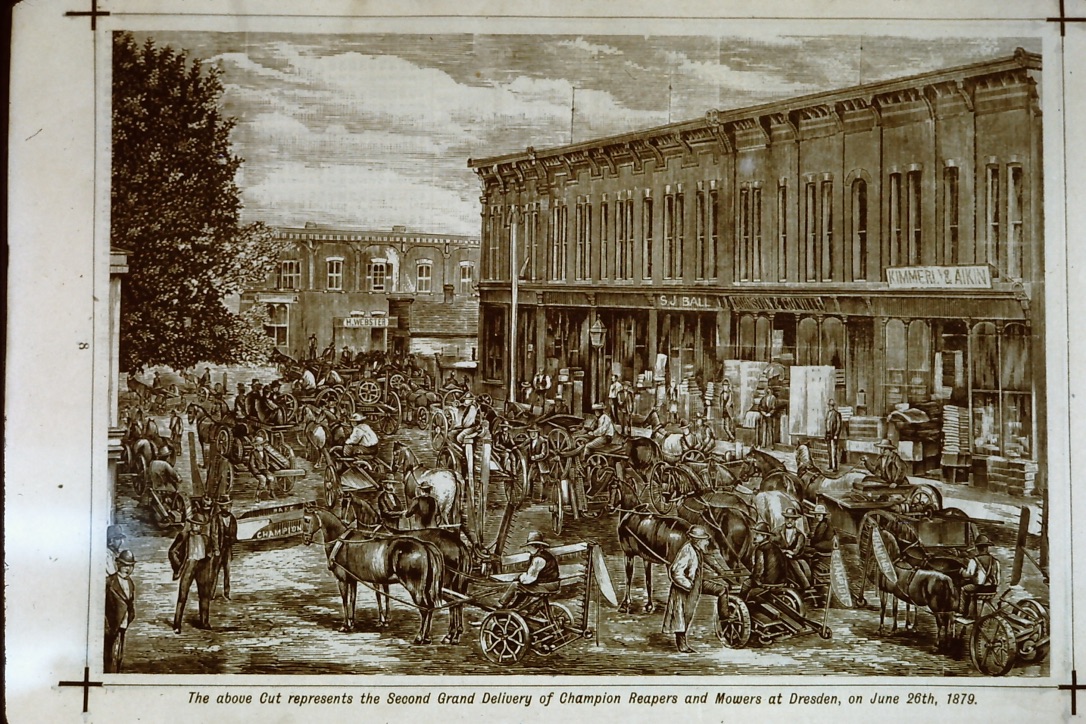
    a reaper .   The engraving below claims to portray the arrival of reapers and  mowers for sake in Dresden, Ontario
    in 1879.  The machines  were constantly improved looking less and less like the 1831 prototype.


    alan skeoch
    Nov. 2020

    NEXT STORY:    JAMES SKEOCH, MY GRANDFATHER WHO I NEVER KNEW, PICTURED 
    RIDING A REAPER ON THE SKEOCH FARM IN 1932.    

    THE CONCLUSION

    POST SCRIPT:  IMAGES BELOW


  • EPISODE 177 THE MCCORMICK REAPER PROJECT , CIRCA 1981

    EPISODE 177    THE MCCORMICK REAPER PROJECT


    alan skeoch
    Nov. 2020

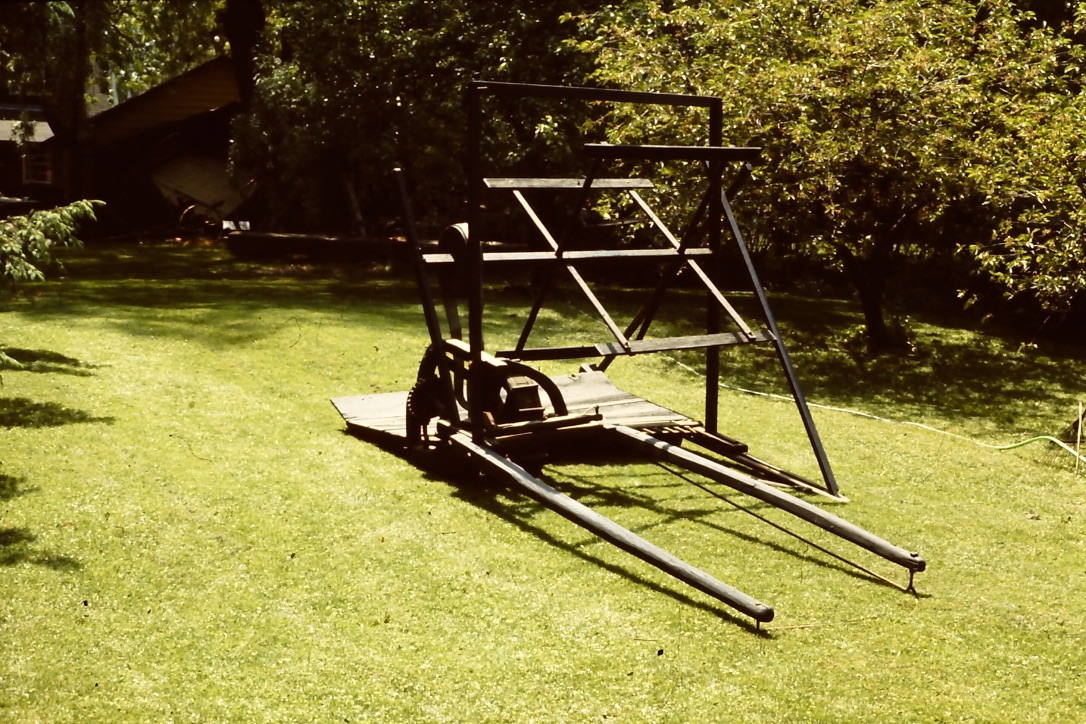
     McCormick Reaper…scale model of the 1831 invention of Cyrus MCCormick as restored in our back yard and  chicken coop around  
    1981…half a  century after 100 scale models were built to celebrated the century of  The McCormick Reaper.


    THE ADVENTURE REBUILDING A  MCCORMICK  REAPER (CIRCA 1931, REPLICA  1931)

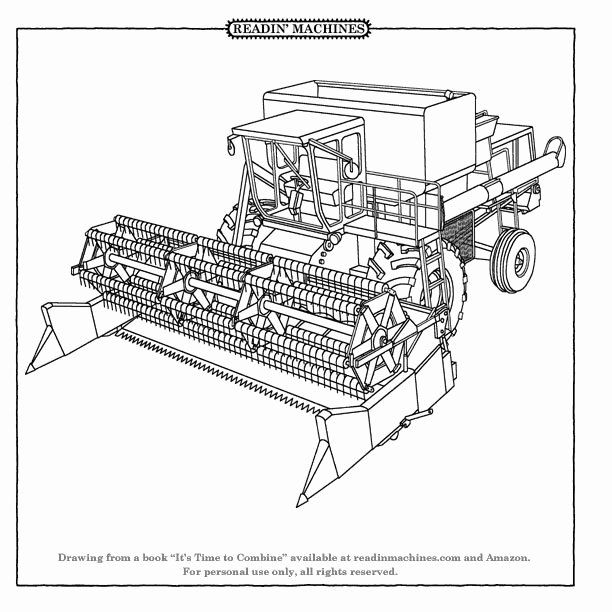
    This McCormick Reaper may look primitive to readers when placed beside a picture of a modern
    Combine Harvester.  When the picture is placed beside the original model reaper built by Cyrus
    McCormick in 1831 this picture looks  quite sophisticated.   Technology changes.  And change continues
    to happen.   


    THE CYRUS MCCORMICK REAPER PROJECT

    “Alan, aren’t you getting yourself into this project a little too deeply?  What do  you know about repairing…rebuilding….historic
    machines?”
    “True.  But I just could  not let the opportunity slip by.”
    “But you are dealing with big shots…an executive with the Mellon Bank of New  York.  Why didn’t you
    tell him you were a  high school teacher…a teacher of history?”
    “I guess  I found it easier to say  yes than to say no.”
    “Could be a deep hole you are stepping into.”
    “I know…makes me a bit nervous.”
    “How did  they get your name?”
    “I think Peter Cousins at the Dearborn Museum … near Detroit …must
    have passed my name along.  I had been doing all that research on machine
    technology much of which was centred on the collection of  Henry Ford.”

    “What are  you going to do now?”
    “Well, first thing is to get the machine and bring it here.”
    “Where will you put it”  Sounds  like a big machine.”
    “I’m emptying the garage….the McCormick Reaper is about 
    the size of  a car.”
    “You have already  converted part of the garage and the attached
    old mink house into a chicken coop.  Where will the chickens go?”
    “Nowhere.  They will keep the Reaper company…lots  of room.”
    “Alan,  our home is not a farm.”
    “Lucky we have this huge lot…lucky we live on the old Mississauga
    reserve with non conforming property lines…lots of room.”
    “is this legal?”
    “Perish  the thought.”

    “Next step?”
    “To get the reaper and bring it here.”
    “How?”
    “Gary Duncan has  offered to help. His  brother runs  a truck rental agency
    and has offered a  five ton truck for Saturday.   Gary and i will drive down
    to Merlin.”

    “Merlin?”
    “Small farm outside Merlin where the current owner of the reaper keeps his
    collection of things.”
      (Note: Forgot his  name at the moment but remember him so well)
    “How will you load the reaper?”
    “Easy…the five ton has an  hydraulic  ramp…piece of cake.”

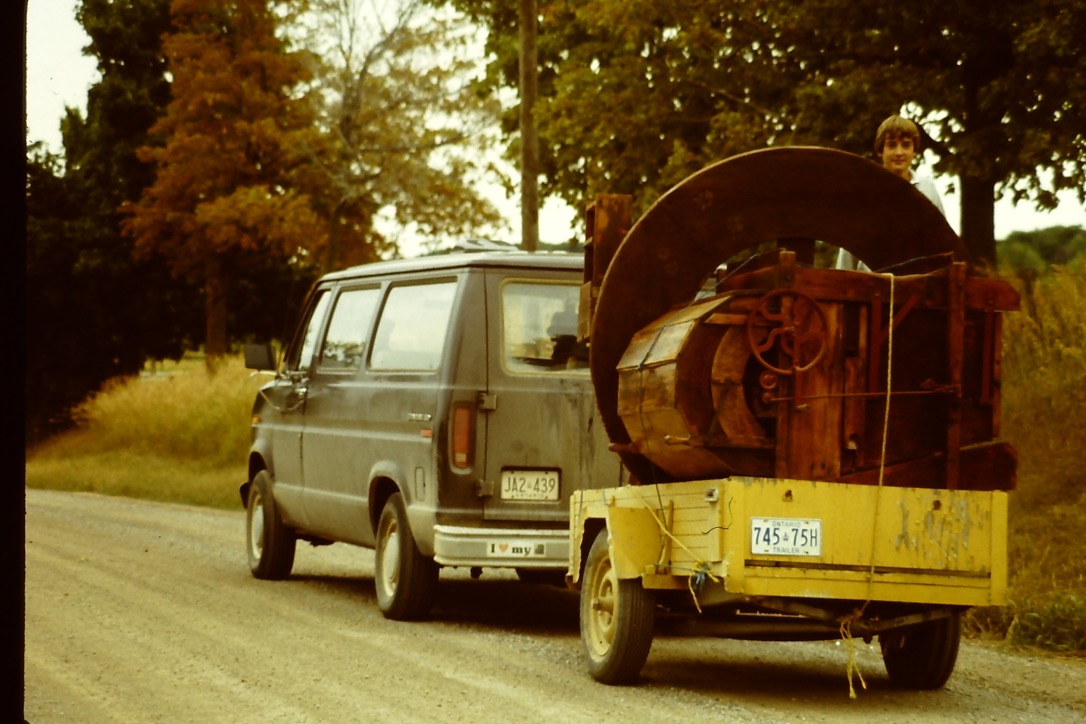
    WHEN the rental truck failed on Highway 401 , we tuned to our Ford Van and a  little trailer as  an alternative.  Here is a picture with
    a  different load  and  one of ours sons, Kevin, tightening up  the straps.   The McCormick Reaper was loaded successfully 


    Unfortunately the ‘Piece of cake” was not that easy.  The five ton truck
    broke down on the 401 before we really got out of Toronto.
    My van would have to be the back as  Gary and I
    headed for Merlin, a small town south west of Chatham.  East of
    Windsor…east of Detroit.  

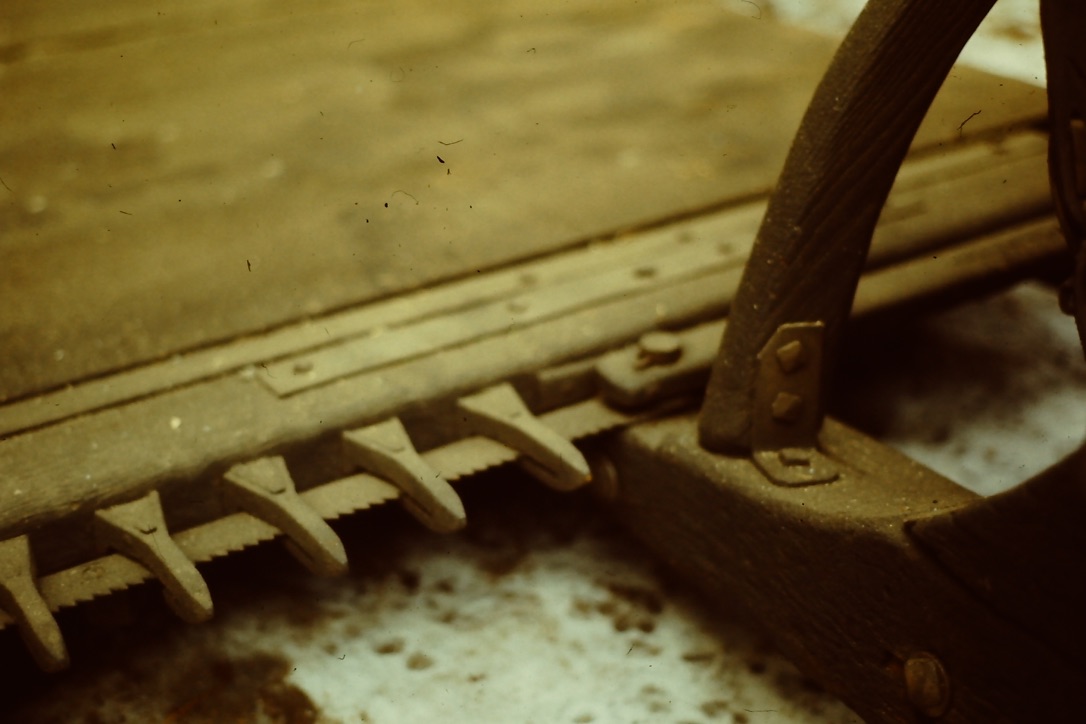
    The cutter blades were designed  differently from the BellReaper…more like a saw than garden shears.

    “How can you carry the reaper in your truck?”
    “We’ll put it in the trailer.”
    “I thought the  trailer was broken.  Didn’t it come loose and
    end up in a swamp near Fergus”
    “That was months ago.  Got it fixed.”
    “Will the reaper fit onto a two wheeled homemade trailer?”
    “Hope so.”


    Gary  and I managed to get to Merlin without trouble.  The retired 
    farmer (whose name I must find again) met us at his small two
    storey drive shed where he kept the reaper.  

    “Let me help get the reaper onto the trailer…two long planks should do it.”
    “Really only need  one plank…the McCormick Reaper has only one bull wheel.”
    “Between the three of  us we can get her on…winch attached  to the truck
    and one of us on each side  so it does not tip. “
    “Moving up  a foot at a time.  There.  Done. Now we’ll lash
    it down…”

    I remember clearly speaking with the owner of the reaper but cannot
    be sure  how he got the machine. I think he said that the reaper had
    been on display for  a time and then put into some kind of  storage shed
    where it sat for decades.  

    One  thought kept bothering me.  “How could such a delicate machine
    have survived for such a long time?   No apparent invasion from powder
    post beetle.   Almost intact.”

    I found  out later that the reaper we strapped down on my trailer was not the
    reaper everyone thought it was.  It had  not been built in 1831 by
    Cyrus McCormick.   This  machine had  been built a hundred years later in 1931 to celebrate
    the McCormick invention.  A replica.  One hundred scale models had been built
    by the International harvester Corporation to celebrate the original inventor.

    That knowledge was a bit of a relief.  I would  not be fooling around with
    a machine that was  really historic.  There might be a few others around
    somewhere  even though there was  no evidence of such.  If this had  been
    the original McCormick machine it should have gone directly  to the Smithsonain
    in Washington.    One McCormick replica did exist in the Dearborn collection.   
    But perhaps the Dearborn Museum McCormick reaper was ancient.   Now
    safely on display.  Protected.  In no danger.

    In  short, I was more relieved that mine was a replica.  More pleased than disappointed.  I would not be restoring
    the Mona Lisa.

    “So what are you going to do with the money?”, I asked gently
    “It will pay for my funeral.”
    “I beg your pardon,”  I really was not sure I heard him correctly.
    “When I die, this money will bury me…cover any funeral expenses.
    I won’t be a burden on my family that way.”

    There was not much more  we could say.  
    With that touching comment, Gary and I revved up my Ford van  and
    began our careful return to Mississauga.   It was a long day but we got
    the reaper home and rolled  it into the garage (chicken coop) for the 
    restoration to begin.

    All the immediately visible parts  were evident but in the back of may mind
    I wondered why we could roll it so easily.   Must be an  idling pulley or some arrangement
    that kept it out of gear for moving around.  

    The next discovery really knocked  me  for a  loop.


    In this picture you can see the big but gear clearly…bevelled, sprocketed.

    “Where is the bull gear?”
    “Bull gear?”
    “The main gear…the sprocketed bevelled  gear that converts the forward motion of the horse 
    into power that drives the cutter bar.  “

    That discovery was  made when we got the reaper to Mississauga.  There was ‘no joy in mudville’ that day.
    Sure  enough the large cast iron bull gear was missing.  Any other missing part might  be replaced.  The
    absent bull gear was a devastating discovery.  If I was  a real mechanic I would have noticed.  What could
    i do?   How could  I get another bull gear.  Even if I toured every scrap yard in North America it
    was unlikely I would find another bull gear.

    In shock, I sat on a stool beside the machine.  Afraid to tell anyone.  Fully aware that such a gear could
    not be found.  Nor could a  bull gear be made.  The pattern…the sand mould…had been dumped into
    garbage back  in 1931.   Here i was half a century later telling a banker I could restore the reaper.  Telling
    him a big lie.  I should have qualified my answer…should have said I would take a look at the job.
    Instead i had agreed with him on a telephone call.  Thankfully there was no formal contract.  Maybe I could
    weasel my way around the situation.  That would make me look like a fool of course…which was nothing new.

    “Alan, where could you find another bull gear?”
    “The only place possible is the McCormick reaper on display at the Dearborn Museum.”
    “Well?”
    “Well, I could  hardly go into the museum and remove the bull gear from a prize exhibit.  That
    would be like taking Mona Lisa’s smile.   No one would let me do that.  I am in trouble.”
    “You could ask Mr. Cousins.  Nothing  ventured nothing gained.”
    “OK…I’ll give it a try.”


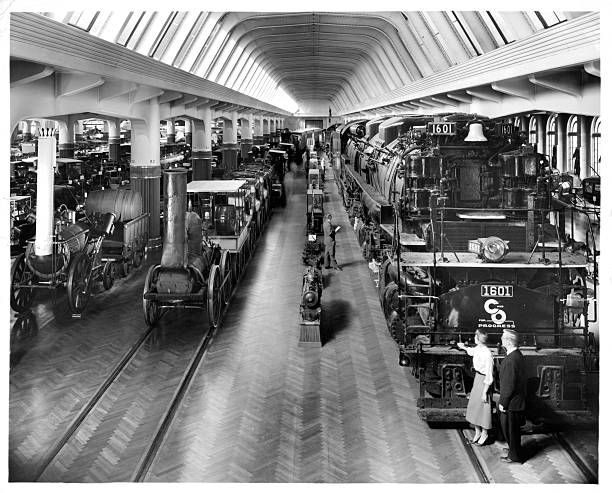
    A interior view of trains in Henry Ford Museum in Dearborn Michigan Circa 1950


    Ring, Ring , Ring
    “Peter, this is Alan Skeoch from Canada, I have a big favour to ask.”
    “Yes.”
    “Would the Ford  Museum let me take the bull gear off the McCormick Reaper.  
    I am in a real box here as that bull gear is missing and the only way I can
    see around the problem is to get your display model’s bull gear and then
    get it duplicated somehow.”
    Pause…long pause…”Yes, I suppose that could be done.   Be careful, give  me a
    few  days to get the clearance  then come down here a take the gear away for a month or so.”
    “Great,  Peter, I will fly down on the week end.”
    “Bring your own tools…I will get you a pass.”

    So I was on my way.  One step at a time. I really did not know what i would do  with
    the  bull gear if I did manage to get it off the reaper.   I would have to use it to make
    a sand mould and then find some factory that would be able to pour molten iron
    into the mould.   But that would be the next step.  First, I had  to get the bull gear.
    One step at a time, Alan.   

    “Marjorie, book me on a  flight to Detroit … need one night in a hotel
    near Dearborn.   You were right.  Peter Cousins has given me a permit to
    borrow the McCormick bull gear.”
    “Do you know how to get it off the machine?”
    “Nope.  But I will figure it out.”
    “Alan, this project is costing us a  lot of money.  How much are you being paid?”
    I asked  for $1,500 …same as  the Merlin farmer  got.”
    “Our costs are mounting up.  How much do  you think it will cost
    to get a new gear made?”
    “I would rather not think about that.”

    Marjorie did not say it directly but she was likely thinking about that old
    song…’Fools rush  in where Angels  fear tot red.’   Cool down, Alan, one
    step at a  time.  Get your tools together.

    “Let’s see…a set of open ended adjustable  wrenches, a hammer…and most
    important a spray can of nut loosening lubricant, a mechanics overalls…a peaked
    cap to hide my eyes…a nice new red tool box…maybe an electric drill?
    No, scrap the drill idea…too likely to do  damage…also need a sports bag to bring
    the gear home.”

    “Alan, can you bring a bull gear across the border?”
    “Not sure…one step at a  time.”

    Once again a dash of serendipity helped me on that score…more than a dash
    of serendipity for that matter.   That will come later.

    It was late August when I flew  to Detroit with my tool kid.  Flew  alone. No holiday. This
    was business.   Booked into a fancy hotel with an interior glass walled elevator as  I remember.
    No joy alone in an hotel.  Made me  feel sorry for sales executives.  Lone hotel rooms
    always remind me of the great John Candy movie titled Planes, Trains and Automobiles…a
    lonely lost gregarious man ever on he move.

    Early next day I put on my overalls and baseball cap.  (Did promote the Detroit Tigers?  Can’t remember),
    grabbed  my tool box and took a cab to the Food museum  where my pass was  waiting.  Smooth at the
    beginning until I stepped across the rope fence around the McCormick  Reaper.  

    I set down the tool box and begin  disassembling the reaper.  Carefully.  Soon a small crowd  
    was watching.  Unusual to see a featured machine being taken apart.  Like a watch repairman I
    set the pieces  in line.   I was scared.  What if I broke something.  I soon got down to the
    bull gear.  Great brute of  a gear.  Quite stunning really.  A piece of art.   I managed to get
    the shaft clear.  All that I had to do next was  slide the gear off the shaft.

    Whoa!  I pulled…twisted…tapped.  Failed on all counts.  The bull gear was rusted tight
    to the shaft.  By this time the crowd was bigger.   “Keep calm, Al…no perspiration…act like
    you know what you’re doing.”

    “She’s trusted tight, folks.   Old as the ages.”
    Calm …Al…keep calm.
    “Just a good shot of penetratng oil should help.”
    And I gave both ends  of the bull gear a good soaking.
    “Give the stuff a  moment or two to soak in, folks.  And watch this.”

    At which  point, I grabbed the bull gear with both hands … twisted …the gear came loose.
    Just for effect I spun the big gear and  it whirled like a spinning dervish down the shaft
    where I caught it, set it down,..and…And did  I turn to the crowd and take a bow?  I wanted
    to do that but  then carefully put the parts back on the reaper.  Packed up my tool box after
    giving the can of penetrating oil a  kiss.   No, I did  not kiss the can.  I wanted to kiss the can
    but that would reveal too much about my state of nerves.

    Before leaving the museum I dropped in on Peter Cousins to thank him and
    then another wonderful thing happened.

    “have  you got anyone willing to make a casting for the new bull gear?”
    I looked quickly at Peter.  Was he setting me up?   He  was a serous kind  of guy.
    No light talk.  No  jokes.
    “Not yet.”
    “Here take this phone number.  This  fellow owns a factory outside Detroit. He might 
    be able to replicate the bull gear for you.”

    So there was another big step in the project.   As things  turned out the factory owner
    was quite willing to make me a  new gear.  No small task.   I expected it would cost
    a fortune.

    “How much will that cost?”
    “Nothing…do it as a favour for you guys on the other side of the border. “
    “No, I will  pay.”
    “Nope, won’t let you…call it a neighbourly act … done for that old grouch  Cyrus McCormick
    who has been dead  for years.”

    A couple weeks later the new  gear was made and somehow  I managed to get the
    gear from Detroit to Mississauga without a problem.  Sam Markou, a good friend, was
    in our truck when I brought the gear across the border.  We were sent to a special
    holding area where I explained  the project to Canadian border guards.  They cleared
    the import.  Not sure they cared much about it.  This new bull gear was small  potatoes in
    the great scheme of things.  A blip.

    I worked all that fall improving  the reaper.  Some wood parts had to be refashioned.  A whole
    new reel windlass for instance.  Easy work though even for a left handed historian.

    Word got out to the local  paper and  a feature story was  written.  Friends came by often
    Even our boys, then quite small, showed  an interest.   The McCormick reaper project was
    a  rock thrown in a  small pool.  The ripples spread out.  

    Then the fateful day arrived and I built two gigantic wooden crates for the reaper and the
    separated cutters and wooden bed.  All crated  up and shipped  air freight to the
    Ulster National Folk Museum of Northern Ireland.

    There it rests today.  At least i think it is  there.  We have never heard a word about it.
    I am not sure that anyone in Northern Ireland gives a sweet goddamn about the model
    McCormick Reaper.


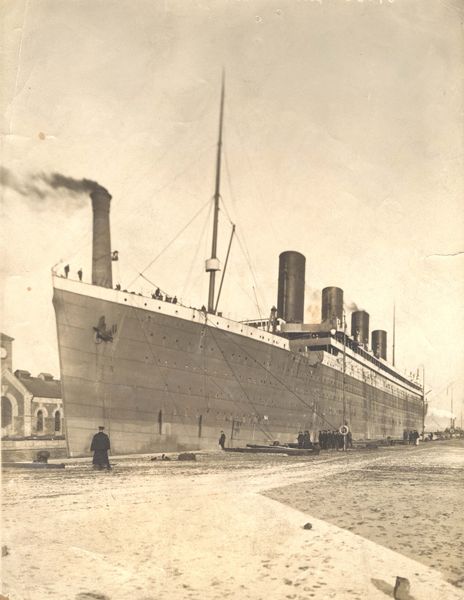
    Bigger projects were done  in Northern Ireland.  Like the Titanic.

    Your questions?  “Did I make any money from the job?”   I never really checked.  Probably
    lost a  few dollars when  everything is considered.   If my dad had been alive at the
    time he would  have been impressed.  How would I know?  Because he would  have
    called me s  goddamn fool which  was his way of saying “I am proud of you”


    alan skeoch
    Nov. 2020

    POST SCRIPT:   THE ULSTER FOLK MUSEUM…NO  SIGN OF THE MCCORMICK REAPER

    NEXT STORY:   WHO WAS CYRUS MCCORMICK?

    POST SCRIPT BELOW:  NO SIGN OF THE MCCORMICK REAPER IN NORTHERN IRELAND


  • EPISODE 176 PART 2: PATRICK BELL AND HIS REAPER… UNEXPECTED GOOD LUCK WHEN DISPARATE EVENTS COME TOGETHER

    EPISODE  176   PATRICK  BELL AND HIS REAPER…UNEXPECTED GOOD LUCK WHEN DISPARATE  EVENTS COME  TOGETHER


    Begin forwarded message:


    From: ALAN SKEOCH <alan.skeoch@rogers.com>
    Date: November 22, 2020 at 12:41:49 PM EST
    To: Alan Skeoch <alan.skeoch@rogers.com>


    EPISODE 176    PATRICK BELL…INVENTS FIRST REAPING MACHINE…TAUGHT SCHOOL IN FERGUS, C.W.


    alan skeoch
    Nov. 2020

    man guiding two horses pushing machine

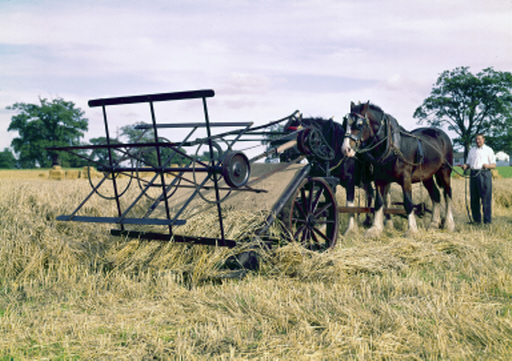
    Patrick Bell was 29 years old when he constructed this grain reaping machine in Scotland  in 1827-8…known to history as the Bell Reaper.
    Few  people remember  him today.  But they should.  Because of  him bread became cheap and people lived longer.
    (Note:  Bell is  no longer considered the principal inventor)


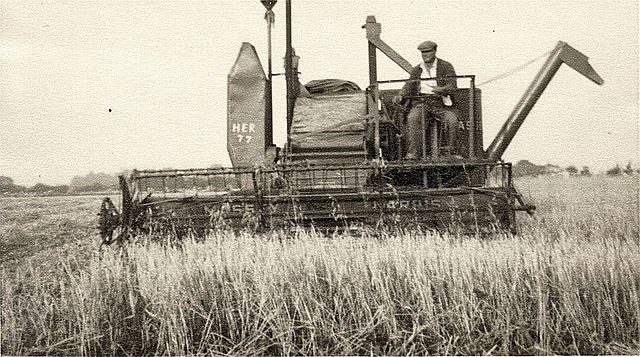
    The  wheat is ready for harvest.  Today the  job of  harvesting is done by huge combine harvesters…great self propelled  machines
    that cut the grain with reciprocating triangular blades.  All the elements of these modern machines occurred to young Patrick Bell
    when  he  built his reaper.


    CHEAP BREAD FOR EVERYONE

    I have  had more than my share  of ‘unexpected good luck’ in my life.   Sometimes I did
    not see  the good luck when it happened. A major piece of good luck for me began when
    Uncle Norman had a rock smash the master cyulliNder  of his 1953 Massey Harris combine
    harvester.   This event was a major disaster for Uncle Norman…enough of a disaster for
    him to blaspheme and give  the rock  a baptismal  name…i.e. “Goddamn Rock”

    Then, much later another piece  of unexpected good luck came when my interest in

    machine design and  function led me back to the University of Toronto as a mature
    graduate student.  Luck and the kindness of the Toronto Board of Education (Sabbatical leave) gave me
    the chance to delve deeply into the way agricultural machines changed human society
    in he 19th century.    

    The end result was a 300 page thesis, ‘Technology and Change – 1850 to 1891” (short form title)
    My love for old machines led us far and wide.  I say ‘us’ because Marjorie and our sons Kevin and
    Andrew were very much a part of this grand adventure.  (Coopeerstown, N.Y.,  Dearborn, Michigan, London (England)
    Californin, NewZealand, Australia, Ireland, Scotland)

    THE PHONE CALL

    Another component came in the form of a strange phone call.

    “Ring, Ring, Ring!”
    “Marjorie, can you answer the phone?”
    “Yes…yes…he is  here.”
    “Alan, the call is for you.”
    “Who is it?”
    “Some bank executive from the Mellon bank in New York.”
    “You must be kidding.,” 
    “No, that’s what  he said…”
    “Hello,”
    “Are you Alan Skeoch?”
    “I am,  how can  I help you?”
    “Did you write a learned paper on machine technology in the 19th century?”
    “I did…but your the first person to say I wrote a ‘Learned  paper’.  What’s up?”
    “We are searching  for someone in Canada to repair…reconstruct…the reaper
    built by  Cyrus McCormick in 1831.   We have located what remains of the machine…bought
    it from a retired farmer living near Chatham, Ontario.  Would you be interested  in
    assuming responsibility for rebuilding the machine…some parts  are missing…and
    then sending it air freight to a museum in Northern Ireland where McCoirmick was born.  We will pay whatever
    seems reasonable.”
    Is this a joke?”
    “No, we are serious.  You were suggested by Mr. Cousins, Director of the Dearborn Museum near Detroit.”

    My thoughts began to race.   This  guy is  serious.  He must think I am some kind  of
    mechanical engineer who owns a machine  shop.   What a great chance!

    “Yes, I will take the job.  Where is the Reaper?”
    “Still sitting in a barn near Chatham.  Can you pick it up
    and do the restoration?
    “Sure,”  I said, bluffing somewhat.
    “That’s wonderful.  Have you any idea of the costs?”
    No idea at all…I will give you and estimate after I see the Reaper
    and get back here in Mississauga.”

    There are three great names in the 19th century history of  mechanical reaping machines.  One of
    them is Cyrus  McCormick, who became  a classic entrepreneur creating a huge industrial corporation.  His beginning
    was, however, humble.    Another was a very strange man named Obed  Hussey.   And the third
    is Patrick  Bell/.  Three men who  changed the world  in which they lived.  Three men whose  inventions
    made a better world for you and  me.  Three men who have been forgotten.

    By a quirk of fate I was on their trail.  Well, the trail of two of them.  The  third,  Obed  Hussy, could have been
    a great man if he had been given the chance.   He never really got the ‘unexpected good luck’ that I had.
    That phone  call from the Mellon bank wanted me to reanimate the life  of Cyrus McCormick.  I could do that
    I suppose.  He did not live in a vacuum however. His life was intertwined with the life of Rev. Patrick Bell, a Scottish Protestant minister.   

    There is a  long line of  causes and effect that led from Bell and  McCormickBoth McCormick to the Skeoch farm outside Fergus where Uncle  Norman’s 
     Massey  Harris combine rested with a rock in its master cylinder.
    Skeoch  connectons may seem  laboured to readers but they were very much alive to me..   Patrick Bell  comes  first.

    MAN OF THE CLOTH

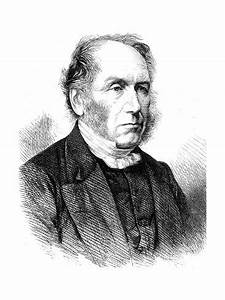
    PATRICK BELL (1799 – 1869, born Auchterhouse, Angus, Scotland

    Patrick Bell was a farmers’  son born in Scotland.  He had a way with mechanical
    things and  must have thought: “There has to be a better way of harvesting grain…barley, wheat and oats.”

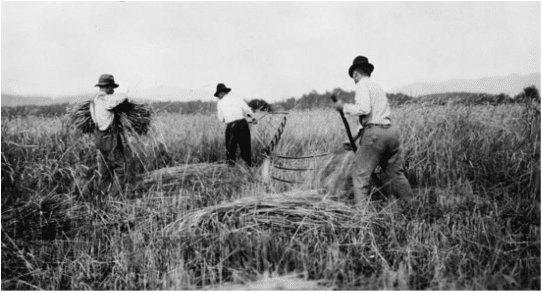
    The harvesting of grains was a monumental task prior to the  reapers  invented  by  Bell, Hussey and  McCormick.
    Thousands of  men and women were hired to cut and bundle sheaves of  grain using hand tools most important of
    which was the cradle scythe…really a long knife with a basket attached.  Men  did the cradling.  Women and children
    bound the cut grain into sheaves.  The sheaves were pitched onto wagons and  hauled to threshing floors and pommelled
    with hand held  flails to knock the grain loose after which the grain was winnowed  by being pitched in the air to let wind
    blow the chaff free.  It was laborious.  And  much grain was lost in the process.


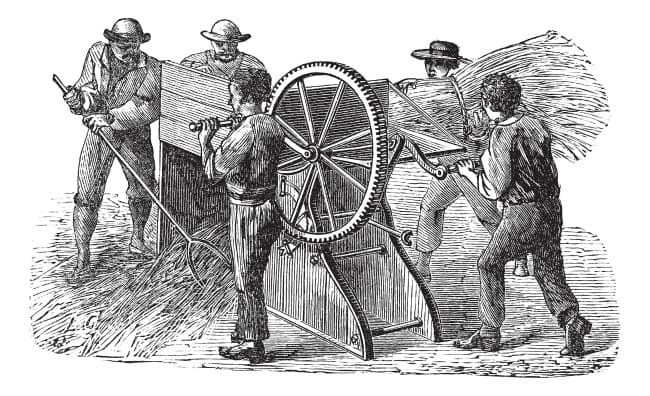
    This threshing machine nocked the heads of the wheat stalks … an improvement over the flail
    but still labour intensive…


    After the  harvesting…hit and miss harvesting. The grain fields were open to the gleaners…farm workers, villagers, poor
    peasants.  The gleaners rescued as much fallen  grain as they could.  With the gleaners came flocks of seed eating birds
    also gleaning.  In the evenings small creatures slipped through the fields, also gleaning.  Harvesting  was a wasteful
    and laborious task prior to the invention of  Patrick Bell’s reaper.

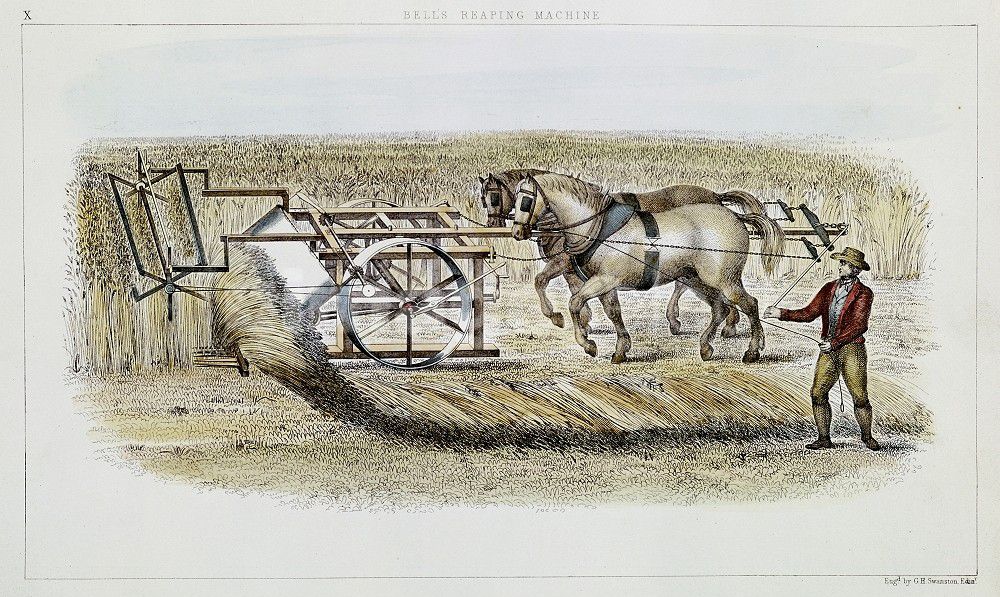
    man guiding two horses pushing machine


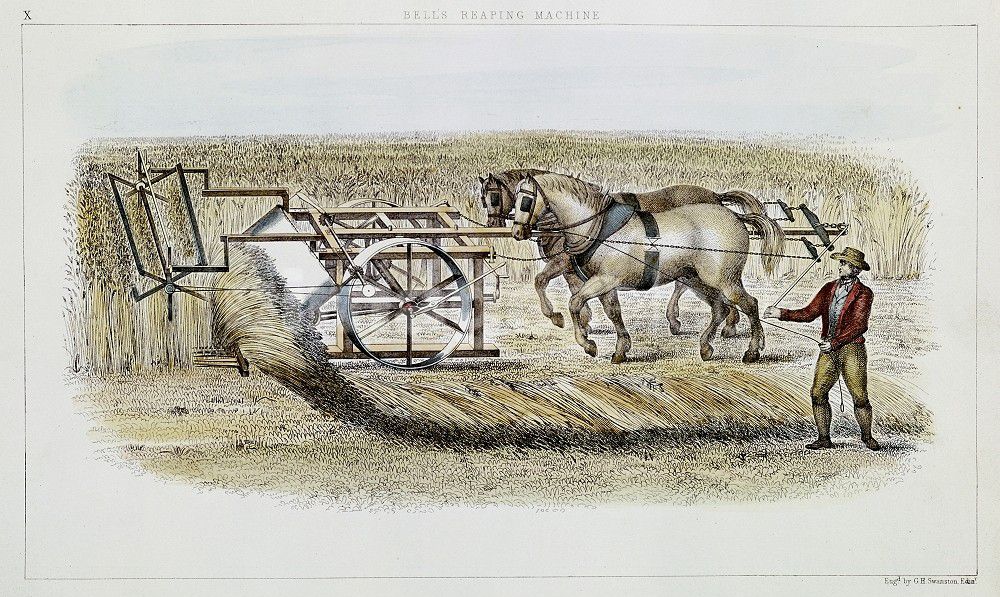
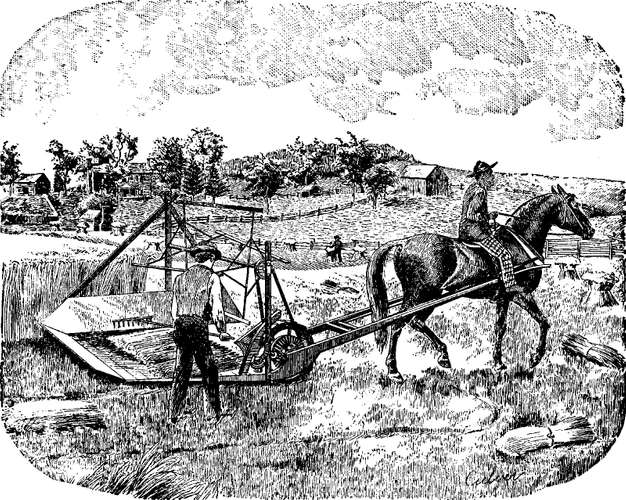
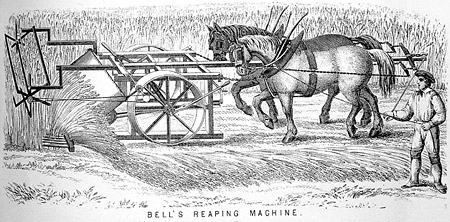
    This  engraving of the Bell Reaping machine invented and constructed  by Patrick Bell in 1827 and first used on his father’s farm in September 1828.
    It worked so well that young Patrick  Bell was awarded  a 50 pound grant from the Scottish  Highland Society..   The  real machine was much heavier than this depiction.  How do I know?  
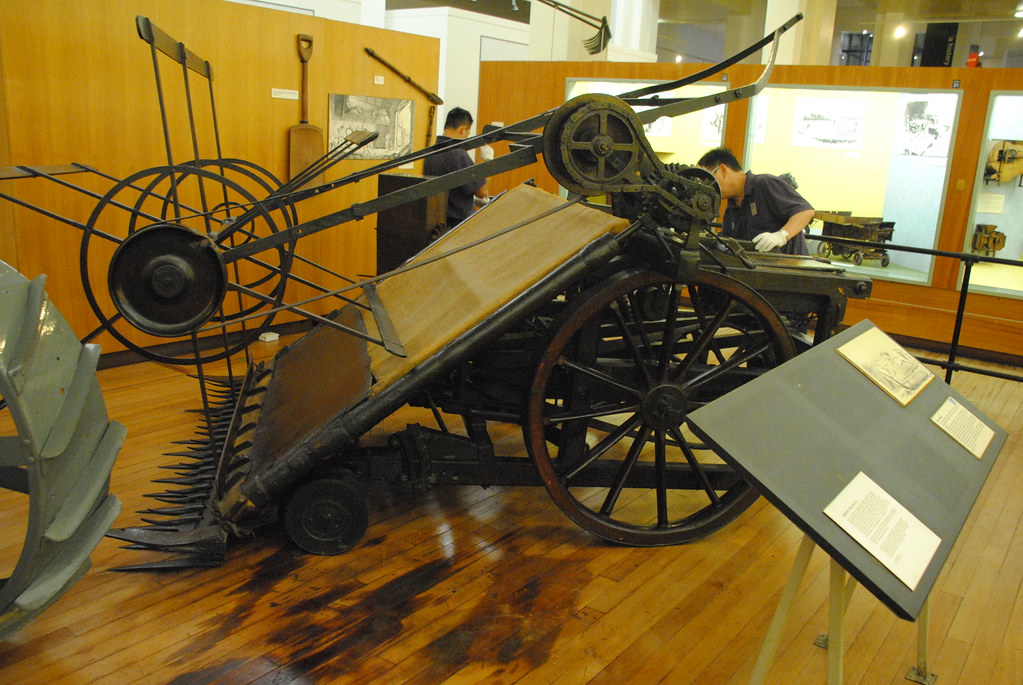
    Patrick  Bell’s prototype reaper continued to be used on his brother’s farm until l870 when  it was purchased by the Science  Museum in London, England.   Marjorie and i flew to  London to marvel
    at the machine.  Today,  in November 2020,  the large lumbering machine has been moved into storage but someday it
    will be put back on display we hope.  

    The astrobiologist, Chris Impey,  in his book The Living Cosmos expressed our feelings best when he wrote  “No other species has created machines to extend
    the senses and do its bidding.  No other species invented art or mathematics.”  The Bell reaper blends  art and mathematics into a machine that has extended
    the lifespan of millions of people improved copies, called combine harvesters,  are working today..  Art and Mechanics…art and mathematics… apt description of the Bell Reaper!

    Some readers  might be interested  in the elements of the Bell Reaper.

    1)  The Bell reaper was  pushed by a team of horses.
    2)  At the front of the machine there is a reel that gently pushed
    the standing grain towards the cutter bar which is  at ground level
    3) The cutter bar holds a  series of reciprocating blades that cut
    the grain stalks.   Really a  linked line  of grass  clippers…that was
    Bell’s idea.   “Why can’t I build a machine with mechanically driven 
    grass  clippers?”, he must have thought.
    4) There are two large drive wheels …  bull wheels …that are linked
    to a bull gear that makes  the clipper do their snipping as long as
    the horses  provide the power.
    5) There is a movable looped ‘apron’ upon which the sheared grain falls
    and  is moved to the side of the  reaper where it can  be bound
    into sheaves.   The horses do not tread  on the cut grain.

    (Note John Common had  a similar idea much earlier in 1812.  No invention
    comes  from nothing…there are stepping stones)


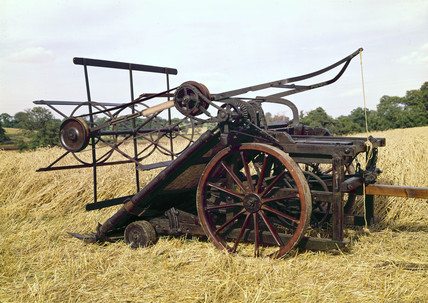
    This  is the prototype of the Bell Reaper.  What is  most obvious?   To me it isThe large bull wheels which drive
    the bevelled Bull Gear that makes cutter bar move at right angle to the direction of movement … cutter bar acted 
     like a  bunch  of hand shears joined together..  
        Readers do not need  to be engineers
    to get drawn into this story.  Remember I am an historian…not a mechanical  engineer.  Worse still, I am left
    handed and therefore find machines  made by those of you in the 90% majority goddamn awkward.  Try 
    cutting open an envelope with your left hand  using right handed  scissors and  you will get an inkling
    as to the mechanical handicaps faced  by left handers.   This story is not reserved for mechanics.  It is
    best understood by dreamers…people with imagination.

    SERENDIPITY

    Much of this story has chunks of SERENDIPITY.   Meaning what?  Meaning that there a number
    of wonderful elements that have com together without me looking for them…’unexpected good luck’
    1. (Serendipity is a noun, coined in the middle of the 18th century by author Horace Walpole (he took it from the Persian fairy tale The Three Princes of Serendip). The adjective form is serendipitous, and the adverb is serendipitously. A serendipitist is “one who finds valuable or agreeable things not sought for.”)  Persia is  now Iran. 

      This story has a lot of unexpected elements  that came together and  changed our lives.   First was  the
      ‘goddamn’ rock in the master  cylinder of Uncle Norman’s Massey Harris combine harvester.  That happened
      on the Skeoch farm located on the south west corner of the town of Fergus, Ontario ( called  Upper Canada when
      the little  Skeoch boys, James and  John, arrived  in 1846).

           In 1851, Patrick Bell left Scotland to teach school in Fergus.   The Bell papers have
      yet to be published.  He kept a  record of his life in Upper Canada… records that have
      yet to be turned into a book although someone in the 1990’s
      is supposed to be doing so…or was doing so thirty year ago.

      Did Patrick Bell likely notice the Skeoch boys on the streets of Fergus.  Did he teach  them?  Unlikely
      because education was reserved for the toffs of the town.  Then again, Scots  have always highly valued  education.
      Maybe Patrick  Bell and  the Skeoch boys  did  come together but that is  pure speculation.  By 1851 the Skeoch
      boys were teen agers.  Busy farmers sons.  No time for book learning.

      But just to think they came that close to each other… serendipity.    


      The Bell Reaper and the modern Combine Harvester


      Patrick Bell did not become a farmer.  Nor did he become a mechanical engineer.  Nor did he become an inventor
      beyond his Bell Reaper.  Patrick  Bell became a Christian minister in the Church of  Scotland.   No longer
       tinkering with bull gears and  bull wheels  and reciprocating garden shears.   And  isn’t it serendipitous
      that Patrick Bell came to Fergus to teach school in 1851?   That is really weird.


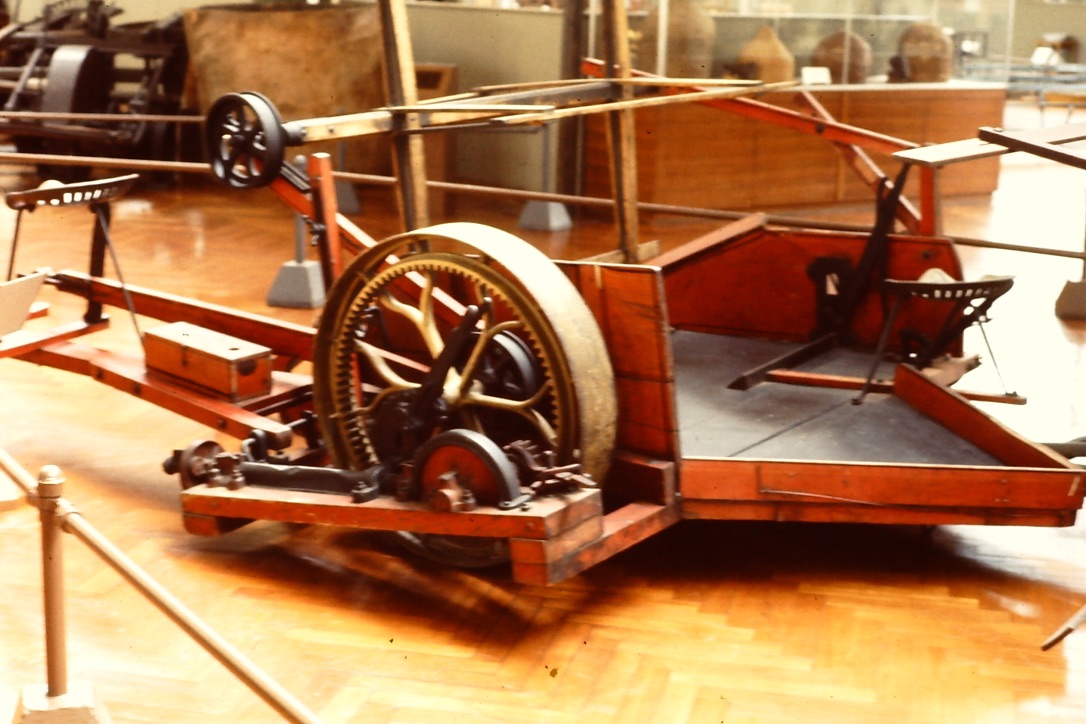
      The Bell Reaper on dislay at the Science Museum in London, England.  (Now removed to storage)

      BELL REFUSED TO PATENT HIS INVENTION

      Patrick Bell was very different from the  American inventor Cyrus McCormick.  How?  Bell refused to
      patent his inventor.  He refused to make money from the invention of a machine that would make
      life easier for human beings around the world.  He encouraged  others to improve his machine which
      they did and  are continuing to do right now.  Just look at those giants of the harvest fields today.
      Direct descendants of a machine imagined  and built by a 27 year old farm boy, future Christian minister, future
      school teacher, in the barn on the Bell farm in Scotland.

      WHAT DOES THIS STORY HAVE TO DO WITH THE CALL FROM THE MELLON BANK OF NEW YORK?
      Remember, When  I answered the phone call and accepted the project to rebuild a 
      a  McCormick Reaper I had never heard of  Patrick  Bell.  To fully understand
      the projects I  undertook to research the history of reaping.  Seemed a good
      idea to do so.  And that led me to Patrick Bell.  Serendipity at work.  


      The ‘goddamn rock’ in Uncle Norman’s combine set off ripples like a rock thrown in an Ontario pond.
      On March 1, 1976, my M.A. thesis was completed.  Three hundred pages under the title “Technology and Change
      in 19th century Ontario Agriculture, 1850 to 1891.  A massive tome of 300 plus pages.  I think it was too much
      for my history professor Dr. J. M. S.  Careless to read.   In  the school year, 1975-6, I was  granted a year long
      sabbatical leave by the Toronto Board of Education to put my love  affair with machines together.  Copies of
      the thesis are  held by the New York Sate Historical  Society in Cooperstown, and  Black Creek Pioneer Village
      in North York courtesy of a request from Jim Hunter, collections department.

      WHAT A  JOY 

      My work overlapped  into three University of Toronto departments.  First was the history department, then
      the Fine  Arts Department chaired by Dr. Webster and  finally the Engineering Department …then Bruce Sinclair, the School of
      Practical Science…S.P.S.   I still have a good  feeling about that  engineering department and the book
      ‘Let use Honest and Modest’ by Bruce Sinclair and  others.  That was  46 years  ago..  The SPS members were so 
      incredibly helpful and actually interested in what I was trying to accomplish.  At some point
      a U.  of T. history professor  asked  how long I expected to take.  “Seven months”, I answered.  His response was
      a furrowed brow.  Scepticism.  I soon understood why the furrowed brow. There was a big bump in the road.

      THE BUMP IN THE ROAD

      There was one tricky side to this sabbatical.  In 1976 an M.A.  graduate student was expected to have reading level
      familiarity with French.  We were tested.  I say ‘we’ because there were many  fellow graduate students.  I was two decades older than all of them.  
       But accepted. Nice feeling.  The French  requirement, however,  was a  hurdle that most had trouble leaping 
       over myself included.  My  first score  was ‘zero’ which must sound  terrible.  In fact it was the mid  point
      between a score  of  -7 and  +7.  Most, perhaps all, of my fellow grad  students scored the same or less.  At least
      I had high  school French which  most of them did not.  My friends  at Parkdale took great joy in 
      my ‘Zero”.   After a lot of work I managed to get +3 on the second effort.  That was a  pass. How in hell
      most of the kids  I was with could be expected to translate a Syrian  script in French I failed
      to understand.   Soon afterward that French hurdle for graduate students was dropped.  

      Why  tell you this?  Because the hurdle was way too high and failure  to clear it
      led  to a  very amusing incident in my life.  Perhaps offensive to purists.  On my second
      attempt at the reading  level in French we lined up at the  exam building on Queens Park Circle.
      One of our student leaders came over and said, “Al, you are number 4.”which  meant nothing to me.
      “We’ll all meet for s beer after the exam.”  Now that was fine by me.  Nice to be accepted by
      kids twenty years younger than i was.  The exam was hard but I soldiered my way through it.
      Then we went for a beer….about ten of us.
      “OK, Number 1, give me your sentence.”
      “And now Number 2…”
      “Number 3…”
      “And  you, Al, what was the fourth sentence.”
      I failed to understand…did not know I was supposed to memorize the fourth sentence. The 
      plan was to memorize the whole exam then Parrot it back  to our leader
      who would  get the exam translated  by someone that actually knew French.
      Then they would be ready for Test attempt Number Three.   The plan was
      both funny and tragic.  I did  not believe the test would be the same paragraphs
      for Test Number 3.   So the whole effort was tragic.  These kids, most of them,
      had never even taken Gr. Nine French.   Eventually the U. of  T. big shots must
      have realized that fact and dropped the need  for reading level in a second  language.
      Although  I failed my young friends I was flattered to be considered part of the
      conspiracy.  We had a few laughs with our  beer that afternoon.  I credit my success
      with the French requirement to Madam  Schroeder at Humberside C.I. who kept me
      in the front seat because I made up words that did  not exist.  She was  a great teacher.
      I will always be in her debt.

      END OF PART TWO:   REAPING … 
    Notes and Postscript

    -Note that Patrick  Bell is no longer credited  exclusively with the invention of the reaping machine


    Papers of Reverend Patrick Bell (c 1799 – 1869)

    Scope and Content

    Journals of the Reverend Patrick Bell (c 1799 – 1869) kept during his visit to Canada, 1833 – 1837. 

    GB 231 MS 2317/1 – 2 Journal of travels between Great Britain and the province of Upper Canada, 1833-4.

    GB 231 MS 2317/1 contains an itinerary of the journey from Great Britain to the Province of Upper Canada, describing his route through Dundee, Cupar (Fife), Glasgow, Isle of Man, Manchester and Liverpool; his passage to New York on board the Eagle, continuing up the River Hudson to Albany, and by Erie Canal to Queenstown, Canada, passing through Saratoga, Little Falls, Utica, Syracuse, Auburn, Lockport and Louisville, Jun 1833 – 1834. The volume is fully indexed and accompanied by a tabular record of daily temperature and weather conditions, Nov 1833 – Feb 1835; an account of a journey from Niagra Falls to the city of Fergus, township of Nichol, Apr 1834; and outline plans for his second volume, to include an account of agricultural practices in Upper Canada, notes on the natural history of the region and hints to emigrants, Jul 1835. 

    GB 231 MS 2317/2 is a fair (and slightly expanded) version of the first part of GB 231 MS 2137/1, and of another volume (or volumes) which has not survived. It begins in 1833 and ends 6 Mar 1834. The last page is inscribed Drummondvill Niagra Falls U.C. – Patrick Bell.

    GB 231 MS 2318 Journal or rather observations made in Upper Canada during the years 1834, 35, 36 and 37.This is a continuation of Bell’s journal for the period 1834 – 1837; also containing weather observations, Jan 1835 – Apr 1837; thermometer readings at Quebec, 1832 – 1833; and temperature statistics for Montreal taken from a Montreal newspaper, 1826 – 1835.

    Each volume described above is illustrated with sketches and diagrams of farm steadings, houses, agricultural implements, and detailed pencil drawings of plants and animals observed. His observations of people and places encountered are detailed, often amusing, and full of social and political comment (see in particular his account of the Campaign against the Swine in New York  which terminated shamefully for those in power , GB 231 MS2317/1 p 50 – 52)

    Administrative / Biographical History

    Patrick Bell was born at Mid-Leoch farm, Auchterhouse, Dundee, c 1799, son of George Bell, tenant farmer there. He studied divinity at St Andrews University, and was ordained and appointed minister to the parish of Carmylie, Arbroath in 1843, where he remained until his death in 1869. He was for many years credited as inventor of the reaping machine, though the title now rests with John Common of Denwick, who invented a machine based upon the essential principals of the modern reaper in 1812, some 15 years ahead of Bell. The machine which Bell developed in 1827, whilst still a student at St Andrews, remained in regular use until c 1868, when it was purchased for the museum of the Patent Office. In recognition of his services to agriculture, he received a presentation from the Highland Society, subscribed for by the farmers of Scotland and others, and was awarded the degree of LL.D. by the University of St Andrews. 

    From 1833 – 1837 he travelled in Canada, where he seems to have found work as a private tutor. During this time he kept a detailed journal of his travels, making particular note of the geography, natural history, and agriculture observed.