Blog
-
EPISODE 398 THE SHORT AND HORRIFIC LIFE OF GEORGE EVERITT GREEN, HOME CHILD PART TWO
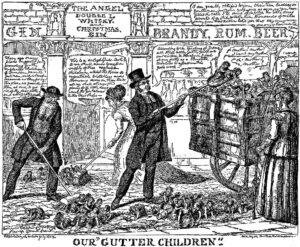
EPISODE 398 THE SHORT AND HORRIFIC LIFE OF GEORGE EVERITT GREEN, HOME CHILD , PART TWOalan skeochJuly 2021NOTE: The fifteen year lifespan of George Everett Green is not a story of idyllic rural lifeon an Ontario farm. The last six months of his life are the direct opposite. I used the word horrific in the heading…thatsays it all. Rather than type a new manuscript I will stick largely to the script written in 1992 withcorrections added. In 1992 I did not know what happened to Rose Findlay, the tormentor of George…murderessis a better term. Documents recently discovered state she spent at least one year in the Mercer Reformatoryfor Women located in the Parkdale district of Toronto. The Mercer Reformatory has been demolished only the home of the matron remains.Rose was convicted of child abuse rather than murder. Convicted. She did not escape justice even thoughmany people considered her innocent. Some Canadians believed Home Children should never have beenshipped to Canada owing to the fact most of these children came the slums of English cities.The negative attitude to Home Children circulated among many Canadians. The attitude is bestseen in the political cartoon below. The children were regarded as the sweepings of the slums. Worthless anddiseased. Children that England was glad to send to the colonies. Children that many people in Canadafelt were not legitimate immigrants. As a result many Home Children were overworked and abused. Mind you Otherswere greeted warmly and became valued as future farmers. Love and hate were expressed among Canadians when Home Childrenwere mentioned in casual conversation. That will be apparent as my story unfolds. But first take a close lookat this wretched cartoon….titled “OUR GUTTER CHILDREN” being rescued by a Christian missionary called Dr Barnardo. George EverettGreen was abandoned by his laundress mother when he was 6 years old.WHY TELL THIS STORY OF NEGLECT, ABUSE AND MURDER?Why is this story so close to me? My grandmother, Louisa Bufton, was nearly such a child. Her mother had been impregnated byone person named Doctor Price…a medical doctor. He assumed no responsibility for grandma. And her mother was too poor todo much . How could single women with little children even survive? No help for them.A distant aunt, Miss Webb, heard that Louisa was being mistreated and possibly becoming a street child in Manchester.Aunt Webb rescued her and brought her along with another child to a farm in Herefordshire where she grew up. But always with abit of the stigma that abandoned children carried through their lives. Grandma was a very bright woman whose cheerfulness dominatedher life. A good marriage happened when she met Edward Freeman who became the head gardener on the 1500 acre Eywood Estatenear Kington, Herefordshire. Migrated to Canada in 1908. Shared adventures and tragedies. She sang and played the organ as anintegral part of her Erin Township, Wellington County, Ontario community after she andher husband Edward Freeman migrated to Canada. Somehow they made a living and raised two children on a tiny 25 acrefarm with stones strewn liberally on the bit of dry land and four large swamps where nothing could be grown. We still havethat farm. Today it is our country estate. The Eywood Manor House before it was demolished in 1954 and the Estate sold in pieces.Edward Freeman’s brick walled gardens still survive to this day. We have been there often.
 The Freeman farm as it appeared in 1914…with Louisa Bufton Freeman standing and her daughter Elsie Freeman (my mother)cuddling their dog Punch. The farm house remans much as it appears here. The barn is gone.Why tell you this? Because it is best you know my bias before reading the story of George Everitt Green.alan Skeochjuly 2021THE MURDER OF GEORGE EVERITT GREENNovember, 1992: WE drove North from Owen Sound through the abandoned village of Presqu’ile where George Everett Green’s bodyhad been carried in November 1895. Mike Brillinger and I planned to made a video of the death of poor little George. We Drove through the village of Kemble where the old general store stood cold and empty on the dreary Novemberafternoon. Cloudy day. Then we ascended the limestone and shale escarpment that towers over the deep water portof Owen Sound. Hairpin turns with the forest reclaiming land lost to pioneer axes a century ago. A mile or so on wefound the graveyard. The wire gate was open.And there it was…the first gravestone. A large piece of square limestone with an obelisk top pointing to heaven.Beneath that stone lay the remains of George Findlay, brother to Helen Rose Findlay. He had been killed in 1894 when his team ofhorses bolted throwing him to his death on the dirt road leading to the forgotten village of Big Bay. Somewhere on thisroad George Findlay died. He was 43 years old.Helen Rose was 41 years old when she inherited their farm…Lot 42, Concession 25, North Keppel Township, Grey County, Ontario.Settlement of the will was contested as many relatives felt Helen Rose Findlay should not get the farm. But she did. She spent thewinter of 1894 alone in the frame farmhouse. A tough winter for Helen.I don’t think she was ready for the tasks of pioneer farming. I do not admire Helen Findlay but do have some compassionfor her situation. North Keppel is a poor place to try and operate a farm. In November. 1992 the land was abandoned. Thin topsoil,poor drainage, brutal winters. A depressing place. Nearby is a lake named the Slough of Despond, a term borrowedfrom Bunyan’s Pilgrm’s Progress. Slough of Despond … not much more need be said.Helen could not operate the farm without help so she applied to Alfred Owen, superintendent of the Barnardo distributinghome for young destitute children located in Toronto. Her application was accepted since her brother George had taken aHome child without any subsequent problem.Fifteen year old George Green was sent by train to Owen Sound where he was picked up by William Johnson, the stagecoach driver.A few months later Mr. Johnson would be a key witness in the murder trial. William Johnson testified that the boy was an imbecilewho could not even get off the stagecoach without falling. Others described the boy as a kind of docile version of Frankenstein.WHO WAS GEORGE EVERRIT GREEN?He looked a lot younger than 15. (Some sources said he was 17 really but agree he looked younger than that). His early life had not beenpleasant. His father died 1888 when George was very young. Apparently his mother was a drunken abusive person. George became a slum kid…a street orphan.Negative comments about the mothers of slum children are quite common. And also very insensitive. Seems popular these daysto judge the lives of people in the past using the lens of the present as I have said before. Single mothers in 19th century Englandlived a vicious hand to mouth existence. No social services. Often carrying the stigma of loose and immoral behaviour. Alone and rejected.How so many of these women managed to keep their children and survive is to me miraculous. The fact that many surrendered theirchildren to social missionaries like Dr Barnardo should be no surprise. Take a moment to think what you would do in similar situations.George was rescued by Dr. Barnardo when George’s sister and mother signed him over to the Barnardo Home. Dr. Barnardo wasan English evangelist whose compassion for destitute and abandoned children led to thecreation of one of the greatest refuges for the poor in England. George loved the Barnardo Home…first time he felt safe. He was fed,housed and given training in basic trades. He was also taught to read and write in order that he could read the bible andbecome a good Christian. Then on March 25, 1895 he joined 167 other male Barnardo children being sent to Canada on thesteamship Parisian. Not a pleasant experience . The boys were jammed into the steerage part of the ship. George was sea sickfor the entire trip and had to live in foul conditions throughout.BACKGROUND RECORD“Until he was six, Green lived with his older sister, Margaret, his younger brother, Walter, and his parents in lodging-houses in the Tottenham suburb of London. In 1886 the parents deserted their children, who were admitted to the Old Parish School and then to the Enfield Farm School run by the Edmonton Poor Law Union, a local government institution. Their father died in January 1888. In May 1894 their mother induced Margaret, aged 17, to leave her job at the farm school for a place in service, and in retaliation the union discharged the boys into their mother?s care. Within a month Mrs Green was unable to pay the rent on her room, and she and the boys began to sleep rough. In July 1894 George and Walter were admitted to the East End Juvenile Mission of Dr Thomas John Barnardo at their mother?s request. George was described in the admission documents as well conducted, but with a cast in his left eye and a peculiar appearance. Eight months later, on 21 March 1895, the brothers embarked for Canada in a party of 167 boys.
George was sent on 3 April to a bachelor farmer in Norfolk County, Ont., who returned him to the Barnardo receiving home in Toronto within the trial period of a month because the boy?s defective vision meant that he could not drive a team. On 7 May, Green was dispatched to a second place, near Owen Sound, to live with a single woman, Helen R. Findlay. Since her brother?s death the previous summer, Findlay had run the family farm alone. Before that time, two Barnardo boys had been placed on separate occasions with the Findlays. Neighbours who saw Green soon after he arrived described him as clean, healthy, quiet, and backward. Findlay, who after her brother?s death had been observed doing field and barn work the community regarded as inappropriate for women, they viewed with suspicion”These comments tell precious little about George. What was he really like? Was he an imbecile? Or was he just a shy kid with physicalproblems. On this matter hinged the whole murder case. One of the first persons to testify was William Johnson who swore ‘to tell the the wholetruth and nothing but the truth” He was put on the stand by defence lawyer Tucker who was defending Helen Rose Findlay. The purpose of Johnson’stestimony wa to persuade the jury that George Green was weak in body and mind…a sick boy suffering from congenital syphillis inheritedfrom an immoral mother or, should that argument fail, Mr. Tucker inferred that George suffered from ‘Scrofula’ …i.e. tuberculosis.THE MURDER TRIAL: OWEN SOUND, ONTARIO, 1895: HELEN ROSE FINDLAY CHARGED WITH MURDERTHE STAGECOACH DRIVER’S TESTIMONY REGARDNG GEORGE GREEN“QUESTION: You are a stage coach driver from Owen Sound to Big Bay?ANSWER: YesDo you know George E. Green?Yes, I saw him.When did you first meet him?I think it was the early part of May (1895)As you first saw the boy describe his personal appearance.He was very much deformed.In what way>Several ways, I think. One leg was very crooked or something wrong with his feet…he didn’tseem to be able to walk properly.You say his feet seemed to be tender one leg seemed to be crooked. Then his hips, something wrong there?Seemed to nbe twisted some way, …he was crooked, twisted in the back.How were his shoulders?One shoulder seemed to be as if something knocked it, it was crooked.His eyes?His eyes seemed to be looking in two different ways. They were crooked in his head.What is known as cross eyes?Yes.His mouth?His mouth seemed to be twisted to one side altogether and his chin set out.Do you know what hand he used (*note – Mr. Tucker knew George was left handed)NoHow was his intellect?Very poor. When I would speak to him he would not make answer. I strove to getsome questions out of him and he would not answer me. Generally I wish to know whatthey (ie. Home children) are like and I put questions to him but him I could not getany satisfactory answer.Did he have any baggage with him?Yes, a valise.Who handled the valise?Well, I did at the last.Did he handle it at all? He went to lift and he reached out in a different direction from where thevalise was sitting and fell over…he was awkward in all his movements.Who went out with you on the stage that day?I think Daniel Davidson was the only one.How did he get out of the rig?Well, he eiher tumbled out or fell out. I stopped the horses, and the first thing I saw him on his face andhe was on his hands and face on the road. He either missed the step or something.Mr. Davidson tells us that he jumped out of the side of the rig on the road.He did not, he tumbled and fell out.CROSS EXAMINATION BY LAWYER MR. MACKAY (LAWYER FOR THE PROSECUTION)(He is trying to discredit the witness)QUESTION: You could not trust him alone. He was such an imbecile yoU wereafraid to leave him alone?ANSWER: I was.He was so extremely silly you didn’t like leave him alone?That is SO, he was.He was not fit to be let loose?I didn’t think he was fit to send to a farm.He was in the kind of condition, such an imbecile, he might get lost and die in the fields?I considered by his appearance he was an imbecile, and like an intoxicated one.Oh, he was an intoxicated imbecile?He was not but he looked like that.Then you would not think this boy able to work at all?I would not take him to work.He was all twisted up?>Yes he was.Twisted in the shoulder?YesTwisted in the legs?YesTwisted in his back?YesTwisted in the eyes?YesWhat else?The jaw was twisted tooAnd he was doubly imbecilic?Yes, regular imbecile(Then) Daniel Davidson is lying straight out when he says that the boy got out of therig..what kind of rig, ordinary box, was it?Yes.Then Davidson must be lying when he said George put his hands on the sides and sprung out?I have nothing to do with Daniel Davidson.Was there anything right about George Green?His appetite,Was his head twisted to the side of the high shoulder?Yes, from the side of the high shoulderIt is a wonder they did not put him in a museum?I winder they didn’t put him somewhere else.Was there anything else crooked about him?Yes, his mouth.Squint mouth, cross-eyed,what else?His chin around the jaw was just shot out.What else? Anything else crooked? You have only told us about his leg, And neck and shoulderand mouth and eyes…was there anything else?There seemed to be something wrong with his spine.His back was twisted?Seemed to be.Can it you give us something else. What else was twisted? (I think) You were to a little twisted thatday yourself, were you?I don’t be as much twisted as you be.You think your eye-sight was good?I do.NOTE: The physical condition of George Green when he arrived at Miss Findlay’s farm iscritical to the case. If the testimony of the stage driver Johnson was competent, then GeorgeEverett Green was crippled and mentally deficient. therefore MissFindlay could not be held responsible. According to Johnson, George Green was a broken child before he arrived.Mr. Mackay then called James Jeffery, a blacksmith apprentice in the village of Kemble.If Jeffery contradicts Johnson then who is to be believed. Which witness is more credible?NEXT EPISODE George Everett Green, 1895 when he turned 15 years of age.…one of the most notable Home Children ever sent to Canada.…and one of the most tragic stories of child abuse.
 MERCER REFORMATORY FOR INCORRIGIBLE WOMEN…TORONTO(Helen Rose Findlay eventually spent time in the Mercer Reformatory)
 -
EPISODE 398 COMING BUT WILL BE LATE
EPISODE 398 STORY COMING BUT MARJORIE WILL NOT HAVE TIME TO PROOF READ UNTIL TONIGHT
Alan skeoch july 2021
This episode has more print and a few startling picture…particularly an 1895 cartoon. I hope most of you are readers. A very tough story in these tough times when we seem to enjoy judging the events of the past by the lens of the present. The story will be sent tonight…part of a series I wrote a few years ago but never had the nerve to publish…never even tried after the story was written.
I have fallen into the habit of writing a story every day…some long, some shore…all illustrated. Episode 398 involve a lot of work and some fact checking. And there are other things in our lives. So glad that most of you seem to like the stories.
alan -
EPISODE 397 GEORGE EVERRIT GREEN, BORN FEB. 8, 1880, DIED Nov. 8, 1895 — STARVATION, ABUSE AND NEGLECT
correction 1880 to 1895 (thanks jeannette)
> On Jul 27, 2021, at 9:44 PM, ALAN SKEOCH <alan.skeoch@rogers.com> wrote: > > EPISODE 397 GEORGE EVERRIT GREEN, BORN FEB. 8, 1890, DIED Nov. 8, 1895 — STARVATION, ABUSE AND NEGLECT > > alan skeoch > July 2021 > > My wife Marjorie does not want me to tell this story again. In the 1990’s I researched and wrote about poor, fragile, handicapped, unwanted George > Everitt Green. The story haunts me to this day. In 1895 the story of his tragic death was known by all Canadians. Today his story crops > up now and again. In 1992 I wrote and delivered a short version of the story over CBC Radio Noon. The story does not rest well in Canada. Best forgotten. > Not long afterward my CBC producer told me over the phone, “We do not need you anymore.” I suspect the two events are > connected. > > I spent a lot of time and a fair bit of money putting the story together. I even travelled to Liverpool, England to confirm the records. Mike Brillinger > and I made a videotape on the desperate farm in North Keppel Township, Grey County, Ontario, where George was starved, beaten and > mistreated horribly by Rose Findlay for the seven months > of his life in Canada. Why did she treat him so miserably? She said to neighbour that she rather liked beating him. > > When the coroner was called to examine George’s body, he was horrified. George was curled up in a kind of fouled straw nest. His body was bruised and > cut, He was emaciated. His straw nest was also his toilet. What I remember from my manuscript was the strange red dots on his body. > > Rose Findlay was subsequently charged with murder. Her court case was big news across Canada. Most startling was the fact > that the jury could not agree that George was murdered. Rose got off. > > My manuscript goes into great detail as the court record reveals. Was George diseased when he arrived in Canada as a Barnardo child? > Dying? Or was he just a shy, little, abandoned boy…blind in one eye and crooked in the other eye. A London street waif at 6 years of age. > A slum child among the 30% of the population of England living in poverty. > > Have I got the guts to tell the story once more?<6437980855_dfa02cbde2.jpg> > > FRONT PAGE OF MY 1992 MANUSCRIPT > > 1992 September > > “No sign of life. In the garish light of a late September afternoon Mike Brillinger and I walked the unadorned > fields of the old Findlay farm, North Keppel Township, Grey County, Ontario. No buildings remain…no foundations… > just a small dump with rusted pots and broken dishes. It was here I believe George Everett Green was > murdered on November 8, 1895. His death remains a mystery. Helen Rose Findlay was charged wth his > murder but never convicted because the Owen Sound jury was split. Subsequently she was charged with > the lesser offence of child abuse and child neglect but she disappeared. What happened that November > when George died? There is lots of hearsay evidence in the court records.” > > “Just waking these desperate abandoned fields now overgrown with wild apples,burdock, goldenrod and > red clover has been an experience I cannot forget.” > > CONTINUED…MAYBE -
EPISODE 397 GEORGE EVERRIT GREEN, BORN FEB. 8, 1890, DIED Nov. 8, 1895 — STARVATION, ABUSE AND NEGLECT
EPISODE 397 GEORGE EVERRIT GREEN, BORN FEB. 8, 1890, DIED Nov. 8, 1895 — STARVATION, ABUSE AND NEGLECTalan skeochJuly 2021My wife Marjorie does not want me to tell this story again. In the 1990’s I researched and wrote about poor, fragile, handicapped, unwanted GeorgeEveritt Green. The story haunts me to this day. In 1895 the story of his tragic death was known by all Canadians. Today his story cropsup now and again. In 1992 I wrote and delivered a short version of the story over CBC Radio Noon. The story does not rest well in Canada. Best forgotten.Not long afterward my CBC producer told me over the phone, “We do not need you anymore.” I suspect the two events areconnected.I spent a lot of time and a fair bit of money putting the story together. I even travelled to Liverpool, England to confirm the records. Mike Brillingerand I made a videotape on the desperate farm in North Keppel Township, Grey County, Ontario, where George was starved, beaten andmistreated horribly by Rose Findlay for the seven monthsof his life in Canada. Why did she treat him so miserably? She said to neighbour that she rather liked beating him.When the coroner was called to examine George’s body, he was horrified. George was curled up in a kind of fouled straw nest. His body was bruised andcut, He was emaciated. His straw nest was also his toilet. What I remember from my manuscript was the strange red dots on his body.Rose Findlay was subsequently charged with murder. Her court case was big news across Canada. Most startling was the factthat the jury could not agree that George was murdered. Rose got off.My manuscript goes into great detail as the court record reveals. Was George diseased when he arrived in Canada as a Barnardo child?Dying? Or was he just a shy, little, abandoned boy…blind in one eye and crooked in the other eye. A London street waif at 6 years of age.A slum child among the 30% of the population of England living in poverty.Have I got the guts to tell the story once more? FRONT PAGE OF MY 1992 MANUSCRIPT1992 September“No sign of life. In the garish light of a late September afternoon Mike Brillinger and I walked the unadornedfields of the old Findlay farm, North Keppel Township, Grey County, Ontario. No buildings remain…no foundations…just a small dump with rusted pots and broken dishes. It was here I believe George Everett Green wasmurdered on November 8, 1895. His death remains a mystery. Helen Rose Findlay was charged wth hismurder but never convicted because the Owen Sound jury was split. Subsequently she was charged withthe lesser offence of child abuse and child neglect but she disappeared. What happened that Novemberwhen George died? There is lots of hearsay evidence in the court records.”“Just waking these desperate abandoned fields now overgrown with wild apples,burdock, goldenrod andred clover has been an experience I cannot forget.”CONTINUED…MAYBE