alan skeoch
Dec. 2017
Jan. 2018
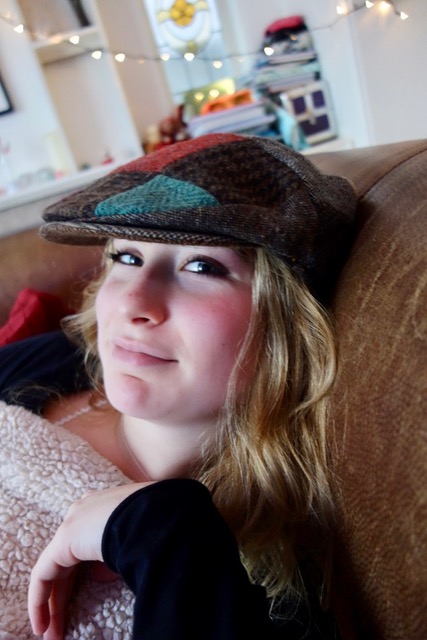
This is Nolan Skeoch who has just turned fifteen. Without her love affair with horses OLD ENGLAND would never have been
found. She was the trigger for the search. Not because she was interested in the roads, pubs or folkways. But because she
owned the horses and the foals for which we were searching. This story is a birthday gift to you Nolan. Of course Your mom
is deeply involved in your life. Not to be forgotten for she found this little bit of Old England.
SIX CANADIANS IN SEARCH OF OLD ENGLAND
alan skeoch
Dec. 2017
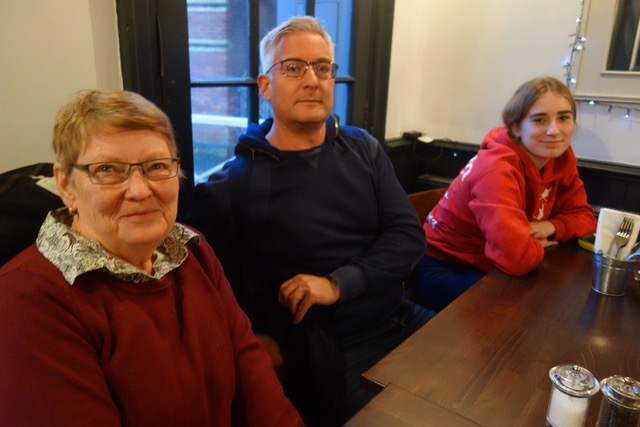
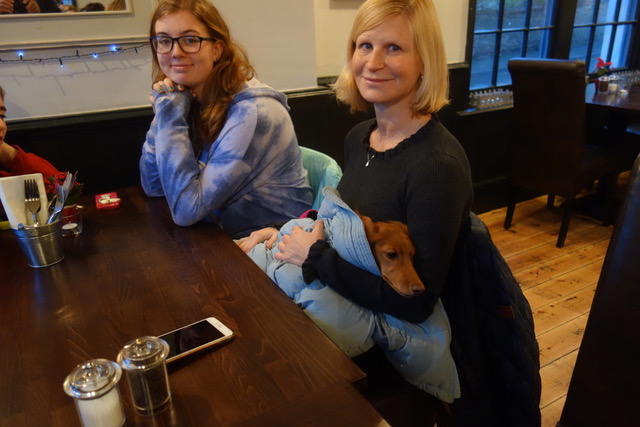
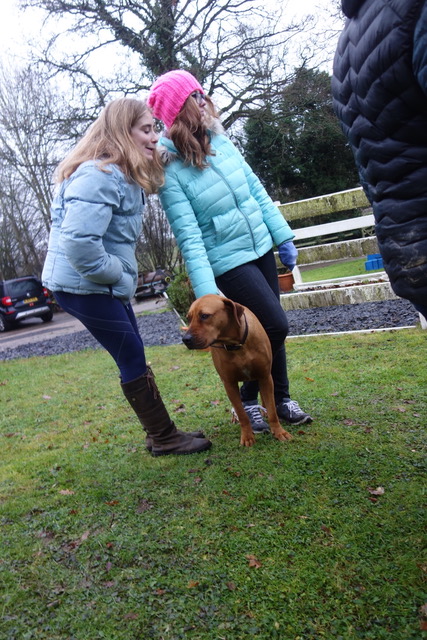
SIX CANADIANS in search for Old England. left to right: Marjorie Skeoch, Kevin Skeoch, Nolan Skeoch, Morgan Skeoch, Gabriela Skeoch
and below them Alan Skeoch ending a pint of Old England’s best bitter.
Once upon a time two months ago as 2017 wound down and 2018 was about to be born six of us, Canadians,
decided to see if Old England still existed. We had criteria. We had doubts that Old England existed anymore.
1) Old England had to be found within a two hour drive of London.
2) Old England would have ancient roadways … narrow and deeply incised with towering oaks obscuring the sun.
3) Old England had to have tiny villages with wood bedecked bars and easy access to ancient ales.
4) Old England had to have slate or tile roofed barns with pigeon roosts and at least one large guard dog
5) Old England had to have lots of horses of all ages
6) Old England had to have rain otherwise the deep green of the countryside could not thrive.
7) Old England had to have wild creatures co existing with domesticated creatures.
8) Old England had to have a sense of mystery, even tension.
9) Old England must serve roast beef with Yorkshire Pudding and trimmings
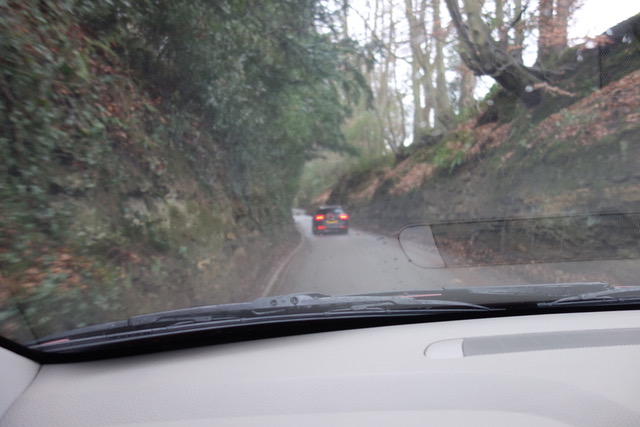
So we drove westward from Muswell Hill and Crouch End towards the hills of Surrey. We passed beneath the thundering jetways of Heath Row international airport which raised doubts that Old England could be found. Not to worry.
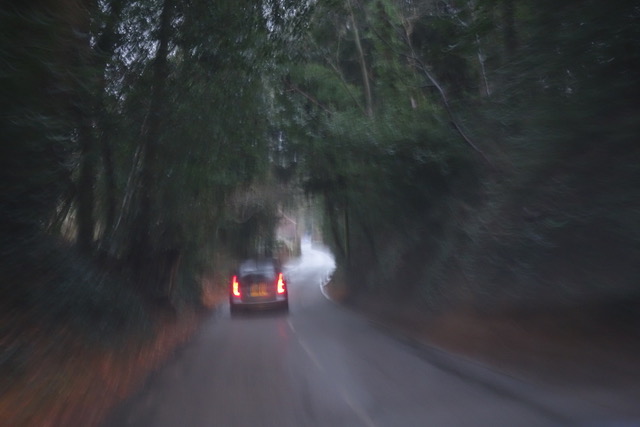
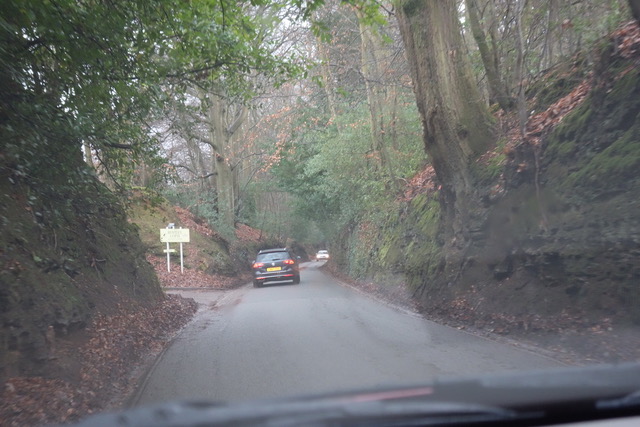
The deeper we got into Surrey the narrower were the roads and the more mysterious the land appeared as large oak trees spread their branches. These were the same oaks that were harvested as timbers for the British Navy and the clipper ships that took our kin to Canada long years ago. \
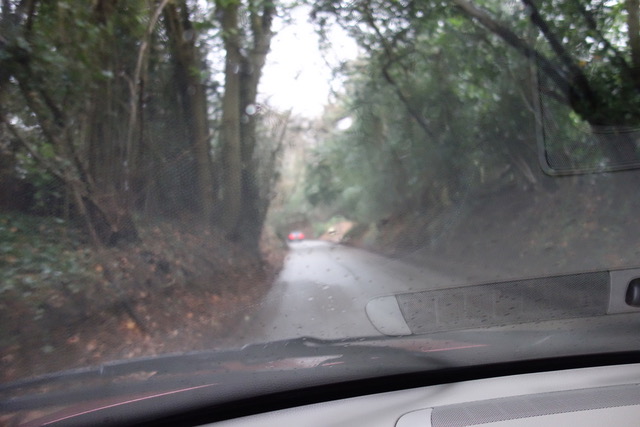
The road became a time tunnel. These were medieval roads unchanged save by a skiffle of asphalt.
This trip was becoming mysterious…magical. Our very own time machine. These same roads had been travelled by Romans long long ago
and centuries later medieval carts had rumbled along in those long ages when most people lived on tiny farms and never ever saw big cities.
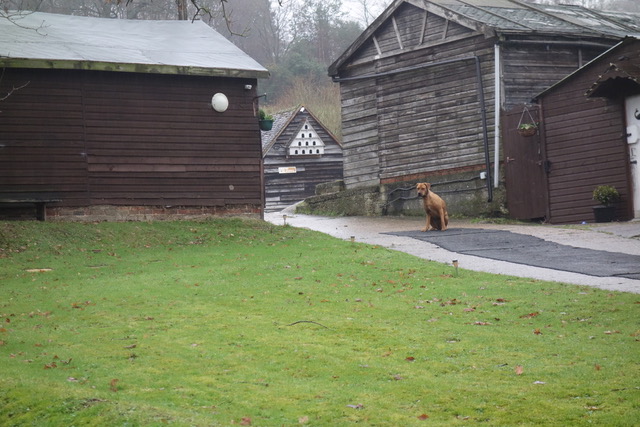
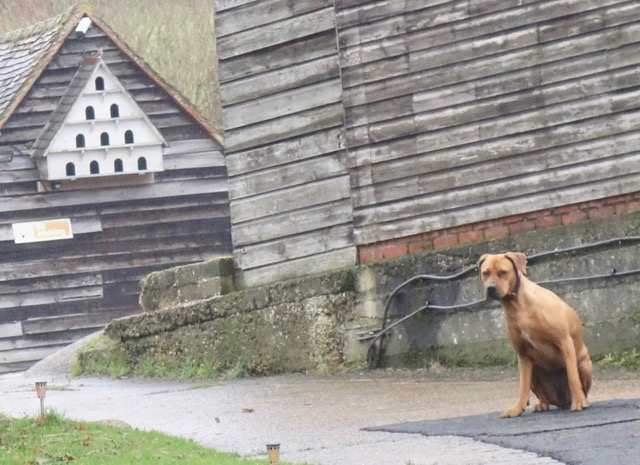
Then we cut through a leafy laneway where an ancient farm was protected by this Rhodesian Ridgeback, a dog whose breed reputation was unsavoury But
this guy was lonely…glad to see us.
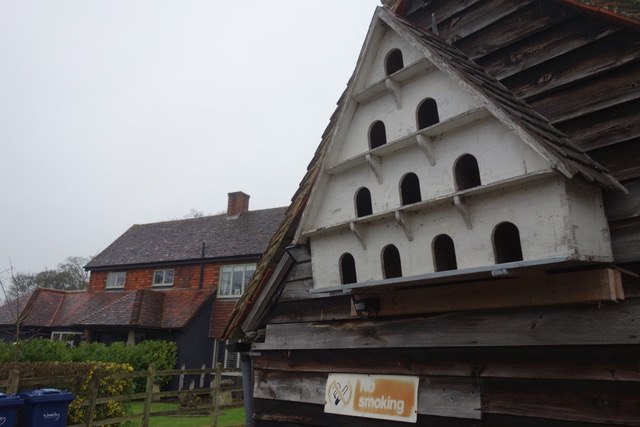
Looks like a pigeon apartment building. Likely is. There was a time when the gentry enjoyed a plate of baby pigeons when fine dining. Probably why
they drank so much and got that foot disorder called gout. Subnamed “revenge of the pigeons”
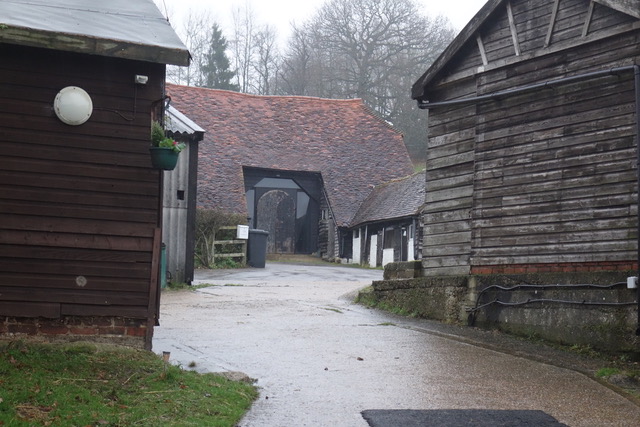
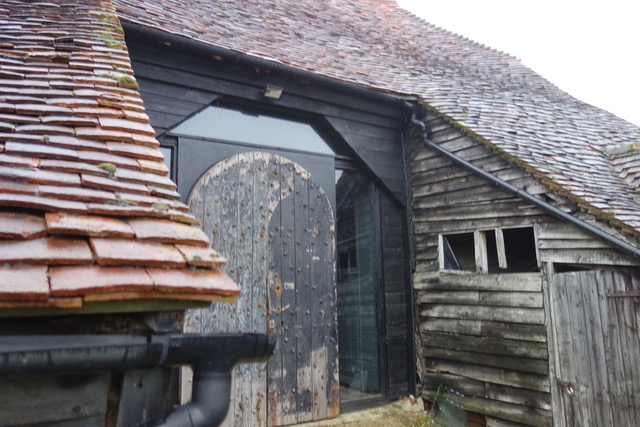
Now this is really Old England. Look at the roof of the barn dead centre…heavy red tiles sloping almost down to the ground. Those white doorways were
once homes of small domestic animals…pigs perhaps. The harvest barn designed for a team of horses with a wood wagon piled high with air dried hay or
hand tied sheaves of grain ready for hand threshing. Old England. Is that Thomas Hardy peering through the title window on the left?
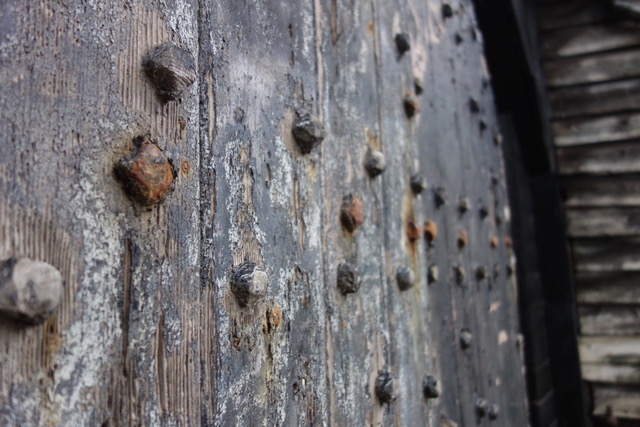
The intense oak doors to the threshing floor are studded with heavy hand made bolts (nalls>) . Must be a reason. Escapes me though. Maybe the doors
were stolen from a moated castle long gone.
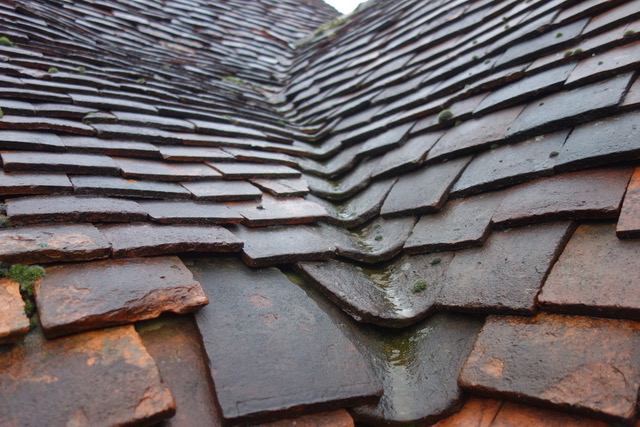
A couple of thousand red tiles artfully arranged on the roof. Only oak framing could hold this roof in place.
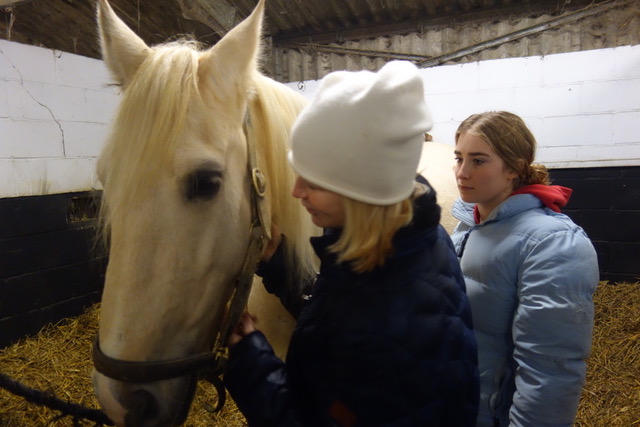
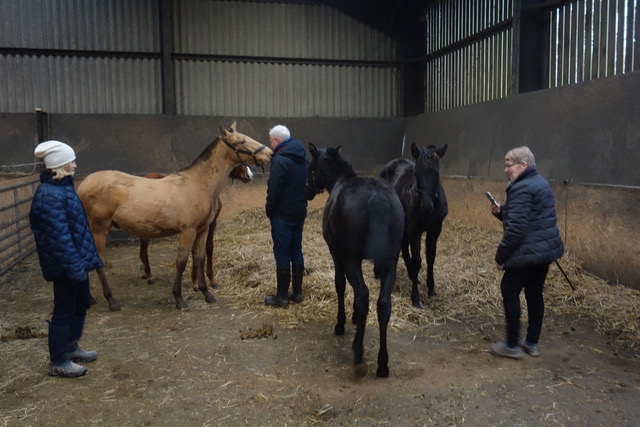
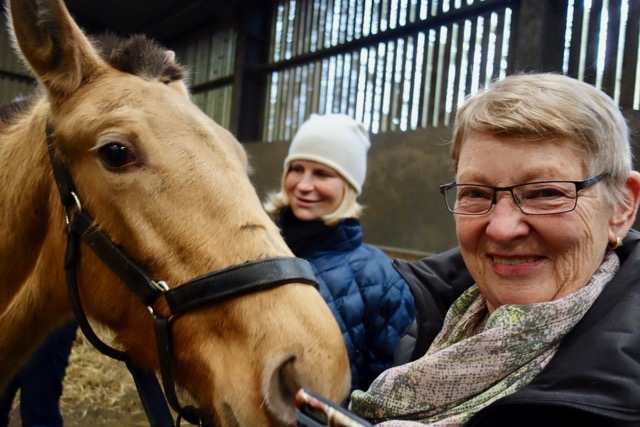
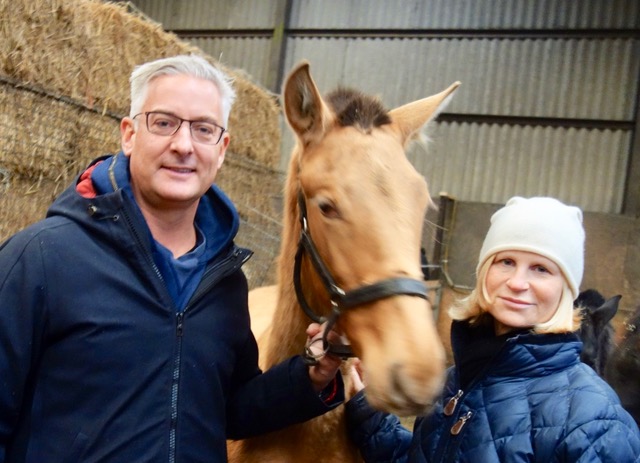
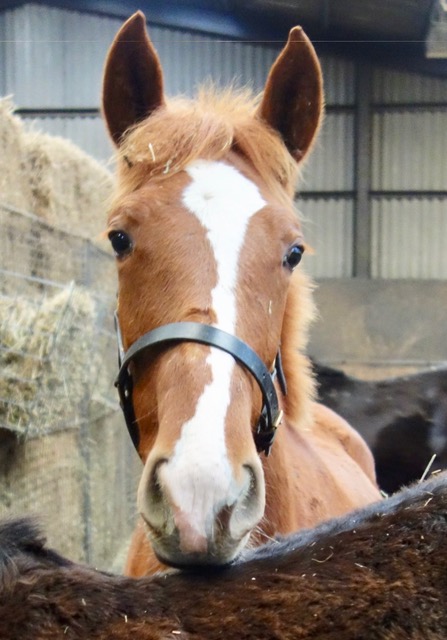
Eureka! The horses! Gabriela pulled aside a plank door incised in a huge pilaff square hay bales. And there they were. the foals…Five of them. Tucked away a modern corrugated iron exercise barn. Tow belonged to Nolan and Gabriela.
“Why two? Was one foal not enough? Why buy a second one?”
“I was afraid he would be lonely.”
‘but there are five here…all this years foals.”
“I did not know that at the time.”
‘Are they expensive?”
“That tanned coloured one certainly is … worth 30,000 pounds…$50,000 dollars.”
“You paid that for a foal?”
“No mine were very cheap…not everyone wants a foal.”
“What happens to unwanted foals.”
“Let’s not go there, Alan.”
(end of conversation)
“Is htis the $50,000 foal…colt is better name now…getting bigger.”
“Yes, beautiful. Rare colour…reason for price.”
“Is he going to bite Marjorie?”
“Don’t you know difference between nuzzling and biting, Alan. These cols
are all nuzzlers. They like people. They think they are people.’
“Believing that is akin to believing in UFO’s, Gabriela. He is eating Marjorie’s scarf…smells silk worms maybe. Keep him the hell away from me.””
“This is our colt. Knows us and loves us. From the moment he dripped from his mother we have been with him.
Horses are smart and have wonderful memories. Raise a horse with love and gentleness and he will respond in kind.”
“When can Nolan ride him?”
“That is a slow process…perhaps a year or more.”
“Then what can you do now?”
“Hug him.”
“Hug?””
Here give him a hug.”
“Horses do not like me. Sorry, not a hugger.”
“He knows that…see how he looks at you.”
(end of conversation)
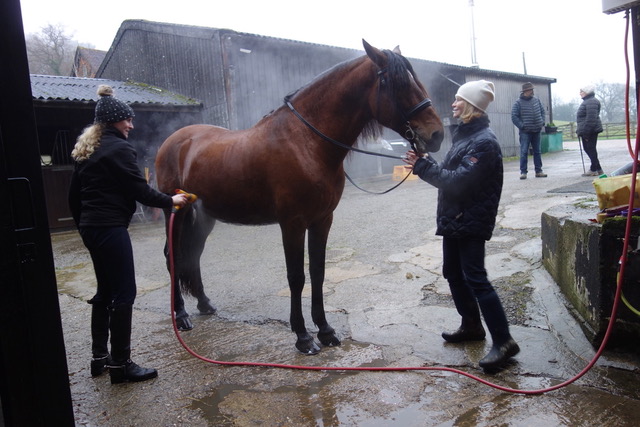
“Alan, tis is George…a Spanish show horse…fully trained…has more dance steps in his head than Fred Astaire had in his feet.”
“Why are you spraying him with cold water?”
“Cool him down.”
“Why would he need cooling? Is he hot tempered?”
“You can be a pain, Alan.”
“How can I get out of this barn? He may bite or kick me. Marjorie’s horse tried to kick me one. Jealous, I think.”
“Why would a horse be jealous of ou?”
“He had been gelded. I had not.”
“Stupid comment.”
“Is George a gelding or a stallion?”
‘Go take your pictures…we are busy.”
“But how can I get by?”
“Sit on a bail of bedding and pout…but stop your infernal chatter.”
(end of conversation)
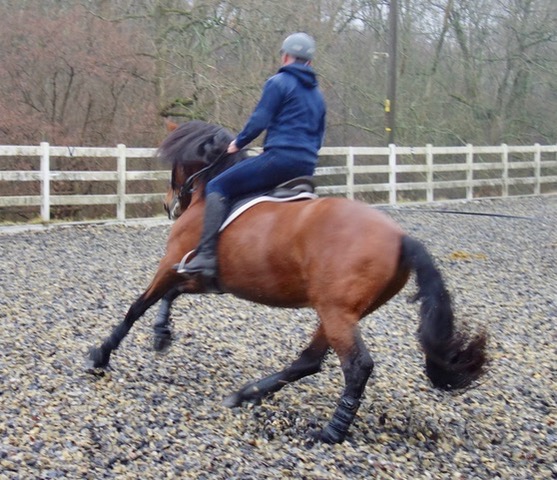
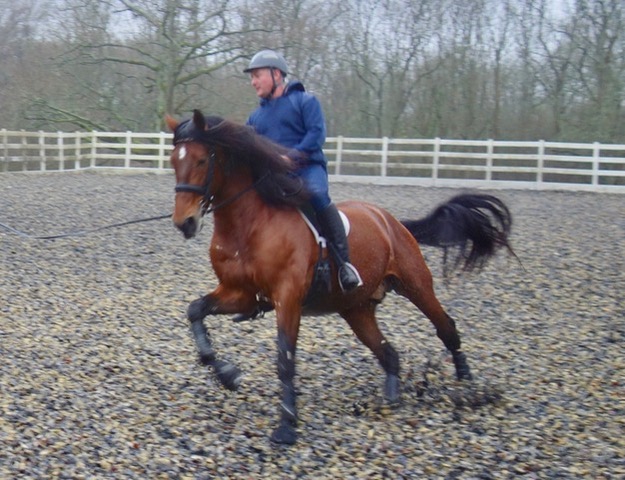
This is me on George in the exercise ring. He was trying to throw me off but I had a grip of steel. My knees pressed tight to his ribs. He got quite agitated.
See that white rail fence? Well, he got up to speed and took a gallop right at the fence…then flew in the air clearing all three rails and landing on spongy creek
bed just below. Being an expert rider I leaned forward when we cleared the rails. Then we splashed our way up a creek doing threes and jumping boulders.
George knew I was boss by then. Fearlessly we climbed through the pastures going at a clip so fast that it seemed we were doing the steeplechase at
Epson Downs…with the Queen watching and Philip cussing. “Who is that ass on Georg? Rides like a western cowboy…giving George the Go Go Go with his knees in the ribs. The bastard might win for God’s sake and my money is on another, damn it.”
Imagination is a wonderful thing.
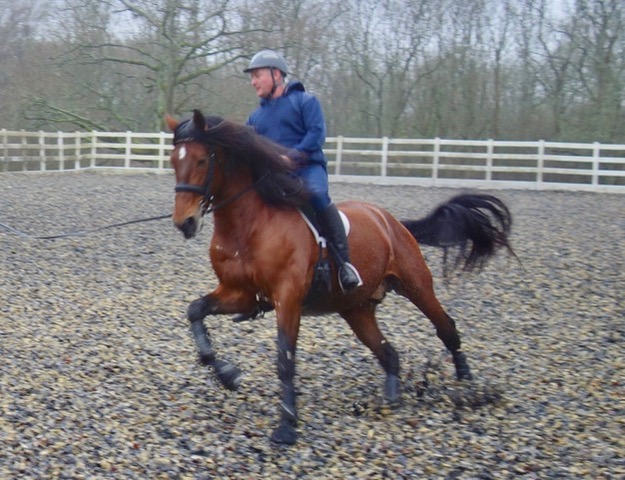
Really tis is Kevin exercising George in the show ring. I was safe cowering behind the fence.
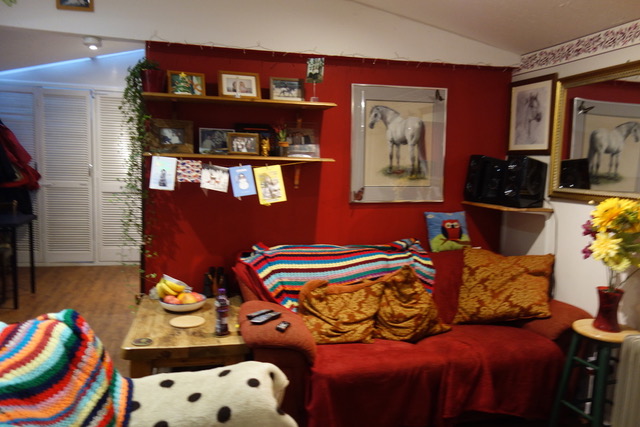
All the horses on this farm were cared for by a man and a woman who rented the barns. They are not
wealth landlords more members of the horsy set at Epsom Downs. They live in a small cottage
beside the stables. Really one big room. A really comfortable room rich in colour and redolent
with the aroma of horses. Comfortable. Nice people. ’Twas always thus in Old England as well.
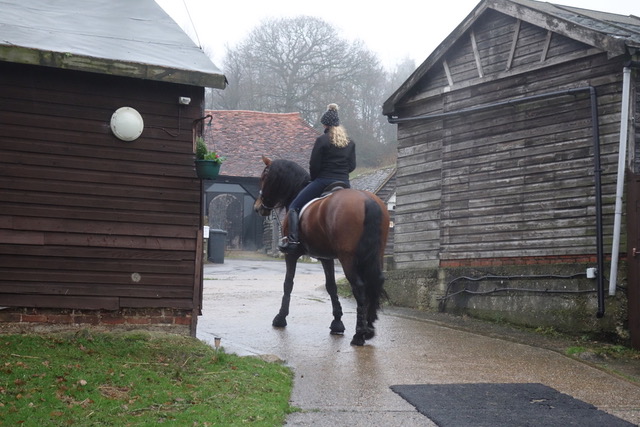
Then our visit came to an end. Slight rain fell as George went back to his big room with new straw bedding spread and
old straw had been trundled to the manure pile. Raising horses is not all riding and jumping. Most of the time
Nolan spends with her horses is spent cleaning out the stalls so the horses live in comfort. Remember that if
you buy a horse. You need to like the smell of horse manure.
So, this part of our search for Old England ended and we ‘saddled up’ the Volvo, tightened the reins. hollered “Go” and
ambled our way out the farm laneway to the tunnel of time below.
Much of Old England still exists…if you have the time to ramble around. It helps to own a few horses.
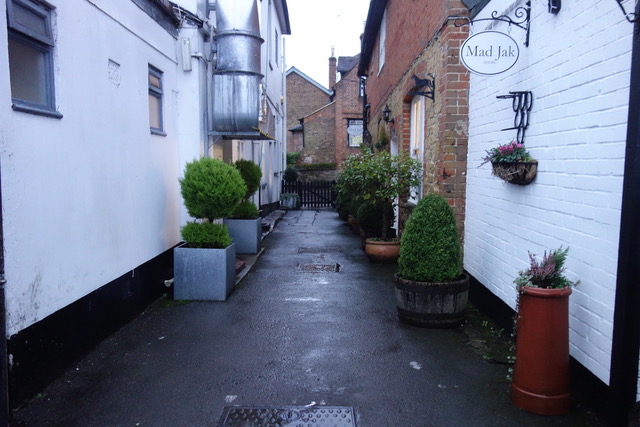
But Old England pub dinners…a must. So we galloped the Volvo to a nearby village with narrow laneways
and whitewashed walls. And shop’s with quaint names like ‘Mad Jak’…see below.
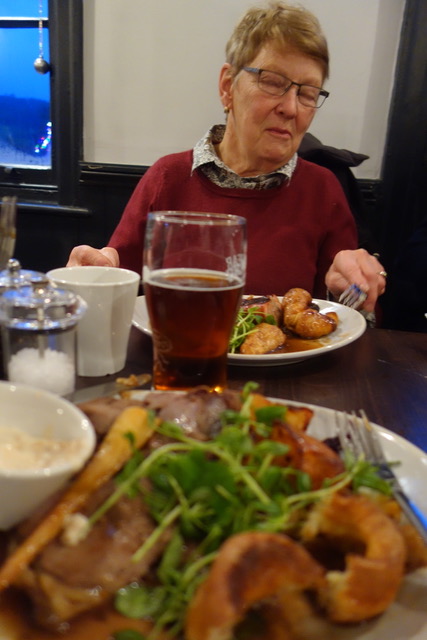
What about the beef? Coming below.
Plates piled high with slabs of well done beef slithering in fat accompanied by huge Yorkshire puddings and as many pints of
ale that the police would allow ( one pint ) Old England lives!
Post Script: Kevin giving George his exercise. Seen it before. But look beyond. Look at the tangle of trees…places where
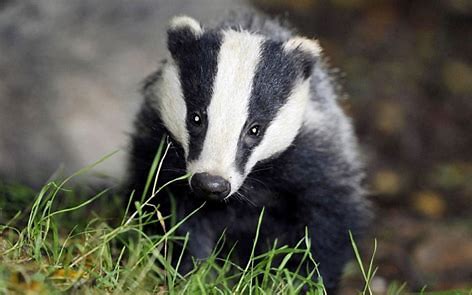
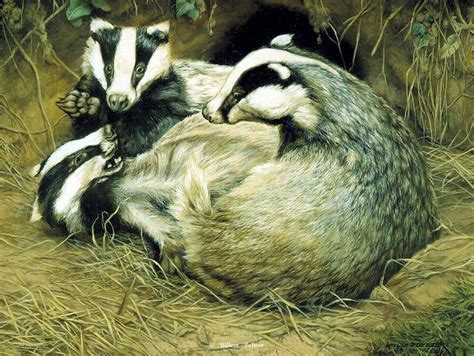
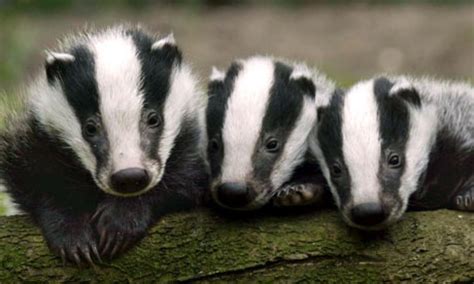
the wild animals of England can coexist with humanity and domestic creatures. That is where a family of badgers lives right now in 2018.
For how long?
THAT FOREST IS ALIVE? MAYBE NOT!
“Any sign of wild animals around here?”
“Whole bunch of badgers.”
“Badgers? How do you know?”
“See them sometimes … like when we came back suddenly one day … whole family of them right here at the stable … seemed to be playing.”
“What happened?”
“They took off fast for the hill … wooded … lots of badger holes up there.”
“I thought they were nocturnal.”
“They are…it was dusk when we saw them last.”
“How many?”
“maybe six or seven…more.”
“I read in the Guarsdian that they are dangerous.”
“Not to us. Used tp be dangerous…blamed for spreading bovine Tuberculosis…whole milk right from the cow’s udder was linked to TBin humans… milk was pasteurized by force in 1950 …Badgers linked to the spread of bovine TB…killing cows is not popular…better to kill badgers.”
“All the badgers?”
“Big cull underway…20,000 to be killed…kiliing on right now right now…”
“No kidding?”
“Nope a few years ago the plan was 5,000…farmers wanted more, conservationists wanted less. Looks like
the farmers won.”
“Holy Smoke..how many badgers are there?
“Who knows for sure…estimate is 40,000…half of them to be killed…gas and snipers.”
“Your badgers?”
“No the cull has not reached us…ours are safe for now.”
“No cows around here just lots of horses…and badgers.”
(end of conversation…beginning of deep thought)
“Sad isn’t it? No one is even sure bovine TB is spread by badgers.”
“They are secretive creatures…mind there own business.”
“But they do carry the T.B.”
“You know, our world is getting more and more frightening.”
“Do you still believe Old England can be found, Alan.”
“Only a tiny fragment…like this horse farm.”
“No room for the natural world anymore.”
“Natural world…what do you mean by that?”
“The world of Old England where there remained untended forest and moors and miles and miles of stone
fences shielding all kinds of life not just badgers…and thousands of hedgehogs.”
“Room for all kinds of creatures in Old England. Not so many people back then.”
‘Victims of our own success are we not?”
“What do you mean?”
“IF ALL THE LIVING CREATURES ON THIS PLANET WERE PUT ON A PERCENTAGE GRAPH, DO YOU KNOW
WHAT PER CENT OF WILD ANIMALS REMAIN?”
“No Idea, but lots I assume.”
“Wrong…dead wrong.”
“THREE PER CENT…AND GETTNG SMALLER…a tiny diminishing fraction”
“WHAT ABOUT THE OTHER 97%?”
“30% IS HUMAN BIOMASS AND 67% IS DOMESTIC ANIMAL BIOMASS.”
“Where did you get that?”
“read it the other day in Scientific American… magazine for scientists and people like us.”
“So what should be done about the badgers?”
“Vaccination…some are being vaccinated…but thousands are being culled…nasty word “CULL”
“Are scientists sure badgers are at fault?”
“Nobody is sure of anything.”
TEST QUESTION”: WHAT PERCENTAGE OF LIVING THINGS ON EARTH ARE CLASSED AS WILD?
“I wonder how Badgers were treated in Old England?”
“Not much better than today. People would catch badgers, put them in cages, then let them go
in the middle of a bunch of dogs. To see who would die first. Betting money. Outlawed in 19th century.”
“What about those nice children’s books about Billy the Badger?”
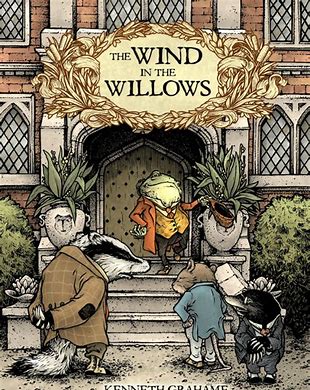
“Just that…children’s stories such as Wind in the Willows. Children grow up which does not mean they necessarily get better.
Note: The history of badgers is fascinating…I have barely touched the surface.
alan skeoch
Feb. 2018