EPISODE 400 THE SHORT AND HORRIFIC LIFE OF GEORGE EVERITT GREEN, HOME CHILD , PART FOUR
alan skeoch
August 2021
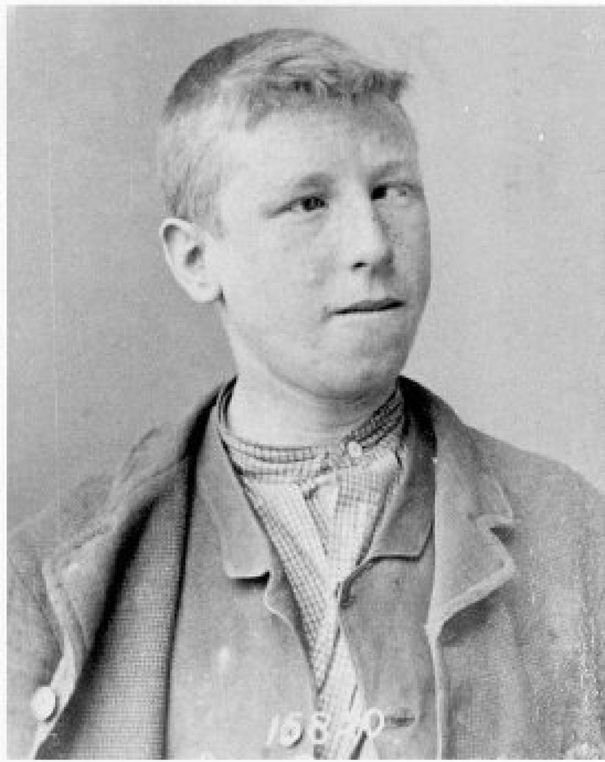
Each episode will include a picture of George Green
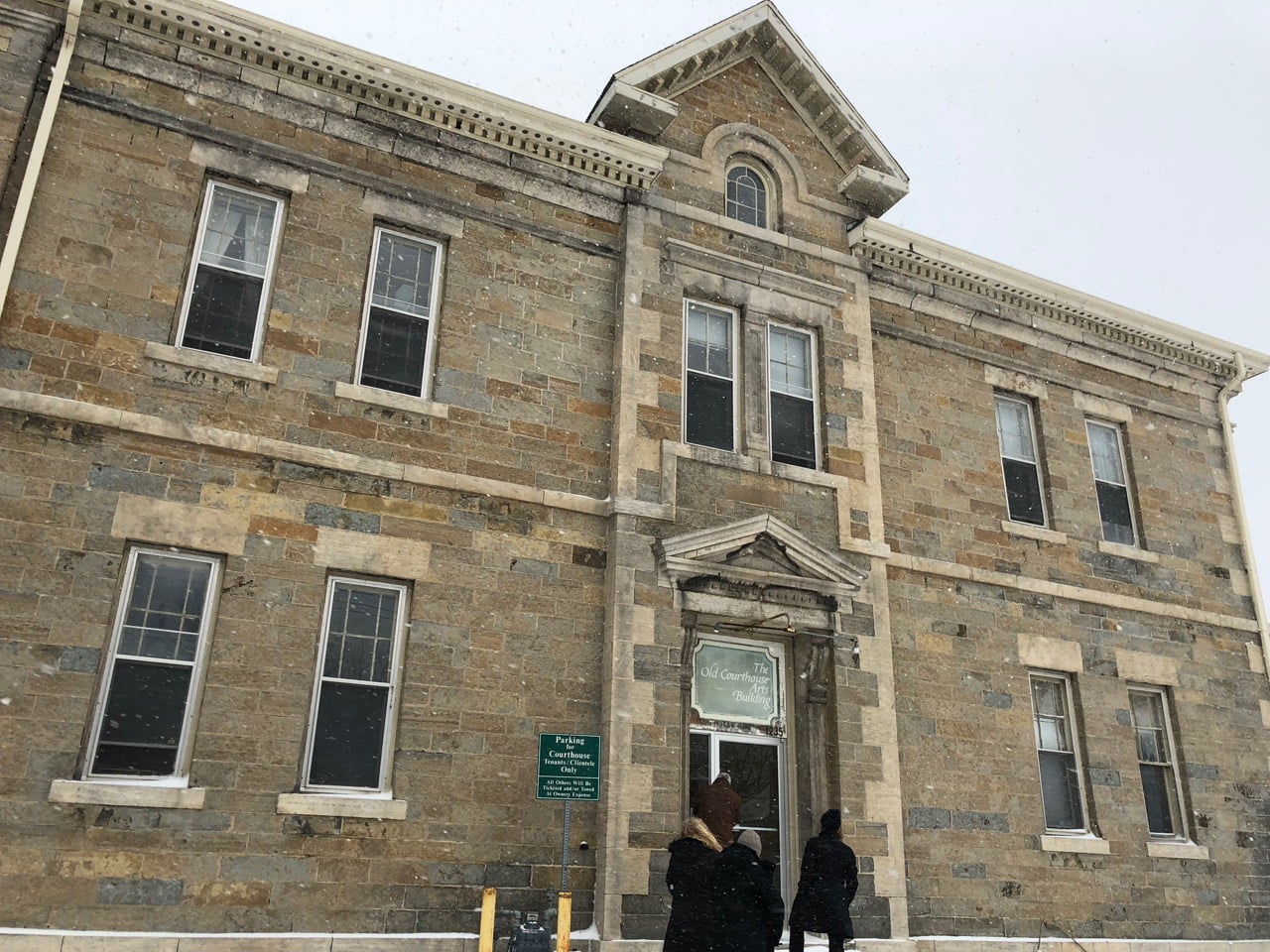
OLD OWEN SOUND COURT HOUSE
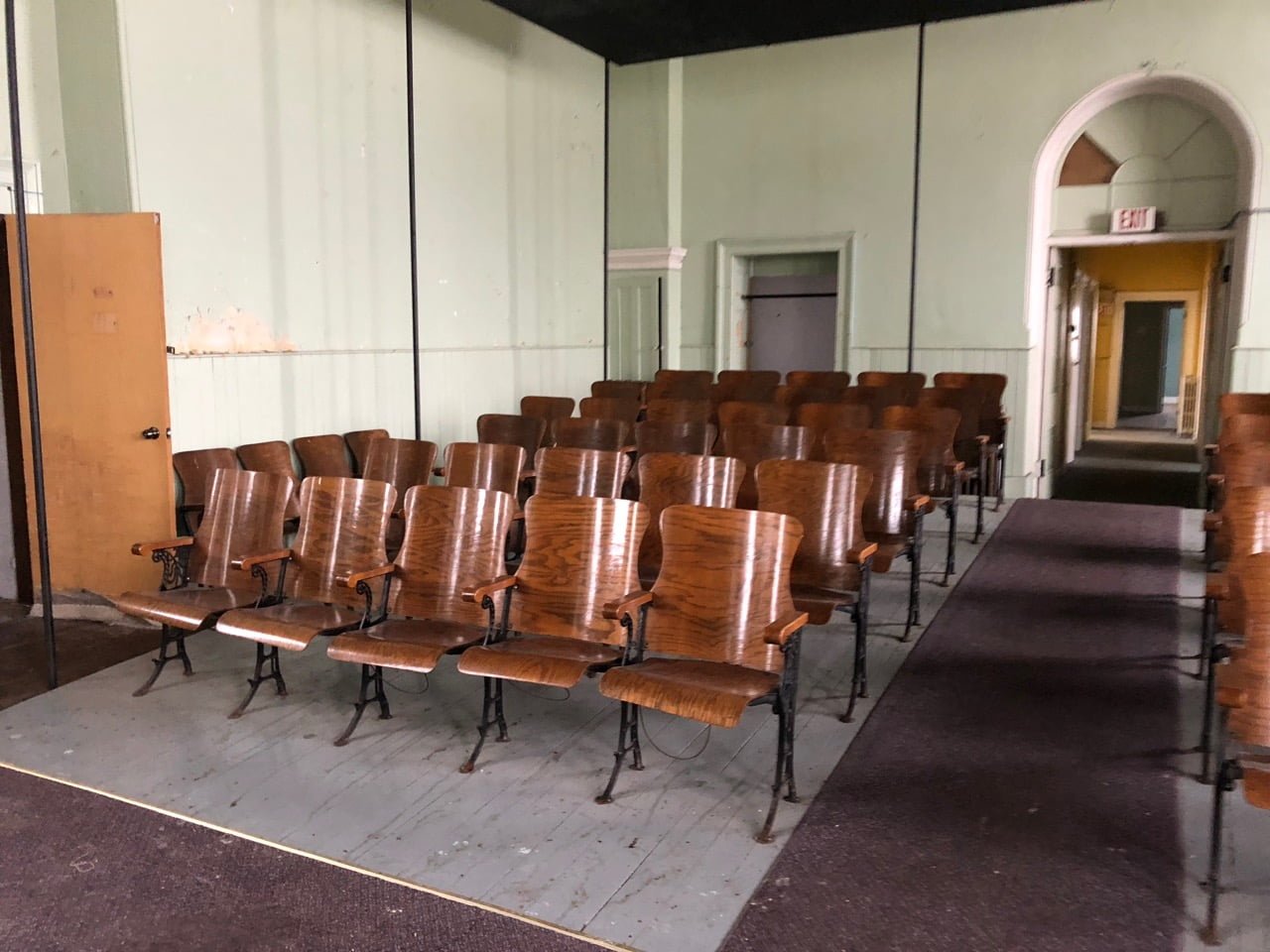
IMAGNE sitting in this court room while Dr. Dow described injuries to George Green
DOCTOR DOW DESCRIBES BODY OF GEORGE GREEN
Dr. Dow was asked to state the results of his examination of the body of George Green.
-He was “very much emaciated…extremely so,”
-His skin as a palish while, bloodless, dirty like there had been
a coat of varnish on it.
-“the skin of his nose looked like it had been taken off. “
-The outer edge of his left ear
had a full length scab.
-There was a large scab on the left cheek covered by a scab,
-a large bruise on the
lower surface of the chin,
-an old wound below the right elbow,
-the ends of the fingers were gangrenous
– the bones of some finger were completely bared,
-the left knee had several abrasions,
-there was an ulcer
on the ankle about the size of a palm of a hand,
-one foot was also gangrenous,
-the left leg looked
like it had been scraped with the end of a rough sawed board.
-abscesses on sole of the other foot with ulcer
on front,
-bed sore the size of the Doctor’s and o the right hip,
-spots on body which may have been
flea bites.
This list is hard believe. It would be a good idea to read it twice.
Had it not come from a trained medical doctor I would
have assumed the list was fake. As events turned out the last entry led to
deeper insight into the life of George Green and also his tormentor.
Flea bites! Not so.
It was suggested to the jury by defence witnesses that George Green was the child syphilitic mother…and
that George was syphilitic when h arrived in Canada. His death therefore should
be expected. Negative prejudices of city life by rural people was common. Dr. Dow gave his professional opinion on this matter and went
on to suggest how George died.
QUESTION TO DR. DOW: How did George Green die?
I examined for syphilis and for scrofula (Tuberculosis)…did not find disease.
Did you ever in your life, either as a physician or otherwise. see a bedroom in as filthy stat?
I never did…it was about as fifty as anything I have ever seen.
What was the cause of the wounds, marks and abrasions you saw on the body?
Direct violence
Do you think the wounds could have been accidental?
I don’t se how they could.
What caused the death of George Green?
Causes of death were many – the sleeping apartment, improper food, general way of living,
being abused from day to day and the wounds themselves particularly the condition
of the fingers and toes. (gangrene)
Another doctor was then called to testify. Dr. W.H. Scott was present when Dr. Dow performed
the most mortem on George Green. He was cross-examined by defence lawyer Tucker in an
effort to establish that the boy was syphilitic hence the red spots on his body. And the boy
was clumsy hence the abrasions on his body from frequent falls.
QUESTION: Didn’t it strike you as peculiar that the fleas would take bites in regular place equals
distance from each other?
ANSWER: I didn’t say they were directly regular.
Pretty nearly said the bites were in marching order feasting off the boy as they went along.
Perhaps they were not external bites at all.
Then Mr. Tucker called another doctor , Dr.Lang who testified he bites were not flea bites
because the bites extended deep below the skin to the bone,
WITNESSES WHO TESTIFIED
Here are some of the comments made by neighbours and farm workers
LAURIE FERGUSON to MR. MACKAY
“Where do you live?
North Keppel, about a mile and three quarters from Miss Findlay’s.
Did you know George Teen?
by eye sight
Did you see anything as to how she used him?
No
Did you hear her say anything as to how she used him?’
Yes, in the harvest time she said she made him sleep wit the pigs because he misbehaved in his bed.
She put him out two nights with the pigs and when he would not promise not to do it anymore she him out two more.
DOCTOR BARNARDO
From England DR Barnardo responded with heated indignation to the suggestions that George Green was both
imbecilic and syphilitic. He cited the results of the British medical examination given before
George boarded the Parisian for Canada. He said the children sent to Canada were
the cream of his rescue mission.
DAVID GUNSON
Where do you live?
Keppel
What is your business?
Blacksmith
What kind of lad was George Green?
He was a quiet boy, rather a mannerly little fellow, as far as talking is concerned.
Were you present at the Findlay farm on the 11h of October”
(Yes) It was a cold day and she said she sent Mary Brown up to make supper and sent the boy
to warm himself and go and get the cows. Mary Brown made a pot of mush (made with bran and flour)
and fried a pan of potatoes and then she went out to he barn to help Miss Findlay clean up the barn floor.
When Miss Findlay came in the she asked , “Who the hell is in here?”
The boy came out and she she got a stick or kicked him and the boy fell over and she jammed the pail together.
Smashed the pail?
Yes
Did she say she kicked him?
Yes and second time kicked at him and he upset the swill pail.
Did she give an reason for doing this?
Yes. she said when she went into the the boy “had eaten all the potatoes and damn near all the mush.
JAMES HUSBAND
Where do you live, Mr. Husband?
Kemble, sir
How far do you from Miss Findlay?
I suppose three miles.
What was George Green doing the last time you saw him on Nov. 8?
Unloading wood out of wagon. I was coming and Saw her beat the boy with a stick the size of a chair leg,
about three feet long.
Hard blows or not?
I should say pretty hard blow.
If that stick turned out to be an axe handle, would that be reasonable chastisement even if he deserved it?
No
Was there anything the matter with the boy when you saw him?
I saw blood on his nose.
What part of his nose?
Across the bridge.
(Apparently George Green did not throw the firewood far enough from the wagon and Helen
Findlay had to pick them up and throw the wood to the fence.)
NORMAN MCLEOD
Where do you live?
North Keppel – farm
Did you ever see George Green go about his work there?
I have seen him getting the cows, bring them down from the high rock field and I have seen him milk
five cows and carry the milk up the rock.
Is that an easy task?
It is not. There is just a path blasted out of the rock for the cattle to get up and down and the precipices
are almost perpendicular, it was just blasted so cattle can get up and down and it is very steep and it its
quite a distance to carry milk.
(MR. Tucker cross examined Norman McLeod who said “I don’t think the boy was very sensible or smart
of intellect)
BABARA HORNE
Where do you live, Mrs.Horne?
AT North Keppel, next farm to Miss Findlay
What kind of boy was George Green when you first saw him?
A healthy looking boy. He looked clean and well dressed.
Any sign of disease?
I didn’t notice any.
Did you see him eating there?
I saw him once.
When?
At his breakfast.
About the end of August.
Eating with others or alone.
Alone
What time?
Nine O’clock.
What was he eating?Porridge. It looked to me like bran porridge with just enough flour to hold it together.
Was there anything else to eat?
Just brown bread on the table.
Did you see anything of Miss Findlay’s treatment of the boy?
No
Did you hear her say anything…with reference to her treatment of him?
Yes, I have often heard her say things. She said if he didn’t work she would stick the pitch fork in him. I heard
her scolding I’m…yelling at him. I heard her halfway across the field.
Did you see the boy much after he went to Miss Findlay’s?
Yes, he came over to our place sometime in October. He just had on an old pair of pants and I think the
jersey that the boys have when the boys come from the Barnardo Home and he was bare-footed and bare-
headed and it was raining….a cold, cold day
Was there any signs of sickness or skin disease then.
None then, no.
I want to know if you can tell me anything Miss Findlay said as to how she used him, or as to what she had done
and what he said when she did then?
she told me about striking him sometimes in one way and he said “Oh, please stop.” and she told that was great fun.
Did you consider the food was fit to at.
I don’t think it was fit for a working boy to eat.
Would you like to eat it?
No.
CROSS EXAMINED BY MR. TUCKER
I suppose you will stick to it that this was bran porridge?
Certainly
You have enlarged on it a this time. At the prior investigation you said it looked like bran porridge and now
today you say it was bran porridge with enough flour to keep it together.
You didn’t give me a chance.
Of course you thought it was a very unChristian thing to treat a boy that way, threatening to stick the pitch fork
in him?
Why, of course I thought that.
And at the same time you were going backwards and forwards in a friendly manner?
Not very often.
And you never thought it proper for some kind of objection to be raised? Y ou never spoke to her about it,
never complained to her?
I told her when she first got him she should send him back, he was not a suitable boy for her.
Why not?
I didn’t think he could do the work, she was always complaining about him every time she spoke to me.
Why could he not do her work?
Well, I thought he could but she said not. I saw him loading hay and saw him hitching the horses to he wagon.
You never said to her about the manner in which she was treating him, that is so is it not?
Well, don’t think Miss Findlay would’ve taken it from me.
The lawyers MacKey and Tucker cross examined witnesses aggressively even using contradictory statements
made by husbands and wives as with the Hornes. At stake was the life of Helen Rose Findlay. Canada, in 1895
still practised capital punishment. If convicted then the hangman could be called. Mr. Tucker tried to convince the
jury that George Green died of natural causes. Mr. Mackay wanted a conviction for murder.
MR. W. H. HORNE (examined by Mr. Mackay)
Where do you live?
Near Big Bay
How far from Miss Findlay?
The next farm.
Across the road or alongside?
Alongside.
How far apart are the houses?
About 3/8 to 1/2 mile
What kind of lad was he?
Fairly healthy, average size for a 15 year old boy. Taller than the general run of Home Boys at that age. Not so
stoutly as Keppel boys.
Did you see him at any kind of work that would test his strength?
Yes, a few days after he arrived Miss Findlay brought over some grain to my fanning mill and he turned the mill
while grain was being cleaned.
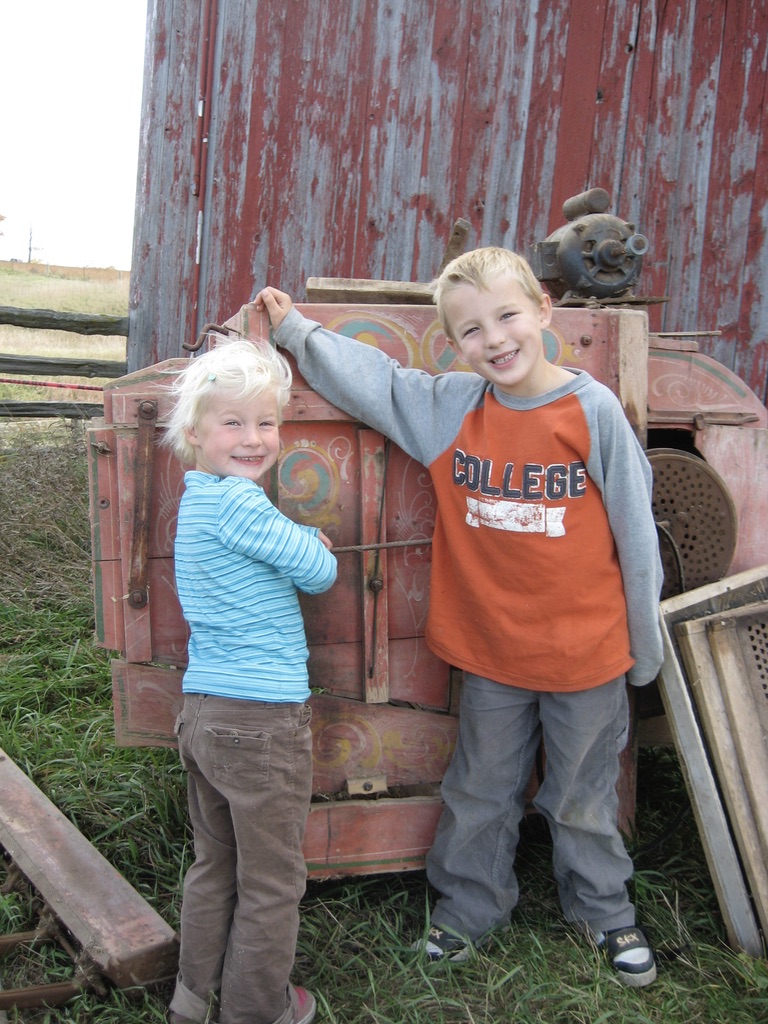
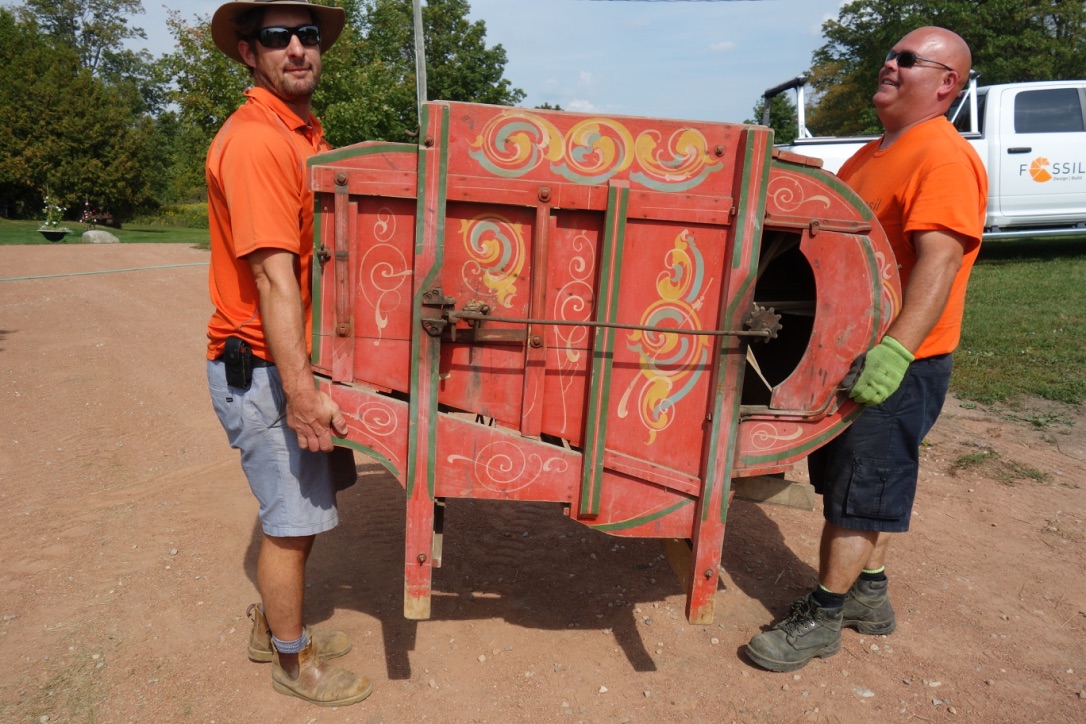
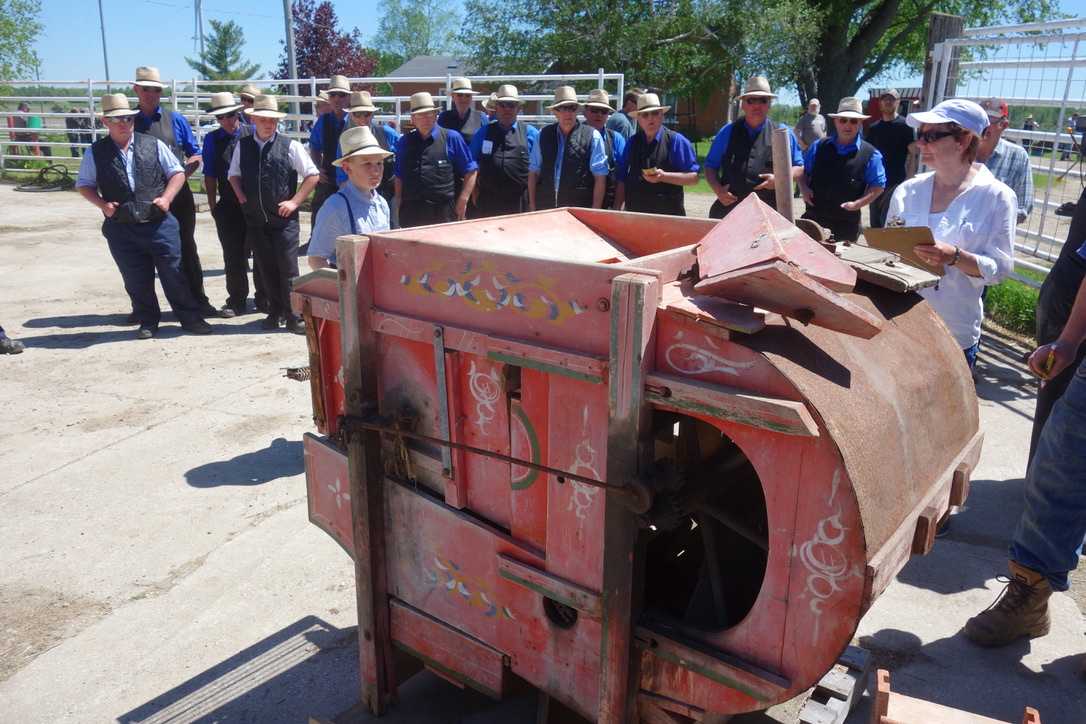
What kind of fanning mill is it?
Here are a few pictures of the same kind Chatham fanning mill as described, Kids Molly and Jackson
seem to be enjoying themselves. George Green was not as enthusiastic
A Chapman (Chatham?) with bagger attached.
He appeared from that to have average strength.
I should say average strength.
Did you see him frequently after that during the summer?
Yes.
He was dressed as a rule?
Sometimes not very well dressed but I didn’t think anything of that in the summer when it was warm…Later, when
it was colder I thought the boy hadn’t enough warm clothes on. He looked blue and cold in the fall.
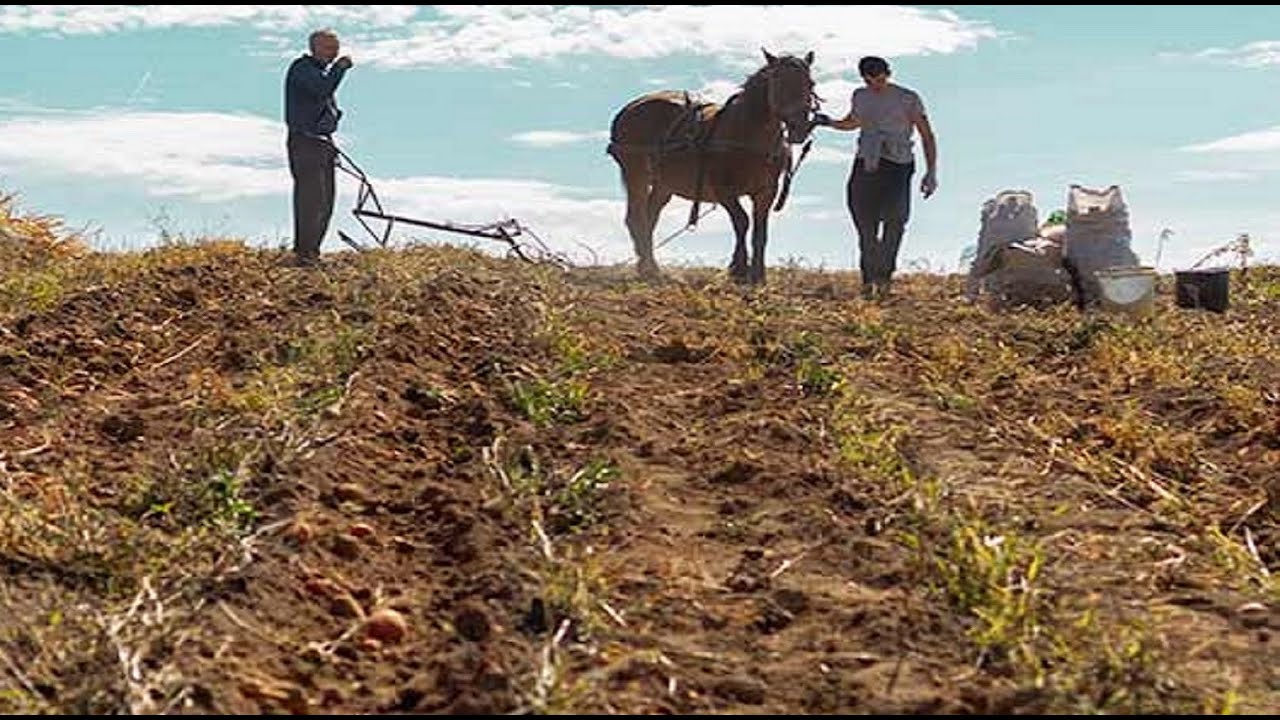
Digging potatoes with single horse and potato plow
Do you remember an occasion on which you were digging potatoes?
Yes, sometime late in October.
Did you see Miss Findlay that day?
I heard the boy cry and thought I heard a blow and I looked to see what was the matter. They were working in
the barley field. Miss Findlay had a fork in her hand and the boy was trying to get away from her and she
was scolding him and following with the fork in her hand.
What were they doing?
Hauling in barley, but their crop was very late.
Was she close enough to strike him?
I think she was about the length of a fork handle away when I saw her. I have heard her scolding him often around
the house and the barn, sometimes in the field.
You were over at the house the day after the boy had died?
The night before, after she came home from town.
What condition was the bed in?
It was dirty. I think some clothes had been used in the stable because there was marks on them and they looked
as if they had been…and I suppose some of the clothes was soiled by the boy himself lying in the bed.
NOTE: Witness after witness testified that Rose Findlay abused George Green. She said she went to town
to get medical help the night he died which may or may not have been true. Miss Findlay was having trouble
managing the farm….late harvest of barley and potatoes, need to sell most of her milk to local cheese factory
raised doubts about care of animals. Lack of food in the house and regular meals of bran mush was another
indication.
MR. HORNE (Cross examined by Mr. Tucker for defence)
You don’t pretend to say that the boy was fat and strong?
No, sir, I would not say he was a rugged boy
You don’t pretend to say Miss Findlay struck him that day in the harvest field?
I didn’t see her.
In what condition were his hands and face?
They were very dirty very often.
There was nothing very extraordinary about his turning that fanning mill a few minutes? It was no test of strength?
It would have been if he had continued at it. It is hard work for me to run it right alone.
Turning half a bag of grain through it, that would not amount to anything?
There are six or seven bags, but they were not very full. About a bushel and a half in each bag.
Do you know if Miss Findlay assisted him?
Perhaps she did. I didn’t stay there.
Did you ever notice his habit of walking?
Yes, I didn’t think he was a very good walker, he took a long stride but I thought he was not a smart walker…not
very smart on his feet..
He was humpbacked?
No, I should say round shouldered and carried his head forward.
His mouth was also drawn to one side?
A little.
And his lower jaw projected more than the upper? You are the first witness to admit that his mouth was drawn
to one side. He was cross eyed also. right?
His face being drawn around I would not be sure whether he was, but had the appearance of being cross eyed.
Did you know he was left handed?
No sir.
You didn’t know that?
Left handed men used to be the best in olden times.
MR. MAcKAY
You say he seemed to be clumsy on his feet. Did you know he was absolutely blind in one eye?
No sir.
Would that account for his awkwardness?
It just might.
Suppose he was blind in one eye and short sighted in the other?
I think it would. And I think that is why he walked with his head down.
END OF EPISODE….COULD THE TREATMENT GET ANY WORSE?
Picture of Big Bay not far from the Findlay Farm.