EPISODE 486 THRESHING WITH JOHN SKEOCH IN 1927 AT RIVERHURST, SASKATCHEWAN
alan skeoch
dec. 2021
DAD didn’t leave much when he died in 1977. His estate was simple. There was $21 in his pocket of which he owed my brother Eric $20.
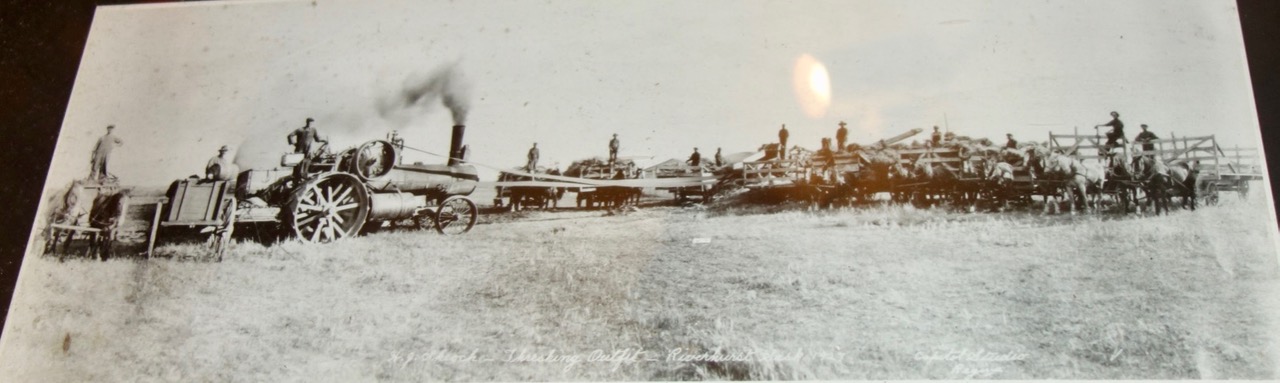
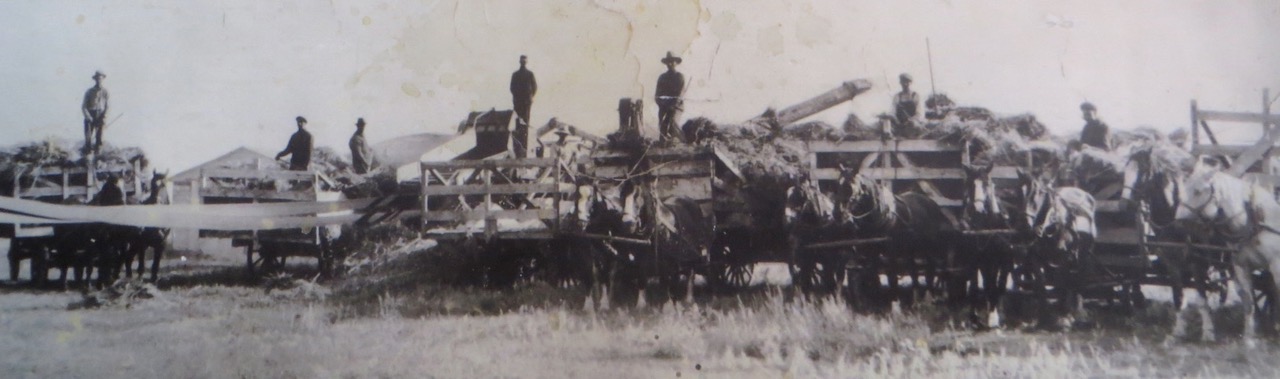
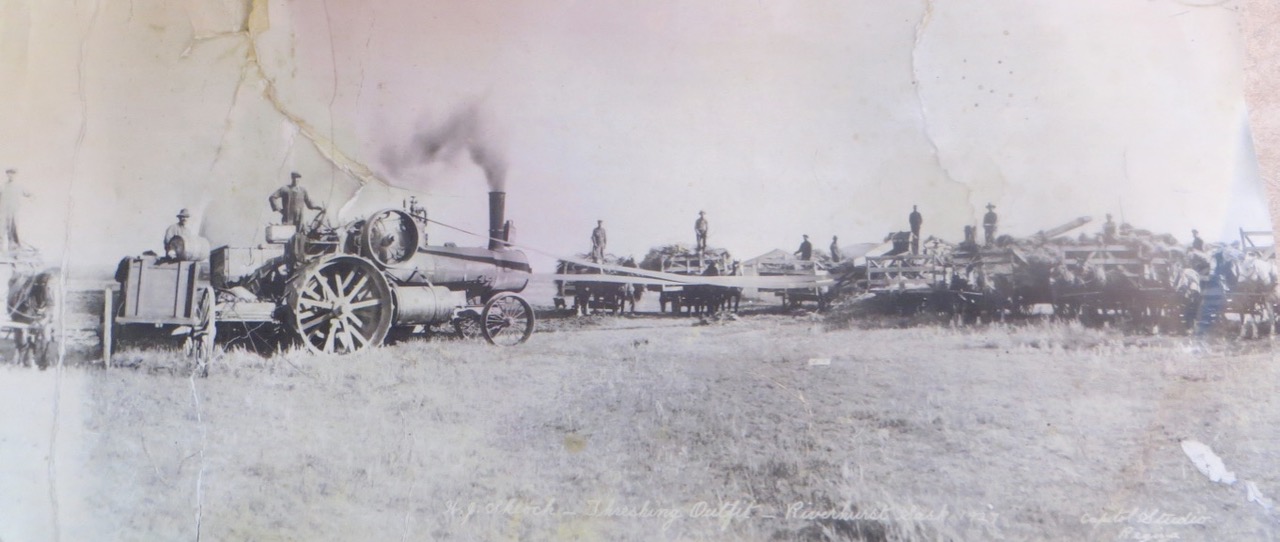
In his sock drawer, however, there was a real treasure. Rolled up like a biblical scroll was a long photograph taken
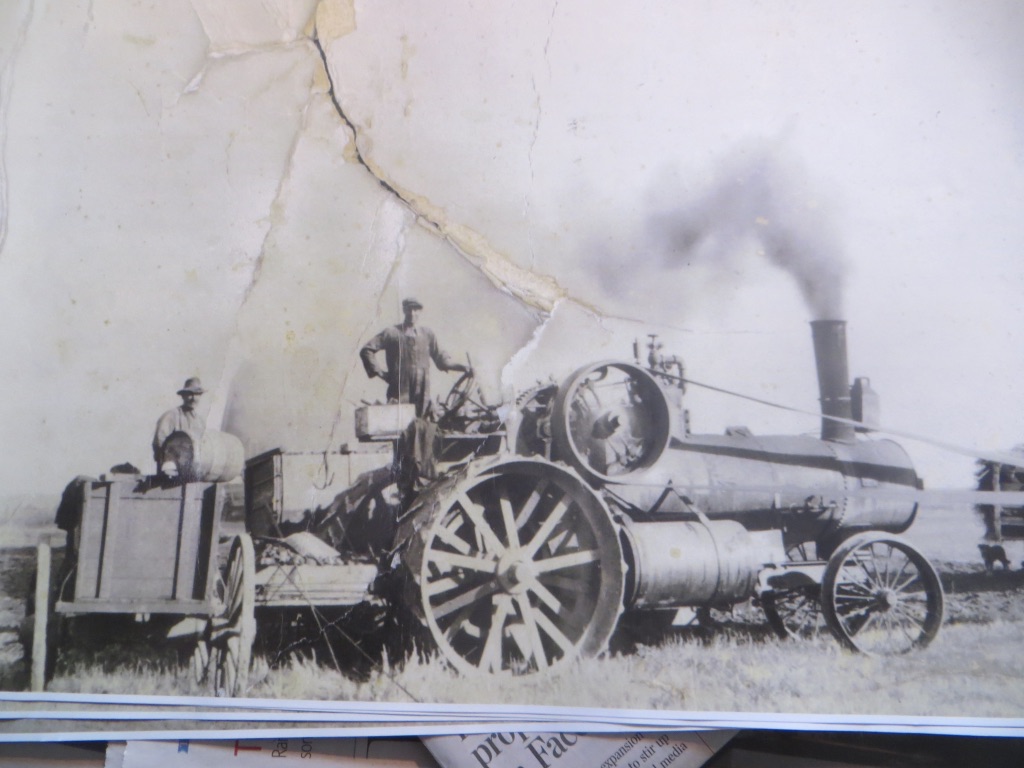
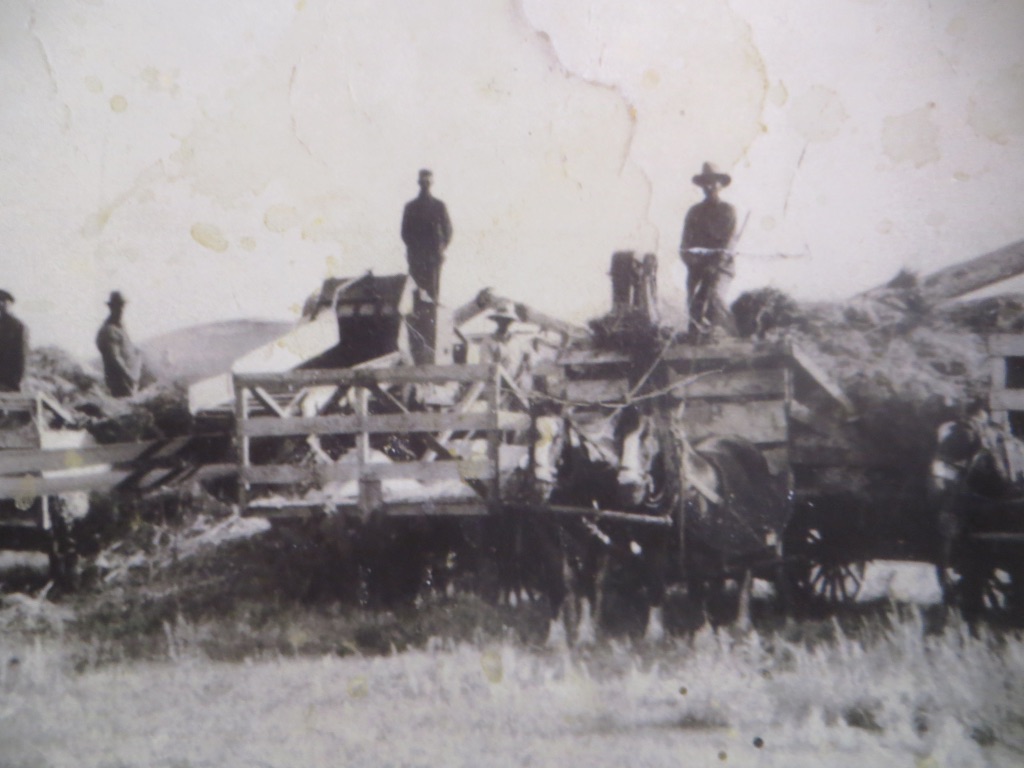
at Riverhurst Saskatchewan in 1927. Standing proudly on his steam driven tractor is Dad’s oldest living brother John Skeoch.
My Uncle John. The westerner.
FOUND IN DAD’S SOCK DRAWER: the JOHN SKEOCH HARVEST PANORAMA, RIVERHURST, SASKATCHEWAN, 1927
“Marjorie, here is Dad’s estate. He did not need a will because all he left us was $21 of which he owed Eric $20.”
“Surely there was something more?”
“This scroll picture.”
“Who is that on the steam tractor?”
“Dad’s brother John…oldest brother after Jim was killed in 1918, last days of World War I. Mortar shell I believe”
“Uncle John? We met him on our Saskatchewan trip in 1970. Remember?”
“Hard to forget the farm house with garter snakes in the tea cups and the prairie wind blew down our tent and
took your pants and never gave them back.”
“Uncle John still had that threshing machine sitting in his implement graveyard near Keiller.”
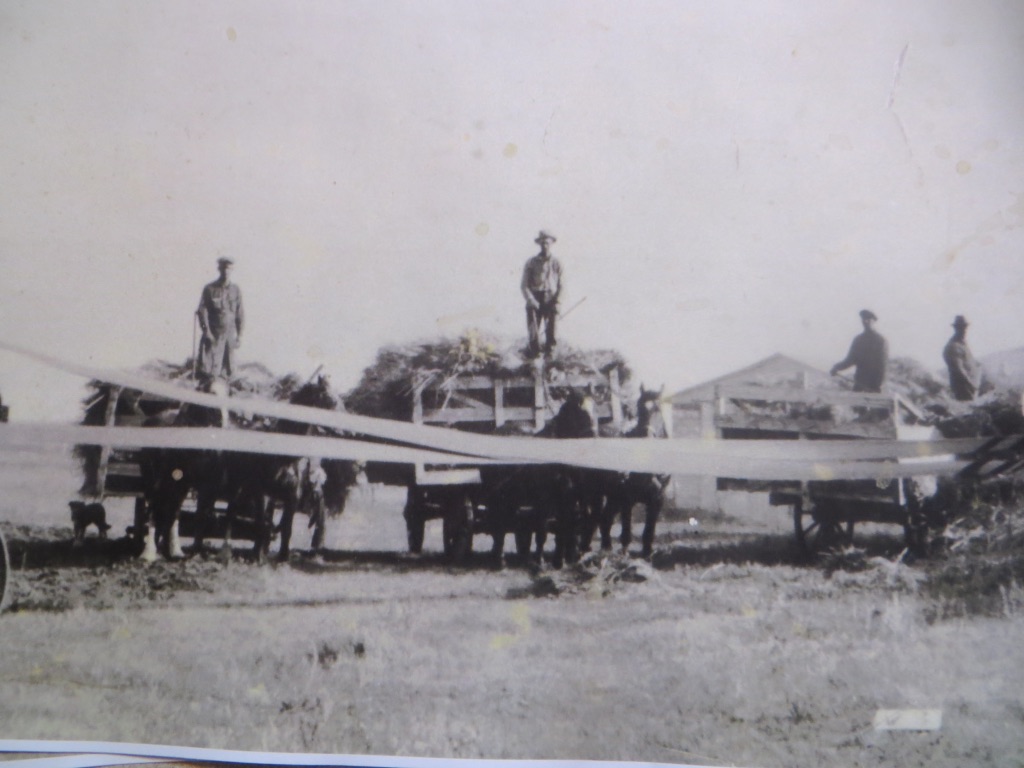
“Look at those men on the wagons and holding the horses. I bet most of them were Harvest excursionist.”
“Harvest Excursions? Sound like some kind of holiday”
“Rather use the word adventure. Between 1890 and 1930 thousands of men and a few women paid $15 to the CPR and
wedged themselves into long lines of passenger cars heading fo the Prairies.”
“Why?”
“For the money they could earn helping to harvest grain.”
“Why Have I never heard of this?”
“Although several hundred thousand got on those trains, none seemed to take a camera…and
those that did likely had it stolen. The harvest trains were no picnic.”
“In 1917, 40,000 Canadians headed west, In 1923, 50,450 got aboard…n 1928, 52,225 were packed 60- to a passenger car.”
“Take a look at the date on the picture….says Riverhurst, 1927…the peak years of the harvest excursions. “
“How do you know your dad was one of the excursionists?”
“He only told us fragments…wish he had said more. But he was on the train perhaps in 1920 or 1921. He had little choice in
the matter. His schooling was over when he was suspended from Fergus District High School on his Grade Nine year.”
“Why was he suspended?”
“For throwing a snowball…” (real story already told in earlier episode. Suffice it to say the principal had good reason,)
“He never went back to high school.”:
“Never. he spent much of the year in hiding in the swamp for a day or so and then lived on
a neighbours farm I was told. perhaps afraid of his father. He spent the springtime waiting for the annual Harvest Excursion trains
to Winnipeg and on to Saskatchewan. I don’t know where he got the $15 passage money…perhaps
his sisters Greta, Elizabeth and Lena.”
“How old was he then?”
“Born 1904 so he was 15 in 1919 and 16 in 1920…maybe 16 or 17 when he joined the Harvesters.”
“How do you know for sure?”
“I don’t.”
“What do you know for sure?”
“Two things. He lived in Saskatchewan for one winter. A terrible winter really for he lived in a
barn with 16 horses. Fed and watered them through a bitter western winter. Slept with them.
Perhaps some of the same horses in the scrolled picture of the threshing.”
“He must have come to hate horses.”
“Quite the reverse. He loved horses. Spent the rest of his life to his dying day at racetracks. Spent more
money on the horses than he did on his family which was OK with us. Mom ran our family. Dad became
the third boy in a way. We loved him. He loved horses and he loved us although he would never use such
sissy kind of word.”
“What was the second fact about the Harvest Excursion?”
“He came back east on a harvest train … late train. Perhaps the late fall of 1921 or 1922. By then
he was an adult…17 or 18…and was glad to get away from the west.”
“How do you know for sure?”
“Because he told us one story over and over again…used a lot of magnificent salty words each
time he told us. The story became a kind of bedtime story when we were small. Not a lovey lovey
story.
“And what was the story?”
“Seems dad fell asleep on the last leg of the trip coming south from North Bay
to Toronto. When he woke up at Parkdale Station his boots were gone.
let me use his language.”
BEDTIME STORY
“Dad, tell us about your boots.”
“Harvest trains were rough. Hope you kids never have to do that.”
“The boots, dad, tell us about the boots.”
“I fell asleep and some son of a bitch stole my goddamn boots. All I had
as profit from the bastardly Harvest Excursion.”
“Barefoot, dad?”
“No, I had socks. I had to hotfoot it from the CPR station in Parkdale all
the way along Queen Street to Roncesvales where I got a flophouse room.
No goddamn boots. If I ever found the bastard I would give him a ‘what for’
like my brother Archie did so often in Saskatchewan.”
“Tell us again what Uncle Archie did?”
“Those were rough days. My brothers put my brother Archie up as a fist fighter. He was
skinny and looked weak. But he was as wirey as a barbed wire fence. We would bet on
him…others bet against him. Archie made a few bucks as did his supporters. Often the
fights were against French Canadians. No prejudice meant. They were the same as us.
Young and full of piss and vinegar.”
Post Script: How do I know the story to be true? I don’t really but Dad put in facts
like Parkdale Station…Queen Street…Roncesvales Ave… Uncle Archie…facts that
make me believe him. For all his tough demeanour Dad was just a kid .. a teen ager
suddenly living in a very adult and rough world. A person tends to remember things.
HARVEST EXCRUSIONS PUT IN NARRATIVE FORM
Thousands of young men and a few young men boarded these cheap CPR excursion trains in the 1920’s. All kinds of people some of them
were ‘roustabouts’ ready to smash up the train cars and the train stations when the trains stopped at sidings to let the main freight trains pass by.
Dad was not a ‘roustabout’ and must have seen things that shocked him. Violence was common. So bad that RCMP officers were placed aboard
the trains. They were armed but no record indicates that guns were necessary. In the 1920’s excursionists were frisked before boarding. Guns were confiscated
occasionally but liquor was confiscated more often. All the same alcohol did get on board and drunken behaviour followed. Windows were smashed
and objects were thrown as harvest trains passed by railway stations. Robbery was common as were fist fights. The trip took about five days from
the gathering points at Toronto or Montreal. Five days of sitting up discomfort. Although some boys and men, girls and women, had the presence of
mind to bring enough food for the trip, it appears that many did not. They had to buy food along the way and the result was exploitation on a grand
scale. Bad food sold at high prices created bitterness and violence. Some excursion trains used old immigrant passenger cars with wooden seats
and a single toilet for as many as 60 people. The smell must have been horrific which may have prompted the window being smashed on occasion.
Small towns along the route were generally afraid of excursionists. Not so much that they refused to sell food to the men and women but oce sold
at rip off prices
the townspeople wanted nothing to do with the trains full of bitter young men and a few young women. In one example, a store owner in a northern
town fired rifle shots as a crowd of excursionists surged from the train siding to the town. Dad must have seen all this.
Young women were on board but a distinct minority. They must have been either tough or desperate. Abuse did occur but the records are sketchy.
Most 20th century historic events were extensively photographed. Surprisingly there are few pictures of life on these excursion trains. A camera was a luxury.
Harvest trains ran west for 40 years, from 1890 to 1930. The movement was no small affair. In 1917, when dad was looking forward to a high school education therefore 40,000
men on the Harvest Excursions. Each train could handle put to 1,200, even 1,400 men jammed into as many as 20 railway cars. And here were
women as well. Not as many as the men. During the war years, 1914 to 1918 it was difficult to recruit enough adult excursionists so many young men still in their teens
climbed aboard looking for adventure and ready to make the journey west memorable. Raising hell eased the boredom of the 5 day trip.
1923 was one of the peak yeas. There were 50, 450 harvesters rolling westward. Then in 1928 the peak was reached with 52,225 men and women.
Uncle John Skeoch’s threshing picture was taken in 1927. Many of the men in the picture must have been excursionists who were paid from
$4 to $7 a day including room and board. This was good money. One careful harvester went back east with $300 which was a lot of
money in the 1920’s. Getting west was cheap…$15 for the train ride. A few men even came from England at 50 pounds return fare. A cheap
chance for adventure and a chance to smash up a lot of railway property. At Sioux lookout an innocent bystander was severely
injured by an object thrown from an excursion train. In earlier years some railway cars were wrecked…must have been scrapped.
Drunkenness,
boredom, lack of sleep, filth, strangers, the fires of spring in youthful veins… all these bred violence.
Word that some of the women on these trains were in danger of being assaulted prompted
the CPR to arrange RCMP presence on each train. One RCMP officer and one recruit patrolled
from railway car to railway car in their scarlet uniforms. That tended to calm things down.
*There are many gaps in my knowledge about this 1927 threshing picture. Relatives who know will
add and perhaps correct my comments which will enrich the narrative no doubt. Dad said
little about the women except for one comment about a run down hotel in which he lived
for a spell. The women there were not harvesters…they were fleecers. Get the inference?
True or not? Dad never said much about it.
Dad, in spite of his tough exterior, was sensitive. Never ever heard him use
the F word but he made up for that with a dictionary of other four letter words strung together
as if he was a dark version of Wordsworth
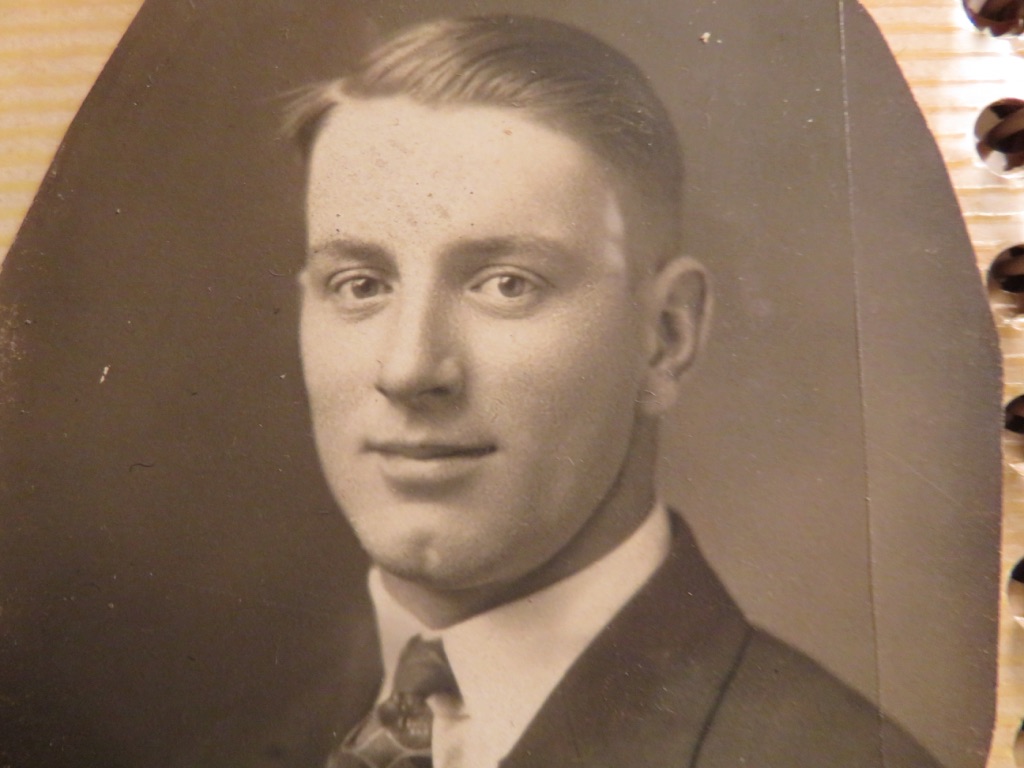
Arnold “Red” Skeoch was born in 1904, one of the middle children in the James Skeoch farm family of Nichol Township, Wellington County.
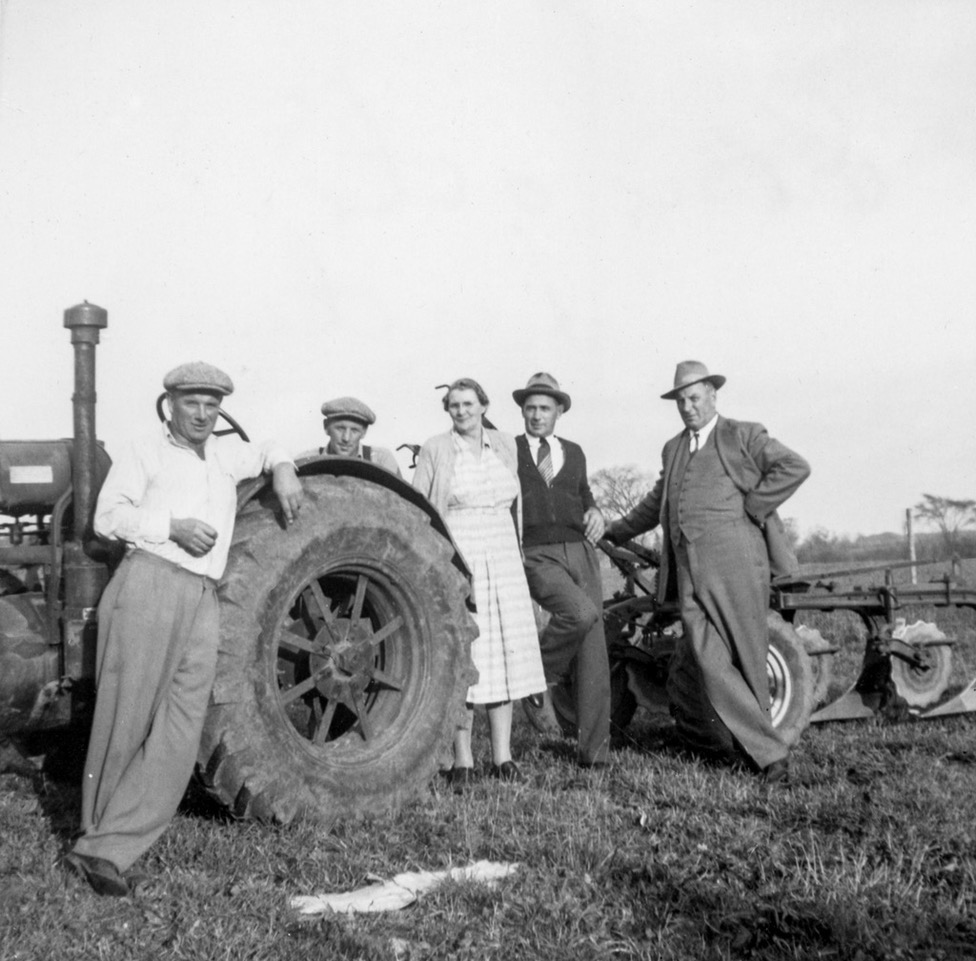
Pictures of him as a boy are uncertain. My best early picture was taken in the late 1920’s I believe. A picture of Red as member of
the bursting industrial working class. A tire builder. Cars and tractors were replacing horses. Solid rubber tires were replaced by
pneumatic rubber tires,
How did Dad make the transition from farmer’s son ( one of James Skeoch’s five sons (and four daughters) to slapping belts of rubber
on a rolling drum in factories driven by steam and electric engines?
Turning Point #1 THE SNOWBALL
His first step was to get thrown out of Grade Nine high school in Fergus. Seemed like a good idea to throw snowballs through the
open trap door of the girls’ washroom just the moment some young lady sat down. Outdoor back houses for boys and girls in 1918 or 1919.
“Go home Arnold and get your father”, said the principal. Dad’s schooling was over. He hid in a swamp near the farm for a while. His sisters
looked after him. There was tragedy in 1918 when his oldest brother James was killed in France just as World War I ended. then in 1919 his older
sister Sarah, died of the Spanish Flu. So dad’s predicament must have seemed rather an after thought. A snowball hitting the bum of a Grade Nine
girl was hardly the same as being blown apart by a mortar or suffering the agony of the Flu Epidemic.
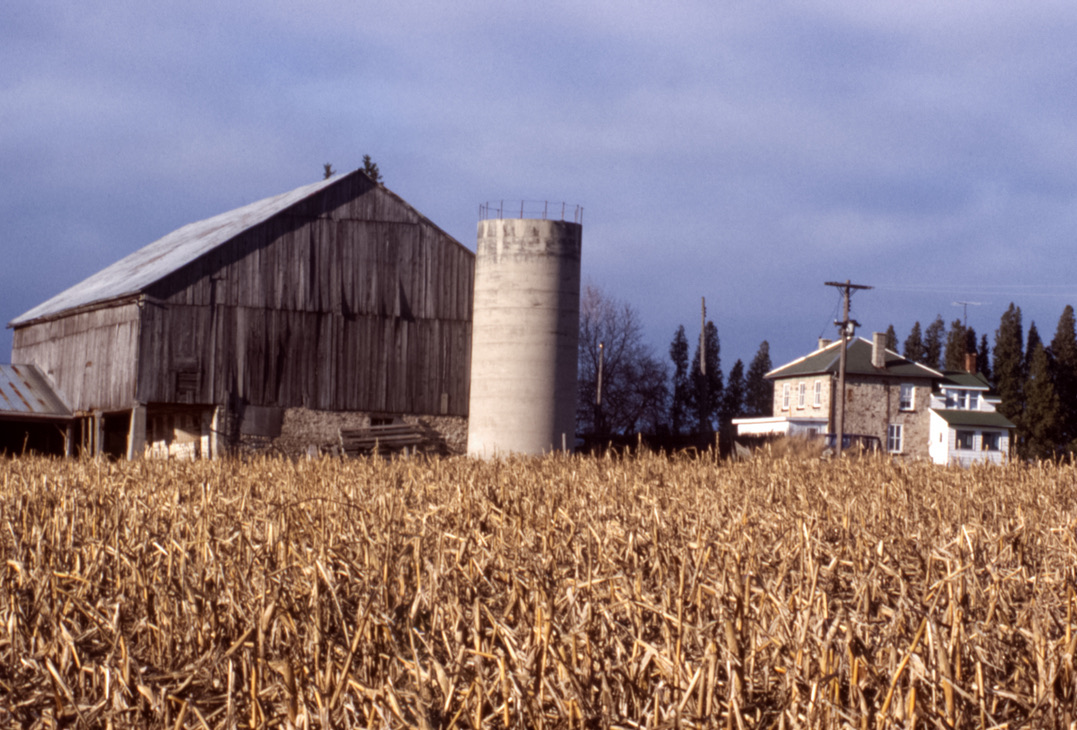
The Skeoch home farm, Nichol Township, SW of Fergus —barn demolished by Mennonites and stored, fieldstone house still there.
I am not too clear on what Dad did that winter and spring of 1920. Maybe he went home for he could not live in a swamp. I seem to remember
his sister Marguerite (Greta Metcalfe later) saying he lived with another farm family. The snowball incident An embarrassment. Not nearly as funny as Dad and
his friend expected. But it was a turning point in his life.
Turning Point #2 THE HARVEST EXCURSION
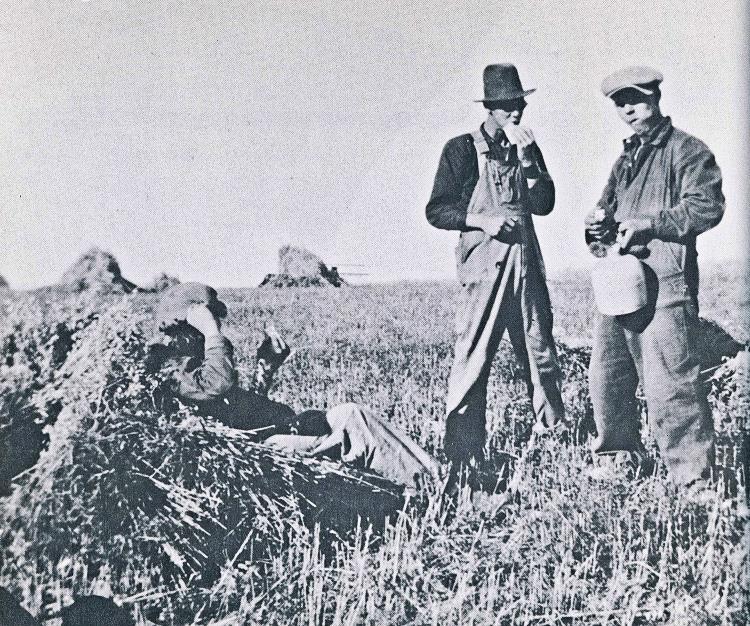
Grain cut and bound into sheaves by a horse drawn binder then had to be ’stooked’ to dry
before it could be threshed. These men are stooking … likely excursionists from eastern Canada.
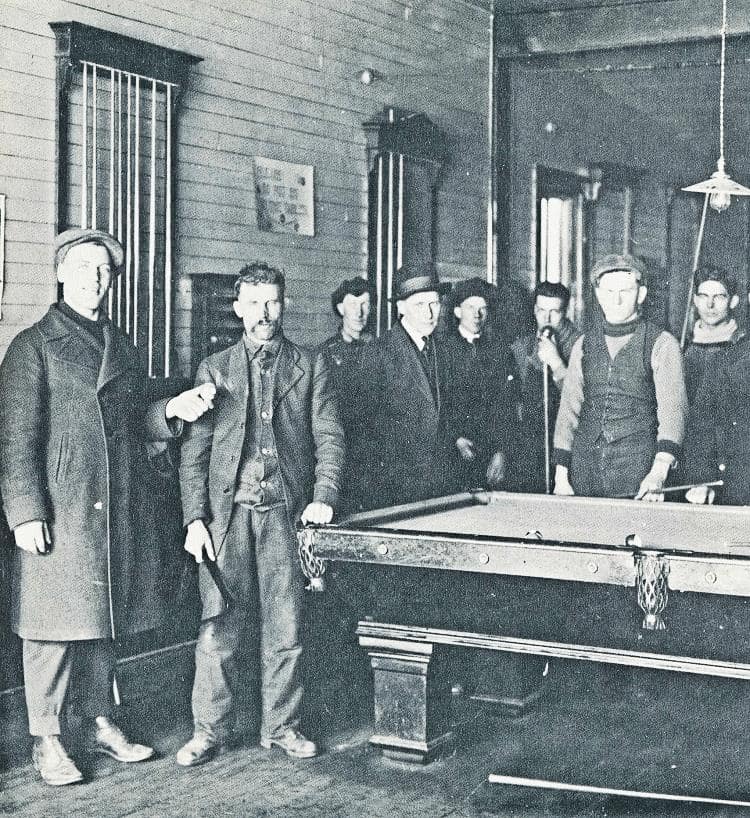
Pool room in Saskatchewan, 1921 — I think this picture gives insight into the boys on those harvest
excursions…..diverse…., innocents and ‘roustabouts’
1923 was one of the peak yeas. There were 50, 450 harvesters rolling westward. Then in 1928 the peak was reached with 52,225 men and women.
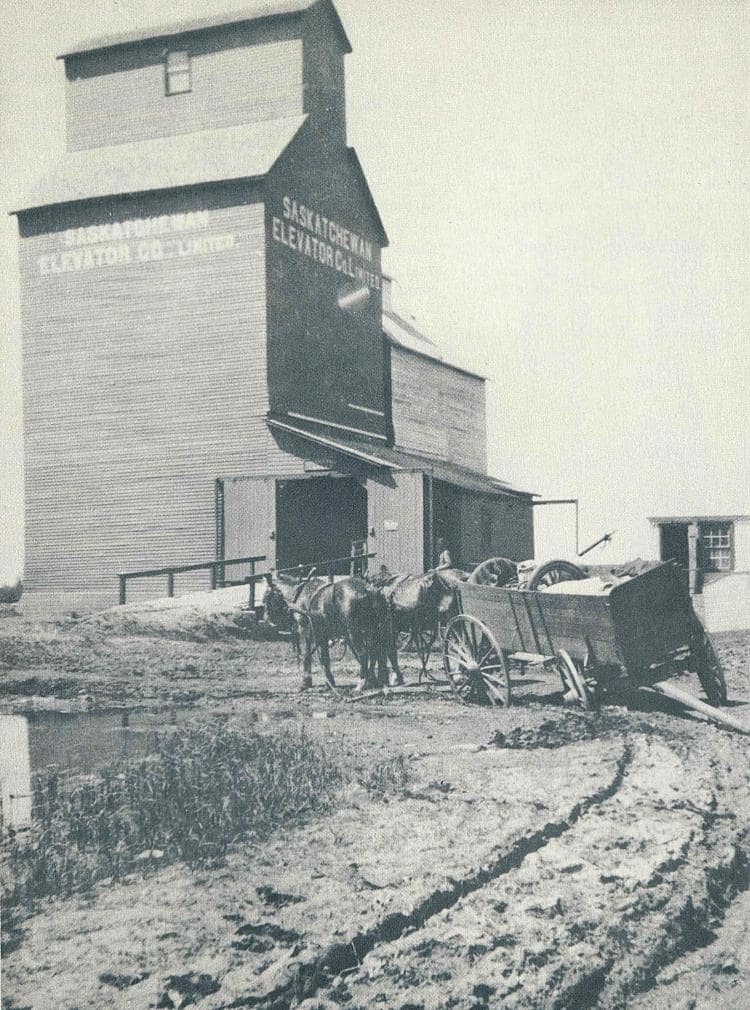
Wagon mire in mud while hauling grain in 1920 to a grain elevator in Norquay, Saskatchewan.
Seems to have a share axle in the grain box.
Uncle John Skeoch’s threshing picture ws taken in 1927. Many of the men in the picture must have been excursionists who were paid from
$4 to $7 a day including room and board. This was good money. One careful harvester went back east with $300 which was a lot of
money in the 1920’s. Getting west was cheap…$15 for the train ride. A few men even came from England at 50 pounds return fare. A cheap
chance for adventure and a chance to smash up a lot of railway property. At Sioux lookout an innocent bystander was severely
injured by an object thrown from an excursion train. In earlier years some railway cars were wrecked…must have been scrapped.
Most of the excursionists had no food with them and had to rely on the restaurant food at the whistle stops. Prices for food were
atrocious. Starving men formed into gangs that terrified many people living in the small towns along the route. Terrified after
they had profiteered from the young men. Alcohol was forbidden on the trains but the did not mean alcohol was absent. Drunkenness,
boredom, lack of sleep, filth, strangers, the fires of spring in youthful veins… all these bred violence.
Word that some of the women on these trains were in danger of being assaulted prompted
the CPR to arrange RCMP presence on each train. One RCMP officer and one recruit patrolled
from railway car to railway car in their scarlet uniforms. That tended to calm things down.
I wish I had asked Dad to tell some stories about those Harvest excursions. I did not. But he told me
one story that must have been indicative of many similar stories. Dad returned to Toronto on an excursion
train after spending tow years in Saskatchewan. Let me put words in his mouth.
“Dad, what was it like to ride on a harvest excursion?”
“Bitch of a time. “
(Dad could make swear words seem like poetry)
“How did you sleep?”:
“Have you ever tried to sleep on a chair…goddamn hard. And to
fall asleep was risky so most of the time I was awake.”
“Why risky to sleep?”
“There were bastards all around just waiting for someone to dose off.”
“Bastards?”
“I fell sleep…sound asleep…as the train headed from North Bay to Toronto.
“So?”
“When I awoke some son of a bitch had stollen my goddamn boots. I had
to run from the Parkdale Station in West Toronto to Roncesvales where
I rented a room. They were new boots. About the only thing I brought back
from the west.”
“Did you consider going back west the next year?”
“Not on your goddamn life. There were jobs in Toronto, good jobs in the rubber
industry. I became a tire builder and never ever went west again even though my
brother lived there.”
TURNING POINT #3 BEDDED DOWN FOR THE WINTER WITH 16 HORSES
Dad did not return to Ontario immediately after the western harvest was piled in graineries
and grin elevators; He was persuaded to stay for the winter of 1921 or 1922. (guesswork here
but close to accurate).
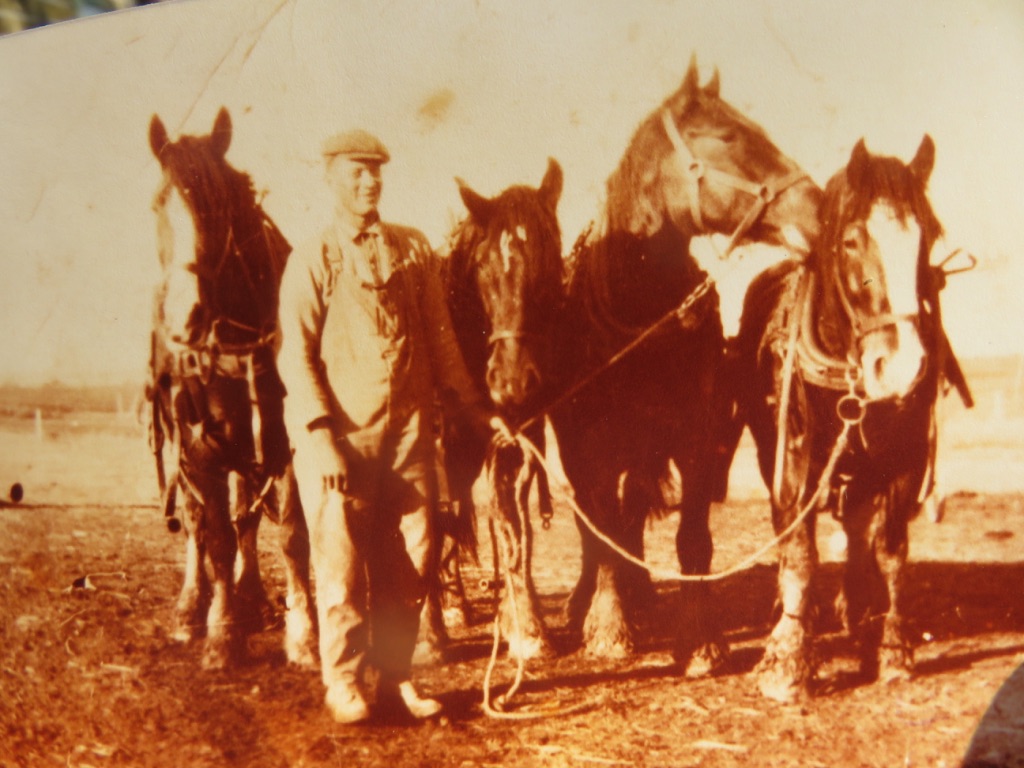
Uncle John with four of the 16 horses that dad may have lived with over one winter in 1921 or 1922
“Why did you stay near Riverhurst for two years. Why didn’t you return with the other Harvesters?”
“I got a job for the winter.”
“Good job?”
“I spent the winter of 1922 looking after 16 horses in a barn near Riverhurst.”
“You lived in the barn?”
“I did. I had my own horse stall.”
“All alone?”
“Yes, all alone. Once in a while someone would show up but I spent most of
that bitch of a winter alone with the horses.”
“Cold?”
“Colder than a witch’s tit.”
“No farmhouse nearby?”
“Nothing but the endless flatness and the scouring wind. A hell of a time.”
“My friend Russ Vanstone described the west as ‘flat as piss on a plate’”
“Well, he got that right..
“Did you like the horses?”
“Had to like something in that white hell.”
WINTER ENDED, SPRING CAME,
“Stayed with my brother John…helped with the seeding and shot
a lot of billiards in Keiler…made and lost a few bucks.”
“Archie and Art came west that year. We had some good times
fist fighting .”
“Fist fighting?”
“Archie was good with his fists. He looked skinny but was tough as old leather.”
“We would place bets…put Archie up against a tough guy from another town. Often
French Canadians against Archie. Made a little bit of money that way.”
POST SCRPT
Circa 1965: left to right, Norman Skeoch, Archie Skeoch, Marguerite Skeoch, Arthur Skeoch, Arnold ‘Red” Skeoch — on the Fergus home farm
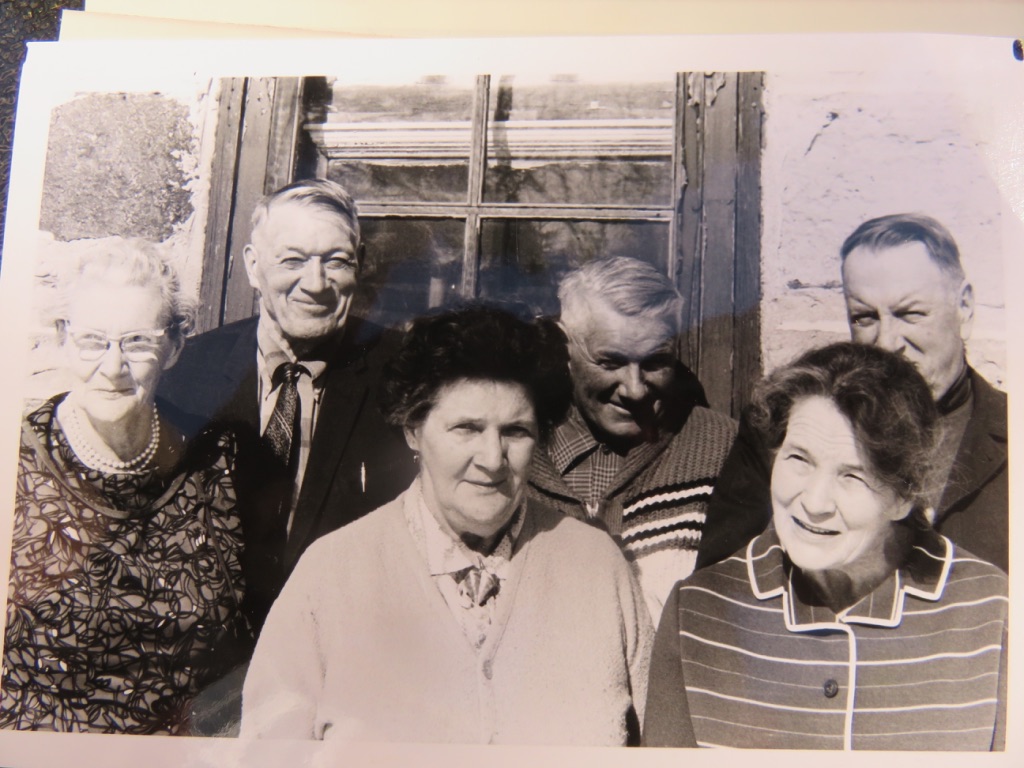
Circa 1960’s: front left to right…Marguerite (Skeoch) Metcalfe, Lena (Skeoch) Tosh, Elizabeth (Skeoch) Townsend. back row….John Skeoch (farm near Keiller, Saskatchewan
as large as 4200 acres), Norman Skeoch (youngest of the 5 boys, inherited the home farm), Arnold “Red “ Skeoch
There were many copies of this photo that Uncle John gave to his brothers and sisters when he came east on holiday
Some of these men, perhaps all of them, were Harvest Excursionists, Riverhurst, Saskatchewan 1927
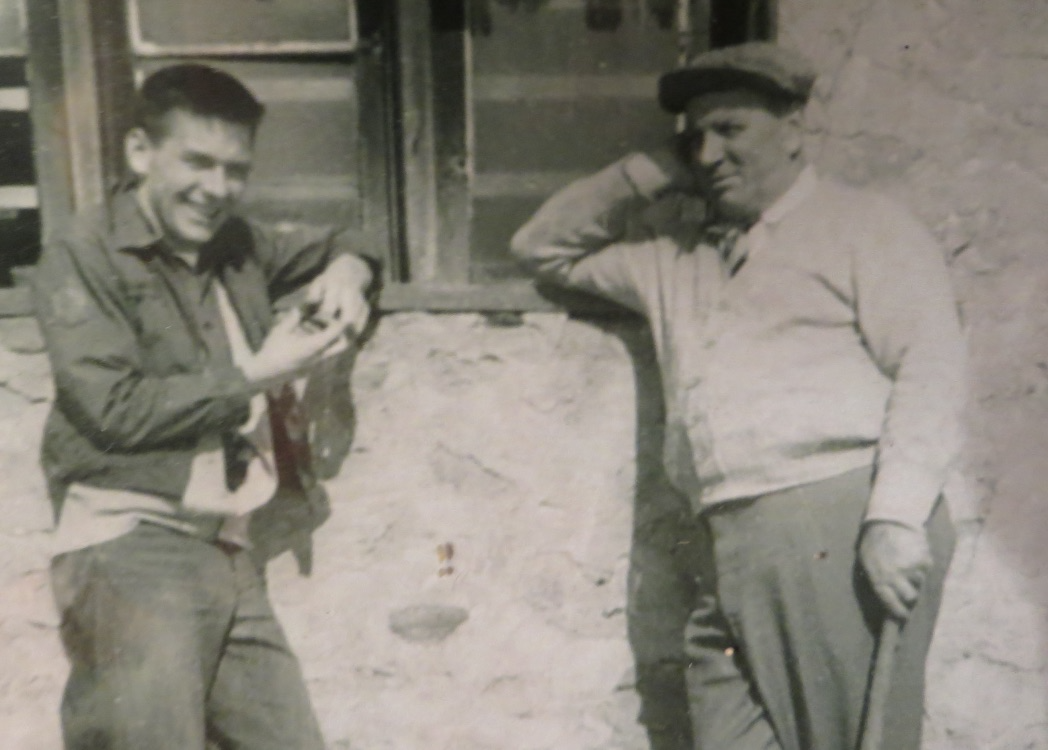
Alan Skeoch and Arnold ‘Red “ Skeoch around 1965 at Freeman farm, Wellington County
There will be errors here since so much depends on memory but within it all is truth. I have used
dialogue to give readers a feeling for the story. Script writers do that so why the hell can’t I do it.”
(alan skeoch)