RESPONSE TO EPISODE 546 FROM CATHIE S. IN MANITOBA
Blog
-
EPISODE 546 SWEET TIME OF YEAR…TAPPING MAPLE TREES FOR MAPLE SYRUP
EPISODE 445 MAPLE SYRUP TIMEalan skeochMarch 8, 2022

 Above all else, March is a sweet time of year thanks to something beyond ourcontrol.Change ia in the air. I can smell it. Those Maple trees in the farm lane are providinga needed distraction from human affairs. Will they still be here when we are gone?We can but hope.
 What a beautiful day! Despite troubles like the collapse of the greenhousedue to this heavy snow….and the terror that is on all of our minds brought aboutby one lunatic, Putin by name. Despite troubles, yesterday was a beautiful dayas the snow melted.
 And the slow then fast …Drip, Drip, drip…drummed the sap pales as our maple trees gaveup some of their sweet nectar.
 Andrew: “Dad where is all your maple syrup making eq uipment?”“Planning to tap?”“Seems right time.”“Correct…warm days and cool nights in March.”“Where are the sap pails?” Spigotts? Hand drill and bit? Boiling pans? Soft Ball thermometer?“There are about 200 sap pails in the quonset barn but don’t take them.”“Why not?”“Lead soldered…lead poisoning….now illegal.”“All your syrup kit no longer useful.?”“Not quite all…search around…I have some aluminum sap pails…maybe a dozen or more…enoughto get a good load of sap.”“How collected?”“years ago I used milk cans…those big cans with rounded lids…cleaned them first of course.I think you bought some new milk cans…use them.”
 ’Smell the air”“Nothing like it…just before springtime.”
 “Dad, I remember 40 years ago when we all got sap from Saunders bush over onthe fourth line…took the whole March school break.”“That’s when we had Tara the Coonhound…she joined us.”“And each night we did the boiling…great clouds of steam from the boiling panwith a fire from wood gathered on the beach at Sunnyside…truckload of planks anddriftwood. Remember the picnic bench that floated in and the City Parks Crewstopped you?”“The picnic bench was all smashed up. They helped me get the bolts out…morewood for the maple syrup fire.”“Do you remember the colour of the syrup?”“I think it was black.”“Right…dark black.”“The maple syrup in the store is light brown…how come yours was black?”“Ashes from the fire…couldn’t stop the ashes…gave us a little extra carbon…did not kill usas we are all alive 4o years later/““Do you still have those pictures of the old sap making days?”“yes, you boys were about 8 and 10 years old back then.”“How many years did we do it.”“Two, Three…four?”“Why did we stop?”“TROUBLE…BIG TIME TROUBLE…AS YOU WILL SEE IN THE NEXT EPISODE”


 Woody was my partner just as Tara used to be. He loves to ride beside me on theATV….he gets quite miffed if I forget to beckon him…”Get on here, Woody, we areheading home.”alanNEXT EPISODE…GETTING MAPLE SAP 40 YEARS AGO
 -
EPISODE 544 A CHILL SPREADS AROUND THE WORLD: CONSIDER THE NUCLEAR REACTORSTHREE MILE ISLAND DISASTER. FUKISHIMA , CHERNOBYL
Note: I considered this story too frightening to send initially and replied it with a nicestory about horses. Now I have changed my mind. Sorry to scare you as much asI am scared.alan
EPISODE 544: A CHILL SPREADS AROUND THE WORLD: CONSIDER THE NUCLEAR REACTORSalan skeochMarch 2022 Marjorie and I…SITE OF THREE MILE ISLAND NUCLEAR DISASTER,
 “WHAT CAN HAPPEN, WILL HAPPEN”Nuclear power plants are constructed with provision for things to go wrong. SAFETY CHECKS. We need their power. We cannotsurvive without electricity. It powers everything we do. Electricity is wonderful.. Butgetting electricity is dangerous. Dangerous indeed.THREE MILE ISLAND, 1979
ON MARCH 28, 1979, a human error occurred at Unit 2, Three Mile Island nuclear power
plant. A valve was open allowing a huge amount of radioactive water to escape. This eventremains the worst nuclear accident to happen in the United States. No one was killedfortunately but the resultant radiation will remain forever.That worried me in 1979. And it worries me to this day. When we took a busload of musicstudents from Parkdale Collegiate to perform in Boston we arranged a short side tripto Three Mile Island. Around 1985. Purpose? To spread fear? Partly, I suppose. Our reasoning wasthat these students would shortly be adults. Soon running our country. They should beaware of the danger of nuclear accidents. Cheap electricity could come at a terrible costif future managers of nuclear sites were unaware of Three Mile Island, Unit 2.
CHERNOBYL, 1986
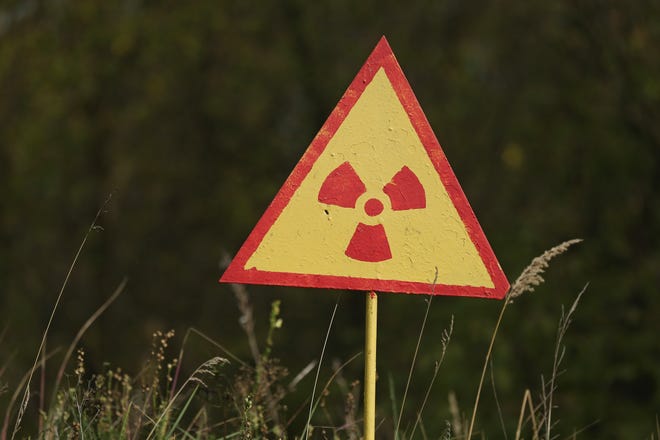
Such a disaster must never happen again. But it did. The Chernobyl meltdown in Ukrainehappened just seven years after Three Mile Island. On April 26, 1986 nuclear reactor Number 4exploded. The site will remain radioactive for thousands of years. The immediate site wasevacuated so hastily that the local carnival rides stand there today as do the apartment buildingswhere people once lived. 335,000 people were evacuated and a wide belt of land was no longer livable.Wild animals returned and now wander through Chernobyl.“The explosion at Chernobyl sent radiation as far away as the United Kingdom, and the Soviet Union’s delayed response to the events is considered by some to be a contributing factor to the fall of the Soviet Union. “As a direct result of Chernobyl nuclear power plants were redesigned so that accidents were thought to be less likely.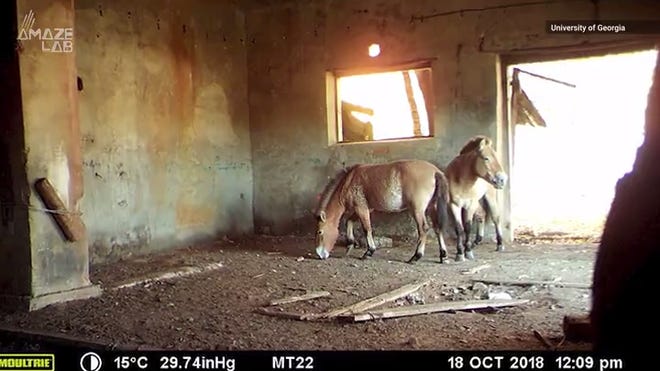
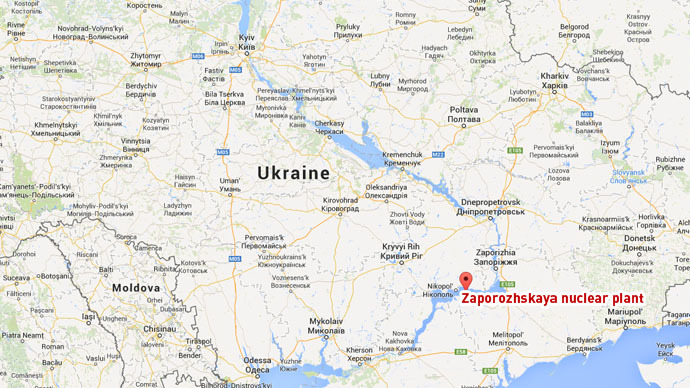
 Wild horses wander through the ruins of Chernobyl on Oct. 18, 2018FUKISHIMA, 2011Then there were decades of quiet. Nuclear power plants multiplied. Safety systemswere put in place. Extra holding tanks for nuclear coolant. Burials of nuclear waste.Comfort. An earthquake off the coast of Japan shook the Fukishama reactor on March 11, 2011A huge tidal wave, Tsunami, swept inland. Radiosctivity increased to Level 7 on the InternationalNuclear Event Scale…Fukishama and Chernobyl were similar disasters. 154,000 Japanese residentswere evacuated.ZAPOREZHSKAYA, LARGEST PPWER PLANT IN EROPE WITH SIX REACTORSToday, March 2022 we face the possibility of s grave nuclear accident in Ukraine where the largestnuclear power station in Europe has become a war zone. War zones are places of unimaginableinsecurity. The Zaporezhskaya nuclear power plant has 6 reactors.


 “March 2, 2022
6:05 a.m.: Russia claims its military has taken control of the area around Ukraine’s largest nuclear power plant.
That’s according to the Vienna-based International Atomic Energy Agency, the U.N. nuclear watchdog.
It said Wednesday it had received a letter from Russia saying personnel at the Zaporizhzhia plant continued their “work on providing nuclear safety and monitoring radiation in normal mode of operation.”
The letter added: “The radiation levels remain normal.”
Zaporizhzhia is the largest of Ukraine’s nuclear sites, with six out of the country’s 15 reactors.
Already, Russia has seized control of the decommissioned Chernobyl nuclear power plant, scene of the world’s worst nuclear disaster in 1986.”
alan skeoch
March 7, 2022 Let us hope and pray this is not the end result of this terrible war.
 -
EPISODE 543 PRAGUE , MARCH, 1993 , JOY IN ETHNIC COSTUME — PEACEFUL UPHEAVALS HAPPEN…BUT NOT TODAY.
ERROR: YEAR OF OUR VISIT TO SLOVAKIA SHOULD BE 1993, CORRECT PREVIOUS EPISODESEPISODE 543 PRAGUE, MARCH,1993 JOY IN ETHNIC COSTUME — PEACEFUL UPHEAVALS HAPPEN
alan skeochMarch 5, 2022NOTE: As Marjorie pointed out, the year we were in Slovakia was 1993, not 1989 as said in error in earlier Episodes. BLESSED ARE THE PEACEMAKERS…MARJORIE SKEOCH AND CZECH DANCER, PRAGUE, MARCH 1993
On January 1, 1993, Czechoslovakia split into two independent states, the Czech Republic and Slovakia, in what is now known as the “Velvet divorce” (in a reference to the Velvet revolution) due to its peaceful and negotiated nature. Both countries divided their common “goods” (embassies, military equipment, etc.) on a two-to-one ratio to reflect their populations. Although the dissolution didn’t lead to any unrest or bloodshed, the new frontiers did create a few odd situations, like splitting border-towns in half.
The split “was not entirely inevitable, but the political and economic costs of keeping the country together would have been extremely high”, pointed out Jiri Pehe, political analyst and former advisor to Vaclav Havel.
The division of Czechoslovakia: an undemocratic decision?
A widespread narrative argues that the divorce was a purely political move decided behind closed-doors by Czech and Slovak leaders Vaclav Klaus and Vladimir Meciar against the will of the population. There is some truth in that: all the opinion polls at that time showed that a vast majority of Czechs and Slovaks was in favour of the preservation of Czechoslovakia and against the country’s break-up.
In its January 1, 1993 edition, the New York Times wrote: “A multi-ethnic nation born at the end of World War I in the glow of pan-Slavic brotherhood, Czechoslovakia survived dismemberment by the Nazis and more than four decades of Communist rule only to fall apart after just three years of democracy”.
Although no referendum was ever held on the matter, democracy was indeed at the heart of the issue: all the problems associated with the federation of two states of unequal weight and size only appeared after the centralized, communist regime collapsed as Czechoslovakia reconnected with democracy. The decision-making paralysis and the federal government’s inability to push any significant reforms in the early 1990’s strongly contributed to the top-down decision of Klaus and Meciar.
 Centre of Prague, Czech Republic, March 1993
 An upheaval was happening but only Kevin Skeoch seemed to notice. Note the Pink clad coat of optimism on Marjorie.
 Bakeshop…Normal exchanges happening
 Look at the boy with the glasses. He notices something joyful.
 Street scene Prague, Czech Republic, March 1993. Joy seemed everywhere.JOYFUL DAYS IN PRAGUE, CZECH REPUBLIC, MARCH 1993TRAGIC DAYS IN UKRAINE, MARCH 2022…DID THINGS HAVE TO GO SO HORRIBLY WRONG?Today, March 5, 2022, ‘We watch in horror as unspeakable crimes by one man, Vladimir Putin, tearUkraine into pieces that will take generations to repair. Did this have to happen?Was there not another way to effect change, perhaps by respecting neutrality?Our eldest son, Kevin Skeoch, had high hopes for Ukraine and Russia finding themiddle road through education. He had (has?) the clout of a CEO in InternationalSchools around the world. Upbeat, positive, above the grimy sludge of low levelpolitics. Will happy days return? “We can but hope that somehow good will be the finalgoal of ill,” as the saying goes.In 1993, when Kev was a “$4 a day” teacher in Slovakia there were terrific changes happening.Political changes, as the Soviet Union collapsed and sane heads tried tomanage the collapse sensibly. It was not an easy time. On our March breakin 1989, Marjorie snd I visited Kevin in Bratislava, Slovakia with a side tripto Prague, Czech Republic. A political divorce. The former, rather artificial , nation of Czechoslovakiadecided to get a divorce.
 Notice the reflections…admirers of folk art…Marjorie and Kevin SkeochWhen we crossed the new border between these new states we almost missedthe border guards. Come to think of it, We did miss them. We did not stop as I remember. A political divorcewithout much ill will. Yes, we saw more ill will in the Slovak Republic. Poorer of the two states, itseemed. Graffiti on a few walls saying “English go home”. Negatives that longedfor the idealism of Marxism.
 Gorbachev…a leader with a birthmark…a leader.I remember us driving into a Slovak lodge in the High Tatra mountains where a bunchof young rather drunk Slovak ’20 somethings’ were taking a collective leak (piss). Noticing us,… perhaps Marjorie’sbright pink coat…they turned and pissed in our direction. They laughed and we laughed.A difference of opinion expressed and accepted. Done without tearing the nationapart.
 What is happening here? I had no idea in 1993. But whatever was happening was full of joy.


 If only a leader like Marjorie and a leader like the costume bedecked young lady were present today.
 A few days later we witnessed the reverse situation in the heart of Prague whereethnic clothed dancers were expressing great joy while dancing on the street.If pressedto take a leak there was a squeaky clean toilet available in a huge MacDonald’sfast food store.If only Ukraine and Russia could have found the same common ground. If only wecould find ourselves, our global selves, with leaders who can lead. If only there wasmiddle ground possible.alan skeoch
 No comment necessary below.
 alan skeochMarch 5, 2022
 -
EPISODE 542 SALESMAN IN PRAGUE IN 1989 — MESSAGE FOR US ALL IN 2022
EPISODE 542 SALESMAN IN PRAGUE IN 1989 — MESSAGE FOR US ALL IN 2022alan skeochMarch 4, 2022Young man’s sale booth on a main street in Prague, new Czech Republic. 1989. Sobering picturewhen his goods are examined closely. How the mighty have fallen.!. There is a larger meaning here. In 1989, with the speed of summer lightning, all the uniforms ofthe Red Army were suddenly of no value…just tokens for sale on a side street. It was thiscollapse that drove Vladimir Putin into the madness we see today, March 4, 2022, in my humble opinion.
 I do not mean these folderol dolls. They were always for sale in street markets. The sudden appearance of othermarketable goods is clear below. I REPEAT. How the mighty have fallen.