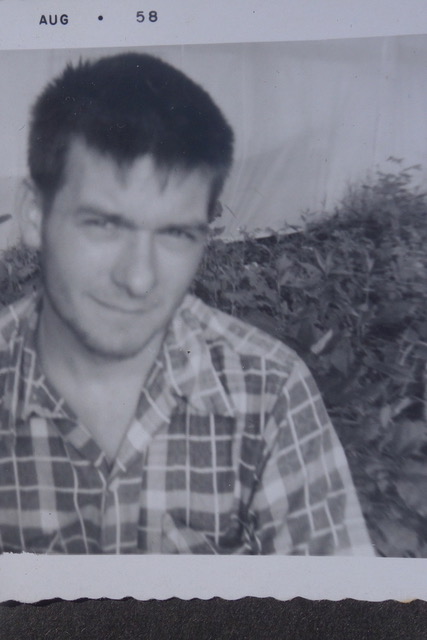
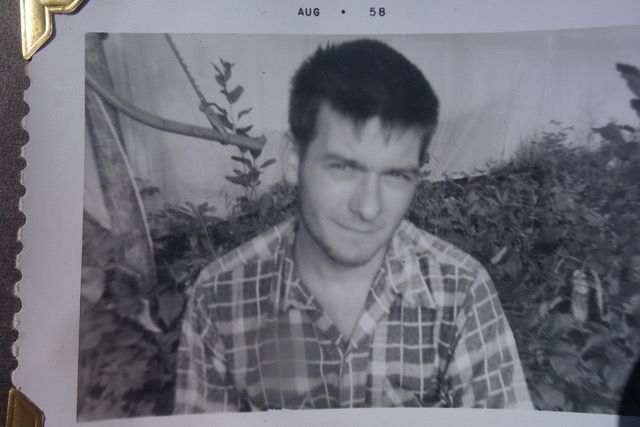
August 27, 1958
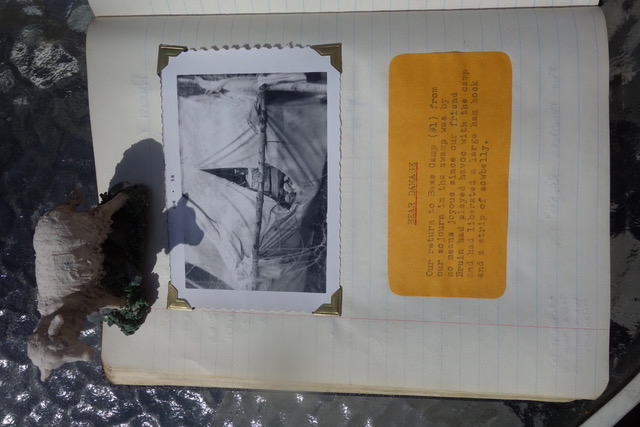
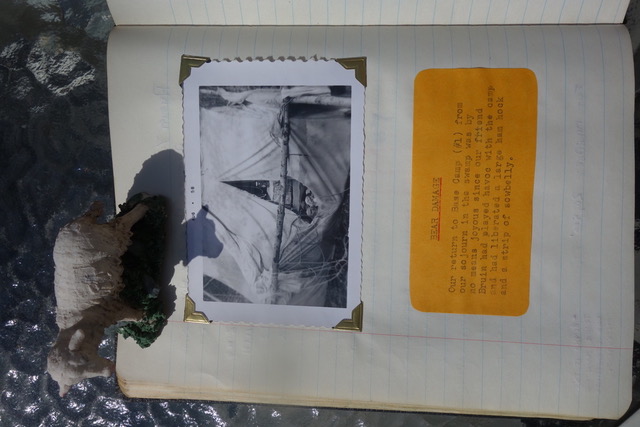
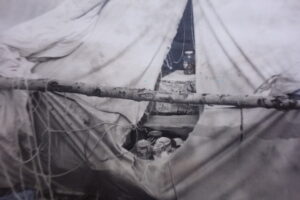
I woke late tonight with a funny feeling. Did not know why for a few moments. Admired how the moon lit up the inside of our tent. Then a cloud passed by
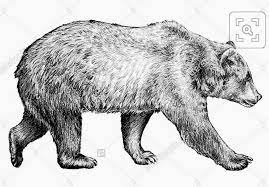
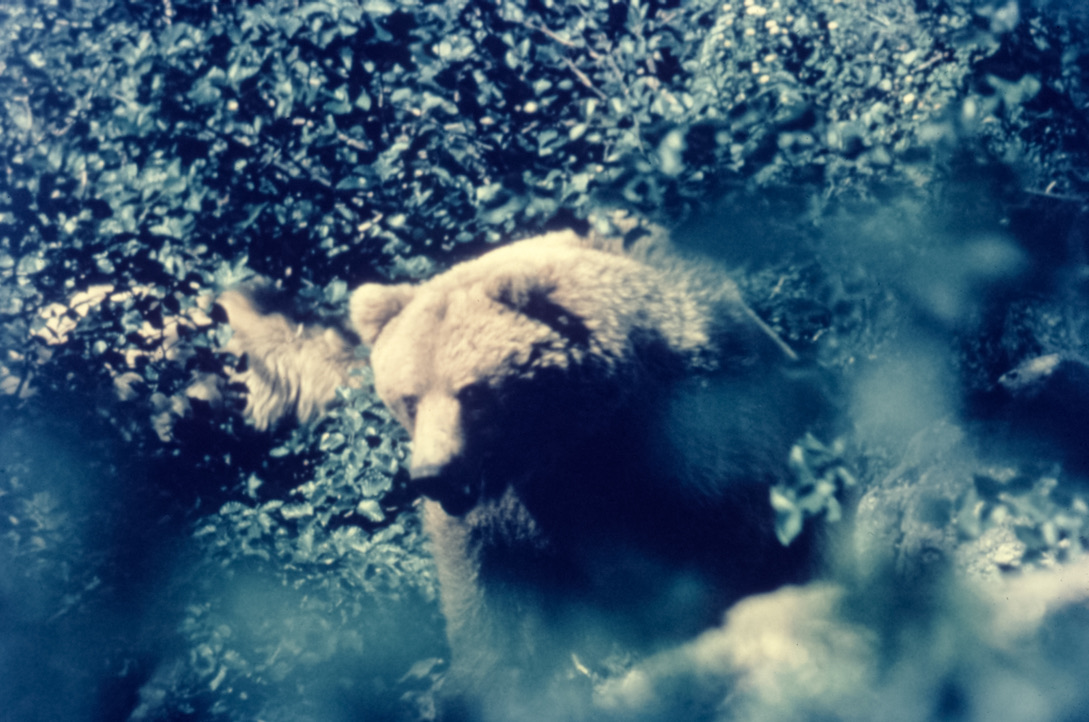
blotting out the moon. Only it was not a cloud. it was the bear…he was on the other side of the tent wall…maybe three feet from my body encased
in my sleeping bag. His shadow blotted out the moonlight. I held my breath. Then his shadow just moved down the tent wall and out of our
lives. He stole no food that night. Probably he could smell us and I am told bears do not like the smell of human beings. Our smell was particularly
strong that night.
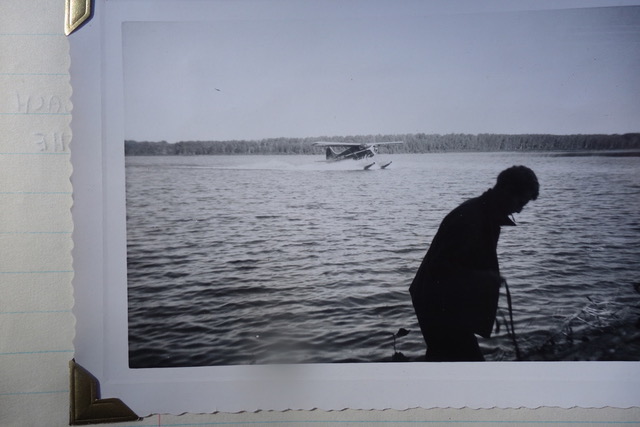
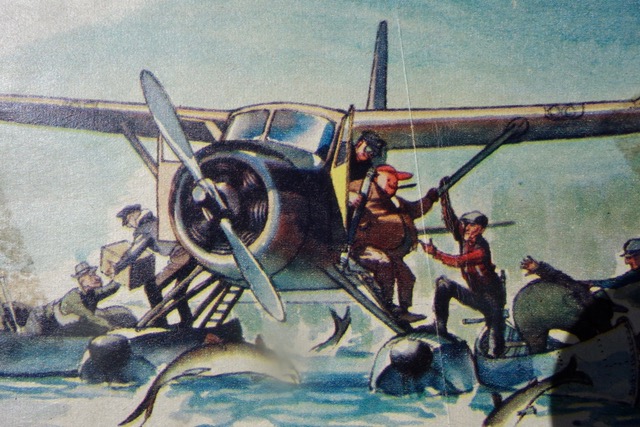
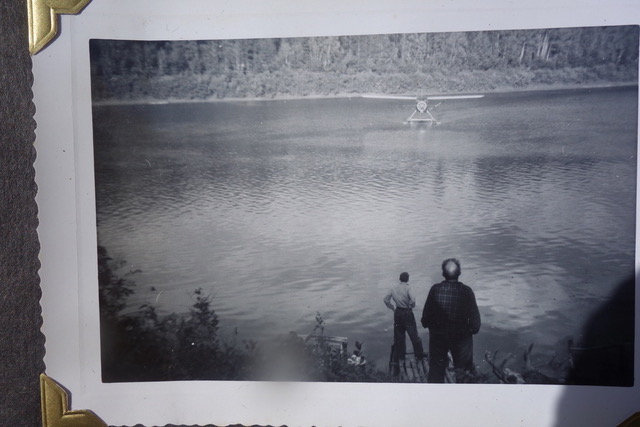
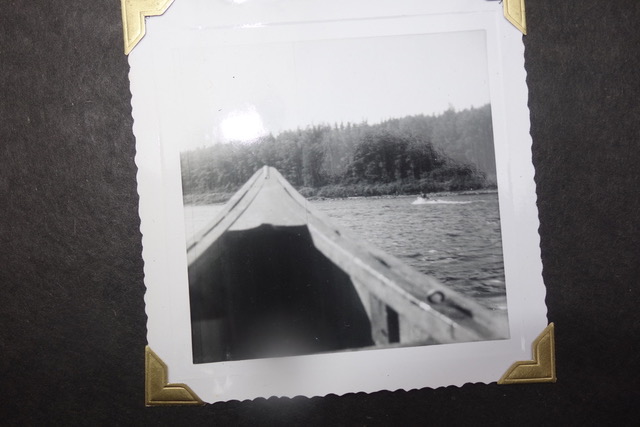
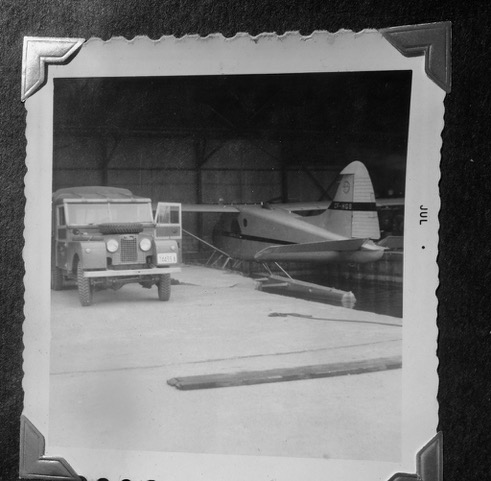
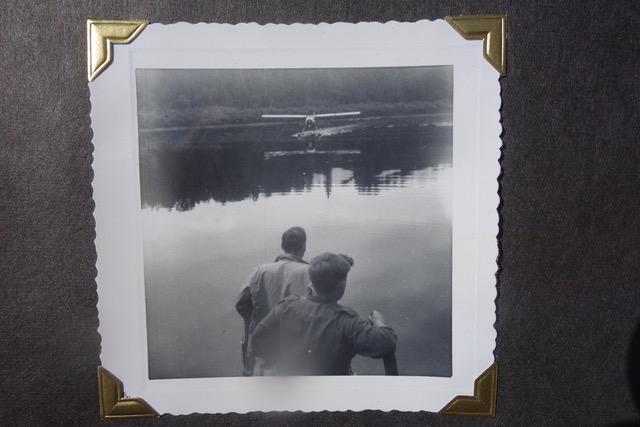
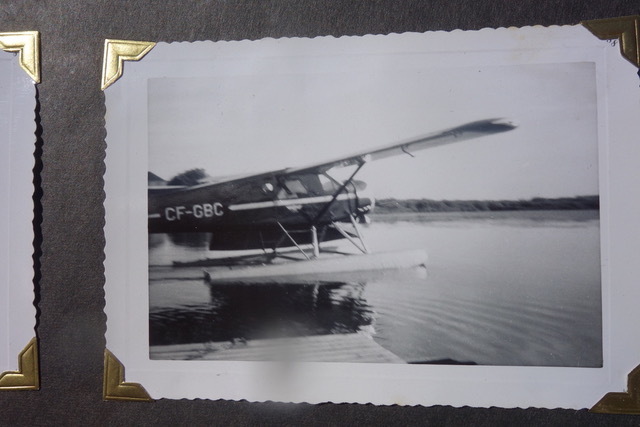
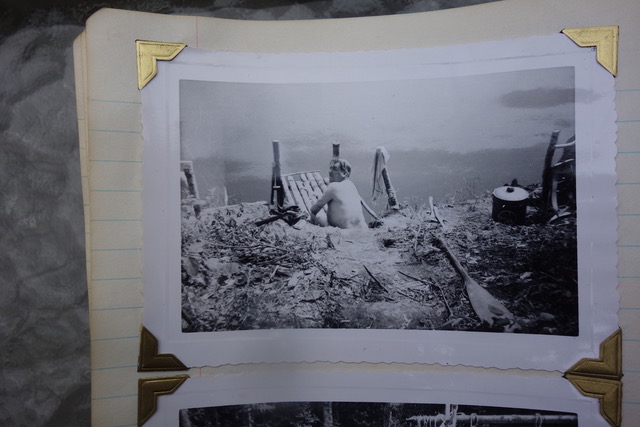
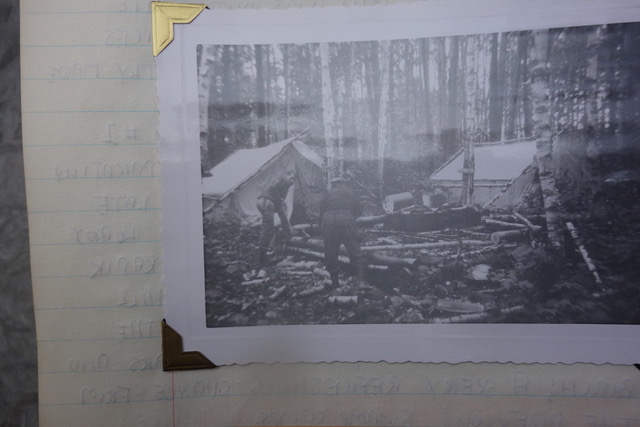
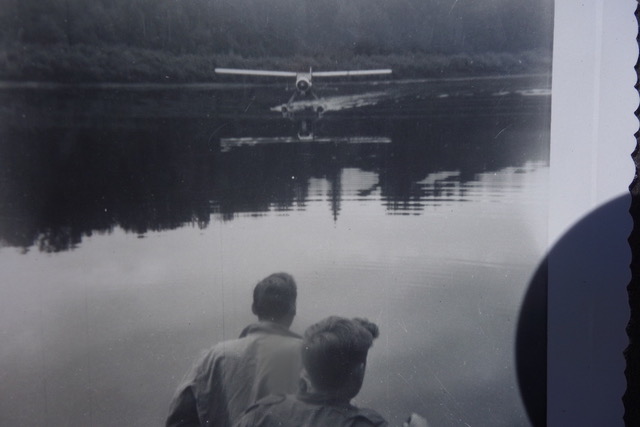
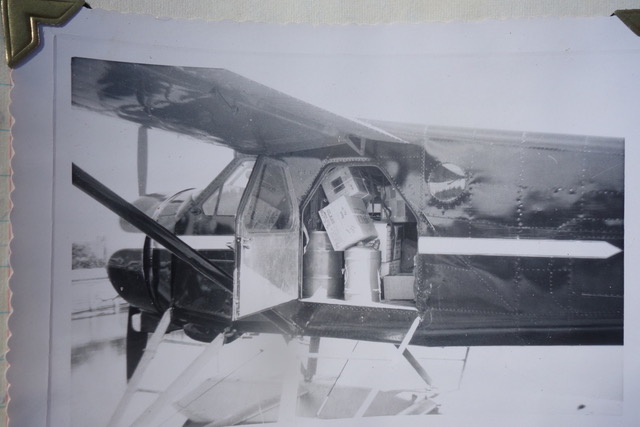
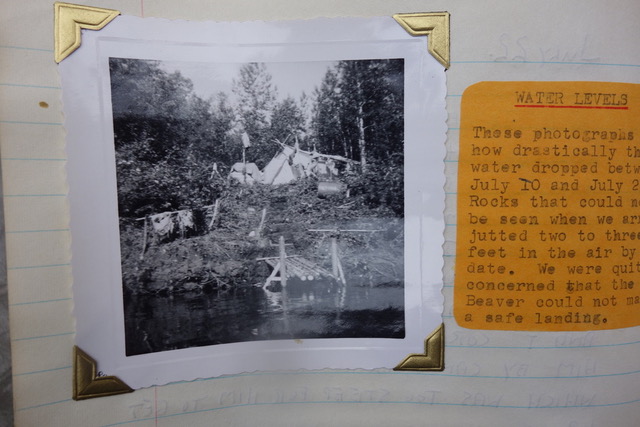
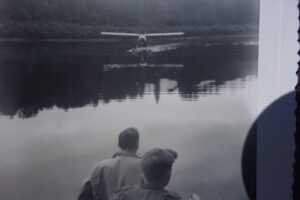
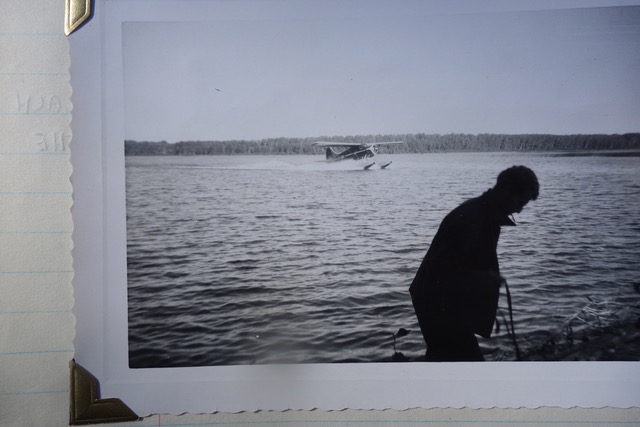
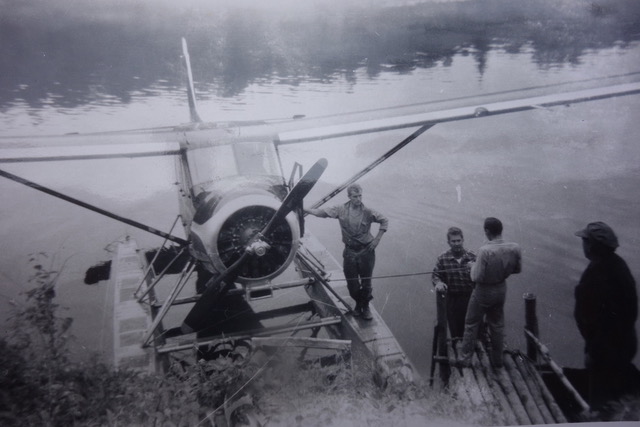
In the morning we tore apart Base Camp #1 and packed everything on the dock and shoreline. Late in the afternoon the Beaver float plane arrived and was
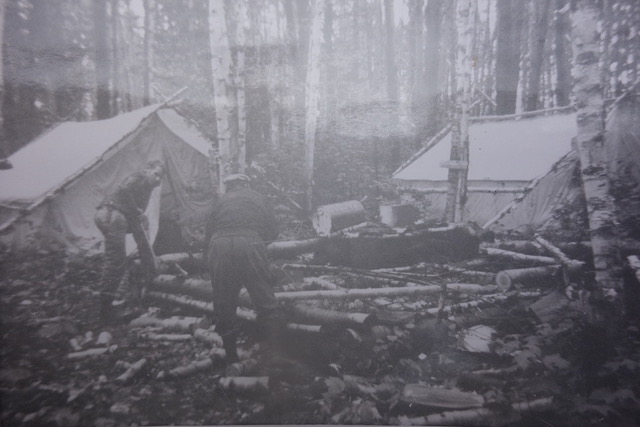
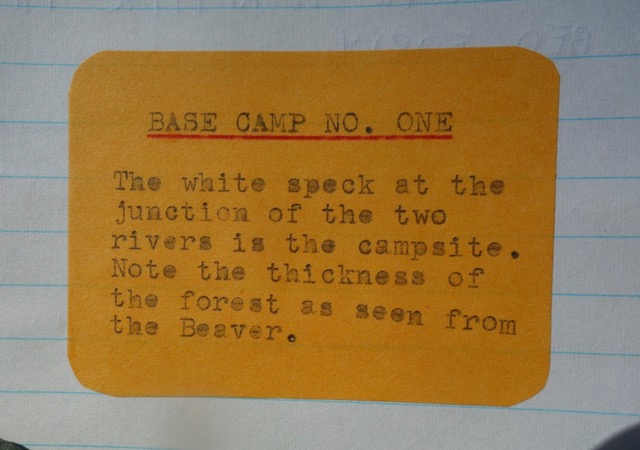
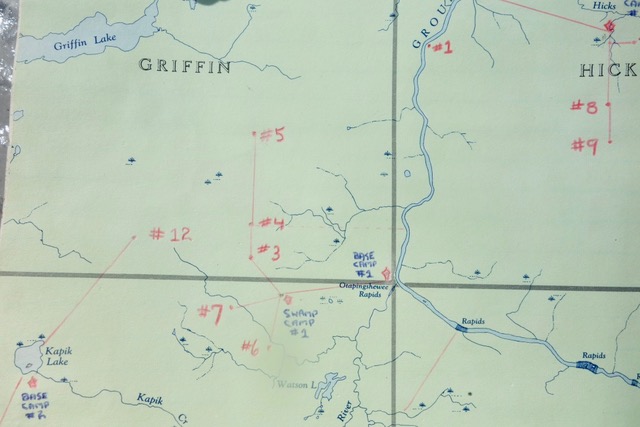
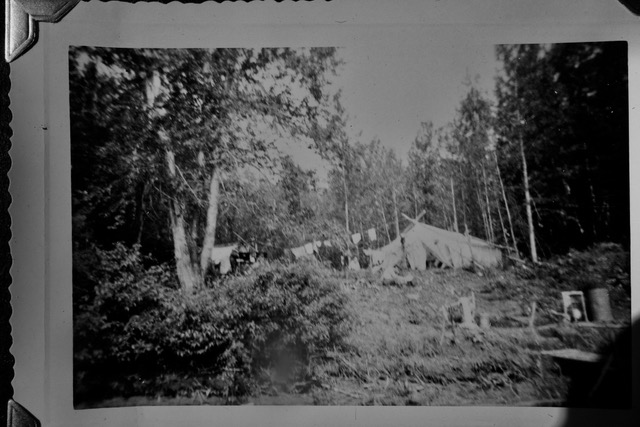
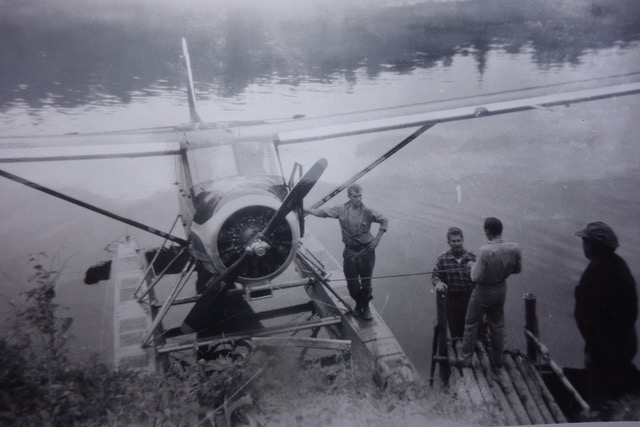
loaded for the short hop to Kapik Lake a few miles to the west where we set up our new Base Camp. What a difference. The new camp is nestled in climax forest
of birch and poplar trees high on a hill where fresh wind blows. We were out of the swamps.
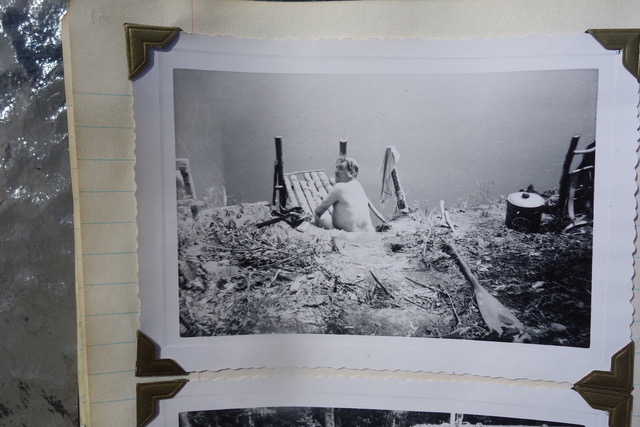
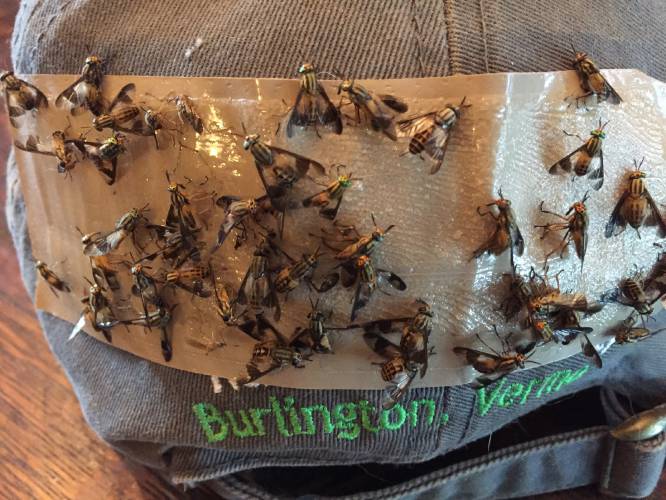
A strange thing happened the day we left Base Camp #1.. Something not really relevant but strange all the same. Our makeshift dock began to attract great clouds of
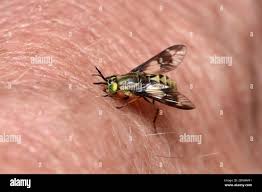
deer flies. Deer flies are nasty creatures that like human flesh and human blood. Chevrons on their wings. They had been torturing us every day since our arrival. Yet this
day, August 27, 1958, they were not biting. Instead they were clustering in pods under the dock. Wedging themselves into a great pack of their brethren
and dying all pressed together. Hundreds of them, maybe a thousand. Made no sense but it is a clear unusual memory. We did not try to dissuade them from this mass suicide.
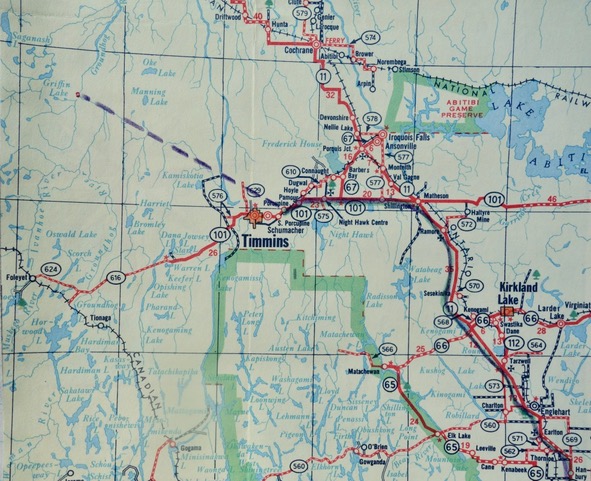
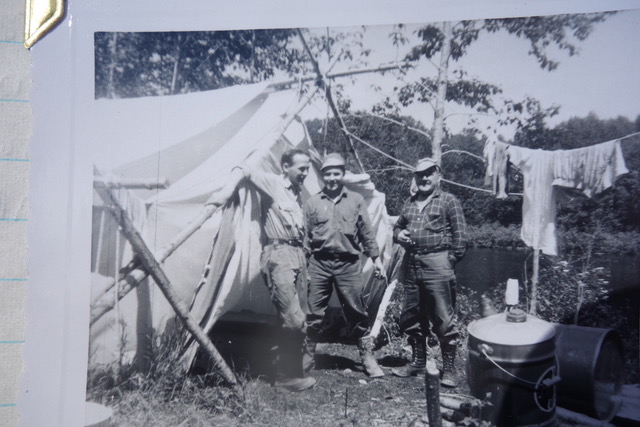
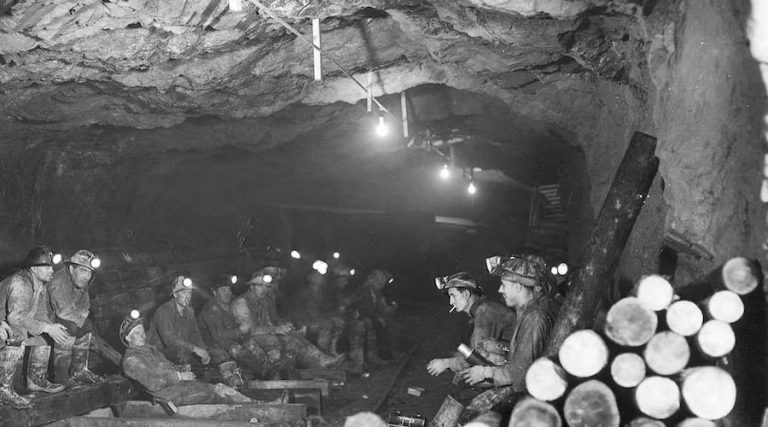
We had a new employee arrive to replace Robert Hopkins. Mack Deisert is a tough man who is familiar with heavy tools. For a time he worked underground
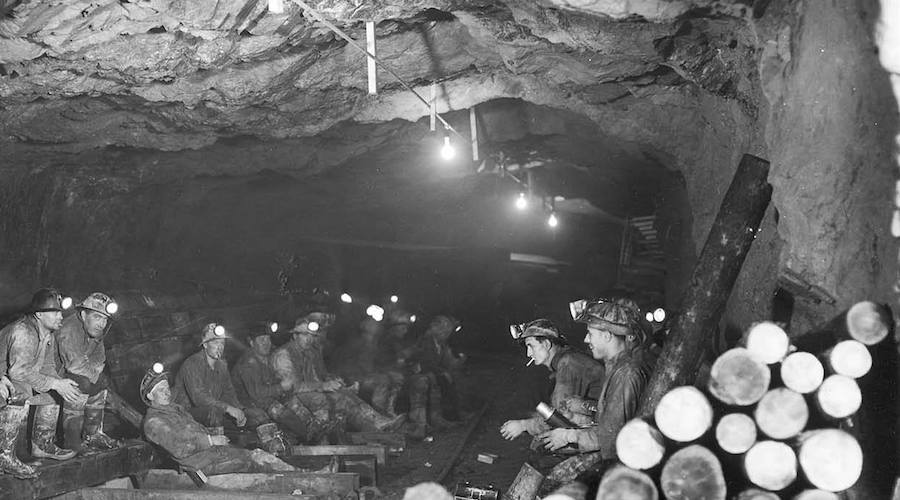
in the gold mines of Timmins. Why he no longer was a full time miner became evident as we talked around the camp fires. “There were all kinds of ways to
high grade gold from the Timmins mines. Lunch pails worked for a while but stealing gold that way was a little too obvious…small amounts under fingernails or in false teeth specially
made by local dentists. Some gold was smuggled out in shoe heels…sounds stupid I know but remember just an ounce of gold was worth money…high graders got 50% of the face value of gold. Lots of buyers in Timmins. A miner or a shift boss sees a streak of raw gold
in a hunk of rock…not common but occasionally appears…he slips a chunk in his pocket then gets to a place where he hammers the chunk and get smaller piece with more gold…then has to figure how to
get it out. A wink to a foreman might do it. Most of the high grade gold is ground down right in the mine. A miner comes upon a vein with raw gold… he just chips out a chunk
knocks of the crap and keeps a bit of gold for himself. Small pieces are easy to hide. Some say millions worth of high grade gold hidden and sold in Timmins. Miners today are checked by security guys
every shift. Big signs in the mine condemn high graders. Those signs would not be up if there was not a problem. Illegal gold…common knowledge about
who to contact.” Mack seemed to know a lot about high grading gold…maybe he got caught and that was why he took a job with us. Or he was bull shitting a good
story around a campfire. Whether his stories were true or not , Mac was certainly an entertaining character.
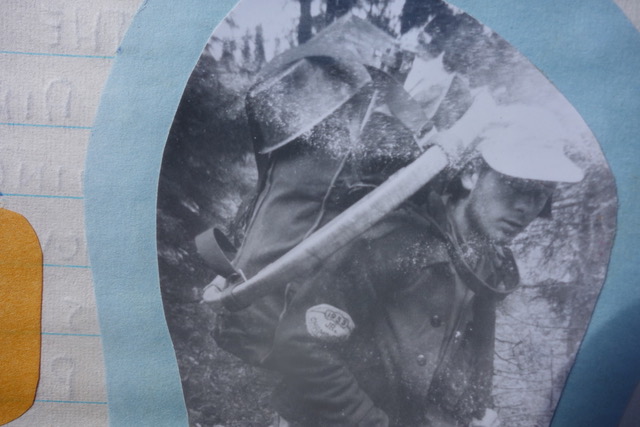
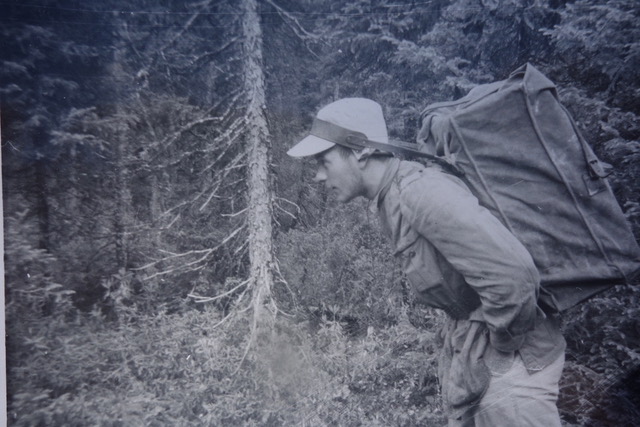
To Mack a blazing Axe was child’s play. He was unlikely to hurt himself for he knew
the consequences of a wilderness injury.
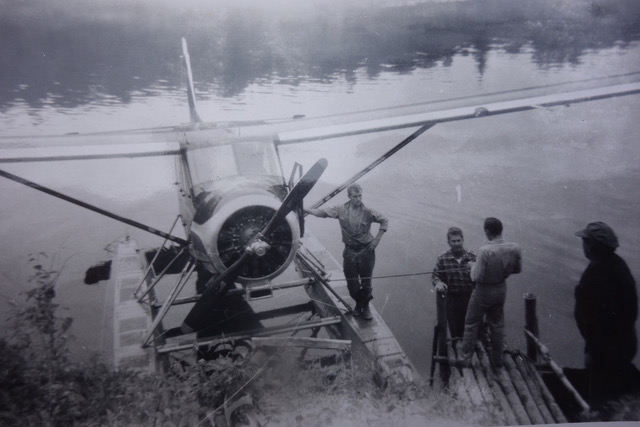
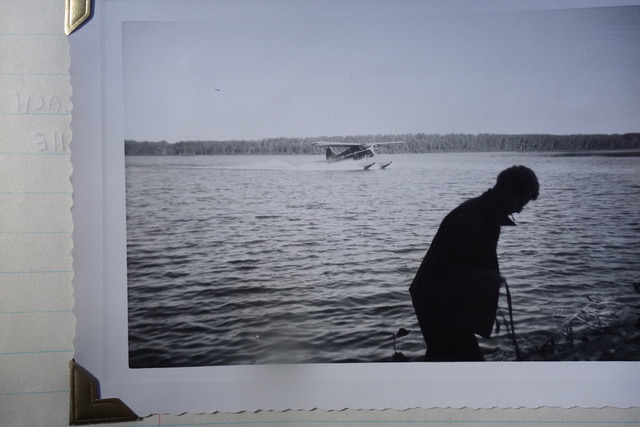
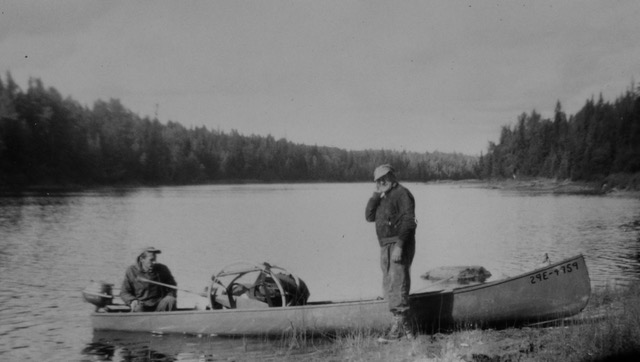
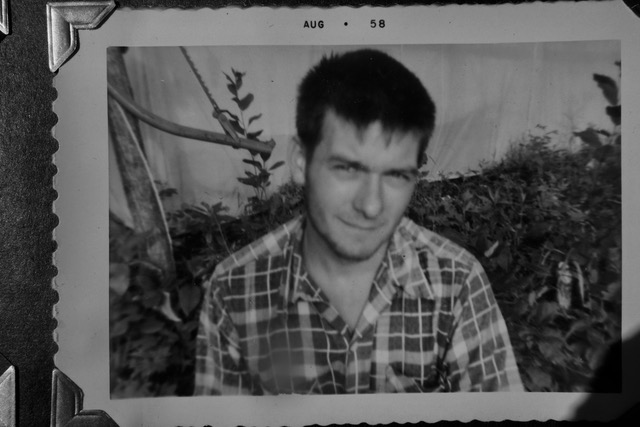
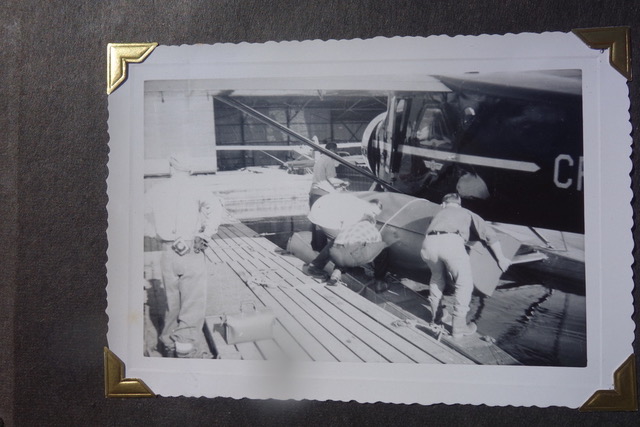
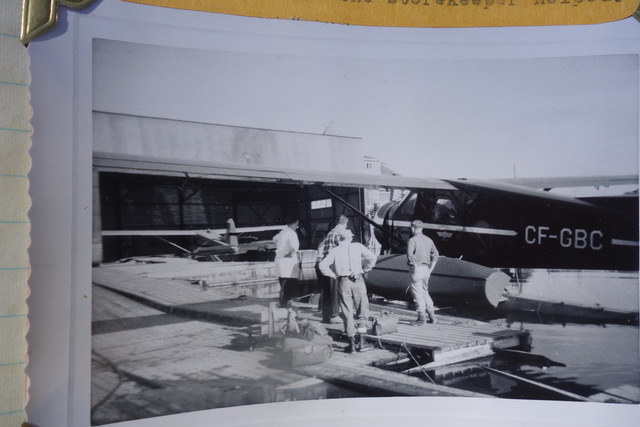
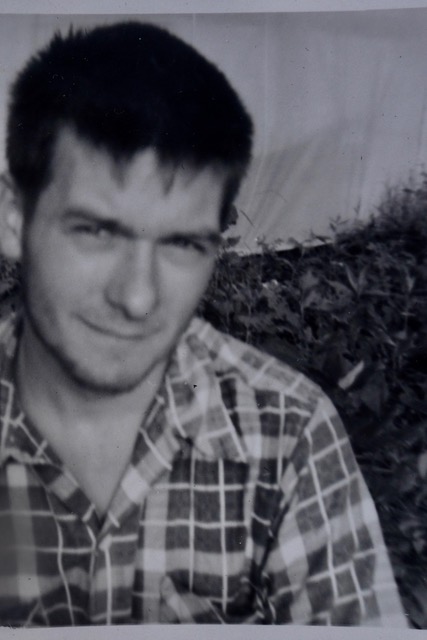
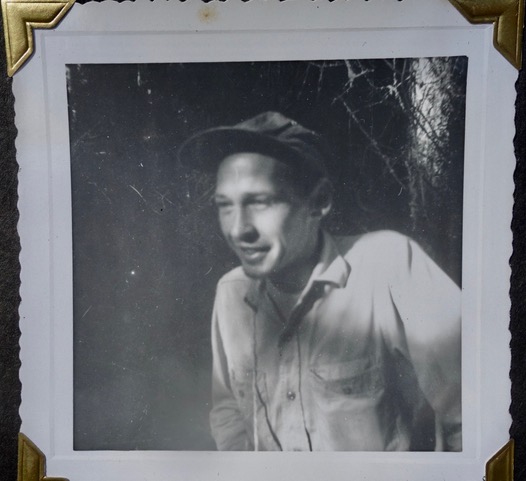
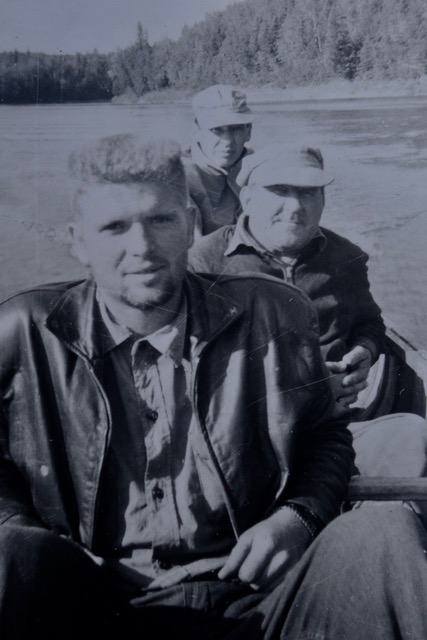
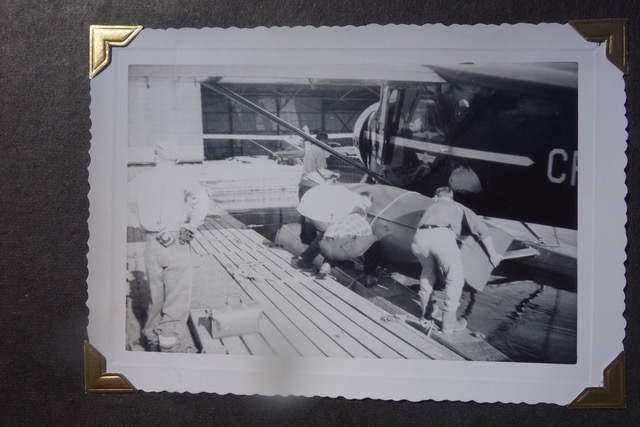
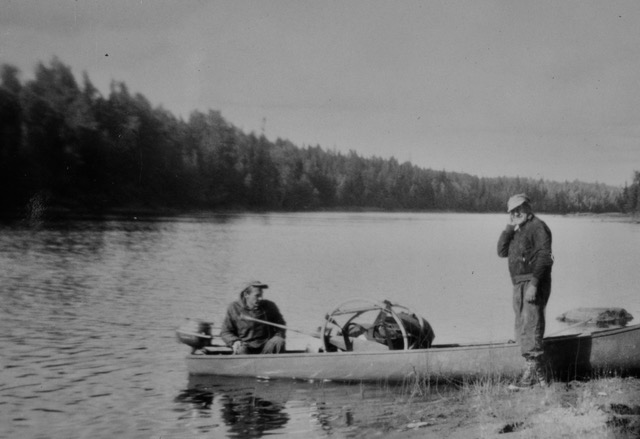
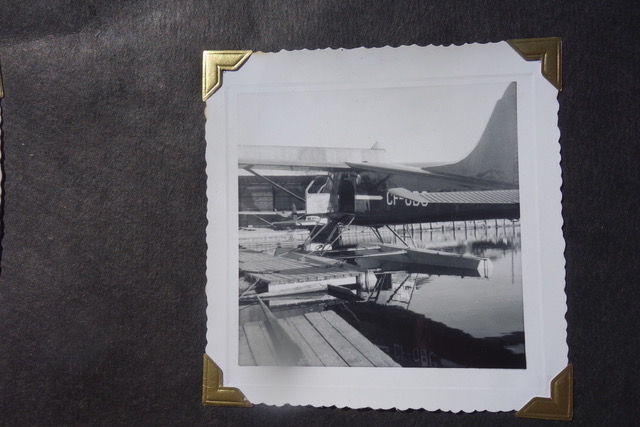
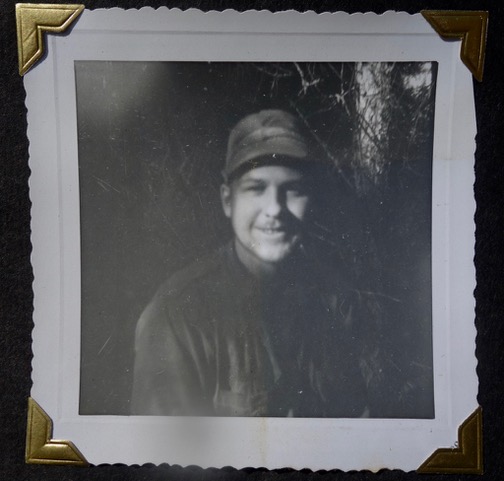
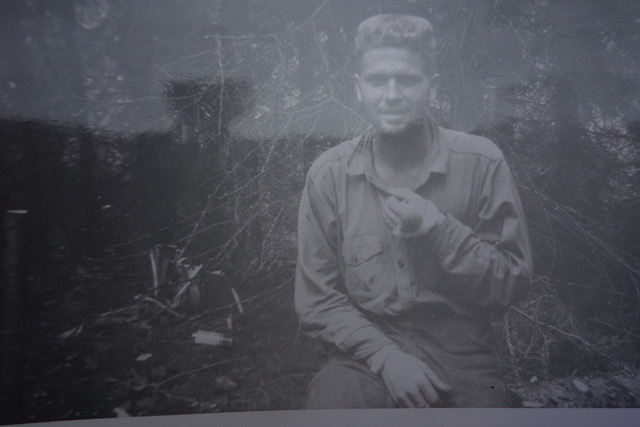
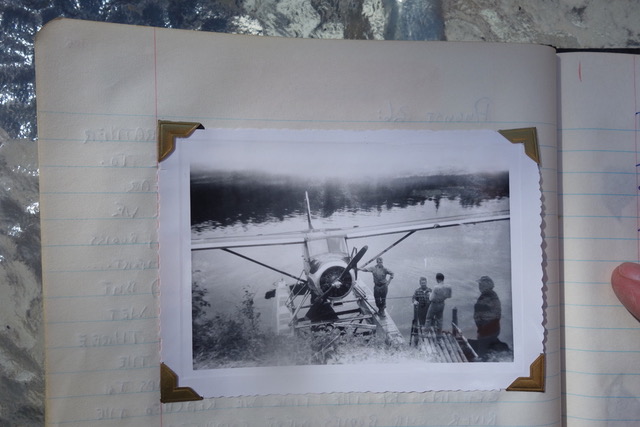
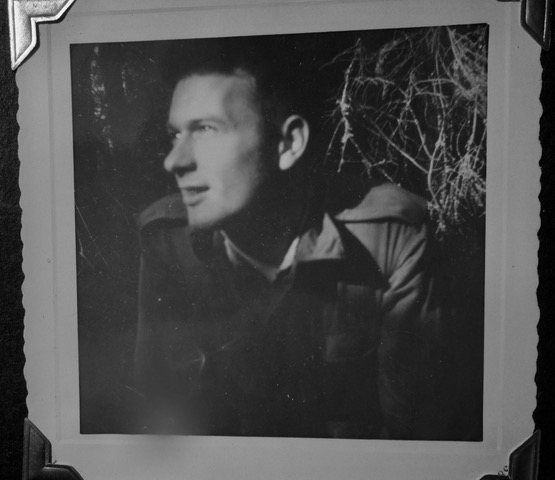
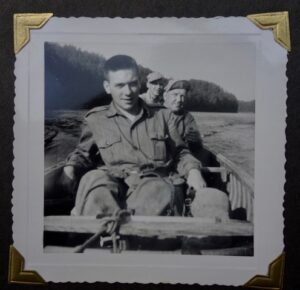
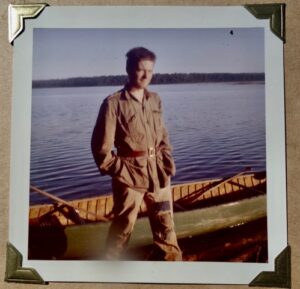
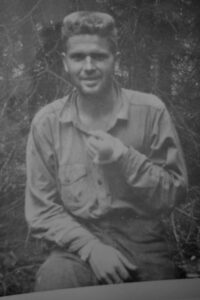
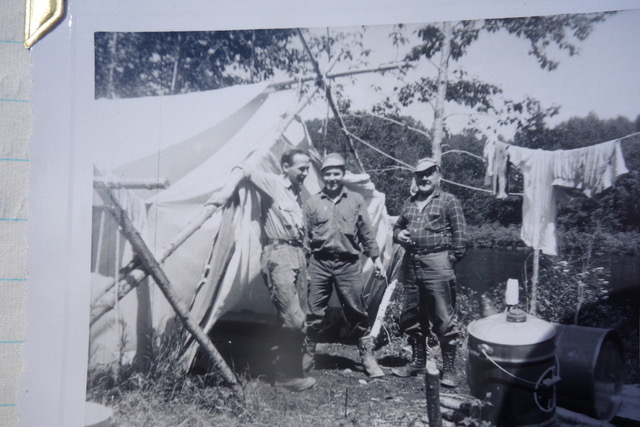
Our new fourth man was Mack Deisert standing on the pontoon while the pilot clears up a few details, perhaps related to money.
Mac was quite an entrepreneur. No fucking around with him.
Mac arrived just as we were moving to Kapik Lake with all our gear…August 27, 1958
Supper was special. Fresh food. We dined on veal cutlets, string beans, potatoes, tea and ‘fresh bread’. Our bread was soon stale…dru
or mouldy…god bread got very
crusty as time wore on in camp. Mouldy bread was garbage. The only way to soften dry bread up was a French Toast concoction we made regularly…water, powdered milk, a couple of
eggs while they lasted, some butter and a hot frying pan. French toast could be stretched out and become a bush lunch when lathered with
peanut butter. It Got to taste really good. We could do the same thing with porridge. Hot in the morning. Then a slab of cold oats as a jelly like lunch
If firm enough the cold porridge could also be lathered with peanut butter. All this was washed down with tea boiled in a
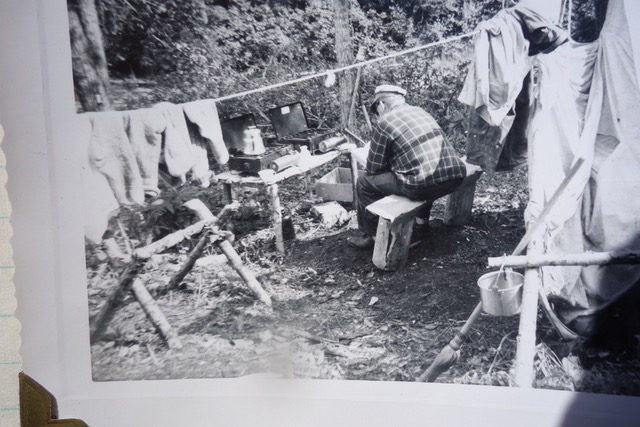
fruit can tin with a wire looped over so the billy tin could hang on a stick over an open fire. When we ran out of real tea we used Labrador tea, a
local plant whose leaves were fuzzy on the bottom. Easy to find. Questionable alternative. No alcohol on the job. Beer would weigh
far too much anyway.
August 28, 1958
Rain…wonderful rain. So we got a day of rest…well not quite that for we had to get our new campsite ship shape. Kapik Lake is not
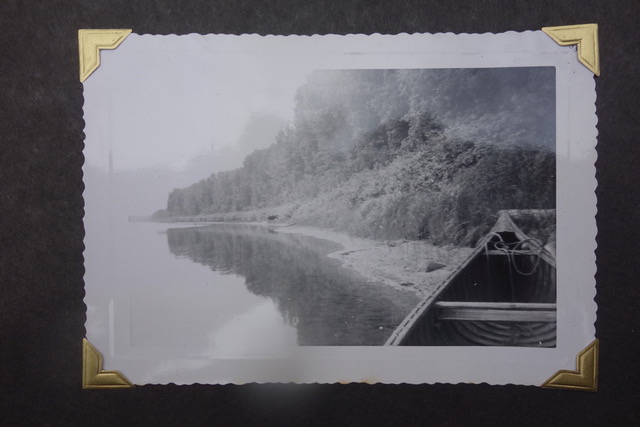
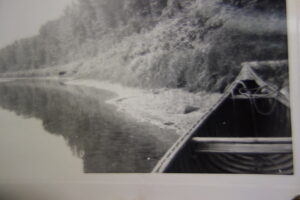
big, just enough room for the Beaver to take off and land. “What’s that over on the other side?” “Looks like a canoe.” Sure enough, some
person had abandoned a canoe on the lake. No sign of a cabin so it might have been a fisherman or trapper. We rescued it. complete with
paddles and had transportation for leisure evenings to tour the little lake. Maybe this was here for fly in fishermen. Maybe Kapik Lake
was full of fish. Little good that would do us for we had no fishing gear.
Kapik Lake was inhabited by some strange mole like creatures on one of the little islands and a family of Loons
who serenaded us regularly.
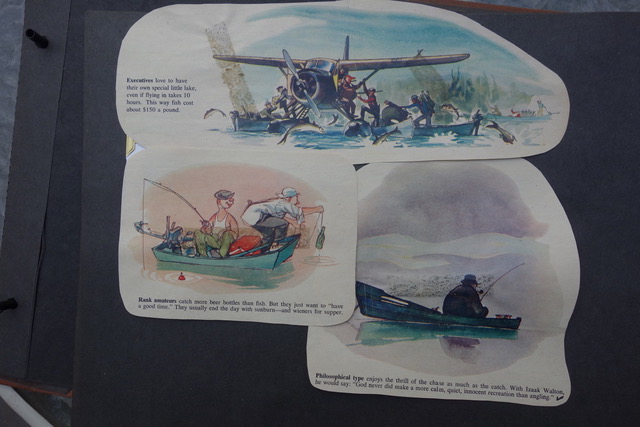
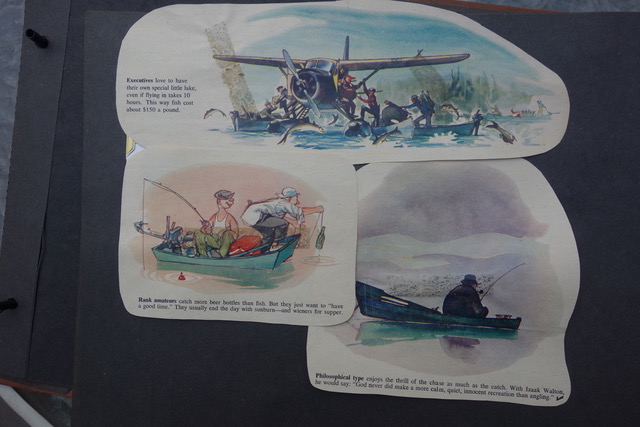
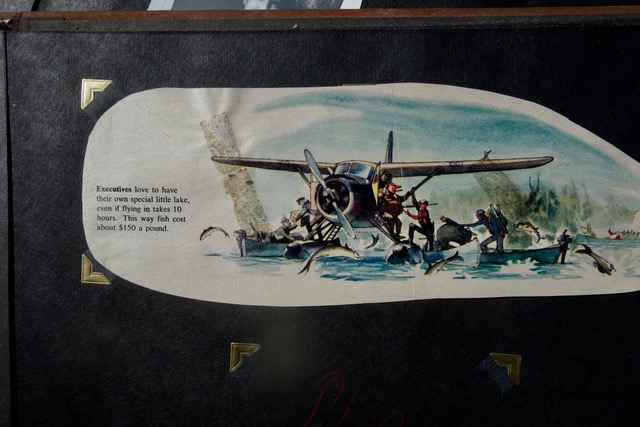
Maybe Kapik Lake was one of those fly in fishing lakes that rich people use which came complete with a cook to fry up
whatever they catch. Our use of the lake was far less fancy. Rich fishermen, if hey arrived while we were, would have
been flabbergasted at our basic diet of porridge. I cut these carrots our of a local paper after the job was over. Made
me laugh.
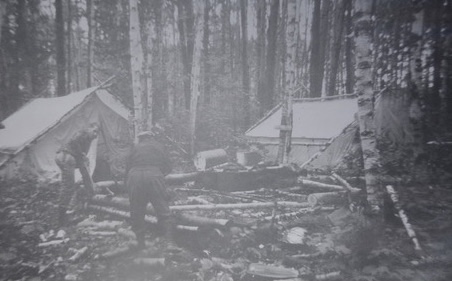
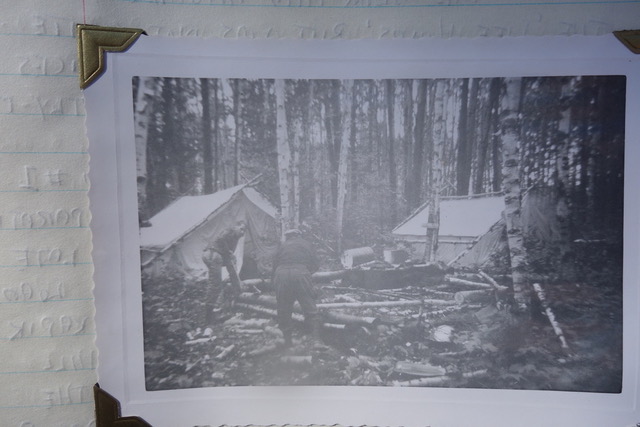
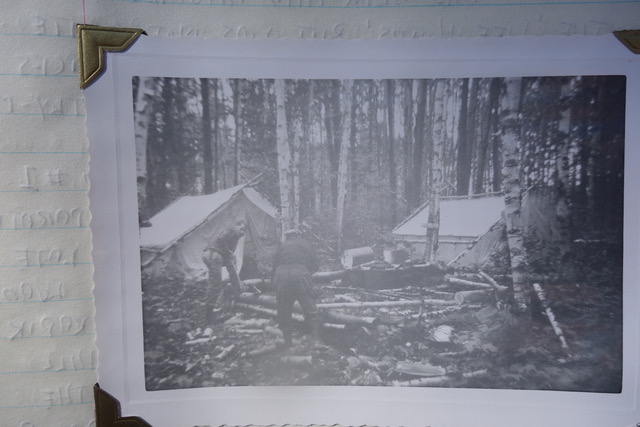
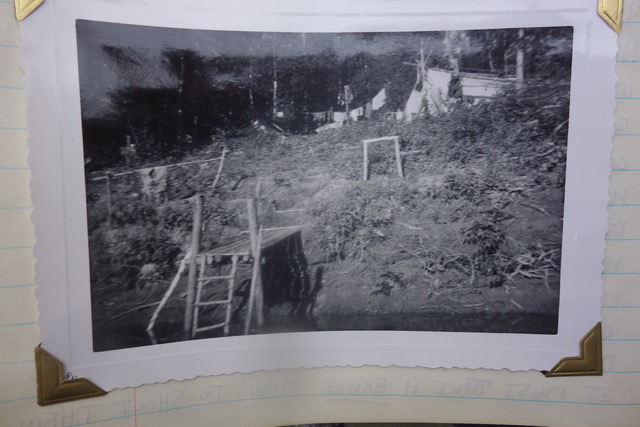
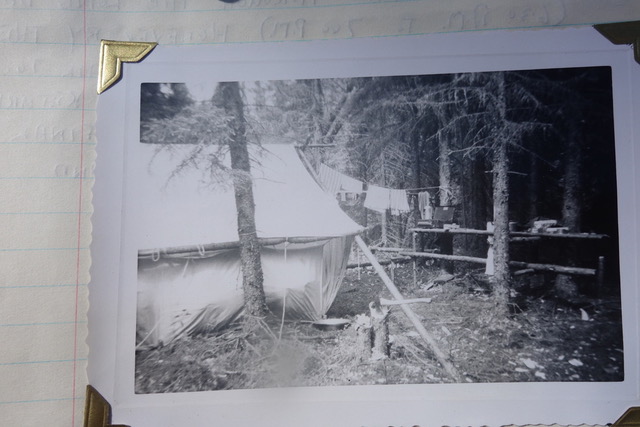
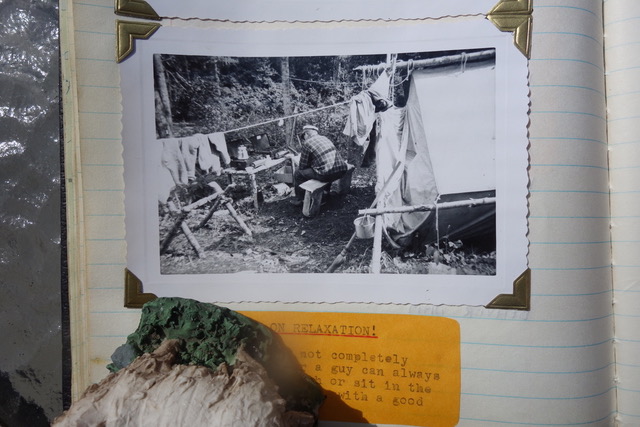
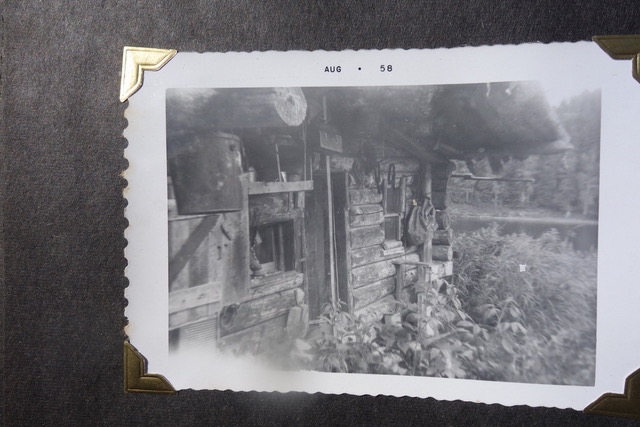
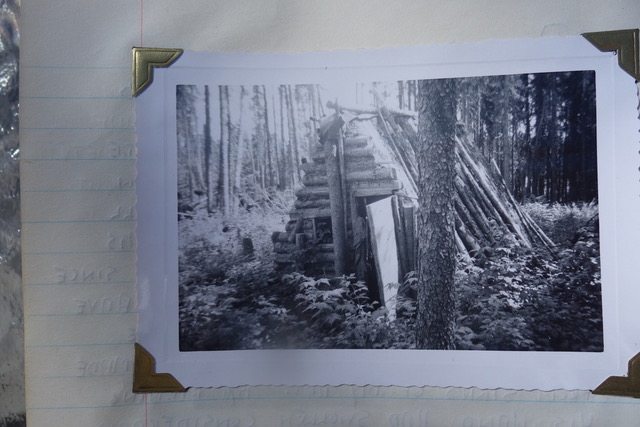
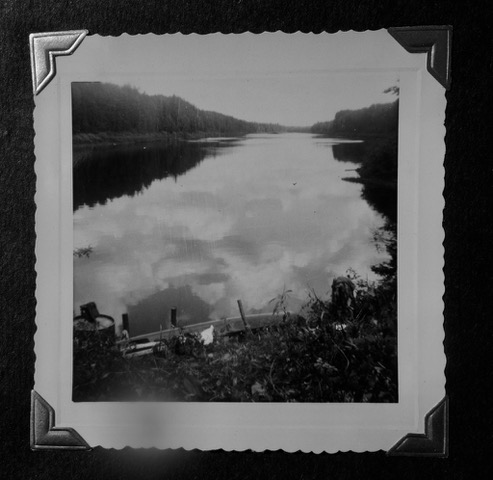
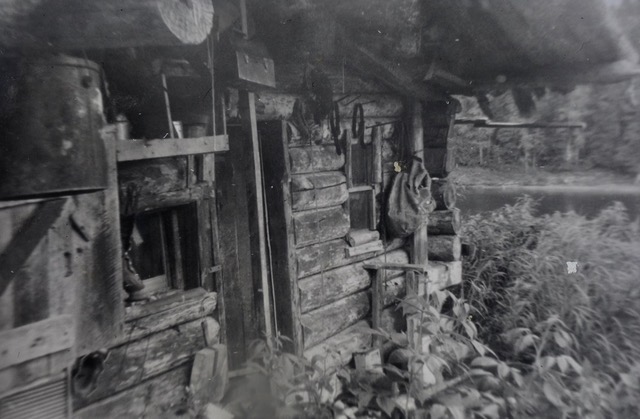
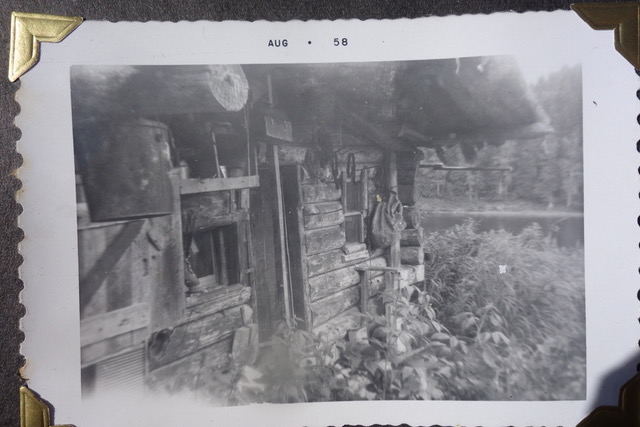
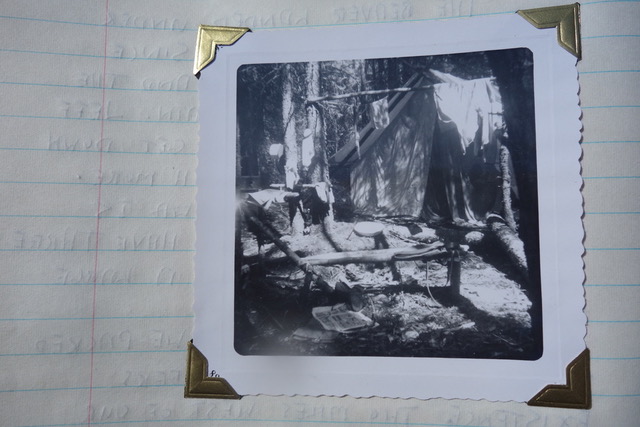
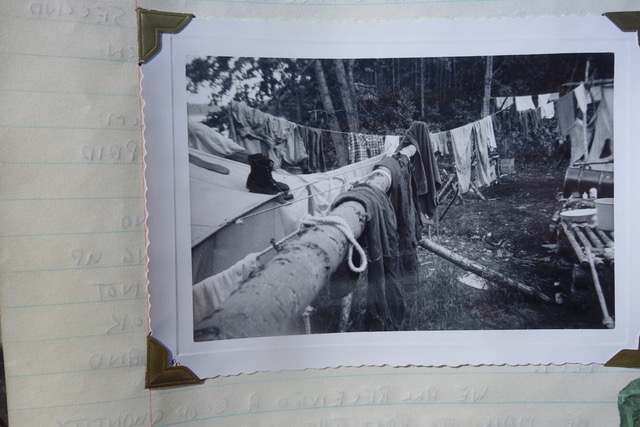
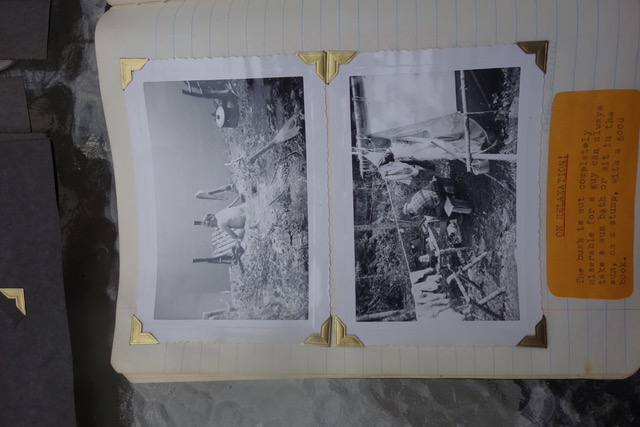
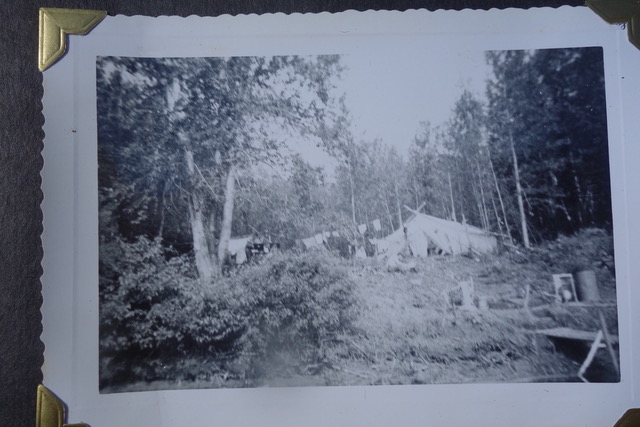
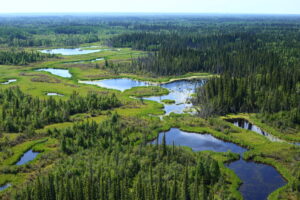
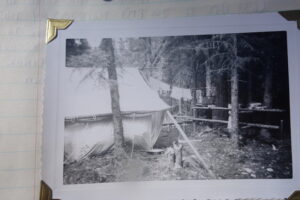
Our Kapik Lake Campsite
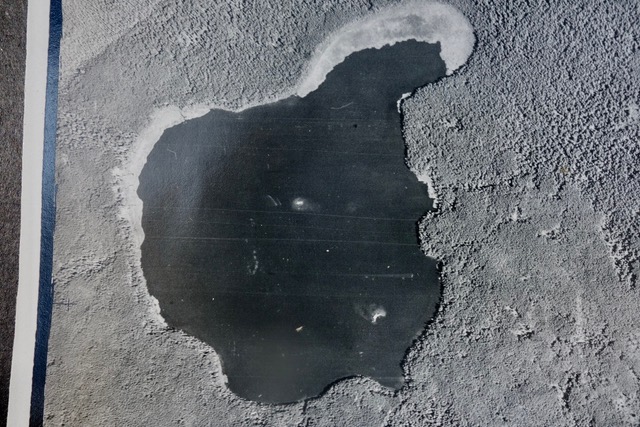
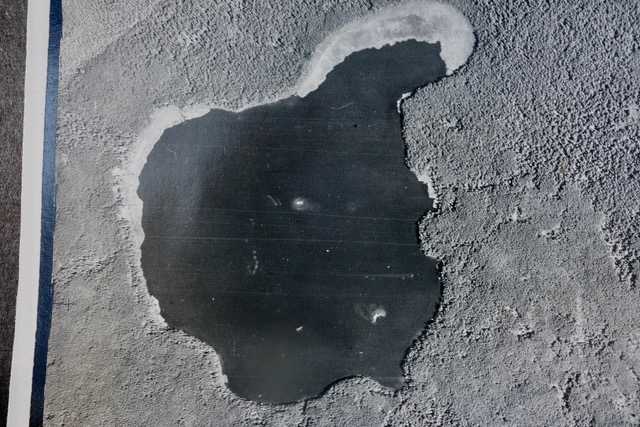
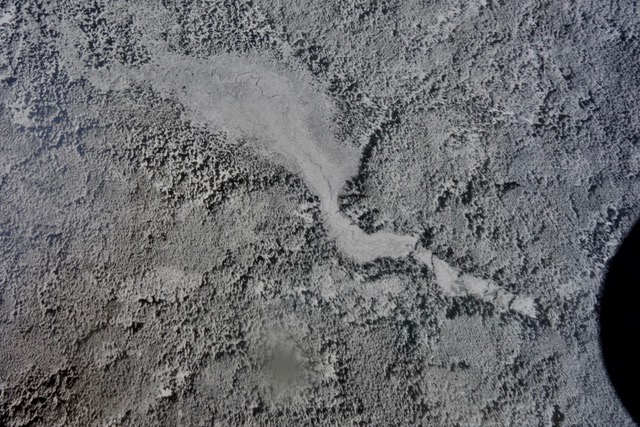
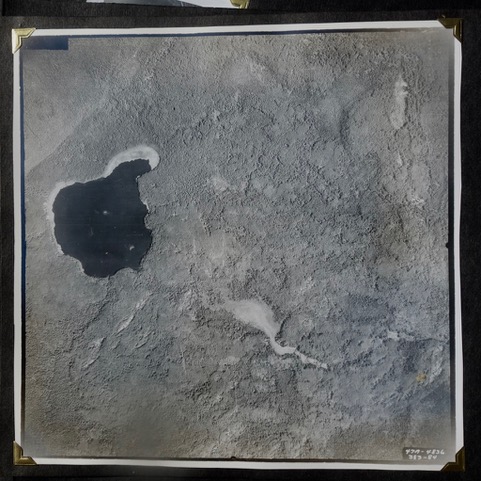
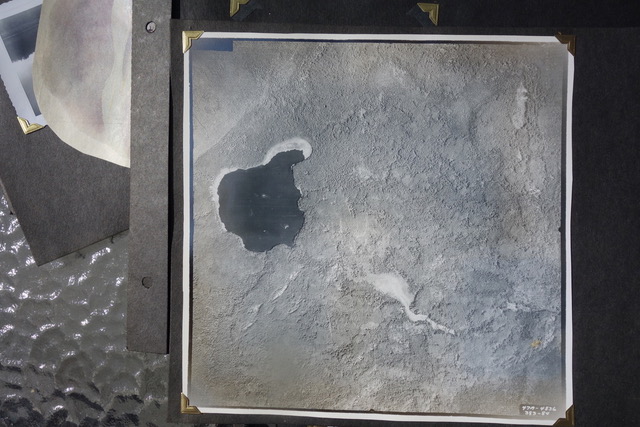
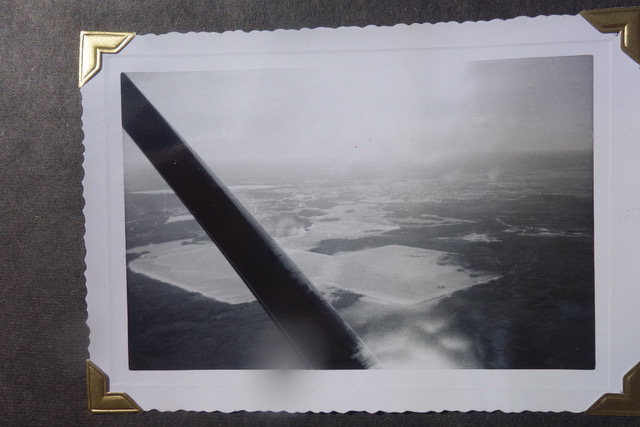
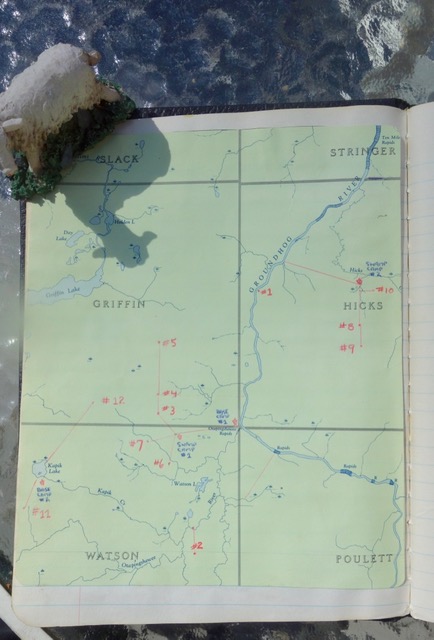
Kapik Lake aerial photo taken by Huntec Canso aircraft
Walt put the tea bags in with our pork and beans tonight which gave us all a good laugh. Then Walt asked “Do you want to
to know how to speak Eskimo?” and proceeded to teach us the language which I think he made up as he went along. Then again
he did work as a diamond driller at Rankin Inlet.
August 29, 1958
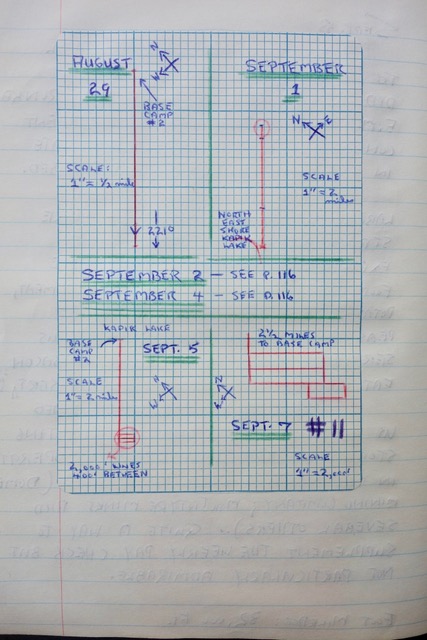
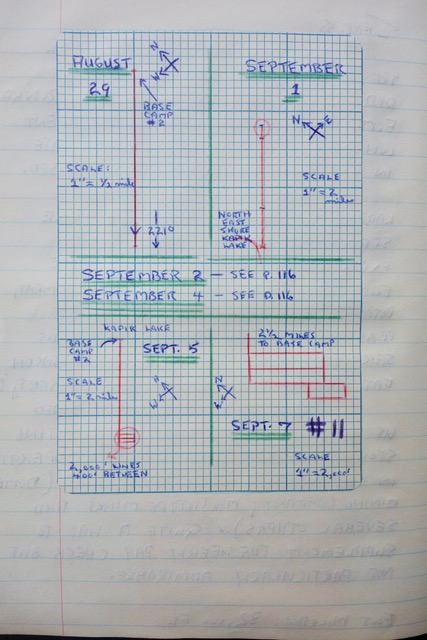
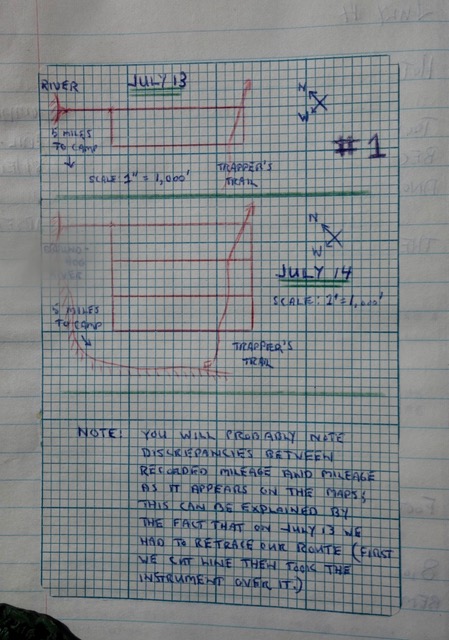
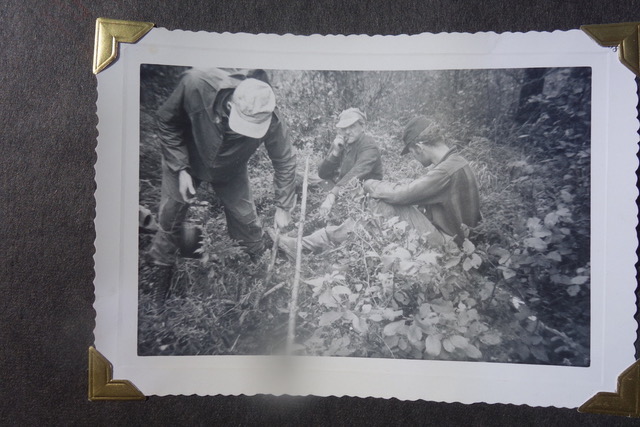
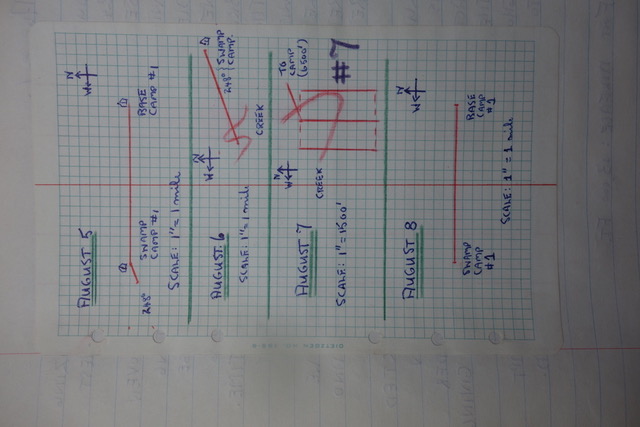
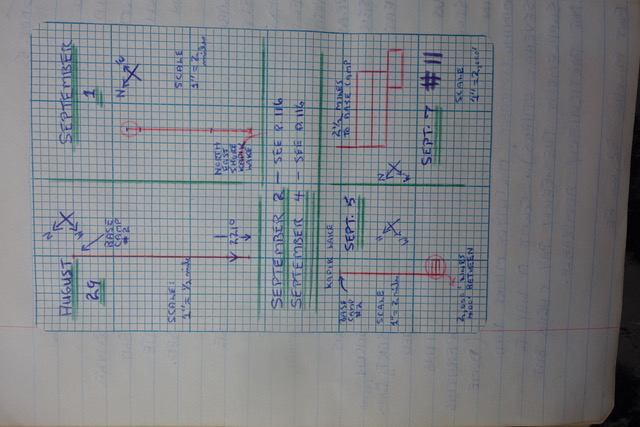
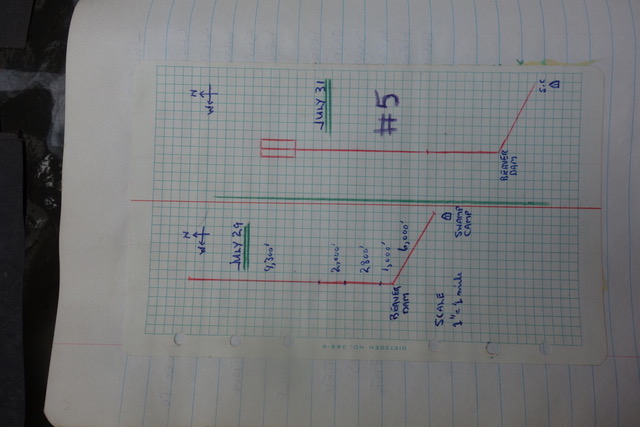
Walt and I cut line south 221 degrees. Easy work this time because the big trees shaded out the brush. What a luxury…we could slap our
axes on one side of a big poplar then the other and move by easy line of sight. Summer was over suddenly and the trees were changing colour
The bush forest was becoming a land of red and gold. The down side of this season change was the arrival of cold weather. All summer
we had been complaining about the hot sweaty days. Now we complained about the cold.
Distance covered 12,000 feet (easy day)
August 30, 1958
Rain again. Spent most of the day in our sleeping bags. I planned my short term future. University bound. Thoughts of the University of Toronto made
me very nervous. Dad was a tire builder and mom was a seamstress. Most my other relatives were farmers. So the prospect of a university education
was novel and made me nervous not that I told anyone. My good friends Russ and Jim would be doing the same thing and were probably nervous as well.
Money made on this job would pay my first year fees of $400.
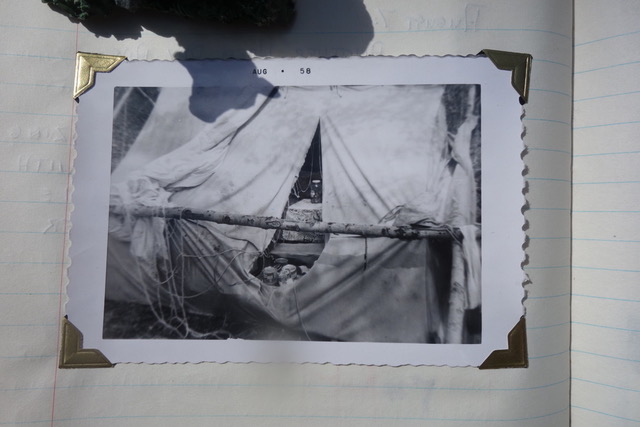
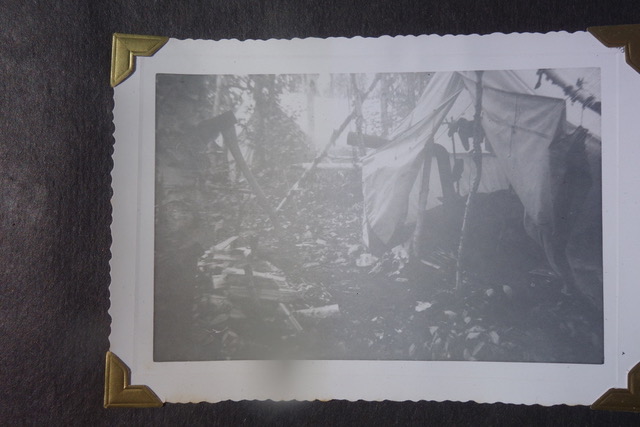
Our radio weather report warned of heavy frost tonight so we started to assemble our new air-tite wood stove. The hole in the tent left by the bear was the exit
point for the stovepipe. The big birch trees in this climax forests means we have lots of excellent firewood that splits with ease. Comfort! And the smell
of the wood stove is like the best perfume imaginable.
The only bad news today was that our fresh meat had already gone bad. It would not pass the nose test.
September 1, 1958
Cold … really cold all day. Just above freezing which meant the raindrops on the forest leaves were like little ice daggers penetrating our clothes.We
spent the day extending Bob And Mack’s trail to the northern anomaly.
Distance covered 33,000 feet
September 2, 1958
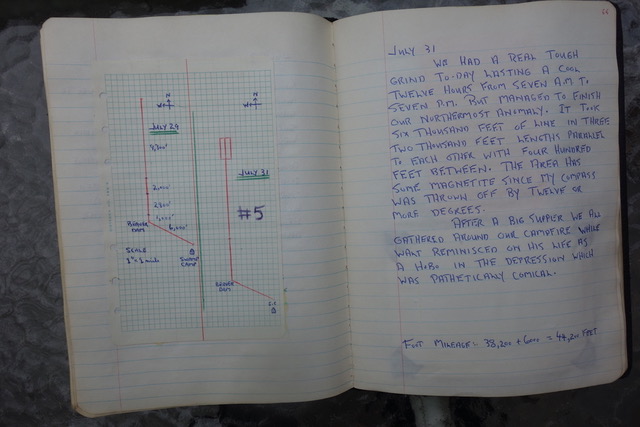
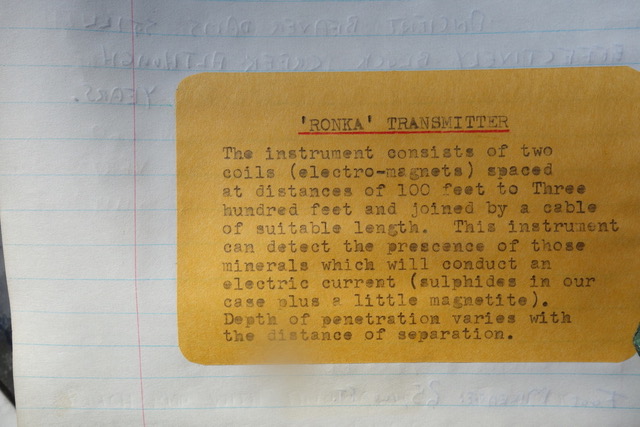
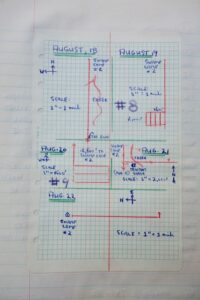
Another long hard 12 hour day. We finished blazing our trail to where we figured the anomaly was located then did the survey with the Ronka and magnetometer.
My gum rubber boots have holes big enough for my socks to poke through which means I am working every day in wet feet. Each night we pull off our boots
and peel down the wet socks then massage our feet. Bad feet would mean no work.
Distance covered” 37,000 feet (about 7 miles)
September 3, 1958
Another brute of a storm night and day. The tent is billowing in the wind like a great hot air balloon.
September 4, 1958
Bob and I finished the north anomaly with both the Ronka EM unit and the magnetometer.
In the evening Walt and I stalked a crane in the shallows of Kapik Lake then stayed out on the lake to watch the sun set. Magnificent.
Distance covered 33,000 feet
September 5, 1958
We finished cutting trail to south anomaly ten did reconnaissance survey with the Ronka EM unit and the magnetometer. No conductor
was discovered or confirmed.
Well, we are in food trouble. All our staple foods have been consumed…bread, meat, potatoes, fruit and butter. So we have to make do with
what we can concoct which tonight constituted a can of peas and carrots, big pile of rice topped with bacon fat gravy and followed by cookies
for dessert.
Mack and Walt really entertained us with fascinating stories of the ‘high graders’ operating in the Timmins gold mines…Dome Ming Company and MacIntyre Mines, etc.
Distance covered 32,000 feet
September 6, 1958
Stayed awake all night as lightning flashes and thunder made sleep difficult. Very dramatic. We kept the wood fire burning most of the night and as a result
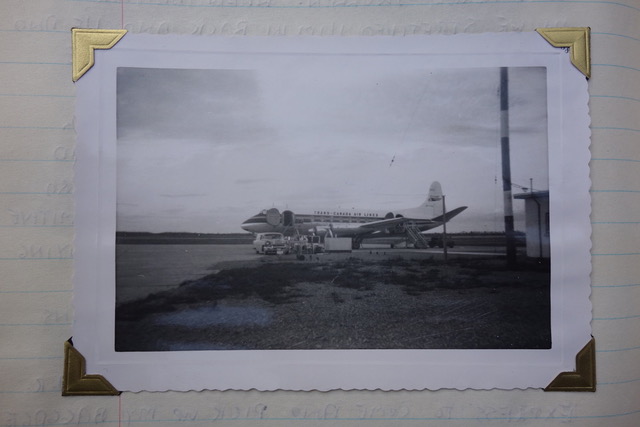
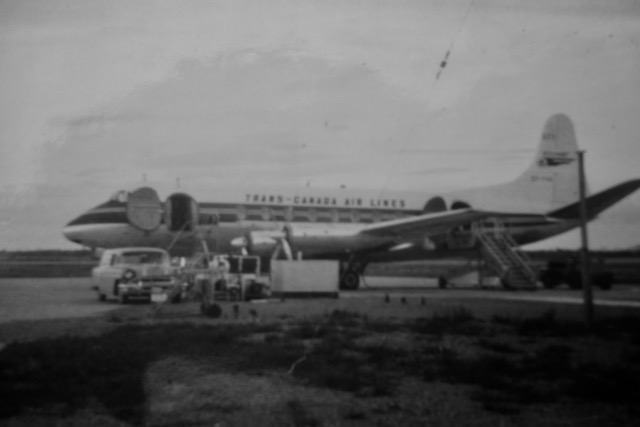
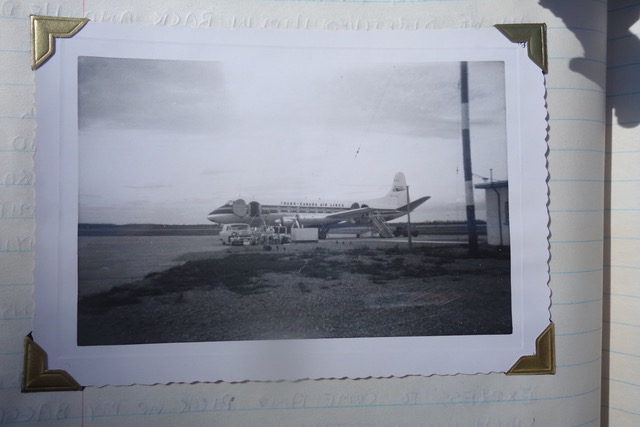
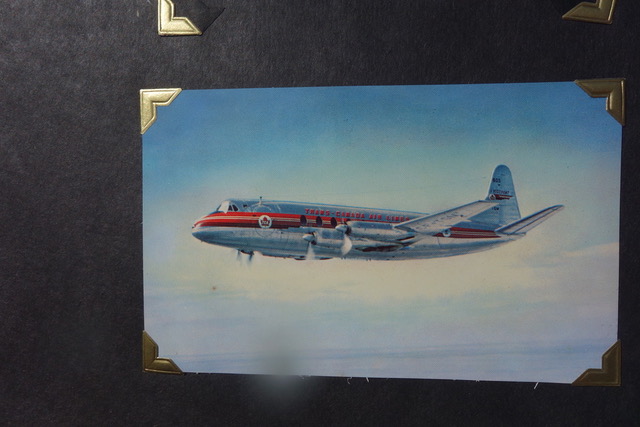
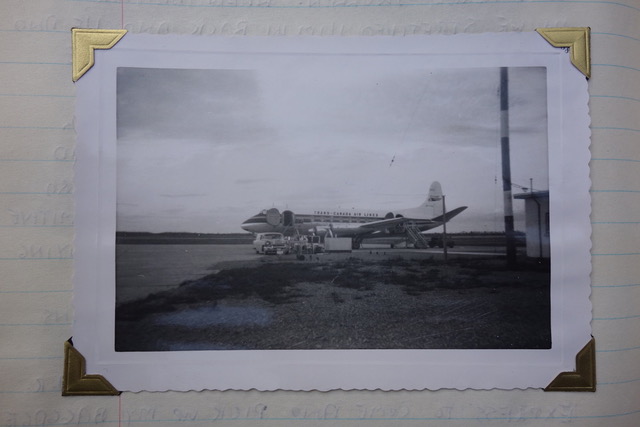
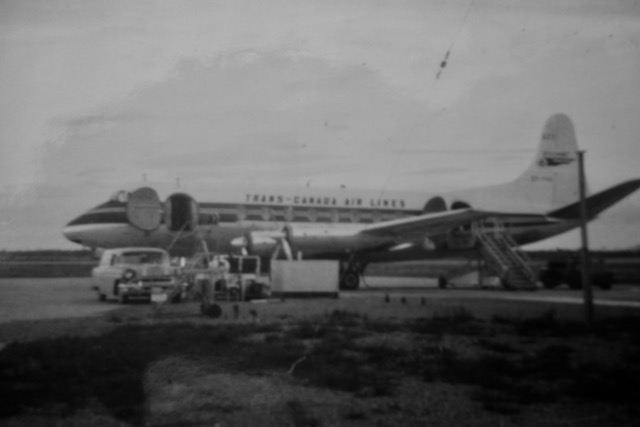
felt really cosy in our tent. In the morning I began packing my rucksack for the job is nearly over. Trans Canada Airline has Viscount air service to Toronto which
sounds exciting. This was my last day as cook so I made a large stew of whatever odds and ends I could find including the bacon rind on our slab of pork
sowbelly. Not such a bad dinner. To give it a little more body I slipped in a cupful of rolled oats. Inventive.
September 7, 1958
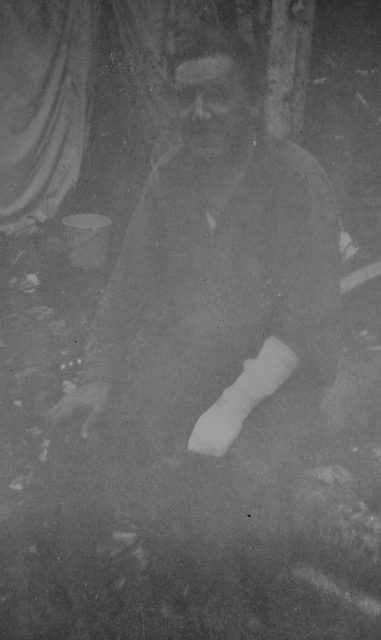
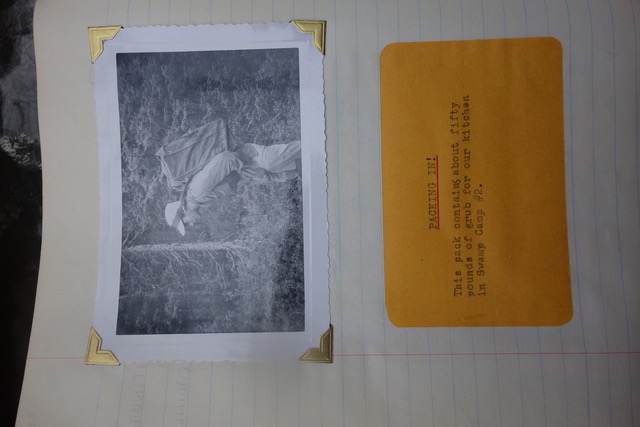
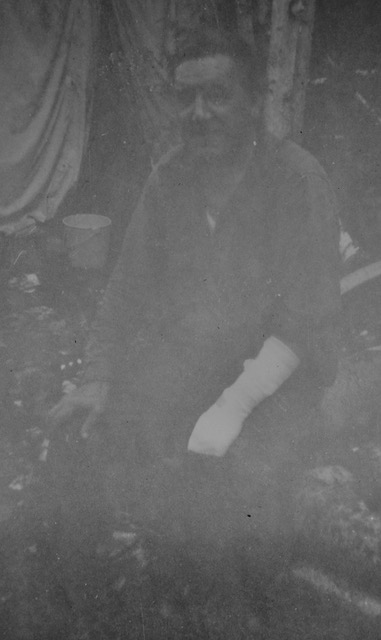
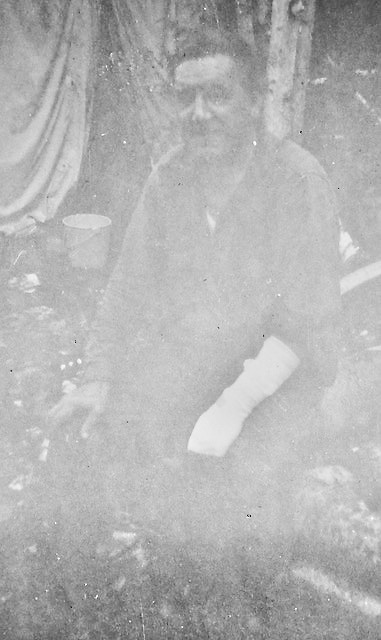
Tragedy struck today when we came upon Walter Helstein unconscious on the trail with an alder spike driven through his hand. We think he was
lying there for an hour or two with this very serious wound. We revived him and helped him get back to our campsite where the wound was
washed and bandaged. Walter took some sulpha pills to numb the pain. Not sure if that works. Pain is severe. We were afraid this would happen
for Walter had a habit of stepping on moss covered windfalls rather than stepping over them. Slippery rotten windfalls are dangerous.
Walter has been with us for the whole summer which surprised us all for he seemed too old and too out of shape for the kind of work we were
doing. But Walt persisted and turned out to be a joy to work with. He is 40 years older than me yet we worked as a team blazing trails that
criss crossed some very nasty parts of this wilderness. We radioed for an SOS service but failed to make contact. Weather is bad with
heavy cloud cover.
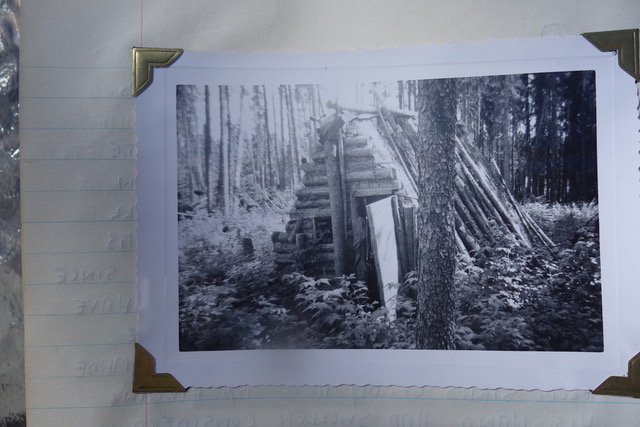
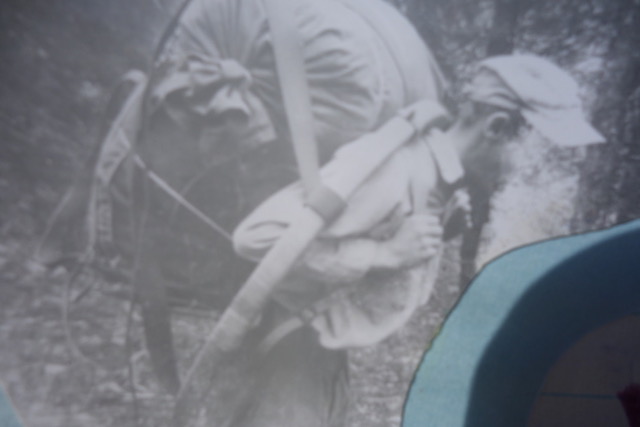
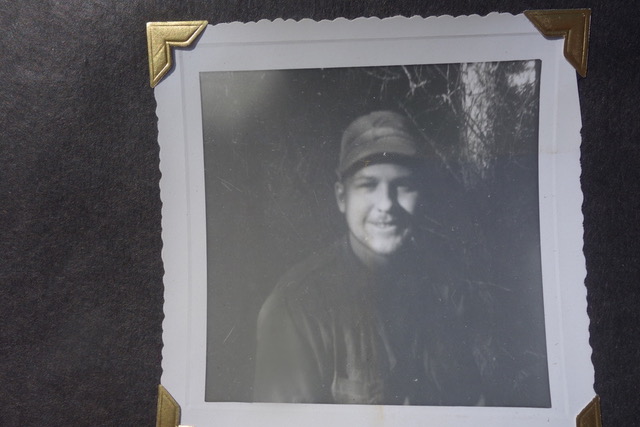
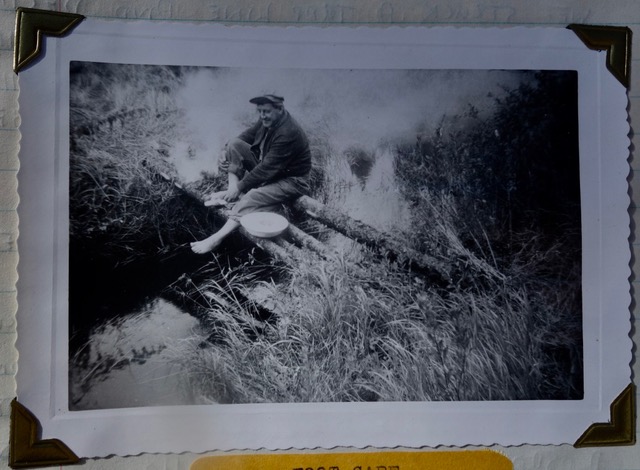
A terrible picture but maybe that makes it more authentic. Walter was badly hurt.
We left Walter in the tent for the day and set out to find our last underground conductor. We failed to find it.
Distance covered 34,000 feet
September 8, 1958
Walt was in severe pain all night. Moaning. By morning his hand was swollen and red fingers of infection were apparent. When the Beaver arrived Walt and
I boarded. Walt was stretched out in the back. Both of us were finished. As soon as we landed at South Porcupine Walter was taxied to the Timmins hospital.
Sad. I doubted we would ever see each other again and wanted to say how much I had enjoyed working with him. There was not time for farewell though.
The taxi was waiting as soon as we got tied to the dock. I could see the pain in Walter’s face as he waved good bye.
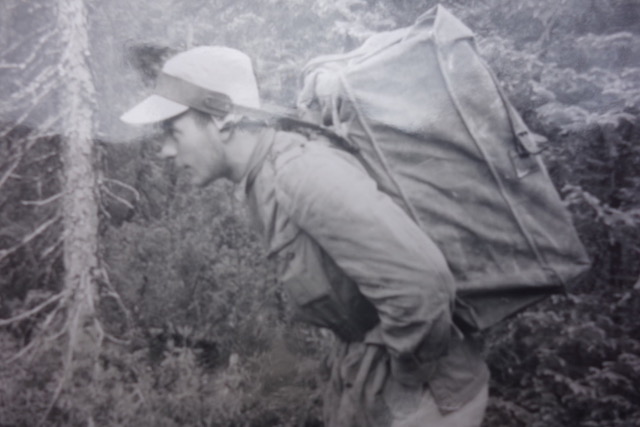
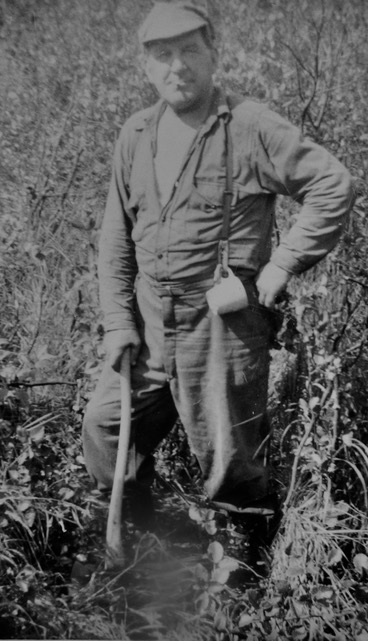
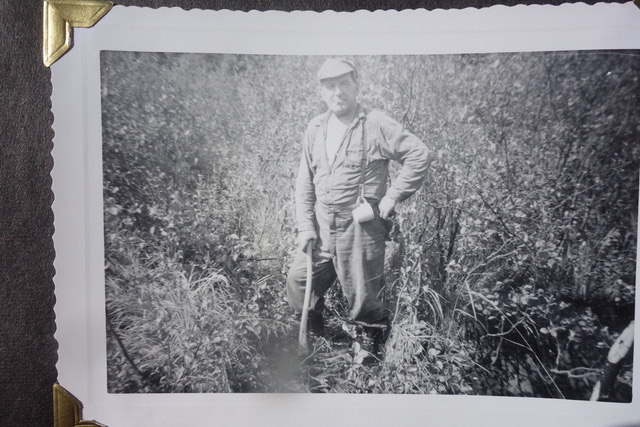
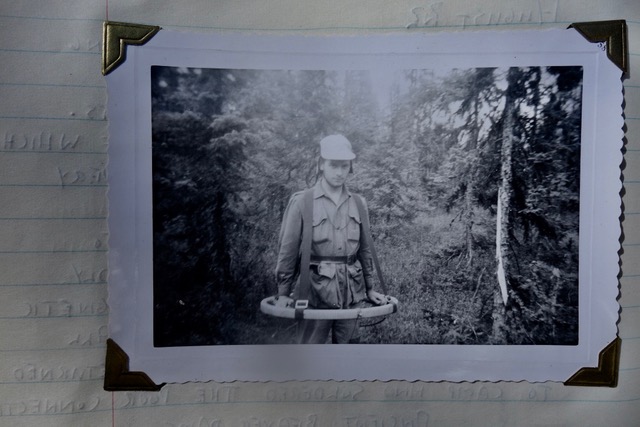
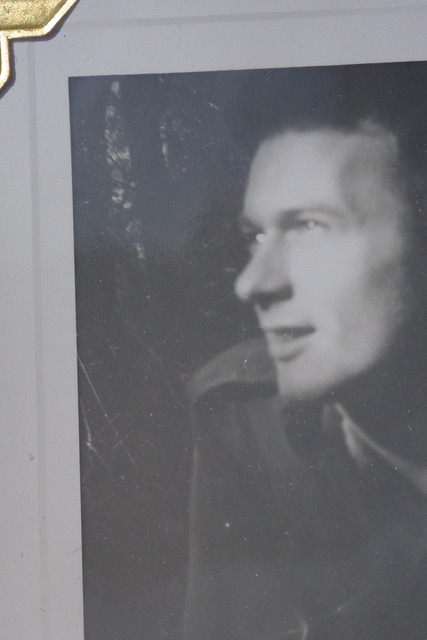
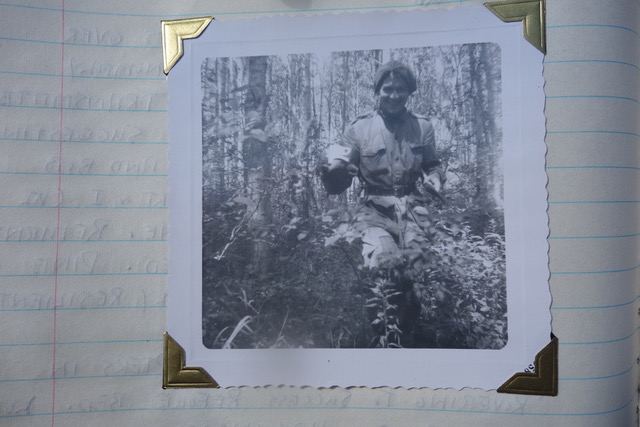
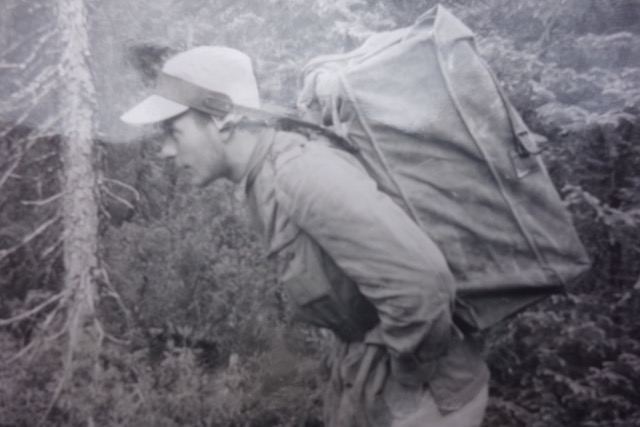
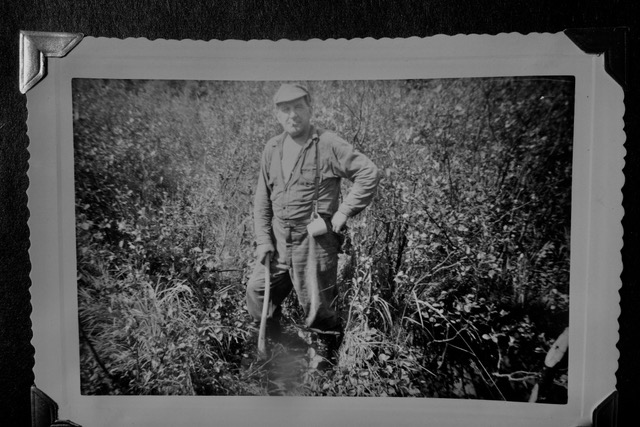
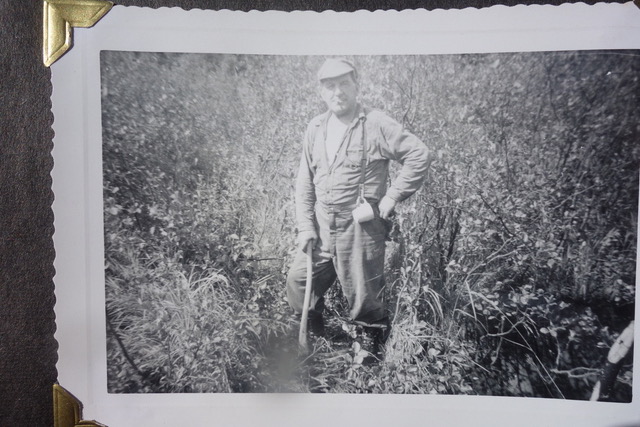
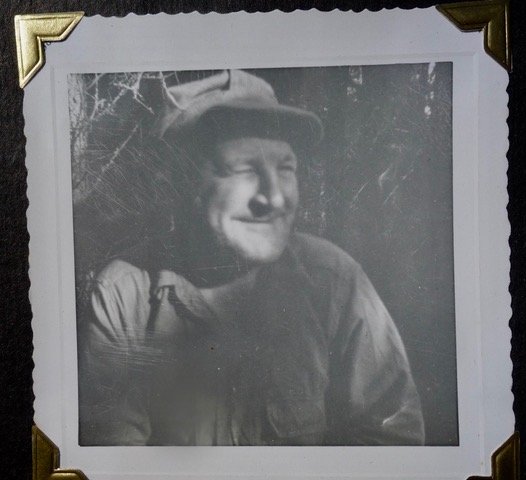
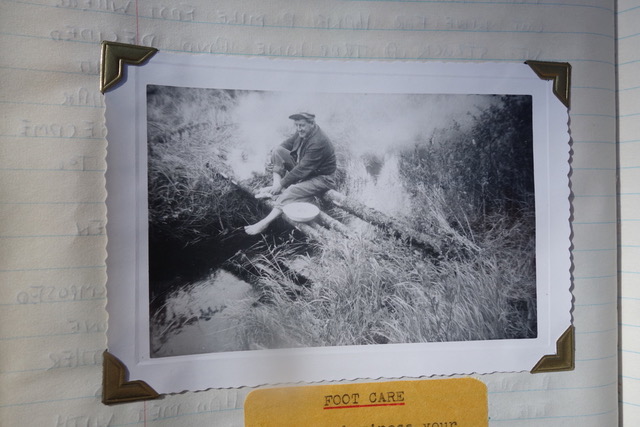
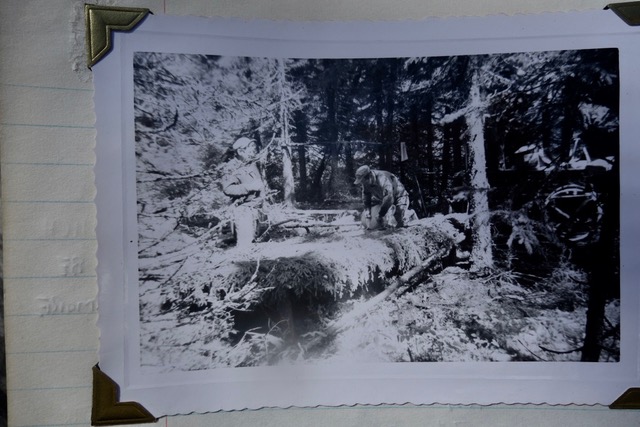
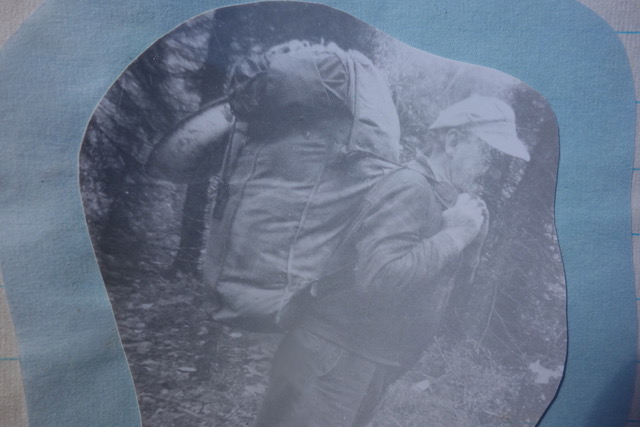
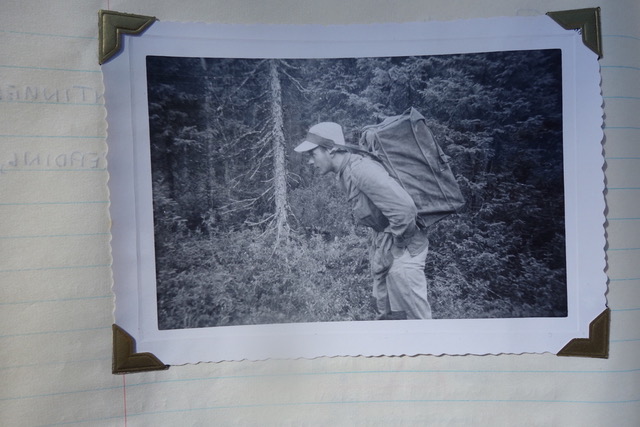
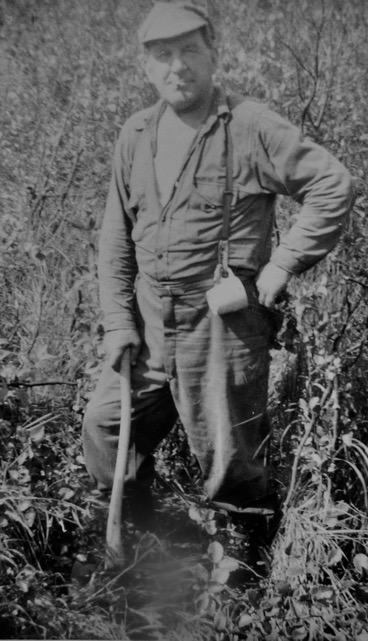
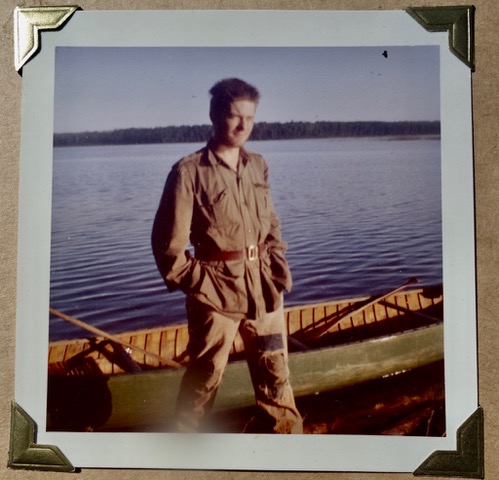
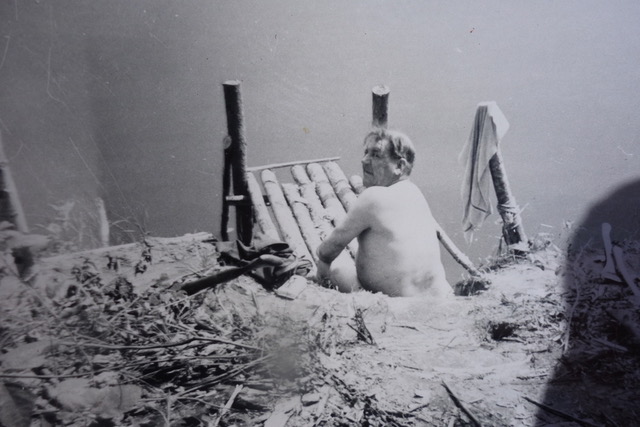
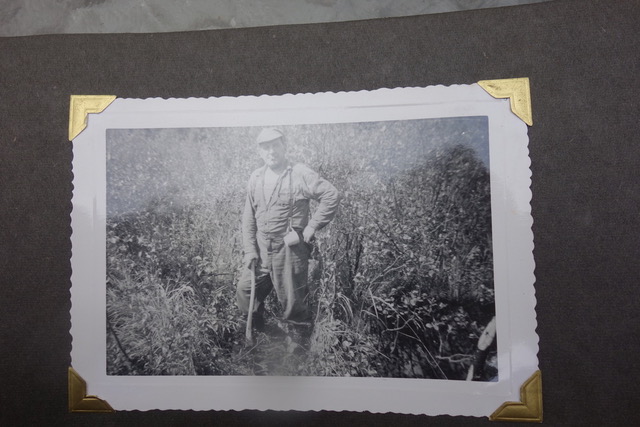
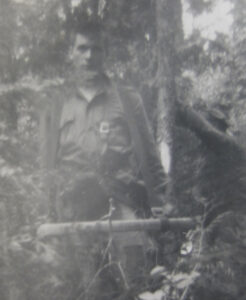
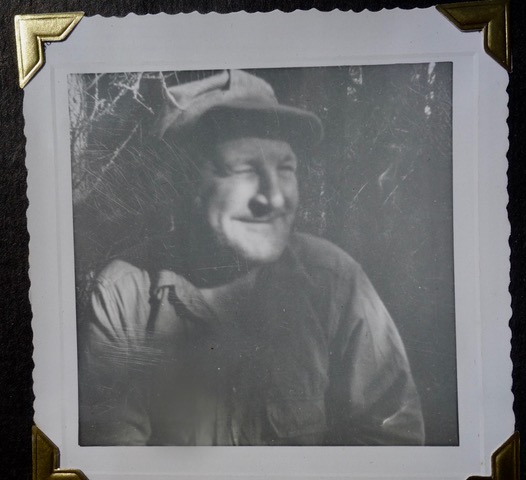
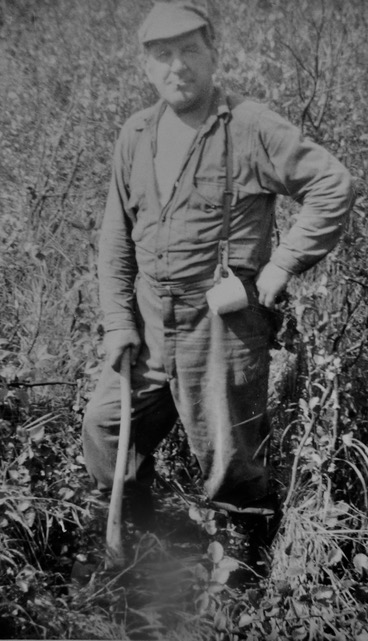
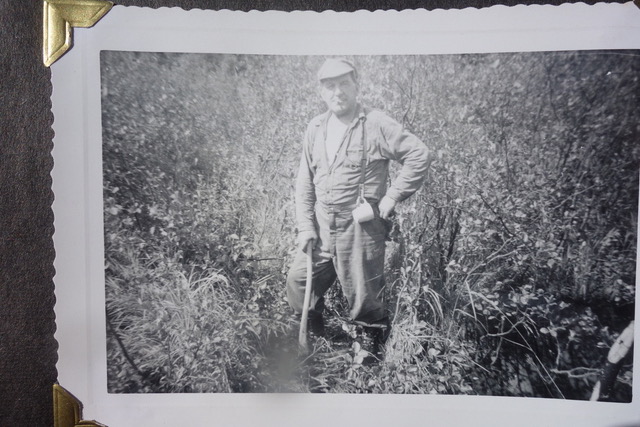
There are some people that are unforgettable. Walter Helstein is one such person. We worked together in one of the toughest jobs I have ever had and this picture of Walter will give you some idea of what
that job was like. Look Closely Walter is standing in water…over his boot tops. His blazing axe in his hand and his tea cup tied to his braces with the stub of a cigarette in his mouth. Much of our summer was
spent in such conditions. After his tragic accident I never saw him again but heard that he spent 8 months in the hospital.
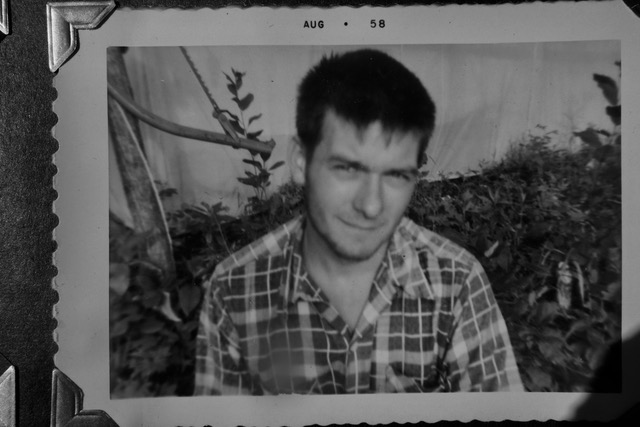
Although this picture does not look like I was enjoying myself. And much of the time i was not. But actually I was quite proud of myself.
I had survived and done my job faithfully with just two temper tantrums when the job got unbearable. Walter never threw a tantrum but
instead laughed at me along with Floyd and Bob. Actually I came to love the job…to love the battle with nature…too find I could survive
in the worst of conditions. My success in this job led to another six years working for Hunting Technical and Exploration Services.
In retrospect the jobs were a great privilege…something that few human beings will ever experience.
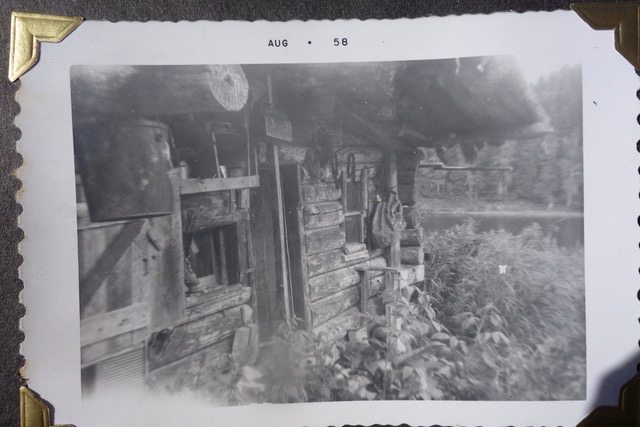
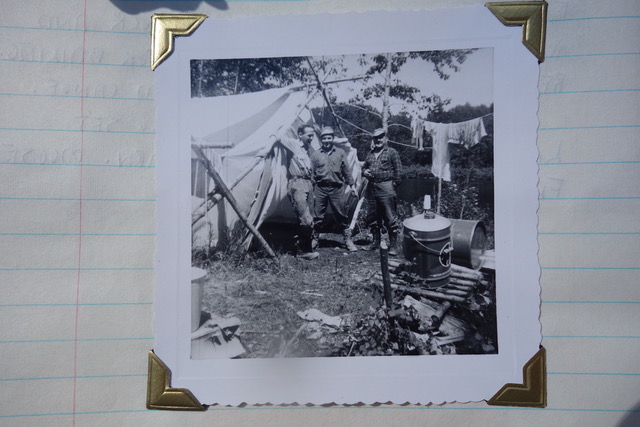
Our Kapik Lake camp…by this time I had fallen in love with the job complete with the trials, loneliness, failures, successes and
even the Spartan food. There is a term for that condition…”Bushed” I remember as if it was yesterday as the plane circled the
lake coming to get us out. That circling meant the end of the adventure. But I did not want it to end. Such an experience could
never be replicated. Maybe we should just send Walter out. He needed help urgently. Maybe the rest of us could continue
searching for anomalies until freeze up. Thoughts only. I knew it was over. No more carving trails to places where human feet ha
never trod before. No more comradery around a night campfire with stories, obscenities, laugher. No more contact with any of
the crew ever again except for Floyd Faulkner who next summer insisted on calling me by the affectionate term , Fucking Al.
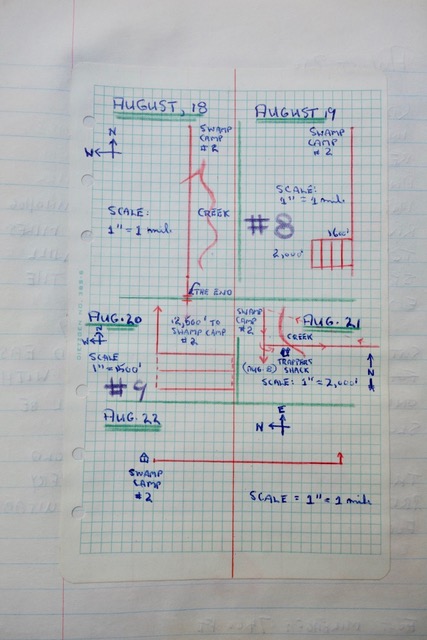
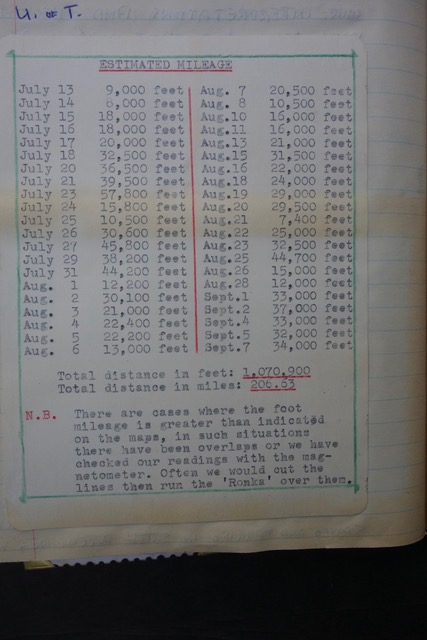
By the end of the summer Walter and I had walked and blazed 206.3 miles on our own
trails through the bush. That is almost the distance from Toronto to North Bay. Hard to
believe? Even today, March 27, 2019, I find it hard to believe myself.
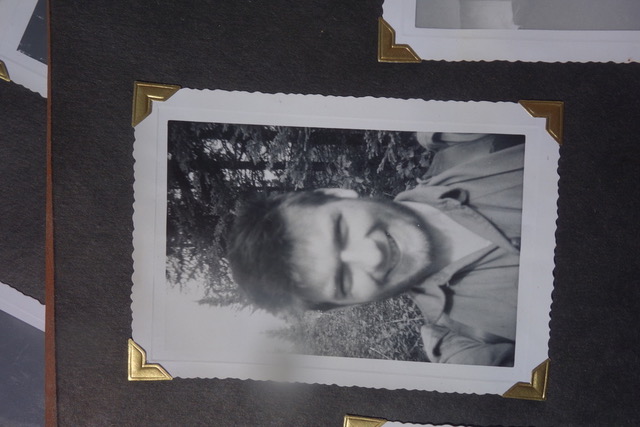
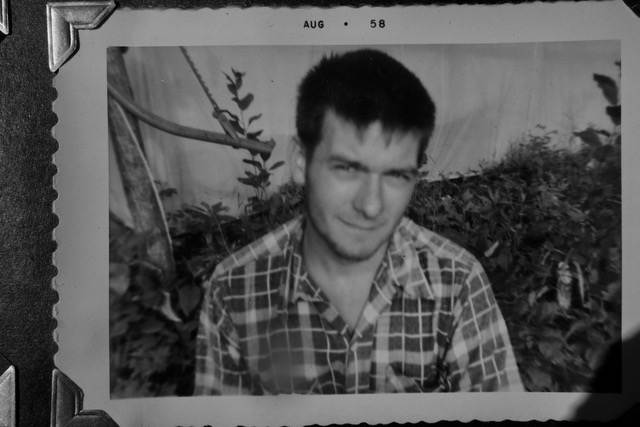
The clerk in the Airport Hotel hesitated when I asked for a room for the day only. Little wonder…two months growth of hair and beard, pants
patched with Canvas, Gum rubbers with my socks poking through holes and a packsack that looked like I had been living rough for a long time (which’
is true come to think of it.) Had my first real bath of he summer and then called Timmins airport to reserve a flight this evening. Next was a little
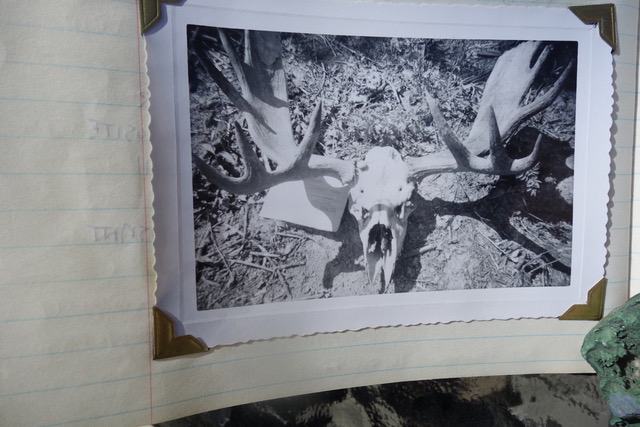
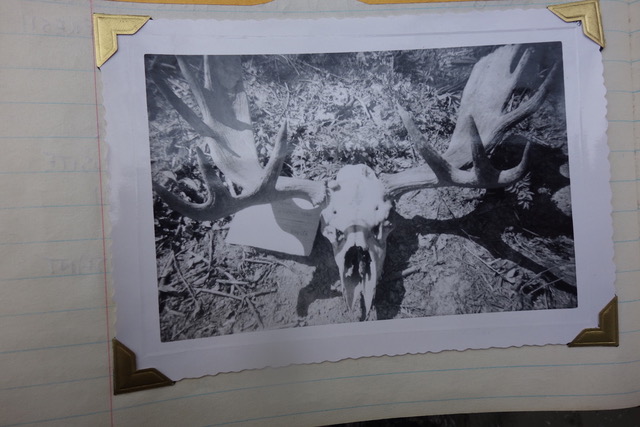
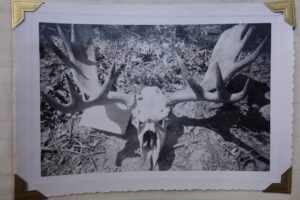
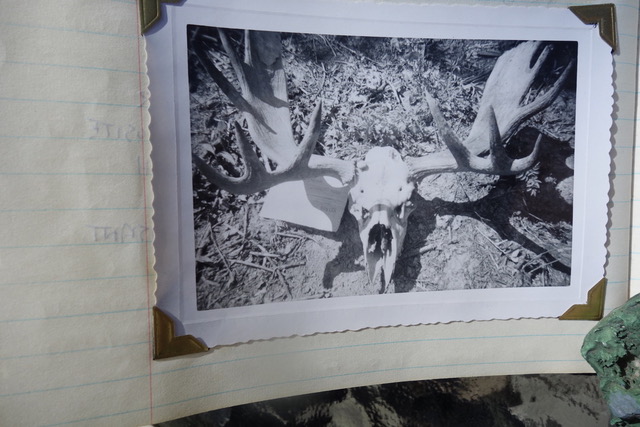
tricky. I asked CN Express to ship my baggage back to Toronto. Why Tricky? Because a big part of the baggage was the skull and antlers
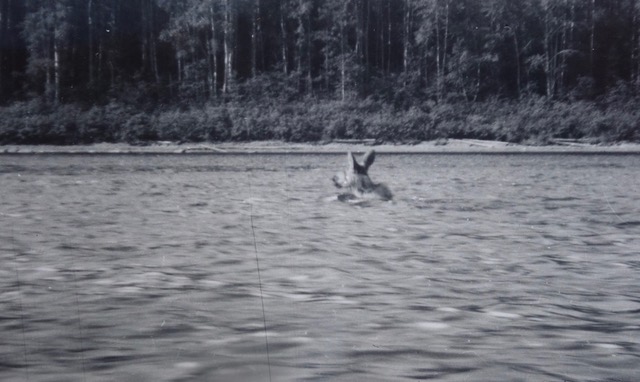
of that bull moose we found on the bank of the Groundhog River. Phoned home…mom and dad surprised. “Be home tonight.”
Then got a shave, haircut and a big ice cream sundae.
Bob and Mack arrived shortly after 12 and we loaded our equipment in the Land Rover. which had been stripped of all easily detached
equipment…hub caps and spare tire. Bob drove me to Timmins Airport where I got my first restaurant meal since July. Huntec had
promised to cover room and board for the duration of my employment with them. No luxury involved, that’s for sure.
I boarded the Viscount just as the sun was beginning to set on the western horizon. “Would you like a Peak Freen biscuit and glass
of lemonade, sir?” Wow! This was going to be a great flight. I nursed the lemonade for a long time and just nibbled at the shortbread…loving
them both. Now, decades later, I can still place myself on that Viscount rolling and lifting into the sunset.
We landed at Sudbury, then North Bay and finally Toronto about mid night. What a greeting. Russ Vanstone, Red Stevenson, Jim Romaniuk and
my brother Eric along with mom and dad. Eric had a huge hand printed sign saying “Go back, Al.” Jim Romaniuk asked about the
lonely hearts letters. “Let me have them Al, Might find a girl friend there.” “Try the girl from Florida with the pencilled note…she’s ready to
move up here if you send her the fare.” Russ drove us all home to our place where mom and dad
had prepared all kinds of food. After that I fell asleep in a real bed.
September 9, 2019
Dr Paterson phoned early in the morning. “Can you come to the office, Alan, maybe help with the results…there are things we need to know urgently.”
So everyone was gathered around the aerial photos hoping I could remember where the top anomalies were located. I am not sure how much
help I could provide. “McIntyre Mines want to know right away.” That comment reminded me that our summer living rough was really a big secret.
I really could not spot all the anomalies where we got high readings but did the best I could. Dr. Paterson was very serious and professional…a bit
intimidating. I am not sure that he knew my job had been swinging a blazing axe most of the summer. I certainly did not say that. I did put a word
in for Walter Helstein hoping that the company would help out or totally pay his medical bills. Not sure what happened to Walter but heard by
the grapevine that he never fully recovered.
There was one
nice outcome of that last meeting. Dr. Paterson looked me in the eye and said, “How would you like a job next summers an operator-Technician on
a job we have lined up in Alaska?”
Now after reading this account, would how would you have answered Dr. Paterson?
my answer was short and simple. “Count me in.”
What about the BUSHMAN’S THONG? Good question, keep reading. You may think it is some kind of underwear but that thought
is about as far from the truth as possible. Who is proud of underwear? I am very proud of my Bushman’s thong.
ALAN SKEOCH
MARCH 2019
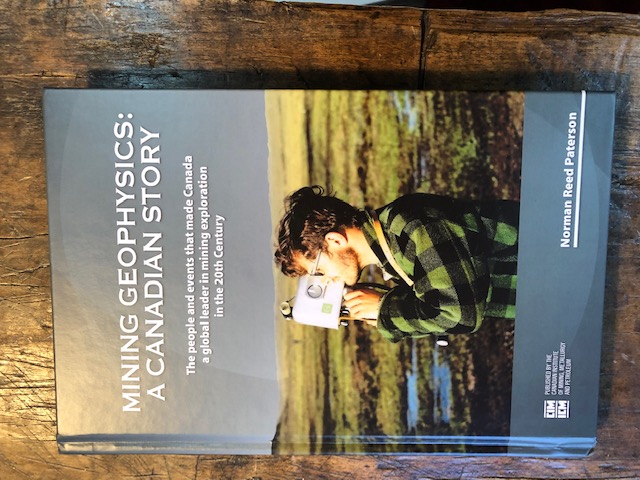
NEW BOOK: “MINING GEOPHYSICS: A CANADIAN STORY” by Dr. Norman Paterson
P.P. “From 1950 to 1960,…127 mines were discovered, of which 40 were credited to geophysics.” (P.6, Paterson)
In March 2019, just as I was transcribing my journal memories from the Groundhog River job, a book arrived in our mailbox. Dr. Norman Paterson, my boss way back in
the 1950’s and1960’s had just written a book titled “MINING GEOPHYSICS: A CANADIAN STORY…The people and events that made Canada a global leader in mining exploration
in the 20th century.” ($20 plus $12 postage, published by the Canadian Institute of Mining, Metallurgy and Petroleum, 2019) It is a wonderful record of those heady days
between 1957 and 1975 when big changes were happening in the search for orebodies within the rock mantle of our earth. Personally…I was flattered to be included here
and there in the book for I had no idea at the time that we were on the cusp of scientific breakthroughs. I was a very small part of the story. Was Dr. Paterson even aware
of the difficulties we faced translating theory into practice? Of course he was. He did lots of field work.
WHAT HAPPENED TO OUR CREW?
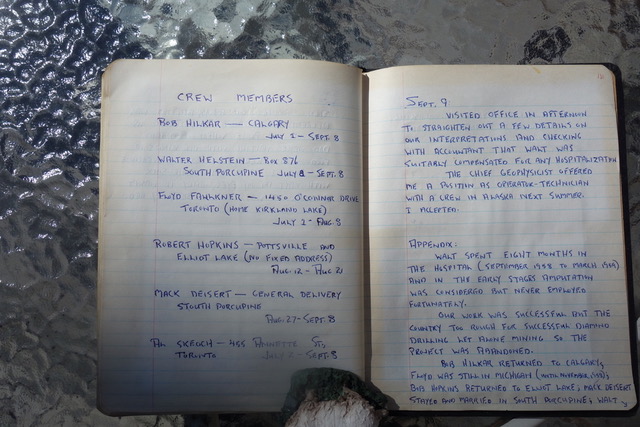
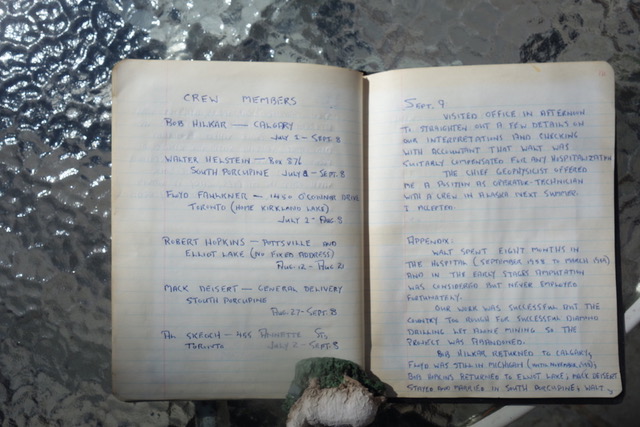
Walter Helstein spent eight months in the Timmins Hospital…from September 1958 to March 1959. At one point amputation was considered but Walt, true to form, was just
too tough to lose an arm.
Floyd Faulkner became the chief field man for Hunting Technical and Exploration Service. He retained his gruff manner behind which was a great sense of humour
Bob Hilkar returned to Calgary
Robert Hopkins returned to Elliot Lake
Mack Deisert stayed and married in South Porcupine
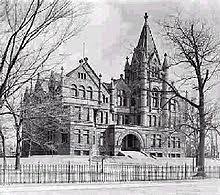
Alan Skeoch returned to Toronto as a first year student at Victoria College, University of Toronto. For the next six summers
alan worked for Dr. Paterson and his assemblage of top geophysicists. Alan became an historian with a specialty in
Economic History eventually doing an M.A. in machine design.
DID WE FIND A MINE?
Nothing happened. All those anomalies were ignored even though some of them were very promising. The client, McIntyre Mines. concluded the area was too
rough for a diamond drill crew to operate so the project was abandoned in the 1950’s and 1960’s. I am unsure of its status today in 2019.
HOW ARE MY MEMORIES DIFFERENT?
DR. Paterson tells some of the humorous things that happened in those days. My journals hopefully reveal even more of the human face of mining exploration
. Some details may make you laugh, others will make you cry. Still others will make you say ‘he must be kidding’. Truth?..it all happened.
It was a very personal Odyssey for me. A privilege really. Alaska, Ireland, New Brunswick , Timagami,
Niagara Falls, Chibougamau, Marathon, Paradise Lodge, Merritt BC, Yukon Territory…not as a tourist but as a person probing the surface of the earth and marvelling
at the characters I met.
WHY DID I KEEP SUCH A DETAILED JOURNAL?
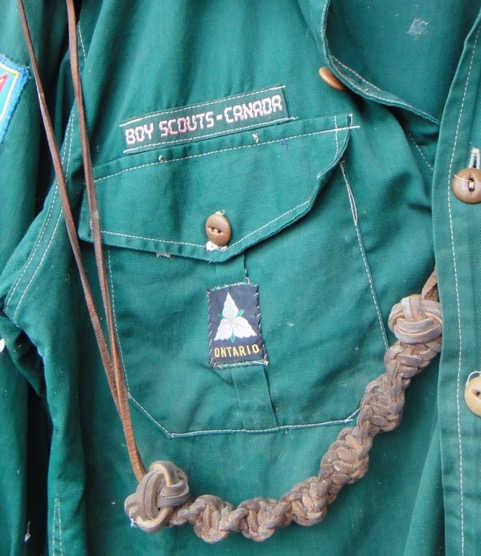
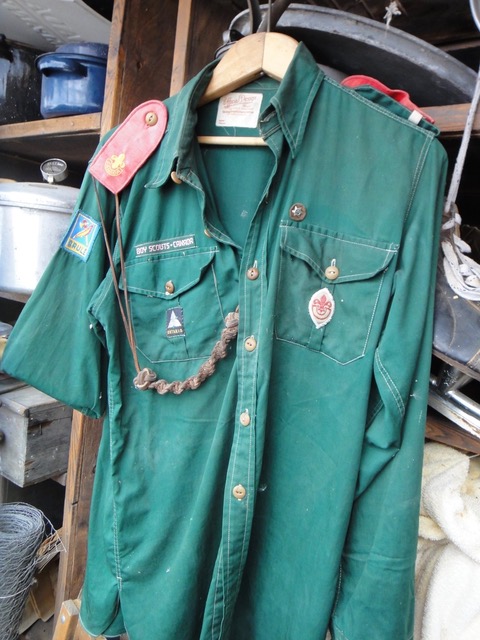
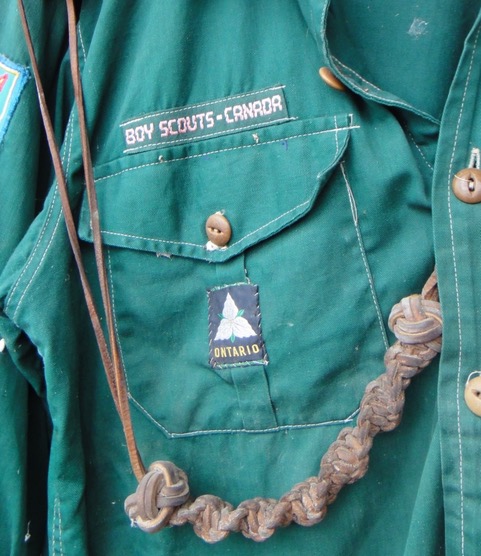
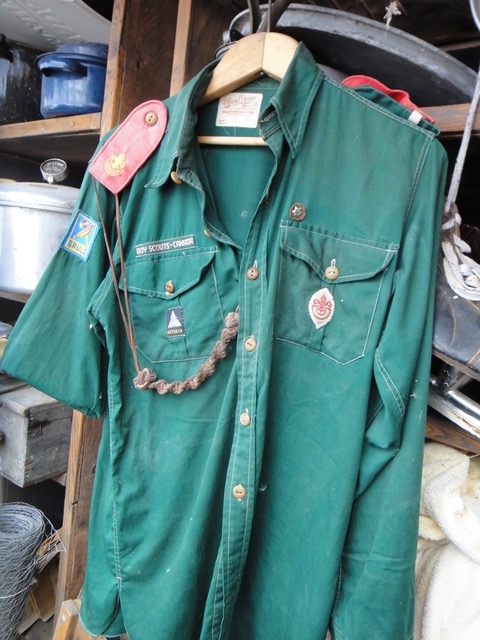
I was a Rover Scout, the senior part of the Boy Scout movement. Some Boy Scouts were and are badge collectors. There was only one badge of honour
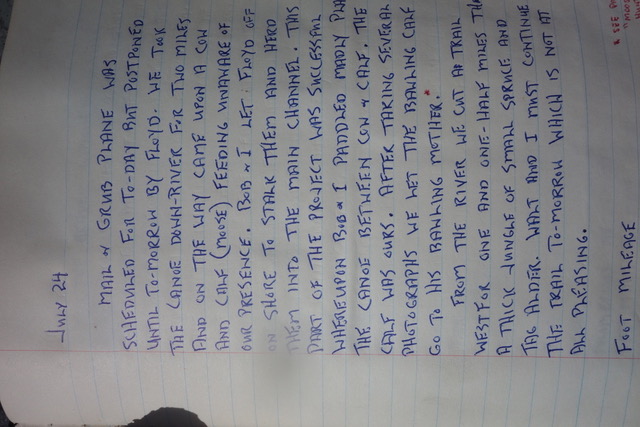
that excited me. It is called the BUSHMAN’S THONG. My journal detailing the Groundhog river job was submitted and I got my thong. I am not sure
the official readers of my application really believed everything written in my journal. There was some scepticism. But what I have written did actually happen
and my Bushman’s Thong still hangs on my old scout shirt.
 www.mining.com/wp-content/uploads/2017/12/19574967_10155257983451578_8225746921495811735_o-1-300×167.jpg 300w,