episode1.490: Learning curve 1959—Alaska with Bill Morrison and The TURAM
alan skeoch
feb. 14, 2026
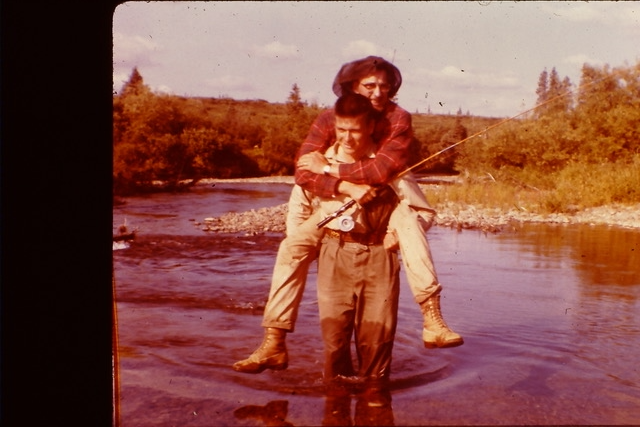
ANYTHING the boss wants, the boss gets. We had almost 24 hours of sunshine on the Alaska job in 1959
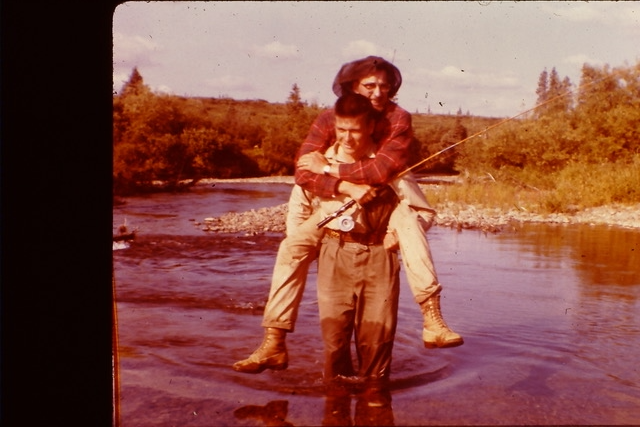
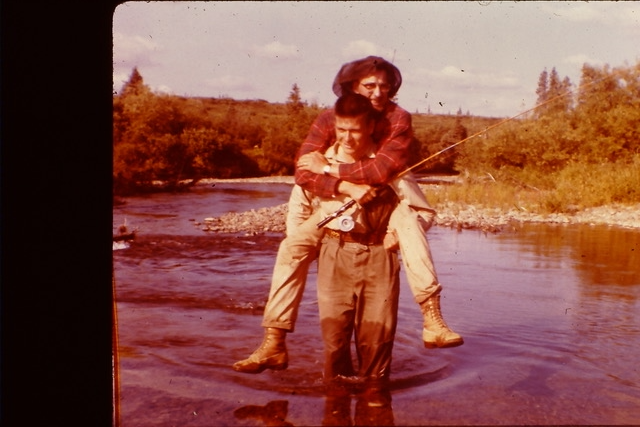
and my boss, Bill Morrison was an avid fisherman. Problem was his boots. They were leather. Mine were rubber.
So my job description included ‘beast of burden’ carrying Bill and his fishing gear most evenings.
The Alaskan river valleys were great fishing grounds. No bait necessary. The Pacific salmon fertilized eggs were strew around
the gravel river bottoms. Then their parents died and their bodies floated towards the
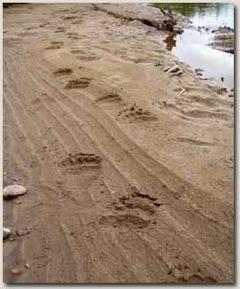
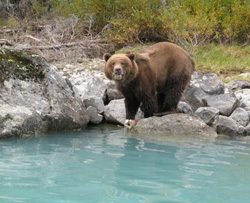
Bering sea often intercepted by Kodiak brown bears. We were not welcome but ignored the danger. Such is the nature
of fishermen like Bill. He snagged salmon with bare hooks…alive or dead…had me photograph his luck then tossed
them back in the river… Then I carried him from place place. No real danger because the bears thought we smelled bad anyway…which was true.
Why would I do that? Fortune. Bill was a good guy and he taught me how to set up and run a Turam survey. That skill
got me an American work permit and a job the following summer in Southern Ireland. Bill was tired of mining
ex[ploration. A 23 year old U. of T. student I was the only person available. Such is luck.
JOB DESCRIPTION:
Top of the list…Must be able to live among billions of biting insects (blood supply) , work 7 days a week, for $400 per month (less than $100 a day). Oh, yes
the company would provide a 30-06 scoped rifle in event of trouble from an ill defined reason. (kodiak bears) and finally
room and board which meant tent and nice dinners such as moose heart,
Transportation povoided via two S52 (Sikorsky) helicopters and a pilot who awoke us each morning with “Let’s get fucking airborne!”
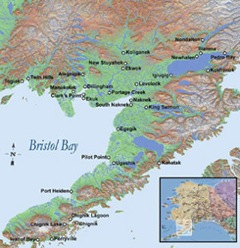
We had a semi secret base camp about 100 miles east of Dillingham where the best tourist site was a high hill
made entirely of bottles. The summer freight ship ship did not take empties.
When the survey was over the campsite was bulldozed into the river valley…tents, cook house, gas 45 gallon drums, moose bones, etc.
So I was told.
The site remains one of the largest potential copper mines on earth. When that happens you will also move on.
You do not believe me? Use your computer start with Dillingham then “copper…And a mystery word —PEBBLE.”
SETTING SCENE:
Early in June, 1958, I met Bill Morrison on a an airstrip in
Dillingham, western Alaska. He taught me how to set up and run the Turam, a sophisticated geophyhsical
instrument thtcandetect mineralized deposit of chalcopyrite and other ore bodies deep beneath
overburden of the ground.
The rivers of western Alaska were loaded with Pacific salmon in a rush drop eggs among the gravel riverbeds.
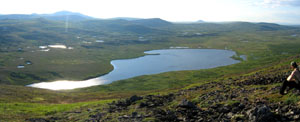
You probably noticed Bill, an avid fisherman and needed help crossing and crisscrossing the river far below our
tundra campsite. Helping Bill got me an American work permit.
…see pic below.
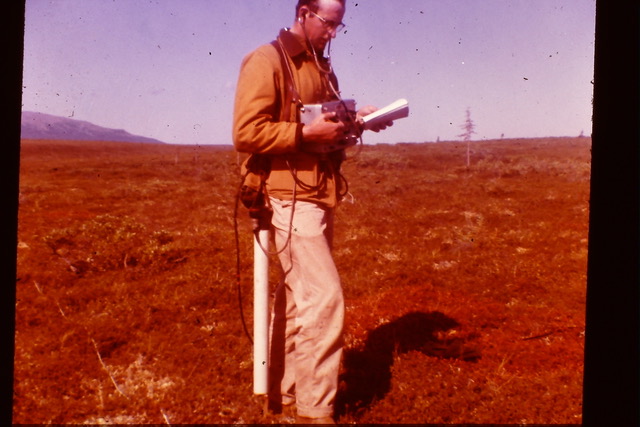
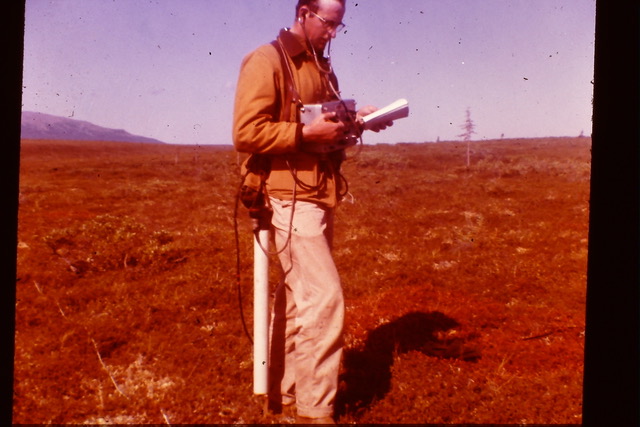
This is Bill Morrison strapped into the key parts of the Turam
metaphysical instrument…a long receiving coil hanging from his
waist…a receiving mechanism on his chest…a battery pack
on his back…not seen is the mile long grounded copper wire, grounding rods and motor generator.
Should a kodiak bear take a fancy to Bill he had no chance of escape.
With this in minder contracted, Humble spoil of Texas provided
30-06 rifles. Hw could Bill have carried a rifle as well as Turam
pieces?
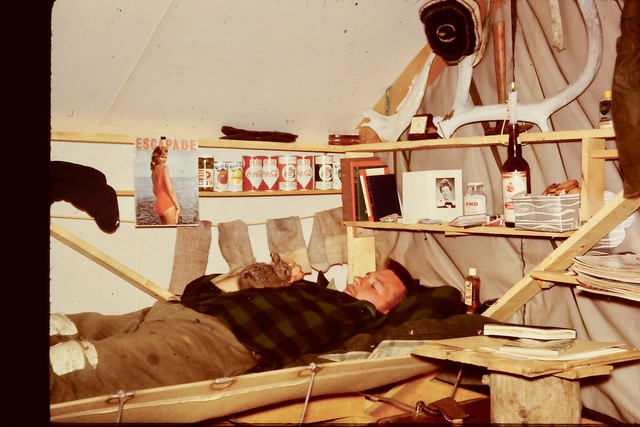
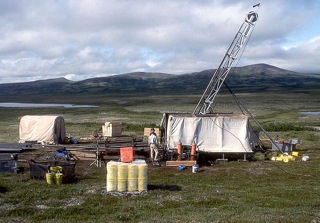
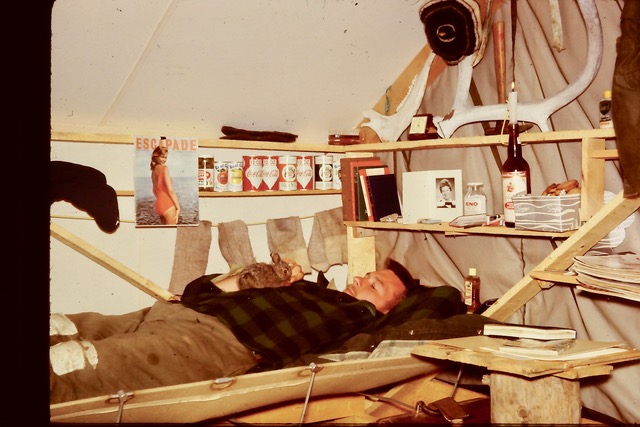
Base camp looked much like this picture which was taken of
our base camp in the Yukon in 1962. ( 3 summers later) Marjorie’s cookies are
poking out of the grey box on the right. That’s a pet rabbit n my tummy. Note repair to knees of my pants
using medical tape. In Alaska our boots were soon rubbed ragged by constant trudging through the
tundra. Water seeped in and our feet boiled … became pock marked then peeled away. Very unpleasant.
alan skeoch,
Feb. 16, 2026
The Turam method is one of the oldest geophysical electro-magnetic methods used for mineral exploration, devised by Erik Helmer Lars Hedstrom in 1937.[1] Its name is derived from Swedish “TU” (two) and “RAM” (frame), referring to the two receiving coils.
Method
An insulated cable a few hundred meters to several kilometers long is laid parallel to the geological strike direction. The cable is either grounded at both ends or laid out in a large loop, and energized at low frequencies (less than 1 kHz). Two receiving coils are moved on lines outside of and perpendicular to the long side of the loop or grounded cable and two components of the resultant field are measured. The primary field generated by the large loop or cable interacts with the soil and subsoil and with a conductive body if present which could be a mineral and creates a resultant electromagnetic field. The electromagnetic field is measured according to two values: the Field Strength Ratio and the Phase Difference occurring between the two receiving coils. It is a fixed source horizontal loop method. Separation of the two moving coils is usually from 10 to 30 metres. Using an AC bridge (also called compensator bridge), Field Strength Ratio is measured in percent and Phase Difference in degrees. In-phase (Real) and quadrature (Imaginary) values can be calculated from these data. Observed field strength ratio readings are used to calculate reduced ratios using a formula determined by the loop size and shape or the grounded wire length and the position of the receiving coils relative to the loop or grounded wire. The Turam method is a frequency domain method and in a way is the precursor of the time domain fixed loop methods. It is claimed to have detected large flat lying conductors to a depth of 400 metres.
Note: This is the beginning of series of stories about mining exploration…particularly the mines I had
the good fortune to visit, most of
which have been abandoned.
Esimated there more than 40,000 coal mines in Ohio of which 20,000 are
abandoned…DANGEROUS PLACES.
alan skeoch,
february, 2026.