Begin forwarded message:
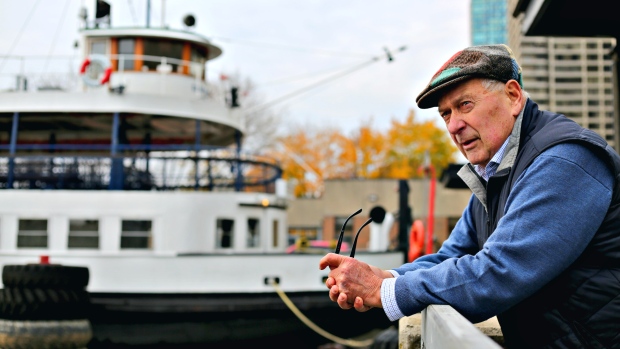
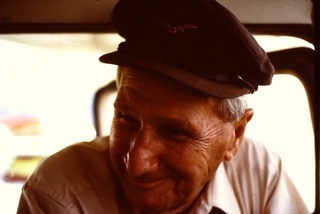
From: SKEOCH <alan.skeoch@rogers.com>Subject: VICTOR POPPA … JOURNAL OF HIS LIFEDate: October 28, 2019 at 12:04:12 AM EDTTo: Alan Skeoch <alan.skeoch@rogers.com>When I think of Victor Poppa I want to laugh and cry at the same time.(I think Victor will be pleased with this story wherever he is.)I have been considering this story for more than 40 years. Should the life ofVictor Poppa be edited…be sanitized in other words. Or should it be presentedjust the way he wrote it back in 1984. I decided to be true to Victor andpresent the story just as he wrote it. Rough and real. Soft and sweet.Some people will be disturbed no doubt…either by the brutality of the World War II bombing of Germany or by Victor’ssexual exploits when on the ground.alan skeochoct. 2019Take a moment. Look closely at Victor. His face in 1987 needs tobe burned into your brain. Look at that smile. And look deeper if you can.VICTOR POPPA was such an unusual man that I have difficulty finding a place
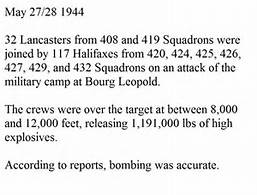
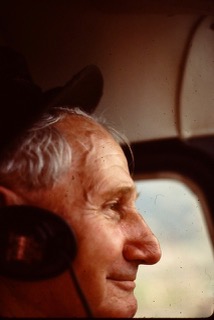
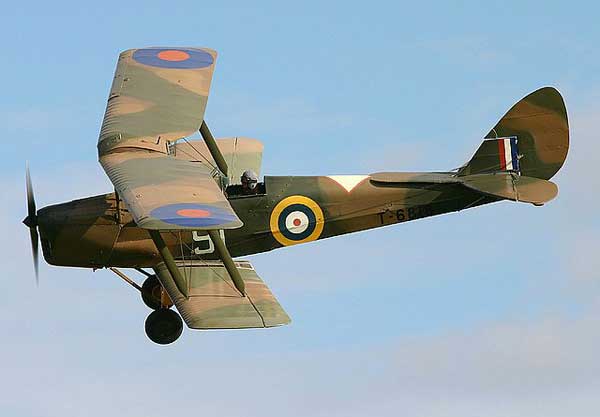
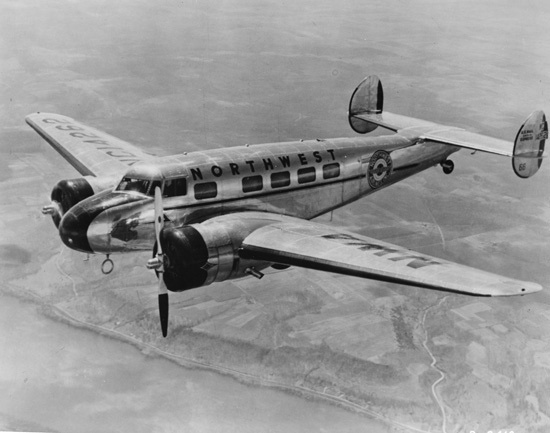
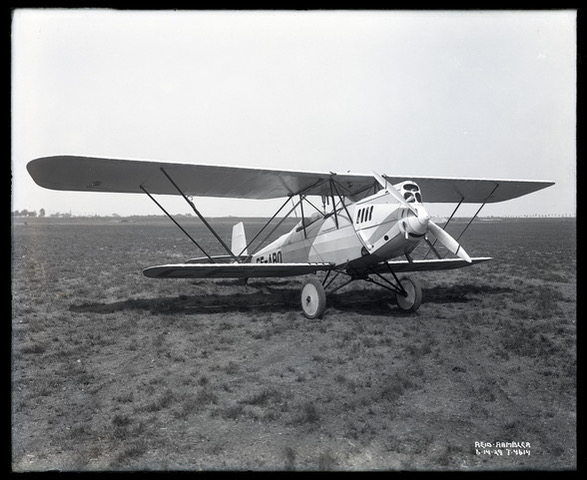
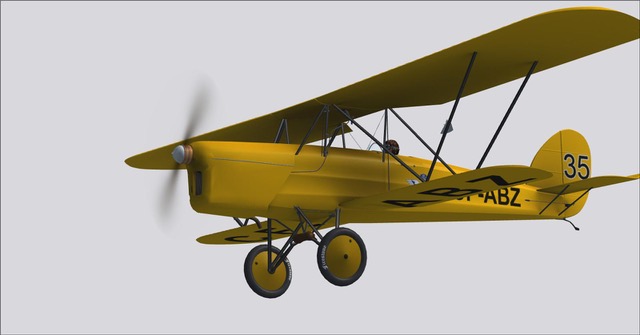
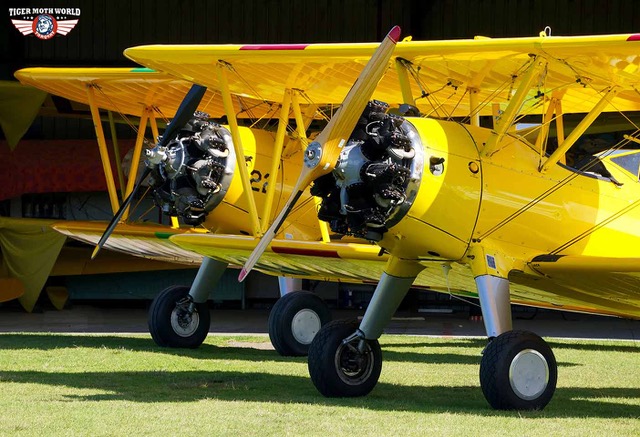
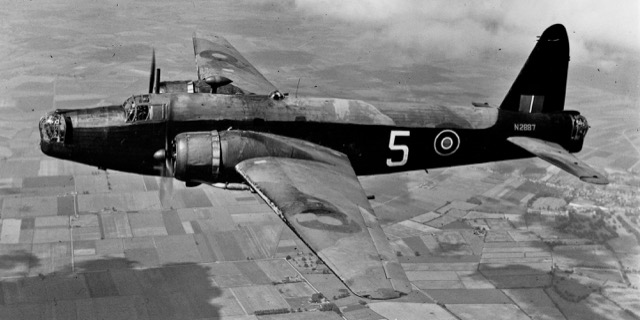
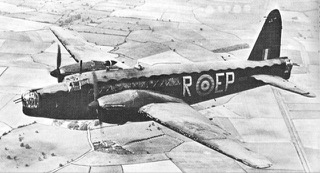
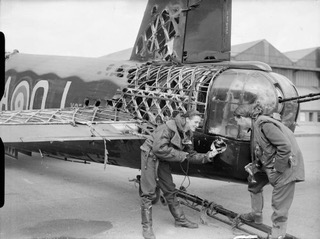
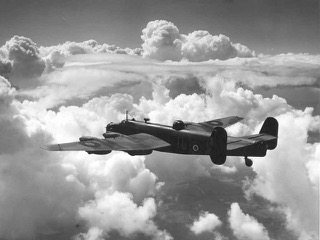
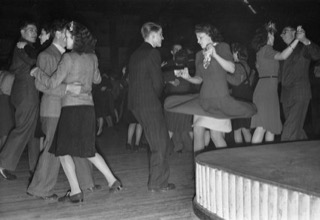
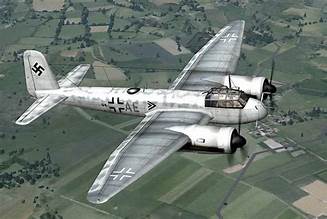
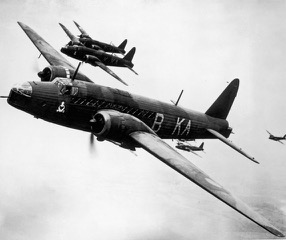
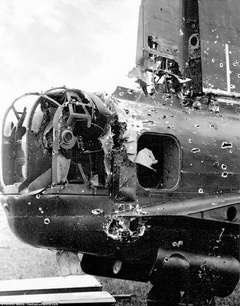
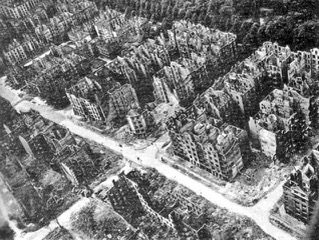
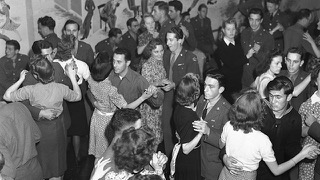
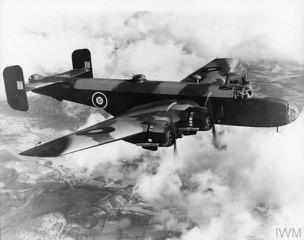
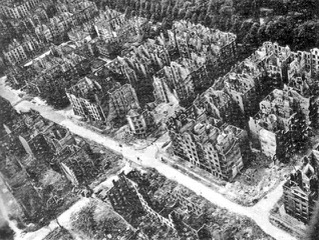
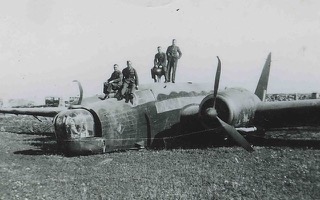
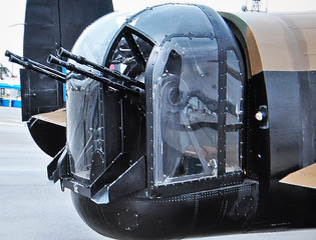
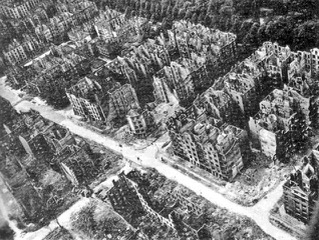
to start my story of his life. He was unique in many ways but foremost washis ability to make every moment of his life magnetic, humorous and so enjoyable.VICTOR POPPA:alan skeochOct. 2019As mentioned in my story titled “the Last Flight of HX 313, Victor was the tailgunner in a Halifax bomber that was strafed and set afire on a bombing run overBourg Leopold on May 17/28, 1944. He was trapped in his bubble and sureto die as the big plane pirouetted out of the night sky burning in its death throes.Then by a quirk of fate the plane made a violent turn that threw Victor outto the open bubble. His parachute was only attached by one thin strapand Victor had to pull the strap down to grab the D ring. When he did soHX 313 and Victor were separated but both in free fall.Victor survived but was badly injured. That much you already know but thereis so much more that I would like to share with you. Initially I only knewVictor from his letters sent to me in 1984. He cried when I first initiatedcontact with him. MY letter was sent 40 years after the crash. Totally unexpected.Victor was then living in a trailer camp near Lake Elsinore, California. Retiredair industry worker who moved to California when the AVRO Arrow wasscrapped by the Diefenbaker government in Canada.Sometime around 1990, Marjorie, Andrew and I visited Victor.I had a short term sabbatical leave from teaching and we flew toNew Zealand and Australia to look at their educational systems atour own expense. On the return flight we stopped for a few dayin California to visit with Victor and Louise Poppa. We had no idea whatto expect. Our visit made New Zealand and Australia fade into thebackground.Victor met us at the airport in Los Angelus driving a very large and verydated Cadilac. He had a grin a mile wide. He loved us and made nopretence otherwise. In those few days with the Poppa family a lotof things happened which are stories in t themselves so ‘let me countthe ways’ as the love poem stated.1) The Cadillac. It had seen better days at least a decade earlier. We nevermade the trip to Lake Elsinore. On one semi deserted Californiaroad, the Cadillac stopped. “Damn thing, let’s me down too often.”It was around 9 p.m. and the problem seemed easy to me.“Phone the AAA and we can get a taxi to your place.”“Not that easy, Alan.”“Why?”“Someone has to stay with the car…can’t leave it by the side of the road…”“Why not?”“It’ll get stripped.”“Surely not…”“Fact of life here…got to be careful.”“Who will stay with the car? Victor , I can stay here…no problem.”“Would you mind, Alan? Louise and Marjorie and Andrew can get home with meby taxi. You stay with car and tow truck until it’s safely put away…won’t take long”So away they went by taxi while I was left to mother the Cadillac and wonderwhat evil persons were watching from the California darkness. Probably waitedonly an hour or so. Not long. No incidents.My initial image of California was based on Hollywood. Great wealth. Extravagant lifestyles.Splendour. Well, Victor did not live that way. His home was a long trailer in a sprawlingtrailer park where Victor had a lot of space to keep things. Things? Lots of spare tires,fuselage of a light plane with no wings, motor parts…that kind of thing.2) “You and Marjorie can sleep in this room.”“Nice.”“Got to be careful though.”“Why?”“Close to the Mexican border…never know who is passing through.”“Dangerous?”“Could be. Look under your pillow. There is a pistol there. If someonecomes in through the window shoot first, ask questions later.”(I thought Victor was joking and maybe he was. One thing certain is thatthere was a real pistol under the pillow.)“Nice picture above the bed…sort of contrasts with the pistol.”(Not sure if I said this or just thought it. Above our bed was a pictureof Jesus Christ with a beating heart with words like “love” and “peace.”.)“We are Catholic, Alan, maybe you and Marjorie would like to come withus to mass on Sunday.”“No problem.”The picture of Christ and the pistol under the pillow were formost in mymind by then. The two things just did not fit. That became my imageof California.3) “This is Shadow, our dog.”“What breed?”“Pit bull…good guard dog.”“Dangerous?”“Never know around here. This is not a gated subdivision.”“I mean is Shadow dangerous?”“Can be, but I have a solution to that. Look here.”(Victor pulled a baseball bat from behind the front door. Not just anordinary baseball bat but a bat that he had ‘improved’ by drivinglong spikes through drilled holes so that the long points were exposed.)“What’s it for?”“Shadow. If he attacks someone or just attacks another dog, I give hima good rap on the nuts with this bat.”“You are joking.”“Nope, I take Shadow for a walk every with and take the bat along with me.You can come with us.”(And sure enough, Victor was telling the truth. His great grin never lefthis face all the time we were with them. The grin fooled me often.}4) Shadow was a nice dog. He liked us. Shadow made me laugh sohard one evening that I nearly died. I mean it. I nearly died. Victorsaved my life that evening. I must tell this story for it shows anotherfacet of Victor. He had many facets…many skills…a heart so bigit enveloped all. That is probably why he was so lucky with English girlswhen on leave in England. He was very heterosexual. Those stories will come later…in full detailif I have the nerve to transcribe them.“Alan, let me tell you a story about Shadow.”“Don’t tell me he bit somebody.”“Shadow does not bite…just looks like wants to bite if things get tense.”“Story”“A couple of nights ago Shadow was eating his dinner. Bowl was almostempty when a mouse jumped in the bowl. Shadow was surprised and lookedover at me. Then he looked back at the bowl with a furrowed brow. Andhe then did the weirdest thing. He parted his lips and slurped the mouseup. Then looked at me again. The mouse was trapped in his mouth betweenhis lips and his teeth. And the mouse was running back and forth makingbulges in Shadows mouth. Shadow was startled. He seemed to be askingme what he should do with the mouse…not eat it but where could it be released…set free…where could he put the goddamn thing gently.”We were sitting in a restaurant when Victor told me this story. One of thoseall you can eat places that cater to retired Americans with limited money. I waseating some kind of stew with large chunks of meat. And I was laughing hard.My image of Shadow was so funny I could do nothing but laugh. Thena lump of meat got wedged in my assophogas. Blockedentirely. This had never happened before but I knew that moment that Iwould be dead unless helped. I was suffocating while Everyone was laughing.No one suspectedI was on the verge of passing out…perhaps choking to death. I couldn’tspeak. Precious seconds ticked by. I then leaped up on the table trying togasp…trying to get even sliver of oxygen but failing. Panic. It was thenthat people realized I was in serious trouble. I jumped down from the table…could notbreathe. No one knew what was wrong.But Victor was a man who knew a crises when he saw one. He immediatelyjumped from his chair linked his arms around my back below my rib cageand gave me one hell of hug. Bingo! In that split second the lump of beefwas ejected and I could breathe again. I will never forget that moment.“How did you know what to do, Victor? How did you know to give me that hug?”“I didn’t. Never saw that happen before. Seemed you needed help.”“Victor, you saved my life.”“How did it happen, Alan?” asked Marjorie.“It was that goddam story about Shadow…made me laugh so hard I could cry…make me take a deep breath with a mouthful of food.”“Why so funny?”“Because I pictured Shadow with that furrowed brow while the mouse wasrunning back and forth inside his lips.”5) And of course we talked about World War II at length. Victor feltdevastated when he returned to England after walking out of his POWcampt in Germany and trekking with Seeley and nine French nursesthrough the chaotic ruins of the Third Reich to American lines in whatwould become West Germany. “George Freeman, I called him Hank, wasmy best friend…we were both gunners in 424 Squadron, RCAF and that wasa bond but our shared life together on military ‘leaves’ really made us astight as brothers. Someday i will tell you about our experiences with Englishgirls. We met a lot of them. George was about to marry one and wouldhave done so had not that JU 88 strafed his middle gun turret.”“I am writing a story of my life, Alan…don’t know what to do with itreally…let me send a copy to you…I have a good memory for detail.Maybe you can make something out of it.”Victor did sent me his hand written journal. This is only part of the story.Part One. What do I remember most about Victor? He laughed a lot.His face was creased with a few wrinkles that turned upward and notdownward. He was always good company, a person people like to spendtime with.6) My only flying experience with Victor came about almost as anafterthought. I did not know he owned a Cessna 170. It was obviousthat he was not a wealthy man since his home was a trailer in atrailer camp that seemed insecure…need for the pistol under the pillowand Shadow the laughingpit bull.“Would you like to go up, Alan?”“Fly around Lake Elsinore…we can do that…I own a plane…keep itnear here. How about it?”“Sure.” (I said that with some nervousness as my experience with lightairplanes was not a bed of roses. Flying in S 52 helicopters in the wildsof Western Alaska had been exciting when I was a single male of limitedvalue to anyone. And then later aborting a takeoff on a swampy lakefull of deadfalls in Ontario…and doing the attempt again with a piercedpontoon. And hearing tale after tale of bush flights that failed. These mademe a little nervous to say the least.)But I said ‘sure’ and Victor drove me to the nearby airstrip wherehis Cessna sat.“How long have you had this, Victor?”“Quite a few years…love to fly…wanted to be a pilot back in the war butthey had lots of pilots and made me a tail gunner. I just love flying.Get in.”(A Cessna is a light aircraft…could carry two people and a bit of baggage.I notice the paint had pealed off in several places.)“Buckle up, here we go.”Victor was in his element as we taxied to the runway and full throttledour way into the California skies on a clear bright day.“Important to buckle up Alan, because of that door.”“What door?”“Your door doesn’t close properly…easy to push open.”I tried to move a little closer to Victor…this flight was not a good idea.“That’s Lake Elsinore ever there…coming up.”“Do you fly often?”“Whenever I can…mostly alone.”“Why?”“Louise doesn’t like to fly unless we are going somewhere specialin the interior.”“Alan, take a look down there…gated subdivisions…more and more of them beingbuilt.”“Why…are they needed?”“Rich people seem to live in fear so they have guardsat the front of their estate homes. Costs a lot of money.The rest of us live wherever we can find a place No guards.”And Victor circled over one gated community with a fancy Spanish name thatI have forgotten.“Can I take your picture Victor….while we are in the air?”“Of course.”And this is the picture I want readers to see. This was Victor Poppa around1990. Beside it is his picture when he was a 22 year old gunner on HX 313.Note one thing. They look the same. They have that devil may care look.Hard to hold back a smile…determined to live life to the full and prepared toshare whatever he has with friends.Now I think you are ready to read Victor’s journal. I have decided not toedit his sexual exploits for they are as funny and sensitive as Victor’s dogShadow with a mouse running under his lips.THE JOURNAL OF VICTOR POPPA(sent to Alan Skeoch in January, 1987, transcribed by Alan Skeoch 2019)Alan, I am going back to day one in the story of my life. Nine months after thatgleam in father’s eye,I was born, August 30, 1921. The last of five children. Mylife up to four was uneventful until one day as was just standing in my back yardmy oldest sister Sylvia approached me with one arm behind her back.“Victor, guess what I have for you?”She handed me a model airplane with about a 6 inch wingspan with twowings, From that day my life was purely airplanes. I used to walk to theElliotts airport and watch the airplanes take off and land. Mostly CurtissJennies (JN4w’s) I also remember a damaged deHaviland Hornet Moth…a high winged airplane , cabin for 2 people. I can remember sliding my hand overthe shiny fabric and dream. Since the airport was near Hamilton bay, we werealso visited by a Vickers Vidette, an English airplane.Elliott’s airport closed down and a new one opened about an eighth of a milefrom our house. Here they had four Gypsy Moths (de Haviland) but the airporthad a short life because the approach and runway were not ideal. FinallyHamilton’s Civic Airport was built and lasted until the end of World War IIwhen it became a housing tract.Only a mile from home so I spent as much time there as I could. Enjoyed watchingthe Piper Cubs land and takeoff. The Cubs had tail skis instead of tail wheels.Hamilton’s first air force Squadron , 424, was formed here. Equipped with Tiger Moths, thenlater Fleet airplanes with 90 horsepower Kenner radial motors. It was a bigday for me when a Lockheed 10 landed. It had two motors and I marvelledat how it could take off and land in such a short space.Then, for two dollars that I had saved, I got a ride in a Taylor Cub. I walkedon the clouds for days after that one. One day a Piper Cub J3 crashed andthe pilot was killed. I looked at the crash soberly but my feelings for airplanes andflying were not dampened.One winter day I was leaning against the 4 foot fence looking at a CurtissReid Rambler with its inverted cirrus motor. The owner Ray C. came to hisairplane.“Mister, I have 75 cents to help pay for the gas, could give a ride?”He agreed but disappeared for a long time. it was a really cold day andmy feet by this time were freezing So I left, downcast, not for my 75 centsbut that I had been let down. I had come so close to an airplane ride.The next week end I went back to the airport and while looking at the oldRambler, Ray C. came along. He spotted me.“Hey, aren’t you the kid that gave me the 75 cents for gas?”My heart skipper a beat.“Come on, get in.”I climbed nto the front seat, Ray strapped me in. Soon we were taxiing to theactive runway. Before i knew it we were in the air in this wonderful yellowairline with tis two wings. We flew up towards Hamilton’s so called mountain where i was treated tosteep turns, dives, and spins. The cold day did not matter one bit. The wingarrangement was called Sesqui-plane because of the short lower wing. Hadstruts instead of wires. At the time, I did not know that Ray’s airplane was aretired airplane from early RCAF days. All this came to light on looking throughmy 1985, 424 Squadron history book purchased from the squadron reunion inthe summer of 1985.“During these tender years I built model airplanes and I still do for that matter. As a veryyoung lad I was not familiar with balsa wood so I used my mothers’ kitchen knife to splitpine boards with the help of a hammer. Mother never said anything about the abuseof her knife. I used my imagination a lot. I made a hanger from a wooden boxwirth my squadrons installed as I whittled. By he tie I reached high school myhad really progressed with my model airplane building.“During lunch hours in High School, I didn’t bother with sports or running throughpeoples back yards, climbing fences, etc. Instead I went over to a small buildingwhere Piper J3s were being covered and later assembled at our local airport.I used to enjoy talking to the fellows working there and smelling that wonderfulldope they used. It smelled so ‘airplane like’. (I wasn’t into glue sniffing though.)To me a person has not lived until that person visited a place where airplaneswere covered with Irish linen, then painted. The smell was like fine perfume.“About the last year I was in high school the National Steel Car Corporation ofHamilton was aproached by Ottawa and asked to build an airplane factory in Maltonjust outside Tronoto. When possibleI would wangle car ride from Hamilton toMalton to see if I could get a job there. Sometimes I travelled all that way onmy bicycle. And often I hitchhiked. Finally i was hired on August 28, 1938.GAP HERE…A PAGE SEEMS TO BE MISSING SO STORY JUMPSVICTOR’S FIRST EXPERIENCES AS A VOLUNTEER SOLDIER“About 100 of us were loaded in trucks and driven to Long Branch, a suburb ofToronto. We were unloaded, marched and line-up. We were each given aRoss rifle and handed 10 rounds of .303 ammo. On order we were to load andfire at will. Bullets hit rocks and whistled every which way. It was a frighteningexperience. I almost dropped my rifle but pulled myself together and fired myten rounds. That was my first World War II shooting experience.Just before posting out on my first pay parade the paymaster countedout my pay. I was given $10 more than I was due which I returned andwas thanked for my honesty. That’s the way I am.I was posted to Quebec City where I met my wife Louise Voyer.(Louise was a girlfriend not a wife until after the war. In betweenVictor was never short of female companionship when on leave.And that is an understatement.) Then I was posted to Belleville, Ontarioto Number 5 I.T. S. Here we study airmanship, navigation, wireless, etc.At this school decisions were made about our future positions and placement.I did not apply my energy fully asI should have and as a result I was offeredthe opportunity to be a Bombardier. Disappointing day. I would not be apilot.“If I can’t be a pilot, Just make me an air gunner then.”“So I was posted #9 Bombing and Gunnery school at Mont Joli, Quebec wherethe St. Lawrence River is 20 miles wide. We flew in worn out Fairey Battle’s.Two students at a time. Bitterly cold. When we fired our drum fed Vickersgas operated machine guns we would hold one hand on the barrel andfired until the hand was warm, then we switched hands. My flying timeat St. Joli was13 hours and 45 minutes. I graduated as a sergeant, givenleave and posted overseas from Halifax, Nova Scotia’Note: Victor’s time spent in Halifax was disappointing. The “two brands of beertasted more like dishwater” and finding females was nigh unto impossibleas”they were gun-shy due to the constant flow of bodies passing them.”After a week he shipped out on the Queen Elizabeth Steamship with12,000 other Canadians. “We were jammed into staterooms, aisles, everypart of the ship.” No luxury. “My bunk was on the floor with three more ontop of me. The fourth person slept with his nose touching the ceiling.”there were chocolate bars available in he canteen but the line ups werelong. The kitchens ran 24 hours a day. Occasionally they sailed pastcork life rafts that were empty. This was sobering. Like floating coffins withoutthe bodies. They Docked after four daysat Grennock, Scotland then they were sent to Bournemouth for posting.Note: He arrived in England May 20, 1943 and returned to Canada on July 17,1945 duringthat time he flew 49 hours and 45 minutes on daylight bombing runs and 42 hoursand 35 minutes night bombing the last of which was May 27/28, 1944 whenHX 313 was shot down and Victor became a Prisoner of War. In short Victorspent 12 months in active service May, 1943 to May 1944. One year.He had one amusing comment about that year in England.“I am Always hungry.”“On arrival in England Victor was assigned to #22 Operational Training Unit (OTU) flying WellingtonBombers which were twin engined aircraft “of Geodetic Construction mid-winged,70 foot wingspan, crew of 5, sporting a Fraser back gun turret with four .303machine guns (Browning), also had a front gun turret which Bombardier wasresposilble for” in event of a frontal attack by a night fighter … a rare occurrence.”Victor first crew was Bill Tighe, a recently married Englishman. Bob Irwin(Navigator), Ken Sweatman (Bombardier), Wilf Wakely (wireless operator) and Victor Poppahimself (tail gunner). Wilf was experienced having flown on 6 bombing missions one ofwhich was the first 1,000 bomber raid on the Ruhr Valley “which we named HappyValley because of the intense Flak, Searchlighs and night fighters.”Wilf Wakely was the only survivor of a Handly Page bomber (Halifax?) so hadexperience with parachute and escape hatch. Victor enjoyed the training flights andthe lectures. One lecture saved his life. Ken Sweatman asked Victorto come to a presentation on photo flashes. Later, Victor failed to properly address anofficer and was told as punishment to harmonize the guns on an aircraft beingrepaired. Bombs had been unloaded safely it seemed. So Victor paced off atarget point behind the bomber, set up a harmonizing board, climbed the ladderinto the bomber and began walking along the catwalk to the rear of the plane.His arm accidentally caught on the arming wire for the photo flash and pulled outthe pin. Time delay began ticking. In seconds the photo flash would explode therebydetonating the other photo flashes and then perhaps the whole bomb load.The photo flash units were bombs themselves though. “At this point I had twochoices either to remove the fuse or jump out and run hoping I would be farenough away to survive the blast.” Victor knew all the ground crew would die sohe decided to try and remove the fuse. Success. “I descended the ladder andtold the armorer what happened. He blanched’ as I handed him the fuse. If I had not attendedthat lecture with Ken I would not be here today.”While on training flights in England Victor had ‘real fun’ doing air to air firing fromhis Wellington gun turret and also “we used camera guns against spitfires”Then they practised low flying where Victor coaxed the pilot to get lowerand lower. Ken Sweatman got worried and reminded Victor that “I am amarried man as is Bill” All the same they did fly low enough to touch thetop of trees, buzz a train and fly through a quarry ‘which was a near miss’. Whenthey to back from one practise run the ground crew pulled branches fromthe motors.“Night bombing was another matter…more dangerous. Initially we didcircuits and bumps in the dark…i.e. takeoff and landing. Then cross country flightsone of which created panic when a fire seemed to happen just as the planewas on its final approach. “Bill said, ‘I smell fire’ Wilf fired a red flare and wewere cleared to land. Bill had not bothered lower the landing gear, flaps weredown. Bill did a fancy side slip but we hit the air cushion between the airplaneand the runway and started to slide, slide, slide…15 tons of mass takes a fairamount of runway. We skidded onto the grass as the tail swung around. I feltlike an anvil on a chain. Our airplane did not burn, fortunately, I had trouble gettingout of my turret as the hydraulic lines locked once the motor stopped. TheWellington was totalled…ruined…fuselage was twisted and wing bent up, centresection spar twisted, propeller ruined, bomb bay a mess and the bottom of themotors cylinders mashed. We got out OK…Bob our navigator cracked a coupleof ribs. Bill had his log book ‘endorsed” meaning his idea of a fire was not quitevalid.”NOTE: Operational training was no piece of cake. Victor estimated that about halfof the dozen or so crew members he started with died before ever gettingto fly a bombing run over Germany. One crash must have made Victor andhis crew feel really badly as they were partly responsible.“There were always bad crashes using those tired old Wellingtons whichwere difficult to fly on one motor. One night in our trading at #22 OTU we weredoing takeoffs and landings and while taxiing down the runway Bill managed to get onewheel off the runway. As we were trying to get our Wellington back onto therunway we heard over our raidio telephone another airplane talking to our tower.He said he had one engine out. Tower asked if he could take one more circuit aswe were stuck part way down the runway. the pilot said he would give it a try.He did not make it.A few seconds later I could see a big flash of flame. All aboard perished.”“There was never any talk about about all of the things happening but every daywe could see stretchers leaning against the hospital wall with dark brown stainsfrom bloodied bodies.”NOTE: Victor was young, 22 years old, blessed with a feeling of immortality when hefirst arrived in England. At OTU that feeling diminished. He kept a stiff upperlip.NOTE: English girls were great distractions for Victor and for many other airmenwho tried to live their lives to fullest for they soon knew their days livingon this earth were numbered. So sex was an escape and a pleasure…as Victorgraphically describes. Each base provided a big box of condoms. “We could takeas many as we wanted and did so,” said a friend of mine.NOTE: Some readers may find Victor’s stories upsetting because the sexualdetail is a bIt rough. Sorry about that. These sexual exploits were part andparcel of bomber command experiences. Some are very humorous. If you findsex disturbing stop reading now. NOW!“Wellesbourne was my first real opportunity to meet English girls. These girlswere easy to get along with and very nice. Wellesbourne sported 4 pubs. We wouldstart down from 1 to 4 and then back to #1. There was a lot of just regular sexwith these girls. With some there was a bit more than that which I remember witha smile. This one girl was about 5’ 6” and well proportioned and would wait near alane for her prey. You could do whatever you wanted providing you were bothstanding up. One of her first words were ‘you are raping me you know’ to whichthe response was ‘Uh! Huh’ and kept proceeding. She was my first experience withwhat was known as a ‘knee shaker’. Later this same thing was done in telephone boothswhen it was raining. It was fun if a little strange.”“Another night I was drinking my way back to the base and I was well into my cups andusing my bicycle for support. This fellow I knew had two girls with him. He said ‘Vic, I can’tfuck them both, do you want one?’ Sure, I said, I was given my choice. My friendschoice of words did not upset the girls. They were both attractive and eager to geton with it. I got mine down the road apiece and over the hedge. This time missionaryfashion was great, especially with one nice buttock inch hand. I finally got her back overthe hedge, kissed her good night … mutual kiss back. The next morning on my way to themess hall, the back of my hands were very itchy and I had to scratch them. After reflectingon the problem a bit, I came to the realization that I had deposited my girl onto stingingnettles. I’ve often wondered how much scratching she had to do to her very nice bottom?”Dances for airmen werea regular occurrence across England“Another high light was when one night a female Cabby offered to take two of us fromour unit to Leamington Spa (about 20 miles from our base) for 10 shillings each. We had herdrop us off at the local once hall. I wasn’t making much headway until after God save theKing was sung at the end of the evening.. While passing through the door I noticed thisreasonably shaped female on my left. I slipped my arm under hers and said ‘Let’s go to thepark.’ To which she replied ‘The park’s closed, let’s go to my place.’ We did not waste words.Thanks to the blackout my hands were busy. She said ‘I’m glad “.’ ‘Me too1’I stayed with her all night. When we were really into it she said ‘I don’t care if have a baby’…I said ‘Me, too!’ and kept going. She told me her name was the Honourable Olivia. Olivia musthave been between 35 and 40 years old. What a body? and good-looking. I was 22 yearsold. I awoke at 6.45 a.m. and had 15 minutes to get to the base. We were scheduled to flyat 8 a.m. Olivia asked if I could make it on time. I said sure , ‘I have 7 shillings which ismore than enough for the bus.’ Olivia insisted on giving me a 1 pound note (worth about$4.50 Canadian) I did not have time to argue. From time to time I have nice thoughtsabout the Honourable Olivia.”NOTE: Victor’s RCAF career…would make a good movie. I like to think that the HonourableOlivia really wanted a baby…needed one for her biological clock was getting past its bestbefore date. Maybe her British army husband had been lost in the disastrous early months of theAfrican campaign…a side story. Maybe Victor really earned that 1 pound note.But that is just speculation…fantasy. Maybe.FIRST RAID: BOMBING OF HAMBURG(SO intense that the streets caught fire)“Our Squadron Commander deemed us ready for combat on July 24, 1943. Our target wasHamberg. Mission Number One. All of our training came to a head.At the briefing we were told we were one of 800 airplanes to go on this raid…mixed bag or Wellingtons,Short Sterlngs, Halifaxes, Lancasters.Once airborne we each got busy with our own task.I loaded my four .303 Brownings and cocked each gun in the ready to fire position. I then switchedon my reflector sight and to my chagrin I discovered the bulb for the reflector sight refused to light upThis was good cause to turn back but I voted to continue anyway and take the chance. We were verynaive at this juncture and it was almost our undoing. However the gods were smiling upon us.We crossed the coast at Scarborough, heading for Heligoland where we met our first baptismfrom “Flak” (anti-aircraft shells). We were at 20,000 feet and passed over the German Flak shipswithout damage. We then crossed the coast where the Elbe empties into the North Sea headinginland to Hamberg. More Flak explosions around us. I heard the sharp crack from eachshell and saw the black puffs of smoke. I knew we could be hit as the flak was very close. The plane bounced.We were being handed off from one flak battery to another en route to Hamberg. Then there itwas…the city. Well lit. Looking down I could make out the streets and see bursts from our bombsexploding. Some aircraft carried 250, 500, 1000, 2000 and 4,000 pounders called ‘cookies’. Otherscarried a mixed bag…some of the above, Magnesium bombs (400 to a canister) and last butnot least, 35 point phosphorus bombs. Phosphorus was nasty…it would stick to anything includingflesh. There were 8 of these to a canister. If phosphorus stuck to flesh, it began to burn and could only be put out bysand or water. So people hit by phosphorus had to be submerged in water. And had to stay in waterbecause the phosphorus would begin to burn the moment a person left the water…burns in anoxygen atmosphere. Phosphorus burning people who jumped into water had to stay there. Afterthe war I heard tht the German SS machine gunned their own people to put them out of their misery.”“This raid to Hamberg was also the first time we used a device called ‘window’…little pieces of foil. When cut to thecorrect wave length these strips would confuse German Radar. Instead of picking up individual aircraft, GermanRadar showed hundreds thousands of aircraft. Our losses this night were nominal from the flakbut that did not stop the night fighters. A Junkers 88 crept up our tail and got within 100 feet but wasdown lower…about 25 feet lower so it remained very close. Fortunately we were flying in aWellington and from his position we could have passed for a Ju 88 which has two motors and at nightwe must have made the Ju 88 pilot curious. Were we an enemy or a friend? First he put on a big amberlight then a smaller green light. I said to Bill to start corkscrewing. Bill’s idea of a corkscrew was notmy idea of a corkscrew. The Ju 88 followed. Then, just as we were about to start anothercorkscrew, the Ju 88 put on a red light, levelled off and was about to give ua everything he had.I Said ‘Bill, 360 port, Go!’ Bill slammed us into a 90 degree bank to Port just as the Ju 88 openedup. Missed us by a split second and at the same time we lost him. Our 360 degree turn was right overthe target and right in the middle of our own Bomber stream. Talk about Russian Roulette.We still had our bombs aboard and Ken then let them all go. Not safe yet. We shook off3 more German night fighters which Bill handled OK.”NOTE: Victor Poppa believed the German pilot of the attacking JU 88 night fighter got a bit confused sincea the Wellington bomber and the Ju 88 looked similar as you can see. Victor’s crew were luckybecause the Ju 88 delayed the attack giving the Wellington time to corkscrew and then dodgeto Port side. Rear gunners, like Victor, often played major role in detecting night fighters comingfrom behind. Some felt those Browning machine guns were useless.Ju 88 German night fighterWellington Bomber“Then our intercom went out and I couldn’t get Bill. I flashed my flashlight up the fuselage,Wilf saw my light and figured something was amiss. He checked around and foundhe had accidentally disconnected the plug. Then our wirelesses quit working. All faultsthat could kill us. Like I said the gods were smiling down on us. If the intercom had goneout earlier, I would not be here today.”Note: Victor and crew got back to England without another crisis. There were so many thingsthat could go wrong on these fights. Even the accidental disconnection of an electric plugcould spell disaster. Tail gunners, many of them, knew the Browning .303 machine gunswere not very effective so they did not have itchy trigger fingers. Better, they thought,was to act a spotters should an enemy night fighter be attacking. Alerting the pilota top priority. Firing the Brownings was a distant second. Bursts of machine gunfire might just allow an enemy night fighter to hone in on an RCAF bomber. Victordoes not seem to have total confidence in his pilot which is never a good sign ina bomber crew.“July 29, 1943, We were sent out on a practice bomb trip to Strensell for Ken’s benefit.That evening we were to go back to Hamburg for our second mission but this duty wasnot carried out because our ‘Gee’ set would not function. We got 5 degrees east and Bobrefused to navigate.”Note: Abortng a mission was a serious issue. By 1943 most crews knew their chancesof successfully completing 20 Bombing runs was slim. Some crews seem to have lookedfor excuses. Understandable for sure but not acceptable. An aborted mission wasalways suspicious…always investigated.“A ‘Gee’ set not functioning was a legitimate excuse to terminate a mission. Bob couldnavigate without the ‘Gee’ but refused to do so. Bob’s nose could get hard at times.”“JULY 28, 1943, During the day we did an air test and that night were sent out on anothercross country no doubt penance for Bob’s refusal to fly without his ‘Gee’ set/““July 29, 1943: We were to got to Hamburg again. Number 3 Mission. We caught hell onthis one. It was a hot summer day. We had a total of 780 aircraft going. As before mixedbag of airplanes.Gradually British production of 4 engined aircraft was starting to replacethe two engined Wellingtons. I’m not counting theShort Serling. This airplane was a realdog. Once loaded with bombs it could not get to 25,000 feet. Later the Sterlings weregiven the job of towing gliders exclusively.”“Bill gave full power for take off with around 10 degrees of flap. when we were over thetrees at the end of the runway I could see the flaps creeping up on their own and wewere starting to settle down to the tree tops, at this point as we were justskimming the treetops we started picking up more airspeed and slowly startedto climb.“During the war density of air was not known as a factor in an airplanes’ ability to lift weight. The hotter the air the higherthe airplane thinks it is at, hence an airplane with ,say, an ambient temperature of 115 degrees mightnot get off the ground at all. Now, say the temperature is 70 degrees the airplanes’ ability to life the sameweight would be alright.“We followed similar course as we had on our first trip…via Heligoland, the Elbe River to the target.The flak was real close. They had our altitude right on but we were off our Port side by 200 feet.The Flak stayed with us all the way to Hamburg with continuous explosions of 88mm shells. Overthe target was not much better.We were briefly caught by searchlights but shook them off. Ken wasgetting the bombs off and then he turned to get a look as the bombs were released. Lucky. A chunk offlak from below sent shrapnel through the perspex (plexiglass). It struck exactly where his head hadbeen a moment earlier and continued up through the instrument panel . Another piece went betweenWilf and Bob and back into space. Shortly thereafter another shell burst above me and one piece wentinto our carburetor down into our supercharger and we lost 500 rpm to our port Port motor and stayedthat way for the rest of the trip.The fires were fierce on the ground. Detial of city blocks burning were easy to see from our 20,000 feetaltitude . Bomb flashes bursting around the fires were also easy to see. The super race was now gettngits’ due.“A master searchlight was coming up on our Port side. I said to Bill to get ready to dive to port. ‘Go, Bill, Go!’and Bill slammed the wheel left and pushed down. We shot through the light. Ken said ‘Jeez’ then I saw athis great big Halifax with the master searchlight and smaller searchlights exposing him to everythingthat could shoot him down. His bomb bays were were open as he was letting his bomb load go. I couldeven see what kind of load he had…all one type of 4 pound magnesiums (144 to a canister) and itseemed thousands were spilling out. This poor fellow had to continue flying straight and level fortwo minutes while his aircraft camera took pictures of where his load had landed. Ken’s comment…’Geez’was Ken’s exclamation as we dove just in front of the Halifax I just mentioned. That was real close.Note: I am not sure if the Halifax bomber Victor watched was shot down or not. Seems it was.“Columns of smoke were higher than our altitude of 20,000 feet. On our return to base and just as we crossed the English coast,looking back some 300 miles I could see Hamburg burning.“We were cleared to land. As we were crossing the runway threshold I could see the fog following. The poor devilcoming in behind us never made it and I don’t know where he went as fog was right down to the deck.When we reached the far end of the runway and were now on the taxiway, there was a person trying to signal Billinstructions. Bill could not make him out. So I said ‘Bill, I’ll jump out and get his instructions.’ This I did. I usedto wear my parachute tight. As a result when walking I was stooped down slightly. Lucky. Anyway I wasstarting to jog back to the man on the taxiway. I stopped. And noticed the man was pointing his finger upwards.Turned and looked up and here was our port side propeller going ‘Tick…Tick…Tick’. One more step and Iwould have been beheaded. I stooped clear, gave a thumbs up thank you and climbedback into my turret. I have often wondered why I stopped that moment…was it mental telepathy thatsaid ‘Stop and look at the man on the ground’? His mind must have been screaming at me. After I pluggedinto the intercom I said, ‘Bill, why didn’t you shut down the power on the left Port Engine, when you saw whatwas about to happen?”, Bill said “Vic, I was petrified!”.We parked the Wellington “J” HF 541, went to the debriefing and had breakfast. This was our third mission to Hamburganti tiook 6 hours and10 minutes.On August 2, 1943 we were again selected to go to Hamburg…fourth mission. The weather was not the greatest. In factwas so vicious that more than half our squadron turned back. However, since we lost mission #2 we decided to seeit through. Once we crossed the enemy coast the flak followed us all the way to Hamburg. We plowed through numerouscumulonimbus (word?) clouds with up and down drafts where thunder, lightning , wing icing, St. Elmo’s fire, cloudcover was about 10/10ths . Hamburg was still burning from our previous fires. We could see the glow of the firesthrough the clouds. We found a small hole in the clouds and Ken satisfied himself that we were over Hamburg andthen he let our bombs. We returned to base by another route avoiding the Flak. Once landed we were debriefedas usual.“Photos showed that we laid waste to nine square miles. In addition to our four raids the American 8th air force(USAAF) pasted Hamburg with daylight raids. The american effort was modest in numbers. Approximately 75B 17 Flying Fortress aircraft. This was the USAAF first taste of deep penetration raids into Germany. The firesin Hamburg were so intense that the asphalt on the streets flowed like lava…a fire storm so intense that theoxygen was consumed and people suffocated in their air raid shelters. There was no respite. People rebelled.Where possible some people began looting but that was difficult for the wind created by the fire storm was hurricaneforce. Apparently there was terror everywhere. From our altitude we did not see all this misery. Better themthan us I suppose.“Back home we went to breakfast and with no sleep we reported to our respective flight authorities to seeif anything was on and, sure enough, we were posted on battle orders. This was to be mission #5, August 3,1943. As tired as we were the ground crew got pre-flight preparation underway on our Wellington. Lunchtime came and went. As usual we had the gut wrenching feelings. The possibility of death being foremost.The feelings are never any different…they tore us apart but as the acton increases a calmness descends.“This time we are using Wellington “P” LN 448. Dinner time arrives …the only time in the squadron thatwe ever received bacon and eggs. Sort of last meal kind of feeling. Like the hangman is ready totrip the trap. Then comes briefing time and we then find out where we are to go. A one aircraft mission.Unusual. We are expected to fly into the Bay of Biscay targeting the harbour of St. Nazere on the westcoast of France where the Germans have submarine pens and other types of shipping.“Five aircraft from other squadrons are to go elsewhere into ‘Festung Europe’ so that is all the enemy had tocontend with tonight. Our orders were to cross the French coast at approximately 13,000 feet and graduallydrop altitude until we were in a position to make our run. Our attack altitude must not be no greater than100 feet. We had to make a visual sighting of a particular island and from this visual start a timed run towardsthe harbour and after an exact number of seconds drop our two 1500 pound mines. All of this precaution wasnecessary as the mines were a very secret kind and our side did not wish the Germans to know their intended use.So far everything was going fine, however, we were in fog at 100 feet. Hopefully Bill wasreading the altimeter for our briefing had stressed forcefully that we ‘must’ make our attack at exactly 100 feet.Bob was getting excellent ‘Gee’ flashes and said‘Vic, stand up in your turret and look down, we are just about over theisland…we must have a visual of the island, if not, then we have to take our mines home!’‘Coming, coming, Now!’“No visual for me. Because of the fog, I could not see the island. Instead I got a burst of shellsfrom a 20 mm Quad. The quad gunner missed my face by 20 or 30 feet. Close…Real close.So close that it was easy to see the caliber and there were enough tracer shells to see howclose his aim was to our airplane’s centre line. The German had our airplane right on. Had hepulled the trigger a split second sooner he would’ve parted our Wellington into two distinct partsright at the centre line. The gunner probably picked up our red exhaust stacks and the noisefrom our motors. He likely even had time to set his guns vertical and just wait for us to pass over.It was that easy for him. The gods again smiled on us. We did not get our visual thereforeour mines were not dropped. No point in doing a second run because the fog was very thick.And, had we tried, we would have been hit by that gunner and 20 mm Quad. We crossed theFrench coast in a climb and then back across the English Channel to our base. The armourersthen were obliged remove the mines. This mission lasted 6 ours and 20 minutes.“August 5, 1943. We are to go out again so we went through our usual routine. At briefingwe were to go to the Ruhr Valley. I do not remember the intended target by name. It was abayonet factory which employed 50 people. The buildings all around the factory were hospitalswhere thousands of injured from Hamburg were taken and others from previous air raids.It was in fact a hospital town. We were sending 600 bombers to get the bayonet factory and its 50 employeesand in the process wipe out the whole town. “After the briefing our C.O. said it was quote, ‘O.K.’if we emptied the hospitals. I felt real squishy in the stomach. Not the usual nervousness precedinga mission. I did not like the idea of hitting hospitals. Our aircraft was bombed up anyway andjust as we were taxiing for take off a red flare was fired. The mission was scratched and I thinkeveryone was relieved. Getting Krauts one way was fine with me but not by deliberately hitting hospitals.“Sir Arthur Harris was chief of Bomber Command and fondly called ‘Butcher Harris’ by Bombercommand aircrews. This mission to the Ruhr could technically have called a war crime.Note: Much has been written about Sir Arthur Harris and the carpet bombing of Germancities. He was never dissuaded by critics. Did Harris know about the huge number ofGerman civilians were killed in his thousand bomber raids? He seems to have known. One dayhe was stopped for speeding in England. The police officer asked ‘Do you want to killsomebody? To which Harris responded ‘That’s my job to kill people.’ After the war, whenthe massive devastation of German cities was seen by Allied troops there were secondthoughts about the actions of Bomber Command. This ‘after the fact’ criticism hurt thefeelings of Allied Bomber Command aircrews.“August 6, 1943, During the day we flew Wellington “W” HE82 for an air test then in theevening we were ordered go up on our third command Bullseye and cross country flightwhich was a test of British air defences…searchlights and night fighters. We were conedby shearchlights and supposedly shot down by a Bristol Beaufighter (2 motor kind). It’s a goodthing all was fun and games. This flight took 4hours and 45 minutes.August 13, 1943:Our squadron (427) was moved from Eastmoor to Leeming, a peace timeair field in Yorkshire with permanent buildings. The really big news today is that our crewis going to switch from 2 motored Wellingtons to 4 engined Halifax’sAM I GOING TO SURVIVE?(The thought that ran through every airman’s mind)The odds were against survival. Young airmen came to that conclusion early in the career. No doubt manyjoined the RCAF because it sounded exciting. To fly. Each person on an aircrew was expected to completea tour of 30 flights over enemy territory. Only 16% managed to reach this goal. Some of these airmeneven continued to fly, i.e. more than 30 flights, in spite of the long odds against them.Most, like my cousin George Freeman,looked forward to completing 30 and retiring from active bombing. George Freeman even volunteered andjoined extra crews to get the 30 missions completed as he planned to marry if he survived. He did notmake it as HX 313 was shot down May 27/28 1944 and he was likely killed in his upper turret bubble.In the big picture there were 120,000 members of the Allied Bomber Command ofwhich 55,573 died. Of these deaths, 9,919 were Canadians, a death rate thatwas very high for a country with a small population like Canada.Statistically that meant that a member of RACAF BomberCommand in a Halifax bomber only had a 17.3% chance of survival.*Perhaps the darkest way to explain what happened to these young men is to consider it this way.For every 100 men in Bomber Command 45 were killed, 6 were badly hurt, 8 became Prisoners of War and41 returned to Canada with no visible scars. That does not include the mental scars which for manywere deep and long lasting. And that is perhaps why few airmen wanted to talk about their experiences.END PART 1NOTE: THIS IS PART 1 OF THE VICTOR POPPA JOURNAL/DIARY WHICH HE ENTRUSTED TO MEBACK IN THE 1980’S. PAGES 1 TO 29. AN EARLIER EXCERPT WAS TITLED ‘THE LAST FLIGHTOF HX 313’…A FOUR ENGINED HALIFAX BOMBER. I HOPE VICTOR’S SEXUAL EXPLOITS IN THISFIRST PART OF THE STORY ARE READ WITH AMUSEMENT RATHER THAN DISGUST. IT IS IMPORTANTTO REMEMBER THAT RCAF AIR CREWS WERE AWARE THAT THEIR LIVES COULD BE TERMINATEDAT ANY MOMENT. THE GIRLS THEY MET KNEW THAT AND MANY OF THOSE GIRLS KNEW THATTHEIR LIVES HAD SUDDENLY BEEN CHANGED FOREVER.THE MARCH
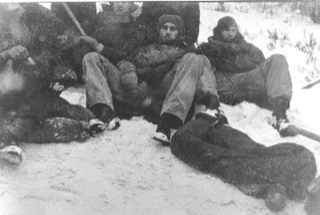
Nothing in Shakespeare could match the impact of the short speech delivered in the middle of the second act of “You Can’t Take It With You” at the South Compound Theater on the night of January 27, 1945. Making an unscripted entrance, Col. Charles G. Goodrich, the senior American officer, strode center stage and announced, “The Goons have just given us 30 minutes to be at the front gate! Get your stuff together and line up!”
At his 4:30 staff meeting in Berlin that very afternoon, Adolf Hitler had issued the order to evacuate Stalag Luft III. He was fearful that the 11,000 Allied airmen in the camp would be liberated by the Russians. Hitler wanted to keep them as hostages. A spearhead of Soviet Marshal Ivan Konev’s Southern Army had already pierced to within 20 kilometers of the camp.
In the barracks following Colonel Goodrich’s dramatic announcement, there was a frenzy of preparation — of improvised packsacks being loaded with essentials, distribution of stashed food, and of putting on layers of clothing against the Silesian winter.
As the men lined up outside their blocks, snow covered the ground six inches deep and was still falling. Guards with sentinel dogs herded them through the main gate. Outside the wire, Kriegies waited and were counted, and waited again for two hours as the icy winds penetrated their multilayered clothes and froze stiff the shoes on their feet. Finally, the South Camp moved out about midnight.
Out front, the 2,000 men of the South Camp were pushed to their limits and beyond, to clear the road for the 8,000 behind them. Hour after hour, they plodded through the blackness of night, a blizzard swirling around them, winds driving near-zero temperatures.
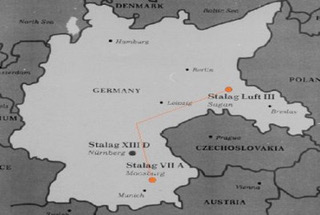
At 2:00 a.m. on January 29, they stumbled into Muskau and found shelter on the floor of a tile factory. They stayed there for 30 hours before making the 15.5-mile march to Spremberg, where they were jammed into boxcars recently used for livestock. With 50 to 60 men in a car designed to hold 40, the only way one could sit was in a line with others, toboggan-fashion, or else half stood while the other half sat. It was a 3-day ordeal, locked in a moving cell becoming increasingly fetid with the stench of vomit and excrement. The only ventilation in the cars came from two small windows near the ceiling on opposite ends of the cars. The train lumbered through a frozen countryside and bombed-out cities.
Along the way, Colonel Goodrich passed the word authorizing escape attempts. In all, some 32 men felt in good enough condition to make the try. In 36 hours, all had been recaptured.
The boxcar doors were finally opened at Moosburg and the Kriegies from the South and Center Compounds were marched into Stalag VIIA.
MOOSBURG – Stalag VIIA
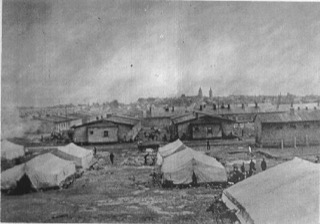
Stalag VIIA was a disaster. It was a nest of small compounds separated by barbed wire fences enclosing old, dilapidated barracks crammed closely together. Reportedly, the camp had been built to hold 14,000 French prisoners. In the end, 130,000 POWs of all nationalities and ranks were confined in the area. In some compounds the barracks were empty shells with dirt floors. In others, barracks consisted of two wooden buildings abutting a masonry washroom with a few cold-water faucets. Wooden bunks were joined together into blocks of 12, a method of cramming 500 men into a building originally intended for an uncomfortable 200. All buildings were hopelessly infested with vermin. As spring came to Bavaria, some of the more enterprising Kriegies moved out of the barracks into tents that had been erected to accommodate the stream of newcomers still coming in from other evacuated stalags. Some men chose to sleep on the ground, setting up quarters in air raid slit trenches. The camp resembled a giant hobo village.
Year: 2023
-
EPISODE 910 REMEMBRANCE DAY 2032 — LAST FIGHT OF HX 313 — WHO COULD FORGET VICTOR POPPA?
EPISODE 910 REMEMBRANCE DAY 2032 — LAST FIGHT OF HX 313 — WHO COULD FORGET VICTOR POPPA?alan skeochNov. 11, 2023Victor Poppa touched my life. And, yes, I do remember him. Readers may find this Episode too long forcasual reading. I understand. The story is a living story even though Victor died decades ago. Thisstorywas written when he was alive and we visited him in his unuusual California home. I hope ou findthe story both moving (tears) and amusing (laughter).My cousin, George Freeman, (who I never knew when he was living),,,George and Victor were bothgunners on HX 313. Good friends in 1944. George was killed when a German fighter strafed HX 313. As the plane pirouetted out offormation On May 24, 1944, Victor was trapped in his rear gunners’ bubble. He felt he was aboutto die then the force of the fall twisted the bubble and he fell out…read the story…..
-
EPISODE 908 DISCOVERY OF A FERAL APPLE TREE — APPLES THE SIZE OF GRAPEFRUIT— BUSHELS OF THEM
EPISODE 908 DISCOVERY OF A FERAL APPLE TREE — APPLES THE SIZE OF GRAPEFRUIT— BUSHELS OF THEMalan skeochNov. 8, 2023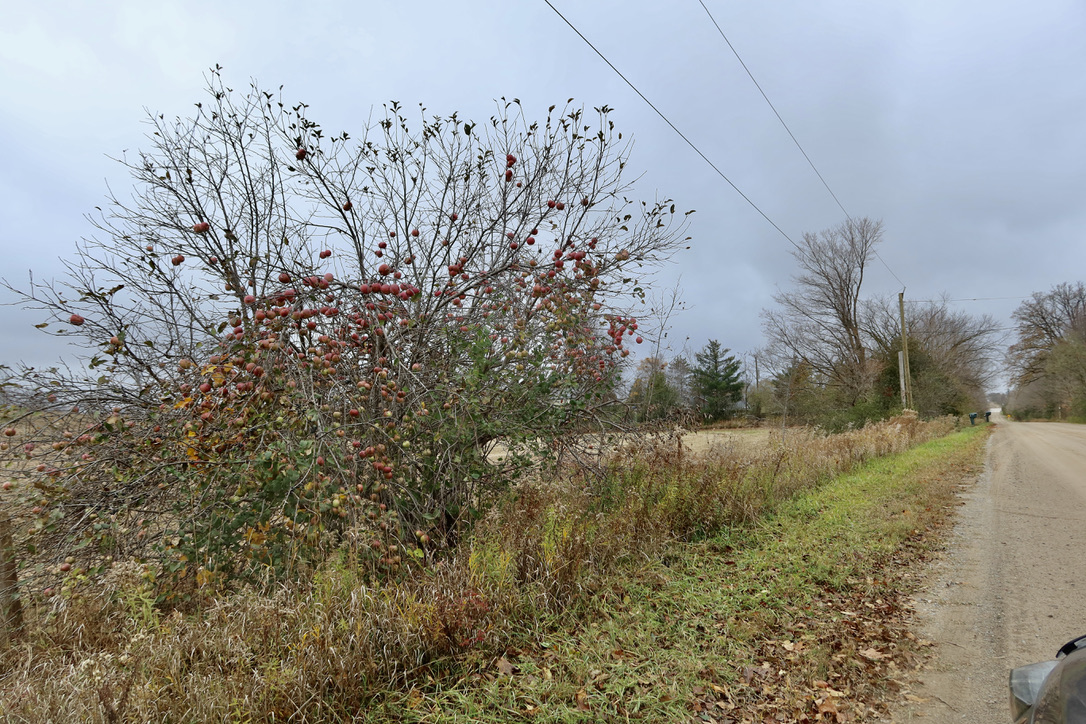
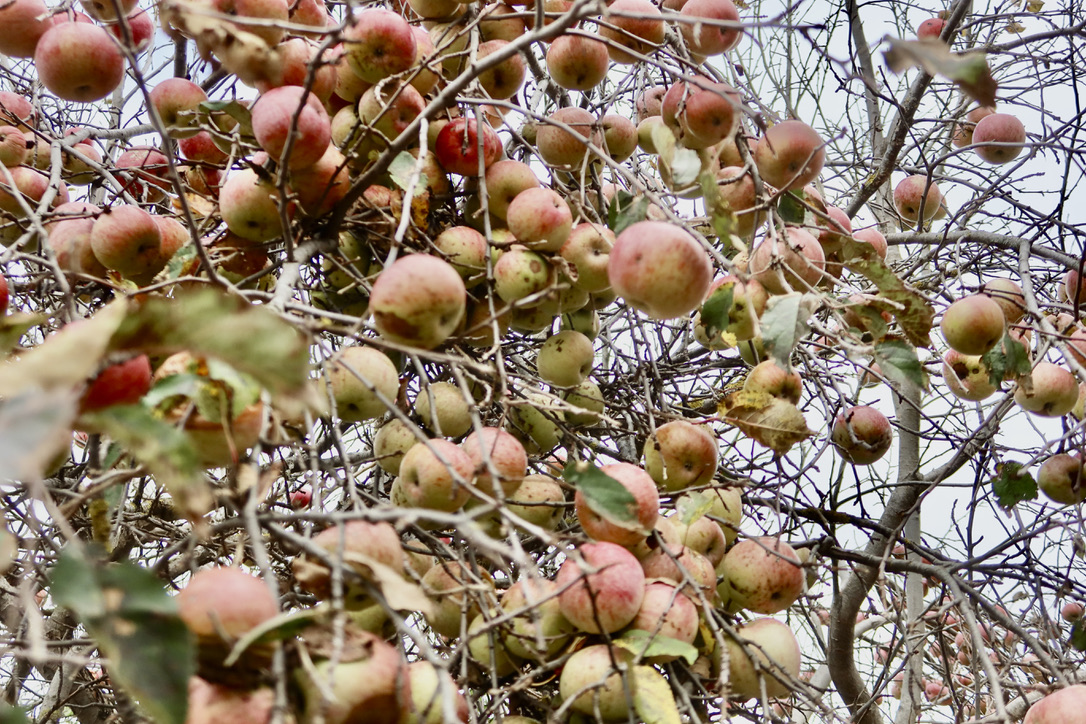
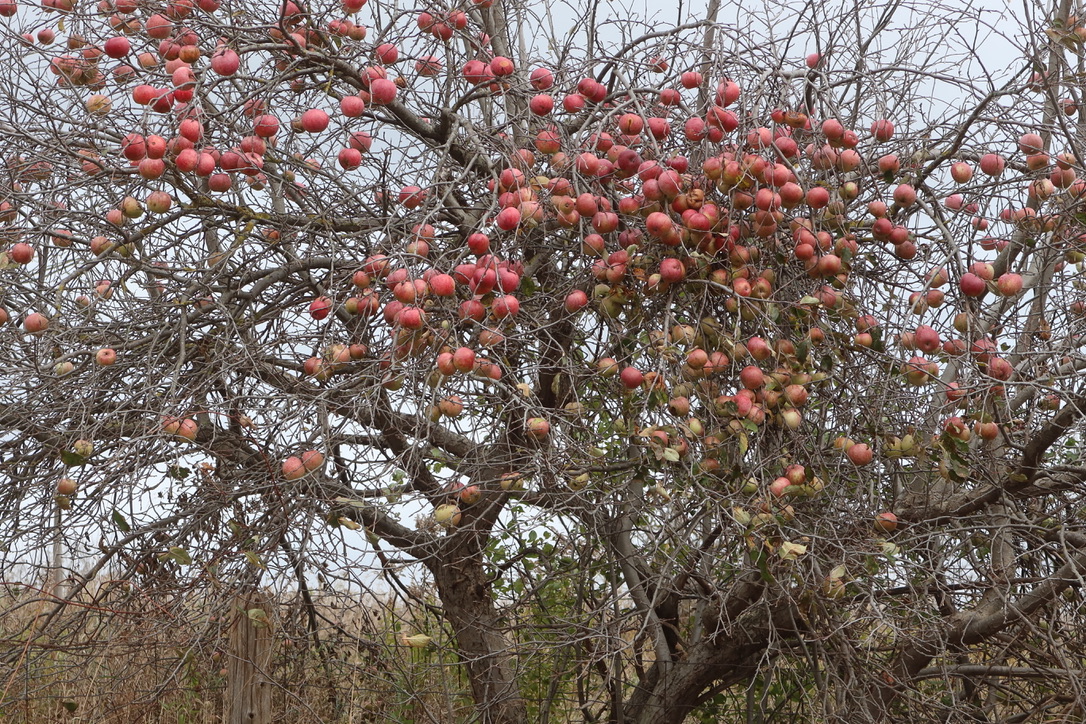
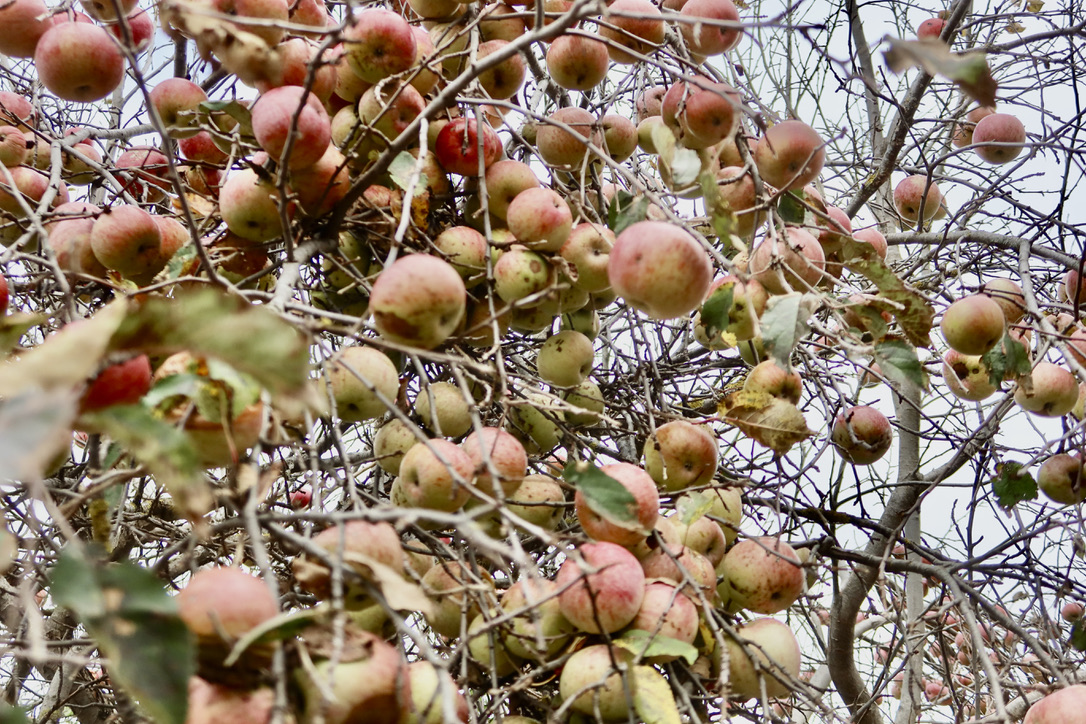
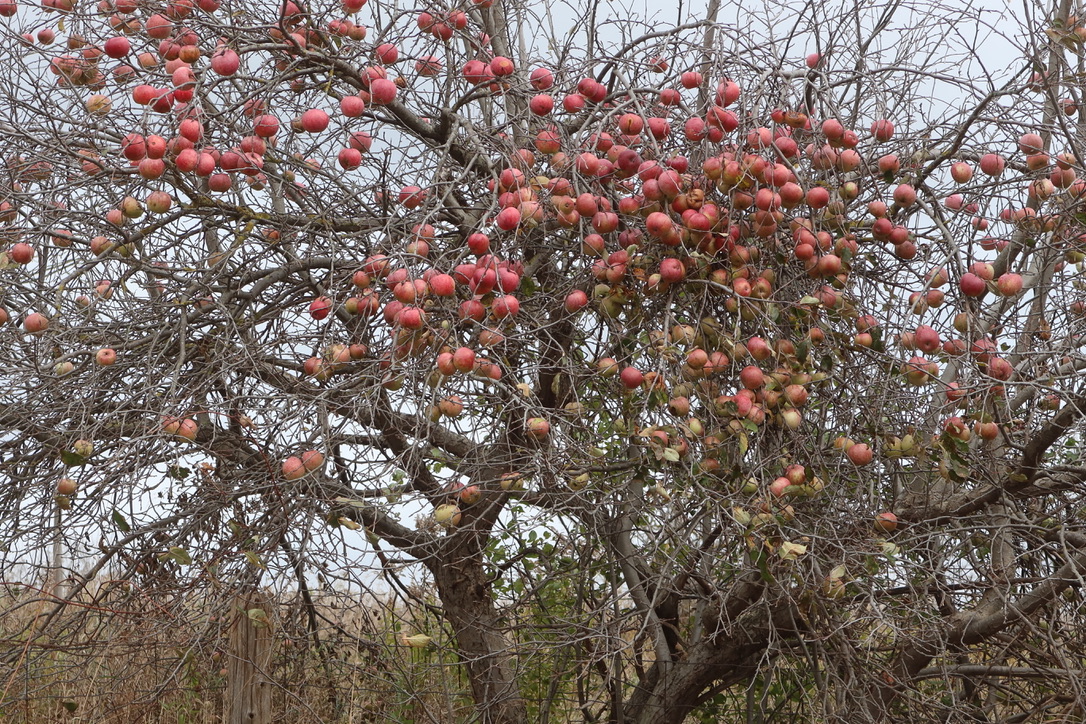
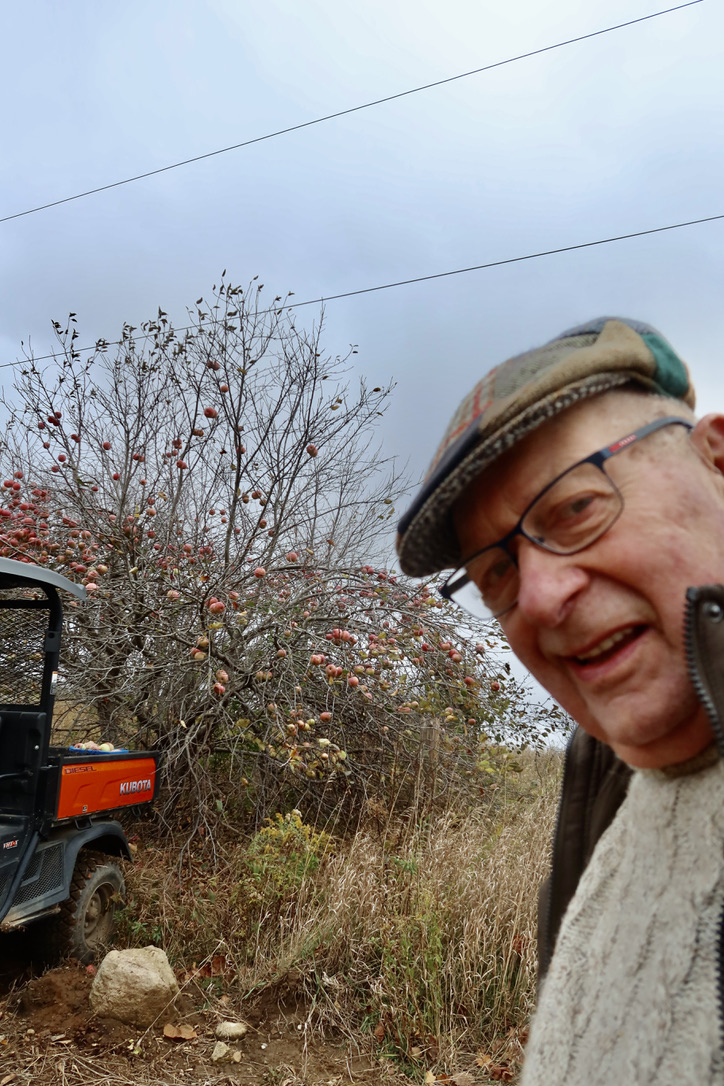
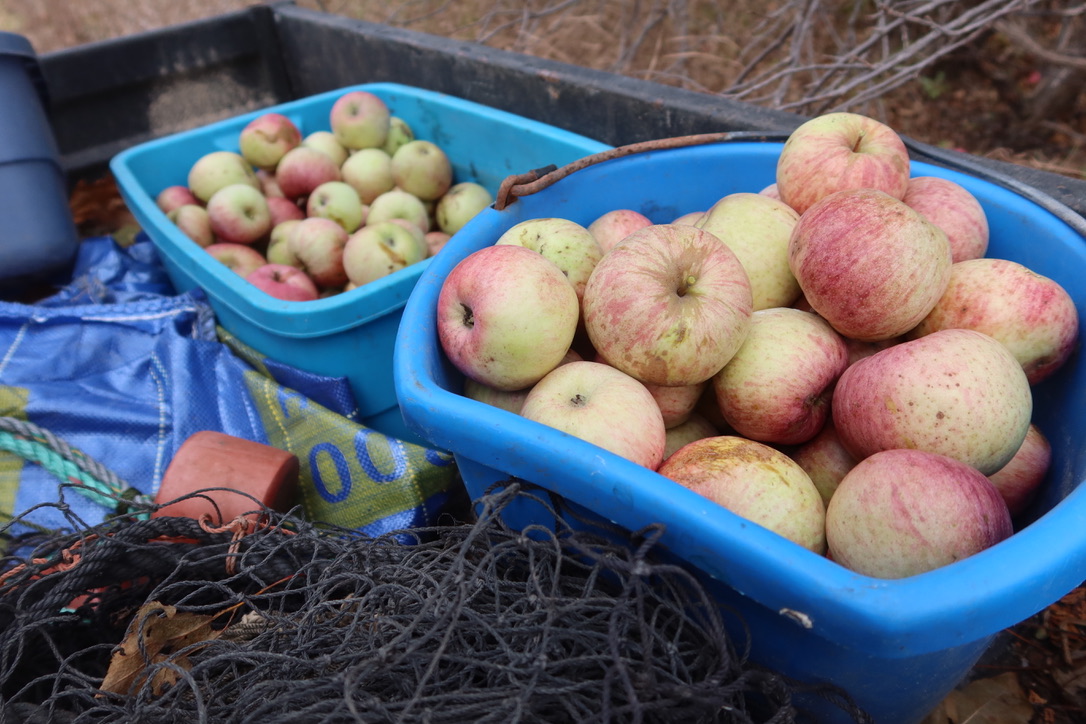
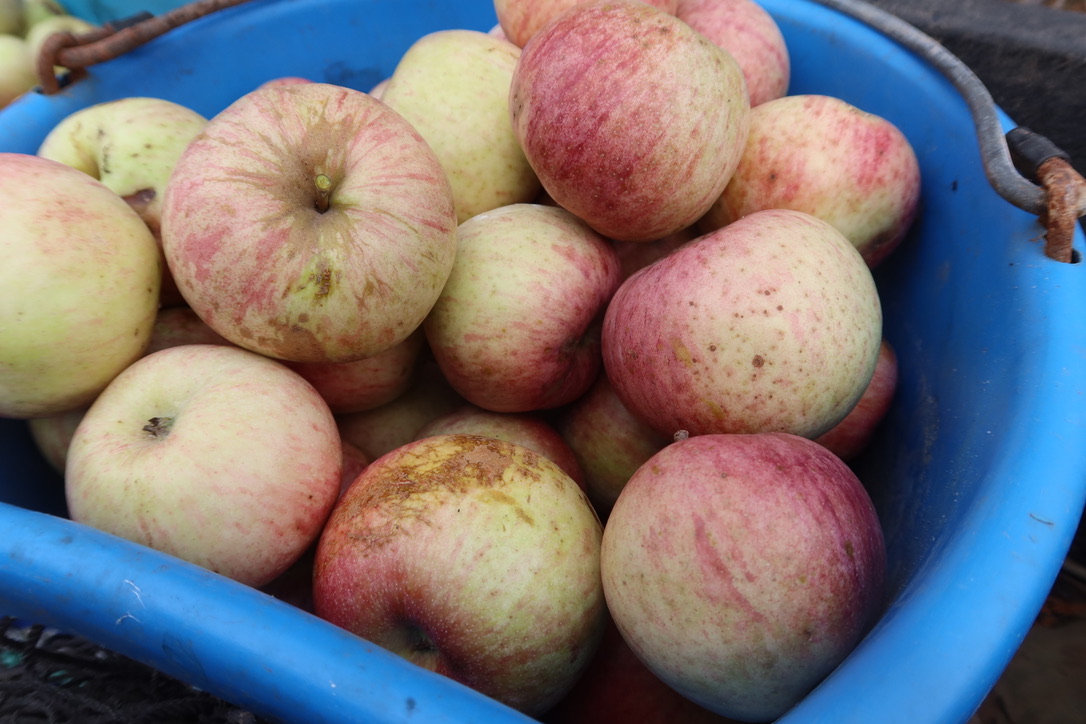
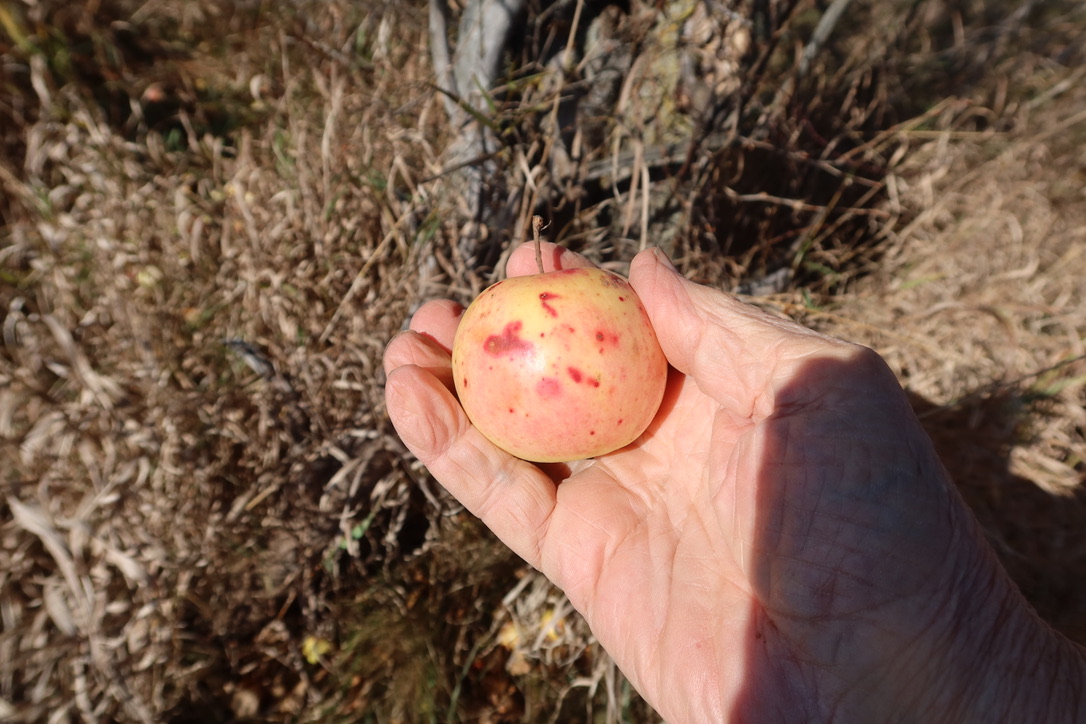
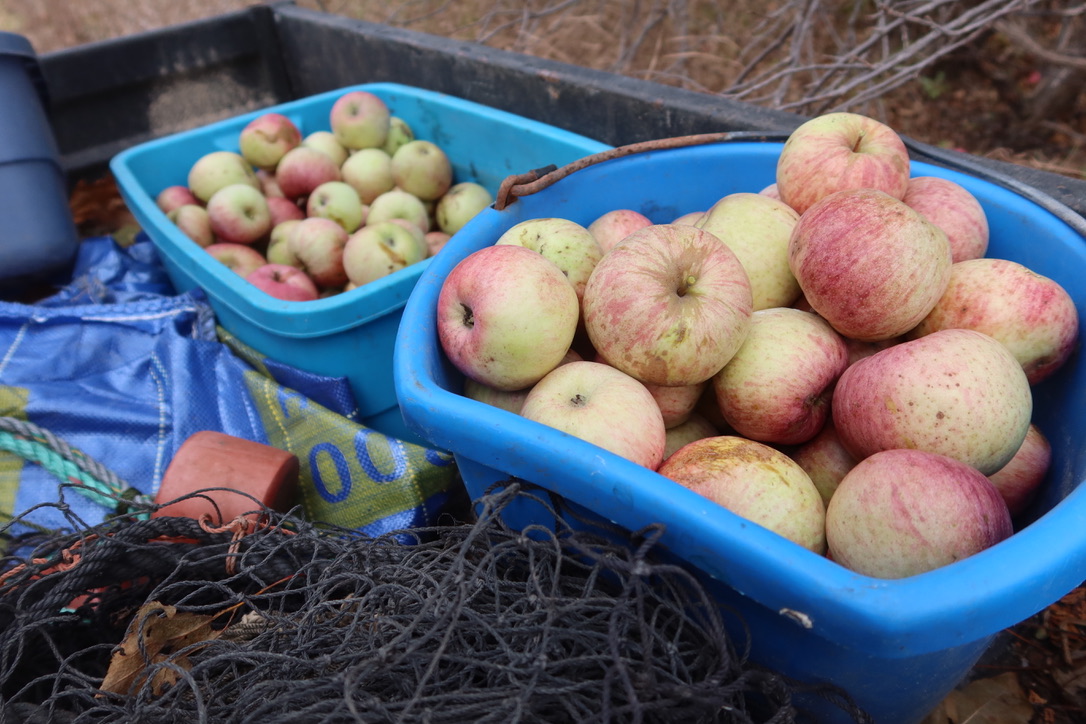 FERAL APPLE TREE BONANZAIt is a wretched looking tree. branches twisted and contorted as if being punished. It grows in the roadside ditch betweenthe two Skeoch farms on the Fifth Line of Erin Township. In short the tree would never win a beauty contest. But itcould become famous for its fruit. Bushels and bushels of apples some of which are as big as grapefruit..But I am getting ahead myself. I have crawled, walked, ridden, skated down this road piece for my whole life and i am 85 errs oldIn all that time I never noticed this tree until this cold November day as I Was driving from one farm to the other.“Holy Samoley, that tree is loaded..big apples. No! big is a poor term. Huge apples.”“How many?” quizzed Marjorie“Enough for you to make apple pies all winter.”“Like spy apples?”“Almost identical but they taste better.”“Many on the tree? Are you exaggerating?”“Here are four pails of the apples …all picked in 15 minutes … I can stand onthe gravel road and pick them with ease.”“In my 85 years I never noticed this tree. I am older than the tree . Eric and I playedhide and seek among the huge boulders that the McLeans dumped along the fencerow inyears past. Jack in the pulpits attracted our attention but we never noticed thisapple tree growing ….never noticed apples until this year. And the biggest apples areat the top …all I need is a ladder courage to get them meanwhile you can peel a bunchand make an apple pie.”“Will they keep? So many apples turn to mush when they touch each other..”“These apples grow in clusters….five,six, seven apples in a clump. ““Most Wild apples are small…these are huge. Are you kidding me?Did you buy these apples?”“Come along…you can boost me.”“It wil take too long.”“If we walk slowly it will take five minutes…ir we run two minutes. I tell youwithout word of a lie you are about to make a discovery that you will never forget.”“I bet that guy Husband from the University of Guelph would like to take a cutting from ‘ourferal apple tree.”“What do you mean by the term ‘our’…..this tree grows in the roadside ditch…public…owned by the township.”“You just explained why I never noticed this tree before now.”“How?”“Remember the big storm last spring?Devastated the trees”
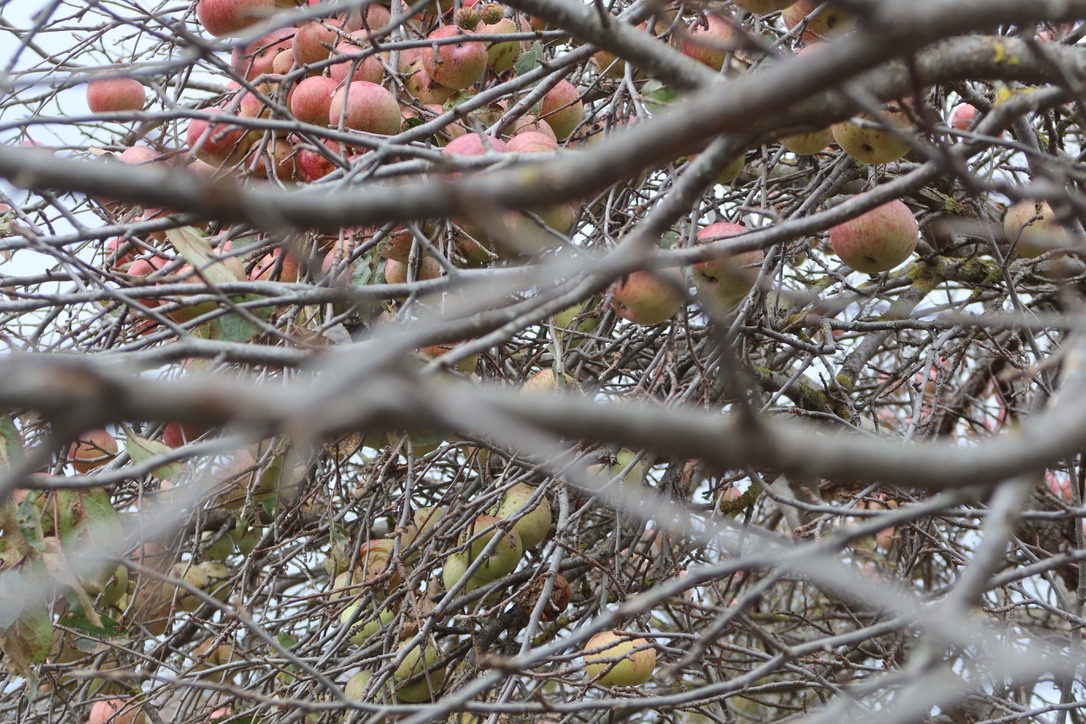 “Think this feral apple tree has been hiding behind other trees….the storm ripped out the cover andthe township forestry people cleaned up….cut all the crap around the feral tree….gaveit the breathing space it was waiting a lifetime to have happen. That’s just a guess.”“Why did they not cut up the feral tree?”“Come along…you will see why. The tree is protected by a jungle of twigs and branches…hard topenetrate with a chain saw. Why bother”“Why not call Brian Husband….the professor”“He might not give a damn. No-one cares.”alanPostscript: Wonder of wonders…Brian Husband is alive and well and interestedNOTE FROM BRIAN HUSBAND (NOV. 8, 2023Hello Alan,Thank you for including me on your latest episode about the orchard. I appreciated the photos and the words. They made me curious about the history of that orchard. Do you have reason to believe those trees were part of an actual orchard of cultivars or might they be seeds that established and persisted because they were protected from cultivation for some reason. I always enjoy those little discoveries and the questions that arise about their origin.Thanks for your observations and thoughts.Best,BrianDr. Brian C Husband (he/him) |Professor of Integrative Biology | University of Guelph, Summerlee Science Complex Rm 1477 | 50 Stone Rd E | Guelph, ON | N1G 2W1
“After comparing the genes of 578 naturalized feral trees to those of 156 non-feral varieties, as well as some ornamental species, the researchers discovered feral varieties originate strictly from commercially grown species. The study revealed parents of many feral apple trees comprise nine heritage cultivars — all varieties grown before 1900 — that accounted for 72 per cent of the identified parental lineages in the analysis.
“The origin of feral trees wasn’t so much the commercial apples fertilizing native crabapple, but rather these escaped apples that were now out there and growing wild,” said Husband. “The legacy of these old cultivars, some of which are no longer in production, reside in the mixed genomes of these wild apples.”
Some cider producers have begun mapping and evaluating unique apple strains found growing in abandoned orchards, hedgerows and historical properties, looking for those that are suitable for making hard cider, Husband added.
“There is definitely a growing interest in feral apples. Cider producers are looking for interesting flavours, and feral apples with heritage traits may be just what they are looking for.”
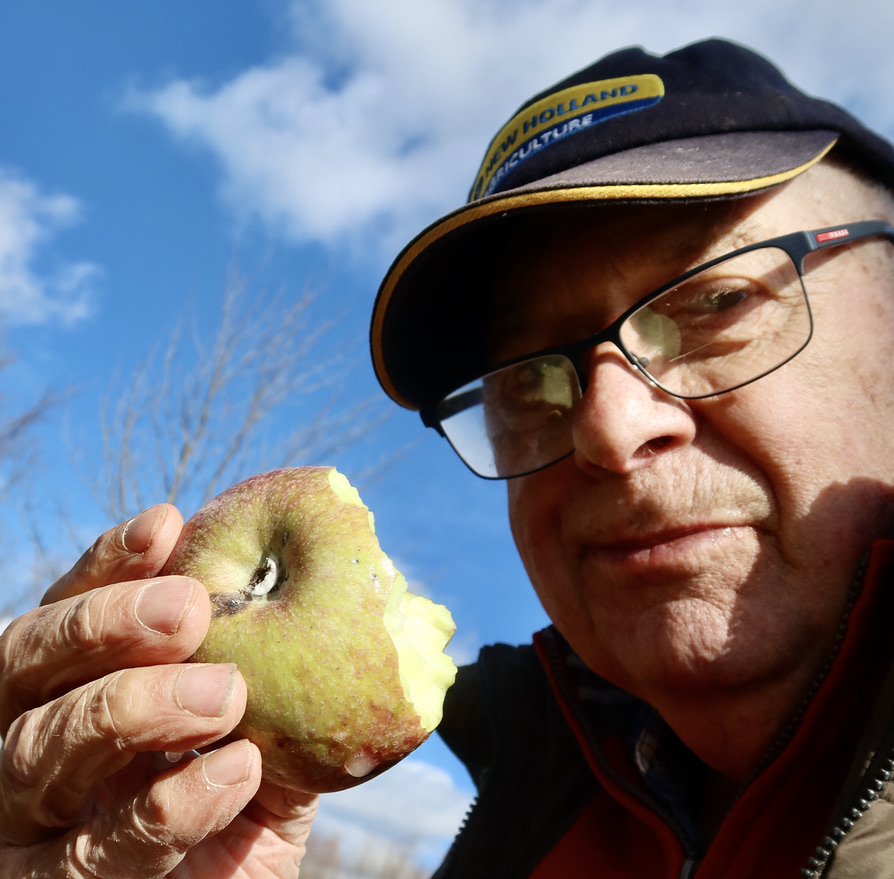
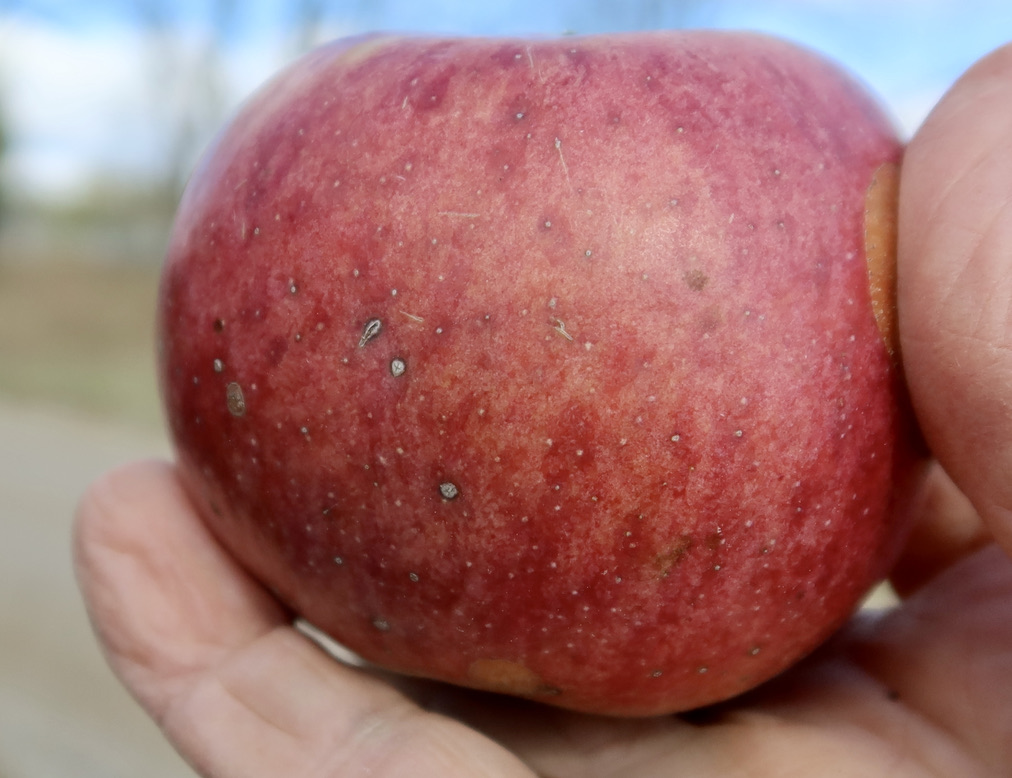 “Marjorie, I took two of these apples to our high school reunion today…seven old timers from Humberside C.I.”“were the excited?”“Not much…only Zig Novak who said “this looks like a Northern Spy Apple”“Cynical?”“No, I think he was perceptive…asked him to take a bite as I did.”“His comment?”“Alan, I am taking this apple for my wife to taste.”“Seemed to support your great discovery How did the others feel?”“I think some of them thought I was a bit wacky.”“True.”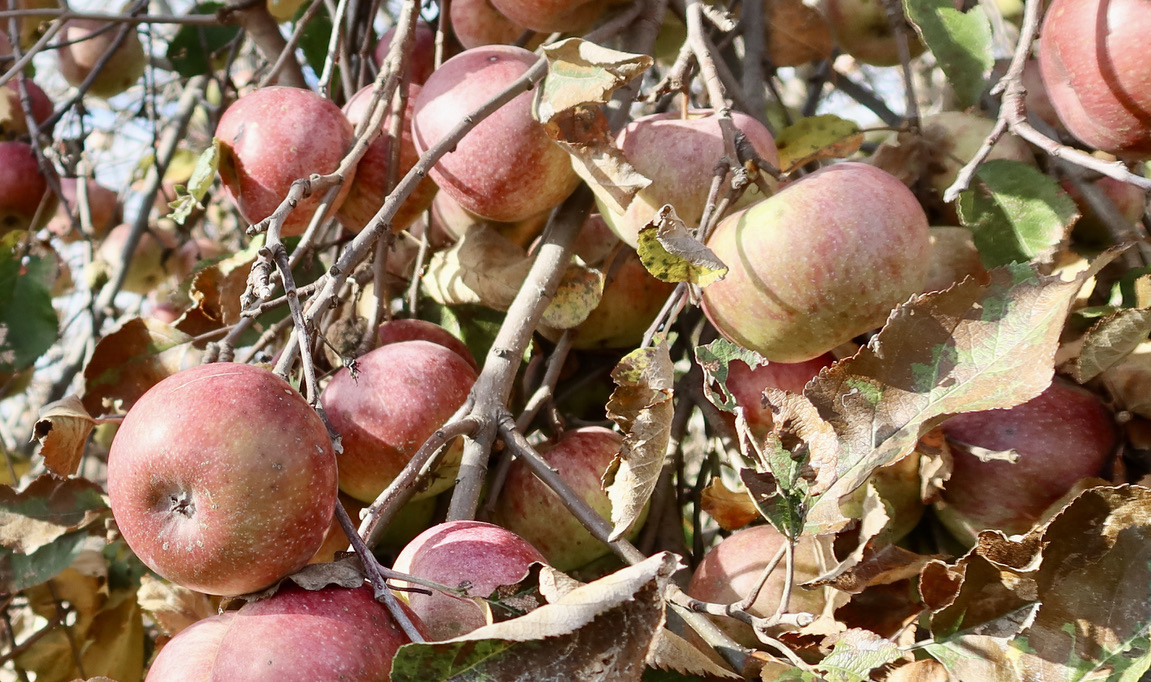


-
EPISODE 906 THE FORGOTTEN ORCHARD — NOVEMBER SKY (NOV. 5, 2023)
 EPISODE 906 THE FORGOTTEN ORCHARD — NOVEMBER SKY (NOV. 5, 2023)alam skeochnov. 5, 2023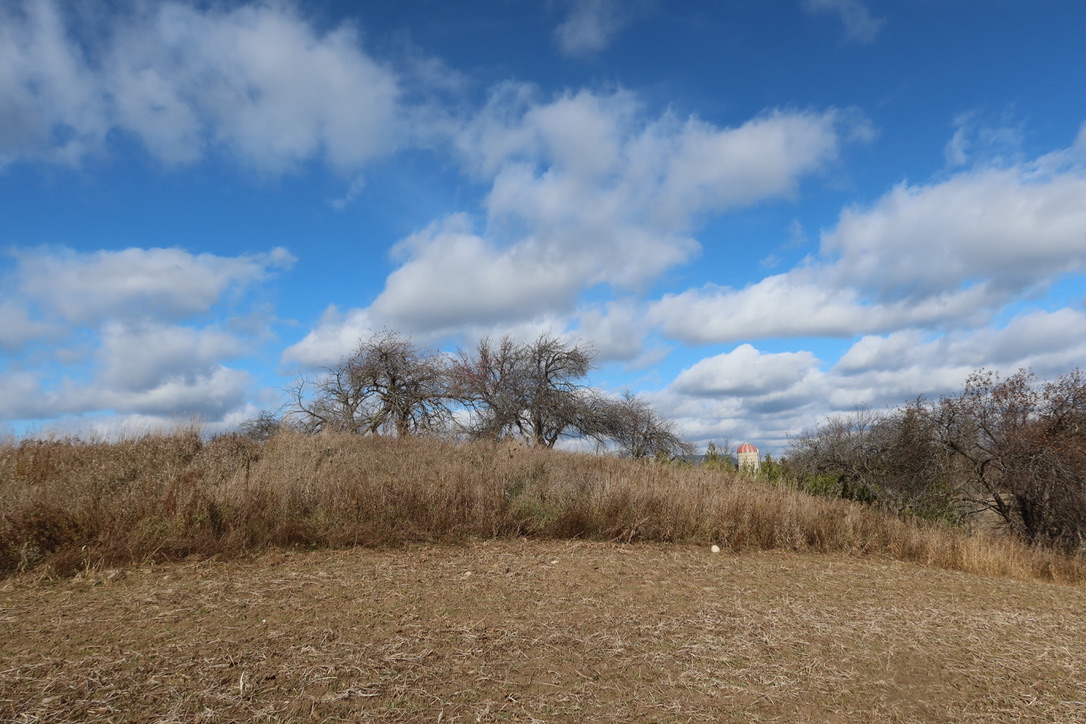
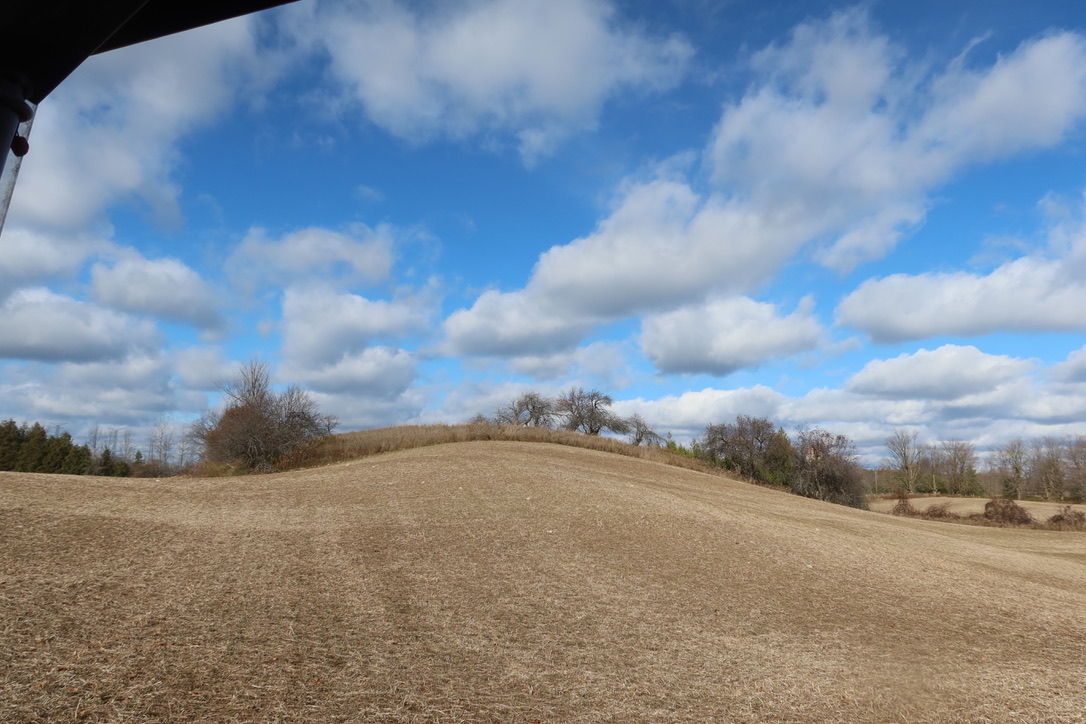
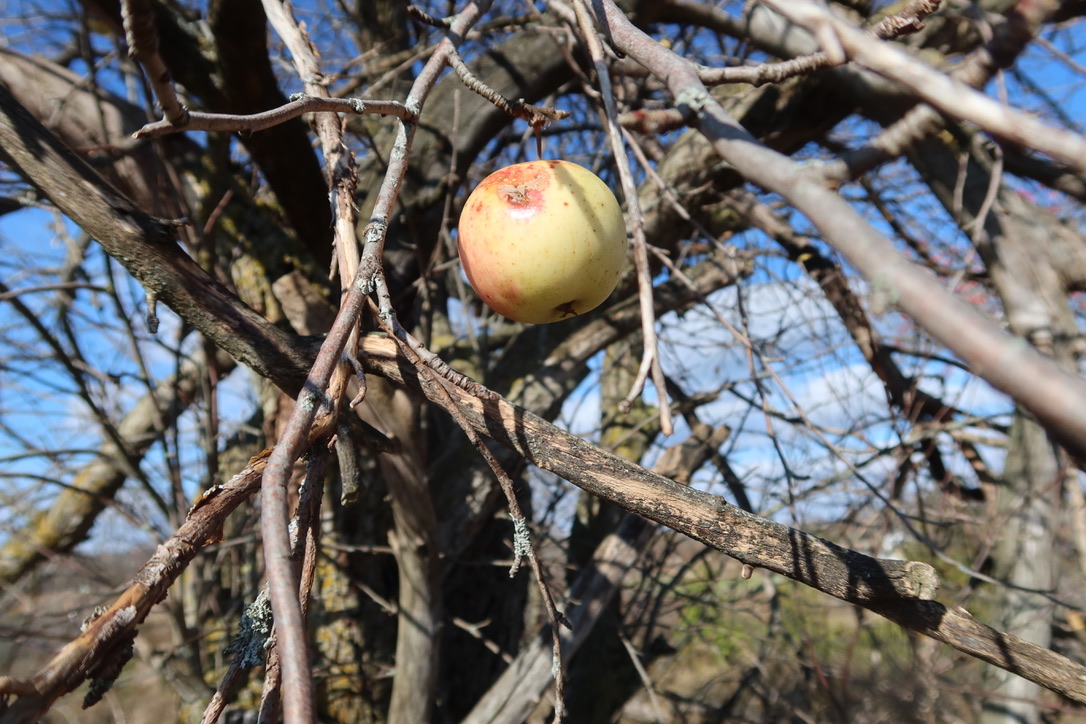
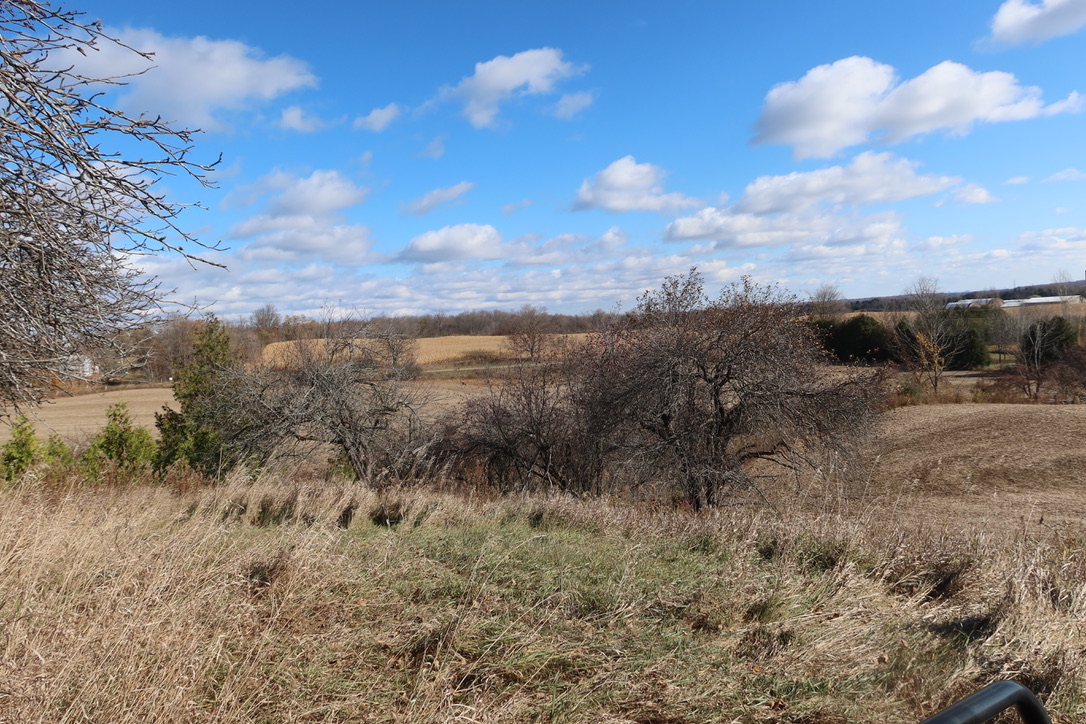
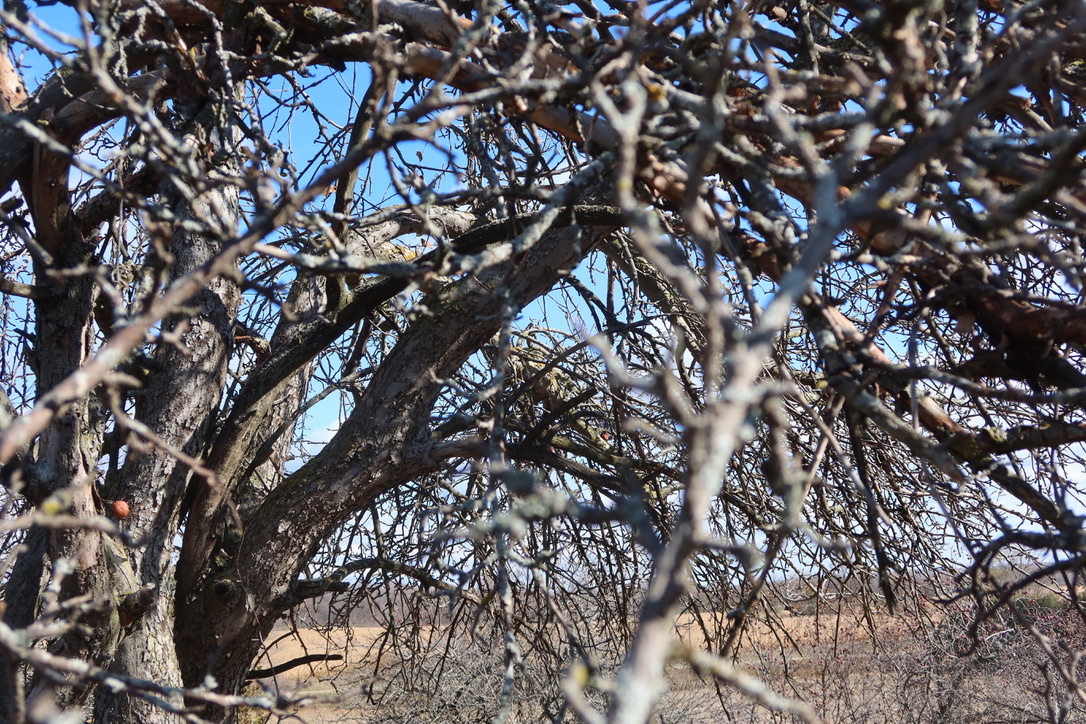
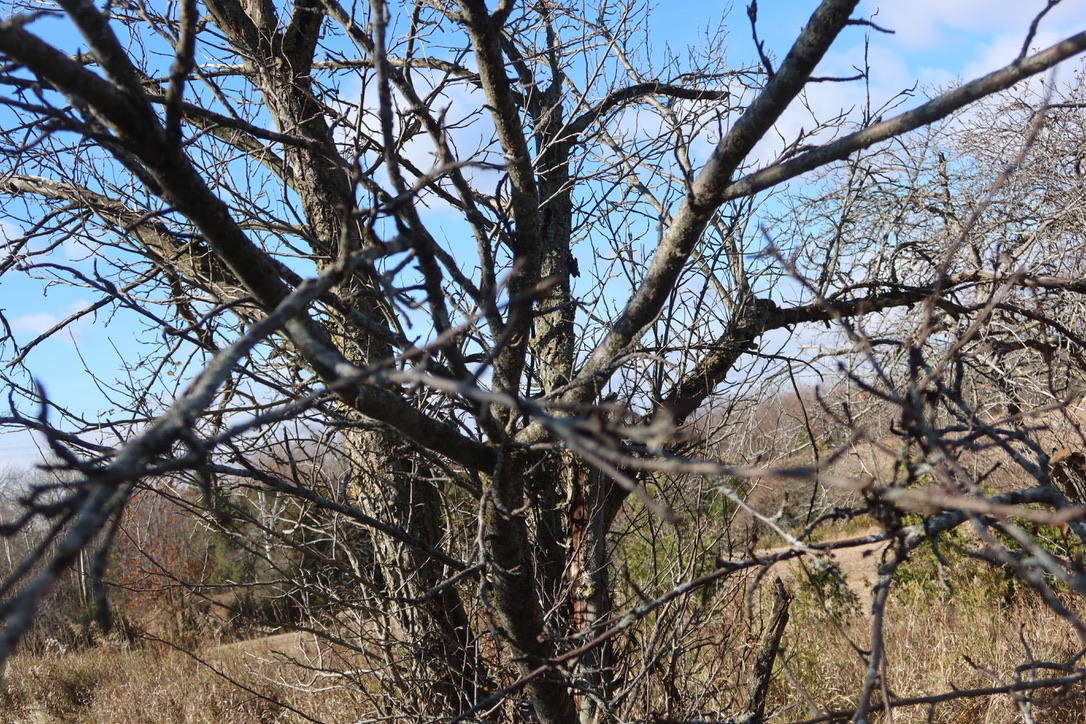
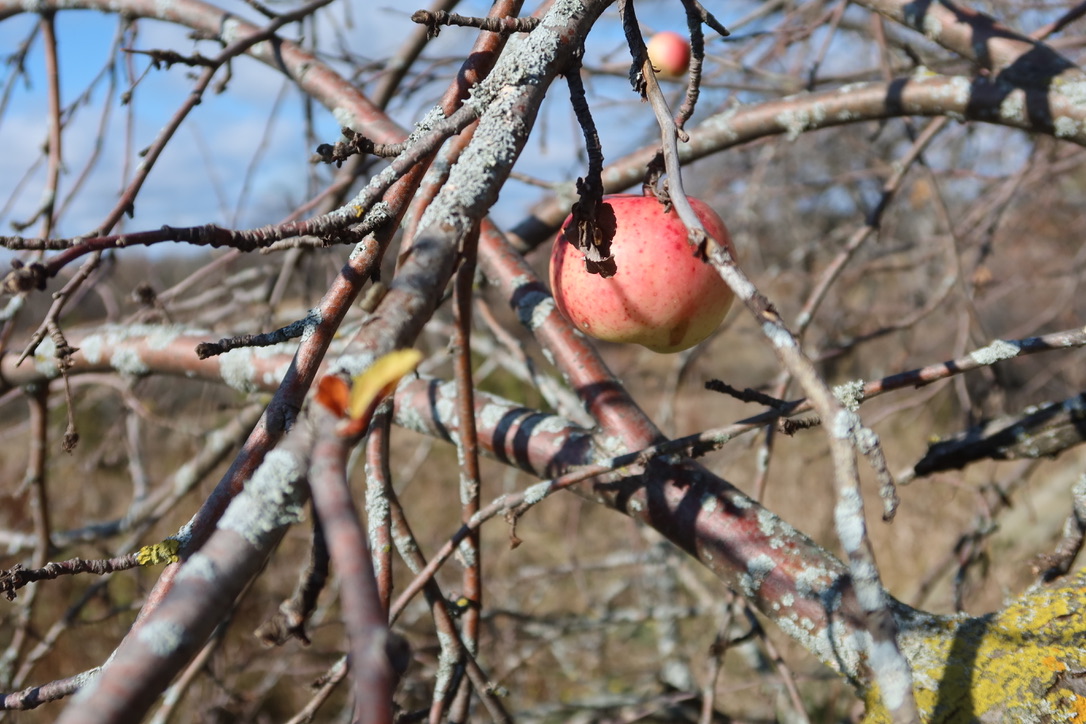
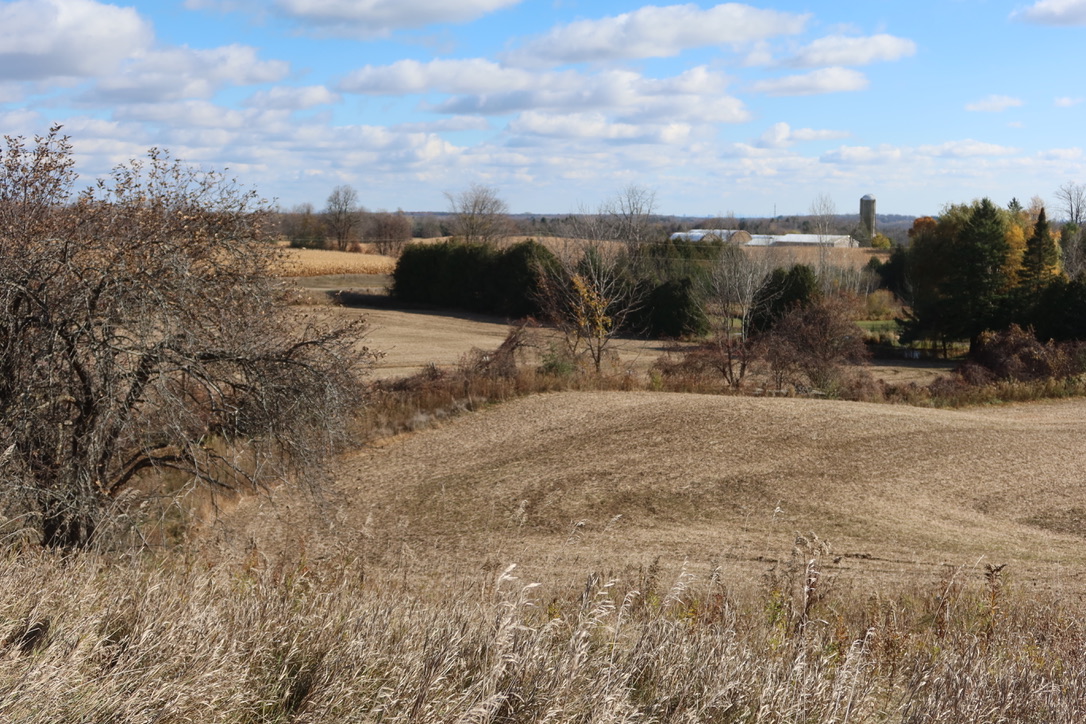
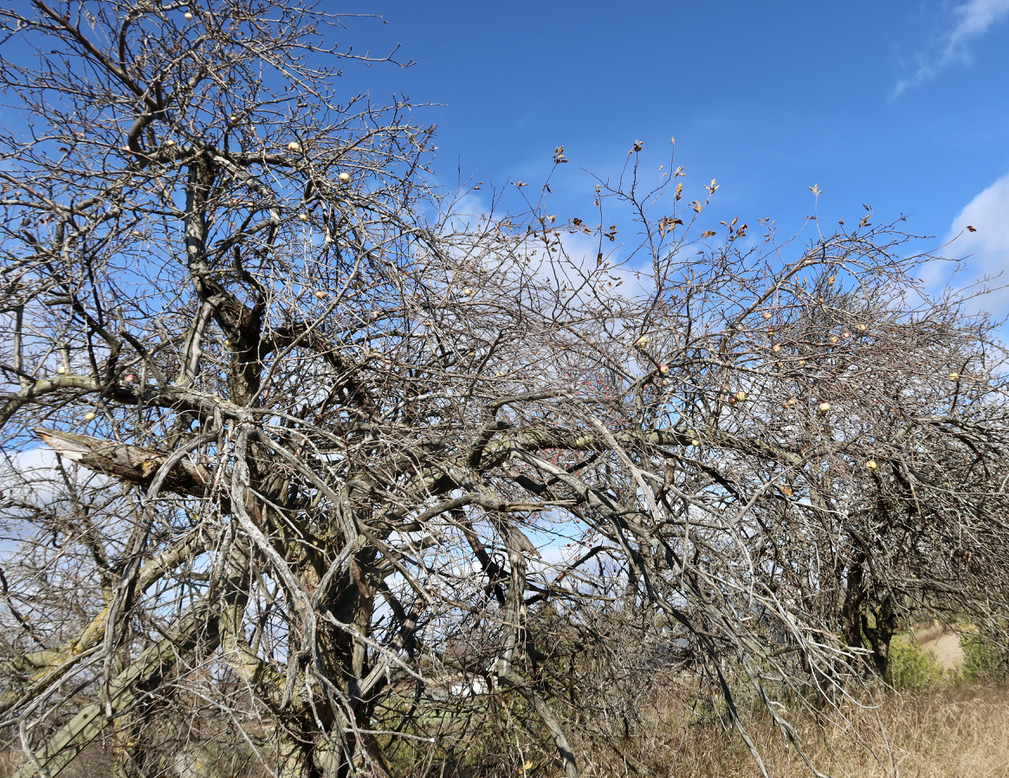
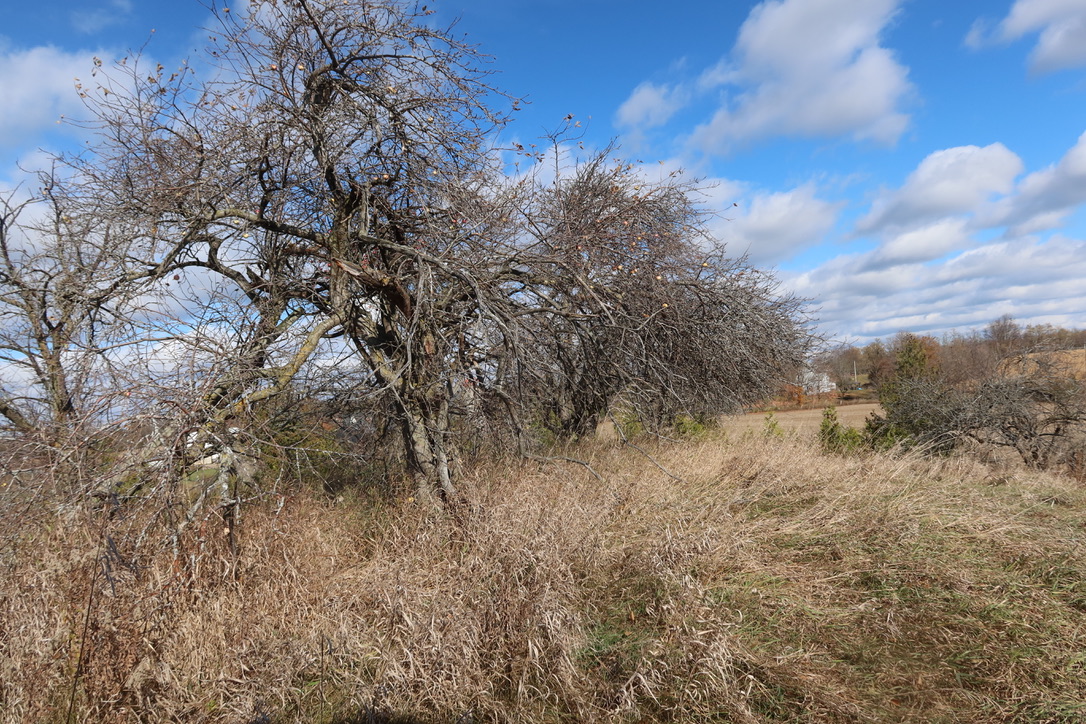
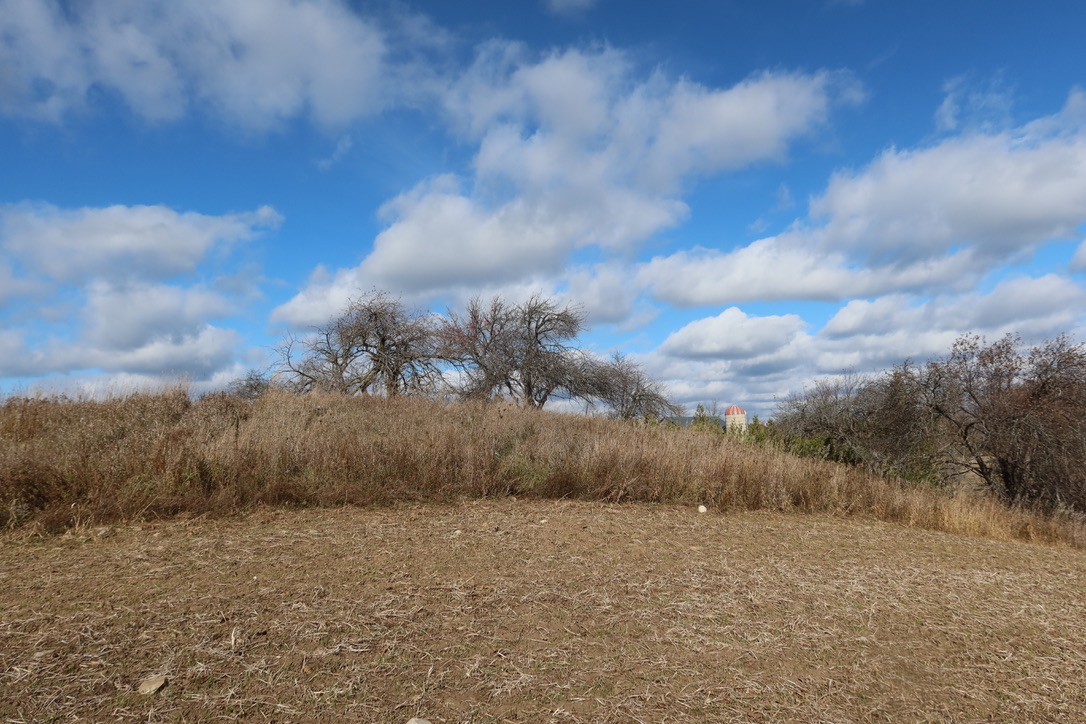
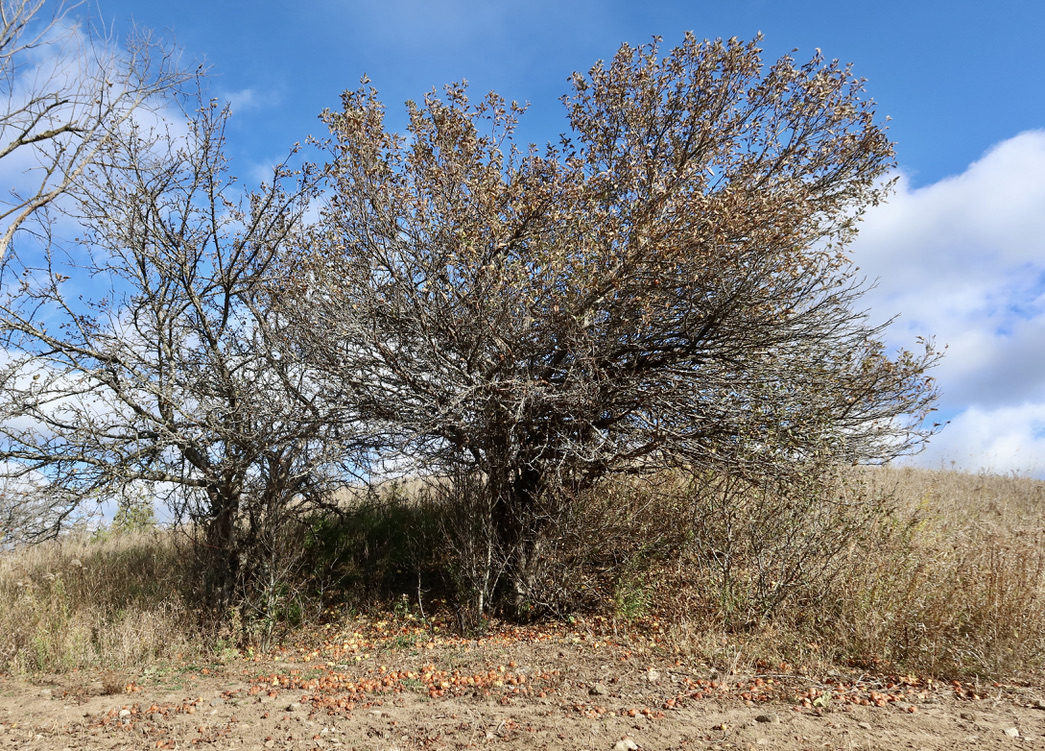
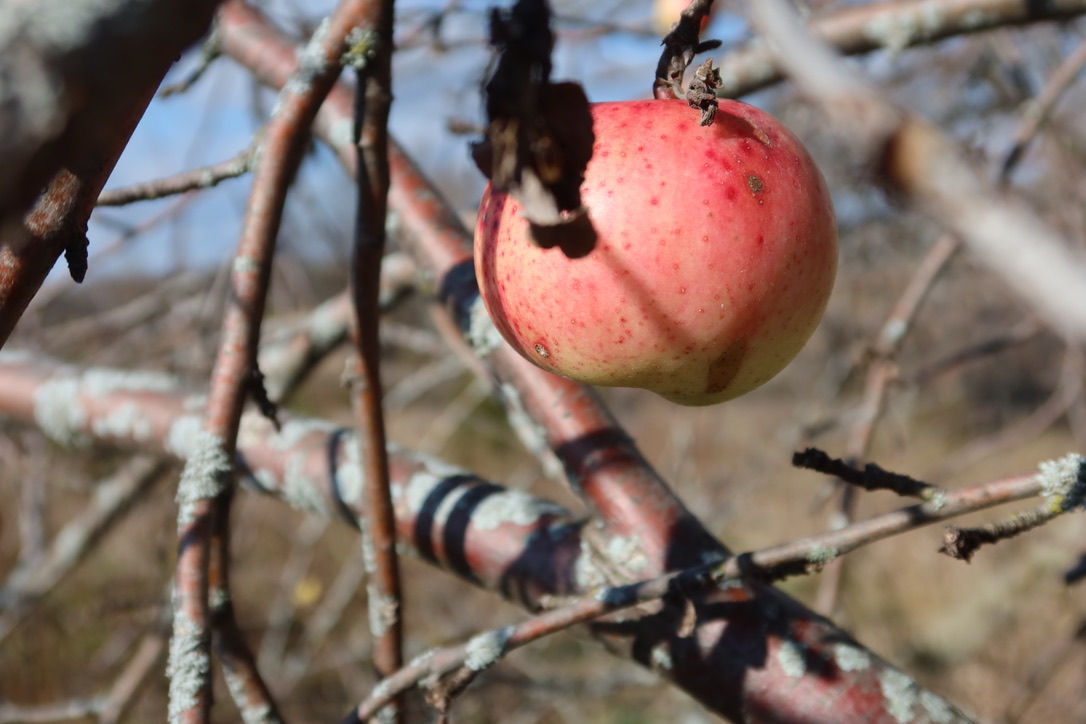 FORGOTTEN ORCHARDThe forgotten orchard sits atop a glacial drumlin in Erin Township Ancient t=appple treesperhaps planted by Jean and Janet McLesn early in the 20th century. Locatedthis November day where the horizon meets the sky. A forgotten orchard that stillbears fruit Indiferent fruit for no one cares.Few people take the time to climb the steep face of the drumlin.what’s the point” The apple are small and few remain on the twistedbranches Summer apples with names long forgotten like Madens Blush…anapple best collected in August when the blush is firm.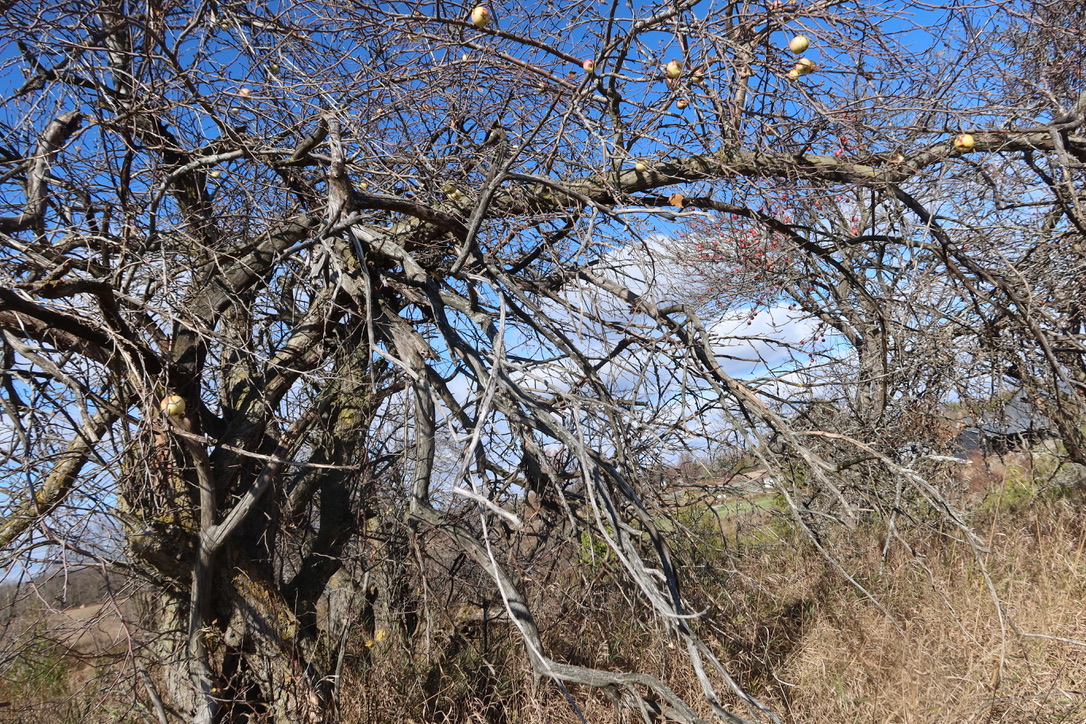


 .FERAL APPLE TREES
Prof. Brian Husband
bhusband@uoguelph.caApple trees – and the fruit and seeds that grow on them – are produced only through mating of two genetically different varieties. That means feral apples are combinations of past varieties. Two distinct feral trees can also mate with each other, as can a feral tree with a commercial variety.
Feral apples were long suspected to be hybrids between commercially grown species and a native crabapple tree, but this study found that not to be the case.
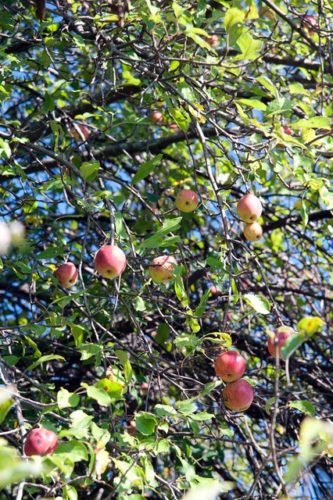 marvel-b1-cdn.bc0a.com/f00000000209359/news.uoguelph.ca/wp-content/uploads/2019/10/thumbnail_rareApple012DSC_3973crped-100×150.jpg 100w, marvel-b1-cdn.bc0a.com/f00000000209359/news.uoguelph.ca/wp-content/uploads/2019/10/thumbnail_rareApple012DSC_3973crped-40×60.jpg 40w, marvel-b1-cdn.bc0a.com/f00000000209359/news.uoguelph.ca/wp-content/uploads/2019/10/thumbnail_rareApple012DSC_3973crped.jpg 426w” sizes=”(max-width: 200px) 100vw, 200px” be_marvel=”1″ style=”box-sizing: border-box; height: auto; max-width: 100%; vertical-align: middle;”>
Makers of hard cider are increasingly interested in wild apples. After comparing the genes of 578 naturalized feral trees to those of 156 non-feral varieties, as well as some ornamental species, the researchers discovered feral varieties originate strictly from commercially grown species. The study revealed parents of many feral apple trees comprise nine heritage cultivars — all varieties grown before 1900 — that accounted for 72 per cent of the identified parental lineages in the analysis.
“The origin of feral trees wasn’t so much the commercial apples fertilizing native crabapple, but rather these escaped apples that were now out there and growing wild,” said Husband. “The legacy of these old cultivars, some of which are no longer in production, reside in the mixed genomes of these wild apples.”
This finding provides insight into why feral apples have the strong taste that hard cider producers are after.
Over the last century or more, the Canadian apple industry has focused on the fresh market and eating apples, which are not ideal for cider, said Husband.
“Few suitable cider varieties are currently available in Ontario, so cider producers have begun looking at feral apples because they have the right taste.”
Cronin said the characteristics of feral populations may resemble varieties of apples that were grown hundreds of years ago by Ontario cider makers.
“The interesting flavours and aromas found in feral apple fruit might appeal to the Ontario apple industry in creating unique cider beverages,” he said. “There is a vast trove of untapped genetic potential in the natural landscape of southern Ontario that could be used to enhance or diversify the commercial cider industry.”
Some cider producers have begun mapping and evaluating unique apple strains found growing in abandoned orchards, hedgerows and historical properties, looking for those that are suitable for making hard cider, Husband added.
“There is definitely a growing interest in feral apples. Cider producers are looking for interesting flavours, and feral apples with heritage traits may be just what they are looking for.”
……+—————————————— -
EPISODE 902 CAN I EAT BLACK WALNUTS?
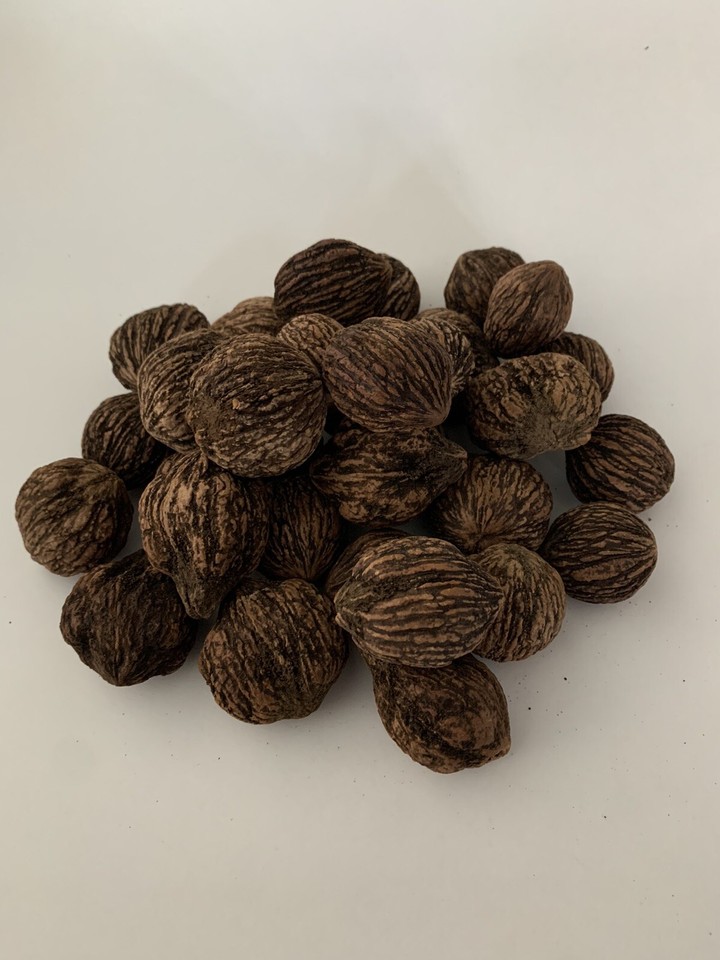
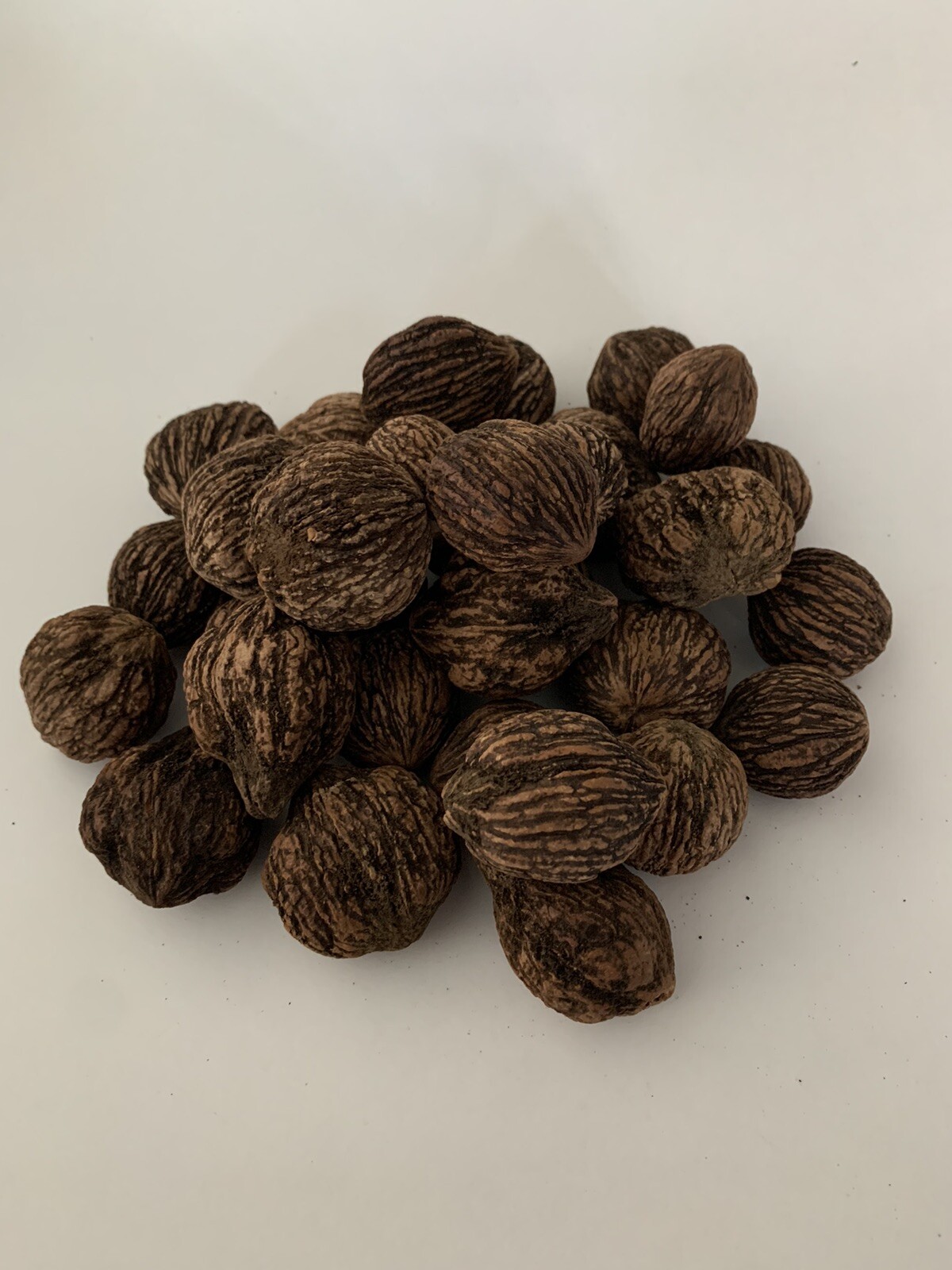
EPISODE 902 CAN IEAT BLACK WALNUTS?alan skeochnov. 3, 2023i.ebayimg.com/images/g/4AMAAOSwWWxkL0P6/s-l500.jpg 500w, i.ebayimg.com/images/g/4AMAAOSwWWxkL0P6/s-l960.jpg 960w, i.ebayimg.com/images/g/4AMAAOSwWWxkL0P6/s-l1600.jpg 1600w” sizes=”(min-width: 768px) 60vw, 100vw” apple-inline=”yes” id=”E245BBE5-CFC3-466F-86C4-98F3F672568C” style=”transform-origin: 446px 220px 0px;” src=”https://alanskeoch.ca/wp-content/uploads/2023/11/s-l1600.jpeg” class=””>
Yes, black walnuts are edible but they need to be prepared. Here are longand short instructions.SHORT INSTRUCTIONSGather a basket of black walnuts. Peal off the soft outershell which turns black and gooey then put the walnutssome place dry where the squirrels can’t get them.Then place each walnut in a workshop vice to smashopen the shell. Use a small sharp tool to weasel out the nutin pieces.LONG INSTRCUTIONS1) Gather pile of black walnuts2) Let the worms (invisible) help get much of the black outer casing removed3) Use gloves so you do not stain your hands.4) Wash the shells in pail of water, stir with paddle…rinse.5) Wash again…rinse again6) Wash again until water is clear7) Allow nuts to dry in warm place8) Be sure squirrels cannot get access.9) Place each nut vertically workshop vice….crush10) Separate shell fragments from nut meat carefully11) Taste nut meat12) Plan gourmet use for nut meats13) Or…put some nut meat on your bird feeder as a treat“Black Walnuts are delicious to eat. We used to gather hundreds of the walnuts and put them on top of the hot air ducts in the basement to dry for a few weeks. When they were dry we would take them down and crack them open. The work bench vice was great for cracking them. The trees themselves do tend to prevent other trees from growing under them. Their roots seem to secret some kind of toxin that discourages them but smaller shrubs and grasses would grow under them. The squirrels really liked them and would hoard them for winter.” Quote from Rooter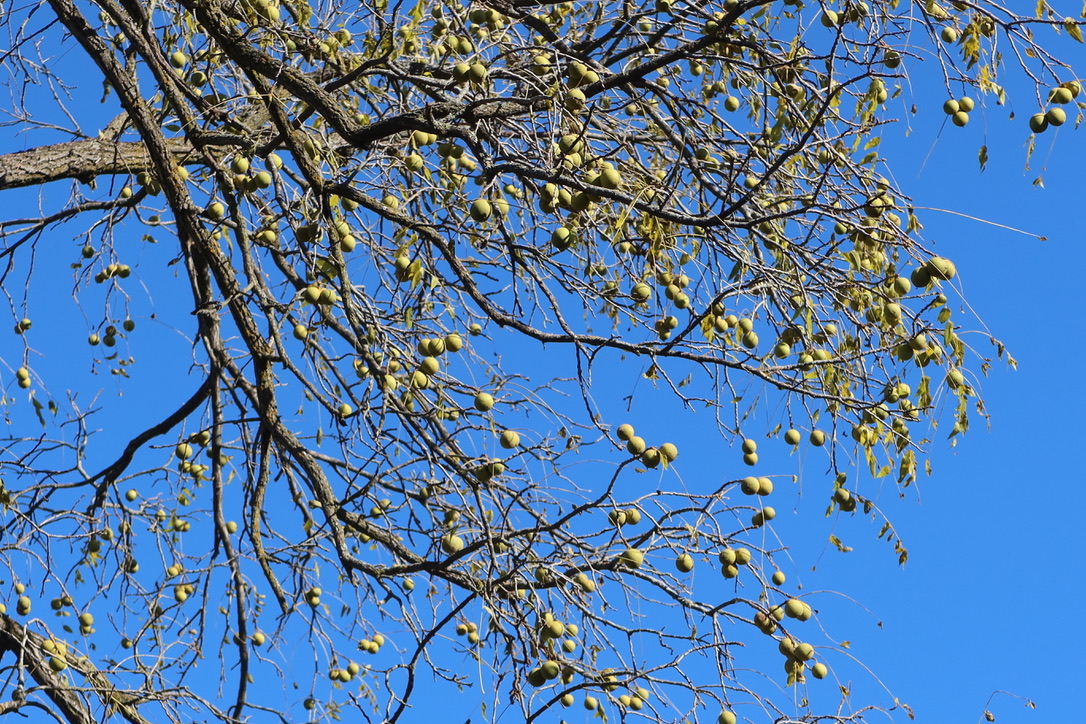
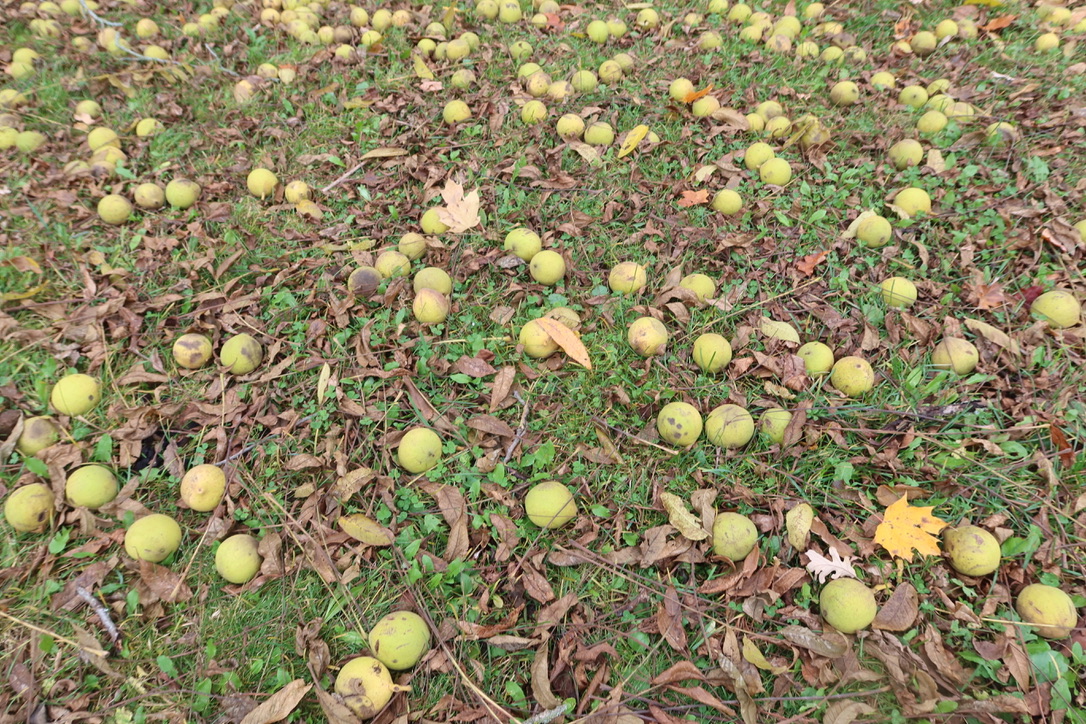 The black walnuts turn back and gooey . Get rid of this guck by washing. Then give nut time to dry. Be on lookoutfor red squirrels.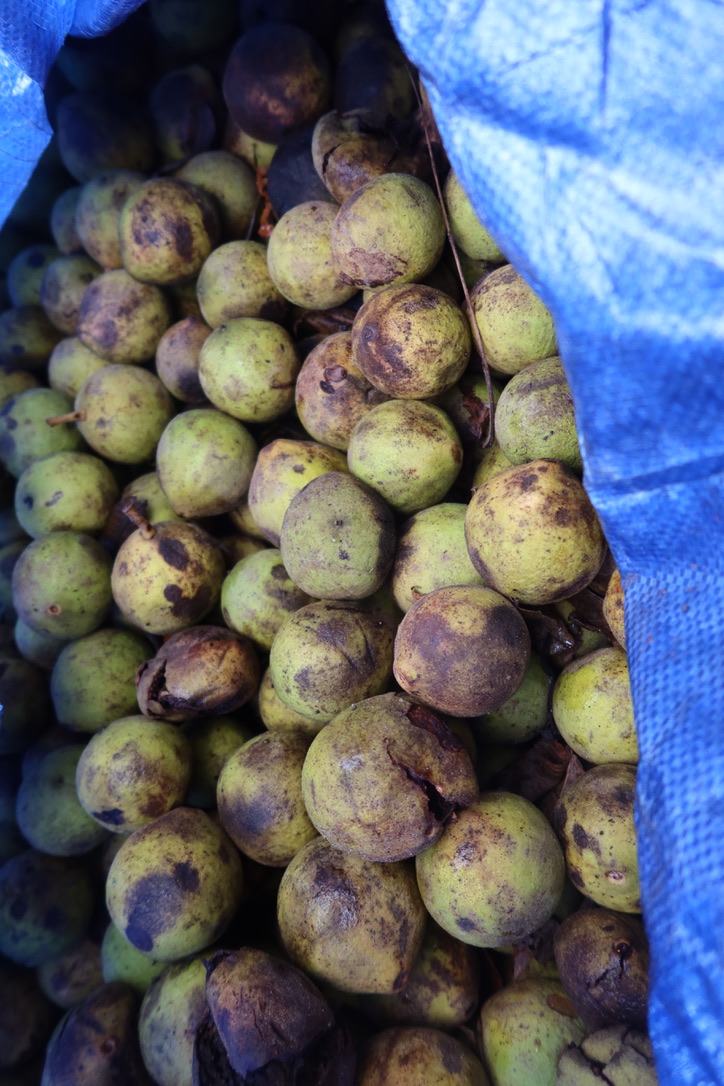
-
EPISODE 901 CHELSEA BUN IN TROUBLE — WHERE IS SHE?
episode 899 “Meowww! MEOWWW!” “I HEAR YOU , CHELSEA BUN, BUTWHERE ARE YOU?alan skeochOct 30m 2023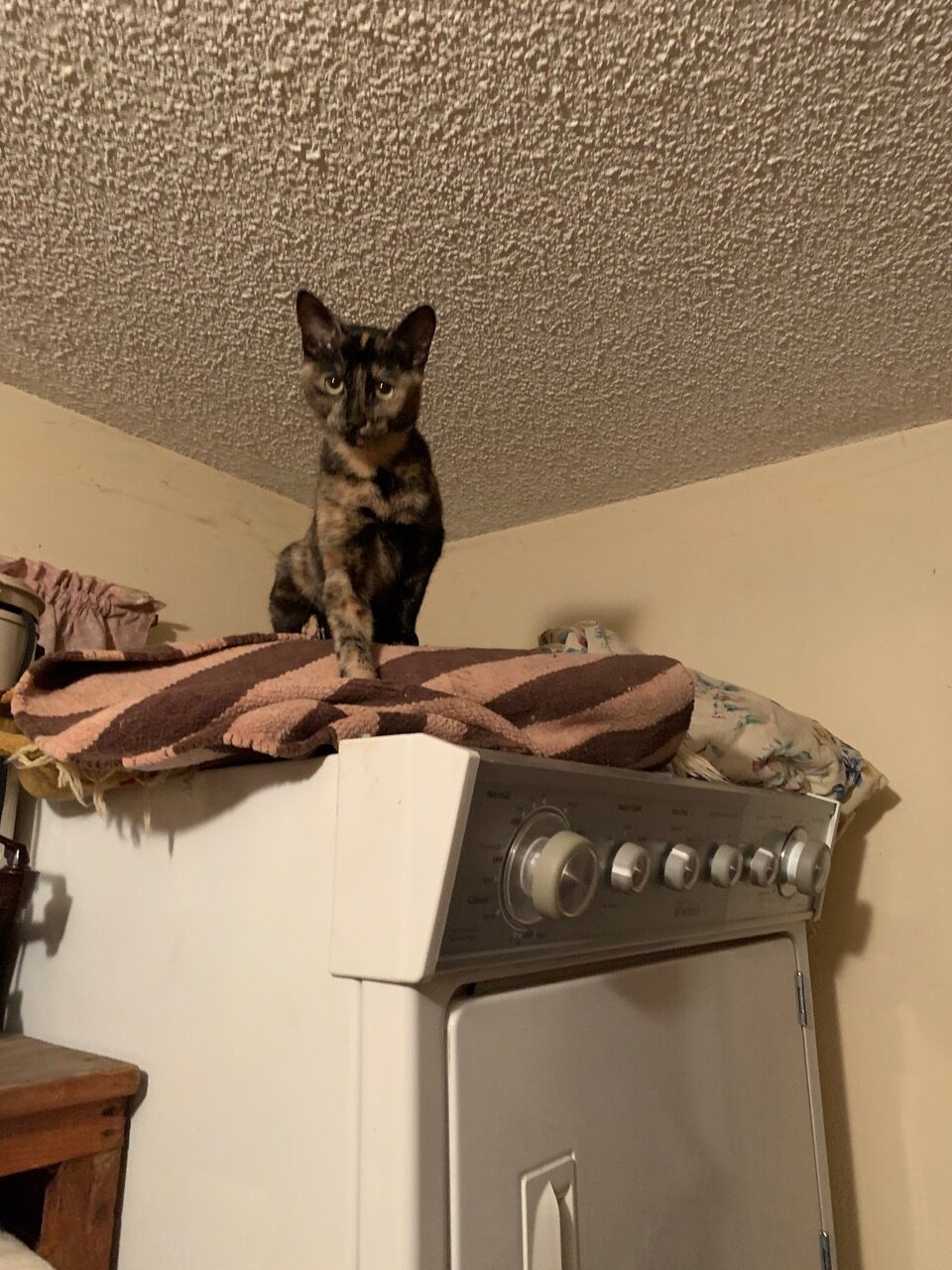 OUR KITTEN CHOSE ITS HOME HIGH ATOP THE WASHER DRIER IN THE LAUNDRY ROOMWe live in Mississauga on what was once land owned by the Mississuagas.As a result the house lots on our street are unusual. Huge. Ours is 55 feet x 400 feet. Lots of big treesand scrub underbrush…we even have a small stream casually working its way to Lake Ontario anda great swath of unmanicured forest. Inshort the back of our lots look like they have always beenwild.A den of coyotes have taken up residence for years. BolD at times. But not with me forI carry a gun which I bought for a couple of bucks at the Dollar Store complete with severalstrips of ammunition. I wear it on my hip for a fast draw if the coyotes decide to attack Woodya couple of pops scares them off. That only happened once..Woody found out the hard way that coyotes regarded him as a meal when one took a swipe athis ass.There are no cats near our house any more. Cat owners keep their cats in their houses.Those that get free have a short life. We may even have lost Taranga that way. She was founddead on the banks of the stream by our son Andrew. May have been a natural death forshe was elderly. Or a coyote that was not hungryEnough said. Our new cat’s father was a feral cat moving with stealthin Erin Township, we figured his daughter who we call Chelsea Bun (because she lookslike a Chelsea Bun)… might be wise enough to keep clear of the coyotes.SO SHE HAS A LEASH…SHE IS NOT FREE“Alan, she must be leashed at all times.”“Fine.” (Marjorie does not trust me.)“Remember that.”Yesterday, Marjorie did not follow her own advice and let Chelsea Bun go free…dragging her leash behind her.Se was free for some time while Marjorie raked leaves.“Meeeow¡”“I hear you Chelsea Bun.”“Meow…Meow!”“Where are you?”“Meow!”The cry was distant.“Meow!”“Where are you?”“Meowww!”We have lots of trees…half our400 foot lot is a wilderness where coyotes can run free.Dangerous placer for a kitten.“Meow!”Marjorie spent a lot of time looking for Chelsea Bun until she lookedup and spotted the red tip of the leash jiggling high up one ofour cedar trees. Perhaps 30 feet up, maybe higher…the leash hanging straight down.If she moved she could easilly hang herself.“Hold on!”Marjorie tried many things.1)She tried to climb the tree…failed2) She got a buck saw to cut lower benches…..failed3) She got a ladder…too short…fsiled.4) She thought of calling neighbour…too dangerous for Hubert…failed5) She thought of calling fire department…too foolish…failed6) She called son Andrew…he came with a long ladder andwas juist able to get his hand around the dangling leash and thenthe back of Chelsea Bun.7) Chelsea Bun began to purr…”Purr!”Such a minor event unless you are kitten on a leash high up a cedar tree.I wonder whether the coyotes were watching.
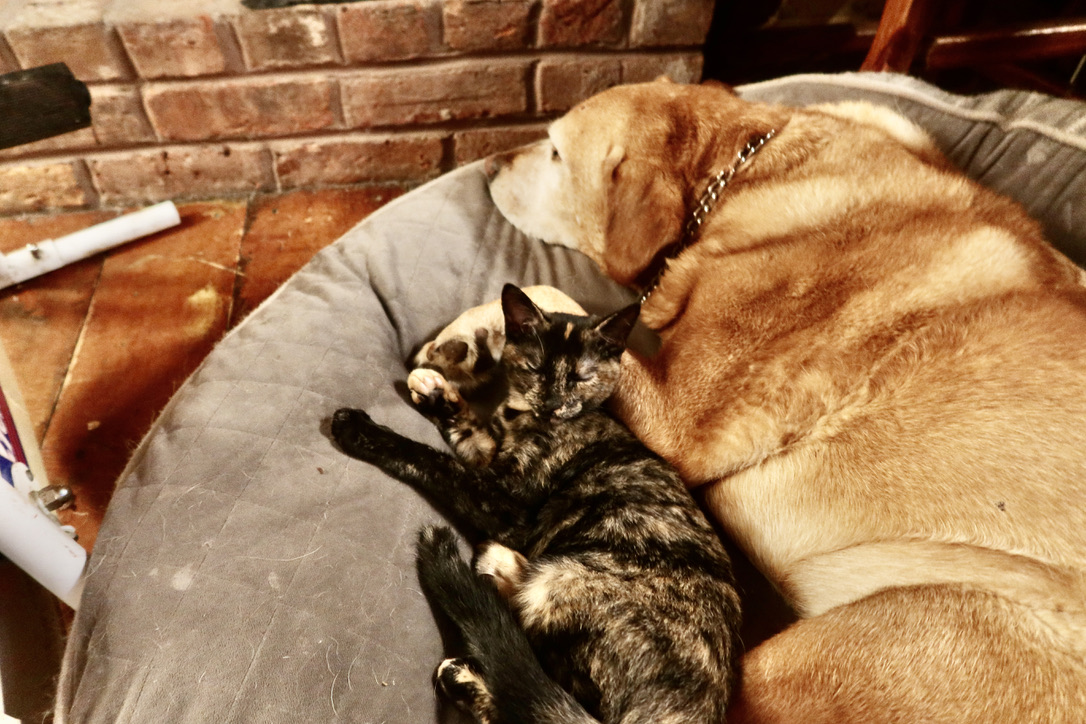
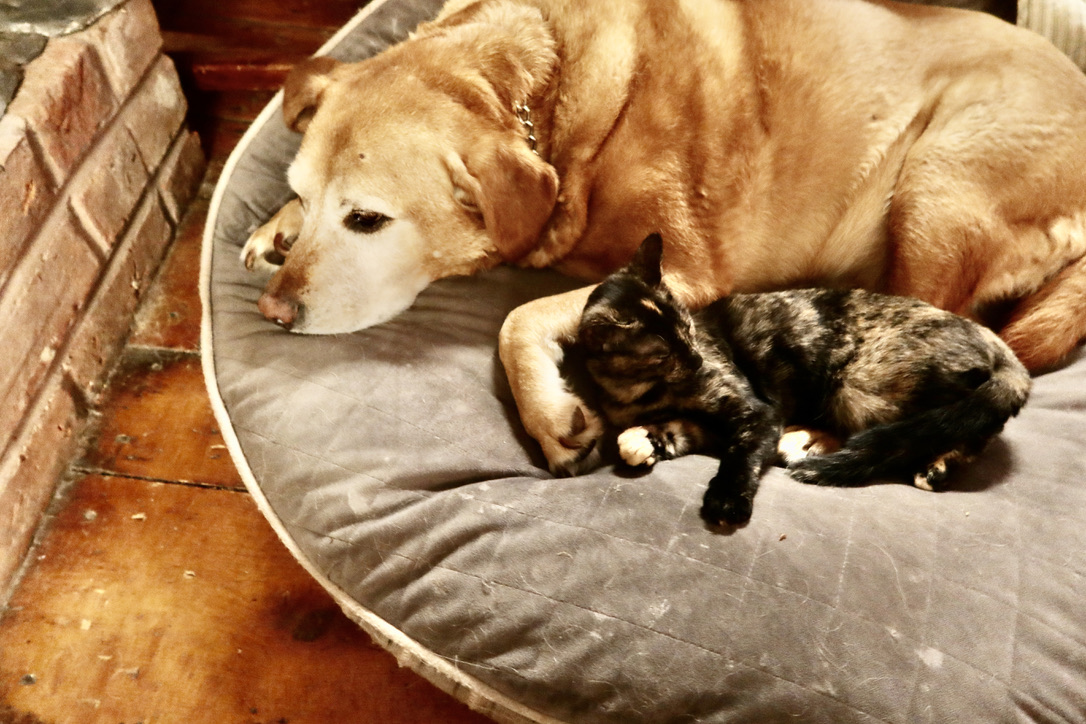
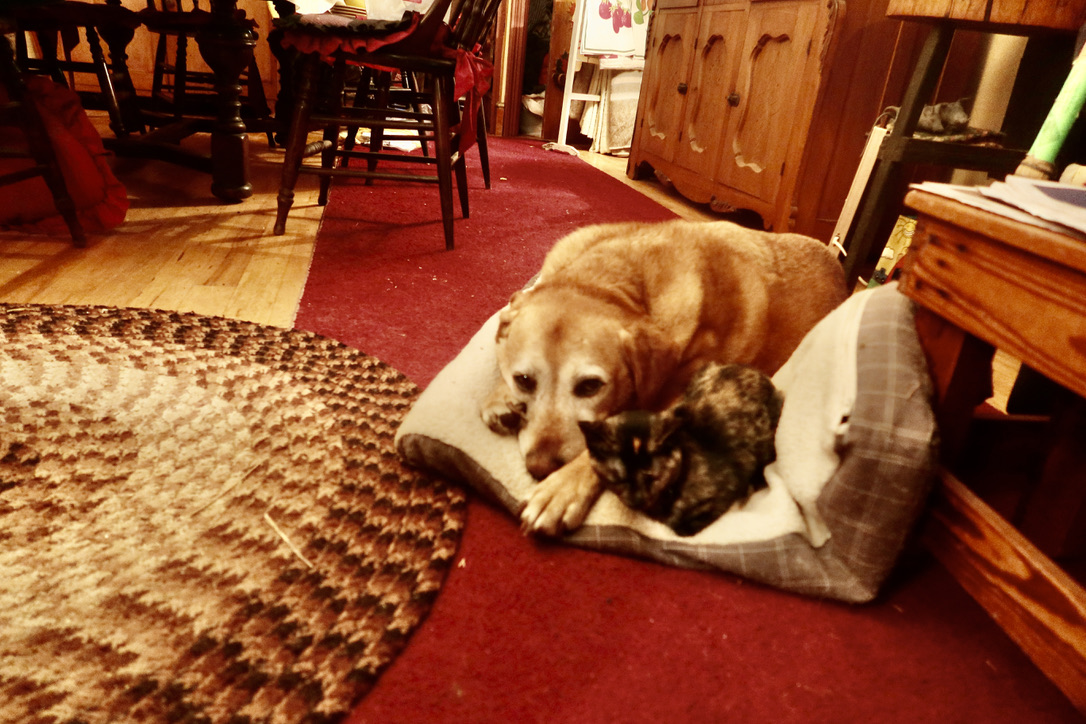 CHELSEA BUN IS NOW SAFELY BACK IN BED WITH WOODY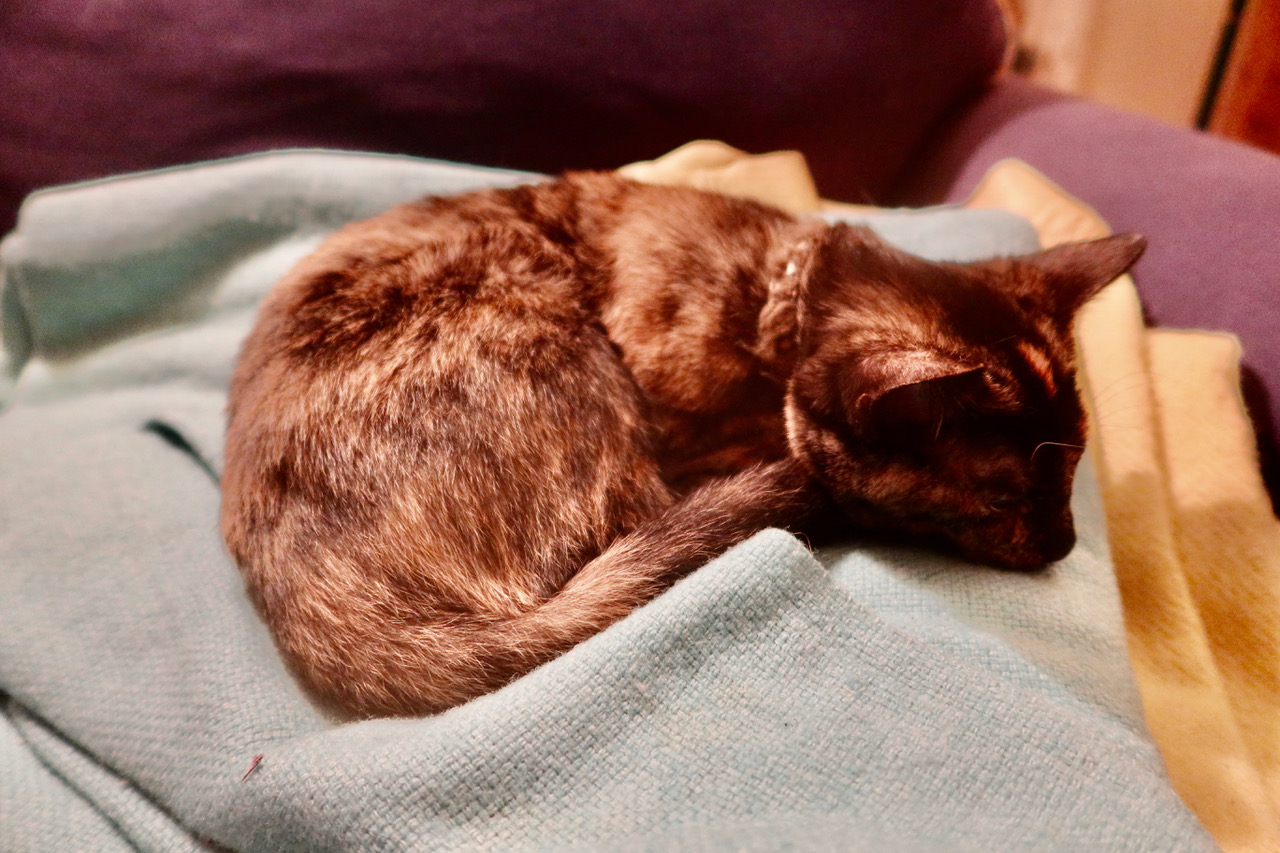
 i.ebayimg.com/images/g/4AMAAOSwWWxkL0P6/s-l500.jpg 500w,