Northville Twp. scene of wreck
Saturday morning July 20, 1907 EPISODE 717 ADDITION…. TRAIN WRECK
July 22, 2007
A farmer and his son stood in a Northville Township field watching two steam locomotives speed toward each other on a single track. The boy asked his dad, “How are those trains going to get past each other?” Replied his dad, “They’re not.”
It was a bit after 9 o’clock the morning of Saturday, July 20, 1907. One of the locomotives had started at 6 o’clock that morning in Ionia pulling 11 cars with hundreds of passengers for an outing in Detroit. The other engine was coming west from Plymouth, hauling seven freight cars.
Pere Marquette Railroad Locomotive 155, driven by engineer Lee Alvord of Ionia, was heading downhill at 55 m.p.h. Alvord watched Pere Marquette Engine 71 round a curve at 25 or 35 mph and head toward him. Alvord jumped. The two trains slammed head-on.
People were killed as the flimsy wooden Pere Marquette coaches shattered into splinters and passenger cars telescoped into each other. Steam from boilers scalded people. Wilson Rogers, the freight train engineer, was scorched as he jumped. Coaches flew over Locomotive 155 and smashed into or over the freight engine.
Later that day, 28 bodies were shipped back to Ionia for burial. More than 30 people — the exact number is unclear — lost their lives because of the Pere Marquette wreck that hot July day, said Al Smitley, a local history librarian at the Northville District Library.
There’s a cornfield now at the northeast corner of 5 Mile and Napier, and a row of old apple trees overlooks the deep cut through which Alvord drove the Pere Marquette locomotive. But even from the hill, you can’t see around the curve.
I stood there one hot July day with Smitley and Salem Township historian Gilbert Terry, a student of train wrecks. They showed me where the wreckage lay most of that dreadful day.
On Wednesday, July 25, Smitley will give a lecture on the wreck and show photographs at 7 p.m. in the Northville District Library — five days after the 100th anniversary of the crash that took place in Northville Township.
Smitley has collected many contemporary newspaper articles about the wreck and assembled excerpts into a chronological digest of newspaper quotations. It’s a fascinating read.
After the crash, Alvord got to his feet and asked someone to look at his watch. It said 9:14. That was a big relief, he said. His train was on time. From the beginning of this catastrophe, the loss of life, the injuries and the general mayhem were less important for Pere Marquette officials than shifting blame away from the rail company. The scapegoats would be freight engineer Rogers and his conductor, Fred Hamilton.
Pere Marquette officials might well have been concerned.
In that one week, the line had five accidents. That year, railroad accidents killed nearly 12,000 people — the leading cause of violent death in the nation, Smitley said.
The Pere Marquette line had a big repair works in Ionia, and between 600 and 800 workers and relatives were headed for a day on Belle Isle.
Ionia Mayor John Bible heard the terrible news and tried to lead relief workers to the wreck site. Pere Marquette officials stopped them at South Lyon.
Declared Mayor Bible: “We were not curiosity seekers. We were going to help, and I never heard of such a thing as the treatment we received.”
Meanwhile, sightseers from Plymouth, Northville, Salem and surrounding towns stood looking into the cut where the wreckage with dead and injured still lay on the tracks.
Pere Marquette blamed the disaster on the freight crew. Pere Marquette General Manager William D. Trump said, “The wreck occurred by reason of an unmitigated disobedience of orders of the crew of the freight train. They were instructed to look out for the excursion train. Running the way they were, they should have been in Salem four minutes before the wreck occurred. They took a chance in direct disobedience to orders. There could have been no mistake. It was disobedience.”
Destroying evidence
James Robison, an assistant Wayne County prosecutor, watched over the wreckage.
“As soon as the spectators had departed,” he said, “a crew of 100 men swooped down upon the wreckage, and their movements were a revelation. I well knew my powerlessness to stop the company from destroying evidence, and the work that was done was not for the purpose of clearing the track for traffic, but to destroy evidence.
“The debris was already at the sides of the track, but as quickly as men and machinery could work, it was taken away under cover of the darkness and burned. What startled everyone was the way whole cars, very little injured, were taken away and burned.
“Of course, there was a reason for that. The cars were mere matchboxes. They were of the old shell type with practically no resisting power. There wasn’t a steel frame in the entire train of 11 coaches. The cars were unfit to carry human beings in.”
Conductor Hamilton believed he’d misread his orders. But freight engineer Rogers, lying scalded and bruised in a Plymouth hotel bed, said, “Let the blame go where it belongs — not to the men on the freight train, but to the men who knew where both trains were every minute of the hour.”
On July 25, 1907, the Ionia Daily Sentinel editorialized: “We refuse to be a party to the attempt to fasten the whole blame of this deplorable affair upon the trainmen. A little more official surveillance and eternal vigilance alone will prevent frequent recurrences of these horrors.”
General Manager Trump testified at the coroner’s inquest that “under the system, everything is up to the man in jeans. No blame can attach anywhere else.”
Interstate Commerce Commission inspector F.C. Smith said: “You cannot get an employee to tell the absolute truth when his superior officers sit listening to him. I regard the presence of General Manager Trump at the inquest as a positive detriment.”
Conductor Hamilton “is suffering greatly under the strain of self-guilt,” reported the Grand Rapids Press.
The verdict
The coroner’s jury found that the freight train crew misread their order “due to the imperfect and improper manner in which it was prepared. … We find the operating system of the Pere Marquette and the rules and regulations governing the same defective.”
Nobody was prosecuted.
Hamilton tried to work for other railroads, but whenever his connection to the Northville Township wreck was discovered, he was fired. He died a few years later on a Montana ranch.
Ten days after the wreck, engineer Alvord, on crutches, took the train to Lowell and watched the Saranac-Lowell baseball game.
Contact JOEL THURTELL at 248-351-3296 or thurtell@freepress.com.
Year: 2023
-
ADDITION TO 717 TRAIN WRECK…PERE MARQUETTE RAILROAD
TRAIN WRECK….PERE MARQUETTE RAILROAD -
EPISODE 717 STEAM ENGINE MODEL PERE MARQUETTE 303 — A HUGE PIECE OF WORK
EPISODE 717 STEAM ENGINE MODEL PERE MARQUETTE 303 — A HUGE PIECE OF WORKalan skeochJanuary 18, 2023 “Mom, tell Dad I got this steam engine for his collection …called Pere Marquette 303…must be one of a kind.”“Too big for our house, Andrew”“Dad will figure something out.”When I came in the front door this tinware and steel engine was on the dining room table…filled thewhole table. Some railroad entuaiaat in CHATHAM took a lot of time creating ir.“But it cannot stay on our dining room tablel, Alan”So I dropped all tools and remodelled my worksop to feature the old 303


 DOES ANYONE KNOW WHO BUILT THIS MOFEL ? DID IT RUN? IT IS VERY HEAVY…I,E WAS IT MOTORISED?
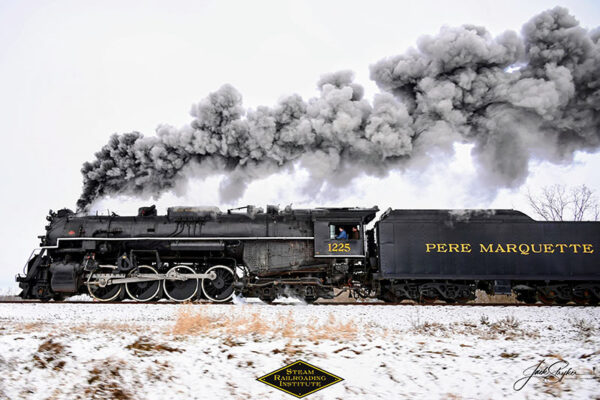
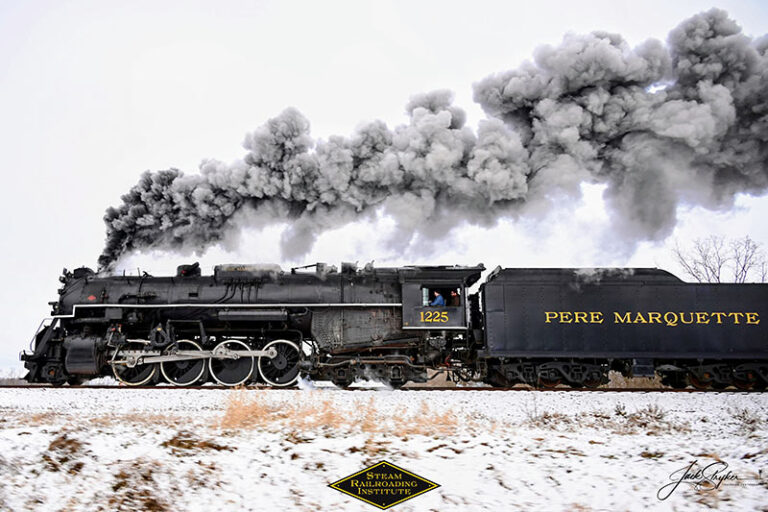
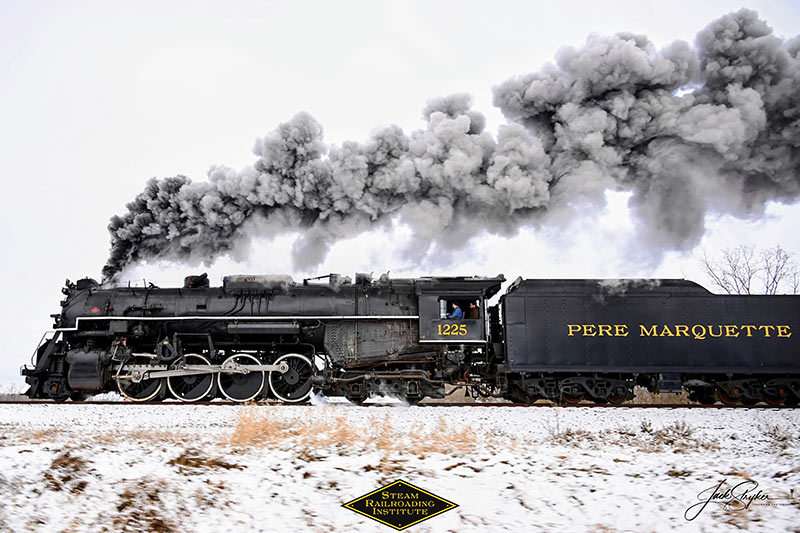
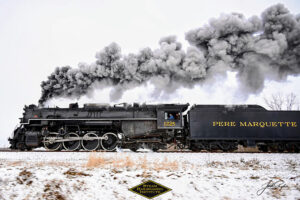
 THE Pere Marquette 1225 was built in 1941, RESTORED and still running our ofMixhigan as a tourist locomotive. The model we have is 303 which is listed butI cannot find a picture.
 “What in tarnation are you going to do with that train?‘Perfect for a World War Two movie…built in 1941…same kind #3030survived the war…””“Get off it, Alan….”“Just for starters there is a moVle being made right now set in 1945 Japan and Korea.”“So what?”“There is a market scene set in 1945 in a train station.”“Why would anyone want a train like yours?”“Just a shot of this old train says 1940’s …the human eye looks for images like this./““Get off it, Alan.”“You might be right but I know two set dressers creating wartime Japan in 1945 andmaybe Kate and Elliott will have imagination. Strolling through the market where everythingis up for sale…poverty.”“And the old model 303 catches the eye…or maybe just background to catch your eye”WHO WAS ‘PERE MARQUETTE?”
michigansteamtrain.com/wp-content/uploads/2022/07/PereMarquette1-300×200.jpg 300w, michigansteamtrain.com/wp-content/uploads/2022/07/PereMarquette1-400×267.jpg 400w, michigansteamtrain.com/wp-content/uploads/2022/07/PereMarquette1-600×400.jpg 600w, michigansteamtrain.com/wp-content/uploads/2022/07/PereMarquette1-768×512.jpg 768w, michigansteamtrain.com/wp-content/uploads/2022/07/PereMarquette1.jpg 800w” data-srcset=”https://michigansteamtrain.com/wp-content/uploads/2022/07/PereMarquette1-200×133.jpg 200w, michigansteamtrain.com/wp-content/uploads/2022/07/PereMarquette1-300×200.jpg 300w, michigansteamtrain.com/wp-content/uploads/2022/07/PereMarquette1-400×267.jpg 400w, michigansteamtrain.com/wp-content/uploads/2022/07/PereMarquette1-600×400.jpg 600w, michigansteamtrain.com/wp-content/uploads/2022/07/PereMarquette1-768×512.jpg 768w, michigansteamtrain.com/wp-content/uploads/2022/07/PereMarquette1.jpg 800w” data-sizes=”auto” data-orig-sizes=”(max-width: 800px) 100vw, 800px” sizes=”494px” style=”box-sizing: border-box; max-width: 100%; border-style: none; vertical-align: top; clear: both; display: block; margin-left: auto; margin-right: auto; text-align: center;” apple-inline=”yes” id=”051E6449-B210-40FD-B461-3BFE931FF39F” src=”https://alanskeoch.ca/wp-content/uploads/2023/01/PereMarquette1.jpg”>
Pere Marquette 1225, the largest and most impressive piece in the Steam Railroading Institute’s collection, is one of the largest operating steam locomotives in Michigan. The 1225 was built in October of 1941 by the Lima Locomotive Works in Lima, Ohio for the Pere Marquette Railway.
The locomotive was used for 10 years between Detroit, Toledo, Flint, Saginaw, Grand Rapids and Chicago; hauling fast freight for the products of Michigan factories and farms, including war materiel when Detroit was the “Arsenal of Democracy,” producing huge volumes of vehicles, aircraft, and armaments. The locomotive is one of 39 2-8-4, or “Berkshire”, types ordered by the Pere Marquette. The superpower design was developed between 1925 and 1934 and used by over dozen railroads to haul freight at maximum speed and minimal cost.
The Pere Marquette 1225 is 15 feet 8 inches tall, 101 feet long with a combined working engine and tender weight of 401 tons, while producing an impressive 5000 tractive horsepower. It takes about eight hours to generate a full head of steam on the locomotive’s boiler, which operates at 245 pounds per square inch. The tender holds 22 tons of coal and 22,000 gallons of water, consuming one ton of coal for every twelve miles and 150 gallons of water per mile. The locomotive cost $245,000 or roughly $2.5 million by today’s standards.
The Pere Marquette Railway merged with the Chesapeake and Ohio in 1947, but the 1225 continued in service until its retirement in 1951 in favor of diesel locomotives. In 1957, the locomotive was saved with the help of Forest Akers; Dodge Motors’s Vice President and Michigan State University Trustee, who saw it as a real piece of machinery for Engineering students to study.
Displayed as an icon of the steam-era, it sat at MSU until 1969, when a group of students took an interest in the locomotive. The Michigan State University Railroad Club was formed with the ambitious goal of restoring 1225 and using it to power excursion trains that would bring passengers to football games at the university. In 1982, under the newly evolved Michigan State Trust for Railway Preservation Inc, the donated locomotive was moved to the former Ann Arbor Railroad steam backshop in Owosso where the restoration continued until 1985 when it moved under its own power for the first in 34 years.
Today the Pere Marquette 1225 is owned, maintained and operated by the Steam Railroading Institute. It’s part of the National Register of Historic Structures and is renowned for its role in the 2004 Warner Brothers Christmas Classic, THE POLAR EXPRESS™. 1225’s blueprints were used as the prototype for the locomotive image as well as its sounds to bring the train in the animated film to life!
-
EPISODE 716 FAIRYLAND WITH BLACK BARN — THE MCLEAN FARM
EPISODE 716 FAIRYLAND WITH BLACK BARN — THE MCLEAN FARMalan skeochJanuary. 17, 2023The McLean’s built this barn in the 1870’s….same as the red brick farmhouseand they farmed the stoney land for 80 years….two sisters and a brother . Scottish.They also had a blacksmith shop somewhere near the east end ofthe black barn where the giant sugar maples grow.I remember Jean and Janet so well. Angus McLean died before my bother andI began hiding among the Boulders along the fence line where Jack in the pulpitspopped up like little people.And we waded in their swamp on the west side of the barn catching frogs obliviousto the tiny black leeches that wanted our blood.Jean and Janet treated Eric and me like the children they never had,Now, in 2023, the McLean farm belongs to Nick Conn, Kevin and AndrewSkeoch. The farm has come alive again.It is a Fairyland today….decked out with hoar frost.A month or so ago was honey extracting time….and last springwas Maple Syrup tree tapping time. Before that there was planting timeand firewood splitting time…There are seasons in our lifetime.alan skeoch


-
THE GIRLS WHO MADE THE GUNS….THE LAKEVIEW SMALL ARMS COMPANY
EPISODE 716 THE GIRLS WHO MADE THE GUNS AT LAKEVIEW IN WW2,, “THE SMALL ARMS PLANT”alan skeochJanuary 14, 2023 Who is this lady?Some called these ‘girls” the “bomb girls”. I would rename them the“Sten Gun girls” because they made so many of those World War IIhand held machine guns. I believe paratroopers were issued with a stengun whenever a drop was planned. Sten guns were made in other places but agreat number were made In Lakeview, now a suburb of Mississauga.WHO WERE THESE GIRLS?Around the mid 1990’s or earlier Our historical society organized a reunion of the girls who made the guns at LakeViewSMALL ARMS PLANT in World War II.They were a feisty bunch who came that evening.. Laughter and tears. Many oF them were 20 years old in 1940 thus in their 70’swhen we got them together for the last time. Some got a little emotional To be sure, but my strongest memory is the noise…the joy…as the girls got together for what they knew would be the last time.NOTE: I TOOK THESE PICTURES OF THE GRILS/LADIES BUT NOT THE BLACK AND WHITEMACHINE SHOP PICTURES. I HAVE NOT FOUND THE ARTICLE I WROTEAT THE TIME SO THIS STORY IS INCOMPLETE….A FRAGMENT SADLY…NO NAMES, NOMEMORIES. SOME READERS WILL KNOW MORE. PLEASE FEEL FREE TO ADD TO THE STORY.
 Miss Francescini ( sp?) , daughter of the sand and Gravelcompany on Cawthra Road was one name I remember.I did manage to get some pictures of the laidies along with the machines they operated. and somewhere Ihave a writen record of the affair.What I do remember clearly is how these ladies took over the meeting.
 “Women played a major role in the workforce at Small Arms Limited as can be seen in the cover photo making up most of the staff by 1943. The factory produced its first weapons in June 1941 and by the end of the year had made 7,589. By 1943 the plant was working three shifts, using 5,500 employees to produce over 30,000 units per month. World War Two ended in 1945 and war-time production was completed in December with over 900,000 rifles and 126,00 machine guns having been produced.”


 “Construction on the Dominion Small Arms Limited munitions factory, including the Inspection Building (then known on the site as Building 12), commenced on August 20, 1940. The first rifles produced here were ready for inspection in June of 1941. At the end of 1941, the factory had 1,200 employees and had made 7,589 rifles. In 1942, the factory was in full production making pistols, Mark II Sten sub-machine guns, Lee Enfield No. 4 rifles, ammunition, and a myriad of other military supplies. By 1943 the factory employed more the 5300 workers, 65% of whom were women. “


The demand for labour by wartime industries during the Second World War was high since many young men in the labour force were already enlisted in the armed forces. Small Arms Limited employed recruiters who travelled across Canada offering jobs for single women or married women without children with husbands in the armed forces. Hired workers were given free passage to Toronto for a good paying job in good working conditions. In total, the personnel department hired over 14,000 employees during its entire operation.
The demand for labour by wartime industries during the Second World War was high since many young men in the labour force were already enlisted in the armed forces. Small Arms Limited employed recruiters who travelled across Canada offering jobs for single women or married women without children with husbands in the armed forces. Hired workers were given free passage to Toronto for a good paying job in good working conditions. In total, the personnel department hired over 14,000 employees during its entire operation.
In 1943 when Small Arms, Limited was in full operation, it employed approximately 5,500 employees working three 8-hour shifts producing over 30,000 units per month. Approximately 62% of the employees in the munitions factory were women, who earned approximately 50 cents an hour. One quarter of them were aged 40 or older. The Second World War marked the first time work in munitions factories were opened to women. In addition to the munitions factory, the company also built a large dormitory for its workers, and engaged its workforce in many recreational activities.In 1943 when Small Arms, Limited was in full operation, it employed approximately 5,500 employees working three 8-hour shifts producing over 30,000 units per month. Approximately 62% of the employees in the munitions factory were women, who earned approximately 50 cents an hour. One quarter of them were aged 40 or older. The Second World War marked the first time work in munitions factories were opened to women. In addition to the munitions factory, the company also built a large dormitory for its workers, and engaged its workforce in many recreational activities.
-
EPISODE 716 YEAR 1955 WHEN FEW TEENS HAD CARS….HITCH HIKING WAS NORMAL
EPISODE 716 YEAR 1955 WHEN FEW TEENS HADCARS….HITCH HIKING WAS NORMALalan skeochJanuary 12,,2023The year was 1955 when we decided to head to Lake Simcoe for a week end. NobodyI knew had a car….only Russ has even access to a car. So we hitch-hiked as didlots of kids our age. It was normal. And being picked up was normal as well. Eveninteresting.“Where are you going boys?“Lake Simcoe for the week end.”“I can get you close…heading for Barrie myself.”Conversation was very relaxed most of the time. We were not aloneas hitch hikers. Taken for granted that there would be boys here andthere with their thumbs out. Rarely girls, if ever. Common to be twomaybe three.Hitch hiking alone was the fastest way to get to a destination but itwas a little chancy. One car picked me up heading from Wasaga Beach tomy grandparents farm in Erin Township. The driver and two passengersmay have been drinking. Not sure. They decided to scare me by speedingand weaving. “This is not good”, I thought and waited until the car cameto a sharp corner whereupon I jumped out…perhaps rolled out. Think theylaughed, That kind of thing was rare. So it was remembered. Not rude weregreat. Hitch hiking in the 1950’s was a good cheap way of getting from one place to another. That’s Big Red Stevenson and ien route to Lake Simcoe . Would you stop to pick us up? Three of us. My brother Eric took the picture.
 My good friend Big Red Stevenson, brother Eric and I took these pictures in 1955 …. Here we are at a horse ranch which is rather odd.Horses were obsolete. No one seeks to hitch a ride on a horse.
 Three boys hitch hiking . We did not always get rides so it was a chancy thing. My brother Eric and I do not look toohappy resting on s pile of rubble beside some highway.1959 == HITCHHIKING IS MADE ILLEGALI guess Red, Eric and I grew up in the halcyon days of hitch hiking. Another reason that our generation (the teen agers of the 1950’s ) were theluckiest generation of all time. Is this an overstatement? Not so sure.Hitch hiking became more and more dangerous as more and more cars were built and sold….new and wider highways followed…increasedspeed limits. Hence more danger should some kind soul decide to pull to the shoulder because Alan and his brother and Big Red arebegging a free ride. Try pulling to the shoulder at 110 km some time.FEMALE HITCH HIKER — ANOTHER SLIGHTLY RELATED INCIDENT — WHAT WOULD YOU DO?A while ago I was driving north on Trafalgar Road and stopped at a red lightar Dundas. And a woman jumped into the truck. I never lock the doors. Neitherdo you. She was about 40 or so and not exactly dressed for a big dance. First thingshe did was reach for my coffee money on the dash. Grabbed a few dollars as fastas a rabbit with a coyote after it. Then she settled in…maybe even put on thesafety belt.I was startled and soon became scared. As a high school teacher I have feared touching.Especially touching female students. Even shaking hands. Teachers are considered guiltyuntil proven innocent when they touch students. And some students are huggers. Theylike a teacher and hug him or her. Not me. I back off like that rabbit I mentioned.So there I was. Driving with a strange woman in the truck. Thiscould be bad…real bad. What if she screamed “rape”? Even kidnapping.I would be judged guilty until proven innocent. What to do? My firstthought was i would drive to the nearest police station wherever thatwas. Perhaps Milton…a long way.How the hell would I get this oddball out of my truck? She could takeall the change she could find on the dash or in the glove compartmentif only she would leave. Now she assorting my road maps. he didno know I had a fiver clipped to the sun viser. At least not yet.She never said anything. Too busy rummagingaround for cash. But she had settled in. And I was damn scared.Then I got an idea. Why not get her to become someone else’s problem?I reached Brittania Road and the light turned red.“I turn left here.”No comment.“This is a good hitch hiking corner for you.”And wonder of owners, miracle of miracles she unhitched the seat beltand got out of the truck. I breathed a sigh of relief and mademy left turn even if it took me in the wrong direction. She was nowsomeone else’s problem.I suppose you think I lock the truck door now when I drive. NO. Youare giving me credit for too much intelligence. Maybe you think I keeploose change in my pocket rather than the dashboard. NO. Hard toteach an old dog new tricks. The left turn idea is best I can do.I think my police idea was best. “Officer, this lady jumped into my truckstole my loose change and I fear she might claim I touched her. Canyou help me?”“Officer, this man touched me.”Who would the police believe?That’s a reverse hitch hiking story.alan skeochHITCH HIKING IS ILLEGAL IN ONTARIO .. FINE IS $65
 WOULD YOU BELIEVE THIS MAN’S STORY?
Is hitchhiking legal in Ontario
Administrator | Jun 04, 2019 | Comments 0

While it was mainstream in the 70s as the cheapest way to travel, “thumbing a ride” has dwindled to almost no takers in past years – due to dangers for riders and passengers, and the advent of ride share programs.
However, with the summer weather creeping in, the Prince Edward County (PEC) detachment of the Ontario Provincial Police (OPP) urges people to stay safe, and be vigilant with hitchhikers.
Constable Pat Menard, Community Safety Officer, clarifies that Section 177(1) of the Highway Traffic Act (HTA) states that no person, while on a roadway, shall solicit a ride from the driver of a motor vehicle other than a public passenger conveyance (i.e. taxi or bus). If caught, a $65 fine could be issued.
“The safety risk goes both ways when it comes to hitchhiking,” he said. “A driver deciding to pick up a hitchhiker is unaware of what issues that hitchhiker may have, or what reason they may have for hitchhiking at that point in time. Vice versa, the hitchhiker is unaware of who the driver is or what intentions they have for stopping and picking them up.
“As a driver, picking up a hitchhiker comes down to personal judgment and trusting that gut feeling or vibe. There is nothing wrong with deciding not to stop, or passing right by that hitchhiker enroute to your own destination. Drivers who come across an individual or group hitchhiking while in the County, are reminded to allow plenty of space, and be aware of your surroundings.”
 michigansteamtrain.com/wp-content/uploads/2022/07/PereMarquette1-300×200.jpg 300w,