Year: 2023

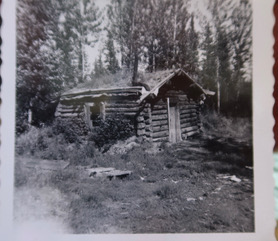
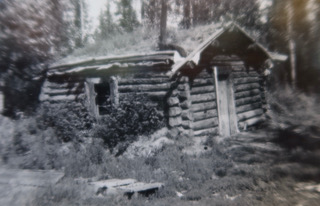
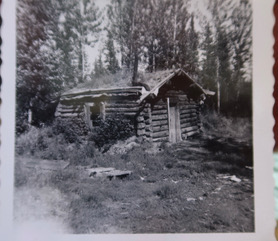
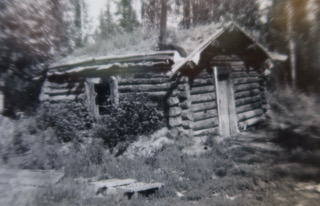
  • EPISODE 866 REAL TRAPPER’S CABIN as found in 1957

    EPISODE 866   REAL TRAPPER’S CABIN as found in 1957


    alan skeoch
    august 4, 2023


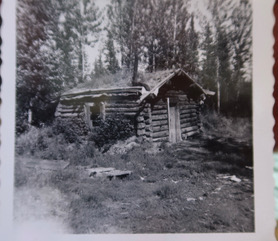
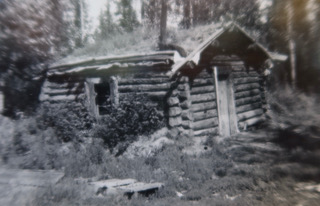
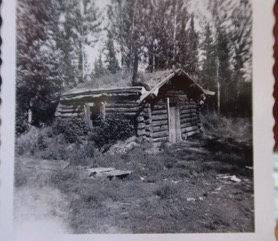
     The Trapper’s cabin was a surprise discovery by our crew in 1957.  There were no trails
    to the cabin.  No tree blazes.  Seemed to be used for winter access although the cabin was on the banks of a small stream
    that ultinatey flowed into the mighty Groundhog River which emptied into James Bay en route to the Arctic.

    The cabin was primitive …. one door and one window.  Door closed but window smashed wide open perhaps by a
    ber smelling a carcass.   Inside was room to sleep and a place to sit beside a hand made table although the signs of 
    life were hard to decipher since the sod roof had leaked for some time.

    I wish I had taken the time to photograph the interior but my try Brownie camera would not have
    captured much and most can be deduced by rotting remains in the cabin exterior.  I seem to remember spikes on the wall
    of the cabin where the trapper stopped skins from bodies.  There were some skeletal remains on the ground
      But little else.

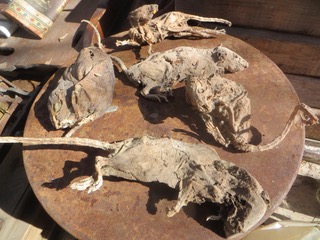
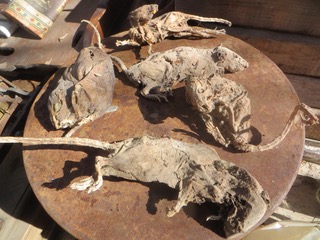
    Some disaster may have happened because we came across places where the trapper had set his traps and 
    just loft them.   Some had the carcasses of small animals such as beaver or muskrat.  Left to suffer death
    in  leg hold trap.   Leg hold traps  are now illegal.  Quick death traps are better.  Better for whom?

    What were we doing in the wilderness in the first place?

    Briefly put we were searching for magnetic ore bodies located in the bed rock deep
    bellow the overburden of spruce, birch, poplar and cedar that clothed a section of Canada’s boreal foesrt in the 
    untracked (except for the trapper)  wilderness east and west of the Groundhog River of Northern Ontario.

    Floyd Faulkner, Bob Hilkar, Walter Helstein and I were the ground team.  We had air photos that gave odd readings
    by airborne magnetometer that had to be checked and perhaps staked.  Highly secret work.

    Today this is all done by helicopters in a few days,  For us it would take all summer and a good part of September.
    Lots of blood, sweat and tears.  Amend that no tears but lots of blood lost to bugs and axe cuts…and lots of sweat.

    Noone would  ever believe how tough that job turned out to be.  Worst thing was when Walter sipped on a log and impaled his
    hand on a sharpened tag alder picket.  Weather turned bad and it took several days before a plane could reach us.  His hand got
    infected but we cold nothing for him.  We never saw
    Walter again.

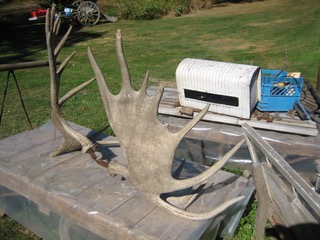
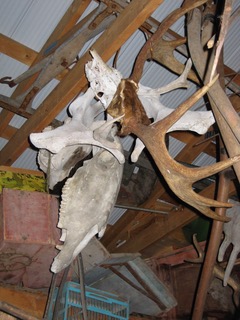
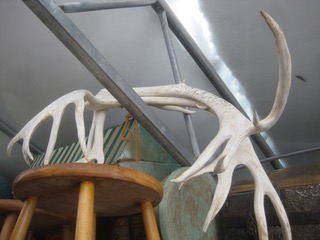
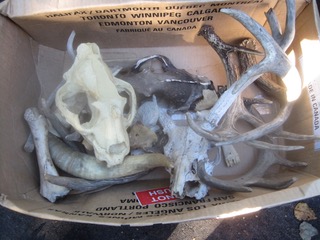
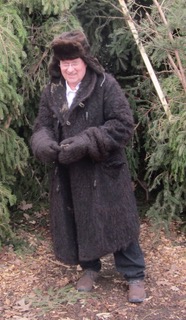
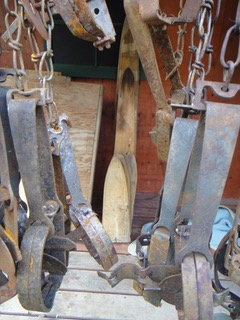
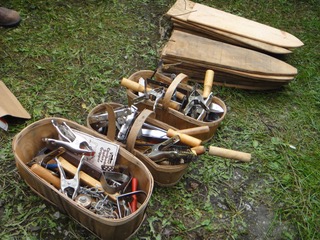
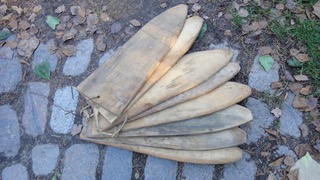
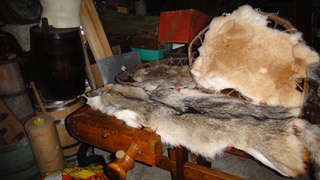
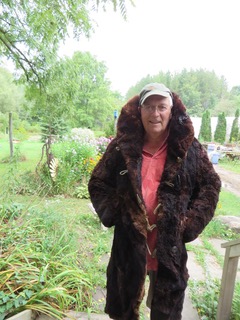
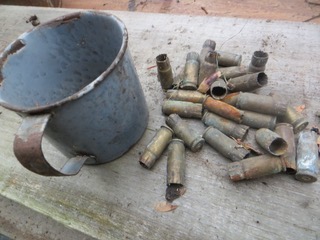
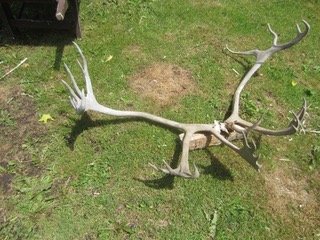
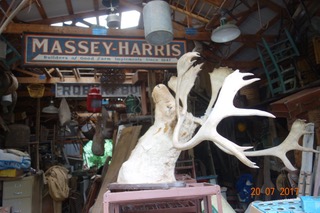
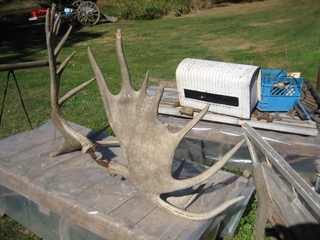
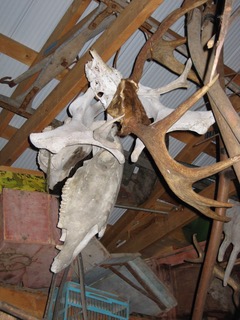
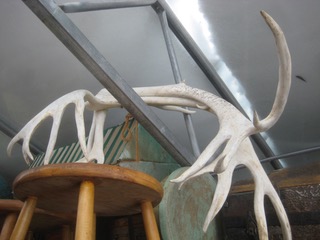
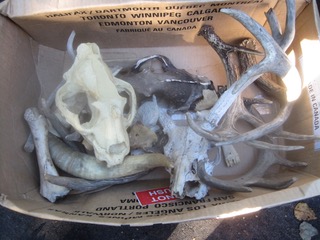
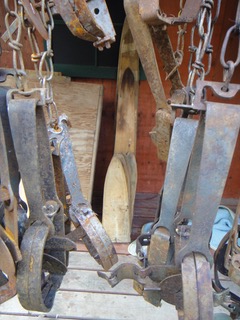
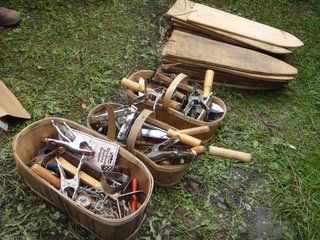
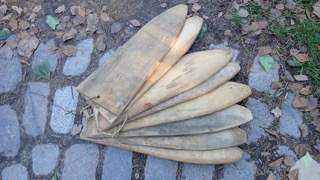
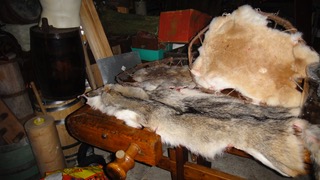
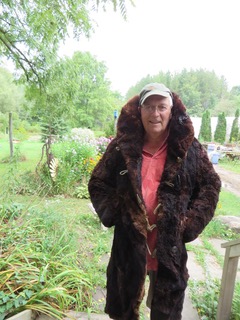
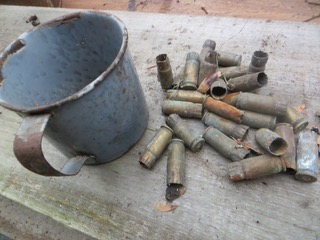
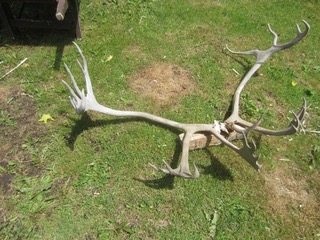
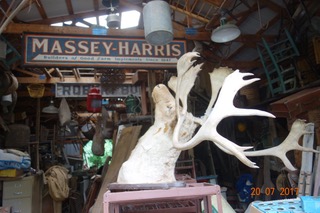
    Over the years I gathered a good pile of trappers goods……traps, bear skin coat, moose skulls with antlers, assored skulls, 
    stretching boards ,blazing axes, beaver skins, canoes etc. etc.   Lucky we did,  Murdoch Mysteries Film crew needed all
    we had last month.

    P.S.   My moosehead skull and antlers were brought home from the Groundhog River job.


  • EPISODE 866 REAL TRAPPER’S CABIN as found in 1957

    EPISODE 866   REAL TRAPPER’S CABIN as found in 1957


    alan skeoch
    august 4, 2023


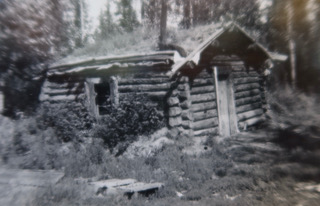
     The Trapper’s cabin was a surprise discovery by our crew in 1957.  There were no trails
    to the cabin.  No tree blazes.  Seemed to be used for winter access although the cabin was on the banks of a small stream
    that ultinatey flowed into the mighty Groundhog River which emptied into James Bay en route to the Arctic.

    The cabin was primitive …. one door and one window.  Door closed but window smashed wide open perhaps by a
    ber smelling a carcass.   Inside was room to sleep and a place to sit beside a hand made table although the signs of 
    life were hard to decipher since the sod roof had leaked for some time.

    I wish I had taken the time to photograph the interior but my try Brownie camera would not have
    captured much and most can be deduced by rotting remains in the cabin exterior.  I seem to remember spikes on the wall
    of the cabin where the trapper stopped skins from bodies.  There were some skeletal remains on the ground
      But little else.

    Some disaster may have happened because we came across places where the trapper had set his traps and 
    just loft them.   Some had the carcasses of small animals such as beaver or muskrat.  Left to suffer death
    in  leg hold trap.   Leg hold traps  are now illegal.  Quick death traps are better.  Better for whom?

    What were we doing in the wilderness in the first place?

    Briefly put we were searching for magnetic ore bodies located in the bed rock deep
    bellow the overburden of spruce, birch, poplar and cedar that clothed a section of Canada’s boreal foesrt in the 
    untracked (except for the trapper)  wilderness east and west of the Groundhog River of Northern Ontario.

    Floyd Faulkner, Bob Hilkar, Walter Helstein and I were the ground team.  We had air photos that gave odd readings
    by airborne magnetometer that had to be checked and perhaps staked.  Highly secret work.

    Today this is all done by helicopters in a few days,  For us it would take all summer and a good part of September.
    Lots of blood, sweat and tears.  Amend that no tears but lots of blood lost to bugs and axe cuts…and lots of sweat.

    Noone would  ever believe how tough that job turned out to be.  Worst thing was when Walter sipped on a log and impaled his
    hand on a sharpened tag alder picket.  Weather turned bad and it took several days before a plane could reach us.  His hand got
    infected but we cold nothing for him.  We never saw
    Walter again.

    Over the years I gathered a good pile of trappers goods……traps, bear skin coat, moose skulls with antlers, assored skulls, 
    stretching boards ,blazing axes, beaver skins, canoes etc. etc.   Lucky we did,  Murdoch Mysteries Film crew needed all
    we had last month.

    P.S.   My moosehead skull and antlers were brought home from the Groundhog River job.


  • EPISODE 864 1914 student body Parkdale C.I. OLD PICTURE…20th century thoughts of SEVEN SMITH


    EPISODE 864   1914 student body Parkdale C.I.  OLD PICTURES

    alan skeoch


    Long long ago I began buying old historical photographs.   Then  got interested in other
    things in life.   Forgot about my photos until Marjorie got into a clean up mood.
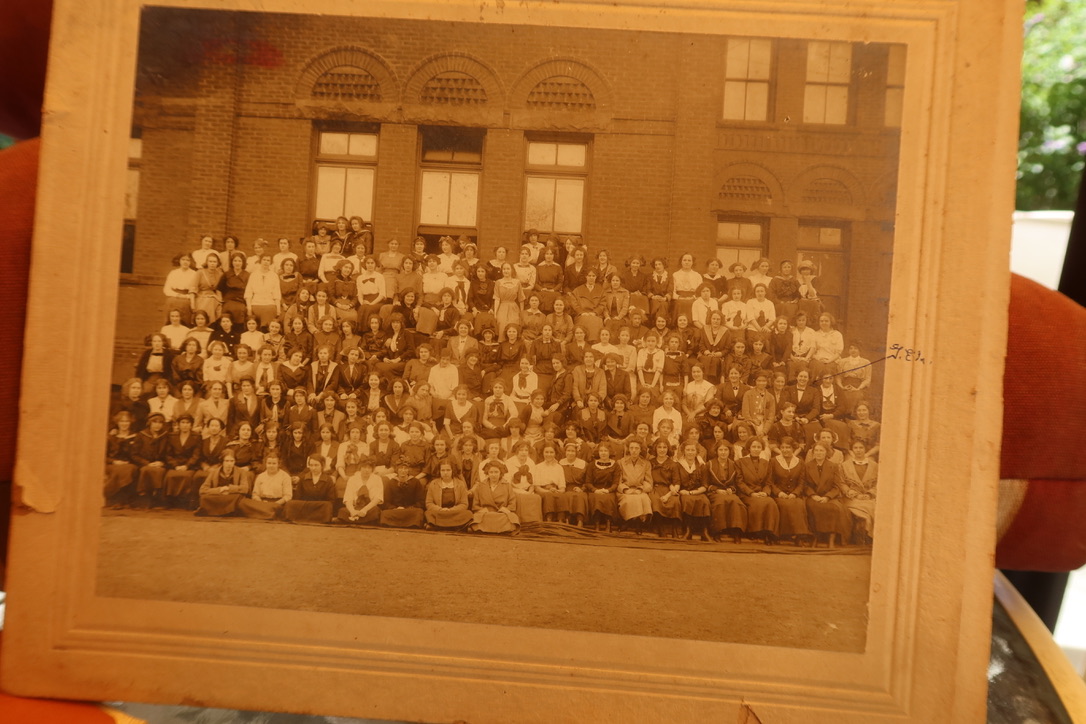
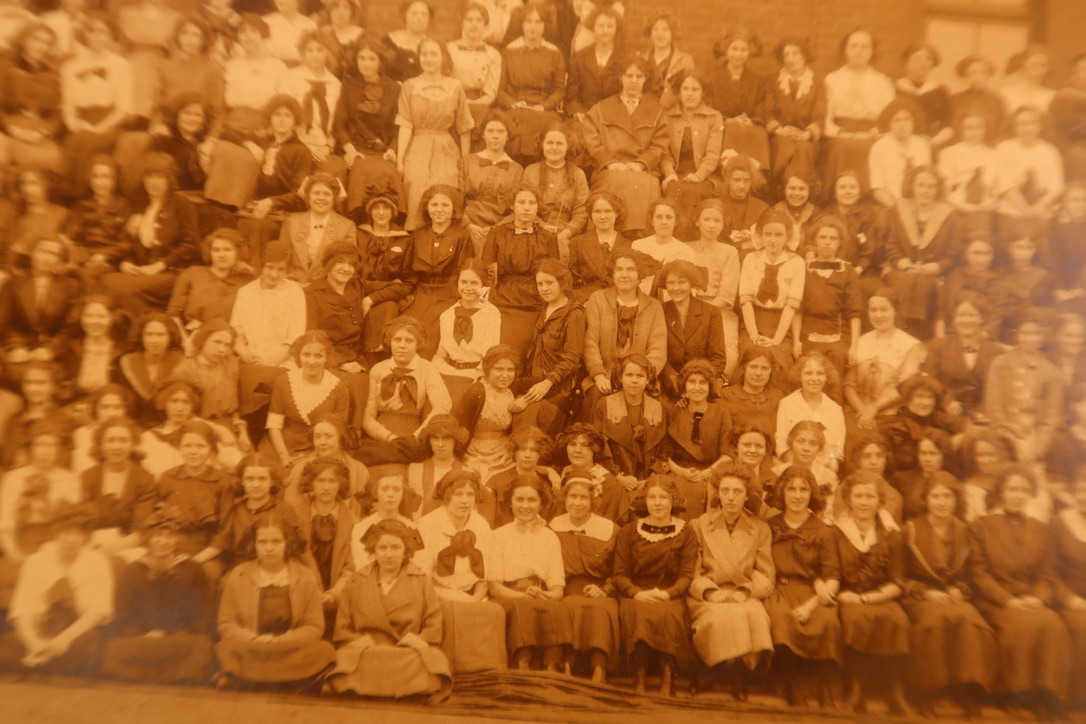
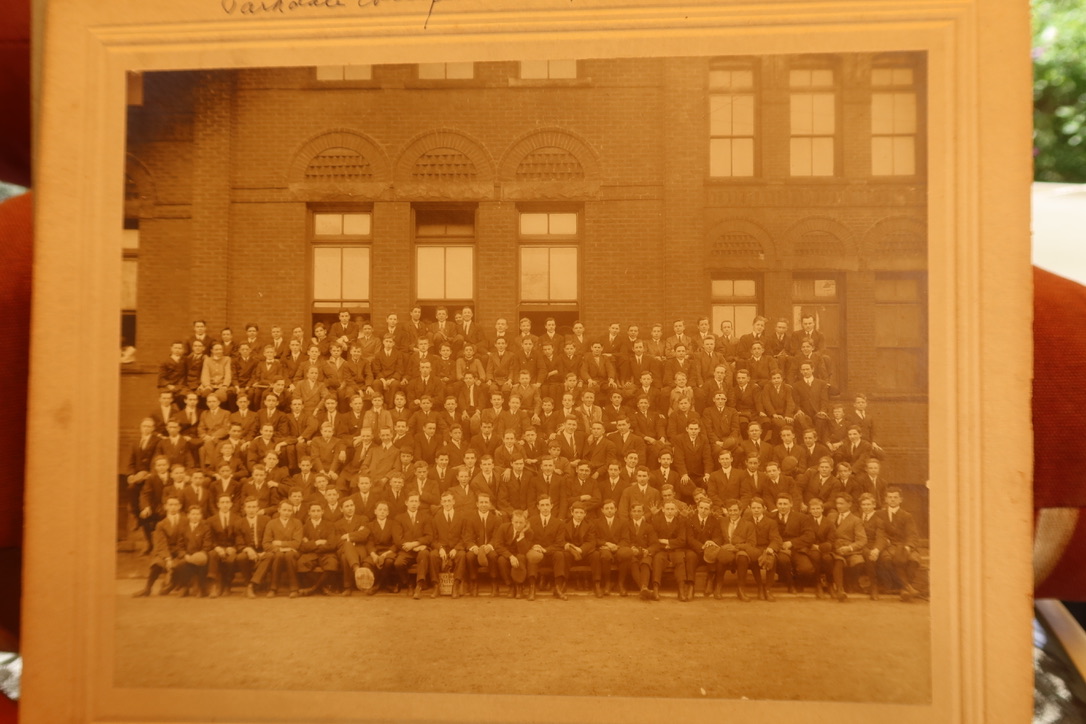
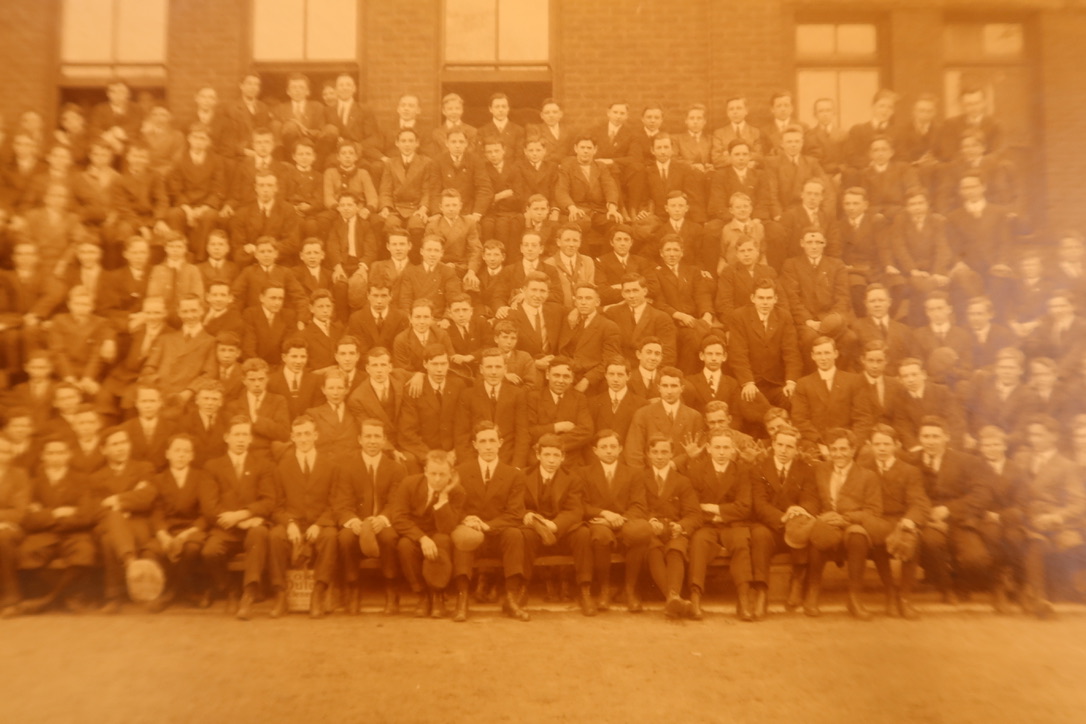
    Hence these two mounted pictures of the students of Parkdale Collegiate Institute 
    were found again….which I will give to John Maize for the PCI archives.

    But first look at the boys in the photo and imagine the life he faced in the 20th century
    (then look at the girls the same way)


    THE STORY OF ‘SEVEN’ SMITH, A STUDENT THEN ADULT IN  THE 20TH CENTURY

    MY name is Steven.  Nicknamed “Seven”.  I was born in 1900.   Little did I know that my life would
    be so miserable.  There is an old adage ….MAY YOU LIVE IN INTERESTING TIMES.
    MY life has been a constant flow of interesting times.  Not pleasant really.

    EPISODE 864   1914 student body Parkdale C.I.  OLD PICTURE

    INTERESTING TIMES BE DAMNED

    NAME   STEVEN “SEVEN” SMITH (fictional)  born 1900 ,,, follow decades of my life below.

    I was seven in 1907 
        -1914 World war One began…poison gas, trench warfare, death and decay
    I was 17 in 1917
        -turned 18  joined army…horrors unending..
       -1919 Spanish Flu…global pandemic
    I was 27 in 1927….
        Then in 1929 the stock market crashed
       -no jobs, no income, no chance of normal life
      -Great Depression
      -no chance of marriage
    I was 37 in 1937
      -then two years later in 1939 World War II broke out
      -I was young enough to volunteer….air force gunner Bomber command….fear of death daily
    I was 47 in 1947
      -atom bomb and Cold War made life on earth chancy….Strontium 90
     -Korean War
      -built bomb shelter…felt hopeless
    I was 57 in 1957
      -Strategic Ar Command keeps Bomb laden B 52’s in air all the time
      -got a brief glimpse of the good life…bought a car
      -debts
    I was 67 in 1967
      -centennial 
       -retired with small pension
      -small apartment…health problems
    I was 77 in 1977
      -retirement home
    1 was 87 in 1987
      -end of story

    NOW suppose “Seven” Smith was one of the girls in the photograph, would her life be more or
    less miserable?

    OF COURSE THIS NEVER HAPPENED AND MOST PEOPLE FOUND JOY IN THEIR LIVES IN
    SPITE OF WORLD CATASTROPHES.
  • EPISODE 864 ELSIE FREEMAN SKEOCH — SEAMSTRESS, MOTHER, SWEATSHOP WORKER…THE PUTTING OUT SYSTEM IN 1945 OR 1946


    EPISODE  864    ELSIE FREEMAN SKEOCH  — SEAMSTRESS, MOTHER,  SWEATSHOP WORKER…THE PUTTING OUT SYSTEM IN 1945


    alan skeoch
    july 29, 2023


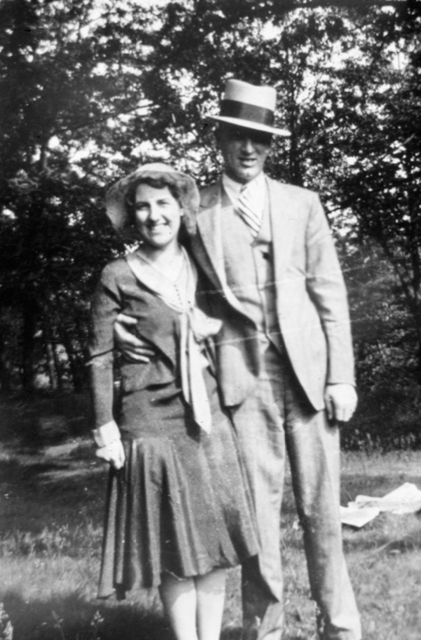
    ELSIE LOUISA FREEMAN SKEOCH AND ARNOLD ‘RED’ SKEOCH, MARRIED IN 1937

    Elsie Freeman married Arnold ‘Red’ Skeoch in 1937.  After a long courtsihip.  Their parents were  Ontario farmers. Both became members of 
    the industrial working class as World War One came to its miserable end.  Dad was a tire builder.  Proud of it.  Mom was a seamstress.
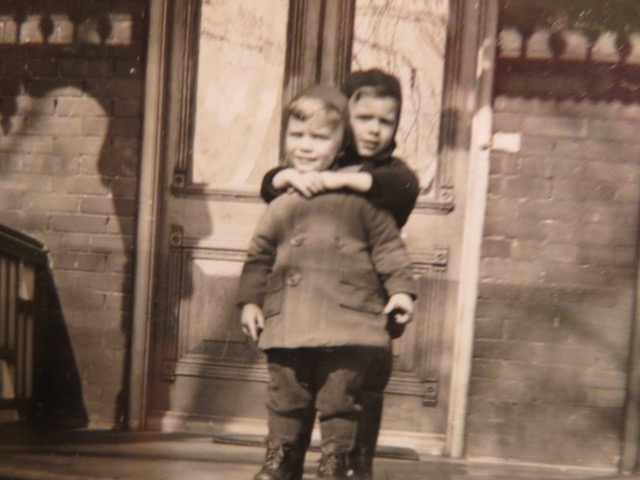
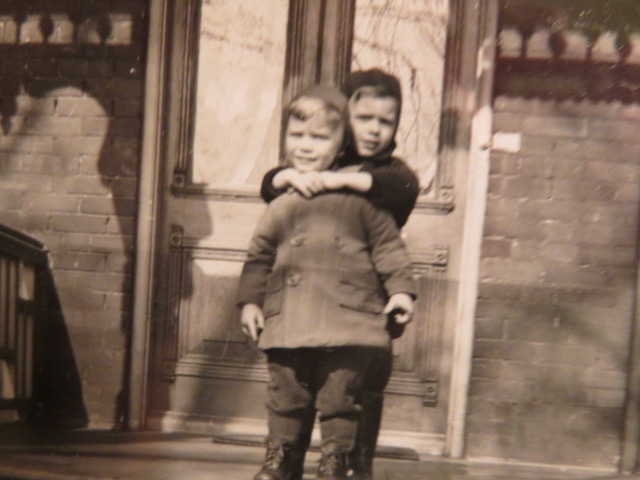
    Proud of it.  Both were loved by their two children, Alan and Eric Skeoch. We, Eric and I, were not huggers or kissers.  We took
    our parents for granted.  Paricularly  mom.   

      HOW DID MOM RAISE A FAMILY ON SWEATSOP WAGES…I DO NOT KNOW


    The mystery remains.  How did Elsie Freeman Skeoch raise a family  on sweatshop wges.  Deeper than that.
    How did she do it without a shred of rancour or bitterness.  How did she keep our lives free from feelings of poverty
    and neglect,.   Eric and I had a great life…full of laughter and completely free of envy or bitterness?

    IN EPISODE 864 you are asked to read Thomas Hood’s Sonf of the Shirt.  It is a miserable poem documenting the horrific
    lives of the English working class seamstresses.   There is one huge difference between the women described by
    Hood and our mother, Elsie Freeman.   There is no joy in The Song of the Shirt.   Our lives as children of a
    seamstress were full of joy.  We laughed a lot.   We did things together.  We never felt deprived.  As a matter of 
    fact we felt sorry for those  around us who seemed to have little joy in their lives.


    Song of the Shirt

    With fingers weary and worn,     With eyelids heavy and red,  A woman sat in unwomanly rags,     Plying her needle and thread—        Stitch! stitch! stitch!  In poverty, hunger, and dirt,     And still with a voice of dolorous pitch  She sang the “Song of the Shirt.”       “Work! work! work!  While the cock is crowing aloof!                  And work—work—work,  Till the stars shine through the roof!  


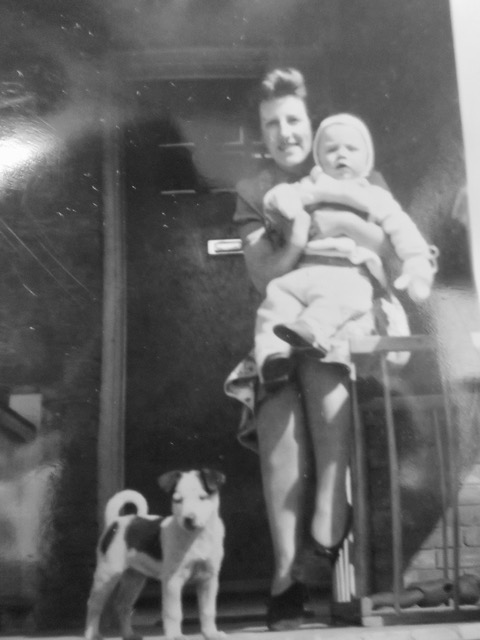
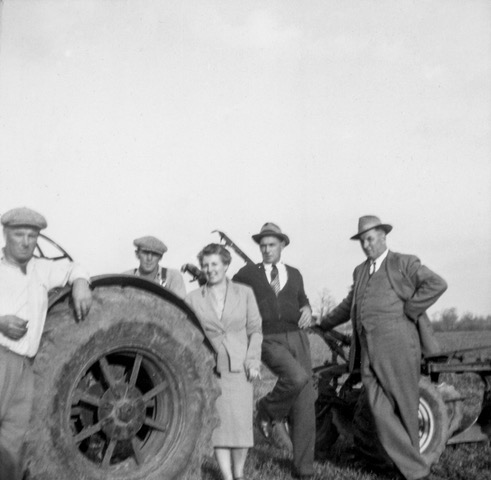
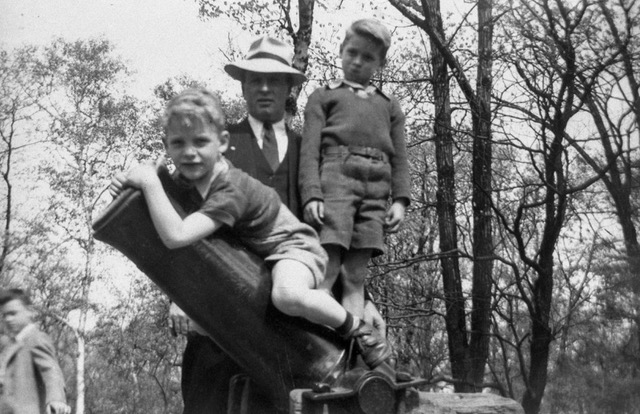
    Mom with dad (far right) and his brothers
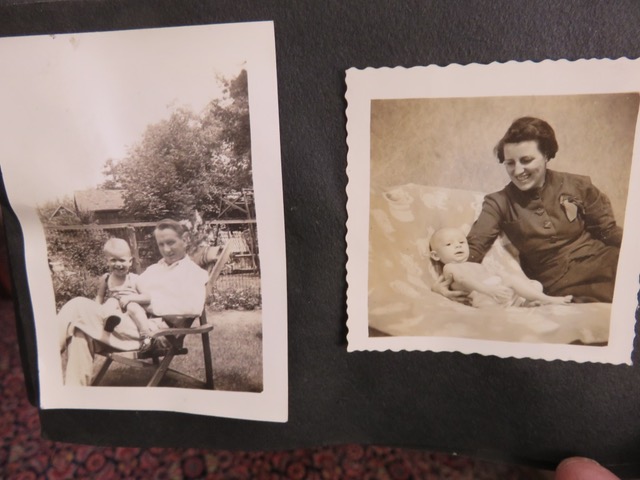


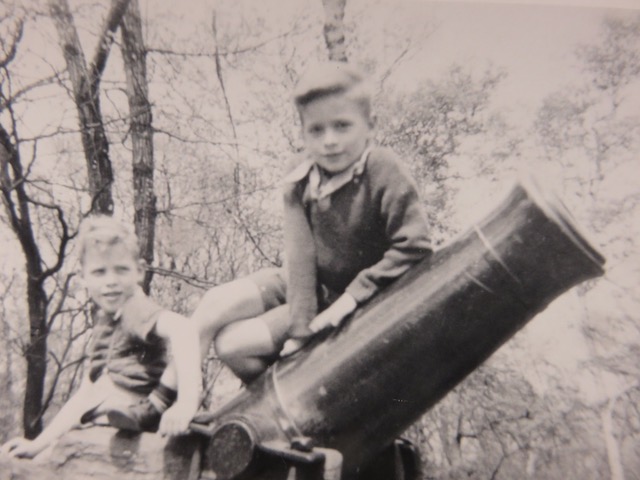
    Look at the big buttons on Eric’s coat which was once a woman’s coat


    Dad took us to High Park on a day the horses were not running at Dufferin or Woodbine racetracks.
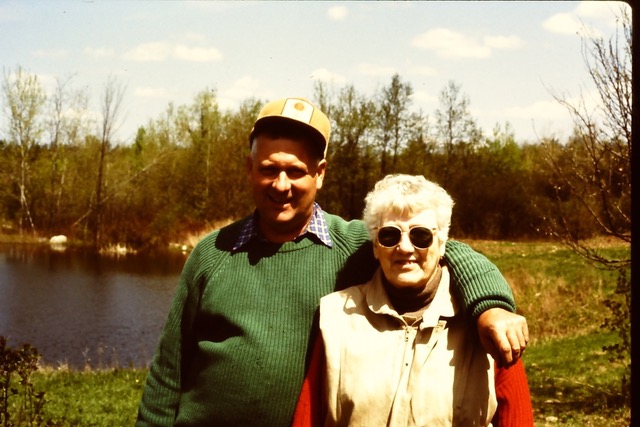
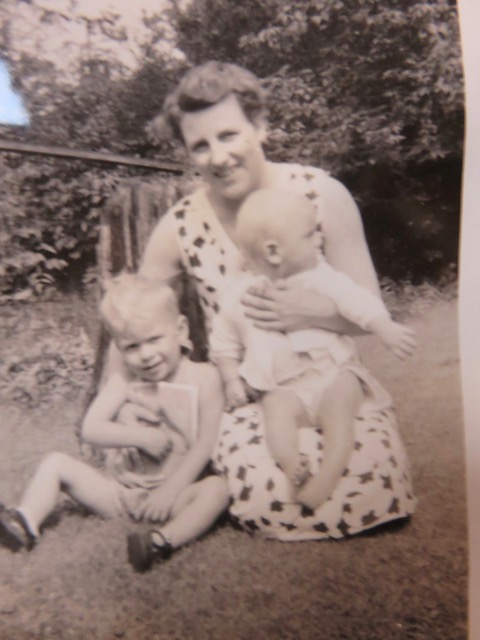
    This is mom wit my arm around her.

    ONE OCTOBER  NIGHT AT 18 SYLVAN AVENUE IN 1945 OR 1946

    (These images remain in my memory…  Most prominent is 
    mom and her Sewing machine and the big cardboard box.)

     I can see her now.  IN my mind’s eye.  It is a cold day in 1945 or 1946.   She is slowly walking up Gladstone Avenue.
    Coming home from the College Streetcar.   Slowly, because she is carrying a large cardboard box that she got from Mr. Wallman
    at his factory on Spadina.  The box is heavy.  Dimensions about 36” x 18* x 10”.  Unmarked.  Tied.   Inside the box are pieces of 
    clothing…lots of them in bundles.    When she gets the box upstairs to our flat at 18 Sylvan Avenue she undoes the string and lines up 
    the bundles beside the industrial sewing machine.    Before that she will get our supper, often stew with rice pudding.   Dad won’t be home until 
    much later ..a shift worker at Dunlop Tire Company.  Often he stops  at Woodbine track for the last race.   Mom starts sewing right away.  Her corner above the stairs 
    is dark and dreary until she lights it up.  The stairs continue up to the dark attic high above…gives me nightmares.  When the sewing machine begins
    to hum mom presses her fingers close to the needle and begins joining piles together.  Could be a dress or a shirt or a girdle.  She will work on
    the machine until Dad arrives and sometimes continues into the night hours after we are in ed.  When all the pieces in the box are
    joined mom will pack the big box, put on her coat then tell us to be good and that she will be back in an hour torso.   And away she goes
    with the finished things.   Heavy big box in her arms. She will walk south on Gladstone.  Eric and I will see her go until Gladstone dips to
    College Street.   We will play a bit with Tinker our cat .  Dad will be smoking a White Owl Invincible while he reads the racing form. Mrs Southwick, our landlady
    does not like dad smoking in the house but is intimidated by him.  Mom pays rent monthly I  think.  


    Mom says dad is always hoping to catch the brass ring on the Merry Go Round of life.  That is why he gambles. 

     Mom has made all our clothes by cutting down old clothing.   Eric’s
    winter coat this year has huge coloured buttons and extra padding. Was once a woman’s coat .

       We are not allowed to got out into Dufferin Park at night because big tough guys hang around there. 
    Toenails Simmons, for instance is a gang leader …  has a ring that’s a sharpened roofing nail wrapped in white tape.   This I was told by his brother. 
    Dad said not to worry nobody is likely to touch us and then have to face him.  

    Bobby Smamanus’s dad is Polish and 
    has made us wooden Tommy guns like the Russians used in the war.  We often play guns in the park while helping Mr. Hayward, the parky,
    who tries to keep the park  clean.   Mom will be back soon.  She promised to take us to another movIe 
    featuring Slip Mahoney and the Bowery Boys.  Satch is the funny man who Slip hits with his hat.  
      
    We still have part of the quarter of a  pig that Uncle Norman gave us from the Skeoch farm near Fergus.
    Good with mustard.  Mom’s rice pudding was crunchy tonight…not cooked long enough.    

    Mom says we should be quiet as possible
    as Aunt Annie is very  sick in the bedroom.  Later Aunt Annie called us into the room and gave me a little crockery piggy bank and Eric got
    a tinware globe of the world about the size of a baseball.  Mom was crying which was unusual for her. 
     
    Mom has started up the sewing machine  A new bunch of women’s things.  She does not ask for help.  Dad gave me a sip of his beer.  Yuck!  But the label on the bottle 
    is great…horses running on a field.  I will save the bottle or get another one from the park.  Carefully.  lest I cut myself again and need stitches at the hospital.  Dad  had to
    lift up the bed that time as i feared the hospital and latched on to the springs under he bed.   Dad lifted the whole bed as if it weighed nothing.  I have a scar where the
    beer bottle sliced me. When the Junction and Beanery gangs fought in the park some used token beer bottles as weapons..  Eric and I gather all kinds of stuff for our fort..sometimes lead pipes that had been gang weapons.  Mom says the balloons are dirty and not to touch them. 

    Time for bed.  I will grab Angus my stuffed wiener dog Mom made from
    an old rug.

    The sewing machine is still humming.
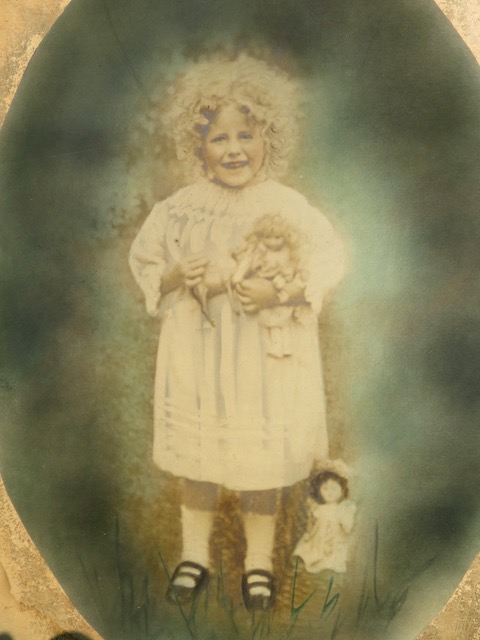


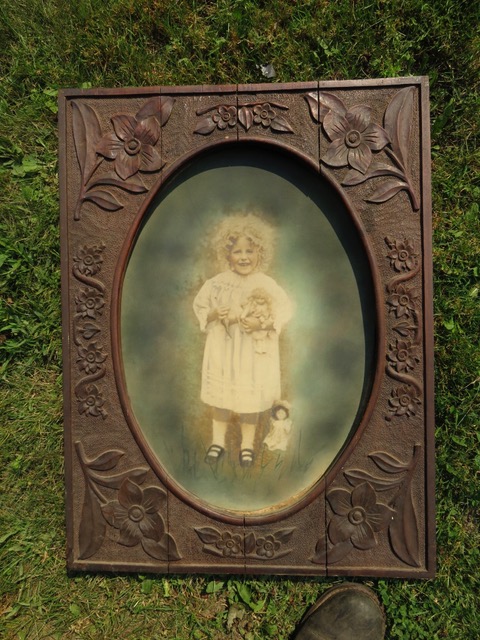
    This is mom as a little girl in England around 1906.   Granddad hand carved this oak frame .


  • Live From The Field

    EPISODE    863  song of the shirt  SONG OF THE SHIRT   BY THOMAS HOOD


    With fingers weary and worn,     With eyelids heavy and red,  A woman sat in unwomanly rags,     Plying her needle and thread—        Stitch! stitch! stitch!  In poverty, hunger, and dirt,     And still with a voice of dolorous pitch  She sang the “Song of the Shirt.”       “Work! work! work!  While the cock is crowing aloof!                  And work—work—work,  Till the stars shine through the roof!  It’s O! to be a slave     Along with the barbarous Turk,  Where woman has never a soul to save,     If this is Christian work!       “Work—work—work,  Till the brain begins to swim;     Work—work—work,  Till the eyes are heavy and dim!  Seam, and gusset, and band,                         Band, and gusset, and seam,  Till over the buttons I fall asleep,     And sew them on in a dream!       “O, men, with sisters dear!     O, men, with mothers and wives!  It is not linen you’re wearing out,      But human creatures’ lives!        Stitch—stitch—stitch,     In poverty, hunger and dirt,        Sewing at once, with a double thread,     A Shroud as well as a Shirt.       “But why do I talk of death?     That phantom of grisly bone,  I hardly fear his terrible shape,     It seems so like my own—  It seems so like my own,      Because of the fasts I keep;  Oh, God! that bread should be so dear.     And flesh and blood so cheap!                     “Work—work—work!     My labour never flags;  And what are its wages? A bed of straw,     A crust of bread—and rags.  That shattered roof—this naked floor—     A table—a broken chair—  And a wall so blank, my shadow I thank     For sometimes falling there!       “Work—work—work!     From weary chime to chime,     Work—work—work,     As prisoners work for crime!  Band, and gusset, and seam,     Seam, and gusset, and band,  Till the heart is sick, and the brain benumbed,     As well as the weary hand.       “Work—work—work,  In the dull December light,     And work—work—work,  When the weather is warm and bright—           While underneath the eaves     The brooding swallows cling  As if to show me their sunny backs     And twit me with the spring.       “O! but to breathe the breath  Of the cowslip and primrose sweet—     With the sky above my head,  And the grass beneath my feet;  For only one short hour     To feel as I used to feel,              Before I knew the woes of want     And the walk that costs a meal!       “O! but for one short hour!     A respite however brief!  No blessed leisure for Love or hope,     But only time for grief!  A little weeping would ease my heart,     But in their briny bed  My tears must stop, for every drop     Hinders needle and thread!”    With fingers weary and worn,     With eyelids heavy and red,  A woman sat in unwomanly rags,     Plying her needle and thread—        Stitch! stitch! stitch!     In poverty, hunger, and dirt,  And still with a voice of dolorous pitch,—  Would that its tone could reach the Rich!—     She sang this “Song of the Shirt!”

    This poem is in the public domain.