upload.wikimedia.org/wikipedia/commons/thumb/b/b7/The_Countess_of_Oxford_and_her_daughter%2C_Lady_Jane_Elizabeth_Harley%2C_by_follower_of_John_Hoppner.jpg/1024px-The_Countess_of_Oxford_and_her_daug… 2x” data-file-width=”1707″ data-file-height=”2000″ class=””>
|
Jane Harley, Countess of Oxford and Countess Mortimer
|
|
|---|---|

Painting of Jane Elizabeth Scott by John Hoppner (1797)
|
|
| Born |
Jane Elizabeth Scott
|
| Died | 1824 (aged 49–50) |
| Spouse(s) | Edward Harley, 5th Earl of Oxford and Earl Mortimer |
| Partner(s) | Francis Burdett George Gordon Byron |
| Children | Edward Harley, Lord Harley Alfred Harley, 6th Earl of Oxford and Earl Mortimer Jane Bickersteth, Lady Langdale Lady Charlotte Bacon Lady Anne Harley Lady Frances Vernon Harcourt |
| Parent(s) | Reverend James Scott, M.A. |


Year: 1816
“The eruption of Indonesian volcano Mount Tambora in 1815 is considered one of the greatest natural disasters ever to befall mankind. The following year, in which this poem was written, saw darkness and record-cold temperatures across Europe; and is known as “the year without a summer”. Byron’s poem, inspired by the then inexplicable darkness caused due to this eruption, uses the hellish biblical language of the apocalypse to convey to his readers the real possibility of the occurrence of the events described in the holy text. Previously read as an apocalyptic story of the last man on earth, Darkness is now regarded by many critics to be anti-biblical despite its many references to the Bible. It remains one of Byron’s most analysed poems.”


CHILDE HAROLD’S PILGRIMAGE
Year: 1812 – 1818
This is a long narrative poem in four cantos with the first two published in 1812; the third in 1816, and the fourth in 1818. It is a loosely autobiographical account of Byron’s two year long tour of Europe from 1809 to 1811. “Childe” is a title from medieval times, designating a young noble who is not yet knighted. The poem describes the travels and reflections of a world-weary young man and is renowned for depicting, with unprecedented frankness, the disparity between romantic ideals and the realities of the world. Childe Harold’s Pilgrimage is also noted for being the first work to depict the Byronic hero, one of the most potent and relevant character archetypes in western literature. Childe Harold’s Pilgrimage is one of the most famous works of Lord Byron and it was on publication of its first two cantos that Byron first gained public attention and acclaim.
Excerpt:-
There is a pleasure in the pathless woods,
There is a rapture on the lonely shore,
There is society where none intrudes,
By the deep Sea, and music in its roar:
I love not Man the less, but Nature more,
From these our interviews, in which I steal
From all I may be, or have been before,
To mingle with the Universe, and feel
What I can ne’er express, yet cannot all conceal.
SHE WALKS IN BEAUTY
Year: 1813
The most famous short poem of Lord Byron, She Walks in Beauty consists of three stanzas of six lines. The poem celebrates the external appearance as well as inner beauty of a woman by whom the poet is captivated. The speaker starts by admiring the harmony of the woman’s external appearance before he suggests that her perfect looks are a reflection of her inner goodness. It is said that Byron was inspired to write She Walks in Beauty after meeting his cousin by marriage, Mrs. Anne Beatrix Wilmot, who was in mourning and wearing a black dress. Byron was struck by her unusual beauty and wrote the poem the next morning.
Excerpt:-
She walks in beauty, like the night
Of cloudless climes and starry skies;
And all that’s best of dark and bright
Meet in her aspect and her eyes:
Thus mellow’d to that tender light
Which heaven to gaudy day denies.
#1 DON JUAN
Year: 1819 – 1824
Don Juan is a legendary fictional character known for being devoid of most moral or sexual restraints. His name is a common metaphor for a “womanizer”. Based on the legend of Don Juan, Byron’s poem reverses his traditional portrayal and instead shows him as not a womaniser but as someone easily seduced by women. The poem consists of 16 cantos with the 17th being unfinished at the time of Byron’s death in 1824. Byron is credited with inventing the expression ‘Truth is stranger than fiction’ in this poem. Don Juan is considered as the masterpiece of Lord Byron and ranks as one of the most important English long poems since John Milton’s renowned work Paradise Lost. It is a variation of the epic form and Byron himself called it an “Epic Satire”. Lord Byron is so highly regarded among scholars mostly due to the satiric realism of Don Juan.
Excerpt:-
Tis strange,-but true; for truth is always strange;
Stranger than fiction: if it could be told,
How much would novels gain by the exchange!
How differently the world would men behold!
Married To The Macabre
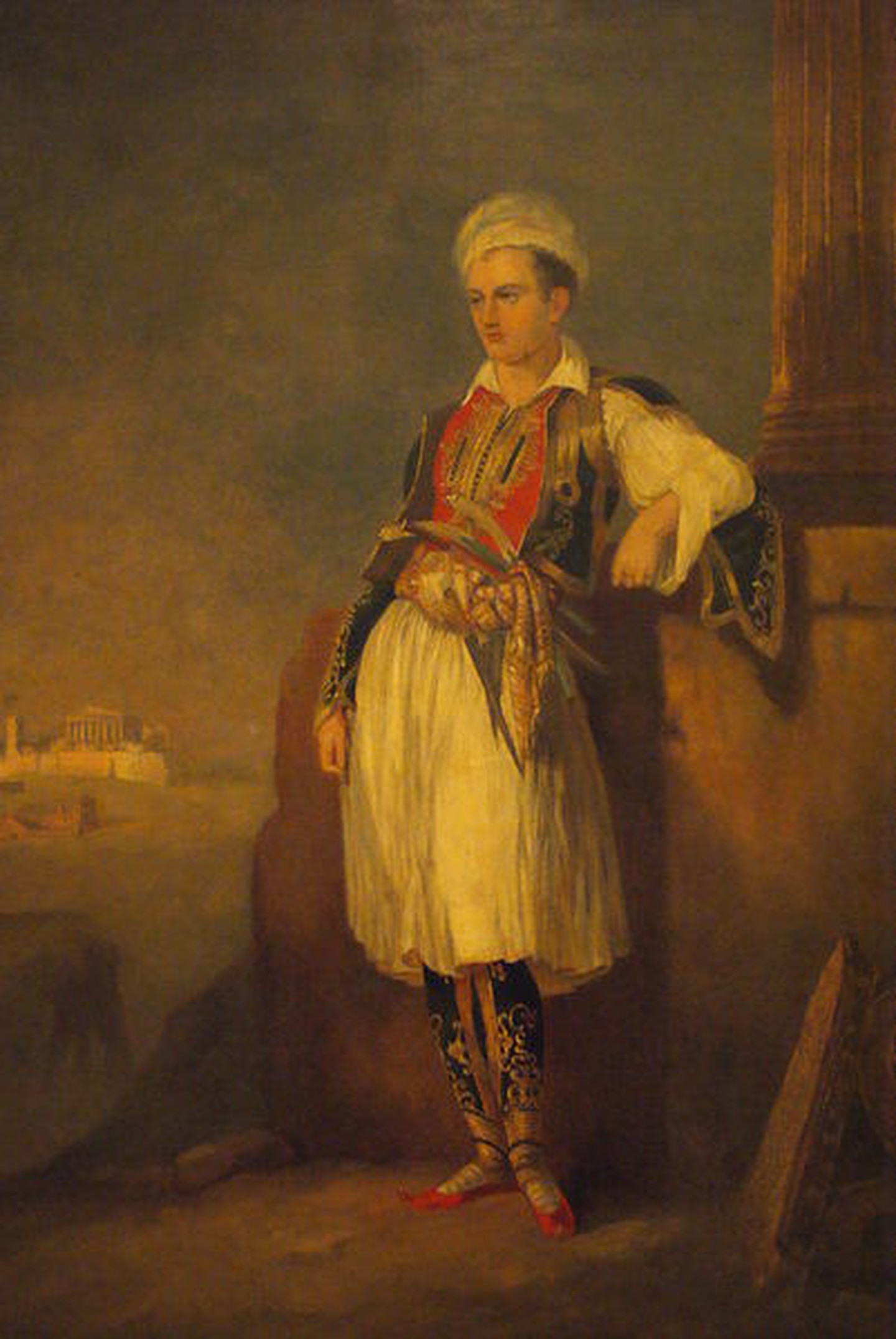
Byron had a fascination for the supernatural — so the reputedly haunted seat of the Byron family, Newstead Abbey, became a favourite venue for Byron’s entourage. His gothic flamboyance perpetuated this sense of the spooky. A coffin stood at one end of the dining room, which Byron had turned into an indoor shooting gallery. Skulls of the monks who had been at buried at the abbey and Byron’s own ancestors from the family crypt were used as flowerpots that lined the walls. He also had a drinking mug made from one of these monkish skulls and served drinks in others. Byron and his friends even wore long, dark, hooded robes as worn by medieval monks, for their soirees. When Percy Shelly was cremated, Byron asked if he could keep Shelley’s skull but he was refused because of his fetish for using them as goblets.
 img.theculturetrip.com/768x/smart/wp-content/uploads/2016/01/b4.jpg 768w, img.theculturetrip.com/1440x/smart/wp-content/uploads/2016/01/b4.jpg 1440w” class=”” loading=”lazy” data-pin-nopin=”true” style=”box-sizing: border-box; position: absolute; top: 0px; width: 600px; height: 862.328125px; opacity: 1; object-fit: cover; transition: 3s; will-change: opacity;”>
A Chip Off The Old Block
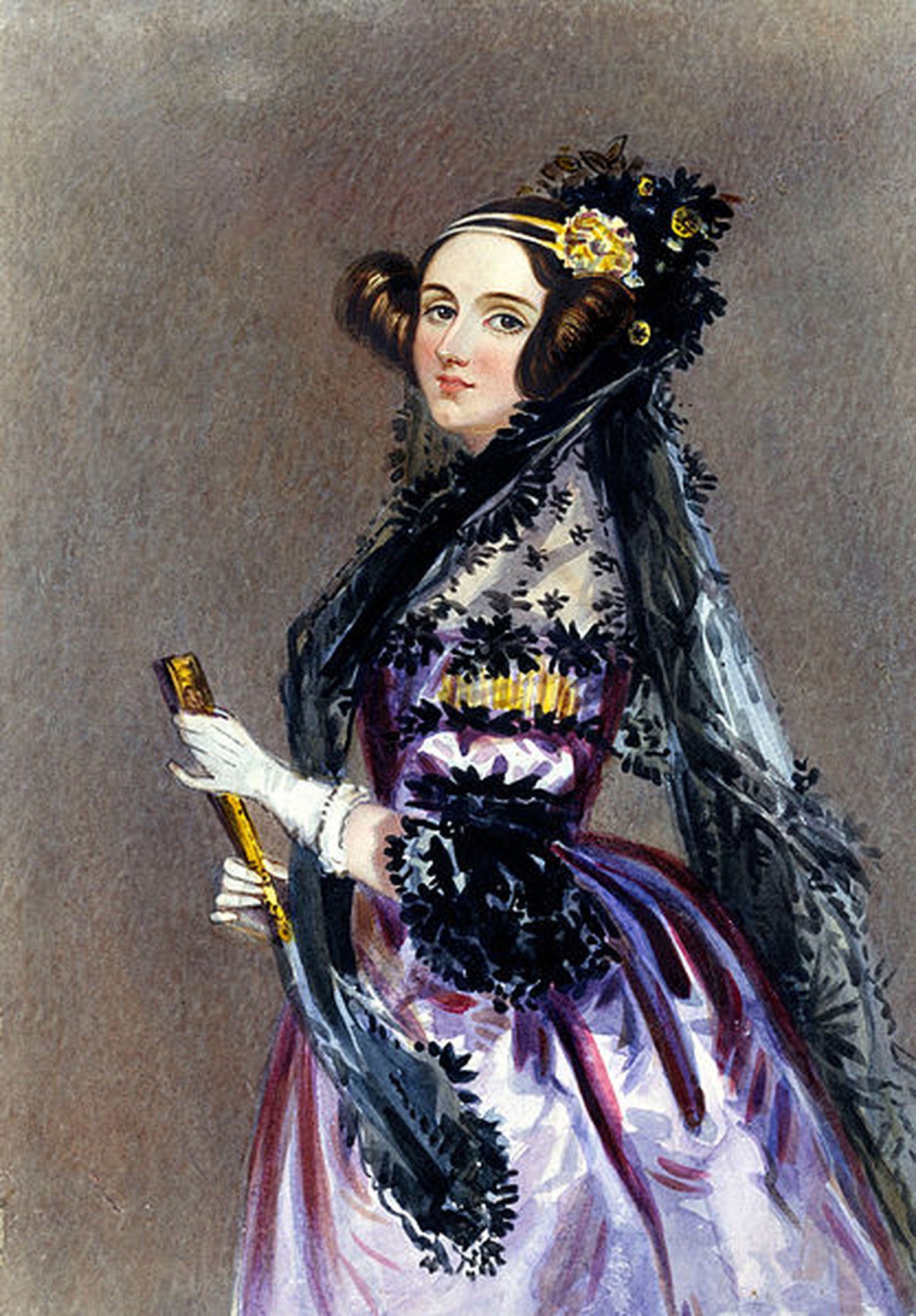
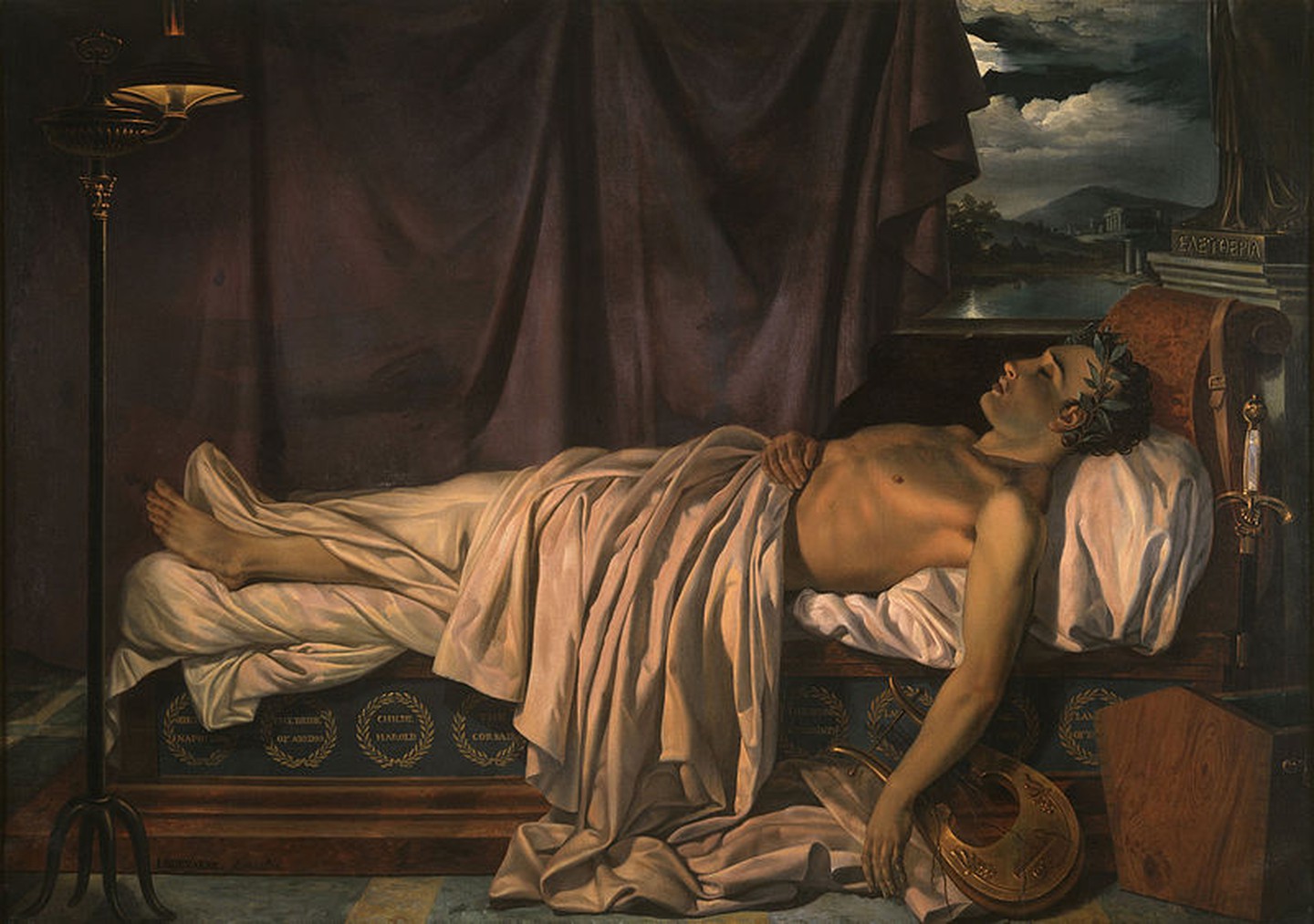
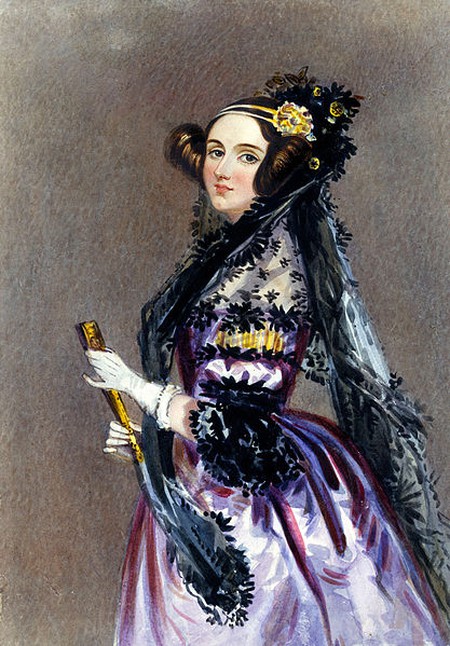
Ada Lovelace was Byron’s only legitimate child. Byron separated from her mother a month after Ada was born and left England forever four months later, eventually dying of disease in the Greek War of Independence when Ada was eight in 1824. Ada’s mother remained bitter towards Lord Byron and promoted Ada’s interest in mathematics and logic in an effort to prevent her from developing what she saw as the insanity seen in her father.
However, Ada remained interested in Byron despite this (although he never had a relationship with her) and was, upon her eventual death, buried next to him at her request. Ada worked with mathematician Charles Babbage on the Difference Engine, a calculator, and the Analytical Engine, a mechanical computer for which she wrote the world’s first algorithms. She showed amazing foresight concerning the abilities of computers to do more than deal with numbers. Ada was the world’s first computer programmer and the programming language ADA was named in her honour. She died at 36, the same age as her father. In her final years she was like her father in other ways, including romantic scandals, problems with alcohol and opium, and gambling debts.
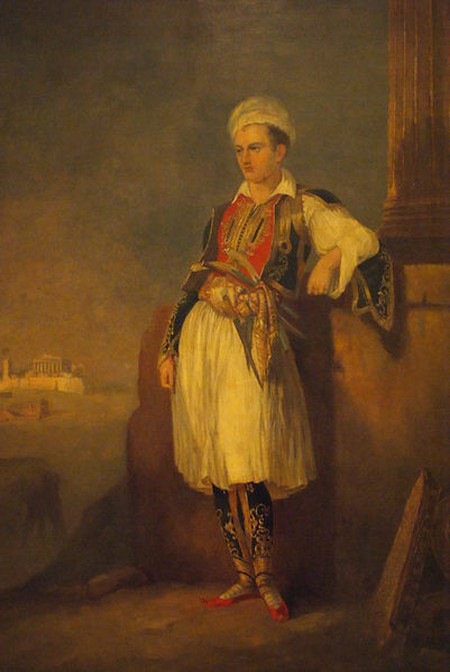 img.theculturetrip.com/768x/smart/wp-content/uploads/2016/01/b5.jpg 768w, img.theculturetrip.com/1440x/smart/wp-content/uploads/2016/01/b5.jpg 1440w” class=”” loading=”lazy” data-pin-nopin=”true” style=”box-sizing: border-box; position: absolute; top: 0px; width: 600px; height: 896.5px; opacity: 1; object-fit: cover; transition: 3s; will-change: opacity;”>
War Games
Byron savoured being a faux military General. He constructed two small stone forts on the edge of his lake and launched a fleet of toy ships, which he spent entire days directing while hidden in his fort. He even got his servant to sit still in a small boat in the lake and ‘command the ships’, involving pushing them around and making cannon and whistle noises with his mouth.
A Student of Armenian
Escaping from Britain with a cloud of infamy hanging over him led Byron firstly to Venice, where his singular preoccupation was to learn Armenian. Venice was and is the home of the Mekhitarist Congregation, a collection of Armenian monks who had settled there. He was impressed by the monks ethos and the rich language. Today, Byron’s brief interaction with the Armenian community of Venice is celebrated with a preserved room where he worked, with items he used. He was the first Westerner in the modern era to take an interest in Armenian culture.
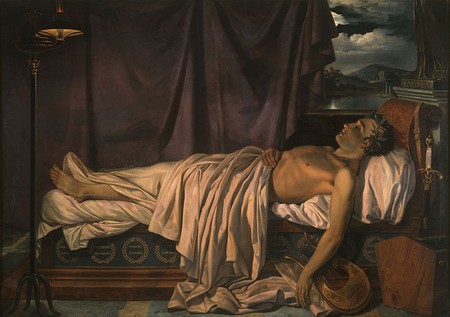 img.theculturetrip.com/768x/smart/wp-content/uploads/2016/01/b6.jpg 768w, img.theculturetrip.com/1440x/smart/wp-content/uploads/2016/01/b6.jpg 1440w” class=”” loading=”lazy” data-pin-nopin=”true” style=”box-sizing: border-box; position: absolute; top: 0px; width: 600px; height: 420.9375px; opacity: 1; object-fit: cover; transition: 3s; will-change: opacity;”>
An Archetype For Count Dracula
During his summer with the Shelleys at Lake Geneva in 1816, Byron suggested the group spend a rainy afternoon writing ghost stories. Mary Shelly wrote what became Frankenstein and Byron’s doctor William Polidori wrote ‘The Vampyre’, the story that inspired future interpretations from Dracula to Twilight. This vampire story was read all over Europe and based on a literary idea by Byron himself (the story was first published under Byron’s name originally explaining the great interest). The type of vampire in the story was wholly new. Previously the vampires in European folklore were peasants and villager spectres, dirty with talon-like fingernails as seen in Werner Herzog’s Nosferatu.
By contrast, Polidori’s vampire is rich, aristocratic and weighed down by ennui — much like Byron himself. The vampire is called Lord Ruthren, a name that can be linked back to Byron, as one of his former lovers Lady Caroline Lamb created a villain called Lord Ruthren Glenarvon, incidentally written as revenge against Byron. Lord Ruthren has cold grey eyes, it is impossible to know what he is thinking and he mixes with the cream of high society. He is liked, but is a secret predator eager to lead the virtuous astray with his charms — traits which are familiarly Byronic.


 61d0c77dd29b1.html