Year: 2022

  • EPISODE 509 FOUR IRISH CHILDREN AND THEIR DONKEY, CIRCA 1960

    EPISODE 509    FOUR IRISH CHILDREN AND THEIR DONKEY, CIRCA 1960


    alan skeoch
    Jan. 9, 2022


    I can’t believe I took this picture but seems I did as there are several supporting pictures.  So very Irish.

    So very innocent and charming    Our geophysical work in the County Waterford, Ireland, in 1960 attracted a lot of
    attention from locals and even the Waterford newspaper did a big speed on the front page which I have
    tried to get but have failed.  This picture is a lot nicer anyway.

    alan
  • EPISODE 508 SAND SHARK CATCHING WITH BARE HANDS VOLUME 2 — JACK catches a sand shark


    EPISODE 508   SAND SHARK CATCHING USING BARE HANDS VOLUME 2 — JACK


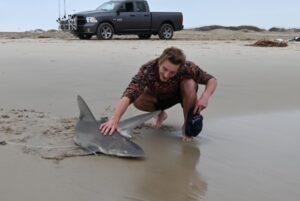
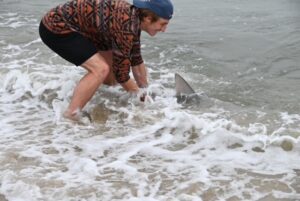
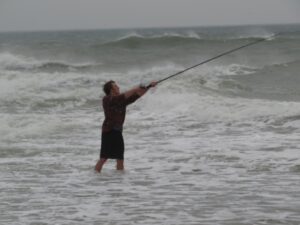
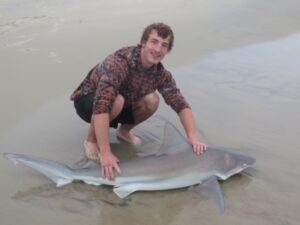
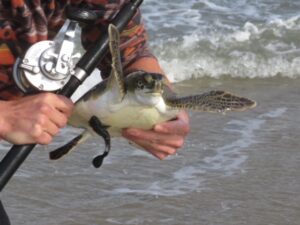
    OUR grandson, Jack, is always interesting and his friendship with a sand shark on a North
    Carolina beach a week ago confirms that point.  The real story is that he and his dad happened
    upon an American fisherman struggling to land a sand shark.  Jack offered to help.

    “Can I give you a hand?”
    “Sure.”

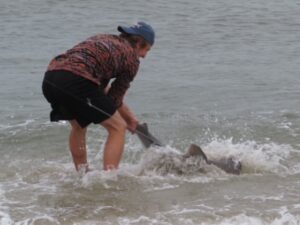
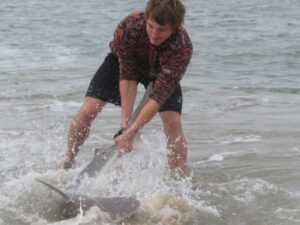
    Whereupon Jack jumped into the shallow surf and grabbed the shark by the tail startling
    both the fishermen and Jack’s dad, Andrew Skeoch , were startled.

    “What the hell are you doing?”  (chorus of two)
    “Catching him.”
    “I did not mean that…”
    “”Got him…not slimy,,,skin is like leather…easy to hold.”
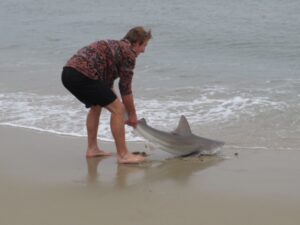
    “Drag him ashore while I take pictures but be carful…he’s twisting,
    trying to get you.”
    “Don’t worry Dad.
    ‘“Let’s get the hook out of his mouth.”

    Whereupon the fisherman braced the shark and both he and Jack removed the hook.
    That part is shown in the video below.

    “Sand sharks are invisible in the water…their skin is the same colour as the sand…a light
    gray.  Swimmers may not even know a sand shark is around.”

    The shallows of this North Carolina beach had other marine life…lots of partly grown 
    turtles…leatherbacks maybe…

    There was one group missing.   People.  The outer banks of Cape Hatteras were 
     empty.  Lucky for the family….no danger of Covid catching them triple dosed with
    vaccines anyway.

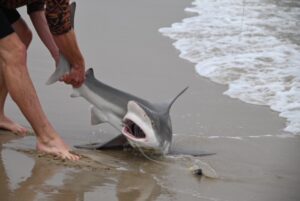
    Sand sharks rarely attack humans…usually when they both have caught the same fish.
    Their mouths are not big enough …of the 77 recorded attacks, only one was fatal.
    That fact was little comfort to Jack’s mother, Julie.

    Make sure you PLAY THE VIDEO at the bottom of this Episode.


    alan skeoch
    Jan. 9, 2022


  • EPISODE 506: COMPLETE LIST OF LOST COUNTRY HOUSES IN BRITAIN — 1,984

    EPISODE 506     LIST OF LOST COUNTRY HOUSES IN BRITAIN. (This gets personal)


    alan skeoch
    Jan. 6 , 2022


    Aramstone House, King’s Caple, Herefordshire (Demolished)

    Aramstone House, King's Caple, Herefordshire (Demolished)

    SO FAR 1,984  COUNTRY ESTATE GRAND HOUSES HAVE BEEN DEMOLISHED

    So far 1,984 Country Estates like Eywood have been lost.  Many by demolition…others by fire…others by inability
    to maintain due to costs….others by deaths in wars…others by extensive damage…etc. etc. Result has been
    loss of 1,984 very unique large homes some of which were like Casa Loma and others interesting but
    less ostentatious.  A loss all the same.  In Canada such losses have also occurred with little if any protest.

    In Britain the demolitions have been recorded with pictures and comments under the heading below”

    “COMPLETE LIST OF LOST COUNTRY HOUSES IN BRITAIN.”

    Yes, all 1,984 lost country estates are listed.  I have picked a few below just for interests sake…one
    especially for friend Judy Caldecott under heading ‘Caldecott House’. Her dad, Stapes, was our 
    principal at Parkdale C.I. for several years.  He was a fighter for kids and would have fought for
    Caldecott House if it had any family connection at all.


    While the number of country estates lost is huge, there are more than 3,000 still in existence although some are
    doomed.  The list reads as if the sword of Damocles hangs over them all except those protected
    by the National Trust.

    Caldecott House
    Abingdon, Berkshire

    Caldecott House was, for many years, the home of the Hyde family. When its last owner, Major-Genral Bailie, died in 1918, the place became an hotel. Requisitioned during the last war, it was, finally, a Barnardo’s Children’s Home until its demolition, in 1972, to make way for the present housing estate.


    SALTMARSHE CASTLE


    LOCATION   BROMYARD
    COUNTY   HEREFORDSHIRE
    YEAR DEMOLISHED   1955
    REASON   UNKNOWN


    Saltmarshe Castle


    ST LEONARD’S HILL


    LOCATION   CLEWER NR WINDSOR
    COUNTY   BERKSHIRE
    YEAR DEMOLISHED   1924, 1970
    REASON   ABANDONED, BECOMING DERELICT BEFORE DEMOLITION

    << BACK TO MAIN PAGE 

    St Leonard's Hill - photograph from 'Beautiful Britain - the Scenery and Splendours of the United Kingdom' 
    ST LEONARD’S HILL – PHOTOGRAPH FROM ‘BEAUTIFUL BRITAIN – THE SCENERY AND SPLENDOURS OF THE UNITED KINGDOM’ (PUBLISHED 1894) 

    St Leonard's Hill - print from London Illustrated News 
    ST LEONARD’S HILL – PRINT FROM LONDON ILLUSTRATED NEWS

    UNDER THREAT…ANNESLEY HALL BELOW


    Annesley Hall, neglected and forlorn in 2003. The three storey, six bay hall has 13th century aisled hall origins but its current appearance is largely the result of large scale late 17th century extension and remodelling in 1838 (photo: Andrew Nicholson, 2003).

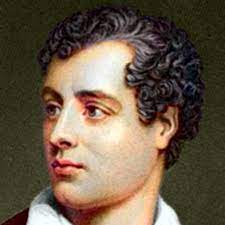
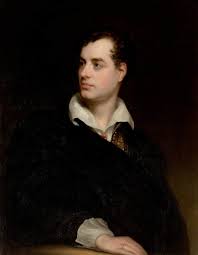
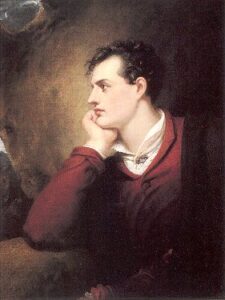
    ANNESLEY HALL…a country house under threat o demolition.  It was here that Lord
    Byrons praises MARY CHAWORTH. (1785 – 1832)


    Aramstone House, King’s Caple, Herefordshire (Demolished)

    Aramstone House, King's Caple, Herefordshire (Demolished)


    “TRY TO STAY FOR THE NIGHT IN THE BIG HOUSE DOWN THE ROAD!

    Marjorie and I had a real life experience with country houses decades ago when we were
    searching for English ’tithe barns’.  Places where peasant medievsal farmers paid their tithes
    in kind because they never handled cash in coin form. Or very rarely did so.  They paid their
    10”% tithes in the form af bushels of grain or domestic animals.   Church and state officials
    had to have buildings in which to store and eventually sell or distribute these agricultural products.
    So huge tithe barns were built.   And many of these ancient medieval buildings have survived
    and are tucked away in obscure villages., landed estates or alongside churches in Britain.
    Finding them was a challenge which made our trip worthwhile.


    The Great Barn


    “Alan, that was one of our greatest trips when we searched for those tithe barns.?
    “Gave purpose to the trip didn’t it?”
    “Remember Bromyard?
    “Night driving east from Leominster…dark…we had no place to stay…
    But by chance we found a  Counry House…old aristocratic estate…long lane.
    Just east of Bromyard, Herefordshire.
    “A man in the Bromyard pub suggested we try the big house outside own….sometimes
    they take in tourists…not often but sometimes.”

    So we drove down that long dark twisty lane arriving at a very large
    Country Estate home.  There was some kind of party going on in the
    main room…seemed to be celebrating something.  

    “Sure, we can put you up.  Big room upstairs.  Make yourself at home.
    Wine, beer and scotch in the room, help yourself.  

     We will send up
    coffee in the morning on the dumb waiter.”

    “Dumb waiter?”  What did he mean by that?   Turned out to be a miniature hand
    cranked elevator for food directly from the estate kitchen somewhere below. We made
    ourselves at home.  Made gin and tonic from the loaded bar. Great long cast
    iron bathtub with heated towel rack.  Pure luxury. The former aristocratic owners
    knew those finer touches of relaxation.

    A while later there was a knock on our door and an invitation to come down
    and join them in the drawing room where around a half doze ’30 somethings’ had been 
    lamenting end of fox hunting with hounds and horses..  

    “The estate is owned by an American company to entertain executives visiting England.
    Very irregular…so rooms are unused most of the time.

    Marjorie and I were just entertainment for the group  All of them bemoaning
    the decline off fox hunting.  Upper class.  Seems former owners of he estate
    were kept on to maintain estate for American corporation.  Quite a come down.

    We had a great time and in the morning a little bell rang and coffee came up
    on the dumb waiter while we were invited downstairs for a complete English breakfast  with Kippers included.

    WHAT HAPPENED TO MOST OF THE COUNTRY HOUSES IN IRELAND?

    Sad situation in Ireland.  Between 1919 and 1923 most of the 4,000 country houses
    in Ireland were set ablaze.  Today there are only 100 or so remaining.   The
    Irish I met when working there in 1960 referred to those bitter days of the
    early 1920’s as the ’Time of the Troubles’ which meant little to me at the time.
    In those years thousands of grand estate homes many of which were like
    Eywood were set on fire by members of the IRA…Irish Republican Army.

    I remembered doing our 1960 geophysical survey work through a big estate
    east of Bunmahon.  Seemed the owner was not pleased with our trespassing. He had a good case.
    The reasons I remembered was the heavy rain and spongy swamp area where
    John Fleming and the staking crew worked in the darkness and pouring rain cutting our survey lines
    using a compass and flashlight.  Fleming did it and kept lines straight. Amazing work.
    But first we had to overcome the estate owners protests.  Do not remember how 
    we got access.  Do remember the thick rhododendron underbrush and then
    the needle like Gorse.  Who would want to trespass?

    So I sent a note to Professor Aidan Coffey who is quite an authority on what is
    now called the Copper Trail of western Waterford.

    DATELINE:  JANUARY 4, 2022

       Hello Alan.
       I saw your message this morning before I left for Waterford. When I took my mother for the usual drive this afternoon, I deliberately went by Gardenmorris estate and I took a photo of it for you to show you how it looks. I read about your exploration work there on your website writings – so I know it’s the same one. In 1960, it was owned by the Poer-O’Shee family. The estate is about 500 acres.

       In answer to your question: Gardenmorris certainly was burnt down in 1923 along with very many other fine houses in County Waterford with all their contents including paintings (generally, the occupants were ordered to leave the house before it was doused in fuel and torched). There were some houses that escaped, notably Curraghmore House, the home of Lord Waterford – de la Poer Beresford. Gardenmorris (previously three-storey: see old museum photo attached) was subsequently rebuilt as a two storey house, and has been pink in colour as far back as I can remember. Maybe the fact that it was rebuilt made some people that you met think that it wasn’t burnt. Many of the big houses were rebuilt, I guess on the strength of their insurance at the time. Others were not and only their ruins remain. 

       During the Irish civil war when the anti-treaty IRA were burning big houses they appeared to be indiscriminate. Their purpose was apparently to undermine the new 26-county Irish state including houses of those perceived to have influence. It apparently did not matter whether a big house was owned by Catholic or Protestant. Gardenmorris was owned by the Catholic Poer-O’Shee family who in 1874 had built the neo-gothic Catholic church for the local village of Kill. In the mid 1700s, the family had also built the tiny remote Roman Catholic church in Faugheen valley (where you also prospected in 1960). The latter is possibly the earliest catholic church in the county that is still in use, though only once a year in mid-August. The Poer-O’Shee family were generally respected in the area down through the generations. They sold Gardenmorris estate in the 1970s to a local family. As you see in the photo, they have maintained the house well. 
    Best regards
       Aidan


    This is the estate home I remember…did not know it had been torched and rebuilt
     
    There were 4,000 country estate homes in Ireland, many much like Eywood.  But only 100
    survived the IRA burnings of the Time of the Troubles (1919 -1923).  Owners were informed
    on the night of an attack on  country home.  “Get all the living persons out of this house,
    we are going to burn it.”  Nothing much was ever saved.  Great paintings went up in smoke
    along with furniture and possessions.   Some were rebuilt.  Others remained as burned
    out shells like the one below.

    Lost Ireland | BISH - British &amp; Irish Stately Homes


    JUST SO WE DO NOT END WITH A SOUR NOTE…HERE IS KITCHENER HOUSE, EDINBURGH, SCOTLAND
    (where Morgan Skeoch is now living)
    Kitchener House | UOE Accommodation
    KITCHENER HOUSE, EDINBURGH, SCOTLAND…NOW A STUDENT RESIDENCE

    SOMEWHERE  in this grand old house lives our granddaughter Morgan who is a Veterinary Medicine
    student at the University of Edinburgh.    Morgan’s house, like many other grand Country Houses has been
    redesigned as student housing.  There is one big difference from the past to the present.  In the past
    Kitchener House had a cook and servants.  Today the kitchen is still there but students have to prepare their
    own meals and woe betide the person who does not wash his or her dishes afterward.  That happened once.
    As a result the kitchen was closed down until whoever left the mess cleaned up the kitchen.  I think Morgan
    did some of the clean up even though she was not responsible for the dirty dishes.


    Kitchener House | UOE Accommodation
    Kitchener House | UOE Accommodation


    Student Review: 5 /5
    By biochemislife On 15th May 19

    I loved my time in Kitchener. Super affordable, spacious rooms and so close to Kings Buildings. Great for socialising too, with the events organised by the RAs. The cleaning staff were lovely, always up for a chat and in a couple of weeks they knew all of us. The wifi crashed a couple of times, but they solved it within a couple of days. Highly recommend.
    alan skeoch
    JAN. 7, 2022
  • EPISODE 505 WHY WAS EYWOOD DEMOLISHED IN 1954? (HISTORY OF EYWOOD FROM 18TH CENTURY TO 21ST CENTURY)

    EPISODE  505   WHY WAS EYWOOD DEMOLISHED IN 1954? (AND history of Eywood’s owners)


    alan skeoch
    Jan. 5, 2022


    This is (was) Cyril Griffiths to whom I owe so much.  He was once the tenant farmer of Oatcroft which was sold from under him even
    though he had tenant farmers rights.  Or so I believe.  My grandparents enduring contact via mail with the Griffiths family
    was the sole reason I was able to make contact and delve deep into the history of Eywood.  Cyril moved to Lower Wooton
    Farm when Eywood was sold  If time permits I will do an episode on Lower Wooten Farm. Below is a roadsign post should readers want
    more information or pictures of Titley and surrounding villages.  They are stunning places


    The history of Eywood is not a happy history like that of the fictional Downton Abbey.  But there were
    good times.   I think my grandfather took this picture with his pinhole camera between 1900 and 1908.
    The Chauffeur looks very young and very determined   One of my readers can probably identify the car
    and year of manufacture.  Similar vehicles appeared in the Downton Abbey series.


    note: It is unclear why the demolition of Eywood was incomplete.  When I visited the site for the first time these walls were standing and
    in the middle of the floor area there was a hole that I  was told gave access to the wine cellar.  Big enough to crawl through.  No wine that
    I could see.

    “Why was Eywood demolished?”
    Several readers have asked that question.  The answer is complicated. Perhaps best understood
    by considering the history of Eywood.  Many country estates had several owners particularly so as
    the 20th century progressed and taxes increased putting an enormous burden on the old guard of
    places like Eywood.  i.e. the aristocracy of Britain.  But to just say taxes is too simple.   So here is
    the history of the place.

    1)  Edward Harley (1664-1735) acquired the Eywood estate at the end if 17th century and build a house about 1705.  His younger brother Robert Harley was Speaker of the House of Commons and
    Chancellor of the Exchequer in reign of Queen Anne.  Robert Harley appointed Edward Harley as Auditor of the Imprest, a lucrative appointment providing enough money to build the original Eywood
    manor house.   Later in the 18th century the house was altered.  (see work of Robert Kingsley)

    2)  1735 Edward Harley succeeded by his son Edward Harley (1699-1735) becoming the 3rd Earl of Oxford in 1741.  Inherrited the principal estates of Brampton Brian (ancient seat of the Harleys) while Eywood
    was the secondary estate of the Harleys.

    3) Either the second or third Earl of Oxford both named Edward Harley, landscaped Eywood.   In 1756 Bishop Pococke wrote ‘Lord Oxford has a large house and a fine lawn, with a beautiful piece of water
    and great woods on the hill over it”.  This comment was used often in later descriptions

    4) Edward Harley (1726 – 1790, 4th Earl of Oxford,in 1775 brought CAPABILITY BROWN to Eywood.  His landscaping suggestions are unknown but by 1795 three pools were established of which two remain.
    Woodland features were also established….grand parkland trees some of which may still stand.

    5) Edward Harley (1773 – 1848) , the 5th Earl of Oxford married Jane Scott in 1794. Her father was a Christian mininster from Hampshire.
    She became the Countess of Oxford.  She is noteworthy due to her scandalous relationship with Lord Byron in October 1812.  Scandalous behaviour
    with other men led to her gossiped title as mother of the “Harleian Miscellany” of 8 children with different fathers.

    6) Robert Smirke was hired from 1805 to 1807 to enlarge and modernize Eywood Court.  He added three storey wings on each side of the original
    square block mansion. The new wings were set back somewhat from he original house allowing the older house to dominate.  A new entrance was
    made in the North East wing.  Inside Smirke created a new dining room with column on one end, a new dining room, A new ‘pleasure park’
    was laid out around the house.

    7) 1848, both Eywood and Brampton Bryan were inherited by Alfred Harley (1809 – 1853), 6th and last Earl of Oxford.

    8) 1877, Brampton Bryan estate passed to his widow 

    9) Eywood passed to his elder daughter, Lady Langdale who died in 1872

    10) Dispute over the estate of Eywood…. finally went to her sister, Lady Charlotte Bacon,
    the widow of General Anthony Bacon who was described as ’the finest
    cavalry officer in the army’ while also being imprisoned for two years for debt.
    He also attempted to found a colony in south Australia.  He led a varied life, must
    have been away from Eywood for long periods as he worked for Don Pedro, King
    of Portugal and Emperor of Brazil.

    IN 1877 Lady Charlotte Bacon was living in Australia with her children but
    came home to live at Eywood and died in 1880.

    10)  1880 Eywood sold to Arthur Walsh (1827 – 1920) , 2nd Baron Ormathwaite

    11) 1892  Eywood sold to Charles James Paul Gwyer (1854 – 1940) and his
    wife Mary (1862 – 1950)

    Eywood was not in good condition by then as it had been empty for long periods
    while the Bacon family were in Australia.  Charles Gwyer remodelled the house by
    removing the third floors on the wings, removing the giant ‘order’ and 
    ‘russtification’ (whatever the means)  , a large new porch with ‘eclectic’detailing  was built on the east side…the
    only part of the building to survive today (*I am unsure just what is being described here
    as all that remains today is the stone columned entranceway.

    12) 1954 Eywood was sold again, by this time in poor condition.  Bought by
    Mr. Vowells of Birminghsm who sod off the firms and demolished the house
    after trying to sell it as a private school or convalescent home.

    What condition?  One comment says Eywood Court was in  poor condition
    in the Australian owner’s time (Bacon family)  but comment in the Gwyer owners time says
    good condition.

    War played a big role in the demise of Eywood  both World War I and World War dashed any
    hope of Eywood surviving the wrecking Ball.  Two very personal reasons. The Gwyers were military people.

    On August 27, 1918 Lieutenant Cyril Gwyer was killed in World War I.  He was only 27 years old and would have been
    the master of Eywood.  He is buried at Mory Abbey Military cemetery  beneath the inscription THEY SHALL BE MINE SAITH THE LORD OF HOSTS

    But he had a son Geoffrey Gwyer who seemed destined to take control of Eywood.  And would have done so were it not for World War II. Captain G.C.F. Gwyer died in Tunisia and
    is buried there beneath the inscription IN LOVING MEMORY OF/ GEOFFREY CHARLES FRANCIS GWYER/ CAPTAIN GRENADIER GUARDS/ SON OF THE ABOVE/ KILLED IN ACTION 19TH MARCH 1943, SERVING WITH/ THE EIGHTH ARMY IN TUNISIA. AGED 27 YEARS/ “DUTY WAS THE STAR THAT LED HIM

    His mother Mary died in 1950.  Her time at  Eywood must have been very sad.   Both husband and son dead.  Many of the country estates lost sons in the two world wars which one reason so many of the
    country estates in Britain were lost.  There were many other reasons however.   Somewhere there must be a record of those sad years between her death in 1950 and the sale of Eywood in 1954..


    1. Picture of Eywood Court circa1900…taken with Edward Freeman’s pin hole camera.   The high walled stables appear in the background.
    WHAT SURVIVED?
     -A few ’stumps’ of brick walls
    -The porch
    -The stables
    -other farm buildings
    -the dovecote
    -the gardens
    -the gardeners cottage
    -the bothy (a wreck)
    -the landscaping 
    -the lake
    -some ancient parkland trees
    -the two large farms and their buildings
    -the gatekeepers house
    -St. Peter’s church, Titley village 
    -the exotic fruit trees 
    Detailed gravestone in St. Peter’s cemetery documenting the years when the Harley’s owned Eywood.

    Document included in the 1954 auction booklet for Eywood.  Rather odd that Lord Byron’s
    sexual exploits with Countess Oxford would be part of the sales pitch.

    The village of Titley and the Eywood estate are in centre of these villages


    Interior of the dovecote at Eywood.  One source of meat in the early 19th century was young pigeons whose nesting
    was encouraged on large estates.  The Eywood dovecote is intact but no pigeons.


    This picture was taken by Edward Freeman about 1905.   The apprentice gardeners lived in this ‘bothy’ which was built into
    the north wall of Eywood gardens.  Not much of a place to live although the cattle seem to like it.


    Eywood Gardens where Edward Freeman worked as Head Gardener of Eywood circa 1900 (Picture taken 1960 or 1965)


    Sr. Peter’s Church, Titley Village.  


    Gatekeepers house Eywood


    Eywood Park with ancient trees planted after the year that
    Capability Brown visited Eywood and may have made suggestions.


    Much of Eywood remains forested


    WHILE MEMORY SERVES