Well, it’s that time of year again when we start to worry about the Monarch Butterflies. Lots of
doom and gloom…talk about these beautiful creatures facing extinction. Let’s hope it’s
just talk.
We are doing our part by leaving a good sized slice our garden exclusively for milk weed
plants. In the past no respectable farmer would do that because milk weed is toxic to
cattle. Or so I am told. I have never seen a cow munching milk weed. They seem to
know plants. All over North America eccentrics like Marjorie and me have little patches
of milk weed. Others, using little thought, spread the insecticide Round Up. Deadly.
And today there were two monarchs nosing about. I hope laying eggs. Eventual
larvae who can munch they way through our dining area.
Milk weed gets a little ugly about now. Other creatures chew at the leaves. But
Monarch larvae when and if they appear are obvious and systematic. Big fat larvae
eventually appear.
Big question
How much time do they need to eventually emerge as Monarch butterflies.
This is the beginning of Sept. October comes fast as does the frost. Is there
enough time left? Then they have the long flight to Mexico or part way there.
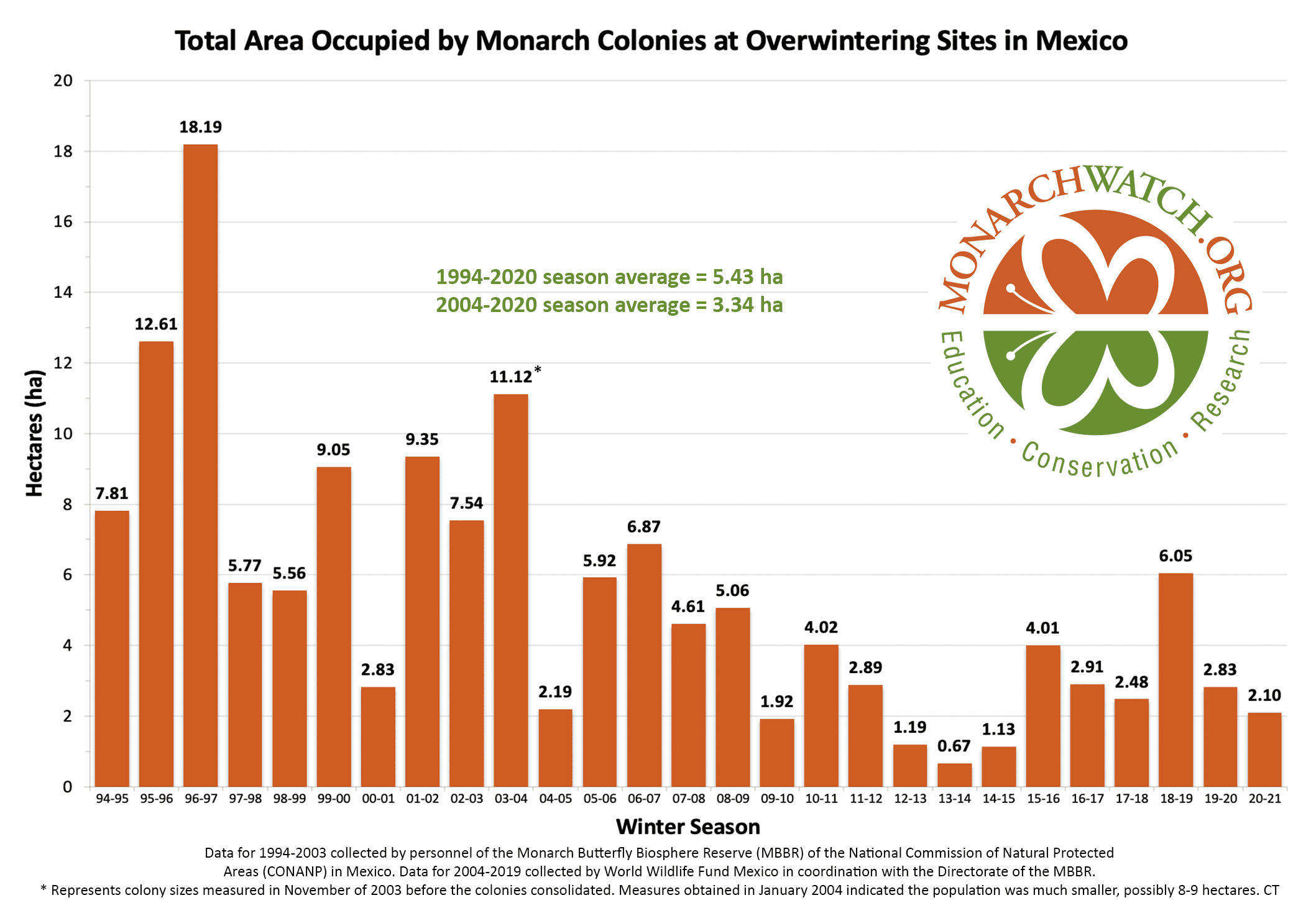
Monarch Butterfly Population in 2020-21
How would you go about counting North America’s monarch butterfly population? Scientists can’t count each and every butterfly. Instead they count the area of land occupied by the monarchs in their Mexican over-wintering habitat. The 2020-2021 Monarch Butterfly Report below shows only 2.1 hectares, down from 6.05 hectares just 2 years ago. It’s one of the lowest acreage numbers for the winter population in 20 years. Entomologists believe that Monarch survival requires at least 15 acres of wintering butterflies annually. The situation is dire. Why is this happening?
Illegal Logging Is Increasing in Mexican Winter Habitat