Month: March 2021

  • EPISODE 272 THE MASSEY FERFUSON BULL WHEEL…planned symbol of working class history…GONE

    EPISODE 272    THE MASSEY FERGUSON BULL WHEEL…symbol of working class history…gone


    alan skeoch
    March 2021

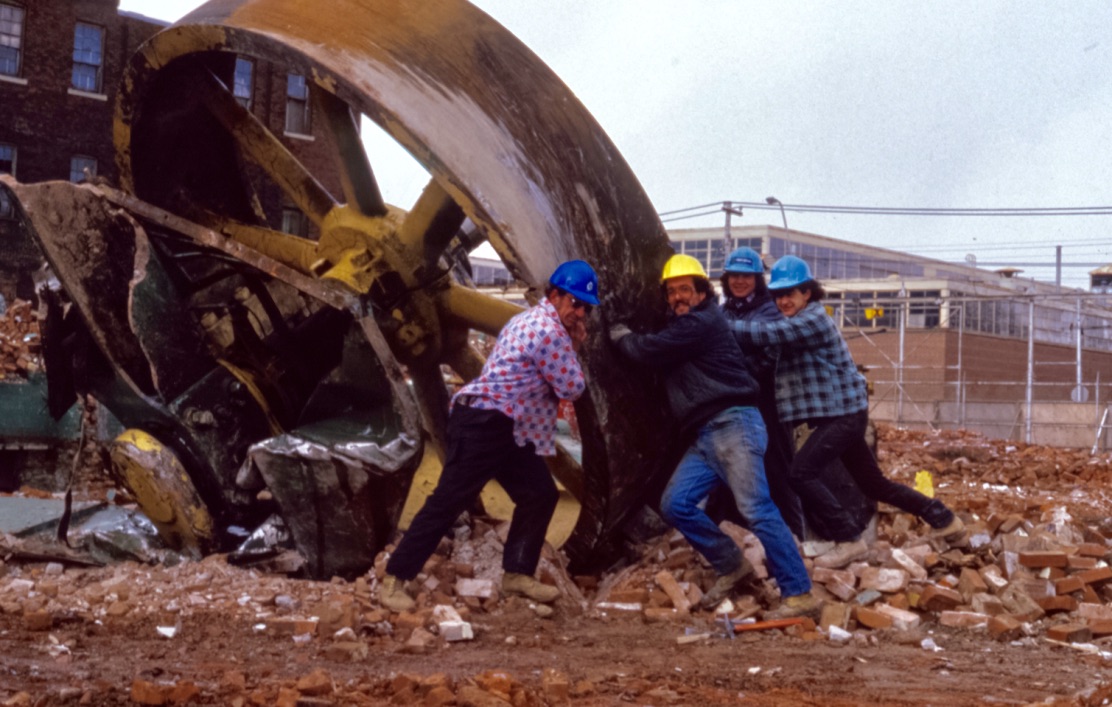
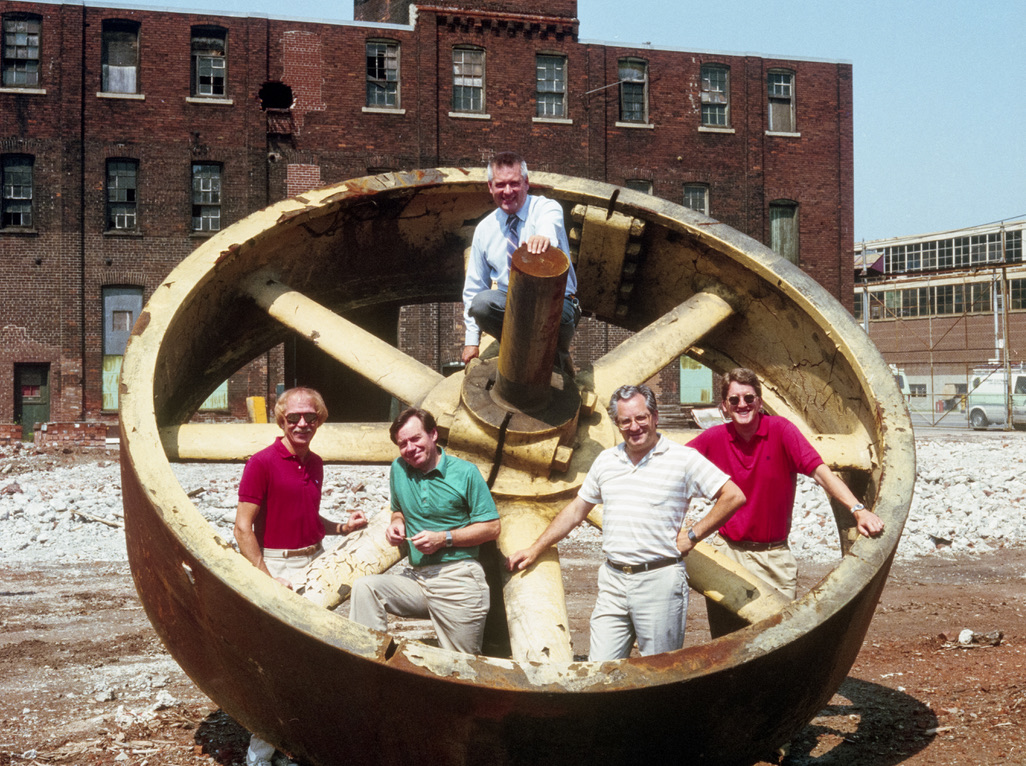
    Our history department at Parkdale Collegiate Institute in 1980.  Left to right…Lynn Roddick, Phil Sharp, Sam Markou, John Maize,
    up top Alan Skeoch. Terry Wickstrom was rescuing a few boards, missed the picture.  The glory days of teaching when history as a subject had a firm place in the curriculum. 1980, A time when
    we nearly saved something important.  A symbol of our past.  We failed but had a glorious time trying to make this wheel into a
    monument.

    THE STORY OF THE BULL WHEEL, 1980

    In 1980 the wrecking machines began to be unloaded at the Massey Ferguson 
    factory on King Street West in Toronto.  This was once the site of the biggest
    employer in Toronto.  Makers of farm machines sent around the world…horse drawn
    harrows, binders, dump rakes, wagons, hay forks.   The Massey Harris days witnessed
    the changes in farm technology of 19th century Canada eventually resulting in Massey Harris
    tractors which at one point dominated the tractor business.

    About the same time that the demolition began I wrote a 300 page thesis on agricultural
    machine technology from 1850 to 1891.  A massive job.  I am not sure that my professors
    at the U. of T. actually read the tome.   I worked in three departments at the university…three
    professors….Donald Webster in Fine Arts, J.M.S. Careless in History, and Bruce Sinclair in Engineering.  I did not
    care if it was read or not.  It was a matter of the heart.  For decades I had observed the steady
    decline of family farms across Ontario.   Farm sales were so common that there could be a
    dozen sales to choose from on any given Saturday…weekdays too.   Ontario was changing.
    Something was being lost and unrecorded.

    So when the excavators, drag lines, bull dozers began pushing down the Massey buildings…so many of them
    were in place…I was a witness.  More than that.  I was a collector.  Every morning from 6 a.m. to 8 a.m. I was
    on the demolition site.  So often that it was assumed I was part of the crew…hard hat and steel toed boots.
    I loaded my truck with all I could push or carry.  The Portuguese foreman and his
    crew even helped with the cast iron carts of which I managed to load a number.  On one occasion I remember
    our principal came out to the parking lock to see the timbers jutting five to ten feet out the back of my truck
    while I was washing the soot of a century before going to class.  

    There will be a number of stories coming about this odyssey.  Odyssey?  yes, an odyssey on a sea of broken bricks.


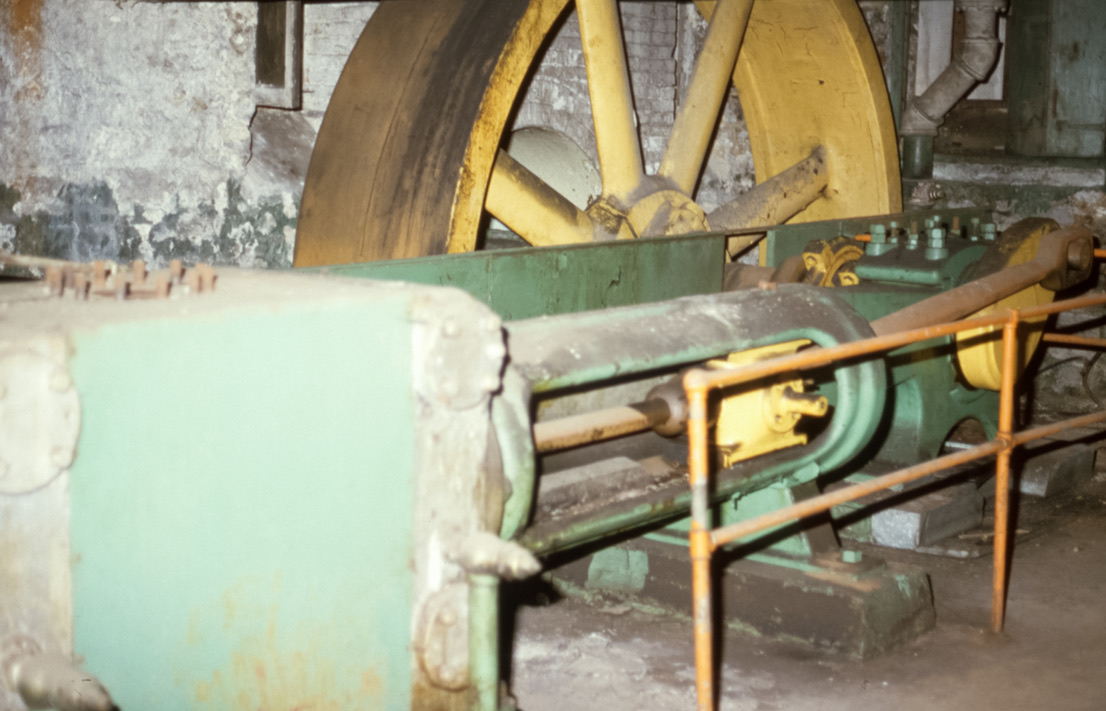
    The deeper the demolition the more that was found until the gem of gems was uncovered.  The giant bull
    wheel that ran the line shafts that were belt wrapped to the lathes, heavy punch presses, shapers, iron workers
    that made all those bright red and Yellow Massey Harris…then Massey Ferguson farm machines.

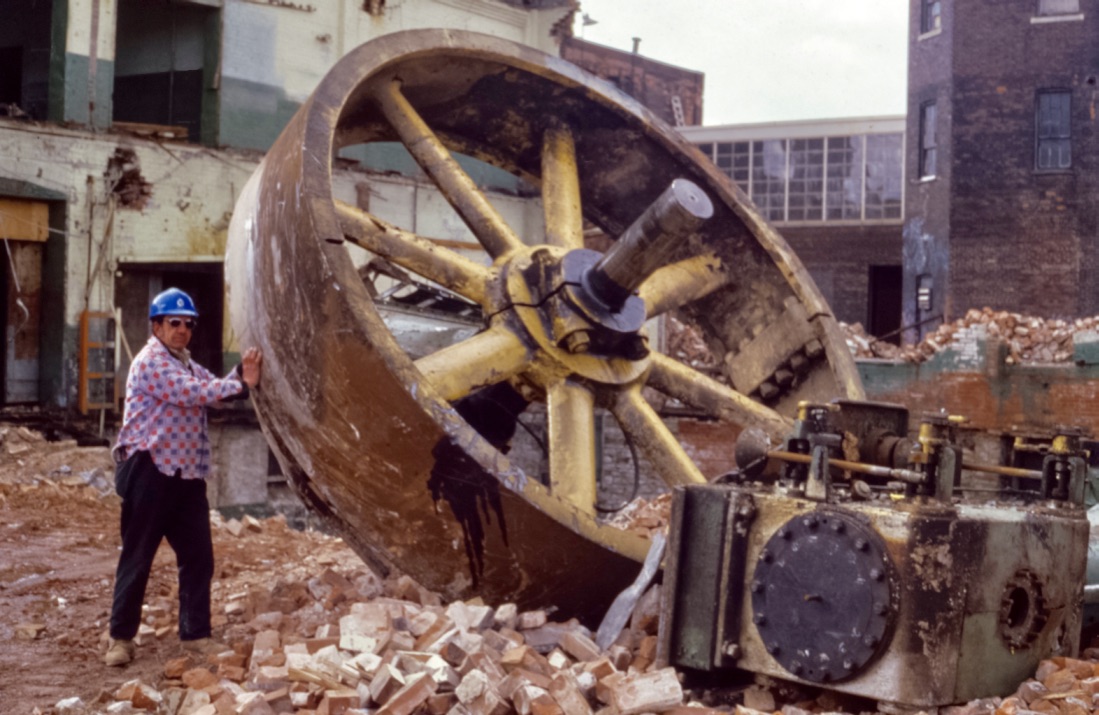
    The bull wheel!   The heart of the factory.  Huge.  Cast iron and steel.  So big that a special machines had
    to be delivered on a flat bed truck just to pull the wheel from the machine shop to an open space.

    “What will happen to this wheel?”
    “Who knows?   Need  a big wrecking ball to smash it into pieces.”
    “I would like to save the wheel.”
    “What?”
    “It is a wonderful symbol of 19th century manufacturing.  It could be an enduring monument
    to working class history.   Could be set up on a bit of parkland.”
    “It is yours if you want it.  But better be fast.”


    As  it happened Kris Korwin Kuchinski was our City Councillor for Parkdale…a district in west Toronto where
    I taught history.  Kris  was
    One of my former students.  I taught both of the Kuchinski boys.  Mark and Kris.  We even have a large
    maple tree that they gave me years ago.  Tree is now 60 feet high.  Nice kids.  

    “Kris, do you think we could persuade the City to save the Massey bull wheel?”
    “Bull Wheel?”
    “Come over to the school, we’ll go down to the demolition site and I’ll show you.”

    Kris thought the idea was great.  As did others in positions of power.  The wheels began
    to turn.  The bull wheel was going to be saved.  Even David Miller, future mayor of Toronto was  on side. It would of course cost a bit of money to do so.
    But it would happen.

    I was  elated.
    Just for fun, I asked my  whole Parkdale Collegiate history department to come 
    down to the site and pose on the wheel.  Now a cherished photo in our house.

    Then I asked the Portuguese workmen and the foreman to simulate that they
    were moving the wheel.


    In short, I was overjoyed.  

    One day, a bunch of white helmeted men arrived and nosed around while I was loading 
    American pitch pine floor planks.  They paid special attention to the bull wheel. No 
    attention to me.  They paid too much attention to the bull wheel as it turned out.

    The next day, at 6 a.m. the bull wheel was smashed to bits by a big steel ball
    swinging from a crane.

    Why?  I have no idea.  I suspect the power people had heard my plan.  It would
    cost them money…perhaps cost a parcel of land.  The site was planned for condominiums
    High profits. Dense population.

    “Smash the bastard wheel to bits.  Some damn fool wants to save it
    as a monument.   Get it the hell out of here before the city puts a stop
    work order in place.”   That is what I think happened. 


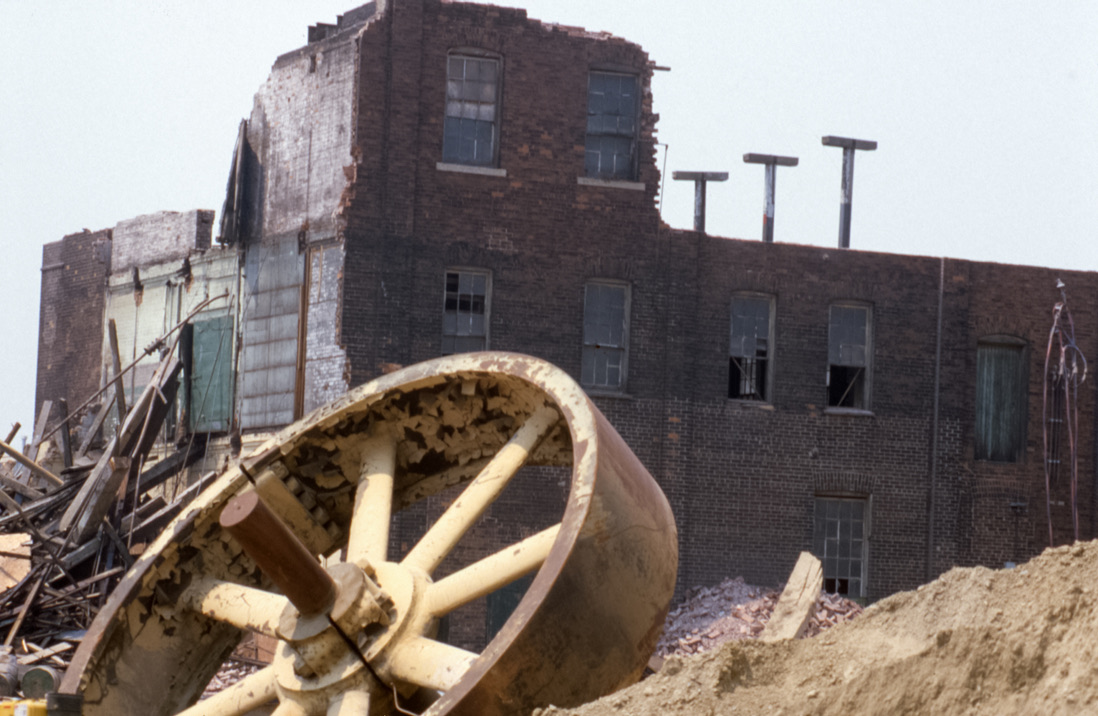
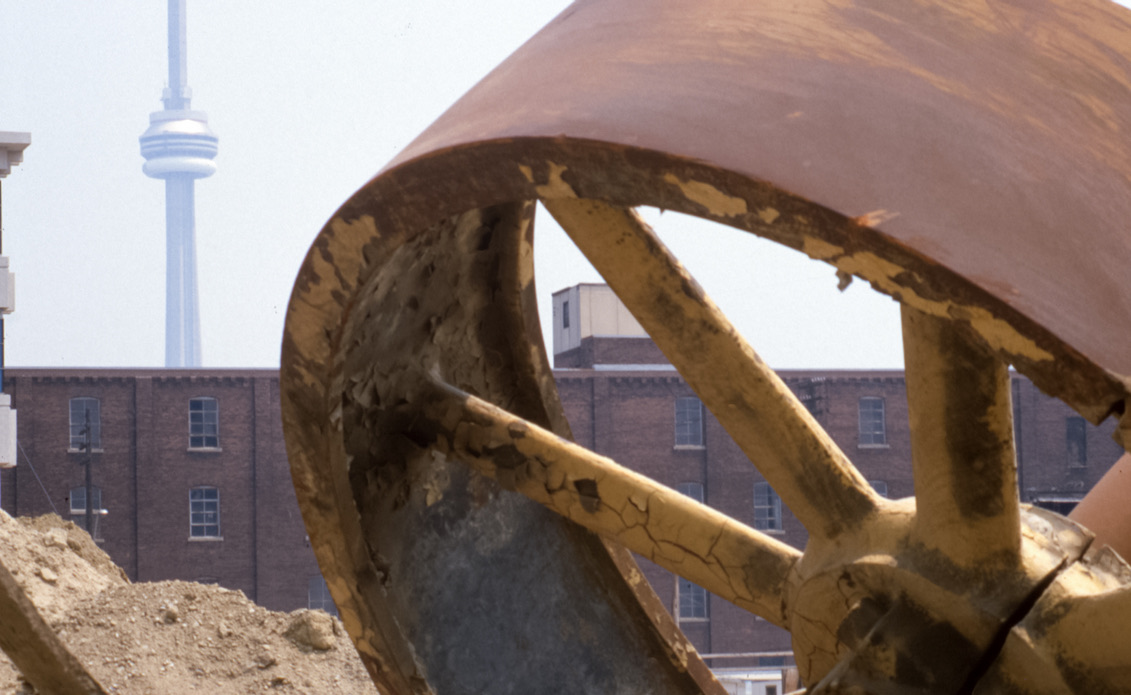
    Here is the last picture of the bull wheel with the CN tower as proof that the bull wheel was once apart of our city.

  • EPISODE 271 THE GOLDEN BROOCH and EDWARD and LOUISA FREEMAN

    NOTE TO READERS:  THIS STORY GOT AWAY FROM ME…TOO MUCH FOR MANY OF YOU

    TO READ.  WHY CARE ABOUT THE FREEMAN  FAMILY?    WELL, THERE ARE POINTS IN THE
    STORY WHERE HUMAN FOIBLES ENTER…AND  HUMAN CREATIVITY…START WITH THE GOLD
    BROOCH.  I WANTED THIS STORY TO BE PART OF MY EPISODES AS A  RECORD.  YOU DO NOT
    NEED TO READ IT.  SOME WILL BE OFFENDED.  HOW COULD YOU SAY THAT, ALAN?


    EPISODE 272     THE GOLD BROOCH

    alan skeoch
    March 2021


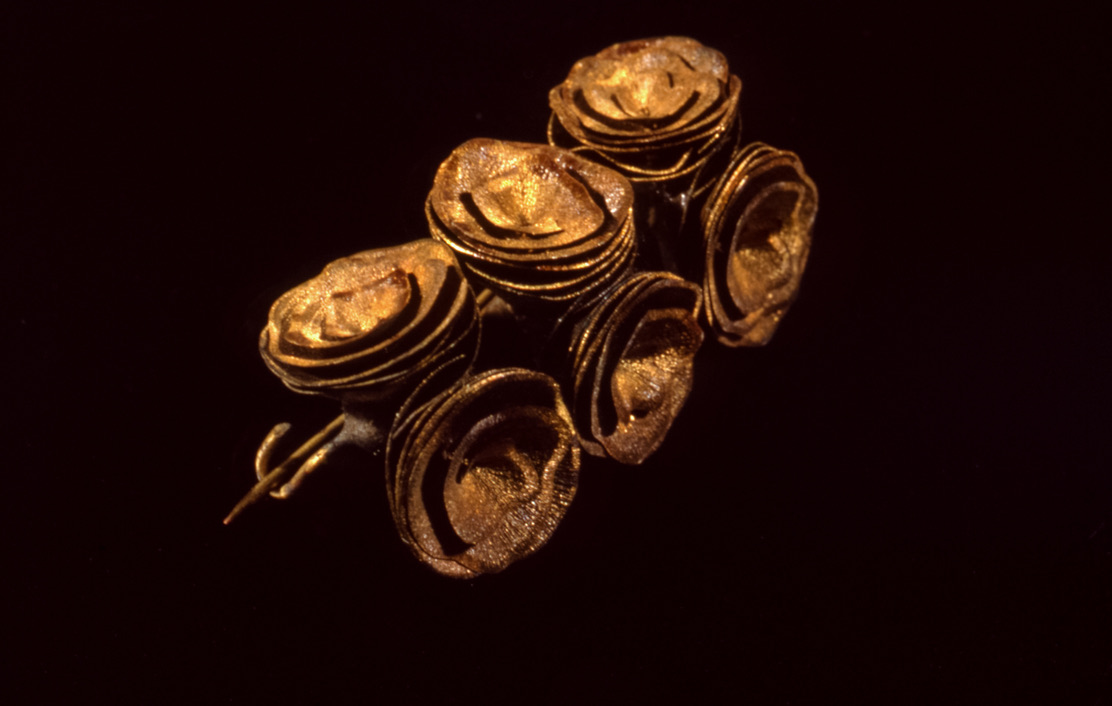
    I found the golden brooch in a box of little things that Grandma had placed
    in the back kitchen pantry at the farm.  Looked  like gold.  That is probably why I
    asked mom “Is this valuable?”

    “Where did you find it?   I thought it was lost long ago.”
    “It was in a little box with string, buttons, newspaper clippings…in the pantry”
    “Mother must have saved it…she saved bits and pieces  of just about everything.”
    “Is it gold?”
    “No.  Dad made it from the scrap brass filings from artillery shells in World War I.
    He had a job in Toronto at a munitions plant.  Made the brooch for me when I was
    12 or 13.  I thought it had been lost long ago.”

    THE GOLDEN BROOCH


    Sometimes the tiniest of things show the way back into deepest of times.  Like a mammoth tooth
    leads the mind back to a time when they wandered  freely across an often ice clad Northern Canada.
     And there are the fossils in Port Credit shale that lead the mind back to a time when much of North America
    was covered by a great shallow sea where aquatic life thrived.   In short, from small things  greater things are recalled…or discovered.  So  it is with
    the Gold Brooch.

    It is made of brass, not gold.  It is worthless, I suppose, but it triggered an avalanche of  family history.
    Why should the Freeman  family history be of even remove interest to readers  of these episodes?
    Interest is captured when unpleasant things happen.  That’s just the way we are.   Good times,
    financial success, awards, glory…attract minimal interest.  If I titled this story “Why my grandfather
    was a great man,” only a few readers would give a sweet damn.  If, however, I titled this episode
    “What my grandfather never told me,” the interest level would increase.  Better still, “The truth,
    the truth, you cannot handle the truth, Alan”  That would bring readers in flocks.

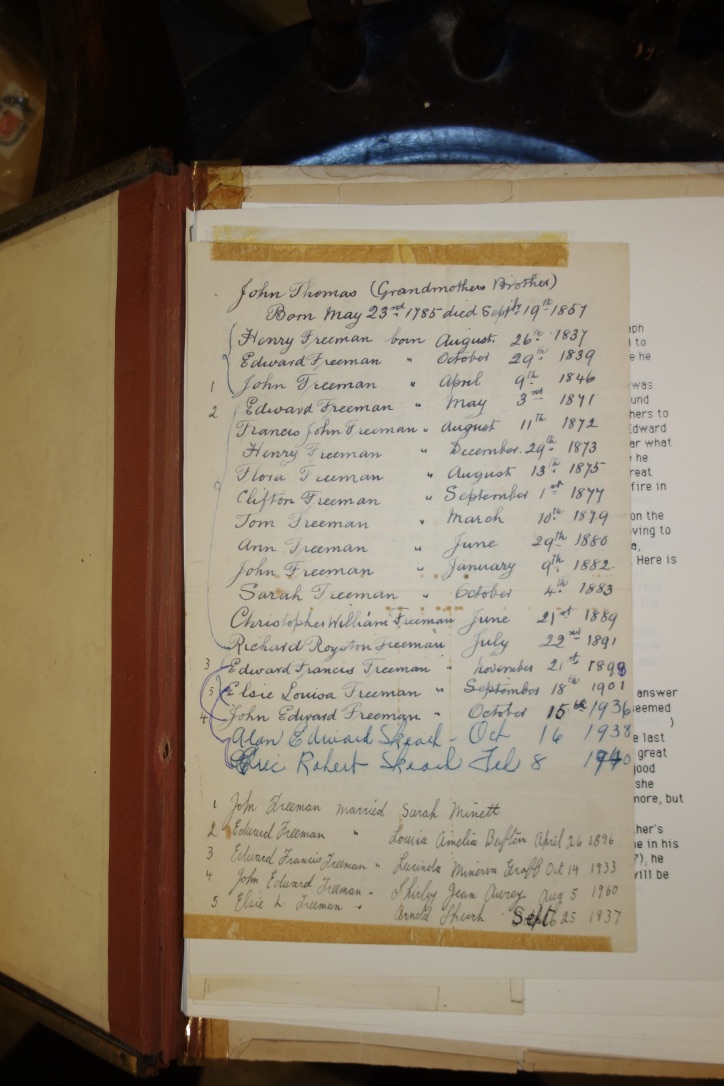
    Edward Freeman was born on May 3, 1871.  He was  84 years old when I really got to know him
    in 1955.  Even then i never knew him well.  We liked each other. That much I do know.

    Edward Freeman, my grandfather never spoke much about the past.  Even his best years… those 6 year as head
    gardener of the Eywood  Estate in Herefordshire from 1899 to 1905 were hardly mentioned. 

     It was mom that told me
    about the time Lord  Byron visited Eywood and got sexually involved the lady of the estate while her husband
    went for a stroll around and around the little lake.  Was this real or imagined?  Horny enough to be true.
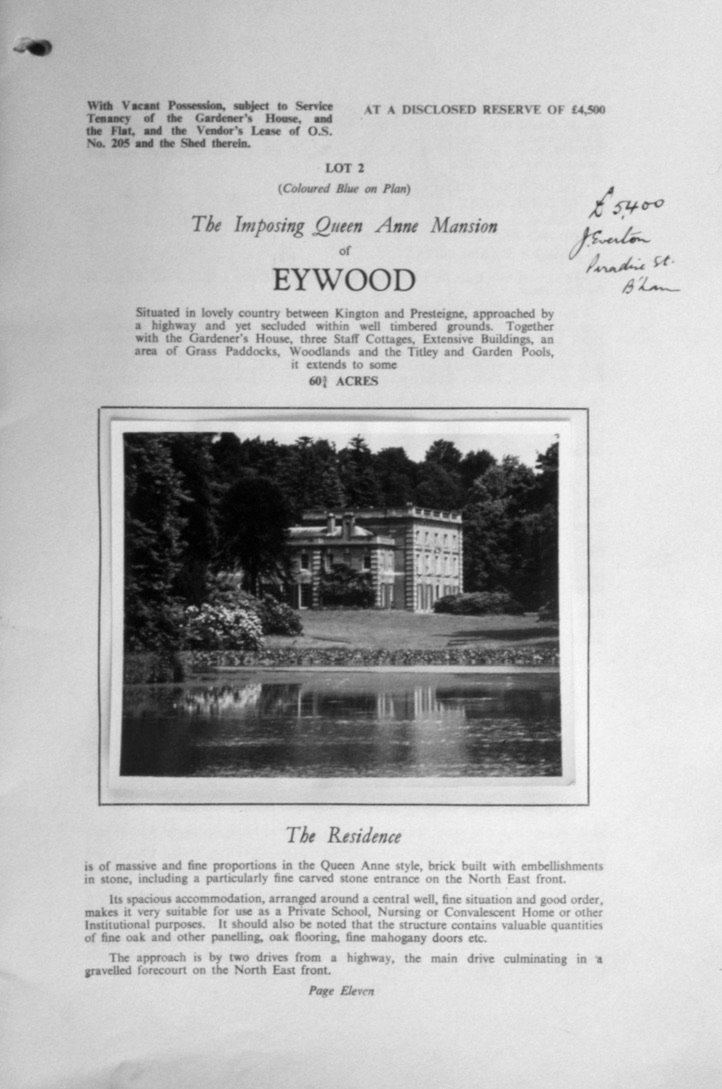
    Documented as true.  When the estate was auctioned in 1954, the Lord Byron incident was printed along 
    with the furniture, buildings, land parcels.  Weird.  

    Edward  Freeman kept some things to himself.  For instance he
     never said how much he despised his father John Freeman.
    How do I know that?  By chance.  Somehow a letter he sent from Canada to his brothers and sister back
    in Lyonshall, Herefordshire came back return mail and was laced  in the farm pantry along with the gold
    brooch.  He hated his father because John Freeman mistreated his mother.  


    There were
    ten children in the Freeman family which  must have placed heavy responsibilities on the
    parents who for a few years tried to farm just outside the village.  Not with any success
    it seems since the family moved into a village house that has now become The Royal George,
    a  pub.  John Freeman  became an alcoholic.  No record of physical abuse of his wife, but something
    triggered granddad’s hatred.   At some point John Freeman tried to kill himself by cutting how own
    throat.  MY Mom (Elsie Freeman) mentioned that several times…the attempted suicide.  I have no
    idea why.  Perhaps self loathing. How is it possible to clothe, feed and raise ten children with
    very little income.  Enough to drive a person mad.  Granddad persuaded his brothers Chris and Cliff
    to come to Canada along with his sister Anna.  Anything to get them away from his father.

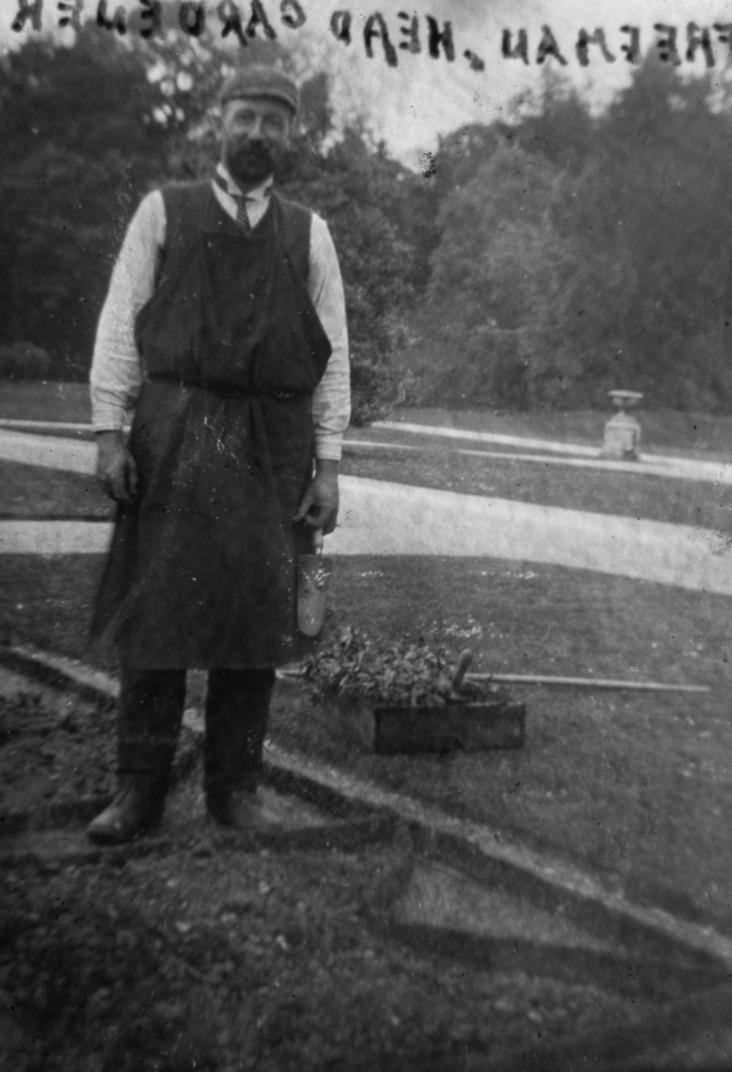
    When granddad was appointed head gardener at the Eywood Estate he grew a beard to
    make him look older.  A head gardener was a position of high regard in country estate homes
    all over England.  Huge estates.  Eywood  had 1500 acres.  Being head gardener was near the pinnacle of the ‘inservice’ hierarchy .  And  granddad knew it
    but there was also a malaise that he felt although he rarely expressed that to me except for
    the one comment about tipping his hat. (see Capability Brown…garden designs)

    Detail from Lancelot Capability Brown portrait ©NPGblog.english-heritage.org.uk/wp-content/uploads/2016/12/780-header-cb1-440×169.jpg 440w, blog.english-heritage.org.uk/wp-content/uploads/2016/12/780-header-cb1-768×295.jpg 768w” sizes=”(max-width: 780px) 100vw, 780px” style=”border: 0px; margin: 23.390625px auto 0px; max-width: 100%; display: block;” apple-inline=”yes” id=”6E0A6F9B-D542-4D35-8A49-E7D811D63C98″ src=”https://alanskeoch.ca/wp-content/uploads/2021/03/780-header-cb1.jpg”>

    If you were anyone in Georgian society, your garden would have been designed by Lancelot ‘Capability’ Brown. Wealthy lords and ladies, and even the royals, commissioned Brown to landscape their vast estates, which revealed much about their status and style. Moving from formal to functional with sweeping lawns and key focal features, Brown revolutionised gardening in England.

    This year England celebrated 300 years since Brown’s birth. You can read more about his life here. But first, we caught up with Landscape Adviser Emily Parker to explore who he was and why he became the go-to for English landscaping.

    WHERE DID THE NAME ‘CAPABILITY’ COME FROM?

    Nobody knows for sure, but it’s said that Brown used to turn up at country houses and say: ‘this place has great capabilities for improvement’ – and that’s where he got his nickname from. I think you could safely say that he changed the whole nature of English gardening from its more formal roots to something that imitated nature. That’s what we can see from Capability Brown today, particularly at Audley End House and Gardens.
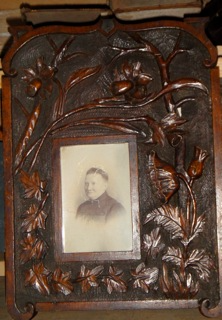


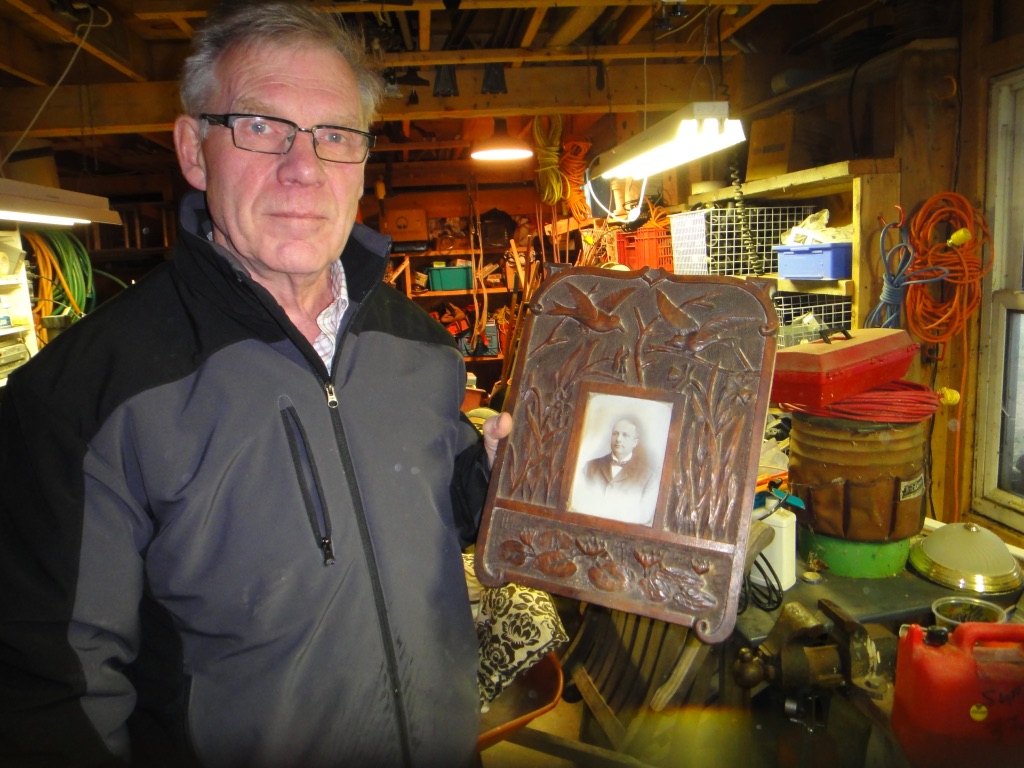
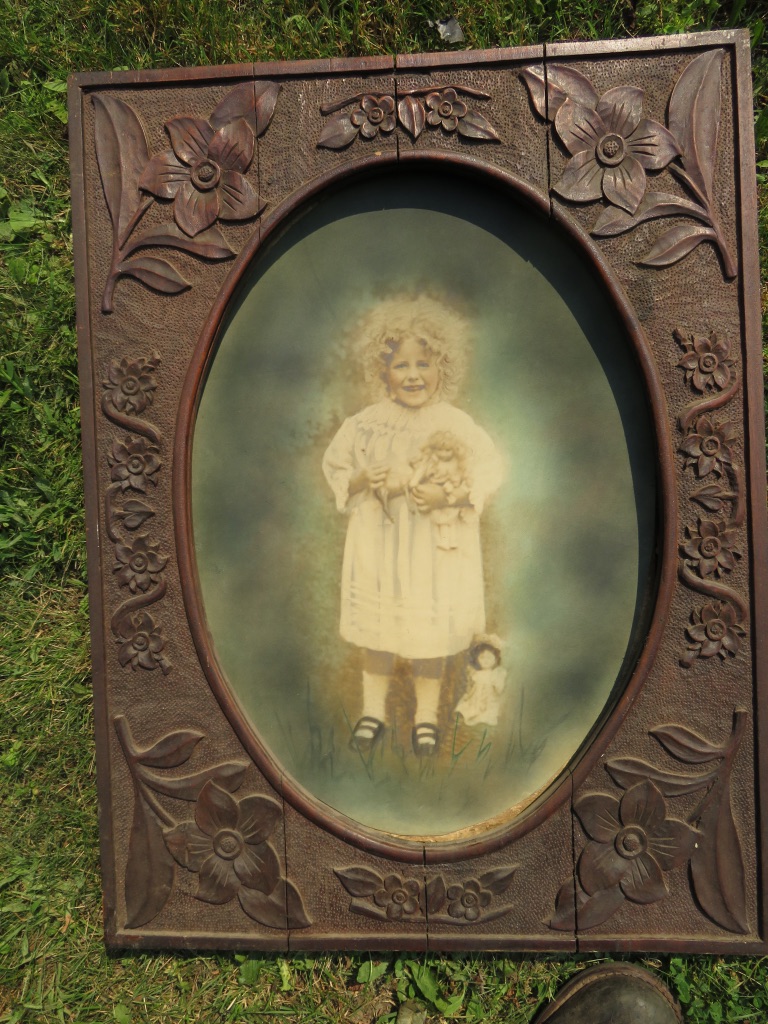
    My grandfather was trained as a carpenter, a skill he never lost as seen in the hand carved
    picture  frames that hung in our Fifth Line, Erin Township, Wellington County farm house.
    He gave up carpentry, however, in favour of gardening.  Worked as a gardener at Windsor
    Castle and then around  1899 got a ‘position’ as head gardener at the Eywood Estate, a 1500
    acre country estate near the tiny village of Titley in Herefordshire. 

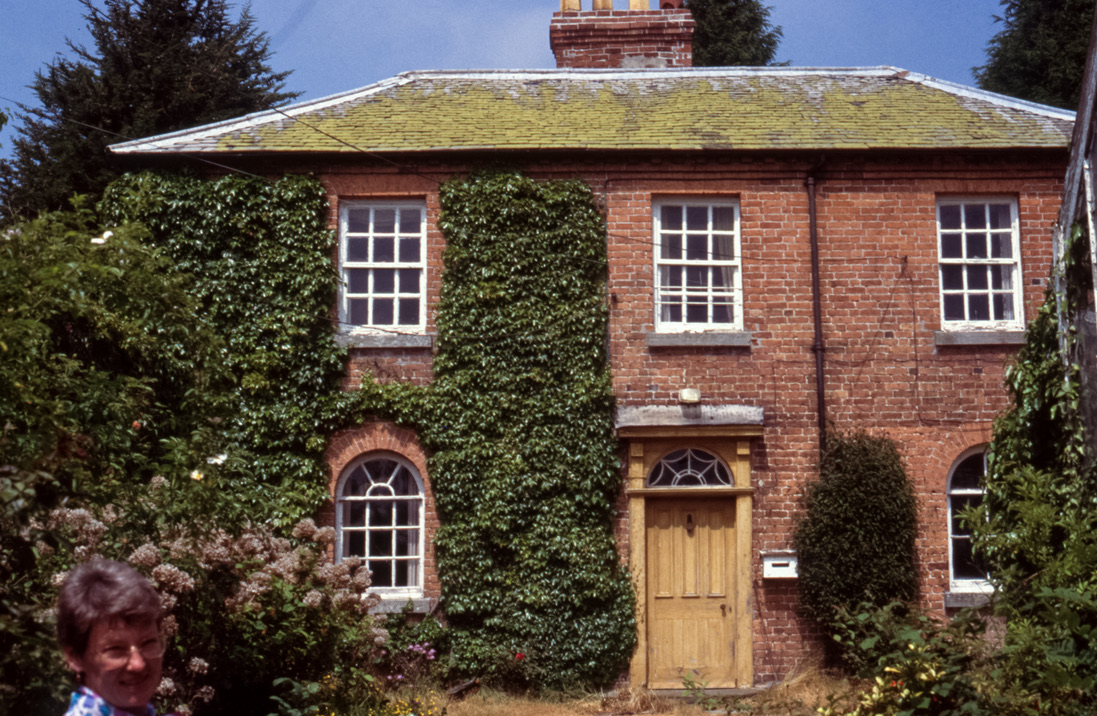
    The head gardeners’ cottage at Eywood where mom was born.  The largest house my grandparents ever lived in. Note Marjorie in 
    bottom right corner.  When Eywood Estate was sold, only one building was  destroyed…the grand estate mansion. All else remains
    the same as it was to tis day.  The Eywood gardens, two acres enclosed by high brick walls were often discussed by my grandparents
    who made their farm on the Fifth line a kind of mini-Eywood with high cedars enclosing the large garden. 


     Mom was born in the 
    head  gardener’s cottage on the estate.   The hand carved picture frames that hung on our
    farm house walls  all had photographs of  working people  on the Eywood Estate.  Not grand people.
    Ordinary people such  as the cook, the chauffeur, the assistant gardeners, the horse, the dog…
    and the grandest frames held picture of mom, Elsie Freeman, and her older brother, Frank Freeman.
    Photographs taken by granddad  using a pin hole camera.  Unusual pictures.

    The Eywood mansion sold for around $12,000 in 1954.  There was not much left inside
    once the wood panels, the floorboards, the ornaments, were sold.  So the place was knocked 
    down.  I believe blasted was a term I heard but that may be imaginary.  I went there in 1960
    while working in Southern Ireland.  Sad to see but country homes all over England were
    being pulled down as few people could afford to maintain them.


    The only negative comment I ever heard my grandfather utter was so inconsequential that
    I never understood what he meant until long after he was dead and gone.  He  liked Eywood
    but “disliked having to tip my hat to Mr. Gwyer whenever we met”.  Now  what the hell did
    that mean?  It meant noting to me until years afterward  when on a Boy Scout camping trip
    with a very arrogant, know-it-all English boy scout called  me ‘common’ meaning I was several
    steps below him in the class  pyramid.  He hated me for some reason and the word ‘common’ 
    was about the worst thing he could say. Tipping the hat was a signal of deference. ‘You are 
    better born than me and I know it.’  Tip the hat. Some call that showing respect.  In Canada 
    PICthe  hat tipping means nothing much, just
    a friendly gesture but the habit of tipping the hat comes  from a darker time. That comment
    was never dwelt upon in detail by granddad.  I do not remember him tipping his hat to anyone.
    No great scene…no comment.  But an undercurrent of embarrassment whenever deference
    was required.

    Strange really.  Of  all my relatives, and there were and  still are many, I spent most of my
    adolescent years with my Freeman grandparents. on the 25 acre farm the we still own.
    Yet all I knew about them was from fragments that meant nothing to me at the time.
    I wish that were not so.  I wish we had spent an hour or two together with granddad speaking
    and me listening but that never happened.  He was  not stand offish…remote kind of man.
    He liked me as he did my brother Eric.  When I stole one of his cherished chisels and was caught
    then hid in the hay field granddad was amused.  When I had bad pin worms and needed  an enema
    granddad and mom levered me out from under the bed to get the dreaded enema in my ass.  Granddad
    was amused.  Close.  But there were things he never dwelt on long.  He was a positive person.


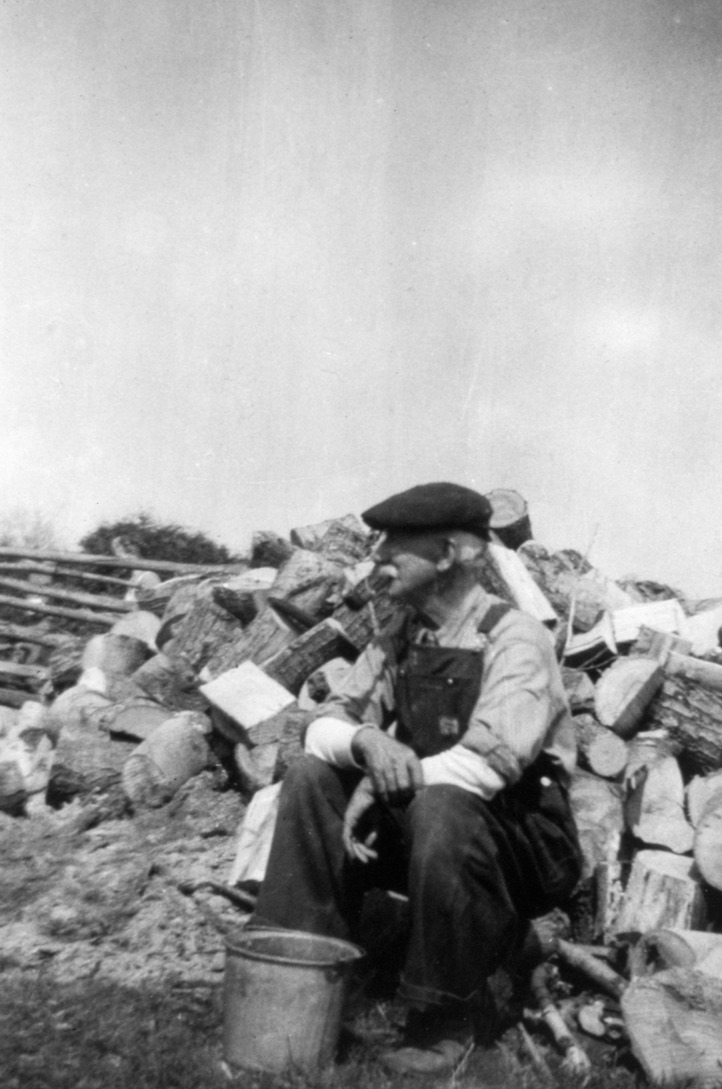
    PICTURE: When winter came there better be lots of firewood ready.  Now that use as fuel is gone.
    And when there is only one cow in the barn, a small pail will be enough for the hand milking
    (Granddad circa 1955)

    WAS EMIGRATION TO CANADA A TERRIBLE MISTAKE?

    Coming to Canada in 1905 may have been a terrible mistake.   A mistake made by hundreds…thousands
    of other economic migrants looking for a better life when the 20th century began..  Fooled  by slick advertising 
    to think Canada  was a golden land of
    milk and honey.  A land free from the strangle hold of class.  A land where a working class family could actually
    own land…be given land virtually. The advertisements sent from Canada were Partly true and partly false as with most advertising.

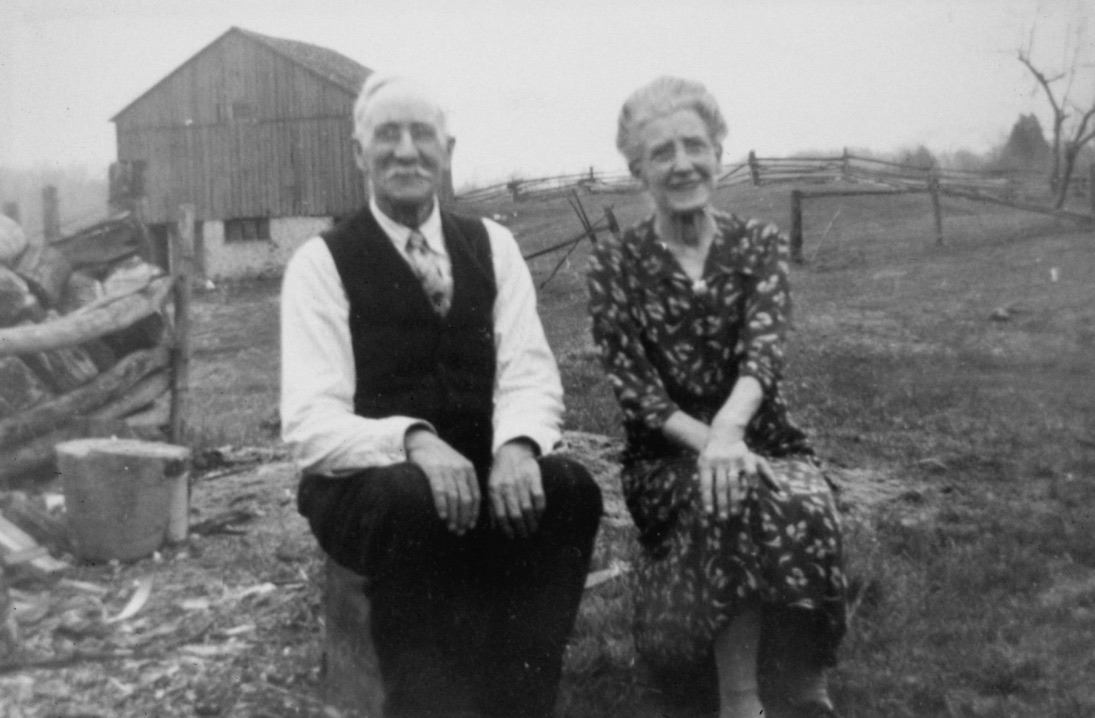
    Edward Freeman and Louisa (Bufton) Freeman, about 1955.  The barn was still standing then but empty. Look at their faces.
    Gentle people with soft smiles.  But tough as railway spikes.  They could get by when the going got rough.  They had each other.


    About here in the story is where my grandmother enters the picture.  Louisa Bufton’s mother got knocked
    up by a man known as Dr. Price.  A medical doctor.  He impregnated her but did nothing else.  No help. No
    responsibility.  No one seems  to have cared much about Louisa.  But she lived, therefore some care
    must have been provided.  Otherwise she  could have died like some
    other children born out of wedlock.  Or placed in the “home” that was not a home at all.  These were
    Not good times for grandma…childhood years. 
    At some point Louisa was living on the streets  in Birmingham…while her
    mother hunted perhaps for another man.  Once a man showed interest then the  presence of a reminder of
    illegitimacy was best swept under the rug.  Little Louisa was fast becoming a street waif.  There
    were thousands of such children in working class England.   Children eventually described as Home
    Children which  seems a contradiction in terms until the term ‘home’ is defined as an  orphanage.
    In other words no real home. Victorian and Edwardian England had a vast underclass.

    “Aunt” Webb entered the story …when she heard Louisa Bufton was  a street waif.  Just exactly who
    Aunt Webb really was has never been clear to me.  She may have been Louisa’s grandmother who knew
    the whole sordid affair of Dr. Price taking liberties with a female patient then refusing responsibility. That is
    an old story…old and true.  “Aunt Webb rescued mother from the streets of Birmingham along with her
    cousin Richard, brought them to the Edwards farm in Herefordshire where they were very happy.”

    Then Something went wrong. Louisa left the Edwards farm.  Bit of a cloud covers that event.  There had
    never been a formal adoption so grandma was cut loose it seems. By then grandma and grandpa were
    newly married.   A long and good marriage.  Even though the times
    were tough.  Marbled fat on the meat was desirable… not removed as waste.

    Hand carved picture frame with friend from Eywood featured.  Granddad carved
    these frames on winter days and nights.  Heirlooms today.


    MUSICAL

    Etched forever in my memory is the music on winer nights in Canada on the Fifth line farm. 
    They were very musical and both sang and played instruments…granddad the violin
    that he could make dance to the ‘Devils Dream’ and grandmother accompanied on the pump organ 
    with Laddie their dog howling in tune while the winter winds scoured the landscape and most
    of the farm house.  We all huddled in the kitchen where wood smoke smelling of maple syrup clouded the room.
      The only livable room in winter.  All around the
    room were those hand framed pictures of Eywood.  No comment from granddad that I would  call nostalgic.
    Canada  had not turned out to be a place of milk and honey but there was never a desire to go back
    to that grand estate to be ‘in service’ like the employees  of Downton Abbey.

    Little wonder I loved the works of Dickens, Hardy and Steinbeck. Poverty brought out the best in people
    was the message.  Untrue of course.  Happy endings?  Never happened  of course. Yet..yet..yet…grandma and
    grandpa never seemed downtrodden.  Life always seemed  good on he farm.

    Regrets?  I have a few.   Granddad wondered if I was  musical
    ‘because Alan you have  long fingers’.    He only said that
    to me once. His comment startled me.  I had no time for music lessons nor inclination at the
    time.  Today I wish I could hammer a piano like Jerry Lee Lewis and sing like Gordon Lightfoot.
     Another fragment from grandpa that I never understood until it was too late.

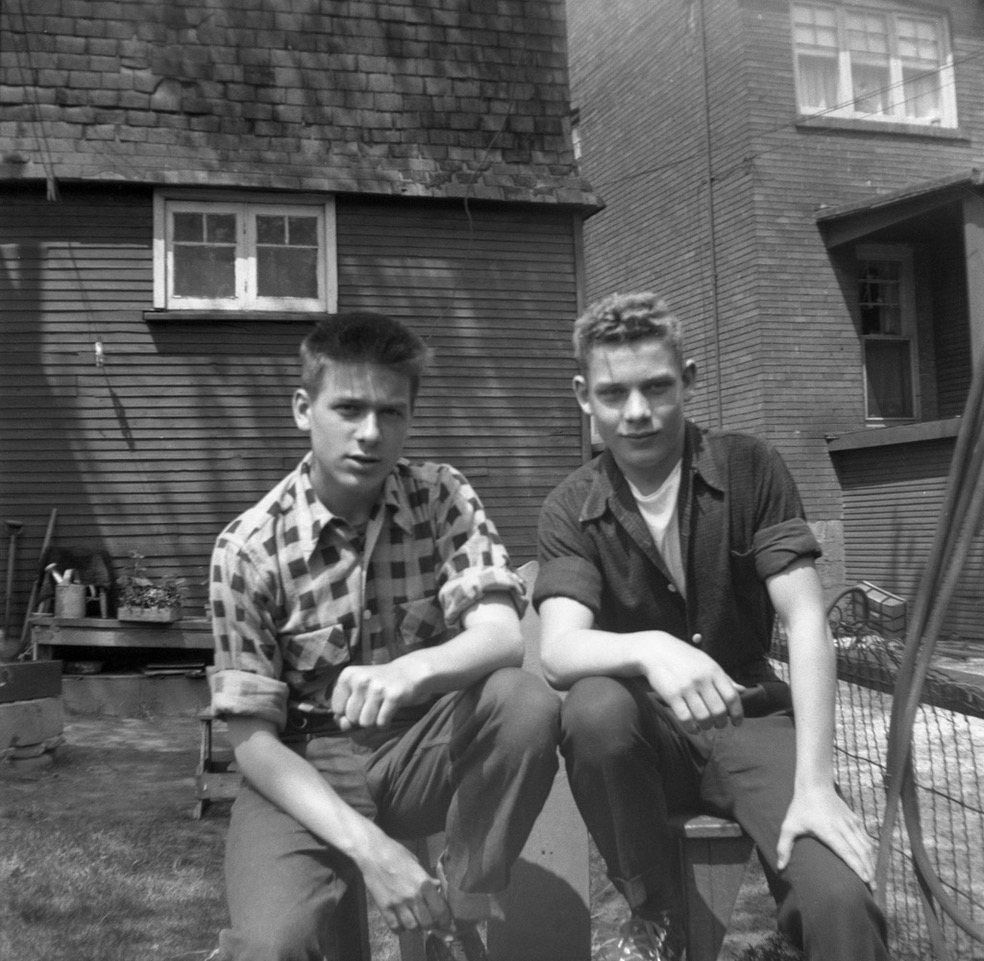
    Eric and I about 1955 when we were in high school and spent regular week ends at the Freeman farm
    where we always felt welcome.  Unannounced visits encouraged. We knew we were wanted.

    THE FARM

    The greetings by the Ansons when the Freemans arrived in Canada
    In 1905 was a little frosty.  Perhaps because the Freeman family overstayed the welcome while grandad went west
    to Manitoba to see about homesteading. Louisa’s mother had married and her family was stressed when 
    the Freeman family arrived.  An illegitimate child …whispered  maybe. Or  Perhaps  there was a  closer bond that later soured. 

    When Granddad returned and said he found land on the prairies, grandma revolted.  “No schools, no doctors….we
    are not going Edward.”

     So Granddad bought
    a small 12 acre market gardening farm where highway 427 and Burnhamthorpe Road cross.
    Growing and marketing vegetables was really tough.  Became impossible so granddad found
    a job as a carpenter on the Temiskaming and Northern Ontario railroad. They lived in a decrepit
    log cabin at Krugerdorf, a German immigrant community near Englehart which is now just
    a sign beside the railway line…nothing there anymore except for a black bear on my visit a few years ago.

    These were the years of the great fires in Northern Ontario.  Seemed the whole of the north
    was on fire.  “I remember riding a flat car through huge fires burning on both sides of the tracks”,
    he said once while at the same time commenting that “Lou managed to save the pump organ
    when our house in Krugerdorf caught fire and burned to the ground.”  They got out with only
    a few family pictures and the organ.

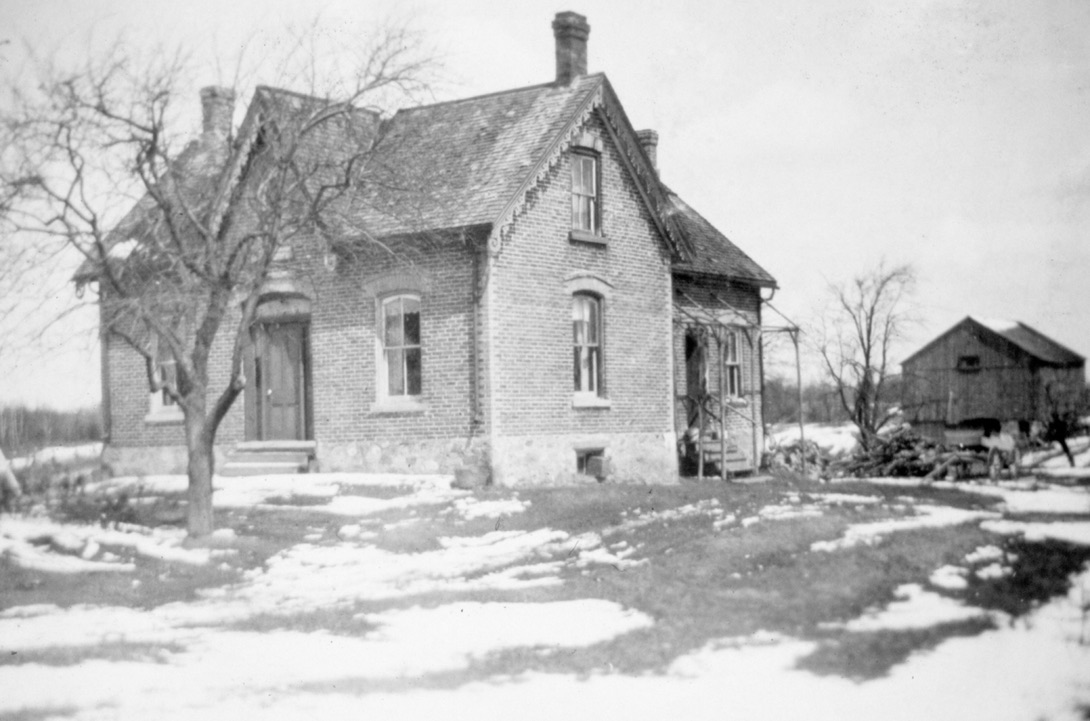
    The Edward Freeman farm as it appeared in 1914.  Brick farm houses like this were common as were hand framed
    bank barns.  Not so today.

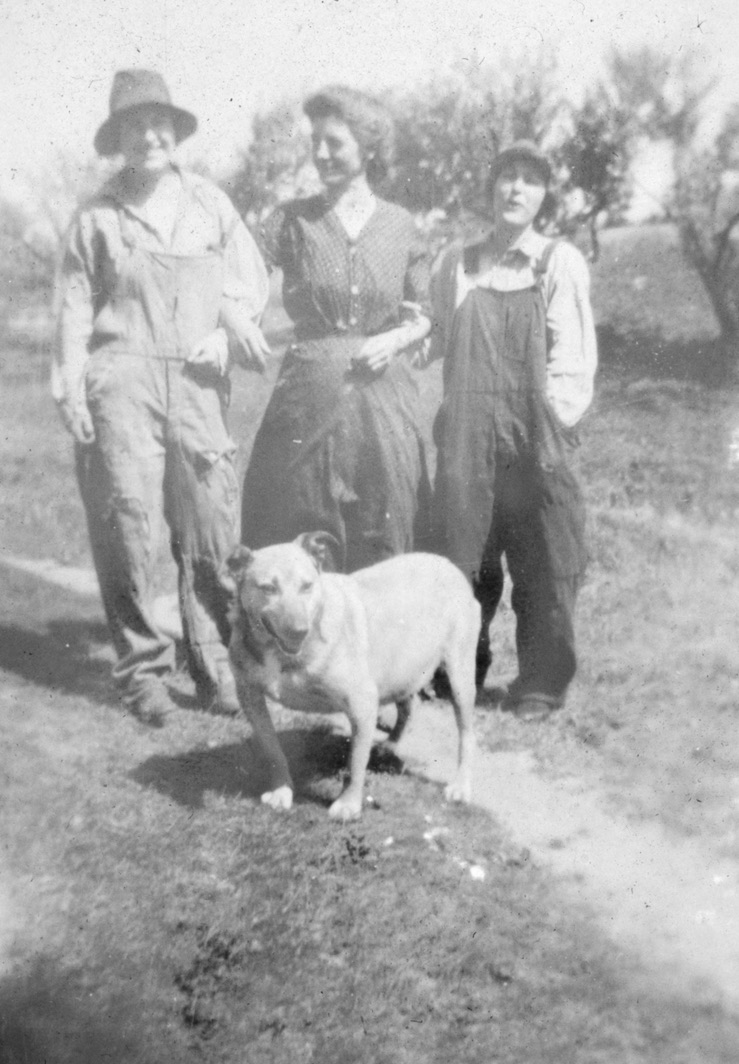
    Mom and Grandma and Frank did the farming while granddad made explosives in Toronto
    during the war years 1914 to 1918.  Mom has the baggy clothes on the left. Grandma in centre.
    Friend on the right.
    Punch the dog in the foreground.


    September 1914.  War industries starting up centred in Toronto.  Granddad  had
    enough money to buy the 25 acre farm on Fifth Line, Erin Township, Wellington County.
    A poor farm.  Swamps, gravel soil,  boulders.  Barely an acre of sandy loam.
     But enough for grandma and her kids
    to run while granddad  was making artillery shells in Toronto. 


    That’s where the Gold Brooch* came into family history.  Might be a good
    place to stop.

    TO BE CONTINUED

    POST SCRIPTS BELOW
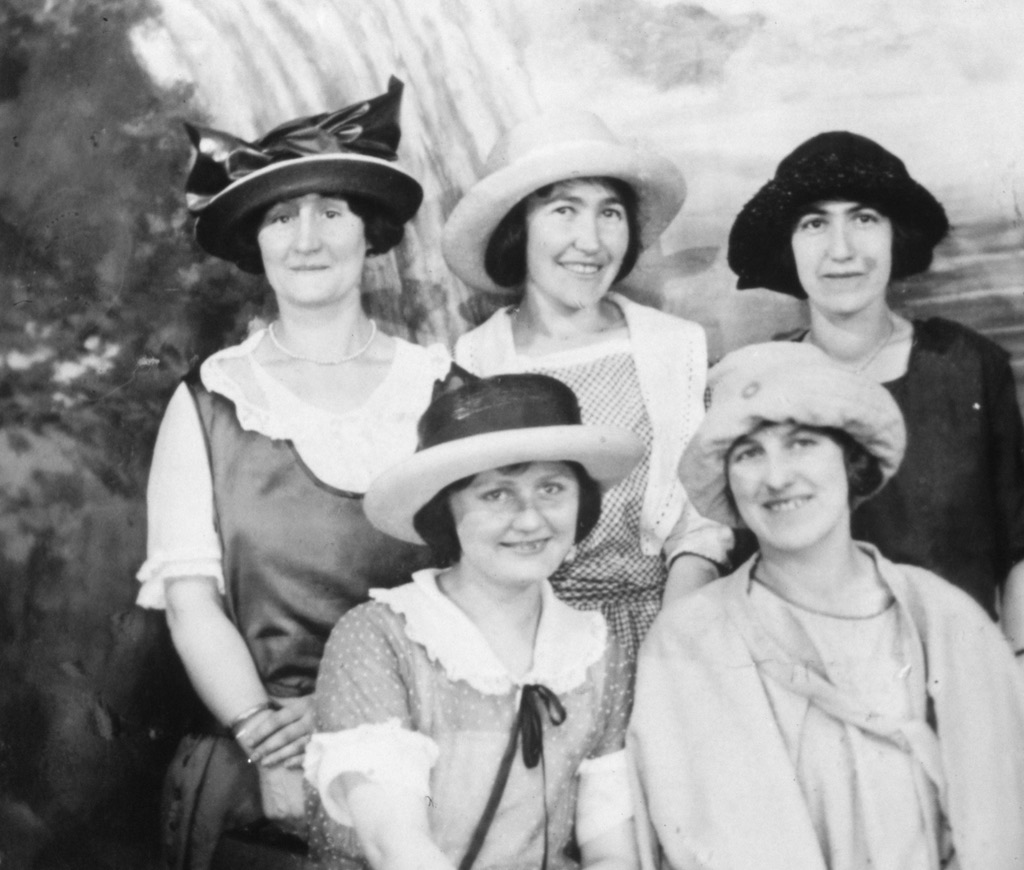
    Mom broke away from the farm in 1920 as did thousands of other young women.  The tool of escape Was the electric
    sewing machine.  Here is mom bottom right  with four other seamstresses working in Guelph in1920.  There is an aura of independence
    about them, is there not?

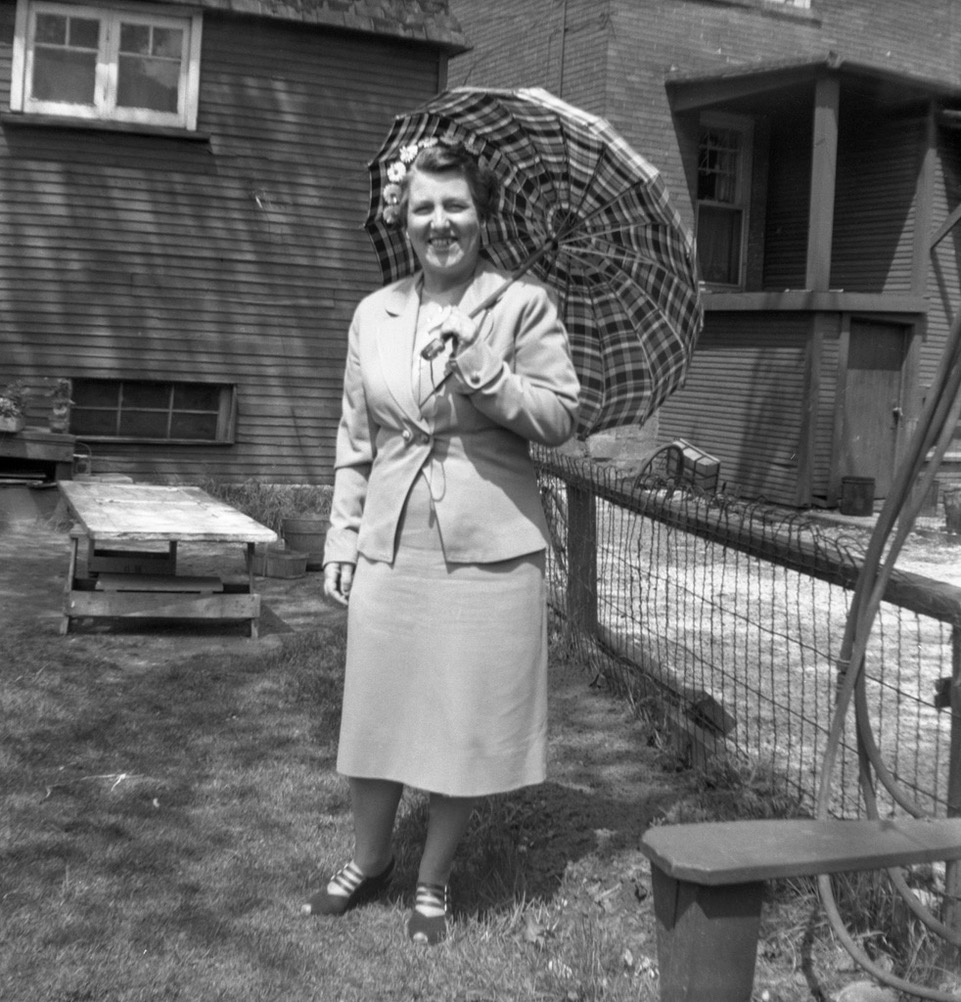
    Our mother…Elsie Freeman.  Dad always said she was the only woman he knew who was named after a cow.  Borden’s
    dairy in Toronto featured Elsie the cow.  Mom was a feminist but never said so.  She ran our house…saved  money to help
    Grandma and Grandpa on their little farm.  She made us feel rich.  We never knew we were poor.  She supported  us all
    because she was a whiz with a sewing machine.  Dad was  a great guy. I have told many stories about him. We loved him as
    well but never expected support from him.  He had racetracks full of horses  to support.  Mom was a leader that could accept
    human failings.  Dad’s  gambling
    was just something she had to accept.  She could love a person without the baggage of a judgmental mind. Lots of people
    live with troubles.

    Shortly before she died, I asked  her to tell us her story.    I think both of
    our stories are in harmony.

    alan  skeoch
    March  2021

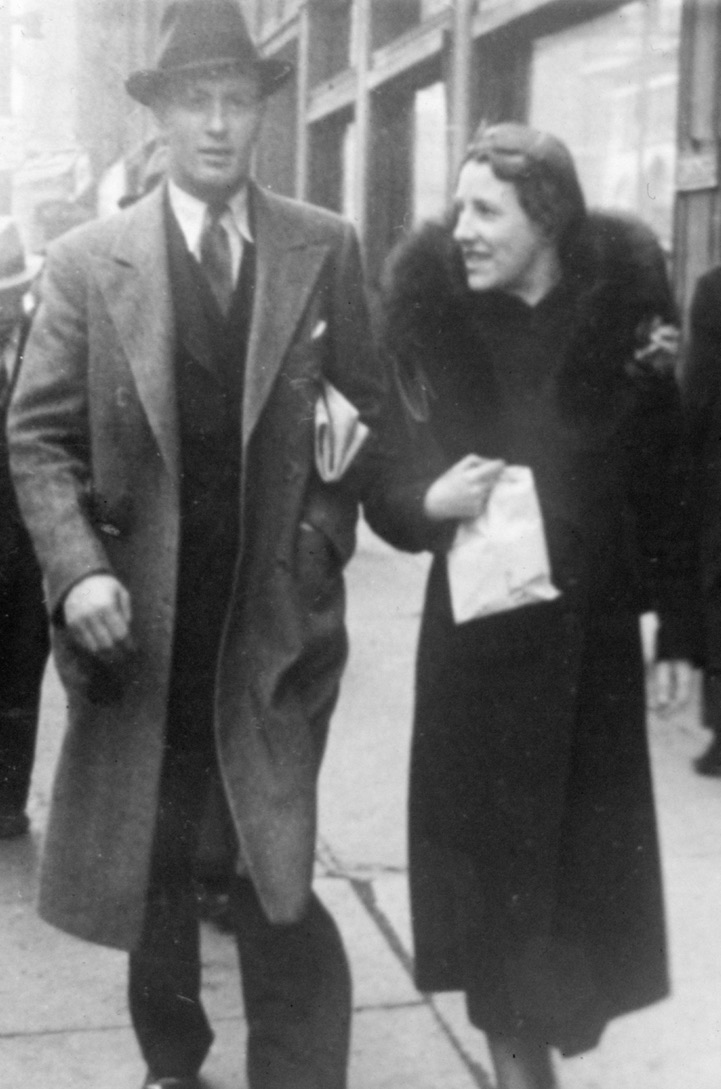
    Mom and dad on Yonge Street , Toronto in the 1930’s.  Dad was considered unmarriageable
    by many.  Mom proved that to be  false judgment.

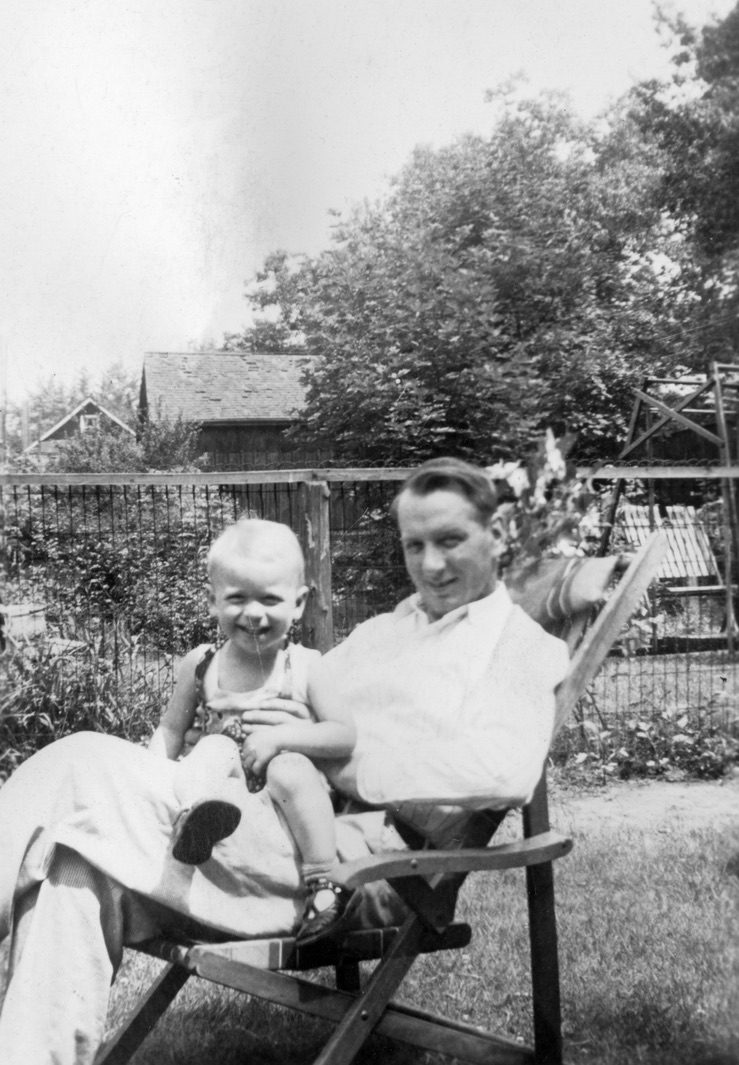
    This is our dad…Arnold ‘Red’ Skeoch.  He has not been featured in the story because it is
    a story about the Freeman family. Dad was a great person to have as a father…sort of a
    playmate really.

    By 1955 the barn was doomed.  Canadian winters were to blame not neglect.  A barn with a stream running through it
    could withstand freezing and melting for only about 80 years.  

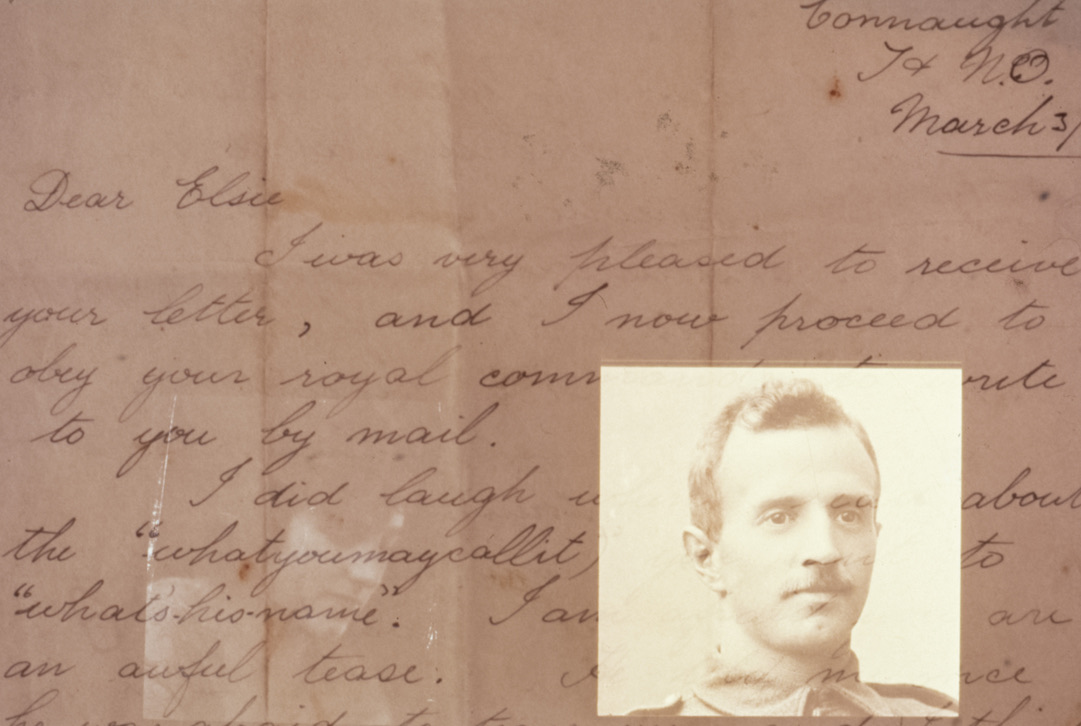
    Mom was only a teen age kid in Krugerdorf when she met Harry Horsman.  So this was hardly a romance.  But Harry wrote to
    her from the trenches of Normandy until he was killed in the Somme offensive of 1916.  She kept his letters and I made a film
    about him in the 1970’s.   That war left many young women single for the rest of their lives.  60,000 young Canadian died.   Suppose Harry
    had lived.  Would I be around?

    END EPISODE 271

    alan skeoch
    March 2021
  • EPISODE 271 FOLK ART by FRANK FREEMAN (MOM’S BROTHER)


    EPISODE 271     FOLK ART by my Uncle Frank Freeman

    alan skeoch
    Mach  2021

    There is a deep desire in many probably most human beings to create something 
    with their own hands and minds.   Some human beings follow the fine art tradition
    that involves  training…creating artistic objects in a sophisticated manner.

    Folk artists on the other hand do  not worry about fine art, sophisticated art.
    Folk artists do not worry about fine lines.   Often folk artists use items of  everyday
    life and do not particularly care about accuracy  of line and shape.  Nor do they
    worry about critical comments.  Utilitarian art in this instance…to be handled.

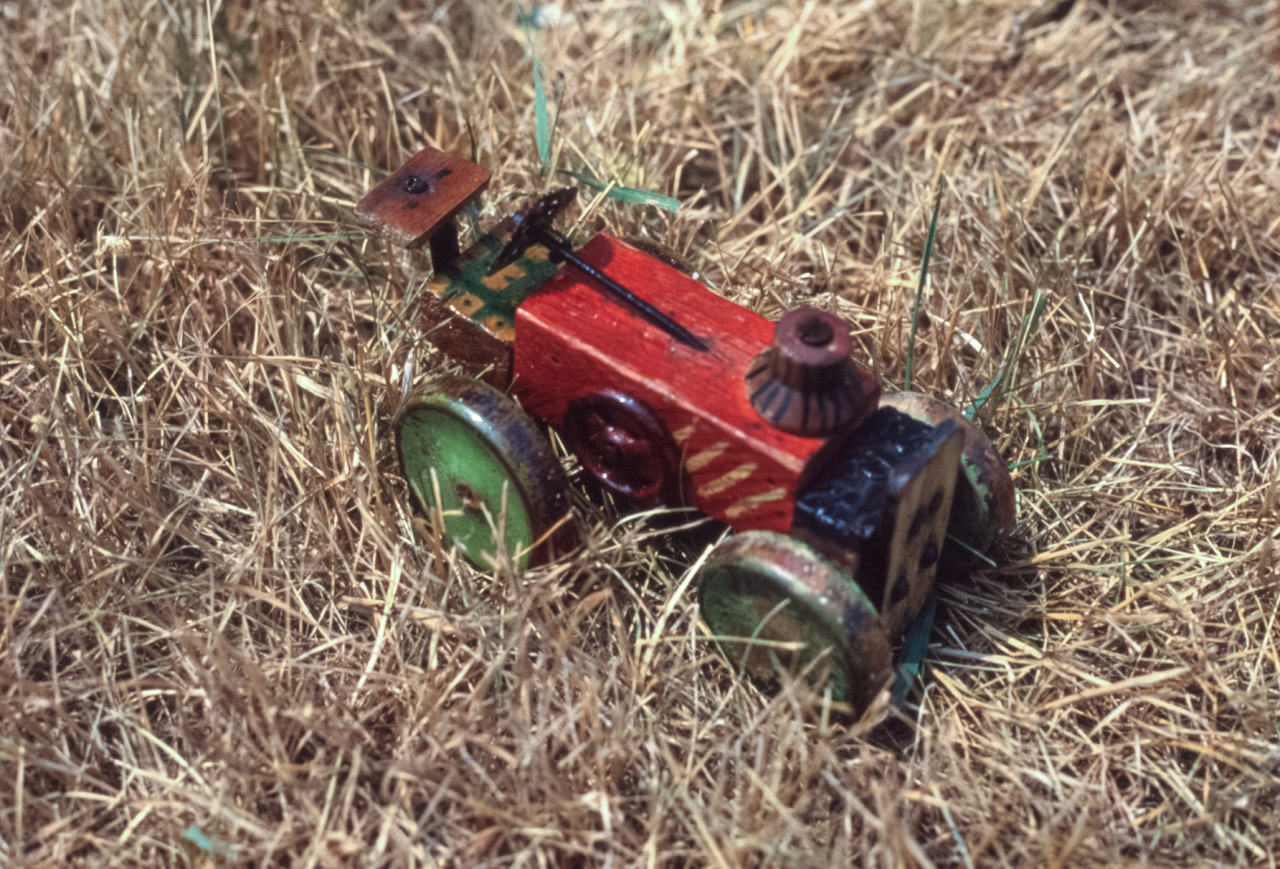
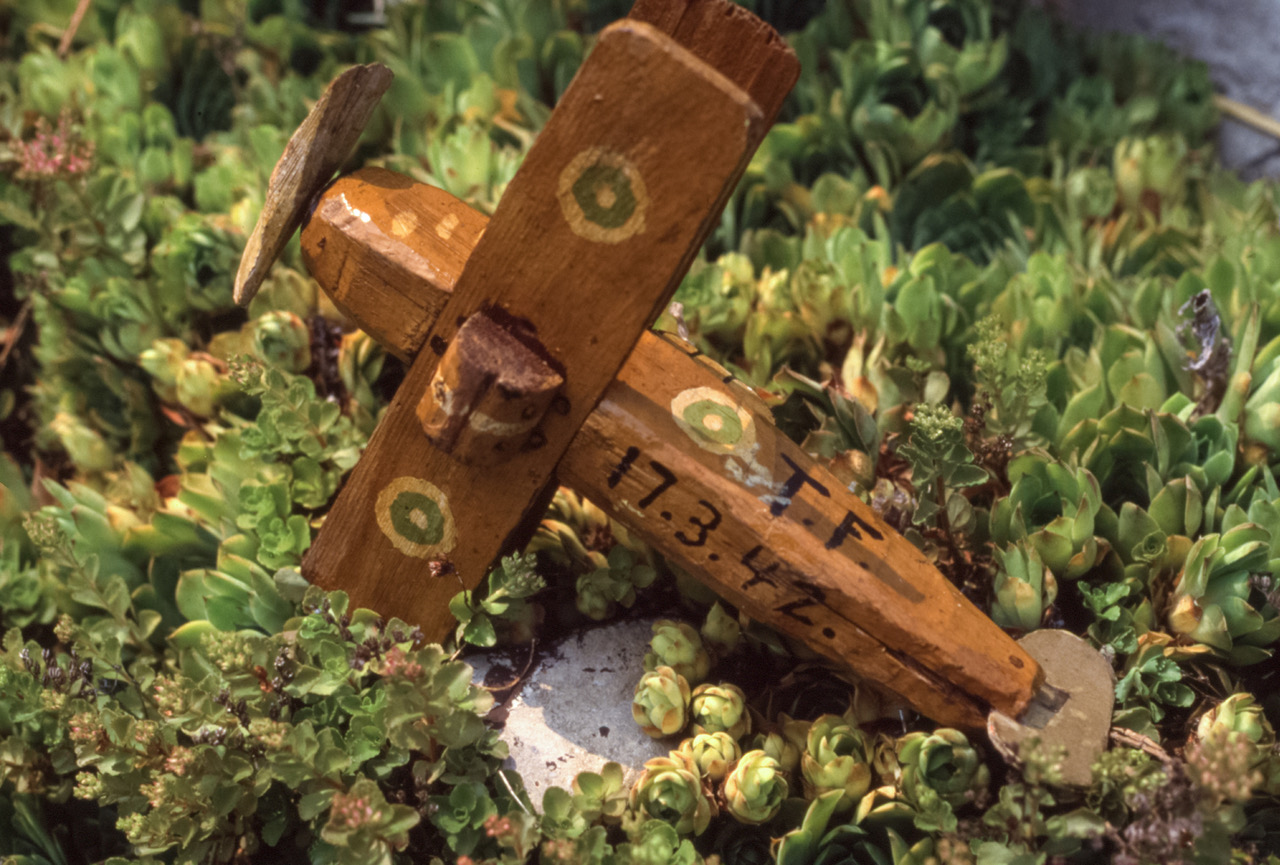
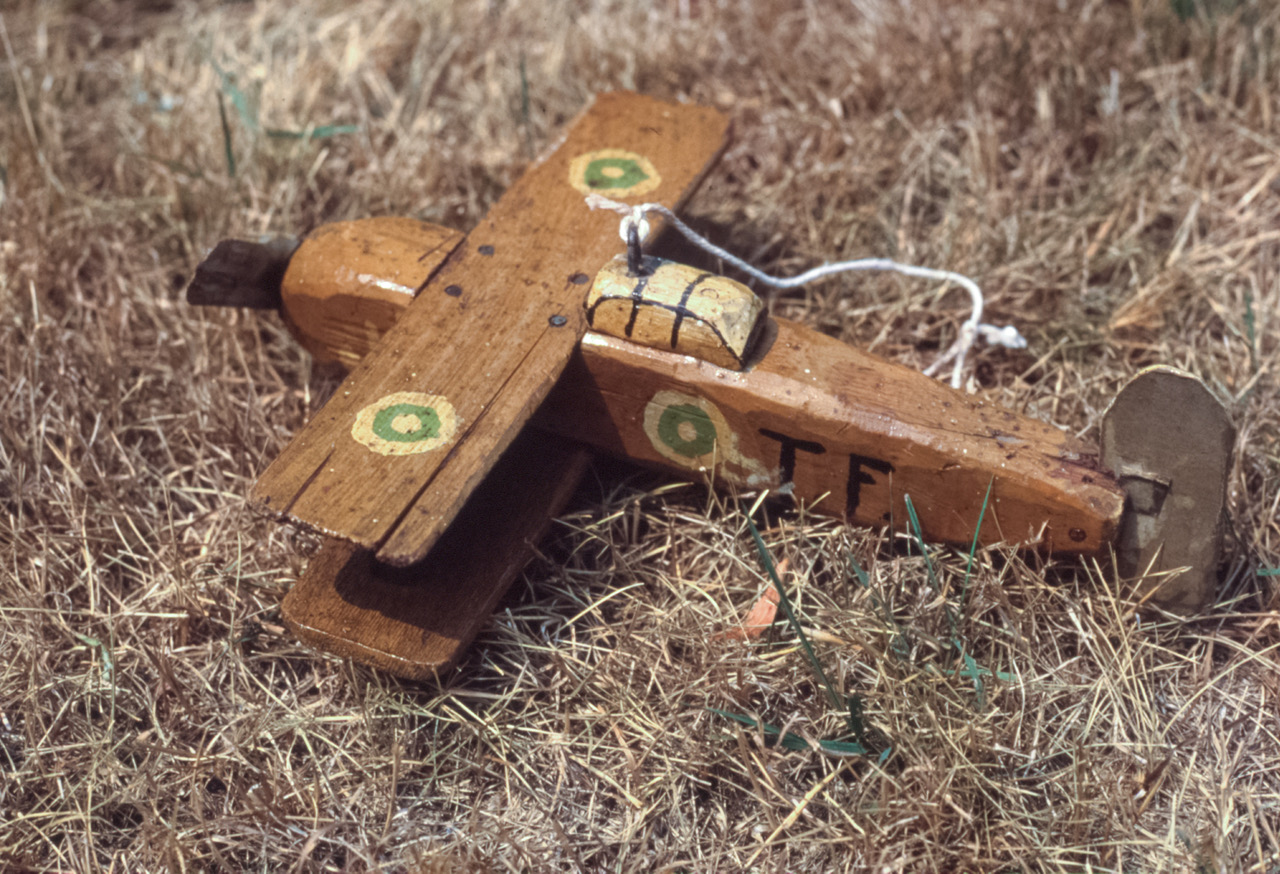
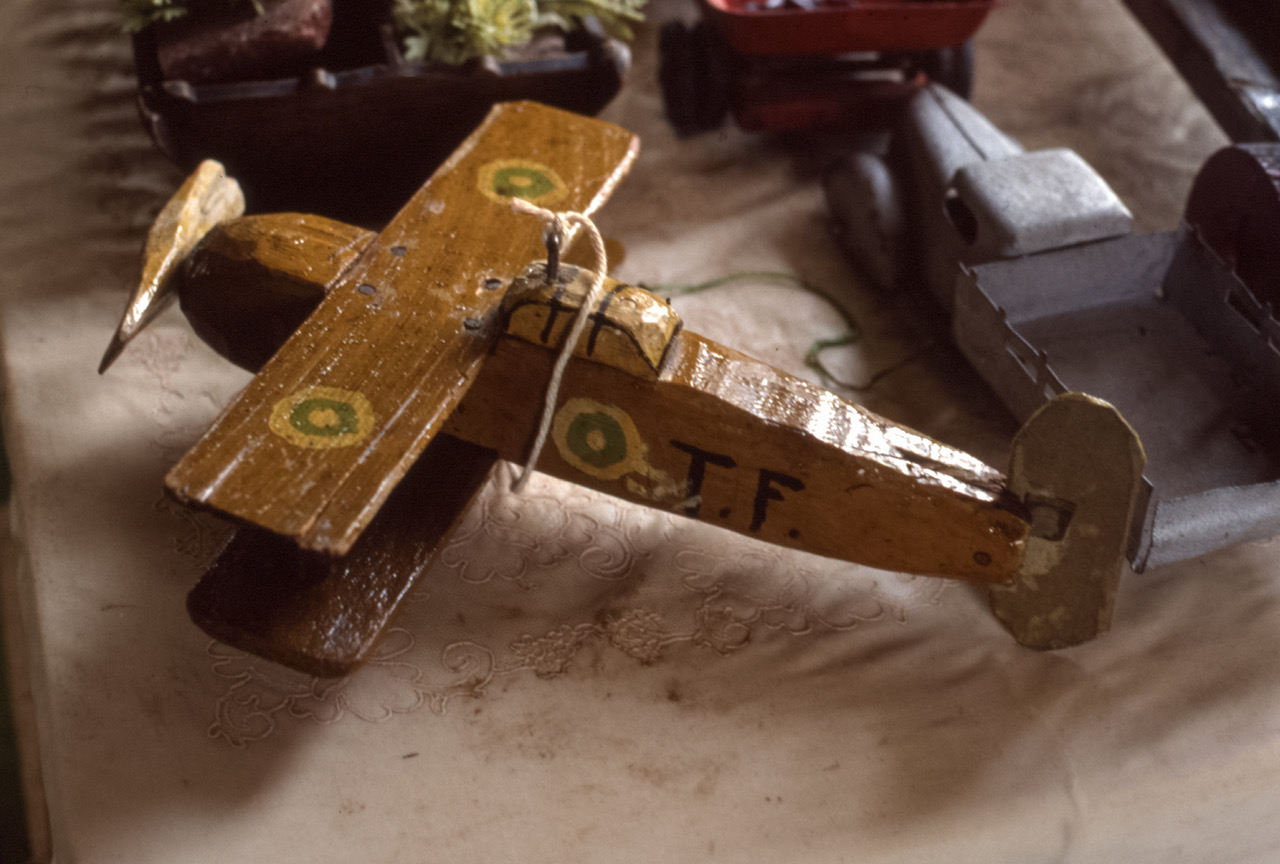
    My Uncle Frank Freeman created two early example of folk art that intrigued
    me.   He seems to have made both piece in March  1942.   And  they are objects  made
    as  toys for his six or seven year old  son Ted.   The objects  are not made
    to be submitted  for comment by a jury of accomplished lovers of fine art.
    They are made to be used.  They are made from scrap materials found here and there on 
    the farm.   They are imaginative.  Unique.  Tangible.  Unsophisticated.  Joyful.


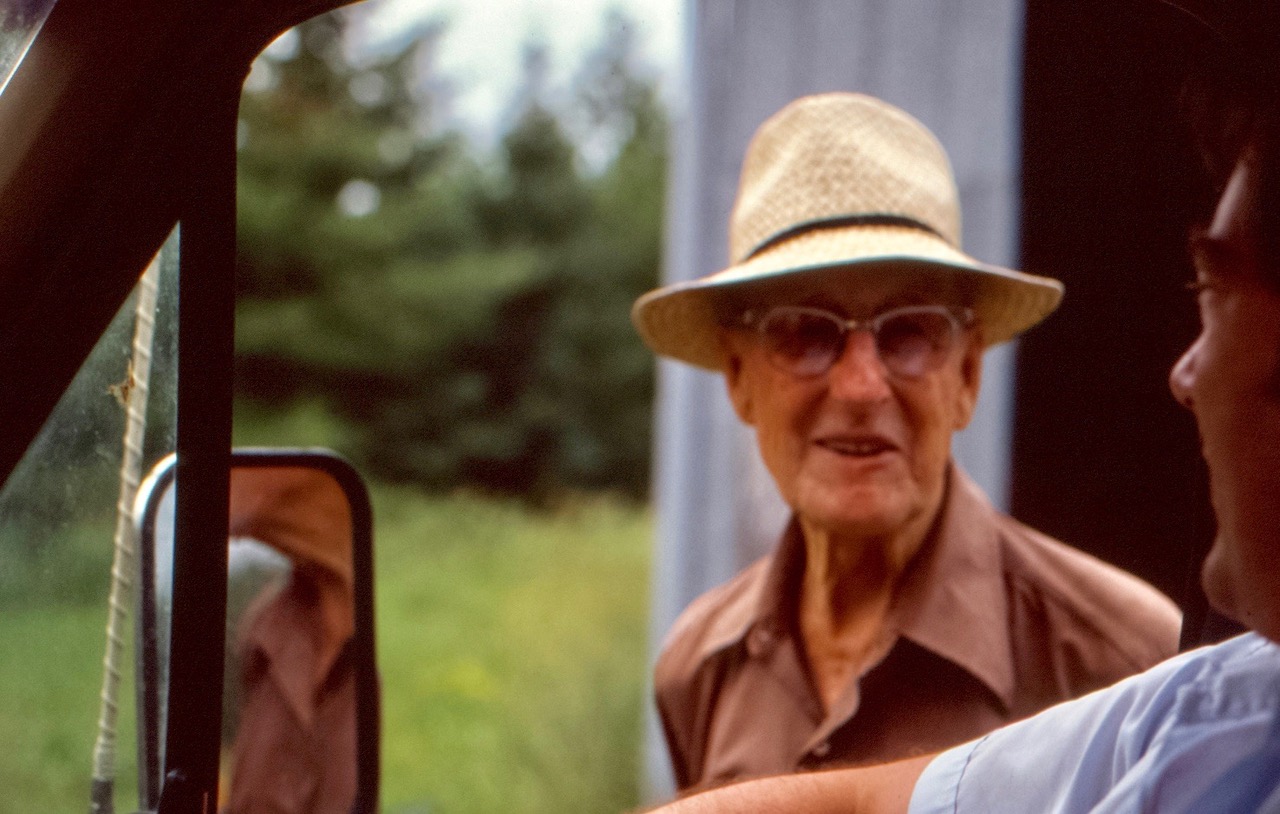
    Uncle Frank loved to talk to people.   He was tall but not silent.  Warm hearted.  Certainly not wealthy in the monetary sense
    but rich in other things particularly the natural world  around him.  He always had time for other people.  He loved  his very difficult farm
    composed  of glacial till …rocks, boulders, sand and soil…piled up forming fields that slanted in such a way that little pockets retained pools of water
    that some call  swamps.  And all these pools drained into a big swamp in the centre of the farm.  The farm owned by Lucinda
    and Frank Freeman would be 100 acres of headaches to most farmers.  To Frank, his farm was a wonder of creation.

    How do I describe him best?   I can do that with a short comment he made to me decades ago.

    “Alan, I love farming with horses rather than tractors.  Do you want to know why?”
    “Why?”
    “A tractor never stops working.  Now horses, on the other hand, must take a rest part way
    through a job.  And when the team rest I get to rest and consider the world around me.”

    Another anecdote:     One year Uncle Frank thought he was about to die from cancer.  He was not…but
    he did  not  know that.  “Alan, I took my last walk around the farm today.  Every trail, field, swamp and forest.
    Just to say good bye.”  (These are my words but they accurately cover what he said to me.)  He lived for many
    more years.  I expect he took that walk again.

    Made with these hands…for a reason.  Made from things cast aside.   Made to be touched and handled.   Made to be useful, to entertain, to be;


    alan skeoch
    FEb. 2021

    (Fifth Line, Erin Township, Wellington County)
  • Man copy EPISODE 269 WATER DIVINING — FINDING UNDERGROUND WATER WITH A FORKED STICK (BELIEVE IT?)


    EPISODE 269   WATER DIVINING — CAN YOU FIND UNDERGROUND WATER WITH A FORKED STICK?  (BELIEVE IT?)

    alan  skeoch
    March 2021


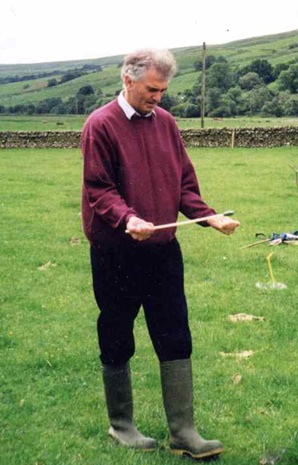
    Winter will end.  Spring will come.  And the water witching rods will begin their
    mysterious behaviour once again.  Witching rods only work in the hands of TRUE BELIVERS.

    Take a look at picture below.  There are two creatures  looking for underground water. 

    1) The man
    in the red  shirt is Bradley Schneller who believes that forked stick in his hand will forcefully turn
    down pointing to an underground water source where we can  dig a  new well.   Believe it?
    Lots of people do believe in water witching.

    2) The second creature was our dog “Tikha” whose full name is Oronhyatekha named after 
    the famous Mohawk doctor of that name.  Name means Burning Cloud.   Look at
    our old dog Tikha closely.   She is using her nose in the search for water.  

    Where would you put your faith?  The forked stick or the dog’s nose.?


    “Alan, come over here.  My forked stick says there is  a strong underground
    stream right here.  Get the well driller and his truck right now.  We have found 
    your new well.”  said true believer Bradley Clarence Schneller, agronomist and reader of 
    crystal balls.


    “Alan, something is happening … powerful source of water right here…!”
    We had the driller do his work on this sport…hit water at 40 feet.


    “There is something right here”, said Marjorie


    (Note the dog Tikha is laughing at marjorie and going the other way.)


    “Why are the rods pointing to the sky?”
    “Looks like rain…as good a reason as any.”


    Sandra  Schneller is  also a believer…unless she is faking her belief in water divining just to please her husband.


    After six or seven diviners worked over this field  looking for water,  we called a well driller to get us  a new well.  The old well had been

    hand dug and was only 20 feet deep with various creatures living in the water.  One day I slid the wooden lid free and look down and there
    was a big snake looking up at me from the water below.  I thought the poor thing had fallen in the well and rescued it by lowering a pail on
    a rope then told the snake…”Get in the pail before you drown”.  The snake did so.  We pulled  up the pail and the snake slithered  away
    to our farm house field stone foundation which must have been its home.   The old well had other problems as well.  In summer months
    the water was full of hundreds of little bugs.  Grandmother Freeman advised we “close our eyes and drink the water” which we did
    sparingly.  Grandma and grandpa lived into their 90’s so the water could not have been that bad.

    All the same we got a new well.   

    “Where do you want me to dig?”
    “Right here where most of the water diviners say there is water.”
    “Good…I’ll bring in the truck and drill.”
    “What do you think of this spot!” , I asked him.
    “Seems  good to me.” he responded
    “Why?”  I persisted.
    “No overhanging branches.” he looked up…not down.

    “There…water…strong stream”  he announced  after drilling 40 feet down.
    “Great.”
    “I could go deeper…maybe hit big aquifer at 100 feet.”
    :No…that’s fine…we have water.”

    In retrospect we should have kept drilling.  The 40 foot deep well is  loaded
    with iron…hard water…other dissolved stuff.  Marjorie insists we buy bottled water
    from the Acton hardware store.  Big bottles …hard to lift on the dispenser.
    I have no idea where that water comes from.

    A very wise man told me “Alan, you can dig pretty well anywhere in Southern Ontario
    and hit water.  Pick  a  spot blind if you will.  But the advice of the well driller should be
    kept in mind.  “What advice?”

    “Do not drill where there are overhanging branches.  The branches and the drill tower are enemies.


    We are using a forked stick as a diving rod.  There are other instruments such as two heavy gauge wires with ‘L’ shape held loosely
    in hands,  one diviner that Bob Root and I met even used a can of insecticide hanging on a string.

    ALAN skeoch
    March 2021


    POST SCRIPT FROM INTERNET

    Does divining actually work?

    Scottish Water © 2004,
    a hydrogeologist having a go
    at divining

    Divining is the method by which some people claim to be able to locate water by walking over an area until they observe a response with an apparatus such as a forked stick, bent rods or a pendulum, usually held in front of them. It is difficult to objectively determine whether divining actually works.

    There is at present no scientific explanation as to why it should work and when it has been tested impartially it has been no more successful than would be expected by chance (M. Price 1985. Introducing Groundwater, George Allen & Unwin Ltd.). A water diviner can walk over an aquifer such as the Chalk and predict that water will be found at a certain location; a hydrogeologist knows that a well drilled almost anywhere on the Chalk will encounter some water. The expense is not in finding the water but constructing a borehole to allow it to be pumped out.

    However it is not possible to completely discard the subject of water divining. Some people seem to be able to locate buried pipes with the aid of rods or twigs. One theory for this is that the muscles in the body react to some electromagnetic effect caused by the presence of the metal or the water flowing through the pipe; the rods then amplify this effect so that the searcher becomes aware of them. Another theory is that some diviners know from their experience and local knowledge where groundwater is likely to be located and subconsciously cause the reaction.

    Whether or not divining actually works is a matter of debate. Even if the electromagnetic theory works for pipes, there is no reason why it should detect the slow, diffuse movement of groundwater. 


  • EPISODE 270 WHY ARE THERE FOSSILS ON TOP OF THE ROCKY MOUNTAINS? SKEOCH FAMILY CLIMBED TO DISCOVER WY

    EPISODE 270   WHY ARE THERE FOSSILS ON TOP OF THE ROCKY MOUNTAINS?   SKEOCH FAMILY CLIMBED TO DISCOVER WHY


    alan skeoch
    march 2021


    IN 1981 WE CLIMBED THE ROCKY MOUNTAINS…AND FOUND A MYSTERY

    In the year of our Lord, 1981, Marjorie and I packed up a second hand pop up trailer and drove west so that our
    boys would get to know the magnificent country in which they lived.    The previous summer we drove east to Newfoundland.
    In those two summer trips the boys got to know Canada.  Sometimes they asked  bewildering questions.  


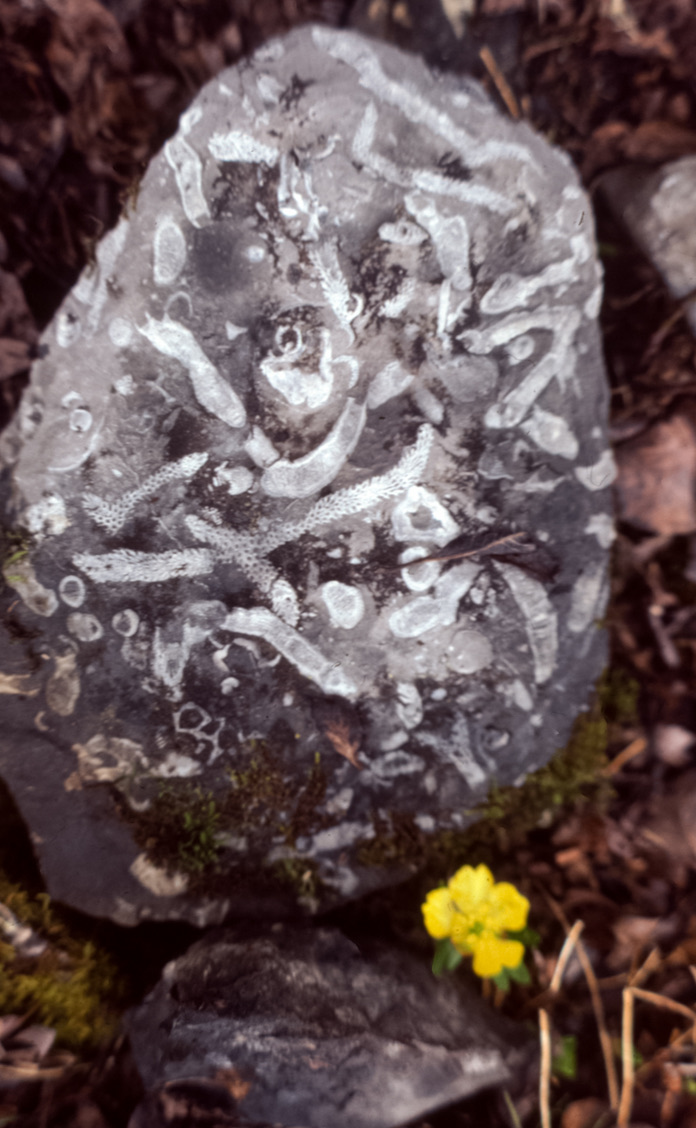
    “Dad, why are these fossils up here on top of the Rocky Mountains?”
    “Seems strange…did  someone carry them up here for us to find?”
    “Don’t be silly.”
    “Easier to believe that than to believe the other story.”
    “What ‘other story’?
    “The tectonic plates story…idea that we are floating on huge plates of
    rock sitting on top of a molten mass of stuff called magma..  And that millions of years ago
    two of the big plates collided with each other…hit so hard and for
    such a long time that the edges were pushed up to form the Rocky Mountains. like a big
     accident when two transport trucks hit dead on ”
    “Now who in their right mind would believe that floating rock idea…pure poppycock.”
    “Yes, must be nonsense.”
    “That Plate Tectonics thesis even goes further to offer proof…uses the
    fossils as evidence.  The collsioins of plates of rock theory says that the fossils are proof
    of the collision.””
    “Get away with you.  More nonsense.”
    “Right.  Imagine saying that these fossils were once the bottom of a great
    shallow sea that was full of life some 500 million years ago…and that the collision
    of the Tectonic plates pushed that sea thousands of feet into the air.”
    “Nonsense I still say.”
    “Even worse.  The stupid idea of the tectonic plates came from T. Tuzo Wilson, a Canadian
    geophysicist.   Idea  has been accepted by scientists around the world.”
    “Just goes to show you about scientists…they are guessers…and your guess is
    as good as mine.  I prefer authorities.”
    “Authorities?  What authority?”
    “Well, for a start I would like to know what Donald Trump thinks about the Tectonic Plate
    theory.”
    “Now there’s a well informed man…a deep reader….a thinker even though some call him
    a stinker and  worse.”
    “He knows something about the collision of fact and fiction and how that can stir up
    humanity.  Maybe he understands the collision of huge plates of  rock floating on
    a sea of molten magma.”
    “Not sure he’s thought that deeply.  
    “How would he explain the presence of these fossils on top of the Rocky Mountains?”
    “I think he  would prefer the idea  that someone carried them up here just to
    make fools of scientists…and make fools of us.”


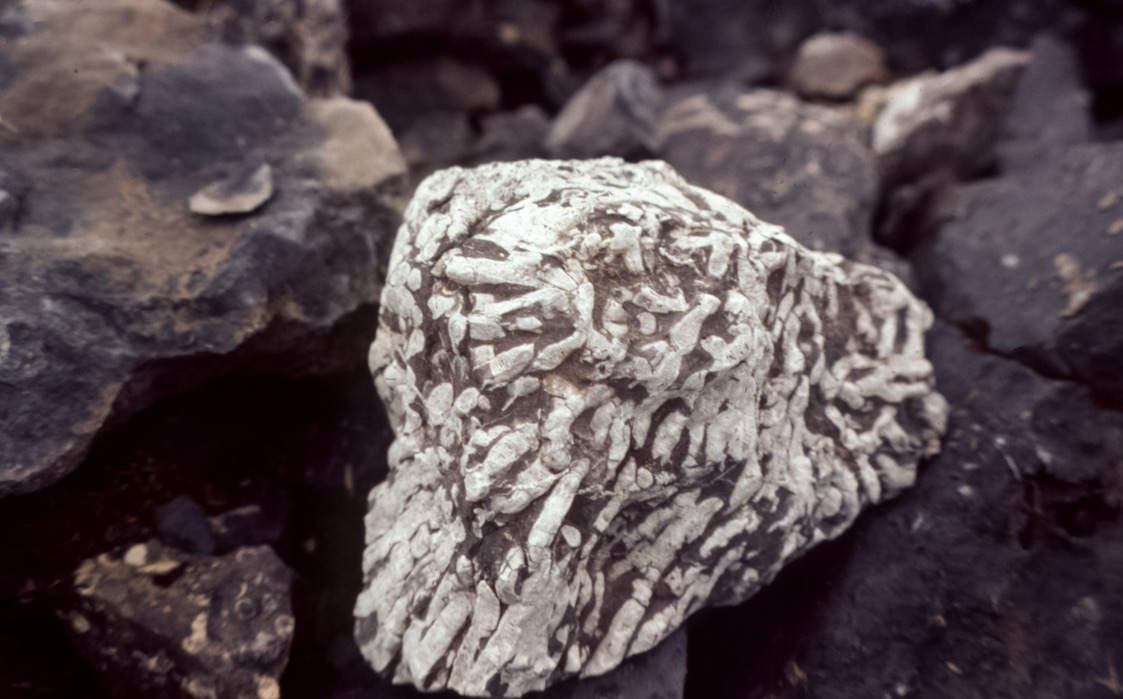
    QUESTION:   Does  anyone reading this dialogue know what these fossils  may have
    been 500 million years ago.?   Crinoids?  Not sure.   I really  do not know.  As for
    the conversation you have just read,  I  think the collision theory is better than
    the “I carried the fossils up the Rocky Mountains just to fool the Skeoch family” theory.
    Where do you stand?

    HONEST QUESTION:   What living things were these fossils?


    “Daddy, can you explain how fossils at the bottom of the sea became the tops of the Rocky Mountains?”

    “Yes, I can boys.  Two ideas.  First idea is that two gigantic floating continents on a sea of molten lava
    collided so hard that they pushed the bottom of the sea to the top of the Rockies.”

    “Sounds a little far fetched , Dad, what’s the other idea?”

    “Far simpeler.  Somebody carried the fossils up here.”

    “Why would  someone do that?”

    “There are lots of strange people in the world boys.  I  do not know what motivates them all.”


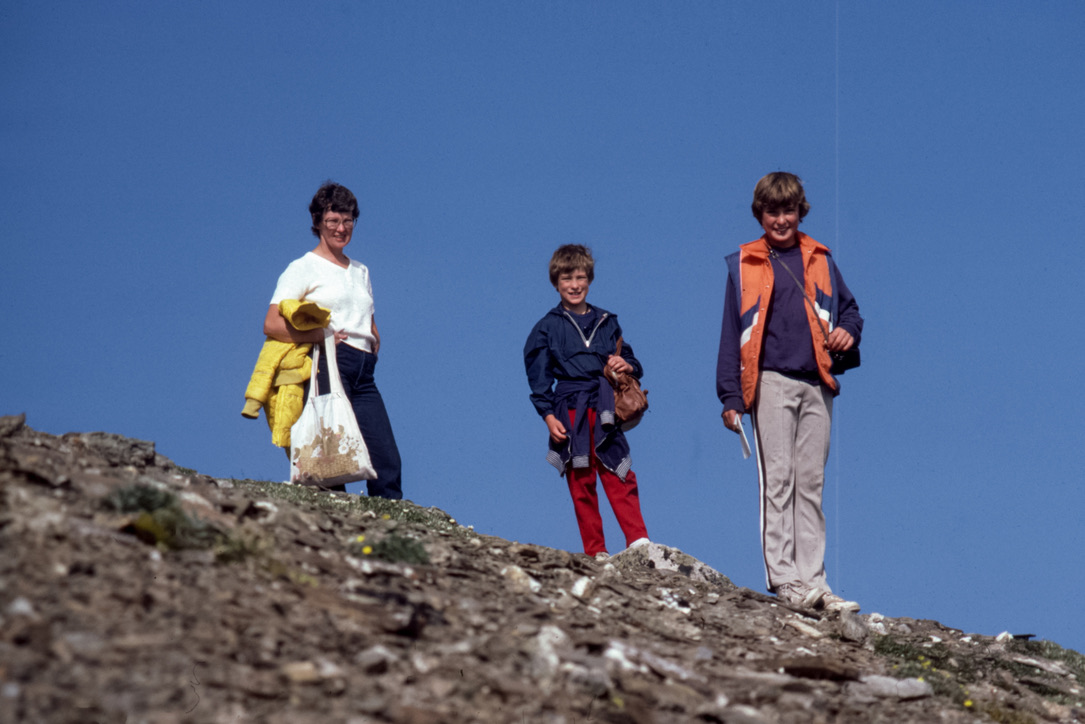
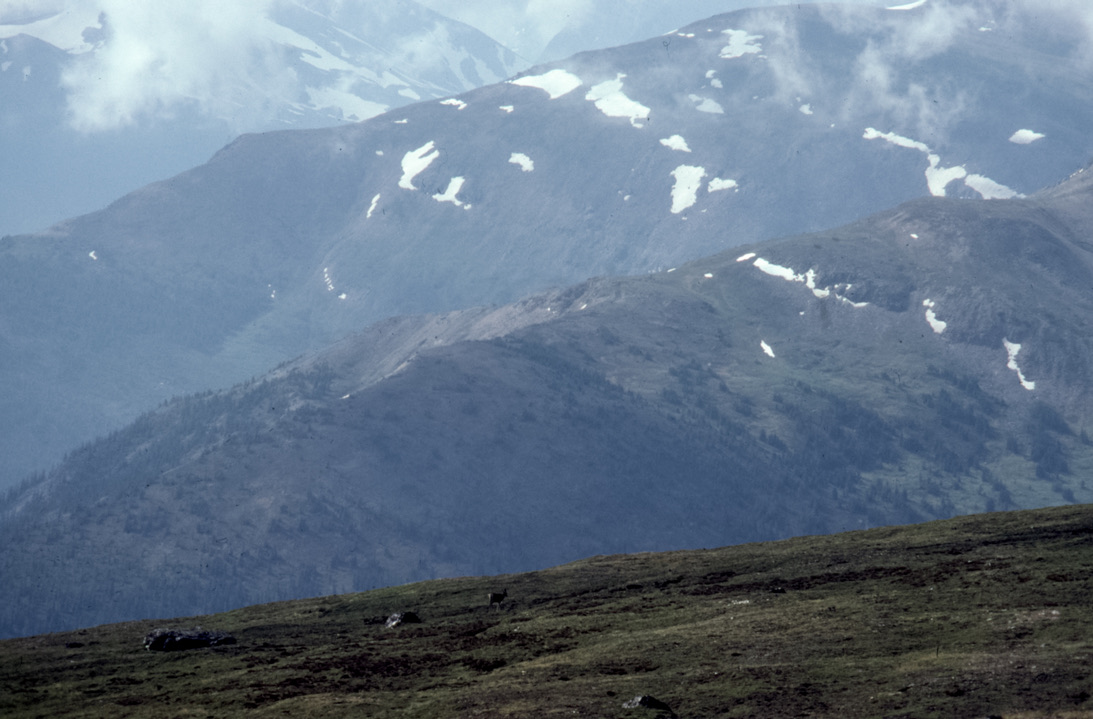
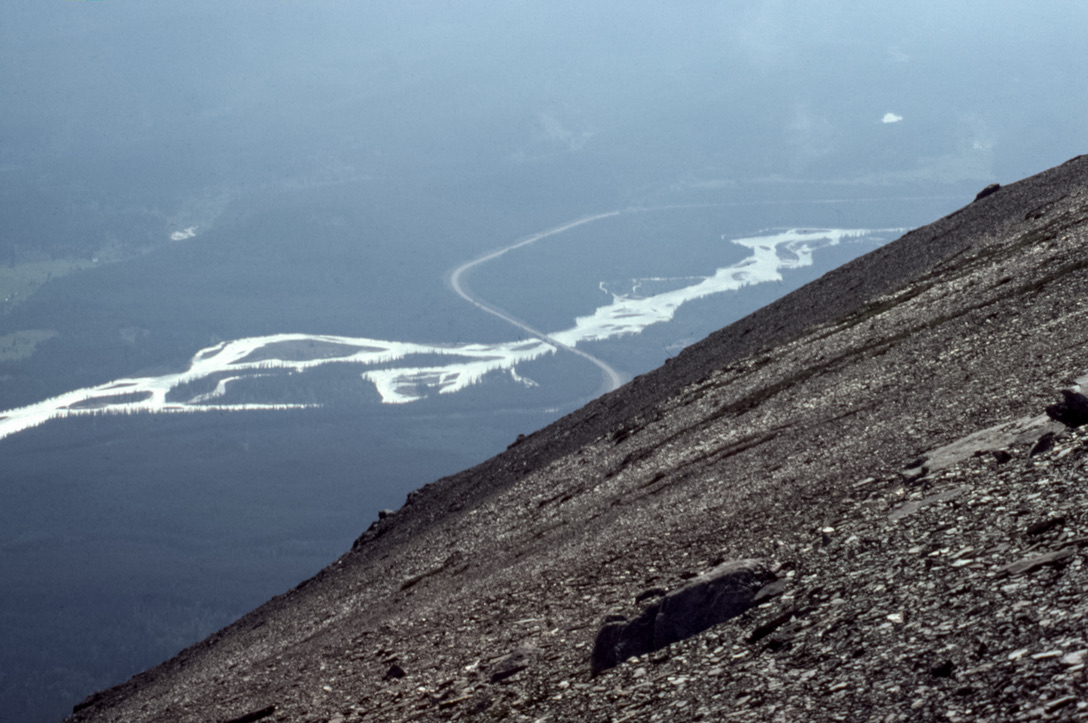
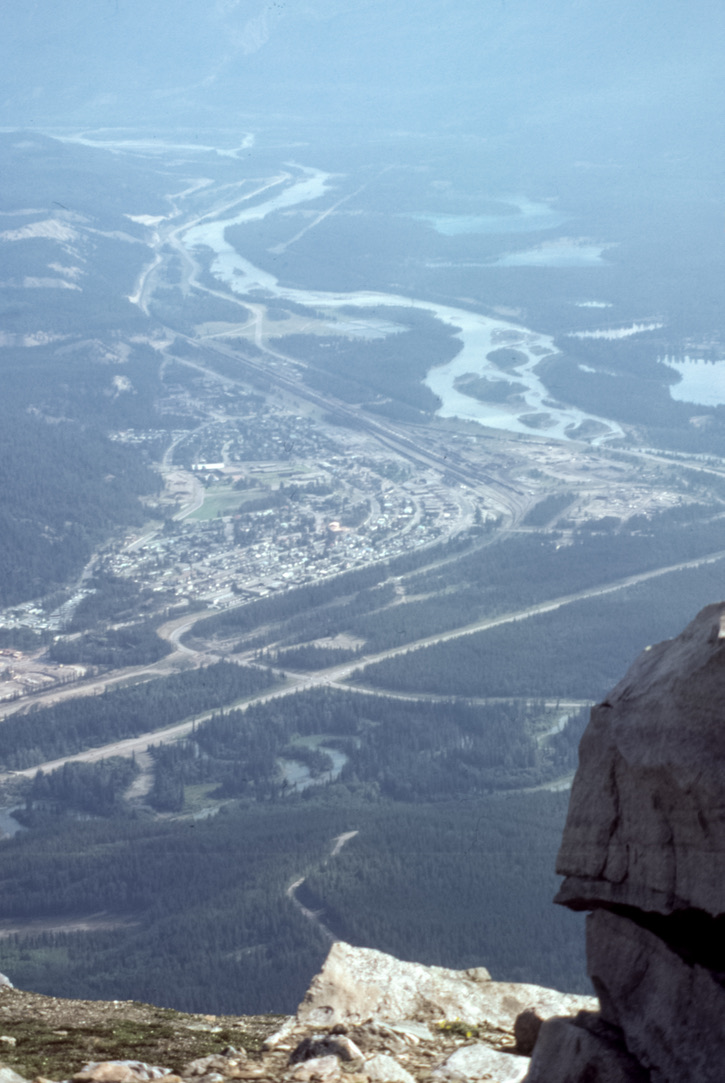
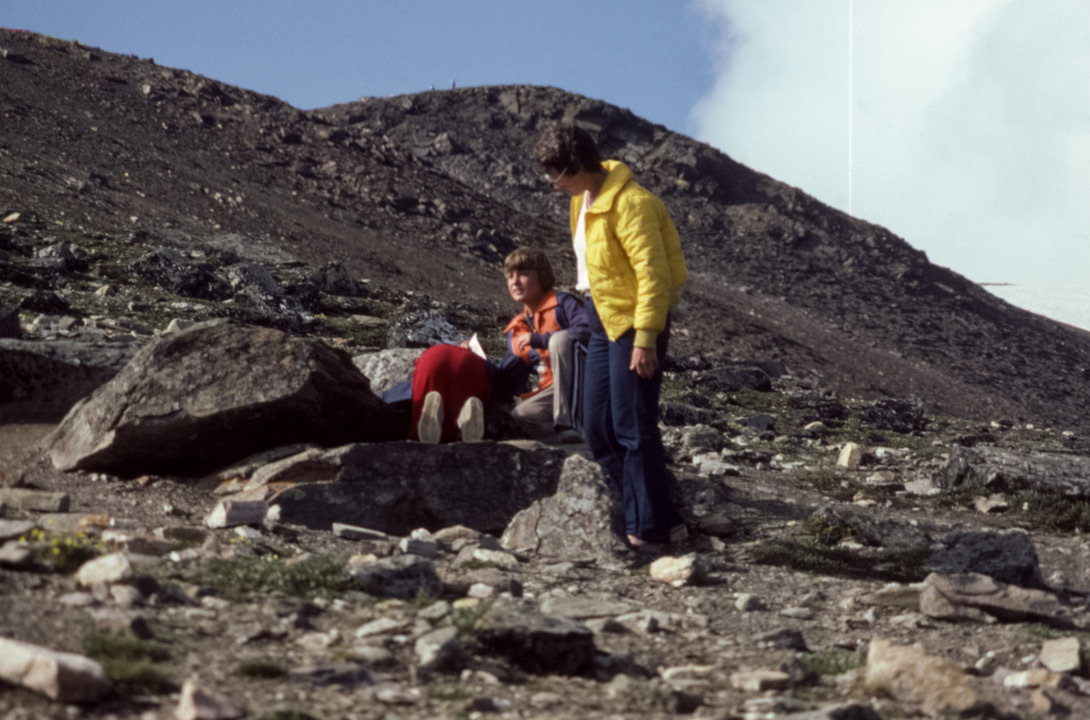
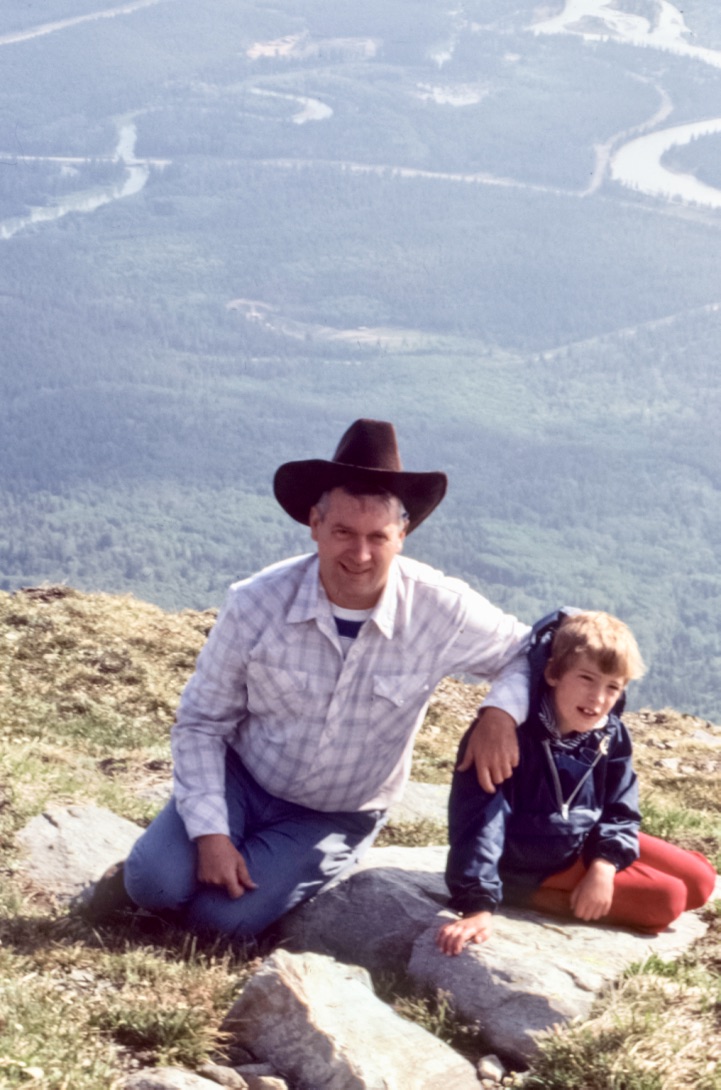
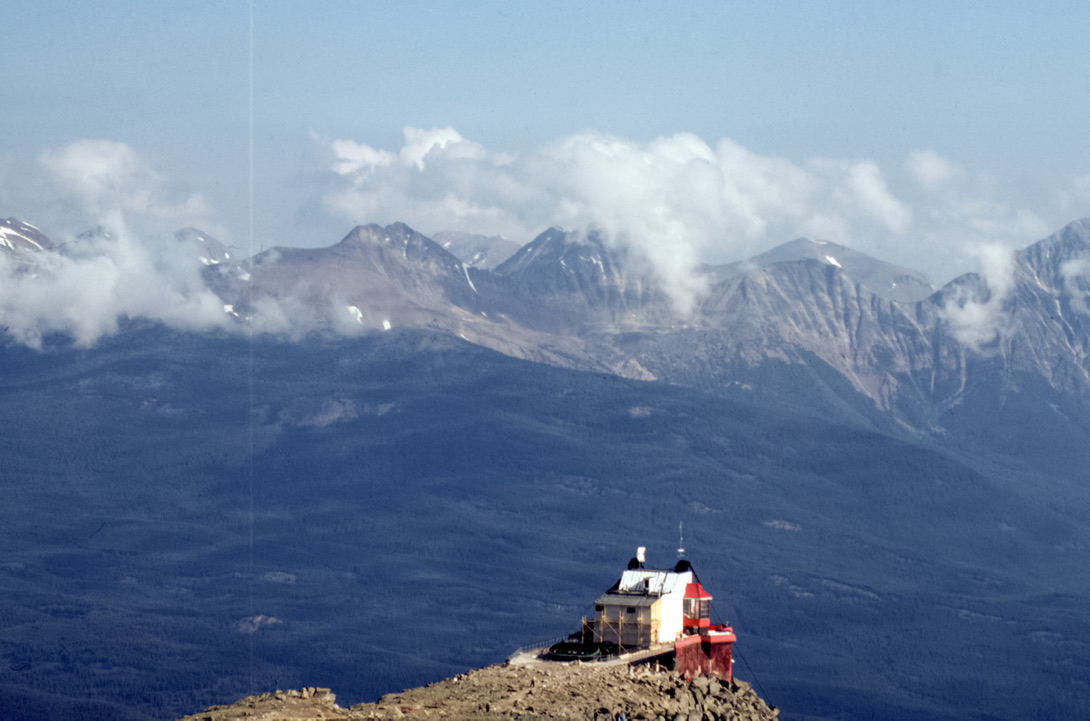
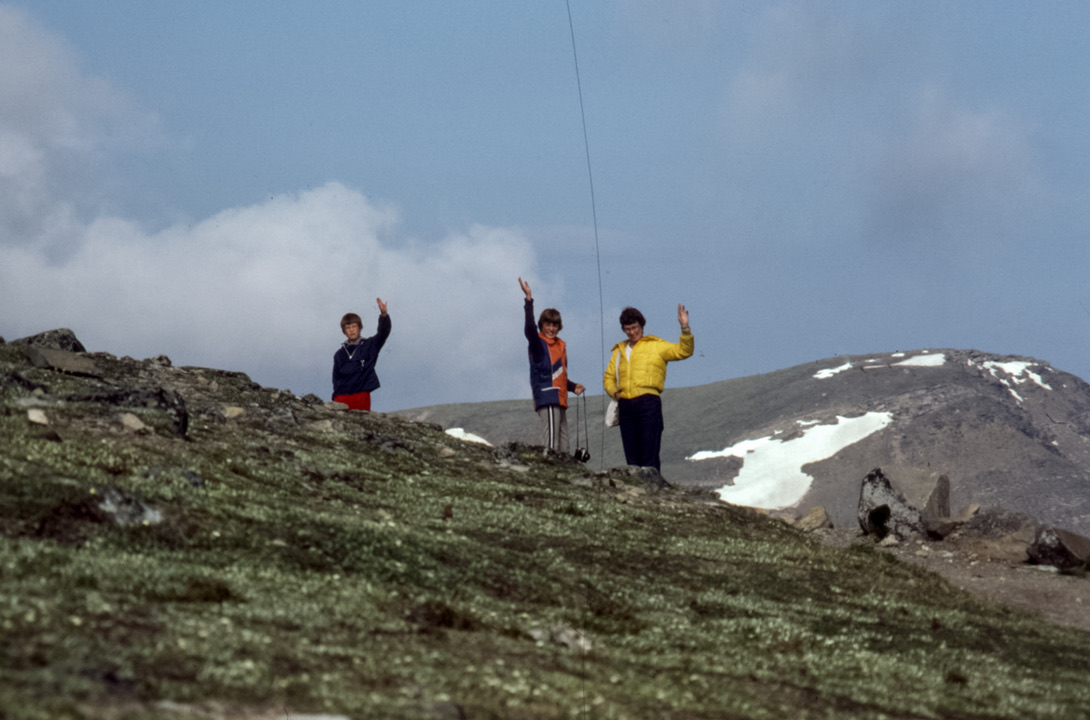
    Here we are in the summer of 1981, climbing the Rocky Mountains.


    All kinds of loose rock…


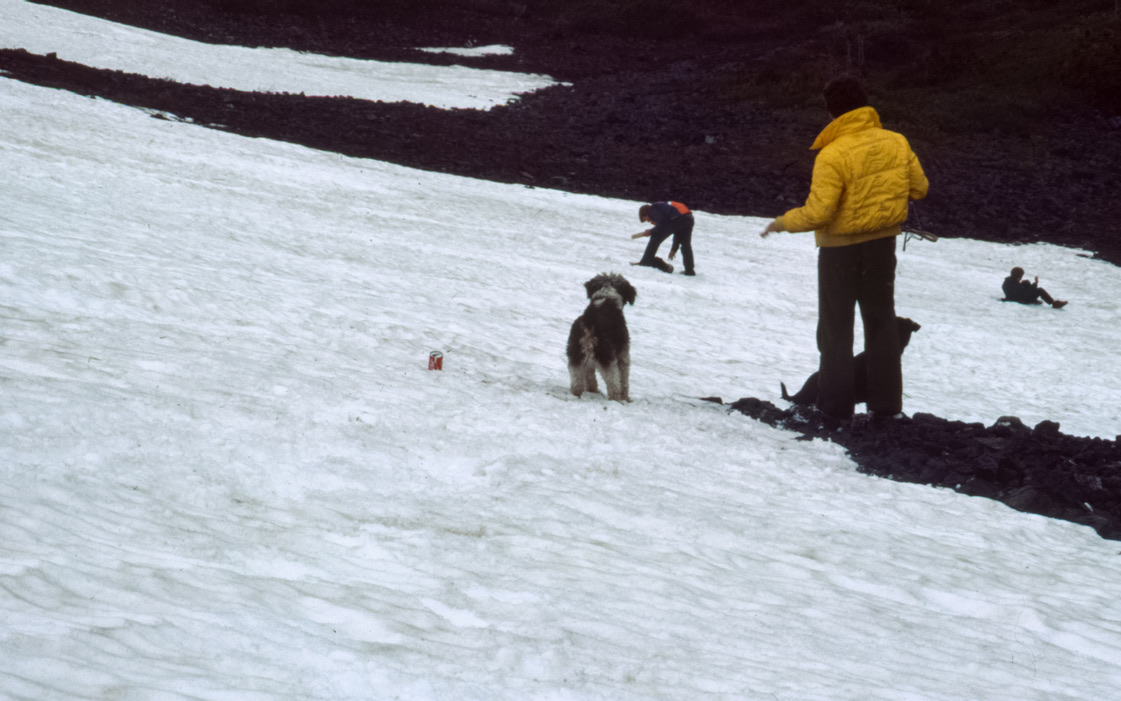
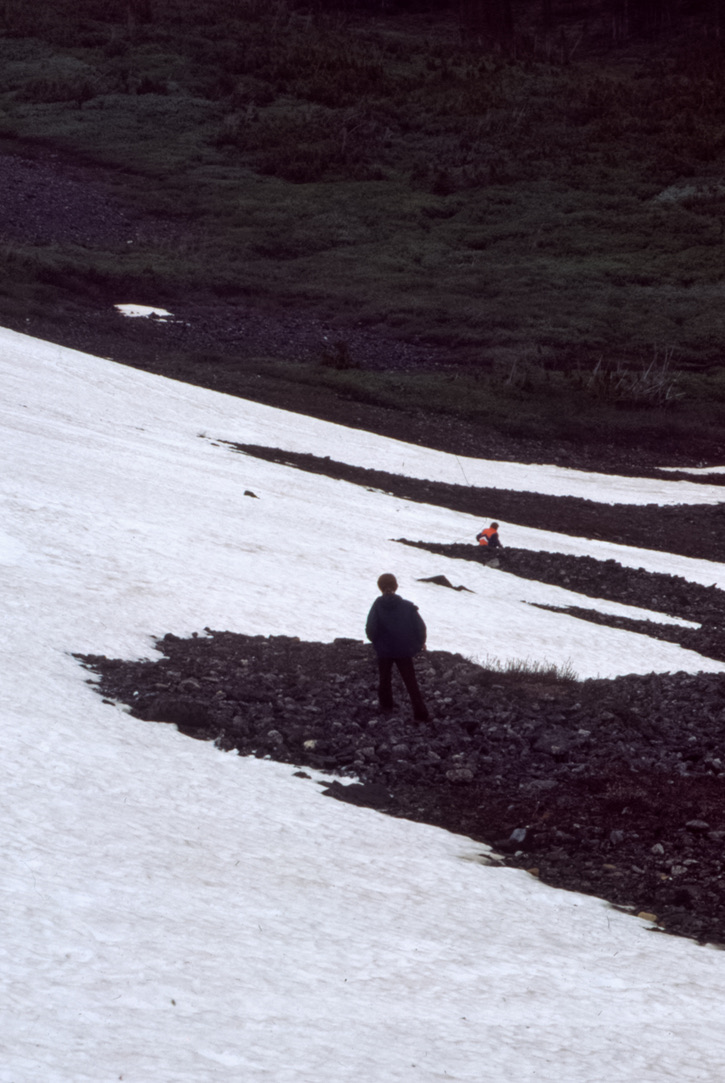
    Then we eventually reached the line where snow and rock meet.  Great to slide down a mountain clad in snow
    that never melts.


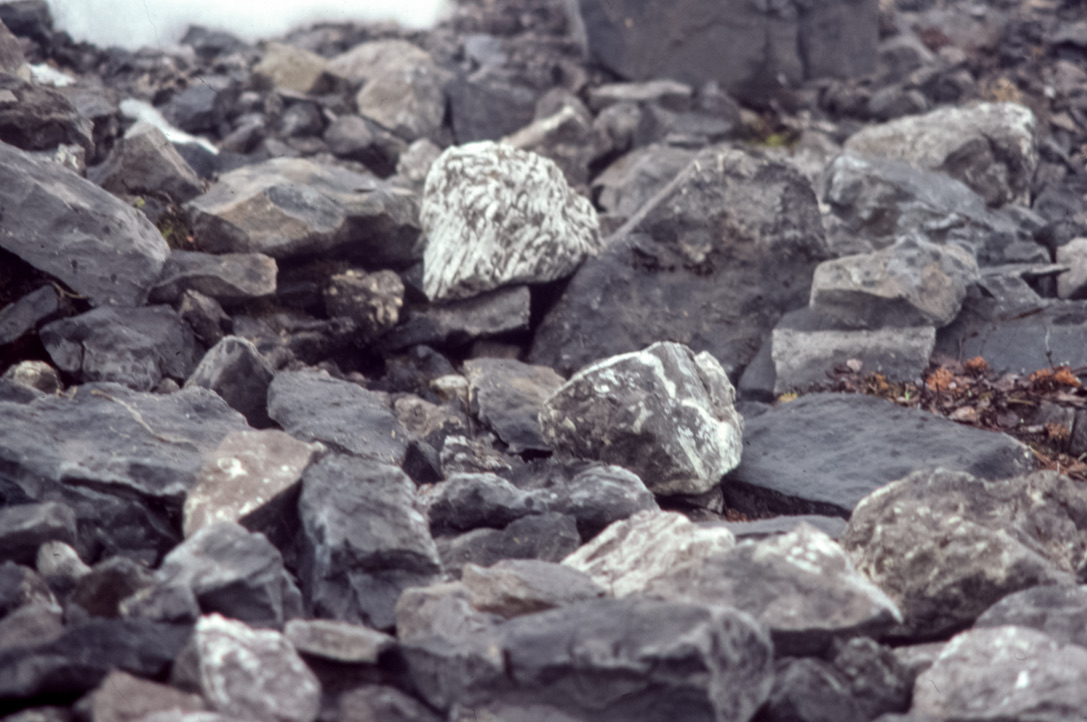
    Among the high altitude flowers and the snow were great chunks of ancient fossils.  


    With a false step we could slide down the mountain along with these chunks of sedimentary rock
    heading down to the valley below.


    “Dad, tell me that stupid story again about the big dinner plates colliding and making the rocky Mountains.”


    alan skeoch
    March 2021