EPISODE 246 YUKON DIARY THE TREADWELL MINE DISASTER and Livingston Wernecke
alan skeoch
Feb. 6, 2021
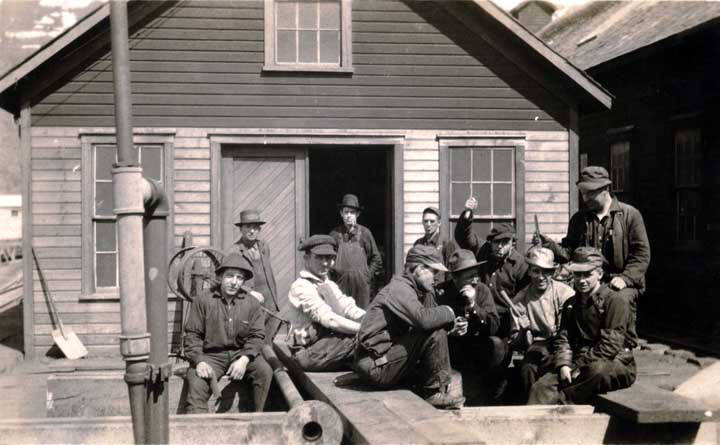
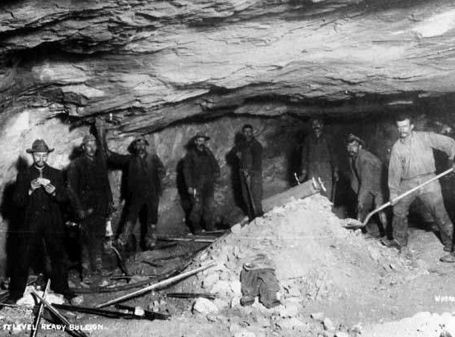
Treadwell Mine employees shortly after the Disaster. New jobs were found for all of them.
Men from 17 countries, many of them Serbians who left Treadwell when WW 1 broke out.
WHY DID I VISIT JUNEAU ON SEPT. 13 AND14, 1962? NO GOOD REASON
Was there some unfathomable force pushing me from the Yukon. Pushing me with a purpose in mind.
Pushing me out the peephole of Skagway. Pushing me south to
the mysterious capital of Juneau, Alaska.
Pushing me I knew not where or why. I say this in 2021…59 years after I wrote my Yukon Diary. Ha!
What a laugh. I wrote that diary…stuffed it with bits and pieces of my life…and never opened it
again until the year 2020 when the whole world hit a dead stop and hundreds of thousands…millions
and millions of people suddenly had to reconsider their lives.
Was that push to Juneau in 1962 real or imagined? I mean was I just wandering pointlessly? Wasting time?
Wasting a little bit of my $350 a month salary?
Did my unconscious mind whisper “Alan, you must see Douglas Island? Even if you have never heard of
Douglas Island, you must go there! “
My conscious mind must have responded. “What the hell are you talking about. Douglas Island? Delete now.”
Unconscious mind must have responded. “You willl only know why you went there in 2020. No point in me whispering
to your goddamn conscious mind. It blocks things. But you will go there and then wait 59 years to find out why.”
YUKON DIARY
Friday, September 14, 1962
Got up early and walked the tilted streets of Juneau. I could look across the Channel where mountains threaten
to tumble into the Fiord. I look behind me and mountains that are even higher pose the same risk. But I have
seen mountains all summer.
Nothing to see really…nothing to do…why am I here?…I must fly home as fast as I can…seems I have
wasted my time coming to Juneau. Skagway made sense. Juneau does not make sense
DOUGLAS ISLAND
I did not notice Douglas Island in 1962. The island was there. Across the Channel from Juneau.
A big lump of real estate with a humped back. Unremarkable because the mountain backdrop
dominated. I looked but did not see. On September 14, 1962, I had no idea…no interest…in that
lump of land.
I did not know it was the site of one of the great mining disasters in North American history. I had
never heard of the Treadwell Gold Mine. I did not know that this lump of land humping its way into
view across from Juneau had a direct
connection with a mining engineer and prospector called Livingston Wernecke. I did not even
know that the Wernecke Camp that Bill Dunn and I explored on Keno Hill was named after
a man.
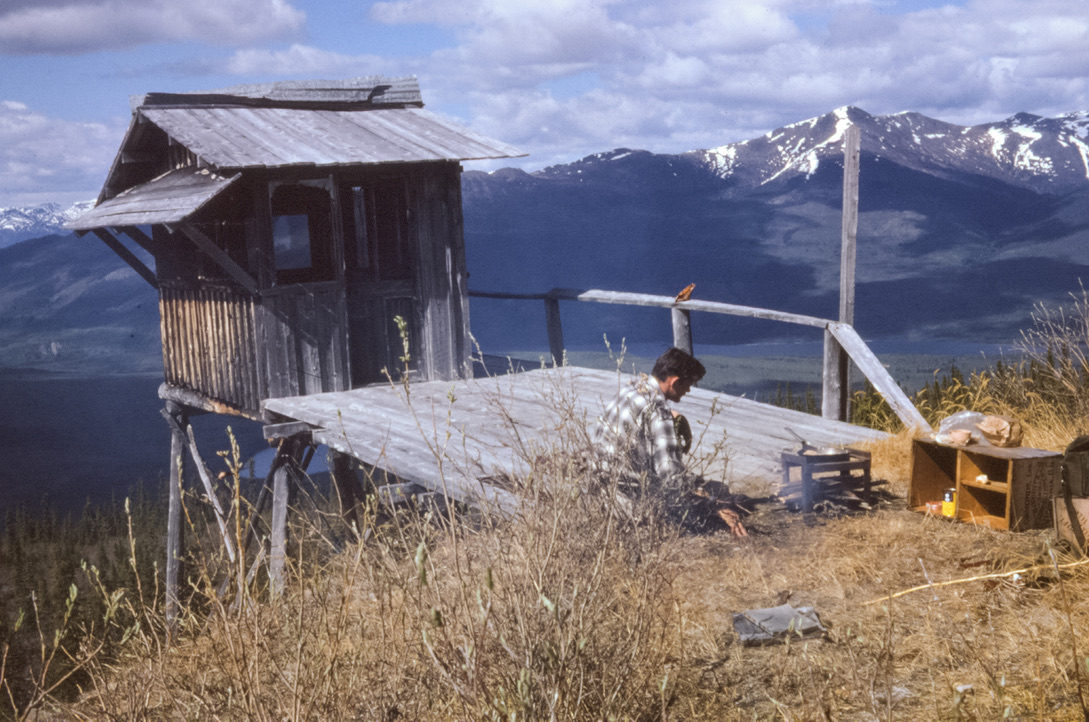
Early June 1962 when Bill Dunn and I explored ruins of a mine on Keno Hill. Later we discovered this was once the Wernecke Camp
Mine.
Indelibly in my conscious mind , however, was the joy Bill Dunn and I shared that June day as we
cooked our lunch with our feet hanging over the McQueston Valley of the Yukon far below.
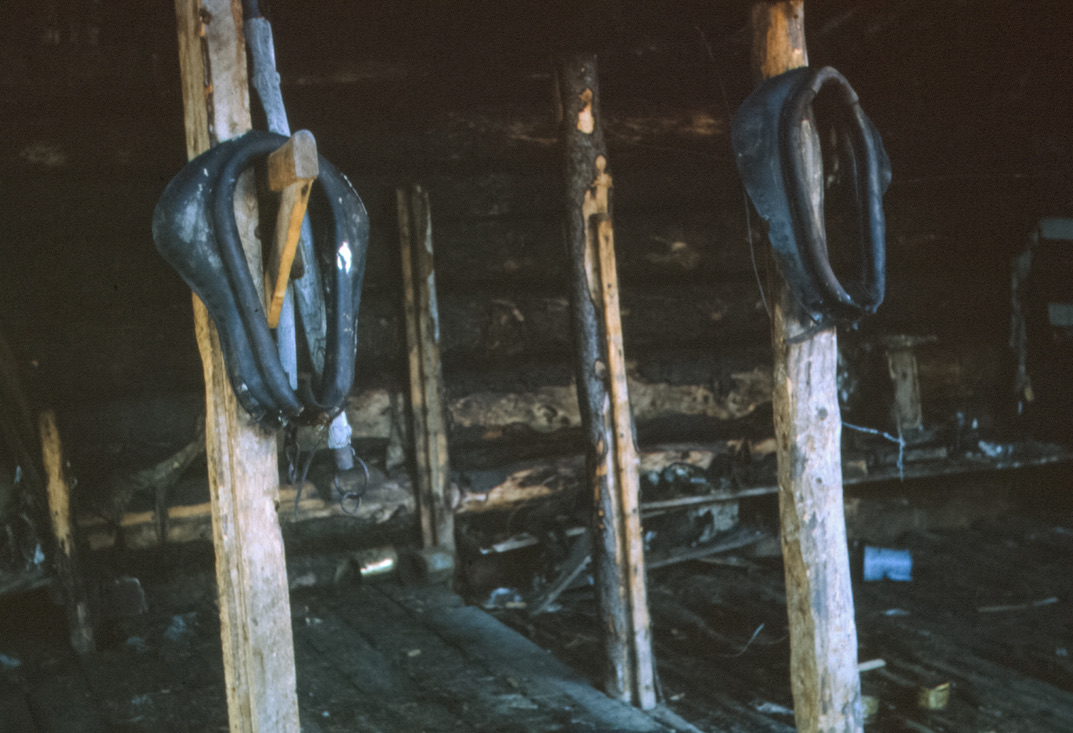
My conscious mind noted lots that day, particularly the lonely horse collars hanging in
the wreck of the horse barn…and the vacant cabin with plates, cups and saucers on the table.
The emptiness where men once lived and left behind for Bill and I to find.
I had no idea how this abandoned mine connected to another humungous abandoned gold
mine on the coast of the Alaskan panhandle.
Let me jump right to the disaster in 1917 … cut the crap …
THE TREADWELL DISASTER April 21, 1917
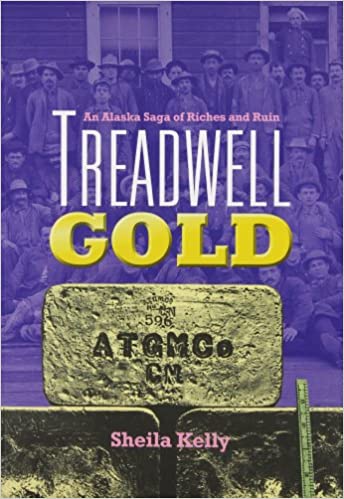
In her book “Treadwell Gold,” Sheila Kelly references an eye-witness account of the cave-in:
“At one fifteen a.m., the small group standing vigil watched as the ground around the natatorium and fire hall slipped sideways, then with ‘cracks, groans, and noises of shattering boards’ dropped straight down into the innards of the mine.
“Finally, at two fifteen a.m., after another eruption at the cave-in site, a two-hundred-foot geyser of saltwater shot out of the top of the central shaft. The spouting display went on for a full five minutes before it stopped, like fireworks announcing a finale. After a harrowing three and a half hours, the mine was full. In those forty-five miles of mine shafts and drifts underlying the town to a depth of twenty-three hundred feet, those ancient geologic pockets that gave up ten million tons of gold-bearing ore were filled with three million tons of seawater.”
Witnesses watched as their social club and company swimming pool suddenly disappeared in a gaping hole filling with sea water from deep below. All miners escaped except maybe for one man who just disappeared.
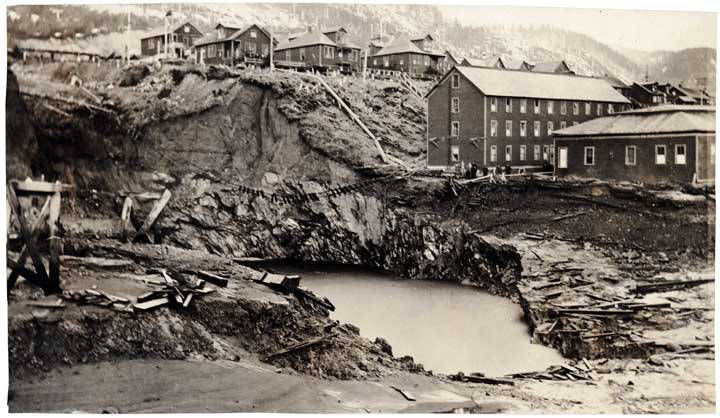
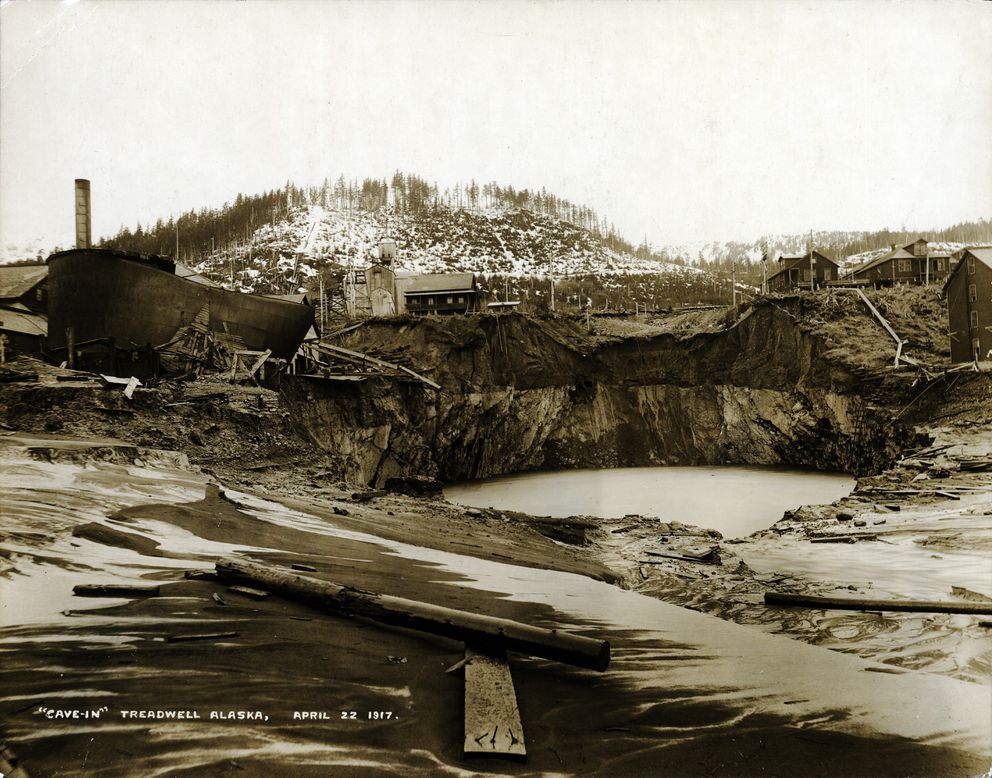
The Treadwell mine disaster on April 22, 1917…The day after the collapse. Before the disaster this was the site of
the Treadwell social club swimming pool. The day after the mine was filled with millions of gallons of salt water that
cascaded into the passageways and drifts (stopes) below. In between the two events geologist Livingston Wernecke
crawled out on a trestle precariously strung over the hole. He shone a light down into the blackness below as a pile
of mud slipped into the dark. When the mud and fragments of mine buildings hit the rising water from below he breathed in “a blast of air that had the musty
oder of the deep reaches of the mine.”
FACTS ABOUT THE TREADWELL GOLD MINE
1) The city of Juneau, capital of Alaska, is named after he first prospector to lay claim to parts of Douglas Island, 1880’s.
2) Treadwell was the founder of the mine which he sold for $1.5 million dollars
3) The Treadwell Gold Mine became the largest mines in North America between 1880 and 1917
4) The mine buildings and property covered 2.5 miles of the Douglas Island shoreline
5) It began as an open pit mine then became a shaft and stopes mine that got deeper and deeper into the rock.
6) To get one ounce of gold 8.5 tons of ore had to be ‘stamped’
7) The noise of the stamping machines could be heard for miles
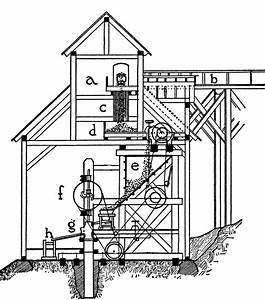
(a stamping machine is a kind of power driven hammer that reduced the ore
into grains of sand that allowed other machines to sift and separate the gold.)
Architectural drawing of the workings of a stamp mill. Easier to understand
than pictures of stamp mills at the Treadwell Gold Mine. Raw ore dumped in
stamp mill then pulverized into tiny pieces by power driven hammer. The noise
from the Treadwell stamp mills was overwhelming but even so there was a sign
“Quiet…Men Working”…apparently
8) Miners were all male because women were considered to be bad luck
if working underground. The men got upset when some well intentioned women
entered the mine and sang to the men.
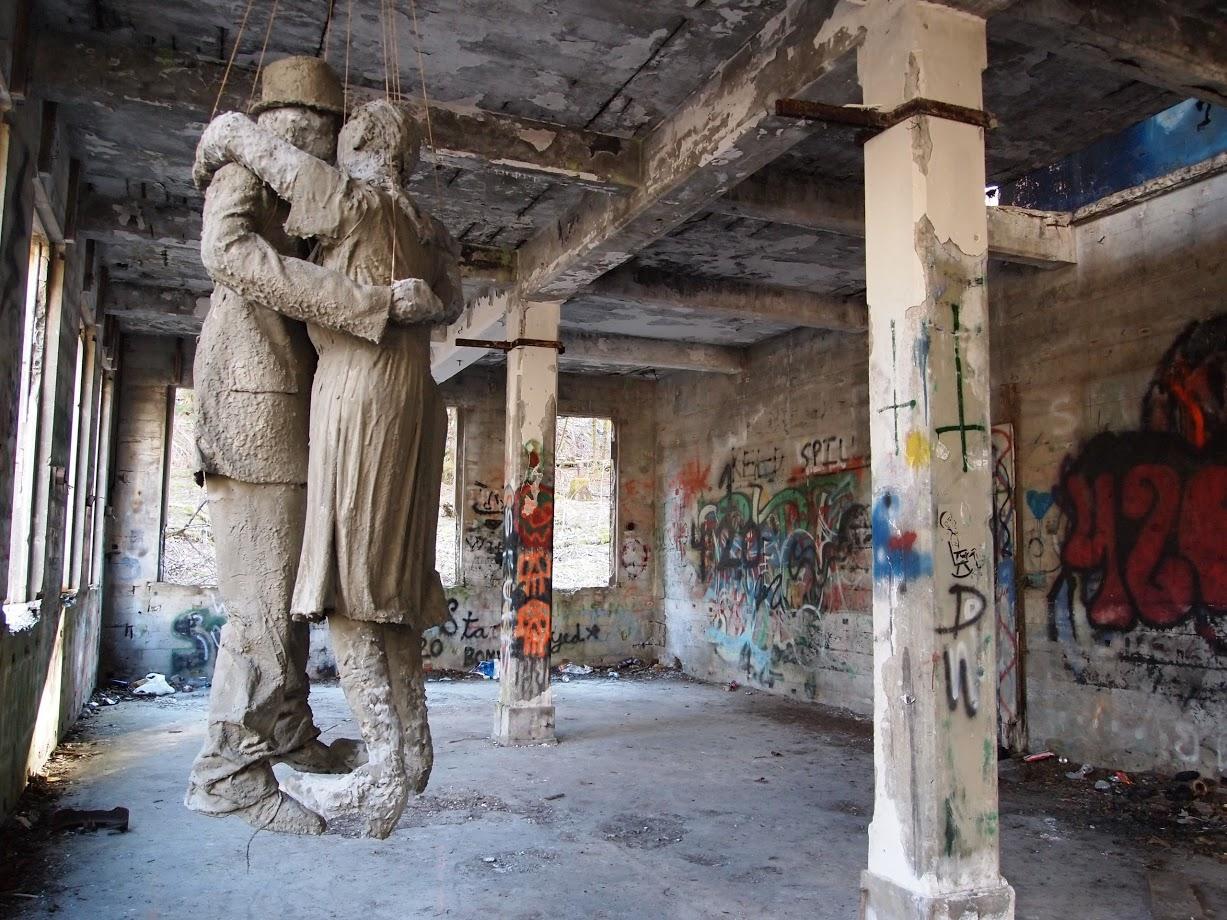
Strange sculpture found in ruined cement Treadmill Mine building…vandalized walls but intact mysterious sculpture
9) The mine was excavated more than 500 feet below the Douglas Island and out under the Channel
…60 miles of underground operations, 45 miles were suddenly flooded in the disaster.
10) There were1,000 to 2,000 miners employed by Treadwell. (sources give two figures) About 350 were in the mine
when it was flooded. There was just barely enough warning for the miners to escape.
11) All the miners got out in the nick of time… Except for one man who was missing. He seems to have used the disaster as a way
to disappear rather than die. But no one is sure about him. His wife was awarded a settlement
…no one is sure what happened to him but suspicion was that he survived.
Abandoned horse stable at Wernecke Camp Mine on Keno Hill, Yukon. June 1962
12) There was not enough time to save the horses and one mule…all of whom soon drowned. These
animals had been well treated…loved. Some miners even offered to go down and try to save them. Too late.
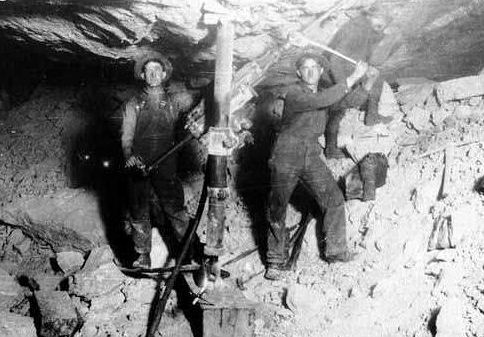
Treadwell mners at work. Stopes do not look like cathedrals but
floor is rubble strewn. How could stopes like these be called ‘cathedrals’?
13) The drifts (stopes) were cathedrals more than 100 feet high on thin pillars. Not enough pillars according
to one source..
14) Noise of the stamping machines was so loud that the firing of cannon could not be heard
15) This was Tlinget tribal land and several of the miners were Tlingets. Apparently
they could not understand why these new people from 17 countries valued gold so much.
16) The stamping machines only recovered 50% of the gold. The rest of the gold
was separated from pyrite using chemical process. Arsenic was a dangerous by product
that was difficult to conceal…led to many cancers of internal organs.
17) Waste rock from the mine made 80 acres of beach along Douglas Island
18) 26 million tons of rock were crushed in the life of the mine (40 years)
19) $70 million worth of gold was produced
20) A raging fire on Oct. 10, 1926 consumed what was left of the Treadwell surface
buildings.
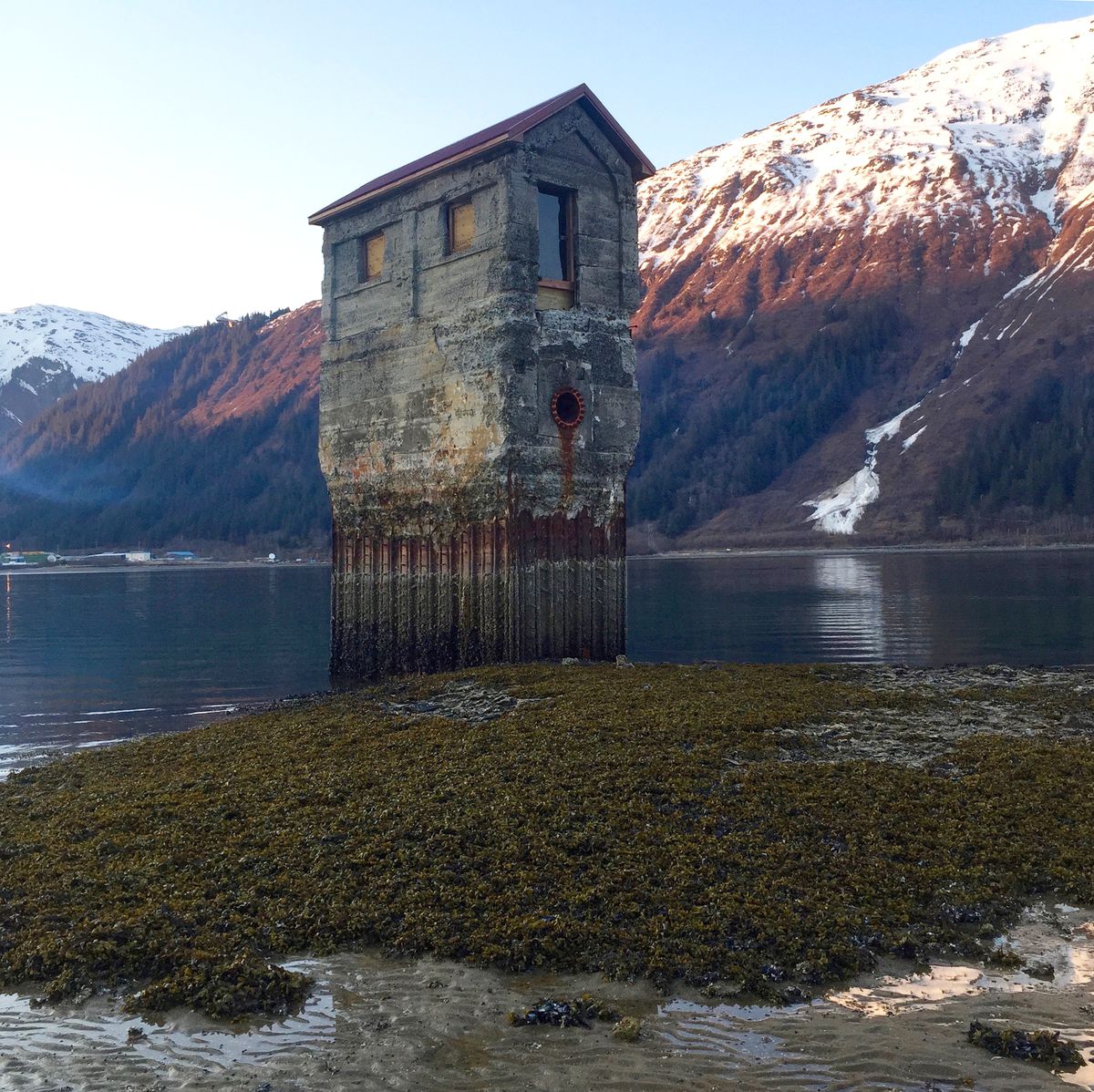
21) The water tower is the only obvious surviving structure.
22) Employees were well treated…swimming pool, dining hall, fair income, writing room, etc.
etc. etc. So much to say … so little time to say it.
THE salt water tower remains as a gravestone of the Treadwell Gold Mine…recently roofed by the local historical society
LIVINGSTON WERNECKE
“Mine geologist Livingston Wenecke rushed to the site, inched his way out on the tram trestle that was precariously strung over the hole, and shone a light down into the widening cauldron. He watched a mass of mud and water accumulate and then slide away with a deep rumble. As the muck was gulped down, the lower regions underground belched a blast of air that had the musty odor of the deep reaches of the mine.”
Livingston Wernecke’s name seemed to jump at me from the description of the Treadwell Disaster. He had crawled across the gaping
hole after soil, rubble, buildings had tumbled into the shaft and disappeared. His name is unusual. This had to be the same man who built the silver mine
called Wernecke’s Camp halfway up Keno Hill in the early 1920’s. Just a few years after the Treadwell disaster. And it is the same man.
Seemed to me that my Yukon experience was coming full circle now…59 years after the event. All the pieces began make sense.
Without the Treadwell disaster it is doubtful that Wernecke would have arrived in Mayo Landing, Yukon Territory, Canada, with a lot of equipment no longer needed
at Treadwell. Mining carts, tracks, skilled labour, investment capital, 98 horses, and his ‘boys’ (a father like term he applied to his miners). Livingston Wernecke is a
hard man to describe. He will be the subject of a coming Episode.
Livingston brought was a man of few words…also he had strict moral code… He would look after his ‘boys’ with the same care the owners of
Treadwell looked after their miners before and after the disaster.
All 1,000 of the Treadwell men except one were found
new jobs in other mines. And the one? Well, now there is a mystery man that needs a novel … non fiction.
(* a challenge to readers. Can you suggest reasons why a man would want to disappear…a married
man with children? )
alan skeoch
Feb. 2021
STRANGE STOPES AT TREADWELL: A MYSTERY
I am not a mining engineer, not a geologist, not a geophysicist, not an engineer. Nor have I devoted
hours my time to uncover the reason for the collapse of the Treadwell Mine. But I have questions…
curious thoughts.
As i read about the disaster I noted this odd comment. “The stopes deep down in the mine
were cathedrals hundreds of feet high.” I thought that must be a misprint. I have never
heard of a stope that high. Too bloody dangerous. it must be a mistake. Then another
source said the miners worked from the bottom up. They chiselled and blasted rock
from the ceiling…and the walls..a good deal of it gold bearing ore. (i.e.one ounce of gold in every
8.5 tons of ore. In the process there was lots of waste rock that was strewn
on the floor of the stope. So the floor got higher and higher as the miners chipped
more and more from the ceiling. Hence the stopes deep beneath Douglas Island
were huge rooms filled with waste rock which got higher and higher as the miners
kept chipping at the ceiling. Does this make sense? Not to me.
Surely these huge rubble filled stopes were weak. (If true.)
Another comment mentioned the pillars. The pillars in the stopes were not
thick enough to hold up the incredible weight of rock and ore more than 2,000
feet above. Why would pillars be thin? Because the miner managers wanted to get
as much ore as possible out of the mine. Could this be possible as a reason
for mine collapse. Do mines pull pillars?
Surely the thin pillars weakened the mine. (If true_)
(This reminded me of work we did deep down in Can Met Uranium mine, Elliott Lake, Ontario,
in 1960. When the mine was abandoned the miners had been instructed to “pull the pillars” to get
as much high grade Uranium as they could. The pillars left behind could
not take the weight and the roof of some stopes collapsed. If pillars are pulled
a mine could never be reopened. Right? I remember the sound of a stope
collapsing and wondered why the hell we were down there…four men in
a collapsing mine. But I loved the danger…shots of adrenalin.)
These are questions in my mind. Based on some short remarks in
the Treadmill story. Persons wiser than me might
offer explanations.
POST SCRIPT: THE TREADWELL MINE
| (MY comments just touch the surface…here are more details) |
The Treadwell gold mine was on the south side of Douglas Island, .5-mile (0.80 km) east of downtown Douglas and southeast of downtown Juneau, owned and operated by John Treadwell. Composed of four sub-sites, Treadwell was in its time the largest hard rock gold mine in the world, employing over 2,000 people. Between 1881 and 1922, over 3 million troy ounces of gold were extracted. Not much remains today except for a few crumbling buildings and a “glory hole”. Although John Treadwell had twelve years of experience in both placer and lode mines, he was a carpenter and builder by trade who had come to Alaska prior to the Klondike Gold Rush.
Beginnings
In 1880, prospectors Joseph ‘Joe’ Juneau and Richard Harris discovered gold in Silver Bow Basin. This brought waves of prospectors to the region, including John Treadwell, whose first move was to purchase a lode claim on Douglas Island from Pierre Joseph Erussard de Ville. Treadwell also formed a partnership in September, 1881 with Erussard de Ville, D.P. Mitchell and Dave Martin under the name of The San Francisco Company. For unknown reasons he later backed out of this, and in early December 1881 he devoted his attention solely to the Douglas Island property. He then went on to buy two claims neighboring his property from D. W. Clark. Treadwell extracted twenty two samples from his three claims which he sent to San Francisco, California for a mill test, yielding encouraging results.
On December 27, 1881, Treadwell organized the Alaska Mill & Mining Company and began operations at the Treadwell Dike. Shortly after this, five men from California bought over $10,000 worth of stock in the business. These men were James Freeborn ( 1828 – June 21, 1894 ), San Francisco banker and mining magnate John Douglas Fry (July 1, 1819 – February 3, 1901 ), Horace Lewis Hill (1840 – November 6, 1912 ), Howard Hill Shinn ( born April 4, 1857 ) and E. M. With these men funding him, Treadwell began running a tunnel and discovered that much of the vein he was mining was not on his property. Because word of his strike had not yet gotten out he was able to buy many of the adjoining claims for very little money, after which he returned to San Francisco to secure more backing for a much larger mill. His financial benefactors agreed to invest more and the major mining operation had begun.
In 1889, Treadwell sold his stake in the company for $1.5 million and returned to California.
Operation
At the height of the operation there were five mills with over 960 stamps in continuous operation, closing down only on Christmas and Independence Day. These mills were fed by four mines known as the Treadwell, 700-Foot, Mexican and Ready Bullion. At this time the mine employed over 2,000 people and was the largest hard rock mine in the world. The gold was 55% free milling and 45% embedded in pyrite, which was extracted using chlorination, smelting, and cyanidation. Power to the complex was supplied by a coal-fired power plant (later switching to oil and two hydroelectric dams).
Some of the shafts extended as much as 2,400 feet (730 m) below the surface.
Decline
The mine was still yielding gold in 1917 when the Treadwell, 700-Foot and Mexican mines (excavated to a depth of more than 500 feet (150 m) below sea level under Gastineau Channel) suddenly began leaking and were evacuated. Hours later the mines collapsed. At the climax, sprays of water were sent up to 200 feet (61 m) in the air from the mine entrances. The only casualties were a dozen horses and one mule; local lore has it that one man unaccounted for used the opportunity to head for parts unknown.
Evidence of instability had been noticed around 1909, but there was no indication of impending disaster until 1913, when major geological shifts occurred. Reinforcements were constructed but were ineffective. The last shaft was worked in a limited fashion until 1922.
Today
The site eventually became the property of Alaska Electric Light & Power, which has since deeded a portion to the city of Juneau with the stipulation that it be maintained as a historic site. Under the management of the Treadwell Historic Preservation & Restoration Society there are recreation trails with markers identifying various locations. Another portion of the property is leased to a zip line operator.
Directly above the cave-in site is a concrete pad where the Alaska Department of Transportation and Public Facilities places a 105mm howitzer, which is fired across Gastineau Channel at a shoulder of Mount Roberts to break up avalanches before they get so big as to pose a danger to Thane Road and residences there.
Printed
- Hard Rock Gold by David & Brenda Stone, Vanguard Press, 1987
- History of the Mines & Miners in the Juneau Gold Belt by Earl Redman, 1988
- The Birdman of Treadwell: Diary of a Treadwell Gold Miner by Edwin Warren with Barry Kibler (ISBN 9781425960643)
- I Remember Treadwell by Charlotte L. Mahafly, Accra Print, 1983