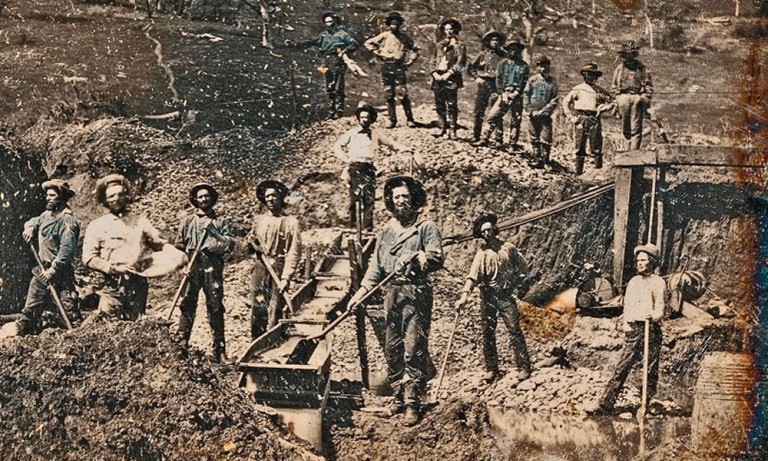
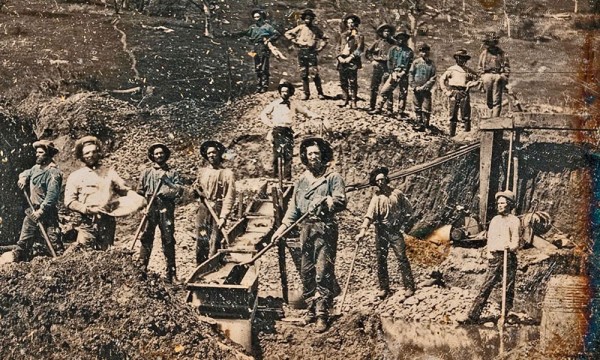
A favorite method used in unloading a useless claim or mine was called, “salting.” The seller would take ore from a productive mine and carefully scatter it about his non-productive property in hopes of closing a sale on the claim. Others might take a shotgun, load the charge with gold dust and blast the walls of the shaft, impregnating them with particles of gold. Gold was malleable and would imbed itself into the rock, giving the worthless claim a highly mineralized façade.
The game of buying and selling a worthless mine could conceivably become a matter of who could outwit whom. The seller might impregnate the walls with gold but the wise buyer might ask to have the walls blasted to see what was inside the rock. Trying to stay one step ahead, the seller could install gold into the headsticks of his dynamite and when the charge went off, the interior would be salted. To counter this, the buyer could insist they use the dynamite sticks he’d brought along for just such an occasion.
The smart buyer also brought along his own geologist. Not surprisingly, many times an entire community would plot against the buyer since the economic stability of a region might hinge on the successful sale.
Bichloride of Gold, or a chemical liquid, was used for medicinal purposes such as alcoholism and kidney ailments. When taken internally it will pass through the body, exiting the body with high assay value. A seller bent on cleverly salting his mine could load himself on the substance and salt any crack, crevice as nature moved him.
Note re EPISODE 254 ROCK FELL ON THE MOON
The story written by Alicia Priest shortly before she died in 2013 has so many twists and turns that at present i cannot complete my Episode. Lots of attempts but nothing is just right. The story I sent was generally joyful…Thing One and Thing Two. A family.
Life did not go so smoothly after the family was suddenly uprooted and left the cosy mining town of Elsa. Gerry was a big time thief…or was he?
Alicia Priest captures so much that I fear I cannot do justice to her work.
Dan Bowyer even bought the book because I am so slow in finishing my story about the Priest family….high grade ore theft, family plunged into poverty, tensions, steady decline of Gerald…then some money comes from startling source but the money is soon lost in legal fees, etc. Not many laughs. Maybe best lease the story when the family was full of joy. We will see.
There is also a very chilling side story about Helen’s mother who fled across Eastern Europe with the Red Army not far behind. the story of a German Mennonite family uprooted from the Ukraine many times. Including the horror of the 1932-1933 mass starvation triggered by Stalin which resulted in bodies of starved Kulaks in the sweet and side roads. Awful. Not sure I can complete the story.
Long ago, about 1963 I read a book titled Documents of The Expulsion which covered the subject in all its horrifying detail. Maybe best not told. Helen’s mother got out while thousands and thousands did not. She never talked about the escape in any detail except to say “I did what was necessary to survive.”
Canadians have never faced the kind of hatred that spread like a cancer through Eastern Europe in the 1940’s. Many of those survivors came to Canada in the post war years. Some even worked in the Yukon mines.
alan skeoch Feb. 2021
EPISODE 257 MGNFICENT ELM TREE…LONE SURVIVOR OF DUTCH ELM DISEASE
alan skeoch
Feb. 2021
This wonderful elm tree may not be the only survivor of Dutch Elm disease but it is the only one
I know. And it remains stately, huge, and very much alive on the fifth line of Erin Township,
Wellington County, Ontario. Very close to our farm so we see it several times a day.
Why did it survive? There must be a genitive reason for at one time elms were common.
Always aristocratic among the maples. Haughty trees.
Today there are whole generations of young people who have never seen a stately elm.
Remember how they dominated and made our city streets so inviting. And remember
the devastation as they died by the thousands…and the hum of those chain saws.
My cousin Eleanor’s husband John Calder made the interior panels of his stone house from those
devastated elm trees. Spoliated Elm he called the planks. When put through his saw mill the dead
elm logs revealed a fungus among the wood fibres. Quite pretty although sad.
Compare ‘my elm’ to the elms currently being raised. Not nearly as stately. Why is
that? I have been told that Canadian arborists have been searching for survivors
of Dutch Elm Disease for decades so this big one may not be alone. We had two or
three generations of elms survive the initial devastation. Hope was strong. Not
lucky though. The last of ours was cut into firewood last fall. It had been standing
dead along the fifth line sideroad. Dangerous for Andrew to get underneath with
his chain saw. But also dangerous lest it fall suddenly on a car…or a deer…or a turkey
…a coyote…or one of us.
Gone Gone Gone. But this beauty remains.
( As if a hairy mammoth is surviving on some
deserted Arctic Island. Some did. But they did not survive human predation.)
alan skeoch
Feb. 2021
post script
Cultivars of the elm are flourishing but somehow they do not look as stately. Why is that?
Elm as a future urban tree: is it possible?
Author: Henrik Sjöman & Andrew Hirons
08/01/2021
Last Updated: 08/01/2021
The Plantsman’s Choice
Dr Henrik Sjöman and Dr Andrew Hirons
The high tolerance of many elms to challenging urban conditions, combined with their ease of establishment, meant that they were widely appreciated across Europe and North America until their near-complete demise as a result of Dutch elm disease (DED). Today, as we seek long-term sustainable tree species for our towns and cities, there is a great desire to make the elm part of our urban treescape once again.
In Europe and North America, the elm (Ulmus spp.) was historically one of the most common urban trees until the end of the 20th century. Parts of Amsterdam in the Netherlands had over 70% elm along their streets and in their parks. Cities such as Malmö in Sweden were also proud of their majestic elms. It seems that in the eyes of some policy makers there was no reason to break a winning concept: all other trees were worse in comparison; it had to be elm on elm. However, these cities experienced the catastrophic effects of over-reliance on one type of plant material as the DED epidemic struck. Such widespread mortality of such a profoundly dominant tree was a bitter blow to many towns and cities. The effects of these losses can still be observed today.
Therefore, proposing elm once again as a city tree may seem unthinkable, but thanks to the hard work of tree breeders, it is now a realistic prospect. We know that many Asian species of elm are resistant to the serious type of DED, which has led them to be used in extensive hybridization work to produce DED-resistant trees. Many of these selected cultivars are of North American origin, including two that we have a substantial experience of now: the so-called Resista® elms, ‘New Horizon’ and ‘Rebona’. In order to succeed with them, however, you must know their background, so that you can more easily understand their capacity for growing in urban environments, as well as the care they may require.
Both cultivars are American hybrids from the University of Wisconsin and both have the Siberian elm (Ulmus pumila) and Japanese elm (Ulmus davidiana var. japonica) as their parents. It’s important to note that the characteristics of Siberian elm are such that its genes might be considered something of a mixed blessing.
In fact, some of what is said about the Siberian elm would not be polite to put into print. Suffice to say that some consider its weed-like growth, which results in an untamed, wild crown perched atop a stick, makes it one of the worse trees you can grow. However, the advantage of the species is its outstanding tolerance for hot and dry conditions, attributes that have served it well in its native regions around the edges of the Gobi Desert in northern China. So, having Siberian elm as a parent in these cultivars means that you get trees that are tolerant to the most challenging of urban environments and that quickly establish and grow fast. On the other hand, you also get trees with a rather messy crown structure, which is particularly difficult to manage at a young age when branching can be very dense and irregular. This means that it is wise to buy larger plant material (trunk size at least 25–30cm circumference at 1m) where the nursery has already done the difficult and extensive work of building an even and attractive crown structure.
Ulmus ‘New Horizon’.
Ulmus ‘New Horizon’.
Ulmus ‘New Horizon’
Early-mature trees of the cultivar develop with an oval crown, 10–12m high and 4m wide, but over time they can become significantly wider, usually with a continuous single trunk and a dense but fairly evenly distributed branch structure. The dimensions of the mature tree are listed by German nurseries as 25m × 10m. The cultivar enjoys heat and is a really good inner-city tree; its wind resistance also makes it a good tree for planting adjacent to highways. The autumn colour is not spectacular though. The variety has been around for 25 years in European cultivation and in the USA for another 10–15 years and is considered completely resistant to DED.
Ulmus ‘Rebona’.
Ulmus ‘Rebona’
This cultivar is similar to ‘New Horizon’ but has a stronger tendency to develop a consistent single trunk with a more even crown density. The leaves are also slightly larger in ‘Rebona’ compared to ‘New Horizon’. Trees of the cultivar are very fast growing and initially develop a narrow pyramidal growth pattern, 10–15m high and about 4m wide, while older trees become significantly wider. Here, too, German data describe final sizes of 25m × 10m. ‘Rebona’ is also heat tolerant, wind resistant and it has proven to be resistant to flooding. The cultivar is somewhat newer and thus has not been tested as long as ‘New Horizon’, but it has shown remarkable tolerance for inner-city environments.

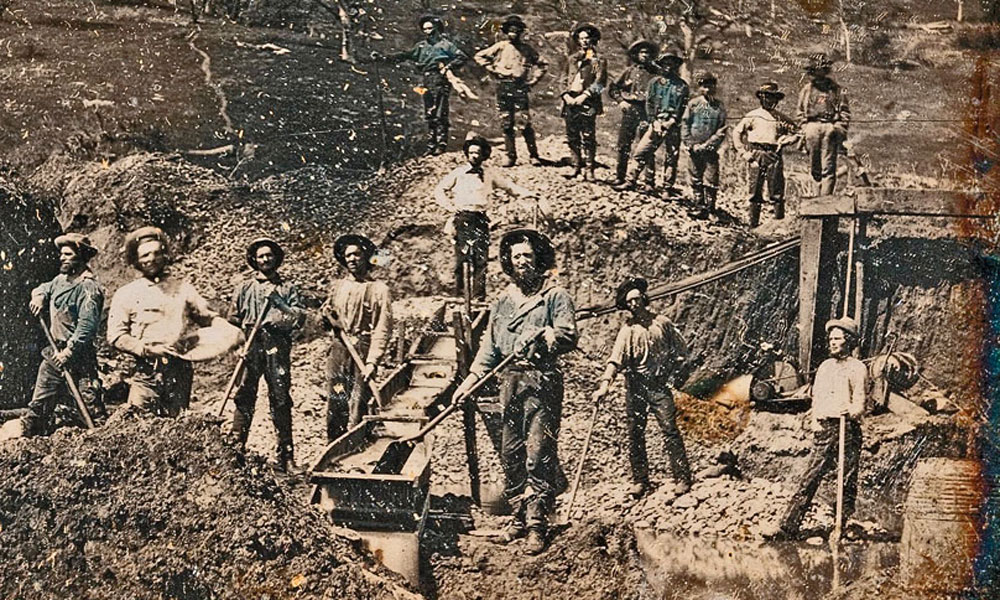 s22658.pcdn.co/wp-content/uploads/2017/01/Daguerreotype-California-Gold-Rush-mining-scene-photographed-by-Robert-Vance-circa-1850-300×180.jpg 300w, s22658.pcdn.co/wp-content/uploads/2017/01/Daguerreotype-California-Gold-Rush-mining-scene-photographed-by-Robert-Vance-circa-1850-768×461.jpg 768w, s22658.pcdn.co/wp-content/uploads/2017/01/Daguerreotype-California-Gold-Rush-mining-scene-photographed-by-Robert-Vance-circa-1850-600×360.jpg 600w” sizes=”(max-width: 1000px) 100vw, 1000px” style=”box-sizing: inherit; margin: 0px auto; padding: 0px; border: 0px; font-family: inherit; font-size: inherit; font-style: inherit; font-variant-caps: inherit; font-stretch: inherit; line-height: inherit; vertical-align: middle; max-width: 100%; display: block;” apple-inline=”yes” id=”7C43BEFF-1A94-4CCA-99AB-5B44B2342366″ src=”https://alanskeoch.ca/wp-content/uploads/2021/02/Daguerreotype-California-Gold-Rush-mining-scene-photographed-by-Robert-Vance-circa-1850.jpeg”>


 08/01/2021