Year: 2021

  • EPISODE 281 MASSEY FERGUSON DEMOLITION : PATENT RECORD FOUND UNDER WATER…LOOKED LIKE BLOCK OF WOOD

    EPISODE 281   MASSEY FERGUSON DEMOLITION:   PATENT RECORD FOUND UNDER WATER…LOOKED  LIKE A BLOCK OF STONE

    alan  skeoch
    March 2021


    Often things are not what they seem.   A friend pointed  that out to me once in a short
    comment.  “I don’t like him, I think I should get to know him better,”  that comment stuck  
    in my brain.  Too easy to form snap judgments.  Get to know him better.  Get to know it better.
    That simple idea Cannot be dislodged.   Of course my friend  applied it to human relations but the
    comment is  bigger than that.  Often things are not what they seem to be.  Look closer.

    As  the Massey Ferguson plant was tumbling around me I came upon a very unusual thing in
    the basement of a building about to be pushed down.  The basement had flooded but there
    were stepping stones here and there as the water was only two or three inches deep.  So
    exploration was possible.   Getting wet feet was to be avoided since most of my days
    were spent teaching history at Parkdale Collegiate.  Sloshing around in school was not something
    I wished to do.

    Those stepping stones allowed me to hop scotch my way through this doomed cellar 
    to a distant stairway exit. I  was glad those stones were there.  Lots of them.
    Big blocks of wood or stone.  Spongy!  Must be wood.

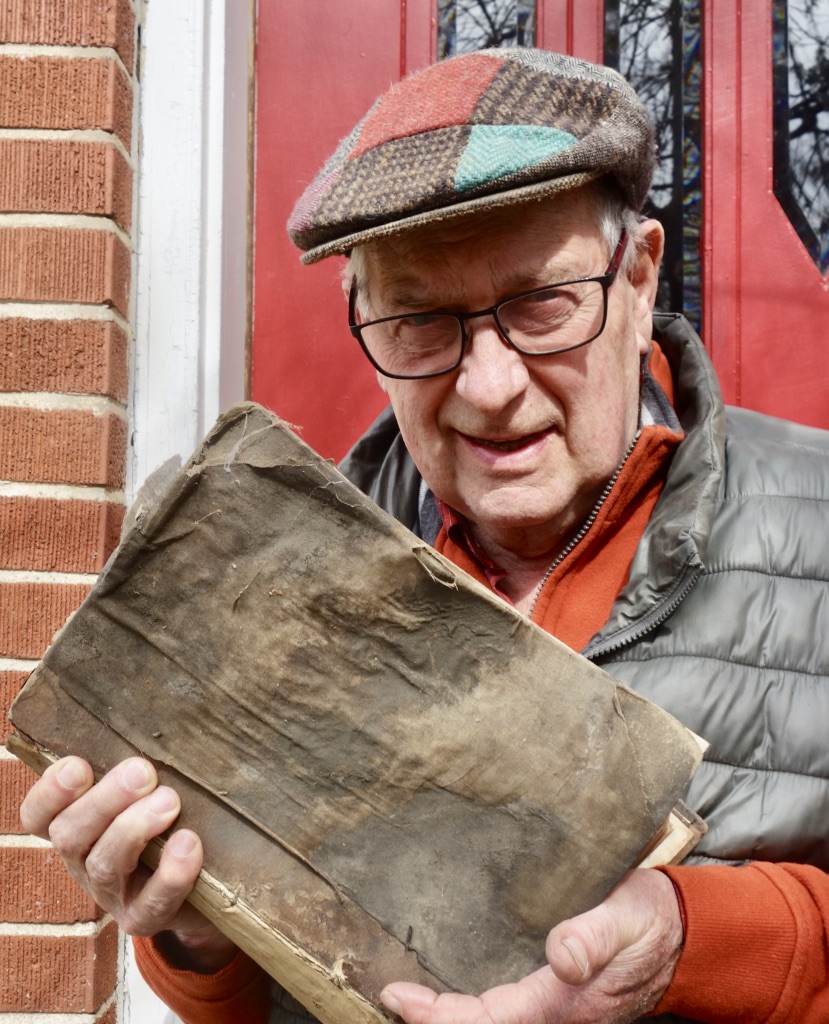
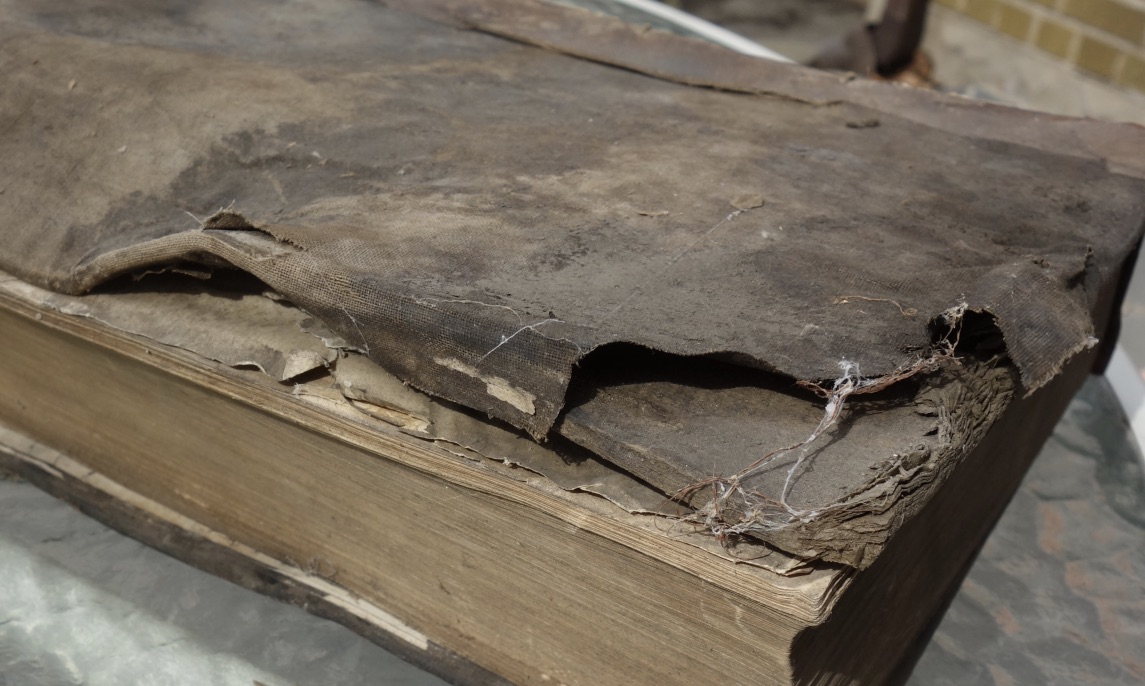
    What the hell are these things.  Mushy.  So I stopped and pulled one of the blocks
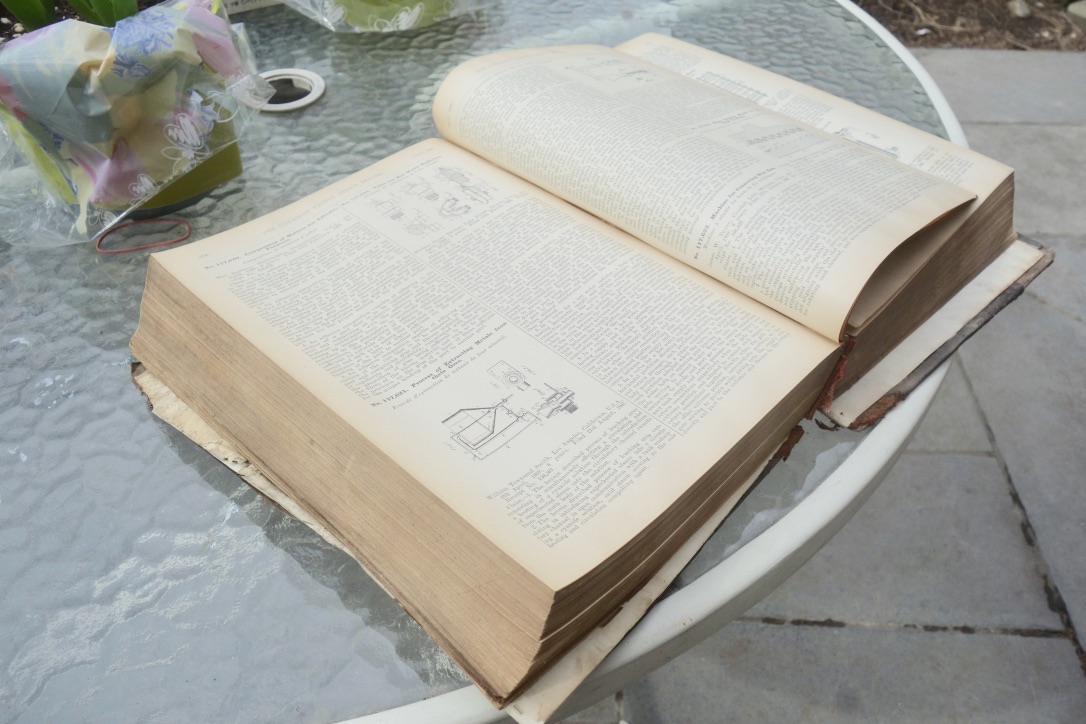
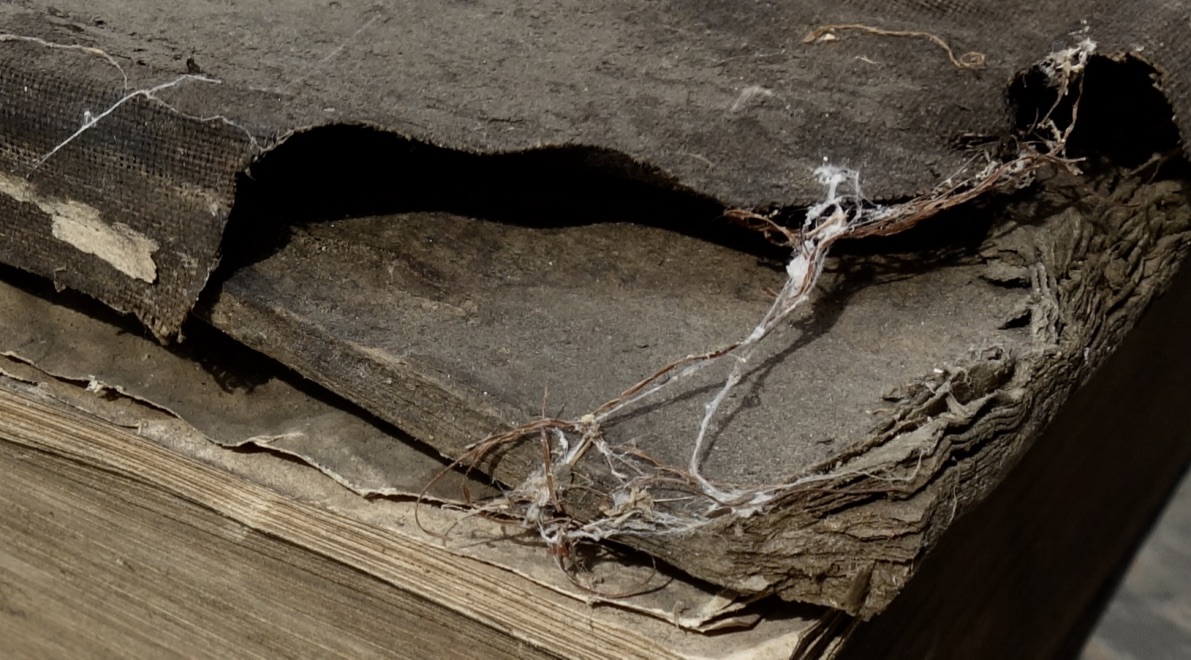
    out of the black water.   Lo and behold….it was a book.  A book so large that it
    was thought to be a construction block…perhaps stone at first…then wood…and
    finally paper.


    In the darkness  I was unsure about the soggy thing.  Was  it important or some convoluted
    legal tome of no interest at sll.    So I carried the sodden mass up the stairwell to the daylight.
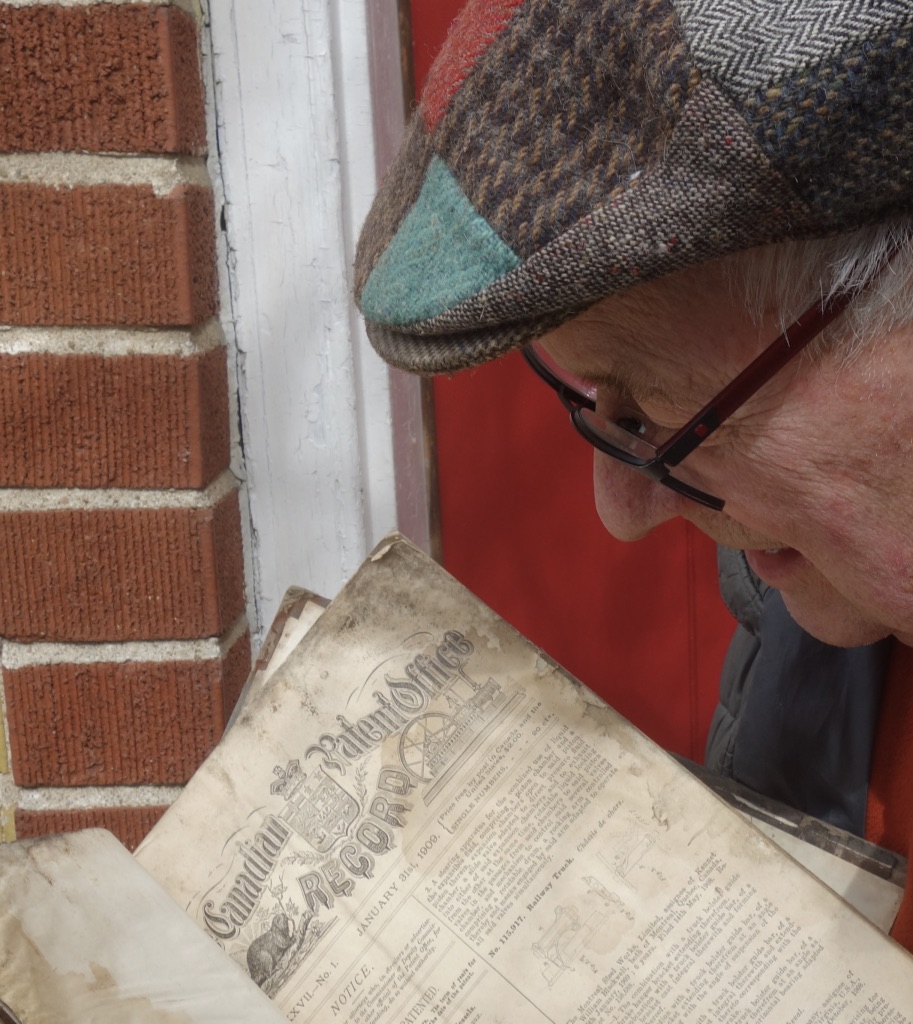
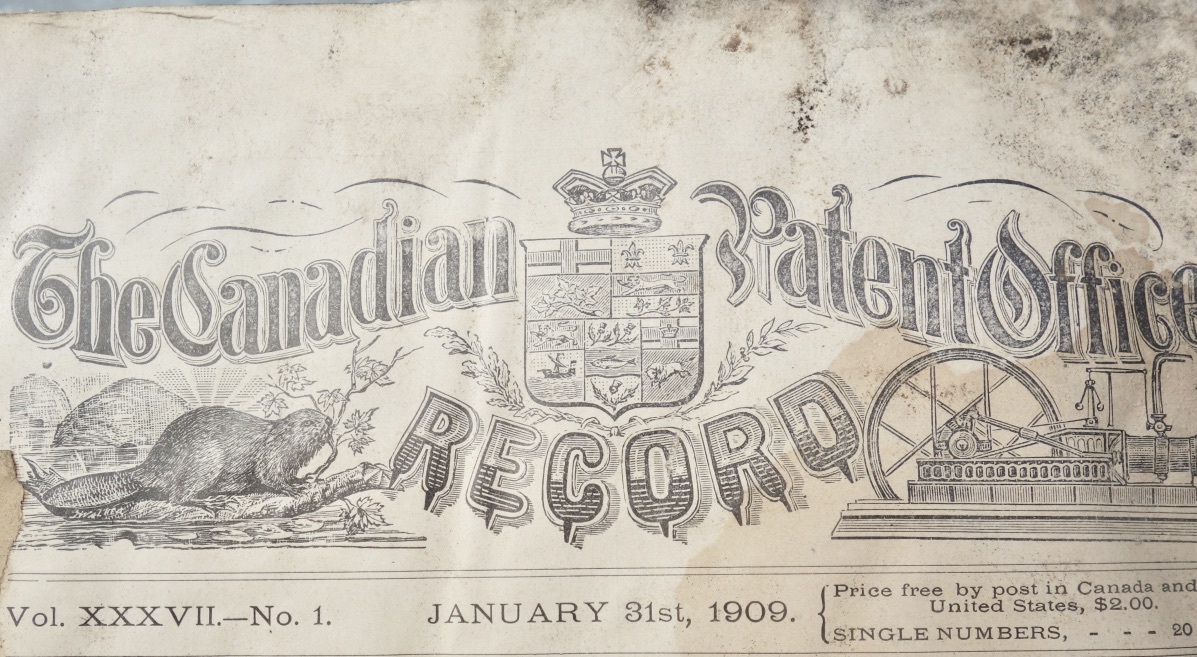
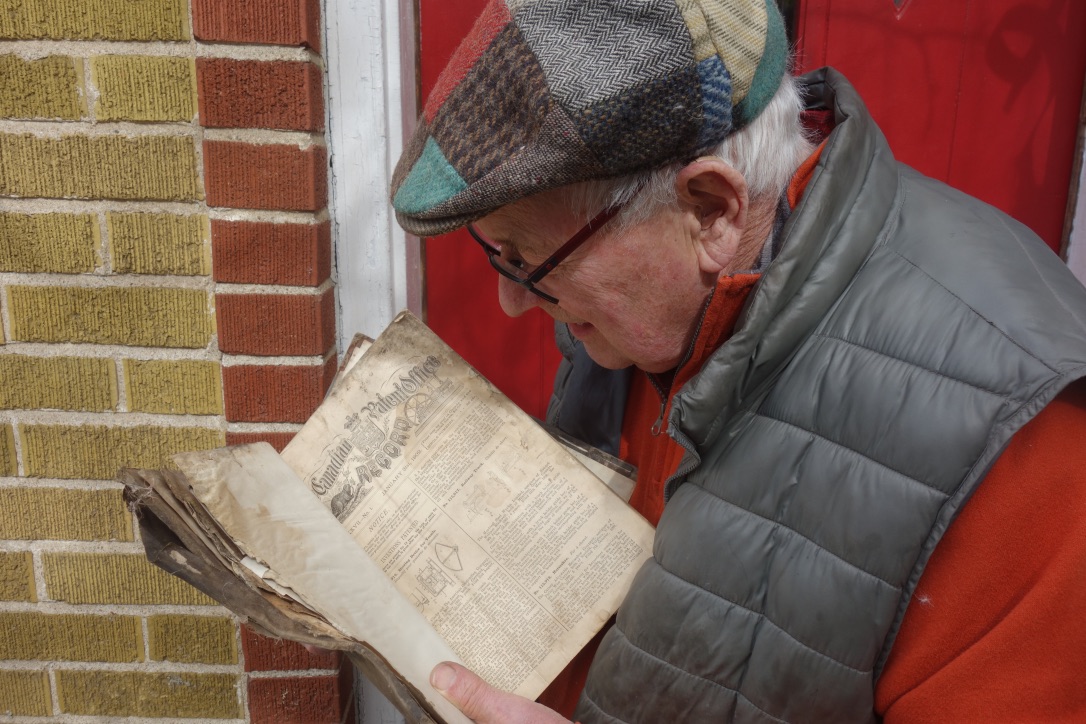
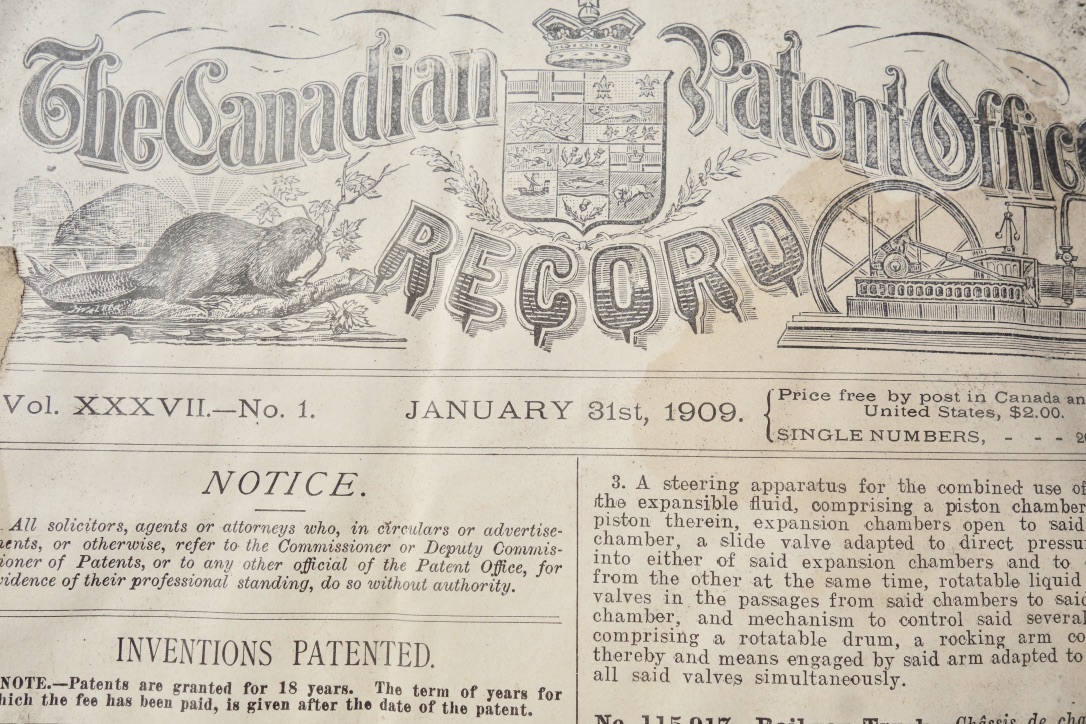
    Flipped it open.  Looked at the heading.   I was holding  The Canadian Patent Record volume
    dated January 31, 1909.   The Patent Record! Incredible.  The blocks in the sodden  basement
    were these records.   

    How did this happened.  it seemed to me that Patent records were important documents.  Yet
    in the haste to vacate these books had been discarded and used as stepping stones
    by others who had explored this basement before me.  Time was critical. The excavators
    with their huge mouths were chewing at the building already.   My rescue was limited to
    this one book.

    What to do with it was never resolved.   I still have the book.  Is it important to an
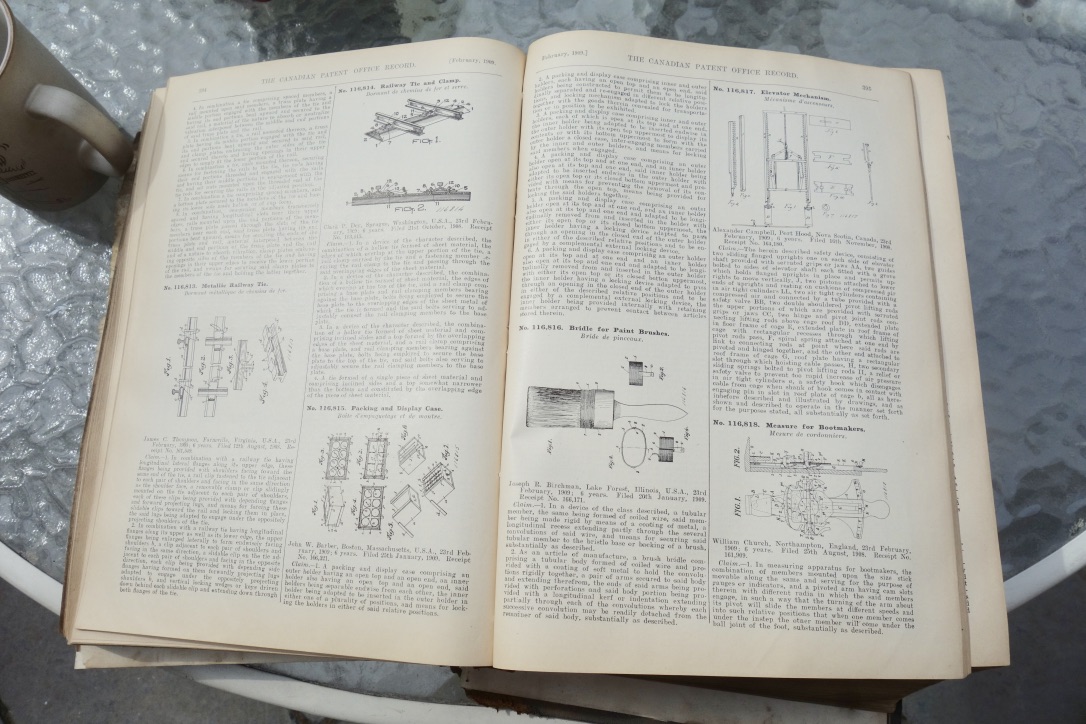
    archivist?   The last page number is 1,625.   Huge .  And there is an index.   Wonder if
    I can find any  Massey patents?   

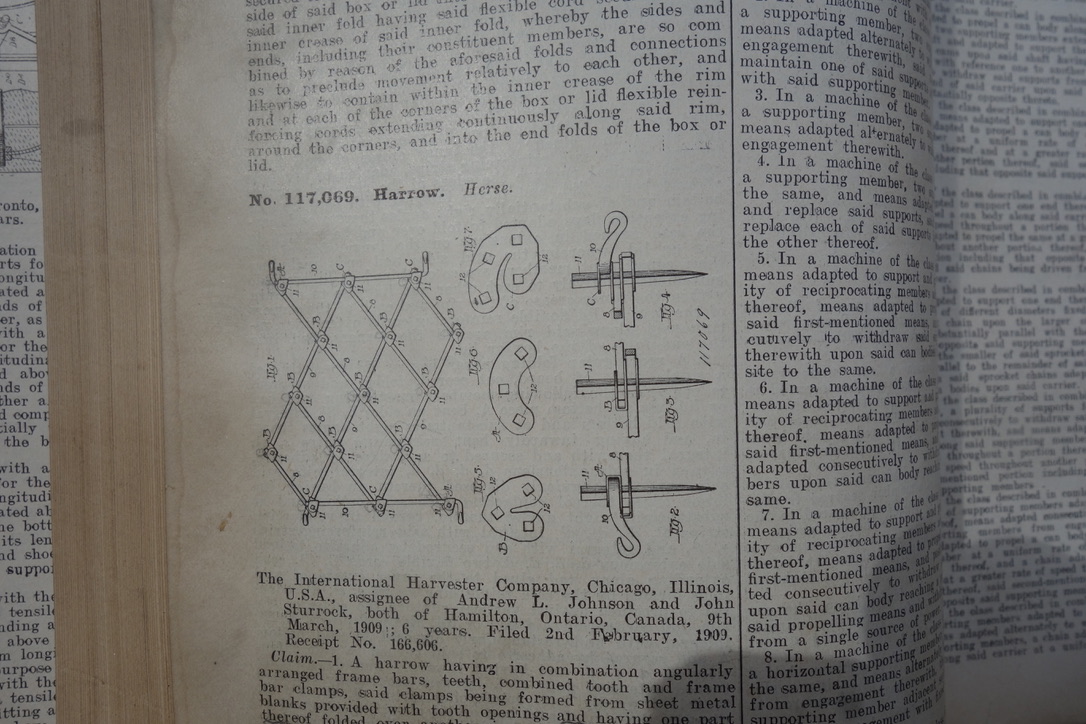
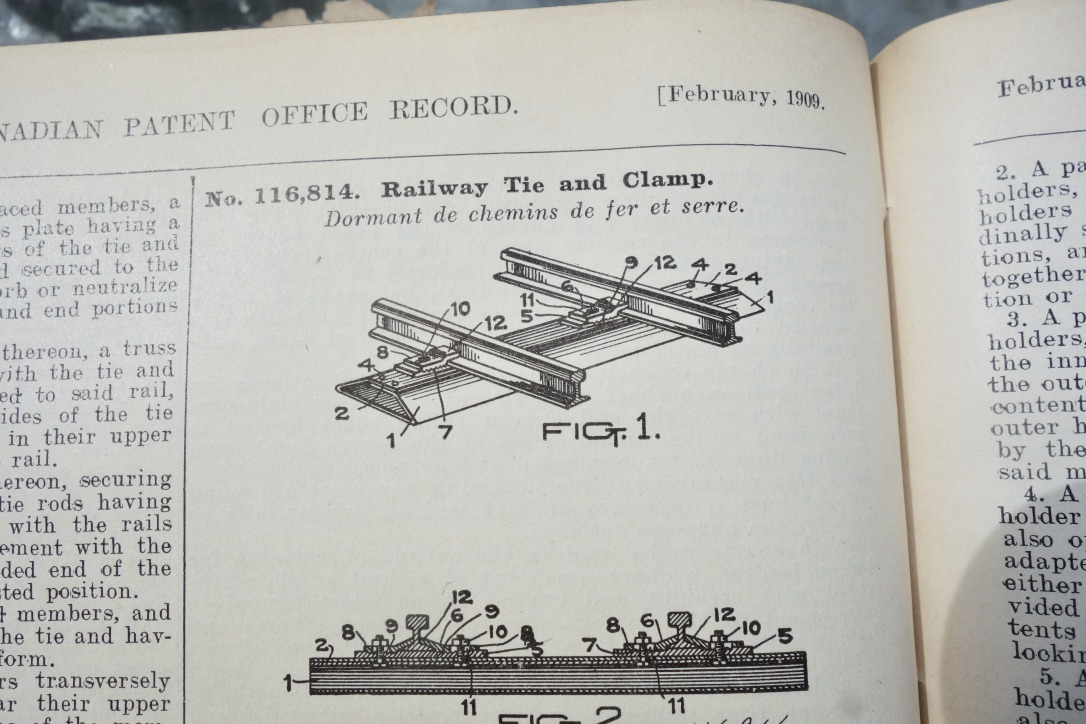
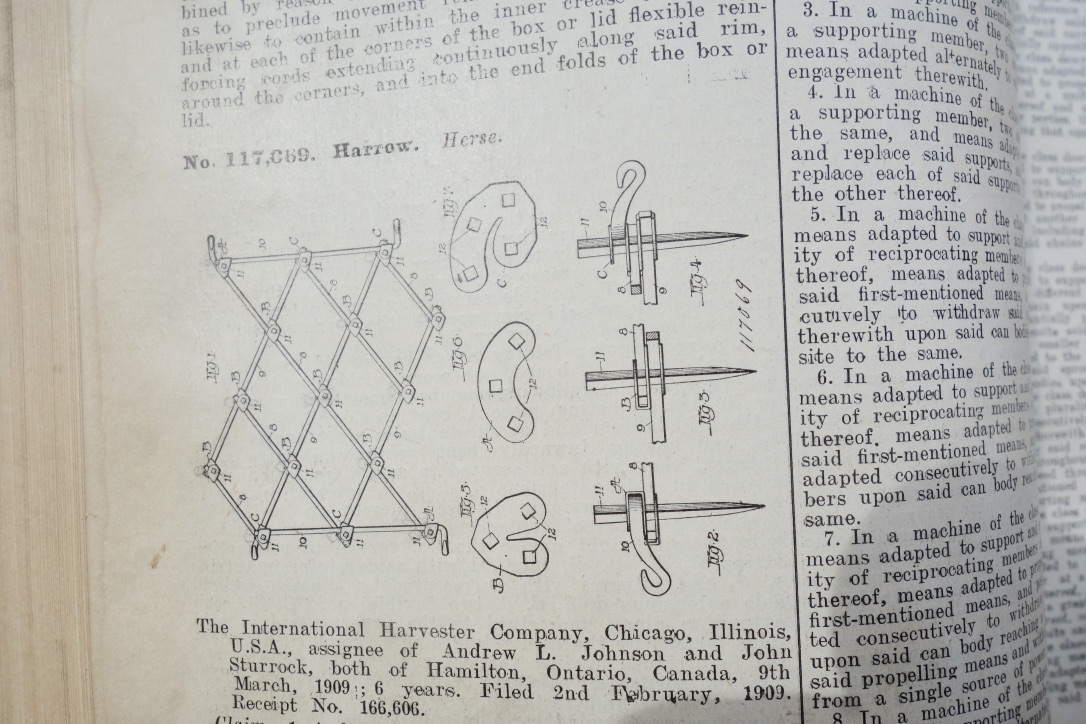
    In a random search…i.e. opening the book in a totally random fashion I notice patents
    for railway track ‘fish plates’ and wooden handles for paint brushes.   Patents for
    railway spikes and a farm implement to remove Twitch grass  from hay fields.


    THIS book is big….1,615 pages of patented inventions…perhaps  more than
    5,000  inventions many of which pertained to the improvement of agricultural
    machines.   All neatly indesied by subject and also by  inventor.


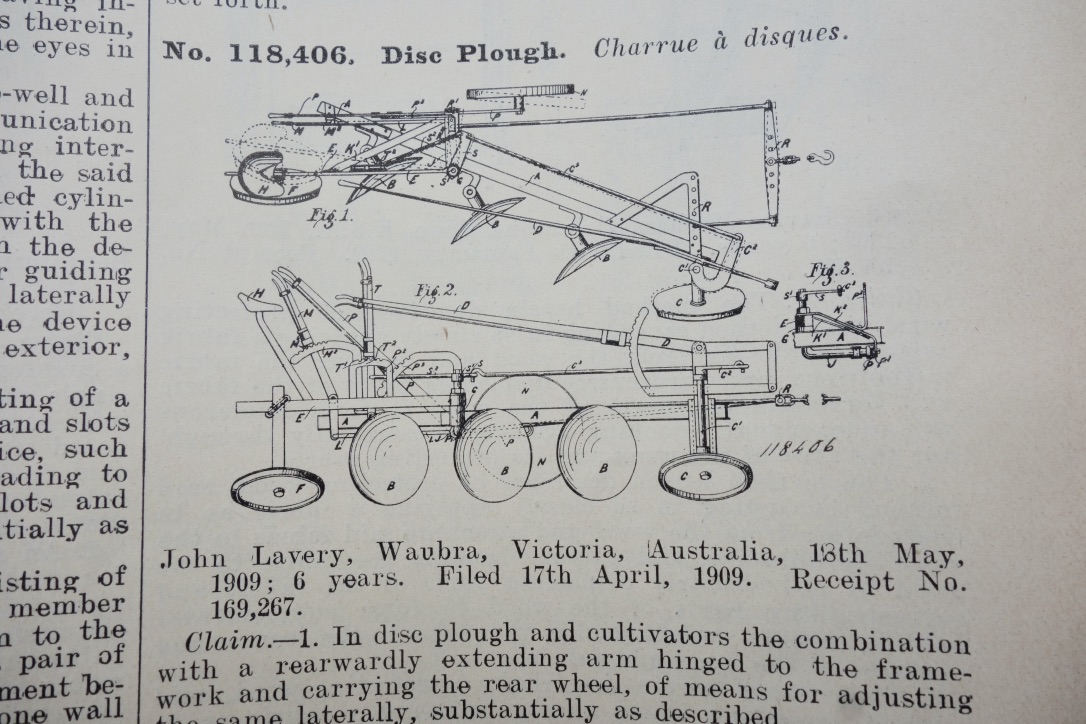
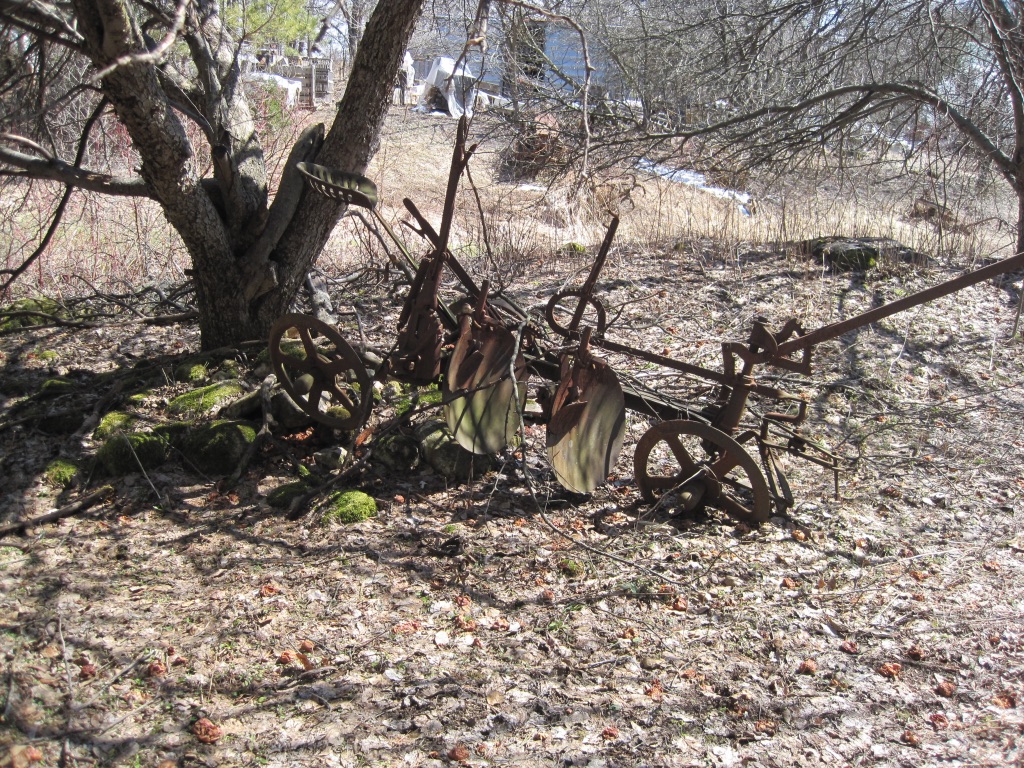
    PATENTED  DISC PLOW

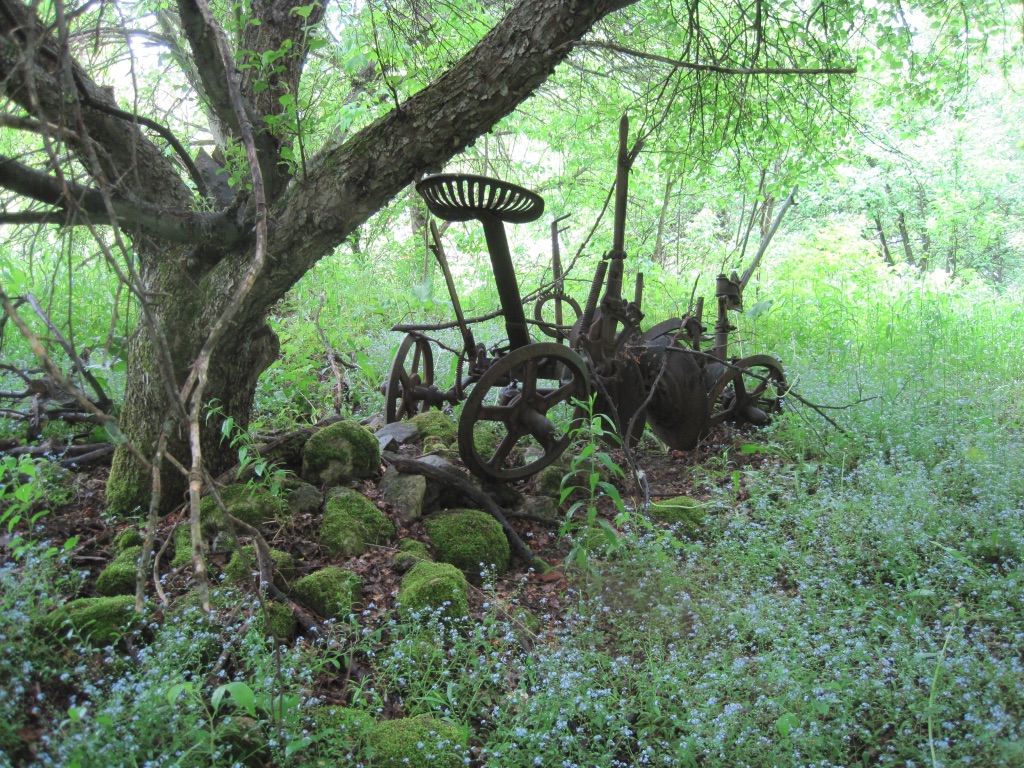
    Again my random search proved interesting.  Here was  a patent for a Disc Plow.  I happened to purchase
    an ancient disc  plow at a farm sale a few years  ago and it rests comfortably beside a wild apple tree where
    once my grandfather’s barn once stood.   Patent Number 118,406 by John Lavery,  WAUBRA, Victoria, Australia,
    on May  18, 1909.  Filed April 17th, 1909.  followed by a description of the disc plow.


    TWO FURROW RIDING DISC PLOW RESTING BENEATH A WILD APPLE TREE ON OUR FARM.  
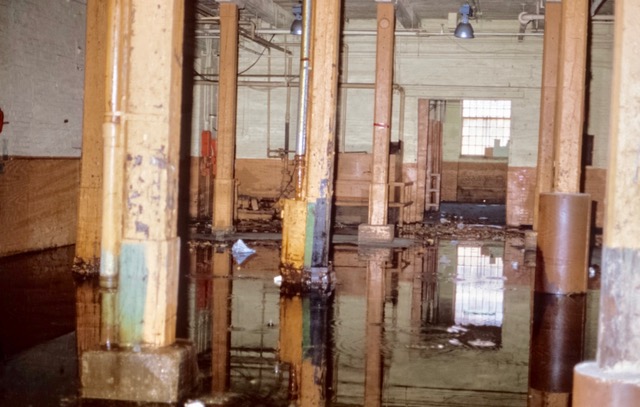


    Water was seeping into the buildings…never very deep but deep enough
    to destroy any paper records left behind and strewn about.  It was only pure chance
    that I stepped  on the Patent Record book in the darkness.  The daylight picture
    above was taken in another building.
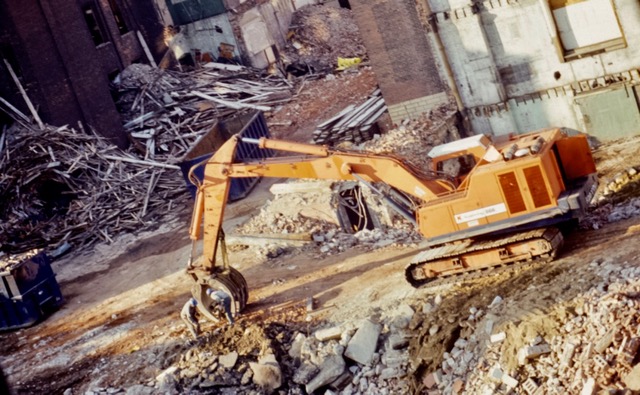

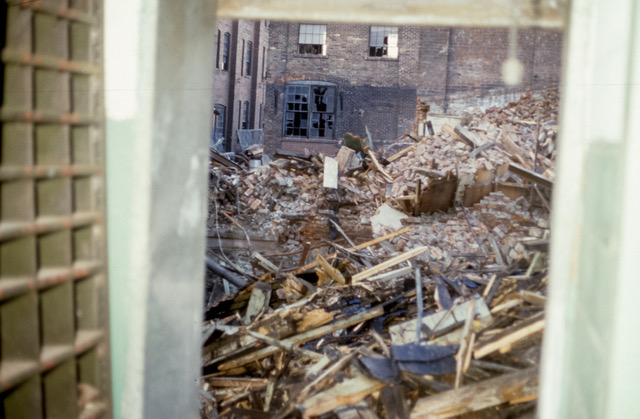
     Eventually the scene around the Massey plant looked
    like Berlin in 1945 after a bombing raid.


    SUGGESTION CORNER:  WHAT SHOLD  I DO WITH THIS ARTIFACT?

    IF I put the book back in our cellar where it is at least dry then it will just disappear.  Is it important enough for
    an archivist?    There are so many patents  described that it would take a month or more for some brave soul
    to put the book in digital form.  Just think of a book with 1,615 pages illustrating as many as 3 or 4 patients per
    page.   4 x 1,615 = 6,700 patents, likely more.

    Maybe i am the only person that gives  a sweet damn about the book.  And  all I did was randomly turn
    a few of the 1,615 pages.   Likely doomed.


    END EPISODE 281     CANADIAN PATENT RECORD BOOK
  • EPISODE 280 DEMOLIITON OF MASSEY FERGUSON: RESCUING LINE SHAFT PULLEYS (KILLED AND MAIMED WORKERS)


    EPISODE 280      DEMOLITION OF MASSEY FERGUSON:   RESCUING LINE SHAFT PULLEYS

    alan skeoch
    March 2021


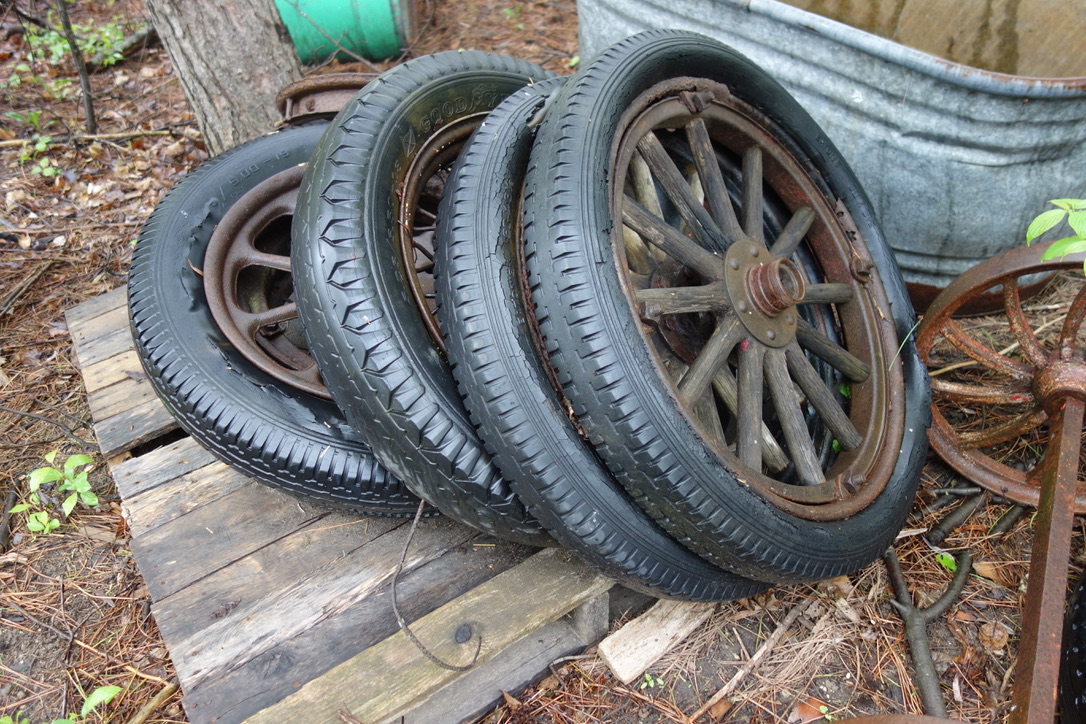
    ARNOLD ‘RED’ SKEOCH…TIRE BUILDER

    DAD MADE TIRES LIKE THESE IN 1920…LATER HE MADE THE BIG TRUCK AND TRACTOR TIRES.  PROUD OF IT.  SKILLED TRADE.

    Why was I so interested in those line shafts hat were being ripped from the ceiling of the Massey factories in 1980?
     A legitimate  question.  I ask myself the same question once 
    in a while.  Why would anyone want ro spend
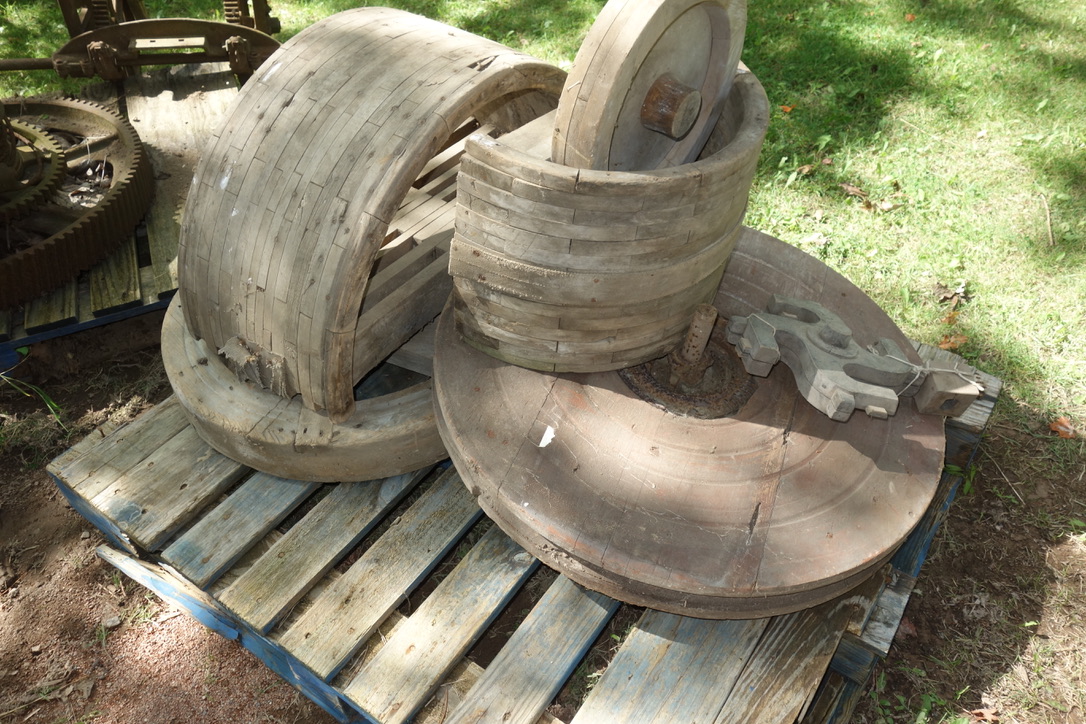
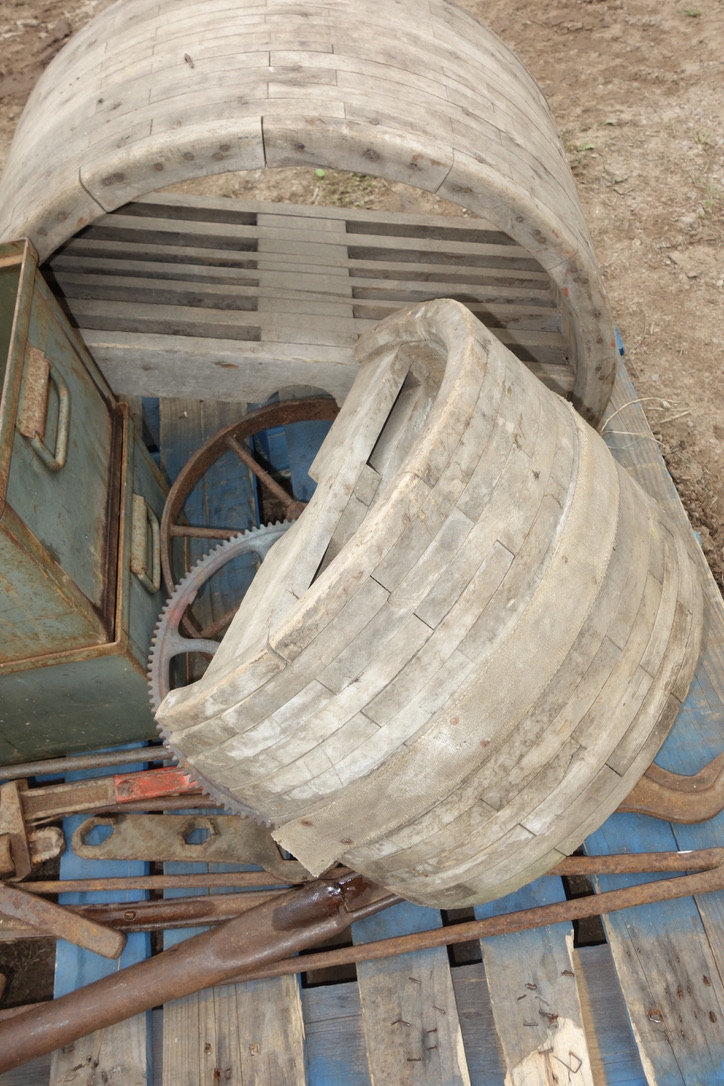
    days and weeks high on ladders unbolting ancient wooden laminated pulleys that would never be  used again.
    The answer?  My  dad was a factory worker…a tire builder.   He spent much of his working life beside the swift moving belts
    that ran from line shafts in factories  across the industrialized world.  He did not make farm machines.  He made rubber tires.
      Rubber tires made for the passenger cars of the 1920’s.   He  was a very tough
    man…a proud tire builder…member of a skilled trade. 

    Natural  rubber was needed big time.  It still is needed…both an aural and vulcanized rubber.  From the Amazon rain forest came this peculiar gum upon which great swaths
    of human society would ride.   Rubber tires,  initially solid rubber then the pneumatic tires..  The story of rubber 
    is too large for this sidebar….suffice it to say that rubber tires in the 1920’s had replaced Iron and wooden wheels on farm machines
    as well as trucks and  automobiles.   Today rubber is taken for granted…not talked about but it is worth 
    remembering that those huge four engined  jet passenger planes could not take off or land without rubber…natural rubber.

    Dad never said much about his work when we were little kids.   When asked, however, he did say
    a few things about the line shafts on which all manufacturing depended.  

    “Were those line shafts dangerous, Dad?”

    “Bloody  right they were dangerous.  Do you really want to know?”


      Around 1919,  After dad got back  to Ontario from a winter on the prairies living and bedding
    down 16 horses in a barn…no farm house, no people, jus 16 horses…after that experience…dad welcomed the switch  from a rural to
    an urban life.   The motor industry was booming.  Cars and trucks needed  pneumatic rubber tires
    so dad became a tire builder.

    “What did those factories look like, dad”

    “Our factory in Guelph was powered by belts running off a line shaft.”
    “Line shaft?”
    “A long piece of thick rounded steel rod with pulleys of various sizes bolted to the rod.”
    …and  the rod revolved via a belt looped around an electric motor…or a seam engine in early factories.  Bloody dangerous.”
    “Dangerous?”
    “I saw a young man killed on a line shaft.  It was not pretty.”
    “In order to shut a machine down there were two choices.  First
    choice was  to turn the motor off but then all machines would
    shut down because the whole line shaft would not be moving.
    Companies did not like that.”
    “So, what was the second  choice.”
    “Just shut one machine down;””
    “How?”
    “There was usually an  idling pulley right beside the drive pulley. If
    the belt could be edged over to the idling pulley then just that machine
    shut down.  Often there was a lever that could gently move the big belt
    from drive to idling.  I am not sure why the guy decided to push the
    belt by hand.  No one knew why he did that.  In an instant his arm slipped into the
    drive pulley and his body was wrenched up and around the line shaft.  By the
    time the motor was shut down he was dead  as  a doornail with some body parts
    detached.”

    Now was that story true?  Had my mind magnified the story?  Never totally sure so I looked up lineshaft accidents
    on the internet.  Seems that many workers got their body parts severed on revolving
    pulleys attached to line shafts.   Do so yourself.

    Dad did not stop there.  He had  a more chilling story about a new employee
    at Dunlop Tires Corporation … I think the Whitby plant.

    “Some guy took a short cut across the rubber rolling machine…he came
    out the other side flat as a goddamn pancake.”

    A much shorter story that may or may not be true.  I believe it.  The week dad retired
    Eric and I asked if we could visit the factory. We wanted to see how dad spent his working life.
    We got the royal treatment from the
    executives and the foreman.  Dad was busy making truck tire.  Seemed a little odd  for Eric  and I to be escorted 
    around the White plant while our father was slapping heavy belts of rubber…vulcanized rubber.. onto a
    spinning machine then carving the rubber into a tire.   Dad was always in good shape physically
    because tire building needed strong men..  He grinned at us as we passed his  work station.
    His clothing was spartan…a sleeveless T shirt and belted  work pans.  Nothing for the
    spinning machine to grab.  No jewelry.  

     If I remember correctly we also passed by the long
    rubber rolling machine.   We did not take that short cut that made pancakes our of
    rubber workers.  Dad did not want Eric  or me to become tire builders.  Why?  Take a  guess.


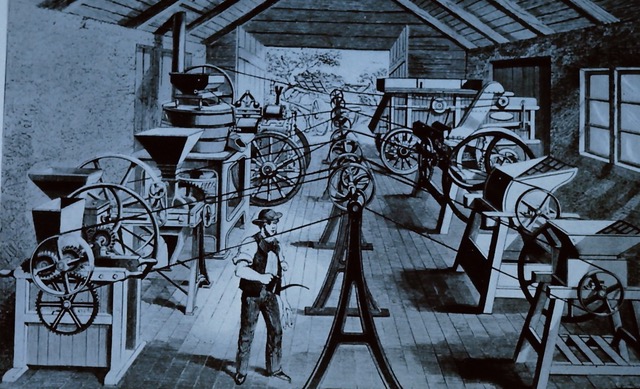
    An artist’s sketch illustrating a line shaft powering many machines


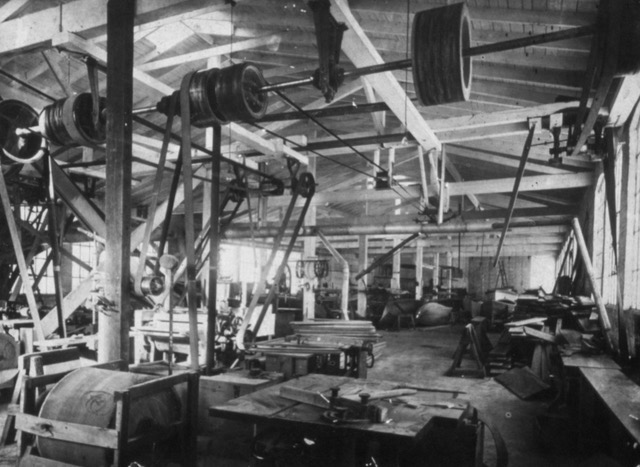
    A more complicated line shaft powering real wood working machines.


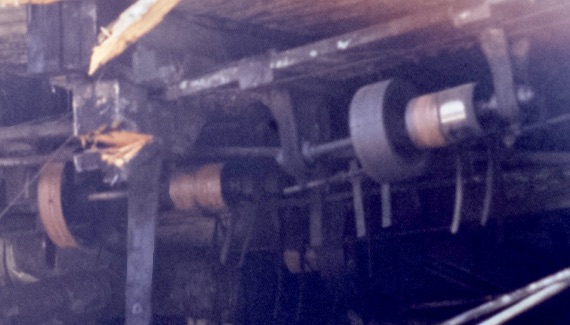
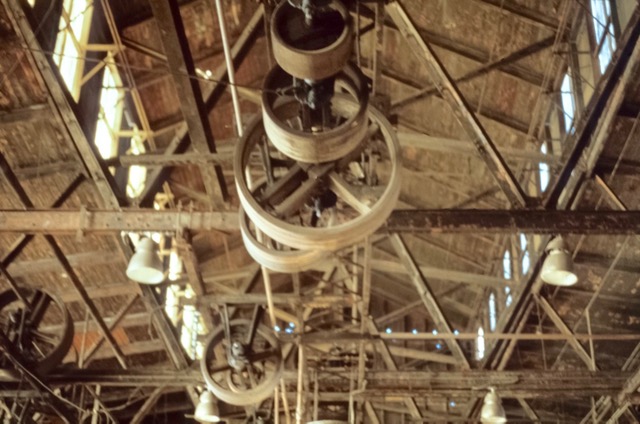
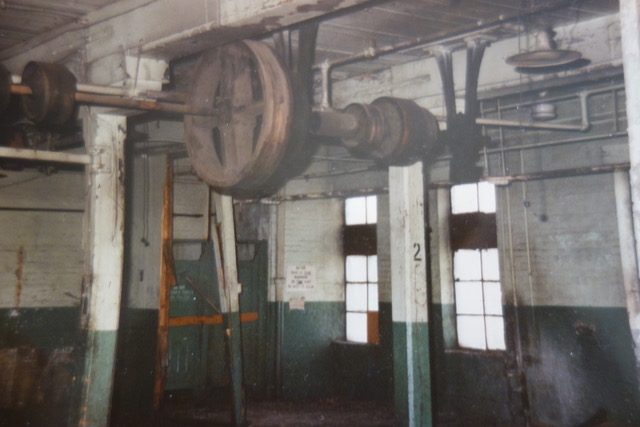
    Some line shafts  in the Massey Ferguson factory.   Awaiting rescue.   These I was able to reach using a step ladder.  Shaky job but
    I had no worries.  Superman.


    Now these beauties were another matter…they were 20 feet in the air.  Impossible to reach.  Well…not quite…!

    IN the back of my mind were the stories dad mentioned so casually about those early line
    shafts.   Wouldn’t these things be needed for horror moves?

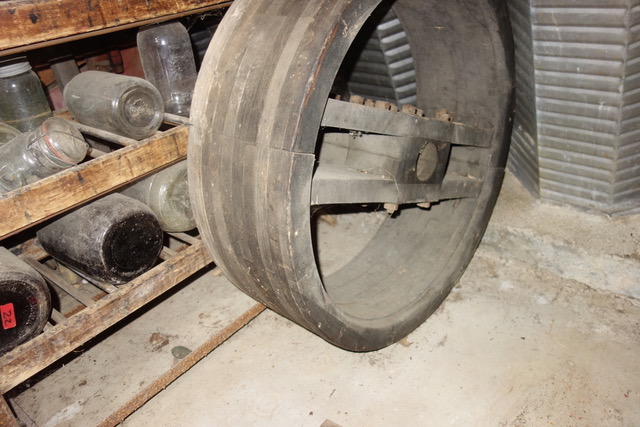
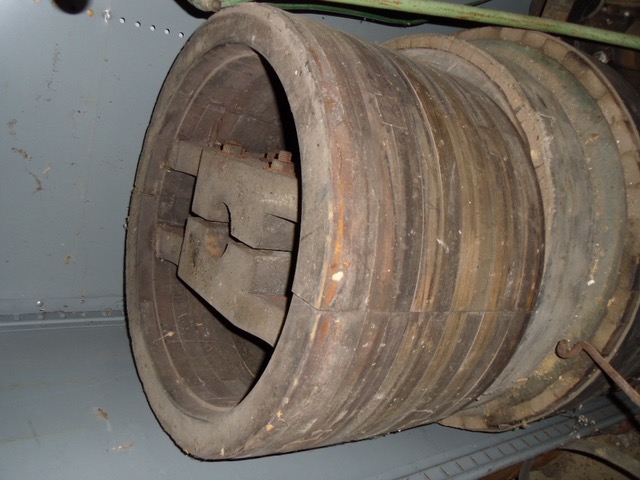
    Note the bolts.   Once removed carefully the pulleys spill into two parts which I then revolted back together.   


    Most of the time I was absolutely alone in a building that had not been touched by the wrecking ball.  The  wrecking was going on
    in other Massey buildings.  Where I worked there was no one around. Some buildings I could even drive my
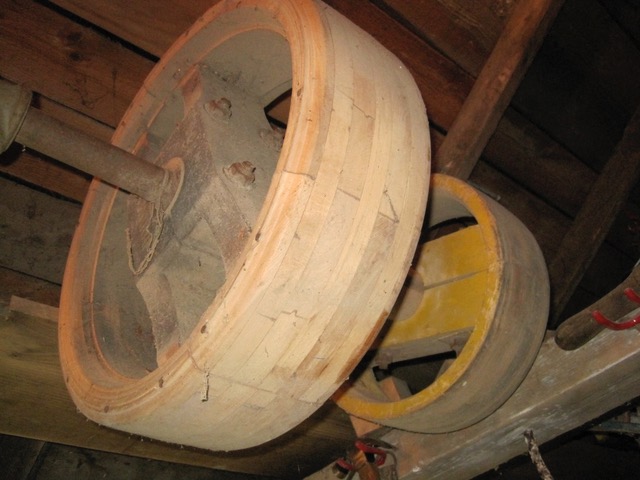
    truck into for fast loading.  Some of these pulleys were so big that even when bolts removed the two halves were a bit of a problem getting from
    the ceiling to the floor and then into the back of my truck.   Wouldn’t the big pulleys be grand  show pieces for a movie.  I felt elated by both 
    the challenge of  recovery snd the prospect of a bit of profit.

    You can get some idea of just how high the line shafts were in this factory room.  So high up as to be invisible.   Then I fount the gantry.  
    (Unsure if this is he right word…gantry)


    Yet the real beauties (if a mineshaft pulley can be  called a beauty)…yet those grand pulleys were way beyond reach.  Twenty feet up.  So I wrote them
    off.  Then by a quirk  of fate I discovered an abandoned gantry on wheels….  A set of movable stirs with a small platform at the top…on
    wheels the size of dinner plates.  So for two or three visits to the factory i was high up in the air liberating some grand pulleys.  They were oily and
    dusty…messy job…  have time to wash at school before class.


    In the end I managed to get about 30 or 40 of these pulleys.  

    Guess how  many have been used  on movies sets between 1980 snd 2020?    You got it.  None.  Not one goddamn pulley.   There was joy in the getting.
    That was good enough for me.  

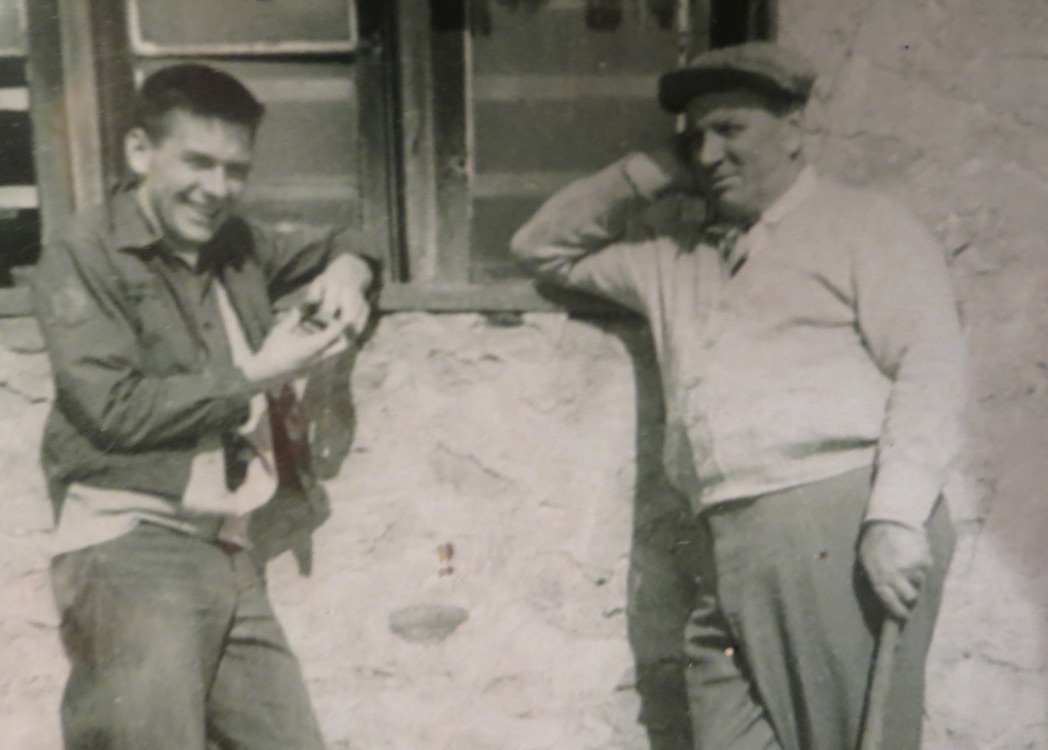
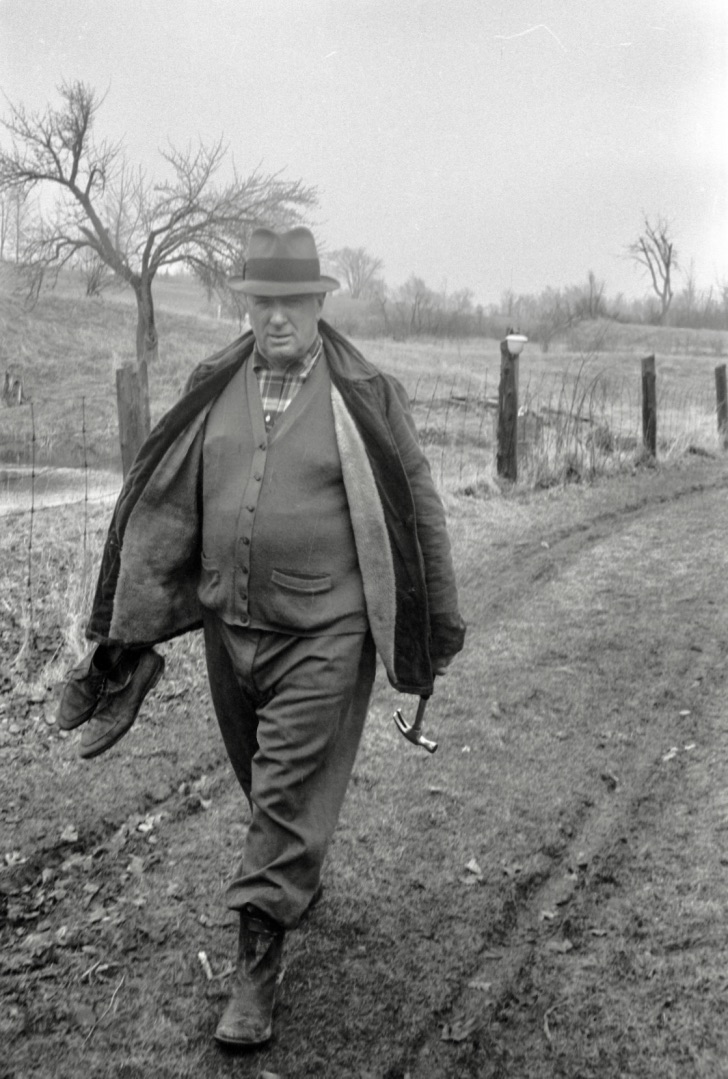
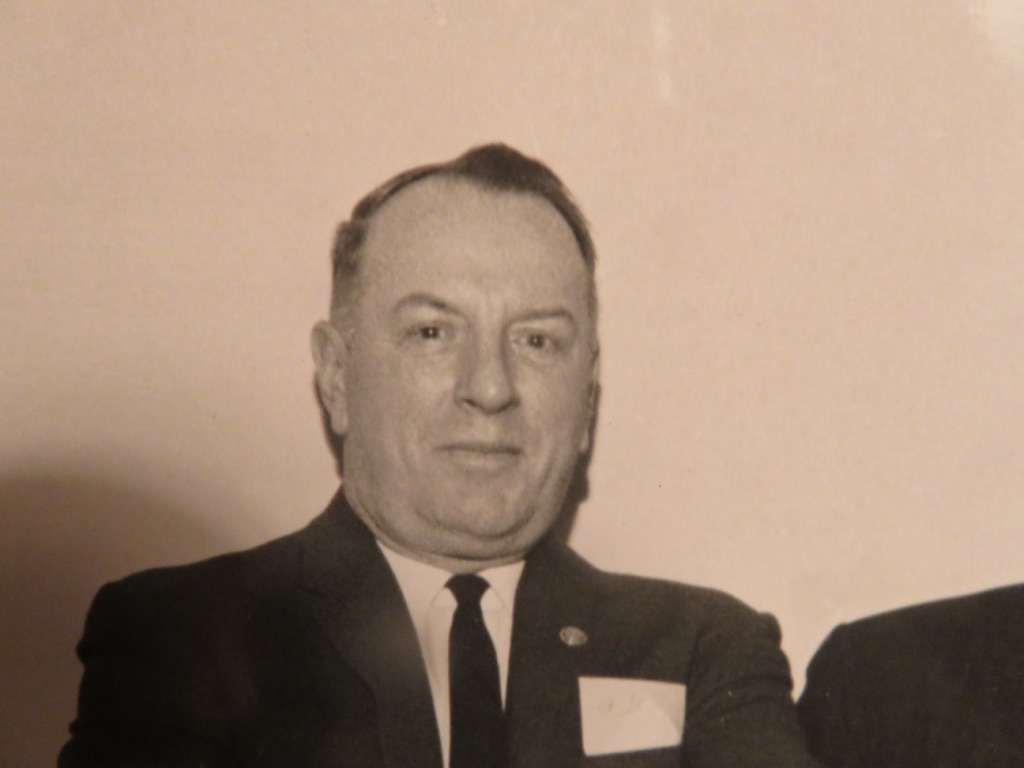
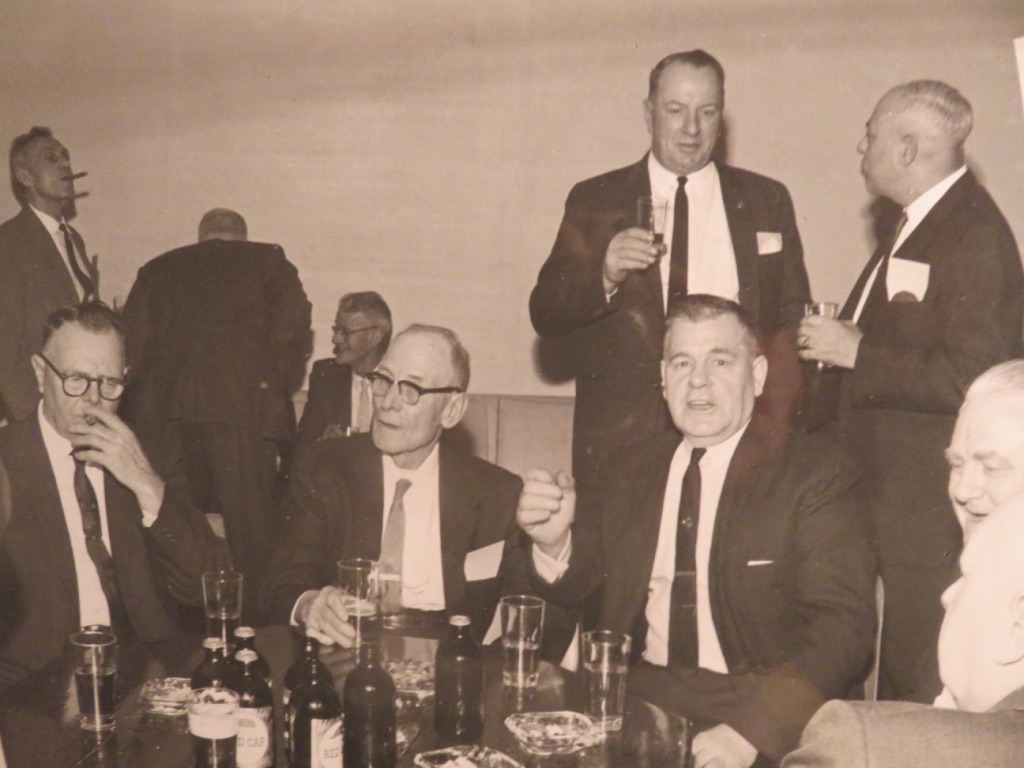
    MAY I INTRODUCE YOU TO A RUBBER TIRE BUILDER”   ARNOLD “RED” SKEOCH


    DAD   and his fellow retired rubber workers  met annually at the Royal York Hotel.

  • EPISODE 279 THE MASSEY FERGUSON DEMOLITION: AN IDEA DAWNS IN MY HEAD


    EPISODE 279    THE MASSEY FERGUSON DEMOLITION:  AND IDEA DAWNS  IN MY HEAD


    alan skeoch
    March 2021

    THE demolition of the Massey-Harris — Massey-Ferguson Toronto factory was not an easy one day
    job.  It took months.  The factory sprawled  along King Street … many old red brick buildings blackened
    by time and the soot of passing coal fired locomotives.  Most of the buildings were utilitarian in design…boxy,
    three stories high, loading ramps.  Unchanged and no doubt inefficient.  After saying all that, I loved
    them because  I felt close to the Massey family who contributed much to early Toronto after moving their tiny Newcastle factory 
    to Toronto.  Thousands of Torontonians eventually worked for the Masseys.   Their company in the late 19th
    and early 20th century was exporting farm machines all over the world.

    For a short few months in the 1980’s I even owned a Massey Harris 44 tractor.  Bought it for $500 at a  farm sale
    North west of Erin and drove it to our farm.  That was a great joy…the trip on the big red machine which was
    by 1980 long past its glory days.  A drag tractor.  No hydraulics.  As obsolete as the Dodo.  “Nice tires, must
    be a good machine…new paint…new Massey Harris  logo.”  I was fooled by appearance. The tractor had
    wheel baring problems, ignition problems which  were bad enough but the big problem was the turning 
    radius.  Our farm is small with many obstructions.  Just to turn the Massey 44 around involved forward, then
    reverse, then forward, then reverse.

    So I drove it down to Sherwood Hume’s farm auction and Sherwood nearly got me my money back.  Maybe
    lost a hundred dollars but that was not a loss because I had the joy of the overland trip to the farm
    on the summer day when first purchased.  Worth a $100 loss.


    The Massey Harris machines had  a  good market in the British empire hence
    my colonial helmet above.  They also had a good market as  far away as Russia.
    But by 1980 the market had shrunk and the machines made in Toronto struggled to 
    compete with John Deere and International Harvester.   By 1980 not much
    was being made in those Toronto factories.   

    So the wreckers were called and arrived with their wrecking tools like the one
    pictured below. Small tool.


    The teeth of this Excavator could chew the Massey factory into tiny bits of scrap’…
    bricks, beams, and line shafts.

    Line shafts?  What in hell’s half acre is a line shaft, some readers might ask?
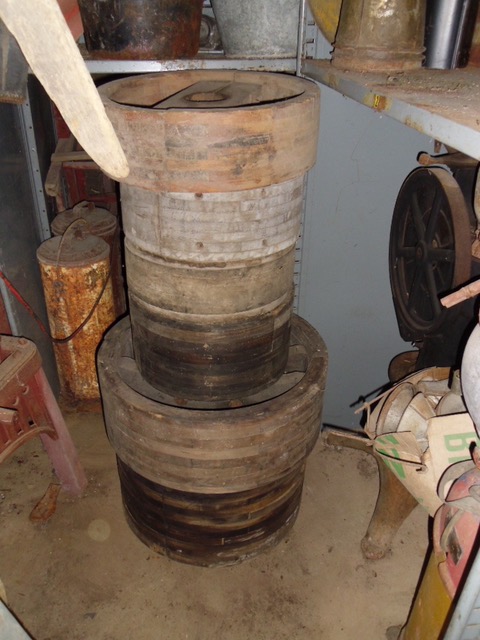
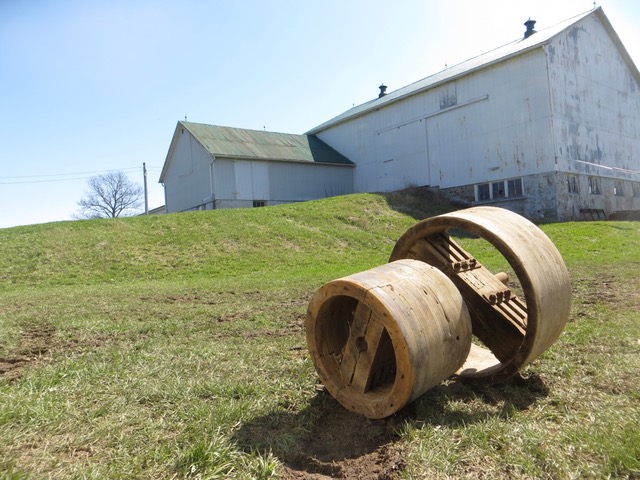
    Take a gander below.  A line shaft is a long iron cylinder with a series of pulleys
    of various sizes.  The big pulley…the drive pulley…I call it the bull wheel…was
    pictured in Episode 274.   A huge wheel that was once the pinnacle of industrial 
    technology.


    Memorize this line shaft.  It is part of my story.  It took me several weeks to have
    the courage to remove these pulleys because they were so high above the floor.

    “Do you mean, Alan, that you removed all these pulleys?”
    “Hard to believe, I know.”
    “Why would you do that…sounds  insane?”
    “Long story … which is why I am sending this Episode.” (#279)


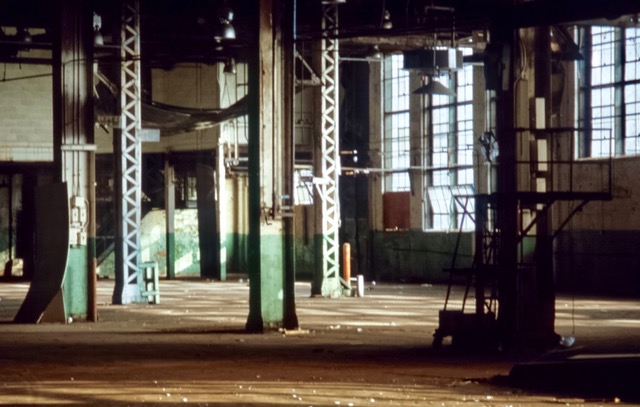
    Most of the Massey buildings featured post and beam construction.  Hundreds of
    white pine pillars painted factory green and bashed all to hell by hand carts carrying
    cast iron pieces.


    Eventually the factory building  became a jumble of mixed parentage as shown above.

    I got in the habit of dropping into the demolition site daily between 6 a.m. and 8 a.m.
    before going to my teaching job at Parkdale Collegiate nearby.  At first I just watched
    and took pictures.  The demolition crew got used to seeing me and began to accept
    me as part of the demolition project.   Nice fellows.  They could have told me to bugger off
    but did not do that.


    Then  one day a whole caravan of trucks and  trailer arrived. Painters,  carpenters,
    set dressers, actors,  directors, even a movable cafeteria.   Now why would that happen?
    The answer was  simple.  Movie makers like demolition sites for certain movies.
    Old  demolition sites are really good for the making of period movies  In this 
    case it seemed to be a special 19th century set that was  desired.


    Something clicked in my head.  Maybe the Massey factory could have another life.
    If the movie people like this stuff so much then maybe I can help them out…for
    a price.   Just suppose I start to rescue bits an pieces of 19th century technology.
    And let the movie people know what I have rescued.  Future movies may want
    me as much as a bear wants honey.

    Where should I start?

    “First thing,” said the foreman, “you must have a hard hat…not white one
    because white hats are for the big shots…and you need  steel toed boots
    then there will be no problem.”

    Then, where should I start, I thought.  The answer came quick enough.
    Start with the line shafts.  Remember what your dad said about those
    line shafts  when he first started work back in the 1920’s making pneumatic
    tires for the car industry?   Remember how a couple of guys  died
    on those line shafts.   That is  where to start.  Puts a little tension in the job.
    Danger stuff.   Like any good  story.

    NEXT EPISODE:  GETTING THE LINE SHAFT PULLEYS REMOVED

    alan skeoch
    arch 2021

    POST SCRIPT

    THINKING BACK on those days at the Massey Factory I have one regret.
    Regret?   Yes.  I should have got all the fellows and girls I worked with…the
    teachers at Parkdale C.I…should have got them down to help me with
    the line shafts.  Regret that I was so selfish keeping all the adventures to
    myself.  

    NOTE the hole in the brick wall, three stories up.  That hole and
    the window beside it will have future meaning.


    I know some of my staff members are missing here…sorry about that.
  • EPISODE 276 : NEW SERIES COMING TITLED ‘DEMOLITION – TALES TOLD FROM DEMOLITION SITES

    EPISODE 276:  NEW SERIES COMING TITLED ‘DEMOLITION’ -TALES TOLD FROM DEMOLITION SITES.’

    alan skeoch
    March 2021


    The new series  of stories is titled DEMOLITION….tales told

    from demolition sites.

    -probably 6 to 10 stories beginning with the demolition of
    the Massey Harris – Massey Ferguson site which  stretched
    along King Street West for several city blocks.  Many buildings
    to be toppled.  Seemed such a waste that i could not resist
    the temptation to save what was retrievable.  Luckily I was able
    to take care and that made penetration of the site possible.
    What was necessary?   First I got a good reddish hard helmet. Then
    some old steel toed boots.  Absolutely necessary.  Then I made
    lots of friends with the demolition crew…assured them I would
    be careful.  Got permission for everything I did.  Even though
    some of the rescue efforts may have seemed dangerous the only
    real tricky one was the rescue of the cast iron and steel iron
    working machine.  Thankfully a police car arrived on the designated
    Sunday morning making possible theextrication of the machine from the third floor
    of a factory to my truck far below.   The policeman and Bill
    Parsons helped.  Wow, Did Bill ever help.  Sadly I cannot find the machine at our farm…must
    have gone to scrap.  Too big…too heavy.

    -The Massey family were the largest employers of Torontonians
    at one time and their bright red machines were shipped around
    the world.  So the demolition was a sad affair.  

    -Efforts to dedicate the great bull wheel as a memorial to working
    class history failed as told in the first Episode 272, already told.


    THE CHALLENGE:
    -Hook a chain to that beam…wooden beam made of Southern Pitch Pine…terrific
    grain once put through John Calder’s saw mill.  Must get it out.  Hook chain to the
    trailer ball on back of my truck.  Move ahead slowly.  Watch out for spikes on the
    ground.  The rescue could be done.  Truth be told I never waded into a pile of
    twisted steel and fractured wood like this.  Way too dangerous. But I did rescue a number of those
    wood beams before they headed to a dump site.  Later some really enterprising
    person did the same thing using huge trucks.  Much had been lost by then.
    My truck was small, a panel van,
    but had the advantage of being brown and bashed up a bit.   It fitted into
    the decor of the site.

    -The presence of a movie crew at one point lit a light bulb in my head.
    ‘Al, this  stuff could be the start of a new business.’

    alan
  • EPISODE 277 STUPID IS AS STUPID DOES: HOW NOT OT LOAD A TRACTOR AND THRESHER

    EPISODE 277    STUPID IS AS STUPID DOES:  HOW NOT TO LOAD A TRACTOR AND THRESHER


    alan skeoch
    March2021

    OUR son Andrew is a good man with machines.  Too bad his father
    is not that good.  We loaded one of our  tractors and a thresher for a movie
    set.  Hired a flat bed truck…became a nightmare…one misstep and
    all could have upset with dead consequences.  There turned out to
    be an easier way for next time.

    This loading series of pictures was taken two or three years ago when my
    old W6 tractor was working spasmodically.  Now it just sits there in
    the field while the thresher is half hidden on a hill for he raccoons to
    find as a home.  

    The easier loading method is to drive the tractor into a metal bin on the ground
    chain it down…use the truck with a hook to lift everything as if it is a big bin
    full of trash.  No human need
    be in danger.