Year: 2021

  • EPISODE 319; AUSTRALIAN FIRE RECOVERY ….AND OUR SEARCH FOR THE SUNSHINE HEADER HARVESTER LONG AGO


    EPISODE 319    AUSTRALIAN fire recovery  2021… AND the search for the Sunshine Header Harvester 1990


    alan skeoch
    April 2021

    THis Episode 319 is dedicated to David Skeoch who sent a note that brought
    back memories and also made us feel relieved that some parts of Australia are
    recovering from the fires.

    UNUSUAL NAME LEADS TO AN INTERESTING TRAIL


    Two years ago for no particular reason I wondered if there was  anyone on planet
    earth with the same name as mine?   Our surname is unusual…not like Smith or Taylor or Newman…so
    I just did a little digging prompted by a strange fact that some of my emails went astray.

    Guess what?   i found two other Alan Skeoch’s…two  with my name and exact spelling of Alan.
    One was an American dentist who died.  But the other was  an Australian bush pilot … a young man.
    We communicated.   His father, David, and  I send notes back and forth regularly.  Strange world!

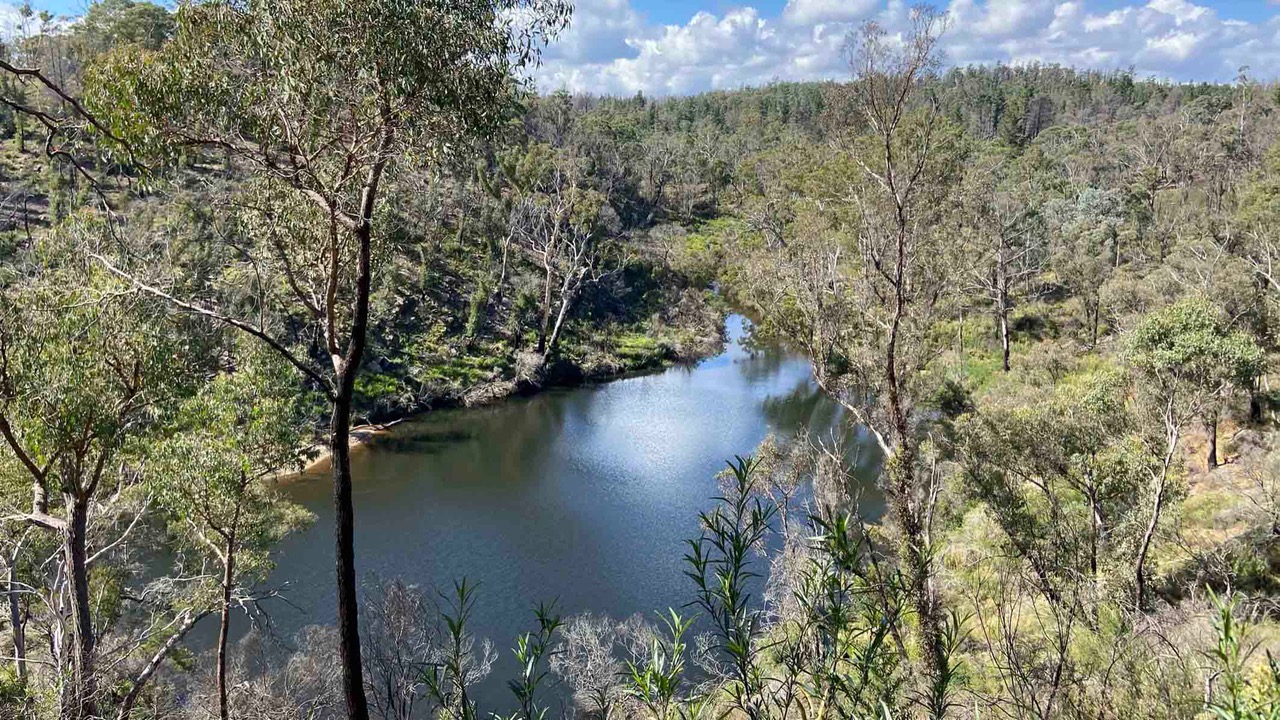
    Today David sent this picture of his farm in a  heavily wooded  part of Australia…New South Wales…
    where the fires were quite  devastating.   Recovery is on its way.  He even speaks of many platypus
    creatures rebounding.   In these days of Covid 19 when all around seems dreary and  our self-isolation
    is harder and  harder to accept,  these pictures of Australia will be uplifting.  Enlarge picture to full
    screen.  Beautiful.


    The Corang River, in which we have Macquarie Perch and lots of wildlife such as Platypus.


    Hi Alan,
    Feel free to send to whom you wish!  The location is Oallen NSW and it’s the Corang River.  Hope to see you here one day!
    Kind regards 
    David. 

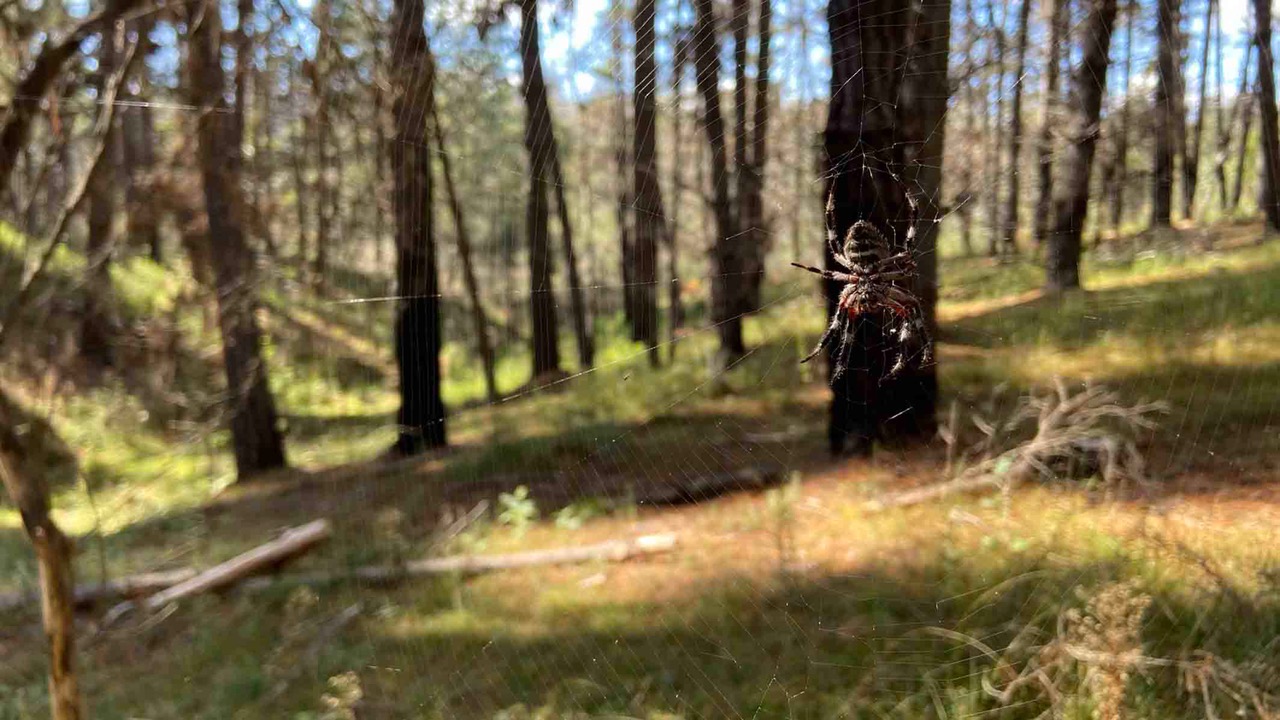
    Note the spider…How did that creature avoid death by fire?   The fires just got to the edge of David’s wilderness property.  


    OUR SEARCH FOR THE AUSTRALIAN HEADER HARVESTER, 

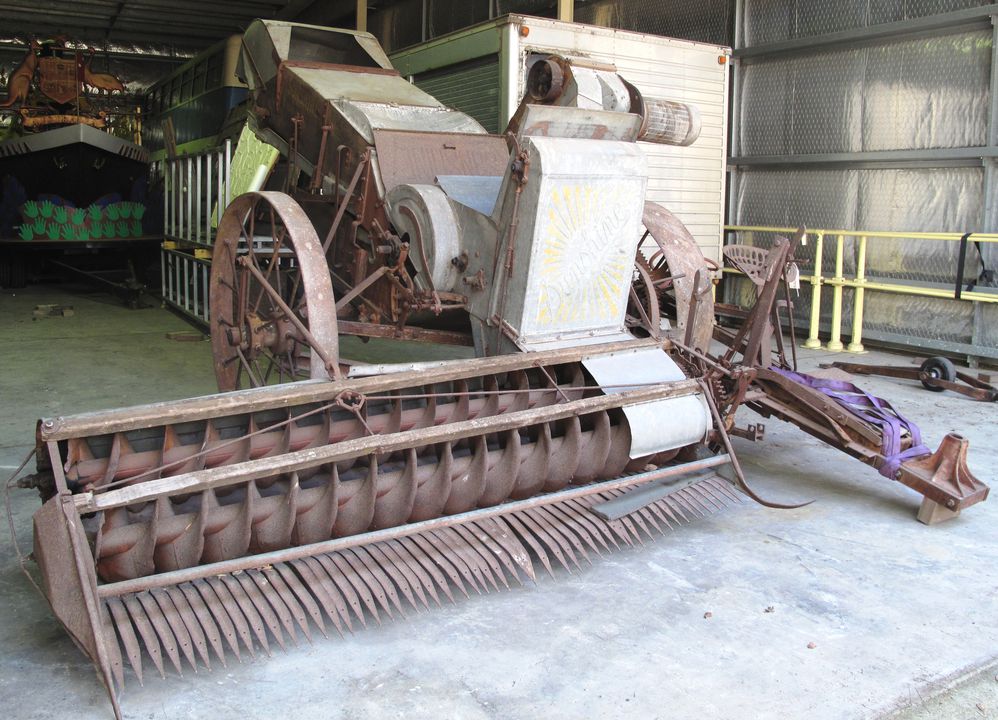
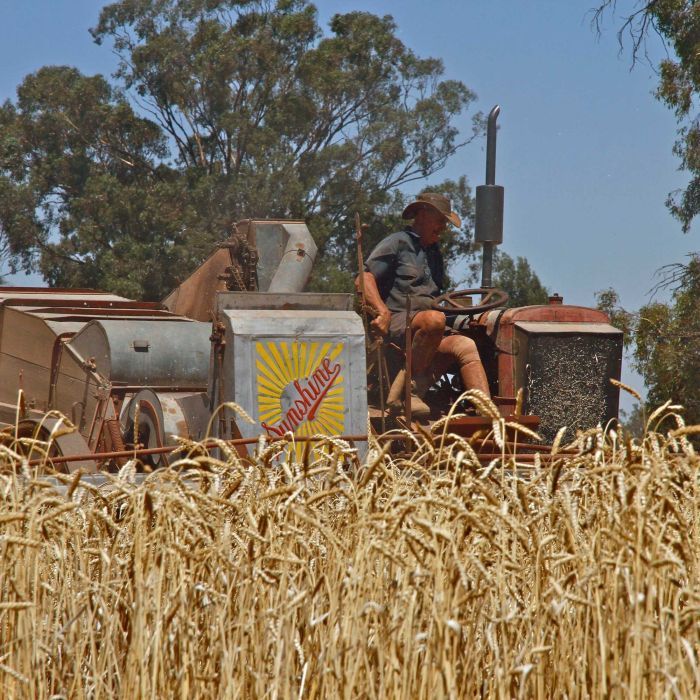
    David’s note brings back memories of the time Marjorie, Andrew and I visited Australia in search of the famous Australian Header Harvester, an invention
    whose principles can  be traced back to the vast CARTHAGINIAN grain fields of North Africa in Roman times.  We drove into the Blue Mountains of New South Wales
    driving blind which is always an exciting way to make discoveries.  FOOUND the header harvester in a tiny village bar …then An Australian farmer took us out in the
     blackness of night over his fields and Eucalyptus
    groves just to show us a tiny stream where a platypus lived under a small farm bridge.  His truck had ‘Roo bars’…I bet you do not know what that means.

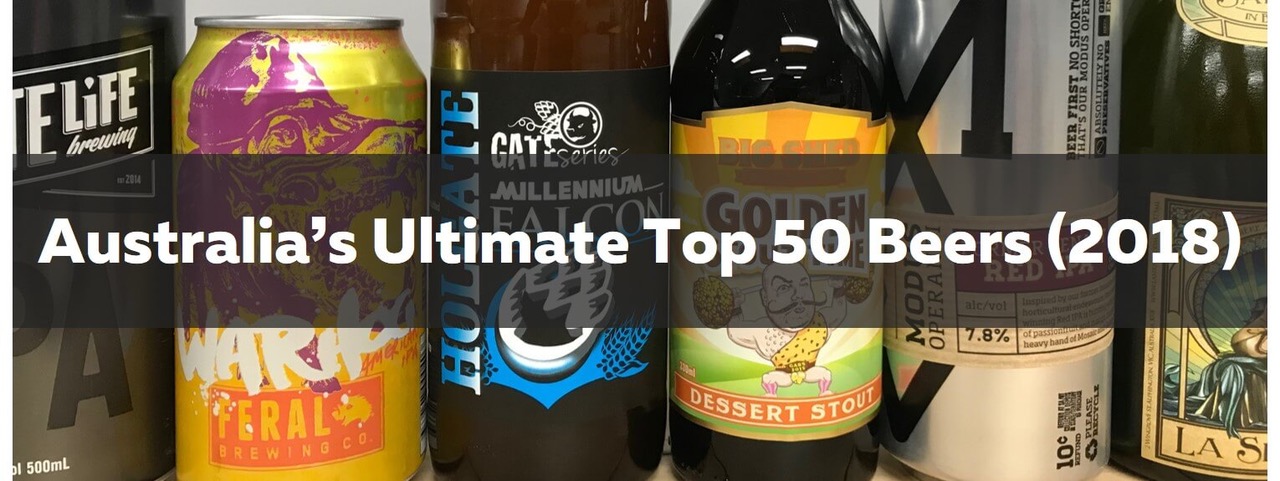
    Partial  success  when we did find the Header Harvester reproduced on a beer can graphic as well as the real thing placed for all to see in Sydney.  The Australians
    were wonderful once they knew we were interested.    Massey Harris of
    Canada bought the patents and made a modern model of the harvester.  

    NOTE TO DAVID SKEOCH:  We never found a header harvester on an Australian farm.  Perhaps you have.  Is the image still on the beer cans?

    Australian FARMER, Tom Bailey, bought an old Number 6, Sunshine header harvester for $300.  I bought the image on a couple of beer cans for $3 or so.
    Some readers might wonder why we flew all the way to Australia just to find the machine.  It was the beer that drew me
    and perhaps our youngest son Andrew but not Marjorie.


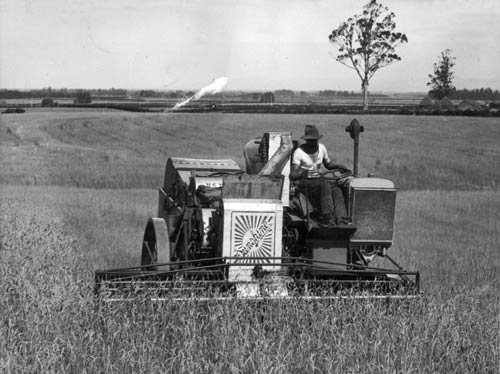
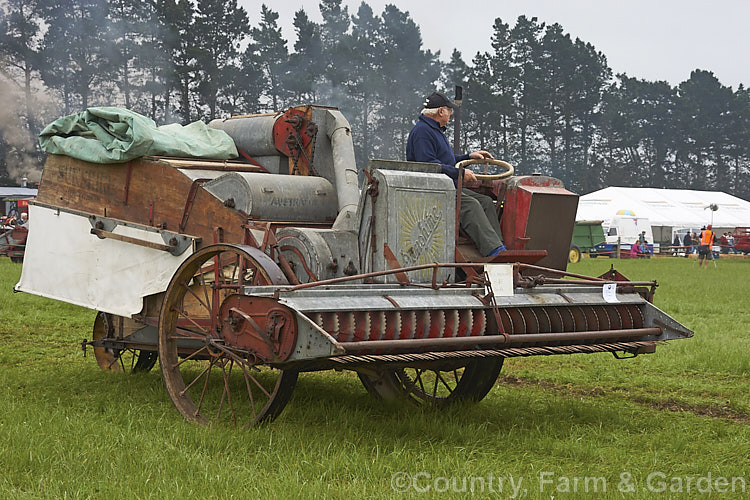
    1935 Model of the Sunshine Header Harvester…the ancient Carthaginian model had the same kind of clipping blades  as
    I seem to remember.


    We visited Australia around 1990.   Sad to say I could not find the beer can in 2018 which does not mean it no longer exists.  Maybe David Skeoch can
    do a little research.  

    alan skeoch
    april 2021

    Post Script:  The end result of our global wandering was a 300 page MA thesis titled  ‘Technology and Change in Agriculture from 1850 to 1891’, University of
    Toronto,..It never made the best seller list.
  • EPISODE 318 stonehooking….schooner days..thE LITHOPHONE…WALTER NAISH…ANCHOR NNOT ATTACHED…ICE JAM BREAKS…POT CREDIT MEN TRY TO FND THE LITHOPHONE


    EPISODE 318:   THE STORY OF ONE STONEHOOKER CALLED THE LITHOPHONE


    alan skeoch
    April 2021


    Port Credit's Stone Hookers: Schooner Days CXII (112)
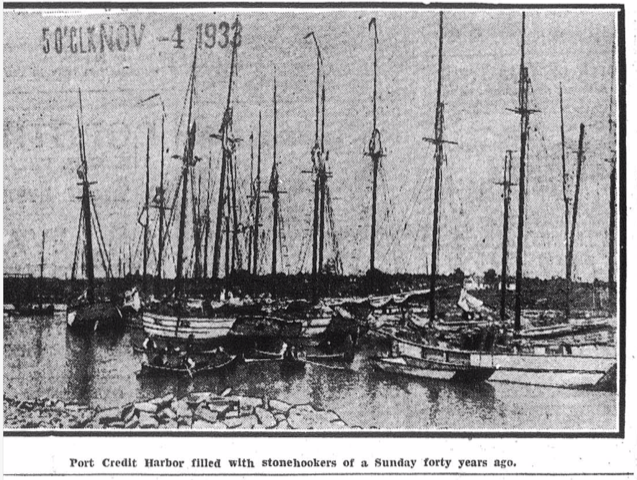
    Picture:  Stonehookers anchored  in Port Credit harbour on a Sunday.  So many
    of them that it was possible to cross the harbour jumping from ship to ship.
    Stonehookers were rarely registered as Port Credit ships…most were registered
    in Toronto.  Why?   Because there was a sneaky side to stonehooking.  More later.


    When Lorne Joyce told me the story of the stonehooker called the Lithophone I hustled
    directly home with my notes.   While there were many stonehookers anchored in Port Credit
    harbour between 1850 and  1920, the story of the Lithophone is pre-emient in my mind
    because its adventures were wrapped[ in the lives of the men who did the stonehooking.


    EPISODE  318:   THE LITHOPHONE, 1899…WALTER NAISH’S STONEHOOKER   

                          alan skeoch
                          april, 2021

    What is a stonehooker?   Residents of  Port Credit today might assume a stonehooker is a brand  of beer.  And they would  be correct in doing
    so because a new brewery in Port Credit takes the name Stonehooker on its mast head.  Old  timers know differently. Stonehookers
    were small schooners and scows whose owners picked stones for a living.  A very tough way to support a family.  More of that later.
    This  is a story about one stonehooker…the Lithophone. 


                          There is an element of dark humour in this  story about a stonehooker called the Lithophone.  Dark humour because several men of stonehooking days risked  their lives to recover the Lithophone

                          one late winter day when the Credit River Ice suddenly broke up and the slabs raced  for the open  lake…along with the empty Lithophone.   Lorne Joyce told  me this story and the story is also
                          detailed in Snider’s Schooner Days columns in the Toronto Telegram.  So it must be true.

       Organ Bob Joyce, named so because he played the organ in the Baptist church, was  the carpenter who built the Lithophone in 1899, one the fastest and initially sleekest stone hookers on the lake.  A scow model…55 feet long, 17 foot beam with a shallow 4 foot hold.  Designed to hold the slabs of blue shale on deck.

                          slabs on deck  were a lot easier to handle than slabs  in the hold.  A scow was therefore easier on the men in the stonehooking trade than were the old schooners. 


      First owned by the Al Hare and then sold to Walter Naish years later.  
     
    By then she must have been badly battered for she was held together by cable and turnbuckles.  It was winter time When Walter got the Lithophone so he got a good anchor…cut a hole in the ice…dropped the anchor overboard and then wound the anchor chain around the windlass.  Walter knew he had to anchor the

                     the Lithophone firmly because 

    Ice Break-up on the Credit River is a sudden event.  Boom, the ice breaks and whoosh out It goes taken any loose things with it.  The ice that year took out the Lithophone as well.  Walter Naish had not attached the anchor chain to the boat…just wound it aroung the windlass … unwound like a spool of thread.
     
    Walt Naish shouted for Al Hare, and Hare hailed Jack Cummings and Jack Cummings got Newman.  They stuffed the Lithophone sails in a little  skiff.
     
     “Give a hand!” they yelled to Al Hare
    “You’ll never catch her in that little thing!,” yelled Al,      
    “Take Newman’s boat!”…The Hecla was a fishboat with two masts and three sails.  
    “No time!”
    So Al Hare took the tiller of the little boat and the men rowed and rowed…almost swamped.
    “Better turn back!”
    “No!” Yelled Walter Naish…he could not afford to lose the Lithophone.
     
    By this time the Lithophone was bobbing around like a barrel in the water. She had been stripped of any weight for the winter and her centerboard was up.  Meanwhile the men were in serious trouble.  Four men, four sails, a hundred pounds of other gear  and water pouring over the front and sides of the skiff.  Waves getting higher and higher.  The Lithphone could not be caught. 


     Then the men saw the Hecla moving fast towards them with Harbourmaster Dan Sharp at the stick.  But Sharp didn’t even see the four men in the skiff.  By this time they had been blown to Long Branch and it was dark.  
    So The men in the skiff beached themselves and walked back to Port Credit from Long Branch over muddy tracks and sodden fields.
     
    Back in Port Credit , people were getting ready for the funeral.  The Hecla reported no sighting of the four men in the skiff.  So Al Hare, Water Naish, Jack

                          Cummings and  Newman were presumed drowned. 

     
    When the four men sloshed their way into Port Credit there was relief.  All was not lost.  Walter Naish  was the biggest loser..lost his anchor, his chains, his Lithphone, his investment , his supper and nearly lost his life.
     
    The Lithophone?  What happened to her?  A week later she was spotted afloat in the lake…decks awash…near the south shore of Lake Ontario.
     
    Could the Lithophone be recovered?  Lew Naish, Walter Naish’s brother, owner of another stonehooker,  the Newsboy,  felt duty bound to do something.  So a crew (Jack Potter, Lew Naish, Walterh Naish, Bil Newman, George Hare, Harry Fowler)  boarded the Hecla, with Al Hare at the helm and headed for Port Dalhousie.  Not a good trip.  Fog and thin ice.  The men had to wrap themselves in the sails and wait out the night.  Open to the sky.
     
    They worked their way along the south shore and finally caught a glimpse of the two masts of the Lithophone sticking out of the water like dead trees.  Awash. Deck cleared of cabin and anything else.  With help of tug Nellie Bly they tried to sail and steam the wreck of the Lithophone to Port Dalhouse harbour. 
     More trouble.   A new man on the tug slipped and fell overboard and under the stern.  He did not come up.  Al Hare got a pike pole and grappled for the body.  Took some time but found him tangled under the stern.  Pulled him loose.  Hauled the unconscious man on deck.  “He’s dead!” , declared all around except for Al Hare who began pumping the man’s chest after others had given up.  Others worked the dead man’s arms….got water out, bubbles from the nostrils…then the man began to roar.  Alive he was carried to a nearby hotel and wanted to buy out the bar for Al and his crew.  All Al wanted was for his name to be kept out of the paper.*
     
    The Lithophone was towed home to Port Credit by the Nellie Bly and resumed stonehooking.  The Lithophone is Still around… somewhere in Port Credit for she ended her years as a stone filled wharf.  
     
    (*Sources, Lorne Joyce and C.H. J. Snider, Schooner  Days,

                            adapted by Alan Skeoch)

    )

                          alan skeoch

                          april 2021

                            Post Script

                           What is the meaning  of the word Lithophone?   The meaning makes some sense.  A  Lithophone is a  musical instrument using stone slabs
                            of various lengths.   A very good  name for a stonehooker  that eventually ended her days among stone slabs in a forgotten wharf  somewhere east of Port Credit.


  • EPISODE 317 A NOTE ON OUR PANDEMIC DISASTER: COMPARE APRIL 19 TO MAY 20 — A BETTER DAY WILL ARRIVE

    EPISODE  317    A NOTE ON OUR PANDEMIC DISASTER:  COMPARE APRIL 19 TO MAY 20 — A BETTER DAY WILL ARRIVE

    alan skeoch
    April 19  2021


    Well here we are on April 19, 2021…a  new and longer lockdown, our hospitals urgently appealing for help, our essential workers often infected and desperate for oxygen,
    our stores closed,  our fear magnified, our homes narrowly circumscribed and for some people now alone in a single room for over 
    a year.   These are the worst of times.

    Will the times get better?  The pictures below were all taken today.  They will be repeated a month from now.  I hope in better times (i.e. May 20, 2021).

    This is Episode 317.  Incredible.  If  each episode took one page in a book that would be 317 pages.  If each  episode took 5 pages that would be 1585 pages.   Of course that will never happened
    and  who would read it anyhow    These Episodes have been turned out at nearly 1 per day.  That is my target.   I  missed the target twice as I ended up in the hospital twice for emergency
    surgery for a nasty gall bladder.   I could not write while sedated but I certainly had lots to write about when I got home.  What an experience that was…and my hospitalization was a minuscule event
    when compared with the people admitted with Covid 19.   Matt Galloway interviewed  an IC doctor today who was trying to place an 8 year old child in a temporary home because both her parents
    are now hospitalized in serious condition.  And later another doctor, head of the Medical Association, had the same problem with two other children whose parents had been admitted.  Both families
    in the category of essential workers.  Probably working for minimum wages with no place to turn.  Bad times that none of us every thought could happen.   Treasure each  breath you take and
    think of those two sets of parents.

    Grim!   I usually try to to be upbeat and positive.  And most of these episodes will be that kind.  This is a bad one.


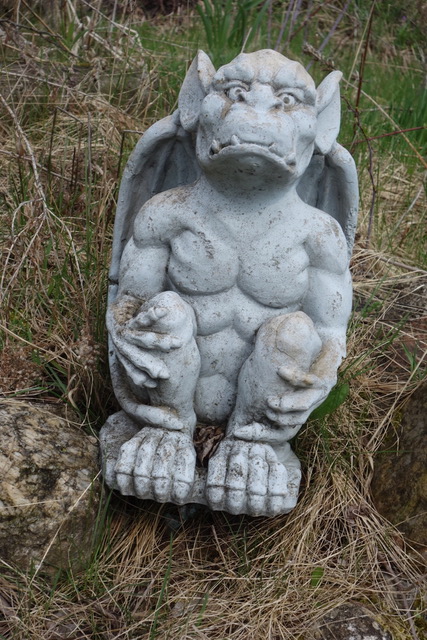
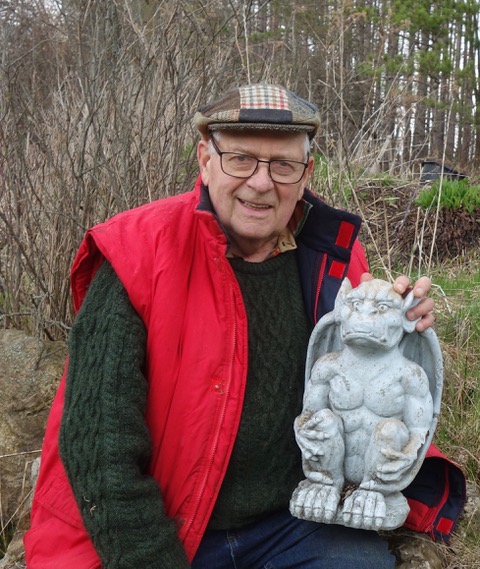
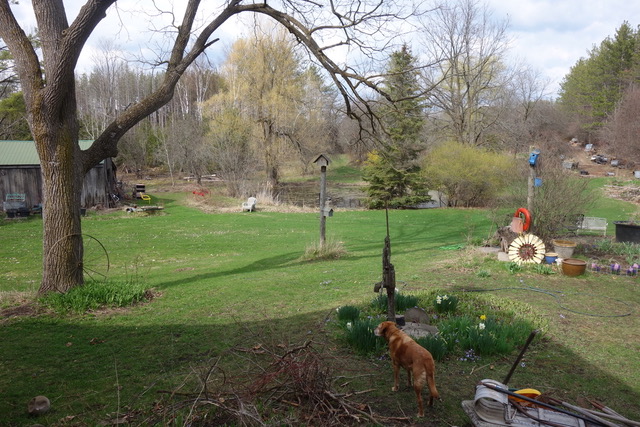
    This little creature sits on our old barn foundation at the farm.  He is not a pleasant garden ornament.  So let’s consider him a visual metaphor.  He is that
    bastard Covid 19.   Can  we beat him?   Can we take all the isolation?  All the privations?  

    I think we can.   


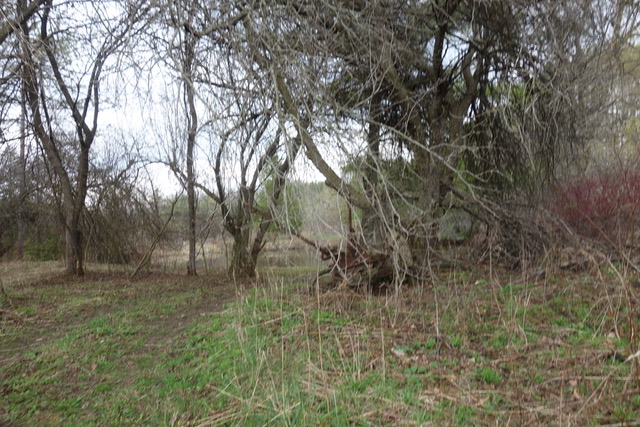
    Imagine a better day.  On May 20 or May  30 if extended we may find a new world around  us.  Green  leaves  on the trees.  Apple blossoms. 


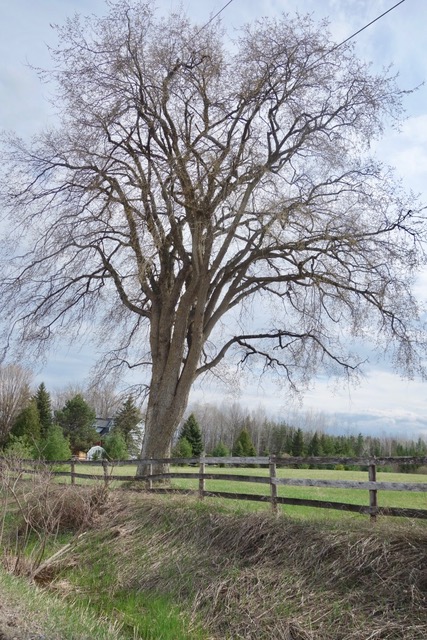
    How will these trees  look a month from now?


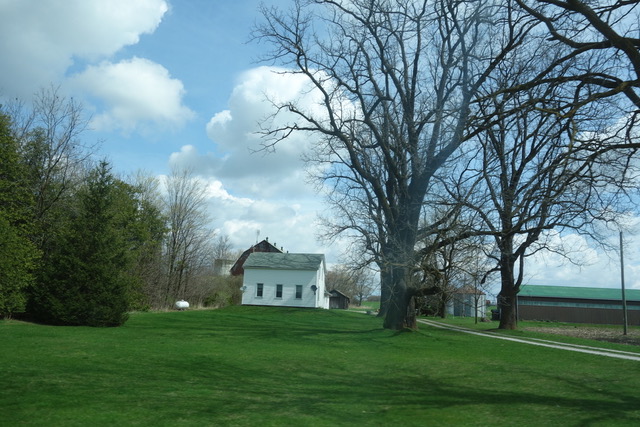
    This is the grand  ancient elm tree near our farm.  It has survived the Dutch Elm disease.  We can survive Covid 19.  
    The elm is just pushing out its buds right now.


    IMAGINE WHAT THIS WILL LOOK LIKE A MONT FROM NOW.


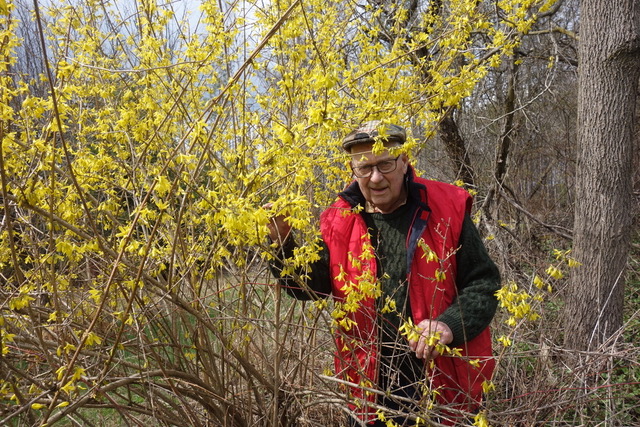
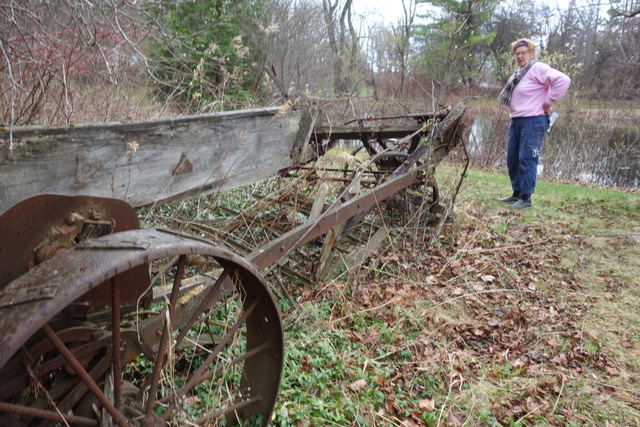
    Some cheerful things right now.  Forsythia in Full blossom.   Our old manure spreader fully revealed…sadly Marjorie wants me to move it…I have procrastinated.
    Why does Marjorie hate my old manure spreader so much.  I rather like it.


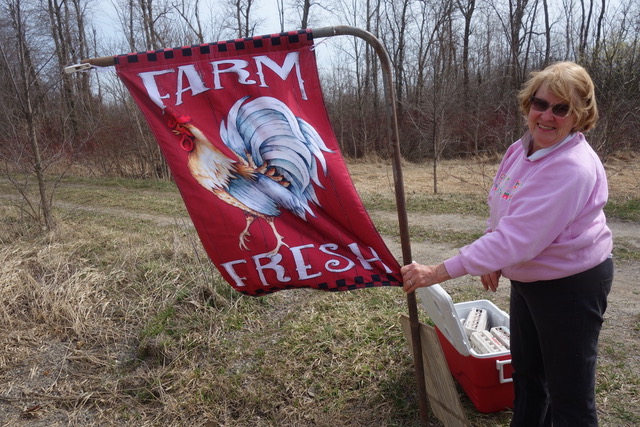
    And  finally, our neighbour Sandra, has  added a bright flag with a rooster beside her egg box.  We bought two
    dozen today at $4 a dozen.  Good times in the midst of bad  times.

    alan  skeoch

  • ALAN…SOMETHING WRONG WITH EPISODE 316

    YOU may nor have received episode 316….for some reason I do not understand…most went through but 8 bounced back.
    The episode deals with the Lemon M. Davis … in its watery grave as found and photographed by two divers in 2007 and 2018
    I do not know how to overcome the problem. try finding it in my blog …alan skeoch.ca
    alan

  • Fwd: EPISODE 316 Part Two: SCHOONER LYMAN M. DAVIS IS STILL HERE…135 FEET DOWN IN WATER OFF SUNNYSIDE BEACH….diver in heavy suit 1933 DIVERS 2007 AND 2018


    EPISODE 316:  SCHOONER LYMAN M. DAVIS IS STILL HERE…135 FEET DOWN IN WATER OFF SUNNYSIDE BEACH…


    alan skeoch

    April 2021

    PART TWO…THE LYMAN M. DAVIS STORY…NOT LOST, BUT SAVED FOREVER (unless the Zebra mussels destroy her)

    Effort to save the schooner  Lyman M.  Davis included a diver admiring just how trim the old wooden schooner
    had been kept.   His dive was shallow but the description of the diving technology of 1933 is interesting. 

    What I found most startling however was a discovery that a Canadian diver with colour camera found the
    grave of the Lyman M. Davis and took an amazing sequence of pictures. (see Warren Lo, internet)   The ship is covered with thousands
    of zebra mussels…like a gilded  bird in a watery cage.   His  photos are copywriter\d so  I guess
    you will have to find them yourself.   AnOther photo taken by a diving club is included below.

    What is the bottom line of this story?   The last commercial schooner on the Great Lakes is still with us….150
    feet down in the water off Sunnyside Beach.

    Oct. 18, 2018…divers to the wreck of the Lyman N. Davis

    The Lyman M. Davis, Toronto Harbour, Toronto, Ontario

    Readers are encouraged to punch up the pictures taken by Warren Lo in 2005

    and 2007…magnificent pictures of the Lyman  M. Davis with her masts still

    erect and the remains of her body clearly outlined by the Zebra mussels.  (Pictures by Warren Lo © 2005, 2007)


    WRECK INFO: 
    Ship Type: 2 Masted Schooner
    Lifespan: Built 1873, Sunk 1934
    Length: 123ft 
    Depths: 135ft 
    Location: Humber Bay, Toronto, Ontario 

    This wreck lies in about 135 feet of water, in Humber Bay, just outside Toronto Harbour. This was one of the last working schooners on the Great Lakes, built in Michigan in 1873. It was sacrificed for the entertainment of the masses when it was set afire and left to sink just off Sunnyside Park in Toronto, in 1934. 

    The dive conditions at this wreck site can be variable. At 135 feet in depth, the wreck lies at the limit of recreational diving and beyond. Water temperatures at these depths can dip down to the 35F range, even in the height of summer. Historically quoted as a “black wreck in black water”, there may not be much ambient light and a dive to this depth is much like a night dive. Proper deep cold water dive planning is a must to attempt this wreck.


    . O. S. The LYMAN M. DAVIS: Schooner Days CIII (103)
    Publication
    Toronto Telegram (Toronto, ON), 2 Sep 1933
    Description


    Full Text
    S. O. S. The LYMAN M. DAVIS
    Schooner Days CIII. (103)
    “What a shame to burn that old schooner out at Sunnyside!” so many have protested to The Telegram, in letters and over the phone.
    The Telegram thinks so, too.
    “That old schooner” is the Lyman M. Davis, of Kingston, built at Muskegon, Mich., in 1873, and now the last lake sailer left afloat.

    That she is an “American bottom” is incidental. She is absolutely typical of the medium sized schooner of the Canadian and American fleets which queened it on the inland seas up to fifty years ago, thriving until the railways drove them under the horizon.
    The Lyman M. Davis has been Canadian-owned for twenty years and traded out of Kingston under Captains McCullough and Daryaw up to last year. The “three links” on her stern symbolize her owners’ membership in the Order of Oddfellows; the stars, her American origin. In the absence of any corresponding original Canadian-built vessel she is the best possible example of one of the old wind-driven wooden walls which once girdled the Great Lakes. The small schooner, Shebeshkong, renamed, rebuilt, rerigged and equipped with engines, which went to Chicago this year from Midland, is neither original nor typical. She was once the North West, built in Oakville in 1882.

    If Telegram readers want the Lyman M. Davis to be preserved The Telegram will help them to preserve her.
    If enough readers respond, the old schooner may be rescued and presented to the City of Toronto for permanent preservation at the Exhibition Grounds; a marine museum whose first function will be to demonstrate the patriotism of the water-loving citizens of Toronto in Centennial Year. The Lyman M. Davis would make a grand nucleus for a pageant representing a hundred years of water transportation in which Toronto has grown from a marshy bay to a ocean port.

    This is not an “appeal.” The public is sick of “appeals.”
    It is a straightforward offer of an opportunity to give evidence of the amount of earnestness behind the utterance of protests—with which The Telegram heartily agrees-against the wanton destruction of the last remaining sailing vessel on the Great Lakes.
    The Telegram will receive and acknowledge any expressions of opinion addressed to “Schooner Days” in care of this paper.
    If you want to save the Lyman M. Davis from the bonfire, say so.
    If money will do it, The Telegram is ready with the first $100 now. But it is not money that talks—yet. It’s expression of opinion.

    My shoulders are still sore from the bruises of the metal collar of the diving dress, but Diver Dennis Coffey assures me that either the shoulders or the soreness will wear off. He has callouses on his own like the leathery parts of the soles of the feet. In spite of the soreness, let me say, from my own meagre experience, that diving, in the sense of going under water in a suit and remaining down there to see what you can see, is decidedly worth doing, and every able-bodied seaman or seawoman should jump at the chance and into the lake with the chance on.

    One of those blistering hot afternoons recently Major D. M. Goudy shanghaied me for a submarine voyage outboard the good ship Lyman M. Davis, of Kingston.
    Major Goudy, after the Elizabethan fashion which gave command of ships to generals, is the Lord High Admiral and Fire Marshal of the recreation division of the Harbor Commission’s fleet. Major Goudy has burned more ships at Sunnyside than Hector succeeded in doing before Troy. It was in the pious hope of saving the Lyman M. Davis from his torch that this compiler of Schooner Days ventured a fathom or so below the surface.
    The Lyman M. Davis, as everybody knows, is the old black schooner which lies at Sunnyside pathetically proclaiming “Come Bid Me Farewell.”
    Thousands — seven thousand to date — have performed that rite during the last few weeks. I don’t know who Lyman was. He is probably dead long since. The schooner named after him is the last commercial windmill left on all these Great Lakes which once boasted an argosy of a thousand sails.
    If all in favor of saving her will speak up. Major Goudy can find the way. That is what he is good at.

    This, however, digresses from the diving exploit. The pitch was bubbling in the seams (at least, it always does in story books with similar provocation) when we hove ourselves over the Lyman M. Davis’ rail. Diver Coffey was broiling bacon on the brass plates of his dried out diving suit with no other fire than the sunbeams. After our purpose was explained I was taken to the captain’s stateroom in the cabin of the schooner and given a pair of khaki trousers, a white woollen sweater and a very heavy pair of black woollen stockings. 
    While I changed into this gear the radio in the galley gave a concert from Buffalo. What a contrast to the sort of concert the first skipper of the Lyman M. Davis had when he changed his wet sea clothes in this very room, on coming off watch while she wallowed down Lake Michigan from her launching place at Muskegon! That was in 1873, when “Marching Through Georgia” and “Ella Ree” and “Darling Nelly Grey” were still “new” songs. This first skipper, whoever he was, had never heard of the telephone, nor dreamt of the radio, and the concert he would be listening to would be the scream of the souwester whirling the last remaining ashes of the great Chicago fire. The Lyman M. Davis was launched the second year after the old woman’s cow had kicked over the lantern and almost obliterated what Will Carleton called the Queen of the North and the West.

    When I emerged on to the deck Mr. Coffey’s bacon was done to a crisp, and he could have boiled his namesake by sunpower if anyone had thought to provide a percolator. They hadn’t, so he laid out the suit for me to get into. It was a piece of heavy white rubber, rather like winter combinations made out of fire-hose, much patched at knees and elbows, and en-
    tered through a neckband consisting of a copper hoop that would head-a barrel. Sleeves were complete down to mitts with thumbstalls, all in one piece, and legs went right down to the toes. I wondered, at the last moment, what would happen if I wore a hole in the heel!

    By the time I was in the suit I knew what Shadrach, Meshach and Abednego felt like when they got that inside job stoking the burning fiery furnace. I don’t know any worse conductor of heat than rubber, and the suit had been in the sun all day. Mr. Coffey, however, conducted me to a steel ladder, and obliged with a wooden stool. While I sat looking enviously at the water he further obliged with a pair of shoes with thirty pounds of lead in the soles, and girded me with a belt shaped like an old cork lifebelt, only the “floats” were squares of lead. These added seventy-five pounds to my avoirdupois, and he capped my preparation for the bathroom scales by screwing on to the under-collar of the suit sections of copper, well set up with nuts and a monkey wrench. He then screwed on to the upper collar which these formed the copper helmet, until I looked like a Whitehall Lifeguard in a nightmare.

    The helmet was roomy, but its weight, and what I had added in lead and copper, came down very heavy upon my graceful shoulders. My borrowed plumage—beyond the trousers, sweater and socks—weighed three hundred pounds, and I could just toddle to the steel ladder fastened to the concrete seawall where the Lyman M. Davis was moored.
    Mr. Coffey gave a few final instructions and explanations, from which it appeared that the bottom was so soft it was hard to walk on, and other things equally difficult to follow. Before putting the head-piece on me he had given me a little black skullcap with ear phones attached. He now thrust into the hollow of my helmet a small telephone transmitter or mouthpiece, and snapped together connections with the insulated wire coiled around the 30-foot airline which trailed from where I would have worn my crest, had my helmet been that kind.
    I thought of the days of old when knights were bold, and how they must have waddled to war with three hundred pounds of iron on back and front, and by this time Mr. Coffey was screwing the circular facepiece or plate-glass window into my helmet, and I was cut off from the outside world.

    I heard the soft whish-wheeze of the air-pump, being worked slowly and carefully on the Lyman M. Davis’ rail, and someone whispered in my ear: “Can you hear me? How do you feel?” It was the pump-man, who had the other end of the telephone, and I promptly replied: “So hot that if you don’t let me out of this right away I’ll come out in smoke.”
    Mr. Coffey promptly unscrewed my facepiece and gave me a welcome breath of fresh air, hot though it was. He suggested taking off the helmet and cooling it, while I should go down the ladder and dip in the lake up to my neck, and so cool the suit.
    This I did, and it was delicious to feel the cold lake water all around me without being wet. Then I toiled up the ladder, and they bolted and screwed my copper headpiece on again, poured a bucket or so more water over it—was heating up in the sun while they fastened it—and down the ladder I again stumbled.

    The crushing weight came off my shoulders as the suit inflated and once in the water I felt as buoyant as a breakfast food ad. There was a strong feeling of pressure from the air in the suit against my ribs, and I tried to knock open the pressure valve with the back of my head, so as to let some of it out. Didn’t do very well with that, so I told the pump man on the telephone I didn’t want so much. It was easy to converse with him, and sometimes he switched over to Major Goudy, so that we were having a threesome, they in the sun and I in the drink.

    I didn’t notice when I got under water. The schooner was moored where it wasn’t very deep. I just came to the end of the ladder, about four feet below the surface, and then let go. The first thing I noticed, when I began to look around in the twilight of the lake, was the length and prettiness of the weeds growing on her. They are not as long as the weeds taken off the R.C.Y.C. launch, Kwasind, recently, but they are rather neat flat grassblades with rippled edges, and looked well, viewed close up. Below them the bottom planks of the schooner are quite bare, for, unlike yachts, schooner bottoms were seldom or never painted. They were intended to float for years without drydocking, and no ordinary paint will last for long under water. Schooner bottoms were sometimes slushed with hot oil or Stockholm tar—”stock ellum tar,” the boys used to call it—before launching, and the smaller hookers sometimes painted all the way across the bottom after the spring scraping, but vessels like the Lyman M. Davis were usually as unpainted as a wharf below the light waterline.

    The seams of the planks, where the oakum had been horsed in by caulking irons and mallets sixty years before, had been “paid” or filled flush with the surface, with tallow or white lead, and this paying showed white and clean. The work Diver Coffey had been doing under water, recaulking all the seams where the oakum showed signs of “crawling” or coming out, was also discernible.
    When I patted her oaken forefoot with my rubber mitt it sent a thrill through my diving helmet to realize I was stroking a piece of timber that had ploughed 590,000 miles of lake water. Calculate it for yourself. The schooner was launched in 1873 and was sailing every year up to the end of 1931; fifty-nine seasons. Even a sluggish schooner would average three hundred miles each week of the sailing season. That would be ten thousand miles for thirty weeks or so each year. Five hundred and ninety thousand miles! Almost twenty-four times round the world. A long, long cruise —even if the wheeze of pumped air in my ears made mental arithmetic with me a far from exact science.

    Not all of the schooner’s bottom could be explored, because she was lying in too shoal water to permit crawling under her—at least I couldn’t, for I do not know enough about moving in a diving suit. There are things you mustn’t do, such as getting your air-valve down, and things Mr. Coffee can do, such as bloating himself up by closing the air-valve and increasing his buoyancy until he shoots out of the water— these I couldn’t attempt.
    Besides, the soft silt at the bottom let my 30-lb. soles sink in until I was in mud to the knees, and the fouled water clouded so that I could see nothing. I remembered with interest , the wagon and team of horses that disappeared in the quicksand of the lake shore years ago, but it was too late to go looking for them.

    From what I could see of the bottom of the Lyman M. Davis it was apparent that she was sound enough to last indefinitely if she is retained as a museum of lake lore. She does not appear to need drydocking, although some of her seams will certainly benefit by Diver Coffey’s caulking iron. Her planking is not much scraped and scarred by grinding on beaches. She has been drydocked, of course, at intervals during her sixty years of service, but it is a long time since she was last out. Still, she is cleaner than one would expect, and appears to be quite sound below.
    “All right, I’m coming up,” I told the pump man, and could hear him tell the diver. Mr. Coffey had all the time carefully watched my airline, the heavy rubber hose which fed my nostrils, and also my lifeline, the light rope which encircled my waist.
    I had been keeping these together in lone rubber-mittened hand, but he I had been saving me the trouble. I had less difficulty getting on to the ladder than I expected, a knee at a time and then a foot at a time, but I became very “heavy” to my own feeling, as I emerged from the water and took the weight of the suit on my sore shoulders. They helped me out on to the seawall—and it was glorious to drink in the fresh air again.

    POST SCRIPT

    WHO WAS CHARLES SNIDER?   (AUTHOR OF SCHOONER DAYS)

    Rising through the ranks of the Telegram’s offices to the position of Editor, Snider’s interest in the Great Lakes was wide and varied — he authored a series of books on the marine battles and skirmishes fought on the Great Lakes during the War of 1812, and also discovered a vessel sunk during the course of that conflict, the Nancy, a British supply ship. An experienced sailor, he was also an accomplished marine artist, and provided many illustrations for John Ross Robertson’s classic series on old Toronto, Robertson’s Landmarks.