Year: 2021
-
EPIODE 385 WALL PAINTINGS BY MR. KUNA…ISLINGTON
EPISODE 385 WALL PAINTINGS BY MR. JOHN KUNA…ISLINGTONalan skeochJuly 2021This could have been my grandfather, Ed Freeman…trying to make a living selling produce from his tiny farm nearIslington in 1908. Tough times. Sold the farm and headed for Northern Ontario where conditions were worse…seemedall the north was on fire…bush fires.MARJORIE SKEOCH MAKES A DISCOVERY“Alan, I want to show you something wonderful..startling.”“Not another visit to the Salvation Army used clothing store I hope.”“Don’t be silly…I want you to see the street art gallery by John Kuna on brick walls of Islington.”“Islington … that was where granddad Freeman first settled in 1908…triedto run a market garden. Tough time. Failed.”“You might see him in one of the paintings.” (SEE FIRST PAINTING…HORSES AND WAGON) -
EPISODE 384 EXPERIENCES WITH INDIGENOUS PEOPLE…”OK, BOYS, PICK YOU UP IN SAULT STE. MARIE.”
EPISODE 384 EXPERIENCES WITH INDIGENOUS PEOPLE…”OK, BOYS, PICK YOU UP IN SAULT STE. MARIE.”alan skeochJuly 2021This story is too scattered…I know that. Originally much longer but I cuta lot. Included is a small indigenous story…an evening in a beer bar withour First Nations employees. The point of the story. That evening was Warm and friendly…as were most of my evenings with First Nations people in tiny communities across NorthAmerica.Please excuse the scattered story line. No time to cut even more. If youneed a theme then consider the story a bit of Canadiana. This was abig year for Marjorie and me…marriage. The money I earned in the bushwas invested in our honeymoon. Three months labour spent in four days.
AFERNOON SUN, LAKE SUPERIOR…by Lawren Harris
PIC ISLAND, LAWREN HARRIS…GROUP OF SEVENCaptures the hardness of some landscapes on Lake Superior…near Marathon
This is the company town of Marathon looking out on to Lake Superior…strikinglyclose to the paintings of Lawren Harris (i.e. Pic Island…only a few miles fromthe town). The town smelled bad…air saturated with H2S…hydrogen sulphidefrom the paper (cardboard) mill. We set up camp in a gravel pit east of town.Summer of 1963 is hard to forget. We were married that year and, believe it or not,Marjorie was not sure I would make it to the wedding. Dr. Paterson had sent me witha crew to check out the mineralization around Marathon, Ontario. That’s a long wayfrom Toronto. I left all marriage arrangements to Marjorie.To ensure my return for the August 24 wedding, Marjorie, her guardian Phyllis Morgan and mymother decided to come to our bush camp and drive me back to Toronto.Everyone was in goodspirits including the fellows in our crew.But there was one problem. Our linecutting crew was First Nations people from Heron Bay, a reservenear Marathon. It was getting late in August and the boys had planned a trip to Sault Ste Marie…a drinkingsession in the bar at the Albert Hotel. They had a ride down to the SAullt but no ride back to our camp.“Don’t worry, boys, I’ll drive down and pick you up;”There were two hitches in the plan.HITCH #1: The distance between Marathon and Sault Ste. Marie is 255 miles (411 km)….nearlya five hour drive. A ten hour Drive there and back. Not a big deal to residents of Northern Ontario.So away they went for the week-end . Most of the time would be spent drinking beer and subsequent revelry.HITCH #2: Marjorie, aunt Phyllis and my mom were staying at the Albert Hotel the same evening.I was not too sure how they would react to the ‘boys’ in the beverage room. Now, in retrospect, I shouldhave introduced them. Stuffy of me not to do that.Actually the whole experience was great. I loved the lonely drive down to the Salt…even stopped twicefor a swim. Did so when my eyes began to wander. One swim at Batchawana Bay.Meeting the ‘boys’ with all their friends was a great experience. This was their turf…their friends…their week-end…and they were being picked up by their boss. The term boss is not nice. I wondered how it would work. No need. The moment I arrivedin the bar room there was a great whoop and the boys hustled me to a seat and bought me a couple ofdraughts. The glasses of beer were tiny in the 1960;’s. We socialized then the boys piled in the truckand we headed back to Marathon…255 miles North west on Highway #17. Arrived late at night. Droppedthe boys of at Heron Bay then hit the sack in our tent camp.Late the next afternoon the women arrived. They loved the campsite and the Toronto crew.I think would hey have loved our Heron Bay crew, Ojibwa First Nations, but they never met. My error.HITCH #3 We got married right on time. The Marathon gang sent us a card table…good one, lasted 40 years.
The beach near Marathon, Ontario…with worn mountains in the distance. The same mountains Lawren Harris saw and painted. -
EPISODE 383 MEET MOSES LORD…INDIGENOUS PERSON, YUKON TERRITORY, 1962
Our Yukon job in 1961 was my closest relationship with first nations people…mostlyNorthern Tuchone from their Mayo Landing Reserve.
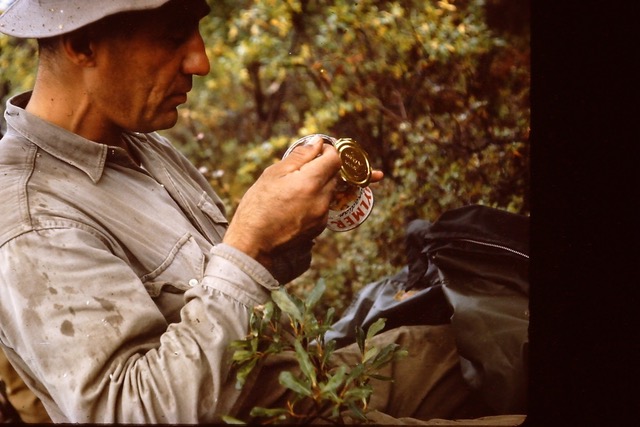
This is Moses Lord having canned peaches for lunch on the job. He seemed tobe an important person among his people.
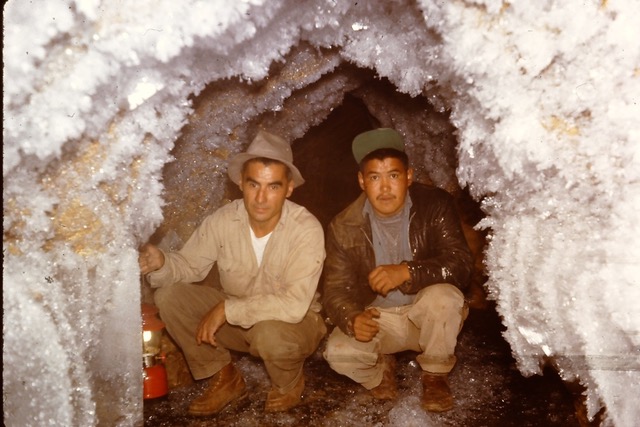
“Do you want to crawl into an old mine?”“Sure do.”“Then come along with Dinky and me…I”ll bring a lantern.”(Strange, I do not remember Moses ever calling me Alan…)alan skeochJuly 2021MEET MOSES LORDMy two previous indigenous person stories were based on shortmeetings. Very short…maybe 5 minutes max. Enough time to makea lasting impression on me but really not enough time to make into a bigdeal. Hell, the first contact was not even with a real indigenous person. In thatincident I was mistaken for a First Nations person. “Look, there’s an Indian upon that rock outcrop. Take a picture, quick.” It was m sitting on the outcrop…skinsbed brown by exposure.The second incident lacked humour. An incident of which I am not proud…evenat the time in May, 1960, I was uneasy with what I had done. I took picturesthat would have been best not taken. Unflatteirng pictures.Now is the time for my third experience with First Nations people. Much much longer.Moses Lord and I worked together from May to September, off and on. He was oneof our employees. Not hired because he was indigenous. Just hired from the availablelabour pool in Mayo Landing, Yukon Territory.The only way I knew he was aboriginal was because of his name. Moses Lord hadthe clear ring of an imposed name given by some kind of Christian missionary .Moses was old enough to be my father…I was 22 and he seemed somewhere between50 and 60.Now I wonder if he had been one of the native children yanked from theirparens aNd put in a kind of prison known as a ‘residential school’. That thoughtnever crossed my mind in 1962. I did not even know much about residential schools.The subject never came up during the whole summer.Moses was a nice man to work with. Friendly. Once he knew I was interested infinding abandoned placer gold mines dating back to the end of the 19th centuryhe showed me one that we could explore. Most placer gold mines were vertical..i.e.miners dug down through the permafrost to bed rock where gold nuggets andgold dust was possibly trapped in the cracks or faults in the rock. A few werehorizontal where miners had tunnelled into hillsides. The one that Mosesshowed me was fantastic as the tunnel was festooned with ice crystals and seemeda fairyland. At one point we even found well worn shovels and pickaxes.So I considered myself close to Moses. When I began writing this episode I expectedto say how a warm relationship was established. That would be an overstatement.Granted we got along well althoughit must have been hard for Moses who was perhaps 50 years of age having to do whata 22 year old ‘boss’ decided was necessary.In retrospect I realize we were not close. Friends…yes. But I had no idea whether Moses was Northern Tuchonelike most local First Nations were. Most but not all. I knew nothing of his family except he lived in a houseon the reserve ‘that seems filled with women of all ages’. He was married…had children…perhapsgrandchildren but I never asked about them. In other words there was social distance betweenus. This was not intentional. Perhaps due to respect… for I noticed other First Nation workers seemed todefer to Moses. “Dinky” for instance who is in the mine tunnel with Moses. Dinky had a trap line…Moses related howa wolverine crawled down the stove pipe of Dinky’s cabin…vicious, solitary creatures. Dinky never said a word.When the job was over and I was packing up our equipment in September one of the localpeople…I think it was Moses…said:“How would you like a set of caribou antlers?”“Love to pay for a set.”“No pay. There is a set leaning against our house…you can have them.”And I still have them.
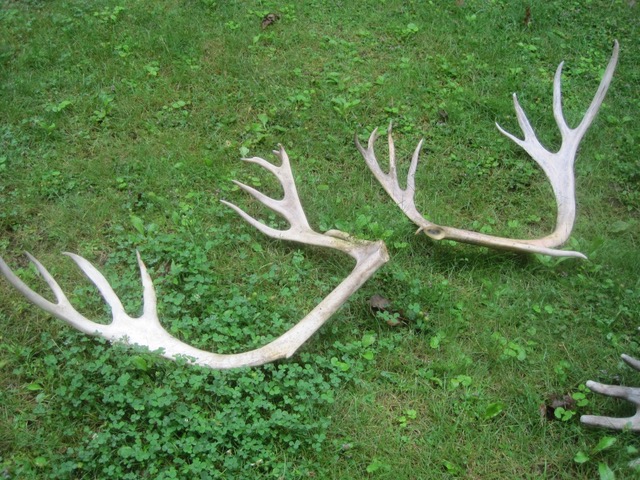
Caribou antlers. I never saw a wild caribou in all my years doing mining exploration.
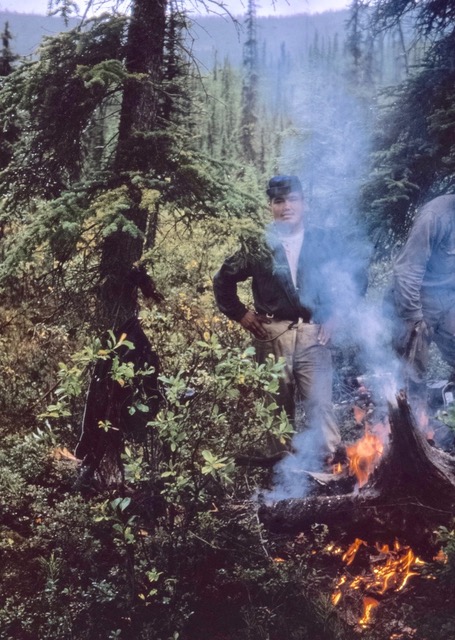
DINKY with Moses (shoulder)…huge fire with lots of mosspiled on to get smoke … our defence against the flies.Decades later, around 1980 I was asked to do a radio story on CBCabout something related to the Yukon and I mentioned Moses. Whenthe broadcast was over i was called to the broadcast booth. “Call foryou, Alan…from the Yukon.” One of Moses Lord’s daughtert wanted tosay thank you for mentioning her dad. Maybe we were closer than I thought.SOURCE COMMENT…RE NA-SHO YAK DUN….FIRST NATION PEOPLE IN MAYO LANDINGThe First Nation of Na-Cho Nyäk Dun represents the most northerly community of the Northern Tutchone language and culture group. In the Northern Tutchone language the Stewart River is called Na Cho Nyak, meaning Big River.
Historically, the First Nation of Na-Cho Nyäk Dun lived and trapped throughout the area, using the rich supply of game animals, fish, birds, and numerous plants for food and for medicinal purposes.
Their lifestyle required traveling throughout the First Nation’s traditional territory at various times of the year, for hunting, fishing, and gathering food to survive.
Today, the Na-Cho Nyäk Dun has a membership of 602. As a self-governing First Nation, the First Nation has the ability to develop and adopt laws on behalf of their citizens and their Settlement lands.
They are actively involved in affairs of the Mayo community to promote a better, healthier lifestyle for its future generations and a strong economy based on its rich natural resources.
-
EPISODE 382 GARDENING WITH BLACK PLASTIC (Tarpaulins) AND OLD TIRES…
EPISODE 382 GARDENING WITH BLACK PLASTIC AND OLD TIRES…
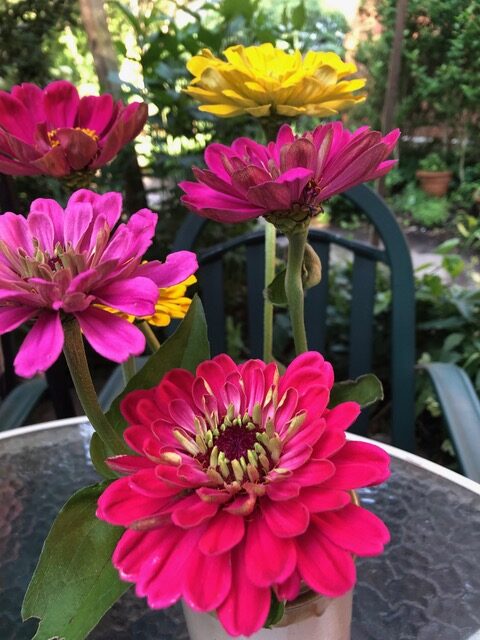
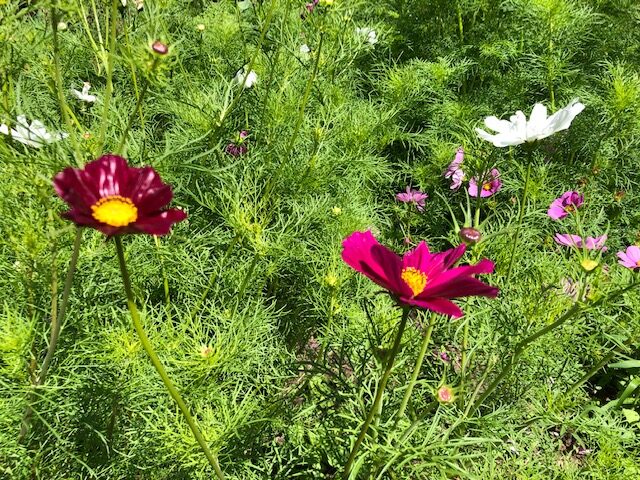
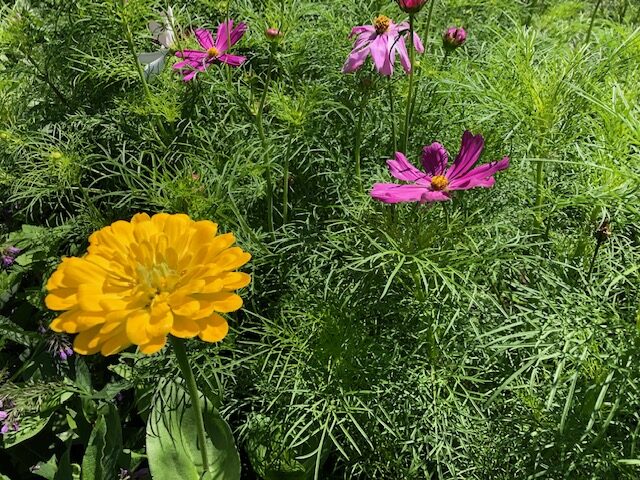
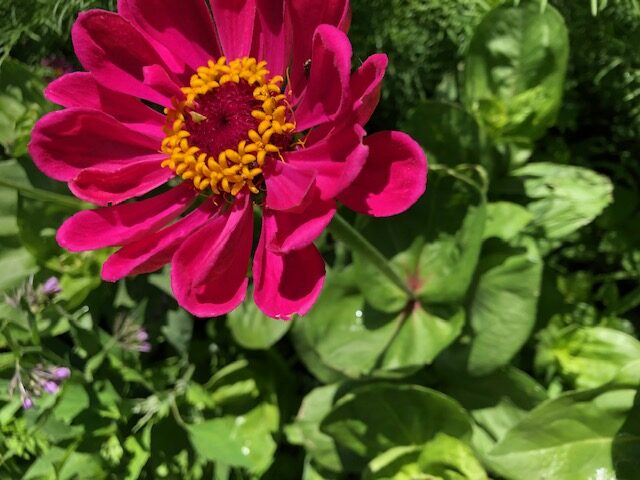
Alan skeochJuly 2021Gardening is a sport that we always seem to lose. Our weeds race verticallyfaster than our garden plants. Eventually we give up and eitherabandon the garden to the winning weeds or decide to get revengeby driving the John Deere lawn mower over everything.We usually have a bit of joy as the race begins. Like ourrow of Zinnias this year and our cosmos jungle where theweeds cannot get a foothold.There is a solution. A pathway to victory. Not pretty. First let’s look at thegardens on July 1…before the weeds….just to see if the race is worth the effort.
Zinnias are treasures
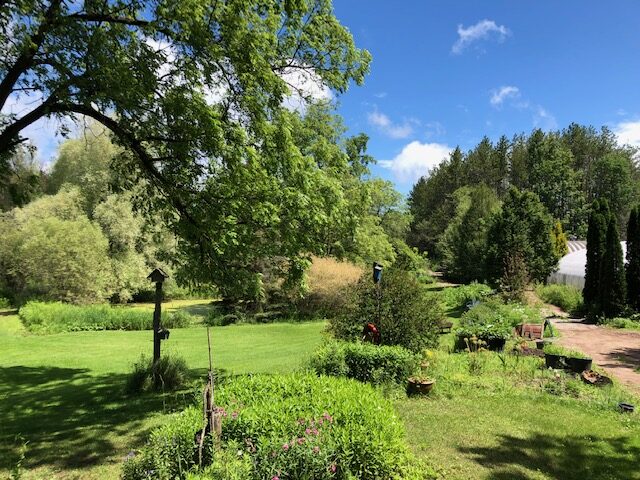
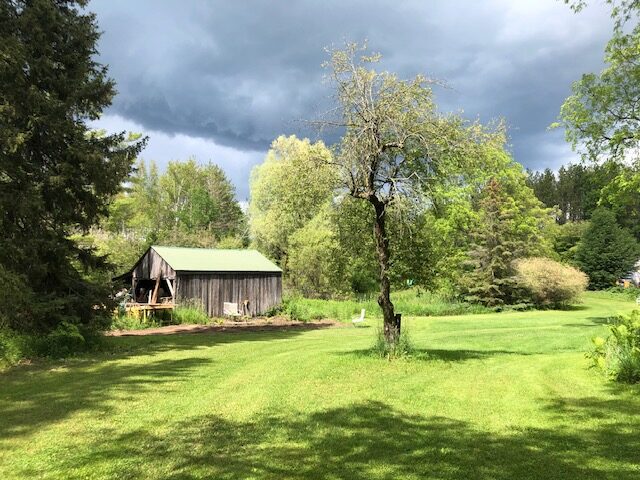
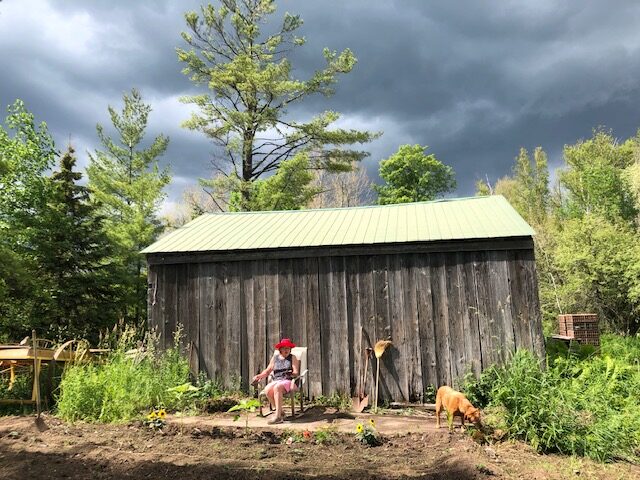
Gardens spotted here and there make skeins of shorn grass interesting.
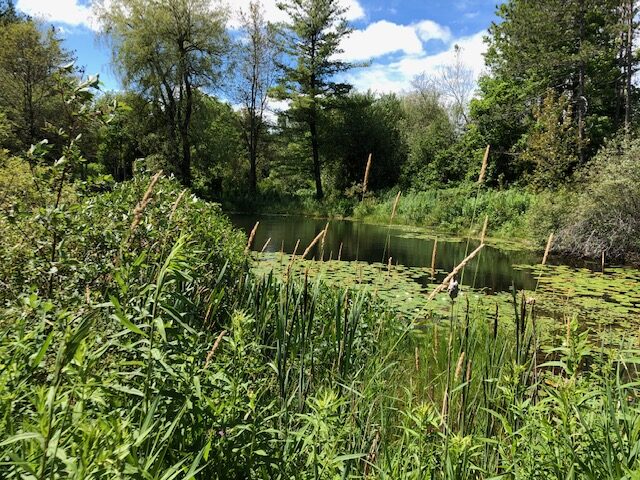
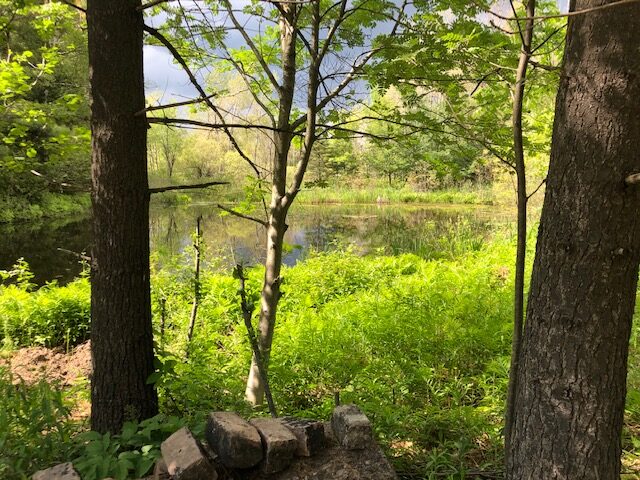
Pond gardens require no work at all
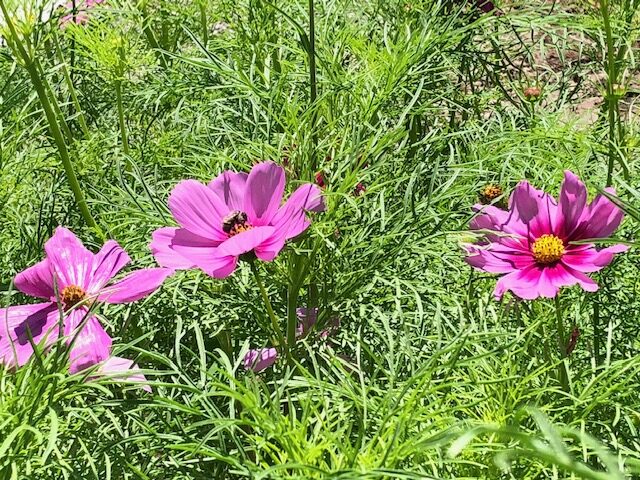
Cosmos know how to beat weeds…crowd them…feed the weed their elbows.
Nest year we are planning a whole garden of zinnias…alongside the cosmos.
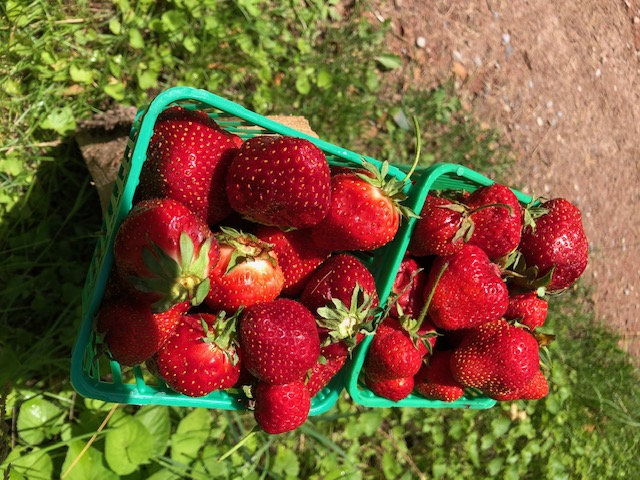
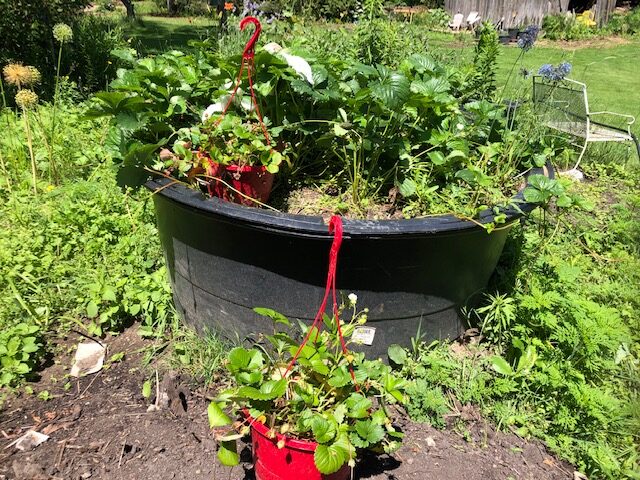
strawberries are an early crop…B.W. (before weeds)“Alan, did Marjorie grow these berries?”
“Truth be told. No. We bought them but thought theylooked good in this story.”“Can we trust other stories then?”“Allow for a little padding now and then…but, yes,I try to keep the stories honest…buttressed by pictures that do not lie.”“Those strawberries are a picture.”“Right. That’s why I am being honest. So you can trust my stories.”“Do you grow strawberries?”“Yes…as you will see.”


We grow strawberries in a giant plastic tub…only way they can win.
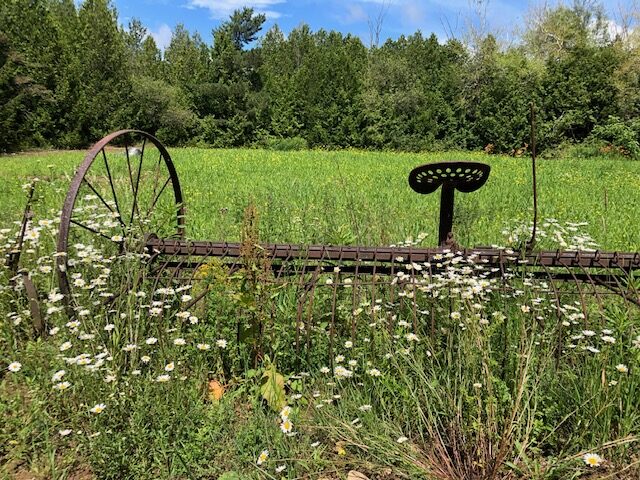
Dasies know how to make an ancient dump rake look like a fine carriage…daisies cometo bloom early…no help needed.
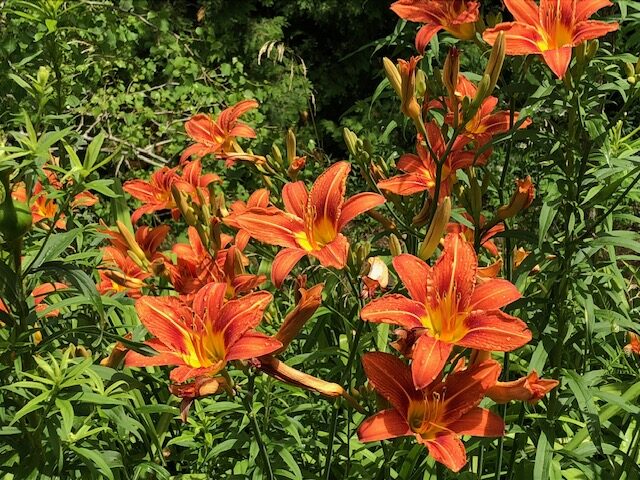
There has to be some kind of reward for wild tiger lillies. When tender flowersfail, Tiger Lillies come to the rescue and bloom longer.
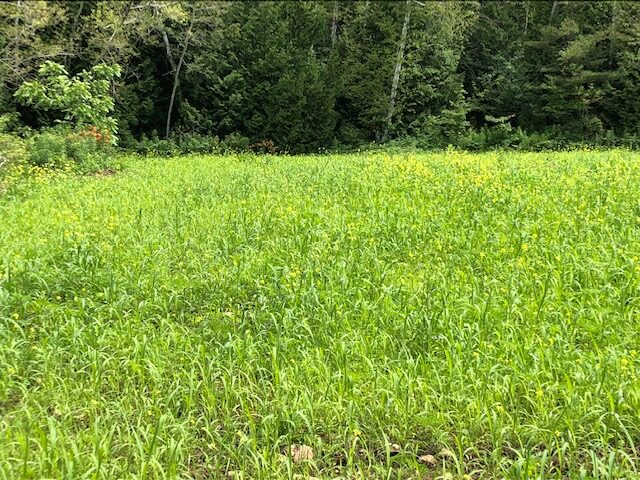
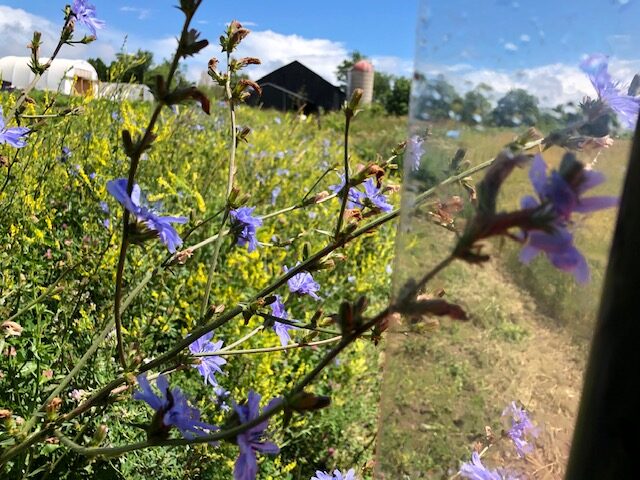
EXPERIMENT: Will the hand seeded Sweet Clover suppress the weeds.We will keep you informed. This crop was planned to help the bees…am Imisled?
Some weeds I love.
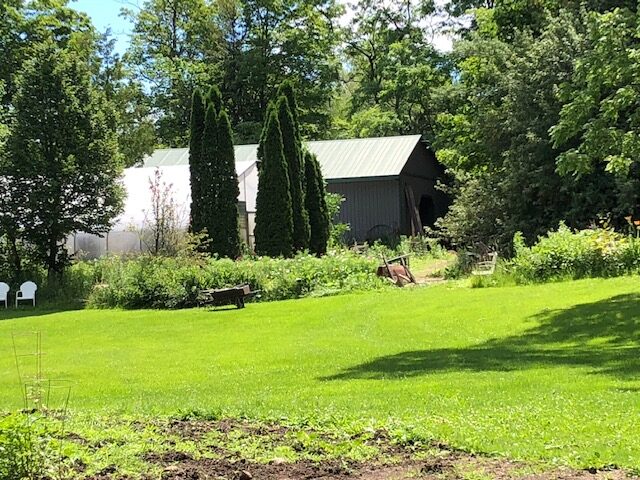
Find three gardens here…two with the weeds starting to dominate.
why not let the weeds dominate…
This garden looks good right now but the weeds are poking through….And now for the big experiment. Ugly for sure…..
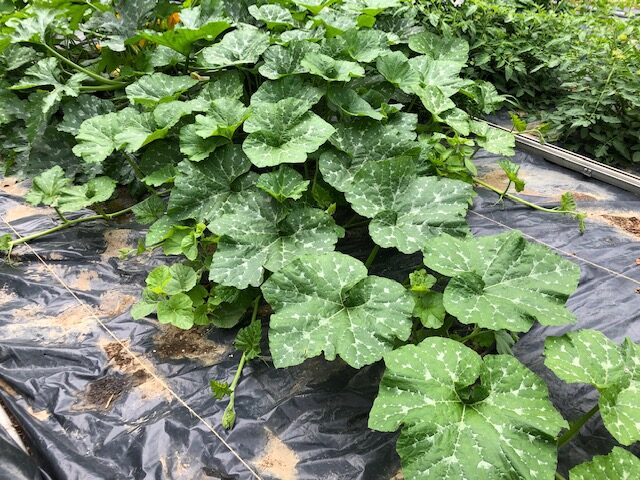
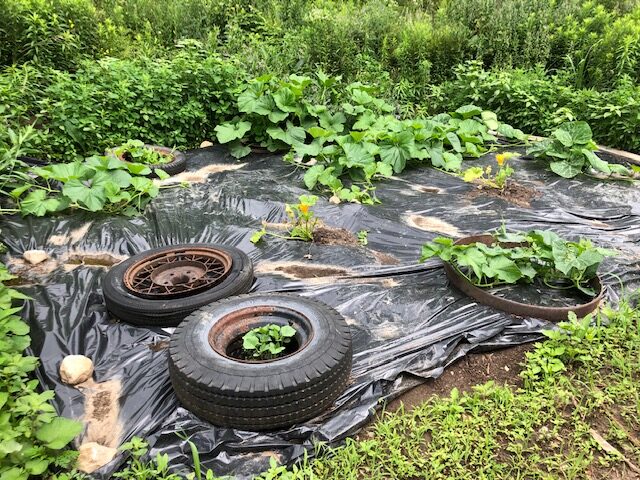
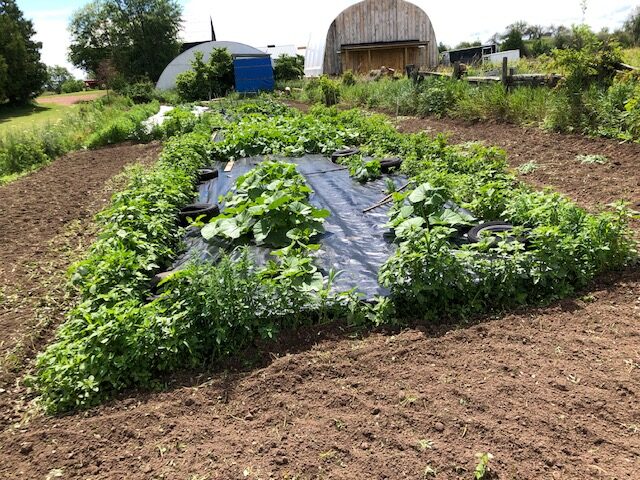
we spread big sheets of black plastic sheeting… covered the ground. “Let’s deny the weeds light…no chance for photosynthesis. Then cut holes to plantour prize corps. The weeds were being denied sunlight. Death in the dark under the tarp.
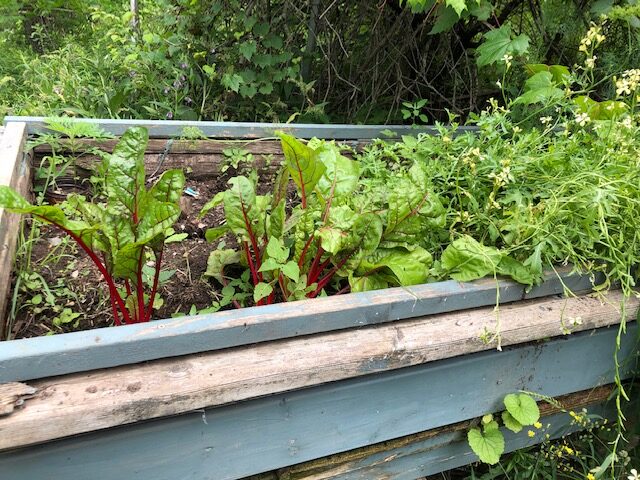
In other case we planted beets in a big wooden crate…three feet abovethe ground.
And then we gathered old rubber tires to hold the tarp down and provide nests forthe cucumbers, tomatoes, squash, pumpkins, gourds to thrive.
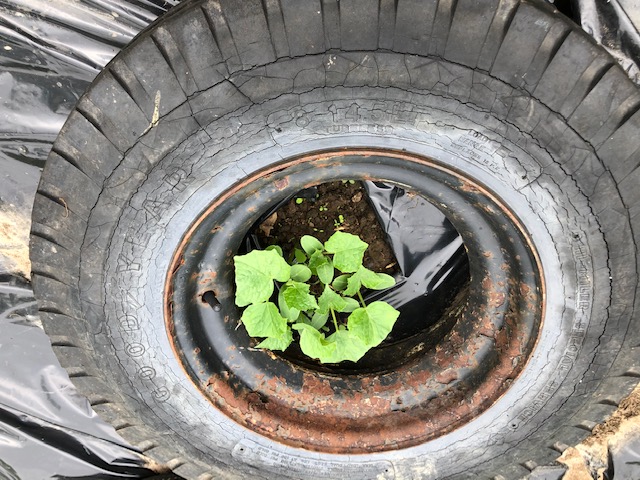
Pretty? Not very. Some late germinate cucumbers in a truck tire fortress.
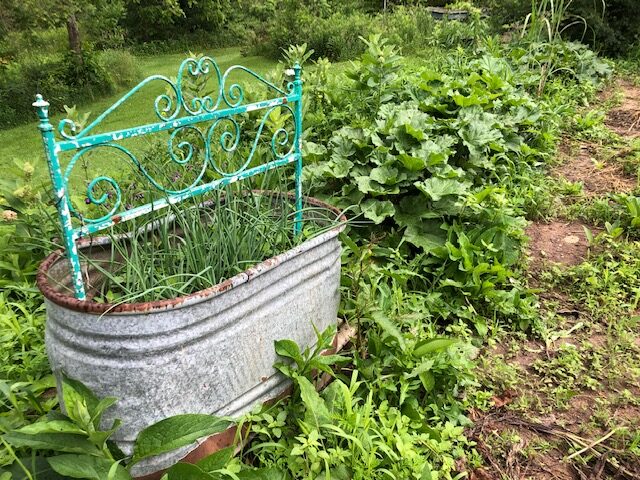
Old cattle troughs with garish bedsteads are homes to red onions and yellow bush beans.
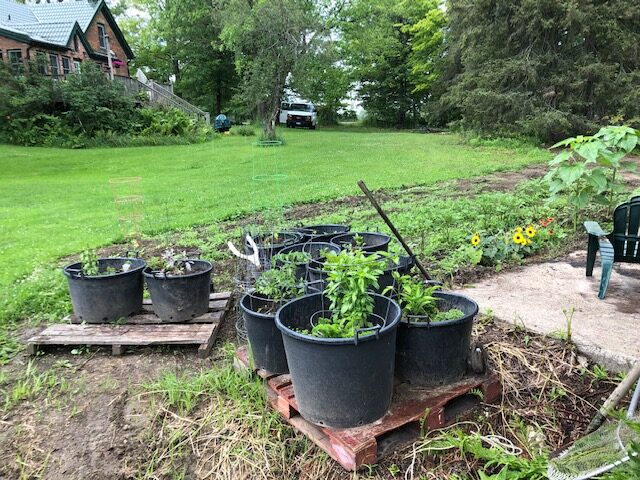
And big plastic bins on movable skids are growing places for parsley, thyme, oregano,celery, tomatoes, peppers…etc.etc. When the weeds get too big we will pickup the skids with the bob cat and settle the pots where weeds have been mowed.Sounds stupid, I know.
Where did I get the idea? From our son Andrew who has constructed his gardenin such a way that the plastic sheet is not ugly and the old car and truck tiresare clothed in edible plant life. Then he harrows the periphery with the tractor.Father copying son.alanComing soon…Part 3 of indigenous contacts…The story of Moses Lord…a fatherfigure working for a 22 year old ‘boss’. Must have been hard to take but Moses keptthings cheerful. -
EPISODE 381 MEMORIES OF INDIGENOUS PEOPLE: THE ALASKA INCIDENT 1960…ILL CONSIDERED PHOTOGRAPH TAKEN
EPISODE 381 MEMORIES OF INDIGENOUS PEOPLE: THE ALASKA INCIDENT 1960…ILL CONSIDERED PHOTOGRAPH TAKENalan skeochJuly 3, 2021
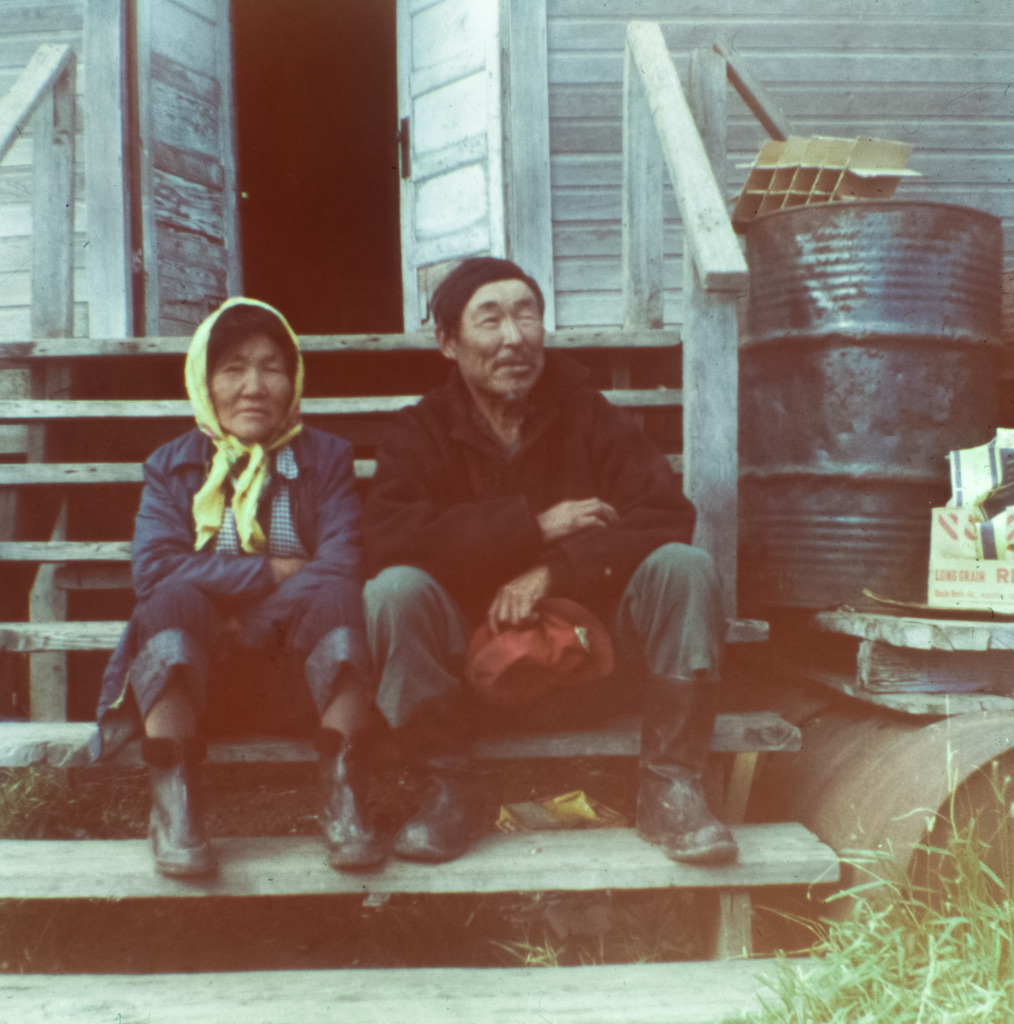
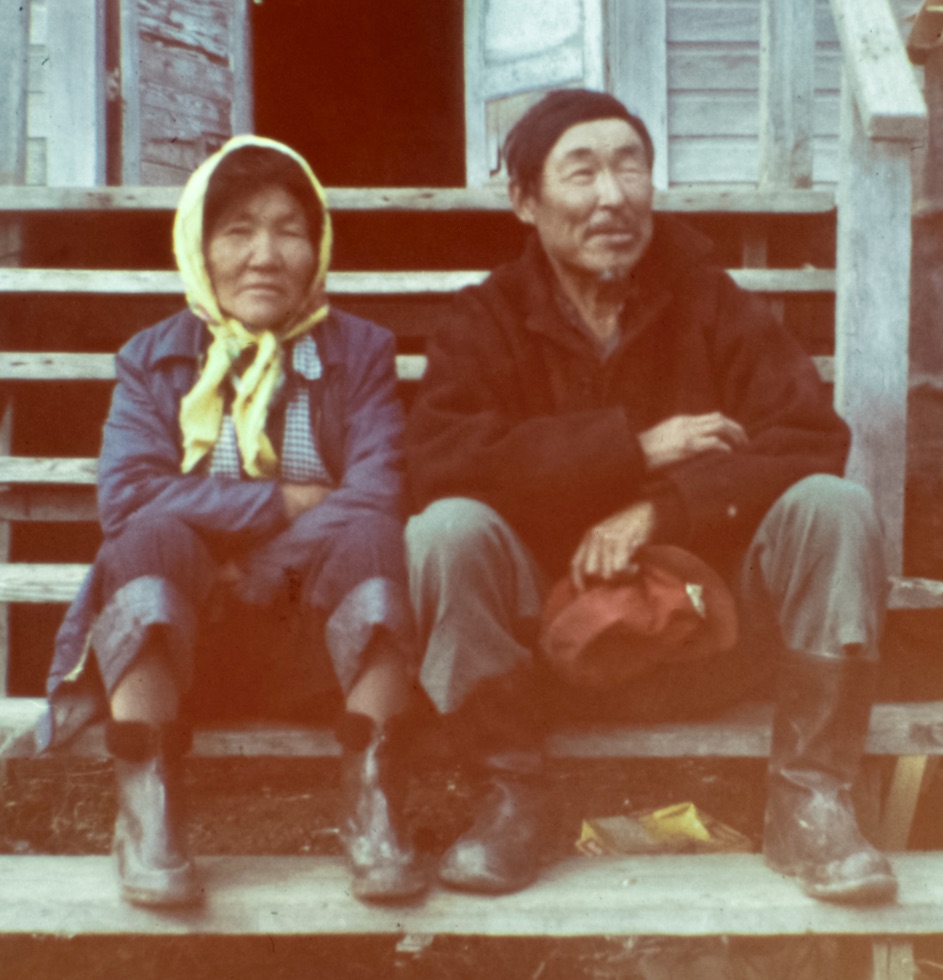
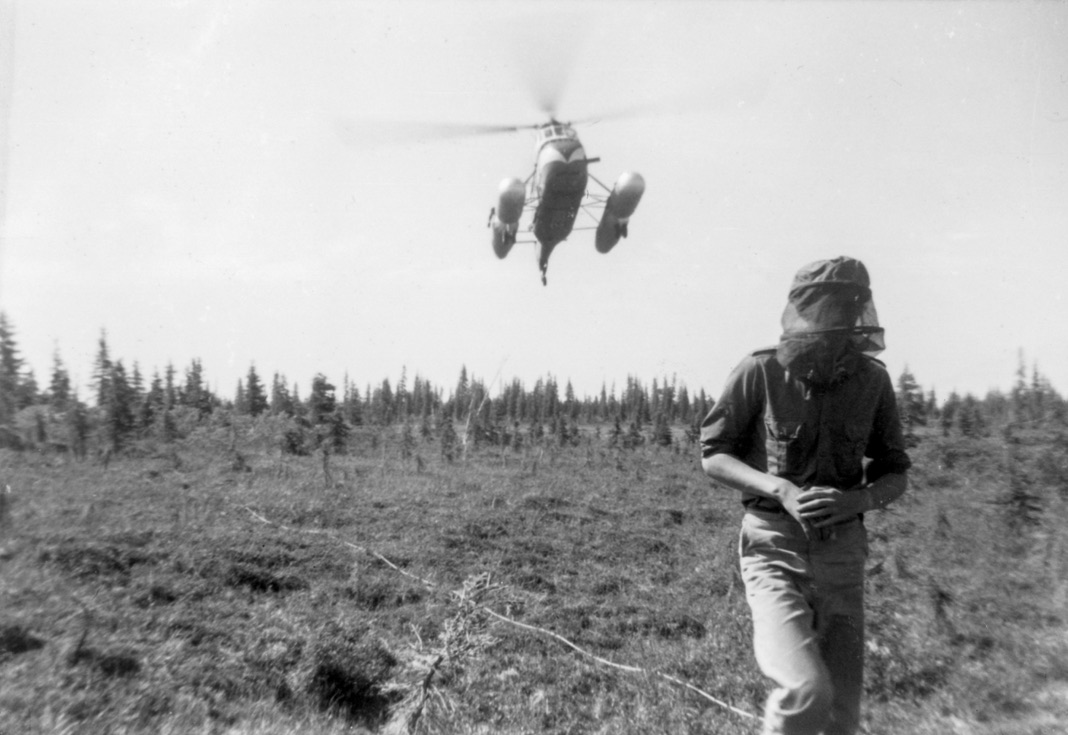
THIS IS A STORY ABOUT THE PICTURE BELOW…A YUPIK COUPLE ON THE EDGE OF THE BERING SEAShould I have taken the picture (Below) ? I am not sure. In the back of mY mind at the time I wondered if my actionswere appropriate and that thought has stayed with me for 60 years. After much searching I found the pictureand replicated it below. The Yupiks were very friendly, perhaps a little inebriated…perhaps not. The Yupik peopleare Inuit. Their territory covers the vast barren southwest corner of Alaska…fronting on the Bering Sea north ofthe Aleutian Chain. Dillingham, Alaska…a salmon fishing and canning centre. Called a City but really barely a town.Over one tenth of the population live below the poverty line. Crime is high. Those facts have not changed in thelast 60 years.In 1960, I was quite unaware of Dillingham. I had never heard of a Yupik.“Alan, you will be going to Alaskaon a Turam job…wear some good clothes to impress our Humble Oil contractors…searching for copper…Our crew willbe setting up diamond drill sites. Big project, there will be two Sikorsky helicopters at the campsite. Bottom line!You guys have make a good impression.”
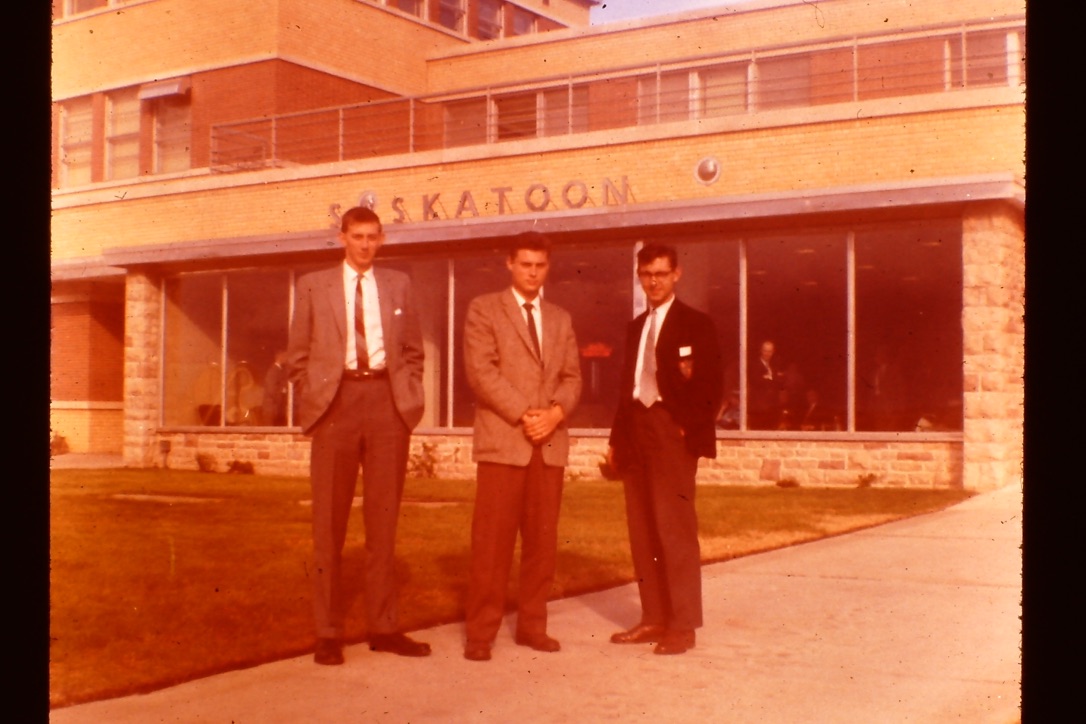
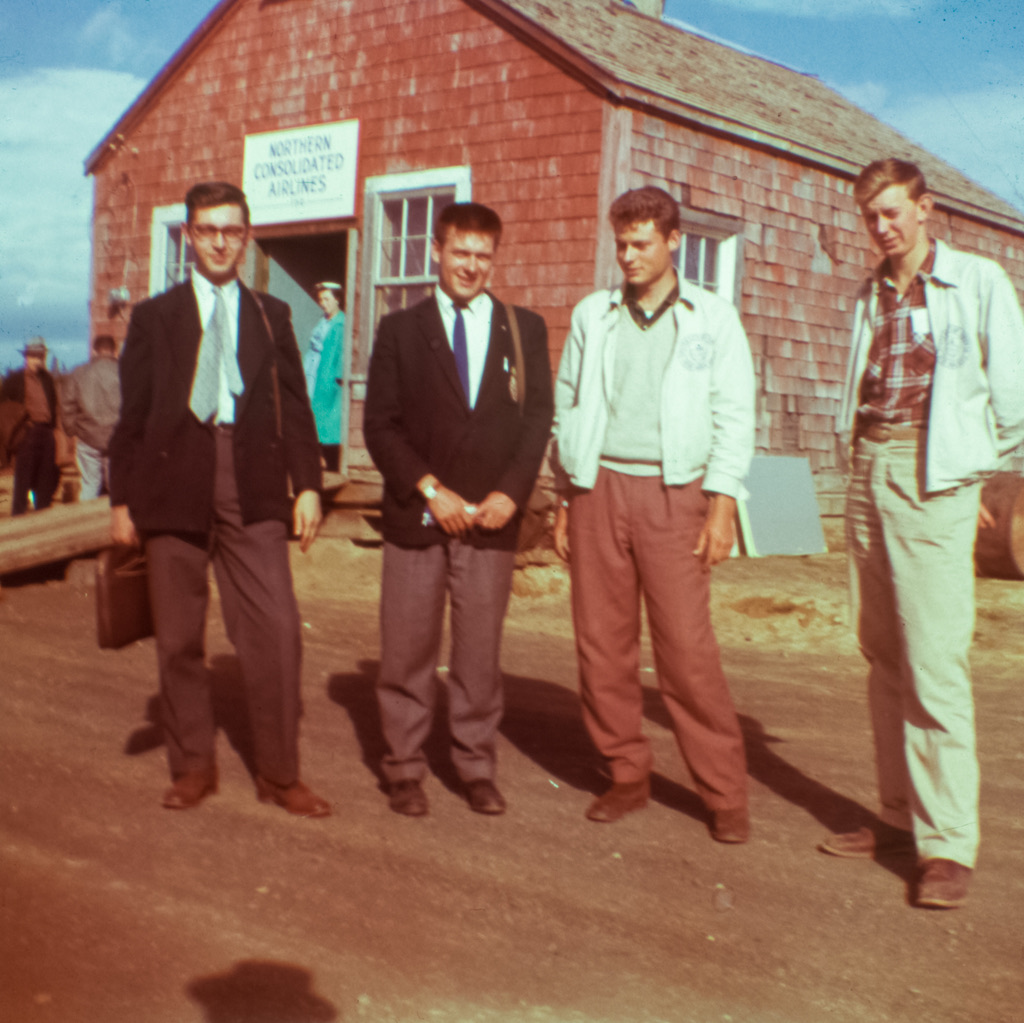
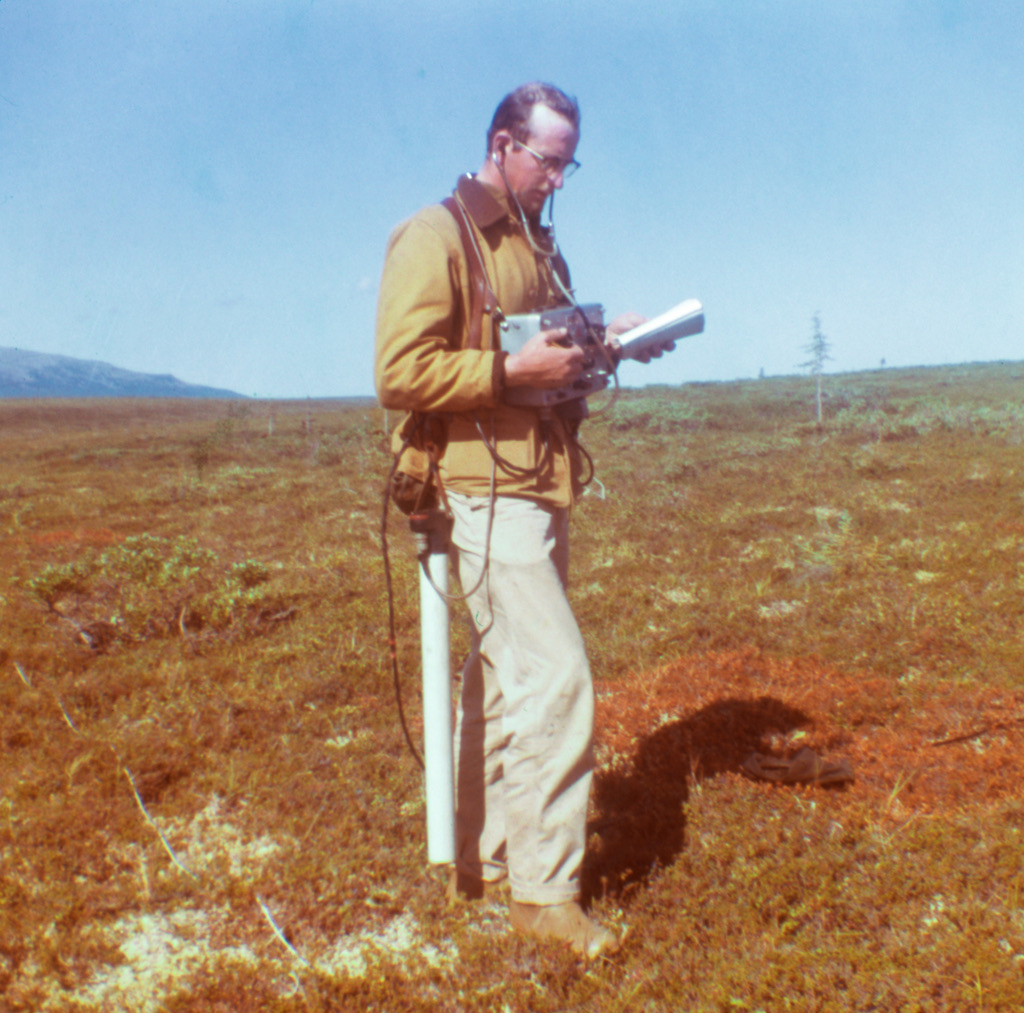
MAKING A GOOD IMPRESSIONTime has passed, I can say more about the job now. Dr. Paterson got us all Green Cards which meant we had skills that no one else in the United States had.Partly true. Bill Morrison taught us all we needed to know about the Turam method of detecting mineral conductors deep underoverburden. Simple put, we were trained to use a motor generator and a mile of copper shielded cable to push an electricalcurrent into the ground and take readings of that current on a grid. If there was a conductor …i.e. a great lump of chalcopyriteunder the ground… then we could detect an ‘anomaly’ that just might be important.Were we important people? Specially trained? Who were we really? Three of us were students atthe University of Toronto…Don VanEvery, Ian Rutherford and Alan Skeoch…two maths and physicsstudent and one history student. (What the hell was a history student doing here? Good question.I preferred to keep that part of my background invisible.) Bill Morrison was the Turam expert andI became his assistant. Called ‘field men’…i.e. no engineering degrees. The brains of our teamwere Dr. John Stam, a true geophysicist, and Mike Chinnery, a recent geophysical grad from England.Were we important people. Felt that way even if it was a bluff. One thing for sure was that we seemedimportant people to the two Yupik residents sitting on a wooden stoopin a town that to me in 1960, was unremarkable save for its salmon cannery and huge pile of beer bottles in the garbage dump.
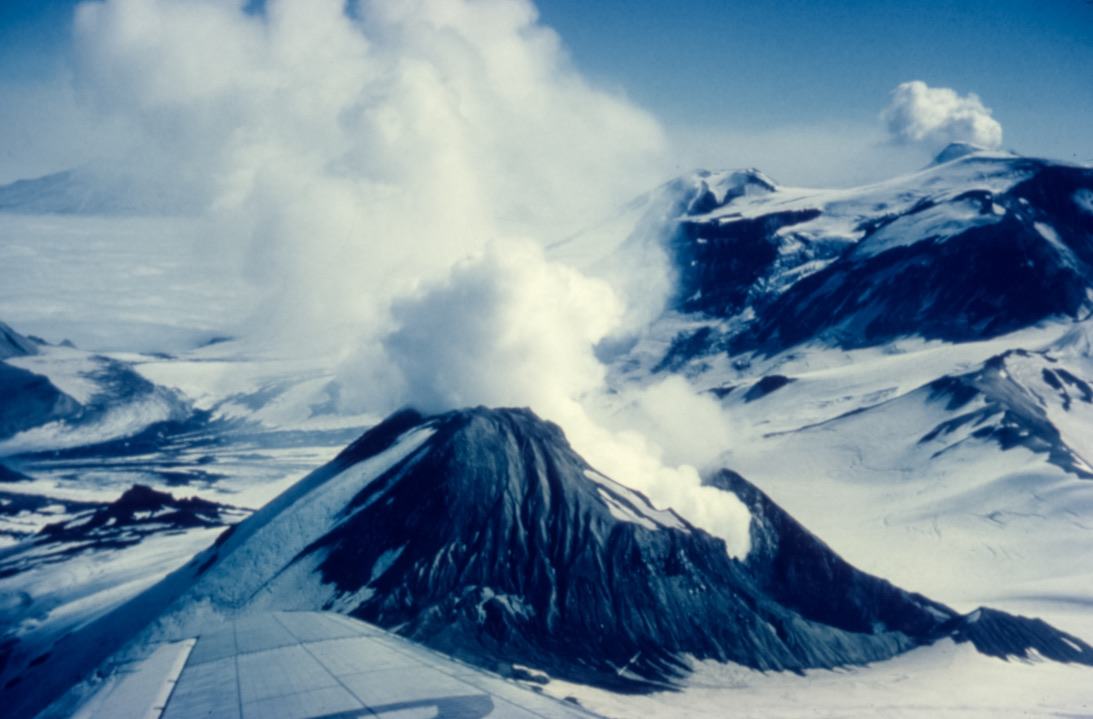
IMPORTANT PEOPLE!For some strange reason be landed in Saskatoon en route to Anchorage, Alaska.Even now so many years later this photo confirms our self importance. Don VanEvery,Ian Rutherford and Mike Chinnery. Geophysical prospectors. Suits!!In the Ancharage airpot diner I ordered ‘Milk Toast’ for breakfast because it sounded sophisticated.Turned out to be baby food which gave the team a laugh.Leaving Anchorage we boarded a smaller prop driven passenger plane…a Fokker F 27.“Well , boys, wecan now say we flew in a Fokker.”“Are not all airplanes Fokkers at one tome or another.”(laughter)We flew over the AlaskanValley of Ten Thousand Smokes where the crust of the earth is thin and the seething cauldron of moltenstone beneath us comes to the surface.We flew westward for a couple of hours or more. Beneath us the land looked empty. Then a strange thinghappened. At least in my memory it was strange. A crew member came back and hand cranked down the the landinggear. The F 27 could land on water as well as land. Hand cranked? Why? had the hydraulics failed?
Ah, yes, the passenger terminal at Dillingham, Alaska, in 1960. That could have beena farmers’ drive shed back in Ontario but, here, in Dillingham it was the contact point withthe outside world.
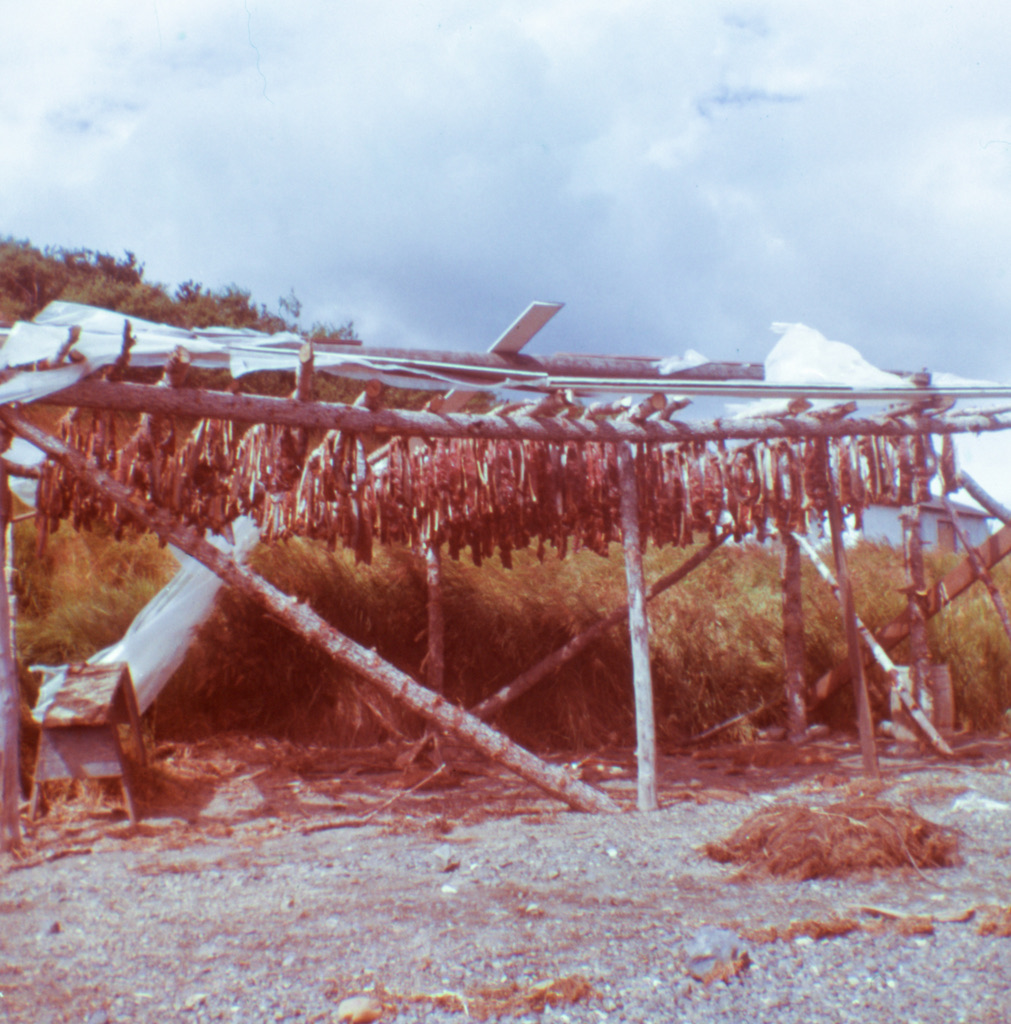
Mike Chinnery and Alan Skeoch have kept up the pomposity four U.ofT. blazers. Ian and Don have relaxed.We only stayed in Dillingham for an hour or so. Just enough time for us to meet the two Yupik people and a chanceto see a Yupik fish camp on the edge of the Bering Sea where we had our fuel dump.The S 52’s were revving up when I ran to the beach to get this photo. Why were the hanging carcasses ofsplit salmon not bright red? Simple answer. Because they were covered with flies.
At some point we met the Yupik man and wife. At that point I took their picture. Talk about aggorgance.…self-importance…rudeness…holier than thou thinking.Everything was moving so fast. At the time I thought we would meetmany indigenous people. Wrong. These two were the onlyYupiks wesaw on the whole summer job.Isn’t that strange? Why were the indigenous people so invisible?
Then we spent the summer being ferried by helicopter here and there across the empty space of SW Alaska. We never even spottedanother Yupik.
Bill Morrison with the Turam console…
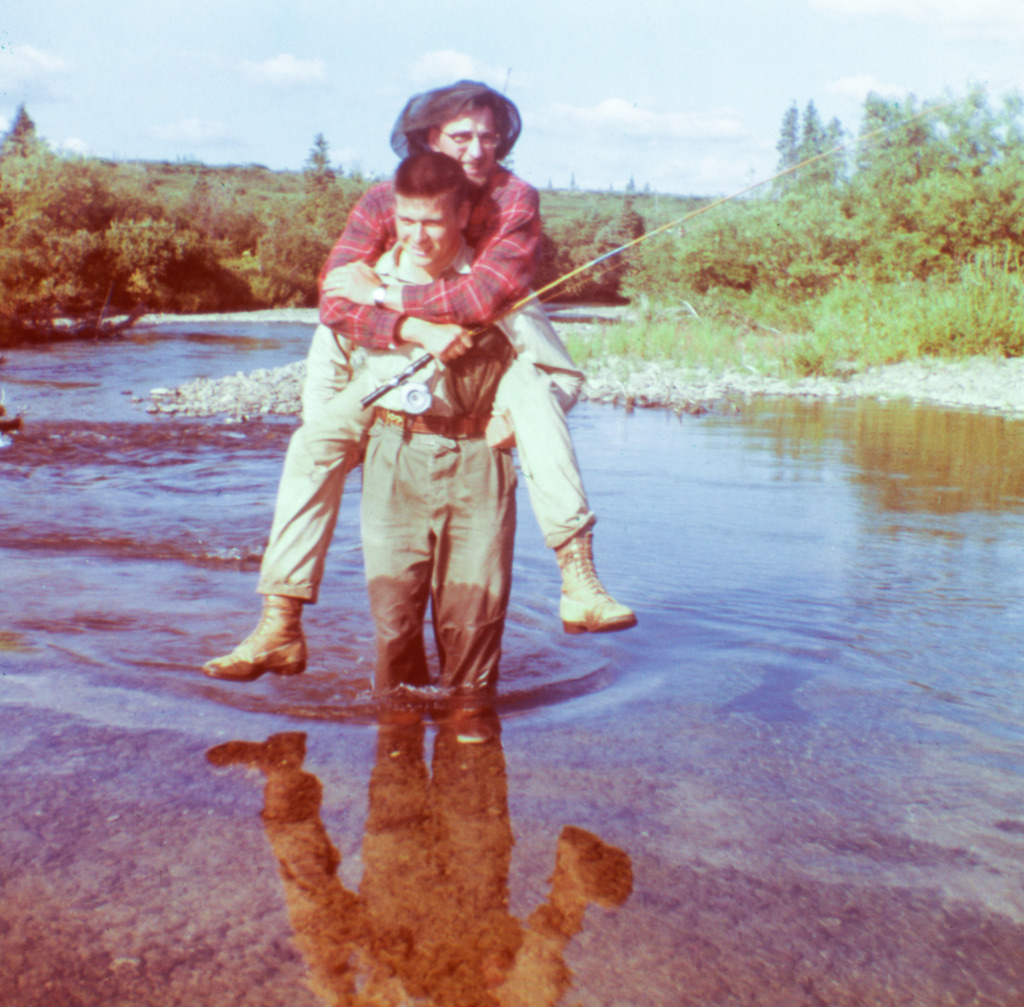
Bill Morrison expected me to help him with his main love…fishing. We could fish while the midnight sun shone.Of course this is an exaggeration.
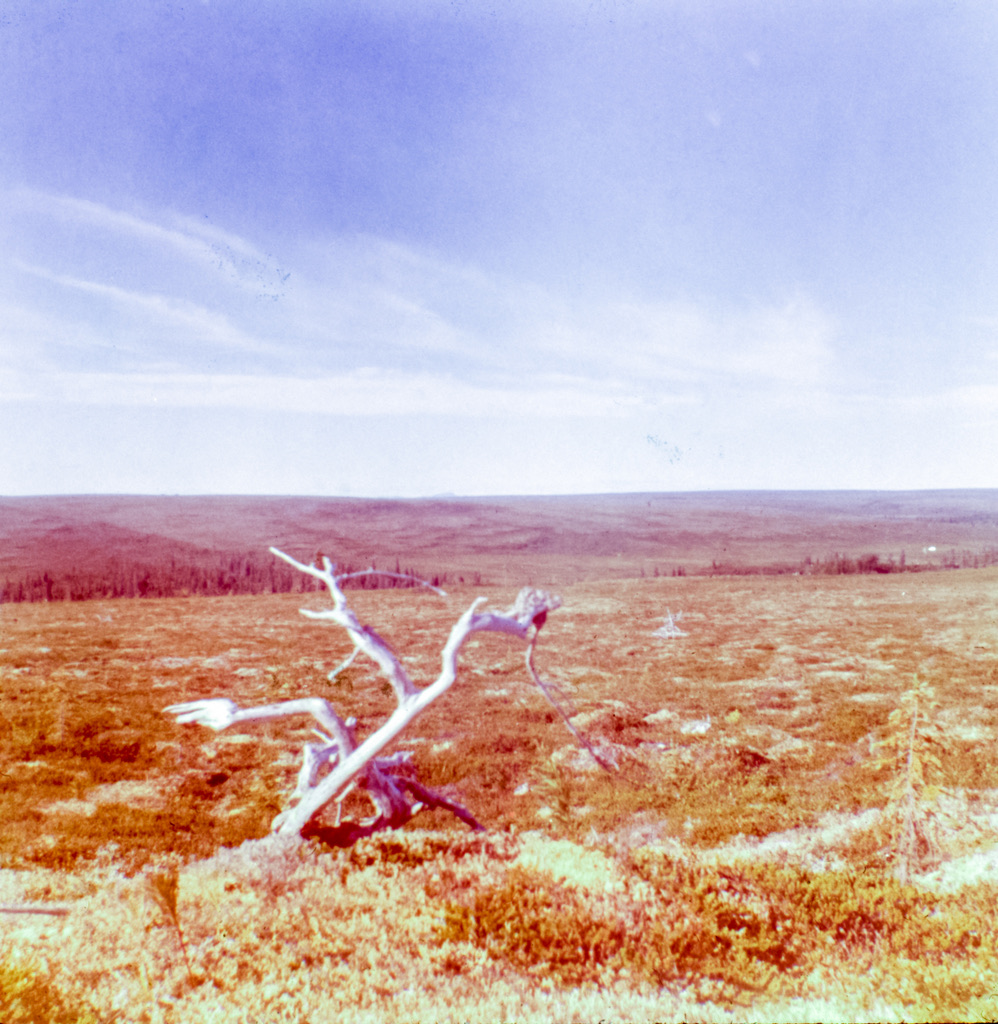
A barren land cut by occasional river valleys. Thousands of years ago the Yupik people crossed here from Siberia.ALASKA 1960: There were 31 of us on the job…25 American diamonddrillers and 6 Canadians using a Turam geophysical instrument to site drill sites in the greatemptiness of south west Alaska…north of the Aleutian Chain.What I do remember clearly is that three of us, Canadians, proudly sported our University of Toronto dressjackets. Anglo Canadians with specialized knowledge. Proud and arrogrant we must have appeared.We only had a few minutes in Dillingham before wewere to be ferried by big Sikorsky helicopters to our tent campsite in the interior.I did not think. Sitting on the doorstep in the village were two indigenous people. Likely Yupik. A Man and his wife…older…perhaps in their 60’s. Both seemed either super friendly or somewhat inebriated. Without asking I took their picture. Think about that. These two InigenousAmericans were treated like I had been years earlier in a rock outcrop in northern Quebec…subjects of photography.In this case, however, I was the photographer just like the priest and his carload on the Opemiska road.For the rest of the summer on the barren lands we never saw a native person. Yet this was their home.None were part of our crews. They were the only indigenous people we met. WE flew in…did oursurvey…and flew out. I never even asked their names.Somewhere I have another picture. Not proud of it. When the Yupik man got up to shake my hand hefell flat on his face. I helped him to his feet and asked one of our crew to take picture of us.I was wearing my University of Toronto dress jacket. He was wearing the clothes you see in the picture.Even then, back in late May 1960, I felt uncomfortable about that picture. I had crossed a line. Violateda trust. Exploited a situation.Today, in the bright lights of awareness of others, I would not have taken those pictures.What should I have done? The same thing that most people would have done…pretendedthese indigenous people did not exist. Which is worse?alan skeochJuly 2021WHO ARE THE YUPIK PEOPLE?Population[edit]
The Central Alaskan Yup’ik people are by far the most numerous of the various Alaska Native groups. They speak the Central Alaskan Yup’ik language, a member of the Eskimo–Aleut family of languages.As of the 2002 U.S. Census, the Yupik population in the United States numbered more than 24,000,[4] of whom more than 22,000 lived in Alaska, the vast majority in the seventy or so communities in the traditional Yup’ik