Year: 2021

  • re EPISODE 402 :JOHN RICKER … HEROES IN OUR LIVES EPISODE 402 WLL BE DELAYED

    RE  EPISODE 402:  JOHN RICKER … HEROES IN OUR LIVES   EPISODE 402  WLL BE DELAYED

    Hi John (Wardle)

    Castlefield Institute,
    august 2021


    RE:  HEROES IN OUR LIVES


    This story will be slow in coming because when JOHN RICKER edited my speech in 1980’s he revealed
    so much about himself…about John Ricker.. that I must follow the evidence to Earl Birney and Frank
    Underhill…two heroes of Ricker’s that I have never known.  Reveals so much.
    The theme is HEROES IN OUR LIVES…think about it.  Our heroes reveal so
    much about who we are, what we believe, our life journey.

    For those of you who do not know John Ricker.  Please do not feel this episode is
    peripheral to your lives.  It is not.  Recollections of heroes … personal heroes…says
    so much about the essence of each of us.

    Origin of the story comes from my discovery among the dust detritus of my files
    a speech that I made long ago.  John Ricker edited the speech ruthlessly.  The
    story HEROES IN OUR LIVES is the result of his edit.  Who is John Ricker?
    He was a little kid in Great Depression…a high school valedictorian in 1942…a
    rear gunner in a war where many of his friends died…a teacher of history…a receiver
    of the Order of Canada…a friend.  A person who triggers thought.


    So the episode will take more time.  Worth it.  And I must make the story readable
    by people who have never heard of John Ricker.  

    I send these comments as an explanation of the delay.

    alan skeoch
    august 2021
  • EPISODE 400 THE SHORT AND HORRIFIC LIFE OF GEORGE EVERITT GREEN, HOME CHILD , PART FOUR

    EPISODE 400    THE SHORT AND HORRIFIC LIFE OF GEORGE EVERITT GREEN, HOME CHILD ,  PART FOUR


    alan skeoch
    August 2021


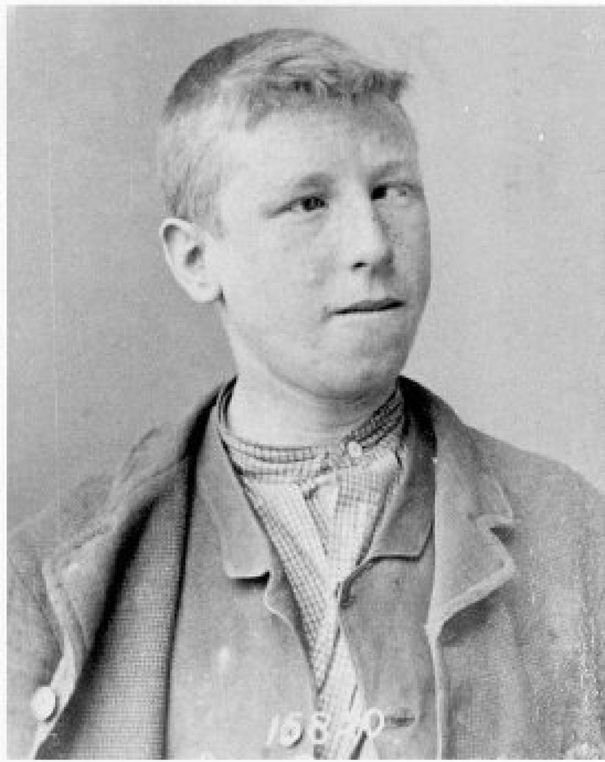
    Each episode will include a picture of George Green


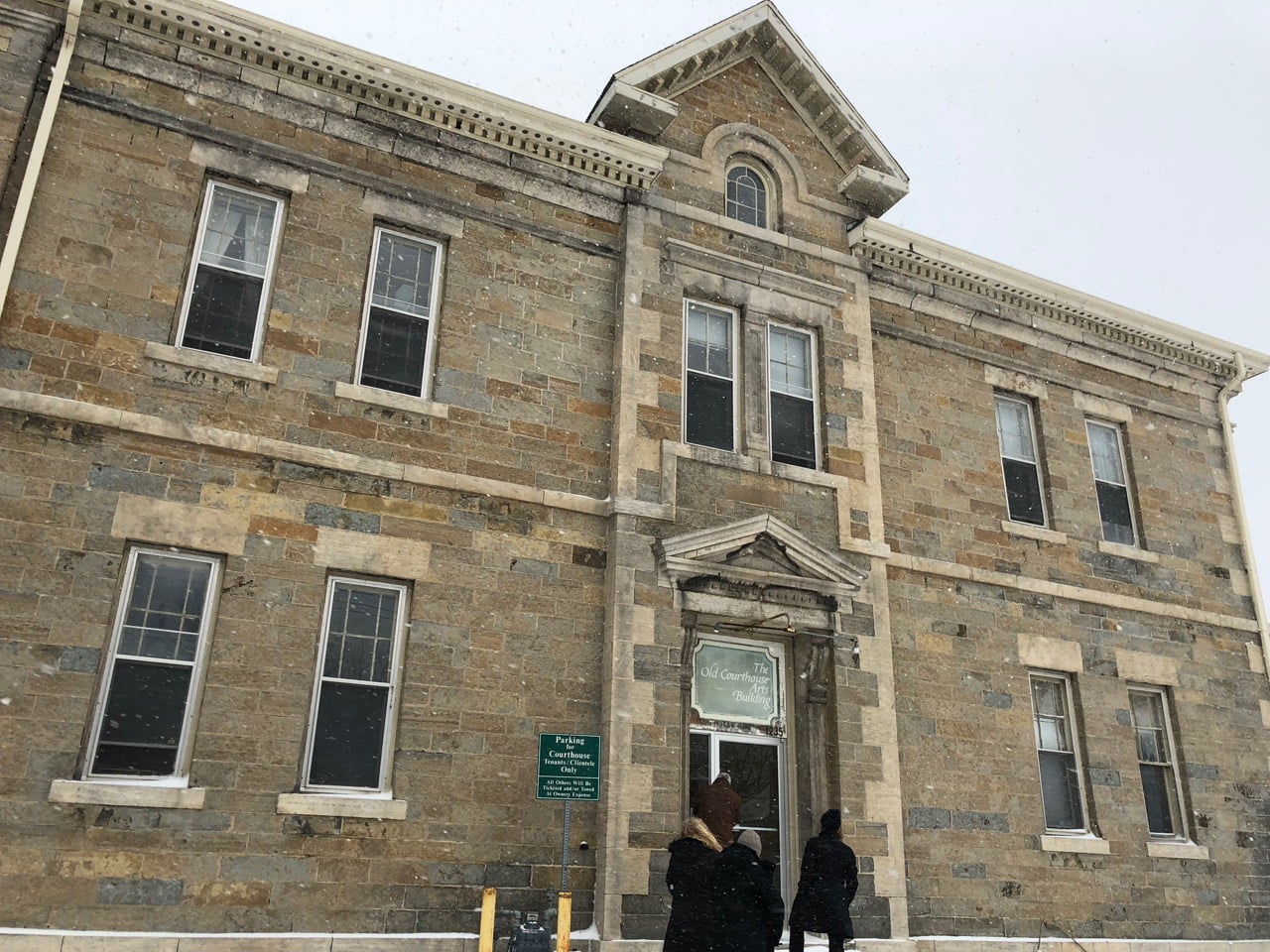
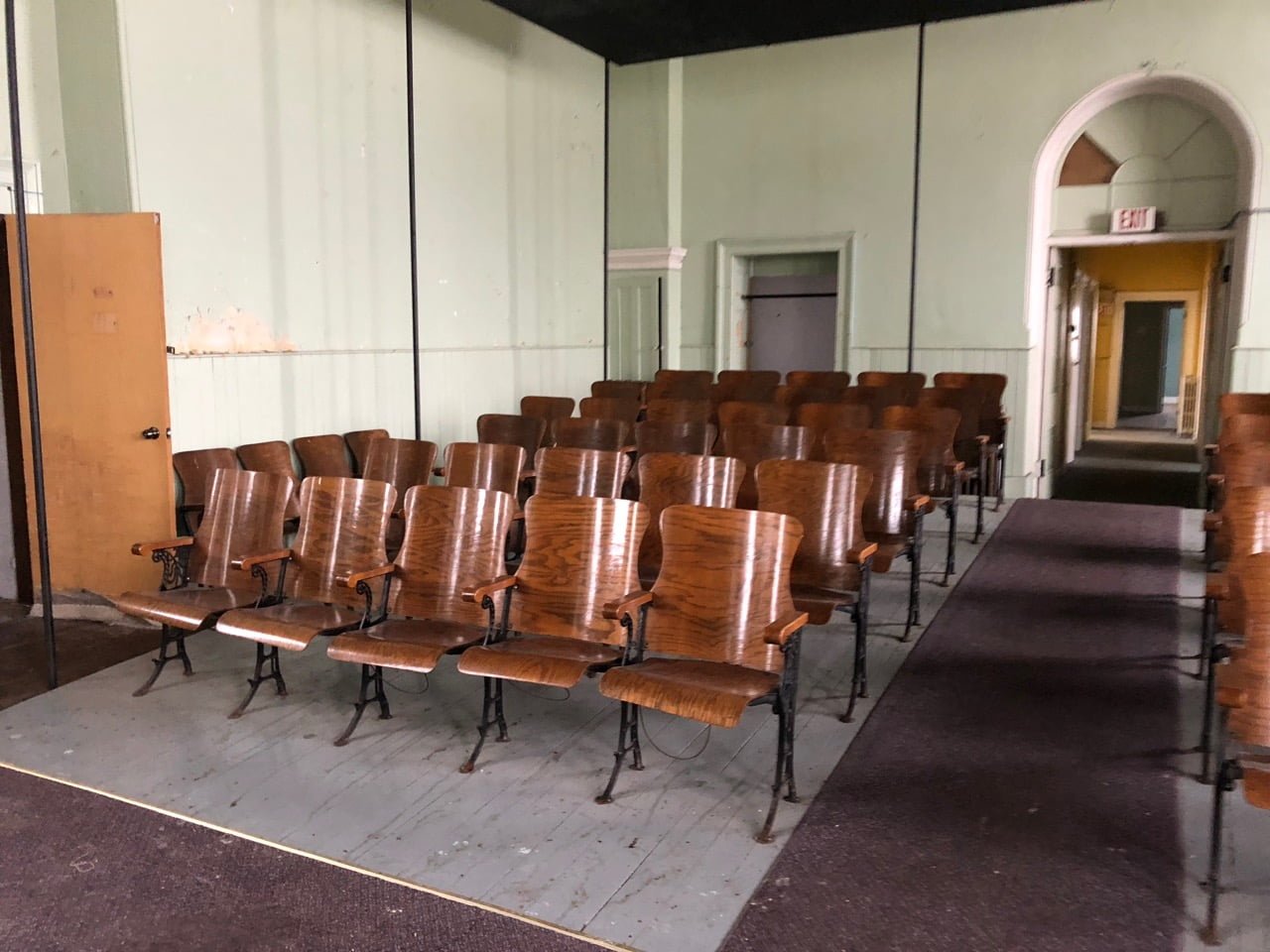
    OLD OWEN SOUND COURT HOUSE

    IMAGNE sitting in this court room while Dr. Dow described injuries to George Green


    DOCTOR DOW DESCRIBES BODY OF GEORGE GREEN

    Dr. Dow was asked to state the results of  his examination of the body of George Green. 
    -He was “very much emaciated…extremely so,”  
    -His skin as a palish while, bloodless, dirty like there had been
    a coat of varnish on it.  
    -“the skin of his nose looked like it had been taken off. “ 
    -The outer edge of his left ear
    had a full length scab.  
    -There was a large scab on the left cheek covered by a scab, 
    -a large bruise on the
    lower surface of the chin, 
    -an old wound below the right elbow, 
    -the ends of the fingers were gangrenous 
    – the bones of some finger were completely bared, 
    -the left knee had several abrasions, 
    -there was an ulcer
    on the ankle about the size of a palm of a hand, 
    -one foot was also gangrenous, 
    -the left leg looked
    like it had been scraped with the end of a rough sawed board. 
    -abscesses on sole of the other foot with ulcer
    on front, 
    -bed sore the size of the Doctor’s and o the right hip, 
    -spots on body which may have been
    flea bites.

    This list is hard believe.  It would be a good idea to read it twice.
     Had it not come from a trained medical doctor I would
    have assumed the list was fake.   As events turned out the last entry led to
    deeper insight into the life of George Green and also his tormentor.
    Flea bites!   Not so.

    It was suggested to the jury by defence witnesses  that George Green was the child syphilitic mother…and 
    that George was syphilitic when h arrived in Canada.  His death therefore should
    be expected.  Negative prejudices of city life by rural people was common.  Dr. Dow gave his professional opinion on this matter and went
    on to suggest how George died.

    QUESTION TO DR. DOW:  How did George Green die?

     I examined for syphilis and for scrofula (Tuberculosis)…did not find disease.
    Did you ever in your life, either as a physician or otherwise. see a bedroom in as filthy stat?
    I never did…it was about as fifty as anything I  have ever seen.
    What was the cause of the wounds, marks and abrasions you saw on the body?
    Direct violence
    Do you think the wounds could have been accidental?
    I don’t se how they could.

    What  caused the death of George Green?
     Causes of death were many – the sleeping apartment, improper food, general way of living,
    being abused from day to day and the wounds themselves particularly the condition
    of the fingers and toes.  (gangrene)

    Another doctor was then called to testify.  Dr. W.H. Scott was present when Dr. Dow performed
    the most mortem on George Green.  He was cross-examined by defence lawyer Tucker in an
    effort to establish that the boy was syphilitic hence the red spots on his body.  And the boy
    was clumsy hence the abrasions on his body from frequent falls.

    QUESTION:  Didn’t it strike you as peculiar that the fleas would take bites in regular place equals
    distance from each other?
    ANSWER: I didn’t say they were directly regular.
    Pretty nearly said the bites were in marching order feasting off the boy as they went along.
    Perhaps they were not external bites at all.

    Then Mr. Tucker called another doctor , Dr.Lang who testified he bites were not flea bites
    because  the bites extended deep below the skin to the bone,  


    WITNESSES WHO TESTIFIED


    Here are some of the comments made by neighbours and farm workers

    LAURIE FERGUSON to MR. MACKAY

    “Where do you live?
    North Keppel, about a mile and three quarters from Miss Findlay’s.
    Did you know George Teen?
    by eye sight
    Did you see anything as to how she used him?
    No
    Did you hear her say anything as to how she used him?’
    Yes, in the harvest time she said she made him sleep wit the pigs because he misbehaved in his bed.
    She put him out two nights with the pigs and when he would not promise not to do it anymore she him out two more.

    DOCTOR BARNARDO 

    From England DR Barnardo responded with heated indignation to the suggestions that George Green was both
    imbecilic and syphilitic.  He cited the results of the British medical examination given before
    George boarded the Parisian for Canada.  He said the children sent to Canada were
    the cream of his rescue mission.

    DAVID GUNSON

    Where do you live?
    Keppel
    What is your business?
    Blacksmith
    What kind of lad was George Green?
    He was a quiet boy, rather a mannerly little fellow, as far as talking is concerned.
    Were you present at the Findlay farm on the 11h of October”
    (Yes) It was a cold day and she said she sent Mary Brown up to make supper and sent the boy
    to warm himself and go and get the cows.  Mary Brown made a pot of mush (made with bran and flour)
    and fried a pan of potatoes and then she went out to he barn to help Miss Findlay clean up the barn floor.
    When Miss Findlay came in the  she asked ,  “Who the hell is in here?” 
    The boy came out and she she got a stick or kicked him and the boy fell over and she jammed  the pail together.
    Smashed the pail?
    Yes
    Did  she say she kicked him?
    Yes and second time kicked at him and he upset the swill pail.
    Did she give an reason for doing this?
    Yes.  she said when she went into the the boy “had eaten all the potatoes and damn near all the mush.

    JAMES HUSBAND

    Where do you live, Mr. Husband?
    Kemble, sir
    How far do you from Miss Findlay?
    I suppose three miles.
    What was George Green doing the last time you saw him on Nov. 8?
    Unloading wood out of wagon.  I was coming and Saw her beat the boy with a stick the size of a chair leg,
    about three feet long.
    Hard blows or not?
    I should say pretty hard blow.
    If that stick turned out to be an axe handle, would that be reasonable chastisement even if he deserved it?
    No
    Was there anything the matter with the boy when you saw him?
    I saw blood on his nose.
    What part of his nose?
    Across the bridge.

    (Apparently George Green did not throw the firewood far enough from the wagon and Helen
    Findlay had to pick them up and throw the wood to the fence.)

    NORMAN MCLEOD

    Where do you live?
    North Keppel – farm
    Did you ever see George Green go about his work there?
    I have seen him getting the cows, bring them down from the high rock field and I have seen him milk
    five cows and carry the milk up the rock.
    Is that an easy task?
    It is not.  There is just a path blasted out of the rock for the cattle to get up and down and the precipices
    are almost perpendicular, it was just blasted so cattle can get up and down and it is very steep and it its
    quite a distance to carry milk.

    (MR. Tucker cross examined Norman McLeod who said “I don’t think the boy was very sensible or smart 
    of intellect)

    BABARA HORNE

    Where do you live, Mrs.Horne?
    AT North Keppel, next farm to Miss Findlay
    What kind of boy was George Green when you first saw him?
    A healthy looking boy.  He looked clean and well dressed.
    Any sign of disease?
    I didn’t notice any.
    Did you see him eating there?
    I saw him once.
    When?
    At his breakfast.
    About the end of August.
    Eating with others or alone.
    Alone
    What time?
    Nine O’clock.
    What was he eating?Porridge.  It looked to me like bran porridge with just enough flour to hold it together.
    Was there anything else to eat?
    Just brown bread on the table.
    Did you see anything of Miss Findlay’s treatment of the boy?
    No
    Did you hear her say anything…with reference to her treatment of him?
    Yes, I have often heard her say things.  She said if he didn’t work she would stick the pitch fork in him. I heard
    her scolding I’m…yelling at him.  I heard her halfway across the field.
    Did you see the boy much after he went to Miss Findlay’s?
    Yes, he came over to our place sometime in October.  He just had on an old pair of pants and I think the
    jersey that the boys have when the boys come from the Barnardo Home and he was bare-footed and bare-
    headed and it was raining….a cold, cold day
    Was there any signs of sickness or skin disease then.
    None then, no.
    I want to know if you can tell me anything Miss Findlay said as to how she used him, or as to what she had done
    and what he said when she did then?
    she told me about striking him sometimes in one way and he said “Oh, please stop.” and she told that was great fun.
    Did you consider the food was fit to at.
    I don’t think it was fit for a working boy to eat.
    Would you like to eat it?
    No.


    CROSS EXAMINED BY MR. TUCKER

    I suppose you will stick to it that this was bran porridge?
    Certainly
    You have enlarged on it a this time.  At the prior investigation you said it looked like bran porridge and now 
    today you say it was bran porridge with enough flour to keep it together.
    You didn’t give me a chance.
    Of course you thought it was a very unChristian thing to treat a boy that way, threatening to stick the pitch fork
    in him?
    Why, of course I thought that.
    And at the same time you were going backwards and forwards in a friendly manner?
    Not very often.
    And you never thought it proper for some kind of objection to be raised? Y ou never spoke to her about it,
    never complained to her?
    I told her when she first got him she should send him back, he was not a suitable boy for her.
    Why not?
    I didn’t think he could do the work, she was always complaining about him every time she spoke to me.
    Why could he not do her work?
    Well, I thought he could but she said not.  I saw him loading hay and saw him hitching the horses to he wagon.
    You never said to her about the manner in which she was treating him, that is so is it not?
    Well,  don’t think Miss Findlay would’ve taken it from me.

    The lawyers MacKey and Tucker cross examined witnesses aggressively even using contradictory statements
    made by husbands and wives as with the Hornes.  At stake was the life of Helen Rose Findlay.  Canada, in 1895
    still practised capital punishment.  If convicted then the hangman could be called.  Mr. Tucker tried to convince the
    jury that George Green died of natural causes.   Mr. Mackay wanted a conviction for murder.

    MR. W. H. HORNE  (examined by Mr. Mackay)

    Where do you live?
    Near Big Bay
    How far from Miss Findlay?
    The next farm.
    Across the road or alongside?
    Alongside.
    How far apart are the houses?
    About 3/8 to 1/2 mile
    What kind of lad was he?
    Fairly healthy, average size for a 15 year old boy. Taller than the general run of Home Boys at that age.  Not so
    stoutly as Keppel boys.
    Did you see him at any kind of work that would test his strength?
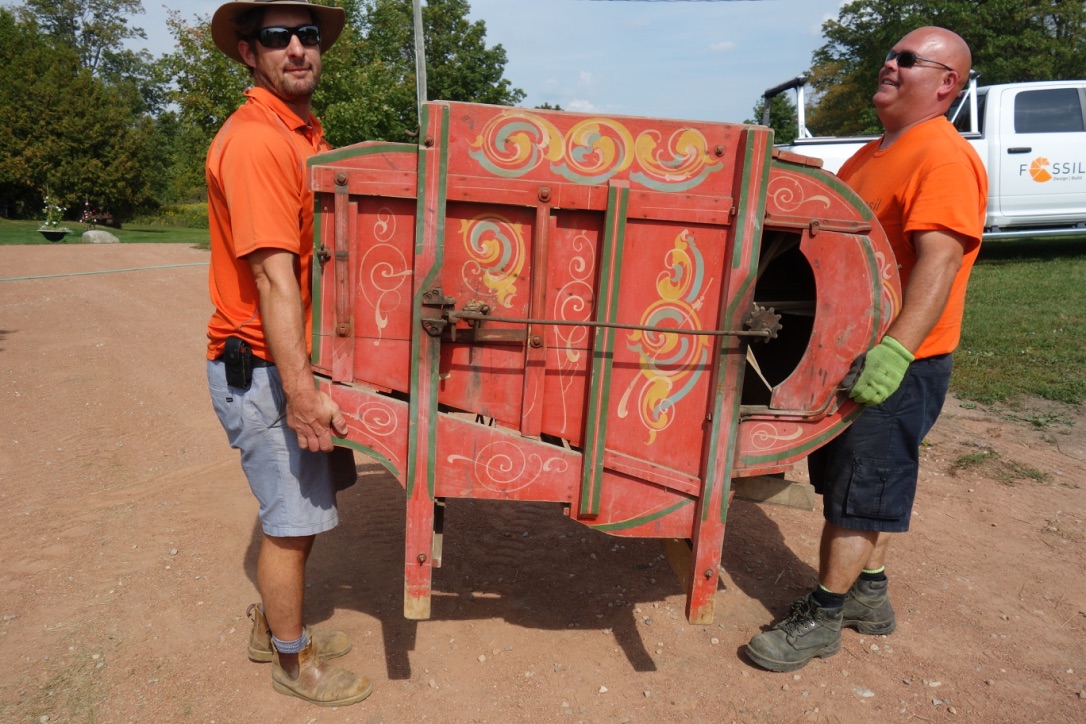
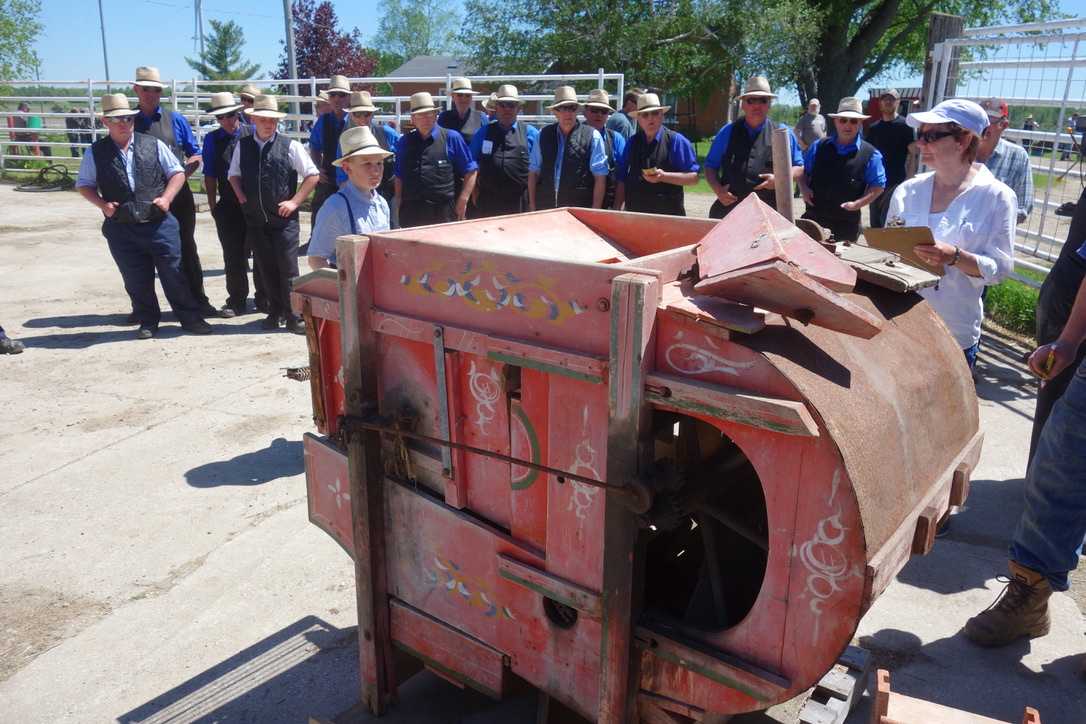
    Yes, a few days after he arrived Miss Findlay brought over some grain to my fanning mill and he turned the mill
    while grain was being cleaned.
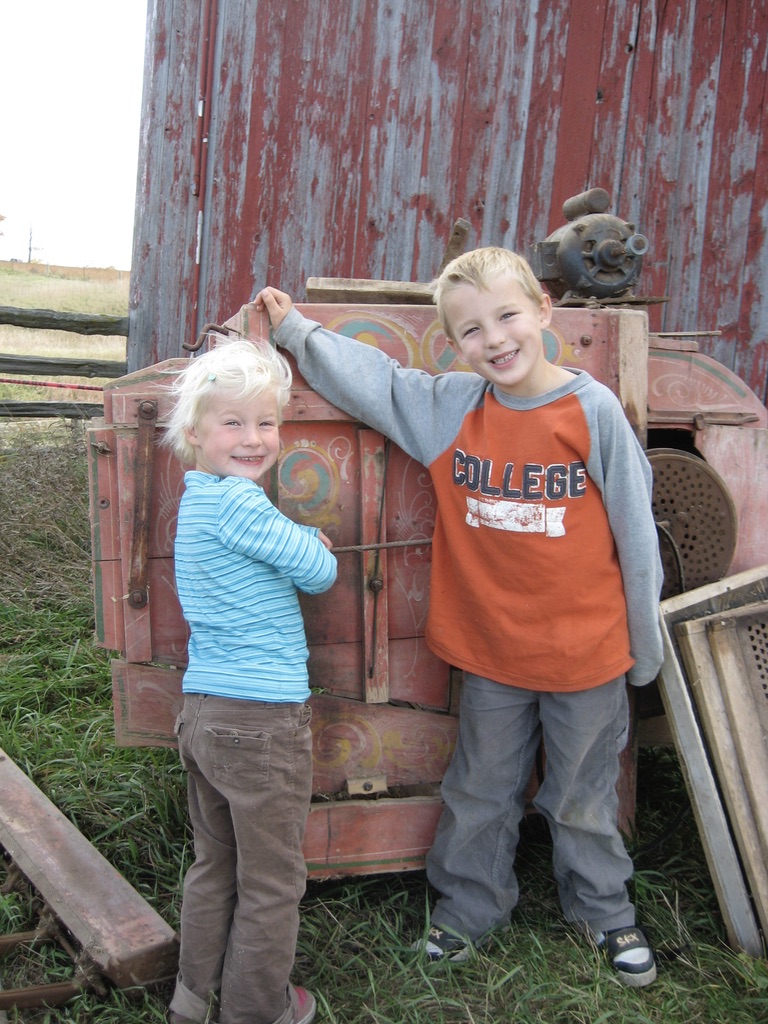
    What kind of fanning mill is it?

    Here are a few pictures of the same kind Chatham fanning mill as described,  Kids Molly and Jackson
    seem to be enjoying themselves.  George Green was not as enthusiastic


    A Chapman (Chatham?) with bagger attached.
    He appeared from that to have average strength.
    I should say average strength.
    Did you see him frequently after that during the summer?
    Yes.
    He was dressed as a rule?
    Sometimes not very well dressed but I didn’t think anything of that in the summer when it was warm…Later, when
    it was colder I thought the boy hadn’t enough warm clothes on.  He looked blue and cold in the fall.


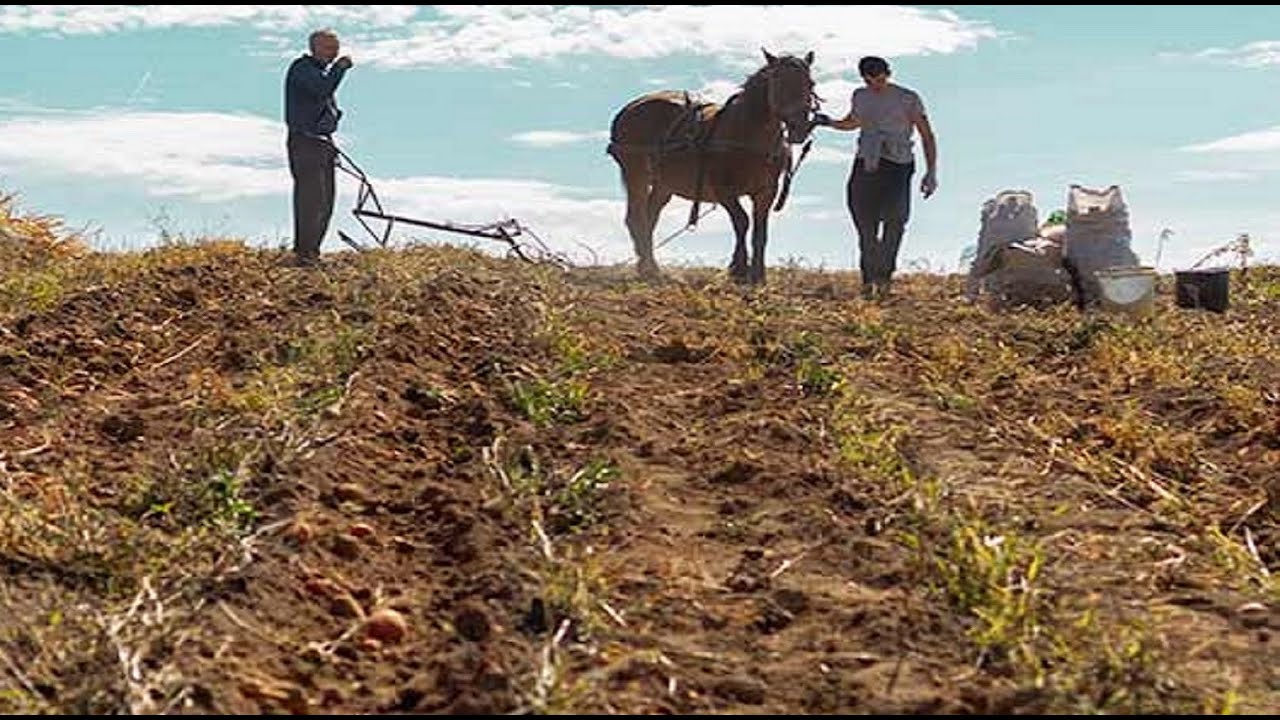
    Digging potatoes with single horse and potato plow 

    Do you remember an occasion on which you were digging potatoes?
    Yes, sometime late in October.
    Did you see Miss Findlay that day?
    I heard the boy cry and thought I heard a blow and I looked to see what was the matter.  They were working in
    the barley field.  Miss Findlay had a fork in her hand and the boy was trying to get away from her and she 
    was scolding him and following with the fork in her hand.
    What were they doing?
    Hauling in barley, but their crop was very late.
    Was she close enough to strike him?
    I think she was about the length of a fork handle away when I saw her. I have heard her scolding him often around
    the house and the barn,  sometimes in the field.

    You were over at the house the day after the boy had died?
    The night before, after she came home from town.
    What condition was the bed in?
    It was dirty.  I think some clothes had been used in the stable because there was marks on them and they looked
    as if  they  had been…and I suppose some of the clothes was soiled by the boy himself lying in the bed.


    NOTE:   Witness after witness testified that Rose Findlay abused George Green.  She said she went to town
    to get medical help the night he died which may or may not have been true.  Miss Findlay was having trouble
    managing the farm….late harvest of barley and potatoes, need to sell most of her milk to local cheese factory
    raised doubts about care of animals.   Lack of food in the house and regular meals of bran mush was another
    indication.

    MR. HORNE (Cross examined by Mr. Tucker for defence)

    You don’t pretend to say that the boy was fat and strong?
    No, sir, I would not say he was a rugged boy
    You don’t pretend to say Miss Findlay struck him that day in the harvest field?
    I didn’t see her.
    In what condition were his hands and face?
    They were very dirty very often.
    There was nothing very extraordinary about his turning that fanning mill a few minutes?  It was no test of strength?
    It would have been if he had continued at it.  It is hard work for me to run it right alone.
    Turning half a bag of grain through it, that would not amount to anything?
    There are six or seven bags, but they were not very full.  About a bushel and a half in each bag.
    Do you know if Miss Findlay assisted him?
    Perhaps she did.   I didn’t stay there.

    Did you ever notice his habit of walking?
    Yes,  I didn’t think he was a very good walker, he took a long stride but I thought he was not a smart walker…not
    very smart on his feet..
    He was humpbacked?
    No, I should say round shouldered and carried his head forward.
    His mouth was also drawn to one side?
    A little.
    And his lower jaw projected more than the upper?  You are the first witness to admit that his mouth was drawn
    to one side.   He was cross eyed also. right?
    His face being drawn around I would not be sure whether he was, but had the appearance of being cross eyed.
    Did you know he was left handed?
    No sir.
    You didn’t know that?
    Left handed men used to be the best in olden times.

    MR. MAcKAY

    You say he seemed to be clumsy on his feet.  Did you know he was absolutely blind in one eye?
    No sir.
    Would that account for his awkwardness?
    It just might.
    Suppose he was blind in one  eye and short sighted in the other?
    I think it would.  And I think that is why he walked with his head down.

    END OF EPISODE….COULD THE TREATMENT GET ANY WORSE?

    Picture of Big Bay not far from the Findlay Farm.

  • EPISODE 399 THE SHORT AND HORRIFIC LIFE OF GEORGE EVERITT GREEN, HOME CHILD , PART THREE

    Note…some readers may get upset as this court case unfolds.  Be forewarned. Of all the Home Child cases
    I have read, and there have been many, this is the worst.  It seems many journalists agree for the case is
    mentioned often.  No other journalists seems to used the court records though.   For good reason.


    EPISODE 399: THE SHORT AND HORRIFIC LIFE OF GEORGE EVERITT GREEN, HOME CHILD ,  PART THREE


    alan skeoch
    August 2021


    The condition of George Green when he arrived at Miss Findlay’s farm was critical to the case.
    If the testimony of the stage drive was competent then Miss Findlay could not be held responsible
    for his death.   He was mentally and physically ill.  James Jeffery, blacksmith apprentice in Kemble, was called to the witness stand.

    JAMES JEFFERY.  SWORN.  EXAMINED BY DEFNSE ATTORNEY TUCKER ND CROSS EXAMINED BY ATTORNEY MACKAY
    FOR HE PROSECUTION.

    QUESTION: MR. MACKAY:  You told us the first time you saw George Green he appeared to be healthy and straight?
    ANSWER: JAMES JEFFERY:  Yes sir
    He was not all twisted and tangled up, like Mr. Johnson said?
    Not that I noticed. 
    Then you didn’t see him again until the end of September (one month before George Green’s death)
    Would you say he was thinner?
    I think he was a little, sir
    He did not look as plump and healthy looking.
    No
    Did he look as if he had been weakened down from some cause?
    Yes, sir.
    HIs face was not clean and not as good a colour, is that right?
    When you saw him first he had a pretty good colour….was a healthy boy?….mannerly?   polite? kind and docile?
    …he did not seem impudent…inclined to be bashful.
    Yes sir.i
    Did you ever see anything in him that would indicate he was a saucy or impudent boy?
    I never saw anything.

    Did you see the boy’s trunk or valise?
    Yes I did..not very long ago.
    Did you see it in the stage that day?
    No sir, not that day.
    Do you know the difference between a Home trunk and a valise?
    Lately I do sir
    What is a Home boy’s trunk.
    A wooden box, sir.
    Not leather like a valise at all?
    No sir.
    What size would the trunk be?
    I would judge about 26” across, 30” long and 18” deep.
    Then Mr. Johnston is not right when he says it is a valise?
    That wooden box is not a valise…I’m sure of that.

    NOTE:  Why is this debate between a valise and trunk important.  What point is Mr. MacKay trying to establish?

    The jury had a great deal of difficulty since witnesses tended to contradict each other.  Some witnesses were
    lying.  But why?  Mr. Johnson testified that George Green was an imbecile…a museum piece.  On the other
    hand James Jeffery, a Home boy working in Kemble, testified that George was ‘very healthy looking’ when he arrived
    in May but by September he wa ‘rather thinner (and had) no conversation in him’. 

    Subsequent testimony by Alexander Amos, a nearby farmer, suggested starvation when George Green came ‘for a 
    basket of green leaves’ in August.  Mr. Guido, another neighbour testified George wore boos while others said he
    was barefoot.   All agreed he was bareheaded much of the time which accounted for the peculiar marks on
    his head.  Sunburn.  On the other hand the prosecutor witnesses believed the mark on the head and body
    indicated George had been struck several times.   Who could the jury believe.?

    Farmers Guido and Horne were called to move the body from his bed to two boards.  Mr. Guido’s testimony was 
    in sharp contrast to the medical doctor who was called at the same time. (both Guido and Guidi names are used for 
    the farmer)

    MR. JOSEPH GUIDI, SWORN, QUESTIONED BY MR TUCKER.
    (Joseph Guidi or Guido had the farm to the west side of the Findlay farm)

    QUESTION:  Had the boys’ physical appearance changed  from the time he was first seen in June until the
    time he was seen again in the middle of October?
    ANSWER: No, with the exception that he looked cold,  I could not see any difference as far as physical condition.
    Did you ever see him alive again?
    No, this was the last time.
    Did you ever see him dead?
    Yes
    What day was that?
    Sunday morning…he was in his bed.  I was over helping remove him from the bed he died in.
    Who assisted you?
    Mr. Horne
    What condition was that bed?
    Well…middling fair
    What do you mean by that?
    Possibly I have seen cleaner and I have seen dirtier clothes, I would just call them  in between.
    What was the atmosphere in that room?
    It didn’t smell very pleasant, I suppose on account of the corpse…but it was a good deal the smell as in
    a farm house where the were boiling turnips for the pigs.  I didn’t smell anything until we moved the corpse.
    What was the condition of the floor of the upstairs?
    I didn’t see anything out of the way on the floor.
    It is said by one witness there was old harness and rags it was generally dirty.
    There was no harness that I noticed.
    What was his physical appearance Sunday Nov. 10 as compared with when you first saw him in June?
    The body looked quite natural to me with the exception of the scars on his nose and face.

    The condition of the room was described by Dr. Cameron in quite the opposite manner.  The room was so indescribably 
    filthy that the doctor had never in his whole practice, even in the slums of Glasgow, seen such a room where a
    human being was expected to live.  George Green was found curled up in the fetal position, in the centre of a
    nest in a straw tick.  Around the nest was a hardened ring of excrement.  The smell was overpowering . The
    Findlay bedroom was the dirtiest, most unwholesome living quarters Dr. Cameron had ever seen…and caused him
    recurring nightmares ever since.   To Dr. Cameron the marks on the boys’ body suggested terrible abuse;

    DOCTOR SCOTT,   EXAMINED BY  MR. MACKAY
    (Another medical opinion solicited)

    QUESTION:  MR. MACKAY:   Suppose the boy was used in this way:   struck with a broom handle, with a manure fork handle,
    kicked around, punched with fist when he was down, hit with slipper and that he had been repeatedly thrashed in that
    way throughout the months of July, August, September, October … and also compelled to sleep in a filthy room…
    Would all that accelerate death?
    ANSWER, DR. SCOTT:  Yes


    TESTIMONY OF DR WILLIAM G. DOW 

    QUESTION BY MR. MACKAY You are a practising physician of how many years?
    ANSWER BY DR. DOW: Nearly ten years
    You went down to the Findlay farm on 11th November with coroner Cameron?
    I did
    You held a post mortem examination I believe?
    Yes
    Did you see the bed in that room?
    I did
    Give me the condition of the Bed in which he died or was said to have died.
    We found the room very dirty, a  good deal of old rubbish.  On the bed was a blanket, part of which looked like it 
    had been in the stable.
    Was there any clean clothing at all?
    Not what would call clean.
    Give me the condition of the bed in detail.
    It was an old fashioned posted bed with board in front and a straw tick opened down the middle showing straw which was short, very
    filthy and semi-solid, very filthy…no spring.
    What kind of filth?
    Well. the only way I could describe it wa as being a place where possibly a pig might have lain for a week or longer.
    What kind of filth? Human?
    Yes, Might have been there for weeks.
    Did any part of that bed show any signs of having been made up in recent times?
    None whatever
    What about the atmosphere.
    Stifling.

    Note:  Readers  might be asking themselves if this case of abuse could get any worse.  It can and does.
      
    NEXT EPISODE
  • EPISODE 398 THE SHORT AND HORRIFIC LIFE OF GEORGE EVERITT GREEN, HOME CHILD PART TWO

    EPISODE 398    THE SHORT AND HORRIFIC LIFE OF GEORGE EVERITT GREEN, HOME CHILD ,  PART TWO


    alan skeoch
    July 2021

    NOTE:  The fifteen year lifespan of George Everett Green is not a story of idyllic rural life
    on an Ontario farm.  The last six months of his life are the direct opposite.  I used the word horrific in the heading…that
    says it all.   Rather than type a new manuscript I will stick largely to the script written in 1992 with
    corrections added.   In 1992 I did not know what happened to Rose Findlay, the tormentor of George…murderess
    is a better term.   Documents recently discovered state she spent at least one year in the Mercer Reformatory 
    for Women located in the Parkdale district of Toronto.   The Mercer Reformatory has been demolished only the home of the matron remains.
    Rose was convicted of child abuse rather than murder.  Convicted.  She did not escape justice even though
    many people considered her innocent.  Some Canadians believed Home Children should never have been
    shipped to Canada owing to the fact most of these children came the slums of English cities.

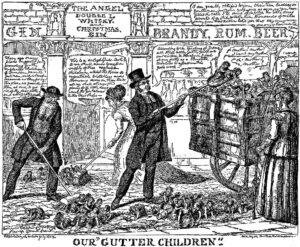
    The negative attitude to Home  Children circulated among many Canadians.   The attitude is best
    seen in  the political cartoon below.  The children were regarded as the sweepings of the slums.  Worthless and
    diseased.   Children that England was glad to send to the colonies.  Children that many people in Canada
    felt were not legitimate immigrants.   As a result many Home Children were overworked and abused. Mind you Others
    were greeted warmly and became valued as future farmers.   Love and hate were expressed among Canadians when Home Children
    were mentioned in casual conversation.  That will be apparent as my story unfolds.  But first take a close look
    at this wretched cartoon….titled “OUR GUTTER CHILDREN” being rescued by a Christian missionary called Dr Barnardo.  George Everett
    Green was abandoned by his laundress mother when he was 6 years old. 


    WHY TELL THIS STORY OF NEGLECT, ABUSE AND MURDER?


    Why is this story so close to me?  My grandmother, Louisa Bufton, was nearly such a child.  Her mother had been impregnated by
    one person named Doctor Price…a medical doctor. He assumed no responsibility for grandma.  And her mother was too poor to
    do much .  How could single women with little children even survive?  No help for them. 

    A distant aunt, Miss Webb, heard that Louisa was being mistreated and possibly becoming a street child in Manchester.
    Aunt Webb rescued her and brought her along with another child to a farm in Herefordshire where she grew up.  But always with a
    bit of the stigma that abandoned children carried through their lives.   Grandma was a very bright woman whose cheerfulness dominated
    her life.  A good marriage happened when she met Edward Freeman who became the head gardener on the 1500 acre Eywood Estate
    near Kington, Herefordshire.   Migrated to Canada in 1908.  Shared adventures and tragedies.   She sang and played the organ as an
     integral part of her Erin Township, Wellington County, Ontario community after she and 
    her husband Edward Freeman migrated to Canada.   Somehow they made a living and raised two children on a tiny 25 acre
    farm with stones strewn liberally on the bit of dry land and four large swamps where nothing could be grown.  We still  have
    that farm.  Today it is our country estate.


    The Eywood Manor House before it was demolished in 1954 and the Estate sold in pieces.
    Edward Freeman’s brick walled gardens still survive to this day.  We have been there often.


    The Freeman farm as it appeared in 1914…with Louisa Bufton Freeman standing and her daughter Elsie Freeman (my mother)
    cuddling their dog Punch.  The farm house remans much as it appears here. The barn is gone.

    Why tell you this?  Because it is best you know my bias before reading the story of George Everitt Green.

    alan Skeoch
    july 2021

    THE MURDER OF GEORGE EVERITT GREEN

    November, 1992:   WE drove North from Owen Sound through the abandoned village of Presqu’ile where George Everett Green’s body
    had been carried in November 1895.  Mike Brillinger and I planned to made a video of the death of poor little George.  We Drove through the village of  Kemble where the old general store stood cold and empty on the dreary November
    afternoon.  Cloudy day.  Then we ascended the limestone and shale escarpment that towers over the deep water port
    of Owen Sound.   Hairpin turns with the  forest reclaiming land lost to pioneer axes a century ago.  A mile or so on we 
    found the graveyard.  The wire gate was open.

    And there it was…the first gravestone.  A large piece of square limestone with an obelisk top pointing to heaven.
    Beneath that stone lay the remains of George Findlay, brother to Helen Rose Findlay.  He had been killed in 1894 when his team of 
    horses bolted throwing him to his death on the dirt road leading to the forgotten village of Big Bay.  Somewhere on this
    road George Findlay died.   He was 43 years old.

    Helen Rose was 41 years old when she inherited their farm…Lot 42, Concession 25, North Keppel Township, Grey County, Ontario.
    Settlement of the will was contested as many relatives felt Helen Rose Findlay should not get the farm.  But she did.   She spent the
    winter of 1894 alone in the frame farmhouse.  A tough winter for Helen. 

    I don’t think she was ready for the tasks of pioneer farming.  I do not admire Helen Findlay but do have some compassion
    for her situation.  North Keppel is a poor place to try and operate a farm.  In November. 1992 the land was abandoned.  Thin topsoil,
    poor drainage, brutal winters.  A depressing place.  Nearby is a lake named the Slough of Despond, a term borrowed
    from Bunyan’s Pilgrm’s Progress.   Slough of Despond … not much more need be said.  

    Helen could not operate the farm without help so she applied to Alfred Owen, superintendent of the Barnardo distributing
    home for young destitute children located in  Toronto.  Her application was accepted since her brother George had taken a
    Home child without any subsequent problem. 

     Fifteen year old George Green was sent by train to Owen Sound where he was picked up by William Johnson, the stagecoach driver.
    A few months later Mr. Johnson would be a key witness in the murder trial.   William Johnson testified that the boy was an imbecile
    who could not even get off the stagecoach without falling.   Others described the boy as a kind of docile version of Frankenstein.

    WHO WAS GEORGE EVERRIT GREEN?

    He looked a lot younger than 15.  (Some sources said he was 17 really but agree he looked younger than that).  His early  life had not been
    pleasant. His father died 1888 when George was very young.  Apparently his mother was a drunken abusive person.   George became a slum kid…a street orphan.

    Negative comments about the mothers of slum children are quite common.  And also very insensitive.  Seems popular these days
    to judge the lives of people in the past using the lens of the present as I have said before.  Single mothers in 19th century England 
    lived a vicious hand to mouth existence.  No social services.  Often carrying the stigma of loose and immoral behaviour.    Alone and rejected.
    How so many of these women managed to keep their children and survive is to me miraculous.  The fact that many surrendered their
    children to social missionaries like Dr Barnardo should be no surprise.  Take a moment to think what you would do in similar situations.

    George was rescued by Dr. Barnardo when George’s sister and mother signed him over to the Barnardo Home.  Dr. Barnardo was
     an English evangelist whose compassion for destitute and abandoned children led to the
    creation of one of the greatest refuges for the poor in England.  George loved the Barnardo Home…first time he felt safe.  He was fed,
    housed and given training in basic trades.  He was also taught to read and write in order that he could read the bible and
    become  a good Christian.  Then on March 25, 1895 he joined 167 other male Barnardo children being sent to Canada on  the
    steamship Parisian.  Not a pleasant experience . The boys were jammed into the steerage part of the ship.  George was sea sick
    for the entire trip and had to live in foul conditions throughout.

    BACKGROUND RECORD


    “Until he was six, Green lived with his older sister, Margaret, his younger brother, Walter, and his parents in lodging-houses in the Tottenham suburb of London. In 1886 the parents deserted their children, who were admitted to the Old Parish School and then to the Enfield Farm School run by the Edmonton Poor Law Union, a local government institution. Their father died in January 1888. In May 1894 their mother induced Margaret, aged 17, to leave her job at the farm school for a place in service, and in retaliation the union discharged the boys into their mother?s care. Within a month Mrs Green was unable to pay the rent on her room, and she and the boys began to sleep rough. In July 1894 George and Walter were admitted to the East End Juvenile Mission of Dr Thomas John Barnardo at their mother?s request. George was described in the admission documents as well conducted, but with a cast in his left eye and a peculiar appearance. Eight months later, on 21 March 1895, the brothers embarked for Canada in a party of 167 boys.

    George was sent on 3 April to a bachelor farmer in Norfolk County, Ont., who returned him to the Barnardo receiving home in Toronto within the trial period of a month because the boy?s defective vision meant that he could not drive a team. On 7 May, Green was dispatched to a second place, near Owen Sound, to live with a single woman, Helen R. Findlay. Since her brother?s death the previous summer, Findlay had run the family farm alone. Before that time, two Barnardo boys had been placed on separate occasions with the Findlays. Neighbours who saw Green soon after he arrived described him as clean, healthy, quiet, and backward. Findlay, who after her brother?s death had been observed doing field and barn work the community regarded as inappropriate for women, they viewed with suspicion

    These comments tell precious little about George.  What was he really like?  Was he an imbecile?  Or was he just a shy kid with physical
    problems.  On this matter hinged the whole murder case.  One of the first persons to testify was William Johnson who swore ‘to tell the the whole
    truth and nothing but the truth”  He was put on  the stand by defence lawyer Tucker who was defending Helen Rose Findlay.  The purpose of  Johnson’s
    testimony wa to persuade the jury that George Green was weak in body and mind…a sick boy suffering from congenital syphillis inherited
    from an immoral mother or, should  that argument fail, Mr. Tucker inferred that George suffered from ‘Scrofula’ …i.e. tuberculosis.

    THE MURDER TRIAL: OWEN SOUND, ONTARIO, 1895: HELEN ROSE FINDLAY CHARGED WITH MURDER

    THE STAGECOACH DRIVER’S TESTIMONY REGARDNG GEORGE GREEN

    “QUESTION:  You are a stage coach driver from Owen Sound to Big Bay?
    ANSWER:  Yes
     
    Do you know George E. Green?
    Yes, I saw him.
    When did you first meet him?
    I think it was the early part of May (1895)
    As you first saw the boy describe his personal appearance.
    He was very much deformed.
    In what way>
    Several ways, I think.  One leg was very crooked or something wrong with his feet…he didn’t
    seem to be able to walk properly.
    You say his feet seemed to be tender one leg seemed to be  crooked.   Then his hips, something wrong there?
    Seemed to nbe twisted some way, …he was crooked, twisted in the back.
    How were his shoulders?
    One shoulder seemed to be as if something knocked it, it was crooked.
    His eyes?
    His eyes seemed to be looking in two different ways.  They were crooked in his head.
    What is known as cross eyes?
    Yes.
    His mouth?
    His mouth seemed to be twisted to one side altogether and his chin set out.
    Do you know what hand he used  (*note – Mr. Tucker knew George was left handed)
    No
    How was his intellect?
    Very poor.   When I would speak to him he would not make answer.  I strove to get
    some questions out of him and he would not answer me.  Generally I wish to know what 
    they (ie. Home children) are like and I put questions to him but him I could not get
    any satisfactory answer.
    Did he have any baggage with him?
    Yes, a valise.
    Who handled the valise?
    Well, I did at the last.
    Did he handle it at all?  He went to lift and he reached out in a different direction from where the
    valise was sitting and fell over…he was awkward in all his movements.
    Who went out with you on the stage that day?
    I think Daniel Davidson was the only one.
    How did he get out of the rig?
    Well, he eiher tumbled out or fell out.  I stopped the horses, and the first thing I saw him on his face and 
    he was on his hands and face on the road.  He either missed the step or something.

    Mr. Davidson tells us that he jumped out of the side of the rig on the road.
    He did not, he tumbled and fell out.

    CROSS EXAMINATION BY LAWYER MR. MACKAY (LAWYER FOR THE PROSECUTION) 
    (He is trying to discredit the witness)

    QUESTION: You could not trust him alone.  He was such an imbecile yoU were
    afraid to leave him alone?
    ANSWER:  I was.
    He was so extremely silly you  didn’t like leave him alone?
    That is SO, he was.
    He was not fit to be let loose?
    I didn’t think he was fit to send to a farm.
    He was in the kind of condition, such an imbecile, he might get lost and die in the fields?
    I considered by his appearance he was an imbecile, and like an intoxicated one.
    Oh, he was an intoxicated imbecile?
    He was not but he looked like that.
    Then you would not think this boy able to work at all?
    I would not take him to work.  
    He was all twisted up?>
    Yes he was.
    Twisted in the shoulder?
    Yes
    Twisted in the legs?
    Yes
    Twisted in his back?
    Yes
    Twisted in the eyes?
    Yes
    What else?
    The jaw was twisted too
    And he was doubly imbecilic?
    Yes, regular imbecile

    (Then) Daniel Davidson is lying straight out when he says that the boy got out of the
    rig..what kind of rig, ordinary box, was it?
    Yes.
    Then Davidson must be lying when he said George put his hands on the sides and sprung out?
    I have nothing to do with Daniel Davidson.
    Was there anything right about George Green?
    His appetite,
    Was his head twisted to the side of the high shoulder?
    Yes, from the side of the high shoulder
    It is a wonder they did not put him in a museum?
    I winder they didn’t put him somewhere else.
    Was there anything else crooked about him?
    Yes, his mouth.
    Squint mouth, cross-eyed,what else?
    His chin around the jaw was just shot out.
    What else?  Anything else crooked? You have only told us about his leg, And neck and shoulder
    and mouth and eyes…was there anything else?
    There seemed to be something wrong with his spine.
    His back was twisted?
    Seemed to be.
    Can it you give us something else.  What else was twisted?  (I think) You were to a little twisted that
    day yourself, were you?
    I don’t be as much twisted as you be.
    You think your eye-sight was good?
    I do.

    NOTE:  The physical condition of George Green when he arrived at Miss Findlay’s farm is
    critical to the case.  If the testimony of the stage driver Johnson was competent, then George
    Everett Green was crippled and mentally deficient. therefore Miss
    Findlay could not be held responsible. According to Johnson, George Green was a broken child before he arrived.
    Mr. Mackay then called James Jeffery, a blacksmith apprentice in the village of Kemble.
    If Jeffery contradicts Johnson then who is to be believed.  Which witness is more credible?

    NEXT EPISODE


    George Everett Green, 1895 when he turned 15 years of age.
    …one of the most notable Home Children ever sent to Canada.
    …and one of the most tragic stories of child abuse.


    Stark; cramped cell is all too typical of the living quarters provided for inmates at Mercer Reformatory in Toronto. They are no larger than the stalls for horses at the CNE. Many are without windows and the girls try to brighten them up by putting small pictures on the walls.

    MERCER REFORMATORY FOR INCORRIGIBLE WOMEN…TORONTO
    (Helen Rose Findlay eventually spent time in the Mercer Reformatory)