Year: 2021

  • EPISODE 492 DOWNTON ABBY ….EYWOOD COURT AND MY GRANDFATHER

    E[ISODE 492   DOWNTON ABBY —DEMOLITION OF EYWOOD COURT 1955

    alan skeoch
    Dec. 25, 2021

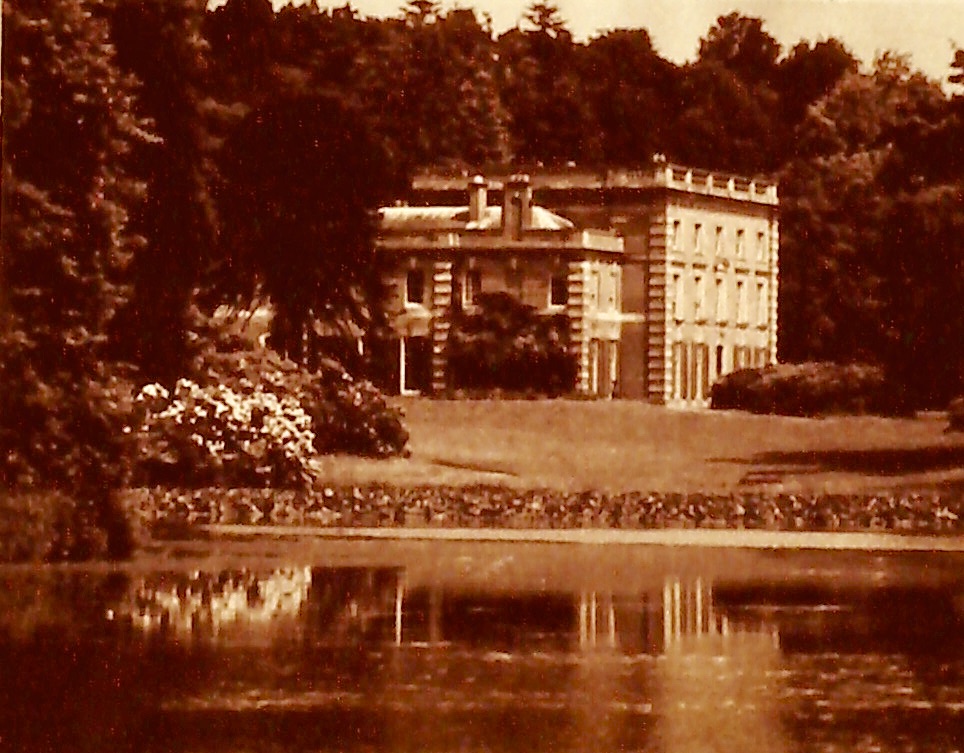
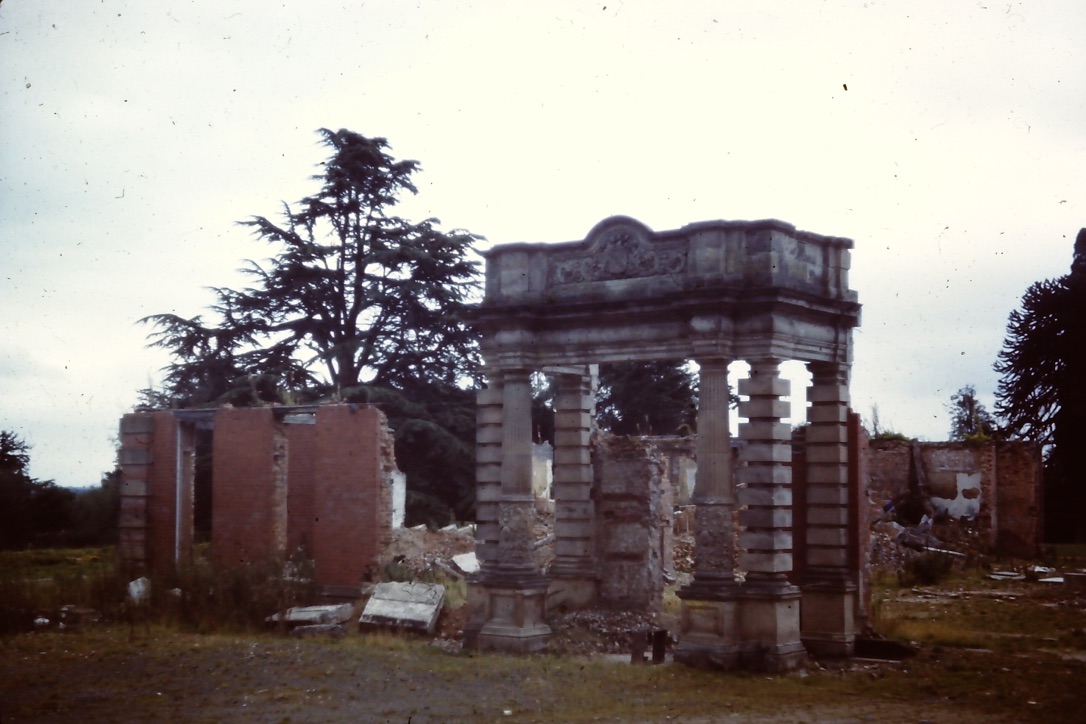
    Eywood Court,  a country estate in Herefordshire , was demolished in 1955 along with dozens of
    other grand estates.  Let me tell you the story.  Coming


    Sorry, my stories are little slower in coming because of Christmas,

    Covid 19 (friends now have the disease…getting closer), need
    to research, few pictures so had to hun hard to get them.

    DOWNTON ABBY…MARJORIE AND I HAVE BEEN WATCHING TWO EPISODES A DAY

    Some readers will also be watching Downton Abby on Netflix.  I hope
    everyone starts looking at the series on Netflix…much longer
    and richer content.   We have a personal connection to the
    ruthless demolition of English Country Estates in the 20th century.  My
    grandfather, Edward Freeman, was head gardener at Eywood
    Court, a huge country house estate much like Downton Abby.
    Yes, granddad was ‘in service’ holding a very responsible job
    managing two large high brick walled gardens.  Earlier he had
    been a gardener at Windsor Castle so he was quite familiar with
    the British class system.  He tipped his hat when necessary.
    And our farm house in Canada was decorated with pictures of
    Eywood Court and many of the service people who worked there.
    Mom’s godmother was the cook at Eywood.  I hope she was similar
    to Mrs. Patmore at Downton.  Granddad made no apologies…proud to be
    head gardener … never indicated he resented Eywood.  I think it
    was mom that mentioned the tipping of the hat indication of inferior status.
    Not granddad.


    My next effort will be to recreate in words and pictures Eywood Court before it
    was demolished in 1955 along with dozens and dozens of other
    country estates.   That will take some time…but will come soon.

    If sex interest you, there is a wonderful story about Lord Byron
    and the lady of Eywood whose husband walked around the
    1500 acre estate while Lord Byron was ‘active’ with his 
    wife.  All documented.

    alan
  • EPISODE 486 HARVEST EXCURSION 1927 AT RIVERHURST, SASKATCHEWAN (john skeoch threshing picture)

    EPISODE 486   THRESHING WITH JOHN SKEOCH IN 1927 AT RIVERHURST, SASKATCHEWAN


    alan skeoch
    dec. 2021


    DAD didn’t leave much when he died in 1977.  His estate was simple.  There was $21 in his pocket of which he owed my brother Eric $20.
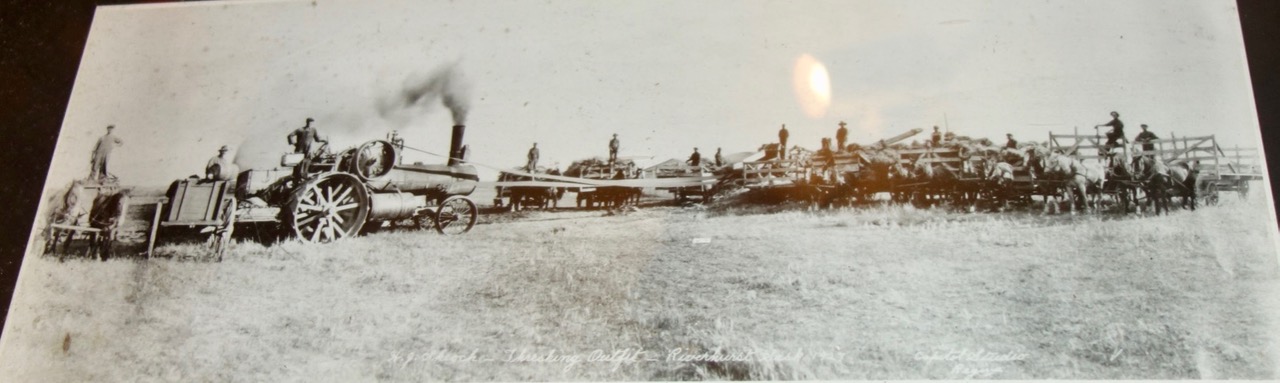
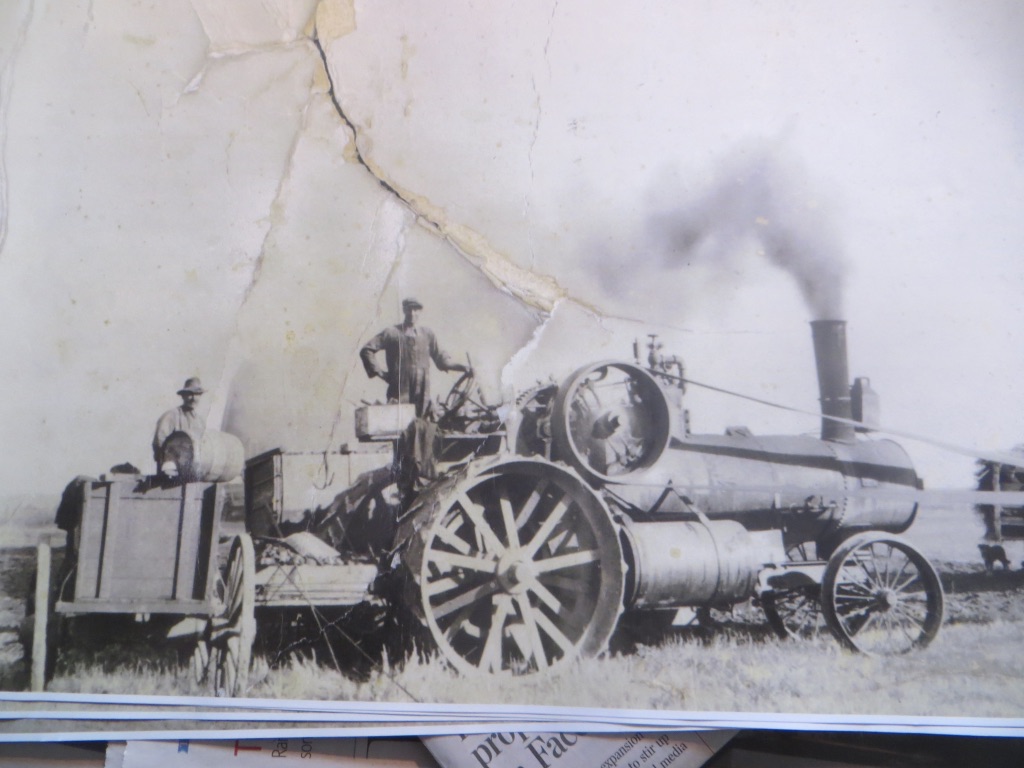
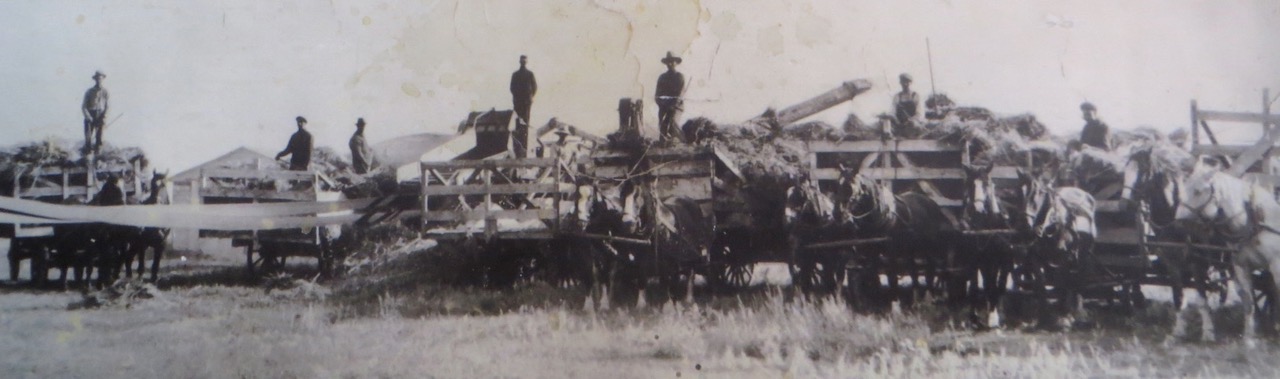
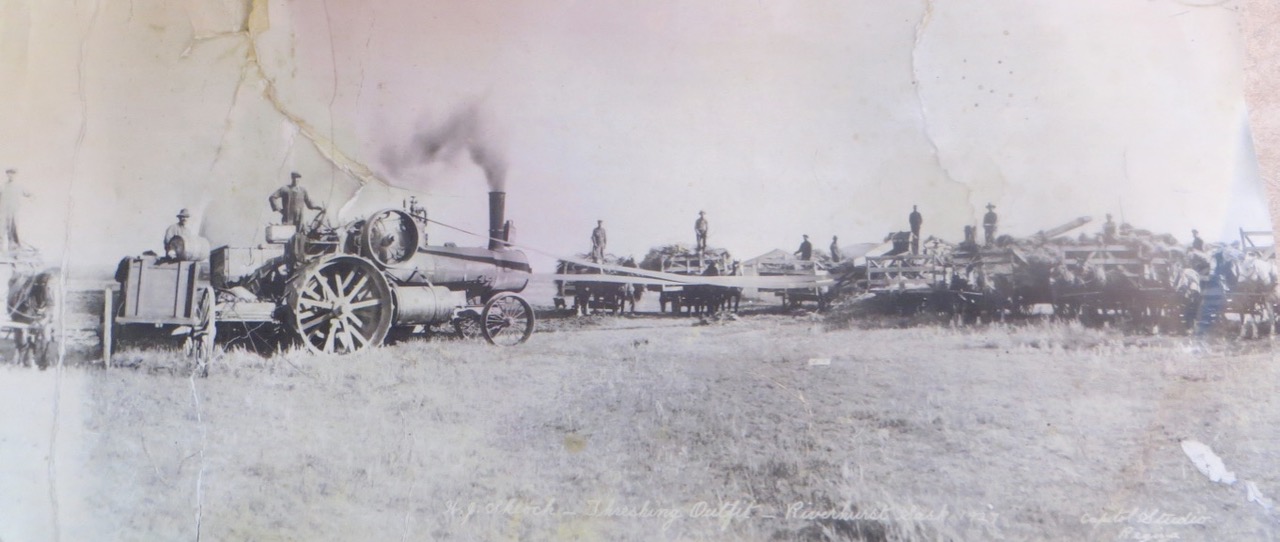
    In his sock drawer, however, there was a real treasure.  Rolled up like a biblical scroll was a long photograph taken
    at Riverhurst Saskatchewan in 1927.   Standing proudly on his steam driven tractor is Dad’s oldest living brother John Skeoch.
    My Uncle John.  The westerner.


    FOUND IN DAD’S SOCK DRAWER: the JOHN SKEOCH HARVEST PANORAMA, RIVERHURST, SASKATCHEWAN, 1927

     
    “Marjorie, here is Dad’s estate.  He did not need a will because all he left us was $21 of which he owed Eric $20.”
    “Surely there was something more?”
    “This scroll picture.”
    “Who is  that on the steam tractor?”
    “Dad’s brother John…oldest  brother after Jim was killed in 1918, last days of World War I. Mortar shell I believe”
    “Uncle John?  We met him on our Saskatchewan trip in 1970.  Remember?”
    “Hard to forget the farm house with garter snakes in the tea cups and the prairie wind blew down our tent and
    took your pants and never gave them back.”
    “Uncle John still had that threshing machine sitting in his implement graveyard near Keiller.”
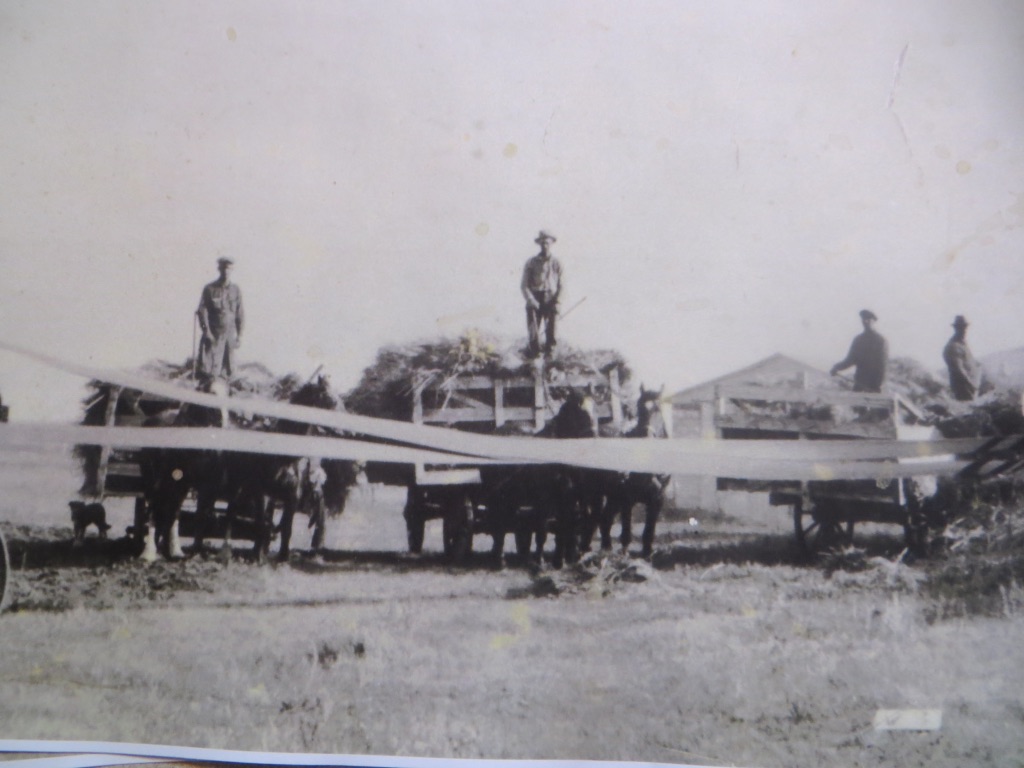
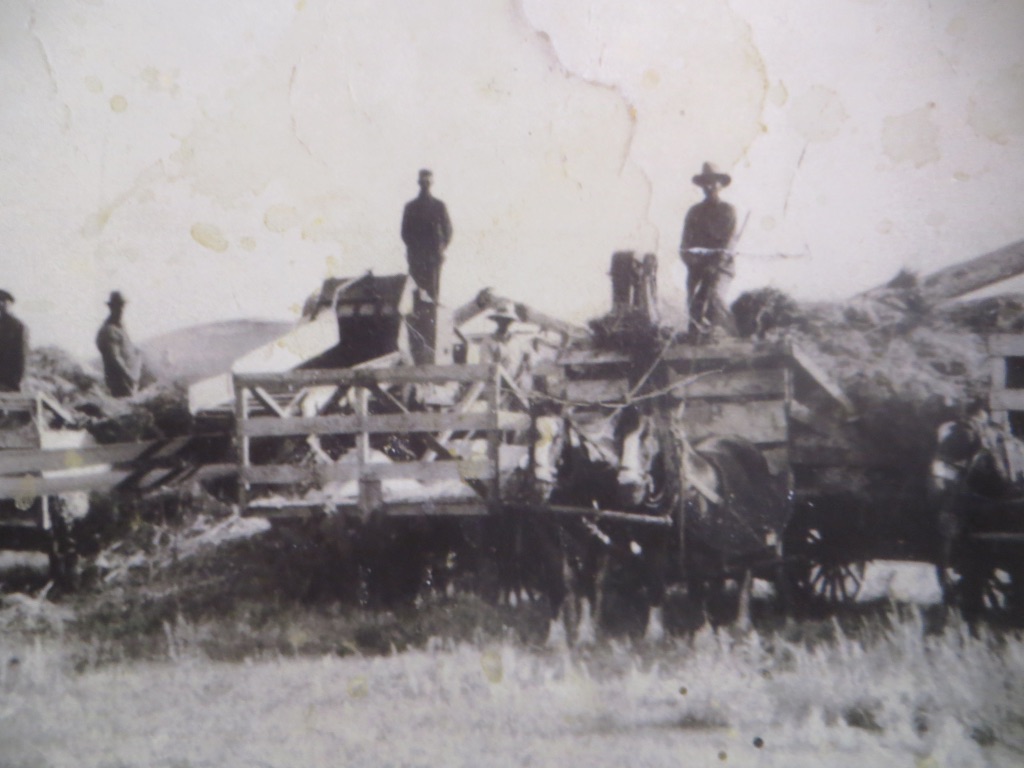
    “Look at those men on the wagons and holding the horses.  I bet most of them were Harvest excursionist.”

    “Harvest Excursions? Sound like some kind of holiday”
    “Rather use the word adventure.  Between 1890 and 1930 thousands of men and a few women paid $15 to the CPR and
    wedged themselves into long lines of passenger cars heading fo the Prairies.”
    “Why?”
    “For the money they could earn helping to harvest grain.”
    “Why Have I never heard of this?”
    “Although several hundred thousand got on those trains, none seemed to take a camera…and
    those that did likely had it stolen.  The harvest trains were no picnic.”
    “In 1917, 40,000 Canadians headed west,  In 1923, 50,450 got aboard…n 1928, 52,225 were packed 60- to a passenger car.”
    “Take a look at the date on the picture….says Riverhurst, 1927…the peak years of the harvest excursions. “
    “How do you know your dad was one of the excursionists?”
    “He only told us fragments…wish he had said more.  But he was on the train perhaps in 1920 or 1921.  He had little choice in
    the matter.  His schooling was over when he was suspended from Fergus District High School on his Grade Nine year.”

    “Why was he suspended?”
    “For throwing a snowball…” (real story already told in earlier episode.  Suffice it to say the principal had good reason,)
    “He never went back to high school.”:
    “Never. he spent much of the year in hiding in the swamp for a day or so and then lived on
    a neighbours farm I was told.   perhaps afraid of his father. He spent the springtime waiting for the annual Harvest Excursion trains
    to Winnipeg and on to Saskatchewan.  I don’t know where he got the $15 passage money…perhaps
    his sisters Greta, Elizabeth and Lena.”
    “How old was he then?”
    “Born 1904 so he was 15 in 1919 and 16 in 1920…maybe 16 or 17 when he joined the Harvesters.”
    “How do you know for sure?”
    “I don’t.”
    “What do you know for sure?”
    “Two things.  He lived in Saskatchewan for one winter.  A terrible winter really for he lived in a
    barn with 16 horses.  Fed and watered them through a bitter western winter.  Slept with them.
    Perhaps some of the same horses in the scrolled picture of the threshing.”
    “He must have come to hate horses.”
    “Quite the reverse.  He loved horses.  Spent the rest of his life to his dying day at racetracks.  Spent more
    money on the horses than he did on his family which was OK with us.  Mom ran our family.  Dad became 
    the third boy in a way.  We loved him.  He loved horses and he loved us although he would never use such
    sissy kind of word.”

    “What was the second fact about the Harvest Excursion?”
    “He came back east on a harvest train … late train.  Perhaps the late fall of 1921 or 1922. By then
    he was an adult…17 or 18…and was glad to get away from the west.”
    “How do you know for sure?”
    “Because he told us one story over and over again…used a lot of magnificent salty words each
    time he told us.  The story became a kind of bedtime story when we were small.  Not a lovey lovey
    story.
    “And what was the story?”
    “Seems dad fell asleep on the last leg of the trip coming south from North Bay
    to Toronto.  When he woke up at Parkdale Station his boots were gone.
    let me use his language.”

    BEDTIME STORY

    “Dad, tell us about your boots.”
    “Harvest trains were rough.  Hope you kids never have to do that.”
    “The boots, dad, tell us about the boots.”
    “I fell asleep and some son of a bitch stole my goddamn boots. All I had
    as profit from the bastardly Harvest Excursion.”
    “Barefoot, dad?”
    “No, I had socks.  I had to hotfoot it from the CPR station in Parkdale all
    the way along Queen Street to Roncesvales where I got a flophouse room.
    No goddamn boots.  If  I ever found the bastard I would give him a ‘what for’
    like my brother Archie did so often in Saskatchewan.”
    “Tell us again what Uncle Archie did?”
    “Those were rough days.  My brothers put my brother Archie up as a fist fighter.  He was
    skinny and looked weak.  But he was as wirey as a barbed wire fence.  We would bet on
    him…others bet against him.  Archie made a few bucks as did his supporters.  Often the
    fights were against French Canadians.  No prejudice meant.  They were the same as us.
    Young and full of piss and vinegar.”

    Post Script:  How do I know the story to be true?  I don’t really but Dad put in facts
    like Parkdale Station…Queen Street…Roncesvales Ave…  Uncle Archie…facts that
    make me believe him.  For all his tough demeanour Dad was just a kid .. a teen ager
    suddenly living in a very adult and rough world.  A person tends to remember things.


    HARVEST EXCRUSIONS PUT IN NARRATIVE FORM

    Thousands of young men and a few young men boarded these cheap CPR excursion trains in the 1920’s.  All kinds of people some of them
    were ‘roustabouts’ ready to smash up the train cars and the train stations when the trains stopped at sidings to let the main freight trains pass by.
    Dad was not a ‘roustabout’ and must have seen things that shocked him.  Violence was common.  So bad that RCMP officers were placed aboard
    the trains.  They were armed but no record indicates that guns were necessary.  In the 1920’s excursionists were frisked before boarding.  Guns were confiscated
    occasionally but liquor was confiscated more often.  All the same alcohol did get on board and drunken behaviour followed.  Windows were smashed
    and objects were thrown as harvest trains passed by railway stations.  Robbery was common as were fist fights. The trip took about five days from 
    the gathering points at Toronto or Montreal.  Five days of sitting up discomfort.  Although some boys and men, girls and women, had the presence of
    mind to bring enough food for the trip, it appears that many did not.  They had to buy food along the way and the result was exploitation on a grand 
    scale.  Bad food sold at high prices created bitterness and violence.  Some excursion trains used old immigrant passenger cars with wooden seats
    and a single toilet for as many as 60 people.  The smell must have been horrific which may have prompted the window being smashed on occasion.

    Small towns along the route were generally afraid of excursionists.  Not so much that they refused to sell food to the men and women but oce sold
    at rip off prices
    the townspeople wanted nothing to do with the trains full of bitter young men and a few young women.  In one example, a store owner in a northern 
    town fired rifle shots as a crowd of excursionists surged from the train siding to the town.  Dad must have seen all this.

    Young women were on board but a distinct minority.  They must have been either tough or desperate.  Abuse did occur but the records are sketchy.
    Most 20th century historic events were extensively photographed.  Surprisingly there are few pictures of life on these excursion trains.  A camera was a luxury.

    Harvest trains ran west for 40 years, from 1890 to 1930.  The movement was no small affair.  In 1917, when dad was looking forward to a high school education therefore 40,000 
    men on the Harvest Excursions.  Each train could handle put to 1,200, even 1,400 men jammed into as many as 20 railway cars.  And here were
    women as well.  Not as many as the men.   During the war years, 1914 to 1918 it was difficult to recruit enough adult excursionists so many young men still in their teens 
     climbed aboard looking for adventure and ready to make the journey west memorable. Raising hell eased the boredom of the 5 day trip.

    1923 was one of the peak yeas. There were 50, 450 harvesters rolling westward.  Then in 1928 the peak was reached with 52,225 men and women.

    Uncle John Skeoch’s threshing picture was taken in 1927.  Many of the men in the picture must have been excursionists who were paid from
    $4 to $7 a day  including room and board.  This was good money.  One careful harvester went back east with $300 which was a lot of
    money in the 1920’s.  Getting west was cheap…$15 for the train ride.   A few men even came from England at 50 pounds return fare. A cheap 
    chance for adventure and a chance to smash up a lot of railway property.  At Sioux lookout an innocent bystander was severely
    injured by an object thrown from an excursion train.  In earlier years some railway cars were wrecked…must have been scrapped.

      Drunkenness,
    boredom, lack of sleep, filth, strangers, the fires of spring in youthful veins… all these bred violence. 
     Word that some of the women on these trains were in danger of being assaulted prompted
    the CPR to arrange RCMP presence on each train.   One RCMP officer and one recruit  patrolled
    from railway car to railway car in their scarlet uniforms. That tended to calm things down.

    *There are many gaps in my knowledge about this 1927 threshing picture.  Relatives who know will
    add and perhaps correct my comments which will enrich the narrative no doubt. Dad said 
    little about the women except for one comment about a run down hotel in which he lived
    for a spell.  The women there were not harvesters…they were fleecers. Get the inference?
    True or not?  Dad never said much about it.
     Dad, in spite of his tough exterior, was sensitive.  Never ever heard him use
    the F word but he made up for that with a dictionary of other four letter words strung together
    as if he was a dark version of Wordsworth


    Arnold “Red” Skeoch was born in 1904, one of the middle children in the James Skeoch farm family of Nichol Township, Wellington County.
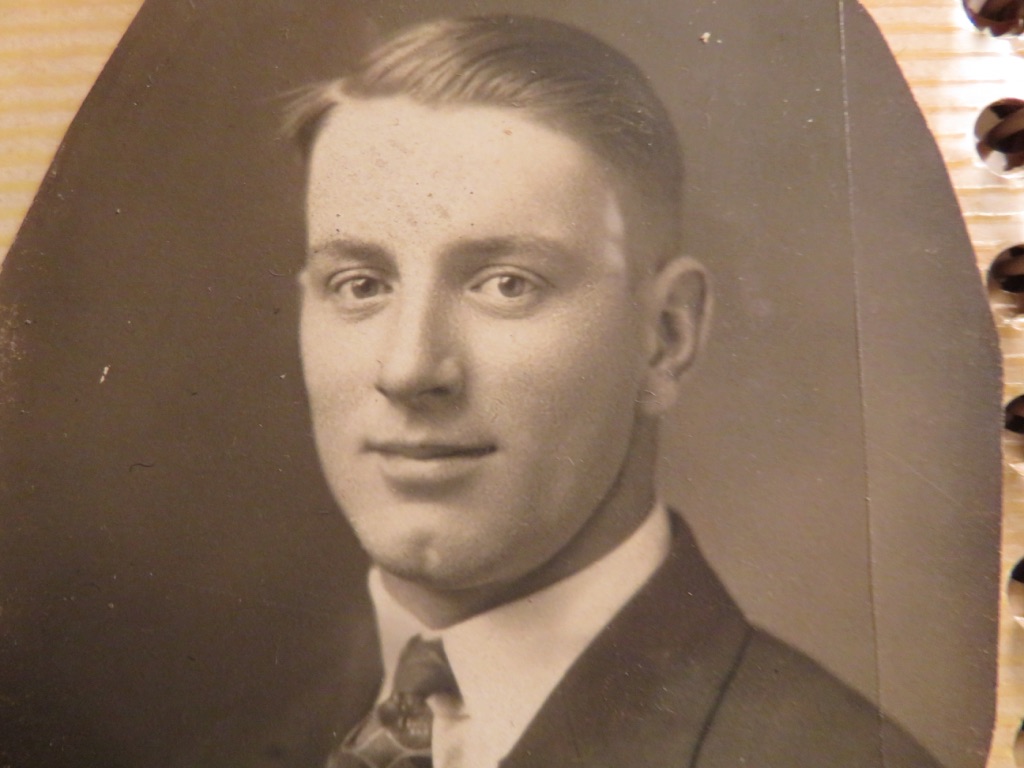
    Pictures of him as a boy are uncertain.  My best early picture was taken in the late 1920’s I believe.   A picture of Red as member of
    the bursting industrial working class.  A tire builder.  Cars and tractors were replacing horses.  Solid rubber tires were replaced by
    pneumatic rubber tires,  

    How did Dad make the transition from farmer’s son ( one of James Skeoch’s five sons (and four daughters) to slapping belts of rubber
    on a rolling drum in factories driven by steam and electric engines?

    Turning Point #1  THE SNOWBALL

    His first step was to get thrown out of Grade Nine high school in Fergus.  Seemed like a good idea to throw snowballs through the
    open trap door of the girls’ washroom just the moment some young lady sat down.  Outdoor back houses for boys and girls in 1918 or 1919.
    “Go home Arnold and get your father”, said the principal.  Dad’s schooling was over.  He hid in a swamp near the farm for a while.  His sisters
    looked after him.   There was tragedy in 1918 when his oldest brother James was killed in France just as World War I ended. then in 1919 his older
     sister Sarah, died of the Spanish Flu.  So dad’s predicament must have seemed rather an after thought. A snowball hitting the bum of a Grade Nine
    girl was hardly the same as being blown apart by a mortar or suffering the agony of the Flu Epidemic.

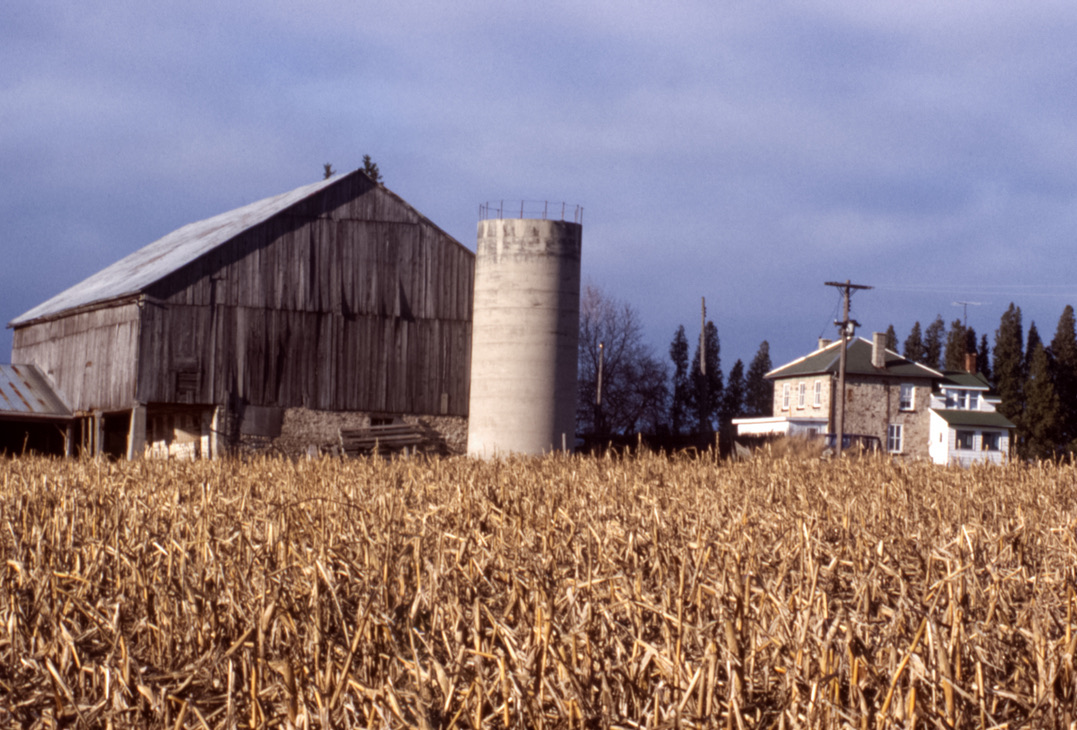
    The Skeoch home farm, Nichol Township, SW  of Fergus —barn demolished by Mennonites and stored, fieldstone house still there.

    I am not too clear on what Dad did that winter and spring of 1920.  Maybe he went home for he could not live in a swamp.  I seem to remember
    his sister Marguerite (Greta Metcalfe later) saying he lived with another farm family. The snowball incident An embarrassment.  Not nearly as funny as Dad and
    his friend expected.  But it was a turning point in his life.

    Turning Point #2  THE HARVEST EXCURSION


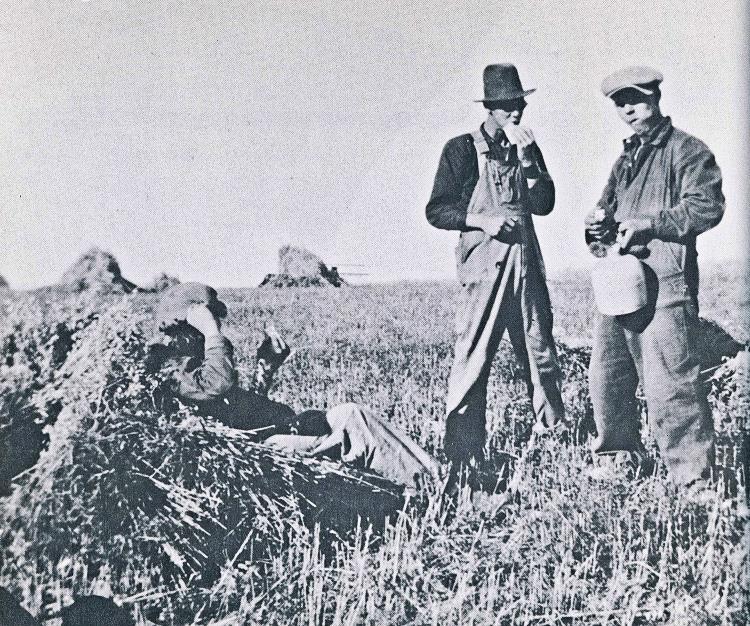
    Nova Scotia stookers, Maxwell farm, 1924.
    Grain cut and bound into sheaves by a horse drawn binder then had to be ’stooked’ to dry
    before it could be threshed.  These men are stooking … likely excursionists from eastern Canada.


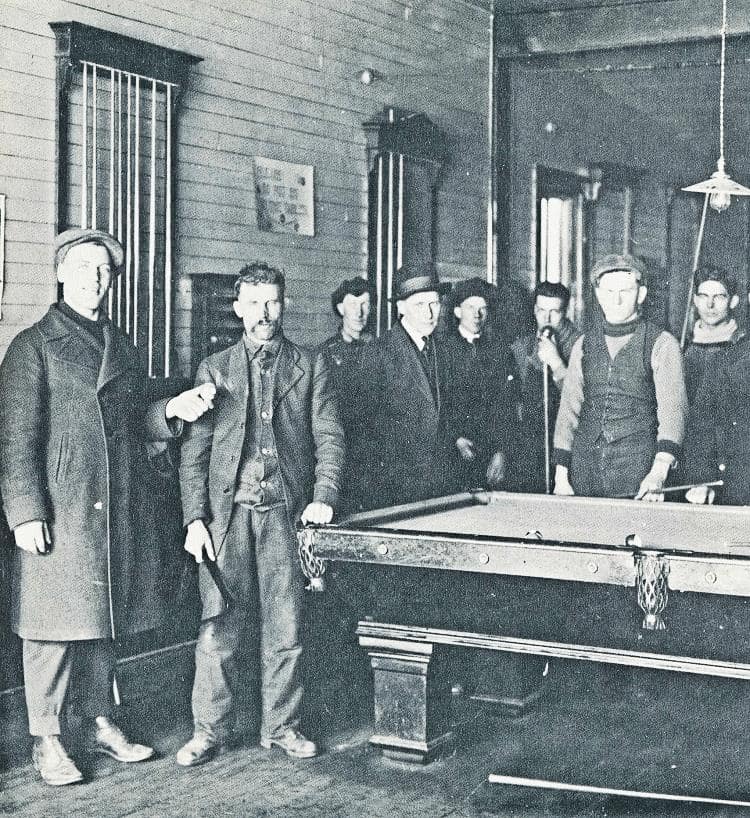
    Poolroom, Wakaw, 1921.
    Pool room in Saskatchewan, 1921 — I think this picture gives insight into the boys on those harvest
    excursions…..diverse…., innocents and ‘roustabouts’


    1923 was one of the peak yeas. There were 50, 450 harvesters rolling westward.  Then in 1928 the peak was reached with 52,225 men and women.

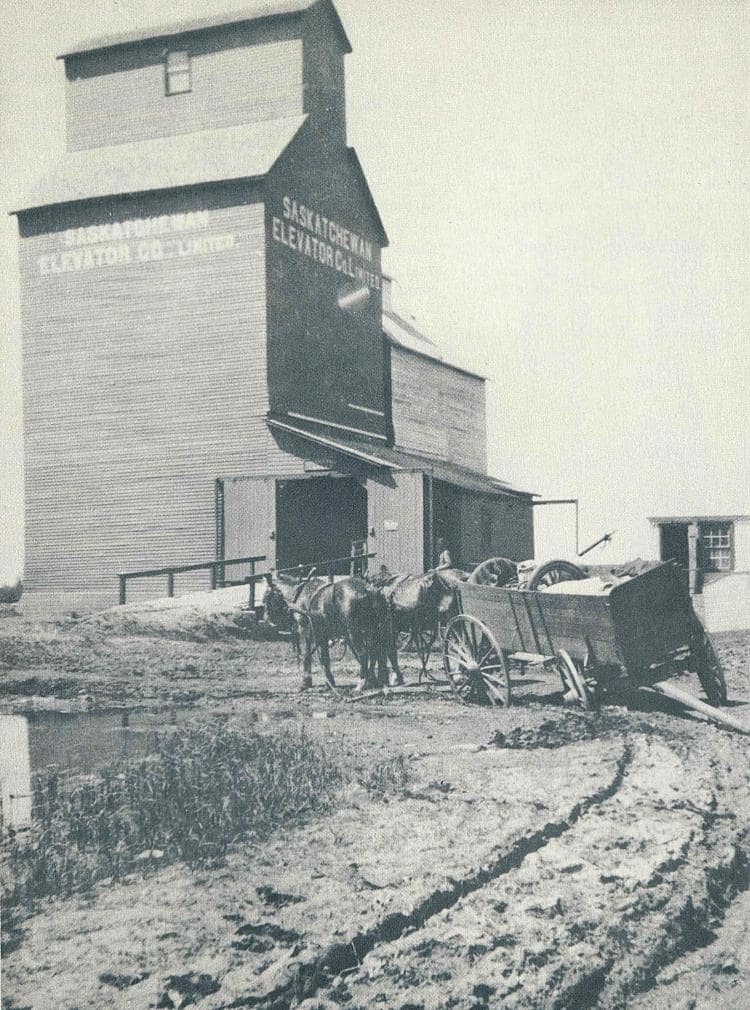
    Hauling grain to the elevator at Norquay, June 1920.
    Wagon mire in mud while hauling grain in 1920 to a grain elevator in Norquay, Saskatchewan.
    Seems to have a share axle in the grain box.


    Uncle John Skeoch’s threshing picture ws taken in 1927.  Many of the men in the picture must have been excursionists who were paid from
    $4 to $7 a day  including room and board.  This was good money.  One careful harvester went back east with $300 which was a lot of
    money in the 1920’s.  Getting west was cheap…$15 for the train ride.   A few men even came from England at 50 pounds return fare. A cheap 
    chance for adventure and a chance to smash up a lot of railway property.  At Sioux lookout an innocent bystander was severely
    injured by an object thrown from an excursion train.  In earlier years some railway cars were wrecked…must have been scrapped.

    Most of the excursionists had no food with them and had to rely on the restaurant food at the whistle stops.  Prices for food were
    atrocious.  Starving men formed into gangs that terrified many people living in the small towns along the route.  Terrified after
    they had profiteered from the young men.  Alcohol was forbidden on the trains but the did not mean alcohol was absent.  Drunkenness,
    boredom, lack of sleep, filth, strangers, the fires of spring in youthful veins… all these bred violence. 

     Word that some of the women on these trains were in danger of being assaulted prompted
    the CPR to arrange RCMP presence on each train.   One RCMP officer and one recruit  patrolled
    from railway car to railway car in their scarlet uniforms. That tended to calm things down.

    I wish I had asked Dad to tell some stories about those Harvest excursions.  I did not.  But he told me
    one story that must have been indicative of many similar stories.  Dad returned to Toronto on an excursion
    train after spending tow years in Saskatchewan.  Let me put words in his mouth.

    “Dad, what was it like to ride on a harvest excursion?”
    “Bitch of a time. “
    (Dad could make swear words seem like poetry)
    “How did you sleep?”:
    “Have you ever tried to sleep on a chair…goddamn hard. And to 
    fall asleep was risky so most of the time I was awake.”
    “Why risky to sleep?”
    “There were bastards all around just waiting for someone to dose off.”
    “Bastards?”
    “I fell sleep…sound asleep…as the train headed from North Bay to Toronto.
    “So?”
    “When I awoke some son of a bitch had stollen my goddamn boots. I had 
    to run from the Parkdale Station in West Toronto to Roncesvales where
    I rented a room.  They were new boots.  About the only thing I brought back
    from the west.”
    “Did you consider going back west the next year?”
    “Not on your goddamn life.  There were jobs in Toronto, good jobs in the rubber
    industry.  I became a tire builder and never ever went west again even though my
    brother lived there.”

    TURNING POINT #3   BEDDED DOWN FOR THE WINTER WITH 16 HORSES

    Dad did not return to Ontario immediately after the western harvest was piled in graineries
    and grin elevators;  He was persuaded to stay for the winter of 1921 or 1922. (guesswork here
    but close to accurate).

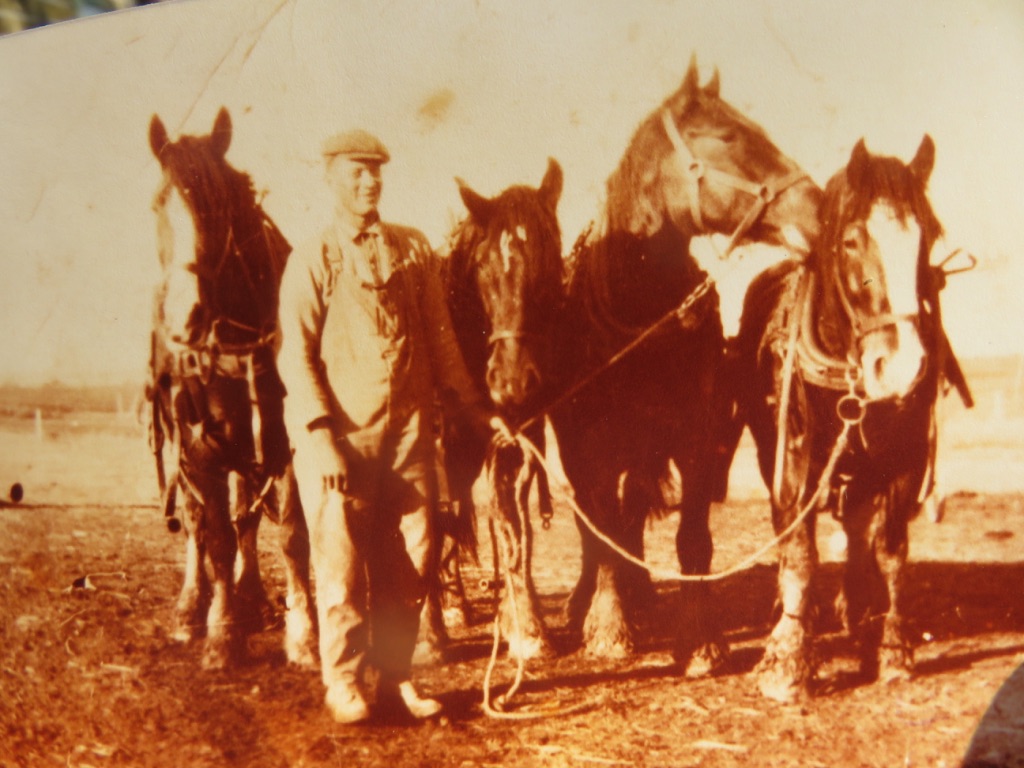
    Uncle John with four of the 16 horses that dad may have lived with over one winter in 1921 or 1922


    “Why did you stay near Riverhurst for two years.  Why didn’t you return with the other Harvesters?”
    “I got a job for the winter.”
    “Good job?”
    “I spent the winter of 1922 looking after 16 horses in a barn near Riverhurst.”
    “You lived in the barn?”
    “I did.  I had my own horse stall.”
    “All alone?”
    “Yes, all alone.  Once in a while someone would show up but I spent most of
    that bitch of a winter alone with the horses.”
    “Cold?”
    “Colder than a witch’s tit.”
    “No farmhouse nearby?”
    “Nothing but the endless flatness and the scouring wind.  A hell of a time.”
    “My friend Russ Vanstone described the west as ‘flat as piss on a plate’”
    “Well, he got that right..
    “Did you like the horses?”
    “Had to like something in that white hell.”

    WINTER ENDED, SPRING CAME, 
    “Stayed with my brother John…helped with the seeding and shot
    a lot of billiards in Keiler…made and lost a few bucks.”
    “Archie and Art came west that year.  We had some good times
    fist fighting .”
    “Fist fighting?”
    “Archie was good with his fists.  He looked skinny but was tough as old leather.”
    “We would place bets…put Archie up against a tough guy from another town.  Often
    French Canadians against Archie.  Made a little bit of money that way.”


    POST SCRPT


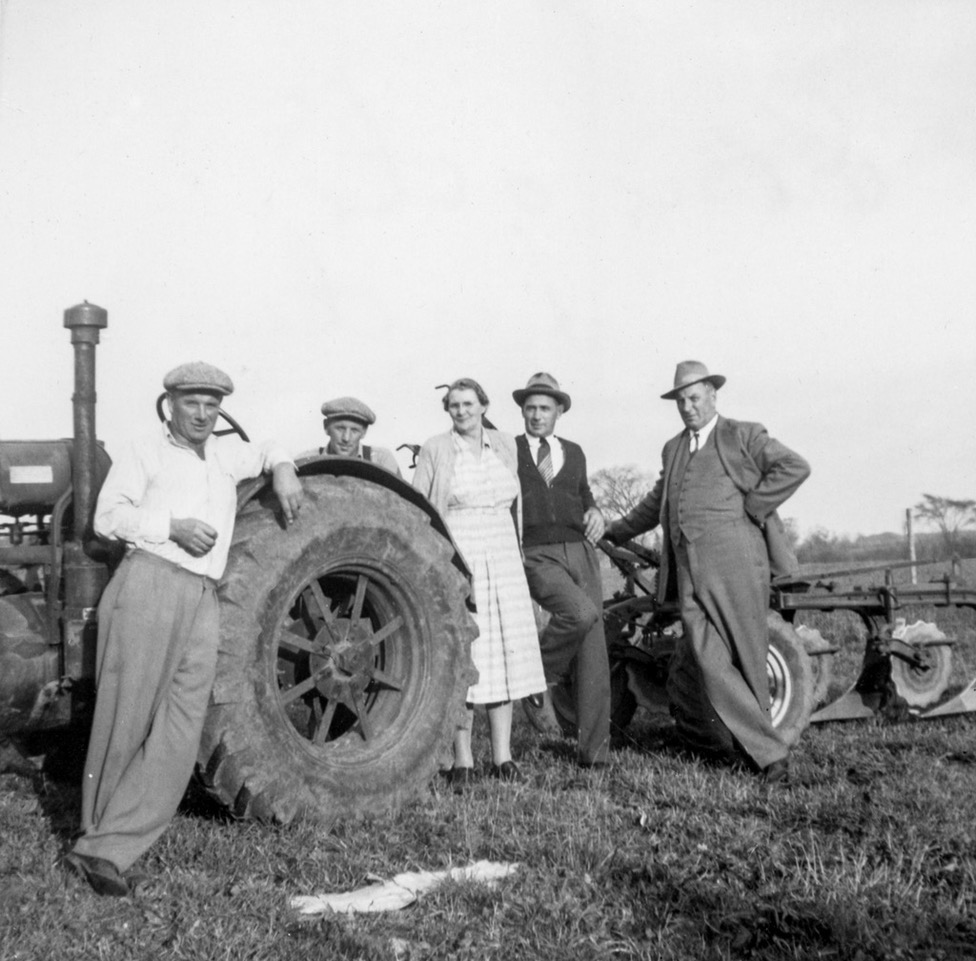
    Circa 1965: left to right,  Norman Skeoch, Archie Skeoch, Marguerite Skeoch, Arthur Skeoch, Arnold ‘Red” Skeoch — on the Fergus home farm


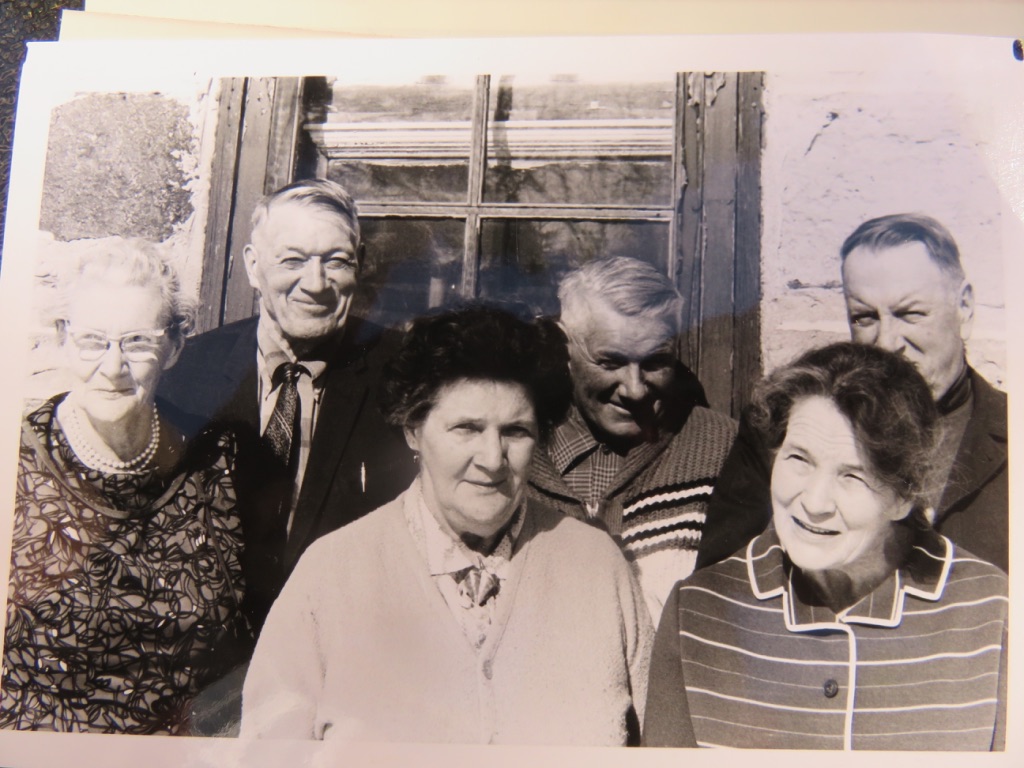
    Circa 1960’s: front left to right…Marguerite (Skeoch) Metcalfe, Lena (Skeoch) Tosh, Elizabeth (Skeoch) Townsend.  back row….John Skeoch (farm near Keiller, Saskatchewan
    as large as 4200 acres), Norman Skeoch (youngest of the 5 boys, inherited the home farm), Arnold “Red “ Skeoch


    There were many copies of this photo that Uncle John gave to his brothers and sisters when he came east on holiday


    Some of these men, perhaps all of them, were Harvest Excursionists, Riverhurst, Saskatchewan 1927


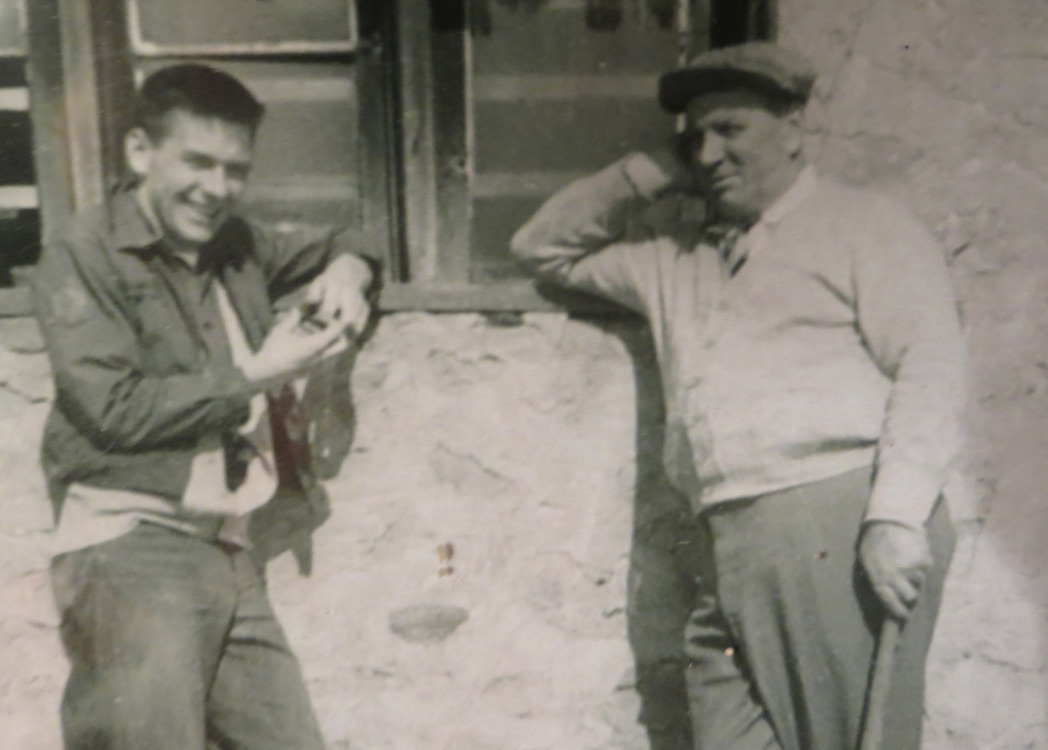
    Alan Skeoch and Arnold ‘Red “ Skeoch around 1965 at Freeman farm, Wellington County

    There will be errors here since so much depends on memory but within it all is truth.  I have used
    dialogue to give readers a feeling for the story.  Script writers do that so why the hell can’t I do it.”
    (alan skeoch)
  • Fwd: EPISODE 22 APRIL 20, 2020 ARNOLD RED SKEOCH

    NOTE: THIS EPISODE is a repeat of Episode 22,  written back on April 20, 2020.  Just when my episode project

    began and when I expected the pandemic to end.  The reason I am sending it is that Marvi Ricker sent us an
    ecard which featured an idyllic sleigh ride.  Warm and touching.  Dad…Arnold Red Skeoch’s sleigh ride was 
    different.   Even included a ride on the old De Witt TTC cars.

    alan

    I am currently finishing an episode on Harvest Excursions in 1920 with lots of Dad’s salty language.


    Begin forwarded message:


    From: ALAN SKEOCH <alan.skeoch@rogers.com>
    Subject: EPISODE 22 APRIL 20, 2020 ARNOLD RED SKEOCH
    Date: April 20, 2020 at 1:22:59 PM EDT
    To: Alan Skeoch <alan.skeoch@rogers.com>


    EPISODE 22


    alan skeoch
    april 22,2020

    BROKEN RIBS AND BROKEN DREAMS

    This is an earlier picture of Dad about 1940…looked much the
    same by 1945 though.  
    The  toboggan runs at High Park were a big attraction…sometimes ice covered
    for speed.  Sleighs were not wise to be used on the  formal runs so sleighs
    used the hills.  I do not remember which run dad used.   One thing sure, 
     200 pound  man on two steel runners  could go at quite a velocity.

    ARNOLD RED SKEOCH: BROKEN RIBS AND BROKEN DREAMS

    “Red, take the boys  out somewhere, they need the winter air.”
    “They’re fine in the park.”
    “Take them sleigh riding with that neW sleigh…they will love iT.”
    “Where?”
    “High Park…the big toboggan run down to Grenadier Pond.”
    “Long  way.”
    “It is  not…catch the College Street Car…goes right into High Park.”
    “Hmmmm1”

    We had been presented with a sleigh at Christmas…maybe new, maybe used.
    It was s beauty with steel runners and  wooden hand hold that could steer it.  Room
    for one person.


    So the three of us  mounted the old  De Witt street car  then running on College
    Street.  Big lumbering ancient things made of wood.  They even once had wood
    or coal stoves mid way down to provide heat.  And they rattled a  lot when moving so
    the ride itself was a  great adventure for us.

    Eric and I jumped off at the High Park loop and dad carried the wonderful sleigh painted
    red with varnished wood slashes.  It sparkled.  Dad may have even pulled the pair
    of us across the park to the western side where the great expanse of Grenadier pond 
    sparkled in the sunshine.  

    The long hill down to the pond was  well peopled.  Lots of sleighs and toboggans
    zooming down the long slope and out onto the ice covered pond.  Dad said there
    were a bunch of dead soldiers at the bottom of the pond with their cannons.  Drowned
    in some war long ago when fleeing an American invasion.  Could have been bull
    shit but we believed him.  The story put icing on the cake. A little more danger.
    What if we fell through the ice?   

    That never happened.   As a matter of fact we never even got a chance to go down the
    hill on the sleigh.

    “ Stand side boys,  I will test the sleigh on the first run.”
    “Aww…”
    “Just to be sure it works right.”
    (Now Dad was s big man…maybe 200 to 220 pounds of mostly muscle from building big tires)
    “Dad, don’t break  the sleigh.”
    “Shut up, here I go.”
    (And  Dad soon disappeared in the crowd of people sleighing.  There was even a slight dusting of
    snow falling.)
    “Did  you see him, Eric?”
    “At first…but not now.”
    “When will he get back?”
    “Soon.”
    “How soon.”
    “Cold up here…wish Dad would get back up the hill.”
    “Crowd down there.”
    “Where is Dad?”
    (We waited and  waited.   Two cold little boys in high cut boots and home made breeches … made by mom who
    made all our winter clothing out of old coats.  We waited.  Waited.  Dad never returned)
    “Maybe he’s down with that crowd watching something.”
    “Let’s walk down and see.”
    “Careful…sleighs coming.”
    “Dodge.”

    We  found the crowd and weaselled our way to the front where we found Dad and the sleight.  Dad was
    wrapped around a tree.  Hurt.  The sleigh was a  shambles…twisted into a piece of scrap.
    Some men helped Dad to his feet.  He could stand but was in pain.  As we found out later
    he had broken his ribs…not all  of them but some of them.  He hobbled up the long hill.

    “What about the sleigh, Dad?”
    “Leave the son of a bitch there.  It was no goddamned good.”
    “But Dad, it’s our sleigh.”
    “Did not steer … leave it.”
    “Our sleigh…our sleigh…our sleigh…”we may have whimpered.
    Then again we did know Dad was  hurt.  Not sure which pain was  worst the smashed sleigh
    or knowledge that dad  was injured.   I think it was the sleigh.


    Later, Dad  got some doctor to bind him up.  Great white bandaged
    around his upper body.  Did he stay home?  Nope.  I think he went to
    work that Monday as usual.

    “Mom, Dad  smashed our sleigh…can we get another?”
    “Wait and  see.”
    (I don’t think we ever did get another sleigh until our teen age years.
    But that long hill down to Grenadier Pond is  graven deep in my consciousness.
    I suppose things  could have been worse had  Dad gone through the ice to
    join the British Grenadiers.

    alan skeoch
    April  20,  2020

    Postscript.   Long years later, after Dad was  gone, I was doing weekly radio stories
    every Friday for CBC radio noon with Christopher Thomas.
    “Let’s do a story about the Grenadier legend, Alan.”
    “Great, we can get the boys to dive down deep, maybe find the nose of an old cannon or wheel.”
    “What boys?”
    “Kevin and  Andy…one  has a snorkel and the other a diving tank.”
    “Need permission and a boat.”
    “No problem…just do not overdo the diving angle.:”

    This turned out to be a bad idea in one way but a good radio story.  Kevin and Andy loved it.
    Christopher Thomas got all the CBC recording gear in the boat and away we paddled.
    It was  a Beautiful sunny morning.  Not many people around.  Easy to imagine what
    might found beneath the mirky waters.  The boys dove.
    Kevin surfaced first because he only had a  snorkel.  Andy did not surface
    for a while.  Then he appeared  with both arms as black as a length of stove pipe.

    “Nothing down there Dad.”
    “How do you know?”
    “Mud  and  crap down there….I shoved  my hands deep as I could…nothing.”
    “Story may  not be true…we will never know”

    My mind was spinning.  This had not been a good idea.  Danger lurked down there.
    I did not ask Andy to dig through the mud.  Should have told him not to do it.
    We paddled  to shore.  In the end we got a good story. 

    As I looked back up the Grenadier Hill I tried figure which tree did had  hit long 
    ago.  

    alan skeoch
    april 20, 2020


  • EPISODE 489 CAN A SNOWFLAKE CAPTURE THE CORONA VIRUS? FACTS AND FICTION

    EPISODE 489   CAN A SNOWFLAKE CAPTURE THE CORONA VIRUS?  (FACTS AND FICTION)


    alan skeoch
    dec. 18,2021


    “Marjorie, this corona virus is starting to get to me.”
    “How so?  Are you any different than others?”
    “No.  But the goddamn virus is changing my life.  And not for the best.”
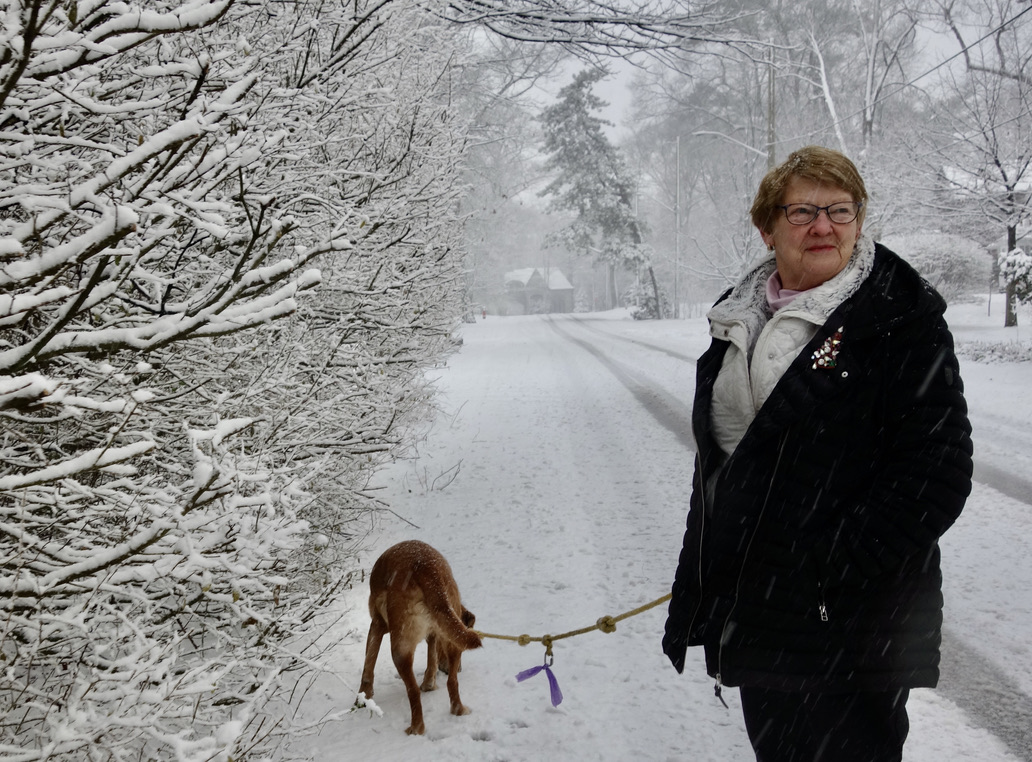
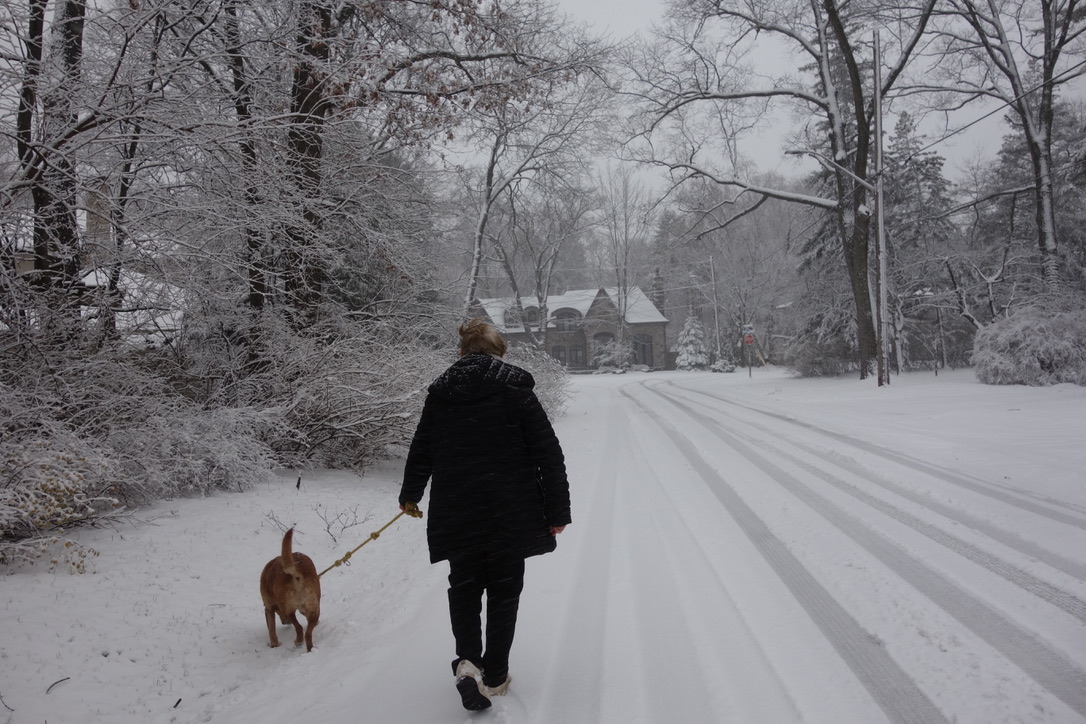
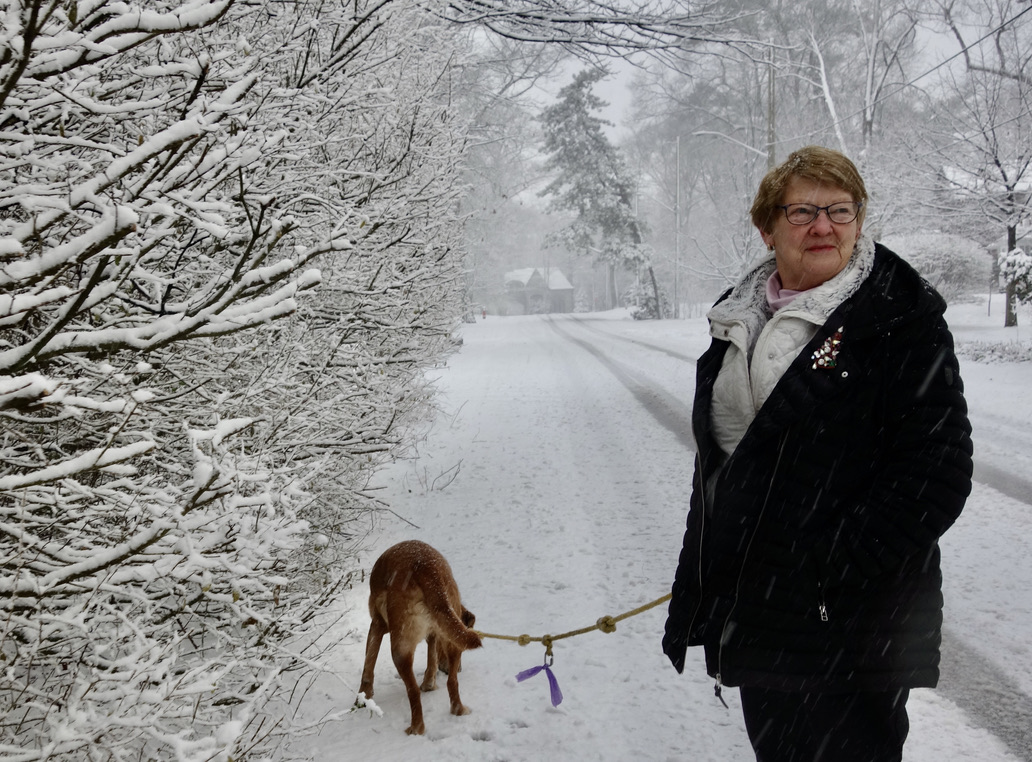
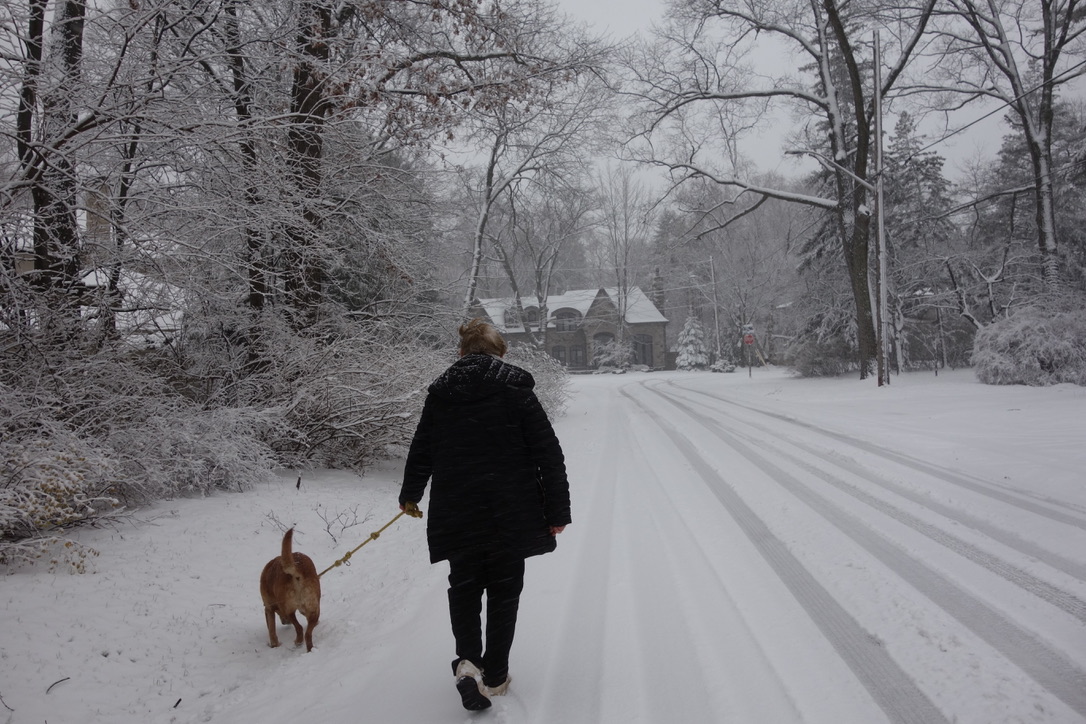
    “Get your coat on.  Let’s take Woody for a walk and calm down.”
    “The streets are empty.  Everybody is hived away.”
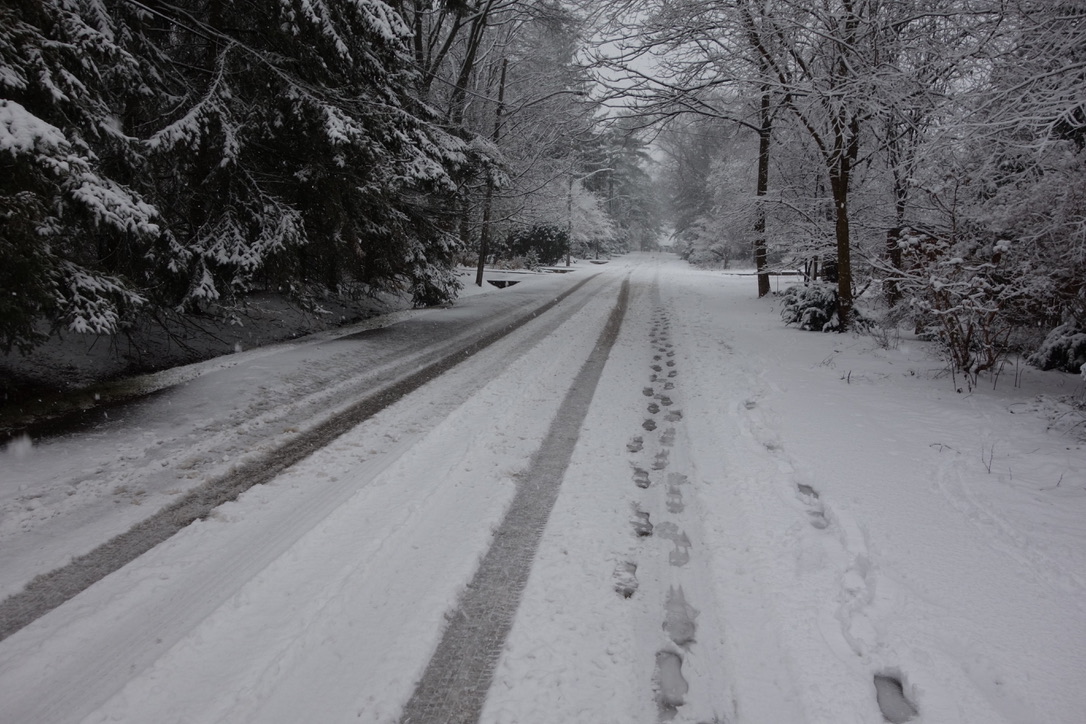
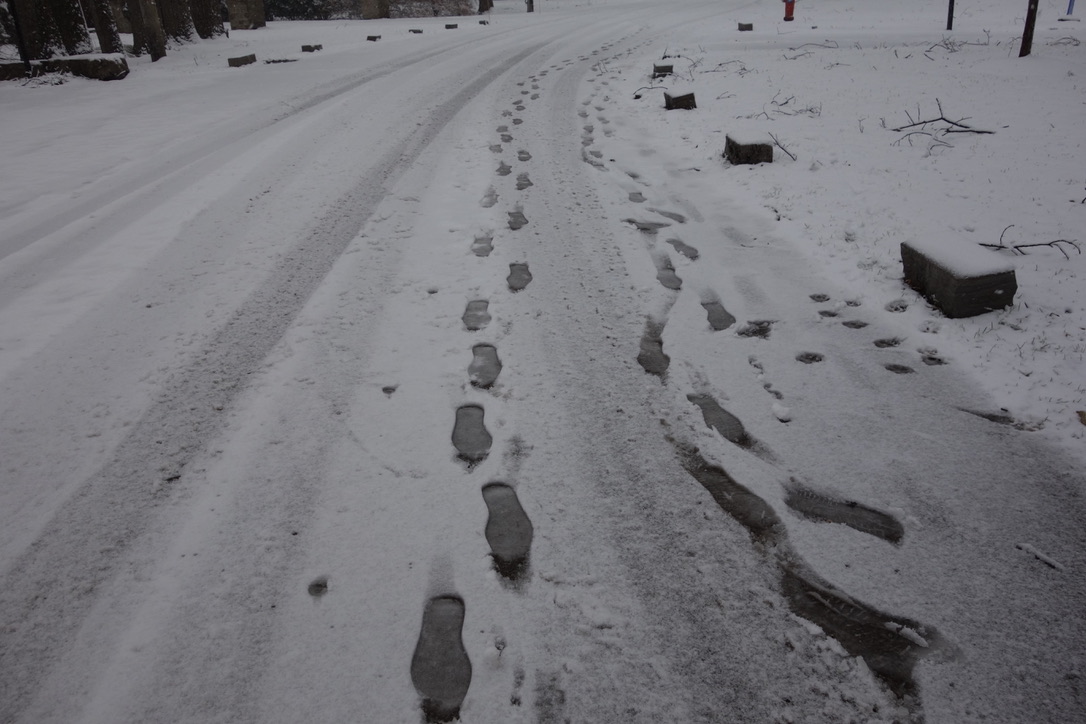
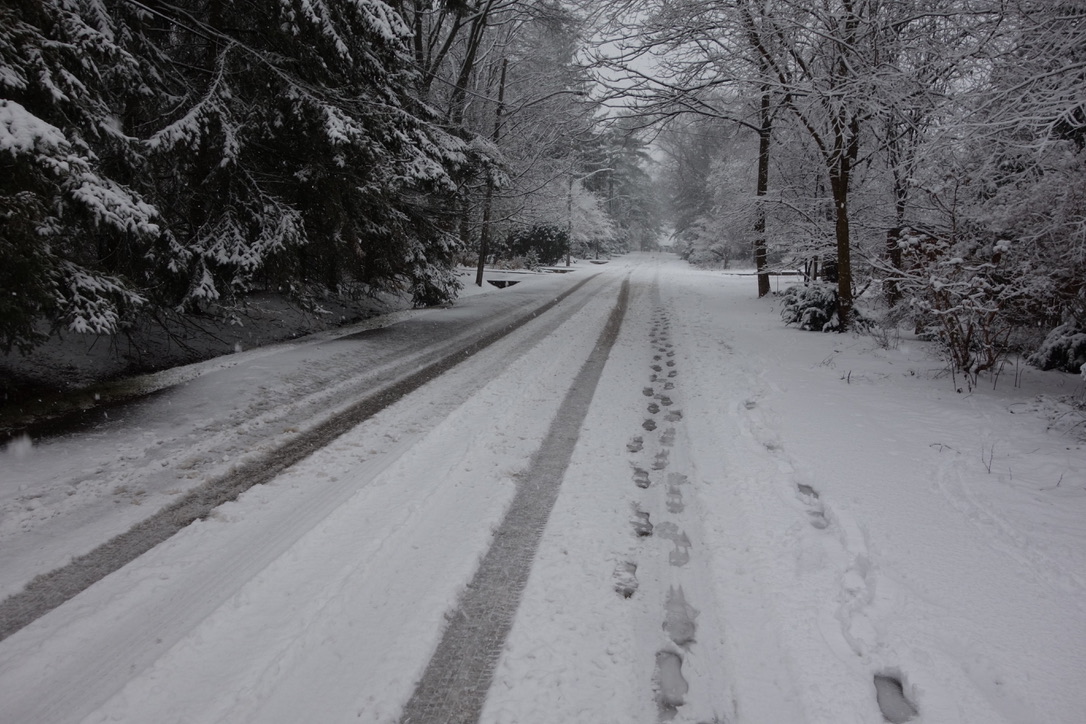
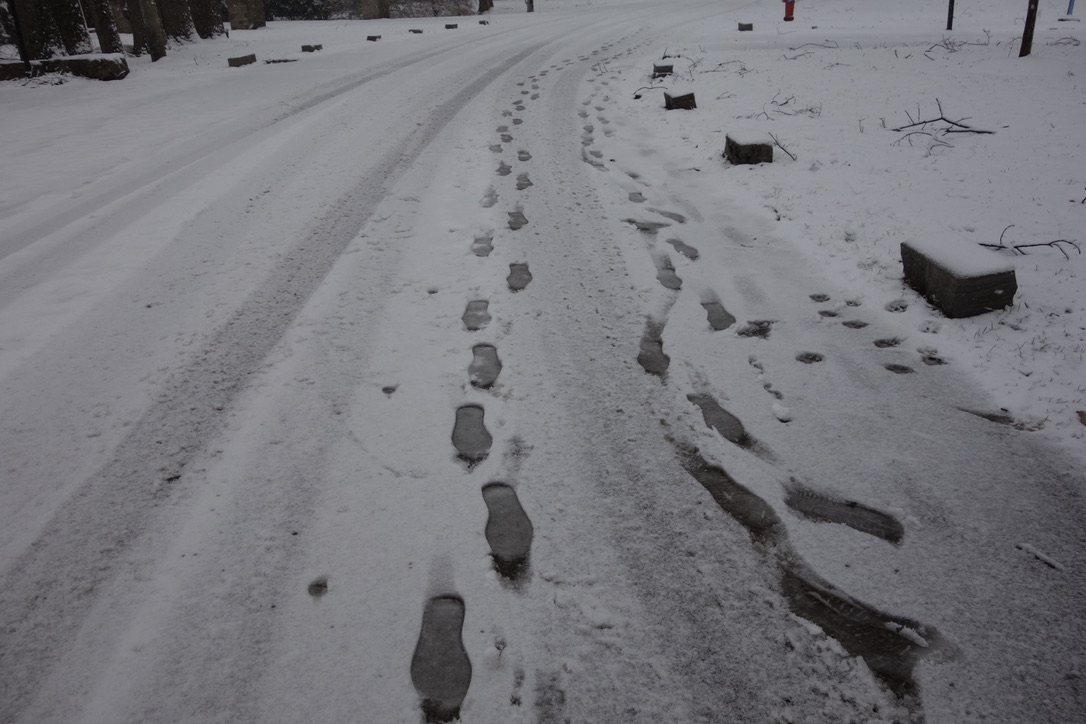
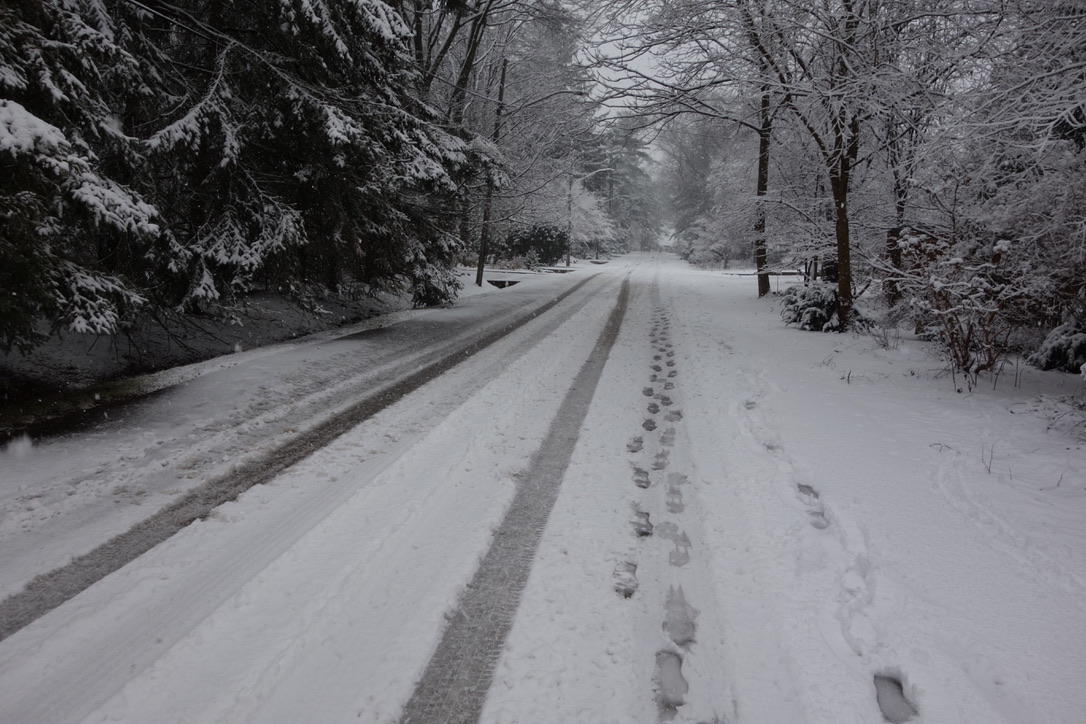
    “Not everybody. There are tracks.”
    “Thos are our tracks.”


    “READERS will have trouble separating fact from fiction in this episode Marjorie”
    “Not Surprised.”


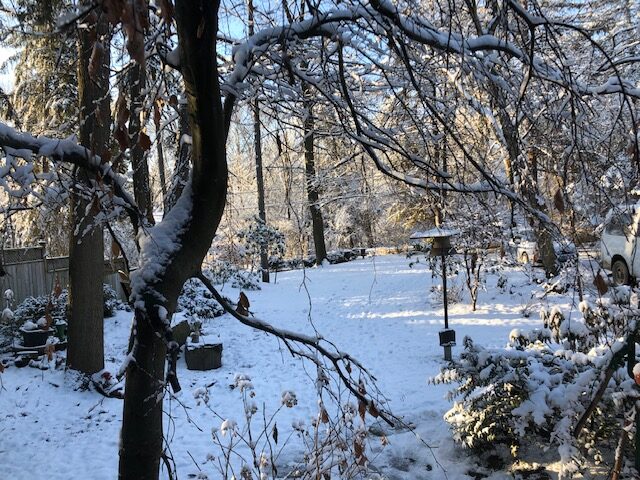
    TODAY our streets were bombarded by millions of large heavy snowflakes.
    And at the same time parts of our neighbourhood harboured billions, perhaps hundreds
    of billions of the corona virus.  Our streets are empty

    Is it safe to go for a walk?  Unmasked?  Which got me to thinking.  The virus is
    so small that it cannot be detected even by sophisticated microscopes. And the
    virus is so light that it can float around in the air quite freely.   Which made me
    think.


    “What are viruses anyway?  Animal, vegetable or mineral?

    Viruses are microscopic parasites, generally much smaller than bacteria. They lack the capacity to thrive and reproduce outside of a host body. 

    Predominantly, viruses have a reputation for being the cause of contagion. Widespread events of disease and death have no doubt bolstered such a reputation. The 2014 outbreak of Ebola in West Africa, and the 2009 H1N1/swine flu pandemic (a widespread global outbreak) likely come to mind. 

    “How long have the little bastards been around?

    “Some scientists say they only appeared 8,000 BCE years ago.  Others say they are 55 million yeas old and co developed with bats.  
    Quite a difference in opinion.”


    “How big are the snowflakes?”
    “Big enough to see them until they disappear.”
    “Which makes me think.  The virus seems to be everywhere…even out here.”
    “According to the experts, yes…everywhere…at least in spots all around he
    earth.”
    “Even out here on Glenburnie Road?”
    “Now here’s an idea…Suppose one of these big wet snowflakes struck a tiny corona virus.  Wouldn’t the
    snowflake capture the virus and take it to the ground.  Wouldn’t a million snowflakes
    take a billion corona virus to the ground?    Cleanse our air?  “
    “Sort of silly comments, alan”


    “Now here is a mathematical problem.  The Question:
    “How many corona virus can be caught by one fluffy snowflake?”
    “Has anybody ever answered?
    “Yes, the mathematician Christian Yates did…in a way that is similar…”
    (See Conclusion…after the silly stuff)


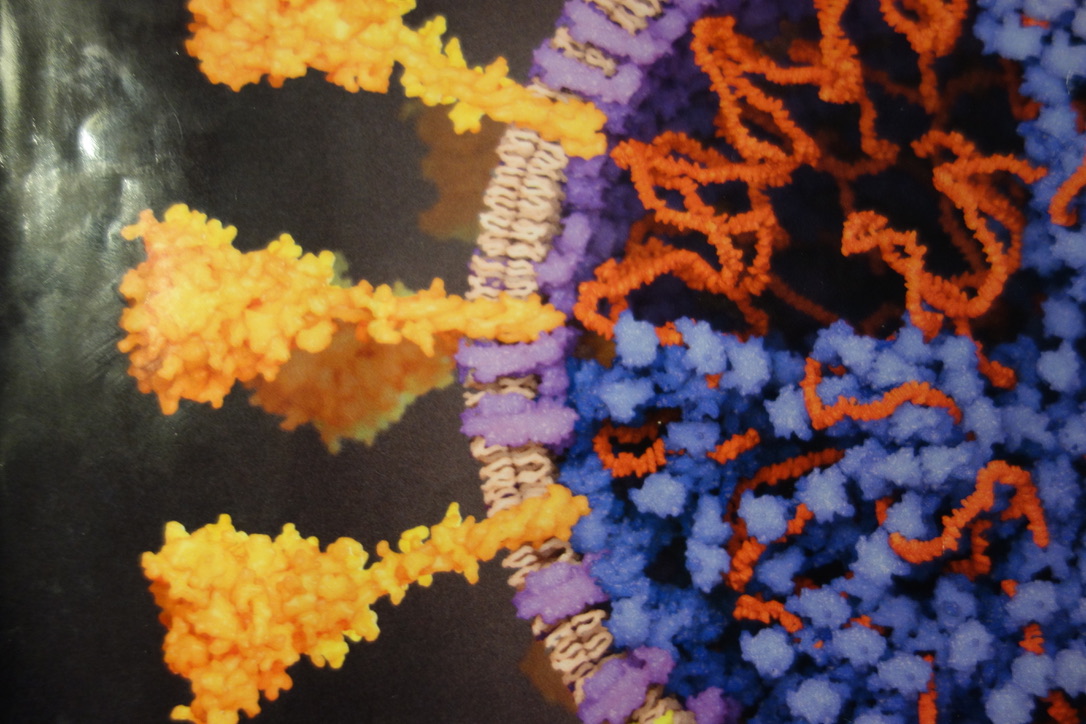
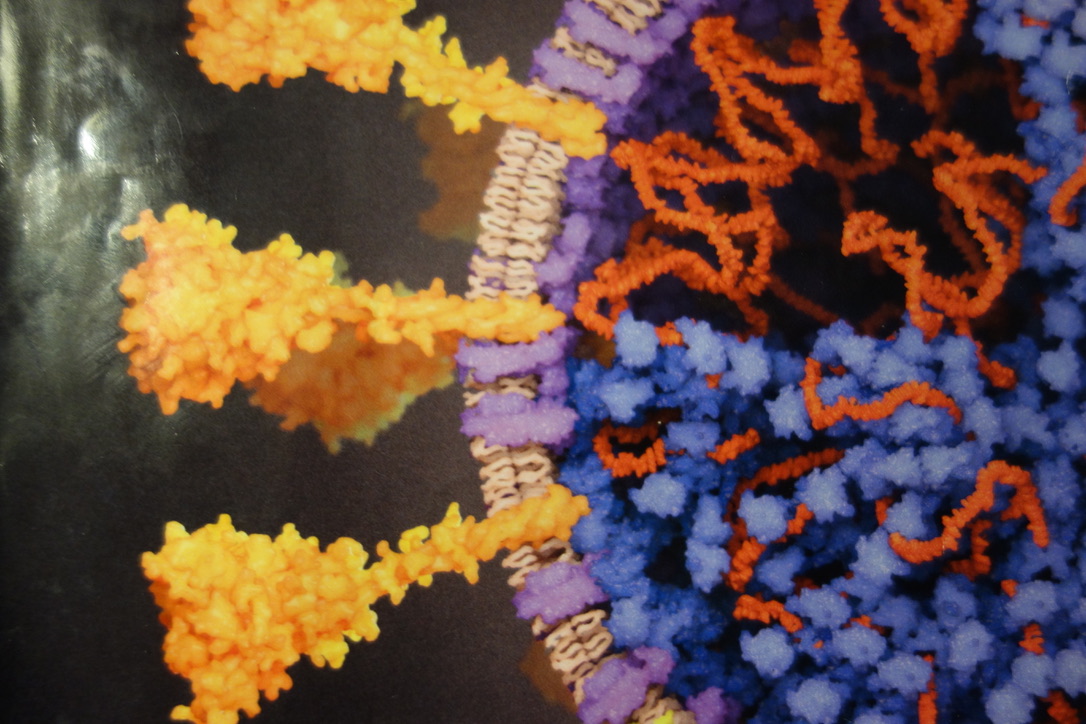
    “WHAT DOES A CORONAVIRUS LOOK LIKE?”

    Seems to be quite attractive . At least according to the editors of Scientific American (July 2020)
    who put this image on the front over of the magazine in 2020.  NOT THE REAL COLOURS I IMAGINE.

    You may wonder what those yellow stems are…They are ‘grabbers’ that latch on to your lung cells
    and then allow the Covid 19 Virus to squeeze into lung cells.  In other words those ‘grabbers’ are
    not nice.  In many cases infected people do not even know the Covid Virus is in their lungs.

    TWO QUESTIONS


     On October 16 ,2020  Australian study says the SARS COVID 2  virus can live for 28 days (Oct. 16, 2020)


    2)  How much space would be needed if we gathered all the Corona Viruses in the world??”

    “Suppose we gathered all the Corona Virus on the earth right now.  How much space would we
    need to keep them?””

    Below is the answer given by mathematician Chrisitan Yates

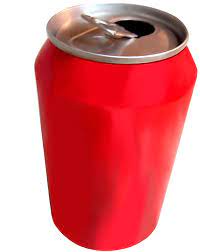
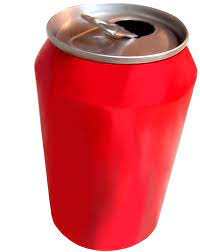
    Picture Of Red Can Of Soft Drink


    If you collected up every Sars-CoV-2 virus particle in the world, it would fit inside a soft drinks can, writes the mathematician Christian Yates.
    W

    When I was asked to calculate the total volume of Sars-CoV-2 in the world for the BBC Radio 4 show More or Less, I will admit I had no idea what the answer would be. My wife suggested it would be the size of an Olympic swimming pool. “Either that or a teaspoon,” she said. “It’s usually one or the other with these sorts of questions.”

    So how to set about calculating an approximation of what the total volume really is?

    Fortunately, I have some form with these sorts of large-scale back-of-the-envelope estimations, having carried out a number of them for my book The Maths of Life and Death. Before we embark on this particular numerical journey, though, I should be clear that this is an approximation based on the most reasonable assumptions, but I will happily admit there may be places where it can be improved.

    You might also be interested in:

    So where to start? We’d better first calculate how many Sars-CoV-2 particles there are in the world. To do that, we’ll need to know how many people are infected. (We’ll assume humans rather than animals are the most significant reservoir for the virus.)


    The amount of virus that each of the people currently infected will carry around with them (their viral load) depends on how long ago they were infected. On average, viral loads are thought to rise and peak about six days after infection, after which they steadily decline.

    Of all the people who are infected now, those who got infected yesterday will contribute a little to the total count. Those who were infected a couple of days ago will contribute a little more. Those infected three days ago a little more still. On average, people infected six days ago will have the highest viral load. This contribution will then decline for people who were infected seven or eight or nine days ago, and so on.

    The final thing we need to know is the number of virus particles people harbour at any point during their infection. Since we know roughly how viral load changes over time, it’s enough to have an estimate of the peak viral load. An unpublished study took data on the number of virus particles per gram of a range of different tissues in infected monkeys and scaled up the size of tissue to be representative of humans. Their rough estimates for peak viral loads range from one billion to 100 billion virus particles.

    Let’s work with a value in the middle of this range (the geometric mean) at 10 billion. When you add up all the contributions to the viral load of each of the 3 million people who became infected on each of the previous days (assuming this 3 million rate is roughly constant) then we find that there are roughly 200 quadrillion (2×10¹⁷ or two hundred million billion) virus particles in the world at any one time.

    CONCLUSION
    “SO, Alan, How many virus could we gather on our walk in the snow?
    “Not enough to cover the head of a pin.?
    “How do you know that?”
    “I have no bloody idea.”
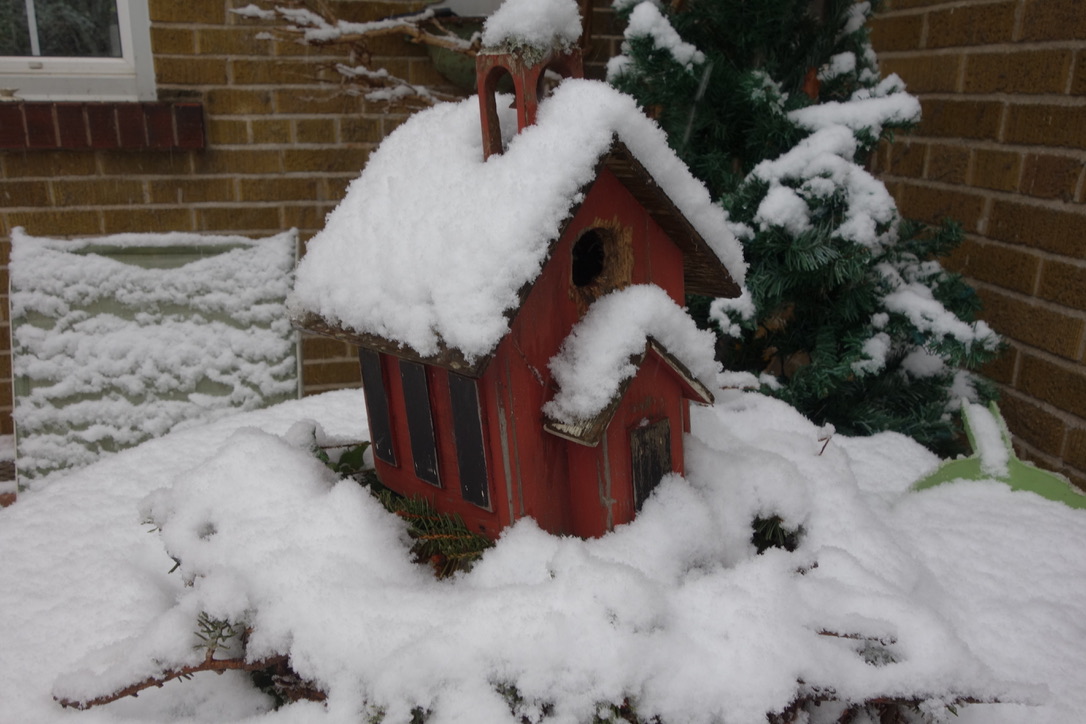
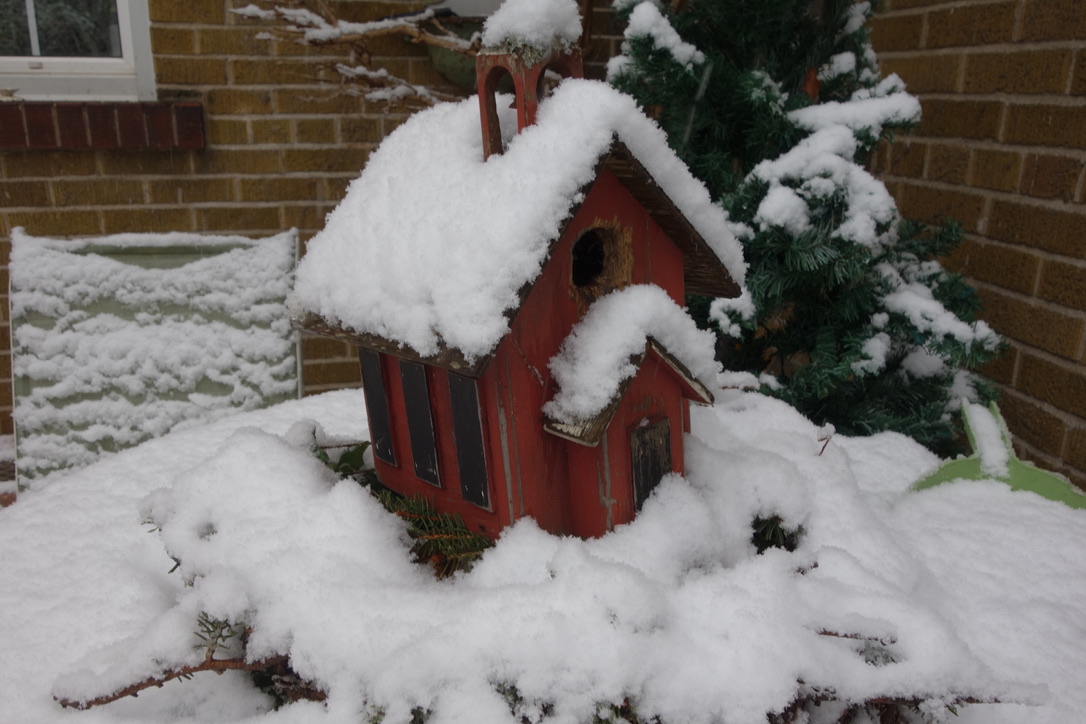
    “Could we put all the virus particles in the world into our schoolhouse…bird house?”
    “Apparently so.”
    “Do you think any Covid 19 has been captured by these fluffy snowflakes?”
    “You flatter my intelligence.  Just for fun count the snowlafes on the school house roof
    and  multiply it by a billion billion or more…that’s the space needed for the Covid virus.
    “Stick with the pop can image…makes more sense.


    POST SCRIPT…NEXT DAY
    “MARJORIE, I see the TTC has ordered all windows on busses to be open.”
    “Why?”
    “To blow as many of the Covid particles out the windows i imagine.”
    “How did the Covid particles get in the busses anyway?”
    “From the lungs of infected people.  A lot of people do not even know they are infected.”
    “Well the open window trick won’t work today?”
    “Why nor?”
    “The sun is out…beautiful day.”
    “What has that got to do with limiting the Covid viruses?”
    “No falling snowflakes to catch the viruses and take them to the ground.”
    “Sometimes you say stupid things, Alan.”
    “Right … the snowflake caper would not help much anyway.”
    “Why not?”
    “Those Australian researchers said the Covid virus could live for 28 days on surfaces.”
    “Really?”
    “Means we could pick the virus up on our boots.”
    “Now that is a really stupid answer.”
    “Your job is to separate fact from fiction…now!”

    FACTS
    1) UP TO 28 DAY LIFE OF VIRUS
    2) VIRUS REPRODUCED IN HUMAN LUNGS… AND EXPECCED
    3) TTC BUSSES NOW HAVE OPEN WINDOWS
    4) ALL COVID VIRUSES ON EARTH COULD BE PUT IN A POP CAN
    5) VIRUSSES EMERGED SOMETIME BETWEEN 8,000 AND 55 MILLION YEARS AGO
    6) THE LITTLE STALKS ON THE VIRUS ARE ‘GRABBERS’ THAT SEIZE LUNG CELLS
    FICTION
    1) SNOWFLAKES COULD CATCH VIRUSES 
    2) VIRUSES ON OUR BOOTS
    3) OPEN AIR IS AS DANGEROUS AS CROWDED BARROOM
    4) STREETS ARE EMPTY…NOT SO BECAUSE LIFE GOES ON DESPITE COVID 19

    TODAY…DECEMBER 19, 2021…THE SUN IS SHINING 

      
  • EPISODE 489 CAN A SNOWFLAKE CAPTURE THE CORONA VIRUS? FACTS AND FICTION

    EPISODE 489   CAN A SNOWFLAKE CAPTURE THE CORONA VIRUS?  (FACTS AND FICTION)


    alan skeoch
    dec. 18,2021


    “Marjorie, this corona virus is starting to get to me.”
    “How so?  Are you any different than others?”
    “No.  But the goddamn virus is changing my life.  And not for the best.”
    “Get your coat on.  Let’s take Woody for a walk and calm down.”
    “The streets are empty.  Everybody is hived away.”
    “Not everybody. There are tracks.”
    “Thos are our tracks.”


    “READERS will have trouble separating fact from fiction in this episode Marjorie”
    “Not Surprised.”


    TODAY our streets were bombarded by millions of large heavy snowflakes.
    And at the same time parts of our neighbourhood harboured billions, perhaps hundreds
    of billions of the corona virus.  Our streets are empty

    Is it safe to go for a walk?  Unmasked?  Which got me to thinking.  The virus is
    so small that it cannot be detected even by sophisticated microscopes. And the
    virus is so light that it can float around in the air quite freely.   Which made me
    think.


    “What are viruses anyway?  Animal, vegetable or mineral?

    Viruses are microscopic parasites, generally much smaller than bacteria. They lack the capacity to thrive and reproduce outside of a host body. 

    Predominantly, viruses have a reputation for being the cause of contagion. Widespread events of disease and death have no doubt bolstered such a reputation. The 2014 outbreak of Ebola in West Africa, and the 2009 H1N1/swine flu pandemic (a widespread global outbreak) likely come to mind. 

    “How long have the little bastards been around?

    “Some scientists say they only appeared 8,000 BCE years ago.  Others say they are 55 million yeas old and co developed with bats.  
    Quite a difference in opinion.”


    “How big are the snowflakes?”
    “Big enough to see them until they disappear.”
    “Which makes me think.  The virus seems to be everywhere…even out here.”
    “According to the experts, yes…everywhere…at least in spots all around he
    earth.”
    “Even out here on Glenburnie Road?”
    “Now here’s an idea…Suppose one of these big wet snowflakes struck a tiny corona virus.  Wouldn’t the
    snowflake capture the virus and take it to the ground.  Wouldn’t a million snowflakes
    take a billion corona virus to the ground?    Cleanse our air?  “
    “Sort of silly comments, alan”


    “Now here is a mathematical problem.  The Question:
    “How many corona virus can be caught by one fluffy snowflake?”
    “Has anybody ever answered?
    “Yes, the mathematician Christian Yates did…in a way that is similar…”
    (See Conclusion…after the silly stuff)


    “WHAT DOES A CORONAVIRUS LOOK LIKE?”

    Seems to be quite attractive . At least according to the editors of Scientific American (July 2020)
    who put this image on the front over of the magazine in 2020.  NOT THE REAL COLOURS I IMAGINE.

    You may wonder what those yellow stems are…They are ‘grabbers’ that latch on to your lung cells
    and then allow the Covid 19 Virus to squeeze into lung cells.  In other words those ‘grabbers’ are
    not nice.  In many cases infected people do not even know the Covid Virus is in their lungs.

    TWO QUESTIONS


     On October 16 ,2020  Australian study says the SARS COVID 2  virus can live for 28 days (Oct. 16, 2020)


    2)  How much space would be needed if we gathered all the Corona Viruses in the world??”

    “Suppose we gathered all the Corona Virus on the earth right now.  How much space would we
    need to keep them?””

    Below is the answer given by mathematician Chrisitan Yates

    Picture Of Red Can Of Soft Drink


    If you collected up every Sars-CoV-2 virus particle in the world, it would fit inside a soft drinks can, writes the mathematician Christian Yates.
    W

    When I was asked to calculate the total volume of Sars-CoV-2 in the world for the BBC Radio 4 show More or Less, I will admit I had no idea what the answer would be. My wife suggested it would be the size of an Olympic swimming pool. “Either that or a teaspoon,” she said. “It’s usually one or the other with these sorts of questions.”

    So how to set about calculating an approximation of what the total volume really is?

    Fortunately, I have some form with these sorts of large-scale back-of-the-envelope estimations, having carried out a number of them for my book The Maths of Life and Death. Before we embark on this particular numerical journey, though, I should be clear that this is an approximation based on the most reasonable assumptions, but I will happily admit there may be places where it can be improved.

    You might also be interested in:

    So where to start? We’d better first calculate how many Sars-CoV-2 particles there are in the world. To do that, we’ll need to know how many people are infected. (We’ll assume humans rather than animals are the most significant reservoir for the virus.)


    The amount of virus that each of the people currently infected will carry around with them (their viral load) depends on how long ago they were infected. On average, viral loads are thought to rise and peak about six days after infection, after which they steadily decline.

    Of all the people who are infected now, those who got infected yesterday will contribute a little to the total count. Those who were infected a couple of days ago will contribute a little more. Those infected three days ago a little more still. On average, people infected six days ago will have the highest viral load. This contribution will then decline for people who were infected seven or eight or nine days ago, and so on.

    The final thing we need to know is the number of virus particles people harbour at any point during their infection. Since we know roughly how viral load changes over time, it’s enough to have an estimate of the peak viral load. An unpublished study took data on the number of virus particles per gram of a range of different tissues in infected monkeys and scaled up the size of tissue to be representative of humans. Their rough estimates for peak viral loads range from one billion to 100 billion virus particles.

    Let’s work with a value in the middle of this range (the geometric mean) at 10 billion. When you add up all the contributions to the viral load of each of the 3 million people who became infected on each of the previous days (assuming this 3 million rate is roughly constant) then we find that there are roughly 200 quadrillion (2×10¹⁷ or two hundred million billion) virus particles in the world at any one time.

    CONCLUSION
    “SO, Alan, How many virus could we gather on our walk in the snow?
    “Not enough to cover the head of a pin.?
    “How do you know that?”
    “I have no bloody idea.”
    “Could we put all the virus particles in the world into our schoolhouse…bird house?”
    “Apparently so.”
    “Do you think any Covid 19 has been captured by these fluffy snowflakes?”
    “You flatter my intelligence.  Just for fun count the snowlafes on the school house roof
    and  multiply it by a billion billion or more…that’s the space needed for the Covid virus.
    “Stick with the pop can image…makes more sense.


    POST SCRIPT…NEXT DAY
    “MARJORIE, I see the TTC has ordered all windows on busses to be open.”
    “Why?”
    “To blow as many of the Covid particles out the windows i imagine.”
    “How did the Covid particles get in the busses anyway?”
    “From the lungs of infected people.  A lot of people do not even know they are infected.”
    “Well the open window trick won’t work today?”
    “Why nor?”
    “The sun is out…beautiful day.”
    “What has that got to do with limiting the Covid viruses?”
    “No falling snowflakes to catch the viruses and take them to the ground.”
    “Sometimes you say stupid things, Alan.”
    “Right … the snowflake caper would not help much anyway.”
    “Why not?”
    “Those Australian researchers said the Covid virus could live for 28 days on surfaces.”
    “Really?”
    “Means we could pick the virus up on our boots.”
    “Now that is a really stupid answer.”
    “Your job is to separate fact from fiction…now!”

    FACTS
    1) UP TO 28 DAY LIFE OF VIRUS
    2) VIRUS REPRODUCED IN HUMAN LUNGS… AND EXPECCED
    3) TTC BUSSES NOW HAVE OPEN WINDOWS
    4) ALL COVID VIRUSES ON EARTH COULD BE PUT IN A POP CAN
    5) VIRUSSES EMERGED SOMETIME BETWEEN 8,000 AND 55 MILLION YEARS AGO
    6) THE LITTLE STALKS ON THE VIRUS ARE ‘GRABBERS’ THAT SEIZE LUNG CELLS
    FICTION
    1) SNOWFLAKES COULD CATCH VIRUSES 
    2) VIRUSES ON OUR BOOTS
    3) OPEN AIR IS AS DANGEROUS AS CROWDED BARROOM
    4) STREETS ARE EMPTY…NOT SO BECAUSE LIFE GOES ON DESPITE COVID 19

    TODAY…DECEMBER 19, 2021…THE SUN IS SHINING