Year: 2020

  • Fw: EPISODE 173 PROPS AND SETS… MAKING MOVIES DEMANDS PERIOD SETTINGS

    NOTE    MY EMAIL HAS FAILED…I AM USING ANOTHER ROUTE WHICH IS NOT AS  GOOD BECAUSE
    PICTURES ARE GROUPED  AT BOTTOM…MAY NOT MAKE SENSE…NIGHTMARE  TRYING TO FIX COMPUTER.
    NO ONE CAN COME TO HOUSE DUE TO COVID 19.
    ALAN  

    —– Forwarded Message —–
    From: ALAN SKEOCH <alan.skeoch@rogers.com&gt;
    To: Marjorie Skeoch <marjorieskeoch@gmail.com&gt;; Alan Skeoch <alan.skeoch@rogers.com&gt;; John Wardle <john.t.wardle@gmail.com&gt;
    Sent: Thursday, November 19, 2020, 12:27:38 PM EST
    Subject: EPISODE 173 PROPS AND SETS… MAKING MOVIES DEMANDS PERIOD SETTINGS
    EPISODE  173    PROPS  AND SETS…MAKING MOVIES DEMANDS  PERIOD SETTINGS 


    Alan skeoch
    Nov. 2020


    Machines have  always fascinated  me.  Not because I know how to operate them or
    even want to operate them.  The fascination is  historical.  Years ago  a material  historian
    names John Kowenhaven (sp. is incorrect ) wrote that “machines reflect the culture in
    which they were created.”  Not his exact words but the meaning is clear.  Machines are  
    historical objects.  They fit into their historical settings.   

    Half way through my teaching career I applied for a sabbatical leave to study  machine design
    in the 19th century.  The end result was a 300 page tome describing the changes  in machine
    technology in the 19th century.   

    That was when i started to buy old machines.  Dozens of them.  Hundreds  of them.  Initially there
    was no financial reason for doing so other than the encouragement I got from Marjorie.  Grain cleaning
    machines…fanning mills…really fascinated me because by the end of the 19th century these machines
    were made into objects of beauty by the paint ‘stripers’ in the factories.  I think I bought 80 fanning mills.

    Then the movie industry came to Toronto needing authentic sets.  Sets that would transport TV and Movies
    watchers into the past where particular machines were needed as background (sets) or as foreground
    objects actually touched by actors (props)..  They needed our machines.  And suddenly we had a business
    We  were considered a bit eccentric in that Marjorie and I took real interest in each movie that was being made.

    At the same time, quite a few of the students I taught at Parkdale Collegiate found themselves employed
    in the movie industry.  Some  of those students rented machines from us.   We were the bottom of the
    movie pyramid…no one was lower.  A  role reversal that my ex-students  relished.  One movie I remember well.  A village in Ontario was converted
    into a movie set and rented truckloads of our things.  We drove over, asked the art director if we could take pictures
    of our things. 

     “Not supposed to let pictures be  taken,  but what the hell…just get your things and not
    the whole set.”
    “Great.”
    “And move fast while we are on a coffee break.”
    “Right.”

    We  zipped from store to store snapping digital  pictures.  

    THEN  CAME THE  VOICE.

    “What the hell are you doing here, Skeoch?” came a voice from a guy high up on a
    movie ladder.  In the dark.
    “Taking pictures…all cleared.”
    “Skeoch…I heard you were in the business.”
    “Who are you?”
    “I’m the best boy on this set”
    “Who? How do you know me?”

    Then Phil Calambakis came down the ladder.  One of my Parkdale students.   Great kid. Taught his sister Anna as
    well.  His mom and  dad were boosters of our school.  Now he had become and I think remains a pillar of 
    the movie industry.

    “Remember the smelly feet kid, Phil?”
    “God his feet were bad…I had to sleep on the couch. Abandon my own room to his shoes and socks. Rotten.”
    “Your mom and dad were always willing to help music exchange students…”
    “Well, Not that willing, sir,   After the guy with the stinking feet.  I lost my room SIR   (Did Phil say ’Sir’…yes he did) …still blame you for it.”

    I noted  that Phil slipped back into the ‘Sir’ mode…an expression of respect that I always savoured
    when used by my students.   We had a few laughs that day.  Then the actors began to troop
    in and we were politely ushered out.

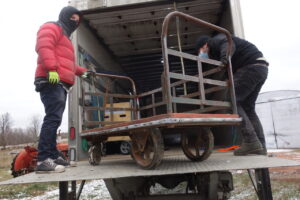
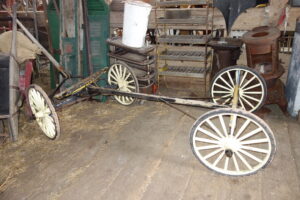
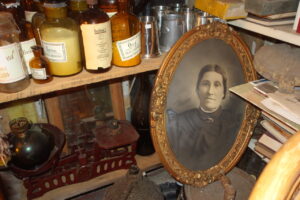
    So here below  are a few of the things we have rented  this  month…November, 2020.


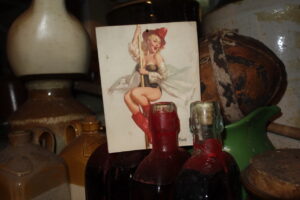
    A  period calendar from 1945 to 1946…interesting.


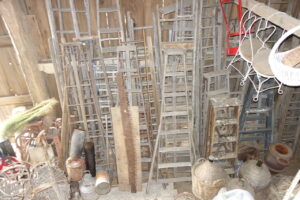
    One ladder is not rentable…movies want multiples…so our collection expands.

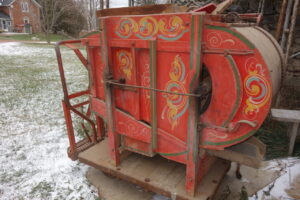
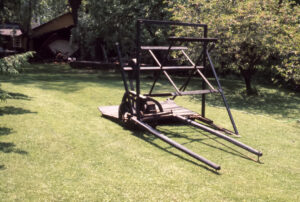
    You will hear about this machine in a story shortly.   Bet you do not know what it is.  It revolutionized agriculture.  Cheap food followed its’
    invention.   We travelled  to England, Ireland, USA…in search of the history of this machine.   Then I rebuilt it in our back yard.;;and  
    shipped it air freight to a museum in Northern  Ireland.   interested?  Are you interested?

    alan skeoch
    Nov. 2020

    Question:  Which object … artifact…do you remember best?


  • EPISODE 173 PROPS AND SETS… MAKING MOVIES DEMANDS PERIOD SETTINGS

    EPISODE  173    PROPS  AND SETS…MAKING MOVIES DEMANDS  PERIOD SETTINGS 


    Alan skeoch
    Nov. 2020


    Machines have  always fascinated  me.  Not because I know how to operate them or
    even want to operate them.  The fascination is  historical.  Years ago  a material  historian
    names John Kowenhaven (sp. is incorrect ) wrote that “machines reflect the culture in
    which they were created.”  Not his exact words but the meaning is clear.  Machines are  
    historical objects.  They fit into their historical settings.   

    Half way through my teaching career I applied for a sabbatical leave to study  machine design
    in the 19th century.  The end result was a 300 page tome describing the changes  in machine
    technology in the 19th century.   

    That was when i started to buy old machines.  Dozens of them.  Hundreds  of them.  Initially there
    was no financial reason for doing so other than the encouragement I got from Marjorie.  Grain cleaning
    machines…fanning mills…really fascinated me because by the end of the 19th century these machines
    were made into objects of beauty by the paint ‘stripers’ in the factories.  I think I bought 80 fanning mills.

    Then the movie industry came to Toronto needing authentic sets.  Sets that would transport TV and Movies
    watchers into the past where particular machines were needed as background (sets) or as foreground
    objects actually touched by actors (props)..  They needed our machines.  And suddenly we had a business
    We  were considered a bit eccentric in that Marjorie and I took real interest in each movie that was being made.

    At the same time, quite a few of the students I taught at Parkdale Collegiate found themselves employed
    in the movie industry.  Some  of those students rented machines from us.   We were the bottom of the
    movie pyramid…no one was lower.  A  role reversal that my ex-students  relished.  One movie I remember well.  A village in Ontario was converted
    into a movie set and rented truckloads of our things.  We drove over, asked the art director if we could take pictures
    of our things. 

     “Not supposed to let pictures be  taken,  but what the hell…just get your things and not
    the whole set.”
    “Great.”
    “And move fast while we are on a coffee break.”
    “Right.”

    We  zipped from store to store snapping digital  pictures.  

    THEN  CAME THE  VOICE.

    “What the hell are you doing here, Skeoch?” came a voice from a guy high up on a
    movie ladder.  In the dark.
    “Taking pictures…all cleared.”
    “Skeoch…I heard you were in the business.”
    “Who are you?”
    “I’m the best boy on this set”
    “Who? How do you know me?”

    Then Phil Calambakis came down the ladder.  One of my Parkdale students.   Great kid. Taught his sister Anna as
    well.  His mom and  dad were boosters of our school.  Now he had become and I think remains a pillar of 
    the movie industry.

    “Remember the smelly feet kid, Phil?”
    “God his feet were bad…I had to sleep on the couch. Abandon my own room to his shoes and socks. Rotten.”
    “Your mom and dad were always willing to help music exchange students…”
    “Well, Not that willing, sir,   After the guy with the stinking feet.  I lost my room SIR   (Did Phil say ’Sir’…yes he did) …still blame you for it.”

    I noted  that Phil slipped back into the ‘Sir’ mode…an expression of respect that I always savoured
    when used by my students.   We had a few laughs that day.  Then the actors began to troop
    in and we were politely ushered out.

    So here below  are a few of the things we have rented  this  month…November, 2020.


    A  period calendar from 1945 to 1946…interesting.


    One ladder is not rentable…movies want multiples…so our collection expands.

    You will hear about this machine in a story shortly.   Bet you do not know what it is.  It revolutionized agriculture.  Cheap food followed its’
    invention.   We travelled  to England, Ireland, USA…in search of the history of this machine.   Then I rebuilt it in our back yard.;;and  
    shipped it air freight to a museum in Northern  Ireland.   interested?  Are you interested?

    alan skeoch
    Nov. 2020

    Question:  Which object … artifact…do you remember best?
  • EPISODE 172 WLAND RECOVERED…AT A COST


    EOPISODE  172      WETLAND ROCOVERED…AT A  COST


    alan skeoch
    Nov. 2020


    Our farm is not a good  farm.   My grandparents managed to make a sketchy
    living on the 25 acre farm.   They had no car…no horse and buggy…no way  to 
    get to town except with their sun, Uncle Frank who owned a  neighbouring farm.
    Both farms are glacial dumps.  Rubble from the Canadian Shield  pushed down
    by ice two kilometres high.  Ice that scoured the bedrock making indentations in
    the flat surface wherever possible.  


    Those indentations filled with water when the ice sheet melted  10,000 years ago.
    Ponds.  Lots  of ponds were scattered across the rock surface of ancient Ontario.
    Plants eventually got a grip on the rocky soil.  The ponds became hubs for 
    vegetation.  

    And eventually over the 10,000 years a great number of those ponds became
    swamps…thick with spongy mosses and other watery plants.  In some cases
    the pond  water totally disappeared and was replaced  by wetlands.

    A third of my grandparents farm was  wetland that drained in two directions.
    Some of the swamps drained into the Credit River drainage basins.  The rest,
    the larger, drained into the the Grand River basin.  Lots of water.

    HERE IS THE STORY…IN OUR FEW  YEARS OF OWNERSHIP

    About 20 years ago Marjorie and  I decided to hire JIM Sanderson’s family to 
    bring their big excavator to open up one of the large swamps.  This was  no small
    task.   Jim had to remove the plant life that had taken 10,000 years to
    pile up…living plants succoured by their dead  predecessors.

    The excalator got caught in quicksand  and  slowly sank into  the swamp.
    So deeply that Jim’s son had to abandon the cab as the huge machine
    slipped deeper and deeper into the pond.   Much excavation had  been done
    successfully and the swamp was  now a pond as it had been long ago.
    A  pond with a huge iron, steel and rubber dinosaur slowly sinking deeper
    and deeper into what had once been a sandy beech.

    “How will you get it out, Jim?”
    “We’ll have to float the machine out?”
    “Float?”
    “Need to bring in truckload or two of giant timbers to encircle
    the excavator then use another excavator to lift it up…a giant raft, if you will.”

    The project took a long time. Days and days.  The fifth line in front of our farm
    was lined with machines and  truckloads of timbers.   Eventually the excavator
    was recovered.   I offered to help with the costs  but Jim would not accept help.

    “We got it into this  mess, so we will get it out.”

    The new pond was a bit of an embarrassment so we sort of forgot about it.
    The pond was surrounded by large ancient white pines and a line of immense
    spruce trees  planted by my grandfather.  The pond was invisible.

    Wild animals knew that.  One summer a  bank beaver moved in and chomped down
    a grove of small poplars.  It was an old beaver.  Almost tame.  But it was really dying
    so we left it alone in its small watery world.  Other creatures  came and  went. A pair
    of muskrats burrowed  into one bank  and have been raising  a whole bunch  of young muskrats
    that we hardly ever saw.  A family of mud hens had lived in the former swamp and
    now lived in the pond.  Deep dear tracks were incised  into the mud now and then.
    Sadly one summer we saw a doe with a crippled fawn emerging from the piece of wetland.
     Shrubs thrived forming a veil of low life that made the pond
    more and more invisible.

    Just one giant spruce…felled by a windstorm…was  enough to reveal the pond  that we had forgotten.   


    Then, last spring, a big windstorm brought about a major change.  The pond suddenly
    become visible.  The tree carcass was down flat…we could now see the pond
    clearly.   Work with the Bobcat and a  brush cutter revealed  a wondrous patch
    of open water surrounded by all kinds of  plant life the had been formerly shielded
    from view by  the giant spruce tree.

    A wetland that we had forgotten for years was  now visible.


    The muskrats were rearing a family of four in the pond.  They did not
    like the improvements one bit.

    alan skeoch
    Nov. 2020


    P.S.  Milkweed plants seem to like the pond margin.  If they have their will they will take over a wide swath and maybe…just maybe…we will get our Monarch butterflies back again.
    Farmers hated  mllkweed.  Poisoned cattle.  So the plant was  condemned for years.  But now, in 2020, there are only a few cattle grazing on the Fifth Line and the milk weed
    has returned.   Not as  much as in the past though.  Why?  Because corporate agriculture has  “improved” Ontario farmland  by removed so many fencerows where wild plants
    and  song birds once thrived.  The same is  happening to wetlands.  They are being drained.  Not on our property though.  We are doing the reverse.

    alan skeoch
    Nov. 2020


    P>S.  The Excavator looked like this…and  it finally rested
    about deep in the pond.  How would you get it out?


  • EPISODE 169: PART 4: THE VICTOR POPPA STORY THE POW EXPERIENCE 1944 AND 1945

    EPISODE 169    PART 4  THE VICTOR POPPA STORY

    NOTE:  EPISODE 170  WILL CONTAIN NEW DEVELOPMENTS IN THE VICTOR POPPA STORY…IT WILL COME LATER


    PART 4:  THE VICTOR POPPA STORY:   PRISONER OF WAR


    alan skeoch
    DEC 30. 2019


    VICTOR POPPA

    So here  we are Victor.  May  I speak to you Victor even though you have died longlong ago.

    I wish, Victor, that I had transcribed your edited diary back in the 1980’s when you were alive and full of
    piss and vinegar.  You trusted me and believed I was a much bigger fish in the ocean life than I 
    actually was in those days.   My first  priority was  my students.  I know that sounds cruel, Victor, but
    it was a truth.  Each day I tried  to inject young  minds  with an ability to be introspective.  To see
    themselves as  threads  in the garment of life.  That task was never easy.  Preparing lessons  sounds
    like such a dull thing to do.  Boring some might say.  I laboured to avoid the tedium of repetition and
    sometimes I succeeded.  Sometimes I failed Victor.  Your story, however, was always on my mind
    as  Gordon  Lightfoot said in one his wonderful songs.  And  when I told your story to a class they were
    always riveted…always able to put themselves  in the lonely plexiglass bubble of HX 313 as it hurtled
    its to earth.  I regret that your constant sexual  adventures were never shared.  That would have got
    me into trouble for sure.  Some people might consider those sexual adventures exploitive.  i.e. treating
    women as only sexual objects.  I know that was  not the case with you Victor. You loved them all.

    Now we have reached the final section of your story.  I would  like to pick it up at the point your
    damaged body hit the ground near your target of Bourg Leopold, Belgium.  You have written some
    notes for me to put the story together but those notes are not nearly as rich  as  your diary notations.
    So forgive me.  I am going to try and put my feet in your shoes.  To start me off I have to take
    another look at you…maybe two looks.  First, the Amused  grin of you Victor when you took me
    up in that decrepit Cessna 170 over the Californian village of Lake Elsinore in 1984.  And  second
    the real devilish  smile on your face the year you joined the RCAF at 22 years of  age.  

    Victor, it seems to me that you knew that being tail gunner was going to be a life altering experience,
    You joined he RCAF as a baby faced kid in the early years of World  War Two.   By 1945 you had grown
    up and  were aware of your days living on this earth were limited.  Yet you survived.  And  for the r best
    of your life you would live and  relive those Bomber Command war years

    So let’s pick up the story again on that tragic night of May 27, 1943 when  the Blonde Bomber, HX 313
    was on fire and plummeting to earth afire and  carrying a full bomb load.

    Victor you were the only living person still on board.  Your good friend  Hank Freeman was  present
    but dead.  Killed by bullets that punctured the belly of HX 313 and just stopped short of Victor’s rear   

          gunner bubble.

    .


    EVENTS IN VICTOR’S OWN WORDS

    “Our bomber did not explode.  There were  fires in from front to rear.  The inside  of much  of the plane was cherry red.
    My first thoughts were: ‘You have been waiting for this and now  it has finally happened.’ I called on the Intercom
    but received  no answer, only static.  HX 313, however, was still flying in a straight line.”

    “I pulled off my flying helmet, opened my turret doors, reached for my parachute and snapped it to my chest. I stayed in my
    position because  I saw  no parachute go by the tail.   Then,  a few seconds later, I saw  one.  It was open and  on its side
    parallel to the ground  just missing the  port rudder and fin. Then I decided to go.  I swung my turrets 90 degrees in the
    fuselage and tried to go  out but couldn’t because of the fire and wind.  I tried twice to no avail.   By this time the ground
    was appearing quite close.  I could tell from  the fires that to bail out from the aft fuselage exit would have entailed too much 
    time and  by then it would be too late anyway.  So I sat there waiting for my end.  The aircraft then went into a  flat spin.
    My turret twisted  free and I was flung out by the brute force.  My leg, however, was stuck momentarily under my leg guard.
    I could feel my knee pull right out of its socket.   Then my leg came free.  I was falling flat on my back.  I looked on my
    chest for my parachute  and it was not there.  The parachute had been pulled away for my chest by the wind force and was
     nowhere feet from my face and above.  Pulled on the
    harness  and brought the parachute down close enough so I could  grab  the D ring and pulled. It opened with sharp snap.  A pain
    knifed through my groin, I put my arms above my head, grabbed the harness and  pulled thereby  relieving the pain.  A few
    seconds later I saw  the ground coming up real fast. I felt as though  I was an arrow.  I hit the ground hard  and collapsed
    with my parachute falling on top of me.  I am  sure the chute had  opened  at less that 1,000 feet and our aircraft had been
    at 11,900when we were first hit by the flak and  then shot up  by the JU 88.”

    “I managed to get onto my feet but I could not feel  anything  from the waist down…felt like metal bands were clamped around
    my ankles and knees.   I was standing balanced as though on stilts.  Just t hen I could hear motors screaming…an aircraft
    in its death sieve.  I Dropped flat to the ground.  It is amazing how close you think you are to the ground, as  if you are being
    pulled down tight, pressed into the grass.  This aircraft hit a few fields away and  exploded.”

    “All of this happened at approximately 2 a.m. on the 28th of May, 1944.  After the explosion I found I couldn’t walk but moved with
    a painful shuffle.  I moved away from the area slowly.   At wire fences I would put my body through and  then with my hands pull my legs  through.
    I moved along in this manner until the dawn started to glow.  Then I made my way  into the centre  of a wheat field where  I  lay down
    and fell into a deep  sleep. I awoke at noon hour with the sun shining down at me.   I made my way out of the field and crawled  under
    a tree.  I took off my electric suit and found I  had suffered some  spinal chord damage and had torn open my left leg and buttocks.
    The  leg was swollen twice its normal  size and black  and blue.  I also had torn muscles and  ligaments.  I crawled  to  a farm house
    where the farmer  was kind but reluctant  to hide  me.   He gave  me water and milk to drink.  We were advised in England never
    to impose upon these people.   I they showed willingness, fine.   If not, leave.  If we were caught with them they would suffer
    Grievously.”


    “My legs were starting to stiffen up and  the pain was increasing.  I made  my way to another field where I lay down and rolled and rolled
    in agony.   I was this way well into the afternoon.   Finally I felt that I must get  some assistance.  On my knees I made my way  
    back to the  farm house and indicated I  would like police assistance.  While waiting, a Belgian doctor gsve
    me an injection of some sort but it had no effect.  I gave the farm woman all of my escape  money and shortly two Luftwaffe
    NCO’s came  in an automobile.  I was placed in the  back seat with one  NCO and because I  could not bend my  legs I had
    to lay across his body.”

    “I was driven to our target the previous night.  There was one room left standing where I was deposited on a  bed.   Despite all
    of the  killing we had done I was not mistreated.  I was given a bowl of greasy stew which i could not down.  Later, I was visited
    by a German medical officer   All he did was rant and rave  at me in German.   Although I Felt he was going to strike me, he did not.
    Three days later I was taken outside and placed in the back of a truck with four caskets.  A German NCO pointed to one and
    said “Komerad  Irwin. This was our navigator Bob Irwin.  I gave a negative response.  He then pointed  to the casket on my right
    and said “Kamerad Wakely”.  This was the coffin of Wilf Wakely.  Again I gave a negative response .  I was not questioned about the 
    third caskrt. This one must have been George. The fourth  was empty as I had moved it with my foot.  At that  time I did not know George
    was dead.   It wasn’t until I returned to England after the war  was over that I got word from RCAF records that George had  been
    killed.  This left me stunned as  Hank (George)  and I were real close friends.”

           What happened to Hank Freeman?   “So Hank could  have been the first one out as Bill seems to remember someone going out ahead of him.  Bill may be  correct

          but I don’t think so.  I had  no  trouble hearing the clatter of bullets coming through from below and stopping just short of my position.  I think Hanks was hanging
          there. Dead.  Remember the comment that the crew passed by the upper turret and  saw feet hanging down and my smelling burnt flesh when I  was  put in
          the German truck  with the coffins  later.  But I could be  wrong.  If Hank bailed out he would  have been the first out followed by Bill, Muir, Wilf, Bob, Eric, Ken and
          finally myself.  Personally I think he  was killed  by the tremendous burst of bullets crashing through HX  313 from front to back in those few seconds.  Hank
          wasn’t the type to  bail out first.   He  would  have waited to be  sure.   I only tried to bale out after I saw a chute  go by horizontally which  was  Ken.  I was
          sure I would  go  down with HX 313…certain death.  Then fate took hold, the bubble shifted and I  fell out just in time.”


    Note:  Victor  Poppa’s account closed the file on the  last flight of HX 313.   He was the last person to get out of the aircraft.  All had
    been able to get out one way or  another, except for George Freeman.  Two who got out were killed when they  hit the ground.
    The rest survived. George was  likely killed  when  the JU 88 strafed the plane.  One of the crew remembers George’s legs hanging down
    as he worked his way past the upper turret to reach the escape hatch.   The nagging thought that George remained  alive worried Victor because
    gunners were often trapped in their  turrets like  Victor had been.  HX 313 exploded on impact near an abandoned railway station.   Eric  Mallett
    and Ken  Sweatman were escorted  past a pile of melted metal that had once been The Blonde  Bomber.  They could not stop to look
    closely for their  escorts were members of the Belgian Underground and it was imperative that they hide Ken and Eric as 
    quickly as possible.   Victor Poppa, George Elliott and Morris Muir became POW’s.

    STALAG LUFT  VII

    Stalag Luft 7 was a World War II Luftwaffe prisoner-of-war camp located in Bankau, SilesiaGermany (now BąkówOpole VoivodeshipPoland.


    Note: OnMay 19,1984, almost 200 Canadian veterans and their wives celebrated the 50 year anniversary of 424 Squadron…the Tiger Squadron…the ‘City of Hamilton  Squadron.

    Among those present were Victor Poppa and his wife Louise.  In the special Memorial  book, Victor provided  an overview of his  life as  a POW in Stalag Lutt VII.

    Victor Poppa: ” After hospitalization and interrogation i Iwas sent to Stalag Luft VII at Bankau which is ten miles from the  Polish border in a straight line between Breslau and Krakau. 
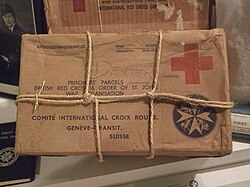
    At first we were given one Red Cross parcel a week plus one meal a day.  The tins  in the Red  Cross parcels were punctured to keep us from hoarding the food  for escape use.
    By September 1944 the parcels only came once every two weeks and  on Christmas  day, December 25  1944, we received our last Red Cross parcel. In the new year the weather
    became colder.  Since our food had been  reduced we felt the cold more. ” 

    upload.wikimedia.org/wikipedia/commons/thumb/0/02/Red_Cross_Parcel.jpg/500px-Red_Cross_Parcel.jpg 2x” data-file-width=”2848″ data-file-height=”2136″>


    Note:  Other surviving POW’s described Stalag Luft VII as terrible…especially for the Russians in adjoining POW camp who were systematically starved to death.  One Canadian POW
    said  they sometimes  tried to throw potato peels over the barbed wire to the Russians who  fought to get whatever they could.  Russian corpses  often had flesh wounds related to
    cannibalism.  Efforts to help the Russians was nearly impossible.  No point, explained  one guard, just a waste of food  for the Russians  would soon  be dead.
    Note: Victor Poppa’s description is short.  Conversations with Victor were much  more detailed but I have no detailed written account except from memory.  Victor did describe the
    horrors faced by the Russians.   He also described  a Russian women’s POW camp which was  also grim.  Grim?  Wrong word.  Horrible is better.
    In 1941 Hitler gave the infamous Commisar Order that permitted the wholesale murder of  Russian  POW’s and civilians.   He justified it by saying that Stalin would  do
    the same to German POW’s.  The estimated numbers  of deaths by starvation or execution is mind boggling.

    (“It is estimated that at least 3.3 million Soviet POWs died in Nazi custody, out of 5.7 million. This figure represents a total of 57% of all Soviet POWs and may be contrasted with 8,300 out of 231,000 British and U.S. prisoners, or 3.6%. About 5% of the Soviet prisoners who died were Jews.[5] The most deaths took place between June 1941 and January 1942, when the Germans killed an estimated 2.8 million Soviet POWs primarily through deliberate starvation,[6] exposure, and summary execution. A million at most had been released, most of whom were so-called ‘volunteers’ (Hilfswillige) for (often compulsory) auxiliary service in the Wehrmacht, 500,000 had fled or were liberated, the remaining 3.3 million had perished as POWs.”)


    An improvised camp for Soviet Prisoners of war.  Thousands.  Many would starve  to death.  Allied prisonerss
    like Victor Poppa were treated  better and many  survived.  


     THE LONG MARCH


    “Because of the Russians advance we were ordered to march  west and  after 15days marching, with very little for, we reached  Cloberg on February 5th, 1945. We were put
    into boxcars and  transformed  to Luft 3A which is about 4 miles from Potsdam.  Our rations  were cut again and we were getting concerned about our health as we  were
    weaker and noticeably thinner.One morning when we awoke to the sound of gunfire in the distance there were suddenly no guards in the camp.   About noon the Russians
    appeared.  We were told they had hooked  up with the Americans about 50 miles to the south of us. Carl Seeley and I decided to cut out on our own.”

    Note:   See two diary descriptions of the Long March as post scripts.  Why was it necessary to march POW’s deep into the collapsing circle of German territory?
    Prisoners had  negotiating value I  suppose.  One source reported that Adolph Hitler ordered  all POW’s to be shot in the event of a German surrender.  This never
    happened.  The collapse of German forces  was fast and it is  doubtful that such a wide scale massacre would have happened.

    “On the second day out we hooked up with nine French girls.  We did the food scrounging for all of us while the girls did the cooking.  After 14 days we reachedTorgow and the
    Americans.  They agreed to pass us on to the Canadians but could  do nothing for the French girls as they were civilians.  That night we had a farewell party and after exchanging addresses we 
    boarded  a  C47 for Brussels..  The next day we were flown to England and boarded  a train for Bournemouth and eventually repatriated home to Canada.  Out of our  crew of eight, five of us
    managed to come home.”

    “I found my map used by Seeley, myself and the French girls to reach the American sector.  Dated  Aril 10, 1945.  We walked from LUckenwalde POW camp to Juterborg, then south to 
    Herzberg then SW to Torgau where the Russian and American forces met.  I am not sure how long it took…between 9 and 14days.”

    Note:  This short account was written in 1984.  Too bad it is so short.  I remember Victor telling me his adventures when he and Seeley walked through the ruins of Germany
    to the American lines.   At one point while scrounging for food they entered a  farmer’s house and  faced a German  officer in a bedroom.   The officer was scared as was Victor.
    Nothing happened even though the German  had a Luger beneath the covers.  Victor backed out of the room.   Seeley and Poppa acted  as  protectors of the nine girls on their
    14 day escape.  He told  me that chaos was too soft a  word  for the condition of Germany in those immediate post war weeks. I remember asking  Victor is they  hid at night.  Usually
    in empty barns or houses he answered.  

    “What did  you do in daylight?  Lots of  people with guns…Russians, Germans.”
    “That was a  problem.  At first we ducked into ditches or bushes but that was risky.  Nervous trigger fingers all around.  So we decided it was best to stay exposed on the roads.  We became
    part of the stream of people moving who knows where.  Actually having the nine French girls was protection for Seeley and  me.”

    Note:  Other stories by liberated POW’s abound.  In the daytime they wandered through German towns taking whatever was portable.  One POW even broke into a paymaster’s office and
    found  piles of various wartime currencies.  “I took some…wish I had  taken more for the money turned out to be cashable.”  Another group broke into a wine storage building filled with
    fine wines from France.  One of the POW’s took a case of champagne back  to the POW camp for a  party.  Next day he thought he should get more but by then the building had
    been set ablaze. “Burned to the ground.”  Most POW’s felt safer in the prison camp rather than in German towns and cities at night.  So they raided in daylight and returned to camp
    at night.   Another Canadian ex  POW carefully snipped out a huge portrait of Hitler as  a  souvenir.  “Too big for the C47…you cannot take it aboard.”  What most POW’s wanted to
    find  were German Lugers as there were heaps  of recently cast off German uniforms here and  there as Germans attempted to suddenly become civilians.  “I kicked one pile of German
    uniforms and  a Luger slid out from the pile.  Before I could reach down, other hands  grabbed it.”   Symbols  of the Third Reich were gathered not just by POW’s but by Allied soldiers and
    officers as well.  They appear now and then in auctions.  Harry T—. a good friend of mine had  a  nice oil painting hanging in his Mississauga  home that he cut from a German  frame and 
    rolled up as ‘the spoils of war’.  Another friend inherited  from his paratrooper father a  whole basket full of badges including an Iron Cross along with a large Nazi flag.  “What am I  going
    to do with this?”, he wondered.  

    Note:   What happened to the guards?  Seems that some of them ditched their uniforms and mixed in with the refugee streams on the roads.  One group of guards had a novel reaction to
    the situation.  They threw their weapons over the barbed wire fence and became prisoners of the POW’s and were photographed as such.  I  do not know if that was much  protection
    against the arrival of Russian troops so  suspect those guards  were in an American sector.  Dead and near dead Russian POW’s must have enraged Russian forces.
    A  long time ago, back in 1961, I read ‘Documents of the Expulsion’ which detailed  the fate of tens of  thousands  of Germans attempting to escape Russian occupation
    of Poland and the Baltic States.  There is no horror that I have read since to match what happened to many of these people.  German  POW’s  captured by the Russians were shipped
    by the trainload to Siberian  prisons  where many died.  Eventually, years  later, some were able to trickle back to Germany.  Some may have been Victor Poppa’s  prison guards.


     When Victor Poppa reached the American sector he was housed
    briefly on a recently liberated  German  air base.  “One day a German Messerschmitt  flew in escorted by American fighter planes.  It landed and a German officer surrendered having escaped 
    the eastern sector.  His girlfriend was  with him in the plane.” Both were taken away.  “I do  not know what happened to the Messerschmitt.   But I do remember looking at a  great number of aircraft on the base.
    Most of them no longer airworthy.”  Did Victor Poppa bring any trophies home?  I don’t know, but he sure brought back lots of memories.  I bet he wanted that Messerscmidt for he had a deep
    fascination with aircraft.  I can imagine Victor suggesting….  “I guess it would be out of the question for me to fly that Messerscmitt back  to England.  That would save
    a seat in the C47 for someone else?”  (never uttered but true to Victor’s nature.)

    CONCLUSION:

    Those  of  you who  have read Parts  1, 2, and 3 of the Victor Poppa story must feel as I did that
    a very human, very graphic, very exciting window  had been opened.   Perhaps the best way
    to close that window is to let Victor do the closing.  Below is the last letter Victor Poppa sent
    to me on Dec.  7, 1988.  

                                                                                          Victor Poppa
                                                                                         33535 Valencia St. R1
                                                                                        Lake Elsinore
                                                                                        California,  92330

    Dear Alan, Marjorie, Kevin and  Andrew,

    I was  just reviewing your letter of April 8, 1988 which seems a  very long  time ago. I regret not
    answering sooner.   Thanks for your book ‘Focus on Society’ which I have read and  enjoyed.
    I have a collectors’ item for you…a 12 ounce can of Budweiser Beer with no pull tab for easy
    opening, the can must have slipped through inspection.  As you know I quit drinking alcohol
    years ago which  must surprise anyone reading my diary of those war years.

    I have not been feeling all that well this year with has hampered my letter writing. Presently
    I am getting pain up my left leg from ankle to hip.  It pulsates in an arthritic way….very painful.
    Louise  is  having her share of trouble as well.  To add to it she  fell off our airplane’s horizontal stabilizer
    as I was trying as I was trying to get the main wheels out of  some soft earth.  I pushed down 
    on the tail to get the nose wheel up and induced Louise to sit on the stabilizer. This kept
    the nose wheel up.  Louise’s weight was a modest advantage.  However when Louise  changed
    position the tail unit shot up and Louise fell off.  She fell about 4.5 feet landing on her left foot then
    banged the back  of her head.   Louise was  groaning and crying that she was  about to die.  A
    bone was broken in her foot so  Louise is now sporting a cast from toe to just below the knee.
    She will be limping around the house for six more weeks.

    Then a  few weeks  ago when I was  on a nocturnal visit to the refrigerator I tripped  and cracked
    a rib when I hit the table top with my side.  A few weeks  earlier I tripped over the dog on a 
    similar trip to the refrigerator.  That time I cracked my right knee cap I think.  There was a
    loud  ‘crack’ indicating something broke.   It doesn’t hurt though.

    We had  Thelma Sweatman  here for two weeks in early February.   I gave her the picture of
    HX 33.  She was  happy to get it.  Thelma  asked me to send you a card from Ken’s funeral.  
    He died on August 30, my birthday.  Ken has  let me with the fondest memories.  He was a
    wonderful  person…cool in combat…good and  sincere…never changing.  Always a  good friend.
    The world  has lost a fine person.

    Alan, I should  have put in more detail describing some of  our missions in my diary.  I suppose
    I can add comments now.

    Have a very Merry Christmas and  a  Happy New  year.

    Love from  us

    Victor and  Louise Poppa

    Note: I suppose This  must seem to be a strange letter .  Accidents, ailments…normal give and take
    of daily life including Victor’s  ‘nocturnal raid on the refrigerator’ and  ‘tripping over the dog’.  Why
    use this  letter as a  conclusion to his  escapades in Bomber Command?   Victor had not changed
    much.  In 1988 he was still flying…and his description of getting his plane out of the mud has a  sort
    of amusing yet concerned ring to it.  His wife Louise was  the young girl  he met in Quebec City
    just before he went overseas in World  War Two.  She must have known about his  escapades
    with Hank  Freeman and been amused rater than offended.

    Perhaps the main reason I have included  this  letter however is his  mention of Ken  Sweatman, the
    bomb aimer one HX313.   The crew bonded and kept in touch.  They became family.

    Then there is the dog.  Probably the same dog that nearly killed me when Victor described a mouse
    running back and  forth in the dog’s mouth between lips and teeth.  “The dog looked at me, Alan,
    with a questioning dog grin as if saying ‘what do I do now?’    That caused me to laugh too hard…injest
    a piece of stake that was too big for my esophagus…no air..gagging…leapt up on the restaurant
    table.  Whereupon Victor, lightning speed…whirled me around  and  locked his hands below my rib
    cage…pulled firmly.  And saved my life.  

    I hope that this  transcription of his diary can be seen as payback.

    alan skeoch
    dec.  2019


      Ken Sweatman,  Bomb Aimer on HX 313.


    Only image known of  HX 313, The Blonde Bomber.


    Victor Poppa’s hand written map  documenting his escape from POW camp at Luckenwalde.  Victor and  his friend Terry Seeley
    joined 9 French nurses in a trek across Germany to the American sector.


    Victor sent this  drawing to me in 1984, saying ‘this is what the Long March  was really like’


    Copy from a page in Victor Poppa’ diary.  More below.


    TWO DESCRIPTIONS 

     THE LONG MARCH TO LUCKENWALDE, JANUARY, 27, 1945

           (NOT BY VICTOR POPPA )


    17.1.45 Orders received to evacuate the camp because of the Russian advance towards the West. Stood by all day with, kit packed.

    All Red Cross parcels withdrawn from stores. Columns of retreating Germans pass the camp. Horse drawn wagons main form of transport. Bitterly cold – sub-zero temperatures. Russian P.O.W.’s are moved into our new compound. Small issue of cigarettes to each man. 

    18.1.45 Rations issued – 1/7th tin of meat, 2/3rd loaf of bread, 1/8 lb margarine. 1/4 lb honey, 2 cheeses. This to last two and a half days if we march – 4 days if transport is by train. All contents of food parcels shared amongst our combine of 18. My share – tin of cocoa, packet tea, tin sausages and some margarine.

    Heavy air raid in vicinity of camp. Latest rumour – Germans leaving us here after all. Confusion in the minds of many. We may move this evening. Took to my bed at 22.00 hours. 

    19.1.45 03.30 hours ordered to parade at 05.00 hours. Bitterly cold – nothing but ice and snow. Moved off at 07.00 hours – some 1500 POWs, guards, guard dogs and 2 field kitchens. 

    Passed through Kreutzburg mid morning – unaware there were some three and a half thousand Red Cross parcels in the vicinity. Column moving very slowly – 5 minutes rest every 2 hours. 

    Arrived Kronstaat 12.30 hours. Items of kit left by the roadside at every stop., Mainly books, musical instruments and other bulky items. Some already finding this march difficult. Those in poor shape find a place in the sick wagon at the rear of the column. 

    16.00 hours – reached Winterfeld. Shelter found in barns and farm outbuildings. Spent night in hay loft. Main meal – bread and honey.

    20.1.45 Expected to move at 08.00 hours but guards had us out by 04.00 hours. Moved off 06.30 hours. Bitterly cold – fingers and ears quickly numbed. 10.30 hours – arrived Karlsruhr. Refugees choking roads in all directions. Some guards disappear. Whole party accommodated in brickworks. Filthy dirty. Opportunity given to light fires and brew coffee and tea. Issue from field kitchens. Distance so far today – 12Km. At 21.30 we moved off again. Orders to cross the River Oder by 08.00 hours next day as the bridge was due to be blown. Temperature about freezing point.

    21.1.45 Many observed suffering from hunger and fatigue. Reached Oder at 05.15 and crossed in single file. Rumours of rail transport soon. 07.00 hours reached Rosenfeld. No accommodation available – 7 Km. to proper barracks and then transport. 10.00 hours – Walchaven – almost exhausted. We had covered 41 Km. in some 24 hours. Shelter in Stables and cow sheds. Stench forgotten as we welcomed the warmth. Issued with 40 dog biscuits and cup of coffee (acorn). My feet are sore. 48 hours rest? Abandoned most of my kit including 1 of 2 blankets.

    22.1.45 Rumour that the Russians have crossed the Oder and we must march 03.00 hours. Sick – about 40 – being left in hospital at Walchaven. Reluctant to move but a few warning shots fired around the stable area prompted a mass movement outside. Civilians in neighbourhood preparing to move as well. Women in tears. Passed through Schonfeld. Next shelter a barn at 11.00 hours. Cases of frostbite. Distance marched 21 km.

    23.1.45 Food issue – half packet Knackercrot wafer, 1/8 lb margarine.
    Marched from 08.45 to 11.30 hours. Germans prepared to exchange bread and cigarettes for our soup ration. Next stop Hansen (Barns) – half cup of soup. Distance today 19 km.

    24.1.45 A complete day for rest. Rations – 1/7th loaf, 1/10 lb marge and 2 cups of soup.

    25.1.45  Marched off 08.00 hours. 13.30 hours – Wintersdorf. Barnyard accommodation. Soup issue. Distance 21 Km. 

    26.1.45 Half cup of soup. More rumours of transport provision. Sick queue extremely long.

    27.1.45 Ration – 2/5th loaf, 1/10 lb marge, Marched off at 11.00 hours. Still bitterly cold. Boots frozen solid. 17.00 hours Perfindorf. Distance 21 Km. Half cup of soup.

    28.1.45 04.00 hours – prepare to move off by 05.30. Reached Standorf at 12.15 hours. Half cup soup and a couple of potatoes. Unbearably cold even in the loft, Germans say we stay for 2 or 3 days and then continue by train. 

    29.1.45 to 30.1.45 Food issue – 7 biscuits, 1/2 lb margarine 1/16th can meat, half cup soup. We match tonight as transport is waiting. On road at 18.30 hours. Temperature – freezing. Impossible to keep water in a bottle. 20.00 hours – issued 2 packets biscuits. Weather worsening. Marching in a blizzard. Men at breaking point. Fatal to drop out now and be left to die in this. Army vehicles snow bound. Forced to help move them. A dead German by the roadside. 05.15 we reached Javer. Still marching. 07.30 – Peterneiz. Guards in bad mood. Only barns in which to sleep. Distance during worst conditions so far – 25 Km. Change in diet – half cup porridge. 

    31.1.45 Ration issue – 1/5th loaf. 1 packet biscuits 1/10 lb margarine. Two and a half cups of soup, 2/3rd cup dry oats and 2 spoonsful of coffee grounds. Report to the M.0. Septic blister on foot. Moved into the barn used as a sick bay. All sick being moved next day. Polish people with whom we came in contact showed much compassion. 2 cups of porridge and onions – a real banquet! 

    1.2.45 Main column moved off at 08.00. Transport for the sick at 09.00 hours – 1 steam engine pulling 2 lorries and a trailer. So many aboard, it proved very uncomfortable. An added inconvenience – the Kommandant’s dog. 14 Km. to Prossnitz where we arrived at 13.00 hours. Main group already there and usual number of small fires burning – a cheering sight. DEFINITELY NOT MOVING until transport is provided. Rations: 2/5th loaf bread, 1/7th lb margarine, half cup porridge and 2 raw potatoes. 

    2.2.45 Little improvement in condition of my foot – confined to makeshift bed. Weather improved considerably. A quick thaw – mud and slush replaces ice and snow. 2 issues of soup from field kitchen. Watches and rings bartered for bread, onions and potatoes.

    3.2.45 No signs of moving. Small issue of bread and margarine also soup.

    4.2.45 Information to the effect we move tomorrow as transport awaits us at Goldberg. Rations – 1/3 loaf, 1/6 lb marge, 1 spoonful sugar, 1/2 cup flour, 1/2 cup barley, 1/3 tin meat, 1/2 cup porridge oats. How long will this have to last? 

    5.2.45 06.45. Column marched off in a slight drizzle. My foot is better but marching is a strain. How different the countryside looks now the snow has gone. 8 Km to the station – arrived 10.00 hours. What a relief to see the TRAIN. No first class – just cattle trucks. 54 men in each truck so we were very restricted. Squat or stand – cramped in one position. Doors closed,and bolted. How many days of this hell? Train moved off at noon. passed through Liegnitz. Tempers frayed – dejected and miserable. Conditions in truck becomes unbearable as men urinate, vomit and excrete in odd corners. Feeding ourselves on raw oats, porridge and flour.
    As night fell we were shunted into a siding at Sagan (Stalag Luft III). No movement for hours. 

    6.2.45 Moved from siding back to main line. Start, stop, start, stop. Carriage doors opened at intervals and we were allowed to stretch our legs. Buckets of water provided. Food and tempers getting short. 

    7.2.45 My last slice of bread has gone. Train never seems to travel for more than an hour before grinding to a halt. Half cup coffee per man. Protests about shortage of food to Germans, 30 trains ahead of us waiting to pass through a large town ahead. Many men being taken to hospital truck. Medical Officer and Staff unable to cope. Now eating flour and oats – a sickening concoction. 

    8.2.45 In a siding at Luckenwalde. The end of the line for us – confirmed by Camp Leader. A glorious morning – Spring is here. Rumours – 20,000 prisoners already in the camp. We are not expected. No food parcels. 11.30 Marched the 2 Km. to Stalag IIIA and searched as we passed through the gates. 400 of us to be housed in Barrack 9 North. No bunks – straw bales on the floor. Find a space and stake your claim. Food soon available – barley soup and potatoes and small ration of bread. All nationalities here in separate compounds. – Americans, Poles, French, Yugoslavs, Russians.

    So begins life in my third camp but the end must be near.

     
    Notes: marge=margarine: lb = pound weight = 454g 


    ONE SOLDIERS TALE – BANKAU STALAG LUFT 7 DIARY


    Diary of Sergeant Ben Couchman
    P.O.W kept the following pencil written diary during the forced march from Bankau in Poland to Luckenwalde near Potsdam during January/February, 1945.
    January 17th, 1945: Bankau Stalag Luft 7
    Things went as usual until about 11:00am when we were given orders by the Germans to leave ahead of the Russian advance. Then the panic started. Food that was likely to be left was eaten. Headquarters, stores and the cook house were ransacked.
    Rumours were plentiful:
    “P.O.W’s unable to walk would be left behind.”
    “During the march for every man who escaped or tried to escape, five would be shot.”
    “We were outflanked by the Russians and there was no hope of the march succeeding.”
    There was a roll call at 4:00pm and we were told that probably the march would commence early the next morning, at the latest mid day. During this day there had been a continuous line of trucks, wagons and carts carrying military and refugees, proceeding to the west along the road passing the camp.
    About 6pm Germans ordered ‘prepare to move’ and issued marching rations: half loaf, margarine, honey and piece of sausage. At 10:30pm ordered to go to bed.
    January 18th
    Woke up shivering as my blankets had remained packed overnight. Soup 8:30am, roll call 9:30am. Formed into three parties and were told this would be our marching order. The roads were full of lorries, horse and cart and refugees from the Russian advance.
    Latest rumour:
    “We were marching to Stalag Luft 3 Sagan, which was 200kms away.”
    At 4:00pm in the afternoon another roll call ordered and we were informed that the march was postponed for two of three days. Half an hour later we were ordered to parade ready to leave.
    We waited for about an hour and then drifted off to the billets. The German guards were as confused as we were. Food was becoming a problem, but a further raid on the cookhouse produced some oats and treacle.
    The air raid warning sounded while we were preparing the watery porridge, and the lights went out. After which all the ‘non walking’ P.O.W’s were shipped out of camp to travel with civilian refugees. We were told to parade at 4:00am the next morning, and so to bed.
    January 19th
    Lights on at 3:30am, paraded at 4:00am. Stood around in the cold snow until 7:00am when we trudged out. That day we walked 28kms, with the longest stop being half an hour. As we had proceeded the P.O.W’s had discarded in the roadside much of their possessions that were impossible to carry through the snow. Marching with an accordion was impossible for one P.O.W and it was tossed into the snow with a lot of other possessions. At night we were lodged in barns, I slept (?) sitting up.
    January 20th
    Awakened 4:00am and started marching about 6:00am Gerry said that Kreuzburg, that we went through yesterday, had fallen to the Russians and that they were now about 10kms behind us. Gunfire could be heard all day. The marching was difficult in the soft snow and the P.O.W’s threw more of their kit away. The guards picked a lot of it up.
    Reached Karlsruhe shortly before noon and were put in a brick factory. Received cups of acorn coffee from field kitchen. At 7:00pm we were back on the road. The bridges over the river Oder were to be blown up by 8:00am the next morning and we were to be over the river before that time.
    January 21st
    We had walked all night through the snow and crossed the Oder river at dawn. We were told that there would be rest and accommodation at a village about 5kms ahead. We heard the explosions of the Oder bridges as we marched.
    When we arrived at the village there was no shelter for us. We walked a further 8kms and found a refuge in barns. During the night some men dropped out due to the intense cold and fatigue. The only food we had during the past twenty four hours was three slices of bread, a spoonful of bully, a small bag of biscuits and a cup of coffee we had marched for about fourteen hours through the snow. To bed and the name of the village is Buckette.
    January 22nd
    Roused by Gerry at 1:30am who said we had to move quickly as the Russians had crossed the Oder north of us. There was an argument with Gerry before we marched another 20kms.
    We sheltered once again in big barns. We received one biscuit between two and a pound of margarine to last five days. we dug in the frozen earth and found pieces of potatoes, carrots and peads and made ourselves a cup of soup, and then to our blankets. We had two blankets and slept fully dressed with every bit of clothing that we possessed. The village nearby was Jenkwiz.
    January 23rd
    We were called at 6:00am and were on the road at 8:00am promised better billets and a good meal when we arrived at our next destination. However, when we finally arrived it was more big cold barns, a cup of tea, a cup of soup, we found a few spuds then to bed.
    January 24th
    The village we were in was called Wansen and we were told that we could rest all day. Made a fire and roasted a few spuds. Supplied with 2 half cups of soup and quarter of bread from field kitchen.
    January 25th

    Wakened at 1:30am and on the road at 3:00am. Weather was warmer, but walking through the slush more difficult. We passed through Strehlen and later in the day we put up in a barn at Heidersdorf, having walked 30kms. Issued with a cup of soup and a fifth of a loaf. French P.O.W’s said that the Russians were nearer to Sagan than we were.
    January 26th
    Stayed all day, scrounged some spuds and beans made some stew. Issued with two half cups of soup from field kitchen and a seventh of a block of margarine. I went to bed.
    January 27th
    Awoke at 8:00am and as there was nothing doing stayed in blankets until 10:00am. Issued with half a loaf of bread to last two days. Started marching 11:30am Roads crammed with civilian refugees. Rested in barns after walking 20kms.
    January 28th
    Wakened at 3:30am and on the road at 5:00am. Walking easier as the snow had hardened. Walked 25kms many of the boys had frost bite in their feet. Arrived at the barns at 1:30pm It was very cold and no fires were allowed, so I went to bed.
    January 29th and 30th
    Stayed in blankets until soup was served. Other rations were seven biscuits, 1oz margarine and one tenth of a tin of bully beef. At 4:00pm ordered to prepare to move and started off at 5:30pm.
    A blizzard was blowing and at times walking was tough as the snow was two to three feet thick. Transport littered the roads, stuck in drifts, and in the dark we had to walk single file to get round them. Reached our barns at 4:00am We had walked 21kms and Gerry tried to crowd us into two small barns. Then they opened up a small loft. It was 7:00am when I crawled into my bed. A tragedy hit when I had to go outside for two minutes and someone stole my blankets.
    January 31st
    Woke up about 7:30 but stayed in bed until about 11:00am. Roasted a few spuds I had scrounged from a Polish girl, and made a brew of tea. Gerry made us parade while he counted us, after which we marched to Goldberg where we would get transport ration from the field kitchen: half a cup of rolled oats, a little coffee, tenth of a block of margarine, and a small piece of bread. The weather was much colder, I cooked my oats and went to bed.
    February 1st
    Awakened at 6:00am on the road by 8:00am. The roads were clearer of refugees. It had rained during the night, melted the snow, and there were puddles everywhere. We stopped at some barns about 8kms from Goldberg. There was little room in the barn. I slept at a cowshed further down the road, after fencing off the cows and spreading straw over the dried cowdung. Gerry rations two fifths of a loaf, half ounce of margarine and half a cup of oats.
    February 2nd
    Awakened by chaps getting water. Cooked more oats and a couple of spuds. Cows escaped and so we turned them outside.
    February 3rd
    Woke up fairly late, finished off my oats and drew half a cup of barley from field kitchen. Gerry issued rations half a loaf and a quarter of a pound of margarine to last three days. Let the cows out just after dark.
    February 4th
    Had to get up at 8:00am to let the cows back in. Ate some bread and a cup of soup. Went to bed at 11:00pm.
    February 5th
    Cows broke loose at 2:00am and trampled all over our beds. We managed to get them out, but we were awakened at 4:00am and we were on the road at 6:00am. Arrived at Goldbery about 9:00am and were loaded into railway box cars which were thirty feet long and eight feet wide, thirty six men to a truck. There was not enough room for all to even sit down so we took it in turns. Travelled about 100kms and stayed the night in a siding.
    February 6th
    Train moved off at 6:30am and stopped about every fifteen minutes. Travelled about 100kms finished off my food.
    February 7th
    Hardly slept. Train moved about 5kms during the whole day. Issued with one cup of acorn coffee. Train moved about 25kms during the night.
    February 8th
    Everyone awake very weak and shaky. About 10:00am the train stopped and we got out. Walked very slowly about 1.5kms to the camp at Luckenwalde. We were given one cigarette each. After which we had a hot shower and a cup of soup and spuds. It was our first food for nearly three days.
    Bankau to Winterfield = 30km
    Winterfield to Karlsruhe = 20km
    Karlsruhe to Pugwitz = 41km
    Pugwitz to Grosser Jewitz = 20km
    Grosser Jewitz to Wansen = 25km
    Wansen to Heidersdorf = 30km
    Heidersdorf to Plaffendorf = 20km
    Paffendorf to Peterswitz = 21km
    Peterswitz to Praunitz = 12km
    Praunitz to Goldberg = 8km
    Total marched = 227km


                GEORGE ‘HANK”  FREEMAN AND GIRLFRIEND


    GEORGE FREEMAN WHEN HE ENLISTED


      THIS WAS ONCE THE AIRFIELD AS SKIPTON ON SWALE, YORKSHIRE, WHERE HX 313 AND OTHER AIRCRAFT AND CREWS
    OF RCAF SQUADRON 427 WAS BASED  IN 1944.


    COMEMORATIVE PLAQUE IN THE VILLAGE SQUARE, SKIPTON ON SWALE, YORKSHIRE. DEDICATED 1984


    WHEN MARJORIE AND I VISITED SKIPTON ON SWALE IN 1988 (?) WE FOUND SOME SURVIVING BUILDINGS BUT WE WERE
    QUITE SHOCKED TO SEE THIS HUGE FIRE.    RUBBISH WAS BEING INCINERATED BUT IT SURE LOOKED LIKE
    THE CRASH OF A HALIFAX BOMBER RETURNING FROM AN OPERATION .


  • EPISODE 168 PART 3 VICTOR POPPA STORY 1943-1945

    EPISODE 168    PART 3  VICTOR POPPA STORY  1943-1945


    Alan skeoch
    november 2020


    Begin forwarded message:


    From: SKEOCH <alan.skeoch@rogers.com>
    Subject: PART 3: THE VICTOR POPPA STORY
    Date: November 7, 2019 at 4:56:26 PM EST


    PART 3: THE VICTOR POPPA STORY

    Above is a post card Victor sent me shortly before he sent his diary 

    manuscript written in 1984-1985 based on the detailed  diary he kept

    during World War Two.


    When Victor sent me this story in 1984 I was still teaching history at Parkdale Collegiae

    Institue, a Toronto downtown core high school.   Parkdale was  and remains a gritty
    place where many students have faced poverty and social dislocation..  Tough kids.
    Realistic kids.  Nice  Kids.  The  kind you would want as a son or daughter.
    Even so, I did not think they could handle the Victor Poppa story without 
    some laundering.  And  laundering the historical record  is a very slippery slope.
    So I never told the full story.  I told the story of the day HX 313 was shot down
    but I did  not put that in its full context.  I used the voice of Vera Lynn whose
    wartime singing was used to boost morale.  White Ciffs of Dover, I’ll Be Seeing

    You and other songs.


    I’ll be seeing you
    In every lovely summer’s day
    In everything that’s light and gay
    I’ll always think of you that way
    I’ll find you in the morning sun
    And when the night is new
    I’ll be looking at the moon
    But I’ll be seeing you

    Note:  The pop music of  World  War II has endured…


    Today I think I would not be  so afraid  of using  the “F” word.  Everyone else
    is using it.  Netflix uses it so often in its films that the word has no shock value
    any more.   I might explain diplomatically that ‘Bless ‘Em All’ is fake news.
    The  real song makes a lot more sense.

    And, once free of inhibitions, I could tell the Victor Poppa story in a
    real  gritty, tragic, compassionate and  humorous way.
    Stick with me if you can.  If you can’t just press delete.  Do not
    bother to phone me.   I am on a roll.


    BLESS ‘EM ALL…THE LONG AND THE SHORT AND THE TALL

    alan skeoch
    Nov. 2019
    beginning Part 3
    The Victor Poppa Story

    “Bless ‘em All” is the laundered version of a very popular World War 2 song.
    The song’s origin is a bit misty.  Maybe written in 1917 during that horrific
    war.  But more likely written later.  Certainly popular in World War 2 and
    made so by  George Formby and  Vera Lynn.  The laundered lyrics do
    not make much sense.   Ordinary  NCO’s were very unlikely to Bless their
    sergeants and  officers, especially if they ‘crawled off to their billets’
    when the real fighting began…i.e. when to bombers rolled along
    the taxiways…

    Now take  the lyrics and substitute one word.  Suddenly the song
    makes sense.  What is that word? The word is ‘Fuck’. Go ahead
    sing it both ways and  you will see  what I mean.  And I bet $10 you
    will be humming and singing the unlaundered tune all day.

    Bless ’em all,
    Bless ’em all.
    The long and the short and the tall,
    Bless all those Sergeants and WO1‘s,
    Bless all those Corporals and their blinkin’/bleedin’ sons,
    Cos’ we’re saying goodbye to ’em all.
    And back to their Billets they crawl,
    You’ll get no promotion this side of the ocean,
    So cheer up my lads bless ’em all

    NOW I just wonder if the RCAF flight crews
    sand this song while cursing Bomber Harris?
    I like to think they did.


    SOME of the crew of HX 313.   Ken Sweatman, Bob Muir (?), Eric Mallet, Victor Poppa.  And The Blonde Bomber…HX 313, 424 squadron, RCAF, 1944
    Victor looks like so many of the kids I taught in high school which is a reminder that the airmen of  World War Two were just recent high school graduates .


    The aircrew of HX 313.  Hank Freeman (George) on far left, and Victor Poppa
    on the far right.


    THE VICTOR  POPPA STORY, PART 3

    (Feb. 21 to May 27, 1944)

    “February 21, 1944:  Hank and  I did an inspection of “P” Peter then went to Stores to trade in my old bots for a pair of shoes

    and changed my damaged electrical slipper for a new  one.  Hank and I then gave ourselves the afternoon off.  We had a bath.
    Hank, Ken, Wilf, Eric and I headed for town and drank it up. The crew now seems closer together for we are now fully
    ‘blooded’ after our Leipzig experience.   Leipzig was Hand’s first mission as it was for Maurice, our engineer and our
    spare Navigator, Ozzie.  Ken told me later that Ozzie sharpened his  skills and we made our way accurately to target 
    points marked out by a Pathfinder Squadron.”

    “February 22, 1944:  Hank and I reported to Flights  and  were assigned another inspection of “P” Peter.   I skipped ou
    Flights and went to our billet to light our small stove.  The coke they gave us was hard  to light so  I pulled the flare
    portion out of a Very Pistol Cartridge, slipped the explosive into the bottom of the heater, lit it and that got the coke
    going in no time at all.  Must tell the crew about that trick.  Later i went up to the mess and  saw  Joan.

    “Eric was always volunteering for other things than flying.  One of  our gunners  had a misfortune and was killed. Terrible
    One of our aircraft was following the gunners’ aircraft and could not stop.  His propeller chopped  up the gunner of
    the lead  plane. Eric tried to enlist me  as a pall bearer.  I refused with a strong ‘Oh, No!’  Eric  had to find someone 
    else.  Think for a moment about that accident.  Grim. “

    “Here is another instance about Eric and  his volunteering.  One night we were to go  on a mission. On A long trip
    there was always the problem  of urinating.  I kept a can  just outside of my turret in the fuselage.  when the urge came
    upon me I just used that can and when the urine froze I threw the ice lump out my rear window which  I kept open
    for better visibility.  Then Eric got the bright idea to use me as a urine volunteer.  He was given a device which 
    looked like an overlarge condom.  I  was supposed to put it around my penis which was  in turn tied  around
    my waist to  prevent it from falling off.  I could urinate to my hearts content just so long as the thing  did  not overfill.
    I declined this   magnificent gift saying ‘why don’t you wear it yourself?’  So he  did…for a while.  He disappeared
    for a few minutes  while we were going for a briefing and I said, ‘Where did  you go?”  He said the device kept rubbing
    on his penis  and as a  result he had  an erection that would  not go down.  We had a good laugh over that one.

    “February 23,  1944: Hank and I reported to Flights and did another inspection of “P” Peter.  We find we are too
    late to go to Leeming to get our pay.  The  rest of the crew went to Harrogate except Hank who had a date
    with Kay.  I stayed in the barracks.

    “February 24, 1944:  Hank and I went to Leeming for our pay and hitch hiked a ride to Thirsk and then to Leeds.
    Had a few  drinks  then caught train to London.  We  arrived in our usual beat condition, straightened  
    ourselves  out at Queens Garden  YMCA.

    “February 25, 1944: Hank and I made  a snap visit to the Beaver Club and I was surprised to run into Dick Schott
    We trained together in Canada. Dick had been posted to an  English squadron flying Lancasters.  (Later Dick
    was shot down and turned up in Stalag Luft VII with me.)  Hank and  I went to London’s Latin Quarter, boozed  
    it up and back to YMCA before we fell down.

    Note:  Readers who have read Parts 1 and 2 might assume Victor’s consumption of beer so often would
    make him an alcoholic  if he survived the war.  When I met him in 1984 he did not drink at all…gave it
    up.  Young men in their twenties often drink a lot of beer which does not mean that alcohol  consumption
    is a lifetime phenomenon.   Hank and  Victor became very good friends.  Victor survived the war.  George
    Hank  Freeman  did  not.   When  Victor was told of Hank’s death in HX 323, he cried.  And  the, 40 years
    later , I sent a  letter to Victor, he  also cried.

    “February 26, 1944: Hank and I left London for Caterham to visit my brother Max.  We took Max and his
    friends out boozing and then dancing. What a wild night.  Met a girl and that’s rhe way she stayed.

    “February 27, 1944: Got up late, ate at the snack bar and went to corny movie after which revisited the Valley
    Hotel for a few beers then back to sleep on the floor at Max’s billet.   Hardwood floor and two blankets.

    “February 28, 1944: I ran into a fellow I knew casually, Joe M…forget his last name.  He recognized me
    first.  We  went out dancing again and were thrown out of the dance hall.

    “February 29, 1944: Hank and I left for London after saying goodbye to Max and his  pals.  Then on to Leeds,
    ate  at the  YMCA and went girl hunting.  We met a couple of nice prospects.  Pub crawling as  usual.
    The only place for love making was in the cemetery.  My girl would only venture in a  few yards but Hank’s
    girl was willing to go further.  The girls  I was with was too nervous  about her surroundings and no matter
    what tactics  I used my efforts  were to no avail.  A  considerable amount of time elapsed and  my girl
    and I  were getting cold so she said she was staying at Hank’s girls house. “Let’s walk there and
    wait for them.”  It was a  long wait.  About 3.30 a.m. they had still not arrived.   So I left and told  my
    girl to tell Hank I  would  meet him at the railway staton.   Some time later Hank came storming into
    the station.  Raging mad.  “Hold your breath and then tell me what happened.” It seems Hank and  his
    girl were having a  great time and  thought they were in Heaven.  On one occasion they were  making
    out with her sitting on a tombstone and  the girl had her legs  off the ground and around Hank’s waist.
    At the crucial moment the  Tombstone ‘shifted’  which scared the daylights out of them.  They thought
    the ground  was about to open up and swallow them in a grave.  Back at the girls’ house  things got
    worse.  My girl  got tired of waiting outside and went into the house and was met by the father. “Where is
    my daughter?  He got really angry and got the local constable.  Both looking for the daughter
    in the cemetery.   Hank spotted the constable and  the girl’s father first.  Ducking from tombstone to
    tombstone they managed to work their way out of the cemetery and  made a  run for it.  This  episode
    brings  a smile to my face every time I think about it.  Life does have its’ beautiful moments.

    Note:  Sounds hard to believe?  But it fits.   Victor’s diary has so  many similar stories  with
    names, dates,  place included.    Lucky George Freemans mother, my  aunt Kitty, has died long
    ago.  She might not approve of Hank’s womanizing.  On the other hand ??  I was surprised to

    learn that Hank was never mentioned at the Freeman home after his death.  His sisters children,

    Doug and Christopher , did not even know George existed until they were adults. The hurt was
    that deep.  “I remember  asking why Grandma was crying one day snd  Mom  said, ‘This would
    have  been  George’s birthday.”  I said, “Who was George?” “My brother, killed in the war.”


    “March 1, 1944:  Hank and I arrived  back at Skipton on the 5.18 out of Leeds.  Had  baths,
    opened letters and parcels.  Nice to sleep  between clesn linen sheets.

    :March 2,  1944:  Not much doing.  Practiced shooting with my .38 Smith and  Wesson.
    Ammot for the .38 is hard to come by.

    March 3, 1944:  Reported to flights and were assigned “Q” Quance to inspect.  Hank and  I were
    asked if we wanted to apply  for a commission.  We  said ‘sure’ and got busy  filling in the forms
    and presented  same.   We felt we could do what we  do and still be gentlemen…just need to refine
    the rough edges a  bit.  We are going on a night Bullseye, my 5th, from Base to Redding, London,
    Dagenham, Sait Abbots Head, Glasgow,  Catterick, Manchester, Birmingham and  back to base.  
    This trip  took 6 hours and15 minutes

    NOTE:  Interesting comment “We could do what we do and still be gentlemen.”  The great charm
    of  Victor’s diary to me is its’ lack of pretence.  No phoniness.  No snobbery.  Just great joy stripped
    of all caution.  Underneath, however, is constant fear.

    March, 4, 1944:  We slept till noon then reported to Flights.  Did  our inspections  of “P” Peter.  Took
    rest of the afternoon off.  Went back to our billet and lit the stove with a cartridge from a  Very Pistol
    (a flare gun) .  Not too worry as I took all the precautions.  Then we had toast and sausages and
    tea.  We talked  for a while.  Ken is lost somewhere.

    March 5, 1944:  Reported to Flights and were sent to inspect “H” Harry. We were supposed to do
    some fighter affiliation but the aircraft was declared  unserviceable.  Back to our billet, lit the stove
    with the help of the flare gun. Had toast then went to a  movie.

    March 6, 1944:  Reported  to Flights. Operations are in for tonight.  We are to bomb the marshalling
    yards in France.  Seems to be an easy target but we are alert.  The  target is the town of  Trappes
    which is my 1th mission.   There will be 346 aircraft on the raid, all of them four engined  heavy bombers.
    Our gross load is to be 11,500 pounds…8 x 1,000 pound bombs, 7 x 500 pound bombs, 
    The trip went smoothly as all of  our squadron made it back safely. Time was 5 hours and 50 minutes.
    Happy debriefing.

    March 7, 1944: Awoke around  noon hour, had lunch, cleaned  billet, then back to the mess for beer
    I  wrote Mary a letter , read a bit and fell asleep.

    March  8, 1944:  Hank and I  went to Flights  then gave ourselves the  day off at our favourite pub.

    March 9, 1944: Hank and I inspected “Y” York.   Operations were supposed to be on but were 
    cancelled.   Wilf went to town with his sailor-boy brother in law.  Wilf was full of alcohol before they
    left the base.  

    March 10, 1944:  Reported to Flights…we are ‘on’ for tonight…then a few  hours later it
    was called of,  Flew out to the North Sea where a smoke float was thrown out and Hank and I
    shot the float from a broadside position.  We used 2,000  rounds apiece.  Very low  flying, close
    to the water.   Flying time 2 hours

    March11, 1944:  We reported to Flights and were assigned “P” Peter to do complete job checking
    from guns to turrets.  Then we were of to the Sam Hutton pub for beer.  Had some trouble
    walking home.

    March 12, 1944:  Same…assigned “P” Peter to check after which we did some “homing on our
    radio beam”  and some 3 and 2 motored flying.  Later Hank  and  I did some Skeet shooting and
    I got 14 out of 20.  

    Today a new Mark VI Halifax landed,  a new  replacement.

    March  13, 1944: Usual routine and  checked “P” Peter again. The special equipment and
    bombsight were declared unserviceable.  Then  some 3 motored flying.

    Maurice pissed me off and  just as I was going to settle things with my fists Bob intervened
    and pushed me aside.  Maurice will never fit in as part of our crew.   Missions were on for 
    tonight but we were not on the Battle Orders.

    March 14, 1944:  Reported  to Flights.  Another air test which took 5 minutes doing evasive 
    action practice.  Special equipment checks out.  Then  sent out on a Command  Bullseye, my
    6th.  Took off at 2015 hours..base to Cambridge, Norwich, Lincoln, Newcastle,  Leeds,Hull, Peterborough
    and  Base.  We were coned by searchlights once for 4 minutes.   The whole exercise makes
    me feel good.  Took 4 hours and 10 minutes.

    March15, 1944:  Operations on for tonight.  Target is  Stuttgart,  my 11t mission.  We  are sending
    788 aircraft all 4 motored heavies.   Bad  night for we lost 40 aircraft and 280 crewmen…some killed,
    some  captured snd  some wounded.   Our bomb was 4,000 pounds of  incendiaries
    plus 2 x 250 lb bombs.  At briefing  we  are given our winds, altitudes, turning point which  is
    redding, North of London.   The  wall map points out all the flak positions and the concentration
    of their 88 mm. anti-aircraft gun.   Also what potential  night fighters we may  meet.   

    On the raid we did not have too much of a problem, plenty of flak though.  We fly south
    and make our turn over the Swiss Alps just short of the border.  The firing of  flak  guns
    defines the border for us. There is not much distance between us  and the snow capped mountains.
     Stuttgart suburbs the worst flak.  We are getting banged about. 
    Ken is now in position getting ready to drop the bombs.  Hank yells as another aircraft above
    us is dropping his bombs.  Eric quickly moves “P”Peter  as bombs pass on our side.  The
    whole city of Stutgart is illuminated by our fires and their searchlights.  I can  see bombs
    exploding and  new fires  starting.   Down below Hitler’s people are getting their premature
    view of  Hell.  Shells are bursting close and we are taking some hits from Flak shrapnel.
    Hank and I are keeping both eyes open for night fighters.   This is some night.  Ken  has
    dropped  his bombs. Eric is  now flying straight and even until our photo flashes go of and
    our camera catches our bombs bursting.  Then Eric is given his new course and  we are on
    way home but everyone is alert because this mission is far from over.  We do not make it
    home and have to land at a Typhoon fighter base on the south coast of England.  We pick
    our location to land using the ‘Nemo’ emergency call and the corresponding  ‘Darky’
    response.   As we  circle  the field the outer lights are in water.   Is this a dummy airfield?
    “Darky” responds by  flashing lights on  and  off.  We spot the runway lights and make your
    final run, touch down and park “P” Peter at a dispersal.  since this is a fighter base the dispersal
    points are not too large.  We got what rest we could and in daylight found our hydraulics were
    unserviceable.   We had a  hole in our flap and the bomb bay doors also had holes. The flaps
    for landing are set at 90 degrees but we could  not raise the flaps hydraulically for takeoff.  Rather
    than hang around for repairs we elected to push the flaps up manually into takeoff  position, leave
    the landing gear down and fly to base at Skipton.   This  worked out fine.  Sttuttgart took 8 hours  and 40 minutes.


    Each bombing raid  was horrific for German civilians as seen above
    …the  picture may have been taken after the HAmberg raids  but
    could apply to other raids. 


    Note:  There were 53 raids on Stuttgart because of the heavy industrial plants. Only partly  successful
    because the  city had deep valleys and heavy defences.  Allies lost 300 aircraft and 2,400 crewmen.
    Death toll on ground  was 4,950 people.  Death toll lighter than the Hamburg raids that killed
    35,000 to 45,000 people. The bombing created 15 million cubic metres of  rubble
    and damaged or destroyed 39,125 buildings.  

    March 17, 1944:  Hank and I did  a little Skeet shooting.  I got 9 out of 10.

    March 18, 1944:  Operation are on.  Target is Frankfurt on the Main River.  This will be
    my 12th mission. At briefing we were told what to expect as we were given our weather, altitude ,
    route as well as the flak positions.  This time we are carrying 4,600 pounds of explosives.
    There will be 719 planes, all heavies.   We lost 22 aircraft and 154 men.   We took off at 1850 hours,
    Over the English Chnnell.    Our airspeed indicator quit working as did our compass.
    Bob does  not want to continue’   We still have  our magnetic compass and  Eric  can get Quite close
    to the air speed required.  Bob rofuses to navigate and  the rest of the crew are pissed off at him.
    So Eric makes a turn to return to base. A new decision needs to be  made.  Should we  dump our  bombs….
    a danger below as some troops are practising for the coming invasion of Europe in.  We did not know this
    but we knew there were our ships at sea.  Or should we return to base with our bombs  which is always a danger
    especially when we had  a load of fuel.  We decided to fly around  and burn up fuel and then land.  Nobody is
    happy about this situation for it means we will face another mission to make up for the aborted mission
    at the end of our 29 missions.

    March  19, 1944:  We slept until noon and then reported to Flights.  I played checkers with Hank and Rennie…lost.
    We  are giving the job of trying out “M” Mother for an acceptance test.  Over the North Sea with the airplane…seemed 
    fine .  Hank and I fired off 1,000 rounds apiece at the water.  silly.  Landed at 1800 hours.

    March  20, 1944:  Hank  and I do our usual inspection of “P” Peter but did not finish due to rain.   Mission is on for
    tonight laying mines north of Kiel in the Baltic Sea.   but mission was cancelled.   It is much easier on the nerves
    to go on a mission rather than  plan for a mission that is then cancelled.  The led down is terrible.

    March 21,1944:  We were supposed to be on a mission tonight, again mine laying in the Baltic Sea. And again
    it is cancelled.  The excuse this time is that Eric and Ken are on another course.  Eric is going on an Air Sea Rescue 
    course and Ken is on a course on the Mark 14 bomb sight.  I ent over to see Mary at Dishforth for some Tender
    Loving Care.

    March 22, 1944:  We flew twice today ferrying aircraft  to Croft and returned with another newer Halifax Mark III.
    Only firing today was using the flare pistol cartridge to light our stove.

    March  23, 1944:  Hank and I got up early to go to Leeming to get some overdue pay…my share was 11 pounds 
    and four shillings then went over to the mess and had some gin and bitters along with beer.   Hank and  I took
    Kay snd  Betty.  Betty and I have never really got along well together.    Hank decided to end his relationship with
    Kay after all this time.  


    March 24, 1944:  Hank and I are going on leave today.  We decided not to visit any distant city so set our sights
    on York.  Caught train  from Harrogate to York and signed  in at the YMCA.  Then off we went to Betty’s Bar, an
    RCAF hanout.  We got talking to P/o Fenton who asked  us to say  hello to Eric as he knew him from some other
    place.  The place  was full and drinking was in full swing.  Later we ate at Jack’s cafe.

    March 25, 1944:  Hank and I decided to see if we could survive a leave without getting involved with girls.
    We planned  to spend a  quiet evening drinking at Betty’s Bar but a couple of girls made their way  to our table
    and we chatted  a while then palmed  the girls off to a couple of guys we knew who  were glad to hit ‘pay dirt’
    with no effort on their part.  We went back to the YMCA and bed.

    March 26, 1944: A  nice spring Sunday with the sun shining and  all the good  stuff.  Hank  and I had 3 beers 
    each then visiting places of interest.   Doing all the things a tourist would do.Hank and I were really enjoying our walk
     when out of the  blue this girl runs across the street and skids to a stop in front of us saying, note “I’m ‘Legs’ of
    the Robin  Hood (pub) and I’ve fucked every jerk  in Sixth Group Bomber Command”  This presentation came on so
    strong that we took a couple of steps back.  This appears to be a threat to this new doll.  So we said, “Well
    we are the flying part of Six group and  have never heard  of you”  Meanwhile  the three of us are blocking
    the sidewalk.   Hank and I are smoking with our hands  in our pockets, jackets unbuttoned, caps tucked  into
    our shoulder straps, when this British Army type officer of some sort of high rank is forced to walk around  us
    to get by.  Legs was using some great language and we were given  a real frosty look but we felt it was
    best to say nothing.  The Robin Hood was a notorious pub in Leeds but was off limits because of  rampant
    V.D.

    Legs language was so raw that we  sought to escape to a local park where no one  was near. We  tried
    all sorts of things to get rid of her but she just would not leave.  Hank and I were getting hungry and
    since we couldn’t get rid of this Gem, we asked her to go with us.  We were getting her to the point
    where  her choice of words was almost acceptable. We ordered our meal and then I asked her a
    fairly simple  question. “How did  you get the name Legs?”  She promptly pulled up her skirt, way up
    past her hips.   You should have seen the looks we  got from the patrons. She  really did have nice legs
    however she  was not wearing underwear.   Our respectable leave was being compromised.  We finally maneuvered
    Legs to he railway station and we thought that was the end fit all.   Legs was more tenacious than we thought.
    We headed back to the YMCA then headed for Betty’s Bar.  In we go…  most of the action is in
    the basement.  I asked  Hank to find  a table while I went to the washroom.  Returning I see Hank over
    in a corner making frantic gestures.  I hurried over and  Hank  Said,  “Legs is here!” Good grief, our
    darling is  right in the middle of the room where she can  Zero in on a victim..  Our beer came and
    we kept as low a profile as possible.   Legs spots us and  gives us a wave, heads our way until some
    unknowing type introduced himself to Legs and our moment of terror was over.

    Well Legs and her new  victim moved to  a booth.  we now felt at ease.  Nor too long later two lovelies walked in 
    and sat at the table Legs had vacated.  We  both happened to glance in their direction when one picked up
    a cigarette and  asked for a light.  Hank started to rise  and I said, “Hank if you get up and giv her a light, our
    respectable leave is as  good as  over.” Hank  said, “No don’t worry, i will just give her a light.”  Hank does this
    and comes back saying they want us to join them.  “Ok, just you wait and see,” and after a few drinks  in Betty’s
    Bar we all leave for another bar.  Here the girls decide to chug a lug.  Imagine that!  This raises  our eyebrows
    so, what the Hell.  Our morals took a giant step backwards.  We hunted around and found a  small old hotel
    where the proprietor took us  to a bedroom on the 3rd  floor that only had one 3/4 bd.   The four of us looked
    at the bed with an unsaid  question.  Then the proprietor tuned into our wave length and took us to 
    another room on the first floor.  The room had two full size beds and a bathroom.  But there was someone
    sleeping in one of the beds.  It seems Hank and I were expected to sleep in the empty bed.  No way,  we
    had other plans.  After the landlord left, Hank snd  I sped  upstairs to see Gwyn snd Ilene.  Upon entering the
    room Gwyn was standing near nude with her shoes, stalkings  snd garter belt.  What a  sight.  Ilene  was
    almost in the same state.  I picked  up Gwyn, clothes and  all, and  said ‘’Let’s Go!”  We  made  our way to
    the first floor room, snapped on the light and awoke the guy in the other bed.  He was  startled and  did
    a double take.   “Don’t interfere, she’s all mine.”  Just then the door opened and  a new guy comes in.  He asked  
    what were we doing.  I nodded  towards the empty bed whereupon he said that bed was his.
    What a  mess.  I was carrying her clothes  and  Gwyn was still nearly nude.  Off we go back upstairs
    where Hank is in bed  with Ilene.  Without saying much Gwyn crawls over those two against the wall  and
    get lodged between the two girl.  Nice spot.  We all have our fun and games  and fall asleep.  

    Around 5 a.m. the proprietor makes his rounds.  He  has figured things out.  Runs upstairs to our 3rd floor
    room, shakes Hank awake.   Hank forgets  where he is.  Sleepy. He gives the proprietor a good  back hand.
    Hank becomes fully awake then shakes me  awake. We threaten him a  bit, “you gave us this room
    with only one small bed, what do you expect?”  His response “I’m going to get the Specials (MP’s?) and
    a constable.  We all decide to get dressed  and  leave fast.  Walked the girls to the railway station. It
    was early, maybe 6 a.m. and the locals were going to work.  They gave us  some frosty looks. These
    people were not dumb. The girls got the train to Leeds.  Hank and I waited for the train to Harrogate where
    we took in a show, lapped up some beer and  headed back to Base.

    We discussed the matter and decided to give the respectable leave idea another try next time.
    This one sure turned  out to be a honey.

    NOTE:  I don’t know whether to include this story in the Victor Poppa story or not.  Sounds  far 
    fetched  but Victor uses such precise terms that I am not sure.   Remember Victor rewrote 
    the story forty years after the fact.  Did  he improve the story?  I don’t think so.  It fits the
    pattern and even provides detail that might fit other romantic  episodes mentioned in short
    form earlier.  My experience is limited but I spent ten years working with men in mining 
    exploration.  Their stories and  actions were similar.  Some lurid  descriptions and  some  real
    events. In the 1960’s  I stayed clear of the sexual opportunities as Ken Sweatman  did in 1944 but other
    events involving beer were spot on.  One event in Dawson City.  We  awoke in a dumpy room
    where I was sleeping in the bathtub and other guys in the bed.  One guy,locked  out, got into the room
    by crawling over the transom above the door.  There were 4 or 5 of us.  We paid for one person rental.
    We laughed a lot especially at the two people copulating drunkenly on a barroom floor where
    the bartender just rolled them out the door like one gigantic soccer ball.  Believable?
    You will say the story is a fabrication but it is a lasting memory of mine.  Victor was
    likely saying the truth.  Betty’s Bar was real and can be found described as a wartime
     RCAF Hangout
     on the internet.

    March  28 and 29, 1944:  Nothing to report

    March 30, 1944:  Ken has been asked  to fly as  a  ‘spare body’ with another crew.  I sure
    hope nothing happens to him as  he is  one nice person.

    March 31, 1944:  Did  inspection of “P” Peter then drank beer in Mess with my brother Max and Hank.
    Max is on leave. We all went to the Sam Hutton for another wild  night.’

    April 1, 1944: We went to Flights and Max came along.  The crew like him.  

    April 2,  1944:  Hank and I went to Flight…Max slept in until noon. A bunch of 424 Squadron guys took us
    along to Leeming where we all had  a  party.  Hank  and  Max got rather  drunk.  I stayed sober because 
    my stomach  is  in terrible shape.

    April 3, 1944: Hank and I inspected  “P” Peter again.  Max must head  back  to his army units out of 
    London…It was good seeing him again.


    Note: Skipton Base.   Victor and his crew were assigned  one  of the quonset hut barracks
    that are clustered top left.

    April 4, 5, 6: 1944:  Rained heavily  for first two days.  Today, 6th of April, we checked  out the guns
    on  “R” Romeo.   Later. I borrowed a bicycle and pedalled to Thirst.  

    April  7, 1944:  Today  we were supposed to go on a mission to Paris and  Lille but it was cancelled.
    We  stayed  around doing nothing.

    April 8, 1944: Hank and I harmonized the guns  on “Q” Quebec and “P” Peter. Later Hank, Eric, and Maurice
    weht to our local  pub to get boozed up.  Ken, Wilf, and  Bob have gone to Harrogate  to do the same thing.
    I decided  to write letters and then go to bed.

    April 9, 1944:  Mission #13, Operations  on for tonight.  We are to use “M”Mike tonight.  Hank and I  got busy
    with our end  of the airplane then had  dinner before going to the Briefing Room.  Our target will be ‘Villeneuve
    St Georges’ near Paris which is a railway yard.  We  are given our route in and out at an  altitude of 6,000 
    feet.  We should expect lots of  flak at that altitude we are told.  Our bomb load  is 10,000 lbs of high
    explosives.  The flight was not too bad but we took our share of Flak. On takeoff from Skipton, however,
    we either flew into some other aircraft’s propeller washer were caught in a wind  shear.  This was not a
    healthy situation.  One wing dropped abruptly when we were only 75 feet off the ground. Heavy load
    aboard made the situation very serious.  We were just above stall speed.   Eric had enough experience to 
    react fast .  Eric hit on top rudder speeding up our low right wing thus creating more lift.  This saved  us.
    Anyone with less experience  may not have known what to do  in time.


    Note:  In April 1944, Bomber Command concentrated its strikes on German
    railway marshalling yards.   This must have been noticed by  German high
    command who were expecting an invasion which came on June  6, 1944.
    A massive deception was put in place in England. Where were  the invasion forces
    going to land?  Picture shows just how concentrated bombing could be.

    April 10, 1944:  We are now on leave again. It seems everyone is going off in different directions.  But we
    all went to Leeming to pick  up our pay then to Thursk to a tour train.  I’m off to see my brother Max south 
    of London.  Then YMCA.

    April 11, 1944:  Staying in London for four days.  Went to visit Frank  Hughes but no one home so I went
    to the movies and an entertainment centre.  Visited a few pubs.  Bed.

    April 12, 1944: Rode  around London on the bus sightseeing then another movie and bar hopping.

    April 13, 1944:  Caught the train to Caterham and found out from people who were not supposed to talk
    that Max was now in Brighton, booked into the Emery Hotel.

    April 14, 15, 16, 1944:  I had no trouble finding Max.  When he was  off duty we went pub crawling then dancing.
    Which was what we did for all three  days.  When my funds were  used up I took the train back  to Skipton.
    The train journey could have been  better.

    April 17, 1944:  I spent most of the day answering letters.

    April 18, 1944: Operations on for tonight.  Hank and I did our inspection of “P” Peter.  This  will be my
    14rh mission.  Target is another railway marshalling yard called ‘Noisy le Sec’.  Near Paris. When we
    work over these marshalling yards we come close to the ground.  So close that the bomb explosions 
    make it seem someone is  hammering under the fuseage with a  telephone pole.  There will be 170 heavy bombers this  mission. 
    We lost 4 of them on the mission which means  another 28 aircrew will not make it home.  Our bomb load
    is 10,000 lbs of high explosives.  This time the route is right over Paris at 12,000 feet.  The flak is heavy
    The smoke from the shells permeates our oxygen masks.  The flashes and smoke pass by our bomber
    really fast and close together.  The explosions toss our aircraft all over the place but we stay on course.
    Ken gets into position for bombing.  Our Mark 14 Bombsight compensates for our irregular flying due to 
    the anti-aircraft  shells exploding.   Ken waits for the right moment and  then drops our load.  Then we must
    fly straight and level as usual so our camera can take a picture of the impact locations.  We passed over
    two French towns where our air forces were working over marshalling yards. 


    Limburg railway marshalling yard after a bombing in Dec. 1945

    As we passed  over London on our return to Skipton we noticed  that the Luftwaffe was giving
    London a pasting.   The anti-aircrsaft fire from London’s anti-iraft defences was  mind boggling.  I could
    not imagine any German bomber surviving.   We flew at 13,000 feet which is quite low.  I am tired
    and longing for a cigarette.  I cup the cigarette in my oxygen mask. , my cigarette flamed and  burned 
    right down to my lips.  I call Maurice on the intercom and
    tell him to cut off the oxygen.  He asks why?   “Never mind why, just do it!”  He cuts he oxygen and
    I light another cigarette.  This was the first and last time I ever smoked on an aircraft.  We land…flying
    time for this mission is  6 hours and 15 minutes. At briefing our camera  confirms that our bombs
    were all cocnetrsted on the target..

    Note:  German night fighters could  sometimes see the Halifax tail gunners lighting cigarettes
    which gave the Germans a clear target in the dark sky.  Cigarette smoking was forbidden for this
    reason.  Victor lit his cigarette contrary to orders but he was then over England,  heading home.

    April 19, 1944:  Slept late today then picked  up our mail.  Raining hard so we slacked  off.
    Lit our stove with the pistol cartridge as usual.  The stove reduces the dampness somewhat.

    April 20, 1944:  We  report to Flights and find  out we will be going on a Mission tonight.
    We are assigned “U” Uniform which Hank and  I inspect.   I have been  issued a .38 Smith and Wesson
    pistol which  I keep in my boot with a flashlight in the other  boot.  Easy to get them if needed.
    Take off time is 2105 hours.

    Through the day  each of us keep our feelings to ourselves.  This is  mission 15 for me.  Off we 
    go to briefing where the target is on a wall map including the route in and  out using
    a red ribbon indicating route changes.  Again we will use Redding as the collection and 
    turning point.  We will be guided to The target  by Pathfinders leading the attack.
    Our target tonight is  “Lens”, another marshalling yard.  There is no doubt
    in our minds that we are getting close to D-day.  158 bombers are being sent.  We have
    11,000 lbs of high explosives.  Ken has  done well on this one as our camera  reveals.
    On  target.  

    Skpton on Swale is one  of 3 airfields close to each other in Yorkshire.  Each airfield contains 
    two squadrons…about 100 aircraft. There are many near misses when bombers arrive
    back at Skipton as bombers take short cuts to get back  to base as fast as  possible.
    We hear a lot of anger about these pilots who make Skipton air traffic very dangerous.
    There are aircraft who want to get down fast for good reasons…short of fuel, damaged
    engines,  serious battle damage, injured crew.  Because of  these emergency landings
    we spend several minutes doing circuits around Skipton.   Later a solution is found
    …Squadrons at each airfield will alternate  landings on arriving at the airbase  early.

    April 21, 1944:  We slept until noon. Operations are on for tonight but not for us. 
    Hank, Ken, Bob and  I do not feel  too well so it is just as well we are to
    on missions today.

    April 22,1944:  Misson # 16 for  me. Hank and I do our inspection of our guns
    on “P” Peter then write a few letters at our billet.  Our mission today will be a real ‘gut’
    grinding one.   After lunch  we  sit around the briefing room staring at a  map covered 
    by a blind.  Our commanding officer enters, everyone  stands, he says ‘Gentlemen, be
    seated’. The curtain is  drawn back, our target revealed…a very heavily industrialized
    section of Germany  called  the ‘Ruhr Valley’…specific target is Dusseldorf. The Ruhr
    Valley  is nick named  Happy Valley by bomber crews.   Today  we will send 997 heavy bombers
    in a split force.  613 will bomb Dusseldorf.  384 will bomb elsewhere.  (This night we will
    lose  43 aircraft and 310 aircrew.  Our squadron will lose 3 aircraft.)  We are shown
    our route in and  out from Dusseldorf. Much of the route is over the heavily defended zones.
    We  can expect late doses of flak going in and  coming out.  There will also be
    many night fighters.  The room becomes  very quiet as the briefing continues.
    Halfway through the briefing in walks Flying Officer B. whose  crew  is already
    in the room.  I never saw this pilot ever make it to a briefing on time.  (Later, he was
    shot down.   His crew showed  up at Stalag Luft 7 where I was also a POW.
    Flight Officer B. survived being shot down but lost his foot on Bailing out.  
    It seems he jumped from the hatch  above his  head and the foot was cut off
    by the propeller.

    Take off is to be at 2210 hours.  We go to our lockers to pick what we will need then  
    into the truck that will drop us at “P”Peter’s dispersal site.  We chat with our ground
    crew while we wait to climb aboard.  It is still daylight when we take off.  Finally
    darkness descends as we reach our assigned altitude and our turning point above
    Redding.  By the time we approach the enemy coast I start to calm down. We are often being
    shot at by flak and there is danger we will be coned by searchlights. But I feel alright.  Anyway I am busy.
    Long ago it seems when Hank and I loaded our guns.  All ready.  The big task is to
    try and spot night fighters before we become a target.  We try to keep conversations  short.
    Bob has been giving Eric  course directions.  Ken is busy helping Bob by picking up
    built up areas on our H2S set.  Wilf is working  his radios.   Maurice is tending to our motors.
    Maurice  has the habit of sucking our fuel tanks  dry and waits for the  motors to show
    signs of fuel starvation.  Only then does he  switch tanks.  Eric never liked this practice
    by Maurice however he never says anything. We are  now on our final course to Dusseldorf.
    The  flak is getting more intense.  Eric  can see the target ahead and also see the flak 
    density we will soon experience.  A large  area around Dusseldorf is lit up by fires
    searchlights.   WE are being battered  by flak burst that are too close.  

    Hank snd I are busy  scanning  the skies around us for night fighters.  Ken is now
    in position to drop our bombs…2,000 pounds of high explosives snd 4,000 pounds
    of incendiaries  Ken is giving Eric the necessary lefts and rights until he decides
    to press the release switches.  Once done after the camera shot we start to get close calls
    from the flak guns blow.   Then things start to ease up as we head for home.  

    The mission took 5 hours s and 45 minutes.  We are debriefed at Skipton. I take my
    shot of Navy Rum and any other shots as well.  Then we go for our special bacon
    and eggs breakfast given to all returning crews  And finally to bed.

    April  23, 1944:  Too busy to make notes in my log book.

    Note: “Throughout the war Commonwealth squadrons  were generally the last
    to receive new equipment, RCAF squadrons were saddled  with under-powered
    twin-engined Wellingtons longer  than  their British counterparts, and also lagged
    in receiving  four-engined Halifaxes and  Lancasters.  Many Canadian squadrons 
    did without Lancasters … which  were the best for bomb load, range,  ceiling and
    ease of handling and lightest on casualties … until 1945.” (Roger Dentley)
    One good  point about the Halifax.  It was easier to bail out of with  higher
    survival rate if being abandoned  in combat according to a different source.

    April  24, 1944:  Operations are on for tonight so Hank and I do our usual inspection of “P” Peter.
    We get through the early part of the day OK.   Write letters…speculate on the target…get
    very nervous.  Most of the crews are in the briefing room when we enter.  This will  be 
    Mission #17 for me.   The curtain is drawn and we see in an instant that the target is Karlsrue.
    We note the Flak stations on our route.  Another split force.  613 aircraft will got Karlsruhe and
    345 will bomb elsewhere.   Total attack force of958 aircraft. (We will lose 32 bombers and
    224  crew members )  

    There is a big flash of light behind us as we leave Skipton.  Some plane exploded on takeoff.

    The weather is not too good…overcast at 10,000 feet. Conditions worse over Europe.
    Our pilots  will have to contend with flying using only instruments.
    We fear collisions.   We have six Squadrons taking off from airports  close to each other…all aircraft

    Making a standard 360 degree turn left as we climb.  There’re now 144 aircraft circling.  We are in

    solid instrument dependent weather…pilots flying strictly by the gauges in front of them.  All of 
    us hoping and praying we will not collide with another aircraft in this “soup”.  As we climb I see
    a big flash of  light bursting through the ‘soup”.   Someone must have crashed  on take off.  Finally
    we break through at 10,000 feet and  sure enough off to our right is another aircraft not 500 feet
    from us.  I wonder if there were others  even closer as we circled in the soup.

    We continued  to climb crossing the enemy coast where flak bursts light up the clouds.  Like
    looking through frosted  window glass.  One good thing.  We are no longer worried  about night
    fighters under these conditions.  One worry.  We are picking up ice which is not too good.  We have
    no way to break  up the ice.  We do have a kind of paste which is smeared on our wings leading edge.
    Looks  like grease.  The weight of the ice and the big bomb load  pulls us down.    Bomb load  includes 
    one 2000 pound high explosive and  4,000 pounds  of  incendiaries. Not much is being said on the intercom
    but we are all aware of the increased  danger.  Ken is working our H2Sset , Bob passes us some
    useful information  as to a  good fix on our  location but does not trust the info.  As a  result we overflew
    on the right side of our target.  Bob realizes he  was wrong and gives Eric a new course to fly.We decide 
    to unload our bombs  on what seems a likely target.  About 15 minutes later we fly through a hole in the
    weather.   We are alone.  Our main force had finished bombing on target and had  headed for home. The
    fires  below had burned a hole in the clouds.   Lucky  no Flak.  The target looks  well and truly smitten.
    Bob  gave us a new course for home.  Not much more was said about our error…our’ faut pas.’ Flying time
    was 7 hours.

     
    April 25 and  26, 1944:  No time for diary notes…getting really busy

    April  27, 1944   Operations  are on  for tonight.  This  will be my 18th mission.  Takeoff time is 2345 hours and
    our target is  once again is railway yards, this time at “Aulnoye”.  Apparently we will not be bothered by
    too much flak.  The  fighter problem remains though. The mission includes 116 heavy bombers.  We will carry 
    10,000 pounds of high explosives.  And  once again, our ‘master of ceremonies’, the Pathfinder (Mosquito bombers)
    will layout our target and instruct us where to lay our eggs. We are flying at 5,000 feet.  Ken is  busy…he does
    a good job which our camera confirms  later.  Our time for this  missions  4 ours snd 50 minutes.

    April  28 and  29 1944:  Recently we have been getting a lot of ‘on and off’ missions  which are terrible on the nerves.
    Especially bad  when we are already in the aircraft and  ready to go. 

    April  30, 1944:  Operations are on for tonight, my 19th mission.  This time we are going to “Somain”, a railway
    marshalling yard in France.  Our bomb load is15 x 250 pound bomb of high explosives…7,500 pounds.
    We  will bomb from an altitude of 6,500 feet.  Pathfinders were supposed to layout the target but failed  to do
    so.  While the Pathfinders were taking another try we were asked or orbit off to the left….all 143 aircraft.
    Flares  are being dropped  by parachute lighting up the target area as  we have done in all attacks  on 
    marshalling yards.  We end  up stooging to one side for 17 minutes then there is a big rush of  aircraft
    to unload and get away as  fast as  possible.   We feel the Luftwaffe must be on its way as there are many
    fighter bases close by.  As a result of the disrupting the air raid is not a 100% success.  On our way back there was
    a short burst of flak that hit the aircraft near us.  There was  an  explosion and bits of the aircraft 
    fell  in flames.  This could have been us.  We took some hits from flak but not lethal hits.  Flying time 6 our sand 10 minutes.
    My total flying time is  now 317 hours snd  55 minutes.

    May 1, 1944:  Operations again  This time we are sent on a mine laying trip to ‘Brest Harbuor’ along with 5 other
    aircraft all carrying 2 x 1500 pound atrial  mines.  Nice moonlit night.  We set our course at 10,000 feet altitude.
    Eric and  Lt. Compton were going to fly together on this moonlit cruise.

    When we reach 10,000 feet Eric says “Do you see Compton?”  I scan the sky and say he is off  to our starboard side.
    Eric asks again, “Where?”  I repeat “Starboard”.   Then Eric suddenly lays  us over on our side…way over…perhaps  90
    degrees….so far over that it was nip and  tuck whether we were going on our back or not.  I yell, “Eric!”.  Eric  responds,
    “I know Vic!”  Fortunately we rolled back right side up.  What happened?  Eric,  in his eagerness to line up with Lt.
    Compton over controlled.   (Note:  Lt. Compton finished  his tour, survived the war along with his crew.  He was a
    fine person.)  

    May 2, 1944:  We are on leave.  Everyone takes off on his  own.   I decided to got to Scotland on this one to visit Ann and  Ruby.
    On arrival I find that Ann is off visiting her mother in Manchester.   I look up Ruby and am invited to stay which makes 
    things  nice and cosy.  I have a  nice room upstairs.  After everyone is  in bed I hear the back stairs creaking. In comes
    Ruby on her tip toes.  Everything was great in this nice soft bed, a real  delight.  This visit was pretty well standard
    except for two occasions.  One afternoon while we were walking in the woods the urge arose.  We did  our thing and
    only afterword  did  we notice we had an  audience of 6 young children around  10 to 12 years of age.  

    Ruby lived very close to Loch Lomond snd one  day  i Rented a  row best and took Ruby for a boat ride. We were
    about 200 yards from shore when the urge overtook us.  Ruby layed  back  on the seat  with her back in an arch,
    a strain there I should imagine but Ruby was game and  we had our fun.  It never occurred to us that people could
    see us easily from the shore.   Later upon returning the row boat the attendant gave us  a broad  smile.  This  
    turned  out to be a really delightful leave and  I was well rested …ready to go back  on operations.

    May  … I have no diary entrees.  We did a lot of flying.

    May  17, 1944:  We are now using the aircraft QB-B HX313,  a  Halifax bomber.  Someone put a  big strain on 
    “P” Peter after we used it.   It never seemed to fly properly any  more.

    May 17, 1944:  We are assigned to fly twice  today  using QB_B HX313.  First we do fighter affiliation with a
    Hawker Hurricane as  the attacking fighter.  We  have a second pilot aboard learning the tricks.  Later we
    take off  again so  that Ken can practice bombing over Strensall.  

    On the way to  this exercise a de Haviland  Mosquito fighter bomber comes up alongside my turret…in fact
    about 25 feet.. close…he indicated he wanted to play.  What a beautiful sight.  I asked Eric if he was  game snd he said yes.
    “Give him a run for the money Eric!” I said. After about 8  wild Corkscrews Eric  is pooped out and I Get the chance
    to wave the Mosquito off.  He does  a  barrel roll and peels  away.  What a sight seeing such a wonderful  plane
    close up and doing some really great flying.  (This picture has stayed crystal clear in my mind all my life.)

    May 18, 1944:  Nothing logged

    May 19, 1944:  Missions are on for tonight. My 21st.   Mission it to St. Malo, a fairly easy mission mine laying in the
    St. Malo harbour  Two aircraft , each carrying 4 x 1500 lob mines.  We cannot close the bomb doors  because of
    the bulky mines but this is not big deal.  The mission went smoothly and both aircraft returned to base.  We were
    the only planes  used  that night.

    May 22, 1944:  Missions are on for tonight.  This makes  NO 22 for me.   We notice that bombs are now being
    stored  at our dispersals, a clear sign that D day is just around the corner.  Looks like we can expect more than
    one mission per day.  Today our bomb loads are 250 and  500 pound high explosives snd the target is the “Le Mans”
    marshalling yards.  The railways are sure getting more than their  share of bombs.  Tonight we send  112 Heavy
    bombers.  Two Pathfinders  lead  the way,  Banana  One and Banana Two.   There is trouble dropping the parachute
    flares due  to 40 mm anti aircraft guns below.  The Apex of these shells  is at our bombing height of 8,800 feet.

    Banana One orders  us  to orbit to starboard.  We  enter a  cloud bank.  Surprisingly there is  not much complaint
    over the radio telephone .  We  orbit for about 15 minutes when Banana Two orders  us to bomb the centre of
    the green target he has  marked.   We begin our bomb run.  The 15 minutes delay gives our French  friends  time
    to move away from the target.  We drop down to low level and do our bomb run then head for the coast
    at the same low level.  I can clearly see towns and  even buildings…and  people flashing flashlights at us.  It
    is nice to know we are being loved.   We climb to clear the French coast and the coastal guns gave us
    our share of flak.  This trip took  5 ours  snd 50 minutes.

    May 23, 24, 25,  1944:  Too many  ‘on and  off’ again missions.  Is anyone aware of how these things shatter our nerves?

    May 26, 1944   We fly to Strensall today giving Ken some bombing practice.   

    May 27, 1944:   NO DIARY ENTRY BECAUSE VICTOR AND HX 313 NEVER CAME BACK TO SKIPTON ON
    SWALE.  WE DO KNOW WHAT HAPPENED THOUGH WHICH OPENS A DIFFERENT CHAPTER IN
    THE VICTOR POPPAS  STORY. BUT FIRST HERE IS WHAT HAPPENED ON THE NIGHT
    OF MAY 27/28, 1944 WHICH  WAS THE LAST FLIGHT OF HX 313.


    VICTOR POPPA

    “Dear Alan,

    Your letter came  to me approximately three weeks ago, and upon opening  and reading the first paragraph, I could not talk.
    My throat constricted  and  I  had to cry.   It was 40 years ago this day (letter written May27, 1944), that we  were preparing for a
    raid on a town in  Belgium…Borg Leopold.  This camp contained 13,000 German troops who had  been fully trained
    and were to be moved  out the following  day.  To keep these  troops out of their air raid shelters and  above ground our
    air force  planners arranged for the RAF to overfly Borg Leopold and  to continue on to  bomb Achen.  This force 
    consisted  of  some 200 Lancasters. The Germans at this time went into their air raid shelters.  Then another force of some
    45 Halifax bombers were routed  over our target.  They then made turn and continued on to bomb  Dusseldorf.  Again the
    Germans went under to their shelters.  Then we came along…Number Six Bomber Group, RCAF with 333 aircraft which  included
    424 Squadron Halifax’s ardour aircraft Q.B. – B – Hx313.  QB were the letters of our Squadron.  B was our  airport letter in the 
    Squadron.  HX 313 was the serial number of our aircraft.”

    “We were to bomb  from three levels.  The first level was  9,000 feet; second level was 10,900 feet; third level or wave was
    11,900 feet.  We  were the third level.  Each wave consisted of 111 and each aircraft carried 18 x  500 pound bombs.
    The  raid was to last for ten minutes.  As I  found  out later this raid was a classic for night bombing accuracy.  We  killed
    8,500 German  soldiers in ten minutes with hardly any casualties the Belgian civilian  population.”

    Note Made 1984: At this point Victor Poppa explained the routine events  of a  bomber operations day  from briefing to
    a special meal of bacon and eggs.  As the day wears on the crew begin  to get nervous.  Some write  letters.  George  Freeman
    wrote to a girlfriend  (platonic by sound of it) and  sounded  cheerful.  Faking perhaps.  (see Georges’ letters later). 
    Some even preferred to write their last wills and  testaments.  Not George  or Victor that I could tell. As evening approaches
    the crew put on their flying suits.  Victor loaned  his fur lined  suit to Bob Irwin as his feet got freezing cold…moreso
    than the rest of the crew. Victor prefers the electric  flying suit as it take less space in the tiny tail gunners bubble. One 
    of the most moving snapshots sent was taken surreptitiously from the crew truck.  It shows a corner of the truck
    windshield and  off in the distance silhouette  against the skylines HX 313, the Blonde Bomber.

    “Into HX 313 we go, each to his position.   Eric and our passenger  Bob Elliott, co pilot;  Moe, our engineer; Ken to his bomb
    aimer’s position;  Bob, our navigator; and Wilf ,our wireless  operator;…all accounted for. Then George  and  myself  to our 
    gunners bubbles…George as  upper middle gunner and me as tail gunner.  Eric  goes through the check  list and soon we
    are taxiing around the perimeter track to the main runway.  In  position. Eric advances the throttle and we are on our way.”

    Note:  Liftoff is  extremely dangerous  as HX 313 is loaded with bombs  and  high  octane fuel.  An error can detonate the load.
    There would  be little chance of survival.  The crew knows this…they have seen  it happen.

    “We are soon at altitude. Bob, our  navigator, has given Eric  a course and suggested so that we can arrive as scheduled.
    All of the previous aircraft have stirred things up.”  (Perhaps German soldiers in Bourg Leopold will be  out watching
    the bombers overflying their camp.) “Ken  (bomb aimer) is now in  his position for  bombing as we start our run.  He 
    gives Eric  course directions…left, left, right, etc.  We  are  now but a few miles from the  target when Ken says, “Vic, there  is
    a JU 88 below us.  I stand  up and try to see under our aircraft but cannot.   Eric  is asked  to  drop a wing so  George can
    see.   He can’t see it either.  Ken is asked to give Eric evasive  action  instructions if necessary.  Just then there is  a
    horrible explosion in our left inside motor.  HX 313 lurches  up as if struck  by a gigantic hammer.  Flames  run down  our
    left side.  Then a few seconds later there is the chatter of machine gun bullets and  cannon shells slamming  through our
    aircraft.  The plexiglass nose is shot out but the bombs are secure.”

    “Our bomber did not explode.  There were  fires in from front to rear.  The inside  of much  of the plane was cherry red.
    My first thoughts were: ‘You have been waiting for this and now  it has finally happened.’ I called on the Intercom
    but received  no answer, only static.  HX 313, however, was still flying in a straight line.”

    “I pulled off my flying helmet, opened my turret doors, reached for my parachute and snapped it to my chest. I stayed in my
    position because  I saw  no parachute go by the tail.   Then,  a few seconds later, I saw  one.  It was open and  on its side
    parallel to the ground  just missing the  port rudder and fin. Then I decided to go.  I swung my turrets 90 degrees in the
    fuselage and tried to go  out but couldn’t because of the fire and wind.  I tried twice to no avail.   By this time the ground
    was appearing quite close.  I could tell from  the fires that to bail out from the aft fuselage exit would have entailed too much 
    time and  by then it would be too late anyway.  So I sat there waiting for my end.  The aircraft then went into a  flat spin.
    My turret twisted  free and I was flung out by the brute force.  My leg, however, was stuck momentarily under my leg guard.
    I could feel my knee pull right out of its socket.   Then my leg came free.  I was falling flat on my back.  I looked on my
    chest for my parachute  and it was not there.  The parachute had been pulled away for my chest by the wind force and was
     nowhere feet from my face and above.  Pulled on the
    harness  and brought the parachute down close enough so I could  grab  the D ring and pulled. It opened with sharp snap.  A pain
    knifed through my groin, I put my arms above my head, grabbed the harness and  pulled thereby  relieving the pain.  A few
    seconds later I saw  the ground coming up real fast. I felt as though  I was an arrow.  I hit the ground hard  and collapsed
    with my parachute falling on top of me.  I am  sure the chute had  opened  at less that 1,000 feet and our aircraft had been
    at 11,900when we were first hit by the flak and  then shot up  by the JU 88.”

    “I managed to get onto my feet but I could not feel  anything  from the waist down…felt like metal bands were clamped around
    my ankles and knees.   I was standing balanced as though on stilts.  Just t hen I could hear motors screaming…an aircraft
    in its death sieve.  I Dropped flat to the ground.  It is amazing how close you think you are to the ground, as  if you are being
    pulled down tight, pressed into the grass.  This aircraft hit a few fields away and  exploded.”

    “All of this happened at approximately 2 a.m. on the 28th of May, 1944.  After the explosion I found I couldn’t walk but moved with
    a painful shuffle.  I moved away from the area slowly.   At wire fences I would put my body through and  then with my hands pull my legs  through.
    I moved along in this manner until the dawn started to glow.  Then I made my way  into the centre  of a wheat field where  I  lay down
    and fell into a deep  sleep. I awoke at noon hour with the sun shining down at me.   I made my way out of the field and crawled  under
    a tree.  I took off my electric suit and found I  had suffered some  spinal chord damage and had torn open my left leg and buttocks.
    The  leg was swollen twice its normal  size and black  and blue.  I also had torn muscles and  ligaments.  I crawled  to  a farm house
    where the farmer  was kind but reluctant  to hide  me.   He gave  me water and milk to drink.  We were advised in England never
    to impose upon these people.   I they showed willingness, fine.   If not, leave.  If we were caught with them they would suffer
    Grievously.”

    “My legs were starting to stiffen up and  the pain was increasing.  I made  my way to another field where I lay down and rolled and rolled
    in agony.   I was this way well into the afternoon.   Finally I felt that I must get  some assistance.  On my knees I made my way  
    back to the  farm house and indicated I  would like police assistance.  While waiting, a Belgian doctor gsve
    me an injection of some sort but it had no effect.  I gave the farm woman all of my escape  money and shortly two Luftwaffe
    NCO’s came  in an automobile.  I was placed in the  back seat with one  NCO and because I  could not bend my  legs I had
    to lay across his body.”

    “I was driven to our target the previous night.  There was one room left standing where I was deposited on a  bed.   Despite all
    of the  killing we had done I was not mistreated.  I was given a bowl of greasy stew which i could not down.  Later, I was visited
    by a German medical officer   All he did was rant and rave  at me in German.   Although I Felt he was going to strike me, he did not.
    Three days later I was taken outside and placed in the back of a truck with four caskets.  A German NCO pointed to one and
    said “Komerad  Irwin. This was our navigator Bob Irwin.  I gave a negative response.  He then pointed  to the casket on my right
    and said “Kamerad Wakely”.  This was the coffin of Wilf Wakely.  Again I gave a negative response .  I was not questioned about the 
    third caskrt. This one must have been George. The fourth  was empty as I had moved it with my foot.  At that  time I did not know George
    was dead.   It wasn’t until I returned to England after the war  was over that I got word from RCAF records that George had  been
    killed.  This left me stunned as  Hank (George)  and I were real close friends.”

    Note:  Victor  Poppa’s account closed the file on the  last flight of HX 313.   He was the last person to get out of the aircraft.  All had
    been able to get out one way or  another, except for George Freeman.  Two who got out were killed when they  hit the ground.
    The rest survived. George was  likely killed  when  the JU 88 strafed the plane.  One of the crew remembers George’s legs hanging down
    as he worked his way past the upper turret to reach the escape hatch.   The nagging thought that George was remained  alive because
    gunners were often trapped in their  turrets like  Victor Poppa.  HX 313 exploded on impact near an abandoned railway station.   Eric  Mallett
    and Ken  Sweatman were escorted  past a pile of melted metal that had once been The Blonde  Bomber.  They could not stop to look
    closely for their  escorts were members of the Belgian Underground and it was imperative that they hide Ken and Eric as 
    quickly as possible.   Victor Poppa, George Elliott and Morris Muir became POW’s.

    Victor’s adventures as a POW Had similarities to Steve MacQueen in the The Great Escape…only life was a hell of a lot less
    fun.  Worse  for the Russian POW in he adjoining camp where abuse was more prevalent.   Victor had a  choice  when  the war
    ended.  Either to walk out of the Stalag or  stay put until Russian troops took over.  The German guards  just disappeared one
    night leaving the gate  open when the sun came up. Victor and a friend decided  to take their chances  and  start the long and potentially dangerous
    trek through the  Russian sector in hope he could reach the American sector.  He had he good fortune of  hooking up with nine
    French  girls hiking their  way  back  home from a German labour  camp.  

    Victor had been  on a long march  from a  POW camp in Poland to another in Germany.  On that trek he became aware of the
    hatred the German civilian population had toward  air force prisoners.   The bombing of  Bourg Leopold killed  many but the 
    constant bombing of German cities killed  a whole lot more.  Mobs tried  to attack air force prisoners. “While in Kohn train station we   were
    threatened by a large mob.  Our guards, however, kept order and we were not molested.”   So he knew the risks when  he walked
    out of his Stalag and  headed south to American  lines.   In one instance, at dusk, Victor and  his French girls entered a German house
    which they thought had been abandoned.   Instead they met a  German officer who was already in bed  but with a  Luger under his sheet
    aimed right at them.  They left without incident.  Fear was spreading through the German civilian population in what was to become
    East Germany. German  officers and soldiers feared for their lives.


    END  OF PART 3:  THE VICTOR POPPA  STORY

    PART 4 WILL COVER HIS PRISONER OF WAR (POW) EXPERIENCE

    alan skeoch
    Nov. 16, 2019

    Appendix

    1) Eric Mallet’s Description of THAT EVENING OF MAY 27/28, 1944


    “Dear Alan:
    In the first place I must you that George Freeman was never known to us  as George,  he was Hank.  Hank carried out his duties as  Mid Upper Gunner
    with great courage and at no time was overcome  by fear. I am enclosing the only picture  of our aircraft that I have with a member  of the ground crew
    sitting in my seat.  The ‘Blonde Bomber’ was one of the finest aircraft that I have ever flown (note: Eric was an experienced  pilot)  At that time the  Halifax 
    was the fastest heavy bomber in the world.  We  carried 42 tons of  bombs and 21,000 gallons of100 octane  gasoline, total all up weight was 85,000 pounds 

    Hank’sturret had four Browning machine guns capable of firing  1,250 rounds per minute.”


    Note from 1984:  Eric Mallett’s enthusiasm for the Halifax contrasted with the opinions of military historians who regarded the Halifax heavy bomber inferior to the Lancaster.
    Some historians even went so far as to note that the conversion of  bomber squadrons to Lancasters was done in a discriminatory manner which favoured
    RAF  bomber squadrons.   Canadian Number Six Bomber Group continued to fly Halifax bombers to the end of the war.

    “The member of  my crew were  Flight Lieutenant Bob Irwin (deceased); Wireless Operator Wilf Wakely (deceased); Vic Poppa, tail gunner; Ken Sweatman, bomb aimer;
    Engineer Morris Muir (English); Mid-UpperGunner George Freeman (deceased); and flying  officer Elliot who was coming  along on his first trip…The target was Borg
    Leopold in Belgium a base  which the Germans  were using as a  rest camp for their troops from the Russian front.   After leaving the briefing I  mentioned  to the 
    crew that we were being sent on a mission for the sole purpose of killing people. We  carried  14,000 lbs. of anti-personnel bombs and the aiming point was to
    be the officers quarters.  This mission did not sit well  with the crew. We had already  been through some tough missions against industrial targets but
    this  mission made us feel uneasy.”

    “Strangely enough we were not able to drop our load.  We were  right on our bomb run when we got hit.  Just a few seconds prior to being hit I had  an
    urge to take evasive action but I did not because we had  our bomb doors  open and  had  started  our run.  I didn’t want to spoil the bomb aimers sighting
    as there was  no indication of an attack other than my hunch.   Suddenly there  was  a tremendous burst of flame and I gave the order to ‘abandon aircraft ‘
    immediately.  Knew from past experience that we only had seconds to do so because  100 octane gasoline  would blow  up once the  flames reached  the 
    tanks. The Navigators position was right on top of the  forward escape hatch.  The whole crew was supposed  to go out this exit so  I would know when all
    were out.  They did  not, however,  because Bob Irwin couldn’t get the hatch  open.  The second pilot (Elliott) and engineer (Muir) took off the rear seat and
    went out of the entrance hatch.  I went forward to see how Bob was  doing and  by good fortune he was  beginning to have some luck so  I went back and
    straightened out the aircraft.  In what seemed  like an eternity I returned to the hatch in time to see someone leaving.  I then, did not hesitate to  follow.
    Upon hitting the air my flying  boots left me and I then tried  to find the rip chord  on my parachute.  I couldn’t find the  ring for what seemed like another
    eternity. Eventually I hooked the ring, otherwise I would  not be here.”

    Note:  Even today, Oct. 2, 2019, I can remember reading Eric Mallett’s letter.  Rivetting.  I could hardly believe I  had set an event like  this in
    motion back 1984.   I had an idea that this  was  the end of the story so I read  slowly  and  re-read even slower.   But the story of the  Last Flight
    of  HX 313 was really just beginning.  Read on!

    “Drifting down through the nigh sky, I could see the target with the bombs landing, exploding and  setting fire to the buildings.  I thought for a moment or two
    that I was going to land right on it.  The next thing I recall was seeing the ground  come up to me and then  ‘Boom!’…everything was silent.  When I came
    to, I found myself right beside  a barbed wire fence.  Remembered my previous training and buried my parachute.  It required much effort.

    “It is almost  impossible to describe the feeling that overcame me.  Since that day nothing has ever scored me as all I have do is recall in my
    mind this dreadful night and the terrible feeling that I had.”

    “I spent the rest  of the night sitting in a cornfield taking off my rings and rank markings as well as looking at my purse and pandora.  The escape kit
    contained Horlicks tablets, benzedrine, German, Belgian And French currency.  When daylight came I discovered that I  was close  to a small village.
    I knew that i  must get some help as I had a badly cut finger and no footwear.  I waited and  waited to  see what  sort of  traffic was entering or leaving the village.
    There seemed  to be none other than that of  someone  tying up a  goat close to  where  I  was  hiding, for  quite  long time I wondered what the tinkling of
    the goat’s bell  was.”

    “Alan,  I  am going  to sign  off for now for this  is  only the beginning of a long, long story.  Enclosed you will find  your map with the location of the attack. Also 
    you will find pictures of my crew, and one of  the Blonde Bomber.   We  were not allowed to take any pictures of our aircraft for security reasons, as  you can
    well understand.    Also included is a  picture  of Hank  and Vic  Poppa engaged in a  little horseplay outside of our flight room.   Vic Poppa  and Ken  Sweatman
    would be very pleased to hear from you if  would  care to write them.”

    Kikndest  Regards
    Eric  L. Mallett


    2) REMEMBERING GEORGE (HANK) FREEMAN

    PICTURE of George Freeman and, I believe, the girl known only as  Kay.  I think
    this is the woman he wanted to marry after a year of  chasing women  with his good
    friend Victor Poppa.

    This story began as an attempt to find out what happened to George Freeman  on that horrific May 27/28 evening.
    “At times  Hank and  I went on leave together where we  had undisciplined fun.  Hank had a real way of charming the girls in the mess
    as well as on our trips  away from he base.”  As Day approached the crew of  HX 313 were working together  like  a well
    oiled machine.  A human machine.  “On one mission it was Hank’s birthday and we  arranged for Ken  to say  ‘Happy Birthday Hank’ instead
    of ’Bombs away’.  QB B HX 313 was shot down on its  fourth mission.   The  crew had  flown more than double that number.  Eight missions
    for some.  For others, many more missions.  The death rate was high.  They knew  that.
    Both planes and men  had short lives in  #6 Bomber Group.   The results of the  steady bombing  was a devastated  Germany.
    Ciies turned into rubble.  Factories flattened.  Many many thousands of people maimed and killed.  As allied land troops fanned
    out across Germany this devastation became an  embarrassment to many.  As a result  the  Bomber  Groups were never  given
    full recognition for their service and some  felt neglected.  Side  lined.  Overlooked.  

    The  story was assembled back in1984 and now updated in 2019.  Much has happened and continues to happen.
    Discoveries.  Take the war graves for instance.  One of my colleagues, John Maize, was working in Holland in 1984
    and I asked him to see  if he could find the grave  of George Freeman.  He found George and Wilf and Bob all
    buried side  by side in a military grave in Belgium.   What day do you think he visited the grave site? 
    …John Maize arrived  there  on May 27, 1984…exactly 40 years to the day after the Bourg Leopold attack.
    And on that same day, May 27, 1984, Victor Poppa, Eric Mallett and Ken Sweatman sent the letters that made this
    story possible..

    GEORGE FREEMAN’S LAST TWO LETTERS:  THEY WERE NEVER MAILED

    When George Freeman’s personal things  were returned aunt Kitty and Uncle Chris, there were two letters
    that George had written but never mailed.  They reveal much so have been included.  George was a young man…barely
    past the teen age part of his  life as  will be apparent.  Thoughts  of death are not a big part of the letters but those
    thoughts  can be found between the lines.

    “Arrmed Forces Air Letter
    Flight Sergeant Freeman, G.F.,
    R190568
    RCAF
    Overseas

    MAY – 1944 (/)

    MRS. C.W. FREEMAN,
    C/O Scanons Store,
    1439 Kingston Road,
    Toronto 13, Ont.
    Canada

    Dearest Mom and Dad,

    Well dearest, here I  am again.  Have received a letter from you and another from Mickey (sister).  It sure is swell to hear from you.
    We have been pretty busy of late and  I’m pretty tired and would like to see the end  of the war.  Maybe it’ll end soon.  I’m
    flying as a  spare gunner and  also as  a  regular member of the crew, it’s a bit risky flying every time but at least it keeps  me from 
    being browned off.  Auntie Jean and everybody down that way are fine and send  their love  to you and dad.  I’m sorry dad can’t get the help 
    he needs the golf  course. (Chris was  head greenskeeper at the Hunt Club Golf Course in Scarborough where George spent
    his teen age years  caddying.) I don’t think I told  you about the visit I paid  on my last leave to one  of the girls parents house.
    The girl works in our mess  and is  a good girl.  In fact, mom, she is a Cockney so you have an idea that what she is  like.
    Her parents made me very welcome and  I had two eggs there.  Eggs area blessing when you can get  them.  (This  ‘good girl’
    and George were planning marriage but her name has been lost).  Frankly,  mom, I like Cockneys the best of anybody
    in the south of England.   They don’t beat around  the bush if they are going to tell you something.  Gosh!  I almost forgot you
    should receive a Victory Bond  pretty soon.  I’ve paid  for it so do what you want with it.  Seems  like there isn’t much more
    to say Mom, outside of I’m fine and  hope you and  everybody are the same.  I’ll close for now with love to all  and  all my love
     to you and Dad and may God
    be with you.

    All my Love, 

    Note: This letter had been ‘opened by the examiner’  on April 6, 1944.
    All personal letters were censored in case crucial information would
    compromise the war effort.

    George   xxxxxxxxx

    SECOND LETTER TO ‘DOT’, A GIRLFRIEND BACK HOME IN CANADA

    R190568
    Sgt. Freemand,
    RCAF
    OVERSEAS,
    30/3/43


    Dear Dot,

    This is just a couple of paragraphs to let you know I’m still kicking and  that Jerry hasn’t had much  success in getting rid  of me.  How 
    goes the battle with you and are you still working as hard as ever?  First, I want to thank you for the swell Valentine.  It was super.
    How did  you ever dig it up?  I’m sorry I couldn’t return the favour and send  you  one.  Guess  you’ll have to settle for a  
    Christmas card when Christmas rolls  around  again.  Will you thank Beryll for her card and tell her as  soon as I can find  the 
    address I will write her too. Kind of me don’t you think?  Thank her for the pics  as well.

    Things  are pretty much the same as ever over here.  Nothing good to eat and lots of beer.  I’m still as teetotaler.  The dances 
    are corny…always  will be.  This mountain music they dish out here is worse than Columbus  Hall  stuff.  Guess  I sound pretty 
    browned  off (fed  up) with things. Well I’m not too  badly put out.  It’s just the monotony of things.  One good thing is ‘leave’
    which comes up pretty regularly.  We do get a  bit of a change in scenery, faces,  etc. I saw Sam Manhood on one leave.  
    He looks  pretty fed up with everything not to mention that he has  aged  about 4 years.  Say, I wonder if I have aged  too?

    The next thing on my list of jazz to talk about is flying.  That too is very monotonous.   I have put in a few trips  over Germany
    and haven’t had too  much trouble with Jerry although he does try to give us a scare once in awhile.  The last trip over the 
    skipper was in an excited mood at having seen his first real live fighter…F.W. 190.  So  he “dood it in his pants’ if you know
    what I  mean.   If  I ever did that I’d ask  for my discharge  so  help me.  The agony of  it was that he had to sit that way for 
    six hours.  On the whole it’s not to bad over  there if you keep your eyes open.  Maybe I’ll live through it.  Who knows?

    Let’s skip that and talk about you.  That picture we had taken sure was terrific.  I had some time explaining to the boys
    that it was  purely a platonic  friendship we had for each other.  How goes you and the Masonic Temple.  Still up there regular?
    Are Beryll and  Freddie still on just friendly terms or has Freddie put on the old charm and  made her fall for him?

    Well, Dot, there doesn’t seem to be much  more to say outside of it’s closing time.   So give my love, etc.  to the gang
    and write soon.  Love to Berryl.

    xxxx love xxx
    xxx George xxx


    CONCLUSION:  SO  MUCH  HAS NOT BEEN EXPLAINED

    There is so  much that needs saying about HX 313, especially the larger picture of the RCAF and 424 Squadron.  To
    do so , however, needs a lot of space and a lot of time