Year: 2020
-
EPISODE 181 JOY! WE WON PRIZES AT THE ROYAL WINTER FAIR FOR OUR CHICKENS
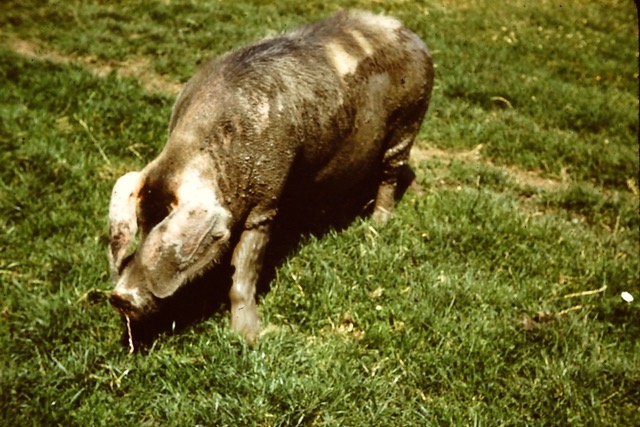
EPISODE 181 WE WON PRIZES AT THE ROYAL WINTER FAIR FOR OUR CHICKENS(I was too dismissive in the earlier story about them. Joy trumped disgust.)alan skeochDec. 2020Thanks for the responses to the chicken story. I worried that the story was a little toodismissive of our chicken raising days. Also thought some of you would find it silly.Well the reverse has happened. Lots of comments. Russ Vanstone even sent a notein praise of keeping a pet pig…big sow with piglets. I think he is going to try to raiseone at his home in Toronto.When I wrote the chicken story I think some of the joy we experienced raising chickenswas neglected. To get up in the early morning knowing that Big Red and his haremwere waiting for us to lift the trap door was a joy. Once lifted Big Red came out firstand moved to the side. He ‘serviced’ each hen at it popped out the door. He paidattention to the whole harem. None were left out. And he could crow with joy dayafter day. He made us all feel good about life.Each year we sent some of our hens to the Poultry exhibit at the Royal Winter Fairand we won prize ribbons which Marjorie has framed.


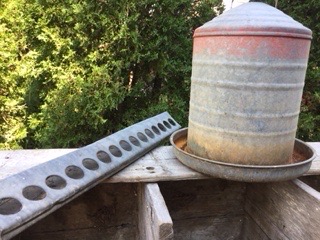
Tinware chickens are nice to look at but they do not lay eggs.
MARJORIE believed the children that could love animals would emerge as fine adults. All kinds of animals…including puppies
Our back yard in the chicken keeping days had no room for grass…kids and chickens…dogs and cats.
Remember I said backyard chickens attract kids. Here is proof of the pudding.
The day the fire truck was completed it was filled with kids. That was why it was built.
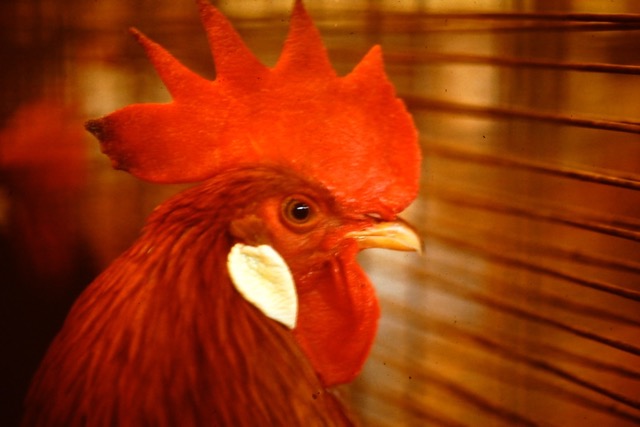
Another shot of Big Red. He is letting me know that he is boss.
Our ducks, ping and pong are amused to find Andrew in he cage while they peer in.
Cats,dogs, chickens, ducks, turtles, frogs, …wonderful world.
Andrew and the duck called Ping are very alert. Do they hear a coyote?
Kevin and our cat Tarnga are colour co ordinated. Love the big smile.
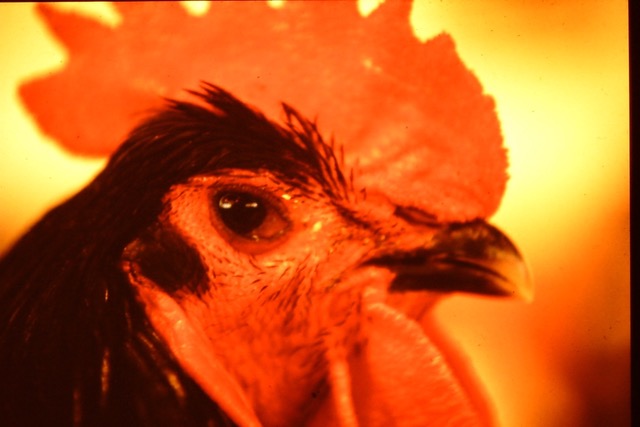
Not every chicken was a pet.alan skeochDec 2020 -
EPISODE 180 WINTER WONDERLAND IN MIDDLE OF COVIDD 19 PANDEMIC
EPISODE 180 WINTER WONDERLAND IN MIDDLE OF COVID 19 PANDEMICalan skeochDec. 1, 2020When we awoke this morning our small world had been transformed. The dark daysof November were gone and everything was clothed in snow.Even better we had a visit by a joyful mailman who Woody greeted. A few days earlieranother grouchy mailman refused to deliver the mail because of Woody and his waggingtail.Some years we do not get snow until Christmas or later so…at present…this is a joyfulday. Shovelling will come later. Shovelling can be avoided by driving the truck up and downthe laneway but that packs it into ice. A year or so ago I went ass over teakettle on theice and knocked myself out. So now I take short steps.Our living room seems more welcoming on days like this. Sad to say there will be no visitorsfor we are in isolation. Scrabble today….we are even at 2 games each.No doubt all of you are out taking pictures as well. Use short steps so there will be noneed of a 911 call.alan skeochDEc. 1, 2020P.S. MARIAN KUTARNA…thanks for the nice note. I will send details of the wood quilt now hanging in your library. So niceto know someone loves these folk art pieces.p.p.w. To John Ricker…Woody does not normally sit on cold snow but when I said the picture was for you John he sat down.


-
EPISODE 179 KEEPING CHICKENS…THE UPS AND DOWNS.
EPISODE 179 KEEPING URBAN CHICKENS…UPS AND DOWNSalan skeochnov. 29, 2020
THIS IS BIG RED…THE KING IN OUR CHICKEN COOP LONG AGO
“Andy bought some chicks for us from the Fabers…mixed breeds…plymouth rocks, new hampshires, leghorns…”Any Silver Laced Wyandottes?“No, weren’t they beautiful when we raised them years ago…regal looking…rare breeds ““Neighbours loved seeing them…”“Not all the neighbours…someone reported us to the By Law Inspector, Remember?”The by law inspector dropped by. Reacting toa complaint about our chickens. Marjorie gathered a bunch of supporting neighbourswhen he arrived. I met him of the front lawn and asked, “Are you sure you wantto go in there? MY wife has and army of supporters on the verge of war.”We were cleared as a non conforming property having chickens beforethe by law was written.” HE ESCAPED.
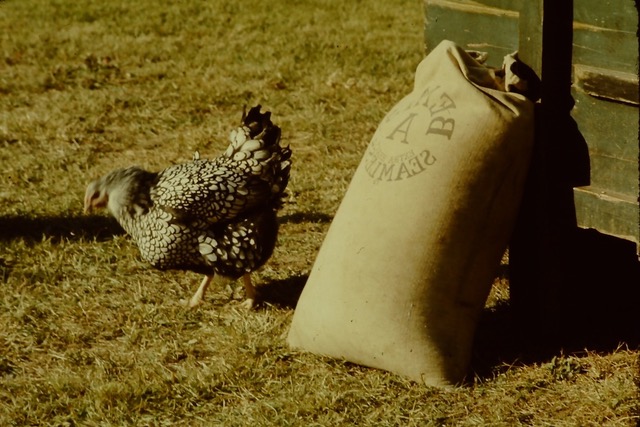
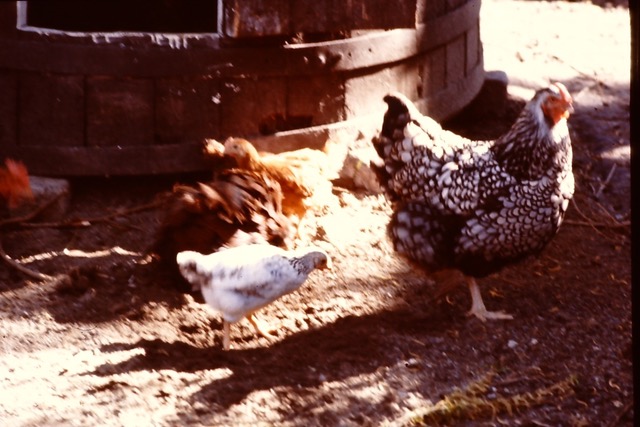
SILVER LACED WYANDOTTE HEN…REGAL…AND ALONE.Points to remember about keeping urban chickens1) Free range chickens lay wonderful eggs. A thrill to reachin the nest and gather fresh eggs. I am not sure the chickensliked that. Must have damaged the psyche of those hens.2) Backyards chickens attract kids. If you do not want childrenaround then do not keep chickens.
3) Backyard chickens attract practical jokers like Kaye Donovanwho sneaked into the coop one Easter and painted all our eggs.4) Backyard chickens need lots of care. Chicken dung cansmell bad if allowed to pile up and get wet. Believe it or not thereare people who do not like the smell of chicken manure. I knowthat is hard to believe. Chicken manure…with age…makes things grow.5) Backyard chickens get lice. Nasty little devils that canget out of control. Control? Yes, they have to be dusted withlouse powder. How? Pick the chicken up by back legs anddust its bare bum with the delousing stuff. Not a nice job butnecessary. The key was a piece of string.6) Predators soon arrive to assess the availability of backyardchickens…foxes, coyotes, raccoons. We designed an ourdoorrun with a cement floor and s heavy chain link fence that hung likea drawbridge door.. When loose in the backyard the chickens werevulnerable. One day a huge Osprey swooped down a picked upa one eyed hen. How did the Osprey know that? The odd skunkslipped around looking for the eggs. Nice animals as long as they didnot baptist you with fluid.7) Backyard chickens attract rats and mice since the chickens liketo throw their food around so traps small and large are necessary.Enough said about that.
8) Backyard chickens are beautiful to watch as they wander aroundthe yard cleaning up unwanted insects. Friendly birds is well treated.9) Backyard chickens to be avoided are the so called ‘meat birds’/We accepted 10 or 12 of these from Vic Laing and For Root and theParkdale C. I. science department. Dreadfull creatures bred for fastgrowth in weeks rather than months or years. They grow immenseand ours had lots of genetic defects…crooked beaks and feet…some staggered.They ate fast. They ate lots. And they dropped turds lots. When I got ridof them to a farm friend they managed to make our van unlovable. Chickenshit everywhere.10) Backyard chickens are perfect right now as we are in a Covid 19Pandemic and urged to stay home. IN normal times, however, backyardchickens travelled with us in the truck.. We could not leave them alone.Farmers must stay close to their farm animals.11) Backyard chickens and backyard gardens are not harmonious. Chooseone or the other. Or build extra fences.12) Backyard chicken farmers are credited with saving some of thebreeds on the verge of extinction…such as those Silver Laced Wyandottes that’we grew to love. We were never able to find a rooster of that breed sadly.
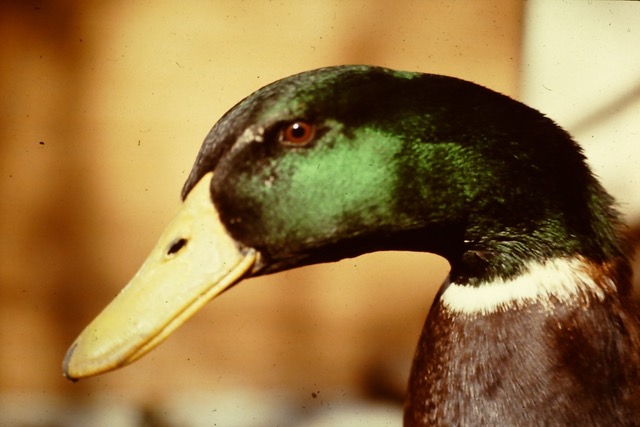
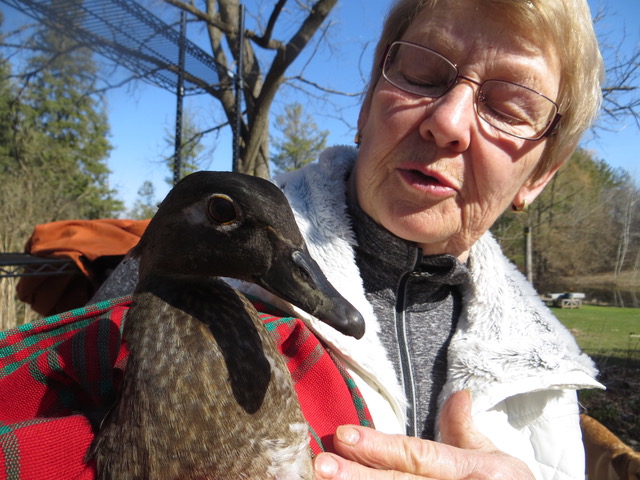
13) If you do not mind me making a suggestion. Try backyard ducks afteryou tire of the chickens or after the predators have emptied your coop. Get a coupleof ducks. Get them young. They IMPRINT a couple of weeks after birth. Imprint?They look around and consider whoever they see on that particular day as theirmother or father. Our backyard pair of ducks imprinted us as their parents.We just had to call them. They would waddle over and up the ramp into the vanor into the duck cage. They got so familiar with human beings that occasionallythey would go for a walk around the neighbourhood gabbing away to each other.One day I caught them a block away…called them and they came chatteringin a language i did not completely understand. I put one under each arm andhot footed home with them. My camel hair suit coat was never quite the same.I went to school with duck shit streaks under each arm. But we loved them.They would go to the farm with us…swim all day in the swamps and ponds…then comewhen called. What happened to them? We were never sure but suspected a foxor coyote got them. It was easier to think they fell in love with wild ducks andflew away. Easier, yes, but the problem was they were to fat to fly.14) The same applies to a crippled Canada Goose we adopted when itwas a gosling. Imprinted. Thought it was human. Then one day it was gone.We think it could fly. Happy ending.

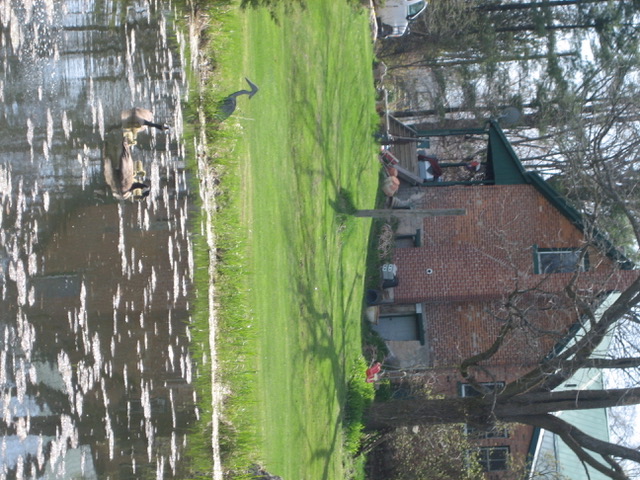
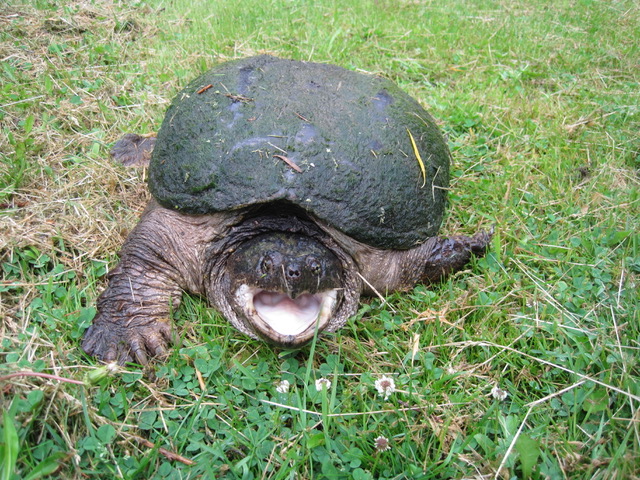
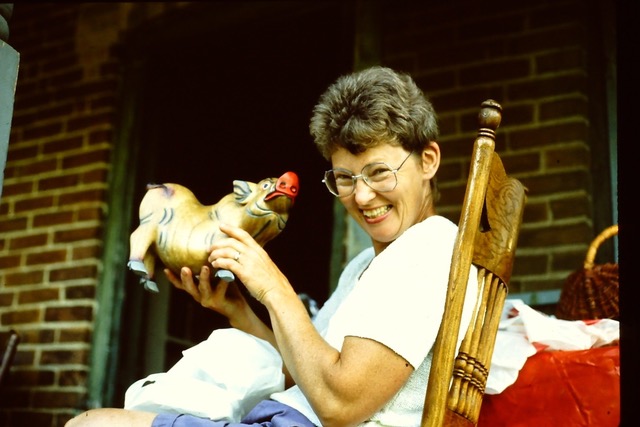
Baby Canada Geese are hatched and raised every year on our big pond. Oncemobile the parents take them away because your Big Snapping Turtle is a threat.Nature ‘red in tooth and claw’.alan skeochNov. 29,2020Post ScriptOne day I gave Marjorie a nicely carved wooden pig.“Does this mean we are going to try to raise a baby pig?”“Not a chance.”

-
EPISODE 179 CONCLUSION OF REAPER STORIES: GRANDFATHR SKEOCH ON REAPER N 1932
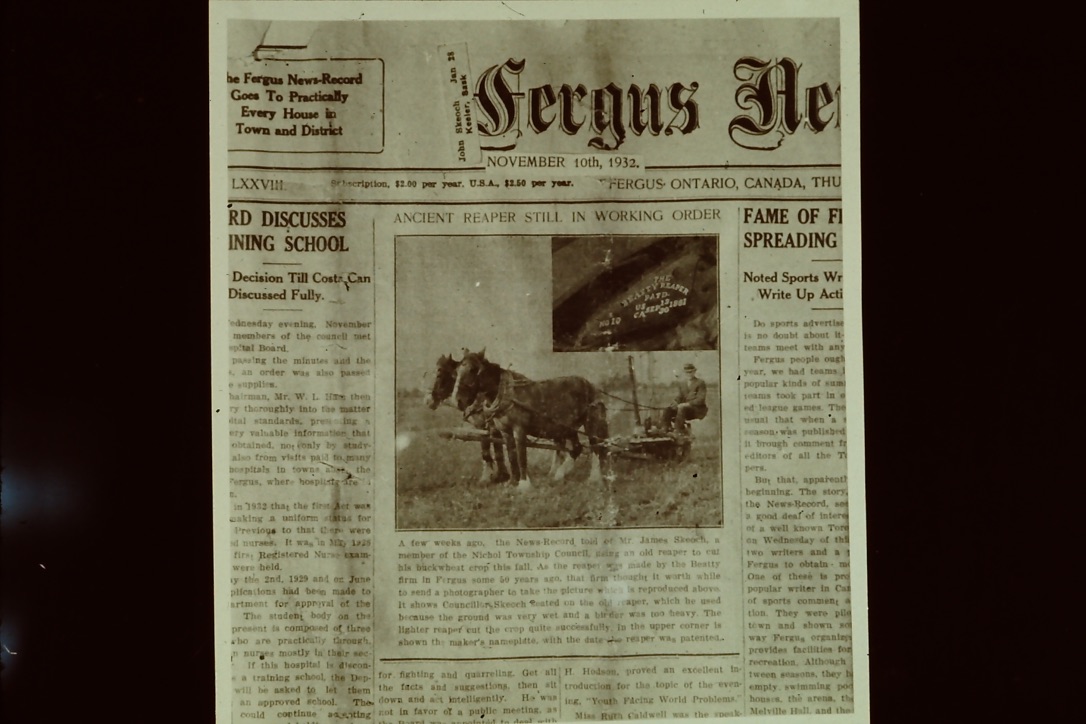
EPISODE 179alan skeochNov. 2020CONCLUSION OF REAPER STORIES: JAMES SKEOCH ON REAPER IN 1932.SERENDIPITY: SURPRISING WHEN SEEMINGLY RANDOM EVENTS COME TOGETHER IN A MEANINGFUL WAYThis final Episode on the history of reapers is special to me. In 1932, the Fergus News Record published a picture of my grandfatherJames Skeoch reaping his grain field with an old but still operational reaping machine which owed its existence to the Cyrus MCCormickinvention a century earlier in 1831. The copy of the Fergus News Record is dated November 10, 1932, and had been mailed to his eldest son,John Skeoch, who was farming near Keeler, Saskatchewan. Eventually this farm covered 3,200 acres.
W
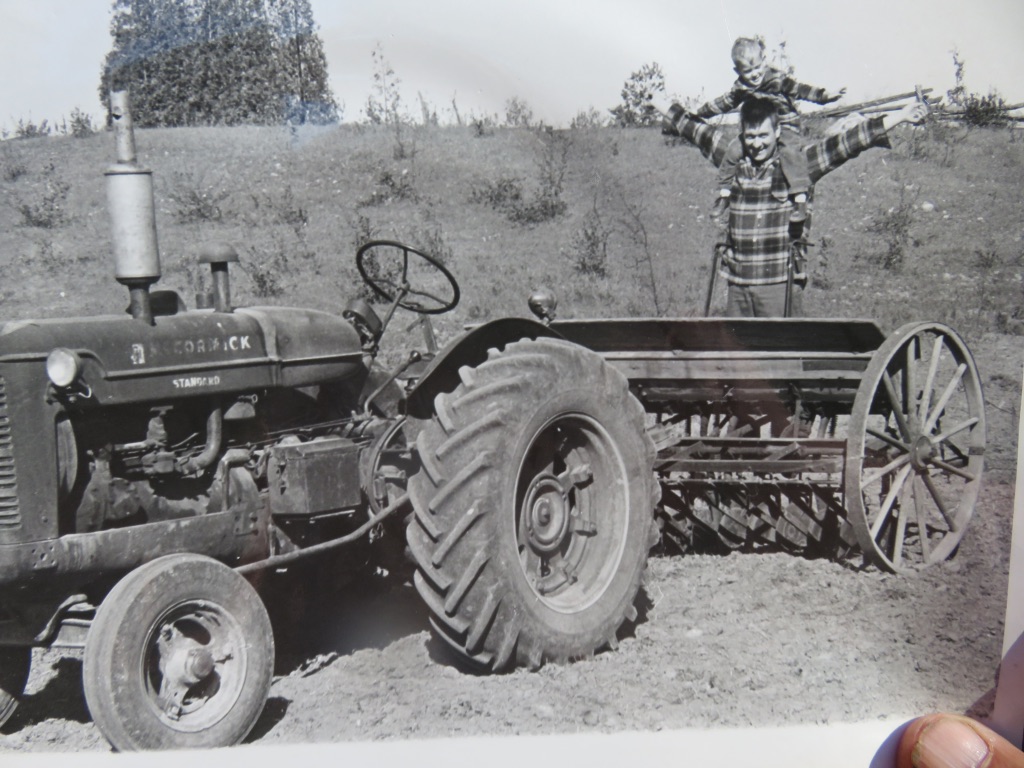
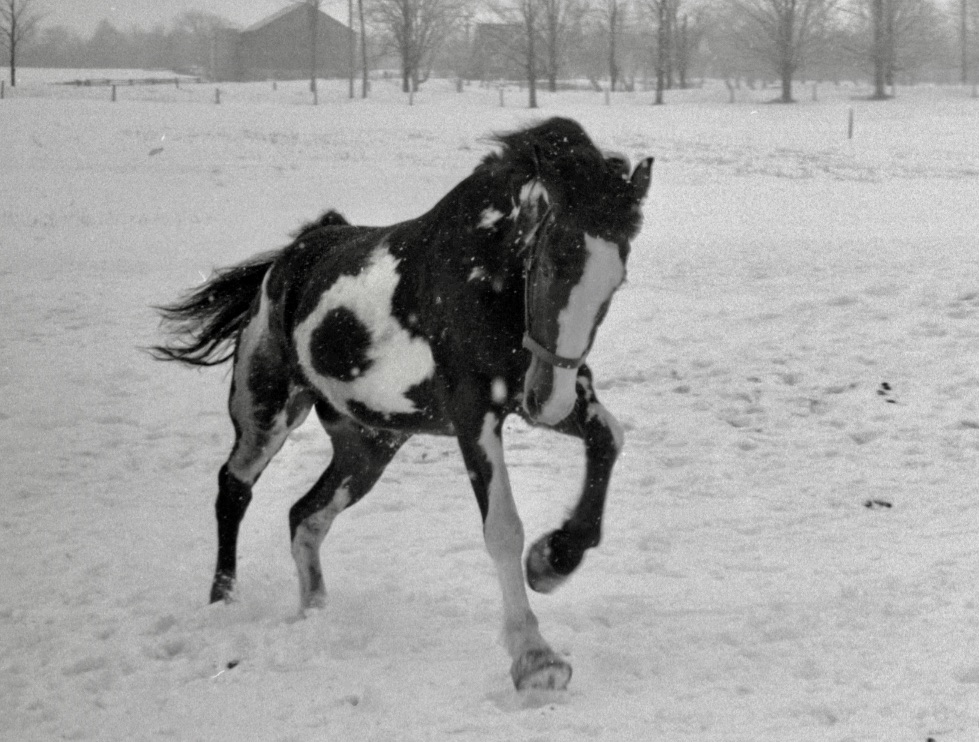
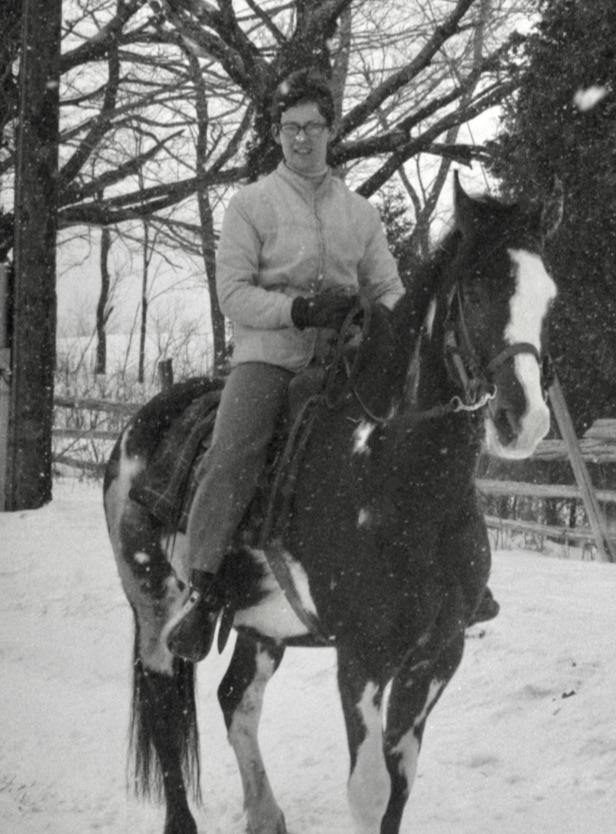
Can you read the stencilled name on this aged IHC W6 tractor.?” McCormick” ! The International Harvester Company made a large assortment of machines forfarming. That began with the McCormick Reaper but did not stop there. They eventually made tractors…good tractors… short turning featured for small fields.This International Harvester Tractor , IHC W6, was built in 1953. Cost $400 at Mr. Smith’s auctionnear Guelph and drove it cross country to our Erin township farm. I will never forget that tripon cold November day. exhilarating. Proud owner of one of the great machines of agriculture. A McCormick W6 tractor.The road trip was long and detour laden. I thought I was absolutely alone. Then, En route, I met our horse,Spartacus, running towards me hell ben for election…saddled but no rider. He was heading to his first homeand away from ours. He had a length of rusty barbed wire attached to his tail. Terrified. What should I do? I keptdriving and eventually met Marjorie who had been thrown. She corralled Spartacus eventually. Why tell you this? Because wehad continuous rural adventures. (Spartacus was the son of an estrogen mare whose story will eventuallybecome an Episode.)
That’s Kevin on my shoulders. Marjorie made us duplicate clothes. Behind the tractor is aseed drill which is there jus for show. Like most of my farm machines, it was no longer functional.AN APOLOGY TO CYRUS MCCORMICK:Let me start by apologizing to Cryus McCormick and his corporation. Remember that lawsuit where Cyrusfelt he was overcharged $8.75 for his wife’s baggage on the New York Railroad. The lawsuit lasted 20years. Made Cyrus look cheap and bull headed. Perhaps wrongly so. I did not mention the valueof $8.75 in today’s cash. Turns out to be over $300. Is the collection of that amount worth a 20 year lawsuit?IN my presentation of Cyrus McCormick I may have miscast him. For 20 years he fought a court battlecharging the New York Railroad had overcharged his wife by $8.75. Today, November 1920, that amountof money will get you a hamburger, chips and a soft drink. In short it will get very little. Hardly wortha 20 year court battle. Right? Maybe. But $8.75 in 1850 had over $300 in purchasing power. ($10 in 1850was worth $333.83 in today’s purchasing power). I would still argue the court battle was not worththe cost and the energy.So this is a good time to put all these events together. The result makes the Skeoch connection seem largerthan is warranted. Way larger. Keep that in mind.1) The ‘goddamn’ rock ruined Uncle Norman’s Massey Harris combine harvester. Combine Harvesters remain thepinnacle of grain harvesting technology.2) I researched and wrote a 300 page manuscript on machine designs in agriculture, particularly from 1850 to 1891. M.A., U. of T., 19753) phone call from Mellon Bank of New York asking us to restore a (replica) 1832 McCormick Reaper4) Many trips to the Ford Museum in Dearborn, Michigan, where Peter Cousins was collections curator5) Began to research Patrick Bell, Scottish inventor of an earlier grain reaper that was never patentedand remained on the Bell farm until purchased by the Science Museum in London, England. (In storageat present but may be on display in the future)…visit to London, England, to see the Bell Reaper when itwas a feature display.6) Restoration of the replica model of the McCormick Reaper with was crated and sent air freightto the Ulster Folk Museum in Northern Ireland where McCormick was born.7) Along the way, I discovered that Patrick Bell travelled to Fergus, Upper Canada, in 1851 wherethe two Skeoch boys, James and John, (migrated in 1846) were farm boys. I speculated that they may have seeneach other in Fergus…but never knew each other. Patrick Bell, by then, was a Christian ministerand also a teacher of children of Adam Ferguson, founder of Fergus.8) The Patrick Bell diaries and notes exist in Scotland but have not been published to my knowledge.9) Copy of Fergus News Record, Nov. 10,1932, features James Skeoch (my grandfather) using a reaperto cut grain. The machine was considered obsolete by then which made a news story.Through the years Marjorie and I have purchased and stored dozens of machines relevant tothe history of agriculture. We developed a particular interest in fanning mills because thosemachines could easily fit inside our Ford Van. Fascinating history of these machines to come in later episode.Fascinating to whom? Good questio.Around 1990 the North American movie industry became very active in the Torontoand region. Our collection of 19th and 20th century artifacts began to be demanded whichled to the incorporation of Skeoch Enterprises Limited.LET US NOT GET SILLYBut let us not get silly The connection between the great inventors of the 19thcentury like Patrick Bell and Cyrus McCormick and the Skeoch farmers is not eventenuous. The connections is as thin as one strand of a spiders web.We were the users of machines like the reaper and the combine harvester.We were not the makers. And there is one hell of a difference between inventing andmaking a machine as opposed to buying and using a machine. Keep that in mind, Alan.
JUST imagine if your student turned in a 300 page essay for you to mark? A copy of my thesis in hand…as bound via Jim Hunter.SOME ILLUSTRATED COMMENTS
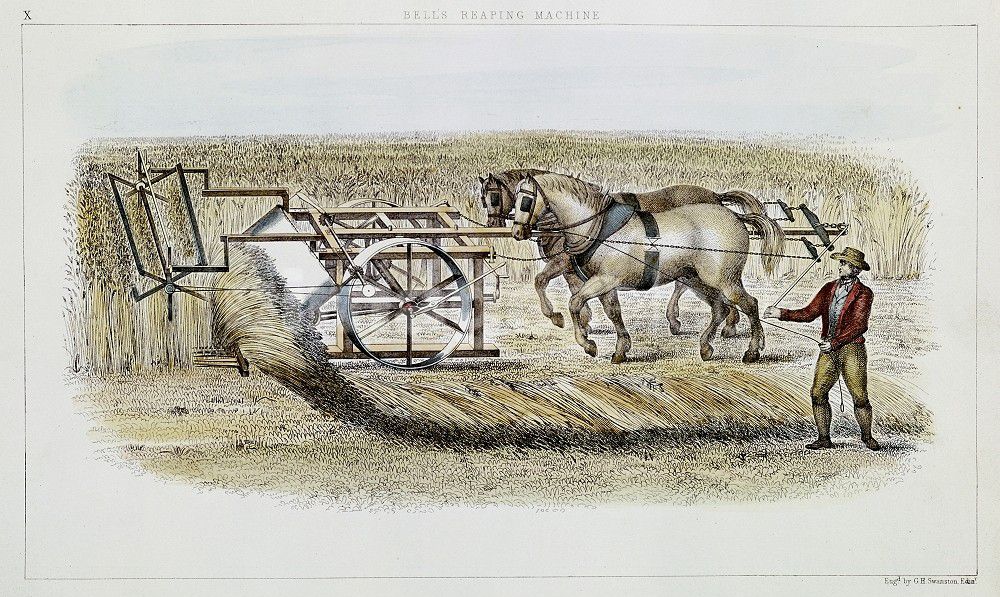
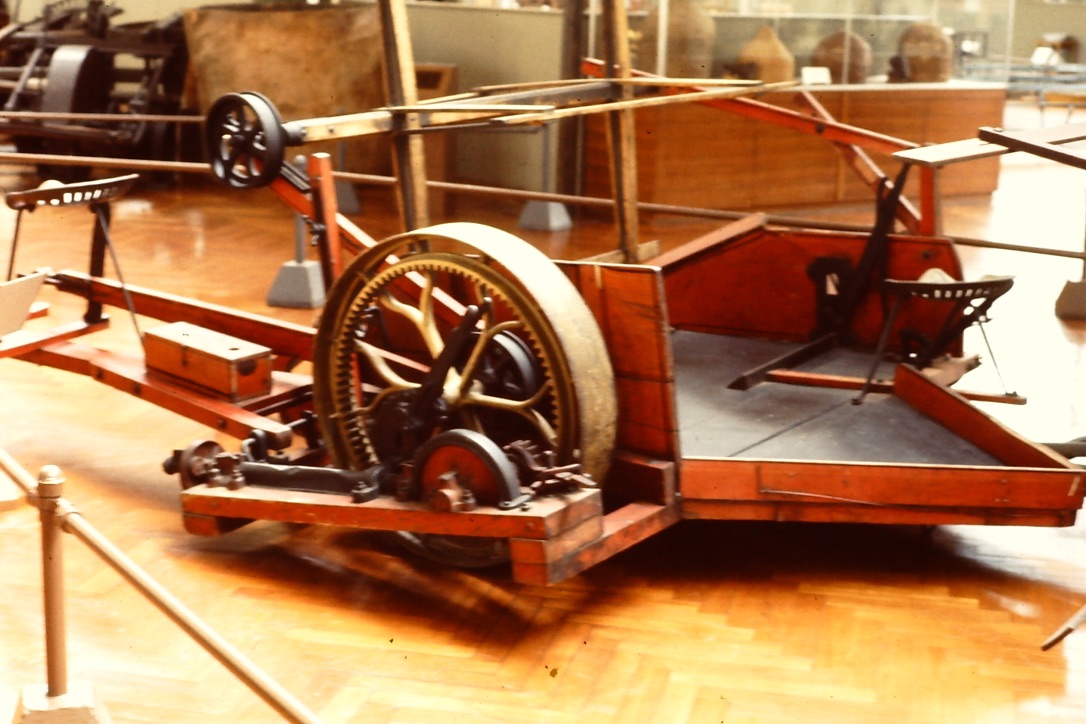
THE PATRICK BELL REAPER
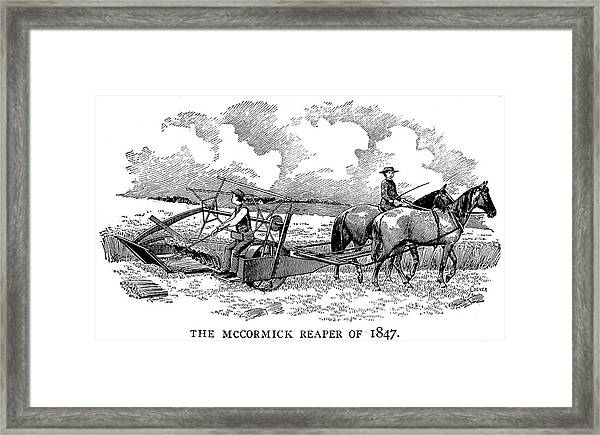
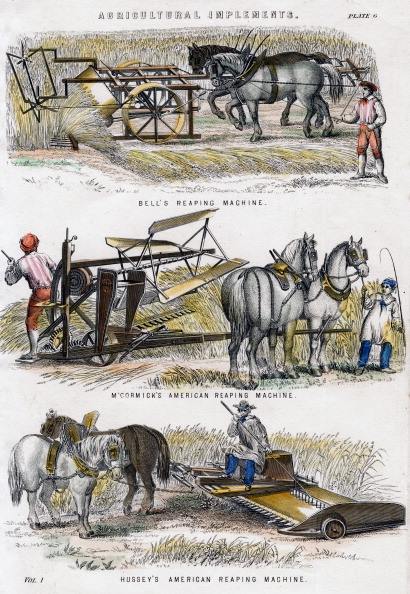
THE BIG THREE REAPER INVENTORSAt a farm sale outside Milton I was able to buy this “SAIL” reaper. It worked. But is now a pile of scrap iron.
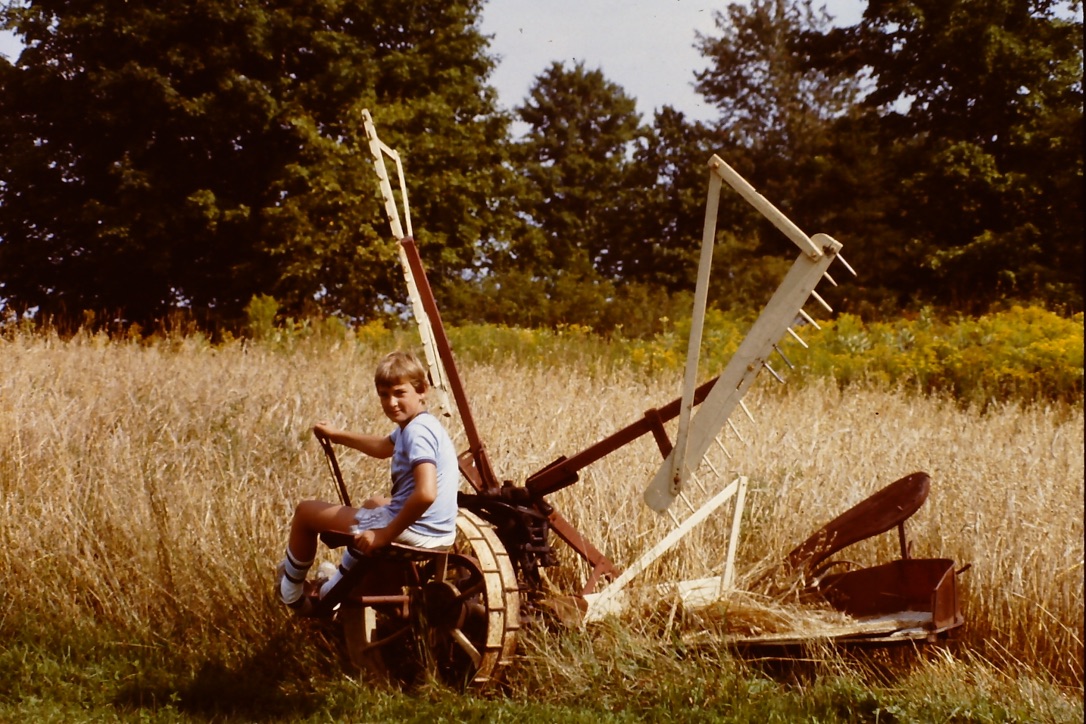
It looked better with Kevin sitting on the drivers seat. Adding a seat to the replica reaper was one improvement.This was called a ‘sail reaper’ because the reel was removed and a sweeping toothed sail of four wooden rakes added.
When Cyus McClintick lost his patent monopoly a great man reaper began to appear. All of them improved as above
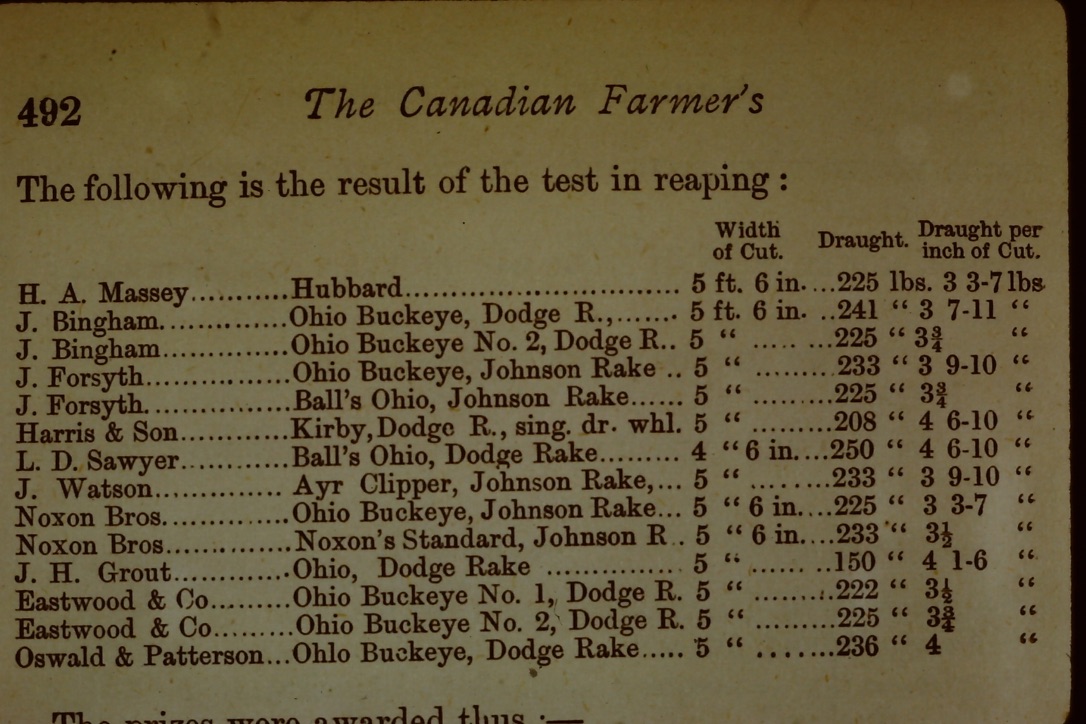
This will give you some idea of the variety of reaper manufacturers that appeared in Ontario after the McCormick patent ended.alan skeochNov. 2020 -
Fwd: Canada Letter: Ontario announces more measures to keep schools open during lockdown
EPISODE 178 WHAT IS HAPPENING AT ONTARIO SCHOOLS DURING COVID 19 LOCKDOWN?alan skeochNov. 28, 2020As a former teacher of history I have wondered how teaching has adjusted to the pandemic. For awhile schools were closed across the province. It took time to adjust to the new reality. What is thisnew reality? Journalist Catherine Porter has written an excellent ‘Canada Letter’ published inthe New York Times. She mentions that Toronto and New York City have approached the Covid 19threat differently. Toronto keeps schools open while closing bars and restaurants. New York closesschools while keeping bars and restaurants open. The argument presented by Toronto is thekids are safer in schools than roaming the streets and playgrounds. Masked students in schoolare less likely to spread the virus.That seems to make sense to me.What makes me wonder is how teaching can happen. Some school boards have studentsattend three hour classes where the curriculum is compressed no doubt.. I cannot imaginehigh school students enjoying three hour classes. Nor can I imagine teachers enjoying tryingto prepare three our classes. At some point the students will have to read. That might work.A lot of parents, 33% or more, have opted for at home teaching. That is even harderfor me to understand.. Seems like boredom will erode any joy in education. But I could bewrong. Just a gut reaction. When I taught history I tried to make my 40 or 80 minutelessons interesting…sometimes funny, sometimes serious, sometimes irrelevant, sometimescurrent. I cannot imagine doing this for three hours. Years ago I also did short five to tenminute radio stories on CBC. After my third or fourth story, my producer called me asideand said “Alan, those stories are great….” When someone prefaces a remark by flatterywhat do you think the next word would be? Right the next word is always ‘BUT’ . I rememberhis comment so well.“Alan, those stories are great BUT remember the radio audience attention spanis one minute. If you don’t get them in the first minute, then they are gone.”That comment by Doug Koupar years ago changed my whole approach to teaching.I began to cut the lead in guff and tried to find the urgent question…the reason for the lesson.Personally, I cannot imagine doing that in a three hour lesson.If adult attention span is one minute…then how can we expect the poor kidsto have an 180 minute or three hour attention span?Covid 19 has not made schooling better. Or, if I might use a baseball comment…”there is no joy in mudville” classoomsl.No doubt I will be criticized by some educators. Creative teachers will find a way. Of that I have nodoubt. Maybe I should try to prepare a three hour lesson for a class of 15 students. Talk is cheap.alan skeoch
Begin forwarded message:From: The New York Times <nytdirect@nytimes.com>Subject: Canada Letter: Ontario announces more measures to keep schools open during lockdownDate: November 28, 2020 at 6:00:02 AM ESTReply-To: nytdirect@nytimes.comTORONTO — On Monday, as I was writing a news article about Canada’s enthusiasm for keeping schools open during the second wave of the coronavirus, an email arrived from my daughter’s high school alerting me that a student had tested positive and a grade-12 class had been asked to self-isolate.
It was the first time this happened since Toronto public schools finally reopened in mid-September.

A school in Scarborough, an inner suburb of Toronto, in September. Despite Toronto’s new coronavirus restrictions, classes have remained open.Carlos Osorio/Reuters I had expected such news much earlier. Like many parents, I had feared schools would be petri dishes of the coronavirus. I predicted they would stay open no later than Canadian Thanksgiving and that my two children would be trapped once again at home with me and my husband — all of us driving one another nuts.
That, most happily, has not been the case.
There have been outbreaks in 83 Toronto schools, each with an average of five cases, according to Dr. Vinita Dubey, associate medical officer of health for Toronto. That is out of some 1,200 schools in the city — so about 7 percent.
But, unlike New York City, which responded to rising rates of community transmission by shutting down schools while keeping bars and restaurants open, the Ontario government has made the opposite decision: It shut down bars and restaurants in Toronto and two of its sprawling suburbs, but kept schools open.
“Ontario schools remain safe,” said Stephen Lecce, the education minister for the province, at a news conference on Thursday. “They remain safe even while we face increasing rates of community-based transmission.”
He vowed to “make sure we do whatever it takes to keep schools safe and to keep them open, which I think is an overwhelming societal imperative in this province and in this country.”
To that end, he announced more funding for school boards in hot spots and a program of testing asymptomatic students and staff in schools in four of the province’s hardest-hit areas — something his government first promised in the summer, and critics have been demanding for months.
“That’s great news but we heard the same thing in August,” said Ryan Imgrund, a high school science teacher and biostatistician in Newmarket, just north of Toronto. “I’ll believe it when I see it.”
Toronto is the biggest city in Canada and, in fact, its schools have among the strictest coronavirus safety rules in the country. All children are required to wear masks in school, including the young ones — which is not the case in most Canadian school boards. And class size for high school kids is capped around 15 — which in the case of my daughter means she takes most of her classes online and is in the physical school only a quarter of the time.

Preparations for students at a school in Scarborough, part of the Toronto District School Board. Toronto’s schools have among the strictest coronavirus safety rules in the country.Pool photo by Nathan Danette Each morning that my daughter and my son, who is in Grade 7, do physically go to school, they complete an online Covid-19 screening, verifying that they don’t have any coronavirus symptoms before arriving. If they do have symptoms, they are expected to stay home and, in most cases, get tested. Whenever a student tests positive, the public health unit swoops into the school to both contain the virus and investigate its spread, through testing and contact tracing, according to Dr. Dubey.
So far, she said, her office’s data shows that most children are infected at home, not at school.
“Schools are actually still a safer place for children to be,” Dr. Dubey said, noting that the positivity rate among Toronto’s teenagers is 7.5 percent — higher than the rate seen in schools.
She added: “If kids are not in school, they are going to be in the community more — at play dates, or the like, where Covid spreads. That’s part of the balance. At least in a school setting, they are socializing and getting an education, and it’s ‘controlled.’”
Many parents are not convinced. In Toronto, the percentage of children opting for online learning jumped to 33 percent in late October from 26 percent at the beginning of the school year, according to figures from the Toronto District School Board. In the suburbs of Mississauga and Brampton, the shift was even more pronounced, with nearly half of public elementary school students now attending classes virtually, according to the Canadian Press wire service.
“Many, many, many families don’t have confidence in the plan put in place by this government,” said Kelly Iggers, a mother and teacher at an elementary school in Toronto who amassed more than 270,000 signatures on a petitiondemanding that the government reduce class sizes, which did not happen. “At this point, only a very small proportion of children are getting tested. We just don’t know how many cases are out there.”
She added, “The provincial government is claiming success based on an absence of data.”
Studies show about 30 percent of children with coronavirus are asymptomatic, said Dr. Dubey. So, the new testing in schools where there are no outbreaks should be revealing. It could confirm what public health officials and politicians have been saying — that schools are relatively safe, compared with Covid-19 spread in the community. But it could also confirm parents’ fears — that the virus is circulating more widely in schools than has been reported.
Staff at the Ministry of Education said that the information from the new testing would be publicly shared.
“It’s a promising development, and I am really looking forward to seeing some clearer data to show us what is happening in our schools,” Ms. Iggers said. “But the success of this measure will really depend on whether it is rolled out effectively, results are shared transparently and the government is willing to implement appropriate actions in response to the findings.”
Meanwhile, I have not heard anything more from my daughter’s school, which I’m assuming is good news. So she left for school again this morning — which made both of us really happy.
Trans Canada

A moose licking a visitor’s car last month in Jasper National Park, in Alberta, Canada.Elizabeth Wishart - Digital signs set up in Alberta’s Jasper National Park set the internet on fire this week. They instructed drivers, “Do not let moose lick your car.” Yes, that is a thing.
- The Times’s art critic Jason Farago gives readers an incredible, intimate tour of an iconic painting that hangs in the National Gallery of Canada in Ottawa. Anyone who has studied the Battle of the Plains of Abraham, in Quebec City, will recognize “The Death of General Wolfe,” by Benjamin West. Jason calls the work the “origin story” of “Canadian history and American painting.”
Catherine Porter is the Canada bureau chief, based in Toronto. Before she joined The Times in 2017, she was a columnist and feature writer for The Toronto Star, Canada’s largest-circulation newspaper. @porterthereport
How are we doing?
We’re eager to have your thoughts about this newsletter and events in Canada in general. Please send them to nytcanada@nytimes.com.
Like this email?
Forward it to your friends, and let them know they can sign up here
Need help? Review our newsletter help page or contact us for assistance.
You received this email because you signed up for Canada Letter from The New York Times.
Connect with us on:

The New York Times Company. 620 Eighth Avenue New York, NY 10018