



















Category: Uncategorized

  • ERROR IN 602…SHOULD BE HOWARD TANNER

    EPISODE 602 CONTINUED


    SORRY, I MADE A SERIOUS ERROR…THE MAN WHO CHANGED THE GREAT LAKES FISHERY
    WAS HOWARD TANNER.  My  memory failed until I sat down to watch the Bluejay game …. something
    was wrong….I got Tanner’s first name wrong.   And did not check facts.  Sorry to all.

    alan


    \u003cdiv class=\”a-column a-span8 a-text-center ig-main-image\”> \u003cdiv class=\”img-wrapper maintain-height\”>\n \u003cdiv id=\”igInner\” class=\”maintain-height zoomed-out\” style=\”height:200px;\”>\n \u003cimg id=\”igImage\”>\n \u003cdiv class=\”a-popover-loading-wrapper a-text-center loading-bar\”>\n \u003cdiv class=\”a-box a-color-base-background a-popover-loading\”>\u003c\/div>\n \u003c\/div>\n \u003c\/div>\n \u003c\/div>\n \u003c\/div> \u003cdiv class=\”a-column a-span4 ig-thumbs a-span-last\”> \u003c\/div> \u003c\/div> \u003cscript type=\”text/javascript\”>\nP.register(\”ImageGalleryMarkup\”);\n\u003c\/script>”}” id=”imgThumbs” data-csa-c-id=”uppwef-mzqt3a-rysdpy-d0zv7o” style=”box-sizing: border-box;”>

    See this image

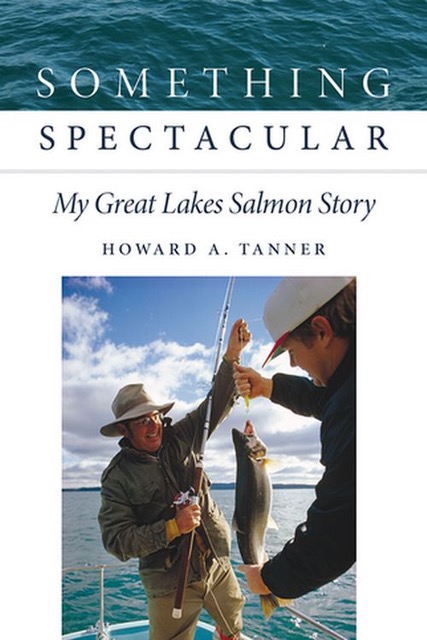
    Something Spectacular: My Great Lakes Salmon Story Hardcover – Illustrated, Dec 1 2018 


    As the new chief of the Michigan Department of Conservation’s Fish Division in 1964, Howard A. Tanner was challenged to “do something . . . spectacular.” He met that challenge by leading the successful introduction of coho salmon into the Michigan waters of the Great Lakes. This volume illustrates how Tanner was able to accomplish this feat: from a detailed account of his personal and professional background that provided a foundation for success; the historical and contemporary context in which the Fish Division undertook this bold step to reorient the state’s fishery from commercial to sport; the challenges, such as resistance from existing government institutions and finding funding, that he and his colleagues faced; the risks they took by introducing a nonnative species; the surprises they experienced in the first season’s catch; to, finally, the success they achieved in establishing a world-renowned, biologically and financially beneficial sport fishery in the Great Lakes. Tanner provides an engaging history of successfully introducing Pacific salmon into the lakes from the perspective of an ultimate insider.
     
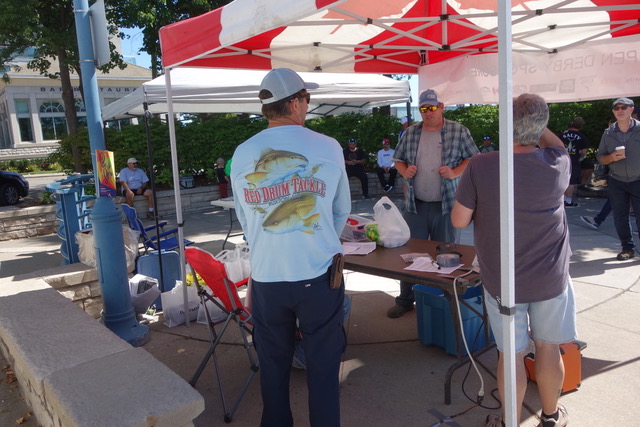
  • EPISODE 602 PORT CREDIT SLMON DERBY JUNE 2022

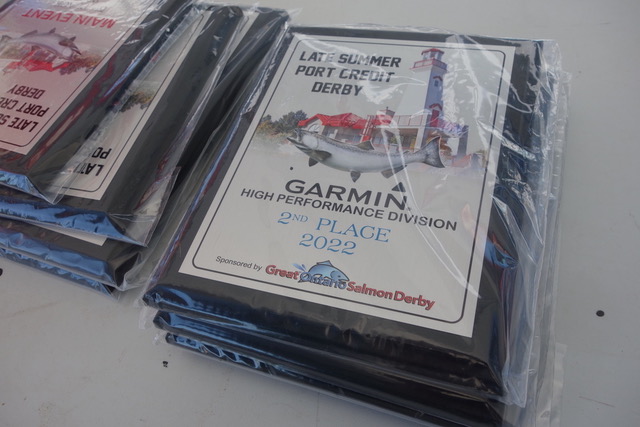
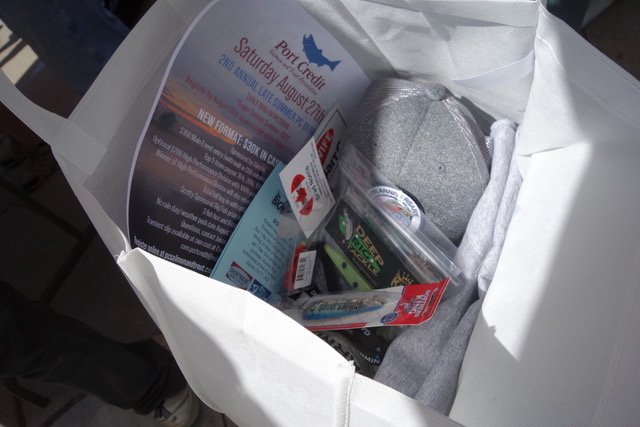
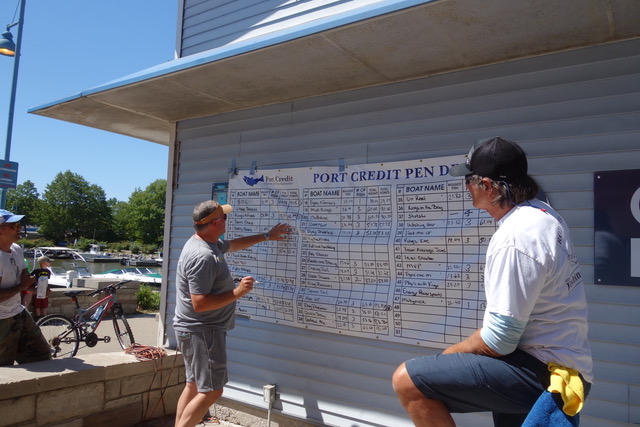
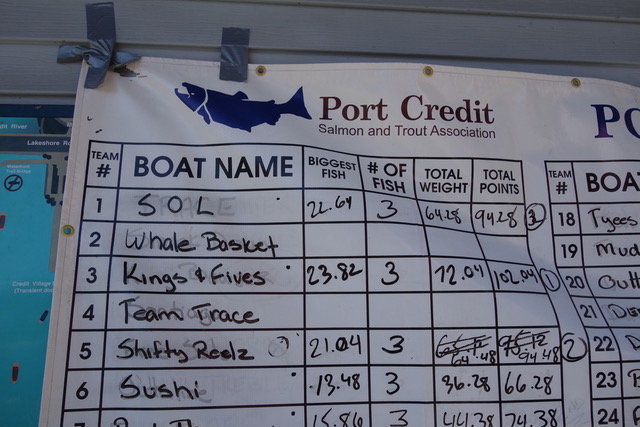
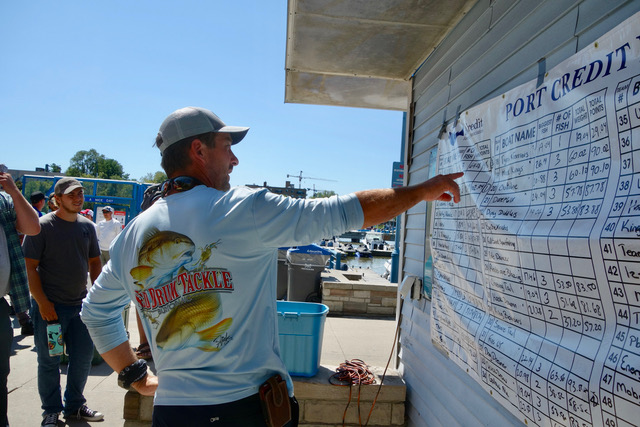
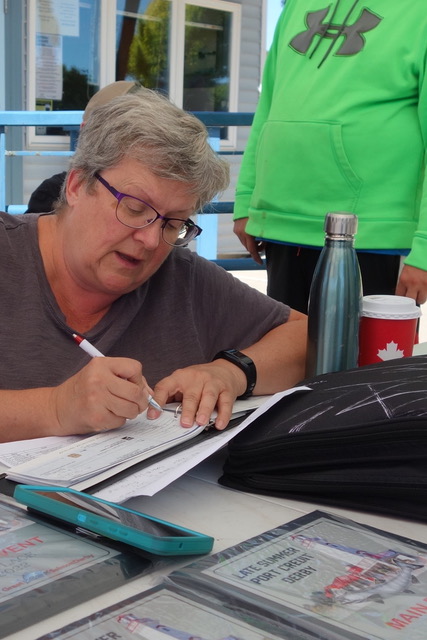
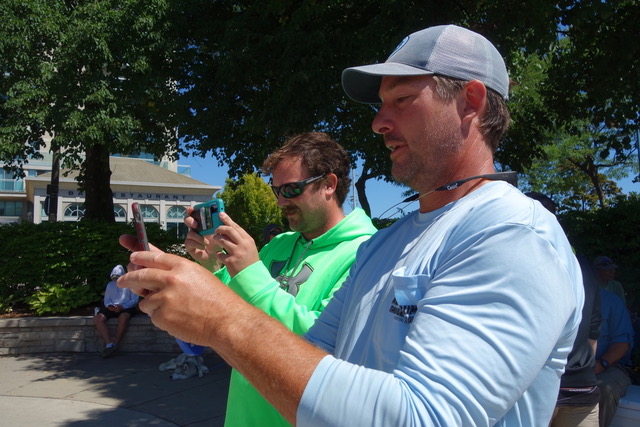
    EPISODE 602    SALMON FISH DERBY, PORT CRDIT JUNE 2022


    alan skeoch
    June 2022

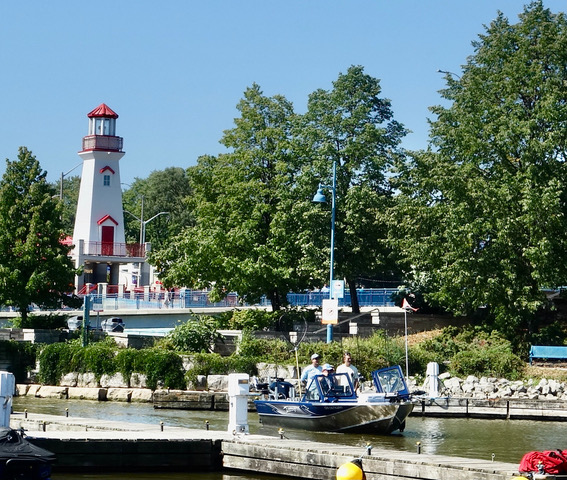
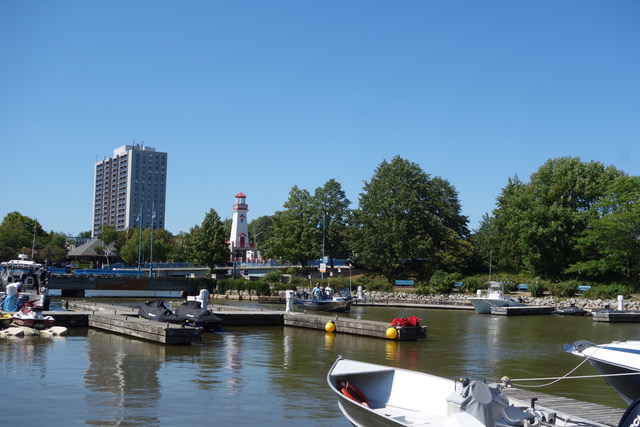
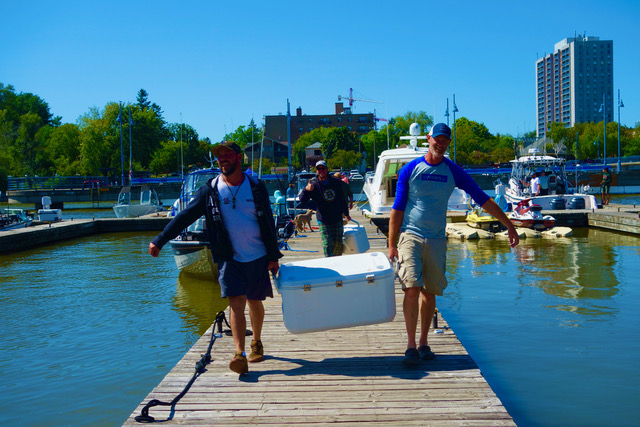
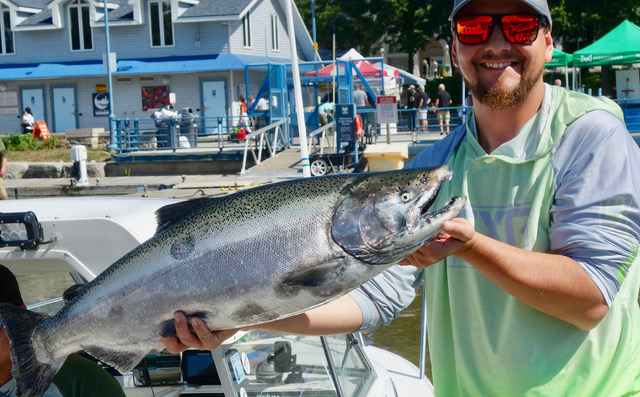
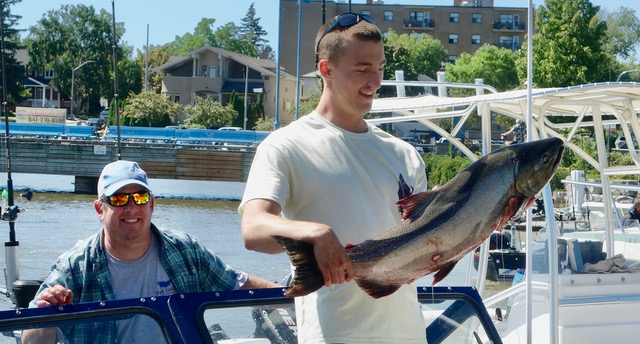
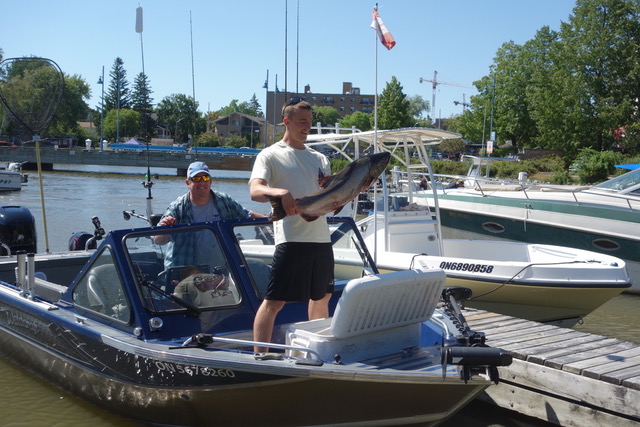
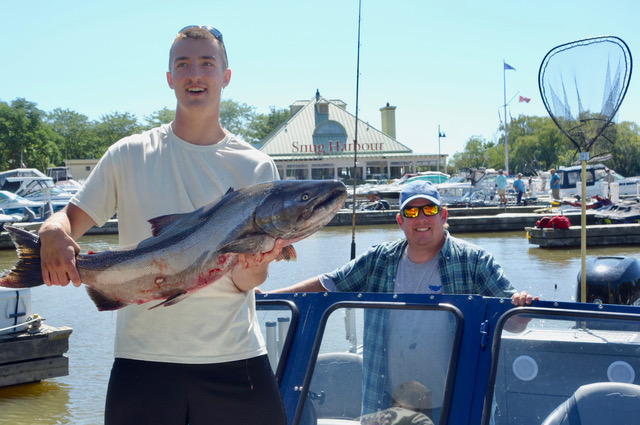
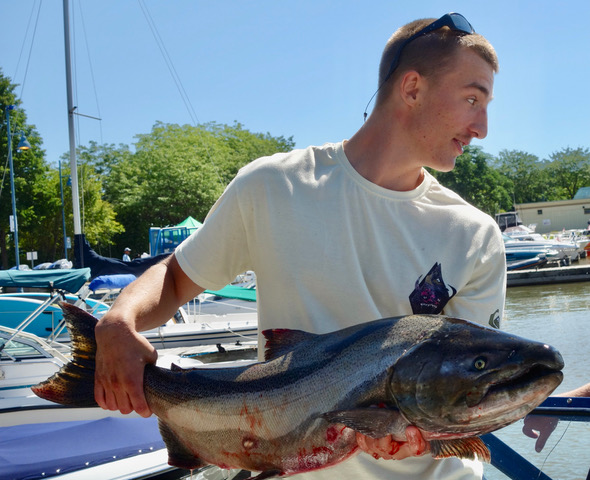
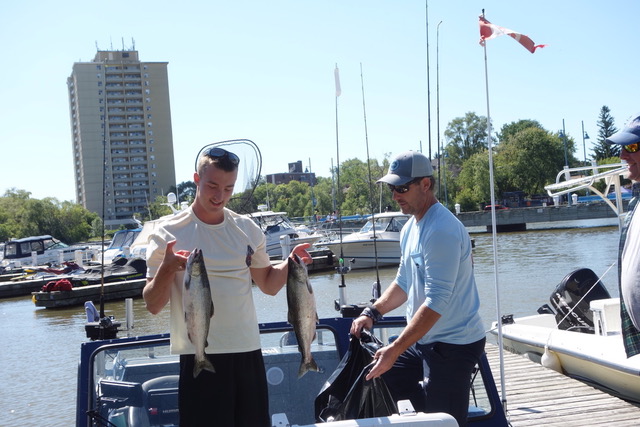
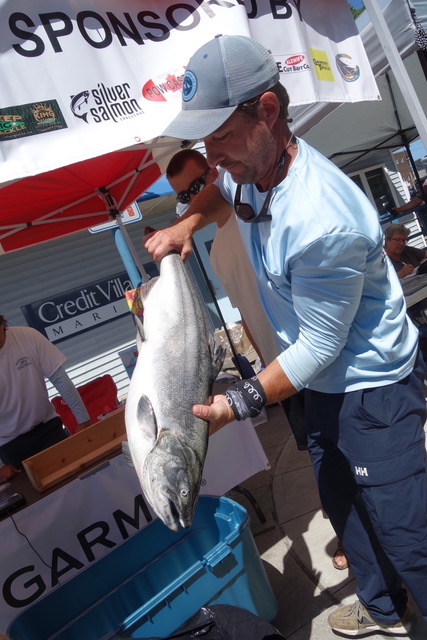
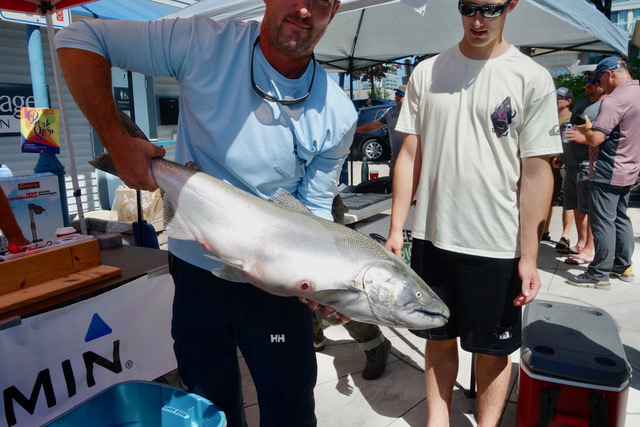
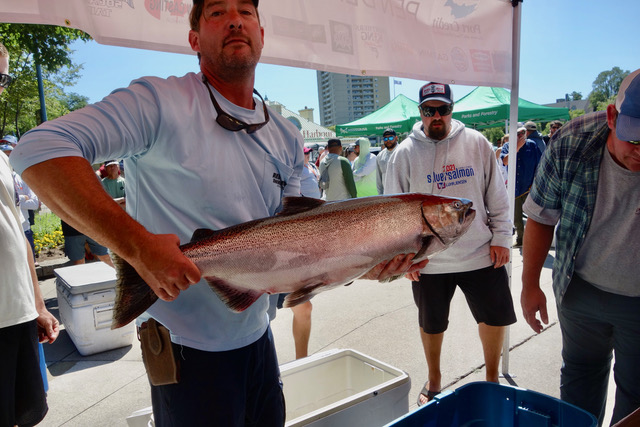
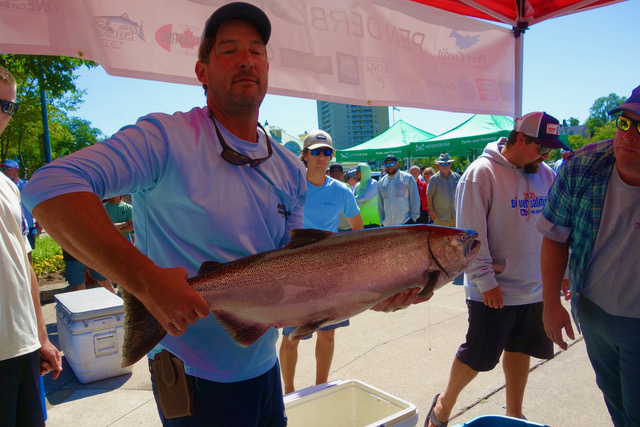
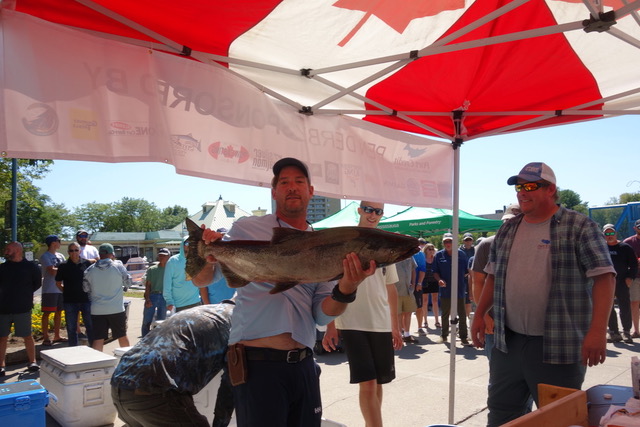
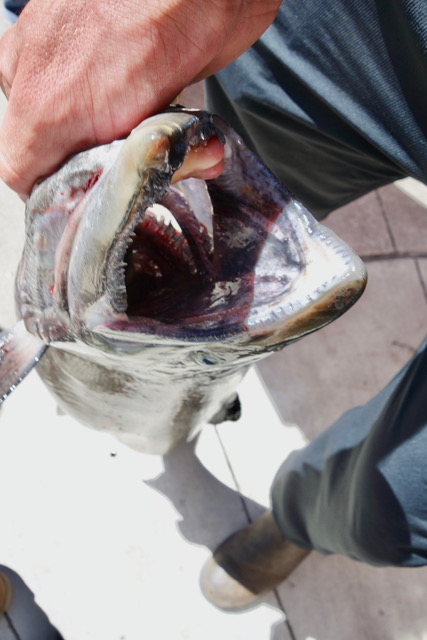
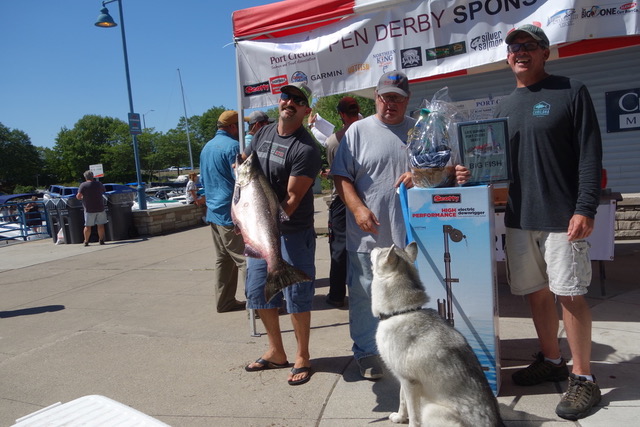
    “Some mighty big fish lurk in the deep water just a few km offshore froM Port Credit.”
    “How big?”
    “So big that it takes a strong man or, in this case,  one woman to lift one of these gnat salmon into a boat”


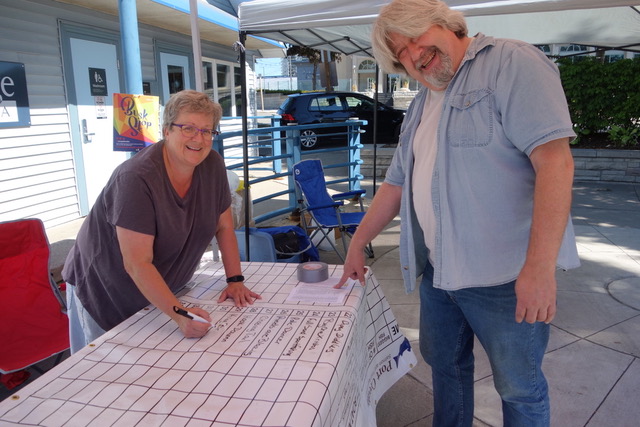
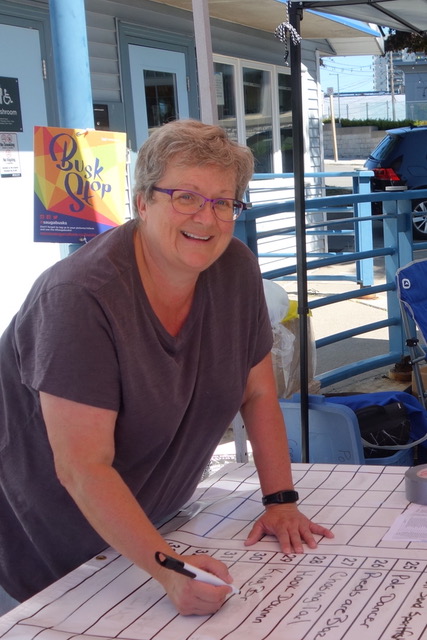
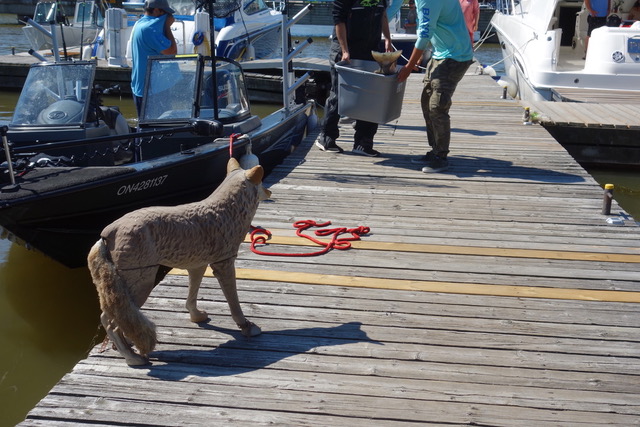
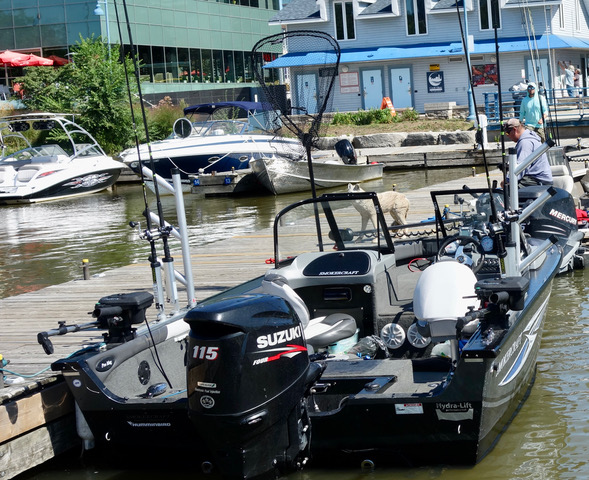
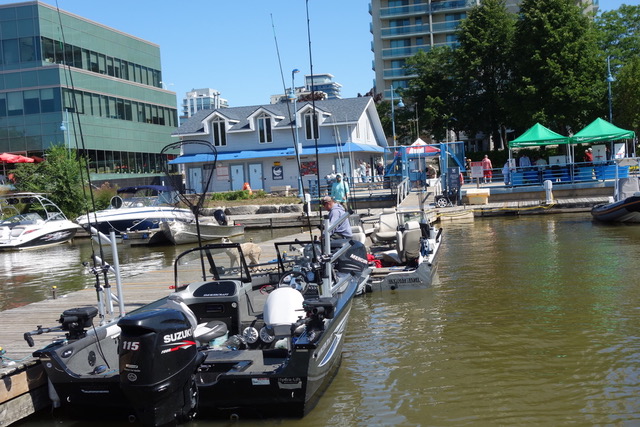
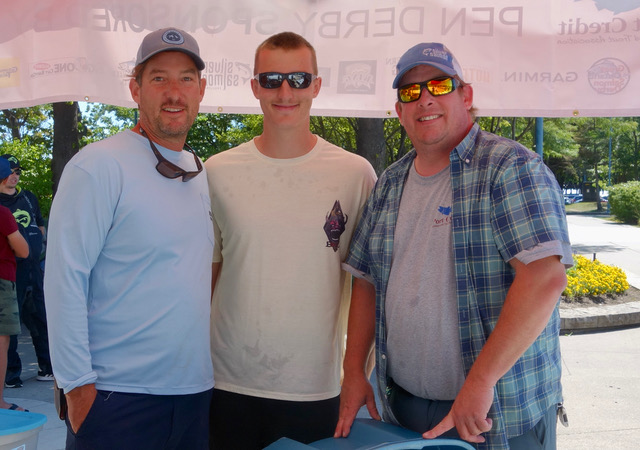
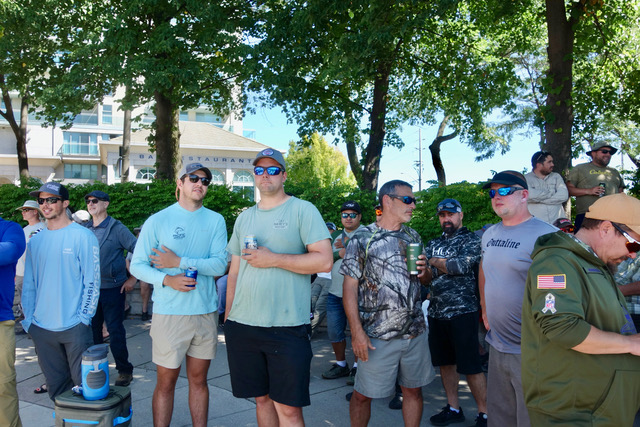
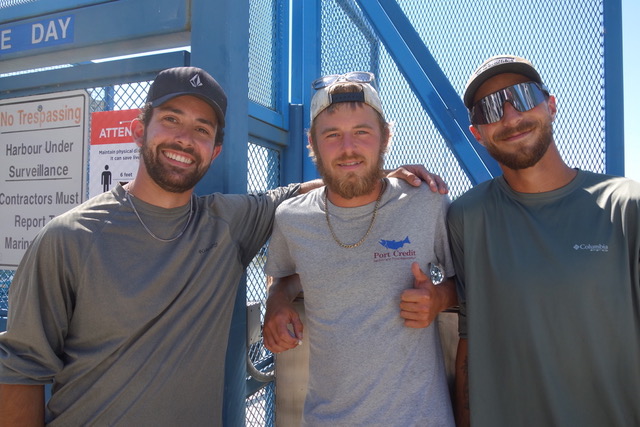
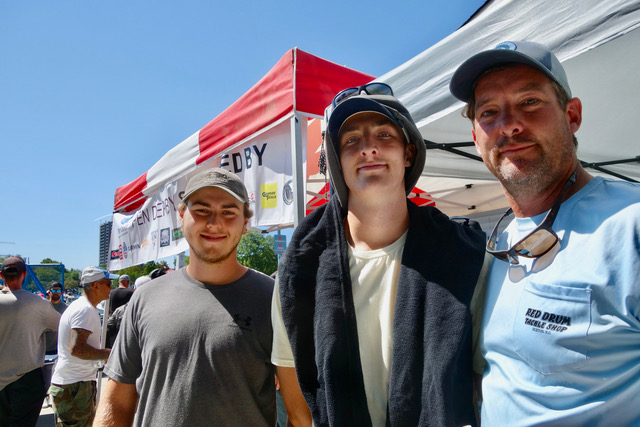
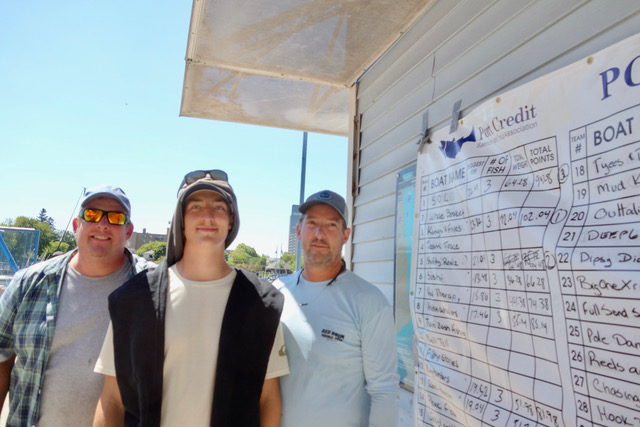
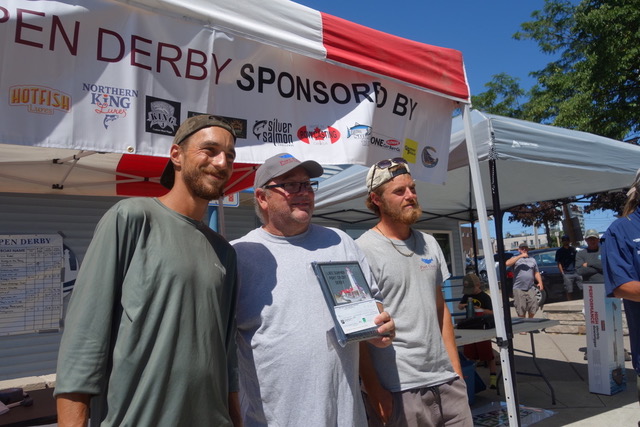
    May be an image of 3 people, people standing and outdoors


    There was a time in the 1950;s when the Great Lakes fishery seemed doomed as alewives and sea lampreys made these
    massive lakes devoid of large fish.  Then Harold Tanner, an American scientist introduced Pacific salmon, predators,  to the Lakes and
    doing so changed the whole ecology of the Great Lakes. 

    These giant salmon caught today not far offshore of Port Credit are the result of Tanner’s experiment.


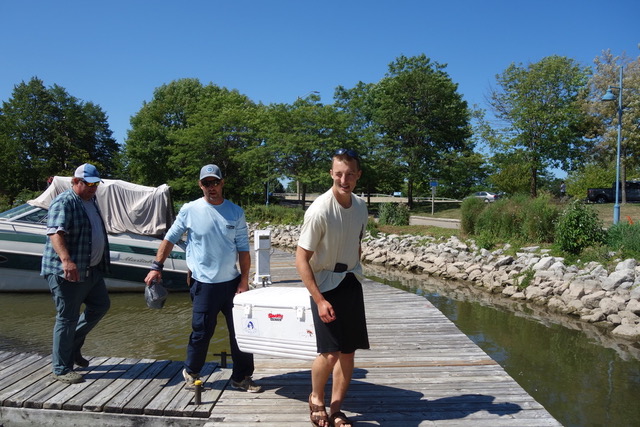
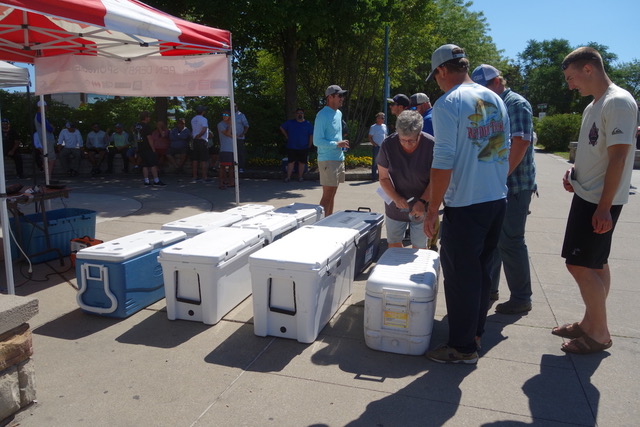
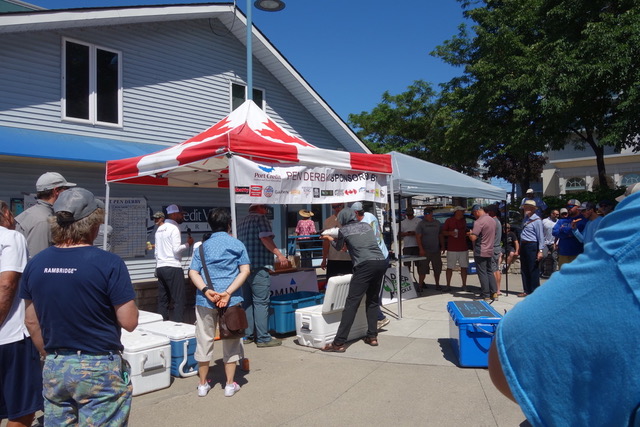
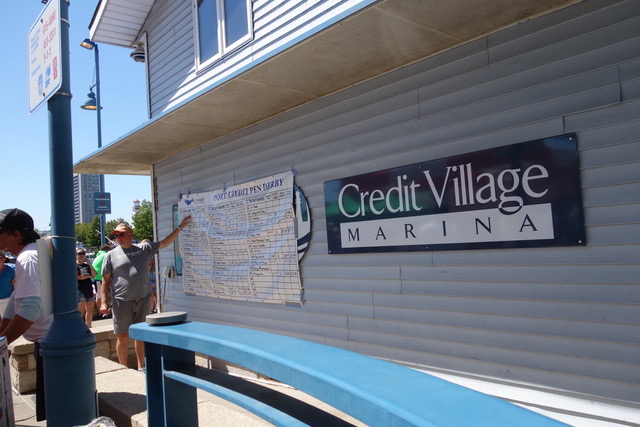
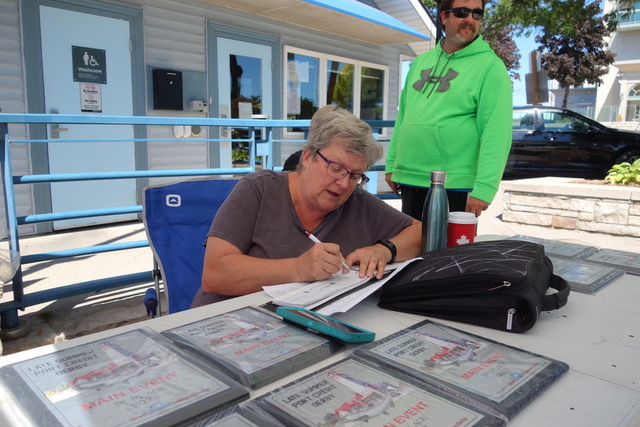
    Brian Lambie was master of ceremonies handing out prizes to the lucky fishermen and fisherwomen.  His fellow club members enrich us all.

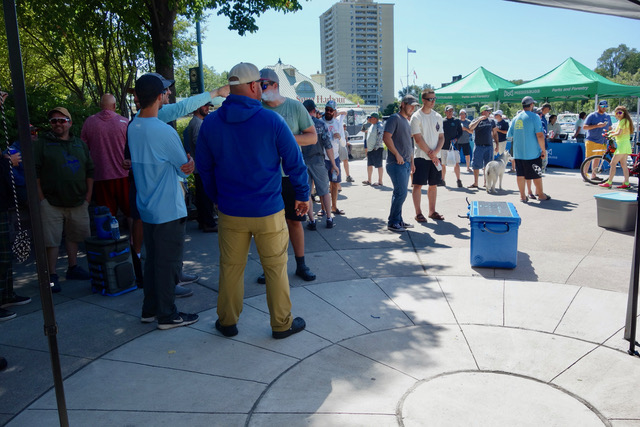
    Today there were huge crowds strolling the streets and docks of Port Credit  Most were totally unaware 
    that a small group of perhaps 100 people celebrated the rescue of the Great Lakes fishery.  And fewer still
    would remember Harold Tanner.   Miracles do happen.  Just for fun go to your computer and punch in
    his name.  You will be riveted to your seat for a couple of hours.  Guaranteed.


    alan skeoch

  • EPISODE 601 : “CAR ON FIRE”

    EPISODE 601   “CAR ON FIRE”


    alan skeoch
    June 21, 2022

    “Alan, it’s hot today, let’s do something cool.”
    “Like”
    :Visit the Salvation Army thrift store….you can buy me a fairly new dress.”

    It takes about ten minutes to reach Port credit from our house  Halfway there
    we noticed a whisper of smoke…then a massive conflagration as a car
    began to burn.  Anyone who believes cars are inflammable should take
    note.  The fire began in the motor region than spread faster than the traffic
    light could change.  Flames reached as high as the electricity wires high
    above, perhaps melting their shaeths.

    “Is it going to explode?”
    “Green light, we have to go.””
    “What about those two people standing beside the burning car?”
    “They better move fast…Gas tank is the next to go and that
    will not be pretty.

    We never knew what happened next.   But we were both amazed at 
    the speed of the fire.  Just enough time to turn off the road then get out.

    This is the first day of the summer of 2022.

    A hot day.


    Begin forwarded message:


    Sent from my iPhone


    Post Script:   We did nothing.  What should we have done?  Notice the traffic light …red, then green.
  • GRIMSBY SALE for keith and mary Seabrook of Beamsville, ontario, june 18, 2022

    EPISODE 600    KEITH AND MARY SEABROOK AUCTION JUNE 18, 2022….NOT AN EASY THING TO DO


    alan skeoch

    Keith and Mary Seabrook shared a good life on their small retirement farm.  Many good years.
    I could tell.  This was a tough day for them.  It is very hard to watch your possessions put on the auction block …. very hard indeed.
    No room for the picture of their old dog Willy…and their cat Trixy.  Photos of these two pets
    said much about Keith and Mary.  But this day was no time for afterthoughts so Willy and Trixy
    were part of the auction…pictures of them.

    Keith is a super mechanic.  Every machine lined up in the field was impeccable and I had
    the authority given to me by our son Andrew…the authority to be a big bidder. 


    Here is Ken Seabrook helping Andrew Skeoch load the 1946 Case tractor.  the machine
    is more than 75 years old but purring like Trixy once did.  Ken seems to be pushing
    the Case …


    photo of Keith’s son in law Joe Lortie who helped with the auction…family settled here from France way back in 1679…., Andrew Skeoch in centre
    and Keith Seabrook on right.

    Two auctioneers….Jim McCartney on the truck, seated…Bob Severn, checking inventory, standing


    Strangest machine in the sale….


    Rare machine….Gould Shapley and Muir fanning mill with bagging mechanism…perfect condition
    “I bought this mill from a neighbour years  ago…bought it because I once turned that crank when I was young.


    Marjorie spent most of her time at the housewares….it was Marjorie that bought the pictures of 
    willy and Trixiy…we told Keith and Mary they could
    get the pictures back if they wanted them.


    Buggy sold for $1,000 …  grindstone sold for $95


    Auction featured a young lad displaying items up for bid…he took the business seriously

    Ken is seated on this strange little tractor…pulls a one furrow plow..sold for $1800 I seem to remember.  


    Ken demonstrated each machine


    Two Fergson tractors, circa 1948 (circa)….both running smoothly…quite a history to these tractors…Ferguson name will lead you to the story..


    the old Case tractor sold to…Guess who?


    Buying a tractor i easy if you have the nerve and the money.   Bun moimg a tractor to Wellington Couty is difficult

    ‘DAD, This tractor operates without a clutch…and look at the radiator cap, a work of art.”


    What did we buy?  Guess.


    alan skeoch
  • EPISODE 599 FORT MISSISSAUGA…HIDDEN AWAY ON A GOLF COURSE

    EPISODE 599   FORT MISSISSAUGA…HIDDEN AWAY ON A GOLF COURSE


    alan skeoch
    June 2022


    Fort Mississauga, Niagara on the Lake, Ontario, 1814-1816

    “What is that huge pile of bricks?”
    “That is Fort Mississauga….was intended to be huge classic Star shaped fort
    but cutbacks happened after 1816.”
    “Cutbacks?”
    “No need. Obsolete design. Peace…unlikely would we ever go to war with the United States again.”
    “No need for a large star shaped fortress anymore”
    “Star shaped?”
    “Easier to defend….soldiers could fire down from the points of the star
    if enemies thought to try and scale the fort walls after getting by the moat.
    Seemed a good idea but forts fell out of style when canons got better…able
    to blast the walls to bits.”
    “Do you want to know why the walls are made of dirt and gravel rather than
    stone and cement?”
    “Stone sounds better for a fort.  Why use dirt?  Probably to save money.?”
    Nope, dirt walls were better than]   stone.  Exploding artlllery shells were muffled
    in the dirt.  Did less damage.  At least that’s what I read somewhere.”


    Star Shaped Forts - Adventages And History - Some Interesting Facts
    If Fort Mississauga was built as originally planned, it would look something like this STAR LAYOUT for forts.


    “How come I’ve never heard of Fort Mississauga?”
    “Not much  to see…just one building which looks like a 
    huge pile of bricks.  That’s it…a huge pile of bricks.
    And earth piled up in a star shape if you look carefully.  A person
    needs imagination visiting Fort Mississauga.

    “Huge pile of bricks”
    “The black engineers who built the fort between 1814 and 1816 had
    lots of bricks….great piles of them…no need for brick making.
    In 1814 bricks were piled up like rubble.”
    “Get serious . ALAN”
    “Bricks were piled helter skelter all-around the place”
    “Why?”
    “Because American troops captured Newark (now Niagara on the Lake)
    and set the town on fire.   Fort Mississauga is made from the ruined
    town….thousands of used bricks.”

    “Did you say Black Engineers?”
    “Thought you might have caught that word…black”
    “Black British troops?”
    “Yes, black Canadian troops built Fort Mississauga…they were happy to
    do so into the bargain.  There were issues of discrimination involved.
    How  to use black troops.   Although they were prepared to be in the centre of action.
     Some official decided to set them to work building the fort.

    It still stands..   But one lonely building surrounded by a dirt all with a star profile.
    Not much to see. Remember I  Said you needed imagination to appreciate Fort Mississauga.


    Marjorie found a golf ball just as we got near the fort.  


    Another remarkable thing about Fort Mississauga is that it
    stands in the middle of the oldest golf course in North
    America.  So the fort is a little dangerous.  It is possible
    to get beaned by a golf ball.

    Much more to say but this is enough for today

    alan

    Post Script:  Official history of Fort Mississauga


    Fort Mississauga
    Niagara-on-the-Lake, Ontario, Canada


    Constructed: 1814-1816
    Used by: Great Britain, Canada
    Conflict in which it participated:
    War of 1812


    Surrounded by a golf course, Fort Mississauga is a temporary field fortification turned permanent edifice on Lake Ontario. It is the only remaining star-shaped earthwork in Canada.*

    The French had been trying to build fortifications at the mouth of the Niagara River since 1679, finding that a combination of absolutely awful weather and understandably uncooperative locals (Seneca Indians) made this a difficult spot in time and space to fortify. 


    In the 1720’s France began work on what would become Fort Niagara, which the British took from them in 1759, during the French and Indian War (1756-1763). Though after the American Revolutionary War (1775-1783) this fort was within the boundaries of the new United States, the British lingered in Fort Niagara until 1796, when the Jay Treaty finally made it COMPLETELY CLEAR THAT THEY WOULD BE LEAVING NOW THANK YOU VERY MUCH. All of this meant that Great Britain suddenly had no defenses at the extremely important mouth of the Niagara River.

    Great Britain immediately got to work on Fort George, just a smidge upriver (and on the opposite bank) from Fort Niagara. Fort George was completed in 1802. Plans had been afoot to build a 14-gun battery facing Fort Niagara at Mississauga Point in 1799, but once the impressive Fort George was completed, adding more guns to this mix seemed unnecessary. Instead, the first lighthouse on the Great Lakes was built at Mississauga Point in 1804.

    The name Mississauga refers to the Algonquin Mississauga Indians, who were present in the area when the French first arrived in the 17th century. The word means, “those at the great river mouth,” which assumedly refers to the Niagara River where it meets Lake Ontario.


    Fort Niagara, visible from (and within gun range of) Fort Mississauga during the War of 1812.
    On June 18, 1812, US President James Madison (1751-1836) declared war on Great Britain. While much of the War of 1812 (1812-1815) did not go particularly well for the declaring party, one thing the United States did accomplish with style and verve was the capture of Fort George, on May 27, 1813.

    The Americans believed that the lighthouse at Mississauga Point was packed full of gunpowder, so gave it a wide berth when choosing landing spots for their Canadian invasion. The Canadian Militia hadmounted some guns at Mississauga Point, which in preparation for the American assault were blasted by the USS Julia, a schooner with two guns, and USS Growler, a sloop with 11 guns, of the US Navy.

    The British troops that had been ejected from Fort George thanks to the excellent planning and leadership of Colonel Winfield Scott (1786-1866) scampered to Burlington Heights, a fortified position at the far western tip of Lake Ontario. While the Americans had been great at capturing Fort George, they proved less great at further endeavors inland, perhaps in part due to the fact that Winfield Scott had been wounded at the battle of Fort George, removing him from the field until later in the war. Britain was victorious at both the Battle of Stoney Creek (June 6, 1813) and the Battle of Beaver Dams (June 24, 1813), and the demoralized Americans would abandon Fort George on December 10, 1813.

    The American commander at Fort George, Brigadier General John Parker Boyd, was under orders to burn the nearby town of Newark if his position was threatened. Newark had, for a time, been the capital of Upper Canada, until its close proximity to a belligerent United States inspired the Canadians to move their capital north to the city of York, which would later be renamed Toronto.

    If Boyd were to find it necessary to torch Newark, his orders stated, he would do so in the most polite manner possible, first warning the townspeople of his intention and giving them ample time to vacate. Oddly, it didn’t work out that way.


    The tower of Fort Mississauga, 1910

    It seems that Boyd’s characteristic role in most tense situations was to lose control over them. True to form, just before abandoning Fort George, things got out of hand and American troops put Newark to the torch without warning anyone, dumping the town’s dazed populace into the snow. This needless destruction enraged the British, who would burn several American towns in retribution when it shortly became their turn to invade their enemy’s land and capture their starforts.


    The Fort Mississauga that never was. From an optimistic British plan of 1816: Had this version of Fort Mississauga been constructed, it would have been the largest fort in Canada. Click here to see the whole map, which also features a fancified Fort George, and a Fort Niagara that actually looks like Fort Niagara!
    Meanwhile, the British again needed a fort at the mouth of the Niagara River. The Americans had pretty effectively destroyed Fort George in addition to the town of Newark, so work began on a new, better-sited fortification: Fort Mississauga.

    Work began in the Spring of 1814, with the rubble of Newark (and stone from the dismantled lighthouse) being utilized as a handy building material for the foundation of Fort Mississauga’s most arresting feature, its tower. Which is really a blockhouse, but we’re calling it a tower anyway.

    That tower was only two feet high when the Americans came to visit in July of 1814, in the form of a force led by General Jacob Brown (1775-1828). History apparently did not record Brown’s findings, so I would like to assume that he and his men saw a two-foot-tall tower surrounded by muddy earthworks, jeered, and left.

    Another possibility seems to be that an American brigade of 3000 men under Colonel Moses Porter (1755-1822) advanced on what must have been a diminutive Fort Mississauga in July of 1814, only to be chased away by long-range cannon fire from the fort. These two events may or may not have happened, as they are briefly described in the signage at the fort, but I cannot find mention of them elsewhere. Both Brown and Porter fought heroically at the Siege of Fort Erie in August of 1814, and these actions may have been misattributed to Fort Mississauga.

    The starfort of our current interest did have impressive, 20-foot thick, star-shaped earthworks by the end of 1814, along with a series of log buildings within those walls, in which the garrison spent its lonely days. Perhaps fortunately for Fort Mississauga, it was left alone for the remainder of the war. The tower was only nine feet high in 1816, but was finally completed in 1823.

    In 1837 and 1838, a series of rebellions broke out in Canada, led by Canadians yearning for “responsible government.” While a government reeking of responsibility was indeed created not long after these rebellions, these events nonetheless freaked Great Britain out, and Fort Mississauga’s defenses were bolstered as a result.

    In 1838, a reinforced platform was added on the fort’s upper level, upon which a single cannon was mounted. The fort’s earthen walls were increased to a 40-foot thickness, and were twelve feet high. A double row of sharpened logs jutted menacingly from the outer walls, and an earthwork ravelin was added to protect the main gate.

    The inside of the tower consists of two casemated rooms, which would have served as a barracks and living space during a bombardment. A storehouse and powder magazine occupied two basement rooms. The walls of the tower are eight feet thick at the base, tapering to a seven-foot thickness at the top. The tower is 25 feet high.

    By 1852 Fort Mississauga was at its peak of pointy, sharpened pugnaciousness. Over a dozen cannons were somehow crammed into the little fort. Despite its impressive spininess, Great Britain abandoned the fort in 1855.

    A cross-section of Fort Mississauga’s tower, from signage at the fort:
    (1) Rubble from the 1792 town of Newark placed in 1814
    (2) July 1814-Americans attack the tower which is only two feet high
    (3) April 1816-The tower is only nine feet high
    (4) 1823-The tower is substantially complete
    (5) 1838-Upper battery for artillery is installed
    (6)1840’s-Stucco parging is applied to the tower to protect brickwork
    (7) WWI-Soldiers put concrete parging on the tower’s exterior


    Fort Mississauga’s distinctive tower in 2015. Much of the First World War-era concrete parging remains!
    Canada became a (semi-) independent nation in 1867. Two important things happened to Fort Mississauga in the 1870’s: Canadian troops began using it for training, and a 9-hole golf course was constructed around it.

    Through both World Wars and the Korean Conflict (1950-1953), Canada trained troops at Fort Mississauga: I’m sure familiarization with a blockhouse built in the early 19th century prepared them well for modern combat!

    Today, Fort Mississauga is a National Historic Site of Canada, and is surrounded by the course of the Niagara-on-the-Lake Golf Club.

    I visited Fort Mississauga in August of 2015! If you’re interested in seeing more of how the fort looks today, perhaps you’ll visit the Fort Mississauga page in the Starforts I’ve Visited section.

    *The claim that Fort Mississauga is the only remaining star-shaped earthwork in Canada is made in the signing at the fort. Claims such as “biggest,” “oldest,” and “last remaining” seem to often be made locally at starforts without much in the way of research, or with a whole lot of qualifications affixed thereto. Fort Mississauga may be the only star-shaped earthwork remaining in Canada, but…Canada is a big place. Be careful with those heroic superlatives, starforts!